
Silver Service
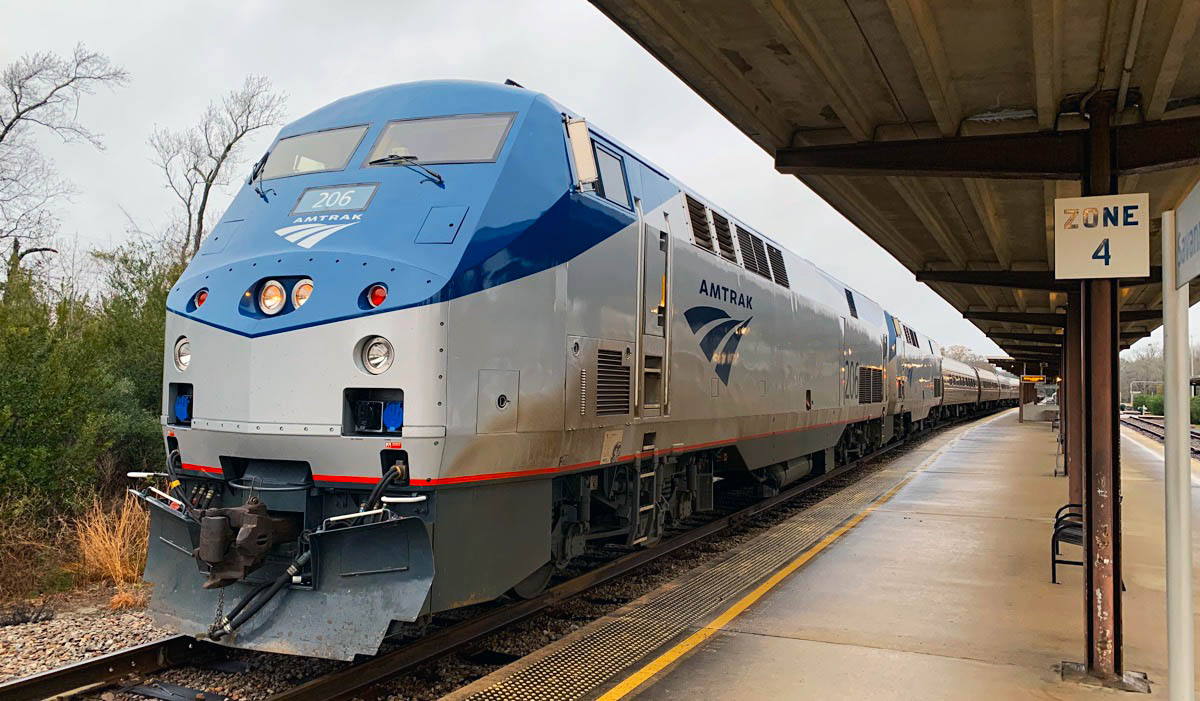
Savannah, Ga / Dec 2019 / RWH
 ilver Service from Amtrak refers to its long-distance trains running along the East Coast between New York City and Miami, Florida. It comprises two trains – the Silver Meteor and Silver Star — both names inherited from pervious operators. The two trains follow the same general routing between New York City and Miami, but diverge between Selma, North Carolina, and Savannah, Georgia, as well as at Auburndale, Florida. The Silver Meteor takes a more direct, coastal route on the CSX Transportation A-Line between Selma and Savannah via Fayetteville, North Carolina, Florence, South Carolina, and Charleston, South Carolina. Meanwhile, the Silver Star travels inland over the CSX S-Line to serve the Carolinas' two state capitals, Raleigh, North Carolina, and Columbia, South Carolina. At Auburndale, Florida, the Silver Star continues west to service Lakeland and Tampa, while the Silver Meteor turns south to go directly to Miami.
Amtrak's Palmetto operates over the Silver Meteor's route between New York City and Savannah. From 1996 to 2002, this train was known as the Silver Palm and ran all the way south to Miami, though over a different routing between Jacksonville and Auburndale. The Palmetto name was reinstated in 2002, and service was truncated back to Savannah in 2004.
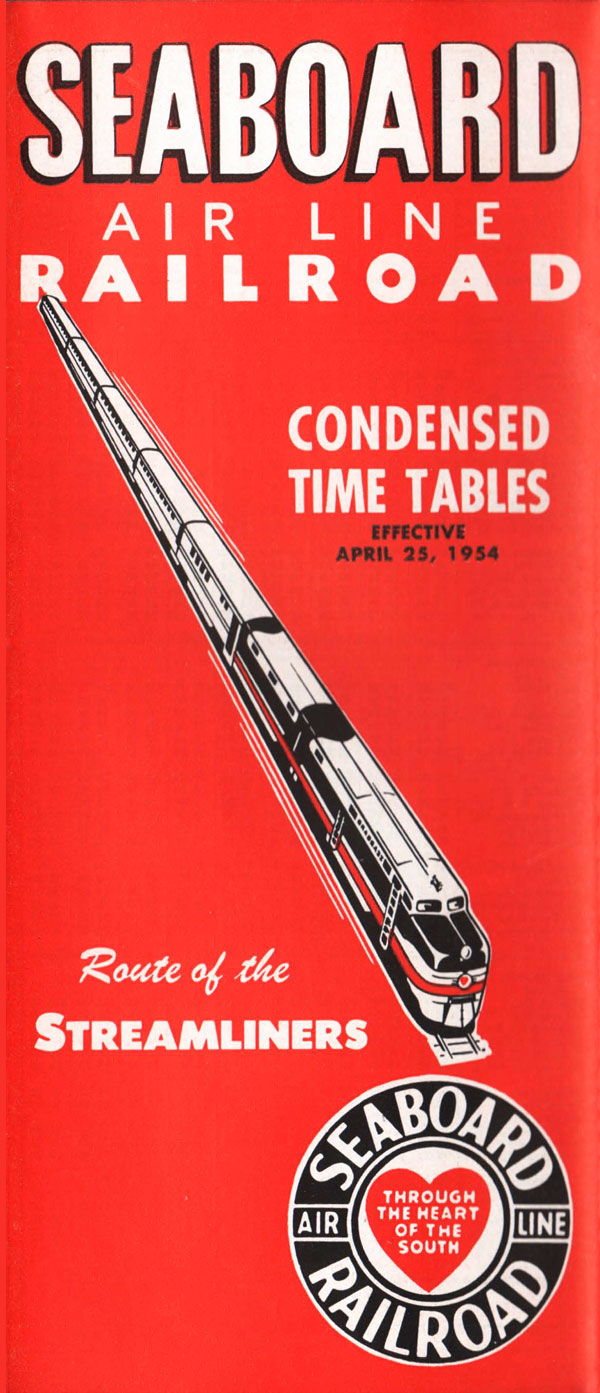
 The two Silver Service train names were inherited by Amtrak in 1971 from the Seaboard Coast Line Railroad, which originally inherited them from the Seaboard Air Line Railroad. These two trains are the sole remnants of numerous long-distance trains that ran between the Northeast and Florida for most of the 20th century. Amtrak originally applied the Florida Fleet brand to the Silver Meteor, Silver Star, and the now-discontinued Champion, another train inherited from SCL, in the 1970s.
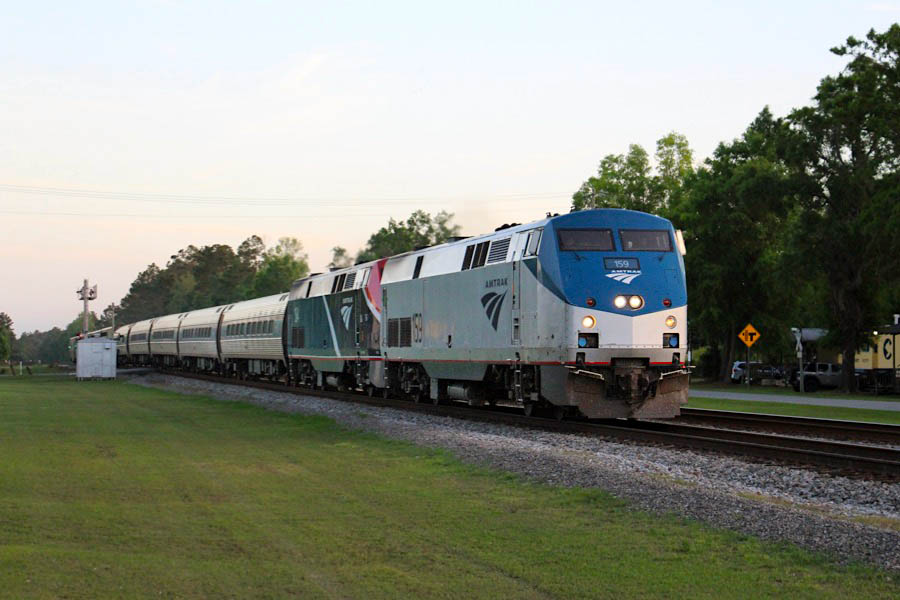
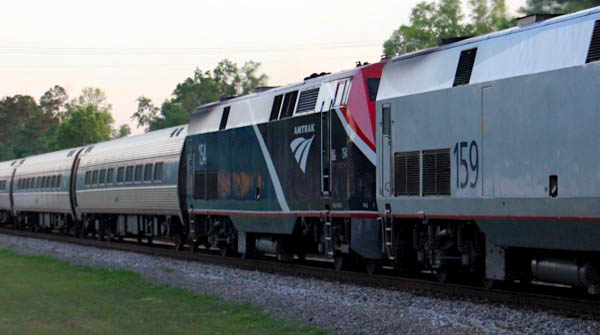
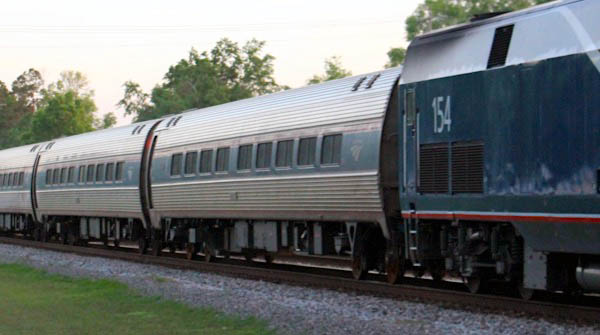
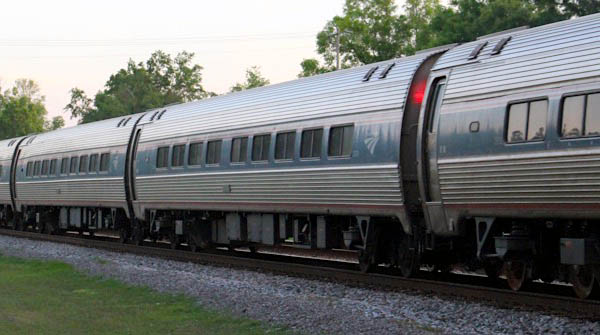
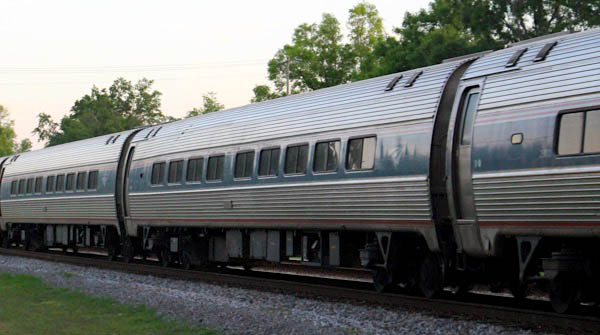
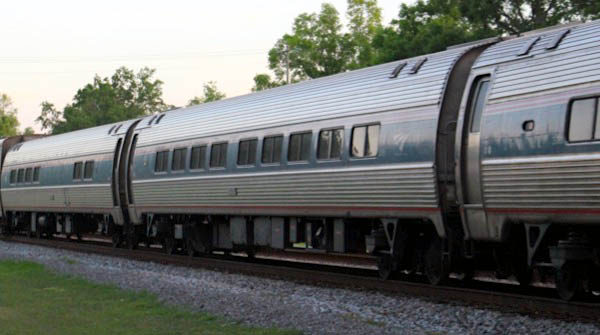
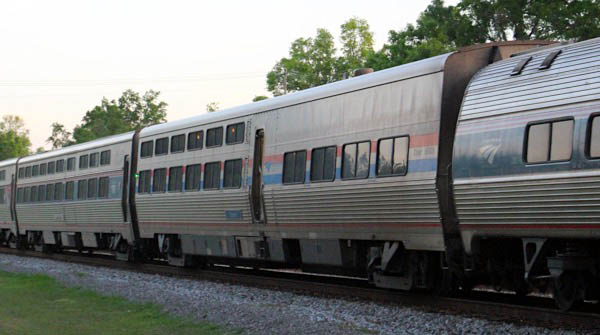
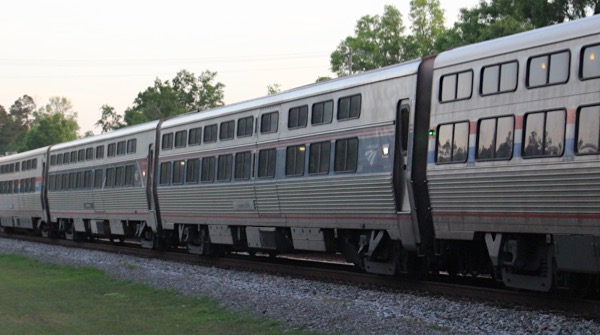
Silver Service movements use standard single-level equipment typical of eastern long-distance Amtrak trains: 2 locomotives outside the Northeast Corridor, Viewliner baggage, Viewliner dining, Viewliner sleepers, Amfleet lounge, and Amfleet coaches. Since November 2024, the Silver Star has been temporarily combined with the Capitol Limited to form the Floridian, a Chicago–Washington–Miami route.

 Enjoy a fantastic fusion of the old and new South, from antebellum homes and Civil War sites to bustling modern metroplexes. Dig your toes into sandy beaches, shade yourself under grand magnolias or gaze at gators in coastal mangroves. Catch the thrills in Orlando or kick up your heels in Little Havana. Experience the region’s quintessential charms and flavors to create your own blend of Southern comfort.
Amtrak


- service
Silver Meteor - regionEastern Seaboard
- typelong-distance
- numbers
97 southbound
98 northbound - termini
New York City NY
Miami FL - stops33
- distance1389 miles
- time~ 28 hours
- frequencydaily
- classes
Coach, Sleeper - equipment
single level
Amfleet and Viewliner - services
cafe car, dining, baggage - started1939, 1971
- predecessor
Seaboard Coast Line
Silver Meteor - mainlineCSX
- links
Amtrak | Wikipedia
- service
Silver Star - regionEastern Seaboard
- typelong-distance
- numbers
91 southbound
92 northbound - termini
New York City NY
Miami FL - stops38
- distance1522 miles
- time~ 32 hours
- frequencydaily
- classes
Coach, Sleeper - equipment
single level
Amfleet and Viewliner - services
cafe car, dining, baggage - started1947, 1971
- predecessor
Seaboard Coast Line
Silver Star - mainlineCSX, NS
- links
Amtrak | Wikipedia

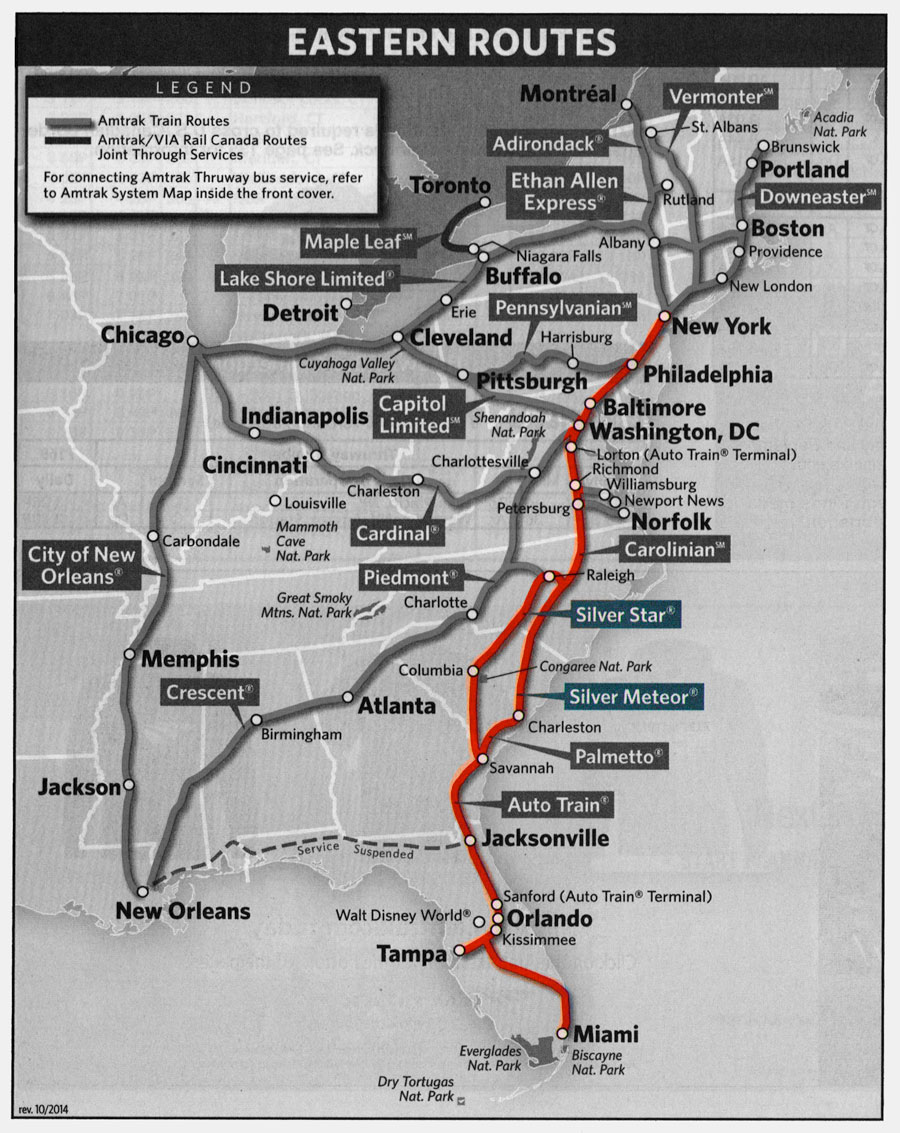
2014 Amtrak route map / adapted RWH

jump to a
flag stop
Silver Meteor
- New York
- Philadelphia
- Wilmington
- Baltimore
- Washington
- Alexandria
- Fredericksburg
- Richmond
- Petersburg
- Rocky Mount
- Fayetteville
- Florence
- Kingstree
- Charleston
- Yemassee
- Savannah
- Jesup
- Jacksonville

jump to a
flag stop
Silver Star
- New York
- Philadelphia
- Wilmington
- Baltimore
- Washington
- Alexandria
- Fredericksburg
- Richmond
- Petersburg
- Rocky Mount
- Raleigh
- Cary
- Hamlet
- Camden
- Columbia
- Savannah
- Jesup
- Jacksonville
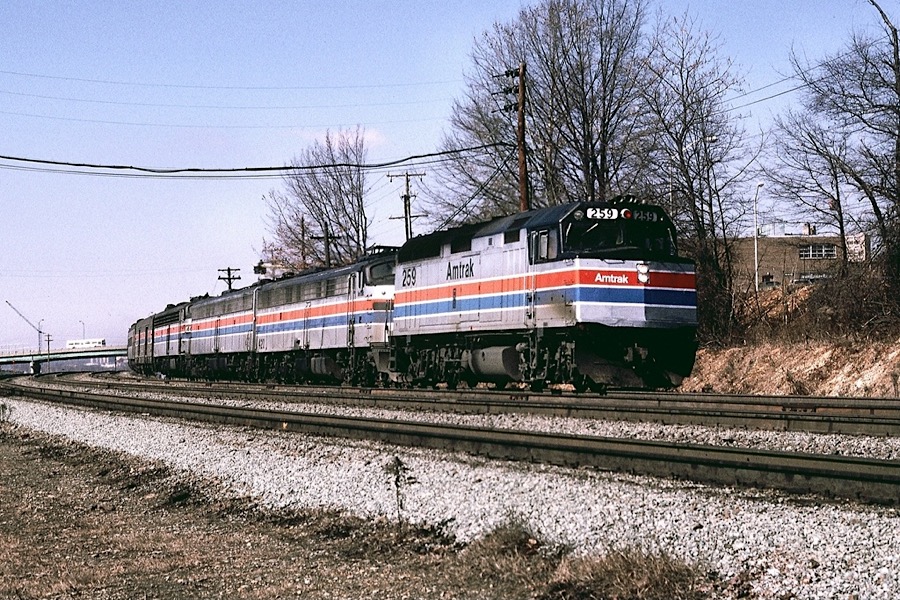
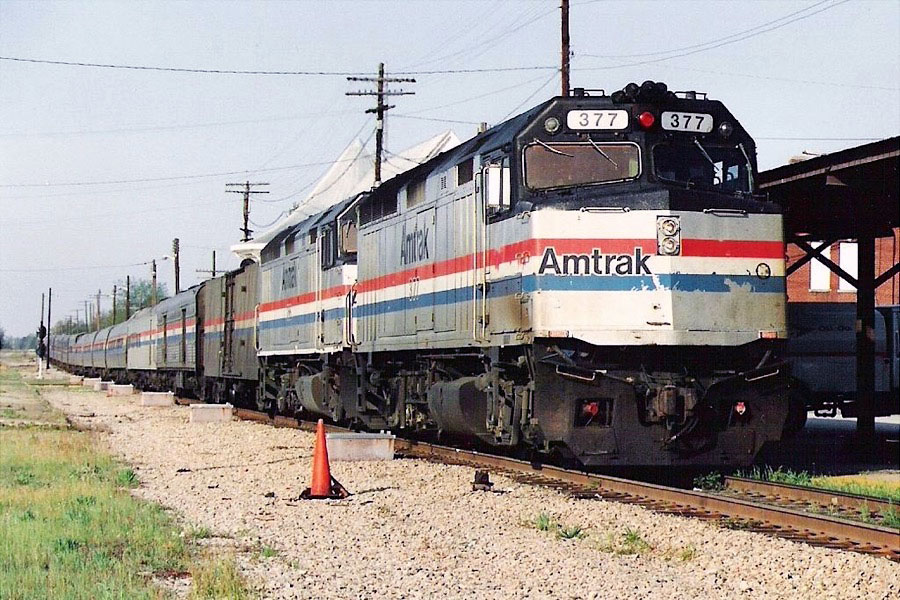
 Seaboard's Silver Meteor
collection
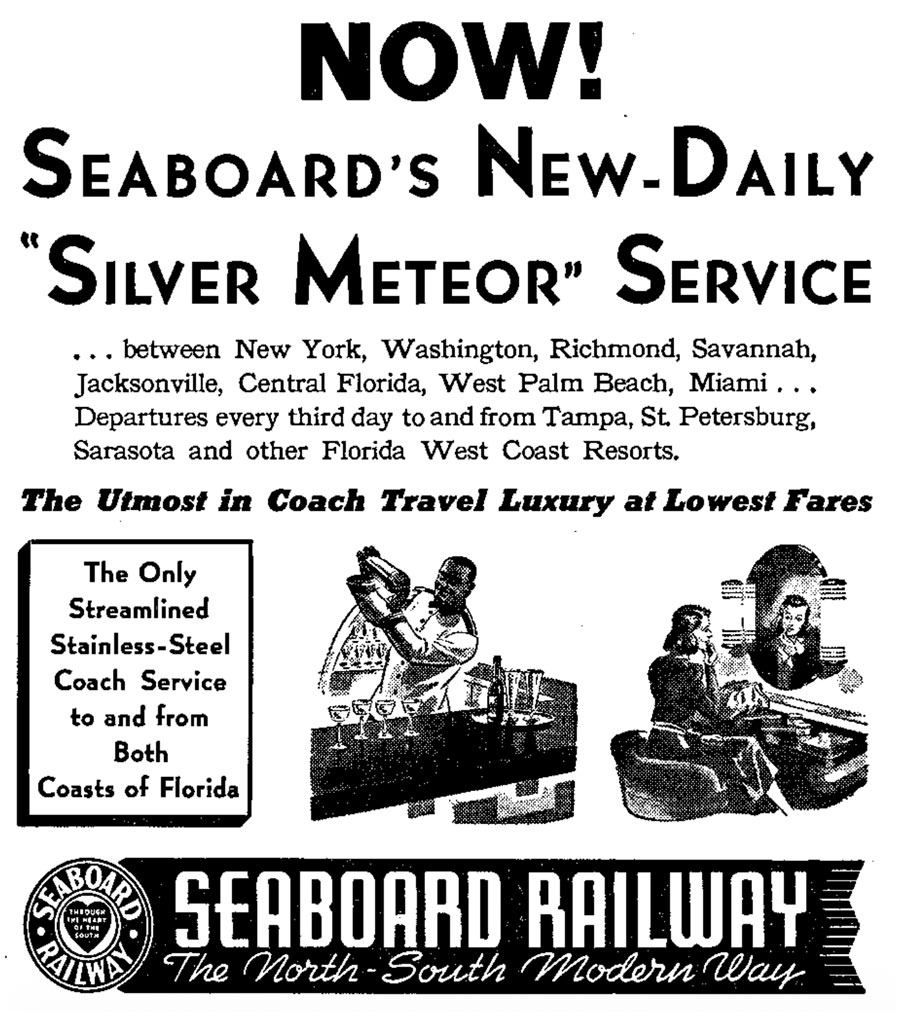
1940 Official Guide ad / collection
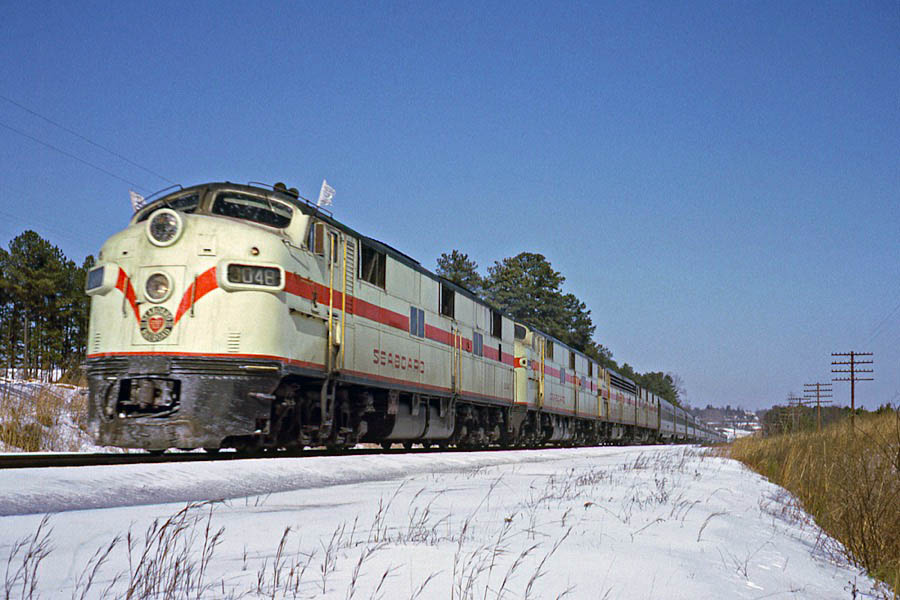
Silver Meteor
Raleigh, NC / Jan 1966 / Wharton Separk 
collection
1940 Official Guide ad / collection
collection
collection
postcard / collection

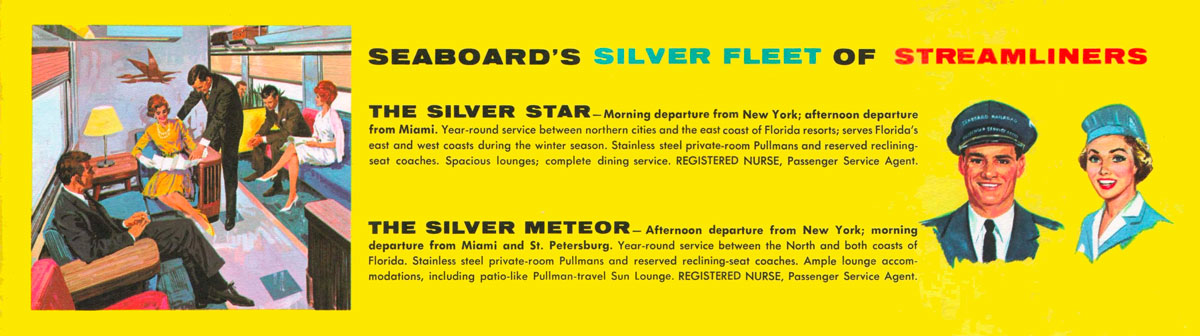
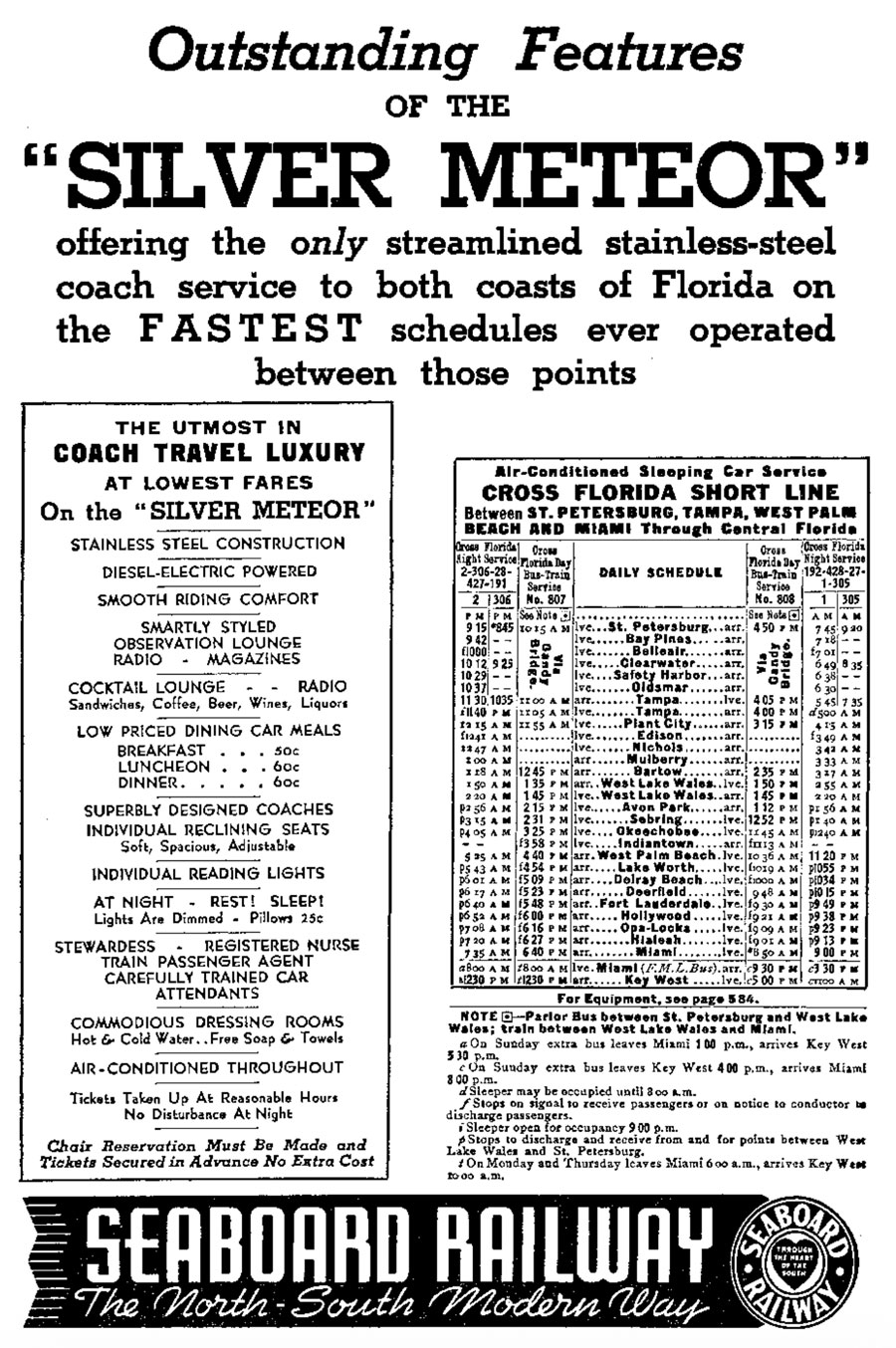
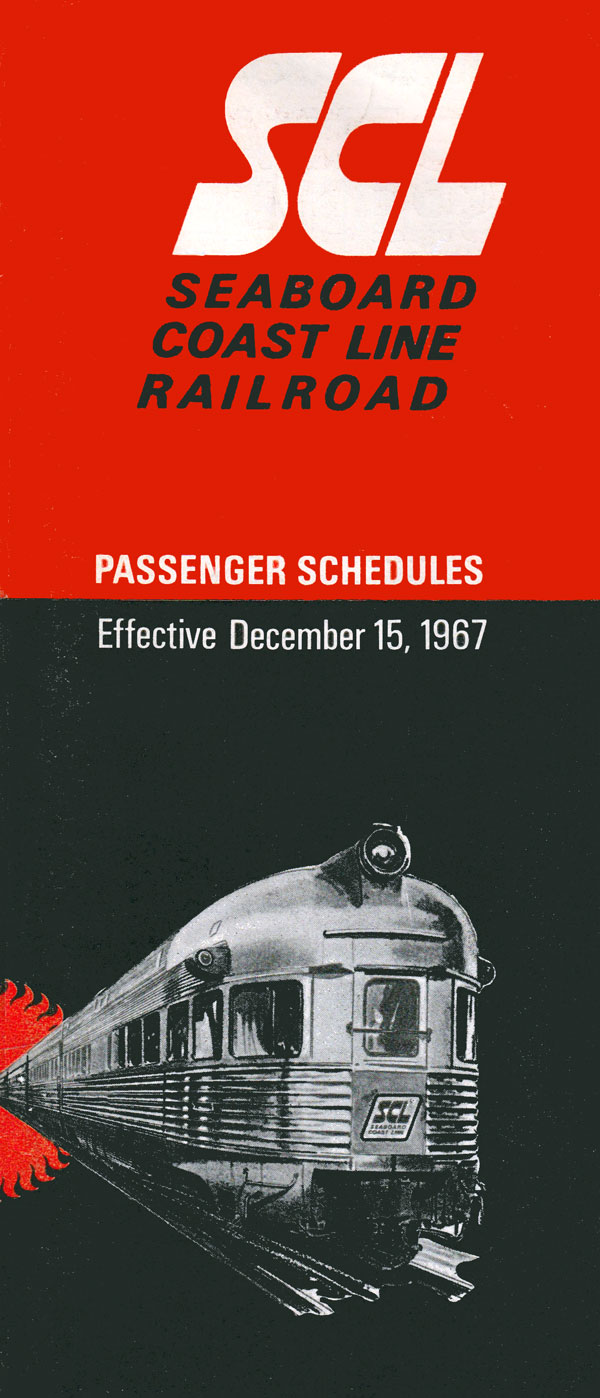
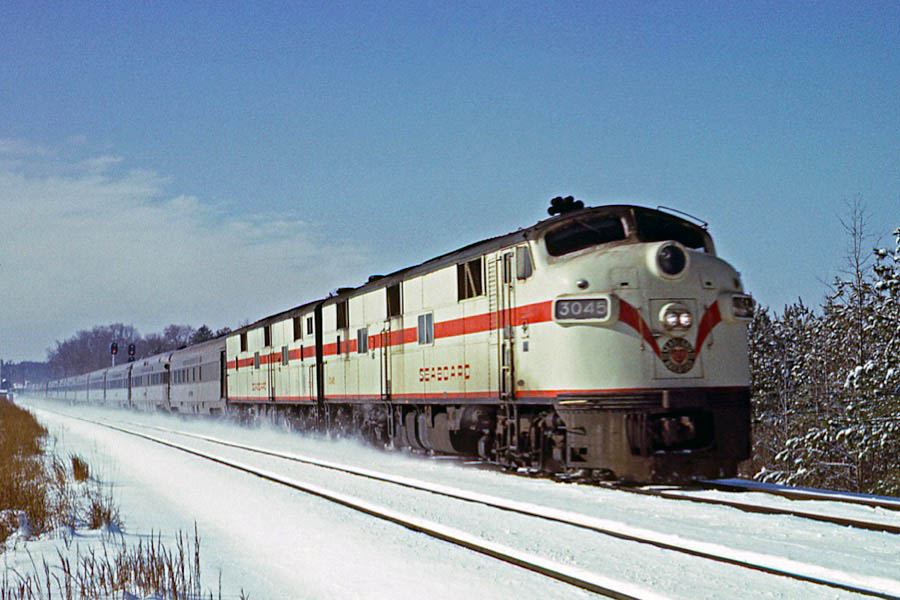
 The Silver Meteor was inaugurated by the Seaboard Air Line on February 2, 1939. The name was selected via contest, with 30 people among 76,000 entrants proposing the winning name. Utilizing EMC E4 diesel locomotives originally purchased for SAL's flagship all-Pullman train, the Orange Blossom Special, it became the first diesel-powered streamliner to Florida. Its introduction later prompted SAL's competitor, the Atlantic Coast Line Railroad (ACL), to introduce its own New York-Florida streamliner, the Champion, on December 1, 1939. The SAL emphasized the train's modernity, referring to it as the "Train of Tomorrow" and having its first trip to Florida begin not from New York Penn Station, but from the Long Island Rail Road station at the 1939 New York World's Fair. The original schedule took 25 hours.
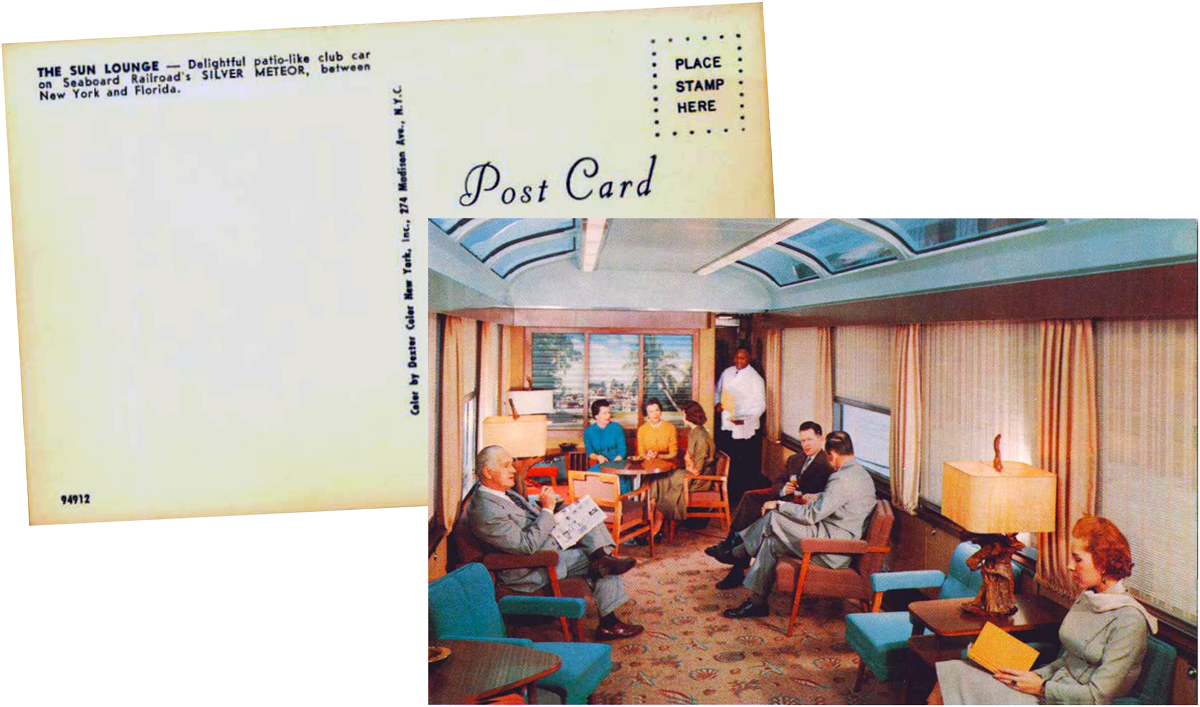
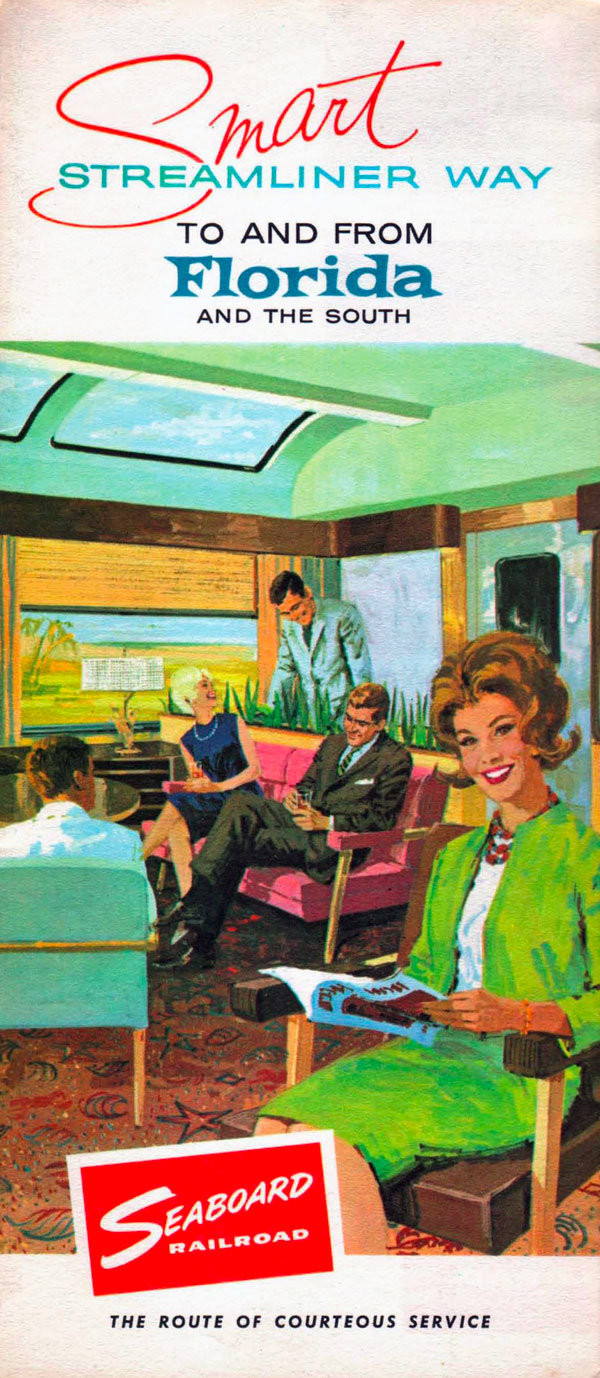
The train used seven new cars manufactured by the Budd Company: a baggage-dormitory-coach, a diner straddled by two coaches on either side, and a coach-lounge-observation. The train was originally tri-weekly, alternating service between Miami and St. Petersburg every other day. However, the train proved so popular that after delivering new equipment, SAL upgraded the train to daily operation on both coasts in December 1939. Heavyweight sleeping cars would be added to the train in 1941, and would be upgraded to lightweight sleeping cars in 1947. Also in 1947, the Silver Meteor upgraded its end-of-train lounge car to a Budd-built tavern-lounge-observation car. In 1956, SAL introduced the Sun Lounge to the train. These cars included five double-bedrooms on one end and a lounge with glass panels on the roof. This was because full dome cars could not fit through the tunnels on the Northeast Corridor between New York and Washington D.C.
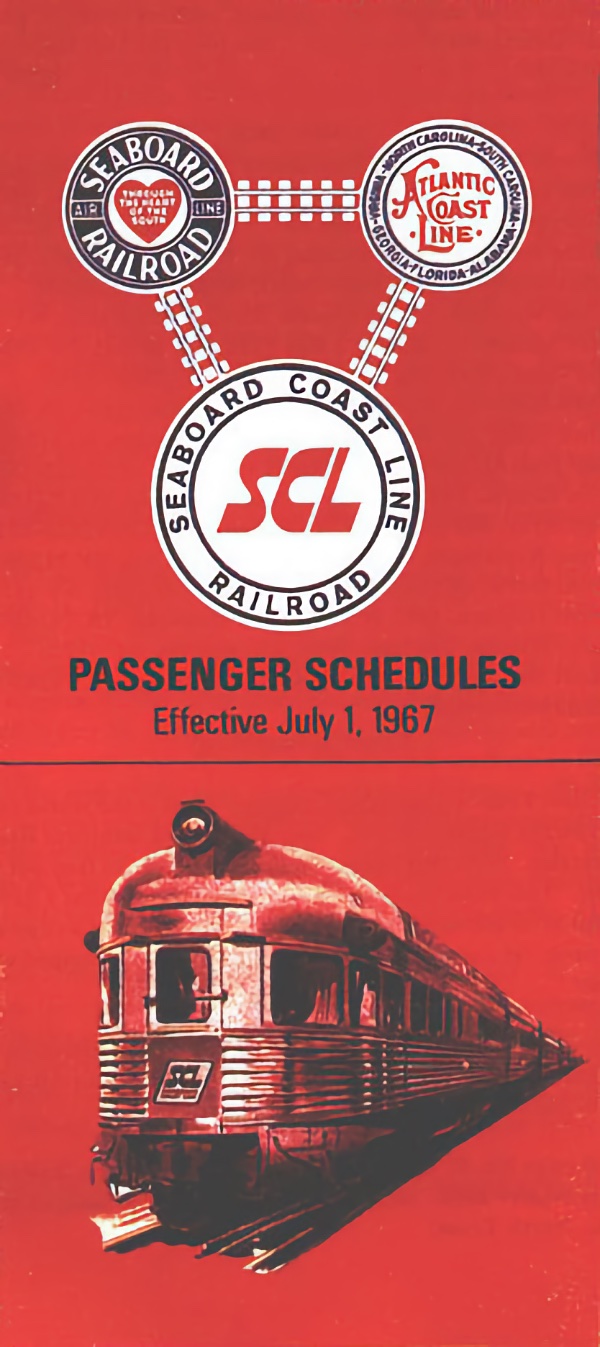
The Seaboard Air Line Railroad merged with the Atlantic Coast Line Railroad to form the Seaboard Coast Line Railroad in 1967, and in 1968 the new railroad reshuffled the Florida streamliners. The Silver Meteor lost its west coast section and began serving Miami only. The Pennsylvania Railroad merged with the New York Central Railroad to form Penn Central Transportation in 1968, which inherited the longstanding haulage agreement for the Silver Meteor. Amtrak retained the train when it took over most intercity passenger trains on May 1, 1971.

collection
Silver Meteor
Millbrook, NC / Mar 1967 / Wharton Separk
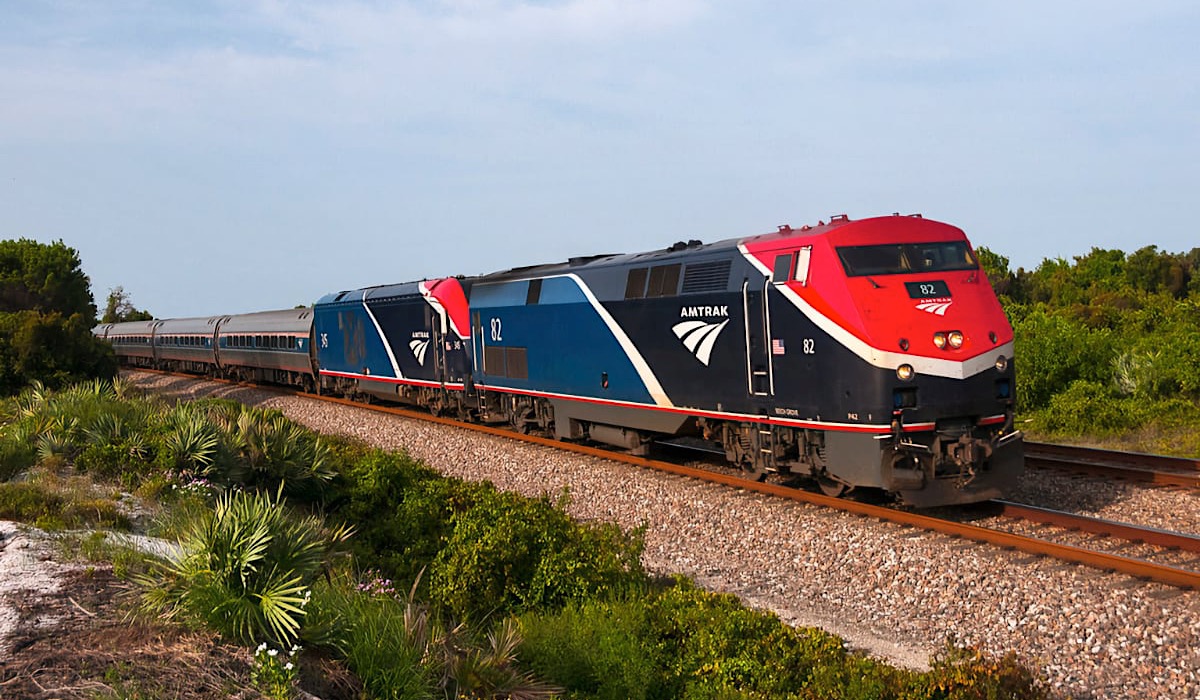
Boca Raton, Fl / Jul 2024 / Adrian Corus


| station | code |  | miles | #97 | #98 |
|---|---|---|---|---|---|
| Silver Meteor | Silver Meteor | ||||
| daily | daily | ||||
read down  | read up  | ||||
New York NY | NYP | | 0 | 2:30 pm | 11:18 am |
Newark NJ | NWK | | 10 | 2:53 pm | 10:58 am |
| Trenton NJ | TRE | 58 | 3:34 pm | 10:21 am | |
Philadelphia PA | PHL | | 91 | 4:05 pm | 9:48 am |
Wilmington DE | WIL | | 116 | 4:41 pm | 9:23 am |
Baltimore MD | BAL | | 185 | 5:37 pm | 8:30 am |
Washington DC | WAS | | 226 | 6:25 pm | 7:25 am |
Alexandria VA | ALX | | 234 | 7:45 pm | 6:54 am |
| Fredericksburg VA | FBG | 280 | 8:35 pm | 5:46 pm | |
| Richmond VA | RVR | | 335 | 9:39 pm | 4:52 am |
| Petersburg VA | PTB | | 363 | 10:23 pm | 3:53 am |
Rocky Mount NC | RMT | | 461 | 11:55 pm | 2:29 am |
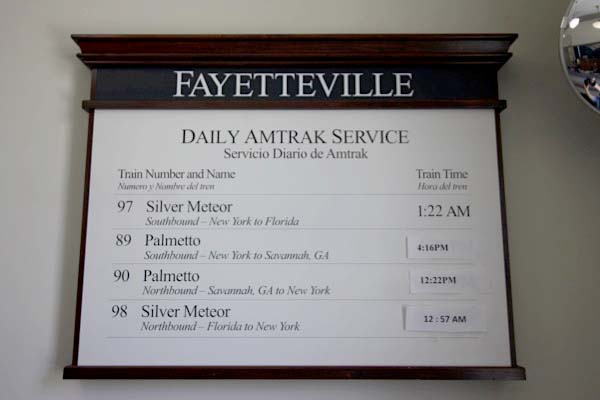
| Fayetteville NC | FAY | | 551 | 1:17 am | 12:47 am |
Florence SC | FLO | | 634 | 3:10am | 11:22 pm |
| Kingstree SC | KTR | 674 | 3:56 am | 10:28 pm | |
| Charleston SC | CHS | | 729 | 4:48 am | 11:22 pm |
| Yemassee SC | YEM | 783 | 5:48 am | 8:34 pm | |
Savannah GA | SAV | | 871 | 6:43 am | 7:37 pm |
| Jessup GA | JSP | 882 | 7:43 am | 6:30 pm | |
Jacksonville FL | JAX | | 978 | 9:24 am | 4:51 pm |
| Palatka FL | PAK | 1036 | 10:55 am | 3:30 pm | |
| DeLand FL | DLD | | 1088 | 11:53 am | 2:40 pm |
| Winter Park FL | WPK | | 1120 | 12:39 pm | 1:51 pm |
| Orlando FL | ORL | | 1125 | 1:04 pm | 1:22 pm |
| Kissimmee FL | KIS | | 1143 | 1:38 pm | 12:54 pm |
| Winter Haven FL | WTH | | 1181 | 2:30 pm | 12:03 pm |
| Sebring FL | SBG | 1222 | 3:14 pm | 11:23 am | |
| West Palm Beach FL | WPB | | 1325 | 5:10 pm | 9:42 am |
| Delray Beach FL | DLB | 1343 | 5:33 pm | 9:22 am | |
| Deerfield Beach FL | DFB | 1354 | 5:47 pm | 9:08 am | |
| Fort Lauderdale FL | FTL | | 1368 | 6:06 pm | 8:50 am |
| Hollywood FL | HOL | 1376 | 6:21 pm | 8:34 am | |
| Miami FL | MIA | | 1390 | 6:59 pm | 8:10 am |
stations listed in orange above are featured in our route scrapbook below
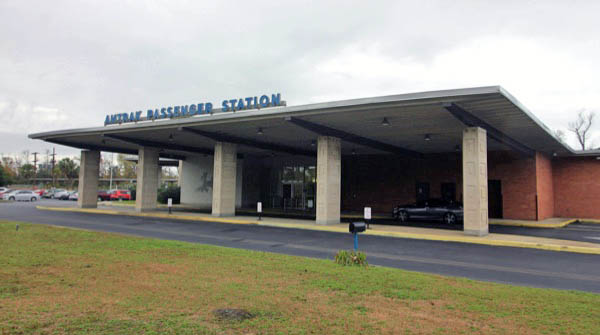
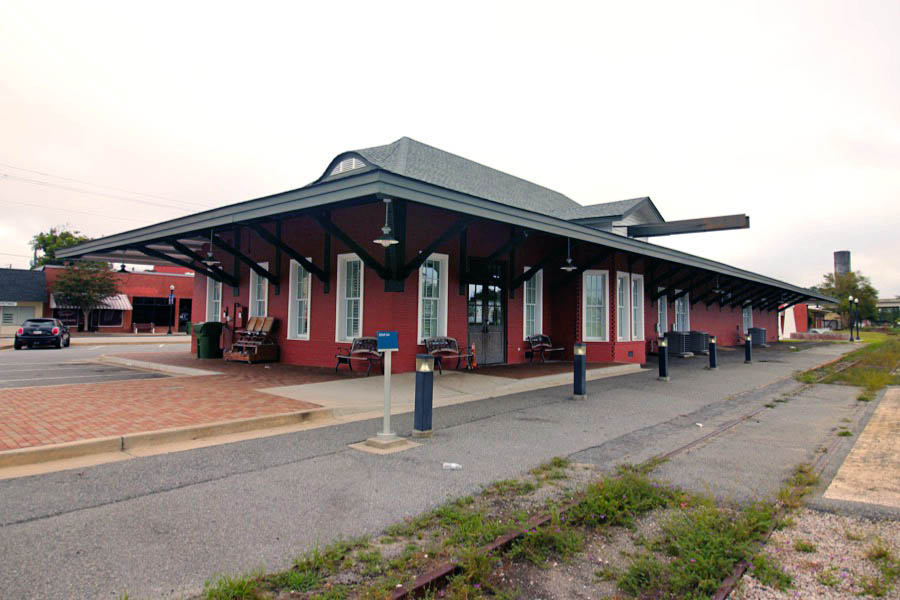
RWH
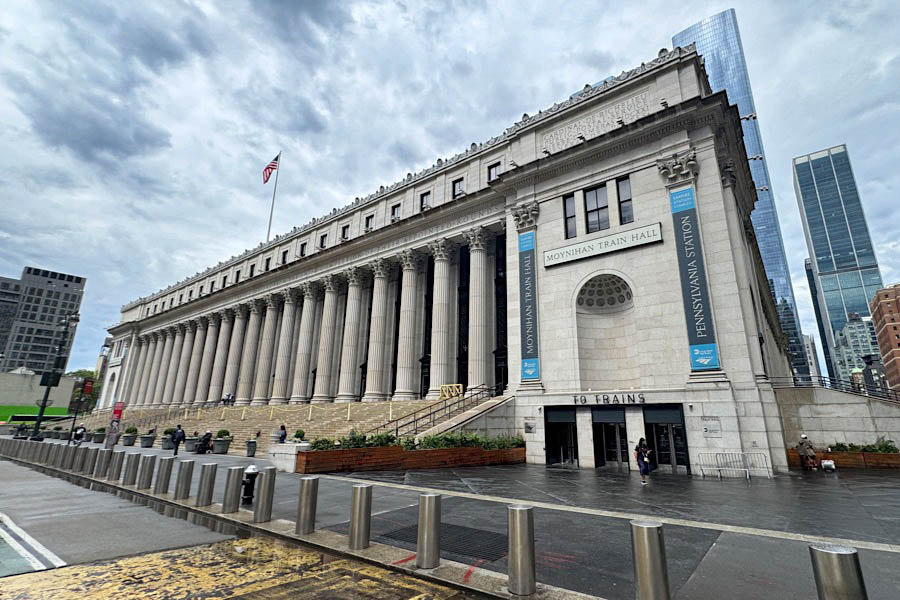
RWH
| station | code | | miles | #91 | #92 |
|---|---|---|---|---|---|
| Silver Star | Silver Star | ||||
| daily | daily | ||||
| read down | read up | ||||
| New York NY | NYP | | 0 | ||
| Newark NJ | NWK | | |||
| Trenton NJ | TRE | ||||
| Philadelphia PA | PHL | | |||
| Wilmington DE | WIL | | |||
| Baltimore MD | BAL | | |||
| Washington DC | WAS | | |||
| Alexandria VA | ALX | | |||
| Richmond VA | RVR | | |||
| Petersburg VA | PTB | | |||
| Rocky Mount NC | RMT | | |||
| Raleigh NC | RGH | | |||
| Cary NC | | | | | | |
| Southern Pines NC | SOP | ||||
| Hamlet NC | HAM | ||||
| Camden SC | CAM | ||||
| Columbia SC | CLB | | |||
| Denmark SC | DNK | ||||
| Savannah GA | SAV | | |||
| Jacksonville FL | JAX | | |||
| Palatka FL | PAK | ||||
| DeLand FL | DLD | | |||
| Winter Park FL | WPK | | |||
| Orlando FL | ORL | | |||
| Kissimmee FL | KIS | | |||
| Lakeland FL | LAK | ||||
| Tampa FL | TPA | ||||
| Lakeland FL | LAK | ||||
| Winter Haven FL | WTH | | |||
| Sebring FL | SBG | ||||
| Okeechobee FL FL | OKE | ||||
| West Palm Beach FL | WPB | | |||
| Delray Beach FL | DLB | ||||
| Deerfield Beach FL | DFB | ||||
| Fort Lauderdale FL | FTL | | |||
| Hollywood FL | HOL | ||||
| Miami FL | MIA | | 1522 |
stations listed in orange above are featured in our route scrapbook below
Columbia, SC / Jul 2025 / RWH


Our Silver Service route scrapbook runs southbound
starting at New York City and ending at Miami.
New York
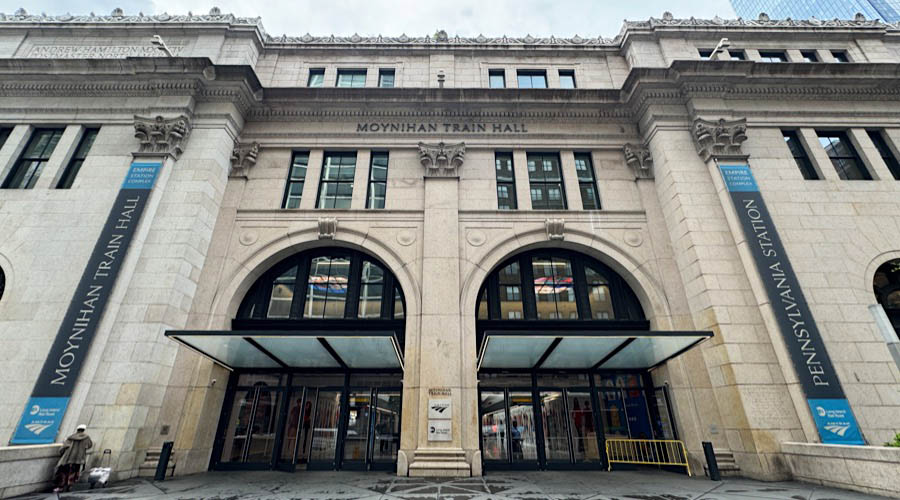
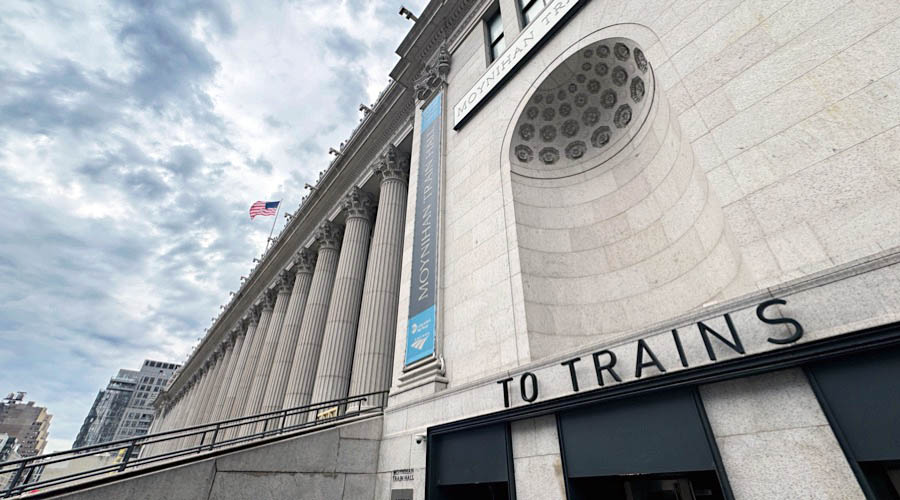
 0 New York, NY

New York, NY / May 2024 / RWH

RWH

See our complete New York Penn Station scrapbook in Amtrak Great Stations
For intermediate stations see our complete Northeast Corridor route scrapbook
Pennsylvania
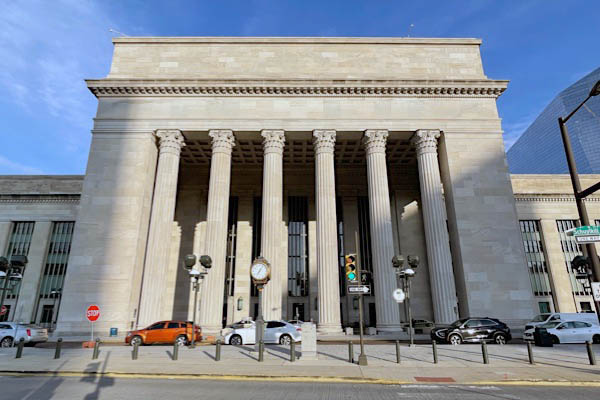
91 Philadelphia, Pa
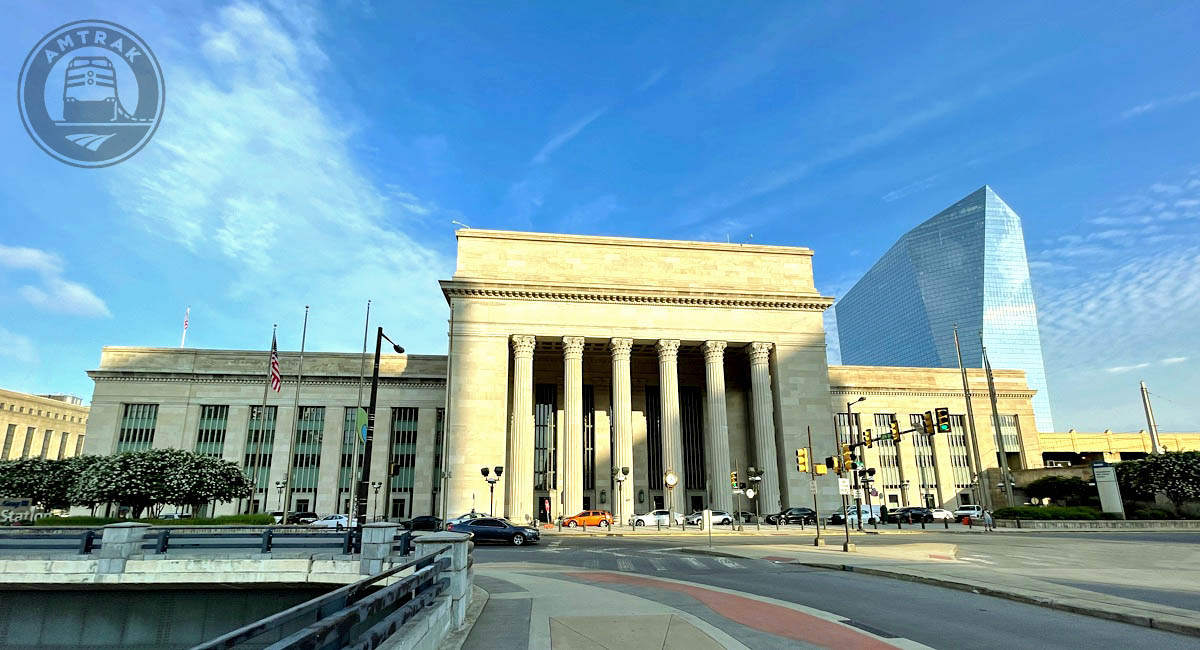
Philadelphia, Pa / Jul 2022 / RWH
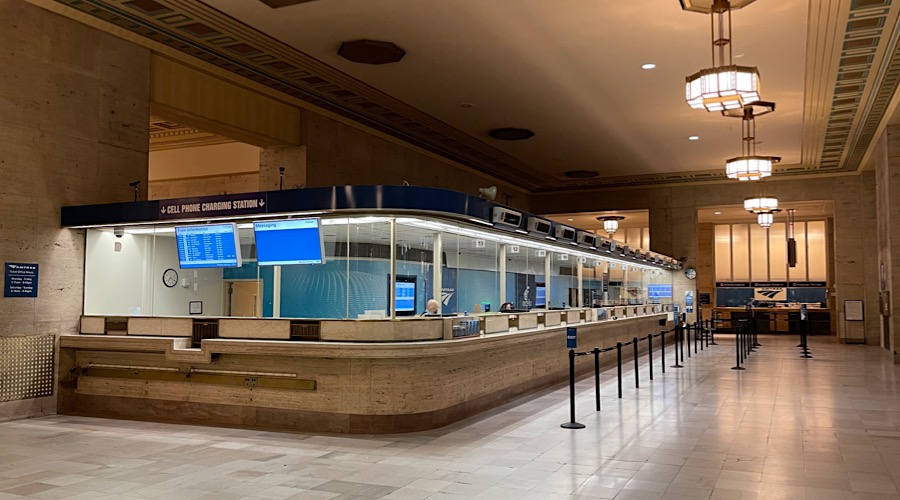
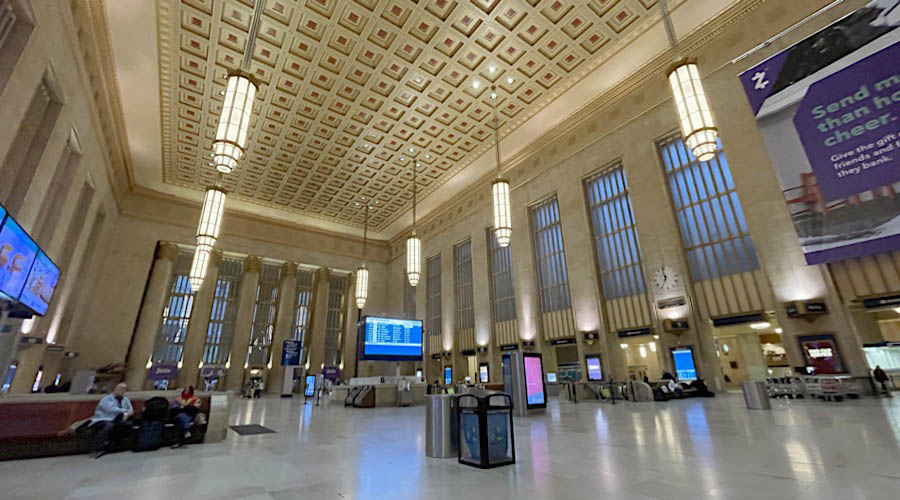
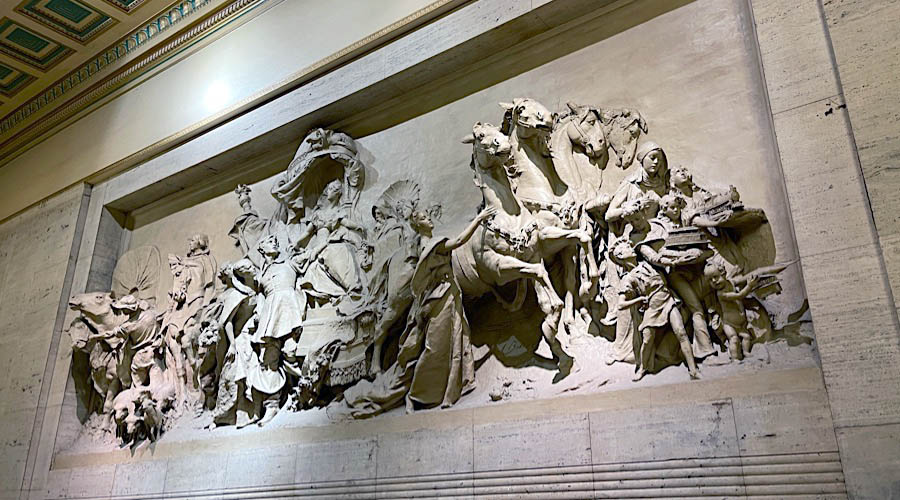
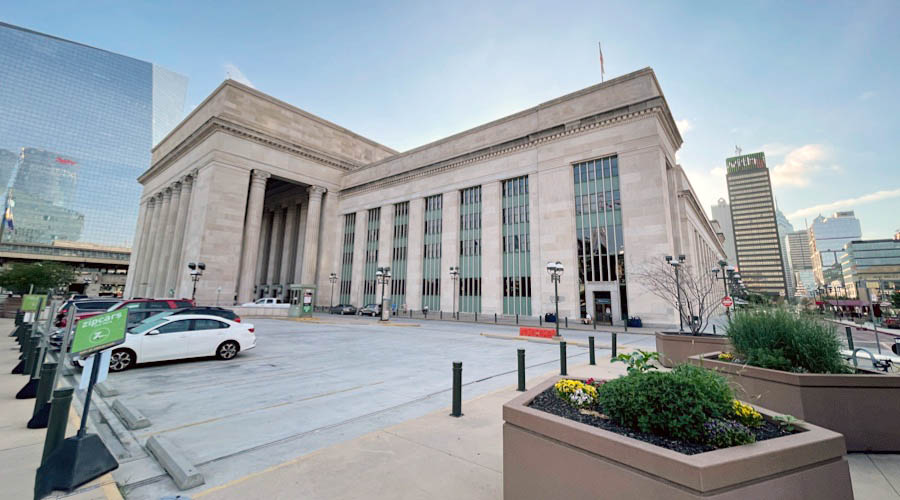
See our complete Philadelphia 30th Street Station scrapbook in Amtrak Great Stations
Delaware
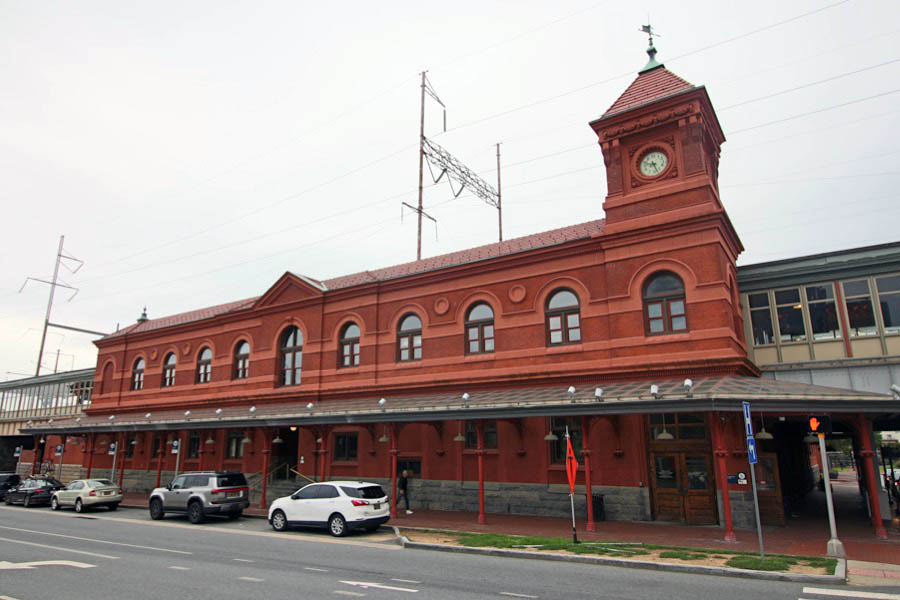
116 Wilmington, De
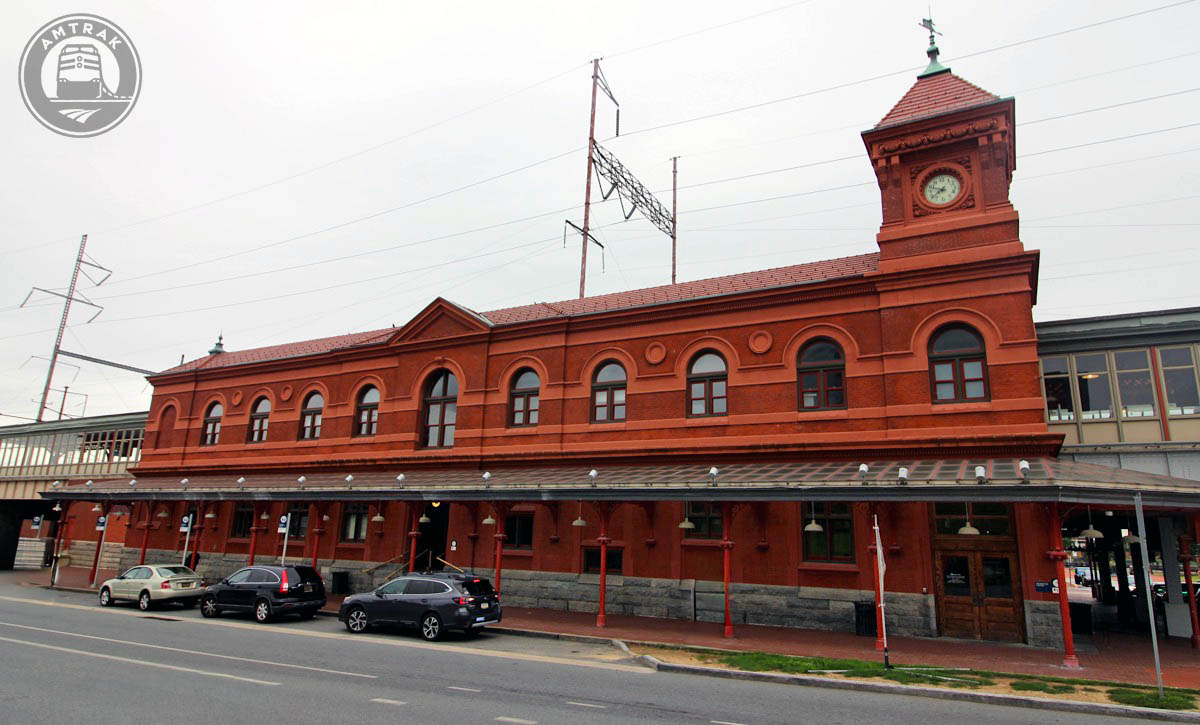
Wilmington, De / Jul 2025 / RWH
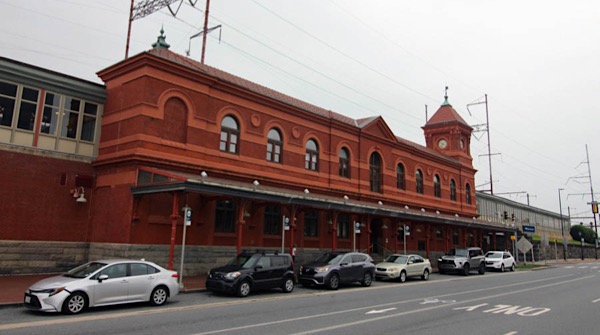
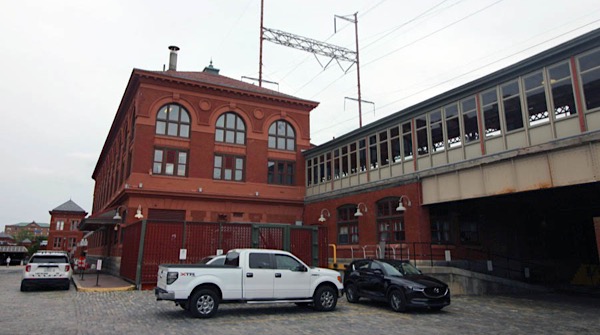
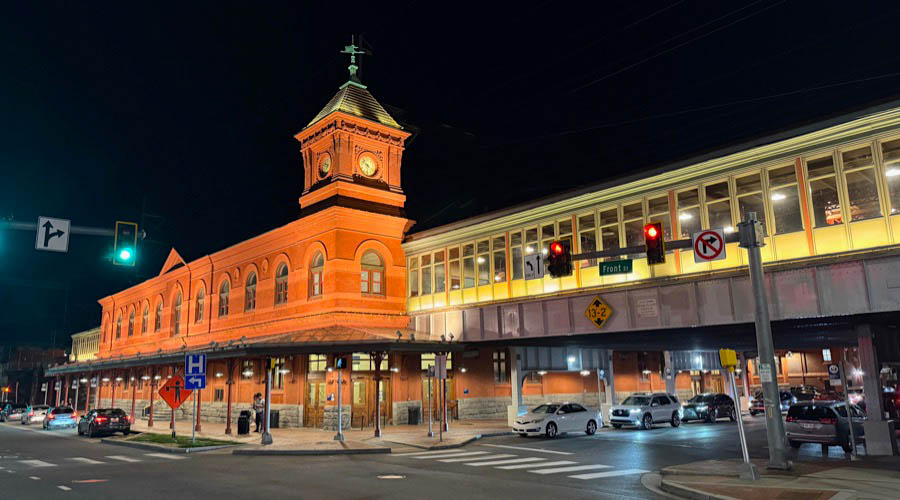
RWH
See our complete Wilmington Station scrapbook in Amtrak Great Stations
Maryland
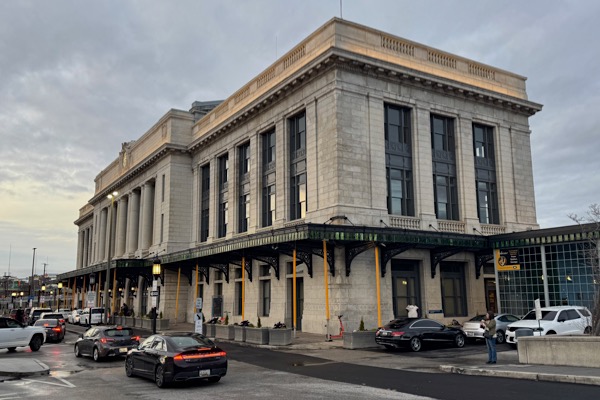
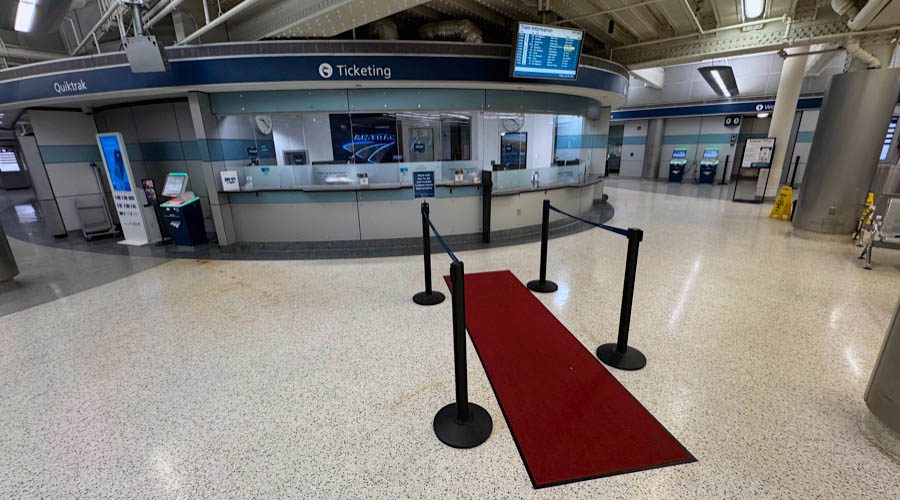
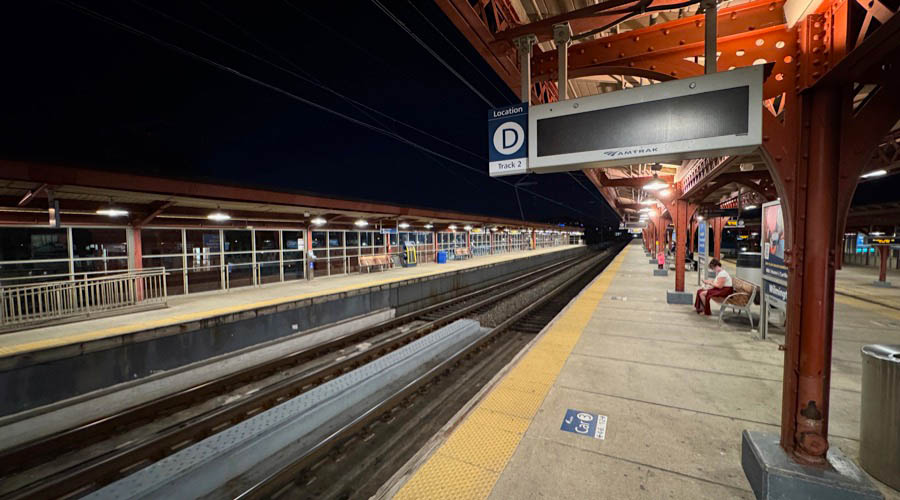
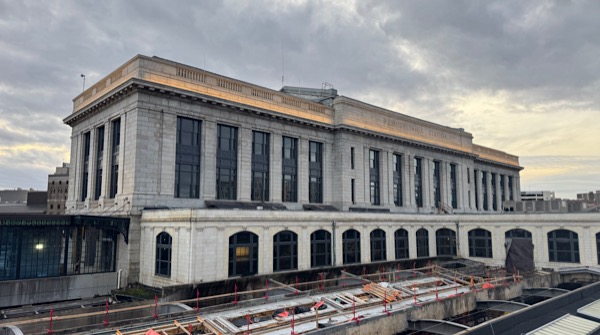
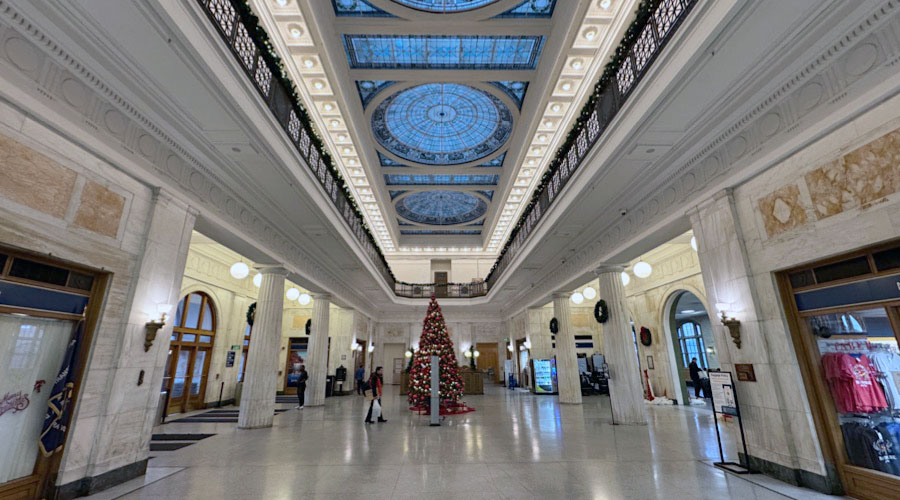
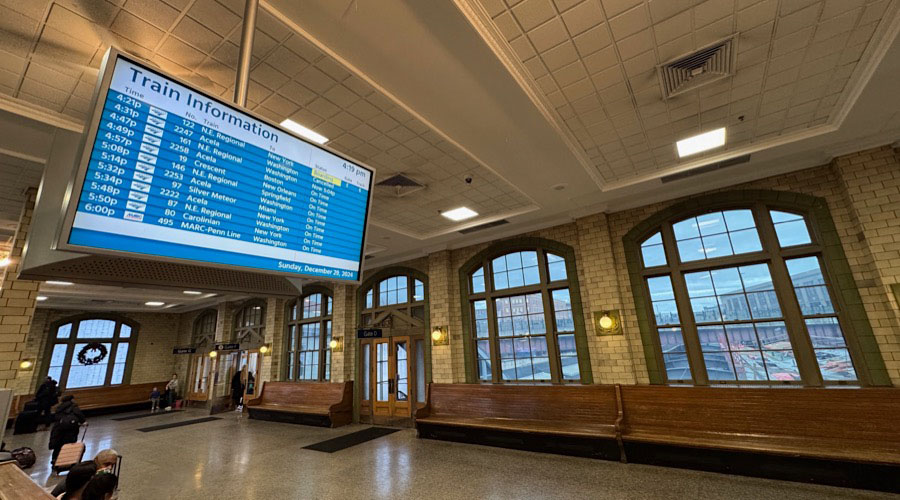
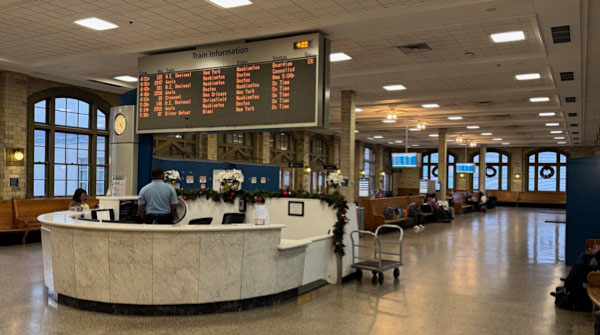
185 Baltimore, Md
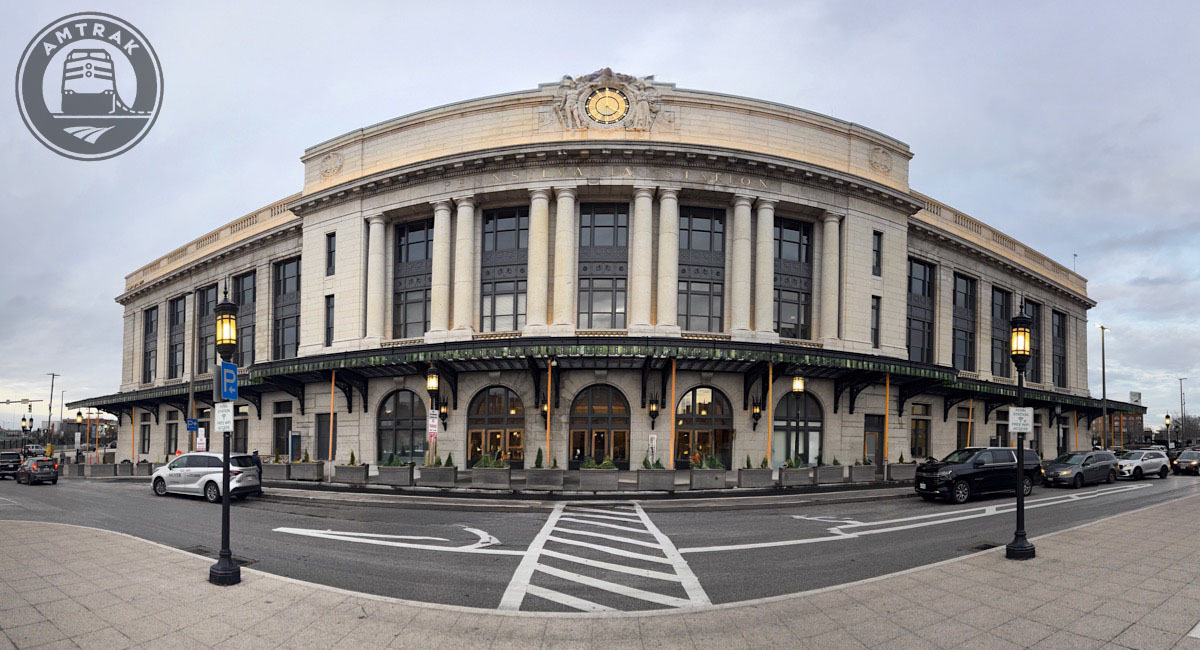
Baltimore, MD / Dec 2024 / RWH
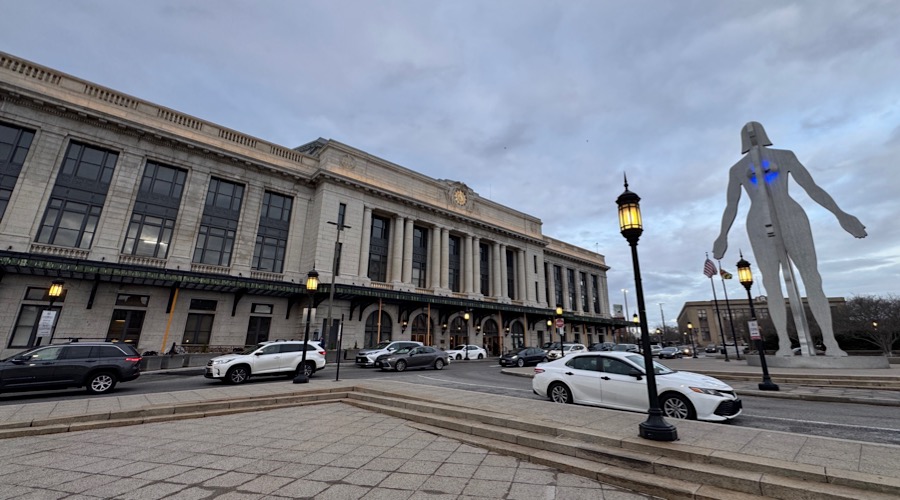
RWH
See our complete Baltimore Penn Station scrapbook in Amtrak Great Stations
D. Columbia
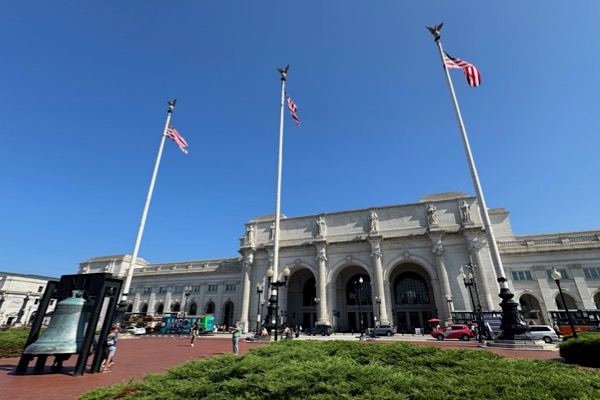
226 Washington DC
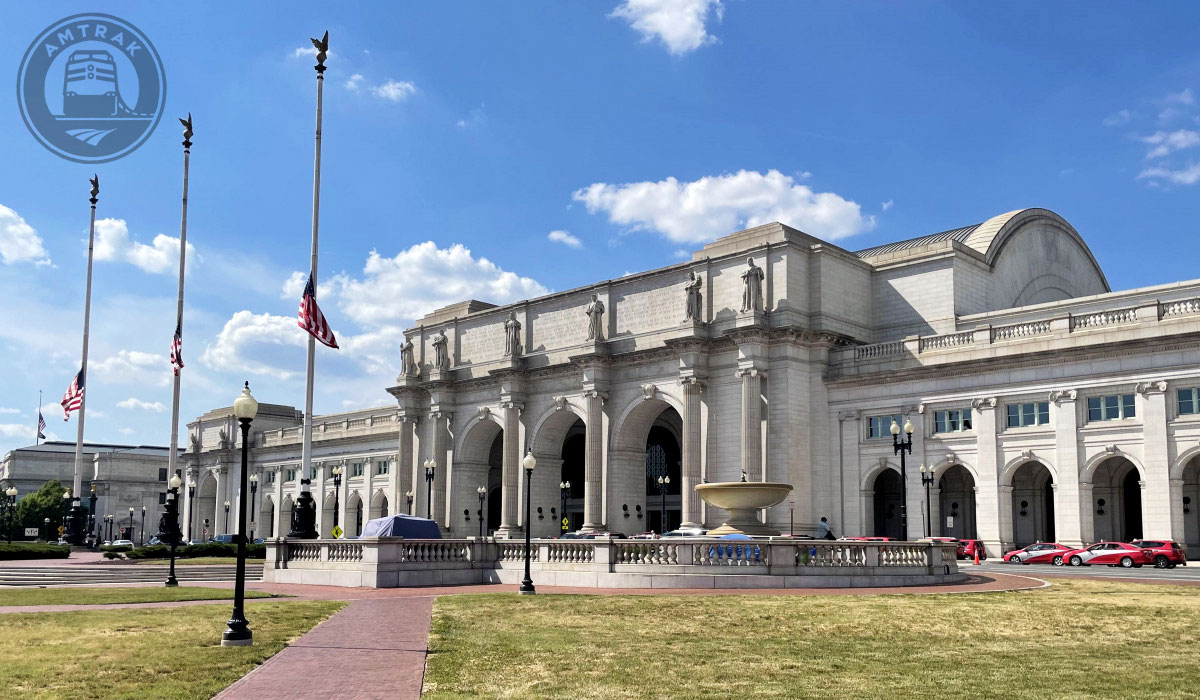
Washington, DC / Aug 2024 / RWH
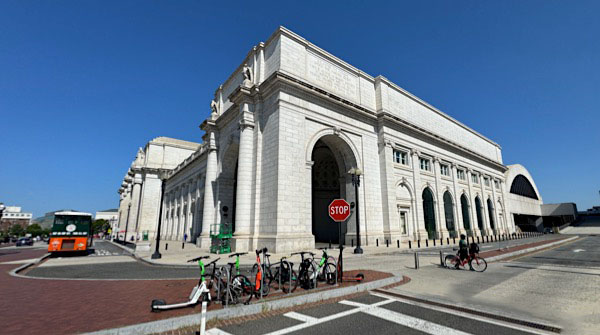
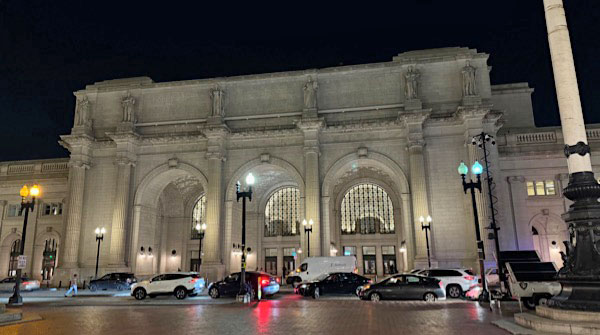
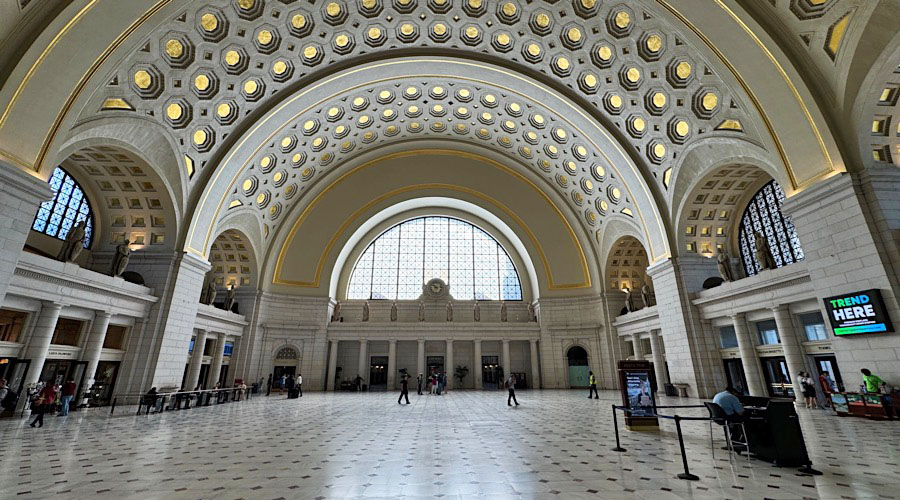
RWH
See our complete Washington Union Station scrapbook in Amtrak Great Stations
Virginia
234 Alexandria, Va
- Cardinal
- Carolinian
- Crescent
- Northeast Regional
- Palmetto
- Silver Meteor
- Silver Star
Jul 2025 / RWH
Alexandria, Va / Jul 2025 / RWH
Alexandria, Va / Jul 2025 / RWH

Click to see the Alexandria Union Station plotted on a Google Maps page

- location:Alexandria, VA
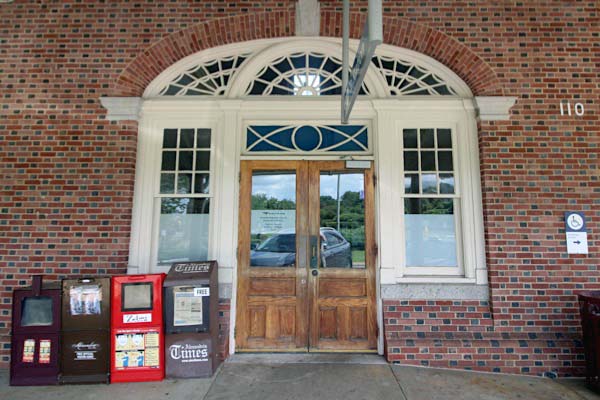
- address:110 Callahan Drive
- type:city station, 2 platforms
- owner:City of Alexandria
- opened:September 1905
- builder:Southern Railway
- style:Federal Revival, brick
- renovated:1982, 1990
- services:tickets, baggage
- links: Amtrak | Great Stations
Alexandria, Va / Jul 2025 / RWH
Jul 2025 / RWH
Alexandria, Va / Jul 2025 / RWH
Alexandria, Va / Jul 2025 / RWH
postcard / collection
Jul 2025 / RWH
Alexandria, Va / Jul 2025 / RWH

RWH
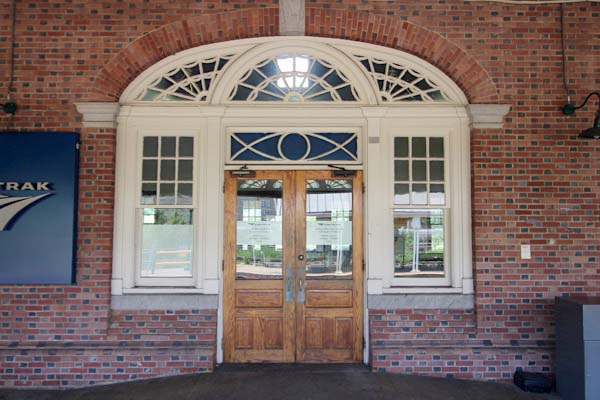
Jul 2025 / RWH
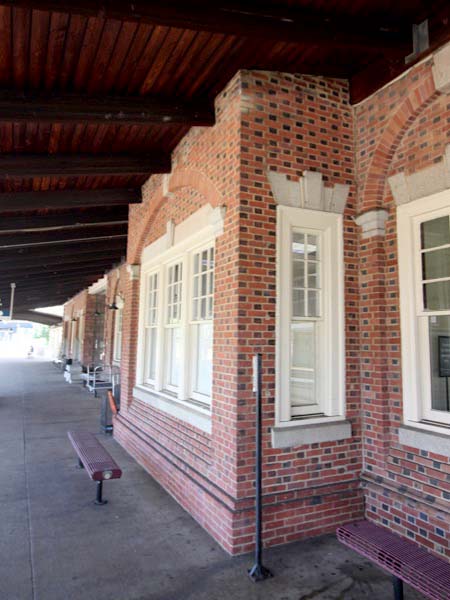
Jul 2025 / RWH
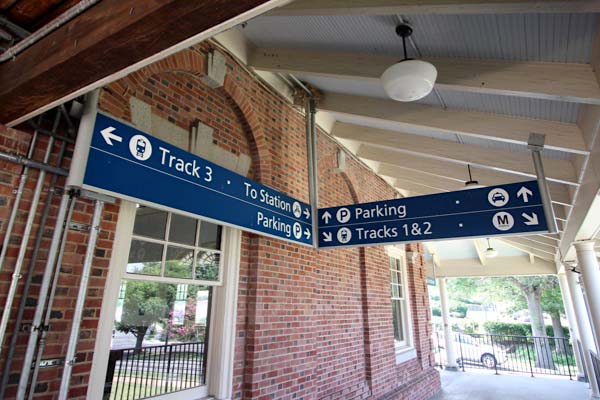
Jul 2025 / RWH
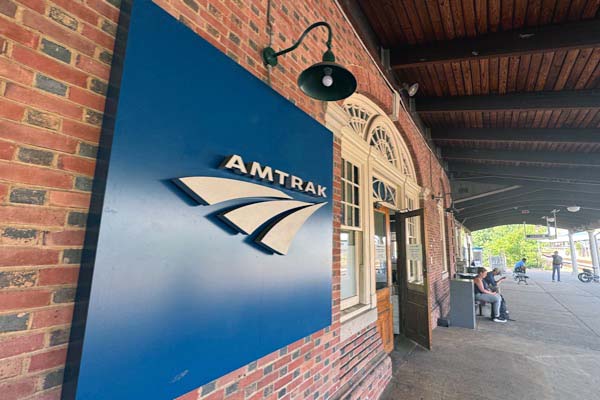
Jul 2025 / RWH
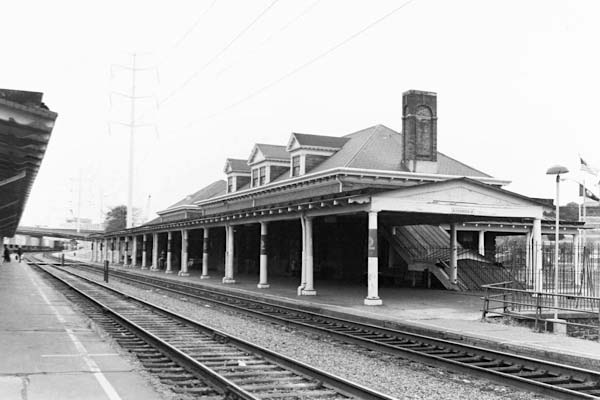
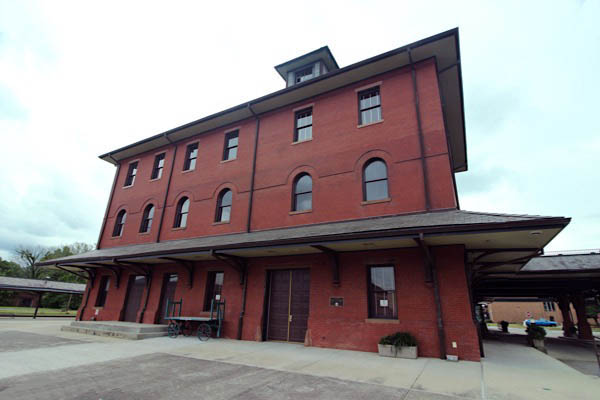
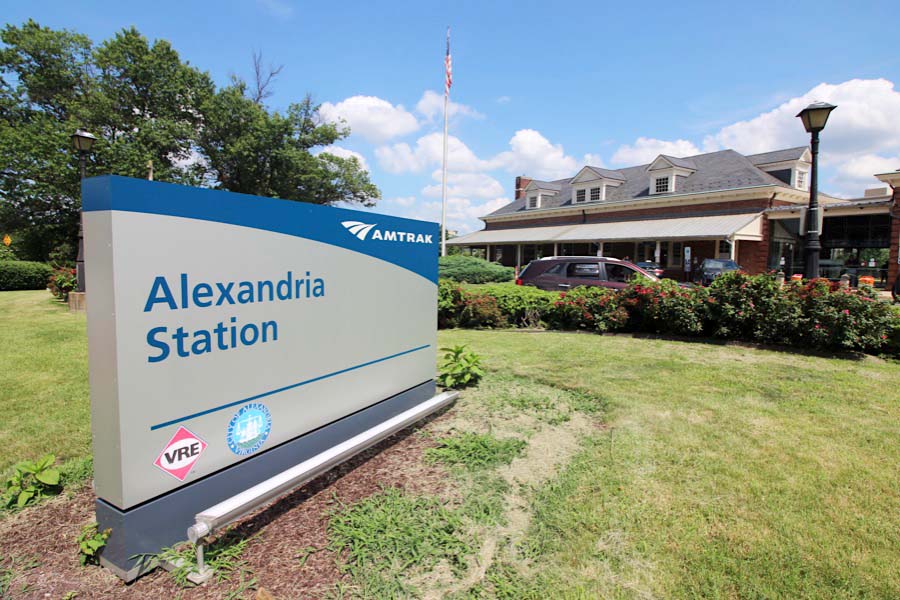
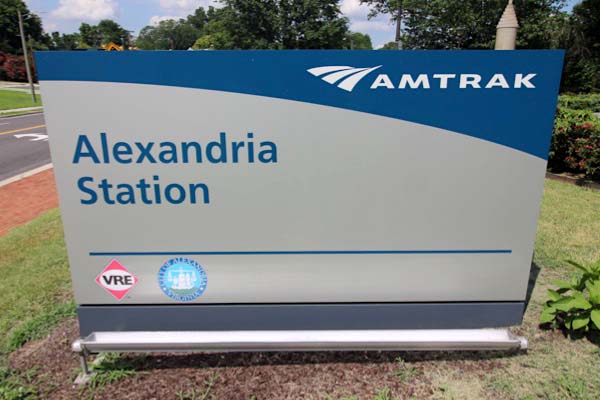
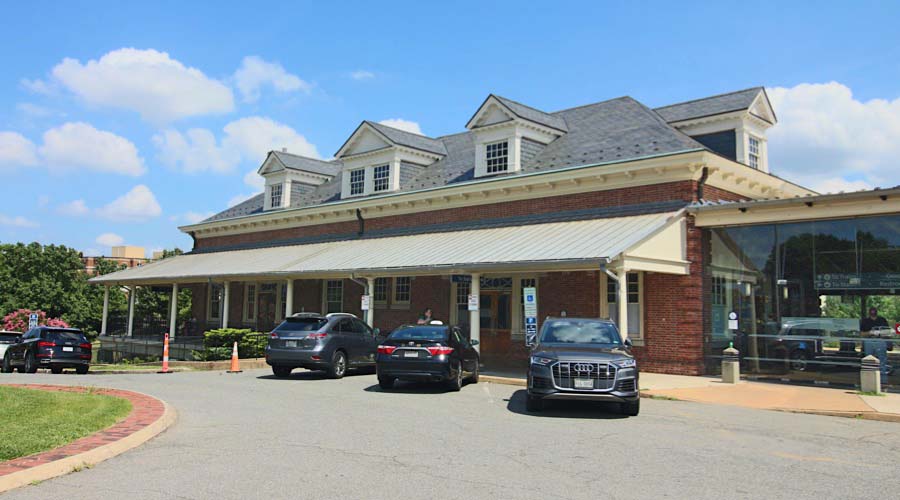
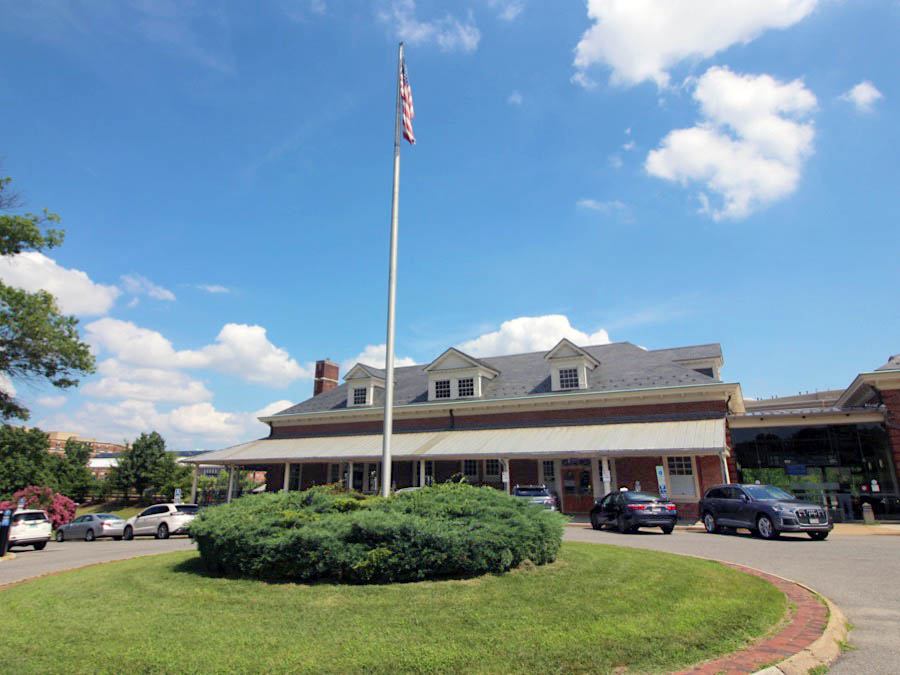
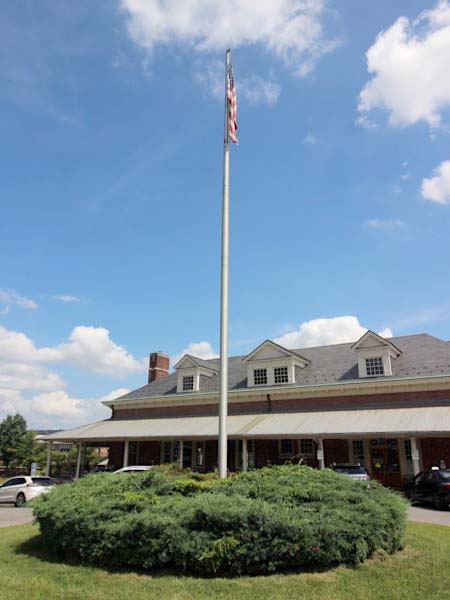
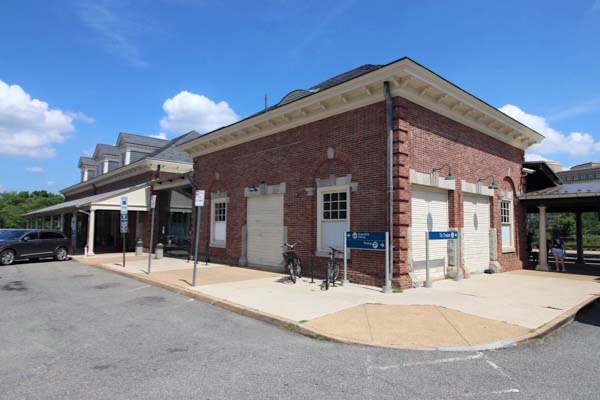
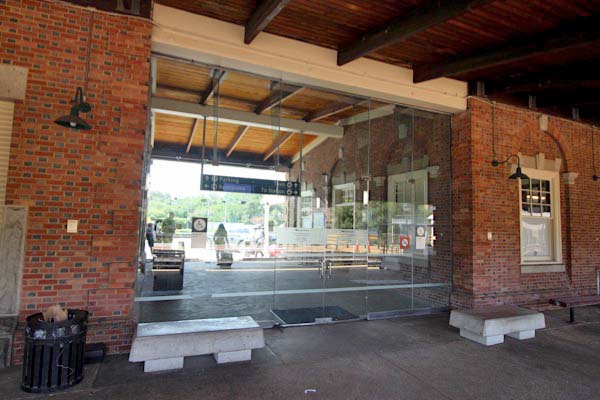
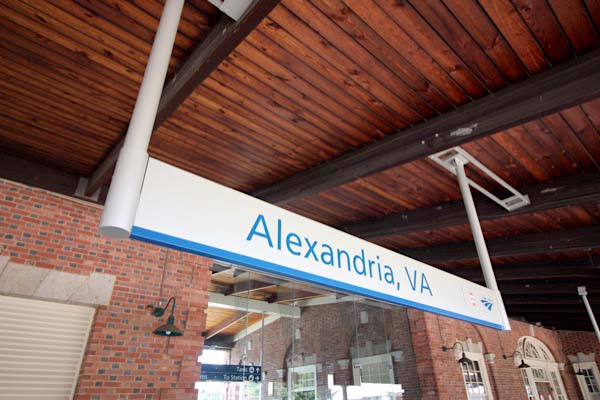
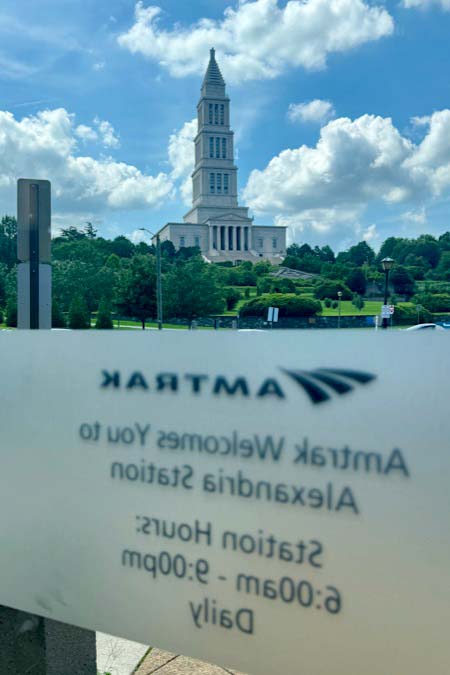
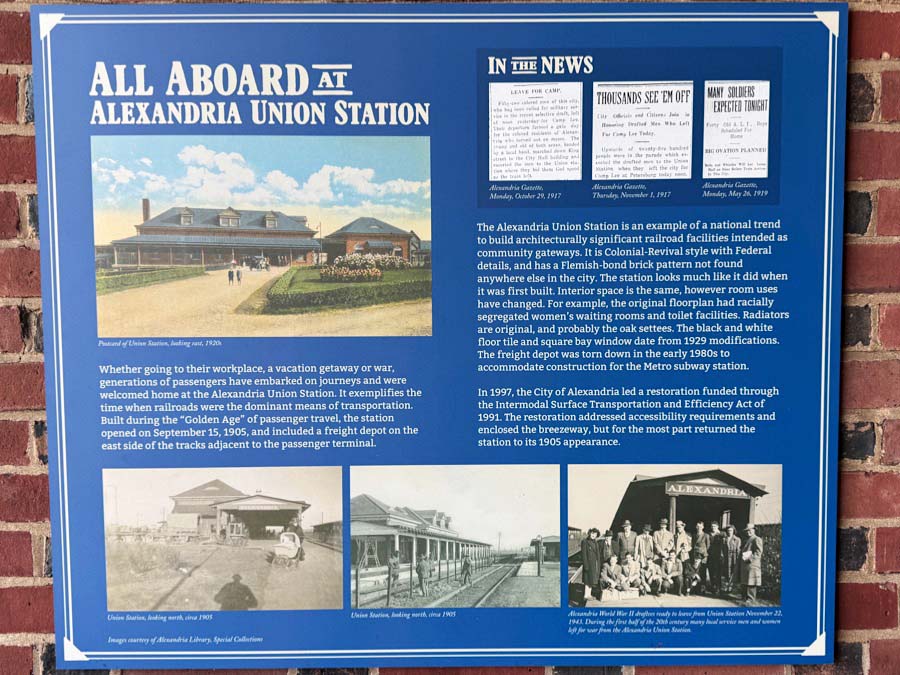
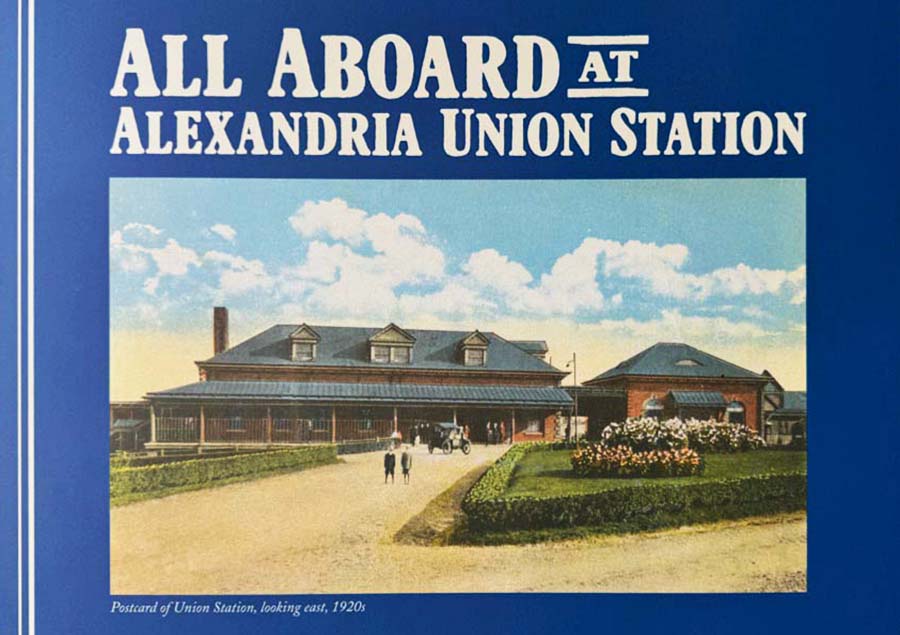
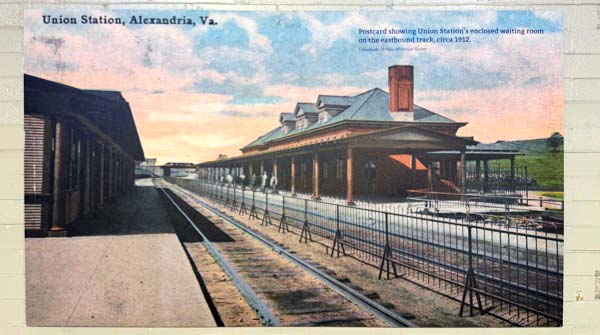
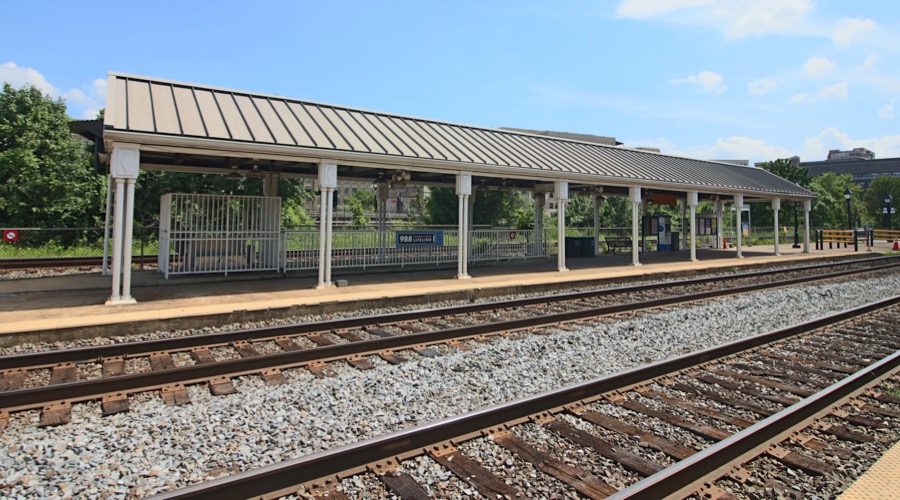
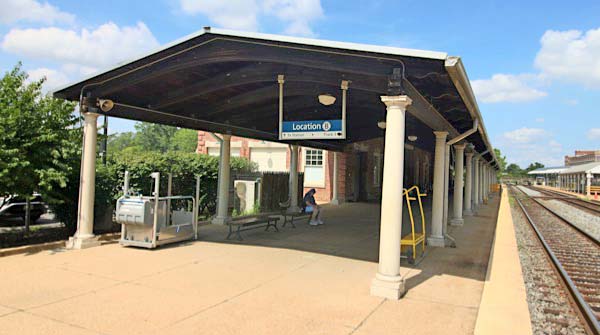
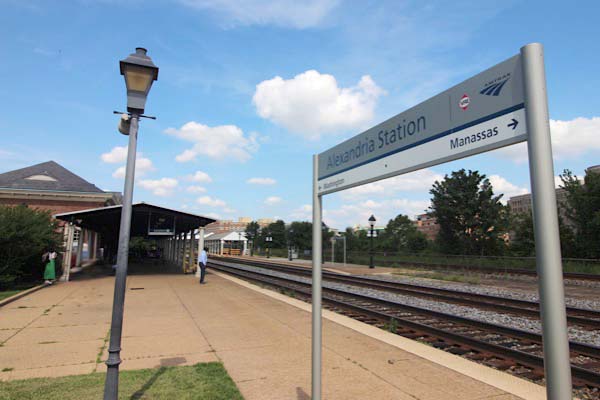
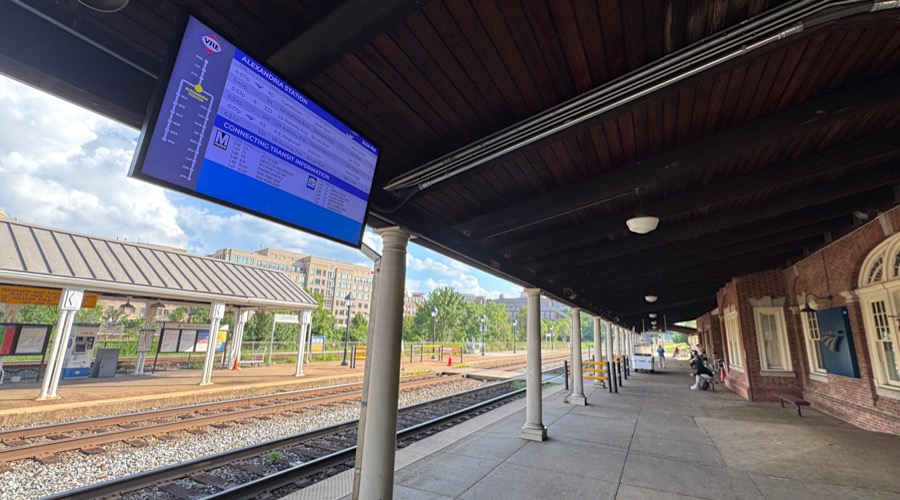
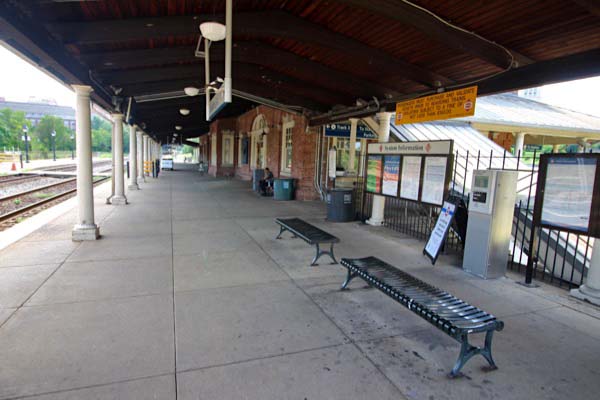
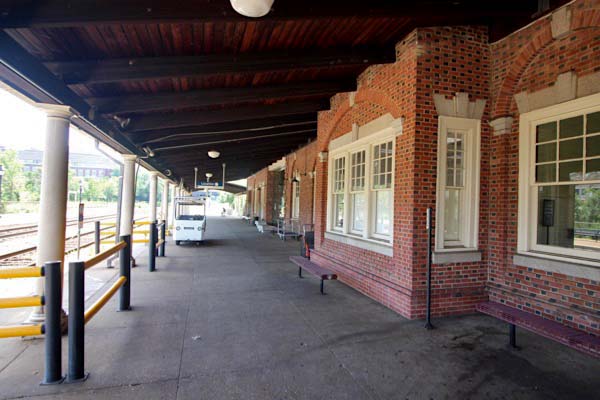
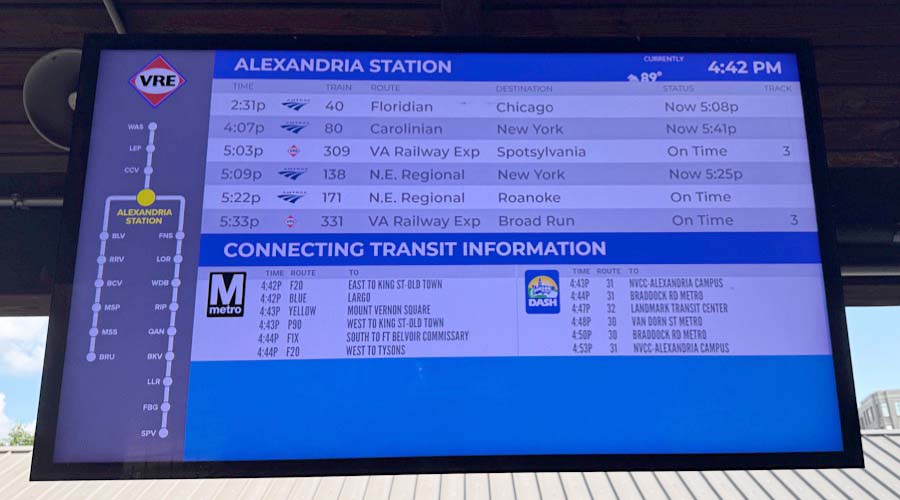
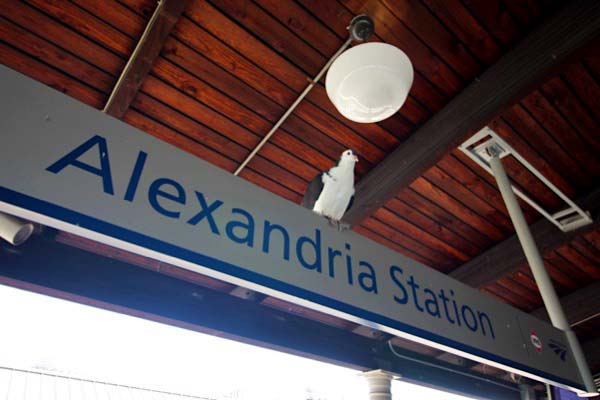
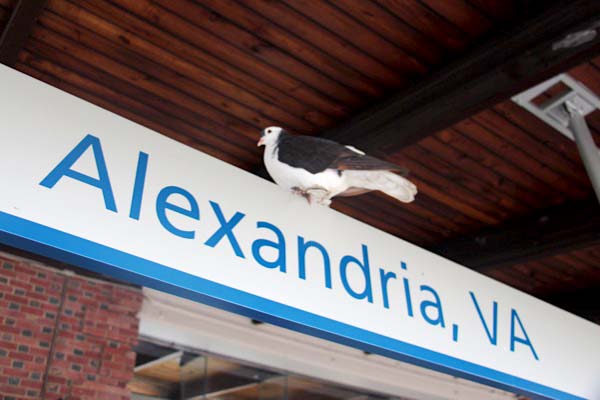
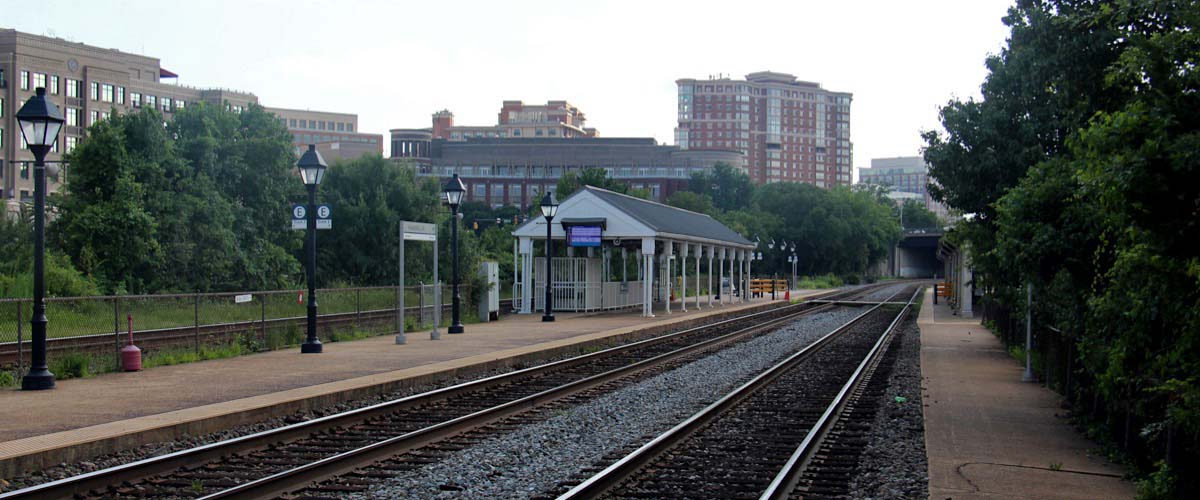
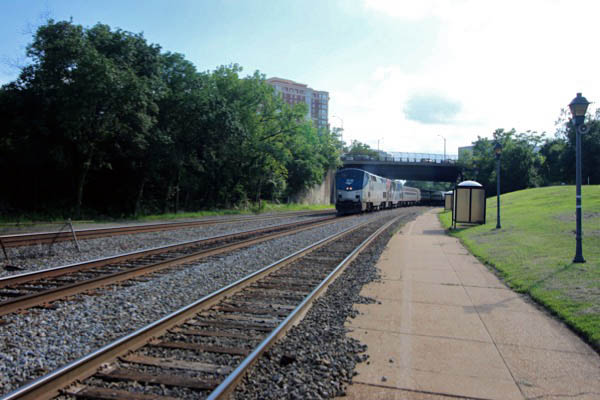
 The Amtrak station in Alexandria opened on September 15, 1905. The train station is directly adjacent to the King Street Metro station and faces the George Washington Masonic National Memorial.
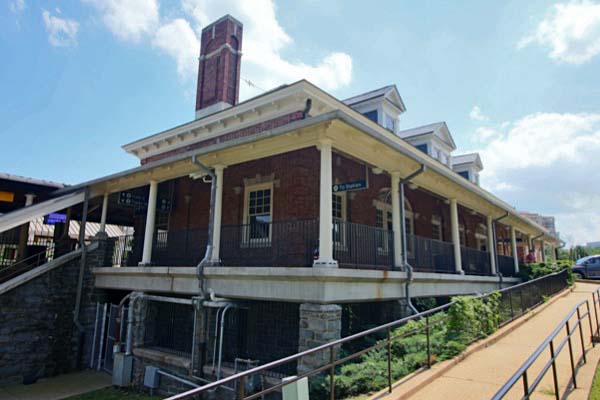
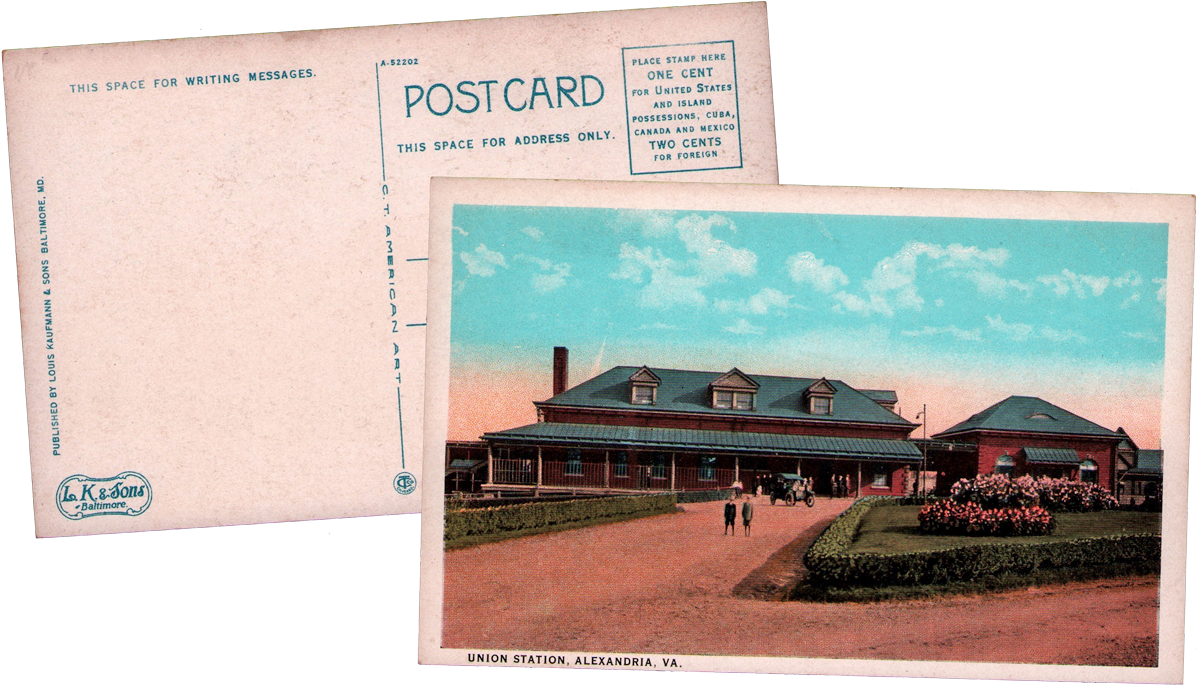
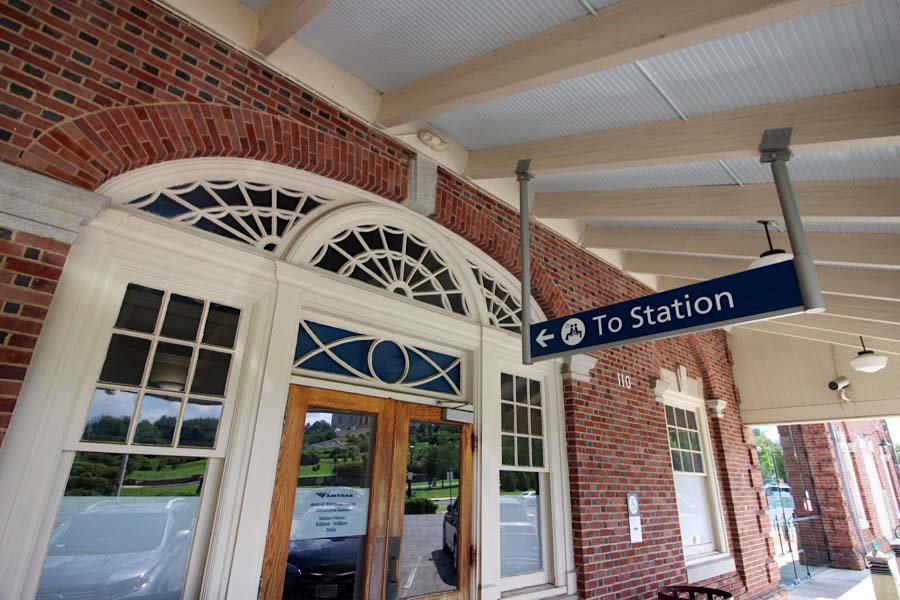
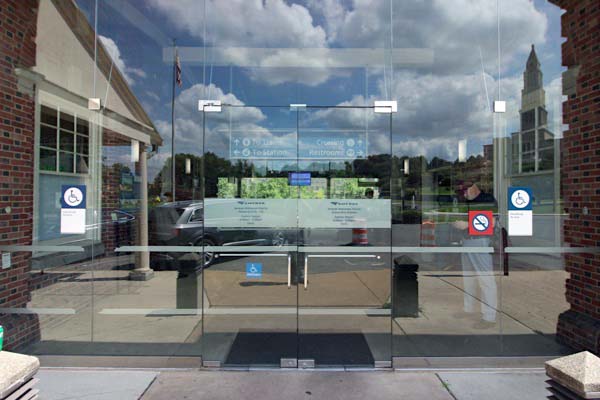
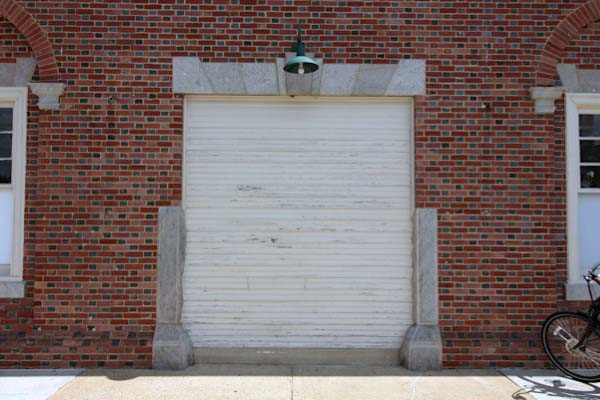
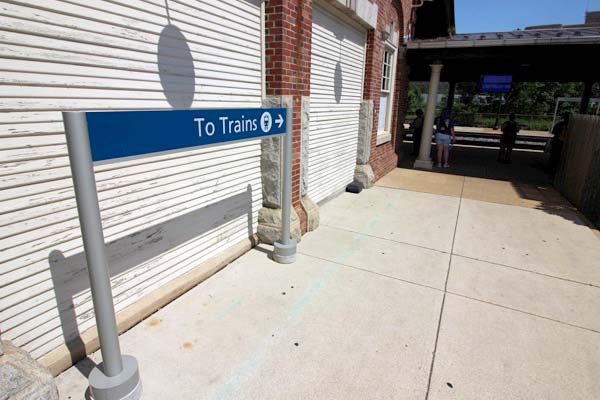
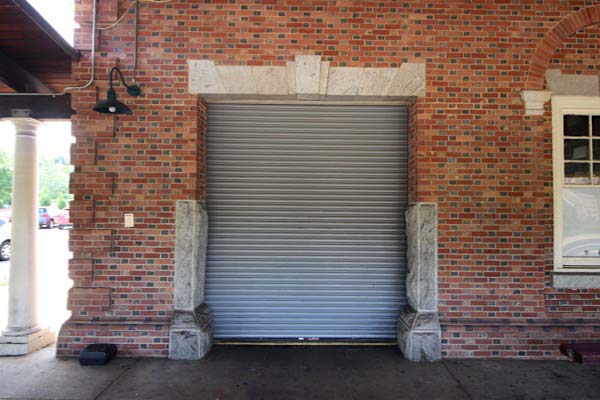
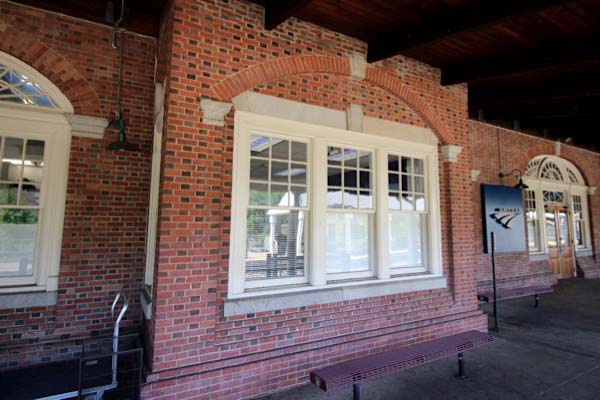
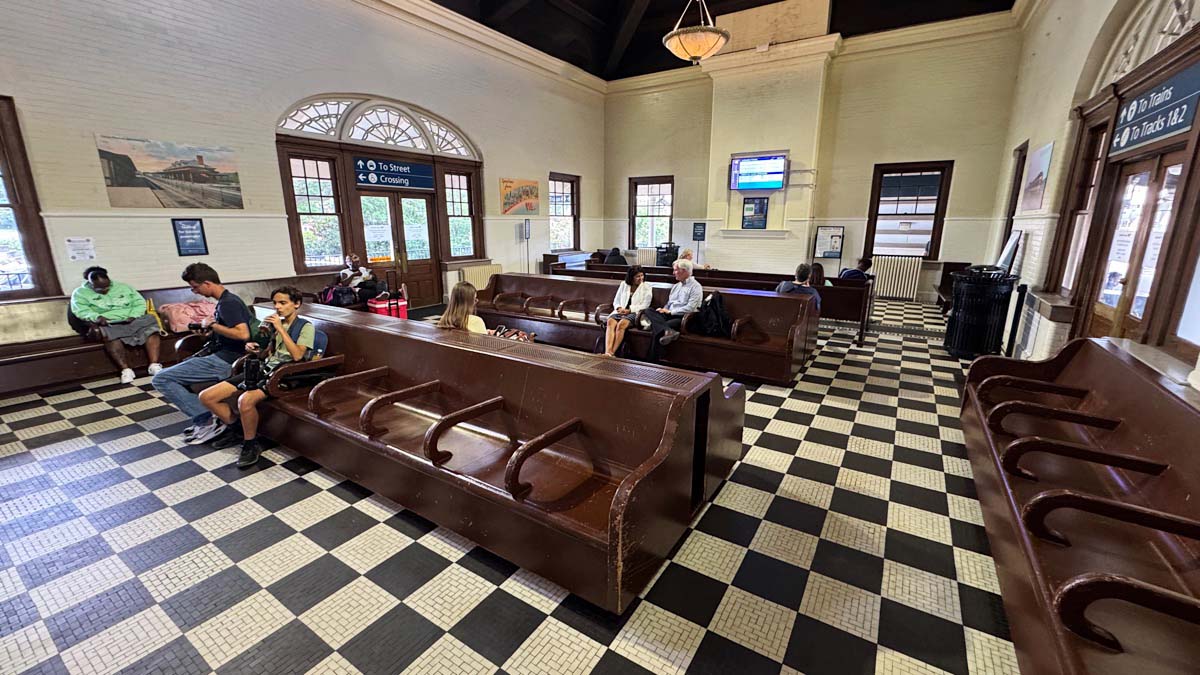
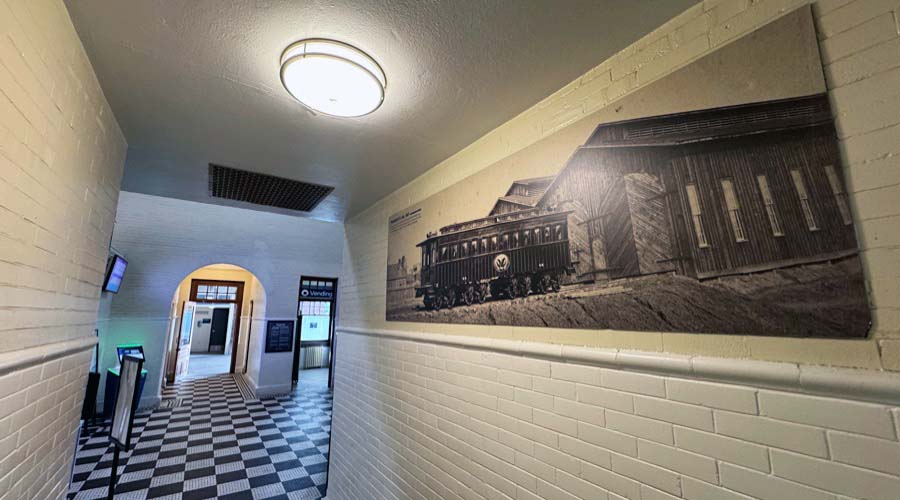
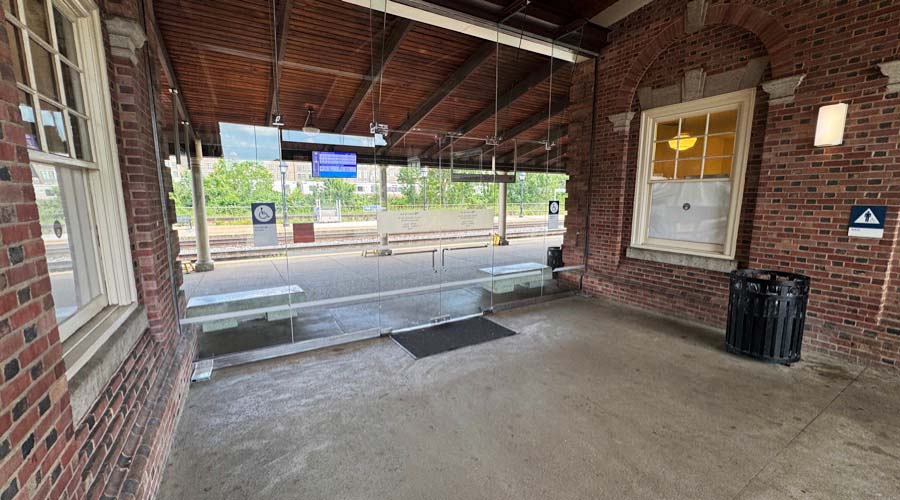
Though not as grandiose as its nearby Washington, D.C. counterpart, this “other Union Station” has a unique style of its own. The station is a one-story brick building consisting of the original main passenger depot and baggage building separated by a 20-foot wide open gateway passage and covered by a covered terrace. The designer used the Federal Revival Style: a 20th century mixture of Neoclassical architecture borrowed from buildings constructed just after the American Revolution, fitting for its location. Both original buildings are still in use. Though many minor renovations have taken place, including the slightly more extensive renovations that occurred in 1982 and the mid-1990s, the original buildings remain essentially unchanged. The limestone and granite Veterans of Foreign Wars memorial was constructed at the station in 1942.
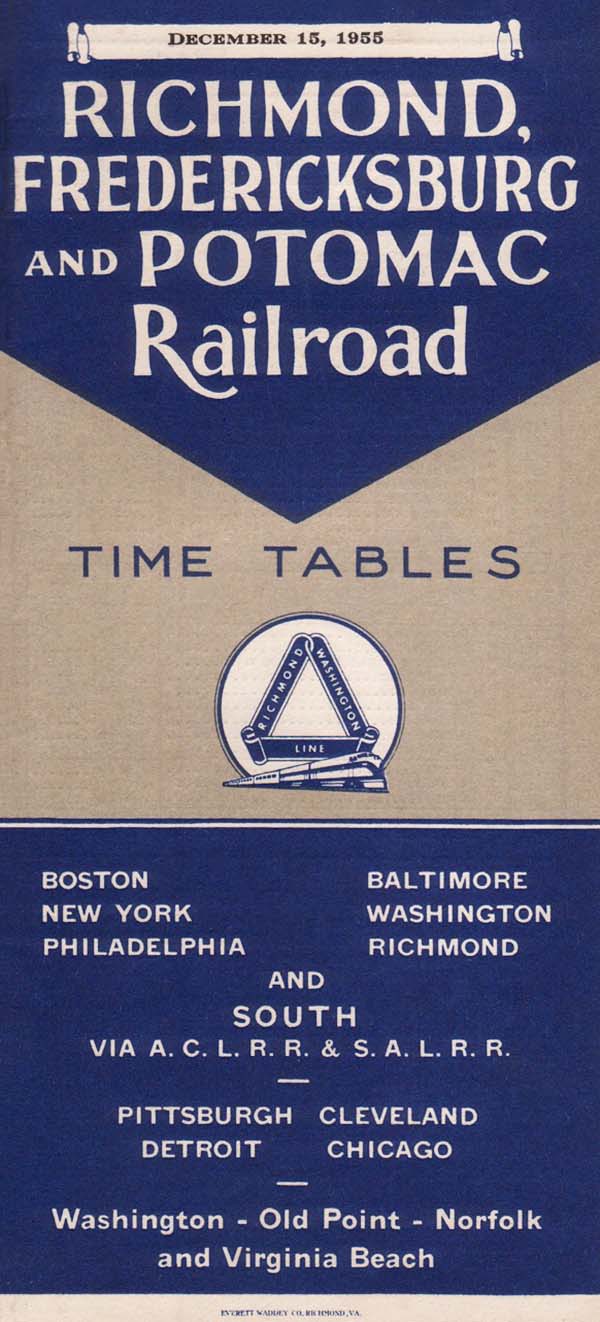
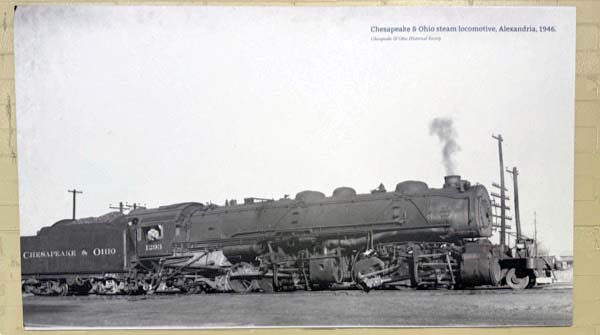
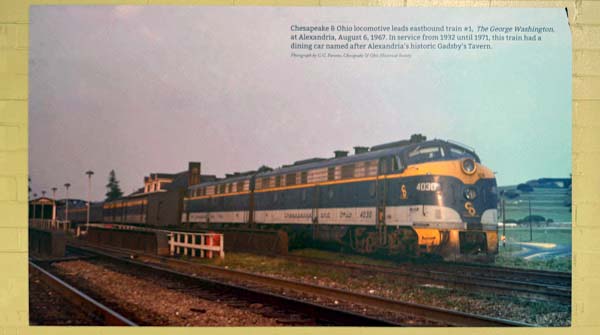
In the late 1840s, the city of Alexandria invested in five major railroad projects to better compete with Baltimore as a regional industrial and trade center, but ended up in a confusion of mergers and failures. In 1901, the railroads serving the region built Potomac Yard, a consolidated rail yard. In 1905, the city of Alexandria commissioned the Washington Southern Railway Company (later part of the Richmond, Fredericksburg & Potomac, now CSX) to build the Alexandria Union Station at a cost of $62,020.55. The station also served the Chesapeake & Ohio and Southern Railway trains.
Jul 2025 / RWH
Jul 2025 / RWH
Jul 2025 / RWH
Jul 2025 / RWH
Jul 2025 / RWH
Jul 2025 / RWH
 Alexandria, Va
Alexandria, Va / Jul 2025 / RWH
Alexandria, Va / Jul 2025 / RWH
Jul 2025 / RWH
Alexandria, Va / Jul 2025 / RWH

Jul 2025 / RWH
Jul 2025 / RWH
Jul 2025 / RWH
Jul 2025 / RWH
Alexandria, Va / Jul 2025 / RWH
Silver Meteor
Alexandria, Va / March 1980 / Charles Freericks
northbound #41
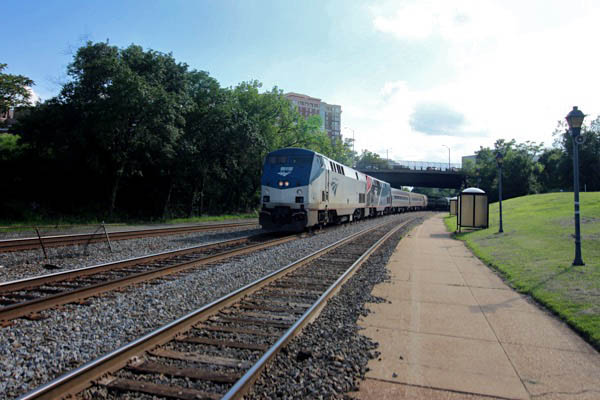
Alexandria, Va / Jul 2025 / RWH
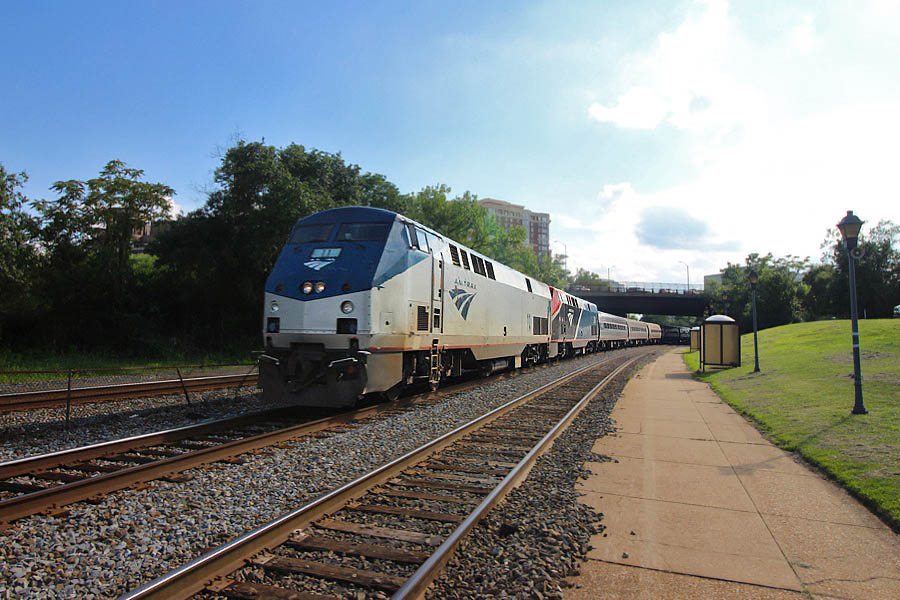
Floridian
Alexandria, Va / Jul 2025 / RWH
Amtrak's
Floridian
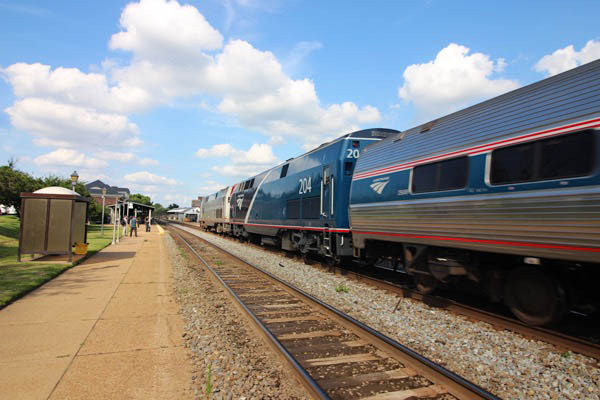
Alexandria, Va / Jul 2025 / RWH
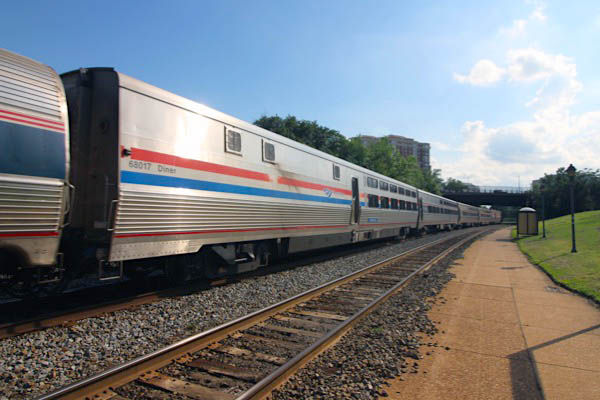
Alexandria, Va / Jul 2025 / RWH
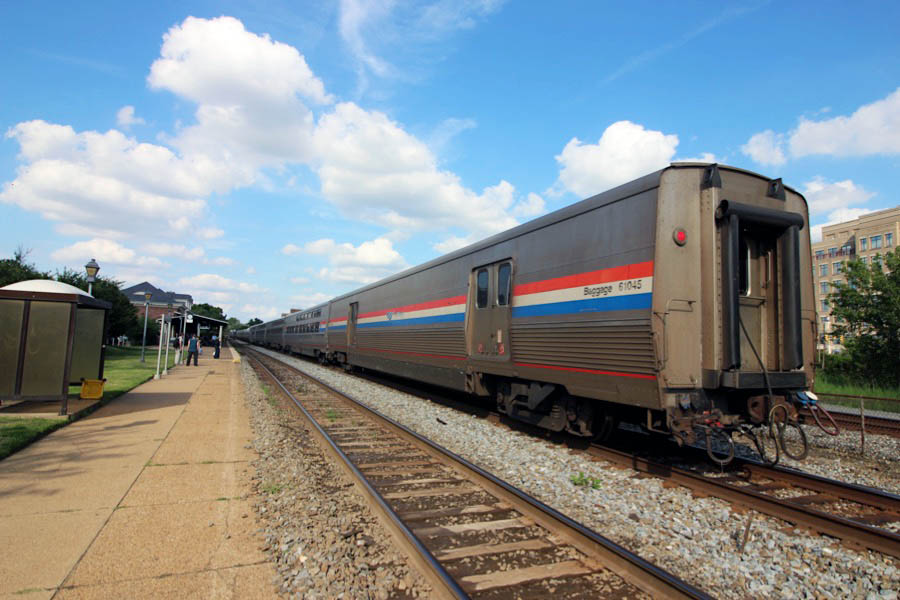
Alexandria, Va / Jul 2025 / RWH
Woodbridge, Va
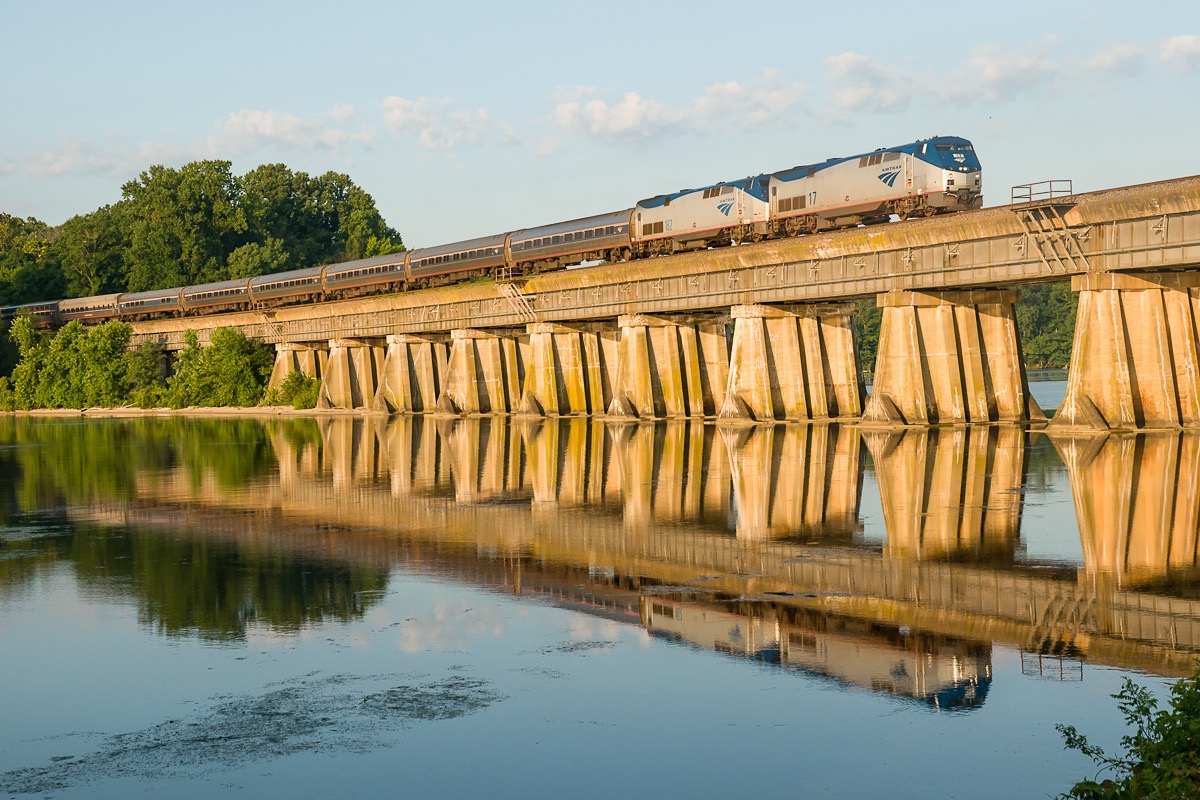
Silver Meteor
Woodbridge, Va / Aug 2017 / George Hamlin
280 Fredericksburg
- Carolinian
- Northeast Regional
- Silver Meteor
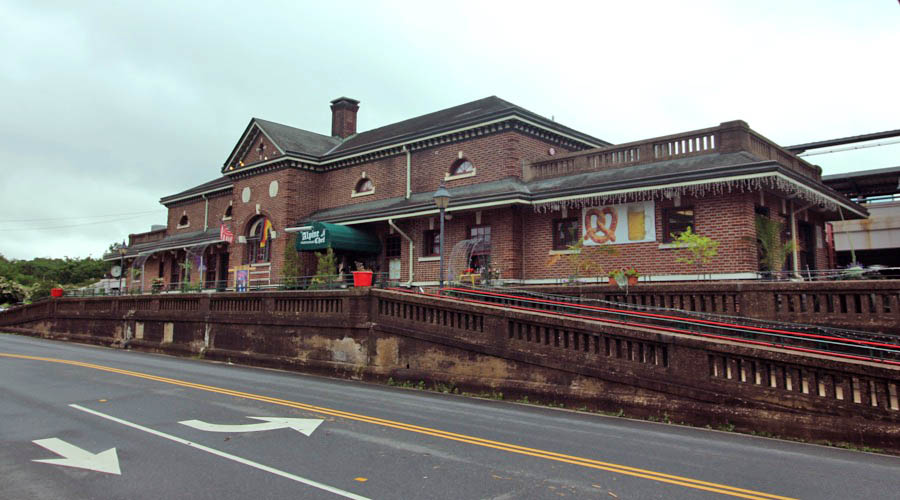
Fredericksburg, Va / Jun 2023 / RWH
- location:Fredericksburg VA
- address:425 Princess Anne St
- type:city station, 2 platforms
- owner:VA Dept Pub Transport
- opened:1910
- builder:RF&P Railroad
- style:Colonial Revival brick
- renovated:2010, 2024
- services:none, platform only
- links: Amtrak | Great Stations
Fredericksburg, Va / Jun 2023 / RWH
Click to see the Fredericksburg station area plotted on a Google Maps page
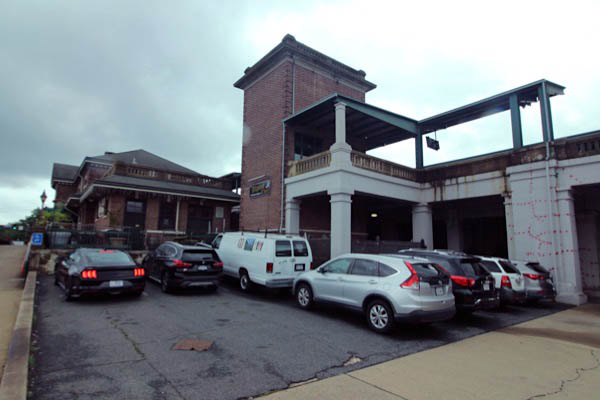
Fredericksburg, Va / Jun 2023 / RWH
Fredericksburg, Va / Jun 2023 / RWH
Fredericksburg, Va / Jun 2023 / RWH
Fredericksburg, Va / Jun 2023 / RWH
Jun 2023 / RWH
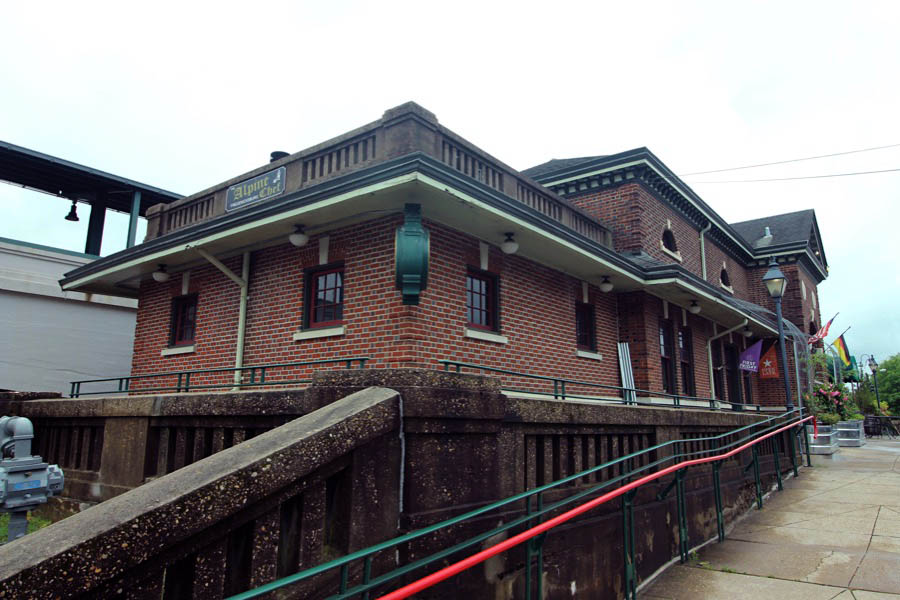
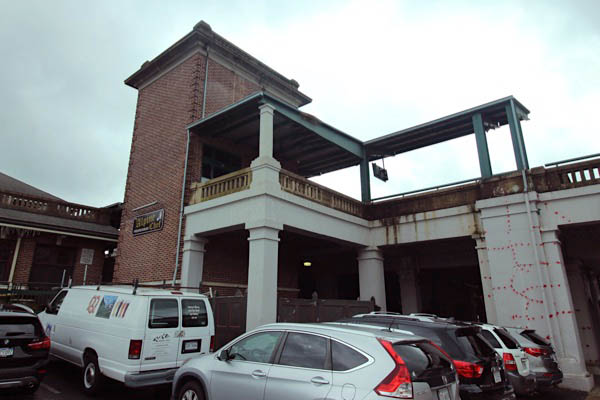
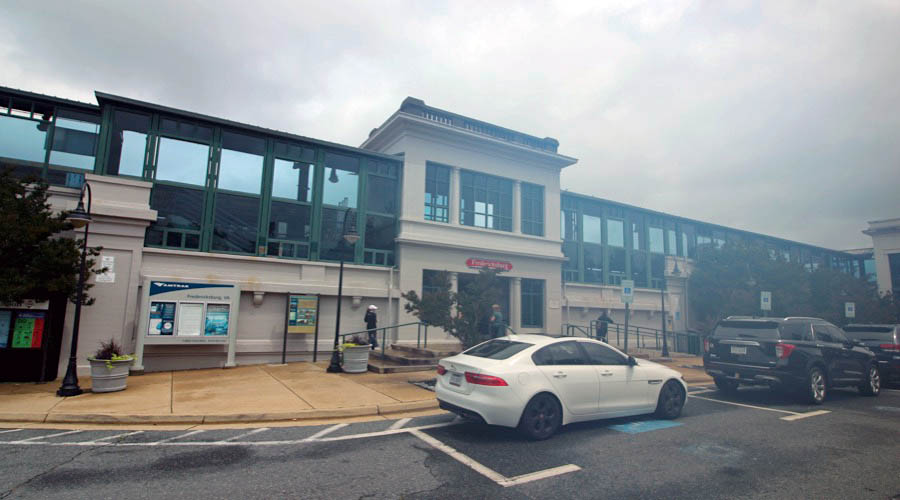
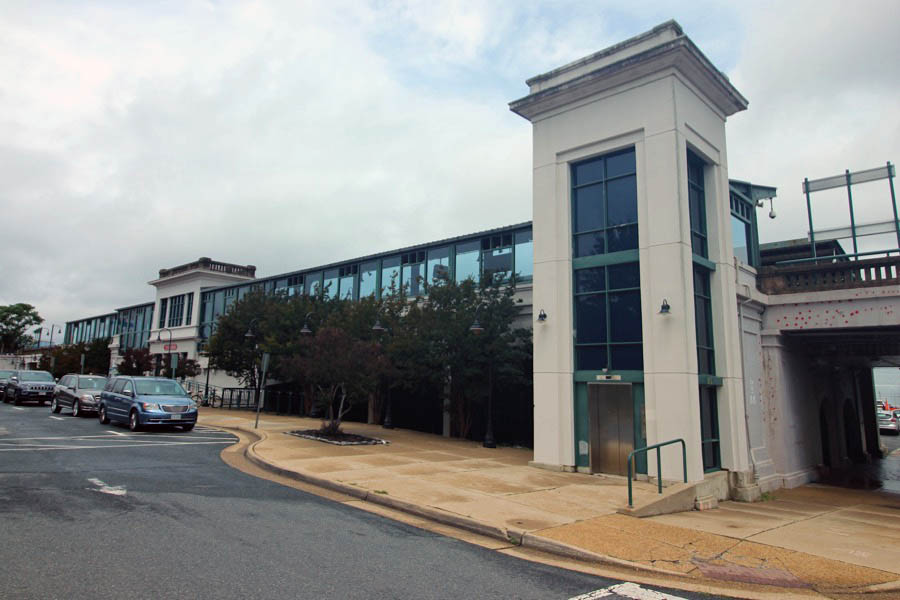
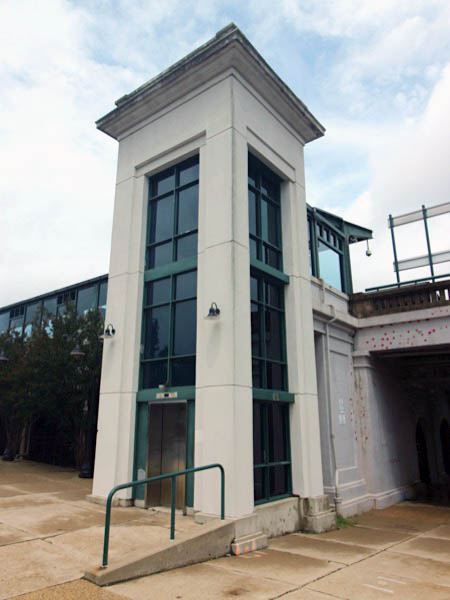
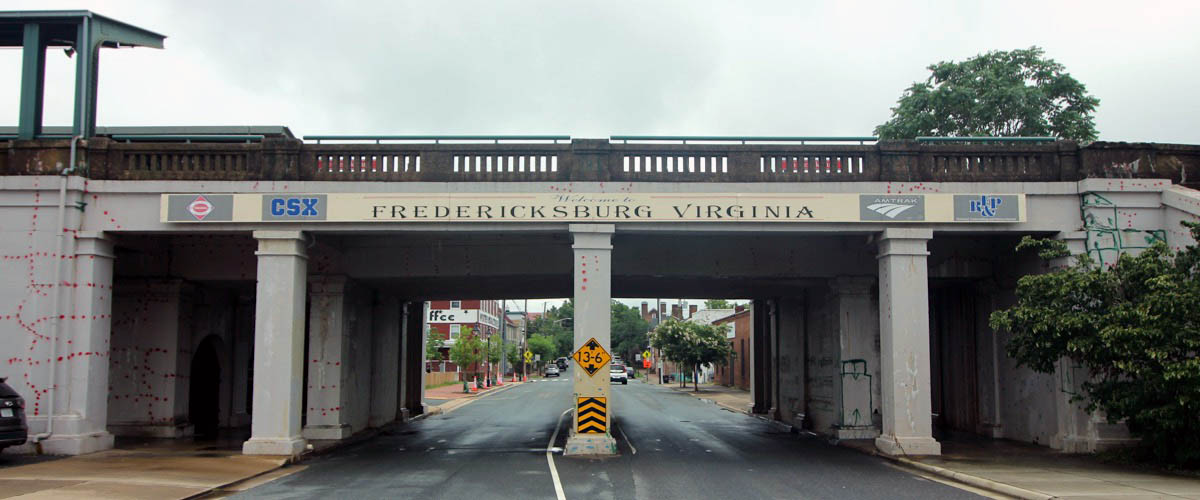
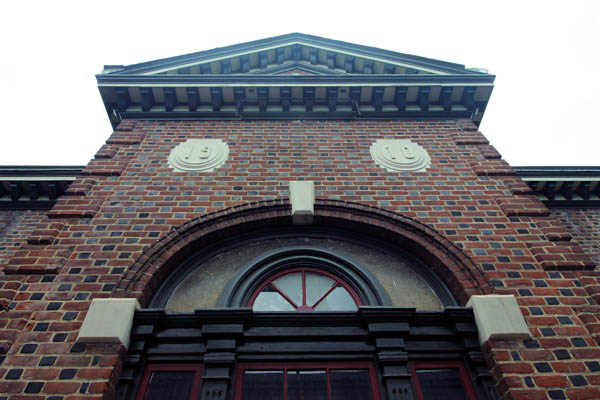
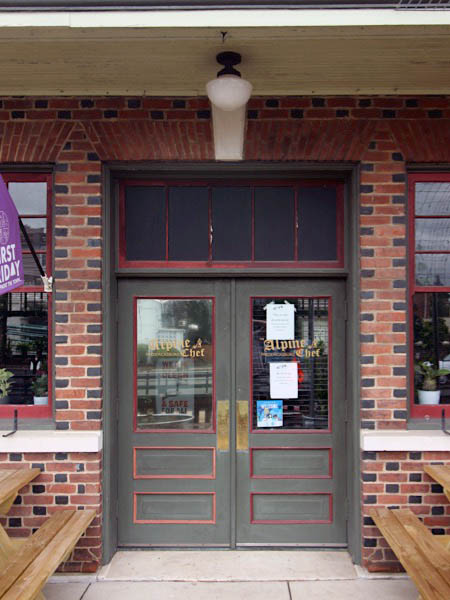
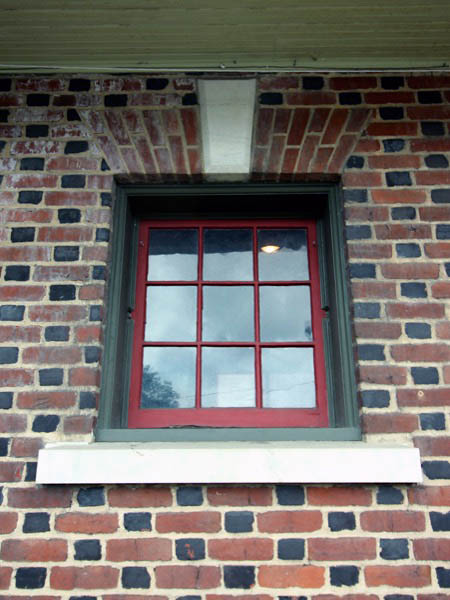
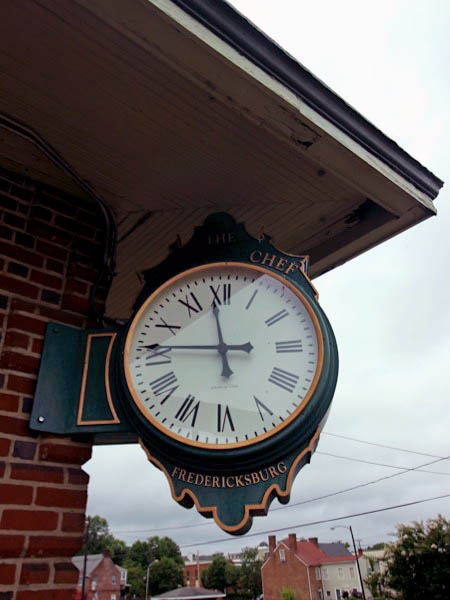
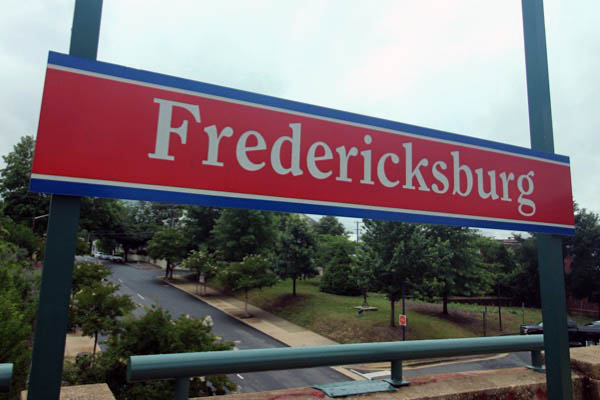
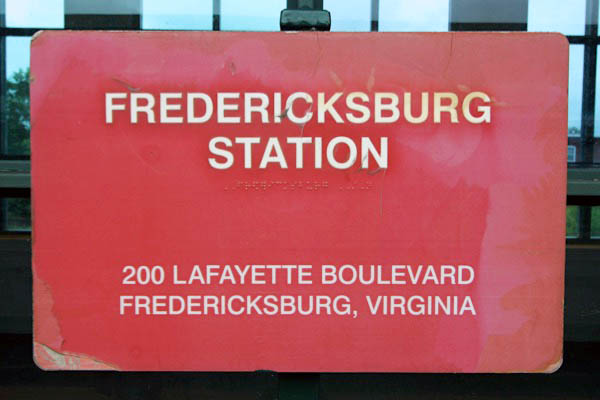
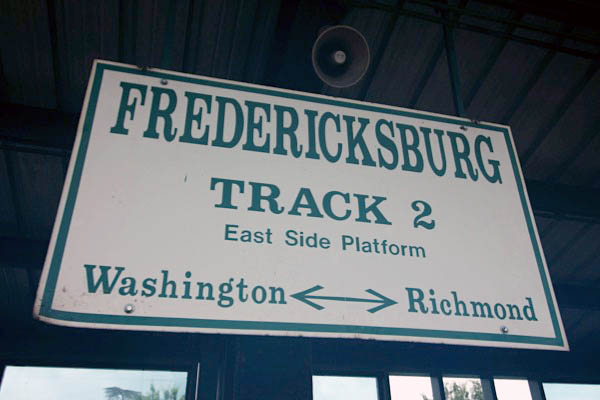
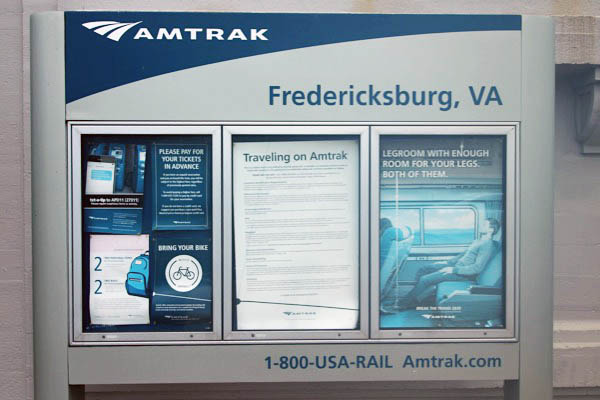
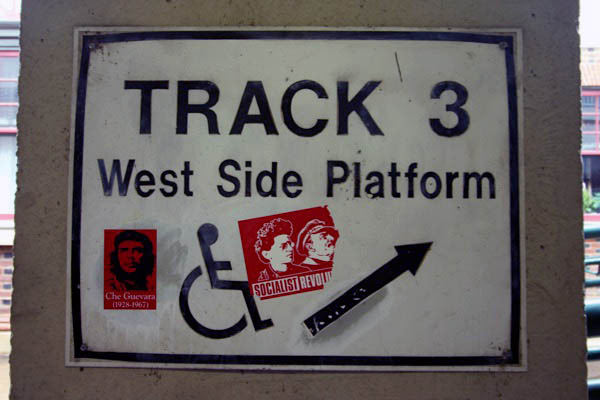
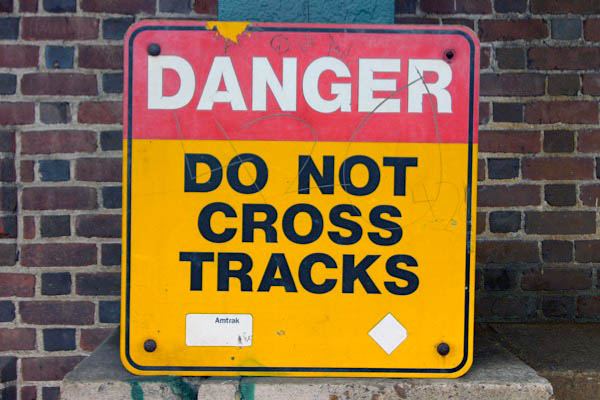
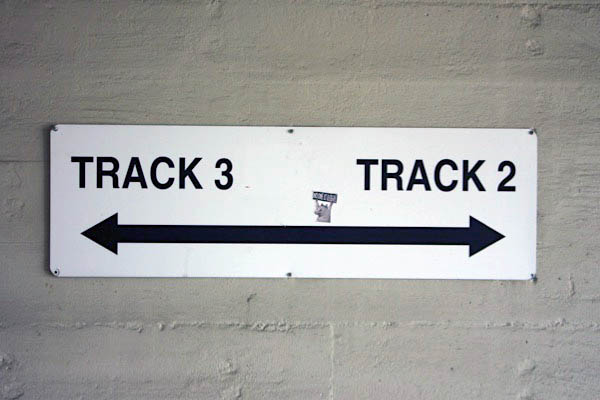
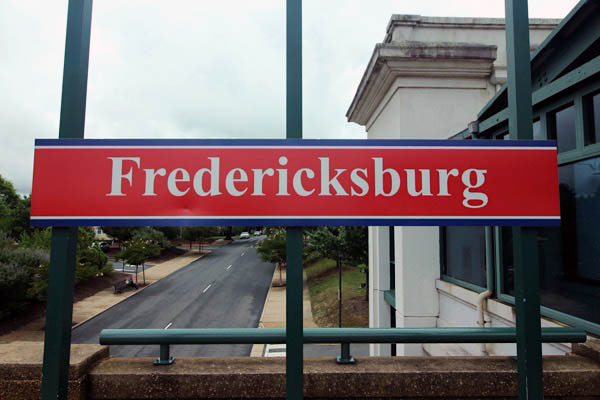
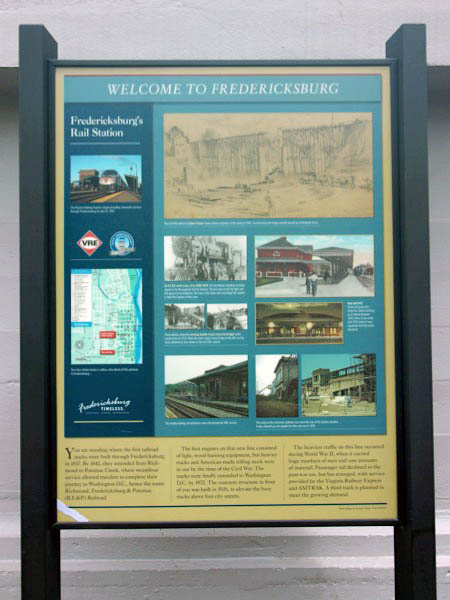
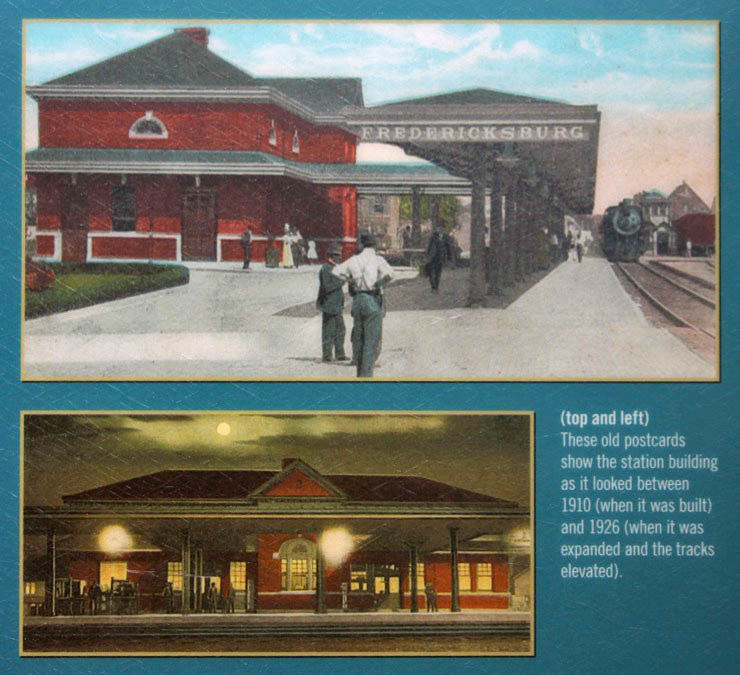
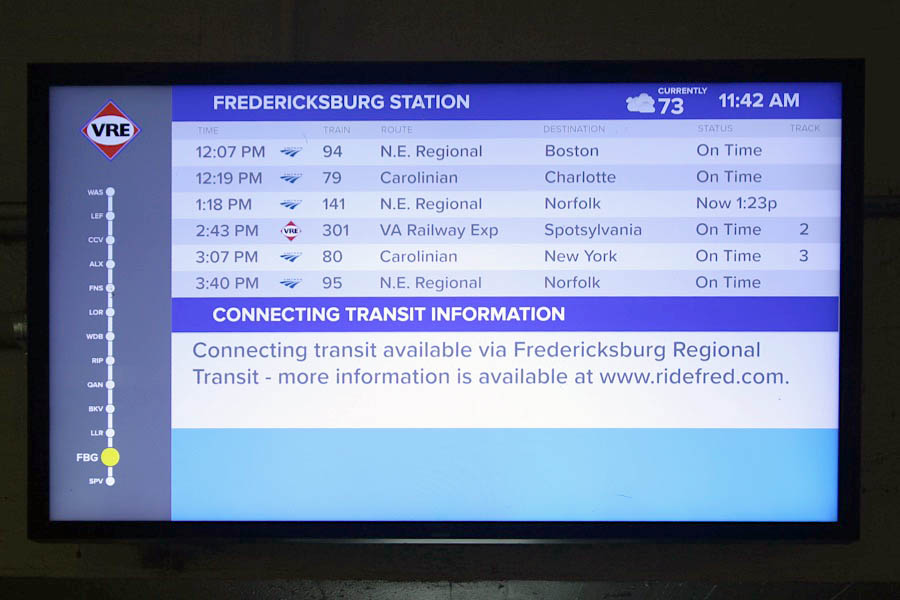
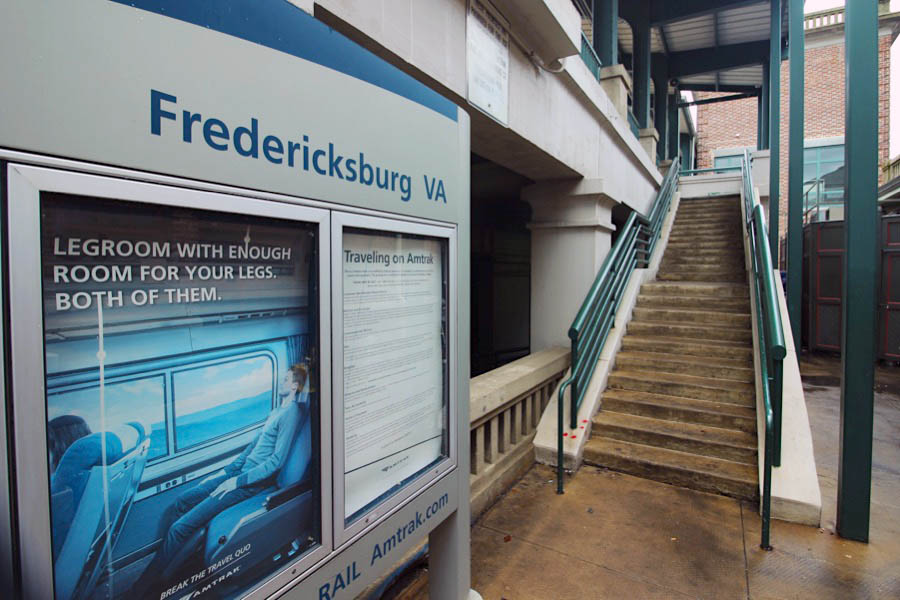
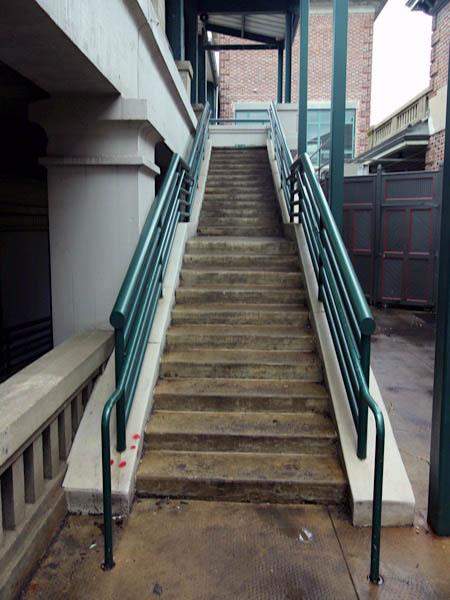
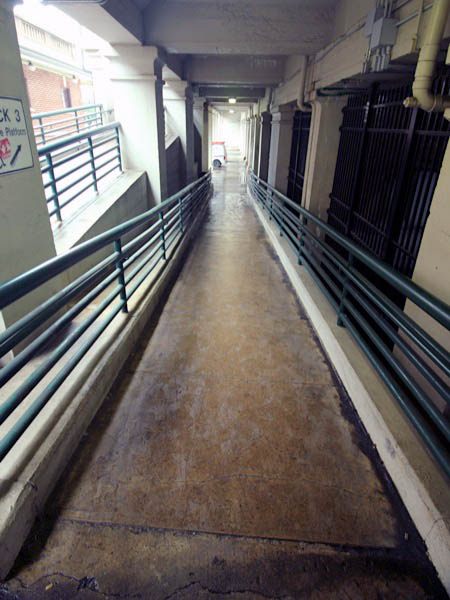
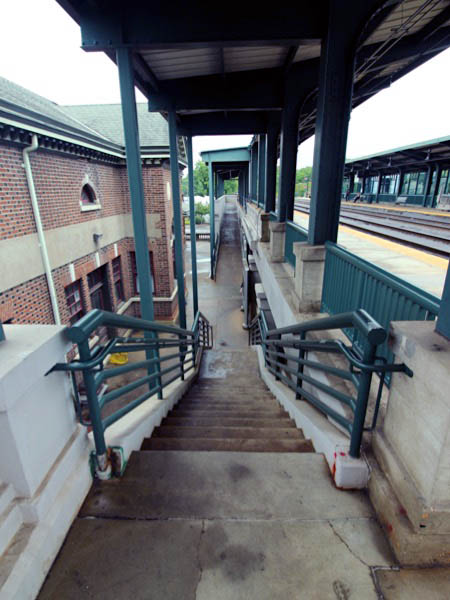
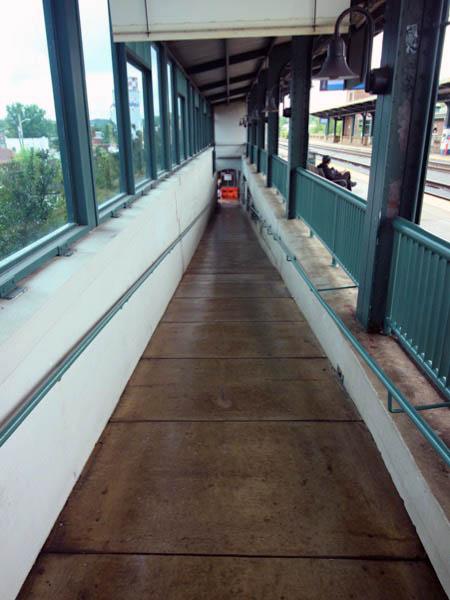
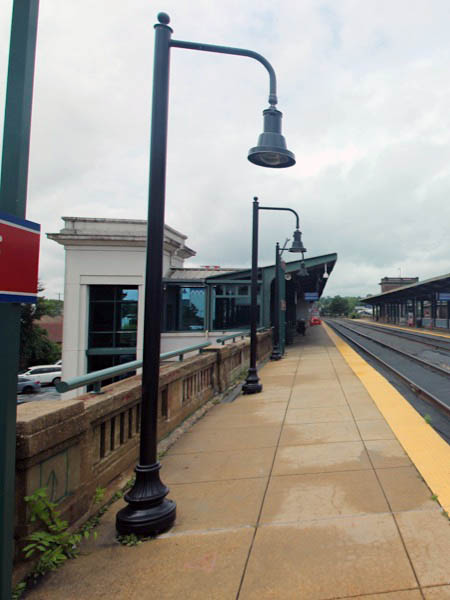
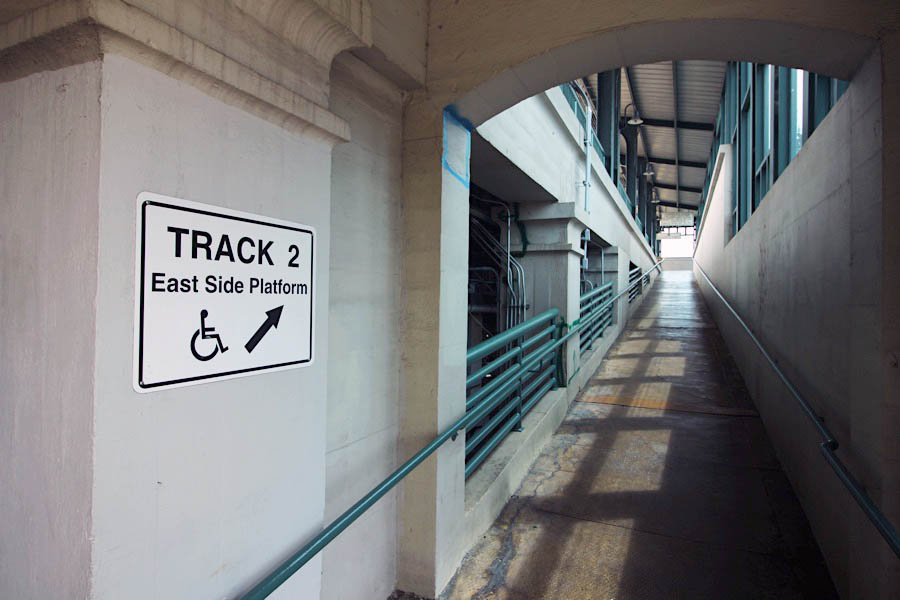
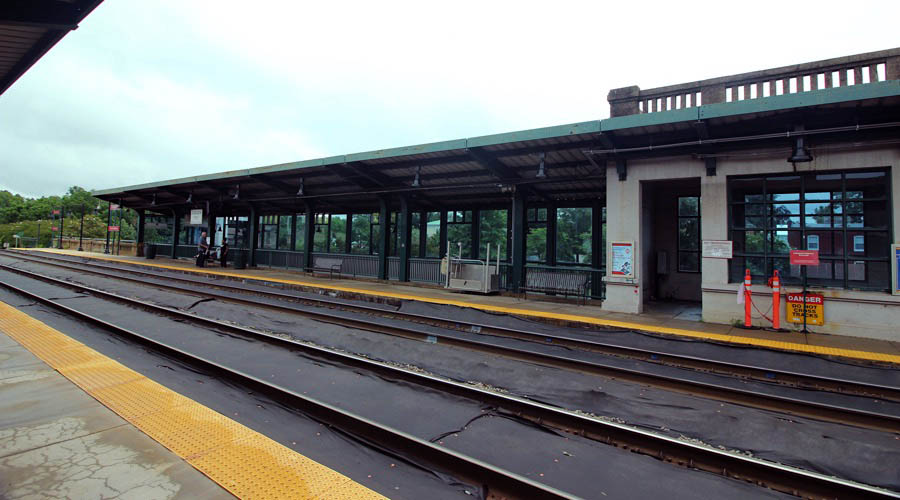
The Amtrak station in Fredericksburg consists of a platform and shelter adjacent to the 1910 brick depot, which is located one block from the Rappahannock River waterfront. Today, the building is occupied by a restaurant. The platforms and shelters run over Sophia, Caroline, Princess Anne and Charles streets in the historic downtown, and an elaborate system of stairs and ramps is used to reach the platforms from street level. The station is also served by Virginia Railway Express (VRE) commuter trains that link the area with the nation’s capital, as well as by local buses.
Fredericksburg, Va / Jun 2023 / RWH

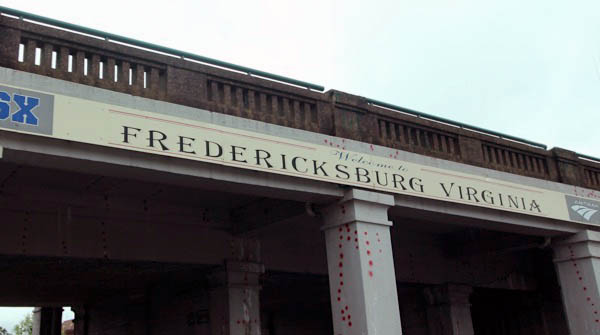
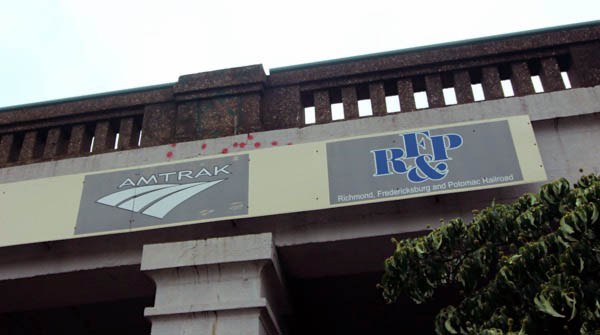
Jun 2023 / RWH
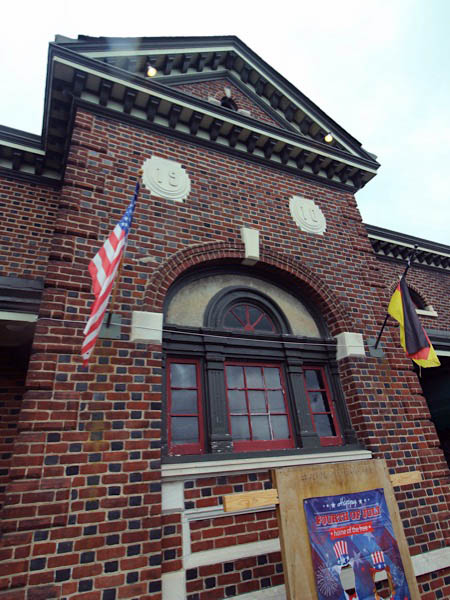
Jun 2023 / RWH
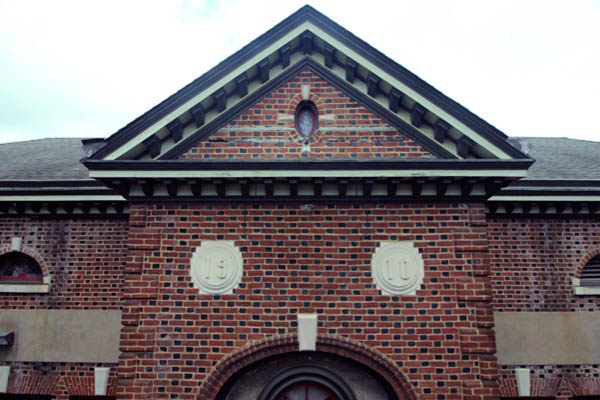
Jun 2023 / RWH
Jun 2023 / RWH
Jun 2023 / RWH

 ail has been important in Fredericksburg since the Richmond, Fredericksburg and Potomac Railroad was chartered in 1834 to run a line through from Richmond up to the Potomac River at Aquia Creek. Controlling the railroad through Fredericksburg was at issue during the American Civil War. After the war, by 1872, connections went through to Washington, D.C., giving this portion of Virginia an all-rail route from Richmond and across the Potomac to Washington.
Jun 2023 / RWH
Jun 2023 / RWH
Jun 2023 / RWH
Jun 2023 / RWH
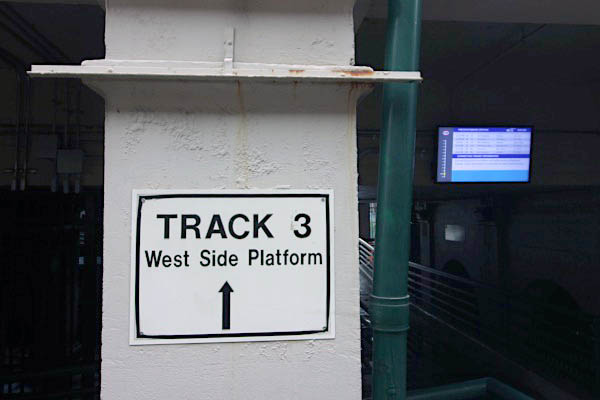
Jun 2023 / RWH
Fredericksburg, VA
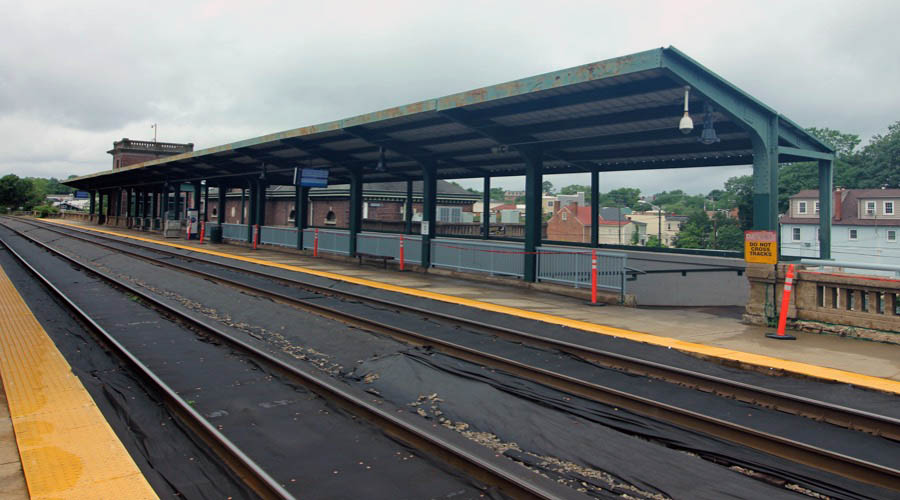
Fredericksburg, Va / Jun 2023 / RWH
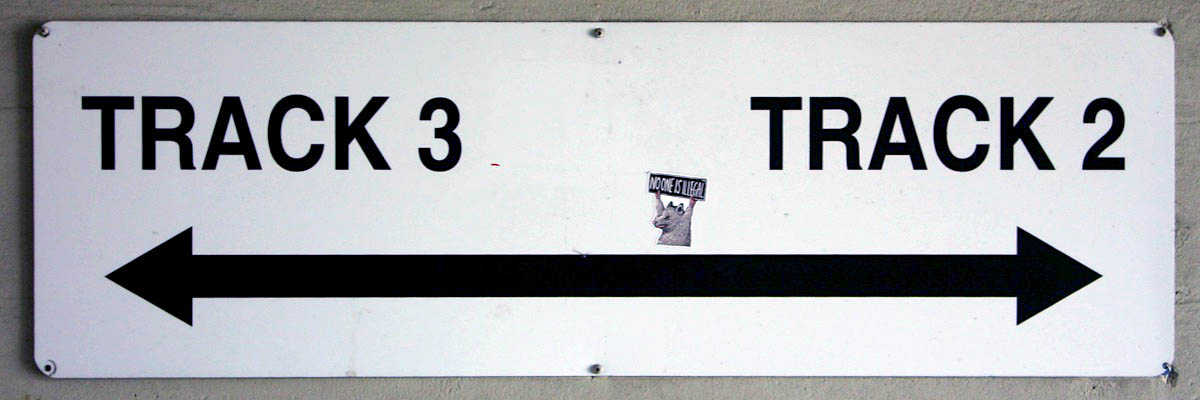
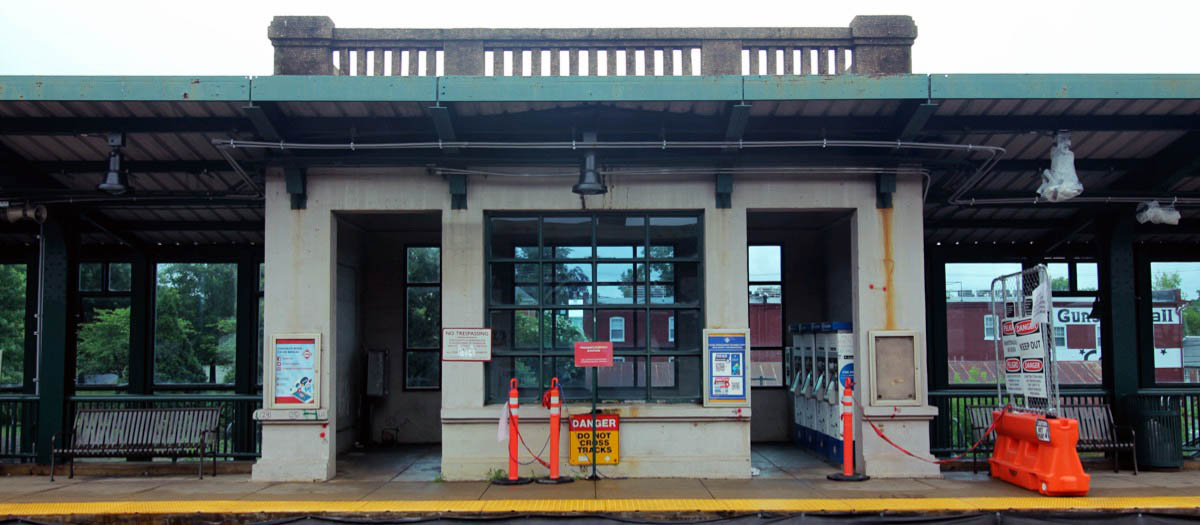
Fredericksburg, Va / Jun 2023 / RWH
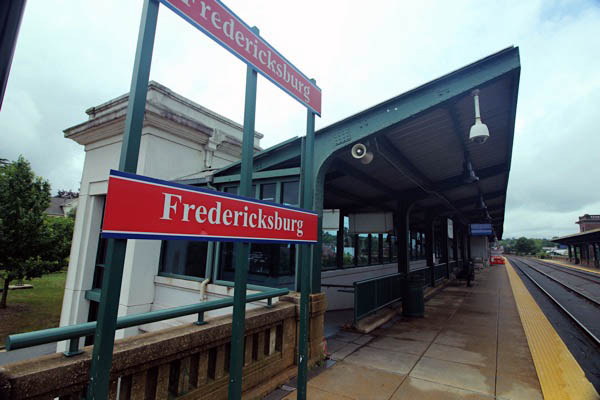
Fredericksburg, Va / Jun 2023 / RWH
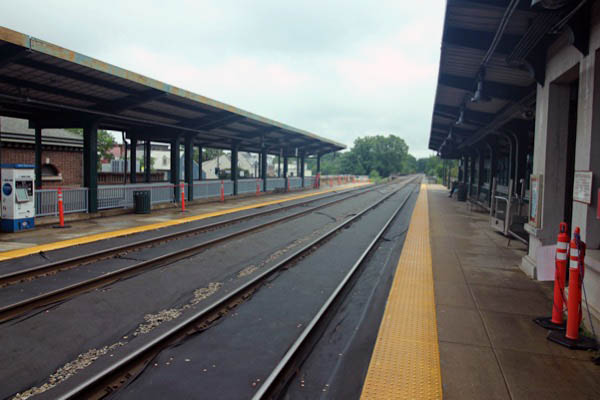
Fredericksburg, Va / Jun 2023 / RWH
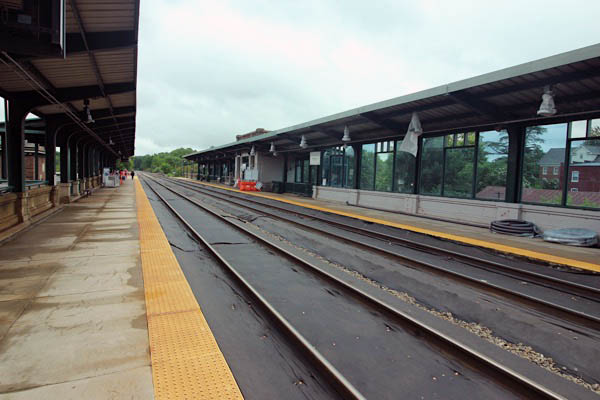
Fredericksburg, Va / Jun 2023 / RWH
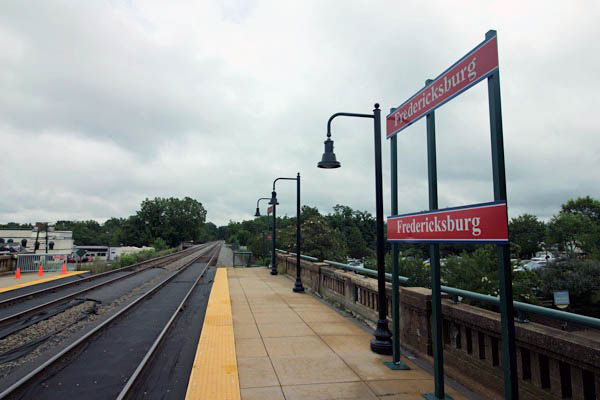
Fredericksburg, Va / Jun 2023 / RWH
Jun 2023 / RWH
Jun 2023 / RWH
Jun 2023 / RWH
Jun 2023 / RWH
Jun 2023 / RWH
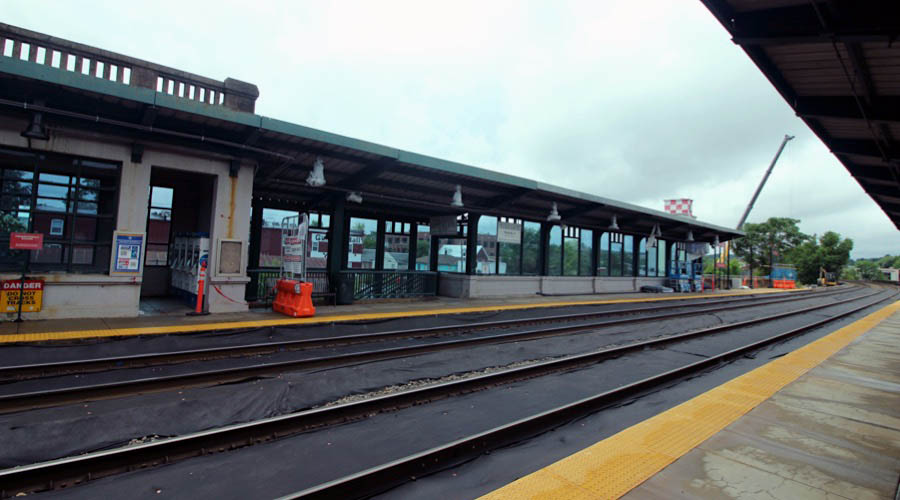
Fredericksburg, Va / Jun 2023 / RWH
335 Richmond, Va
- Carolinian
- Northeast Regional
- Palmetto
- Silver Meteor
- Silver Star
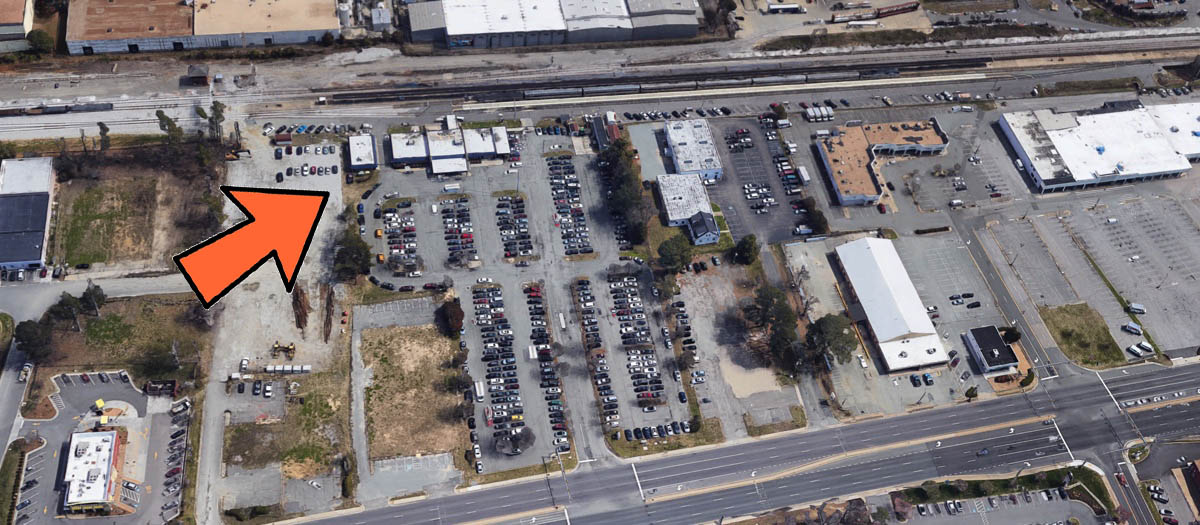
Staples Mill Road overhead / Google Maps
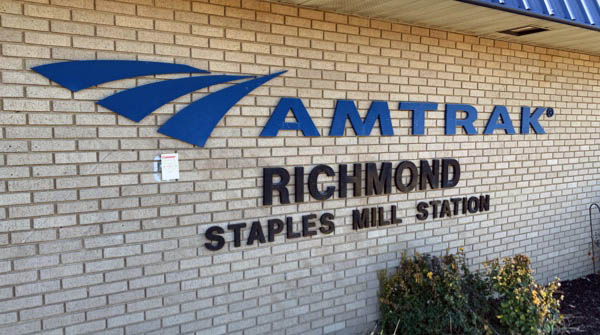
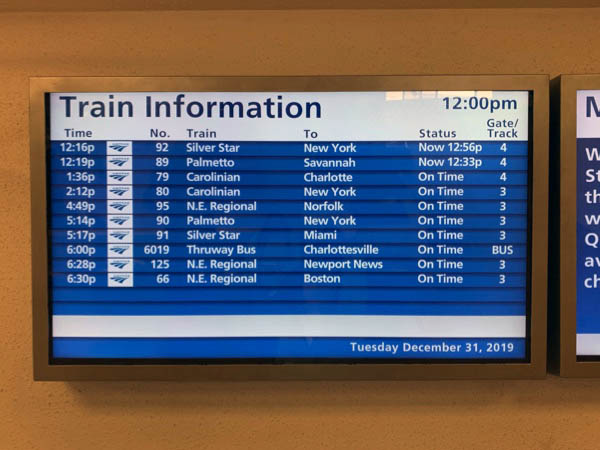
Dec 2019 / RWH


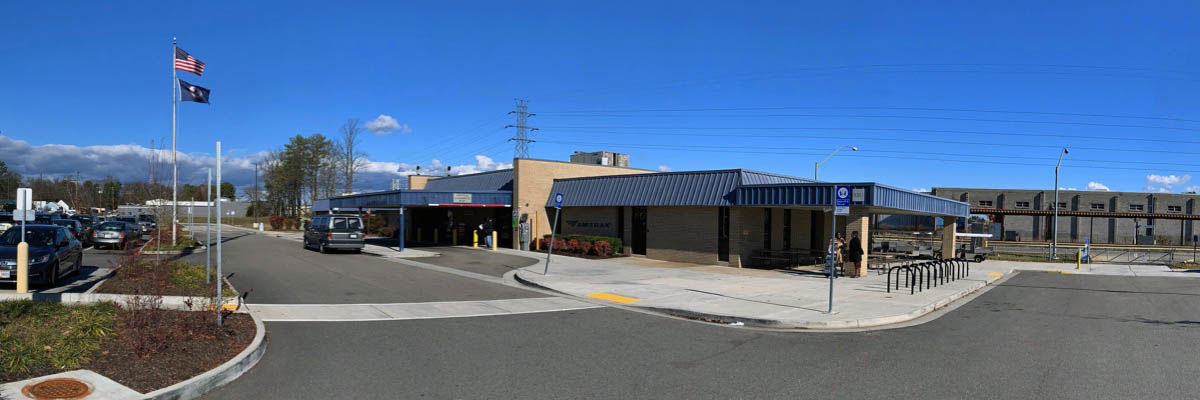
Richmond, Va / Dec 2019 / RWH
- location:Staples Mill Road
- address:7519 Staples Mill Road
- type:urban station, 2 platforms
- owner:Amtrak
- opened:Nov 1975, relocation
- builder:Amtrak
- style:mode, brick and steel
- renovated:2018
- services:tickets, baggage
- links: Amtrak | Great Stations
Richmond, Va / Dec 2019 / RWH
Click to see the Staples Mill Road station plotted on a Google Maps page
from SPV Comprehensive Railroad Atlas
/ collection
Richmond, Va / Dec 2019 / RWH
Richmond, Va / Dec 2019 / RWH
Richmond, Va / Dec 2019 / RWH
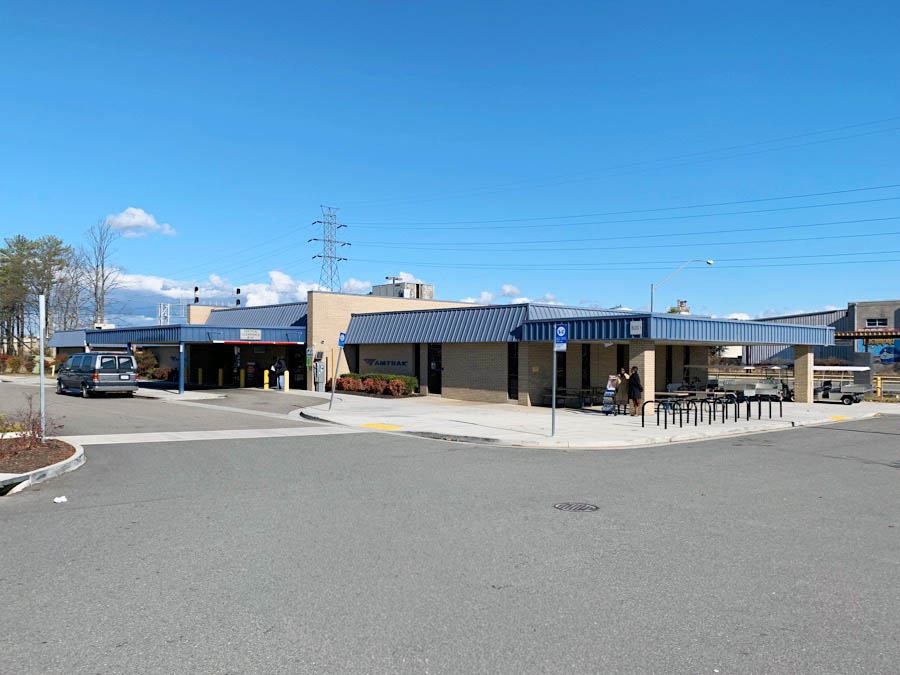
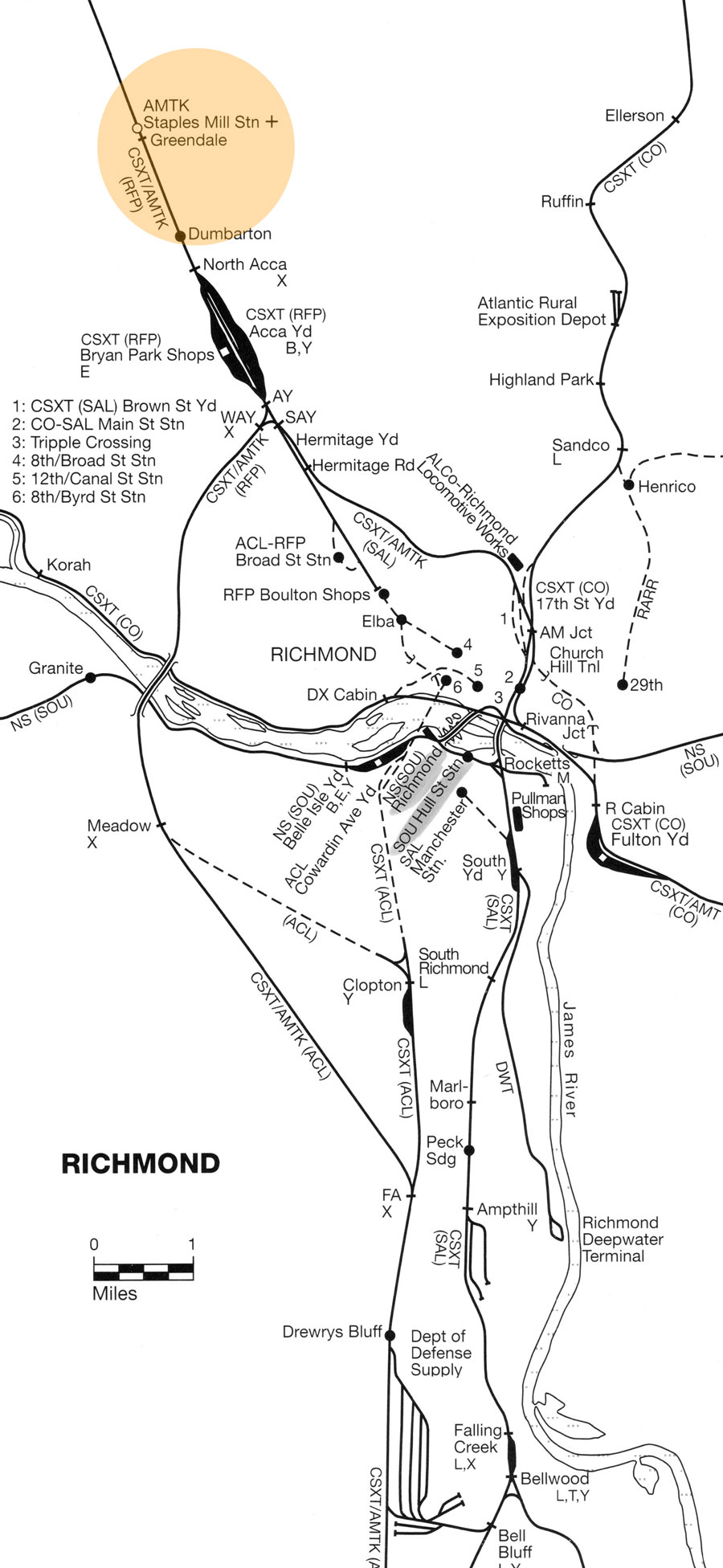
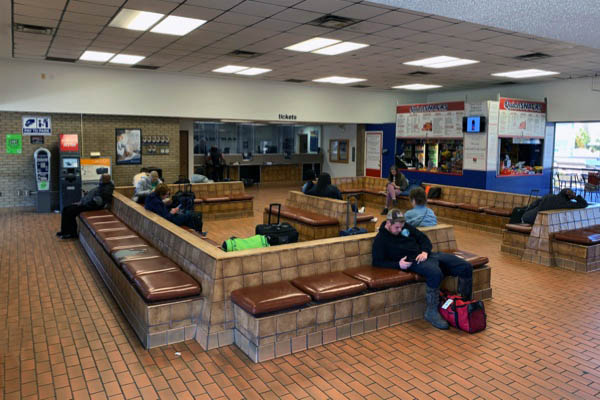
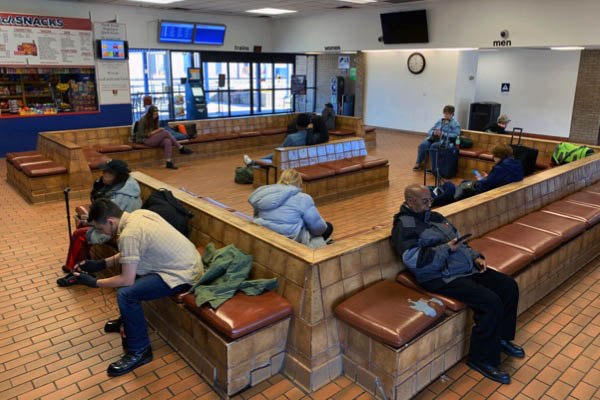
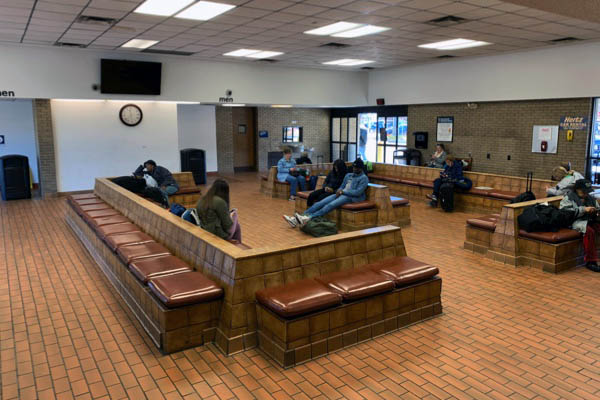
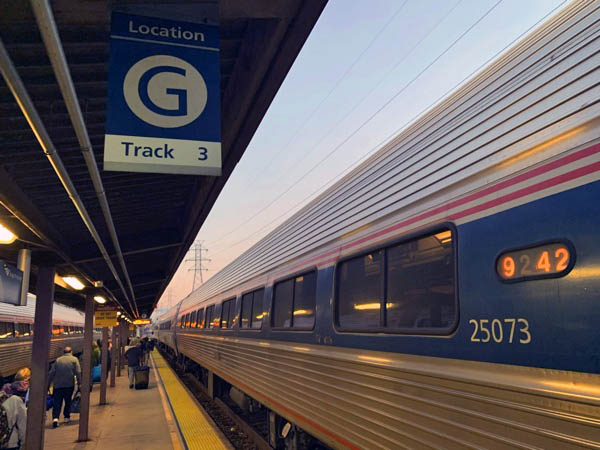
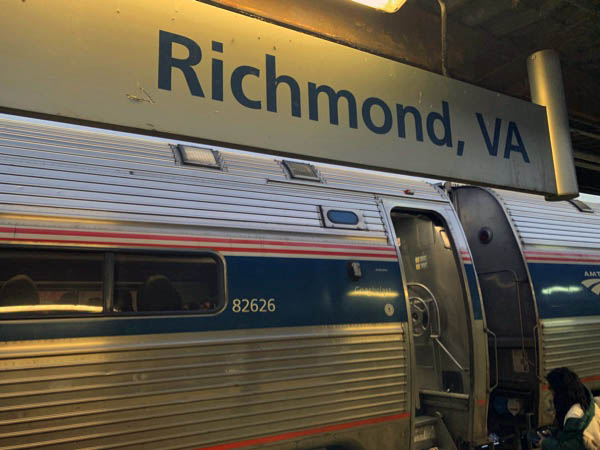
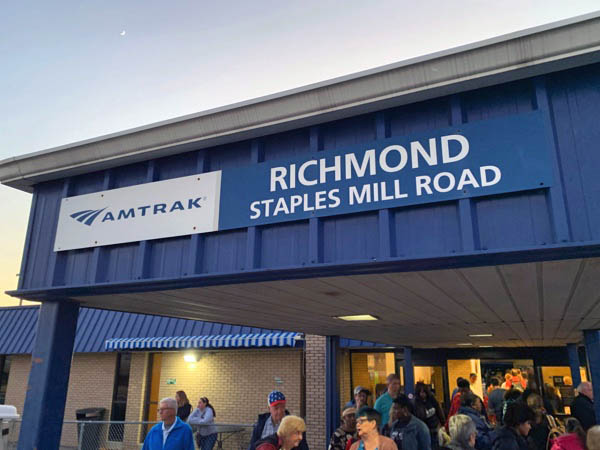
 The Staples Mill Road station is located just north of Richmond in the Henrico County suburbs, and is the busiest Amtrak facility in the Southeast. It opened in Nov. 1975, built to replace the historic, neoclassical Broad Street Station sited about three-and-a-half miles south and adjacent to Richmond’s famous Fan District. The new station facilitated train movements, cutting about 10 minutes from the run times of New York-Florida trains. Following a public open house on Nov. 14, the northbound Silver Star (New York – St. Petersburg/Miami) was the first train to stop at the facility the following day.
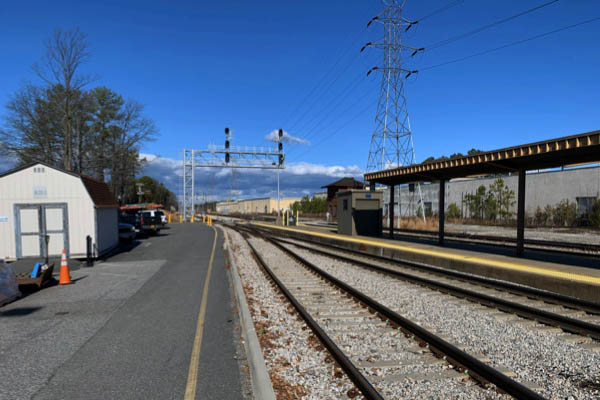
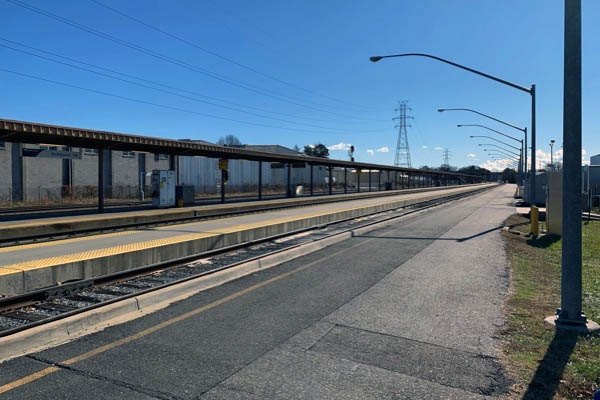
Designed by David Volkert and Associates, with Roderick Slater as the main architect, the station consists of a one-story building of buff brick and steel construction with two tracks served by one platform. Walls of windows allow natural light to flood the waiting room, which features built-in bench seating. Minor renovations over the years included the expansion of the parking lot and inclusion of employee parking, as well as the addition of a mechanical department. This station has a waiting room and is staffed by Amtrak employees; Richmond is served by more than a dozen daily trains. Northeast Regional service within Virginia is funded in part through grants made available by the Commonwealth of Virginia.
Dec 2019 / RWH
Dec 2019 / RWH
Dec 2019 / RWH
Dec 2019 / RWH
Dec 2019 / RWH
 Richmond has been served by multiple railroads since the 1830's. The five lines fanning out from the city in 1861 were a major reason for choosing Richmond as the capital of the Confederacy. With rail consolidation after the war, the names changed but for much of the 20th. century the city still hosted six major lines. The corporate headquarters of the Richmond, Fredericksburg and Potomac (RF&P) Railroad, and CSX were located in the city.
See also our complete Richmond Railroad Museum scrapbook in Preservation
Dec 2019 / RWH
Richmond, Va
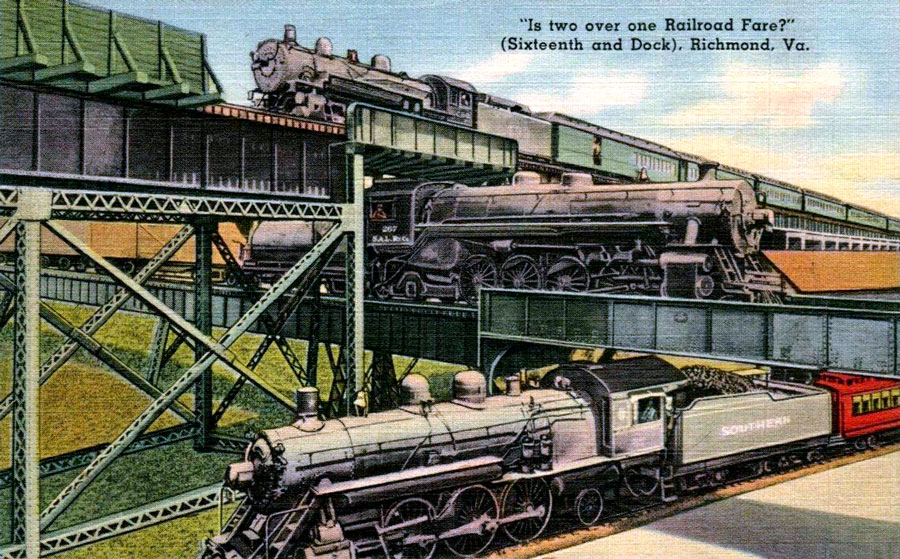 A decade after the Civil War, Richmond resumed its position as a major urban center of economic productivity with iron front buildings and massive brick factories. Canal traffic peaked in the 1860s, with railroads becoming the dominant shipping method. Richmond became a major railroad crossroads, showcasing the world's first triple railroad crossing. Tobacco warehousing and processing continued to play a central economic role, advanced by the world's first cigarette-rolling machine that James Albert Bonsack of Roanoke invented between 1880 and 1881.
Another important contributor to Richmond's resurgence was the Richmond Union Passenger Railway, a trolley system developed by electric power pioneer Frank J. Sprague. The system opened its first Richmond line in 1888, using an overhead wire and a trolley pole to connect to the current and electric motors on the car's trucks. The success led to electric streetcar lines rapidly spreading to other cities. A post-World War II transition to buses from streetcars began in May 1947 and was completed on November 25, 1949.
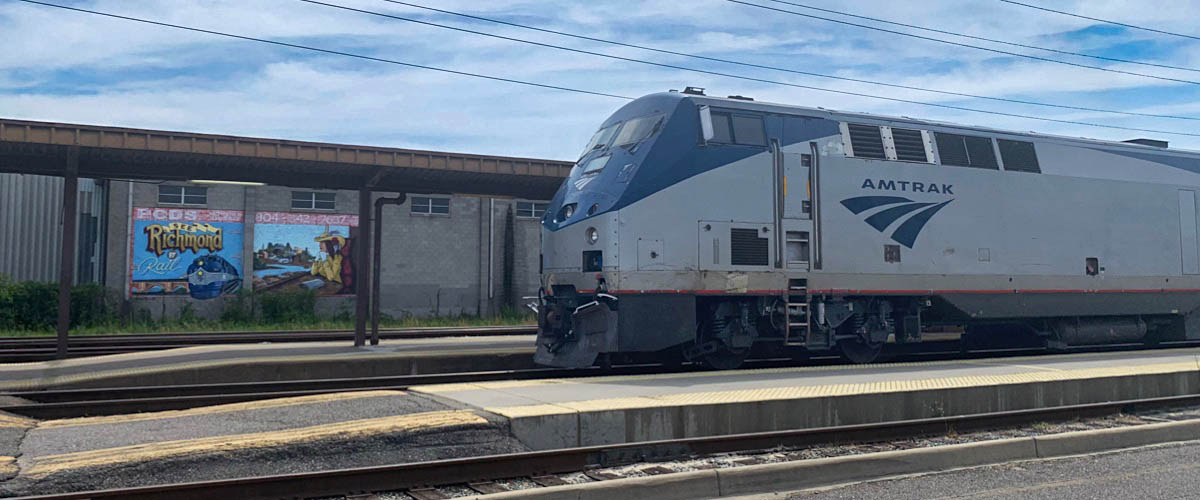
Richmond, Va / Jul 2022 / RWH
James River Bridge
James River Bridge / web
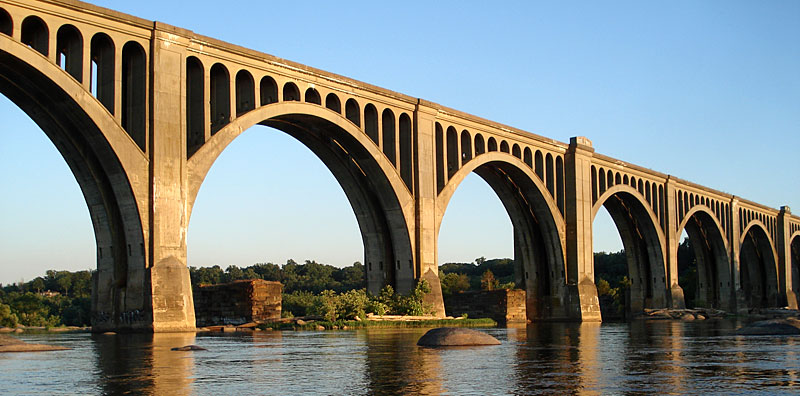
The James River is a river in the U.S. state of Virginia that begins in the Appalachian Mountains and flows 348 miles to Chesapeake Bay. The river length extends to 444 miles if one includes the Jackson River, the longer of its two source tributaries. It is the longest river in Virginia and the 12th longest river in the United States that remains entirely within a single state. Jamestown and Williamsburg, Virginia’s first colonial capitals, and Richmond, Virginia's current capital, lie on the James River.
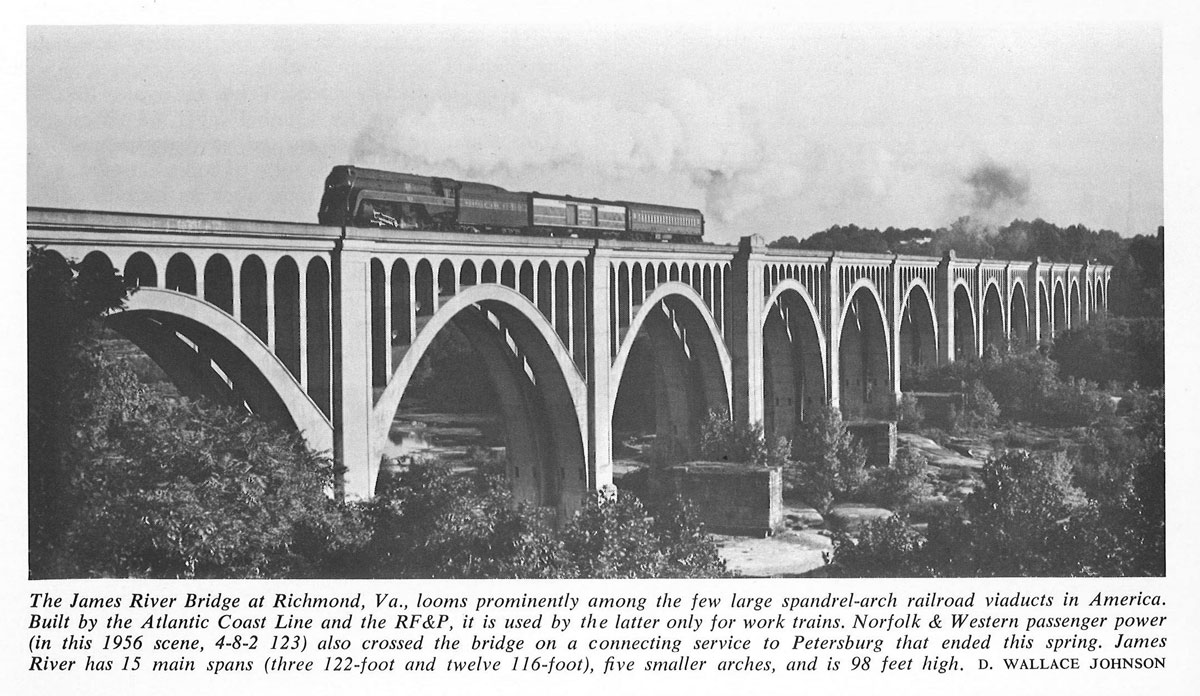
from Steam Locomotive & Railroad Tradition
magazine #19 [Aug 1967] / collection
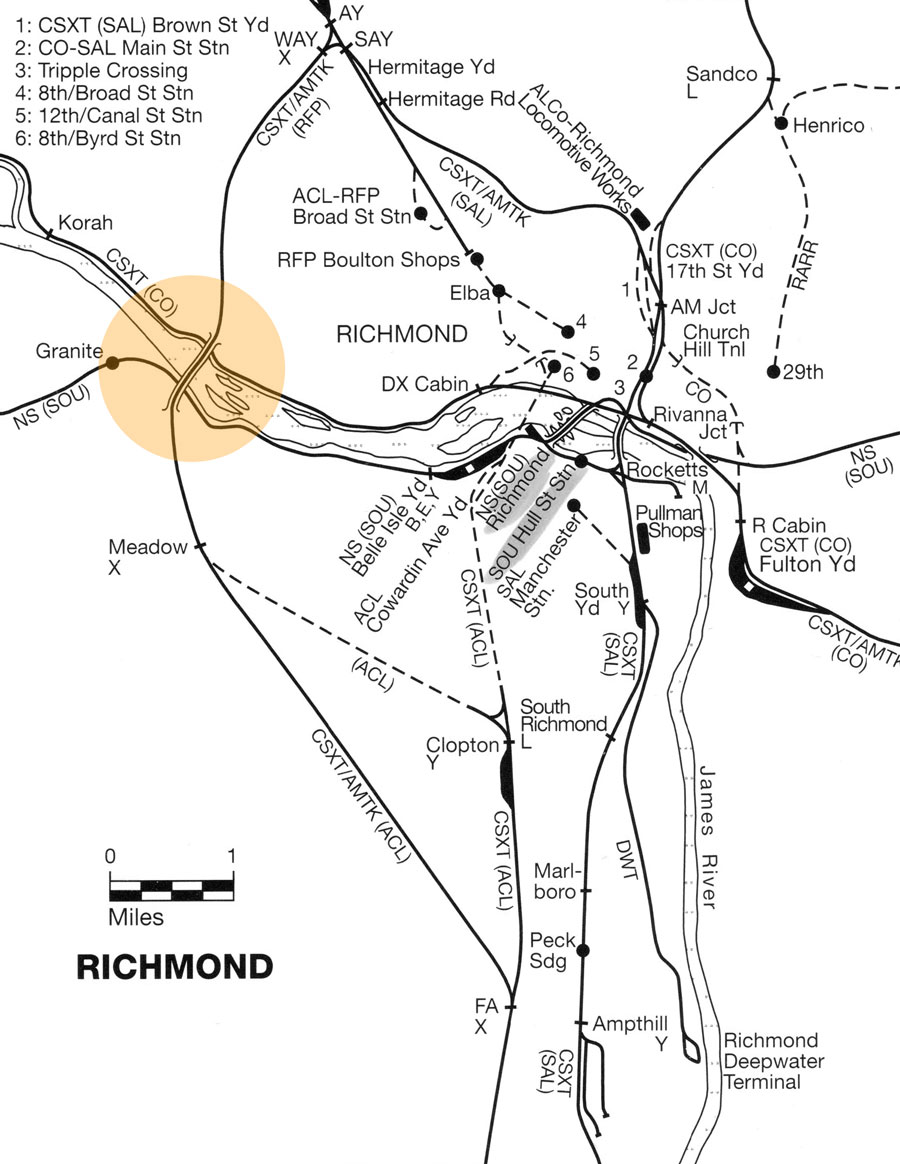
from SPV Comprehensive Railroad Atlas
/ collection
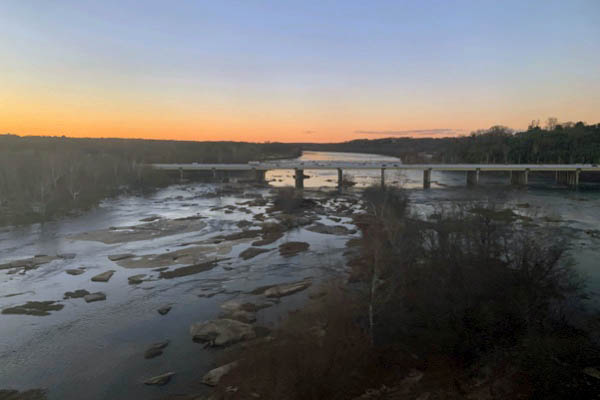
Richmond, Va / Dec 2019 / RWH
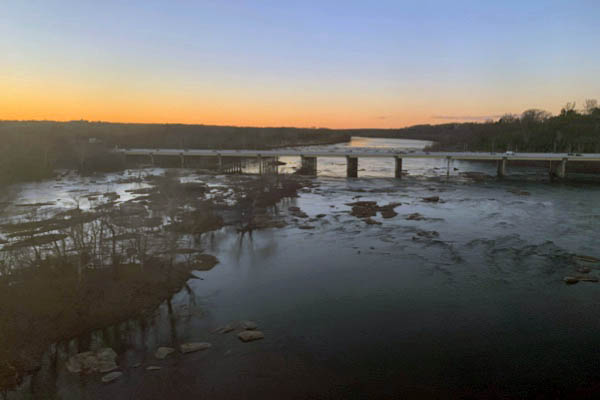
Richmond, Va / Dec 2019 / RWH
Click to see the James River Bridge plotted on a Google Maps page
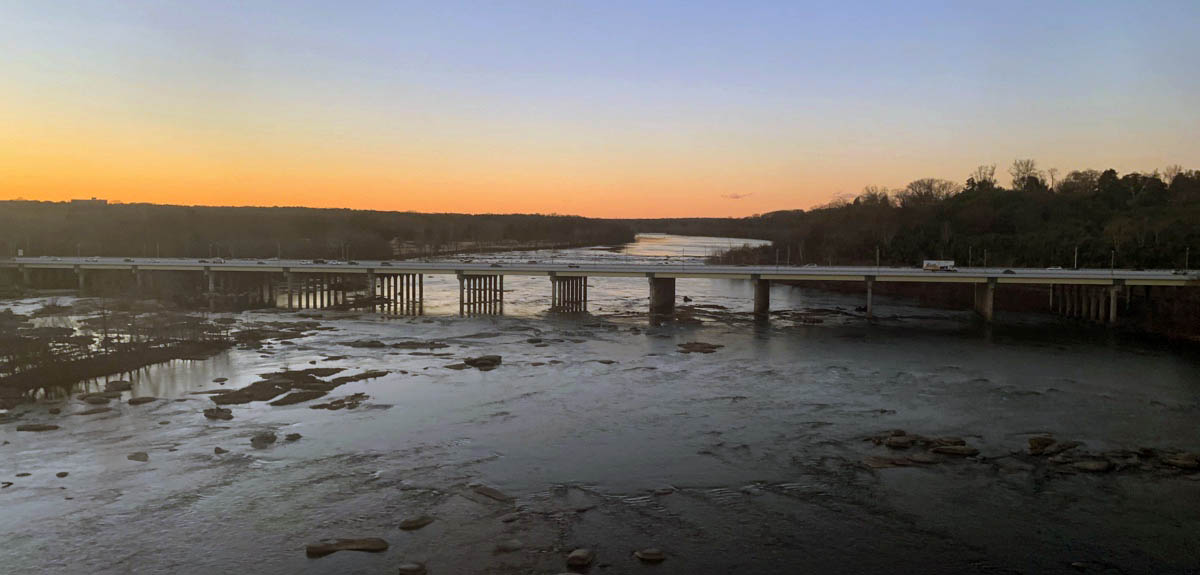
Richmond, Va / Dec 2019 / RWH
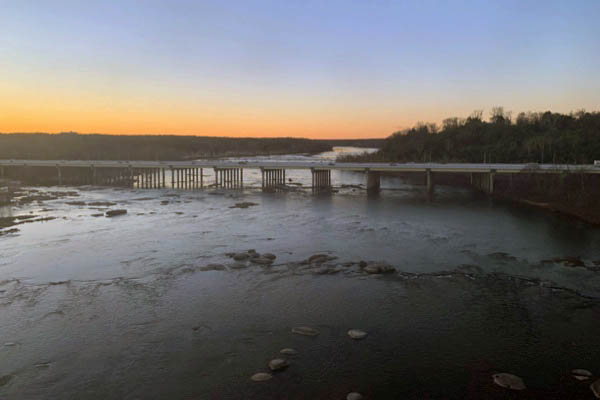
Richmond, Va / Dec 2019 / RWH
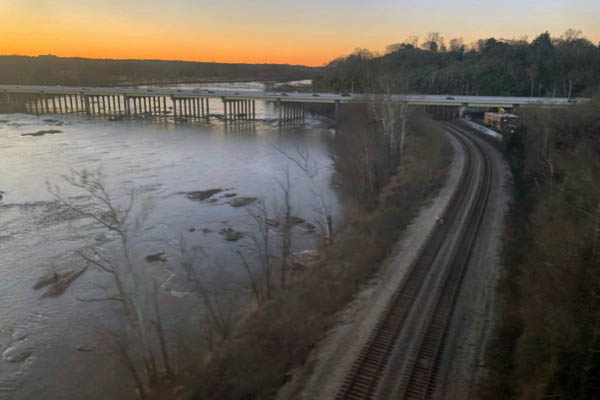
Richmond, Va / Dec 2019 / RWH
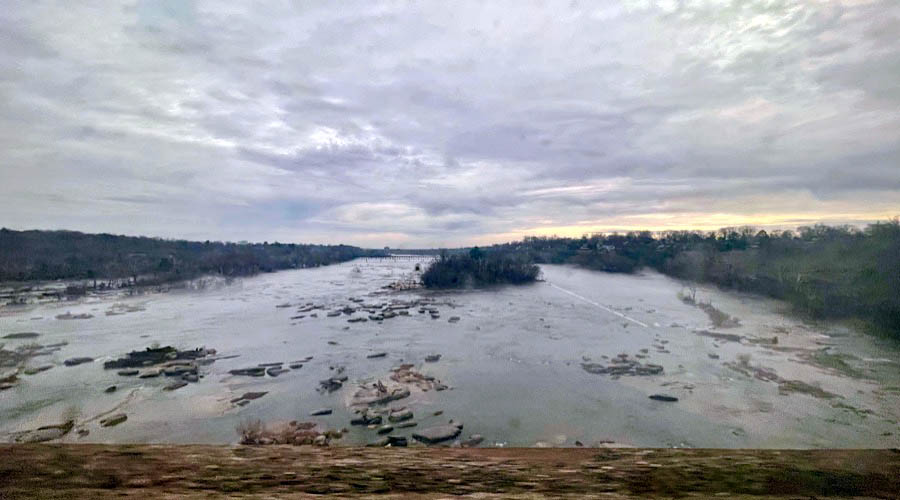
Richmond, Va / Feb 2022 / RWH
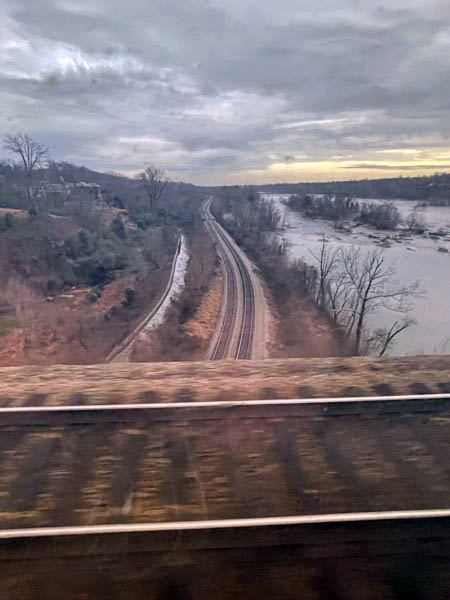
Richmond, Va / Feb 2022 / RWH

Richmond, Va / Feb 2022 / RWH

Feb 2022 / RWH
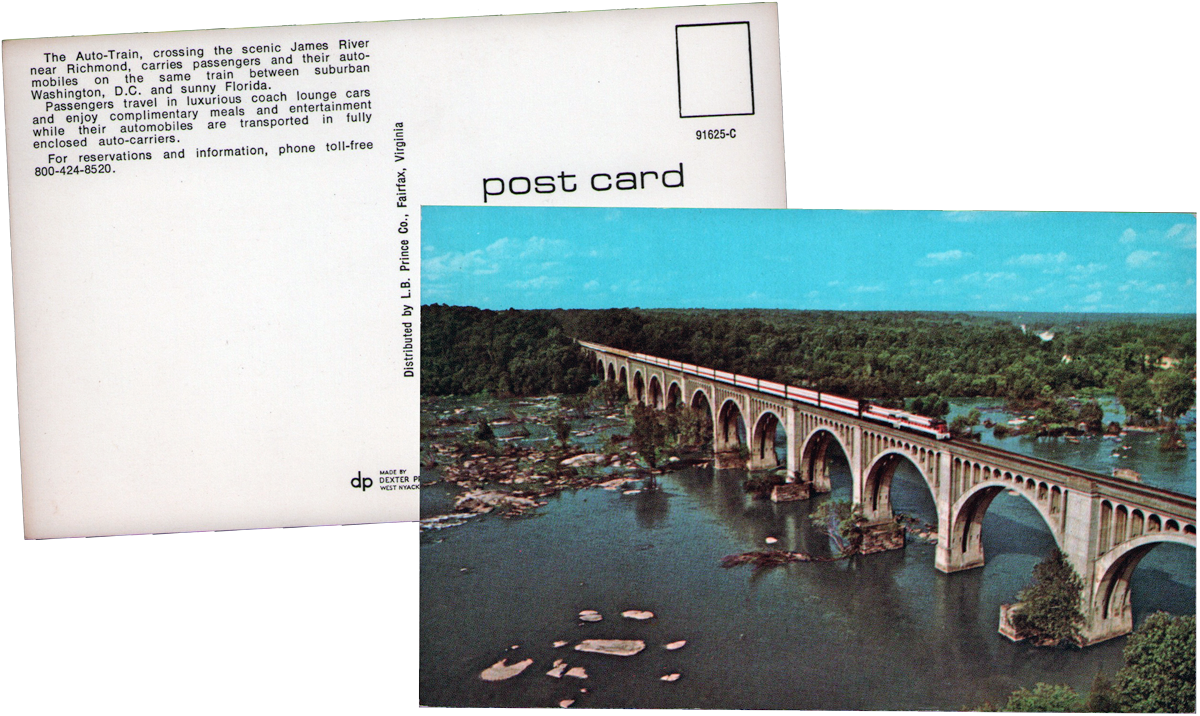
postcard / collection
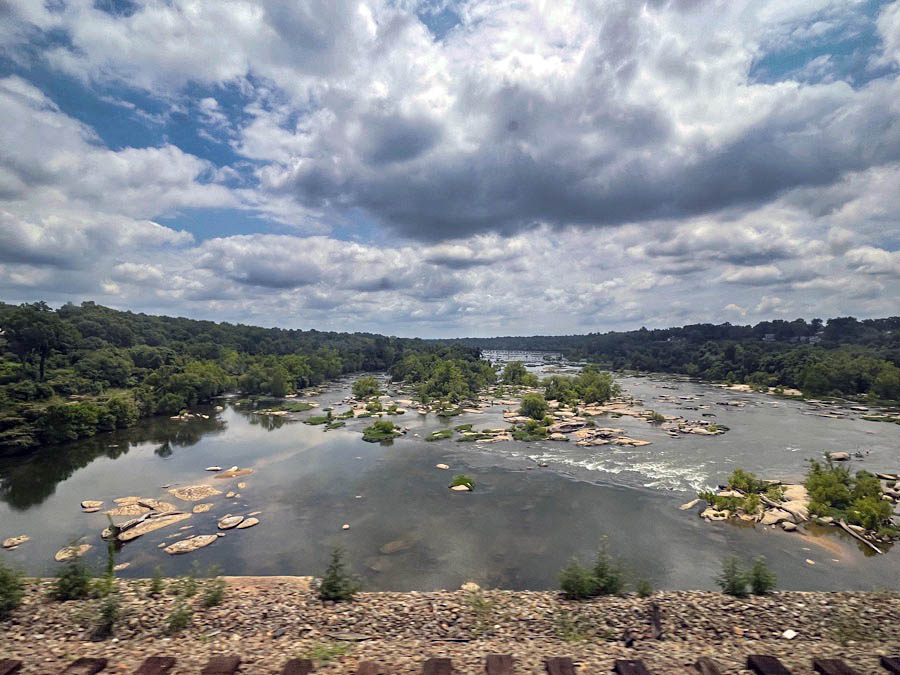
Richmond, Va / Jul 2022 / RWH
363 Petersburg, Va
- Carolinian
- Northeast Regional
- Palmetto
- Silver Meteor
- Silver Star
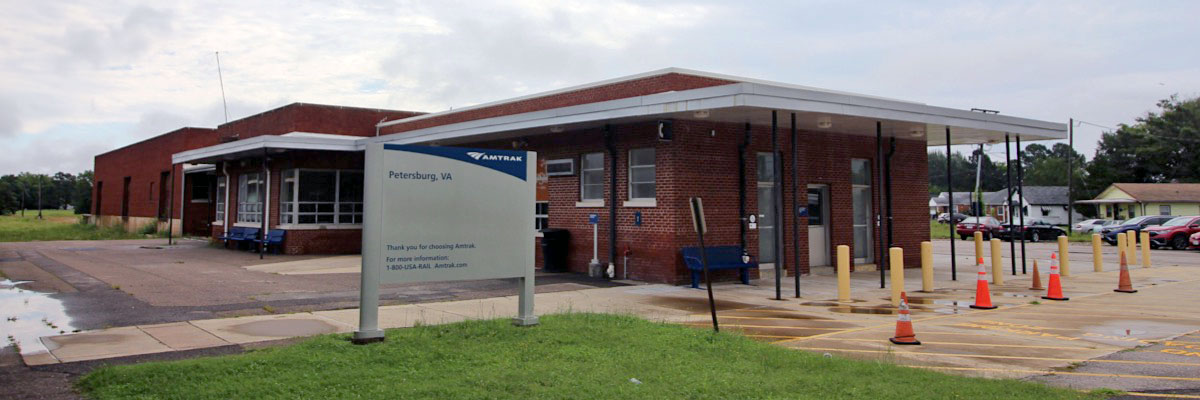
Petersburg, Va / Jul 2025 / RWH
Click to see the Petersburg station plotted on a Google Maps page
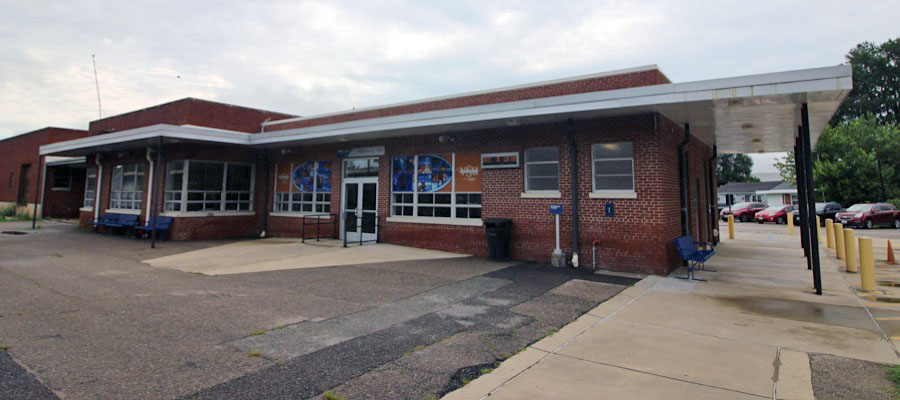
Petersburg, Va / Jul 2025 / RWH
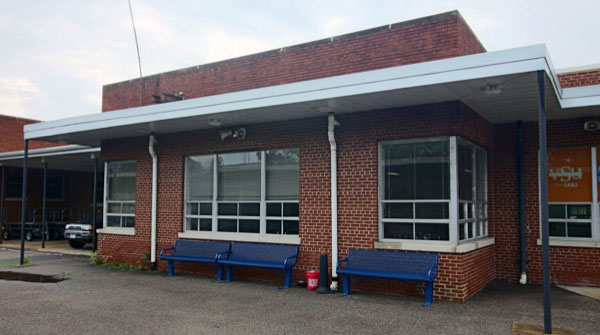
- location:Petersburg, VA
- address:3516 South Street
- type:city station, 1 platform
- owner:VA Passenger Rail Auth
- opened:1955
- builder:Atlantic Coast Line
- style:Mid-century Modern
- renovated:1980
- services:tickets, baggage
- links: Amtrak | Great Stations
Petersburg, Va / Jul 2025 / RWH
Petersburg, Va / Jul 2025 / RWH
Petersburg, Va / Jul 2025 / RWH
Petersburg, Va / Jul 2025 / RWH
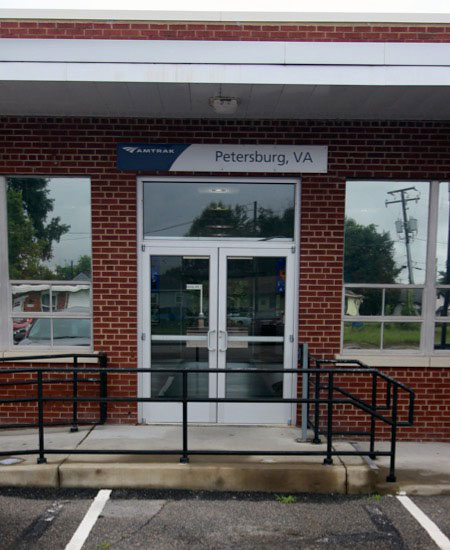
Jul 2025 / RWH
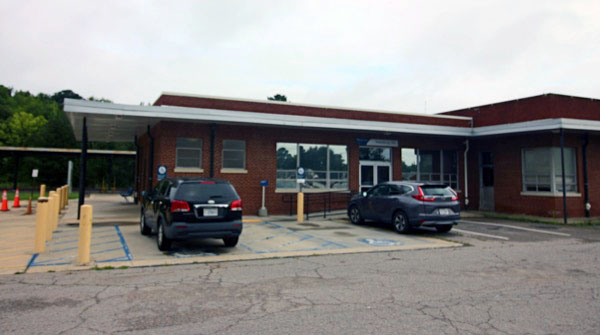
Petersburg, Va / Jul 2025 / RWH
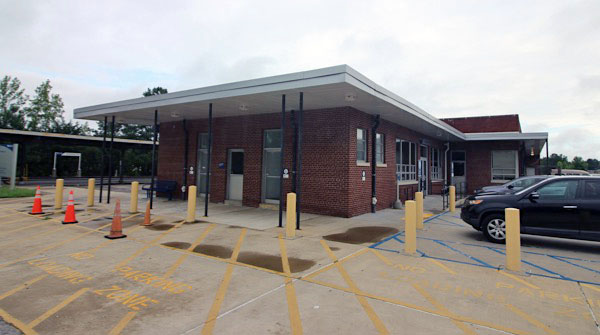
Petersburg, Va / Jul 2025 / RWH
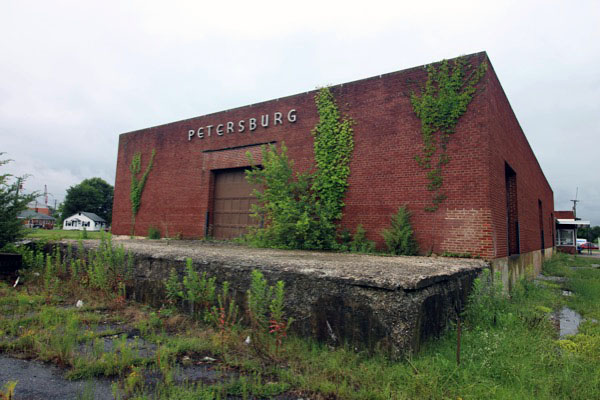
Petersburg, Va / Jul 2025 / RWH
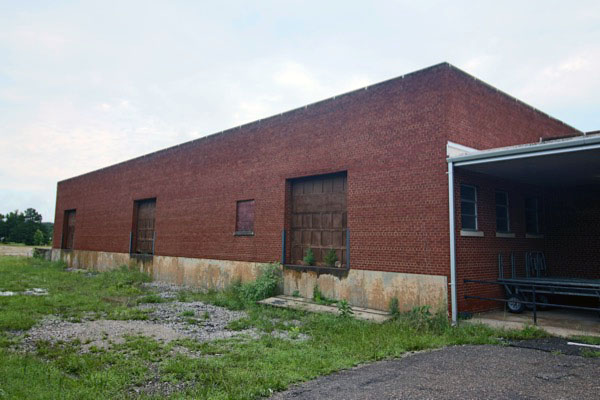
Jul 2025 / RWH
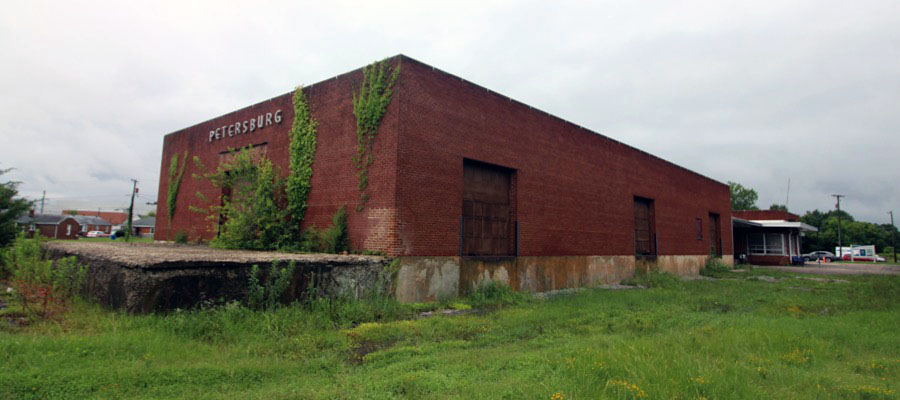
Petersburg, Va / Jul 2025 / RWH
Jul 2025 / RWH
Jul 2025 / RWH
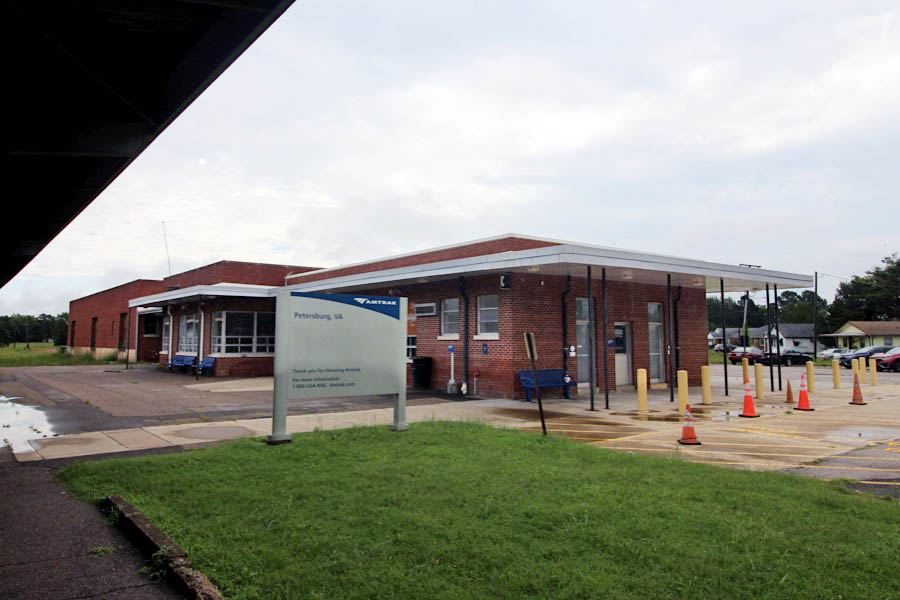
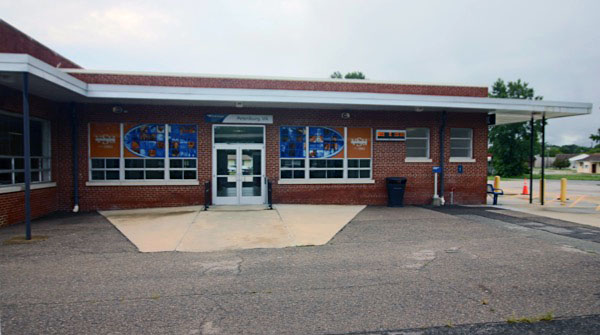
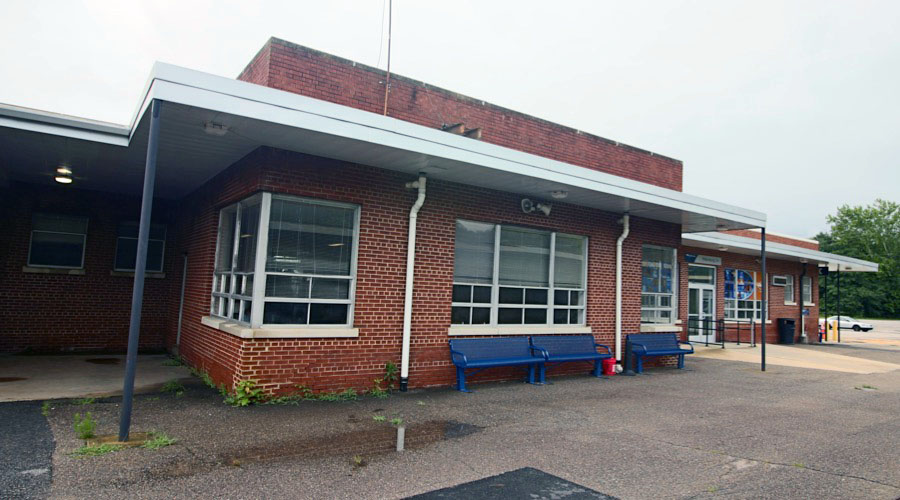
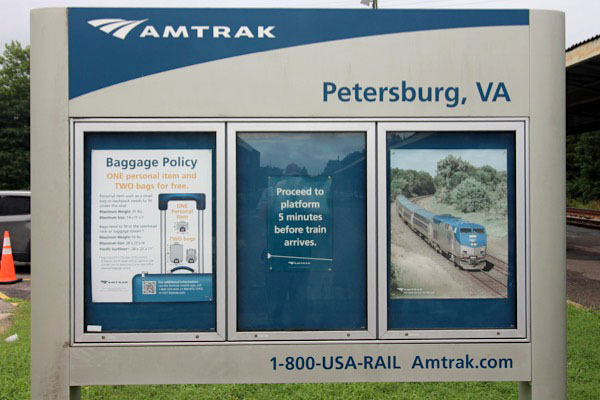
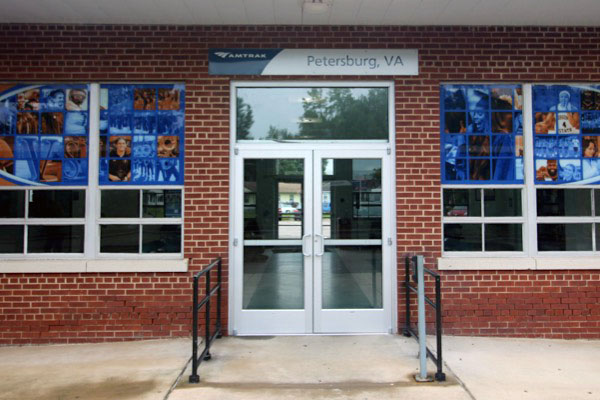
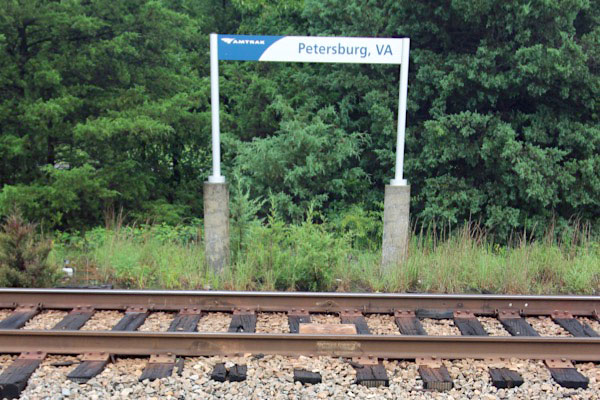
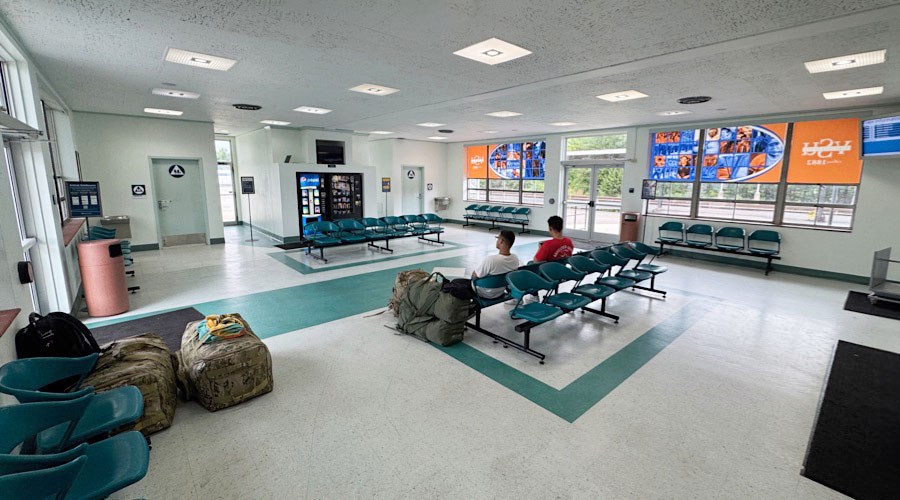
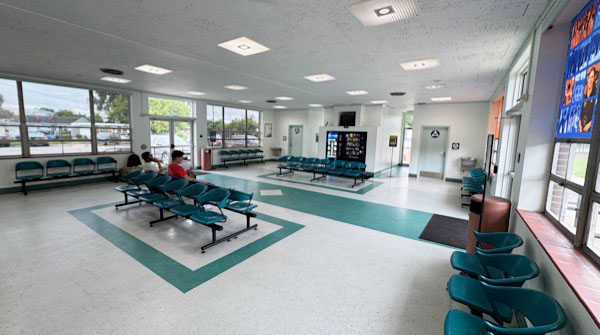
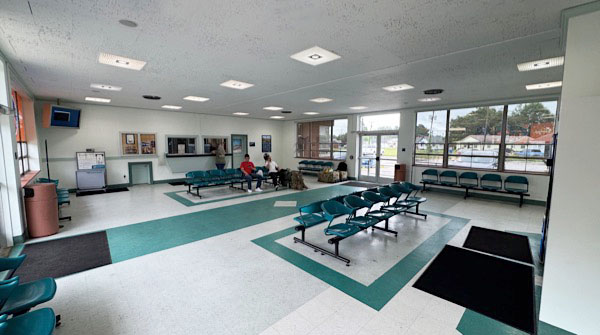
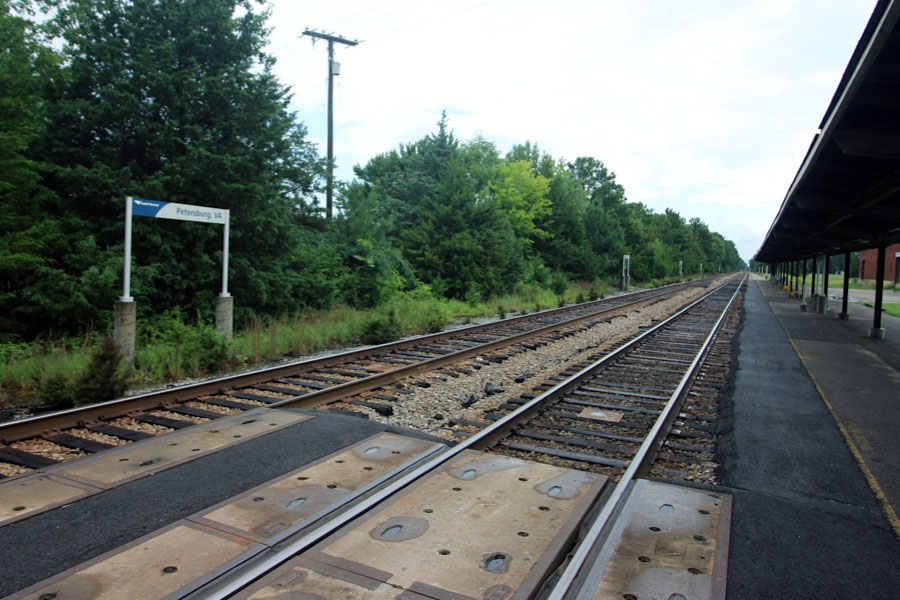
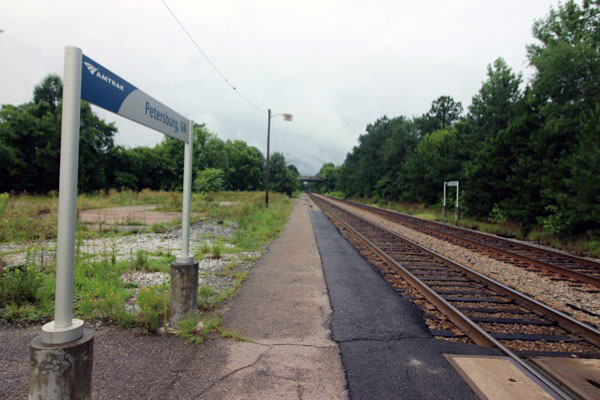
The Petersburg rail station, a one-story brick building, was constructed in 1955 by the Atlantic Coast Line Railroad and is located near the Appomattox River. CSX leases the southern portion of the station to Amtrak and the northern area is unoccupied. In the late 1980s, the depot saw a few minor renovations, including an expanded waiting room, new floors and furniture and the removal of an interior wall.
The city of Petersburg’s roots are embedded in its routes. Originally a Powhattan settlement, people came over from England and settled at Fort Henry. Petersburg grew out of the expansion of Fort Henry. The Port of Petersburg drew many merchants, as it was a major hub for commercial transportation and processing of goods.
Jul 2025 / RWH
Jul 2025 / RWH
Petersburg, Va
Petersburg, Va / Jul 2025 / RWH
Petersburg, Va / Jul 2025 / RWH
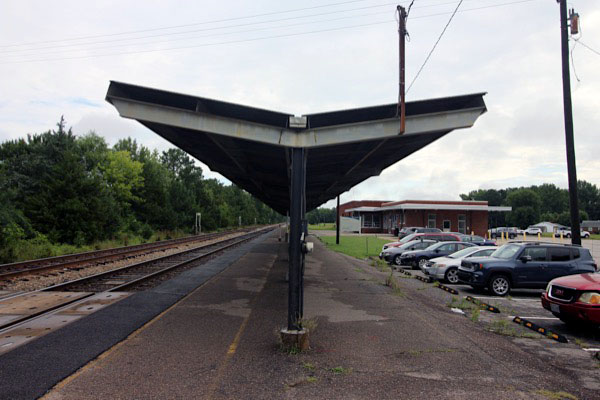
Petersburg, Va / Jul 2025 / RWH
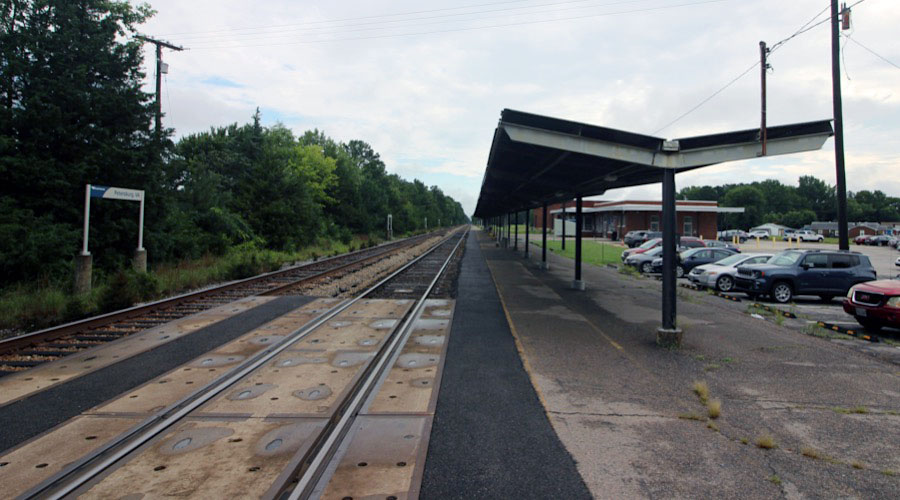
Petersburg, Va / Jul 2025 / RWH
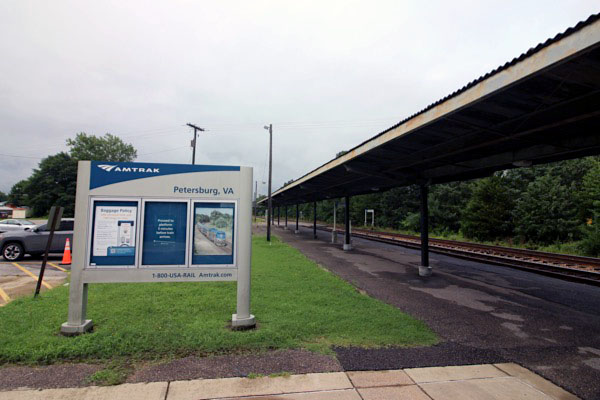
Petersburg, Va / Jul 2025 / RWH
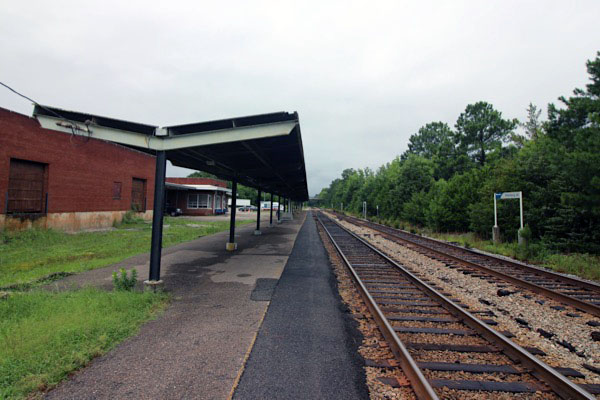
Petersburg, Va / Jul 2025 / RWH
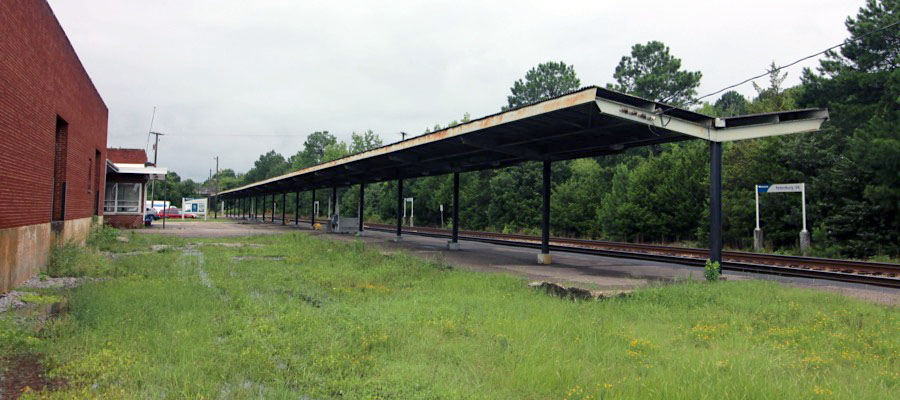
Petersburg, Va / Jul 2025 / RWH
North Carolina
461 Rocky Mount, NC
- Carolinian
- Palmetto
- Silver Meteor
- Silver Star
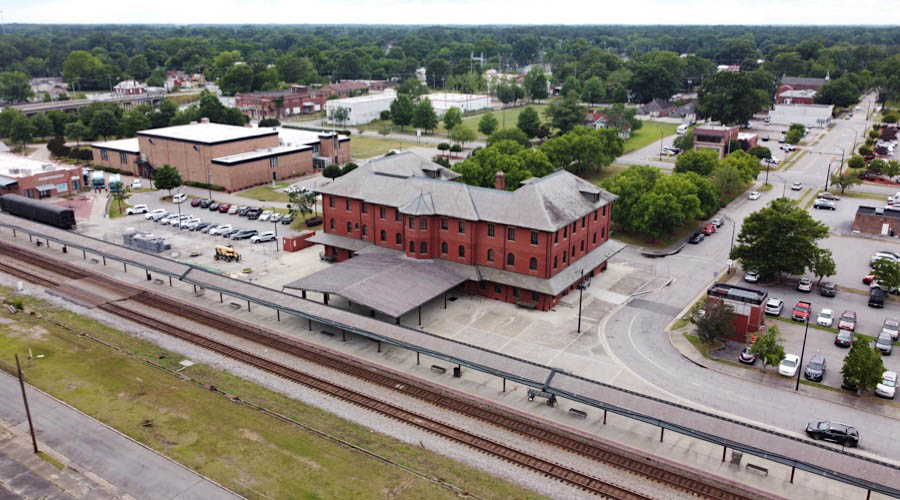
Rocky Mount, NC / Jun 2023 / RWH
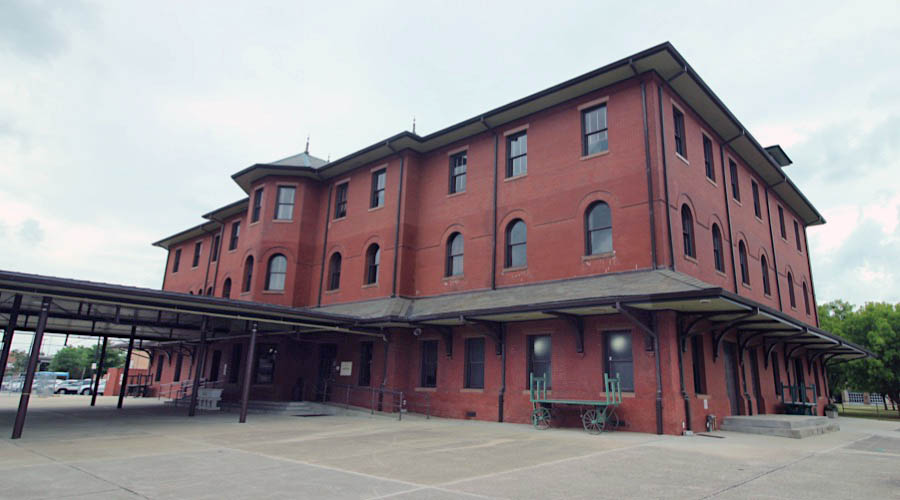
Rocky Mount, NC / Jun 2023 / RWH
Click to see the Rocky Mount station area plotted on a Google Maps page
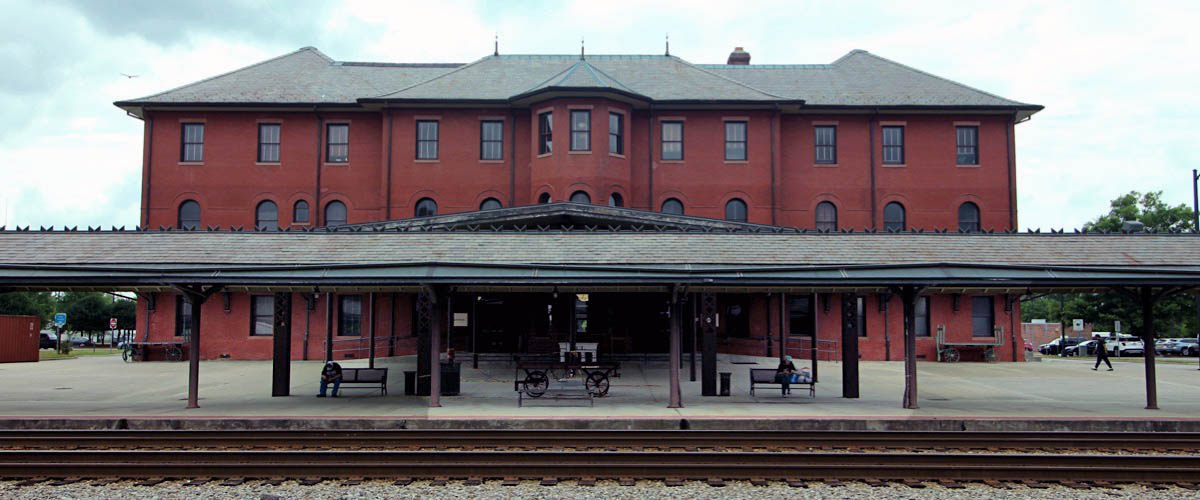
Rocky Mount, NC / Jun 2023 / RWH
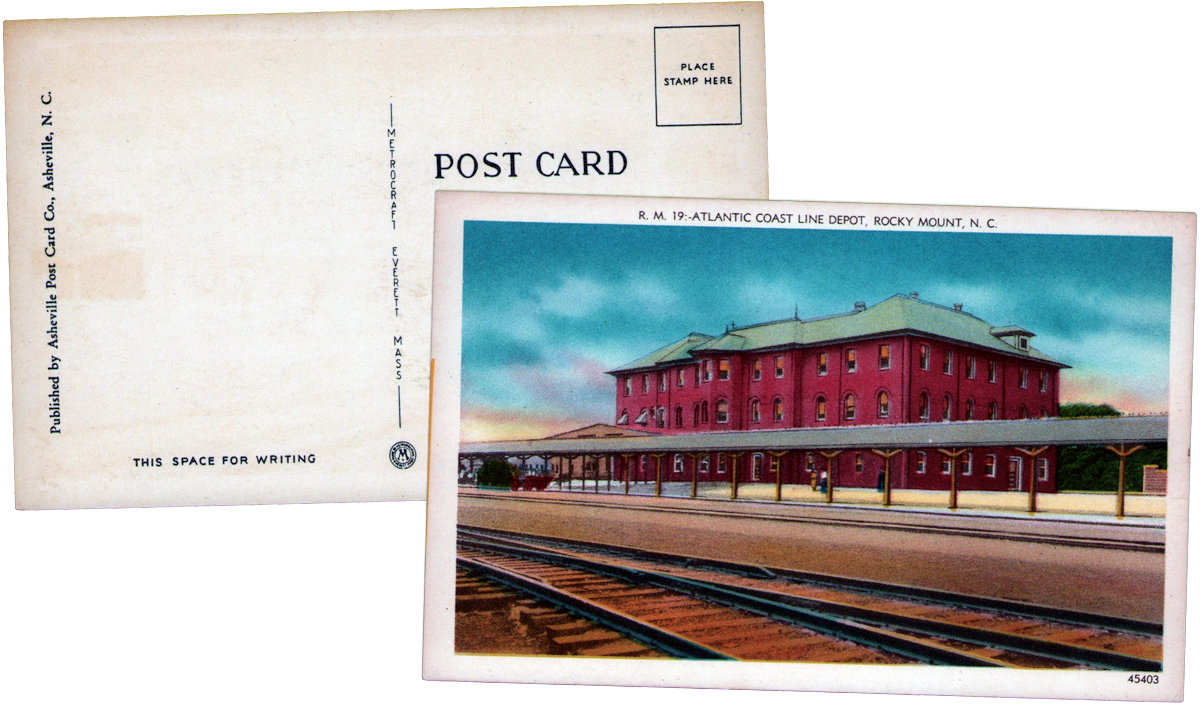
postcard / collection
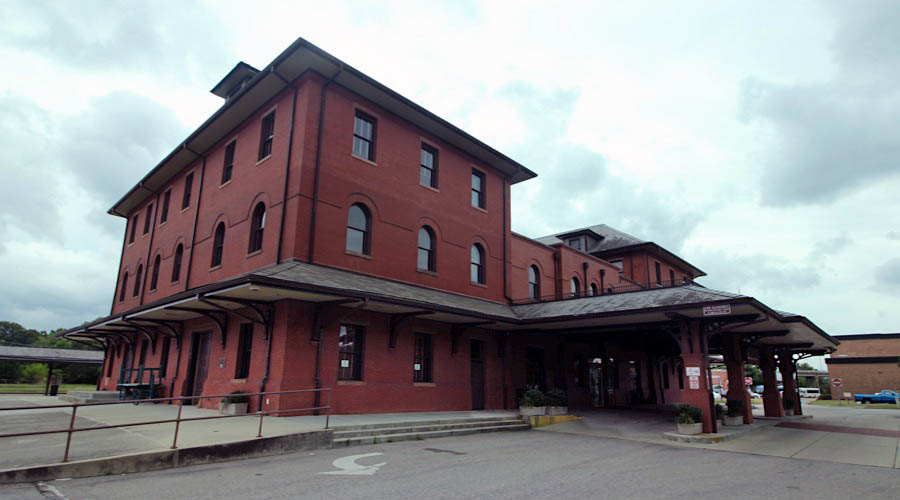
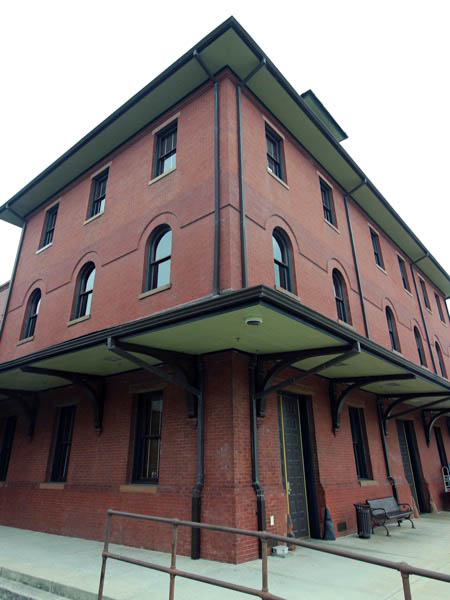
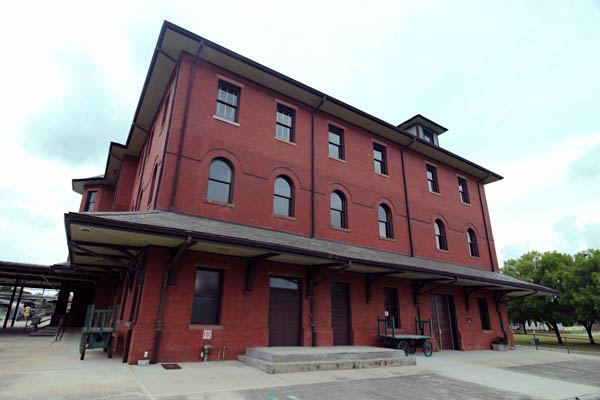
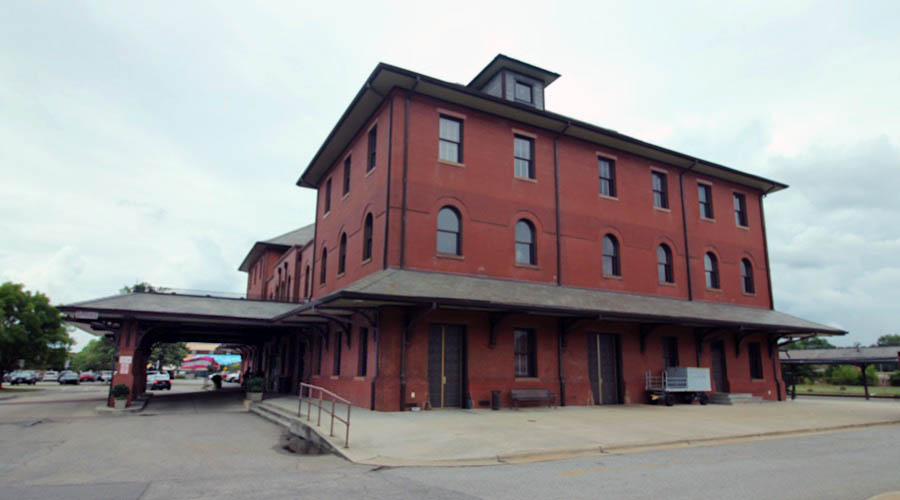
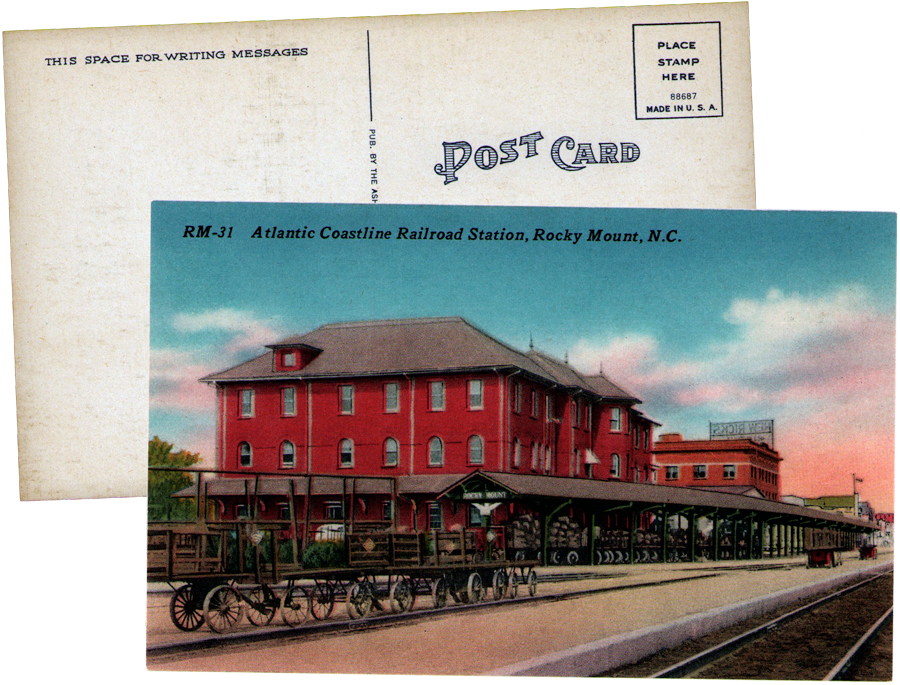
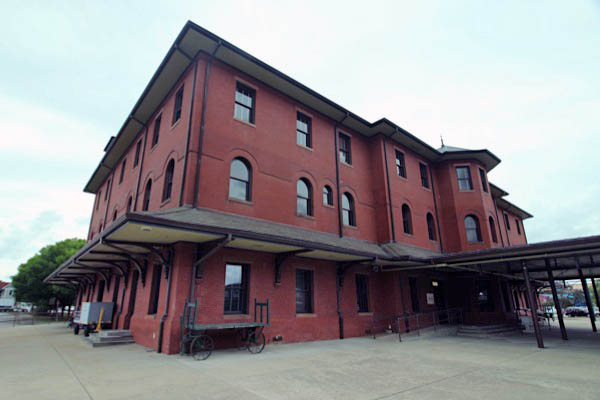
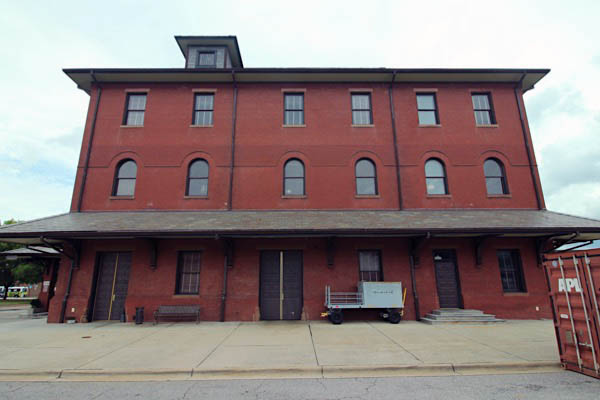
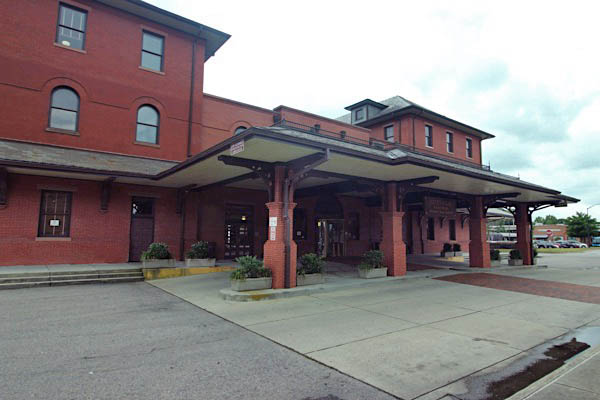
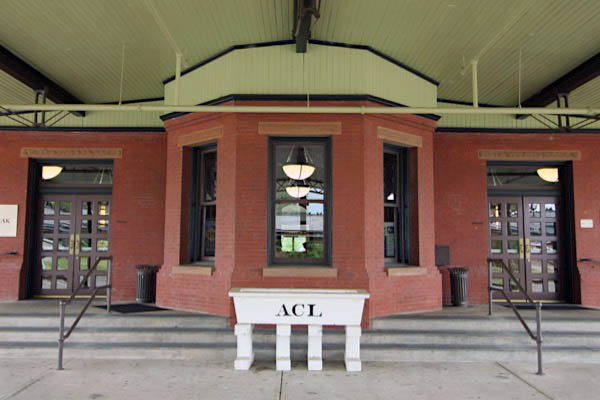
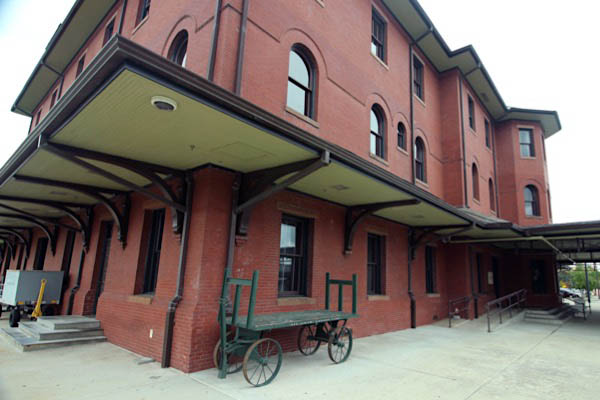
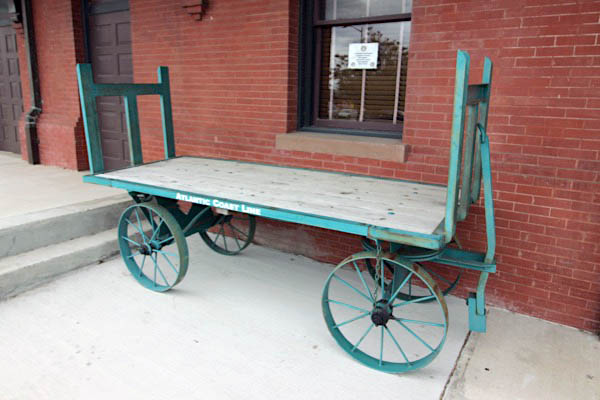
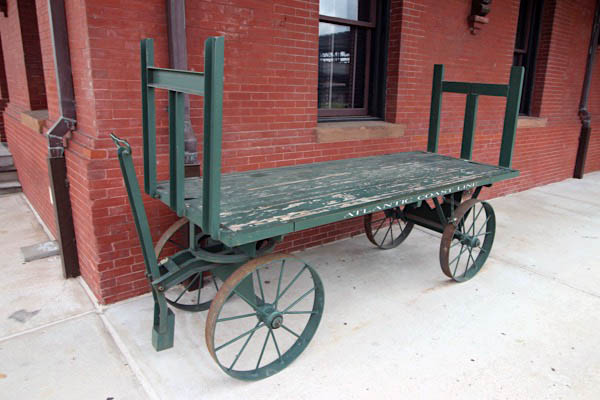
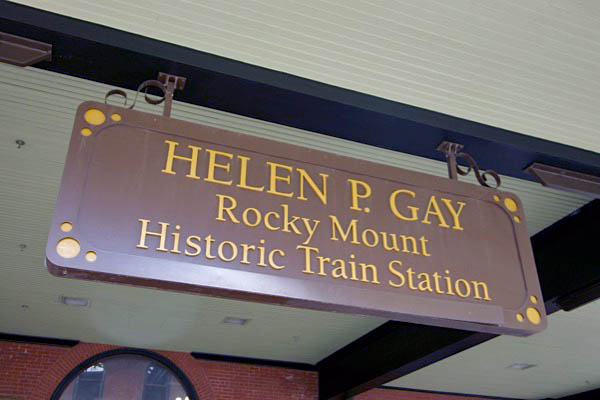
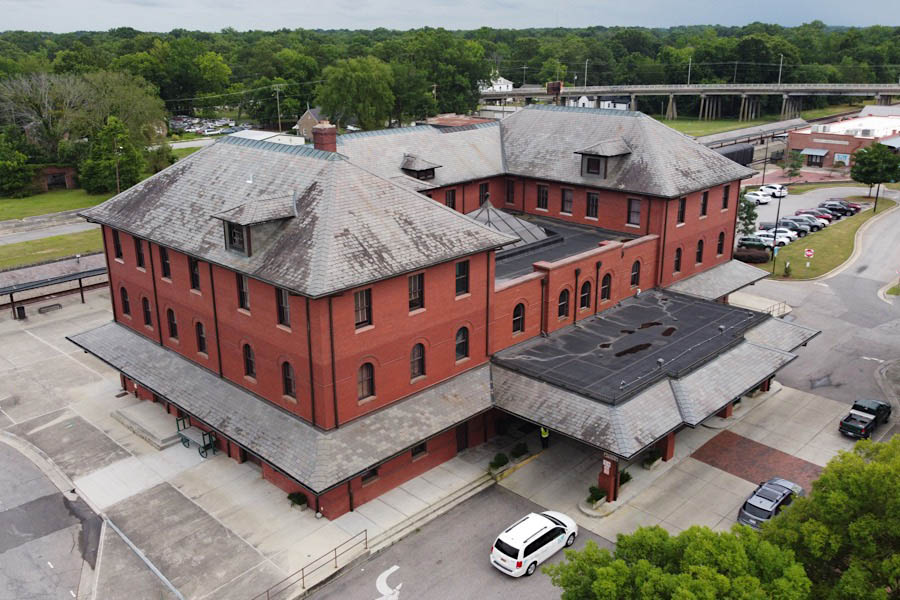
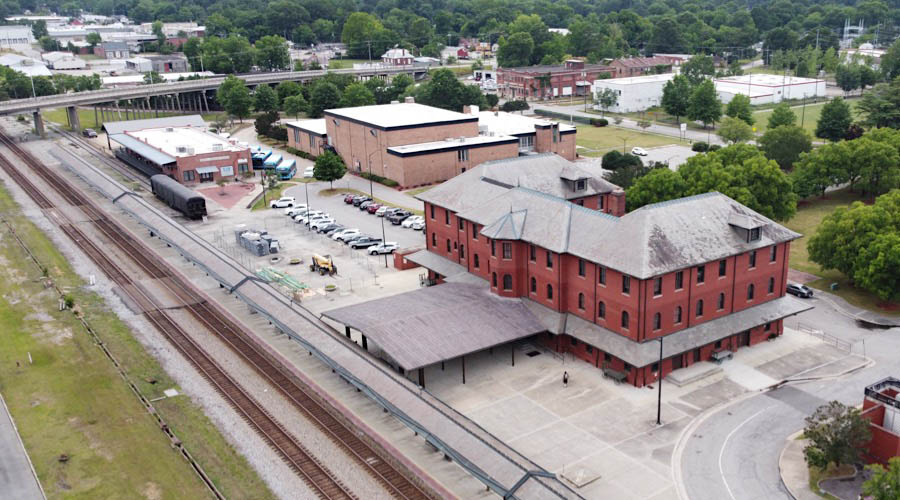
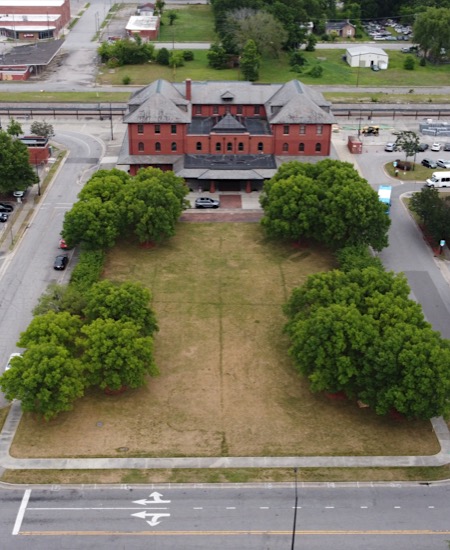
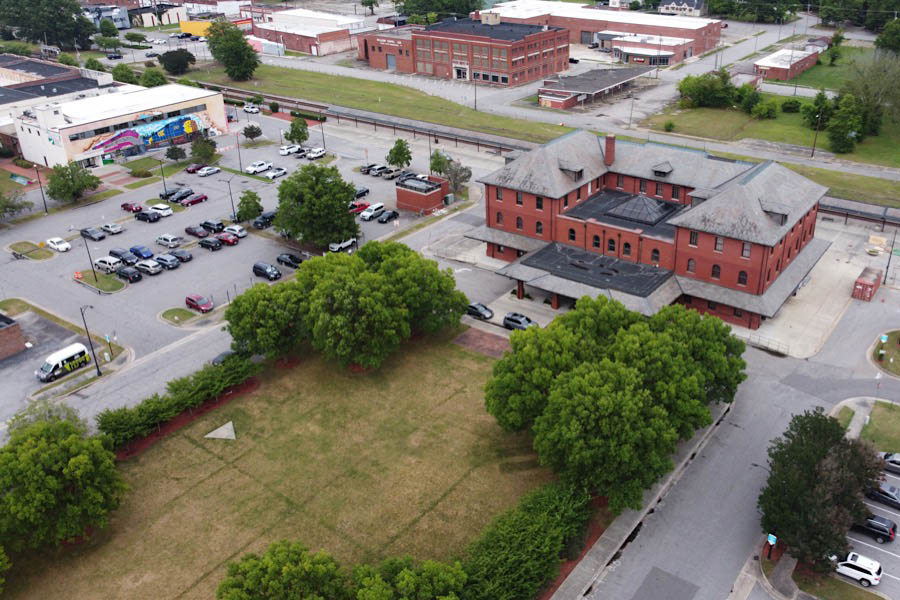
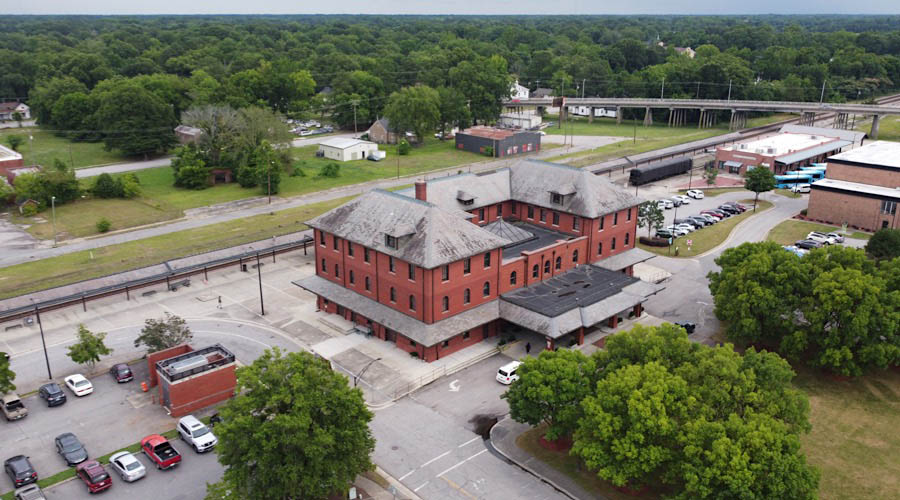
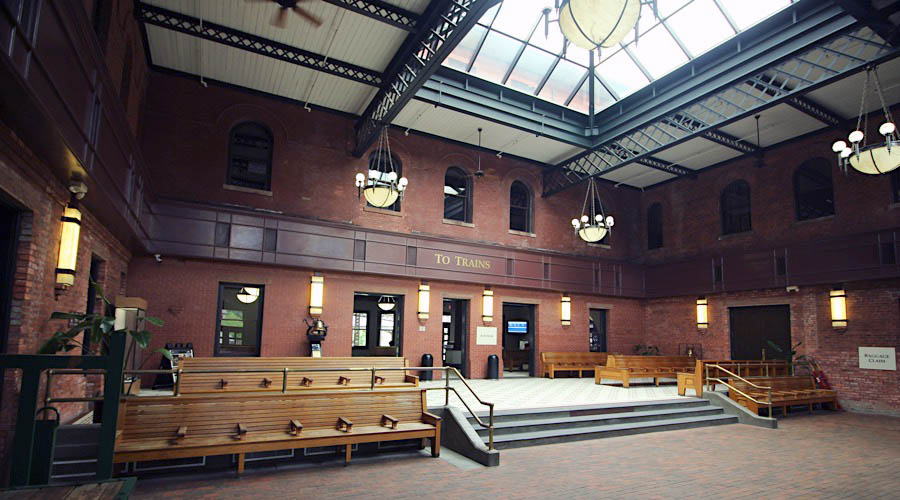
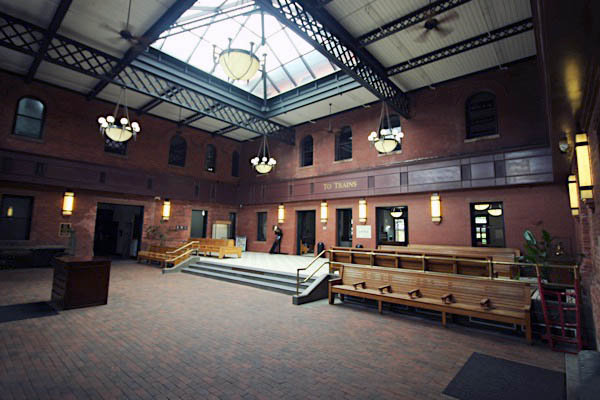
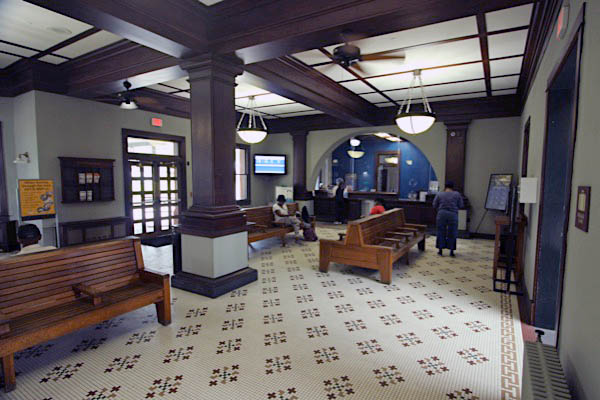
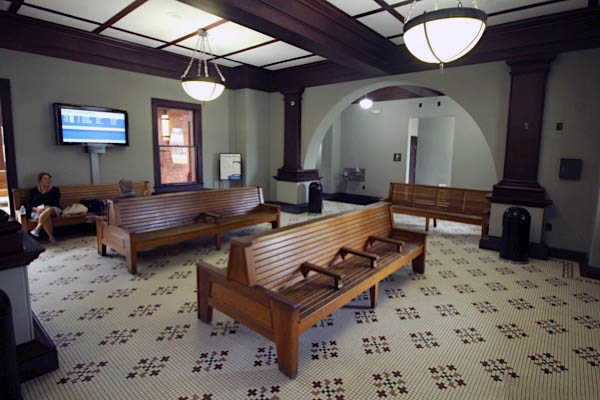
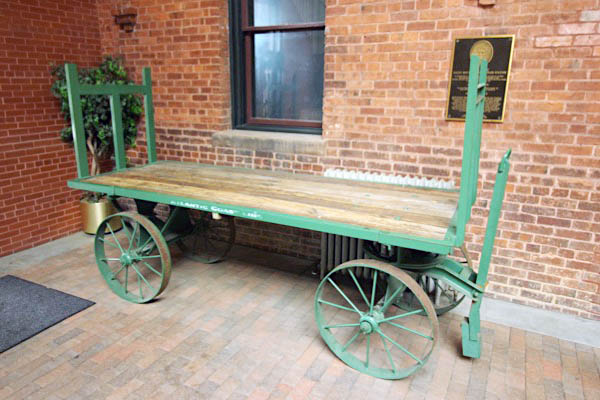
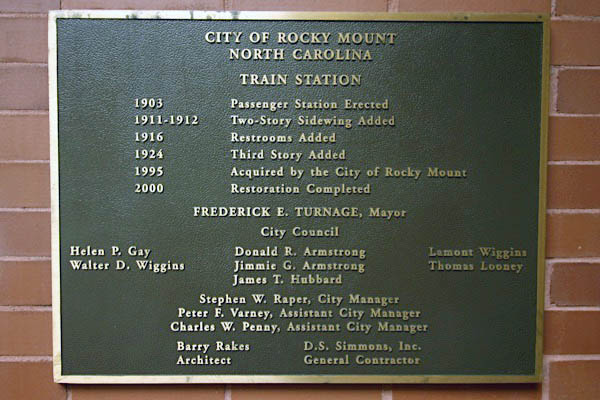
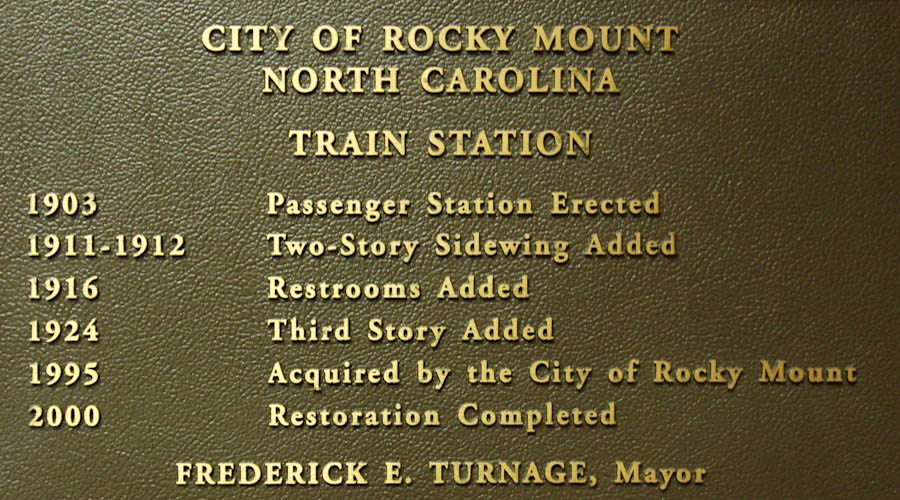
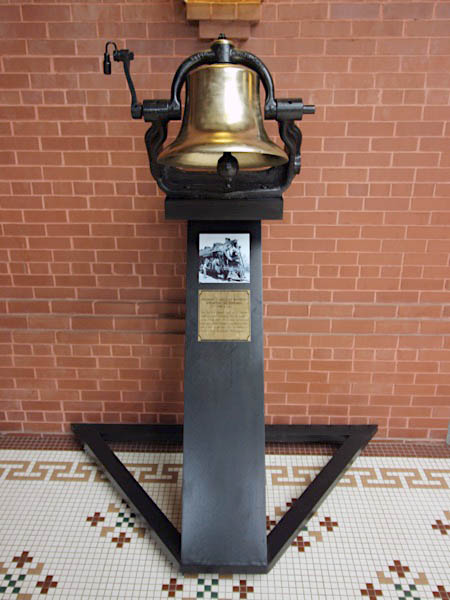
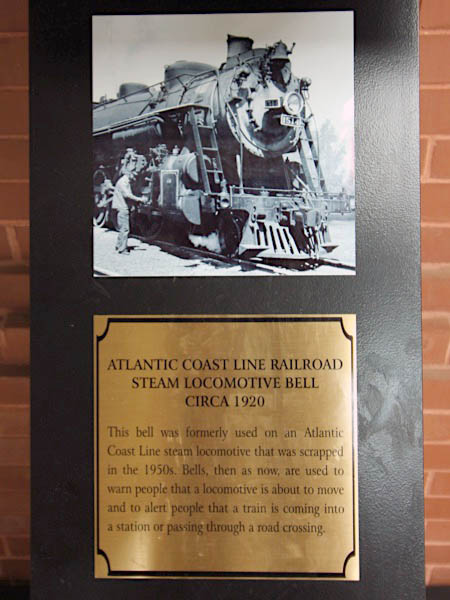
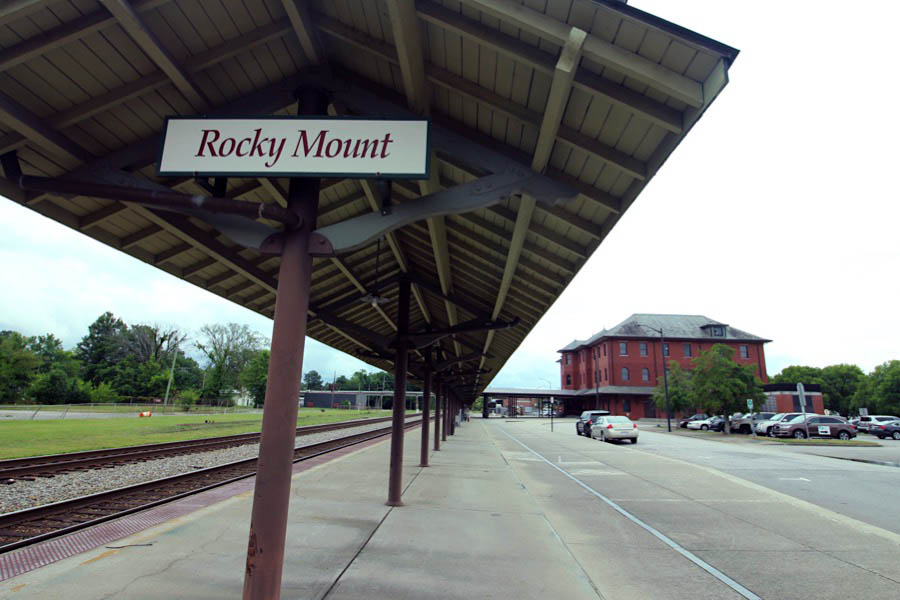
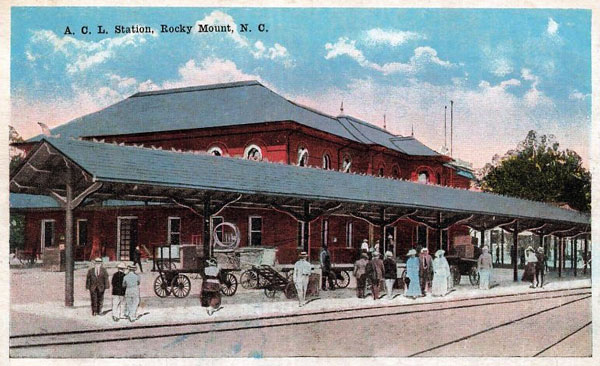 The Rocky Mount rail station was constructed in 1893 by the Wilmington & Weldon Railroad as a two-story brick Romanesque station with one-story wings. Since then, the station’s structure has undergone major changes. In 1911-12, the new owner, the Atlantic Coast Line Railroad, turned the one-story wings into three-story wings. A few years later, a third story was added to the entire building. In the 1960s, an addition was constructed between the wings to store railroad switches and signal equipment, but was later removed.
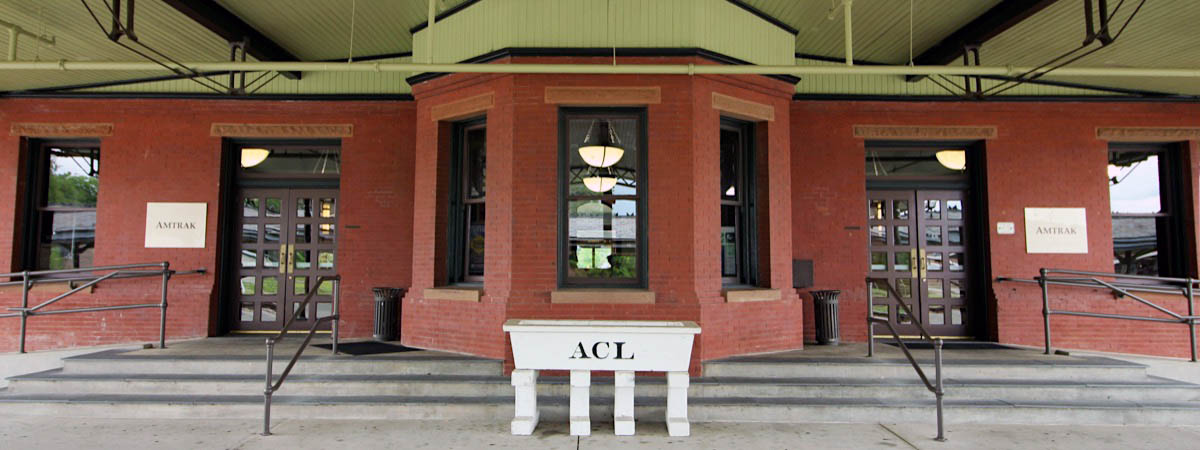
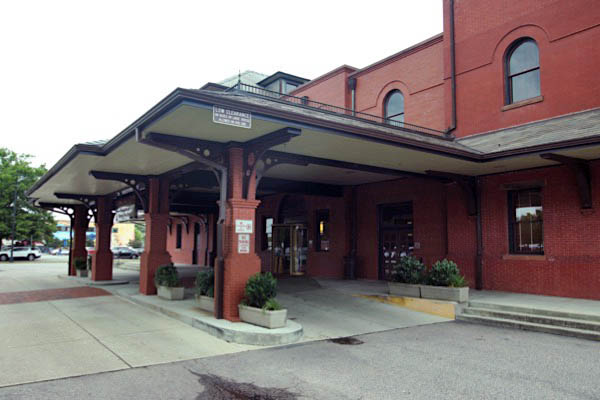
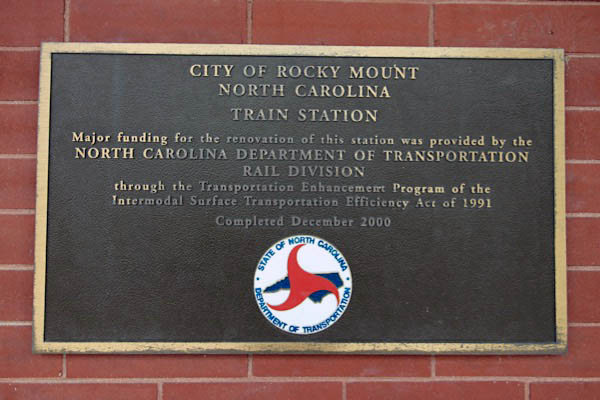
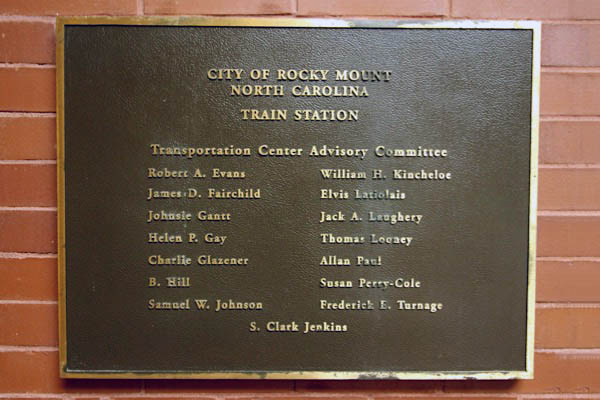
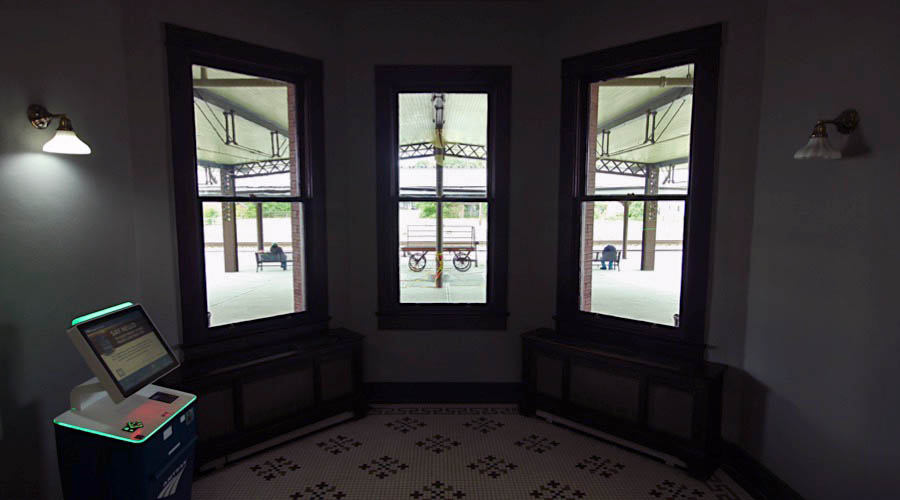
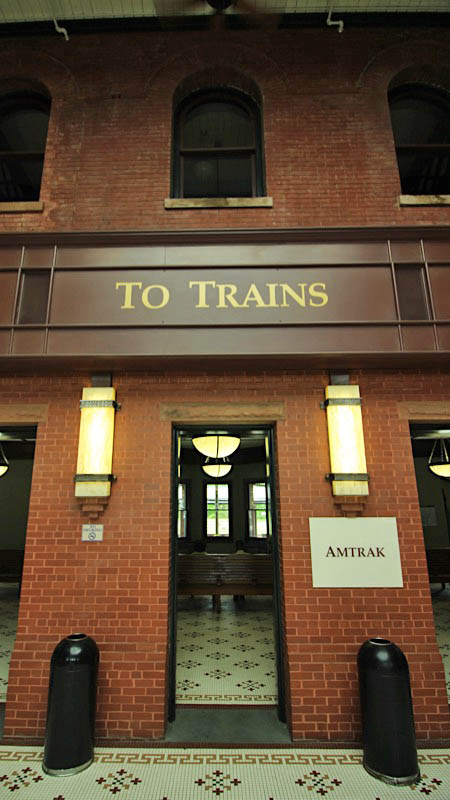
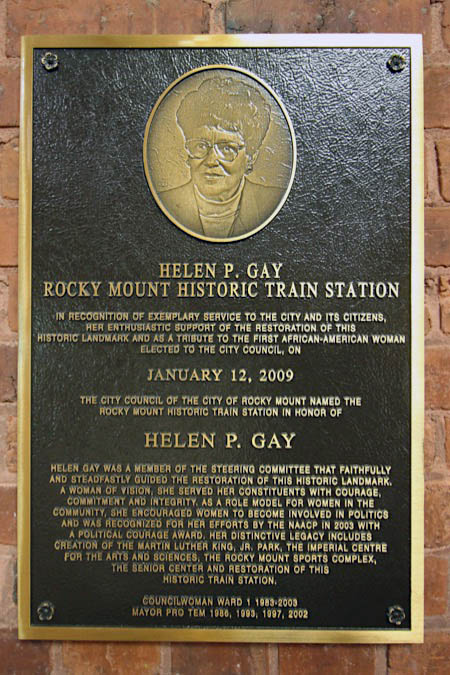
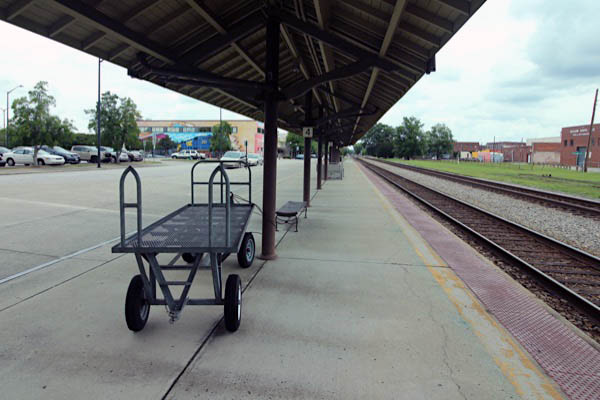
Because the building is part of Rocky Mount’s historic district, it was included in the downtown rehabilitation master plan with renovation starting in 1997. A new entryway was added to the building to allow passengers to enter the station from the street. Canopies were reconstructed, and a new ADA-compliant platform was built. A “commons” park was built in the front yard of the station, as well as improved driveways, parking and streetscaping. The construction finished in December 2000 at a cost of about $9 million with financing coming from a mix of federal, state and local funds.
Rocky Mount’s early days revolved around the first post office, established in 1816, which brought its name into documented history. The Wilmington & Weldon Railroad became Rocky Mount’s main connection to the outside world, yet did not cause immediate growth for the town. Only in the late 1800s did the railroad exert a powerful influence on Rocky Mount, helping spread the fame of Nash County apple brandy. By the turn of the 20th century, Rocky Mount’s population grew to 3,000. The growth and prosperity was influenced by the main railroad line, the well-established cotton mill and productive farmland.
Rocky Mount, NC / Jun 2023 / RWH
Rocky Mount, NC / Jun 2023 / RWH
Rocky Mount, NC / Jun 2023 / RWH
Rocky Mount, NC / Jun 2023 / RWH
Rocky Mount, NC / Jun 2023 / RWH
Jun 2023 / RWH
postcard / collection
1910 Official Guide ad / collection
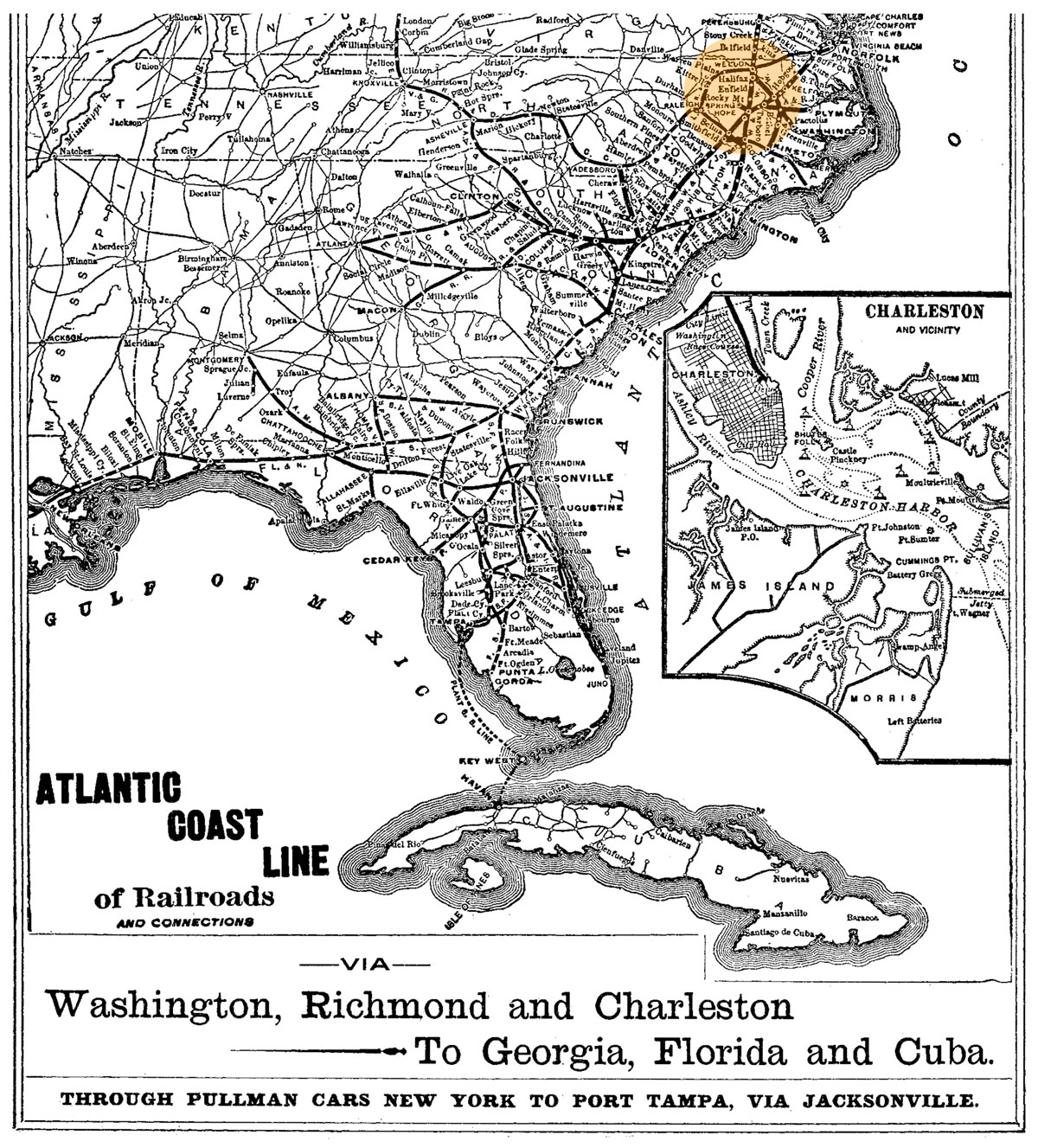
1893 Official Guide map / collection
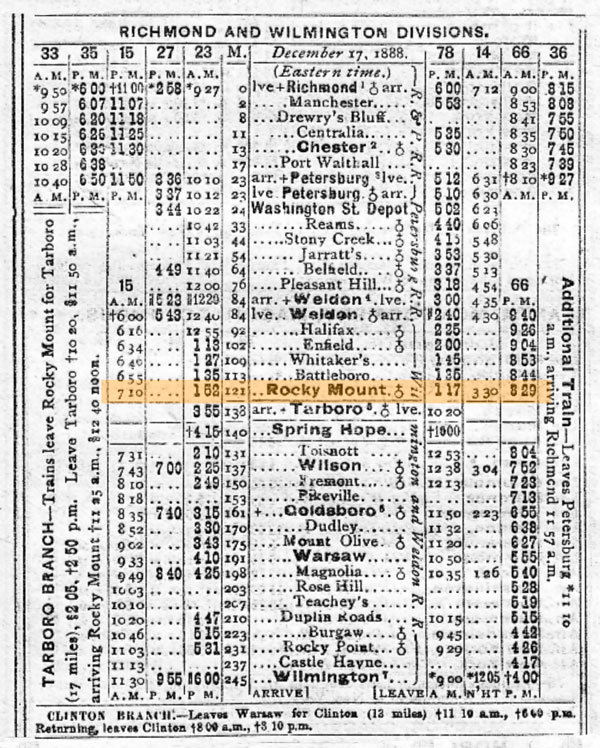
1889 Official Guide ad / collection
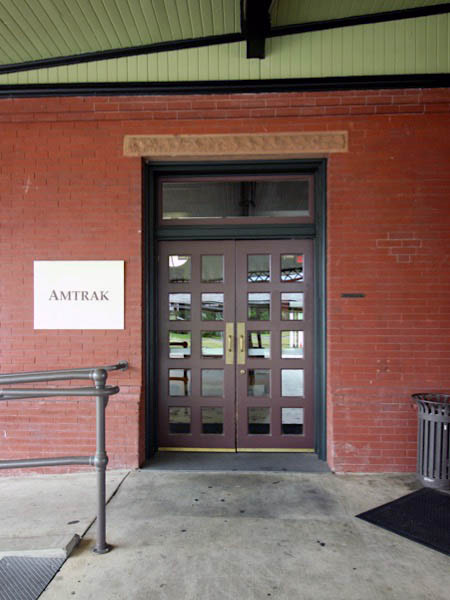
Jun 2023 / RWH

Rocky Mount, NC / Jun 2023 / RWH
Rocky Mount, NC / Jun 2023 / RWH
Jun 2023 / RWH
Jun 2023 / RWH
Jun 2023 / RWH
Jun 2023 / RWH
Jun 2023 / RWH

 The physical reminders of Rocky Mount’s legacy however, are rapidly disappearing — its railroad heritage. The friendly picturesque All-American town that straddled the double main line tracks of Champion McDowell Davis’ great Atlantic Coast Line Railroad is fast becoming a fleeting memory. Once home to thousands of skilled machinists, electricians, black smiths, laborers and others, who kept the lights glowing ‘round the clock at the sprawling Emerson Shops complex, armies of brakemen, conductors, firemen and engineers who stoked the fires of hungry steam locomotives or made up and took apart trains of valuable manufactured goods and precious agricultural commodities, Rocky Mount appears amicable to forgetting why it was born and the reason it was one of the most important rail junctions on the east coast of the United States.
Rocky Mount isn’t alone. Altoona, PA, Huntington, WV and Omaha, NB are other towns that came into existence because the gods of railroading identified a vacant parcel of land located at just the right distance between two other points on a railroad map, picked it up, breathed life into its lungs and gave birth to it. Steel rails fed it, clothed it and caused its heart to beat vibrantly for many, many years. Only those who sold railroad workers their clothes, their groceries, their automobiles, and others who taught their children to read and write, fixed their appliances and paved their streets didn’t work for the railroad directly, but owed their own livelihoods to it.
But while some of these other towns were able to adapt their facilities to grow and expand, thus insuring their importance and long term viability, Rocky Mount was just too close to Richmond, too close to Florence. Its shops weren’t as modern as those in Waycross or Jacksonville. The winds that used to blow across the bridge yard and echo off the walls of the shops where hundreds of passenger and freight cars were built, where the ACL’s entire fleet of Electro Motive diesels and steam engines were rebuilt, are now vacant. Where thousands of workers once whistled on their way to the erecting bay, the tall grass now sings a sad lonely wail.
Jun 2023 / RWH
Rocky Mount, NC / Jun 2023 / RWH
Rocky Mount, NC / Jun 2023 / RWH
Jun 2023 / RWH
Rocky Mount, NC / Jun 2023 / RWH
Rocky Mount, NC / Jun 2023 / RWH
Rocky Mount, NC / Jun 2023 / RWH
Jun 2023 / RWH
Rocky Mount, NC / Jun 2023 / RWH
Rocky Mount, NC / Jun 2023 / RWH
Jun 2023 / RWH
Jun 2023 / RWH
Jun 2023 / RWH
Jun 2023 / RWH
Jun 2023 / RWH
Jun 2023 / RWH
Jun 2023 / RWH
Jun 2023 / RWH
Jun 2023 / RWH
Jun 2023 / RWH
Jun 2023 / RWH
Jun 2023 / RWH
Jun 2023 / RWH
Jun 2023 / RWH
Jun 2023 / RWH
Jun 2023 / RWH
Jun 2023 / RWH
Jun 2023 / RWH
Rocky Mount, NC / Jun 2023 / RWH
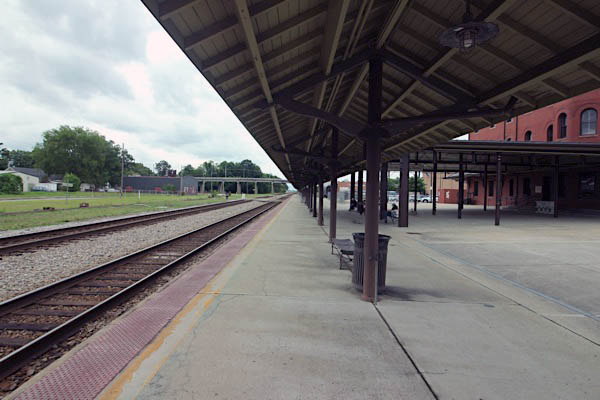
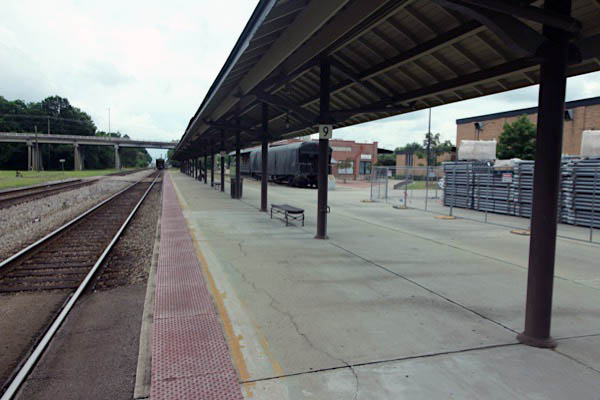
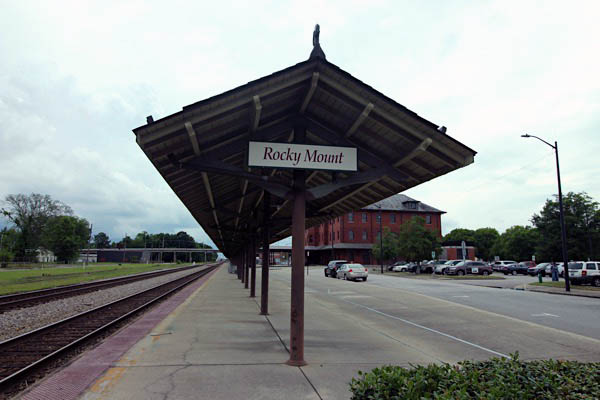
Rocky Mount, NC / Jun 2023 / RWH
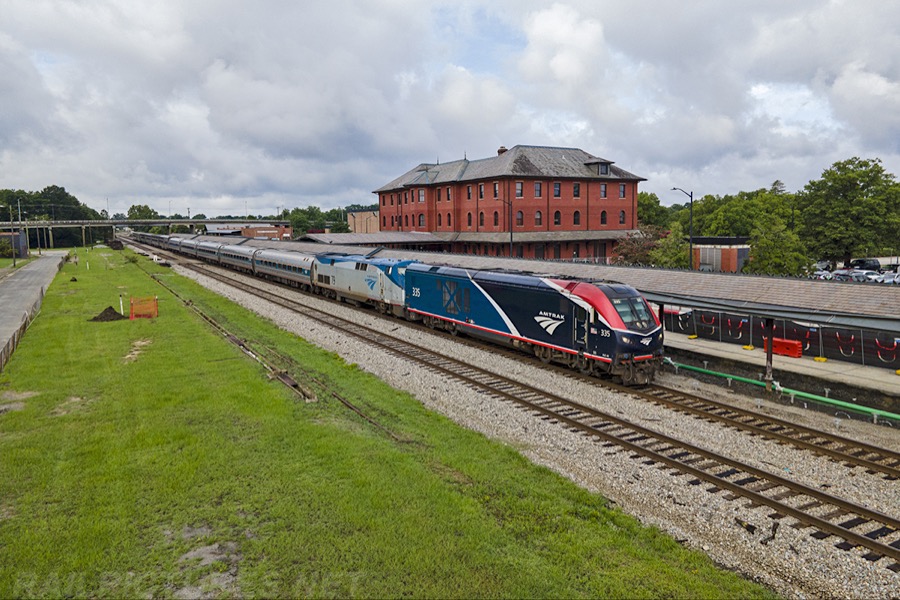
Silver Meteor
Rocky Mount, NC / Jul 2024 / Mark MacDougall
551 Fayetteville, NC
- Palmetto
- Silver Meteor
Jul 2025 / RWH
Fayetteville, NC / Jul 2025 / RWH
Click to see the Fayetteville station area plotted on a Google Maps page
Fayetteville, NC / Jul 2025 / RWH
Fayetteville, NC / Jul 2025 / RWH
Fayetteville, NC / Jul 2025 / RWH
Fayetteville, NC / Jul 2025 / RWH
Fayetteville, NC / Jul 2025 / RWH
Jul 2025 / RWH
Jul 2025 / RWH
Jul 2025 / RWH
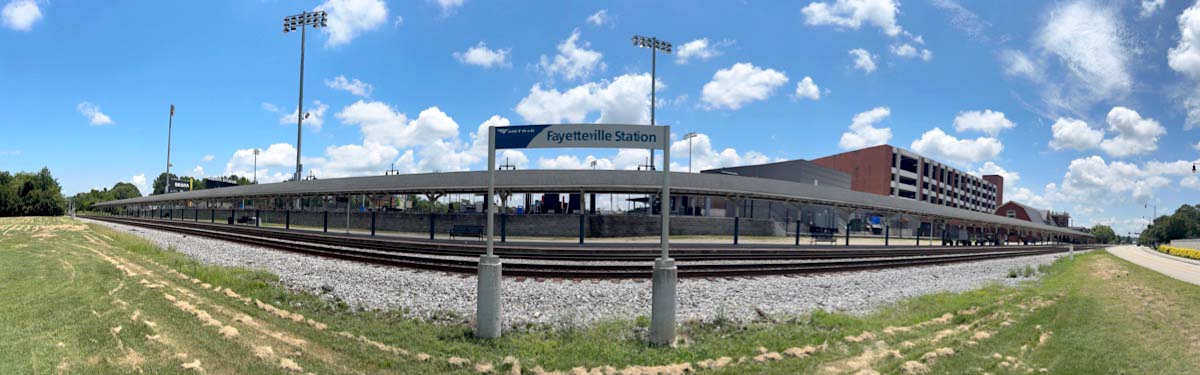
Fayetteville, NC / Jul 2025 / RWH
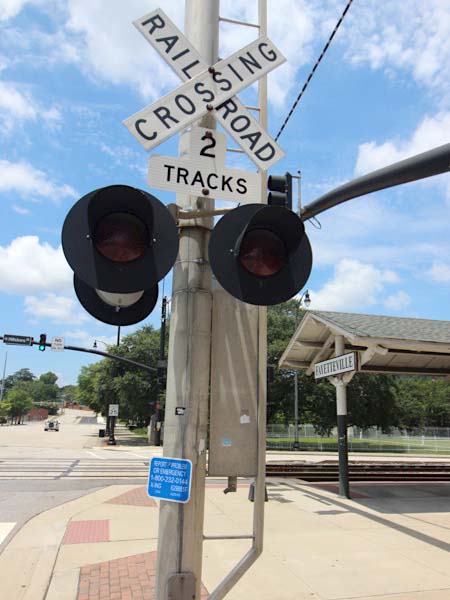
Jul 2025 / RWH
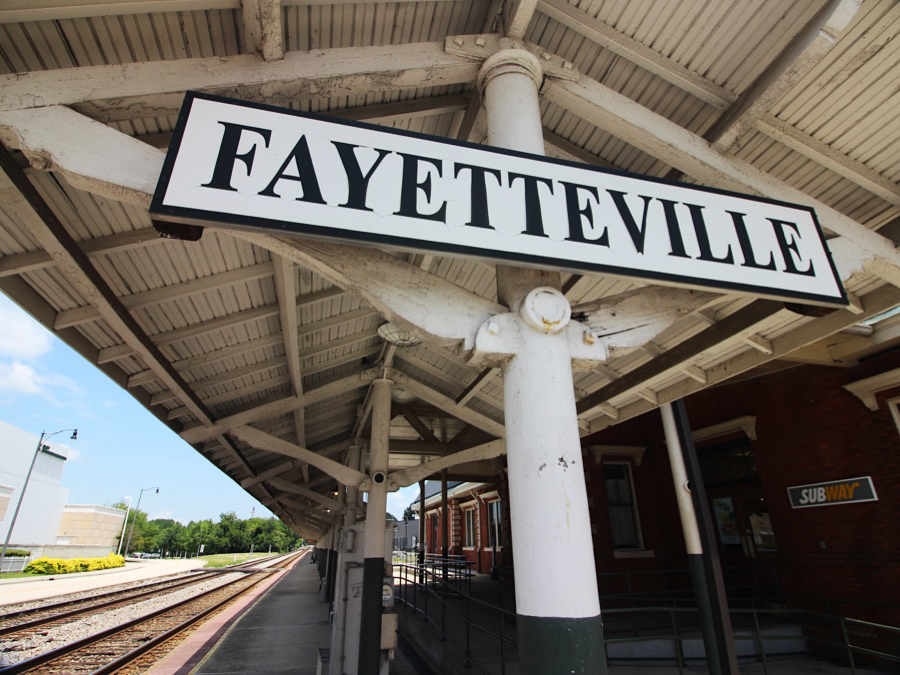
Jul 2025 / RWH
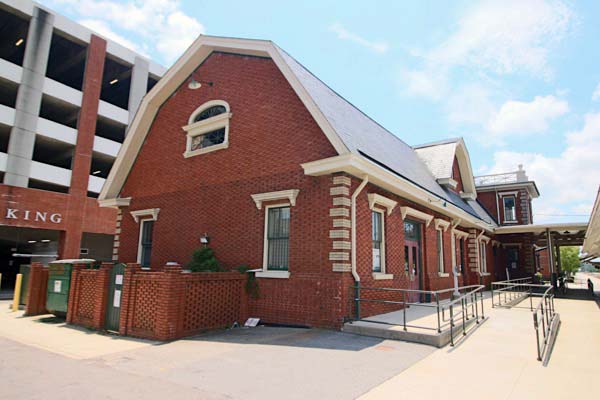
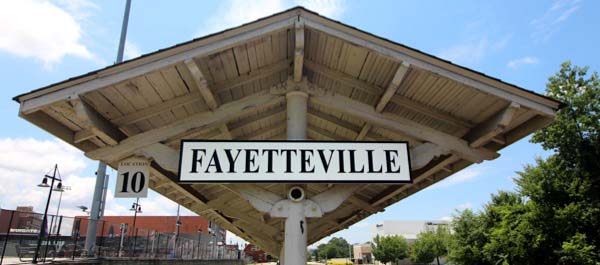
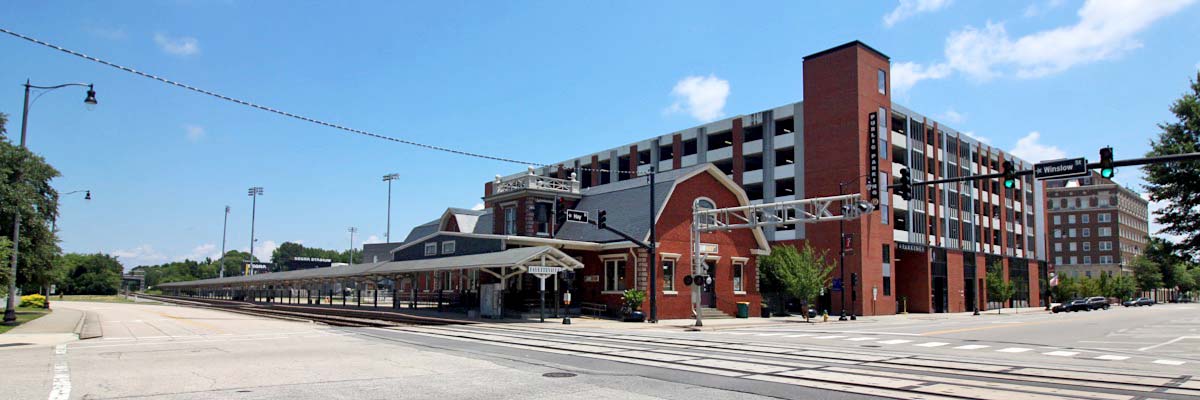
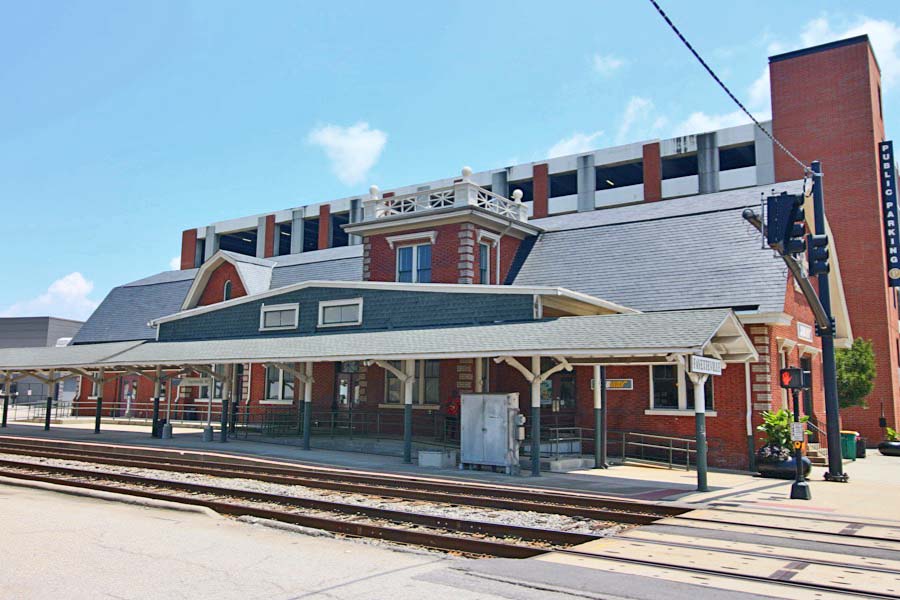
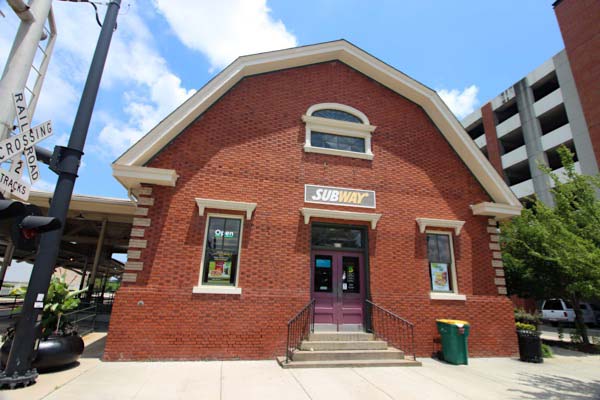
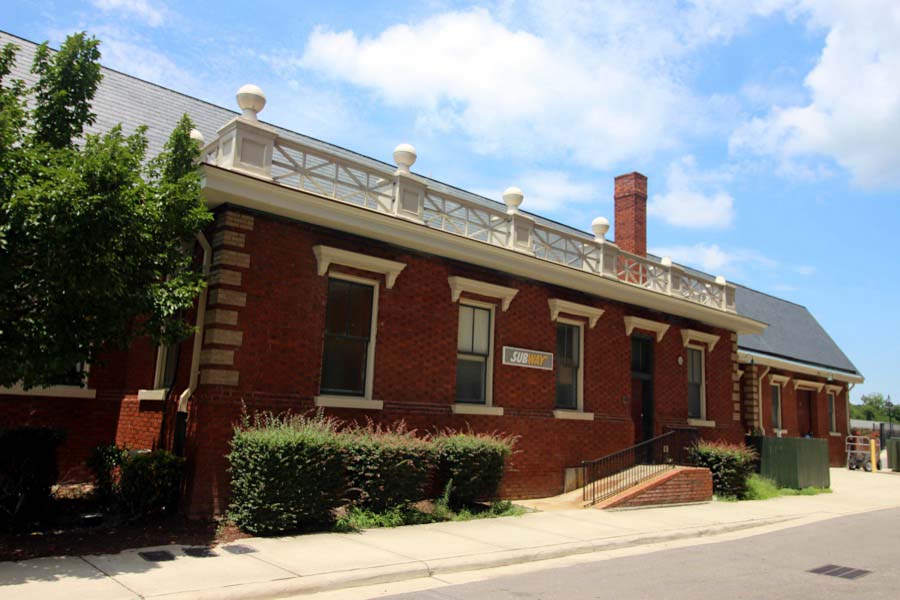
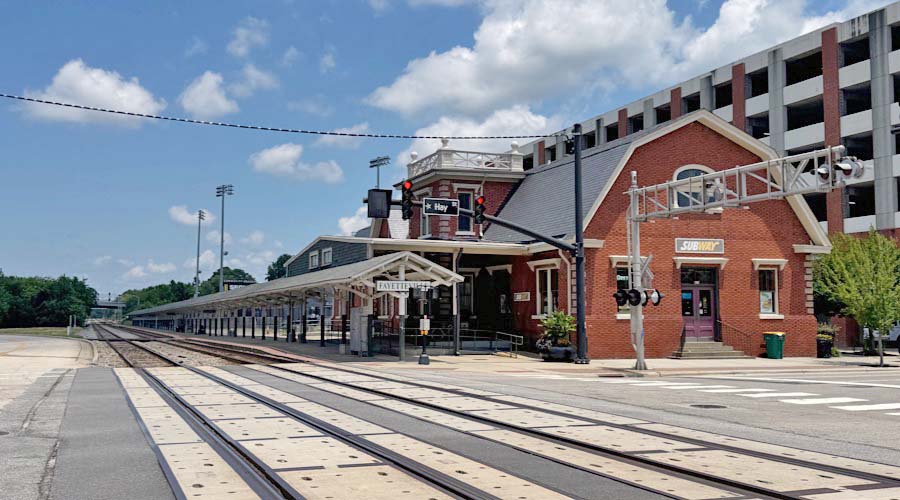
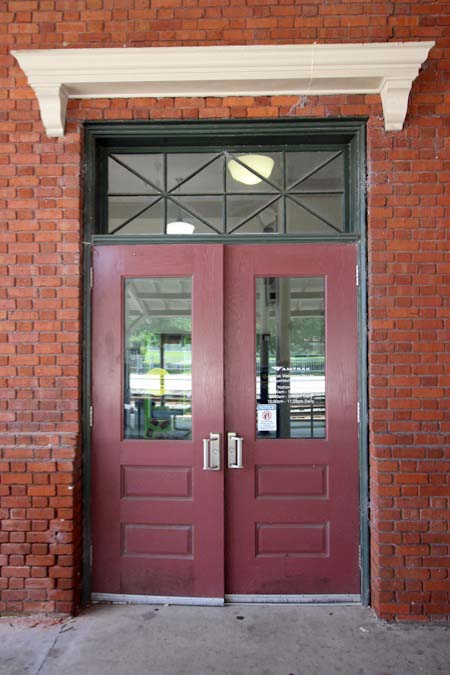
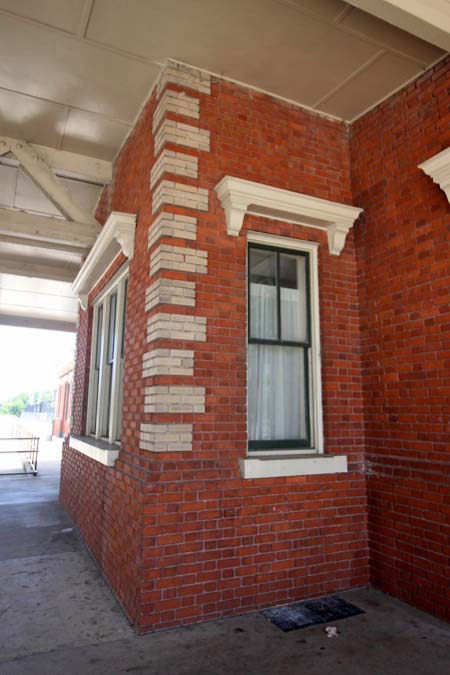
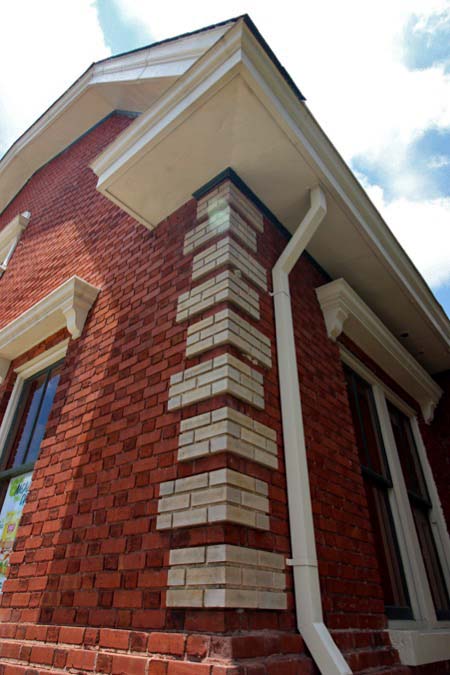
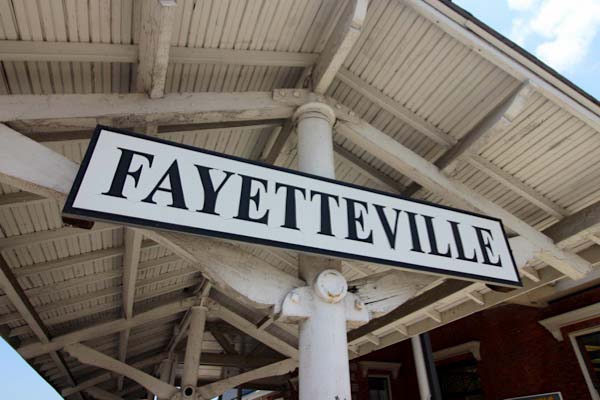
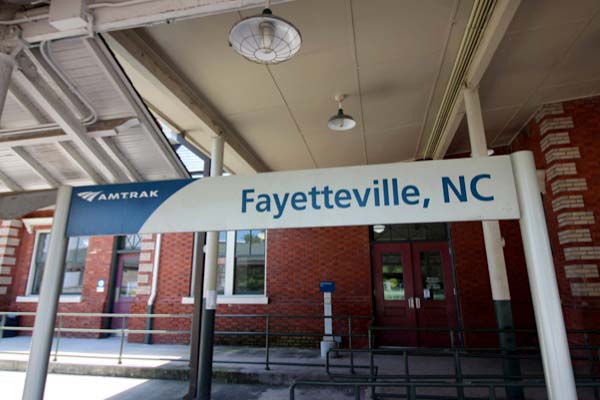
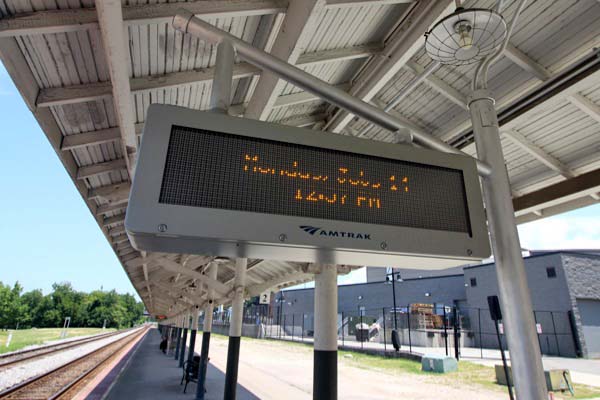
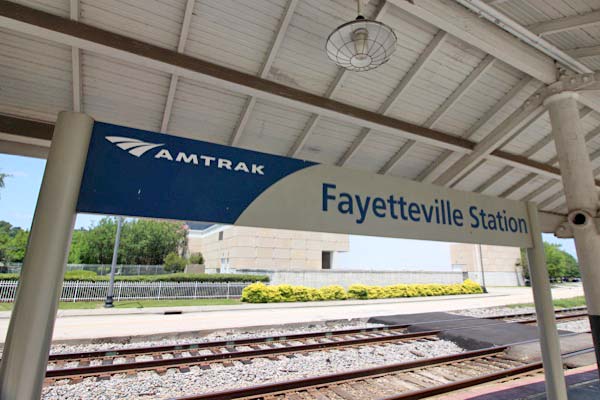
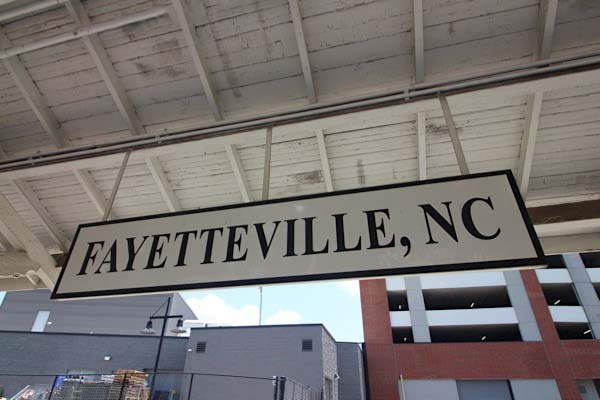
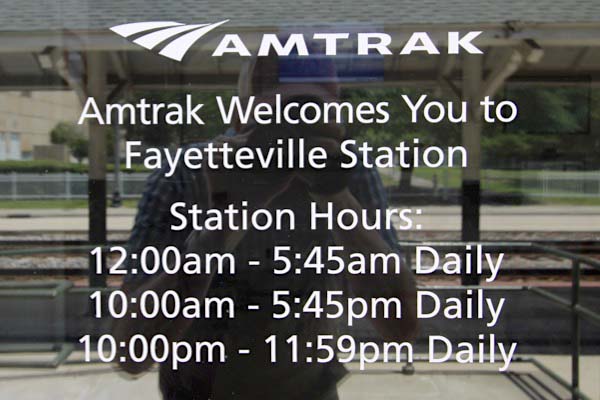
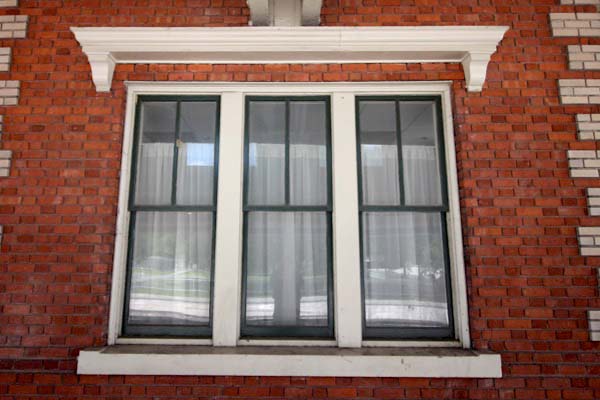
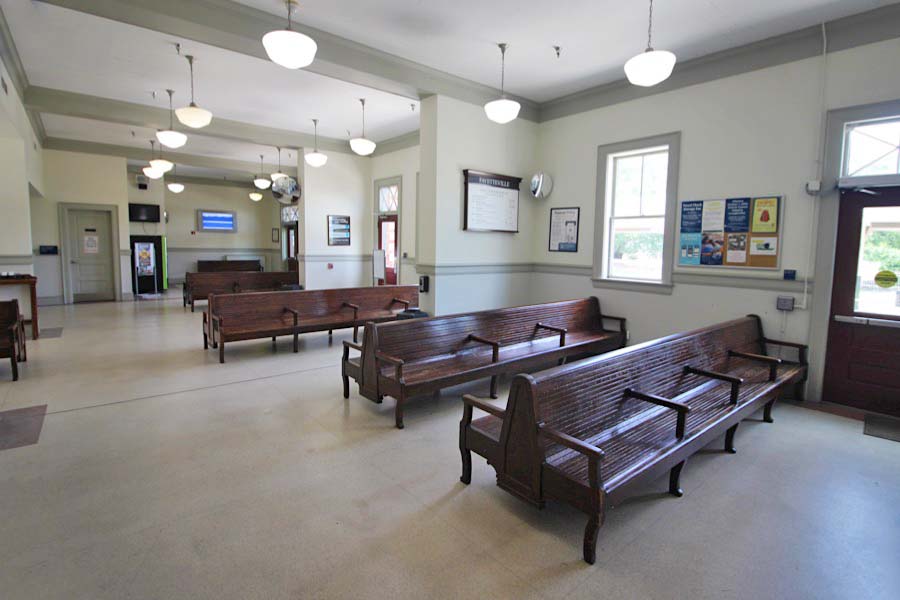
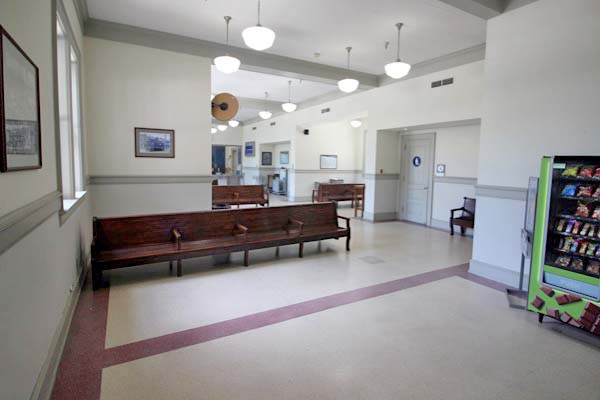
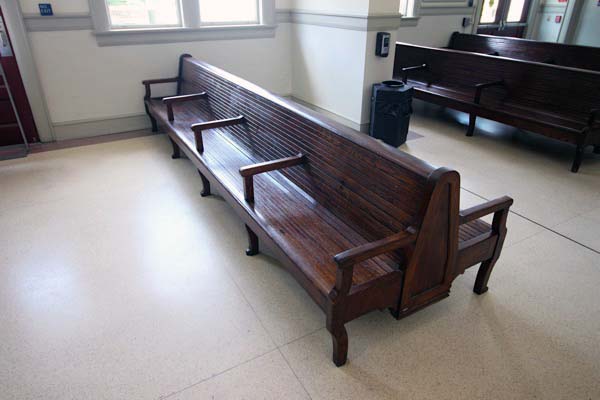
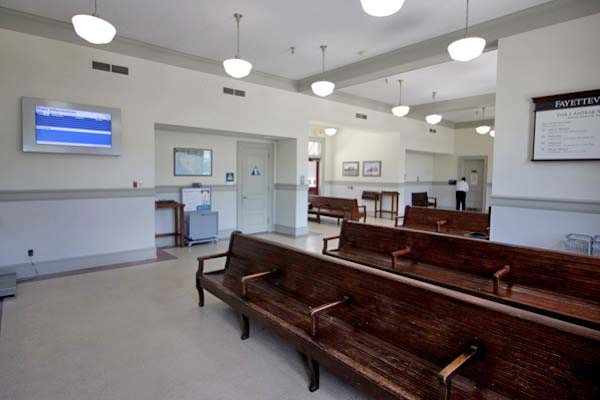
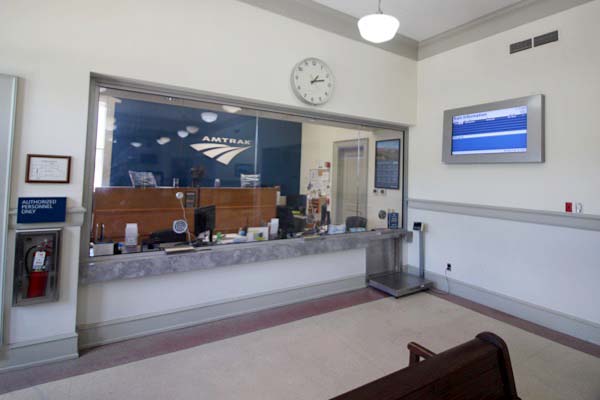
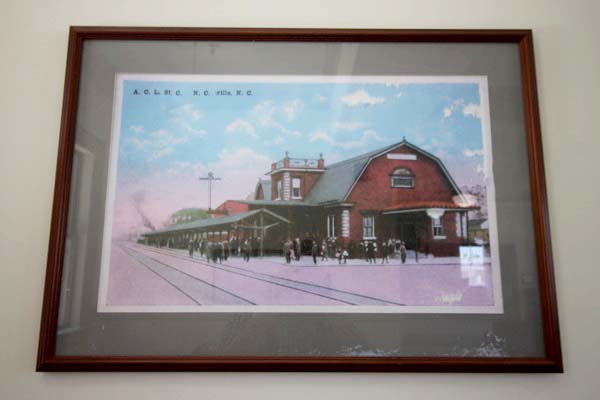
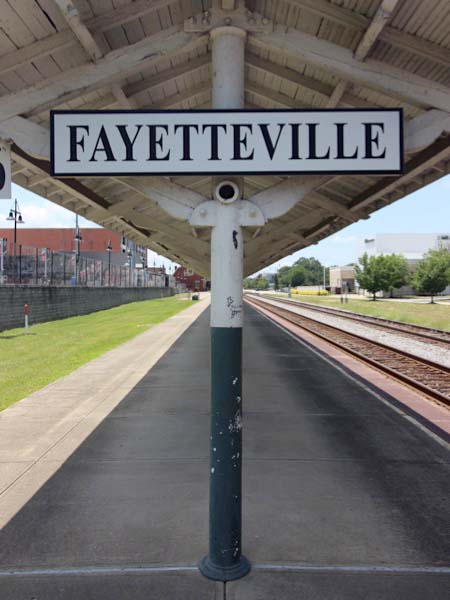
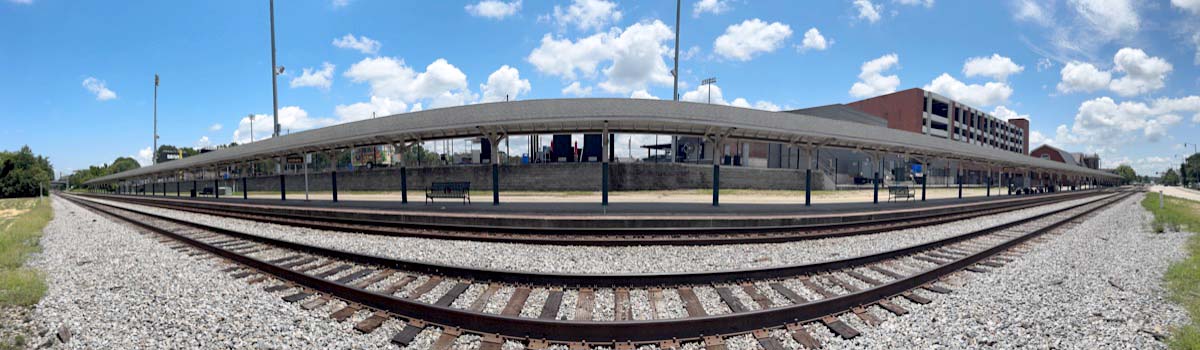
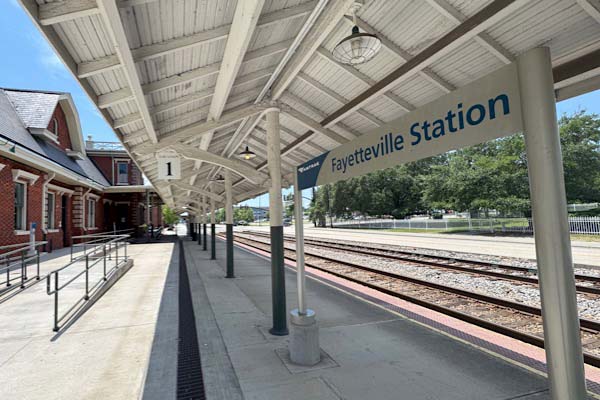
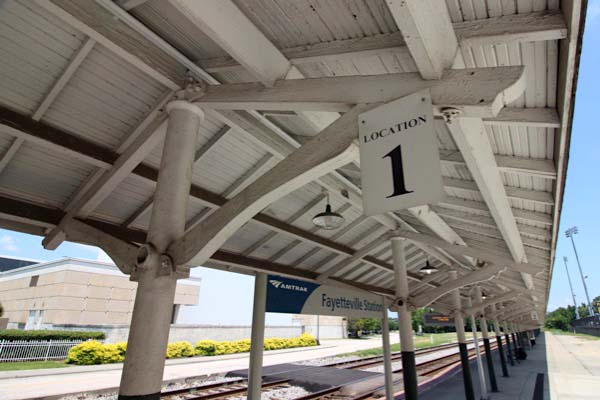
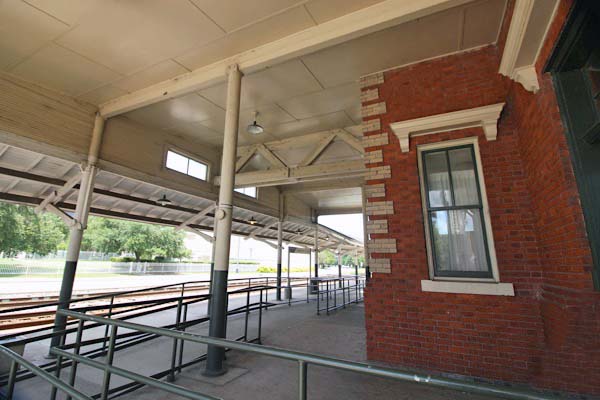
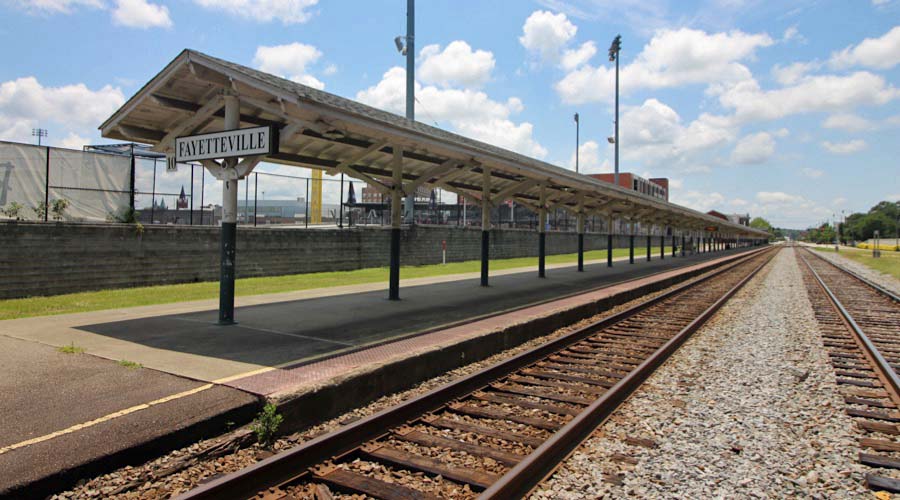
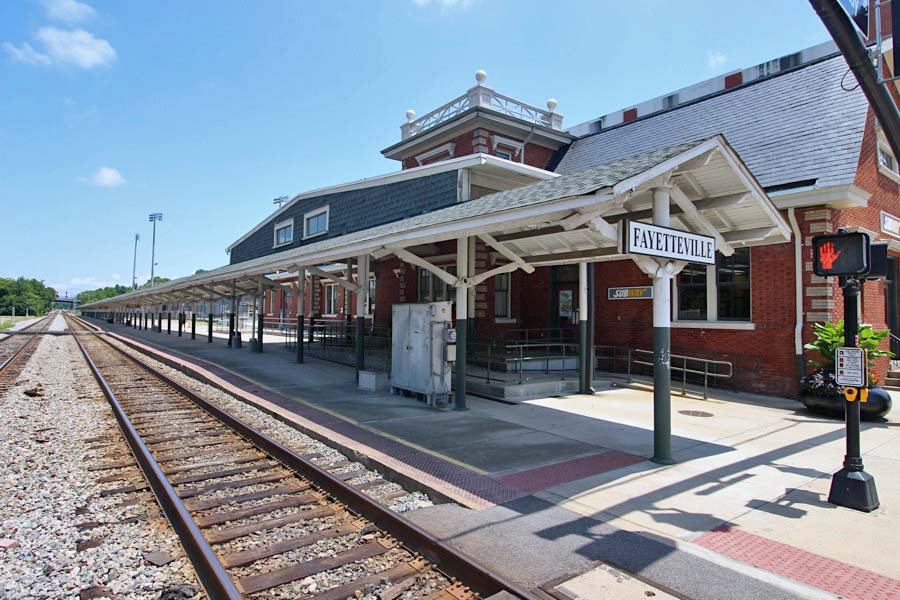
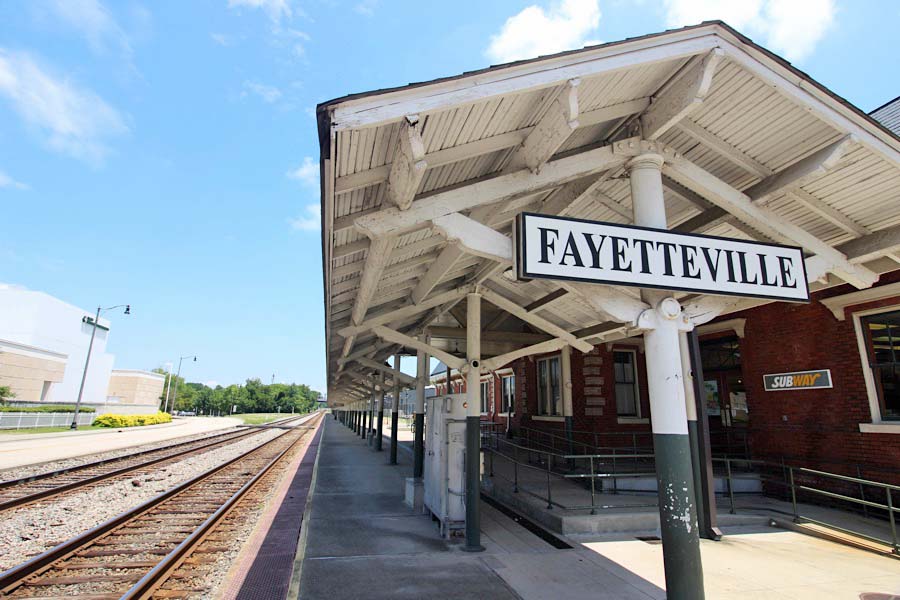
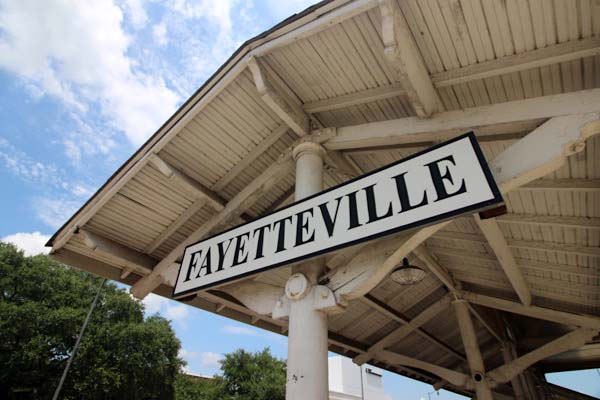
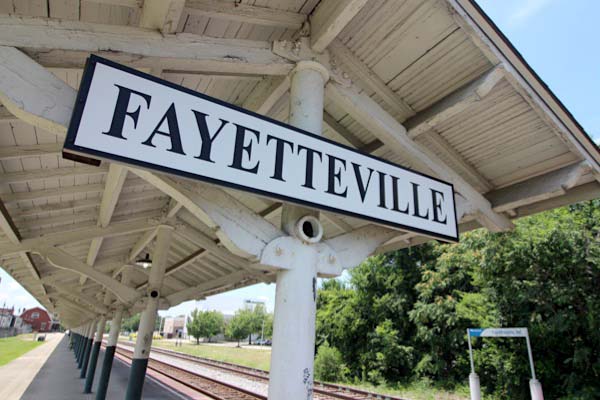
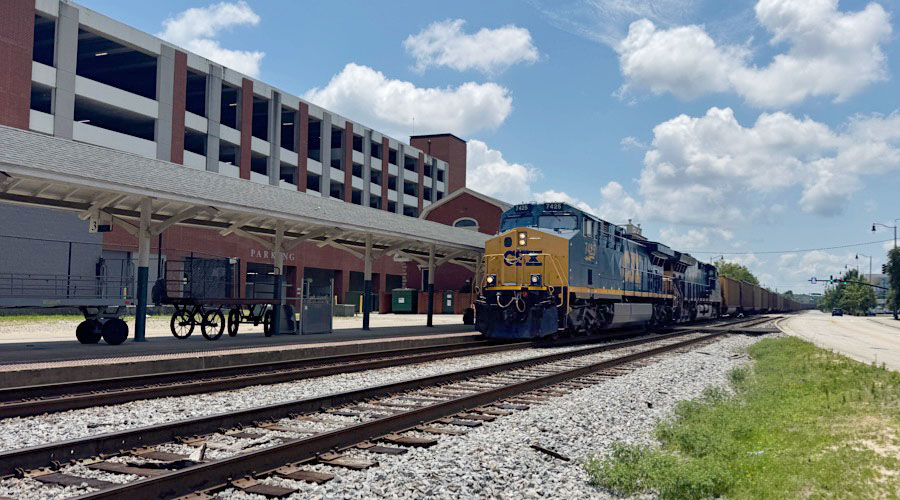
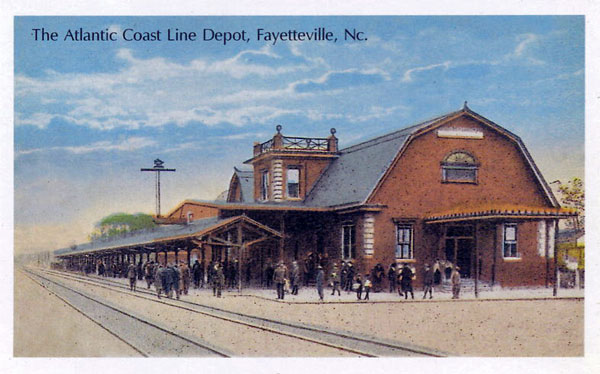 The Fayetteville train station was constructed in 1911 by the Atlantic Coast Line Railroad. This is actually the third depot to be built at the corner of Hay and Hillsborough streets, with the current building designed in the Dutch Colonial Revival Style and constructed of red brick with a gambrel roof. The depot was placed on the National Register of Historic Places in 1982. In addition to a passenger waiting room, the building also includes commercial space and is served by local buses.
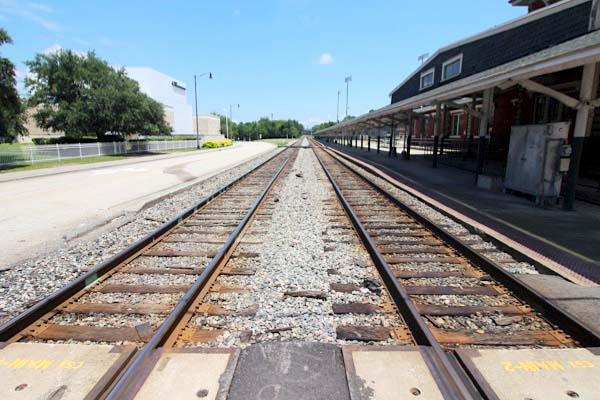
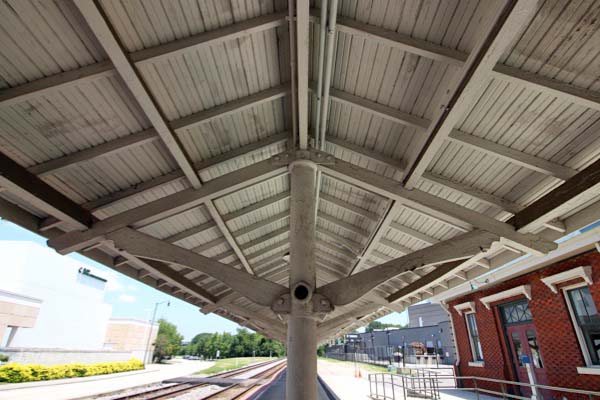
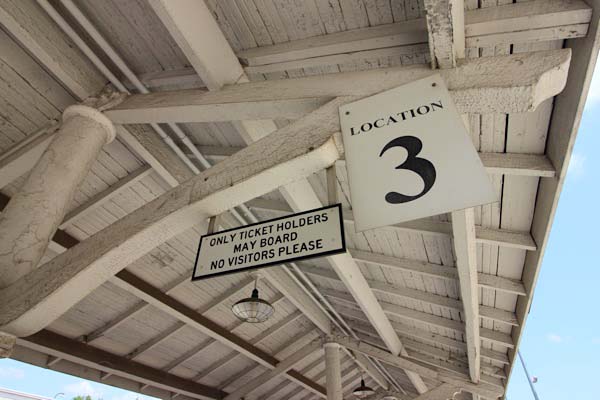
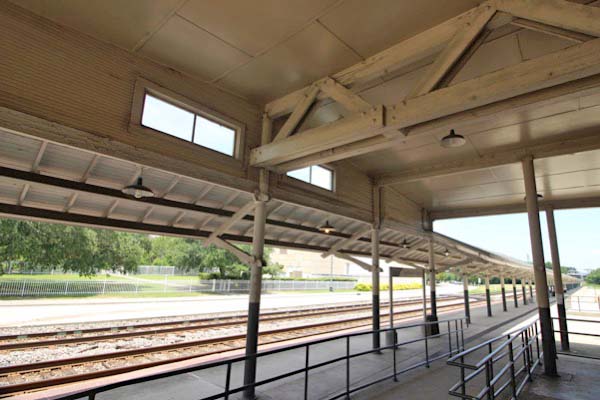
Early in the 1990s, the city completed the exterior renovation of the station which included a new slate roof. The next renovations, in 2005, brought the building into compliance with the Americans with Disabilities Act. The restoration included the reconstruction of the boarding platform to provide better accessibility. There were also modifications to the waiting room to provide sheltered passage to the platform. The renovations were designed by SFL&A Architects of Fayetteville. The construction was completed in 2006 at a cost of $696,000. Ninety percent of the financing was provided by the North Carolina Department of Transportation, with the remaining 10 percent coming from the city of Fayetteville.
Jul 2025 / RWH
Jul 2025 / RWH
Jul 2025 / RWH
Fayetteville, NC
Fayetteville, NC / Jul 2025 / RWH
Jul 2025 / RWH

Fayetteville, NC / Jul 2025 / RWH
Jul 2025 / RWH
Fayetteville, NC / Jul 2025 / RWH
Fayetteville, NC / Jul 2025 / RWH
Jul 2025 / RWH
Fayetteville, NC / Jul 2025 / RWH
Jul 2025 / RWH
Fayetteville, NC / Jul 2025 / RWH
532 Raleigh, NC
- Carolinian
- Piedmont
- Silver Star
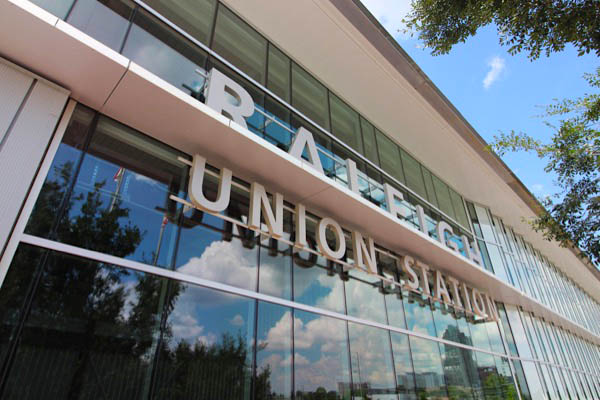
Jul 2025 / RWH
- name:Raleigh Union Station
- address:510 W Martin Street
- type:city station, 2 platforms
- owner:City of Raleigh
- opened:2018
- builder:City of Raleigh
- style:adaptive reuse
- services:tickets, baggage
- links: Amtrak | Great Stations
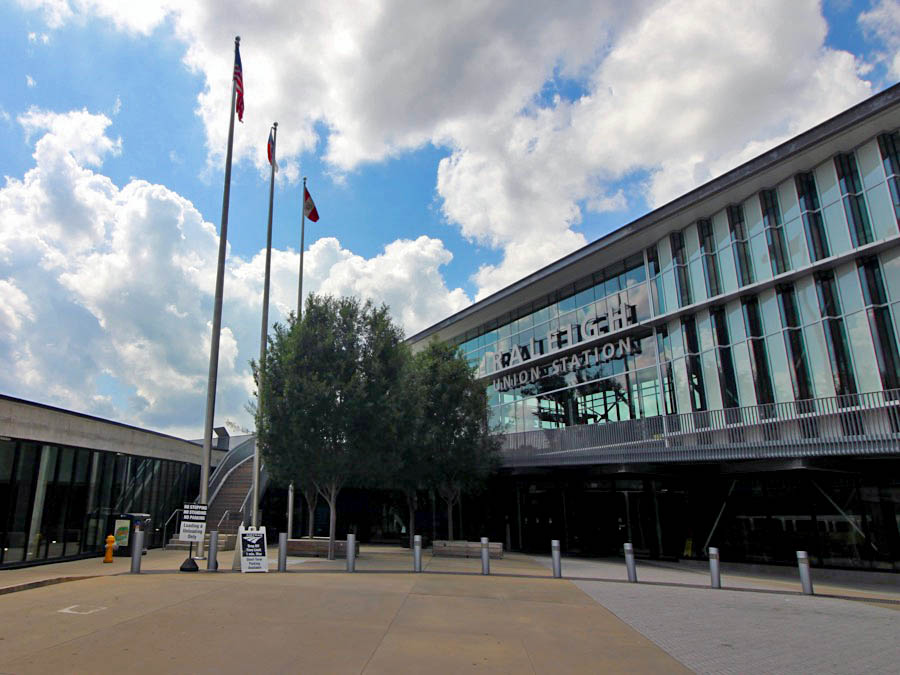
Raleigh, NC / Jul 2025 / RWH
Click to see the Raleigh Union Station complex plotted on a Google Maps page
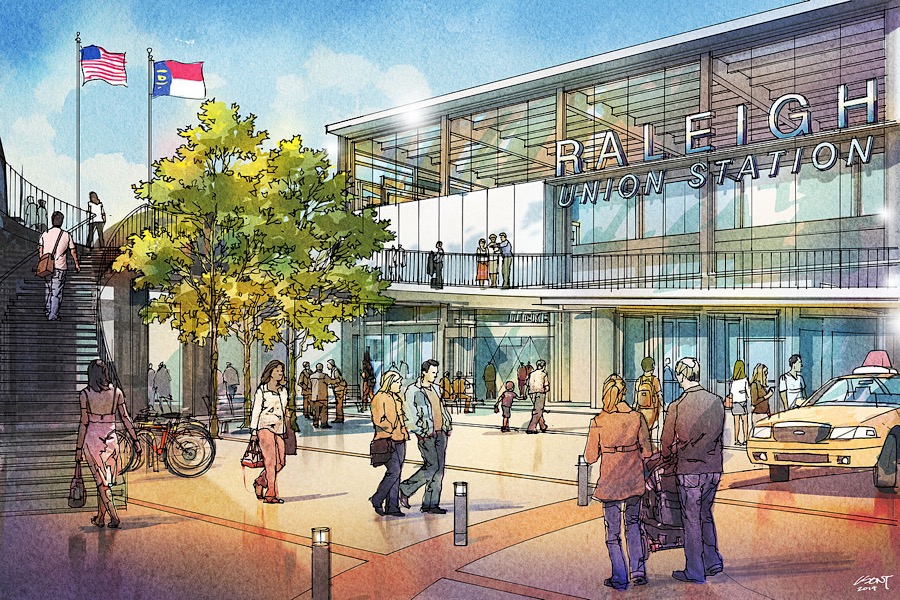
Wikipedia Commons

Raleigh, NC / Jul 2025 / RWH
Jul 2025 / RWH
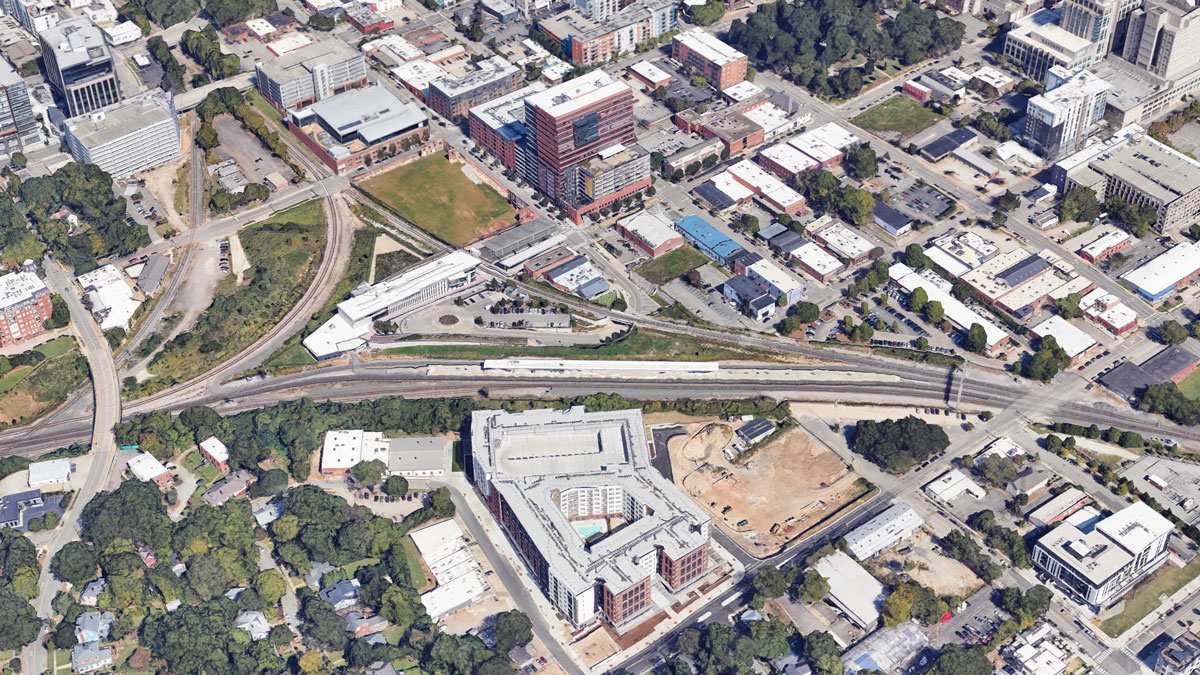
Google Maps
Jul 2025 / RWH
Jul 2025 / RWH
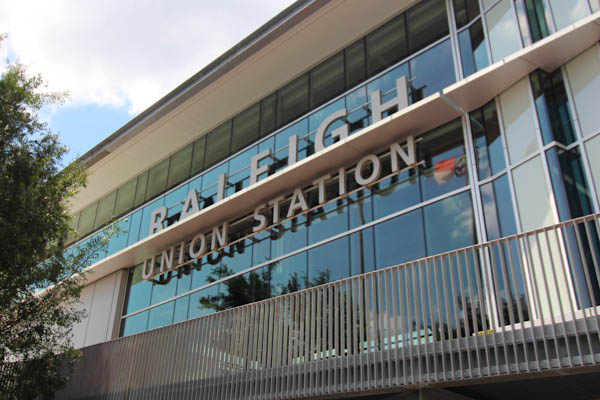
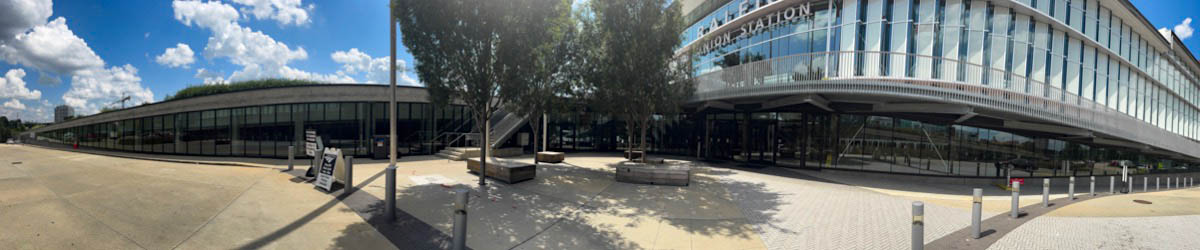
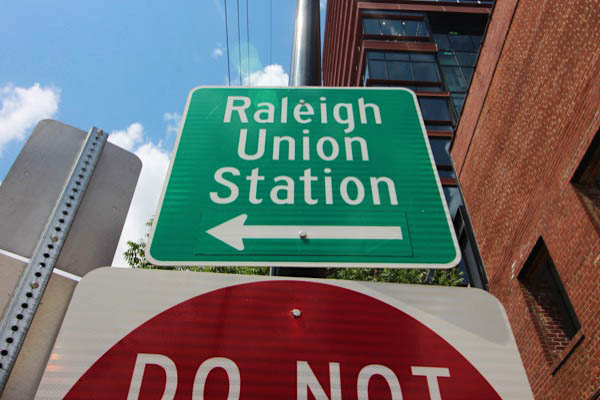
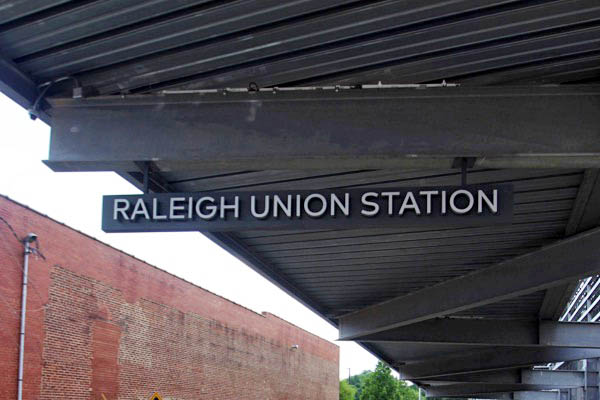
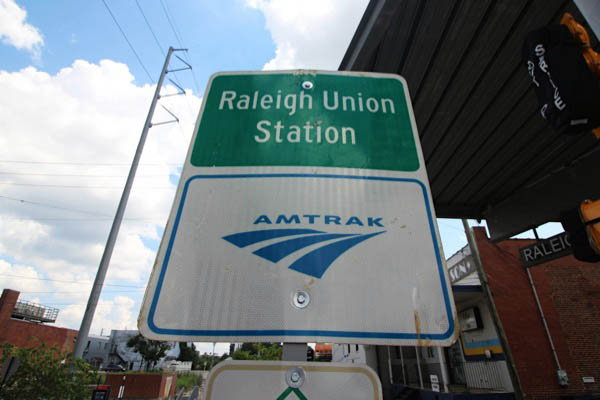
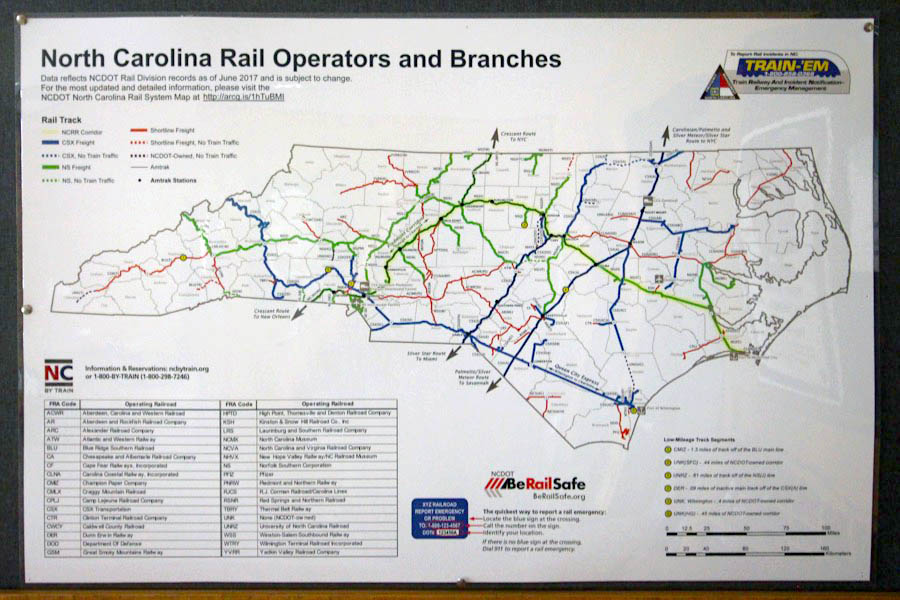
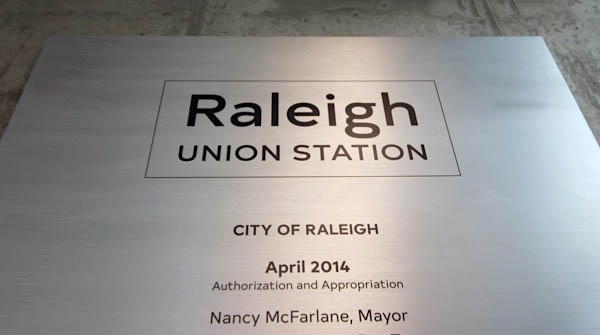
 Passenger trains began serving Raleigh Union Station on July 10, 2018. Located in the city’s Warehouse District on the western edge of downtown and just two blocks from Nash Square, Union Station sits inside the Boylan Wye, a crucial piece of North Carolina’s railroad infrastructure where lines owned by CSX, Norfolk Southern and the North Carolina Railroad meet.
In January 2012, the mayor and the city council endorsed a recommendation by the city’s appointed Passenger Rail Task Force to adapt the vacant Dillon Supply warehouse to serve as the centerpiece of a new multimodal transportation center. The vision called for the new Union Station to house Amtrak and local, regional and intercity buses, while also providing opportunities for future expansion to accommodate proposed commuter and high-speed rail services.
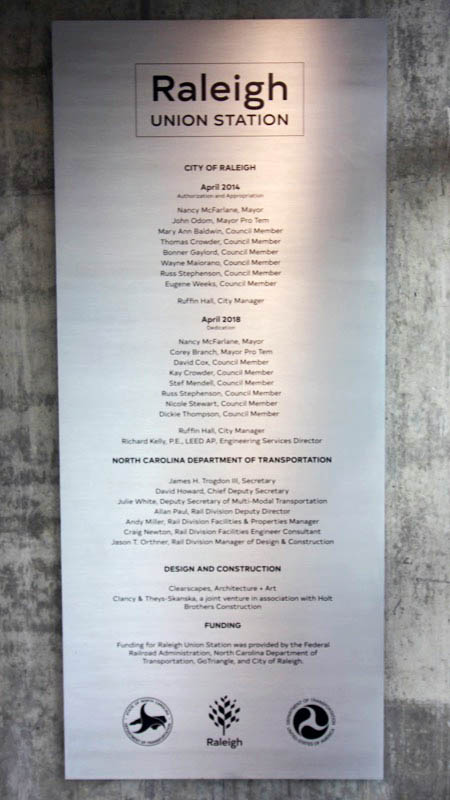
City, state and federal leaders gathered to break ground on Union Station in May 2015, and construction lasted into early 2018. The nearly $89 million project included rehabilitation of the 1940s-era warehouse, track and platform construction, and signal and switch improvements. Passenger areas are five times as large as those in the previous station to better handle growing ridership.
 The Raleigh Union Station project was made possible through close coordination among the City of Raleigh, Federal Railroad Administration, North Carolina Department of Transportation (NCDOT) Rail Division, GoTriangle, and other stakeholders. The city oversaw station and site construction while NCDOT managed the track and rail infrastructure work.
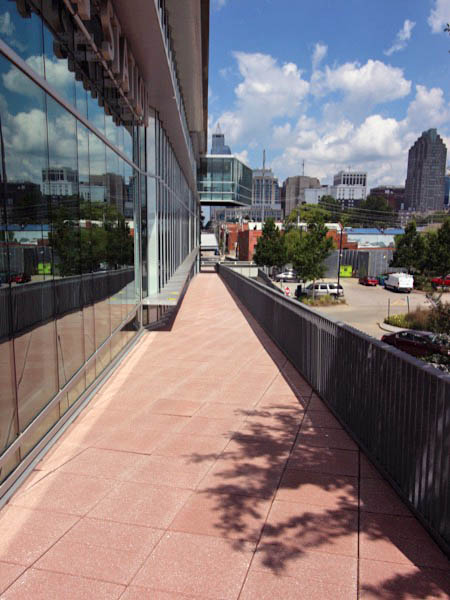
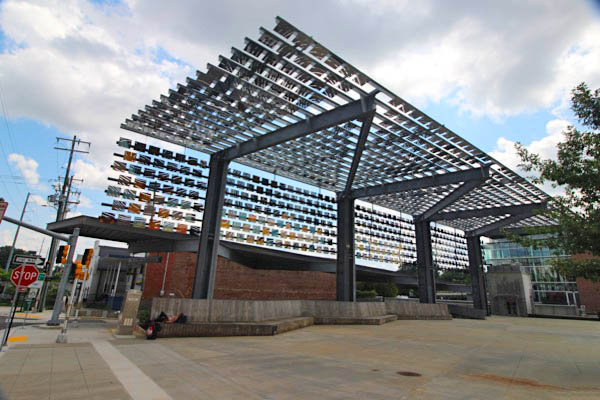
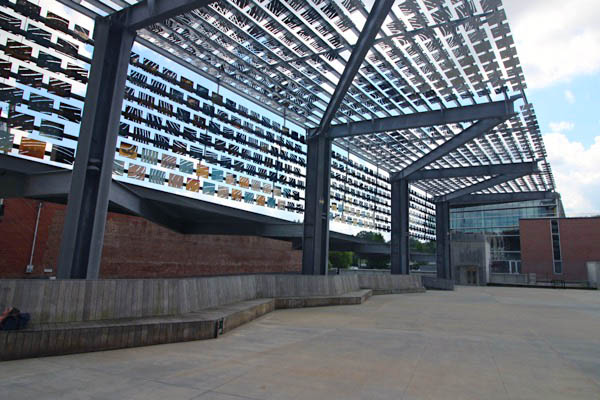
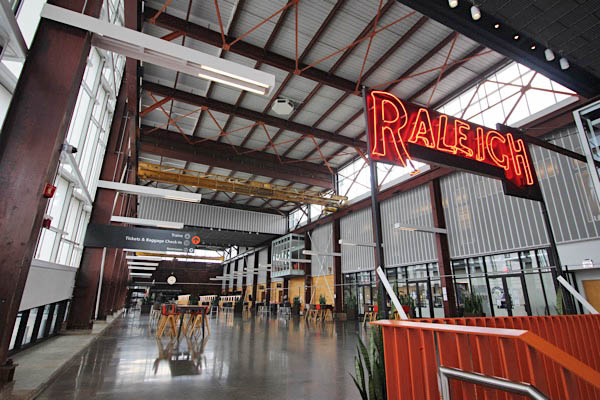
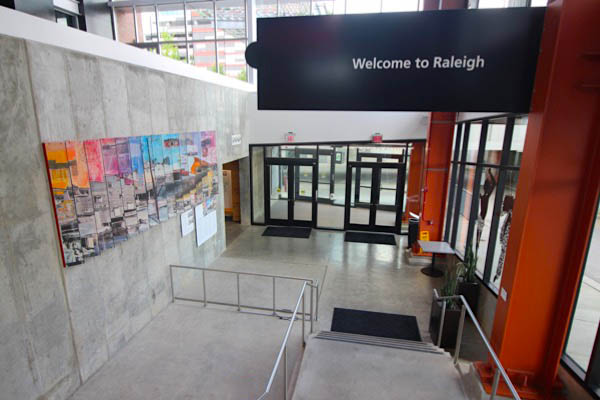
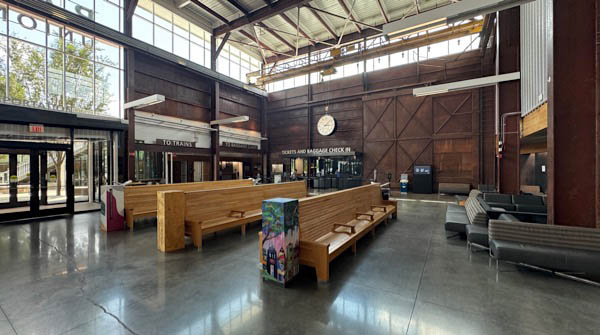
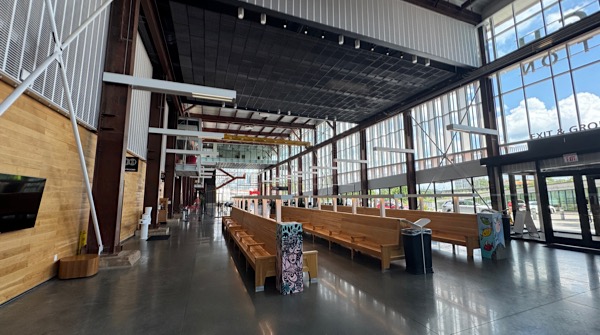
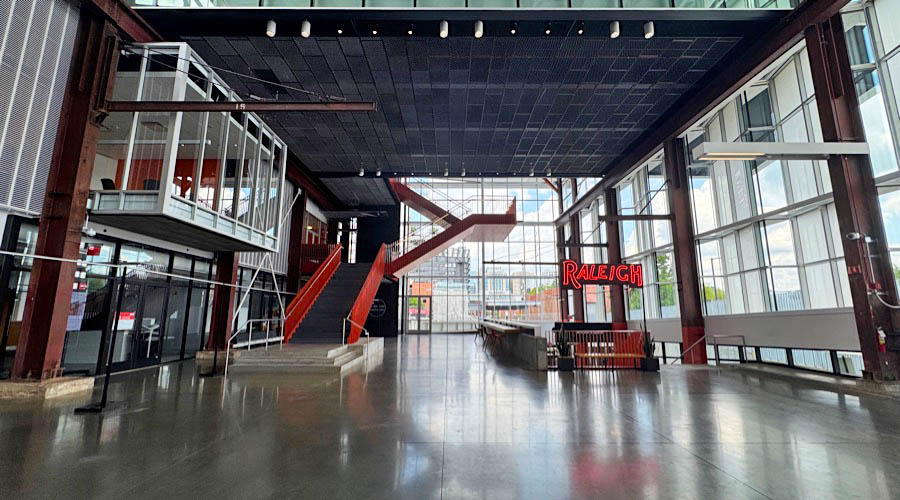
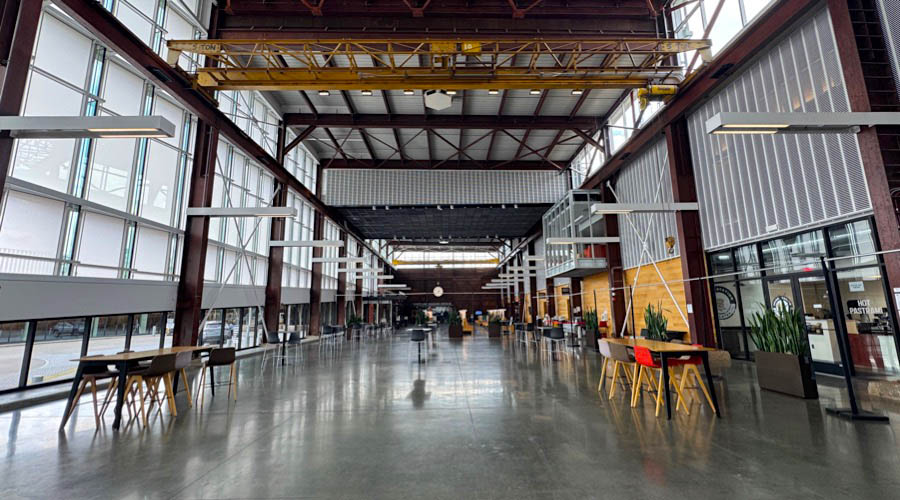
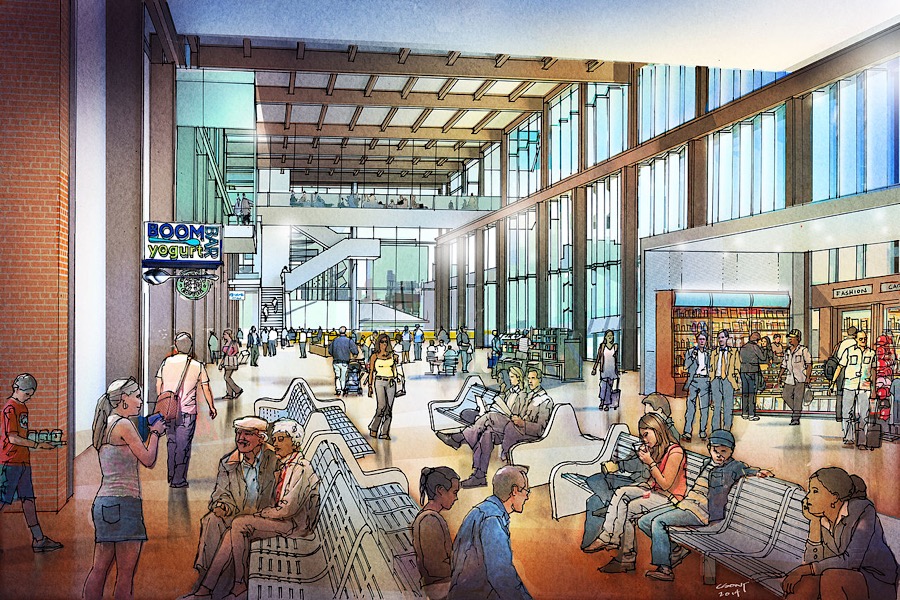
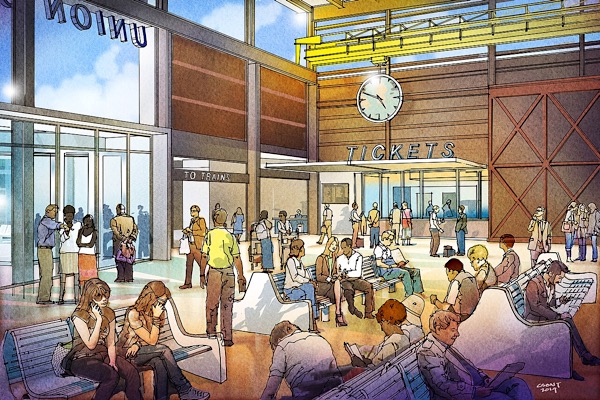 Designed by Clearscapes, the station marries the skeleton of the old warehouse with contemporary design. As passengers approach from West Street or the platform, they are greeted by soaring facades of glass that allow natural light to brighten interior spaces. A roundabout on the south end makes for easy pickup and drop offs, while to the east of the station a civic plaza sheltered by a canopy encourages a variety of community gatherings.
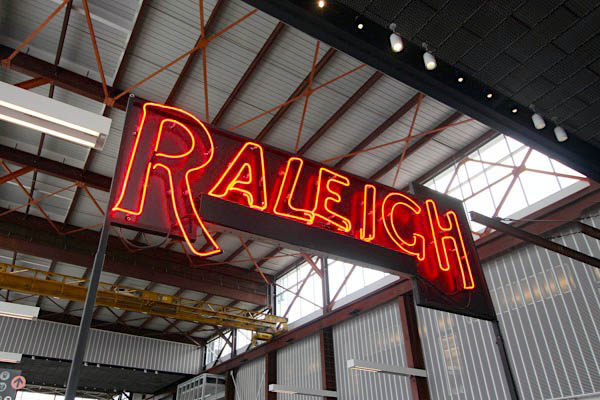
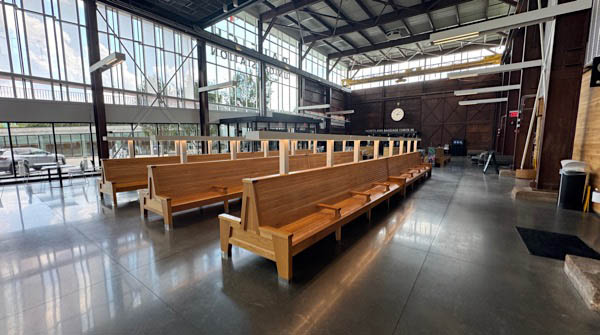
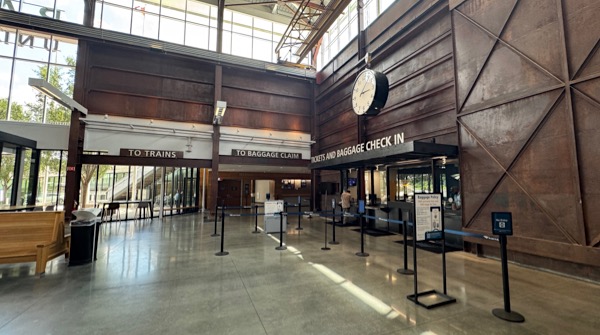
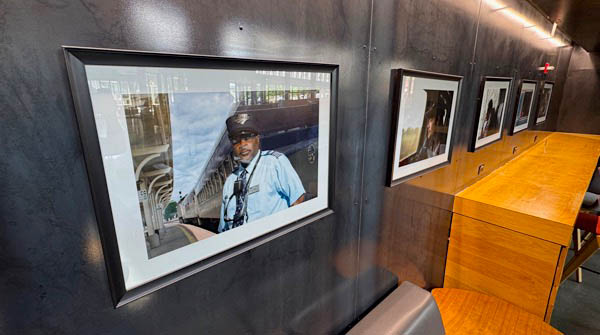
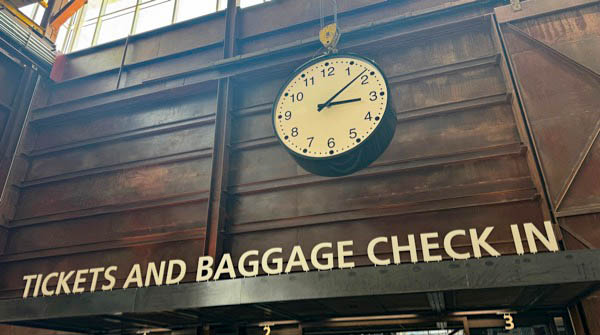
In the Main Hall, customers may relax in comfortable seating or plug in at a work station. The space showcases the building’s warehouse origins by reusing the steel framing – columns and beams – to create dramatic, high ceilings. Two gantry cranes, once used to move steel and other materials around the warehouse, also remain in place high above the floor. The station includes Amtrak ticket counters and leasable space for retail, office and restaurant use that ensure the station remains busy throughout the day.

Jul 2025 / RWH
Jul 2025 / RWH
Jul 2025 / RWH
Jul 2025 / RWH

Jul 2025 / RWH
Jul 2025 / RWH
Jul 2025 / RWH

Jul 2025 / RWH
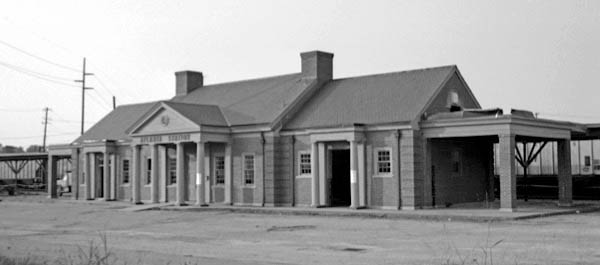 Raleigh Union Station is the third facility Amtrak has served in the “City of Oaks” since 1971. Until moving to Union Station, Amtrak used a small Colonial Revival brick depot on Cabarrus Street a few blocks to the southeast. It was opened by the Southern Railway in 1950 after moving from the city’s old Union Station on the west side of Nash Square. Amtrak relocated to the Cabarrus Street facility in 1986 from the former Seaboard Air Line depot north of downtown. The move was necessitated by freight railroad CSX’s abandonment of track between Petersburg, Va., and Raleigh, which forced Amtrak to reroute the Silver Star (New York-Miami) via Rocky Mount, N.C. The Cabarrus Street station no longer stands, having been demolished soon after Union Station opened.

Jul 2025 / RWH
Wikipedia Commons
 Raleigh, NC
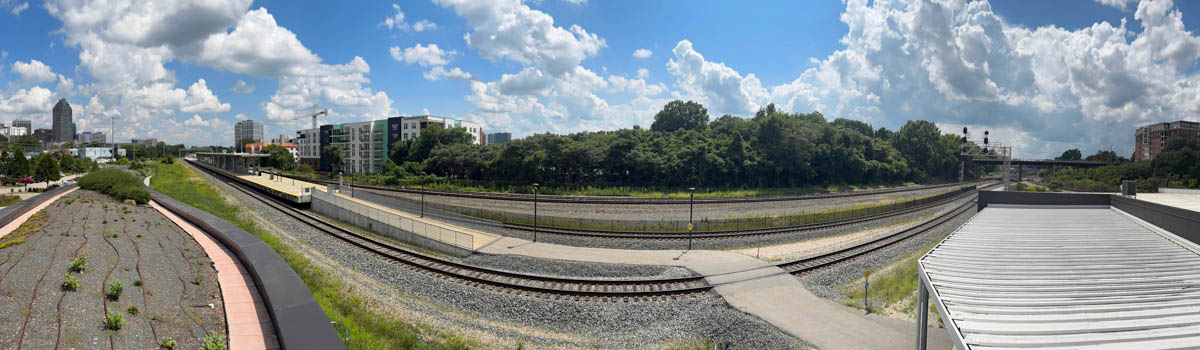
Raleigh, NC / Jul 2025 / RWH
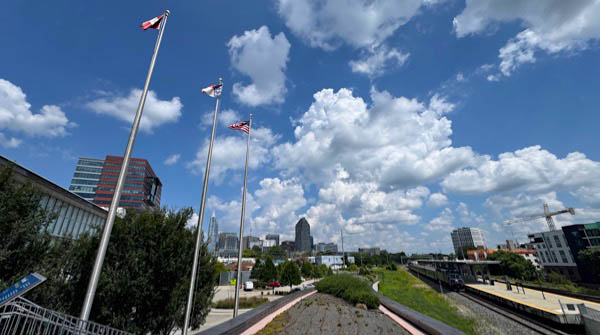
Raleigh, NC / Jul 2025 / RWH
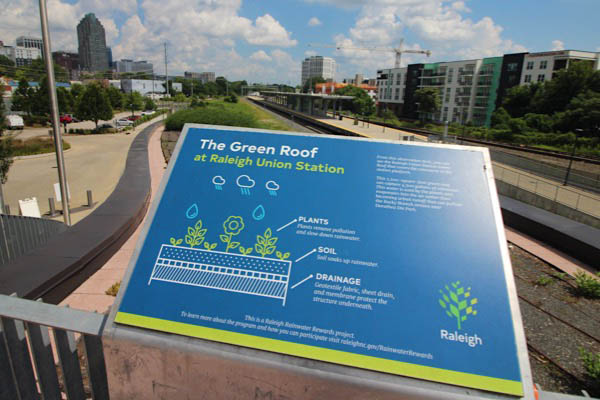
Jul 2025 / RWH
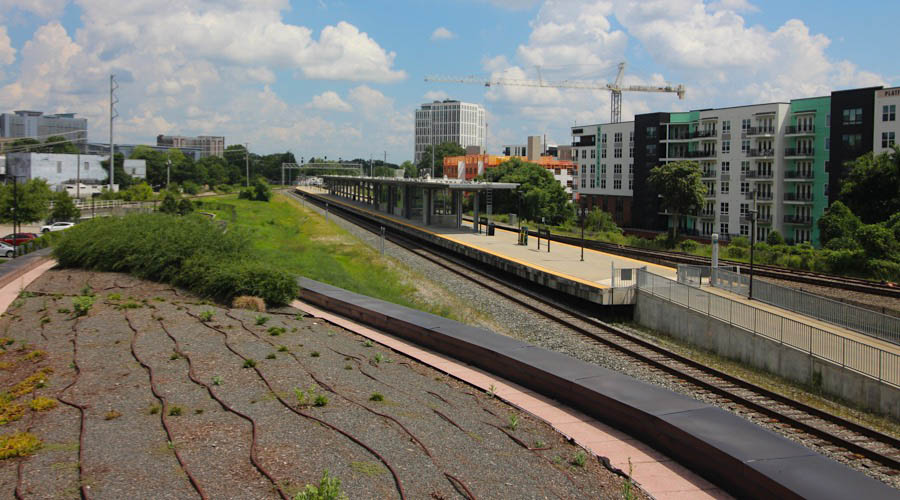
Raleigh, NC / Jul 2025 / RWH
540 Cary, NC
- Carolinian
- Piedmont
- Silver Star
Cary, NC / Jul 2025 / RWH
- location:Cary NC
- address:211 N Academy Street
- type:town station, 2 platforms
- owner:Town of Cary
- opened:1996
- builder:Town of Cary
- style:contemporary depot
- expanded:2006
- services:tickets, baggage
- links: Amtrak | Great Stations
Cary, NC / Jul 2025 / RWH
Google Maps
Click to see the Cary station area plotted on a Google Maps page
Jul 2025 / RWH
Jul 2025 / RWH
Jul 2025 / RWH
Jul 2025 / RWH
Jul 2025 / RWH
Cary, NC / Jul 2025 / RWH
Jul 2025 / RWH
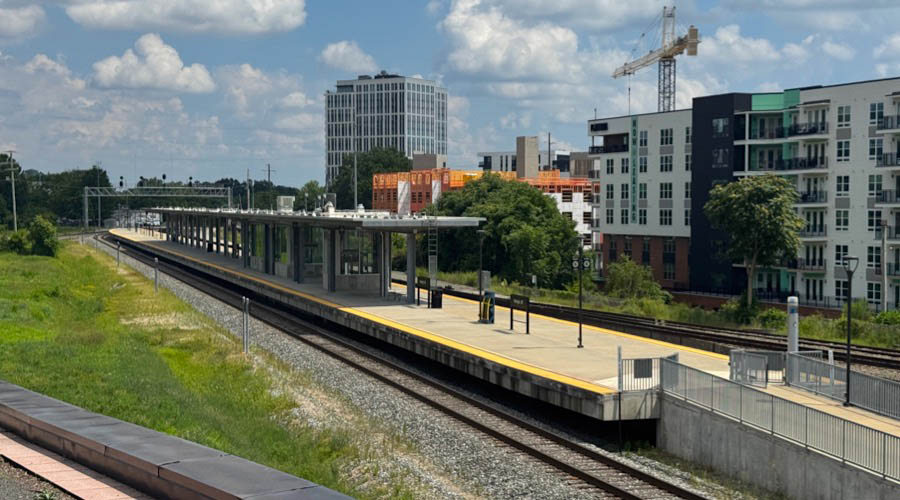
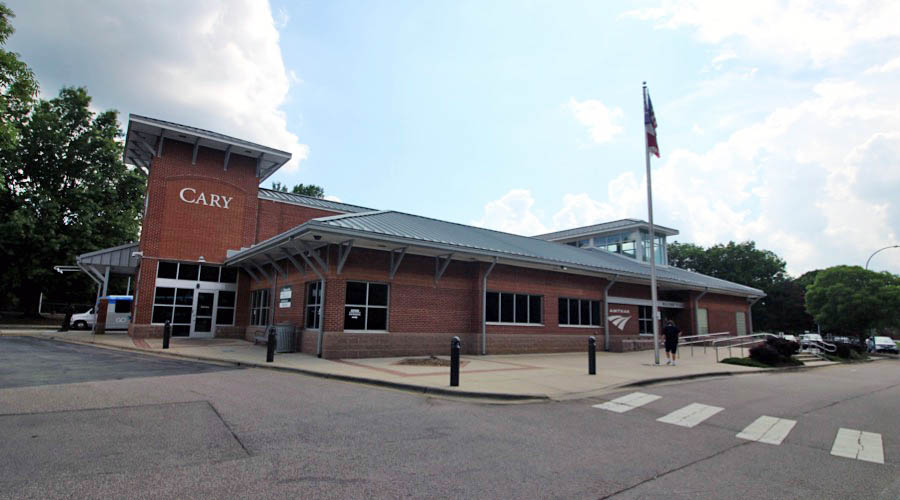
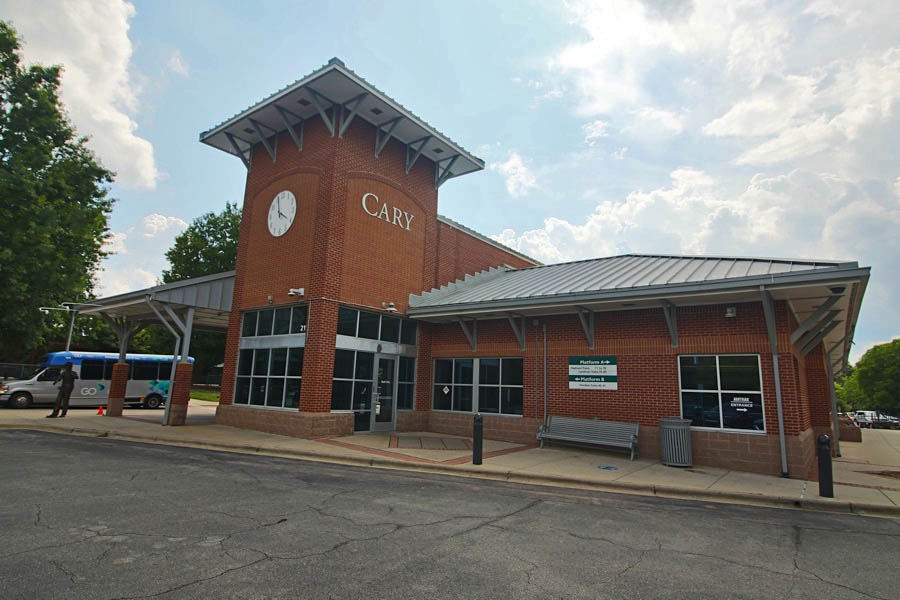
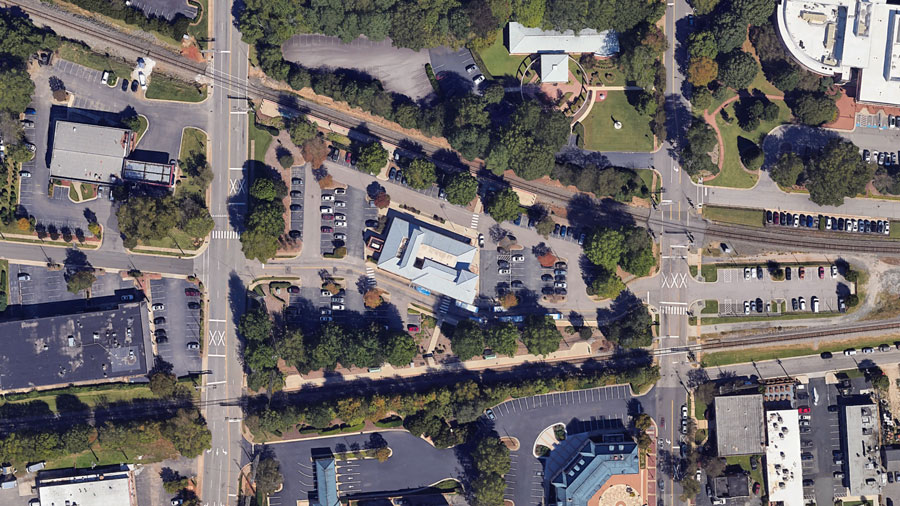
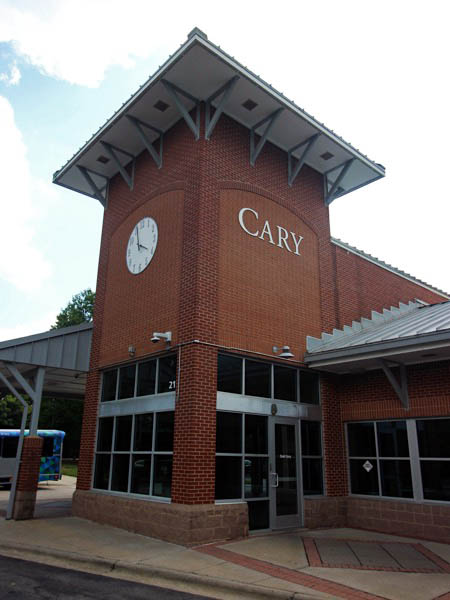
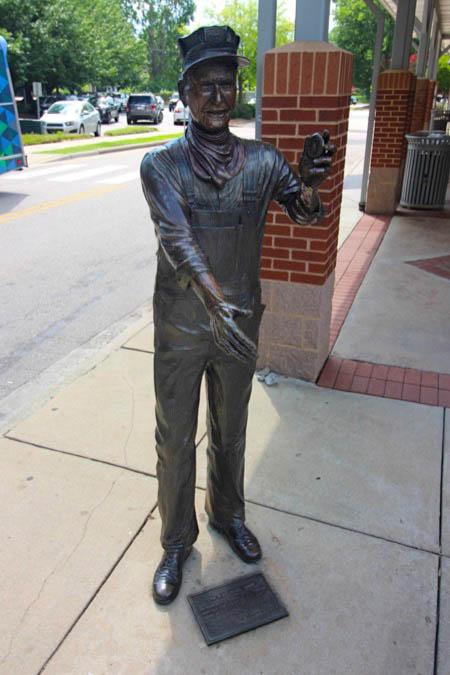
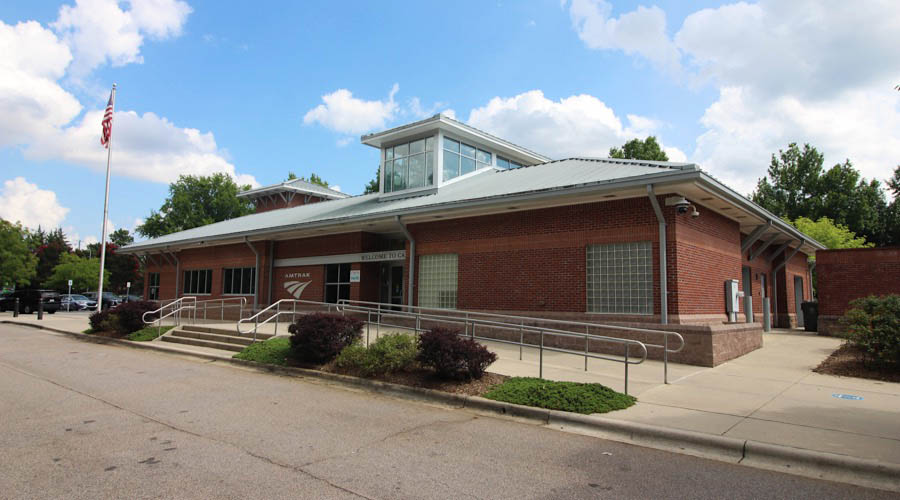
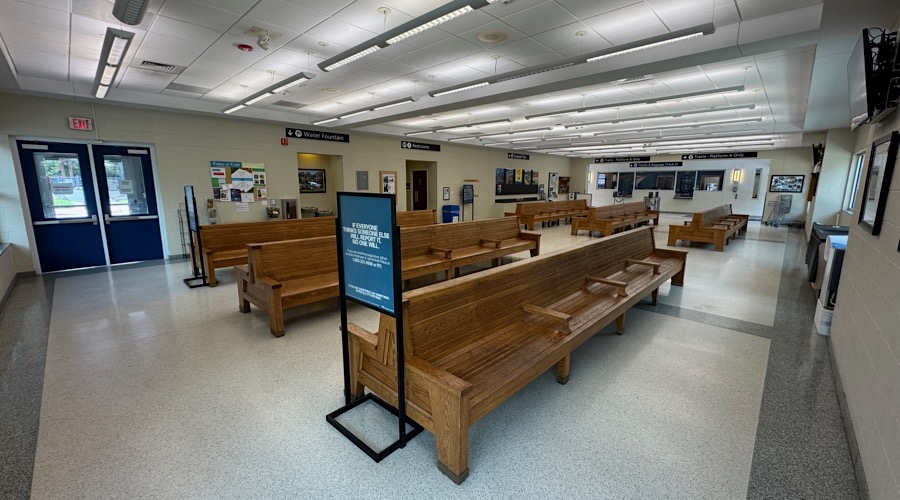
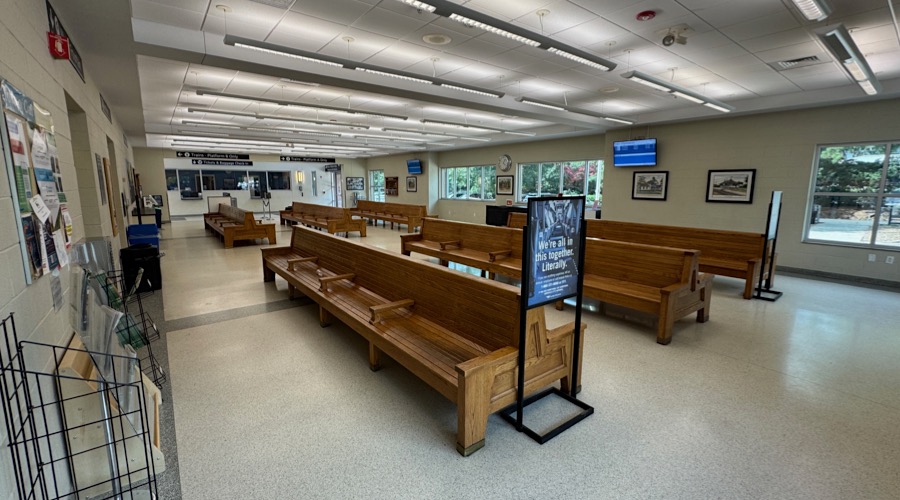
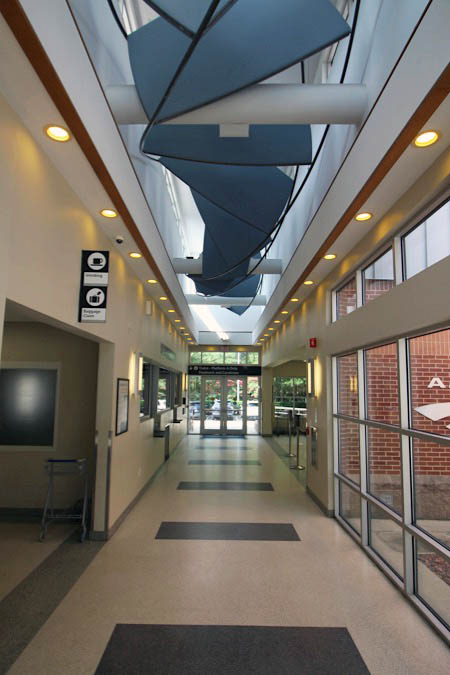
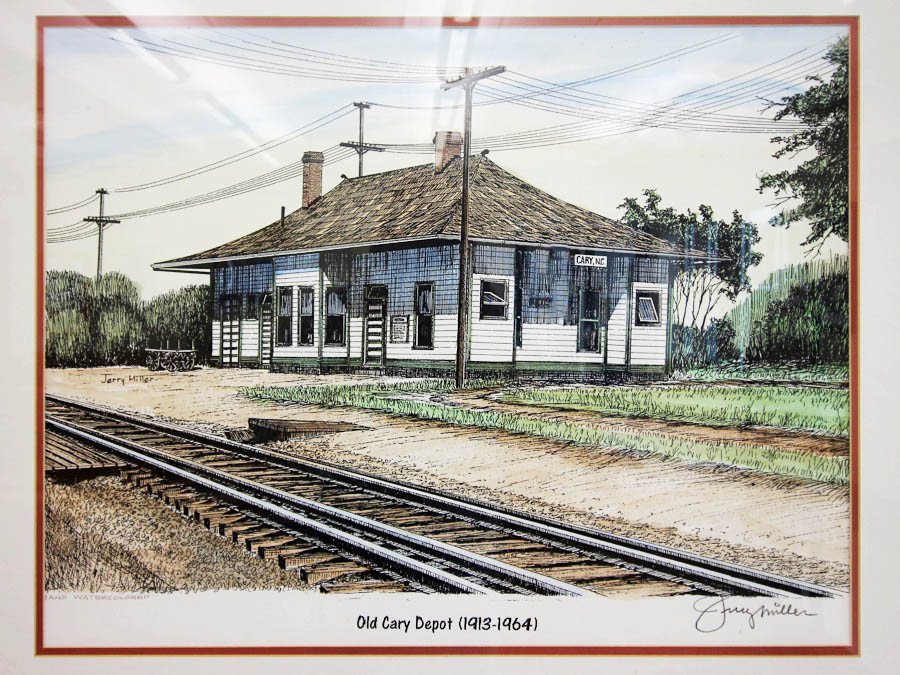
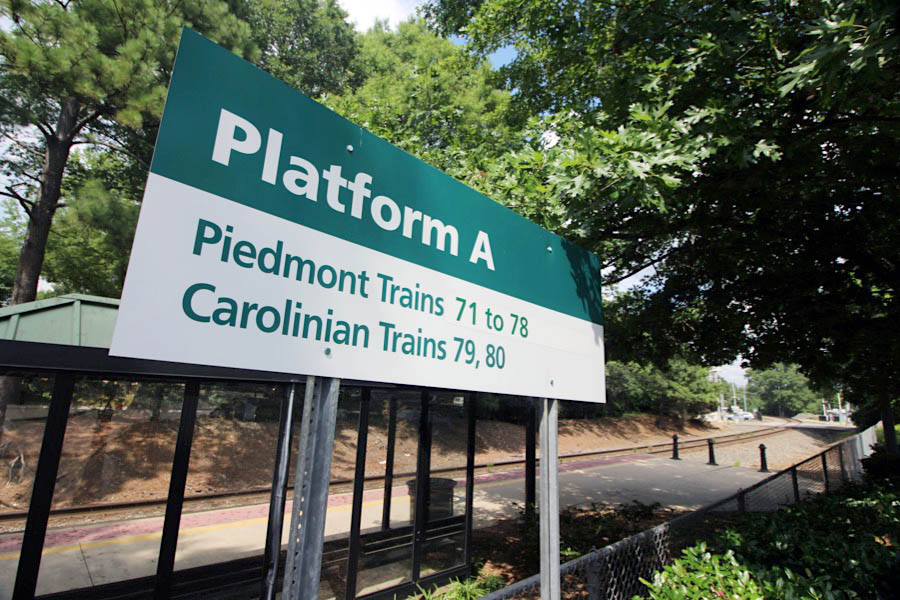
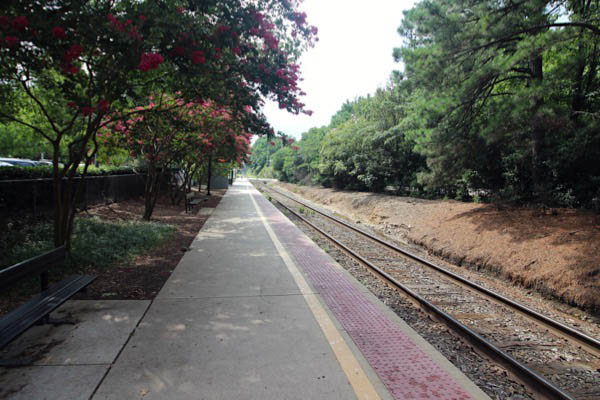
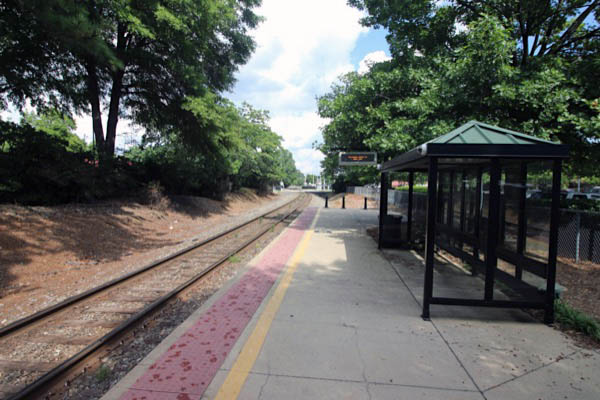
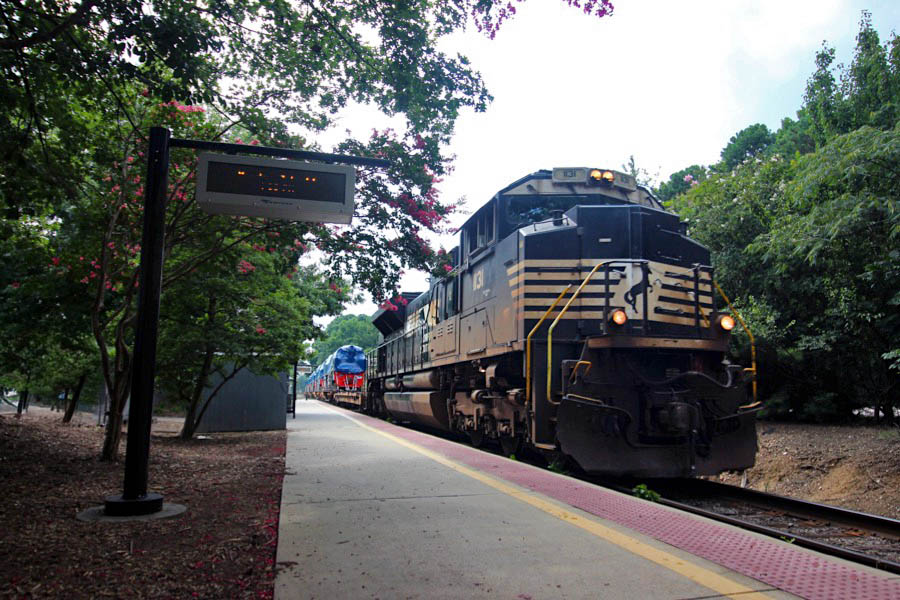
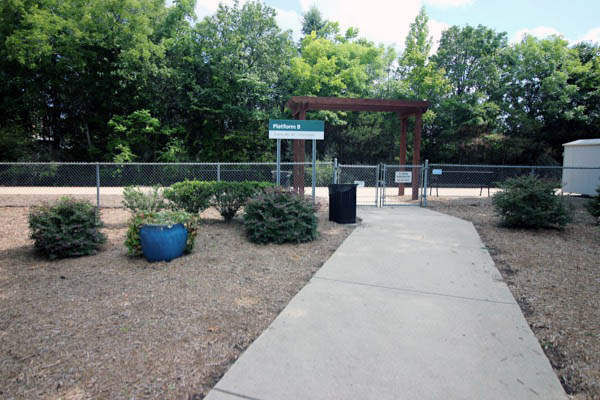
 The current Amtrak station in Cary was built in 1996 and sits where two rail lines diverge to head west and south. It contains a waiting area for Amtrak passengers and local and regional bus patrons. Cary’s historic station was torn down in the 1970s, so when rail passenger service resumed in Cary in 1995, it was on a 200-foot platform with shelter beside the North Carolina Railroad (NCRR) “H” Line tracks on the north side of the property. The North Carolina Department of Transportation (NCDOT) Rail Division paid $100,000 to construct the platform and shelter prior to the opening of the new depot, which was funded through $637,000 from the town and $100,000 from the Triangle Transit Authority.
In 2006, a platform was constructed on the CSX “S” Line south of the depot, which allowed the Silver Star (New York-Tampa-Miami) to began service to Cary. NCDOT covered 90 percent of the platform costs while the town contributed $30,000. Five years later, the depot was expanded with NCDOT and Federal Railroad Administration funds totaling approximately $2 million; the building reopened on September 1, 2011.
Jul 2025 / RWH
Jul 2025 / RWH
Cary, NC
Cary, NC / Jul 2025 / RWH
Cary, NC / Jul 2025 / RWH
Cary, NC / Jul 2025 / RWH

Cary, NC / Jul 2025 / RWH
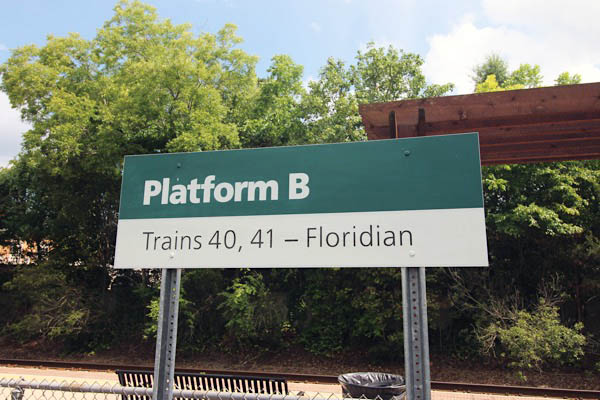
Jul 2025 / RWH
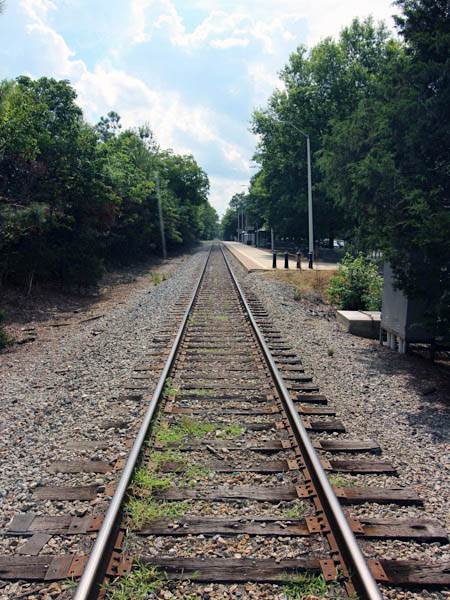
Jul 2025 / RWH
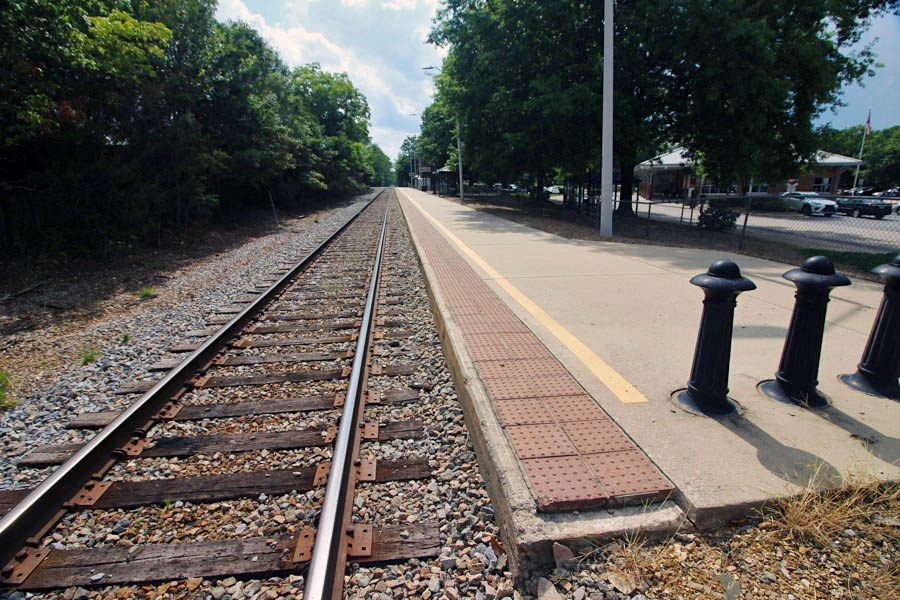
Cary, NC / Jul 2025 / RWH
629 Hamlet, NC
- Silver Star
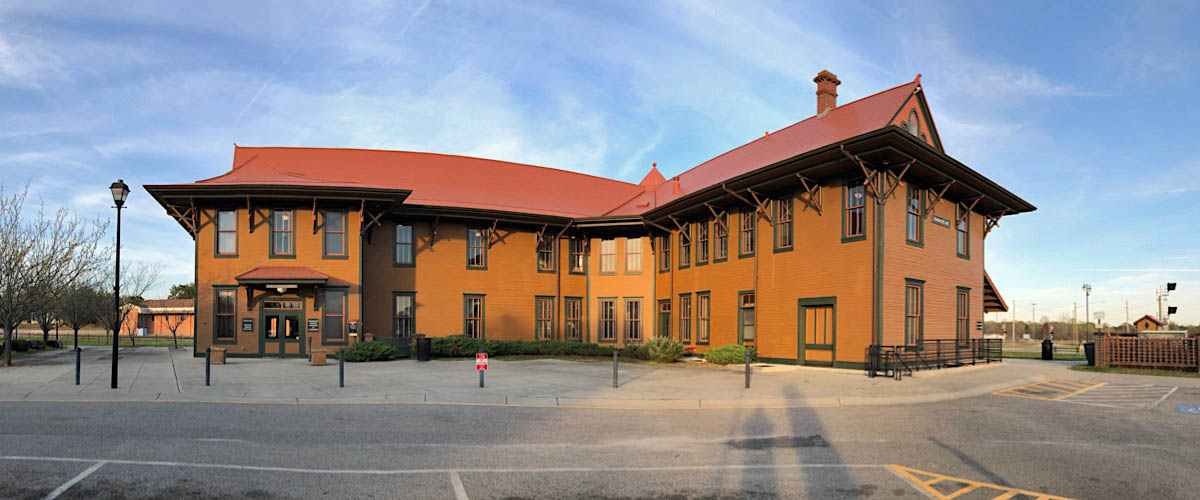
Hamlet, NC / Apr 2019 / RWH
- location:Hamlet NC
- address:2 West Main Street
- type:town depot, 1 platform
- owner:City of Hamlet
- opened:1900
- builder:Seaboard Air Line
- style:Victorian Queen Anne
- renovated:2004
- services:waiting room
- links: Amtrak | Great Stations
Wikipedia Commons
Hamlet, NC / Apr 2019 / RWH
Click to see the historic Hamlet depot area plotted on a Google Maps page
Hamlet, NC / Apr 2019 / RWH
Hamlet, NC / Apr 2019 / RWH
Hamlet, NC / Apr 2019 / RWH
collection
Apr 2019 / RWH
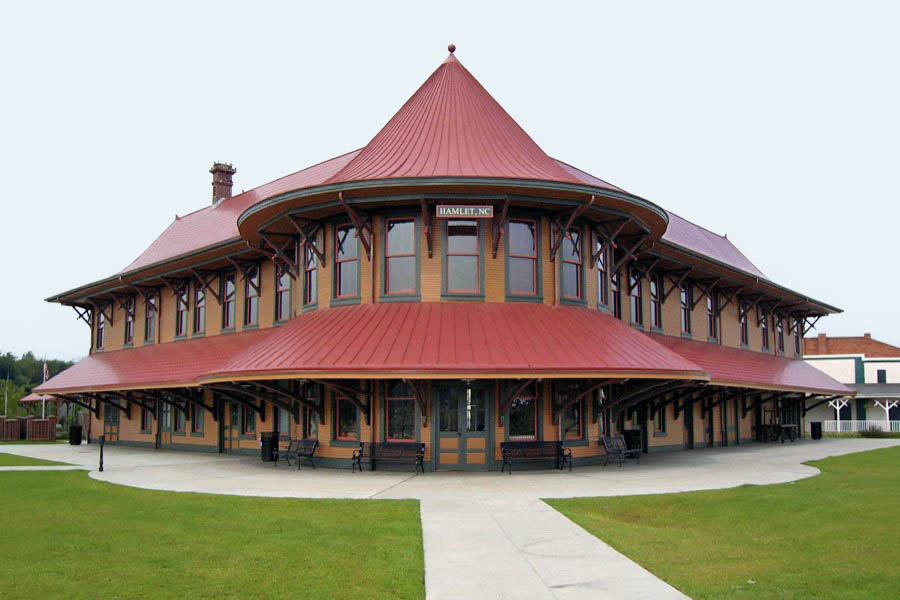
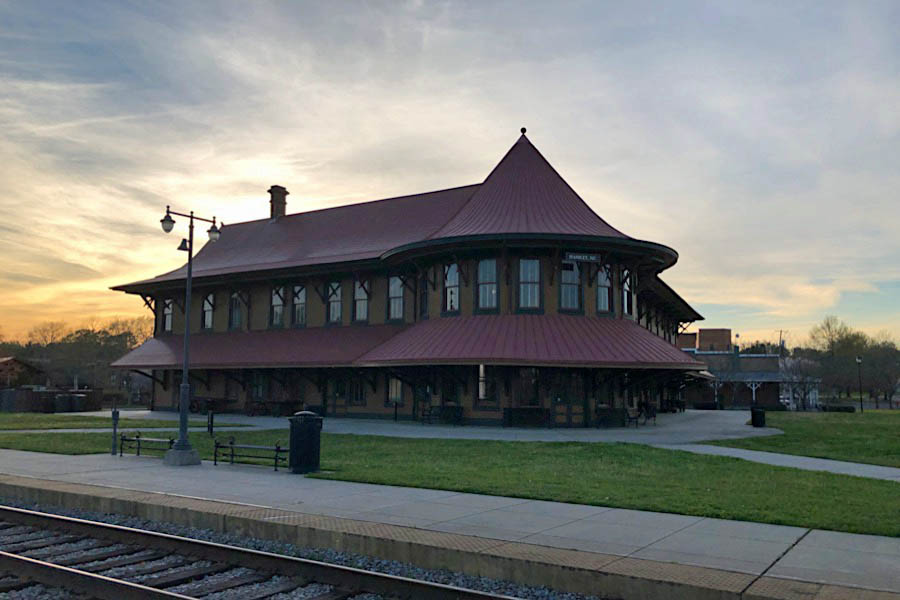
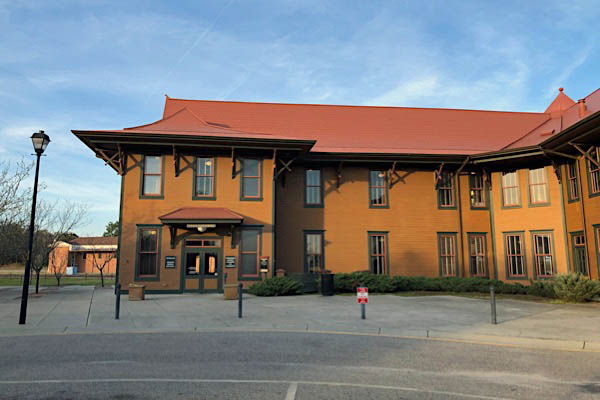
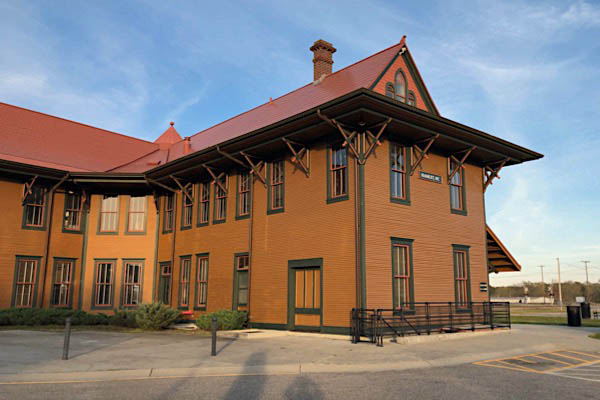
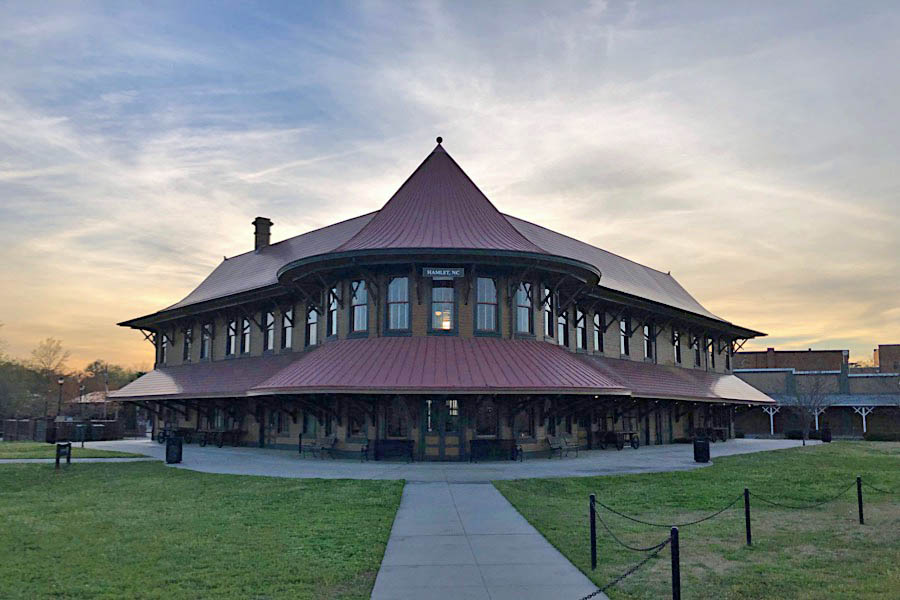
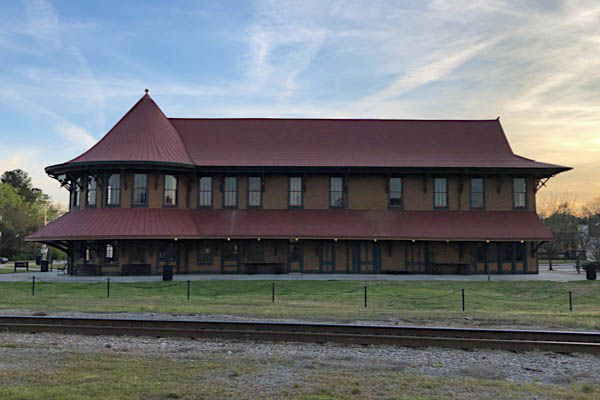
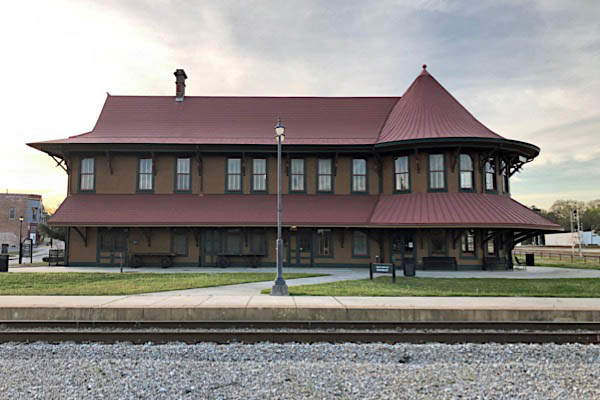
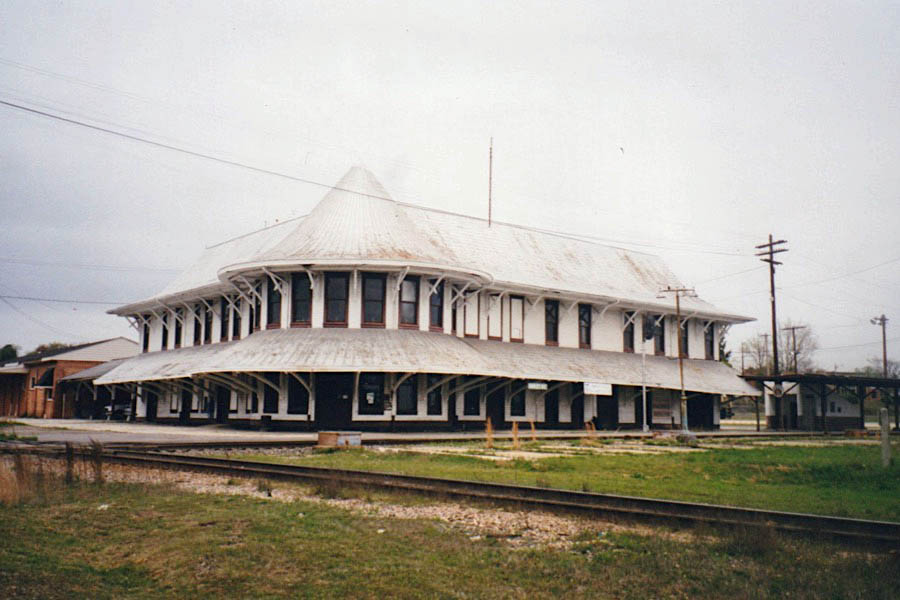
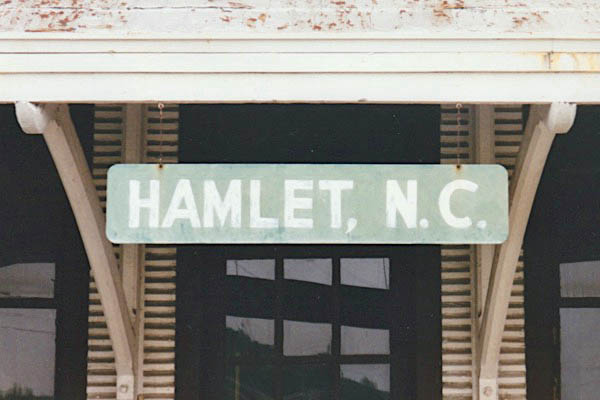
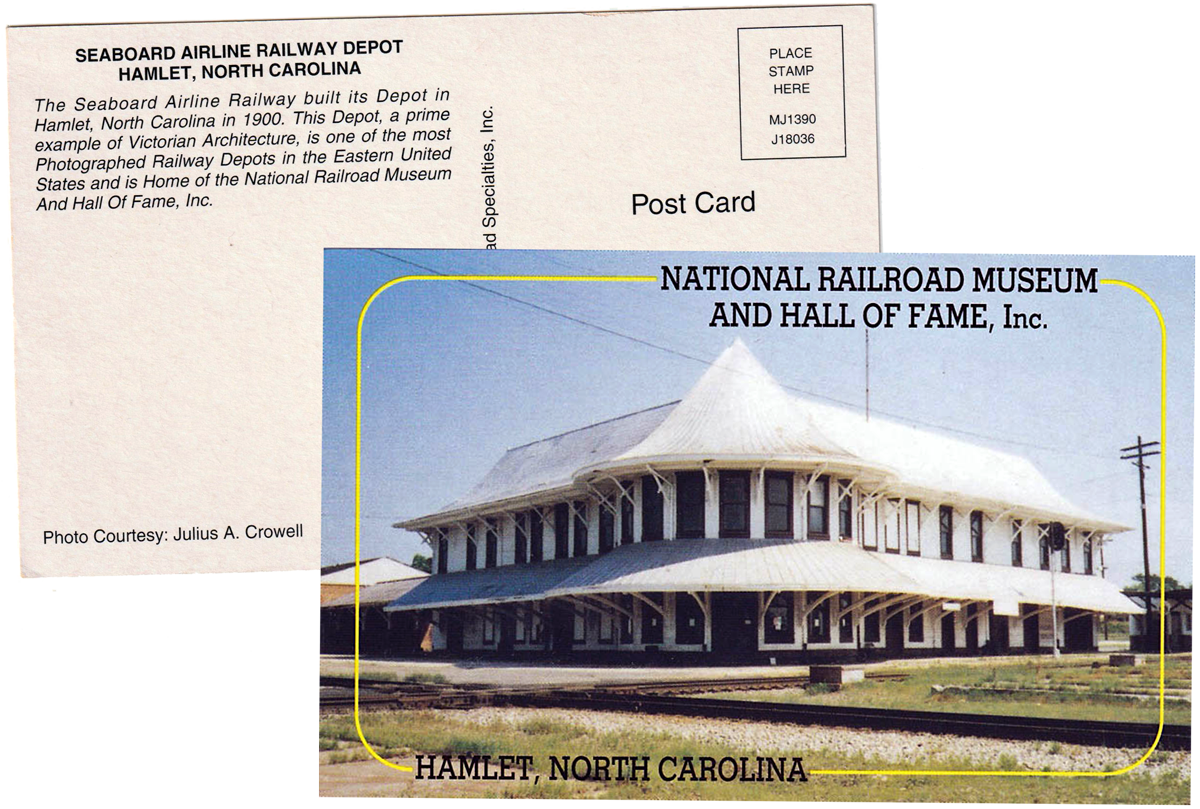
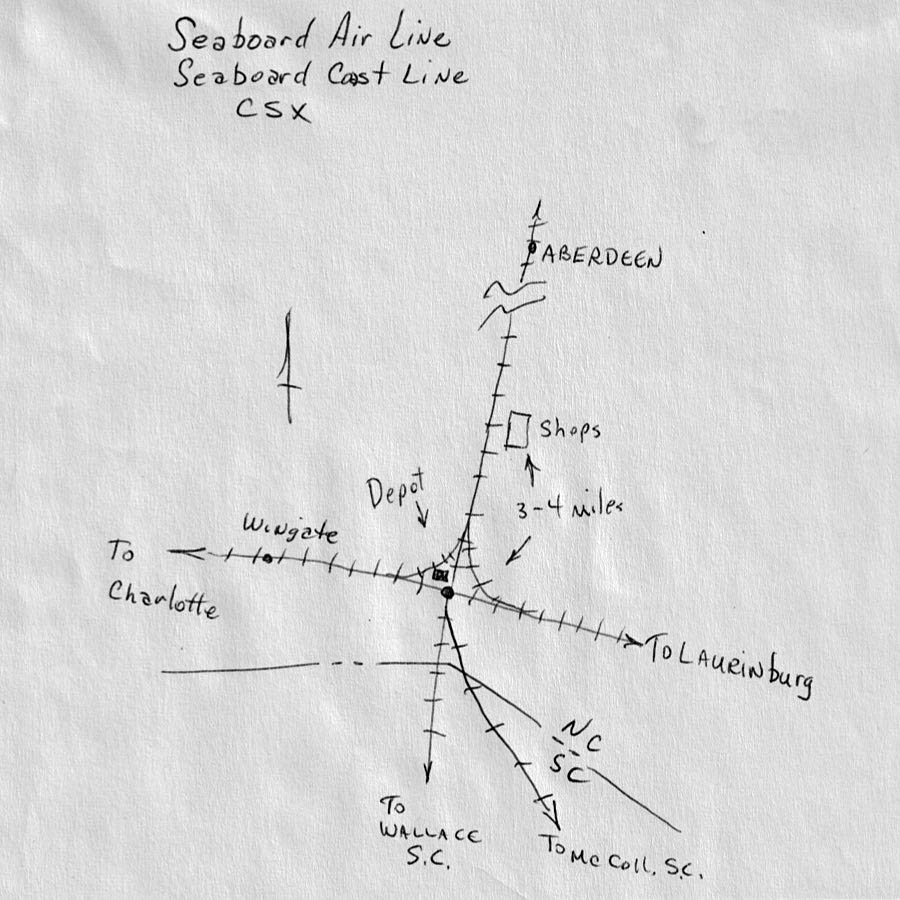
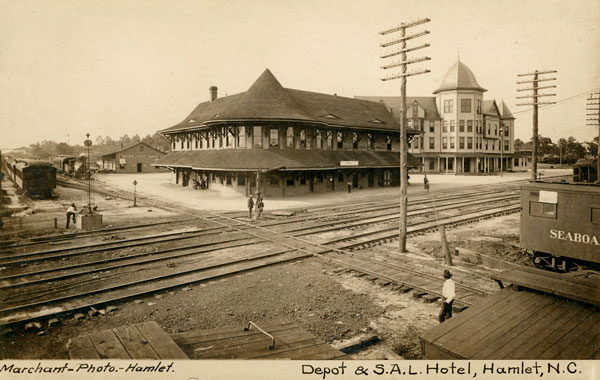 The Hamlet depot, the only Victorian Queen Anne style station in North Carolina, was built in 1900 for the Seaboard Air Line Railroad as both a passenger station and division headquarters. This two-story station was originally constructed at the crossing of the Raleigh and Augusta Air Line and Central Carolina Railways. Restoration of the depot was completed in 2004, at a cost of $11.7 million, a joint project of the City of Hamlet and North Carolina Department of Transportation (NCDOT), utilizing federal transportation funds.
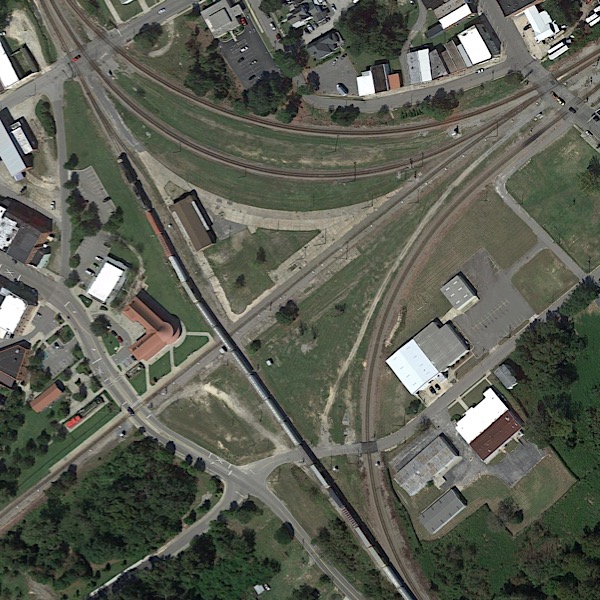
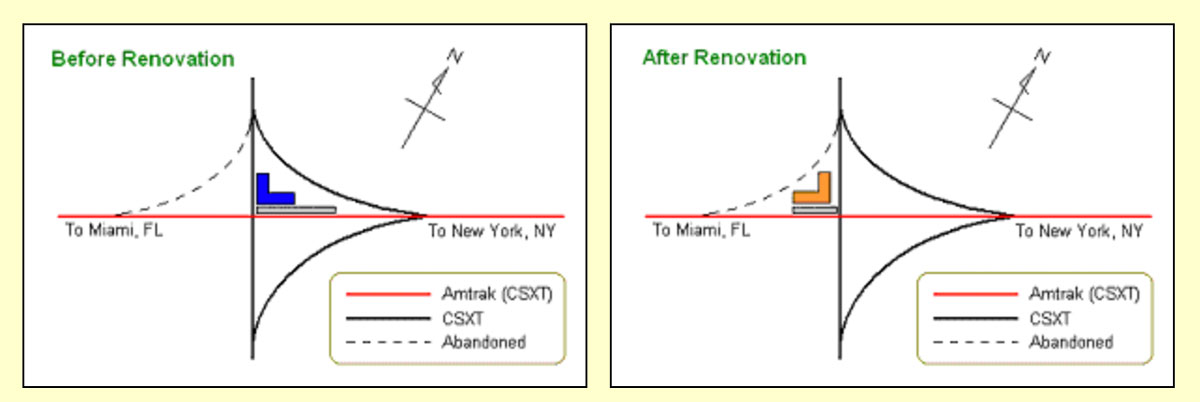
The restoration of this station was many years in the making with the drawings and preparations beginning in 1997. By 1999, CSX, the successor to the Seaboard Air Line, notified the city and NCDOT of a concern about restoring a building surrounded by active railroad tracks, so it was decided that the station should be moved to a less active area, southward across the east-west rail line, and rotated 90 degrees, to sit along Main Street, which was also realigned to accommodate the station. In 2001, CSX sold the station to the city of Hamlet for $1. In 2002, the 1942 brick addition was demolished and the original structure stabilized. In March of 2003, the moving company began preparing the building for the move and the station was jacked up and rotated. By April 4, 2003, the station had been moved 210 feet across the tracks to its new foundation and stabilized. Renovations began that summer and were completed by the fall of 2004.
The city of Hamlet dedicated the station to NCDOT Board of Transportation member, G. R. Kindley. The depot has received the Historic Preservation Society of North Carolina’s 2005 Carraway Award for outstanding preservation work by public agencies. The station has been on the National Register of Historic Places since 1992.
Hamlet, NC / Apr 1999 / JCH
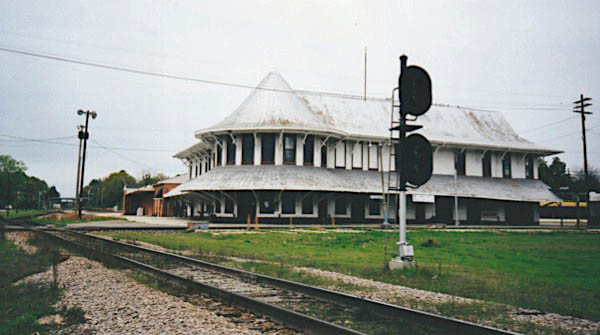
Hamlet, NC / Apr 1999 / JCH
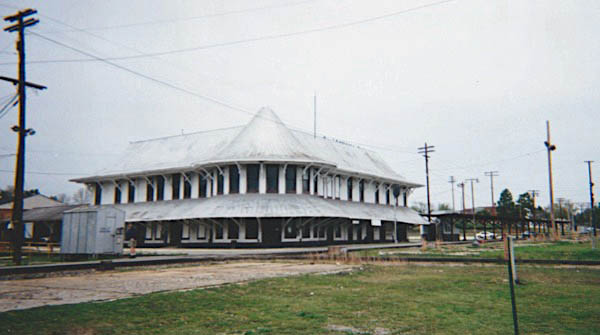
Hamlet, NC / Apr 1999 / JCH
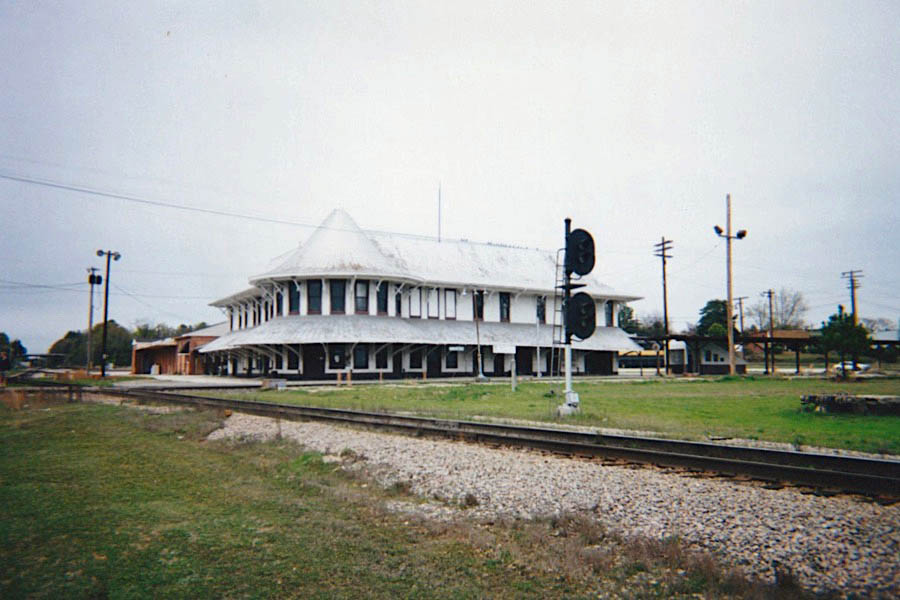
Hamlet, NC / Apr 1999 / JCH
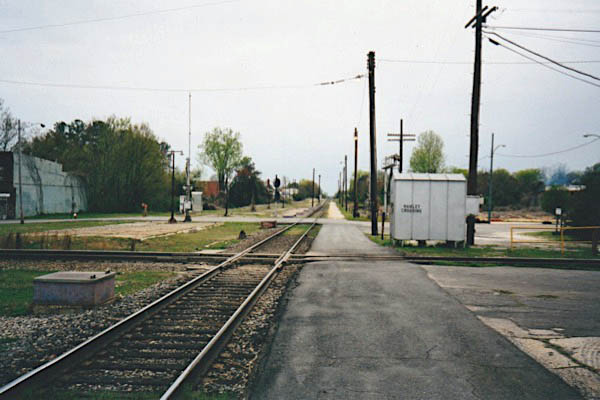
Hamlet, NC / Apr 1999 / JCH
Apr 1999 / JCH
postcard / collection
Hamlet, NC
Google Maps
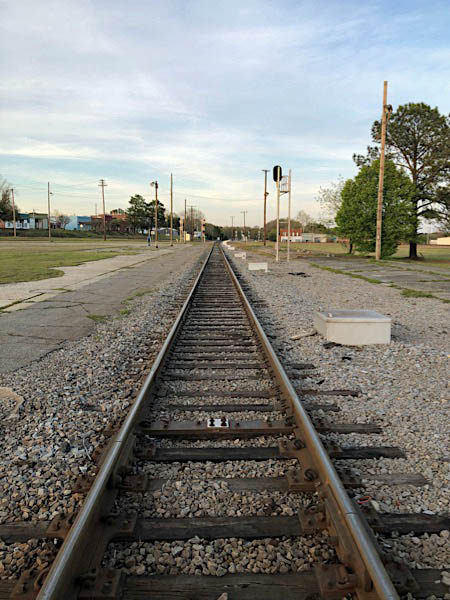
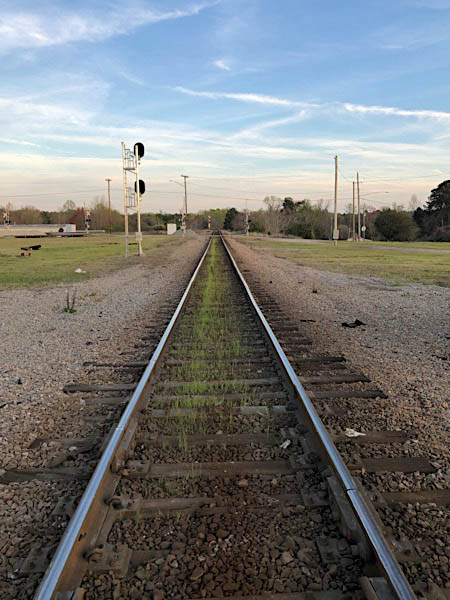
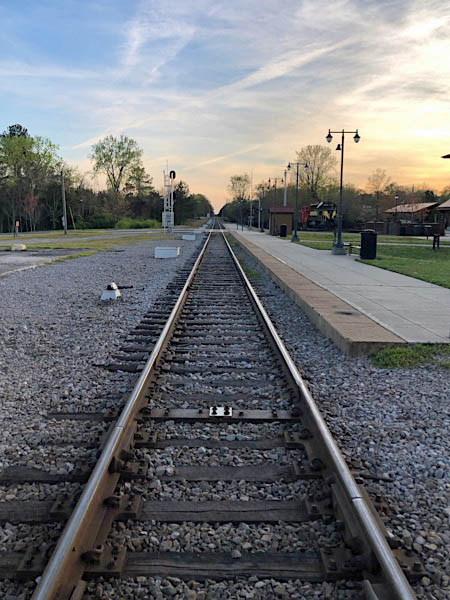
JCH notes
web
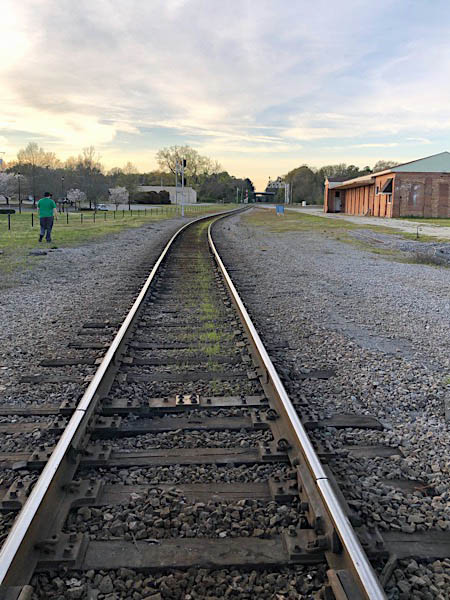
Apr 2019 / RWH
Silver Star
Hamlet, NC / Apr 1992 / Patrick Treadaway
South Carolina
634 Florence, SC
- Palmetto
- Silver Meteor
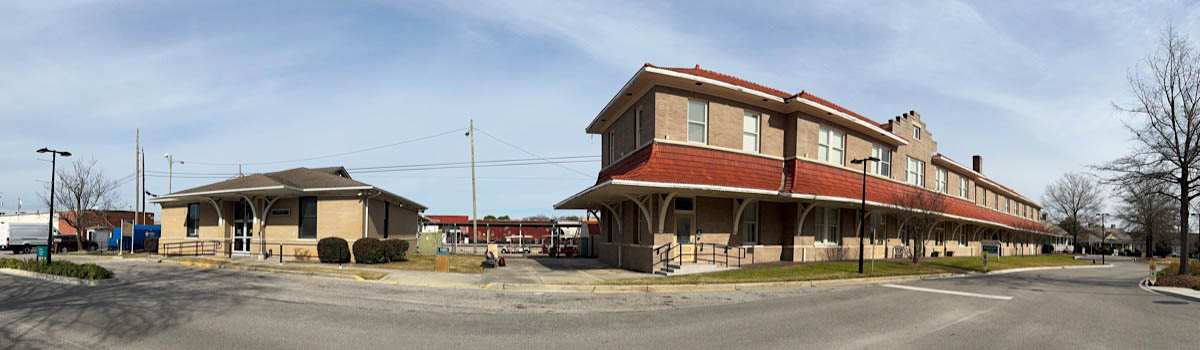
Florence, SC / Jan 2024 / RWH
 The original township of Florence was developed as a railroad terminal at the juncture of three rail lines: the Wilmington & Manchester, the North Eastern and the Cheraw & Darlington. The name for the proposed crossing site was Florence, in honor of Florence Harllee, daughter of the president of the Wilmington & Manchester Railroad W.W. Harllee. When the Wilmington & Manchester line purchased five acres of property in 1853 for the purpose of building a depot, Florence had its small, but official, start.
During the Civil War, Florence’s rails were busy. Troops, artillery and supplies regularly passed through Florence on their way to Richmond, Charleston and Savannah. Wounded Confederate troops traveled by rail to Florence’s Wayside Hospital and captured Union troops were conveyed to town to be garrisoned in the Florence Stockade. Although the war had exacted a heavy toll on the area’s trains, depots and track, all three rail lines were back up and running shortly after the war’s end. By the 1870’s the village had a population of about 700 but, due to ever-expanding railroad activity, an emerging middle class more than doubled the town’s population by the end of the decade. In 1888 the new county of Florence was created. Two years later the City of Florence was chartered and serves as the county seat.
Florence, SC / Jan 2024 / RWH
Click to see the Florence stations plotted on a Google Maps page
Jan 2024 / RWH
Florence, SC / Jan 2024 / RWH
Florence, SC / Jan 2024 / RWH
Florence, SC / Jan 2024 / RWH
Jan 2024 / RWH
Jan 2024 / RWH
Jan 2024 / RWH
Florence, SC / Jan 2024 / RWH
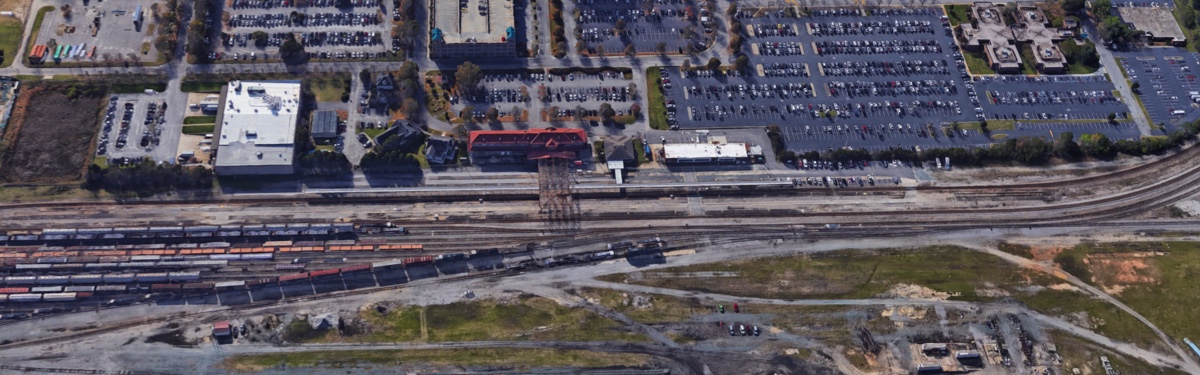
Florence station overhead / Google Maps
Florence, SC / Jan 2024 / RWH
Coast Line Station
Florence, SC / Jan 2024 / RWH
Jan 2024 / RWH
Florence, SC / Jan 2024 / RWH
Florence, SC / Jan 2024 / RWH
1910 Official Guide ad / collection
Jan 2024 / RWH
Jan 2024 / RWH
Florence, SC / Jan 2024 / RWH
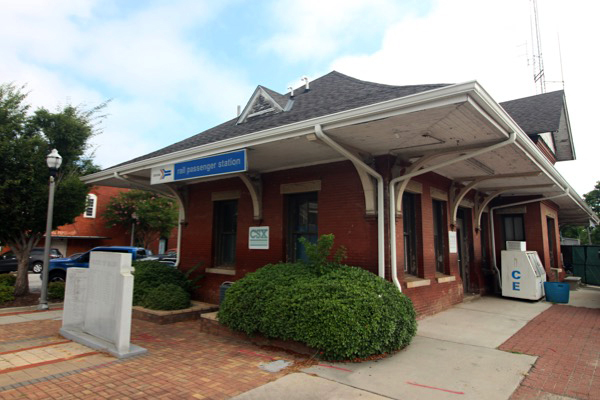
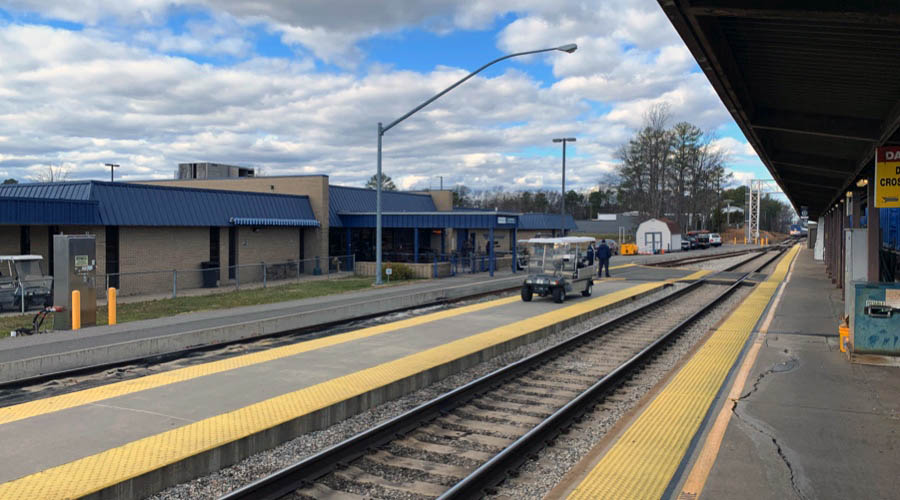
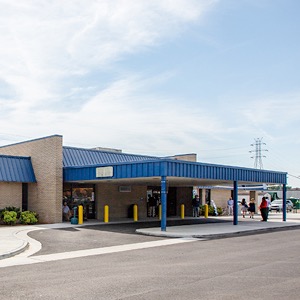
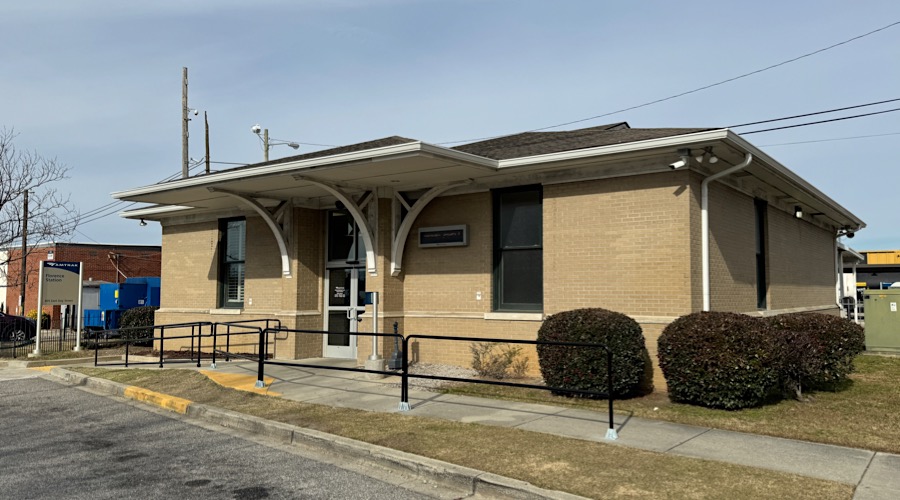
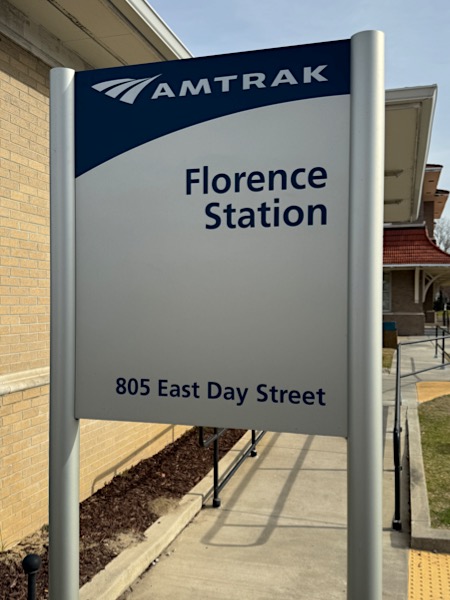
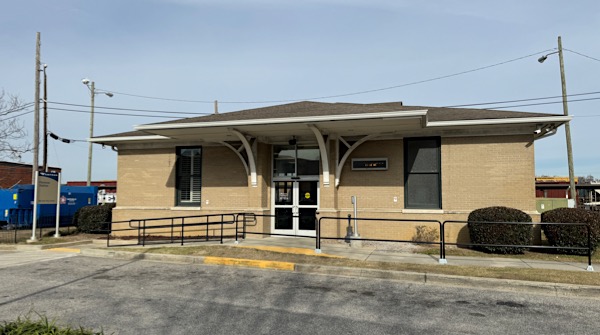
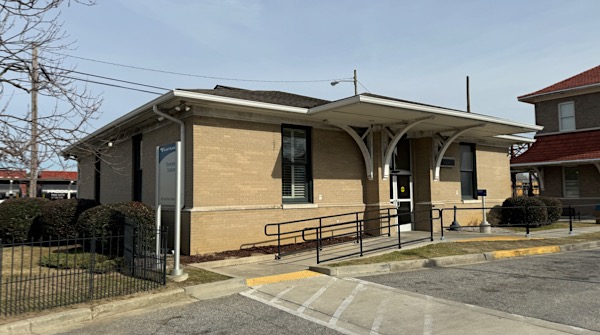
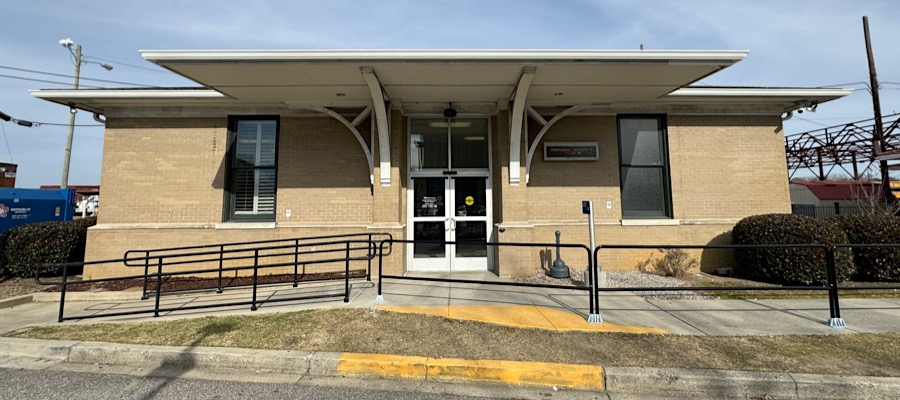
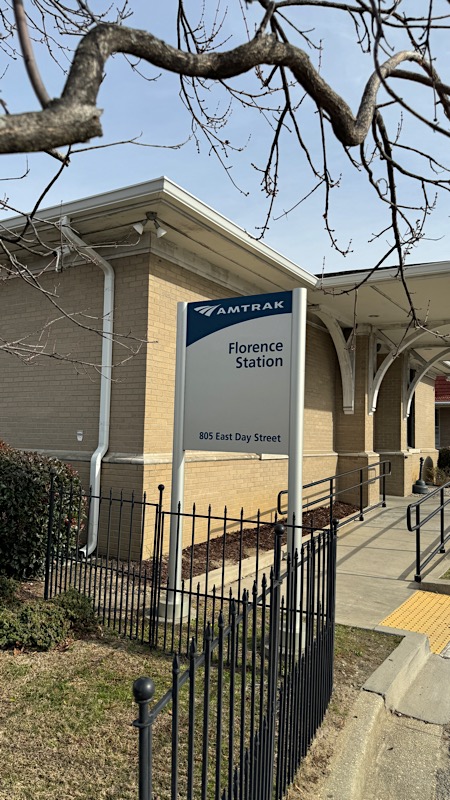
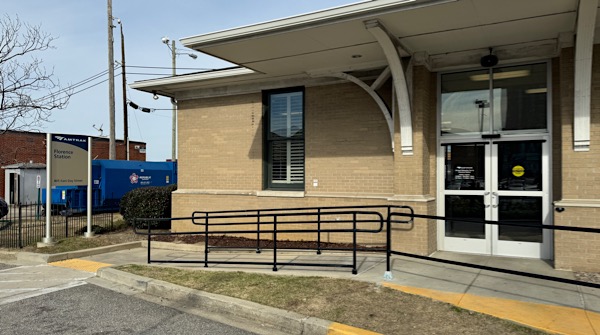
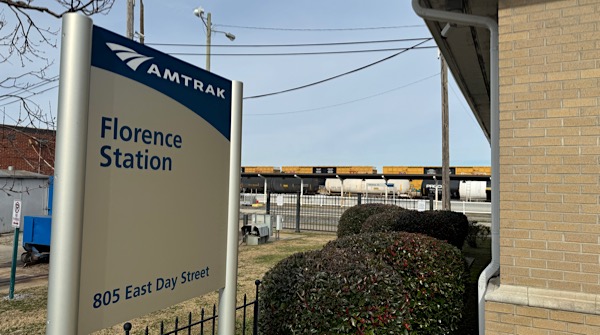
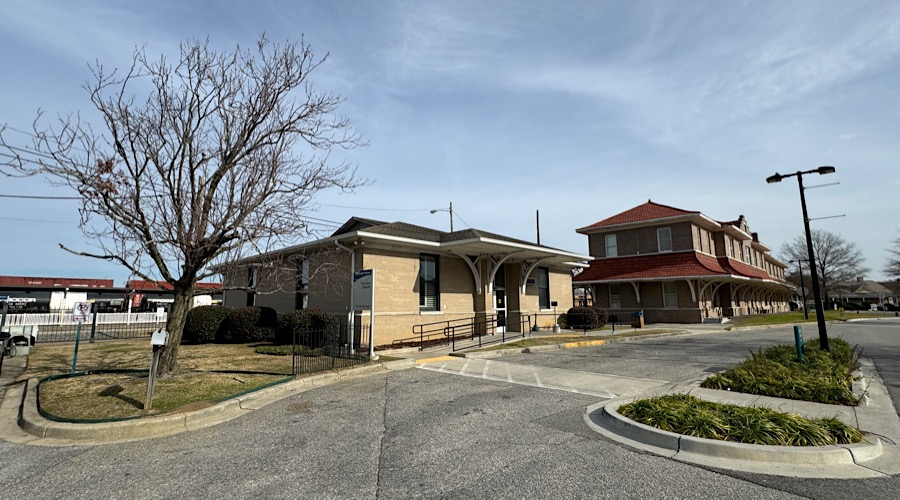
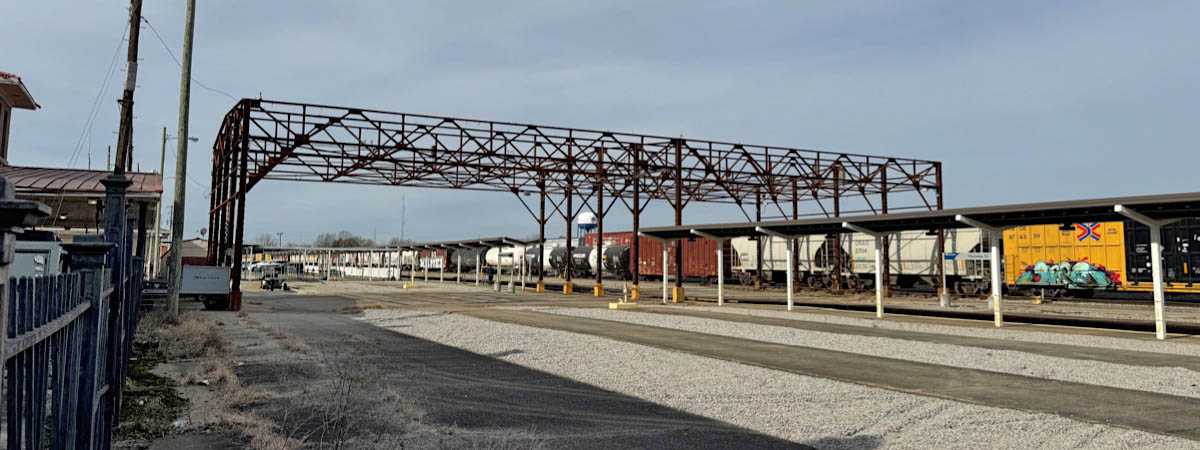
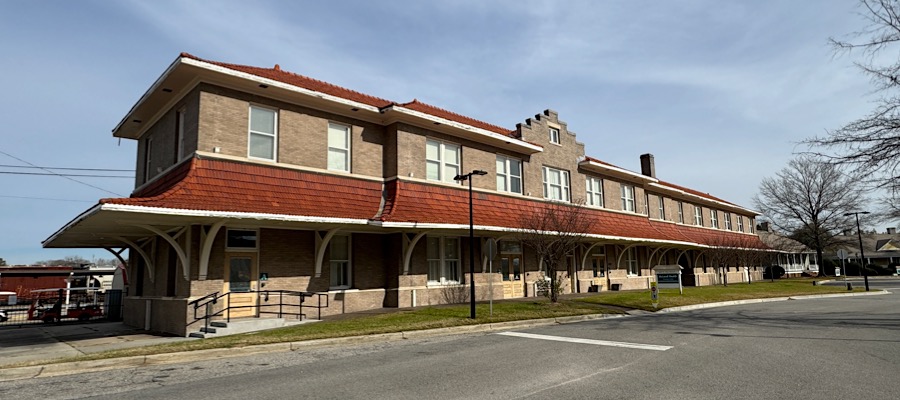
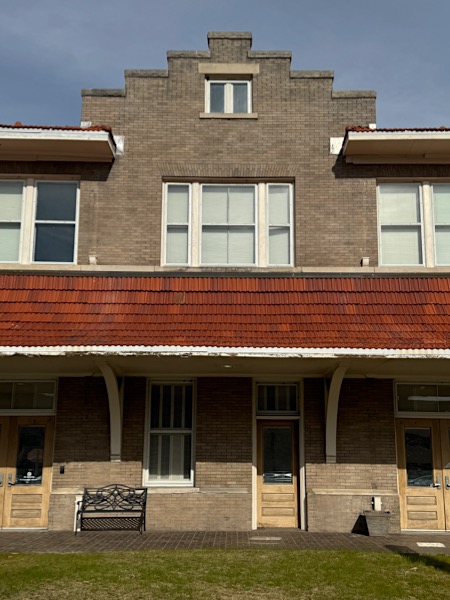
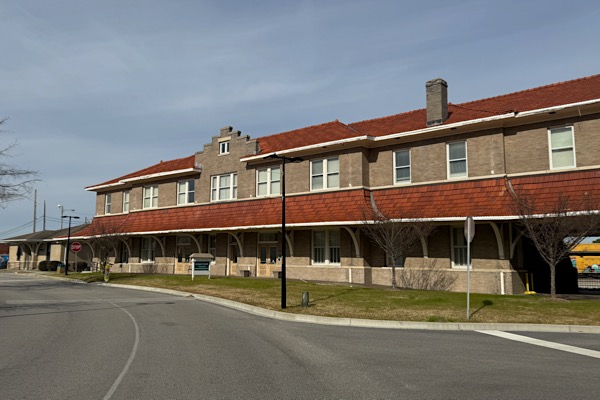
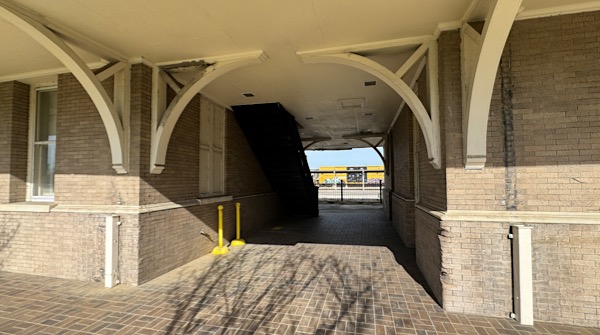
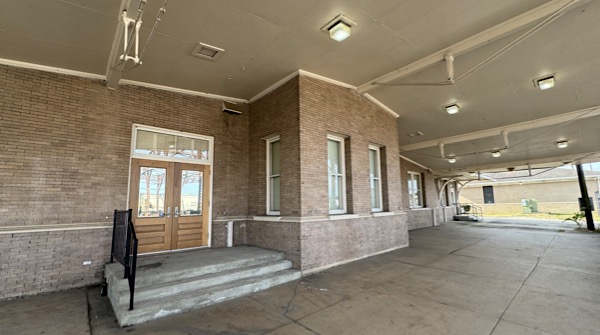
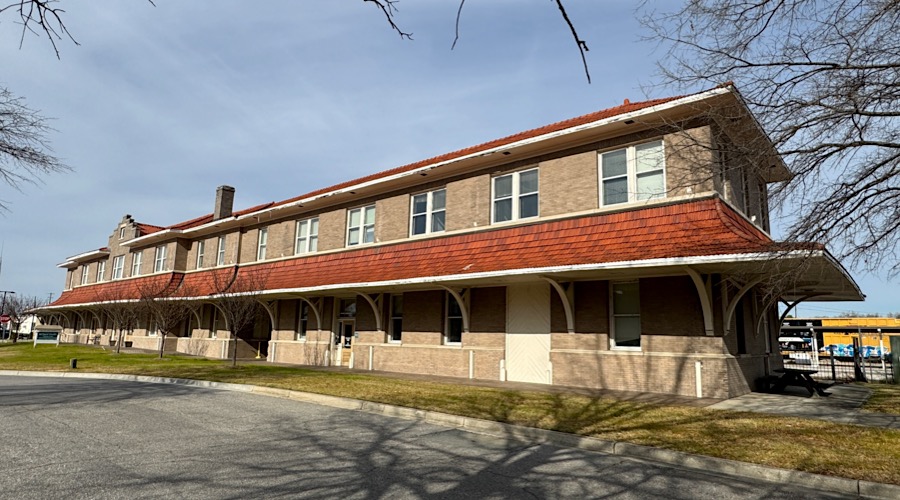
The Amtrak station in Florence was constructed in 1996 by CSX as a replacement for the historic depot that sits right beside it. The old building, constructed in 1910 by the Atlantic Coast Line Railroad, was once served by six tracks with eight raised concrete platforms. Today, only one passenger track remains in place. Both depots, old and new, are owned by the McLeod Regional Medical Center, though the former is used as office space by the hospital. The current buff brick station is smaller and less grandiose than its historic counterpart, but it has delicate white brackets and well-kept landscaping.
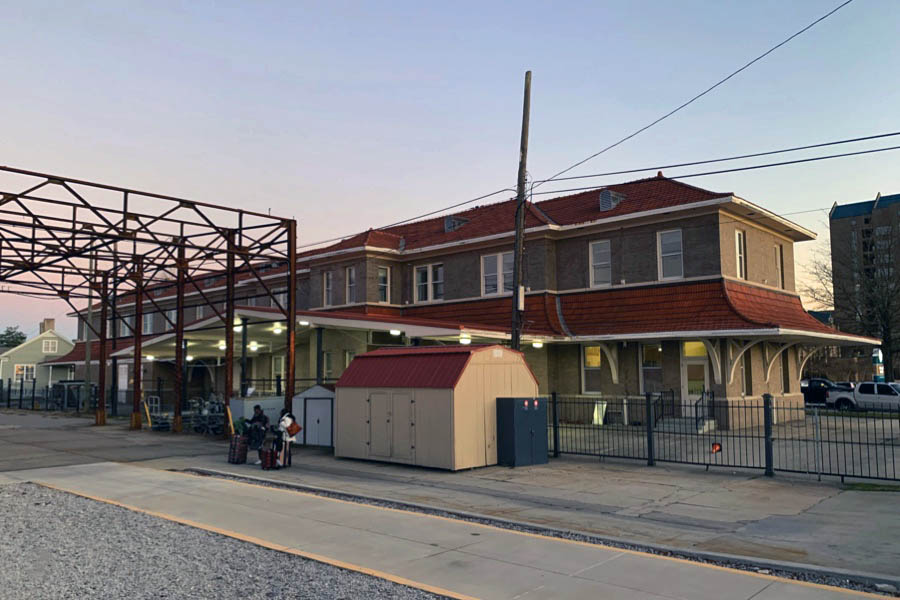
Florence, SC / Dec 2019 / RWH
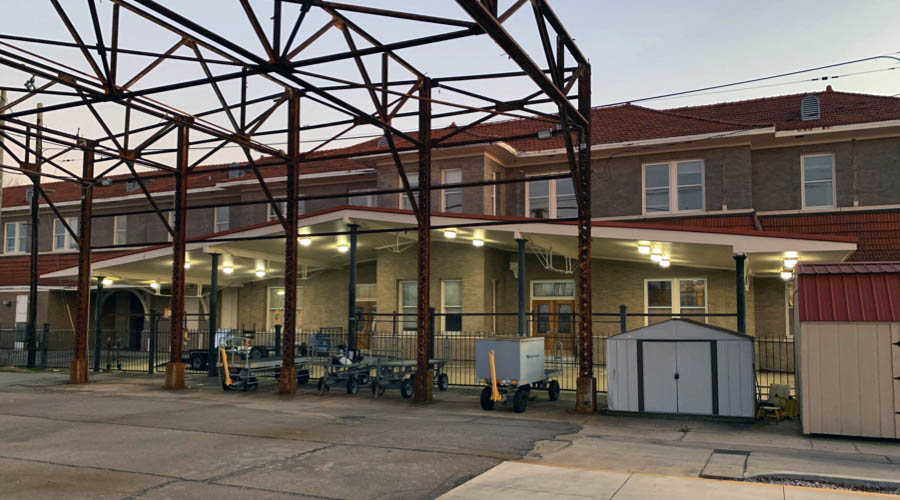
Florence, SC / Dec 2019 / RWH
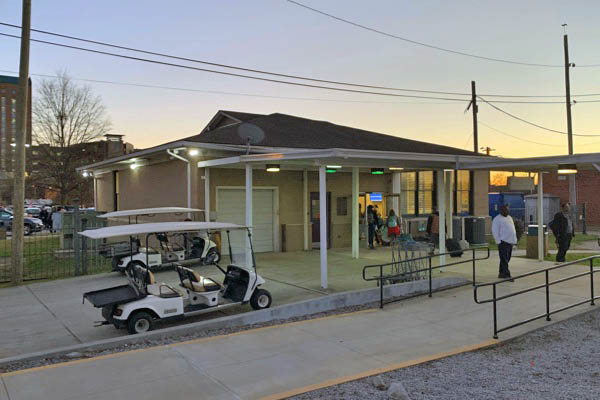
Florence, SC / Dec 2019 / RWH
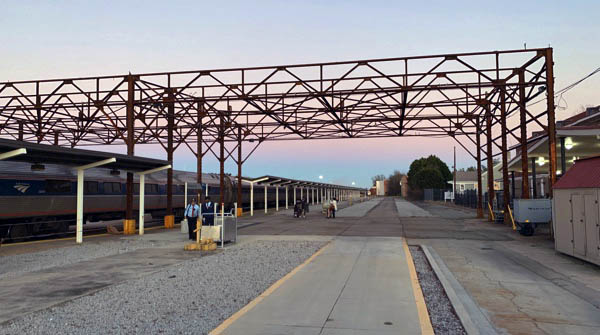
Florence, SC / Dec 2019 / RWH
Florence, SC
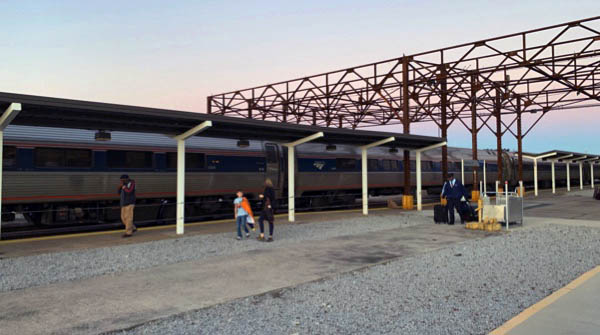
Florence, SC / Dec 2019 / RWH
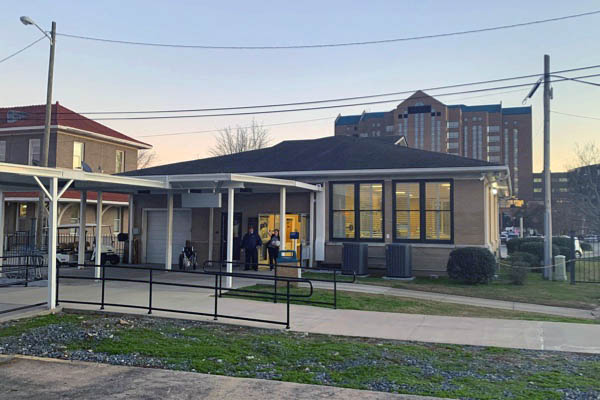
Florence, SC / Dec 2019 / RWH
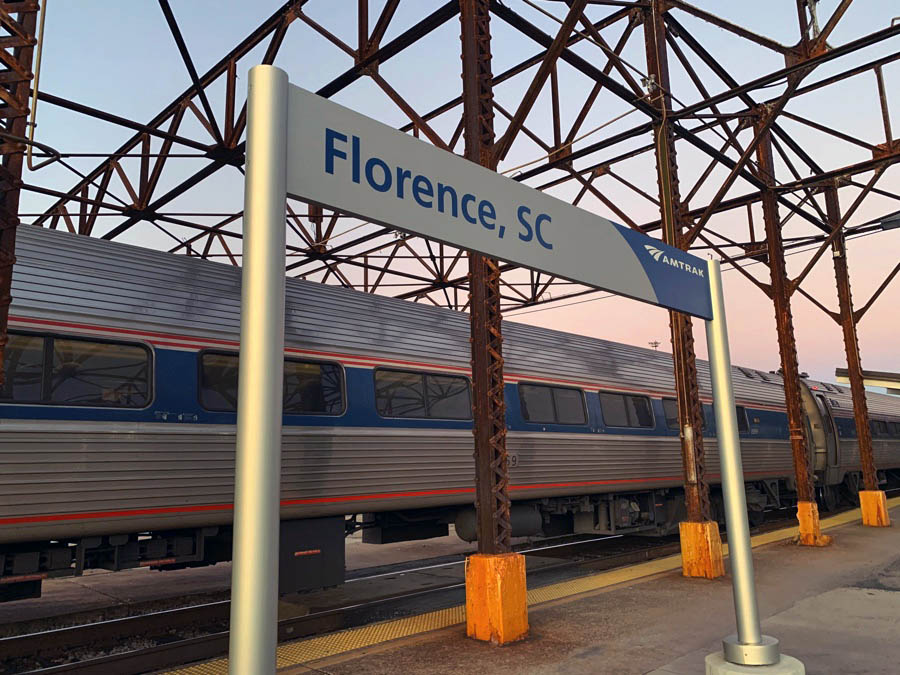
Florence, SC / Dec 2019 / RWH
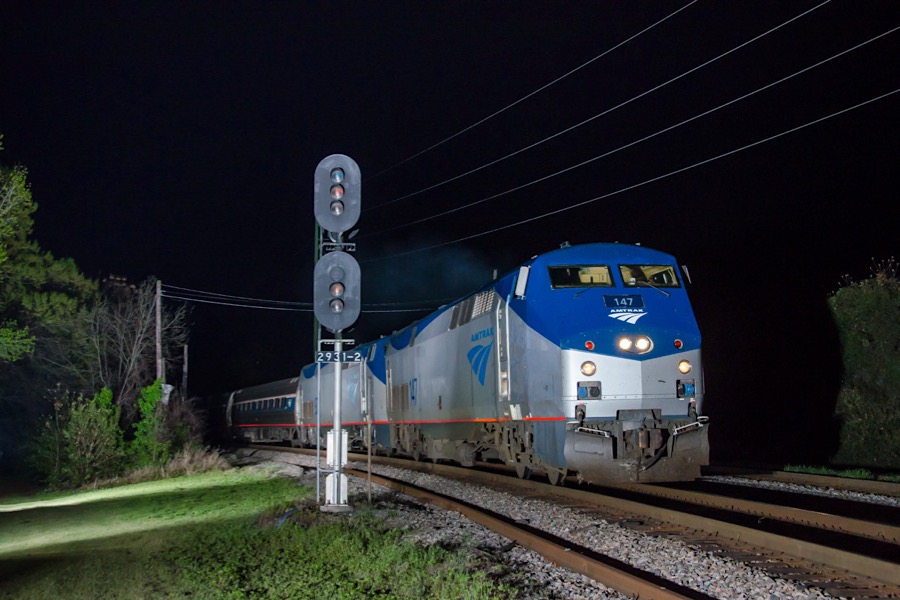
Florence, SC / Apr 2015 / Steve Barry
674 Kingstree, SC
- Palmetto
- Silver Meteor
Kingstree, SC / Jan 2024 / RWH
Click to see the Kingstree depot plotted on a Google Maps page
Kingstree, SC / Jan 2024 / RWH
Jan 2024 / RWH
Kingstree, SC / Jan 2024 / RWH
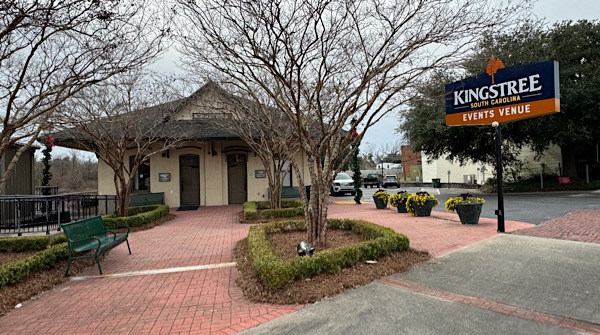
Kingstree, SC / Jan 2024 / RWH
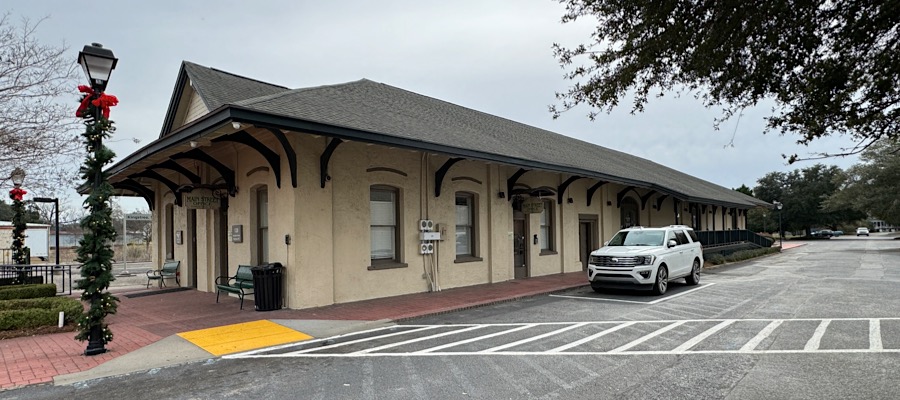
Kingstree, SC / Jan 2024 / RWH
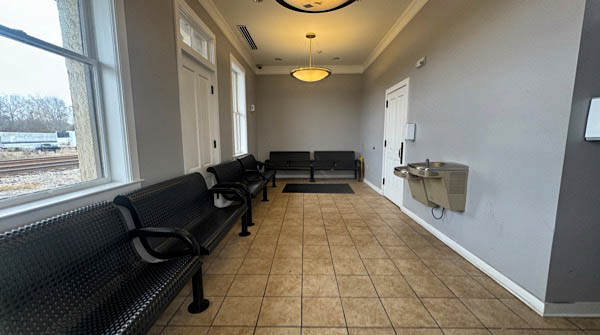
Jan 2024 / RWH
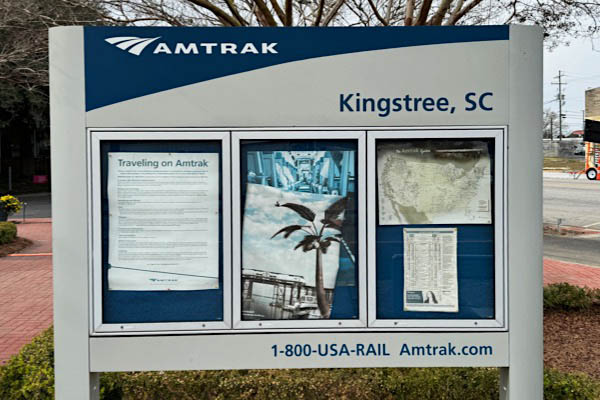
Jan 2024 / RWH
Kingstree, SC / Jan 2024 / RWH
 Williamsburg Township was established and first settled in 1735 by Scots-Irish from Pennsylvania, Virginia, and Maryland. It was located where the three present-day counties of Williamsburg, Florence, and Clarendon meet, along the confluence of the Lynches River and the Great Pee Dee River in southeastern South Carolina.
Back in 1737, the court house grounds, located on Main Street in Kingstree, was designated the parade ground in the original survey of the town of Kingstree. The grounds served as the muster ground for the local militia during colonial and Revolutionary War times.
Williamsburg Township was established and first settled in 1735 by Scots-Irish from Pennsylvania, Virginia, and Maryland. It was located where the three present-day counties of Williamsburg, Florence, and Clarendon meet, along the confluence of the Lynches River and the Great Pee Dee River in southeastern South Carolina.
Back in 1737, the court house grounds, located on Main Street in Kingstree, was designated the parade ground in the original survey of the town of Kingstree. The grounds served as the muster ground for the local militia during colonial and Revolutionary War times.
Williamsburg Township's success was largely attributable to the raising and processing of indigo. From indigo, came wealth and prosperity to the area. Hemp, flax, and holland were other fine quality products introduced in the 1730s. A settlement, existing on Black Mingo (later referred to as Willtown), had a "Meeting House" for dissenters in what later became Williamsburg County. In 1736, the first Williamsburg Presbyterian Meeting House was built. This "Meeting House" was the mother church for a wide area embracing several states.
Kingstree, SC / Jan 2024 / RWH
Kingstree, SC / Jan 2024 / RWH
Jan 2024 / RWH
Kingstree, SC / Jan 2024 / RWH
Jan 2024 / RWH
Kingstree, SC / Jan 2024 / RWH
Kingstree, SC / Jan 2024 / RWH
Kingstree, SC / Jan 2024 / RWH
Kingstree, SC / Jan 2024 / RWH
Kingstree, SC / Jan 2024 / RWH
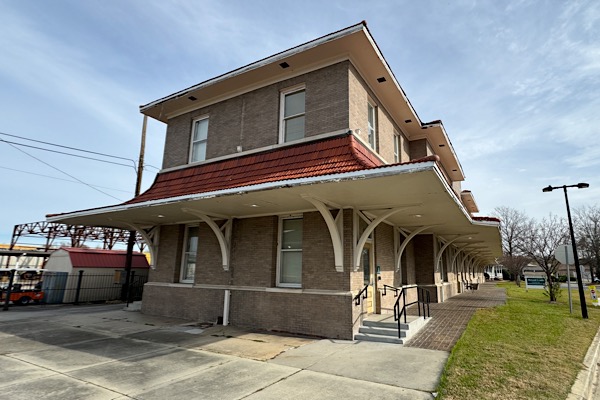
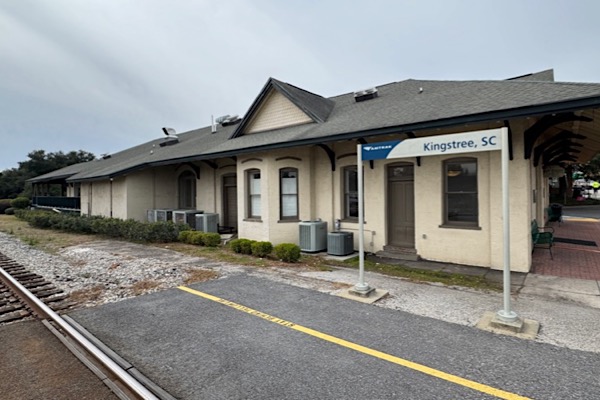
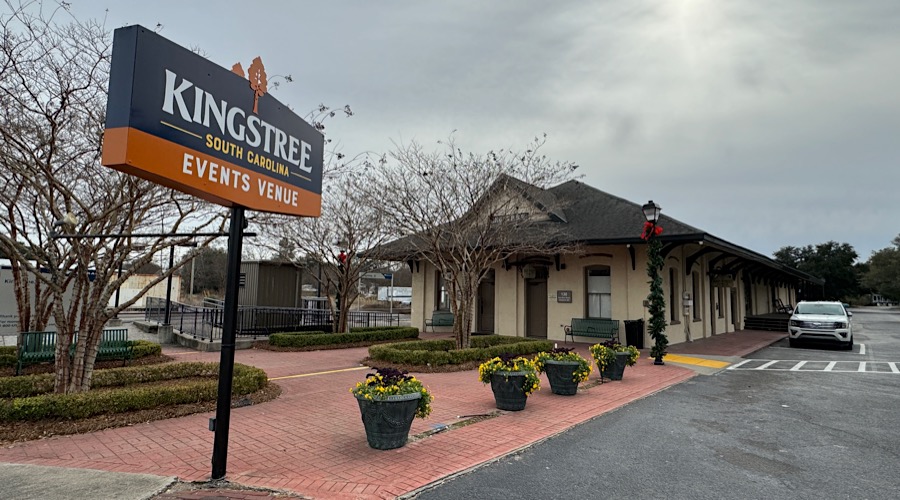
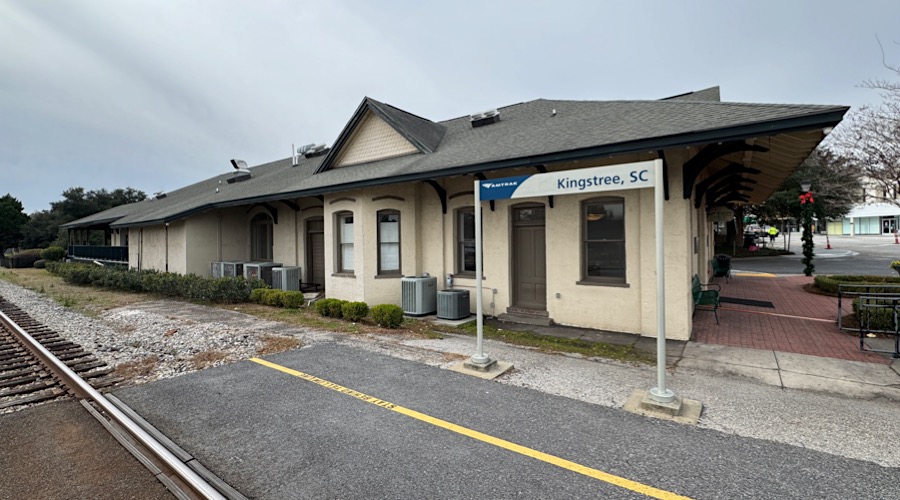
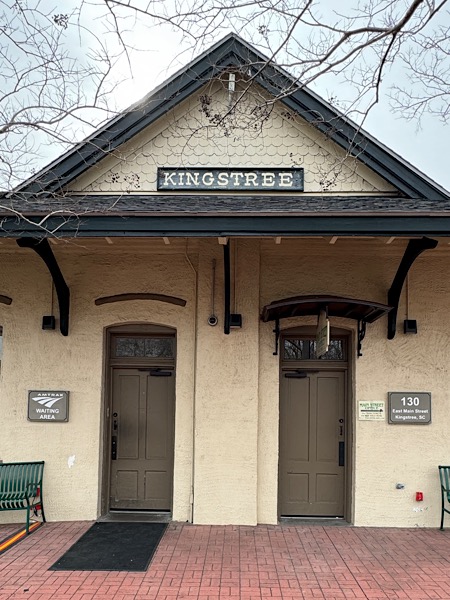
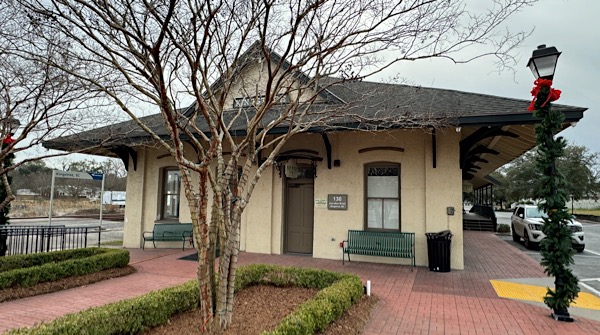
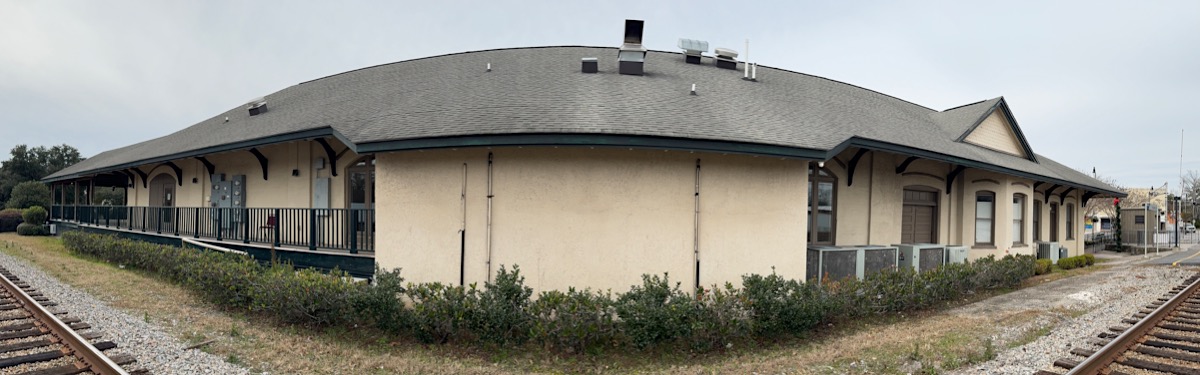
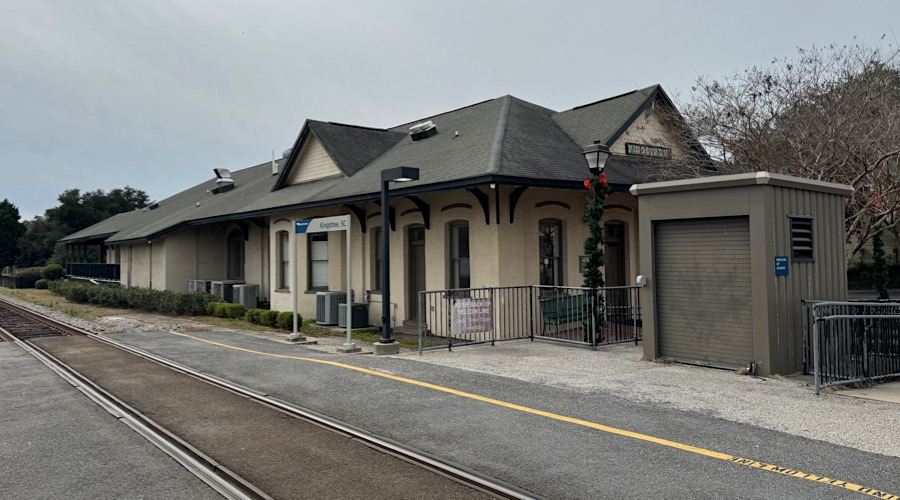
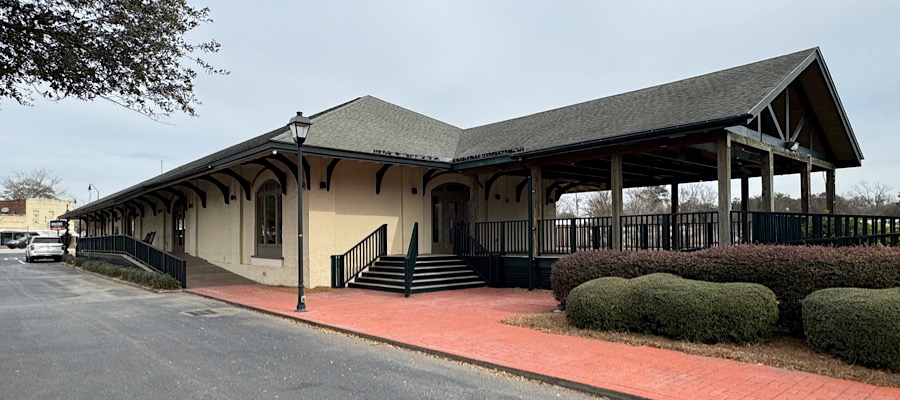
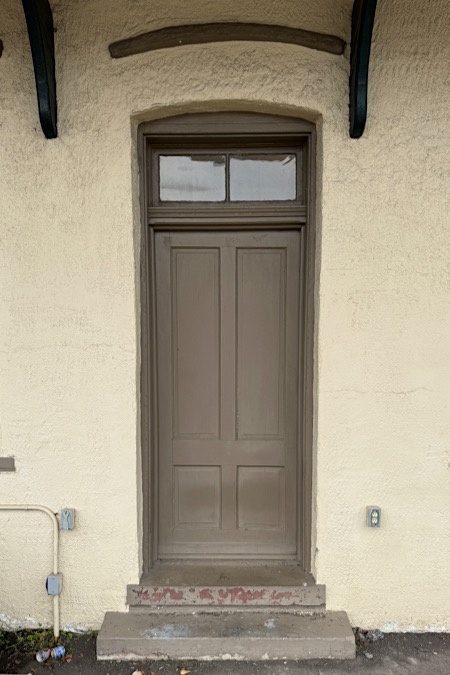
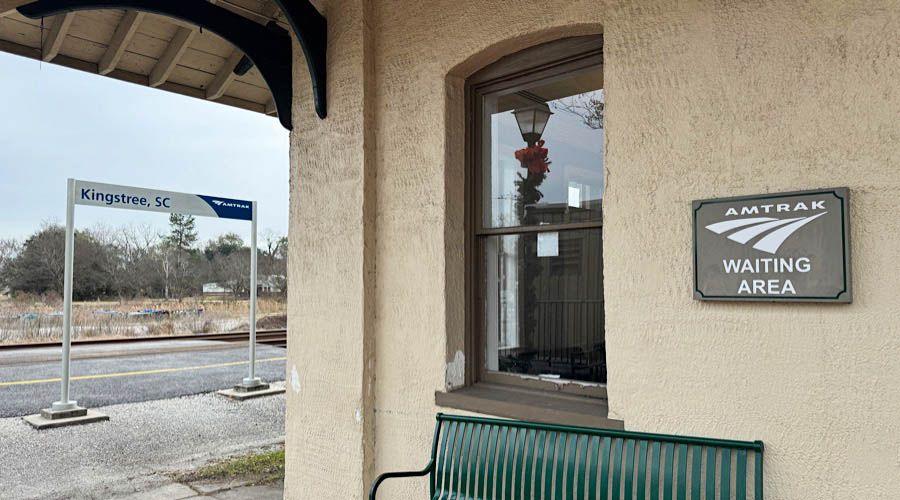
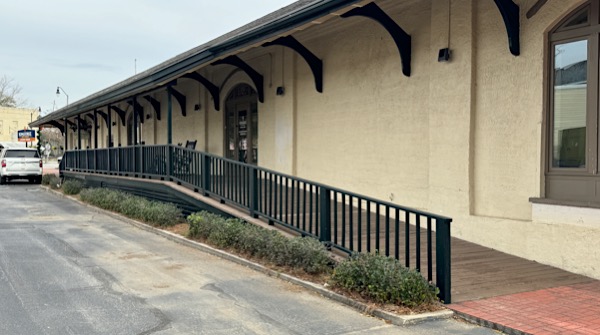
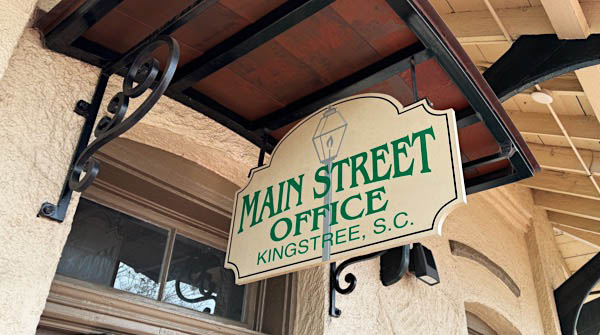
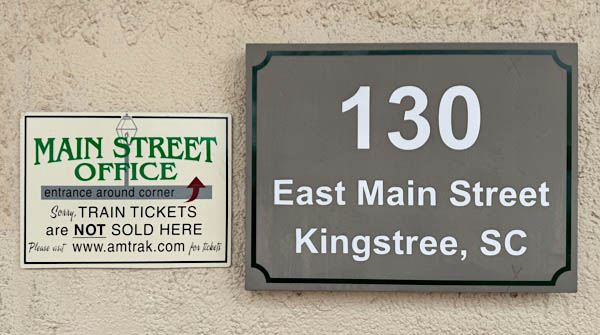
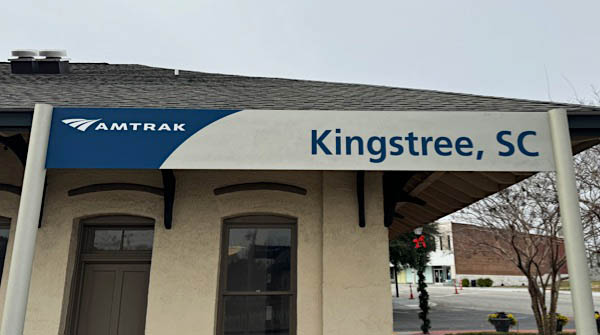
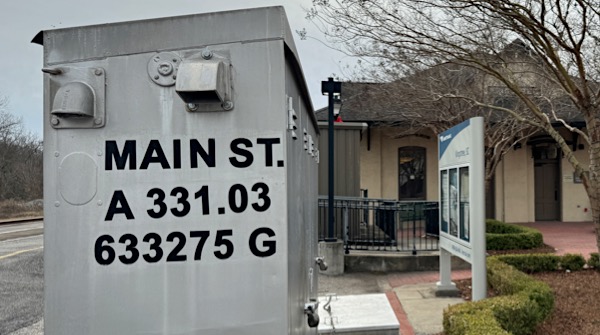
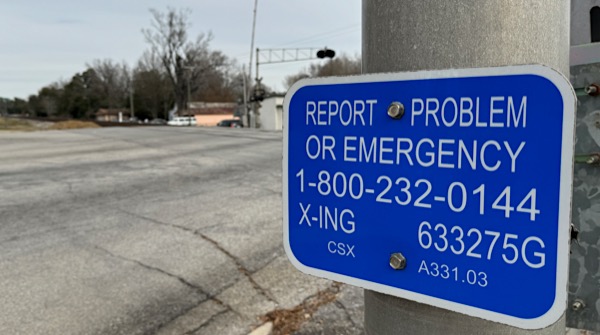
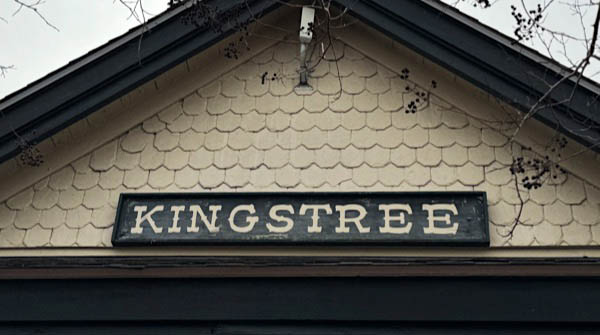
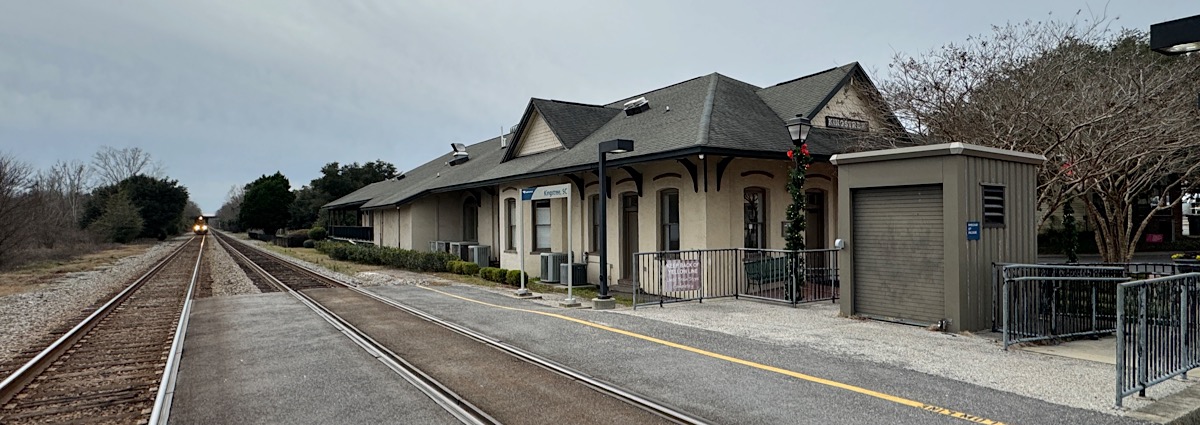
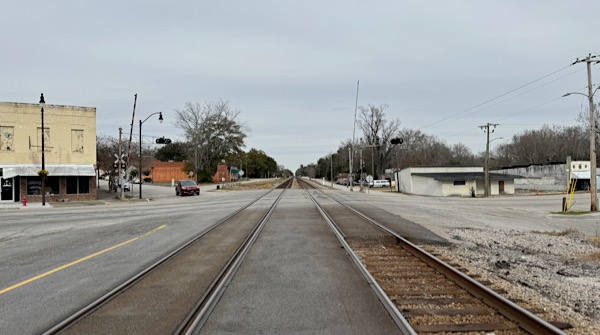
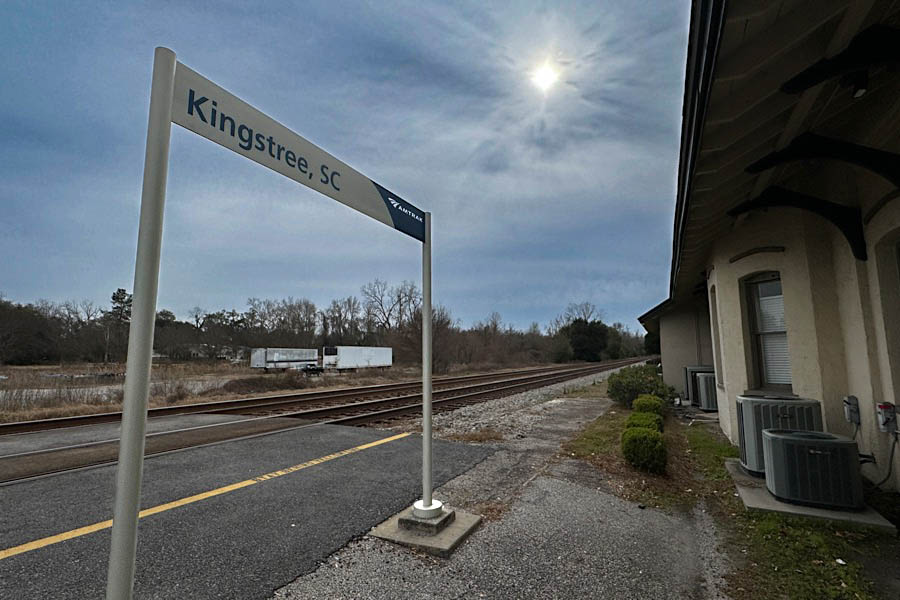
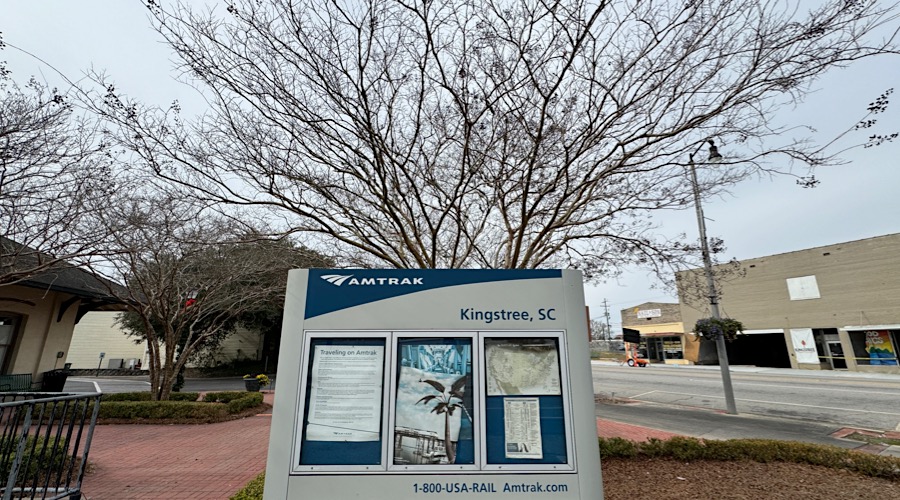
The current Amtrak stop in Kingstree, a white stuccoed brick building, was built around 1909 by the Atlantic Coast Line Railroad. It has been renovated several times and currently houses the Williamsburg Hometown Chamber Offices as well as the Amtrak waiting room; it also has a facility previously occupied by a restaurant.
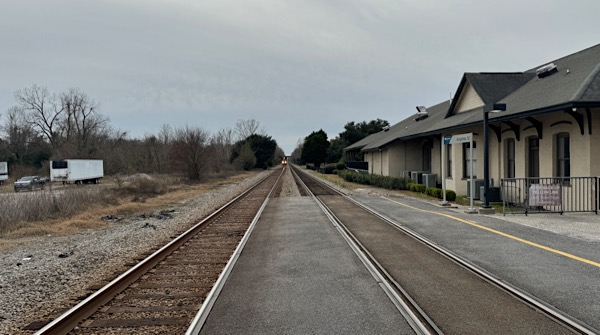
Kingstree, SC / Jan 2024 / RWH
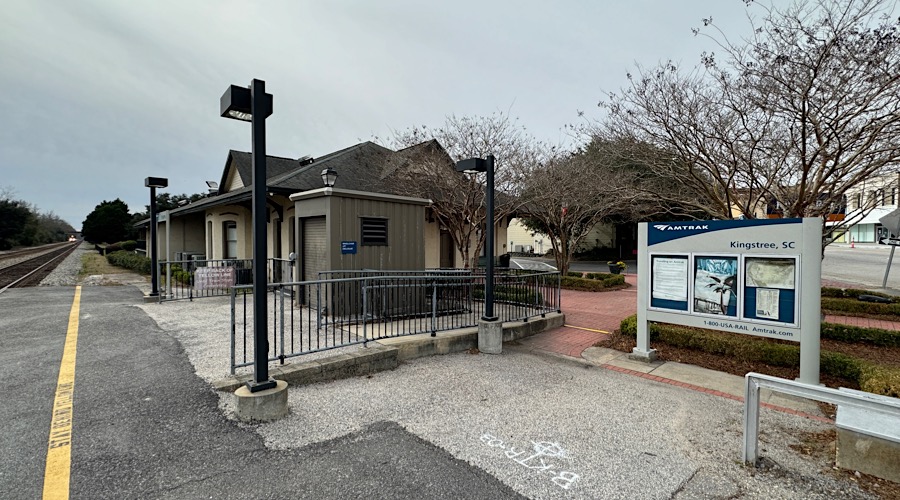
Kingstree, SC / Jan 2024 / RWH
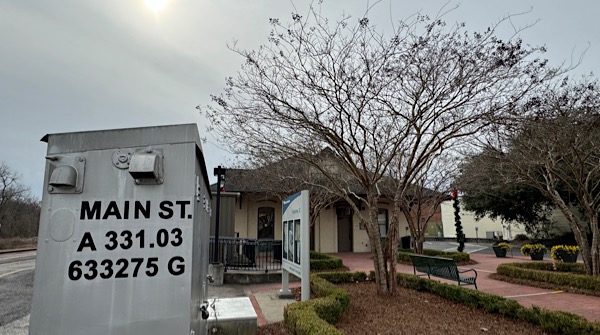
Kingstree, SC / Jan 2024 / RWH
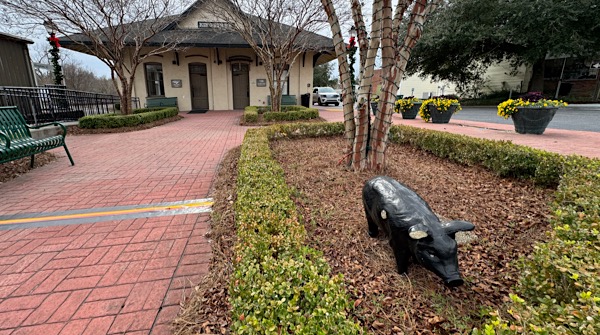
Kingstree, SC / Jan 2024 / RWH
Kingstree, SC
Kingstree, SC / Jan 2024 / RWH
Kingstree, SC / Jan 2024 / RWH
Kingstree, SC / Jan 2024 / RWH
729 Charleston, SC
- Palmetto
- Silver Meteor
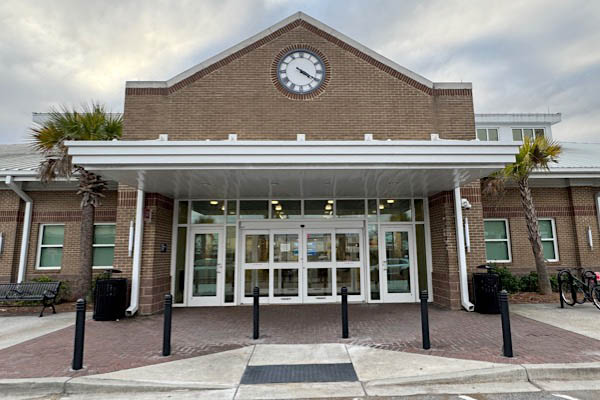
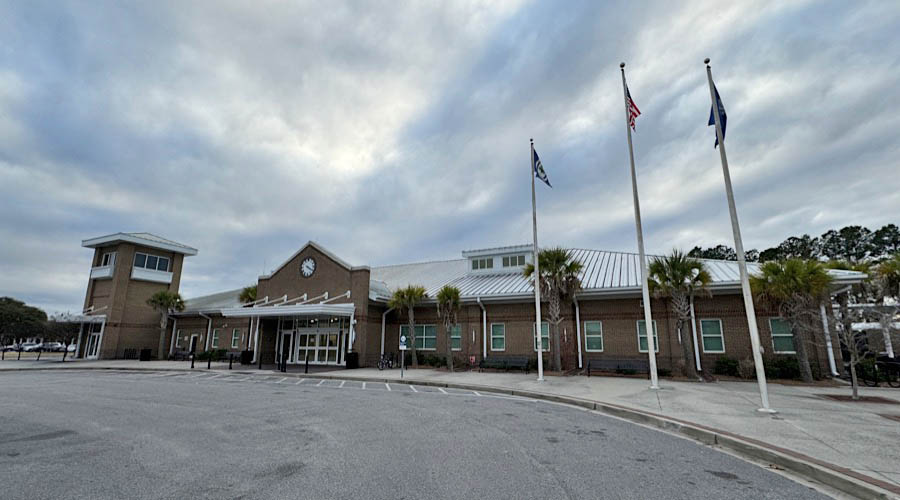
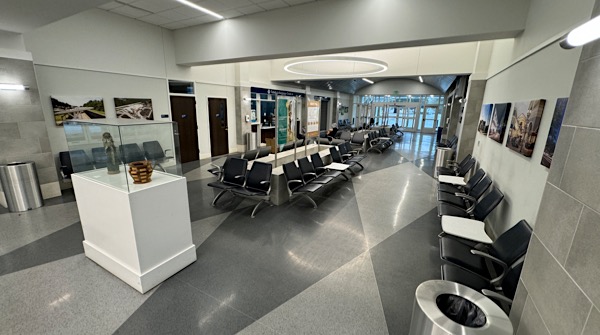
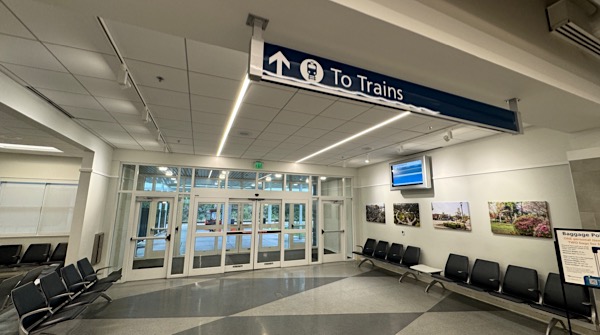
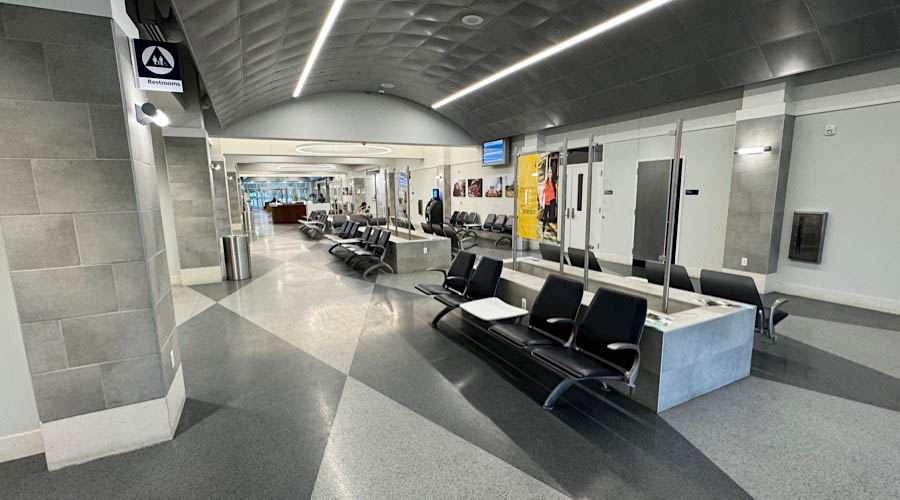
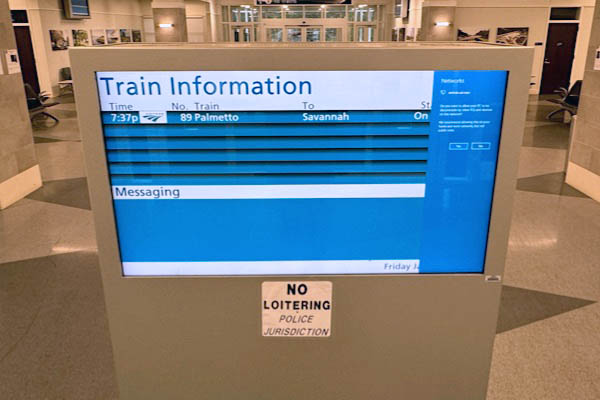
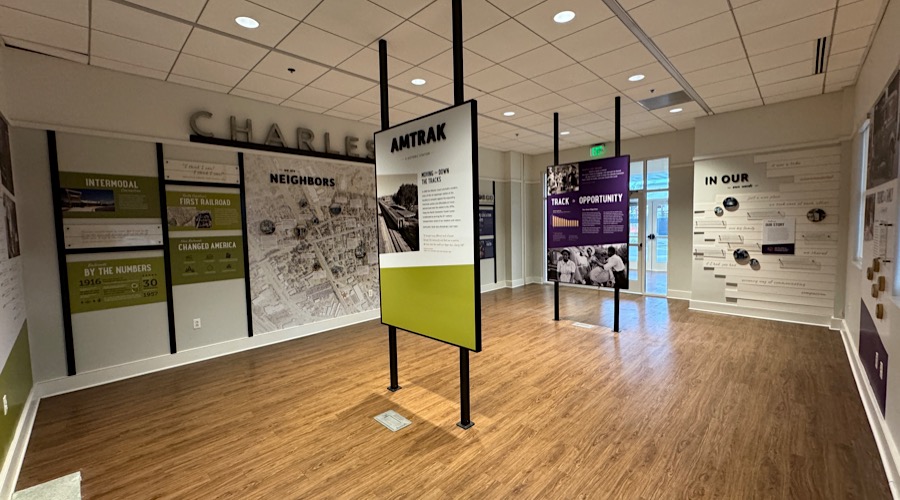
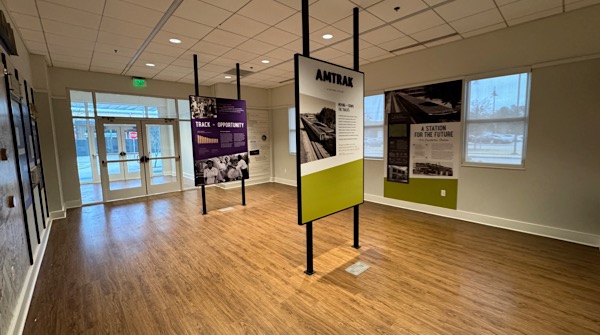
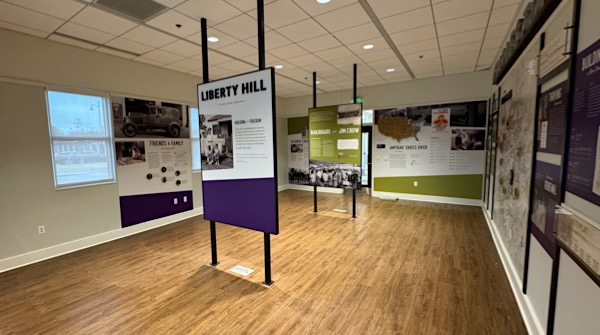
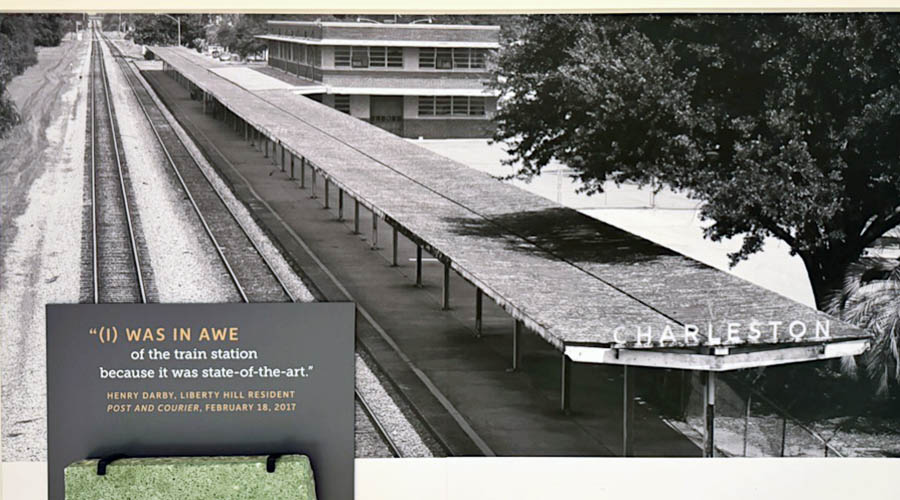
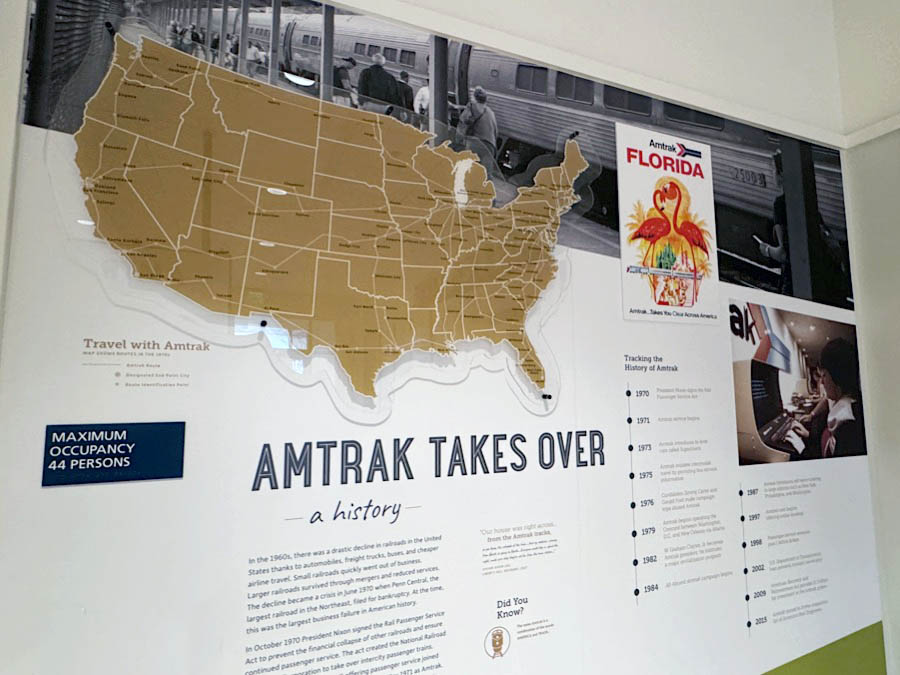
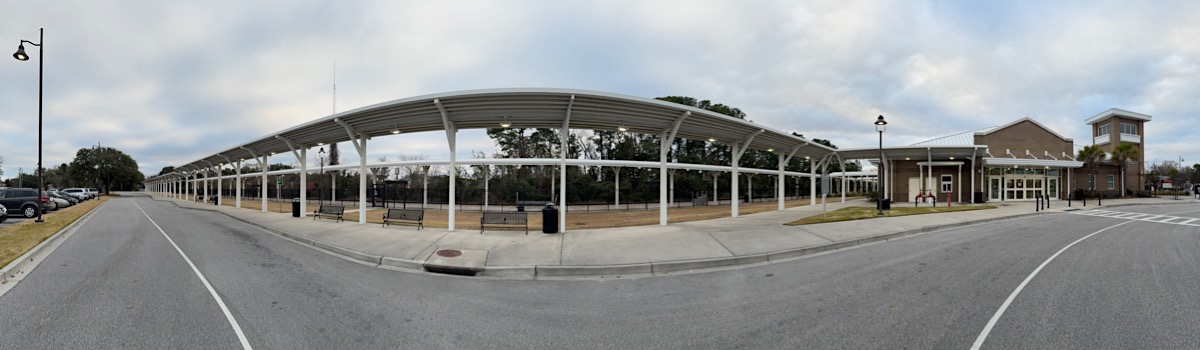
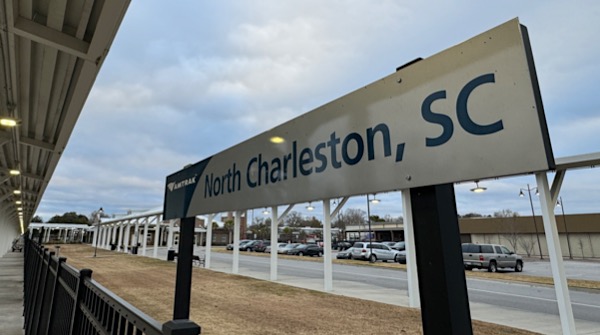
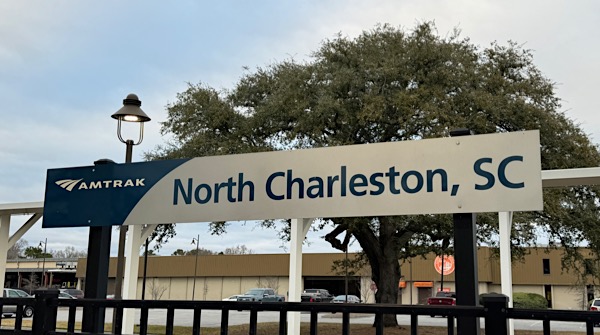
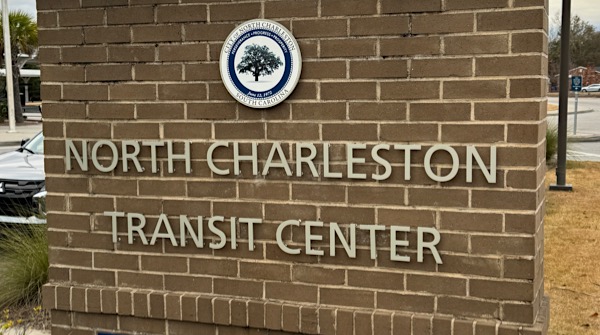
An intermodal center opened in late 2018 is served by Amtrak and local and intercity buses and features a spacious waiting area, community room and a history display focused on the surrounding Liberty Hill neighborhood.
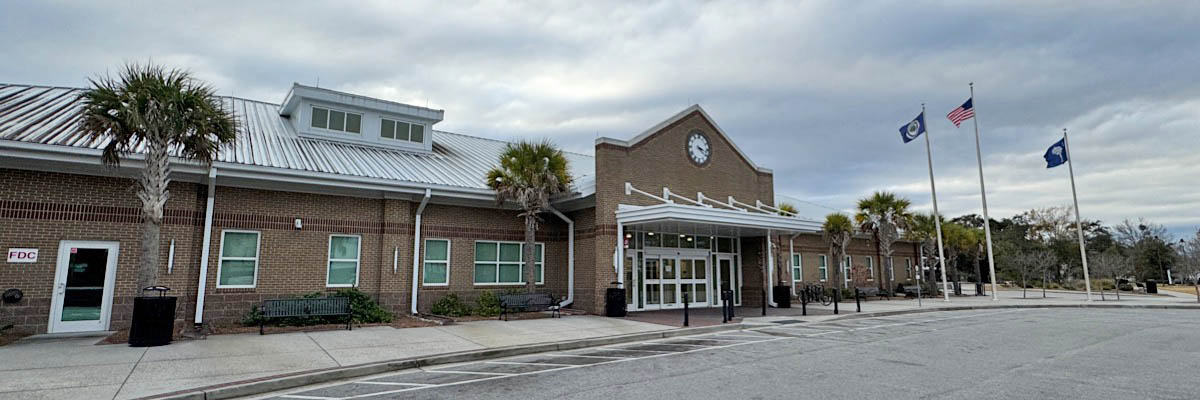
North Charleston, SC / Jan 2024 / RWH
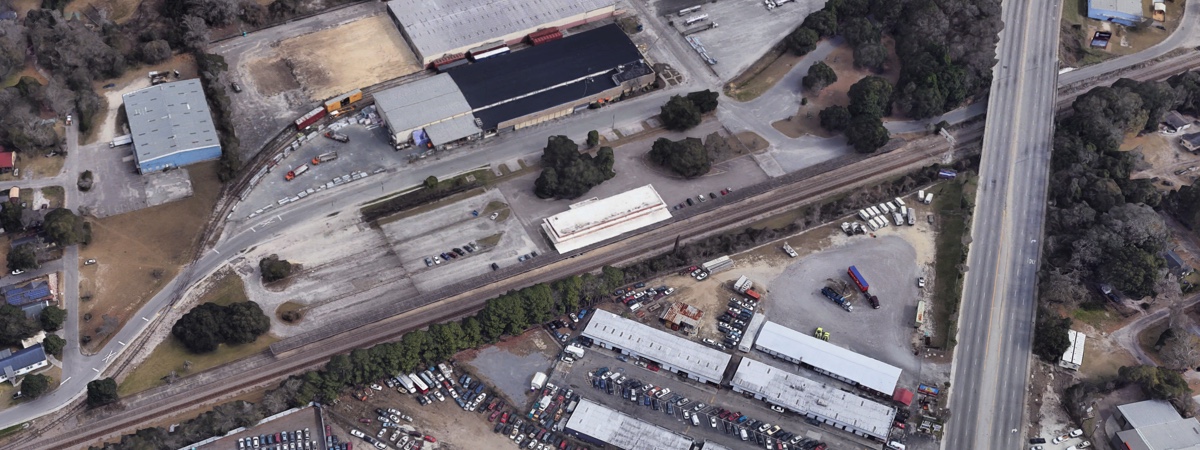
North Charleston station overhead / Google Maps
Click to see the Charleston station plotted on a Google Maps page
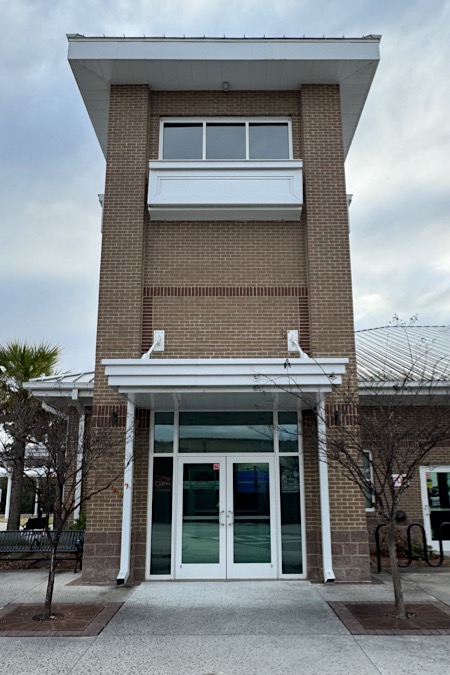
Jan 2024 / RWH
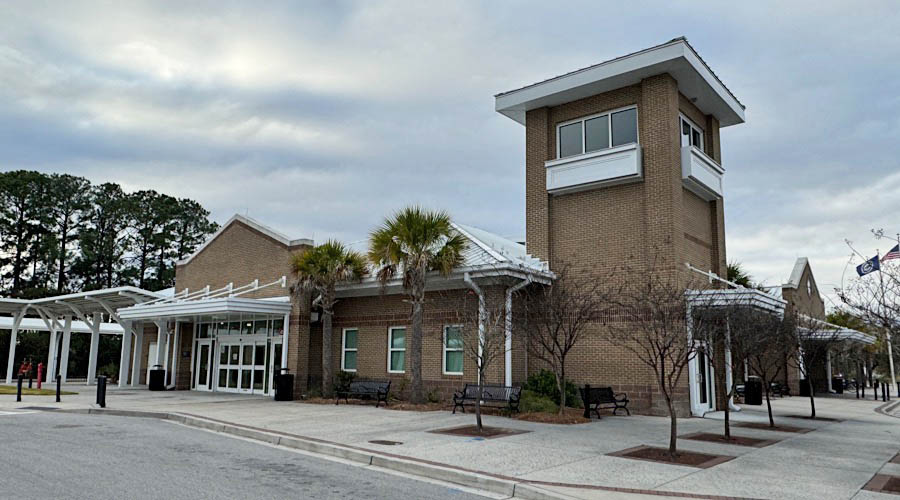
North Charleston, SC / Jan 2024 / RWH

North Charleston, SC / Jan 2024 / RWH
North Charleston, SC / Jan 2024 / RWH
North Charleston, SC / Jan 2024 / RWH
Jan 2024 / RWH
North Charleston, SC / Jan 2024 / RWH
North Charleston, SC
North Charleston, SC / Jan 2024 / RWH
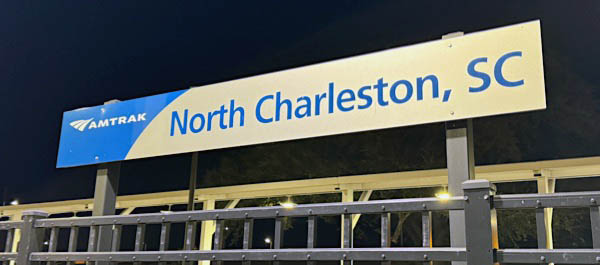
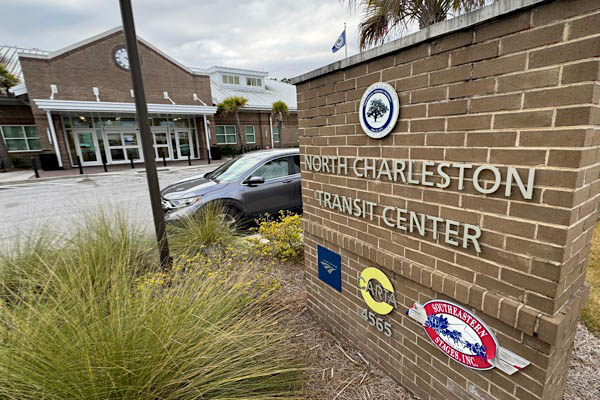
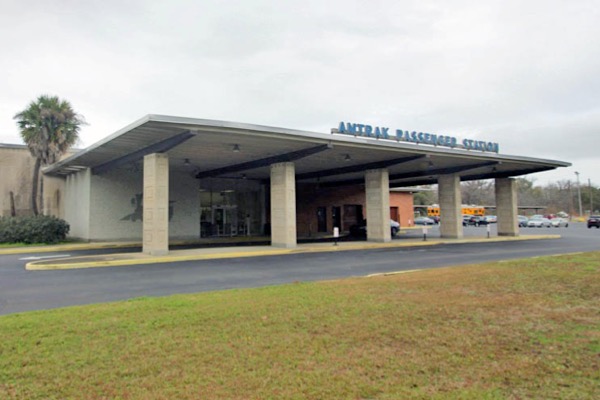
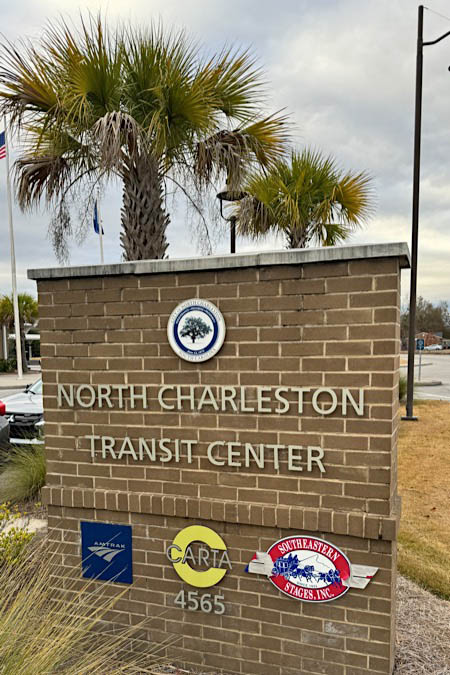
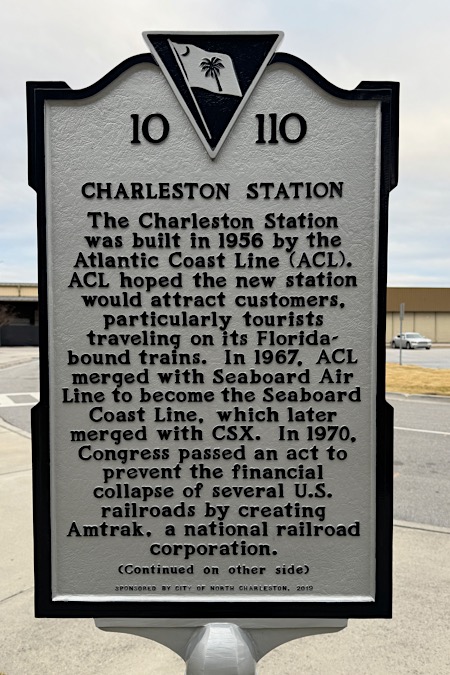
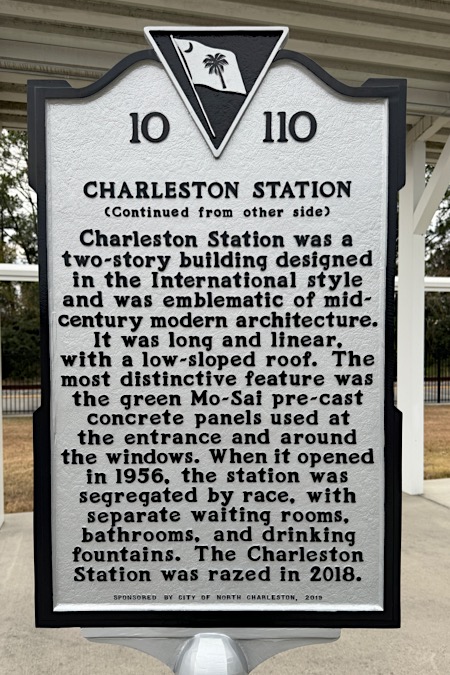
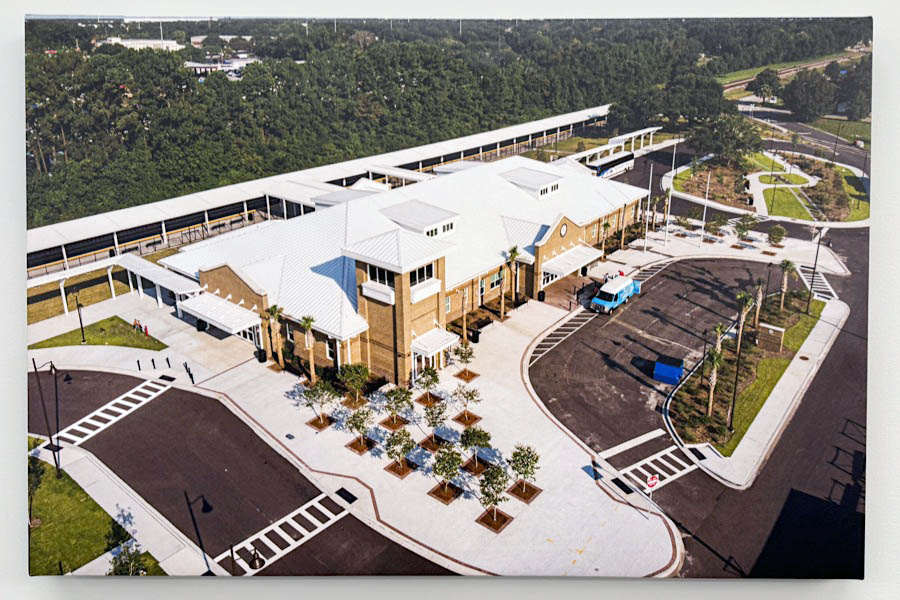
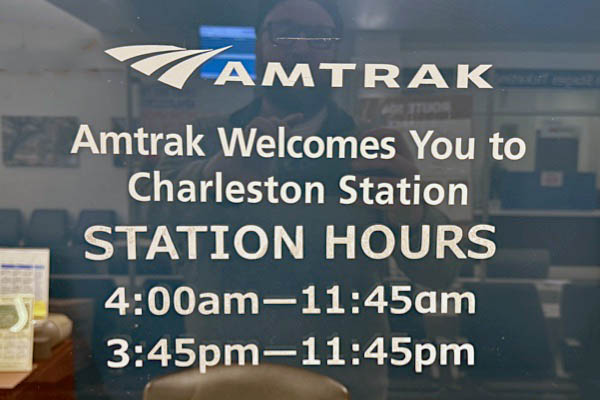
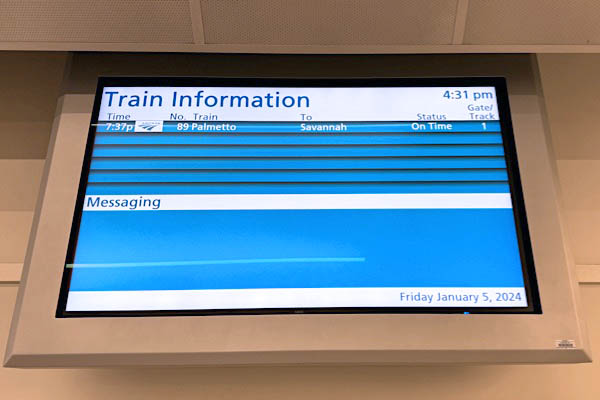
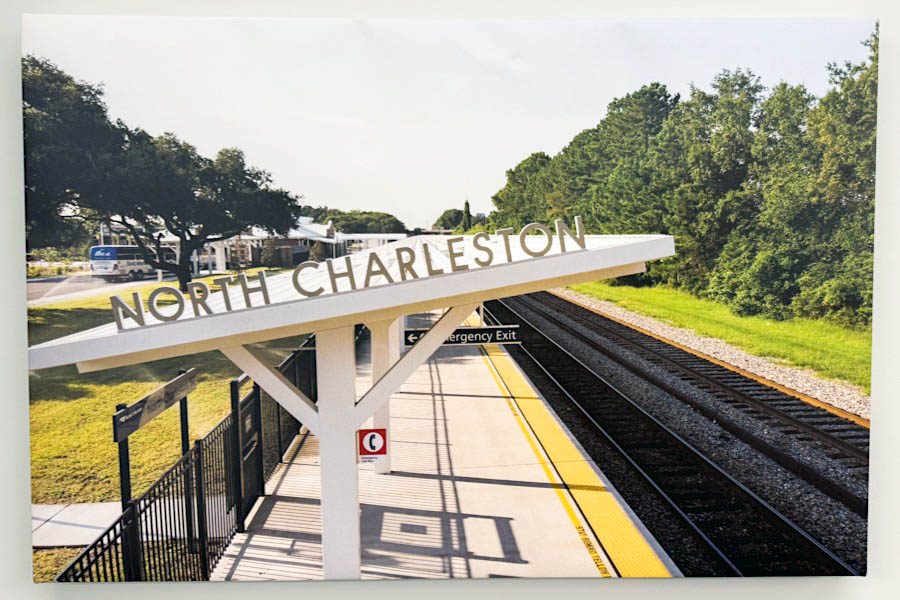
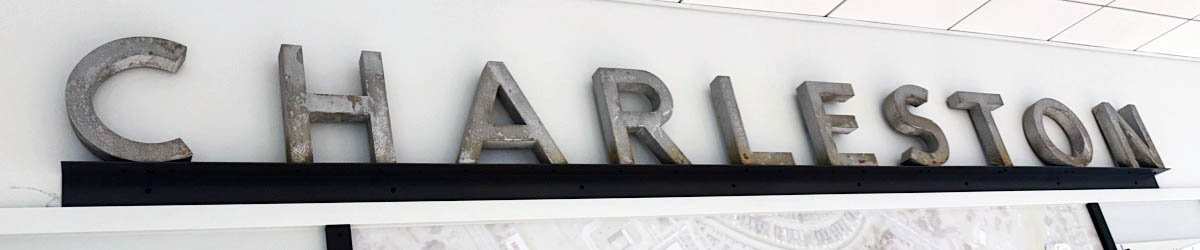
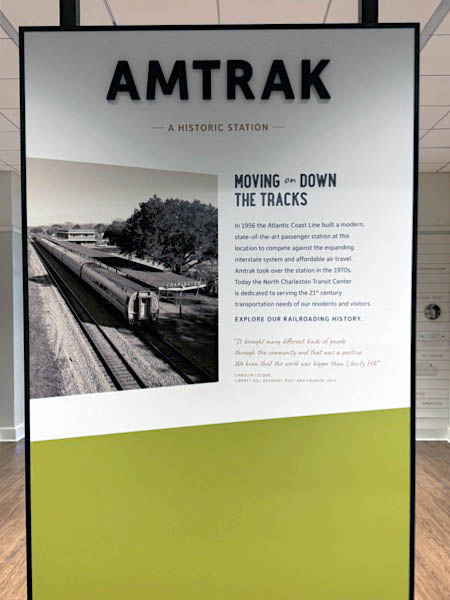
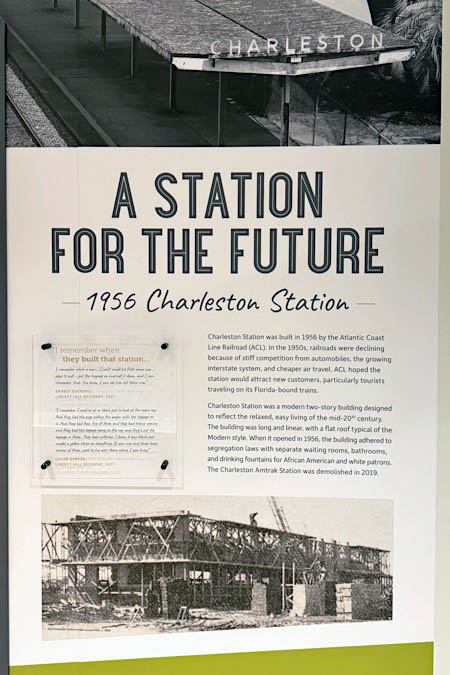
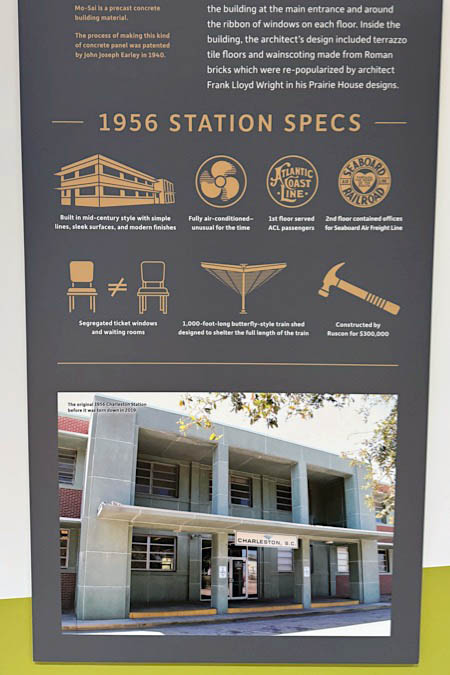
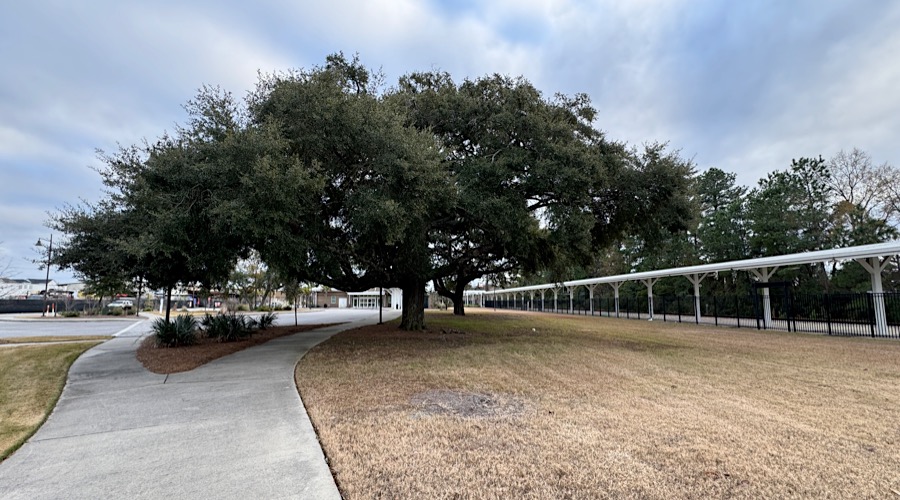
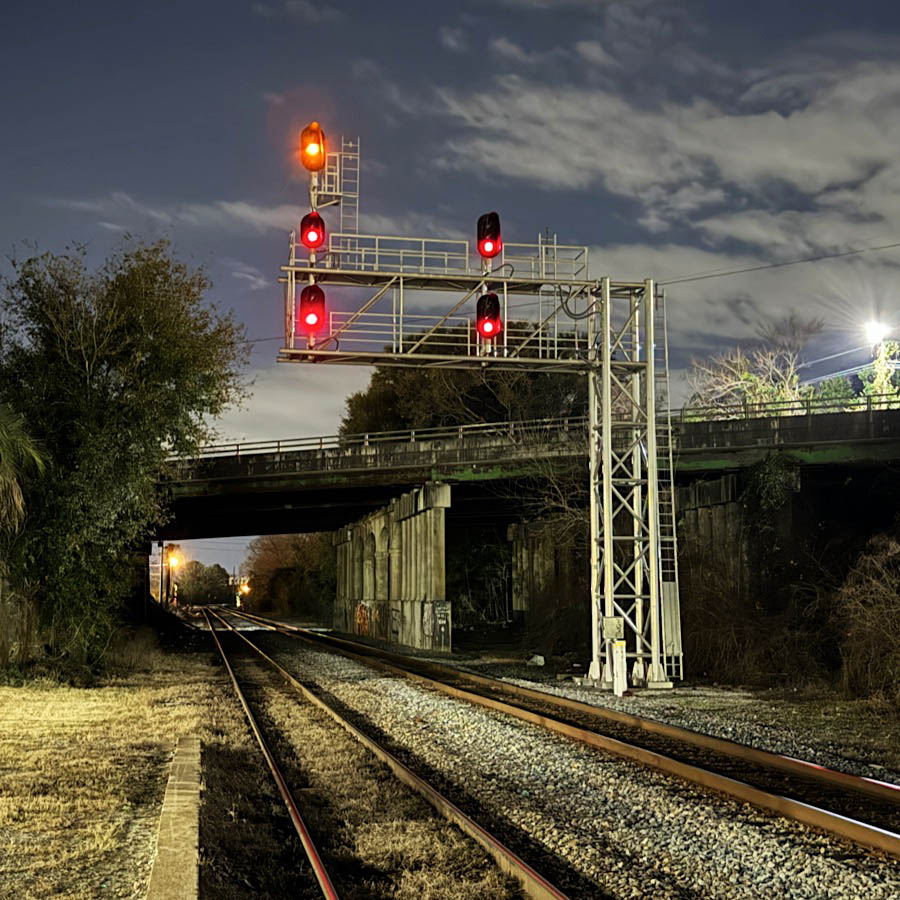
 Amtrak moved into the North Charleston Intermodal Center in December 2018 following a year and a half of construction. The facility had been under discussion since the late 1990s to bring together various transportation modes — including Amtrak, Charleston Area Rapid Transit Authority (CARTA) buses and intercity buses — in one convenient location. Amtrak relocated to the intermodal center from the 1956 Atlantic Coast Line (ACL) depot, which stood directly to the south.
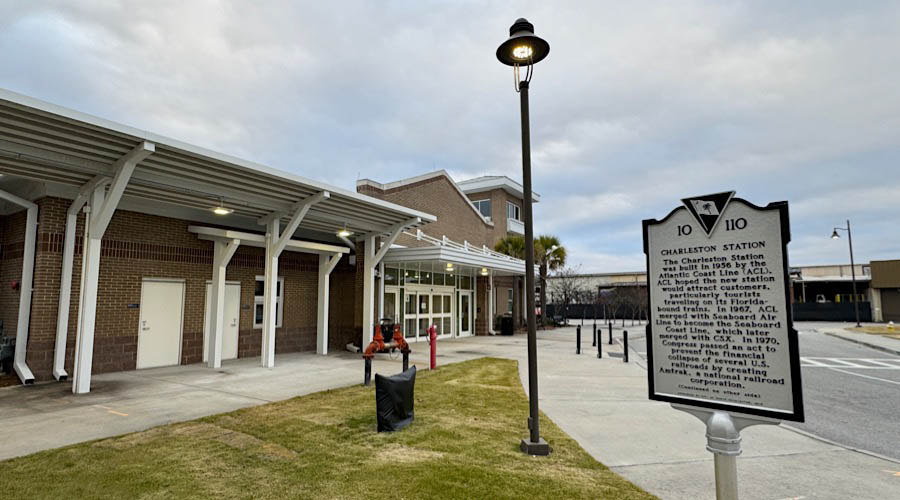
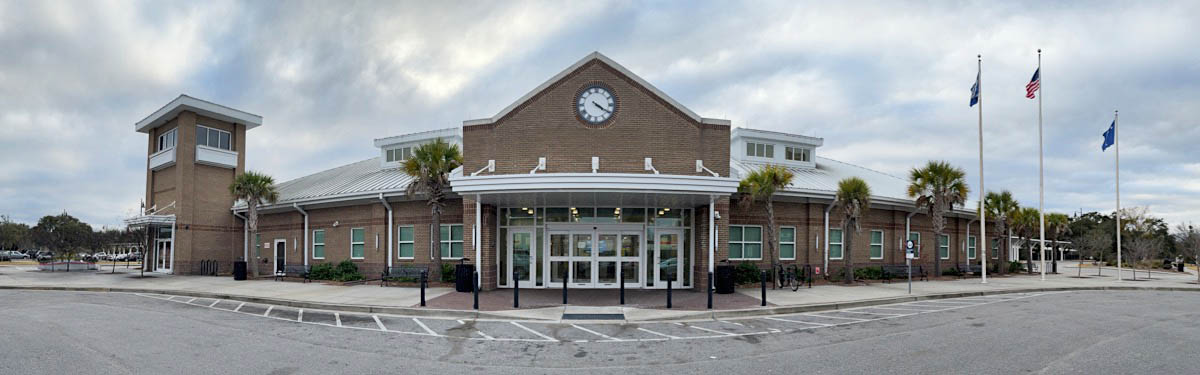
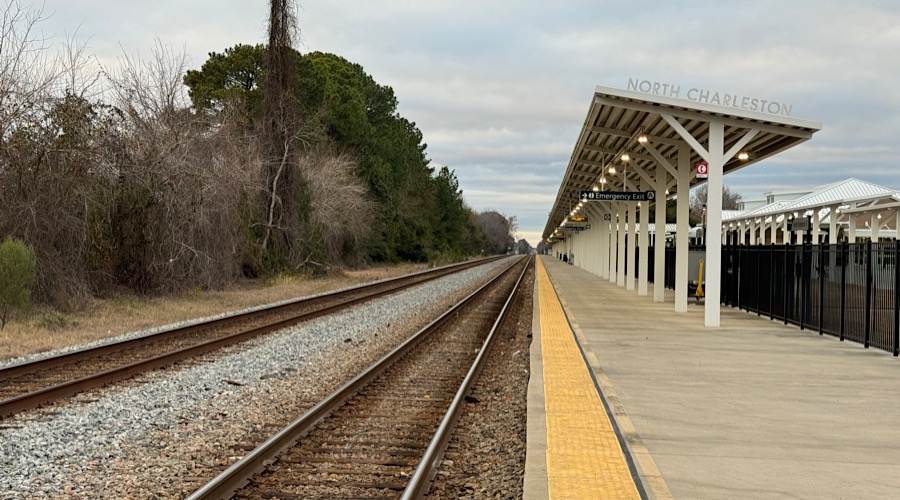
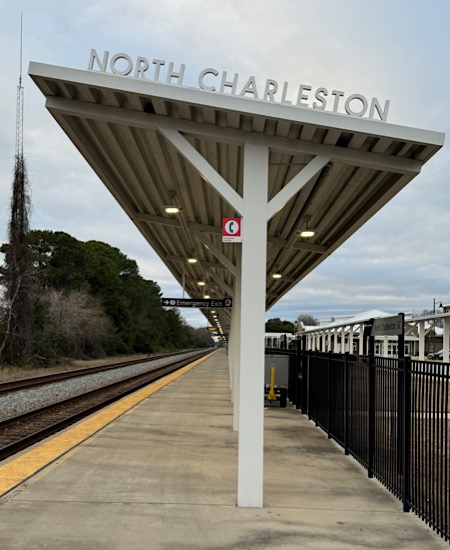
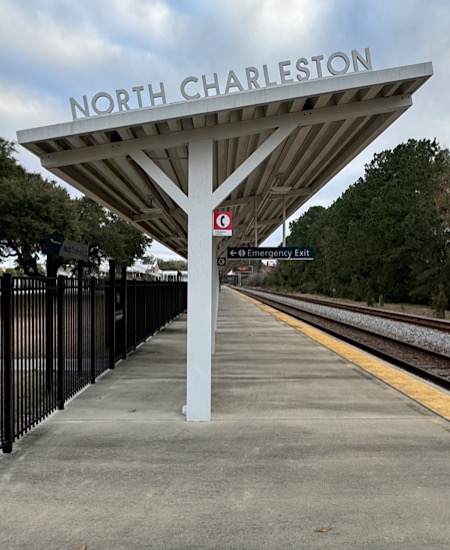
The one-story, nearly 15,000-square foot intermodal center is constructed of brown brick and textured concrete masonry units and features a tower on one end. Stylized pilasters create regular bays that visually break up the long, horizontal facades. A projecting bay with triangular parapet and clock face adds a strong vertical element and marks the main entrance; a canopy protects passengers from inclement weather as they arrive by car. The steeply pitched, hipped seamed-metal roof has prominent shed dormer windows that, along with numerous other windows at ground level, allow natural light to brighten the interior. Along the tracks was built a new concrete platform with canopy.
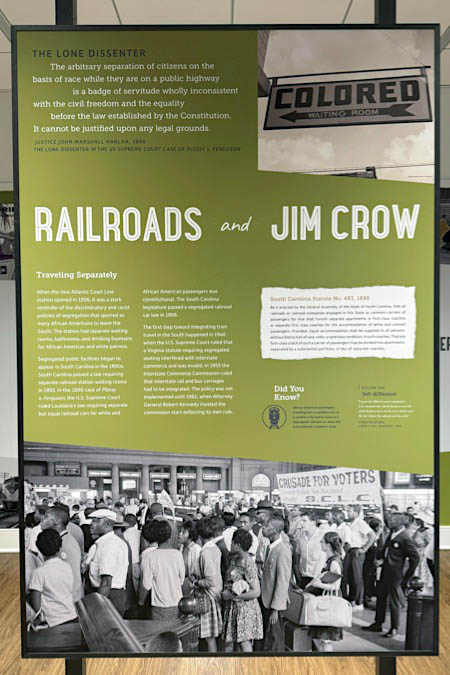
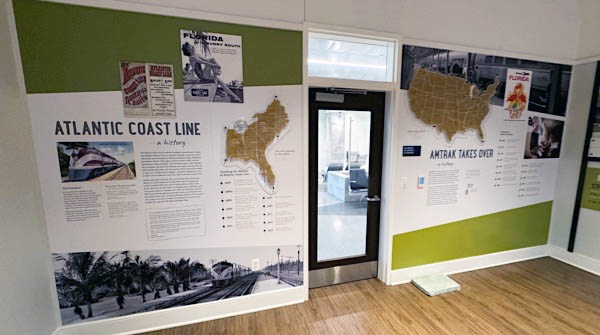 Inside, customers enjoy a spacious waiting area enlivened by a diamond pattern on the floor and accented with organic stone and wood elements. The building also has an Amtrak ticket counter, CARTA and Amtrak offices, a community room and a history display focused on the surrounding Liberty Hill neighborhood. Created as a freedmen’s settlement after the Civil War, Liberty Hill is the oldest community in North Charleston.
North Charleston, where the intermodal center is located, straddles Charleston and Dorchester counties; it was incorporated as a city in 1972. In the early 1900s, the area was set out as a planned industrial community with its growth geared directly to the industrial, military and business communities. At the time, the Park Circle neighborhood was designed as one of only two garden city models in the U.S., and most of the original planning concepts remain intact. Today the city is home to Charleston International Airport and Charleston Air Force Base.
Great American Stations / images RWH
Jan 2024 / RWH
Jan 2024 / RWH
Jan 2024 / RWH
North Charleston, SC / Jan 2024 / RWH
Jan 2024 / RWH
History Display
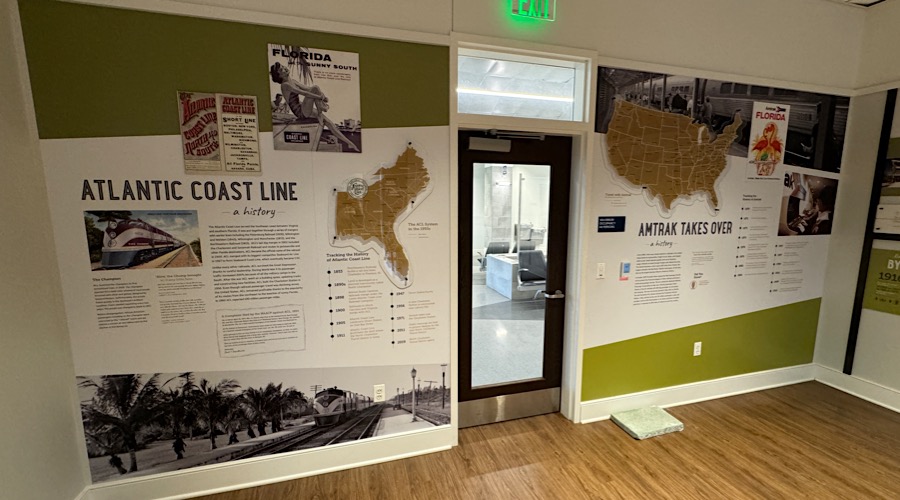
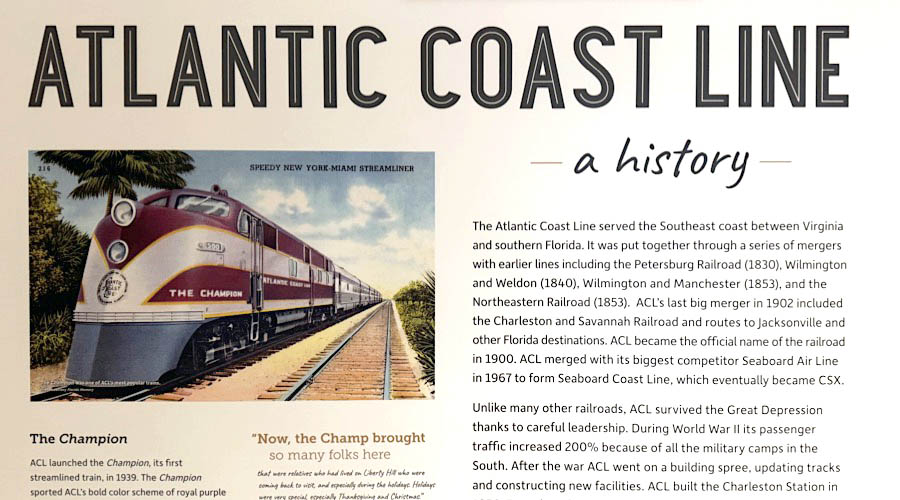
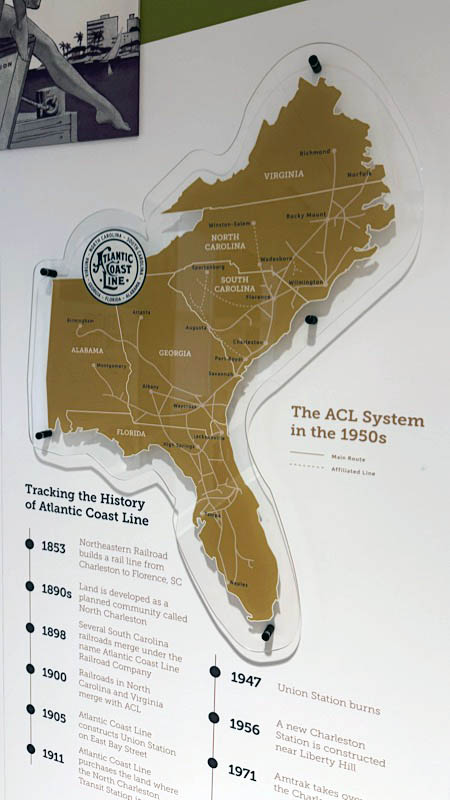
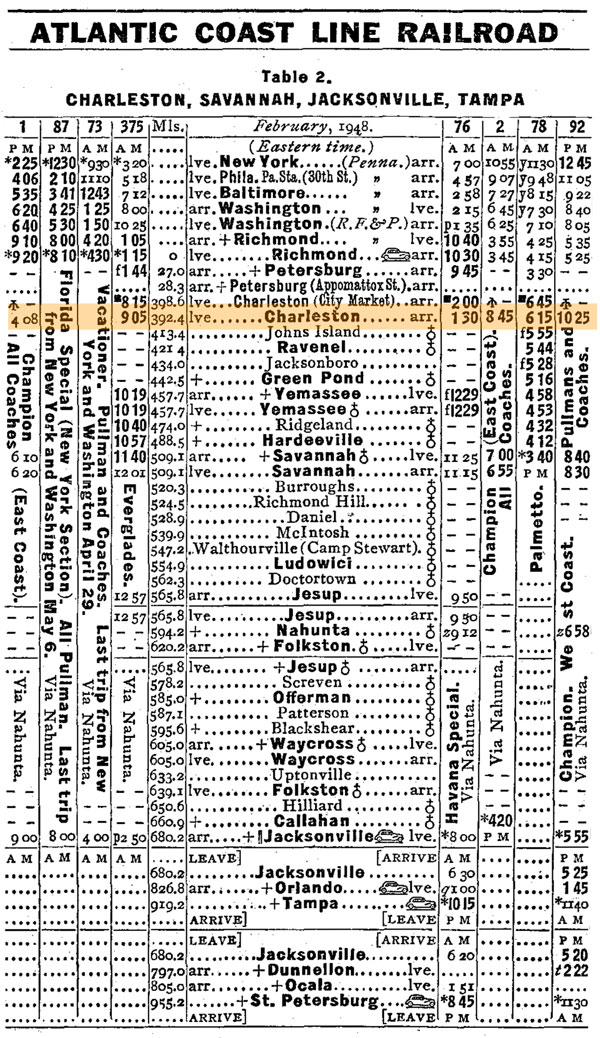
1948 Official Guide ad / collection
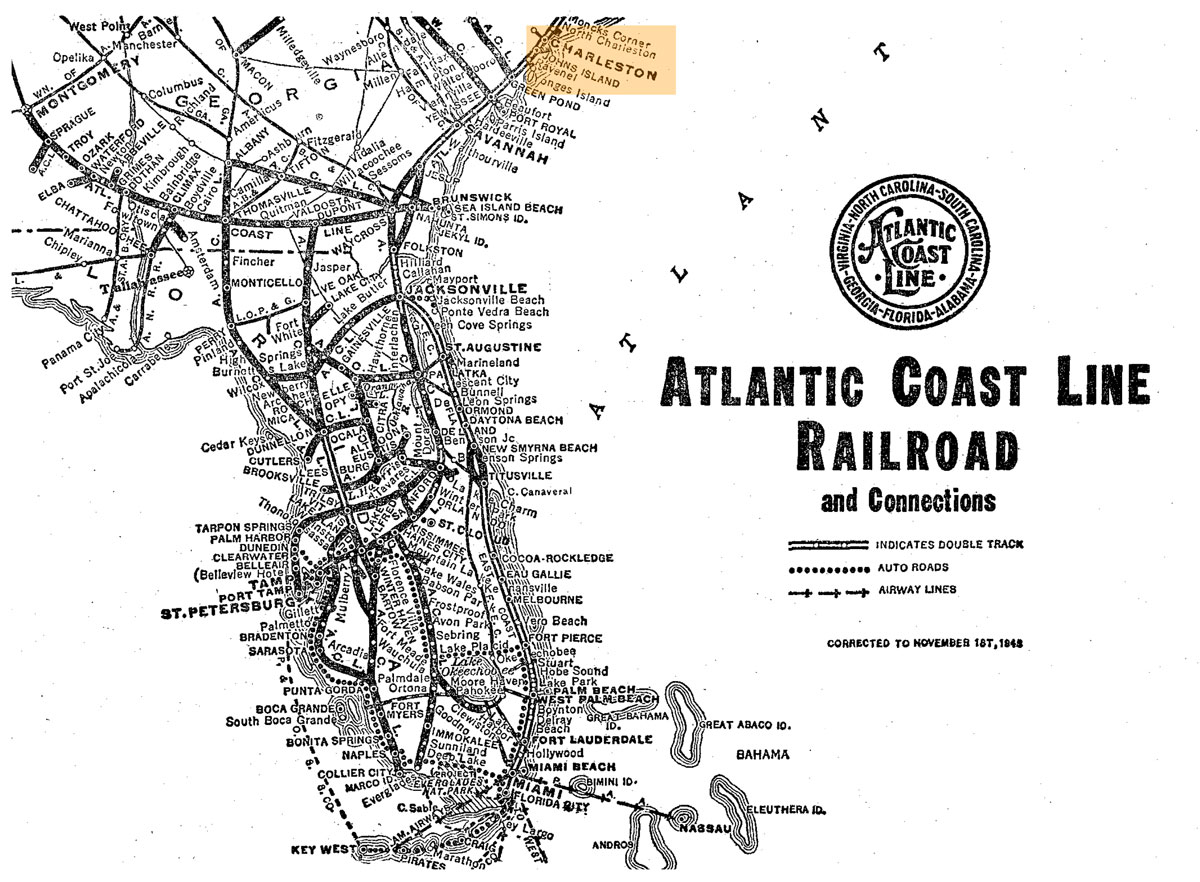
1945 Official Guide map / collection

all photos above: North Charleston, SC / Jan 2024 / RWH
North Charleston, SC / Jan 2024 / RWH
North Charleston, SC / Jan 2024 / RWH
Jan 2024 / RWH
Jan 2024 / RWH
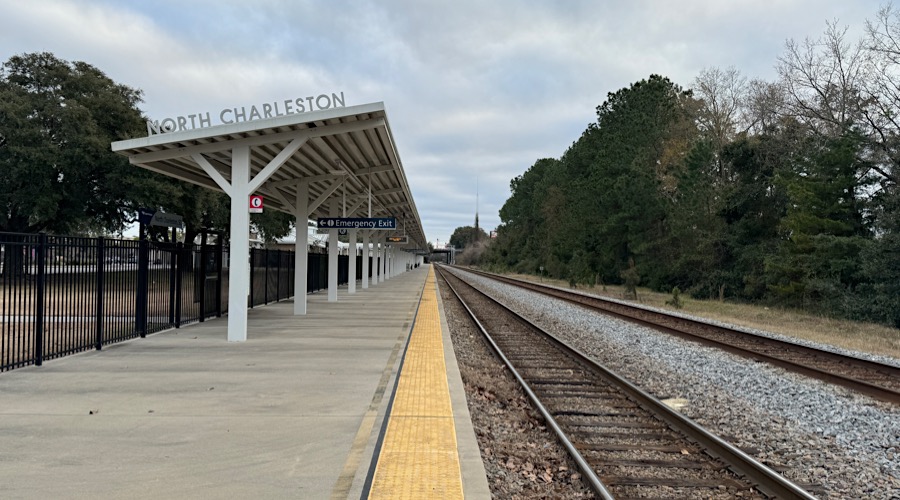
North Charleston, SC / Jan 2024 / RWH
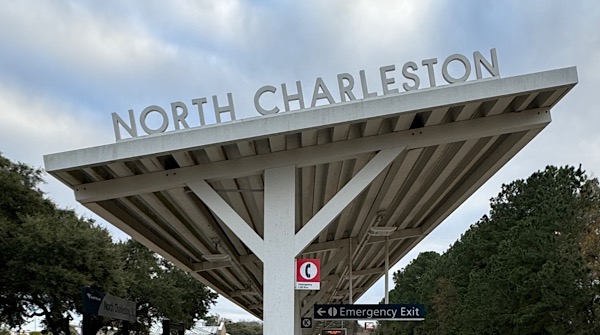
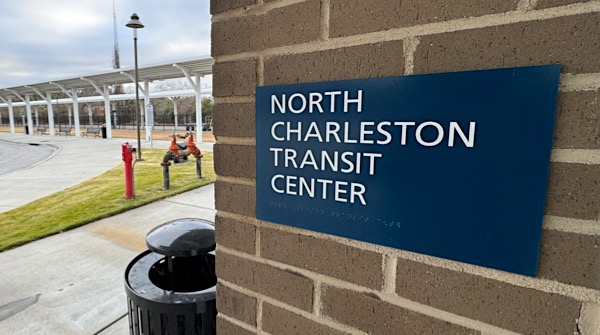
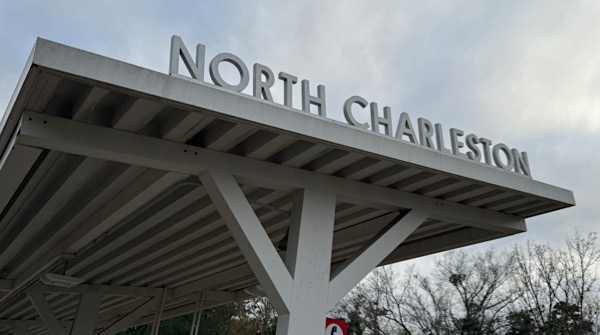
Jan 2024 / RWH
1800’s: Earliest railroad track lines were laid from Charleston to the North Area, near what is now Rivers Avenue. Farming and lumbering were vital in the early 1800’s and the mining of phosphate for use in fertilizer created an economic boom after the Civil War. Liberty Hill, the oldest neighborhood in the North Area, was established by freedmen who purchased land in and built homes and farms for their families circa 1864. In 1898, two plantations along the Cooper River were purchased to create Chicora Park, designed by the Olmstead Brothers, as a day destination for wealthy Charlestonians.
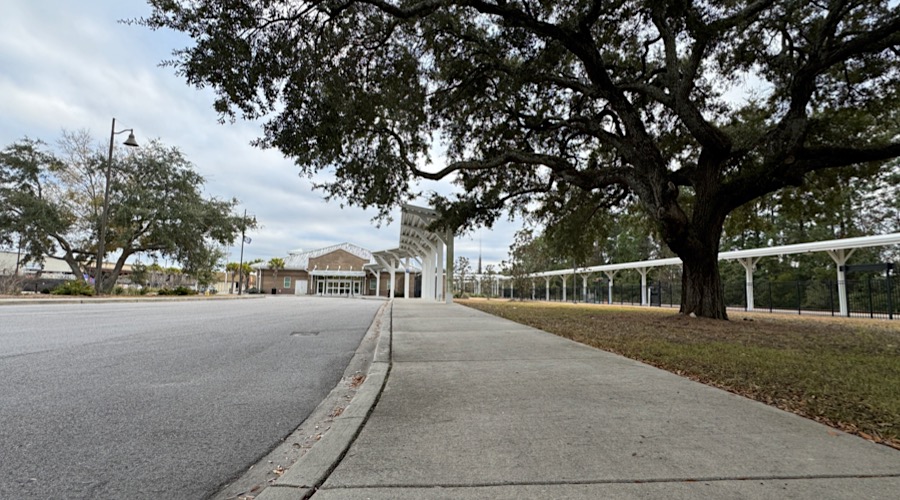
North Charleston, SC / Jan 2024 / RWH
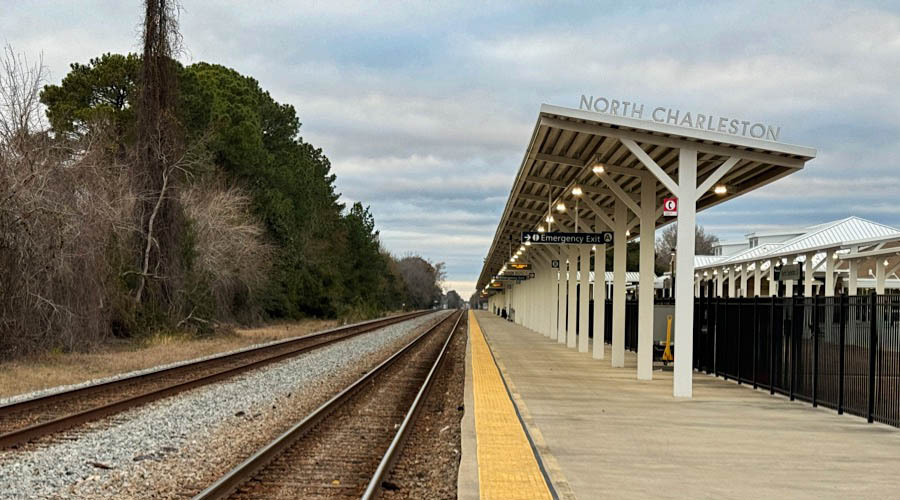
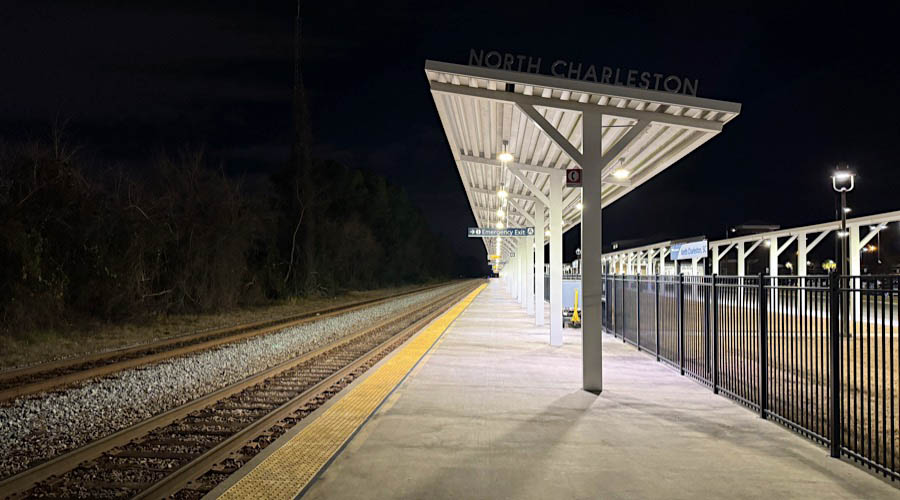
North Charleston, SC / Jan 2024 / RWH
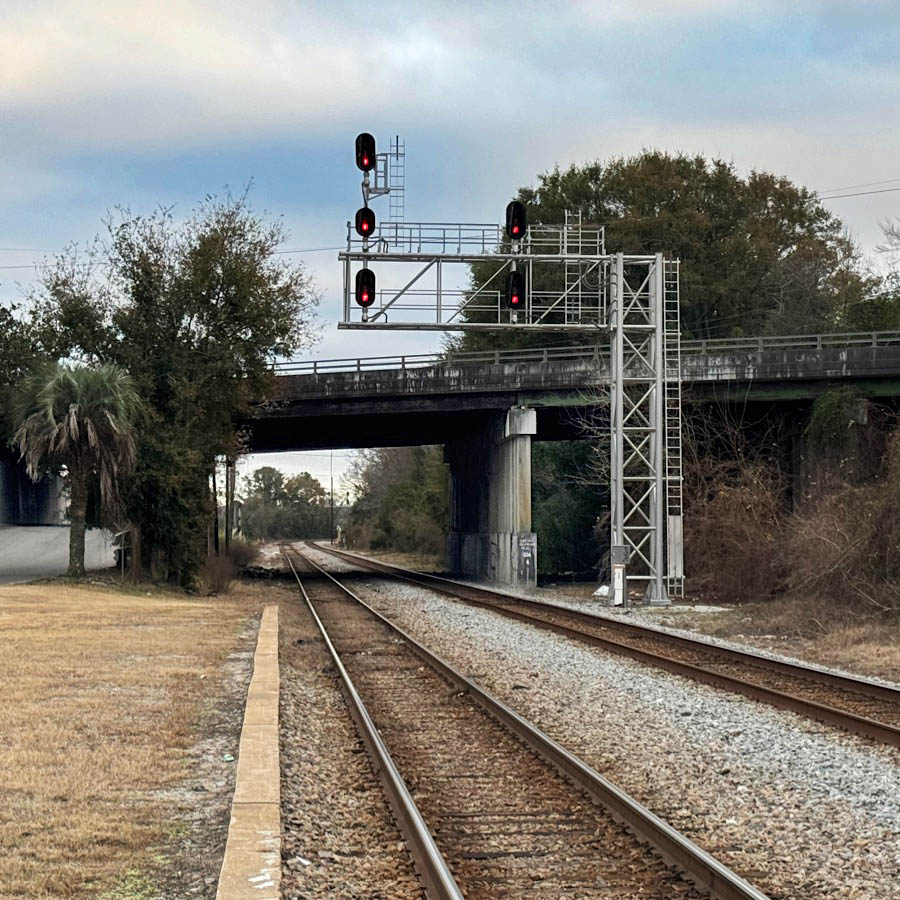
North Charleston, SC / Jan 2024 / RWH
783 Yemassee, SC
- Palmetto
- Silver Meteor
Yemassee, SC / Jan 2024 / RWH
Click to see the Yemassee depot plotted on a Google Maps page
Yemassee, SC / Jan 2024 / RWH
Jan 2024 / RWH
Yemassee, SC / Jan 2024 / RWH
Yemassee, SC / Jan 2024 / RWH
Yemassee, SC / Jan 2024 / RWH
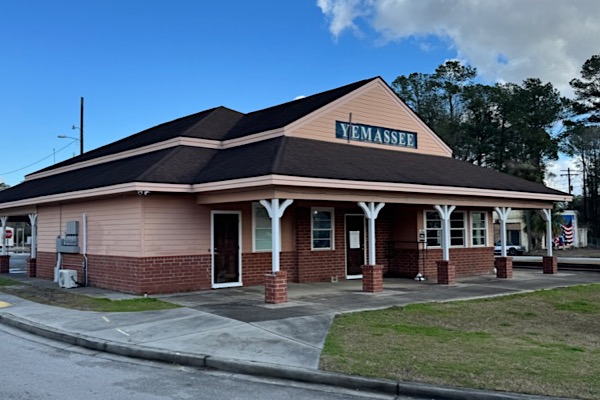
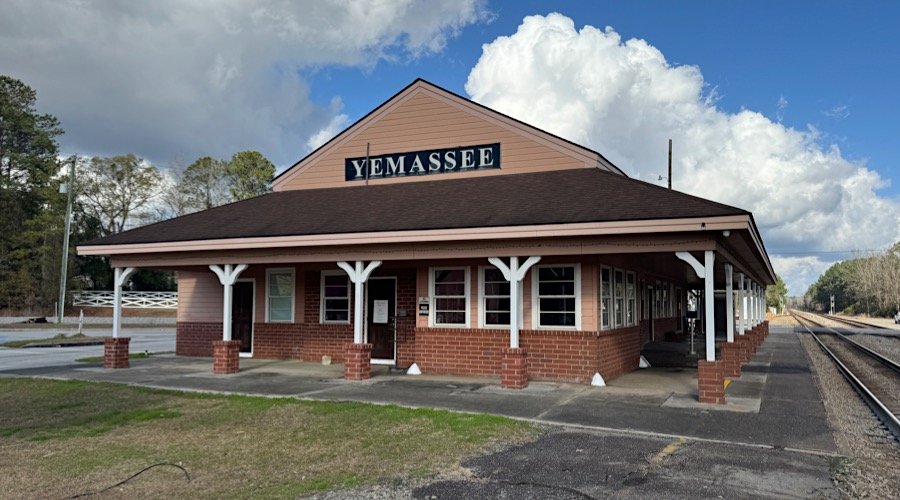
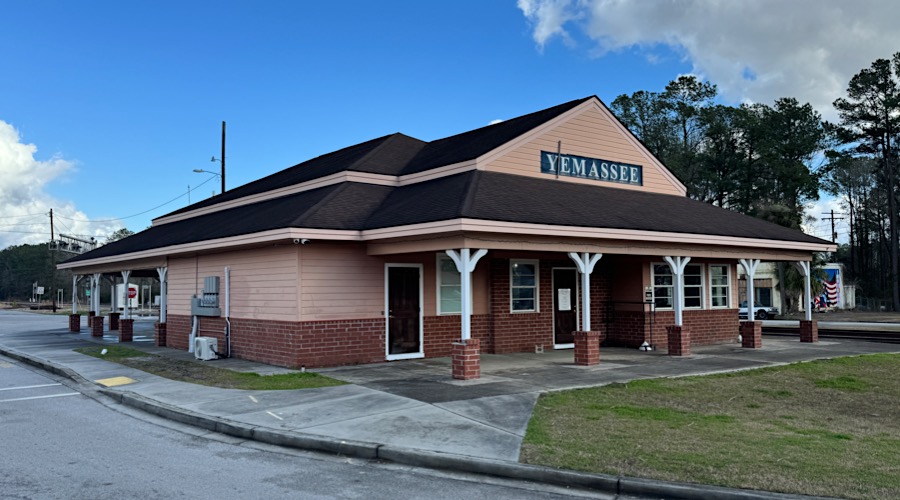
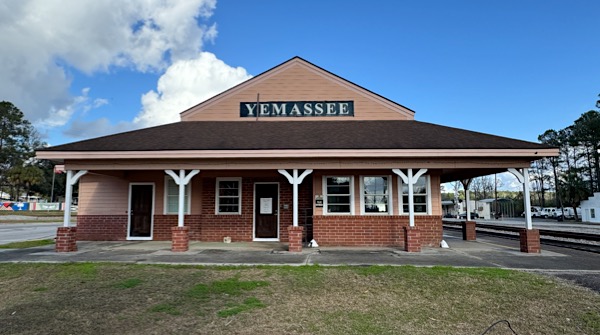
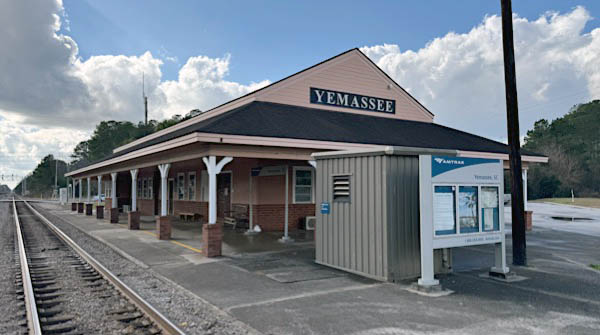
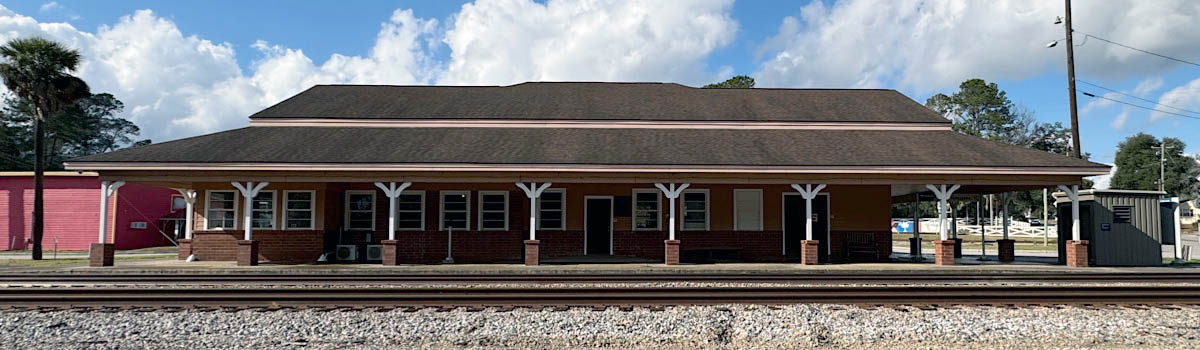
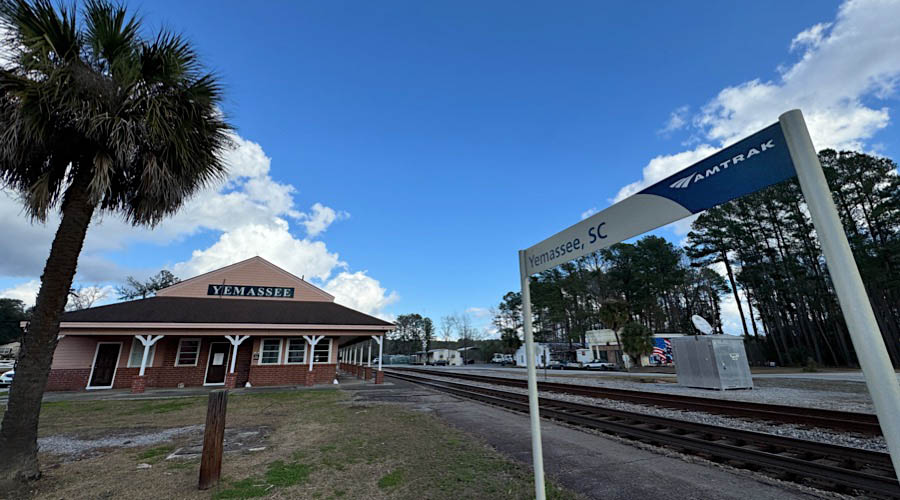
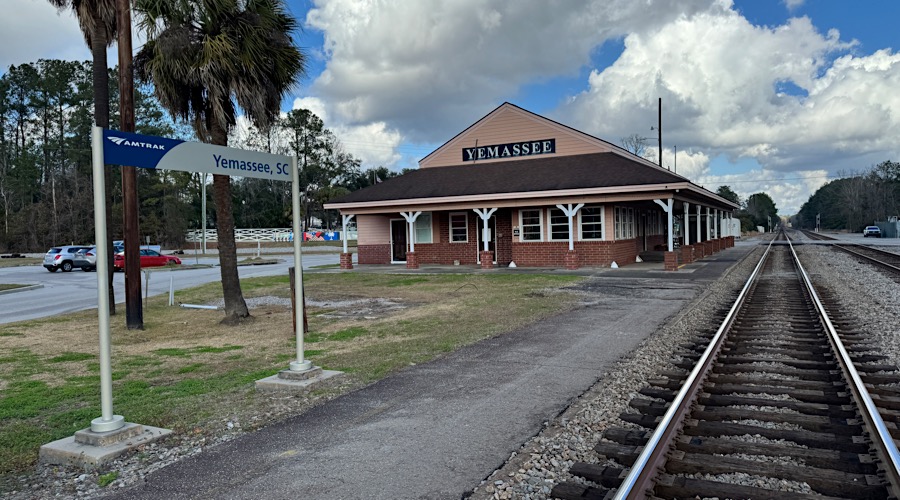
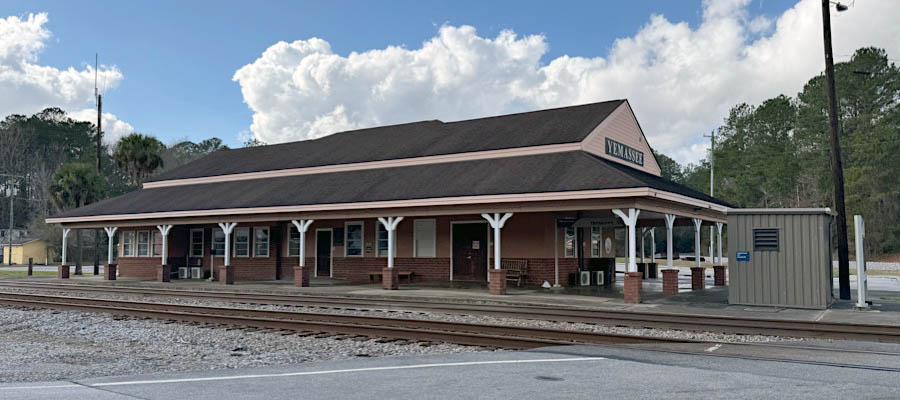
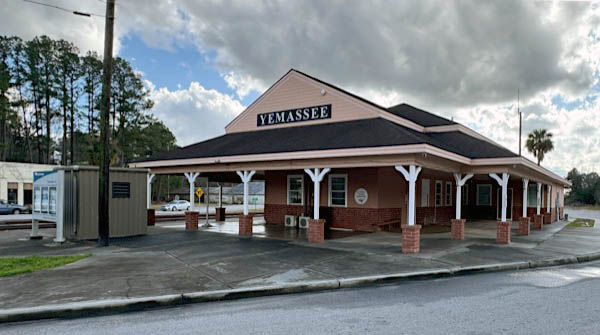
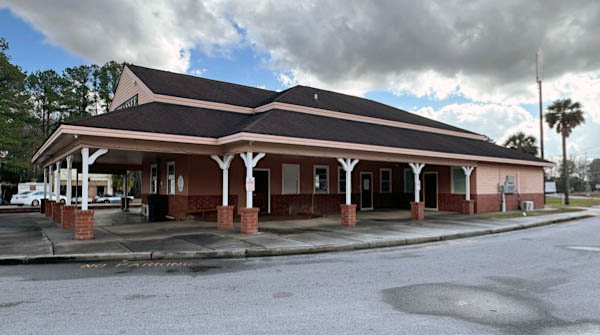
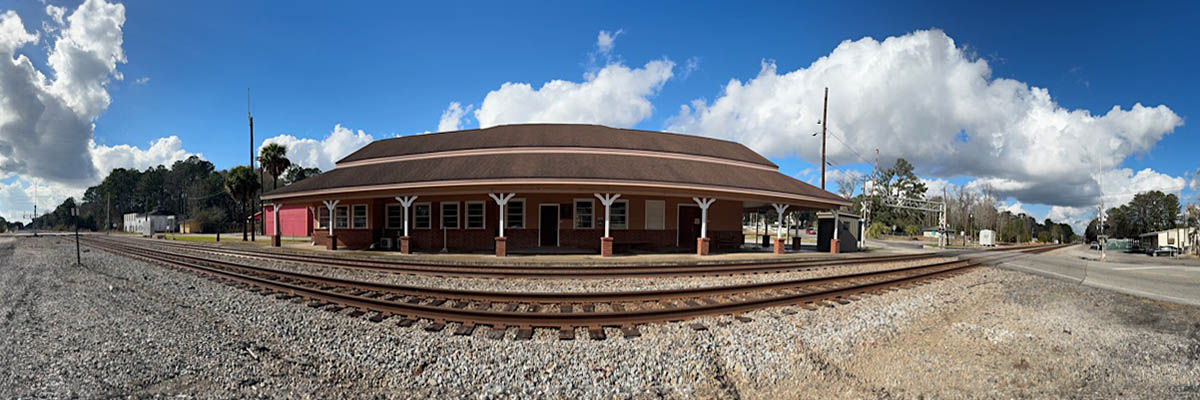
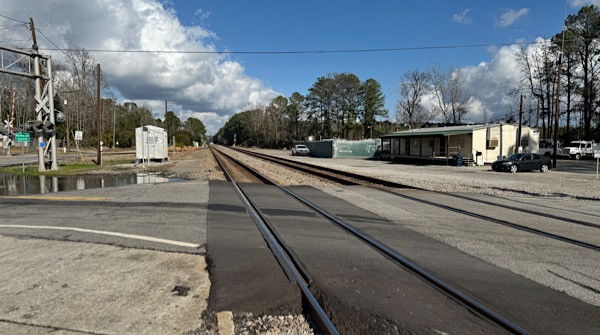
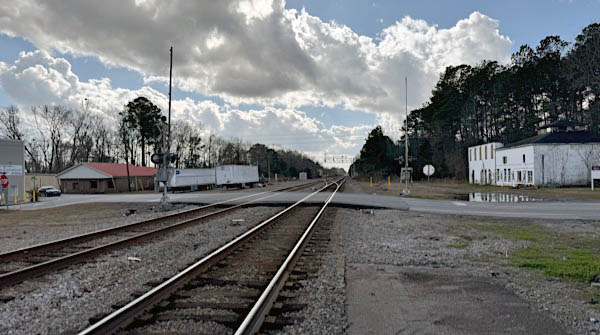
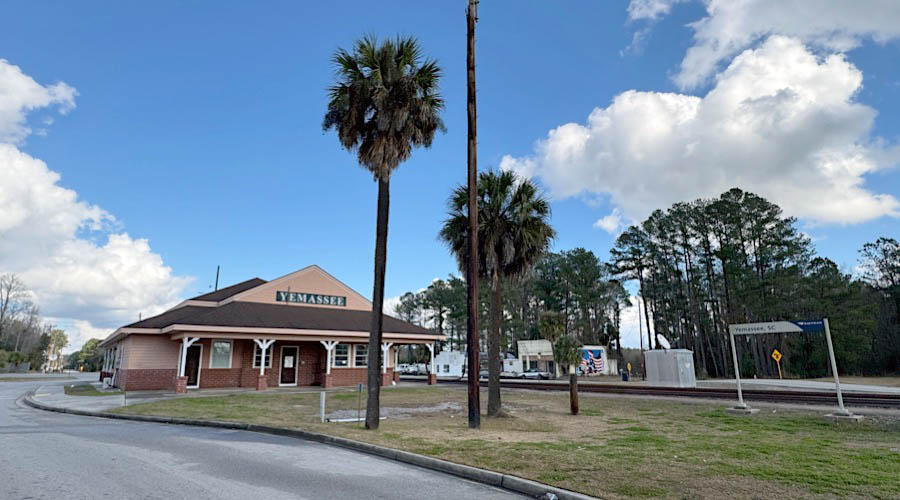
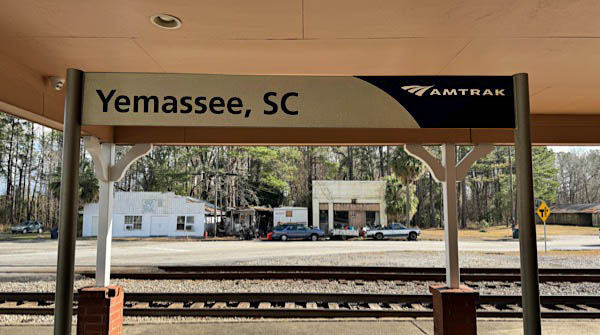
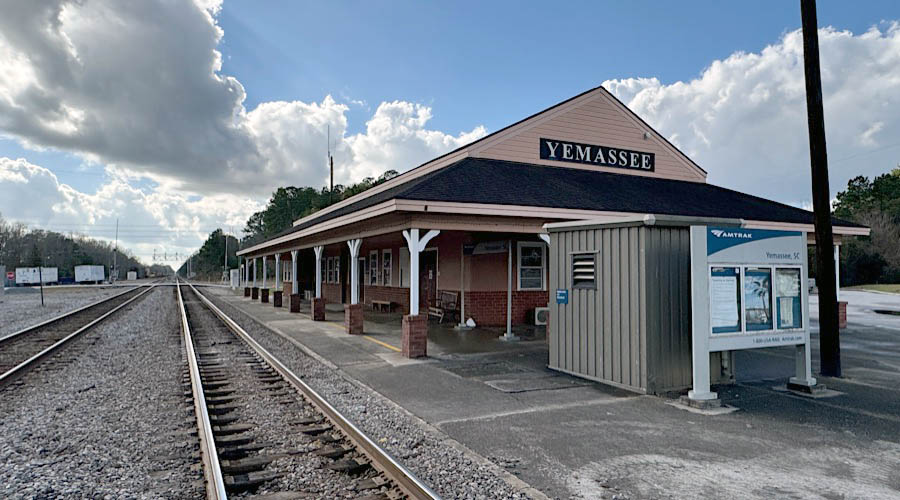
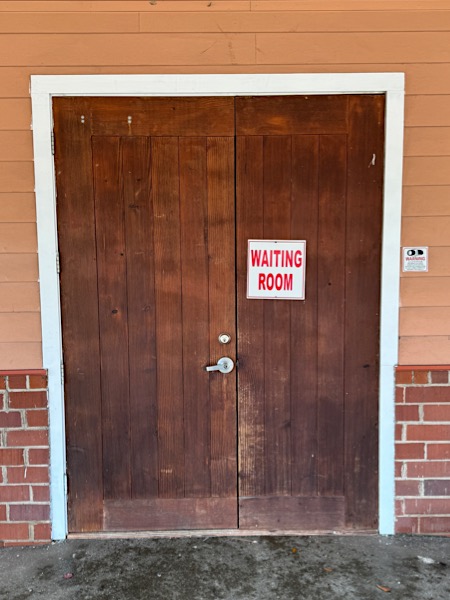
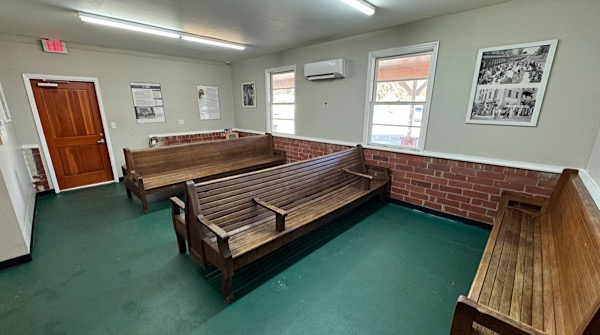
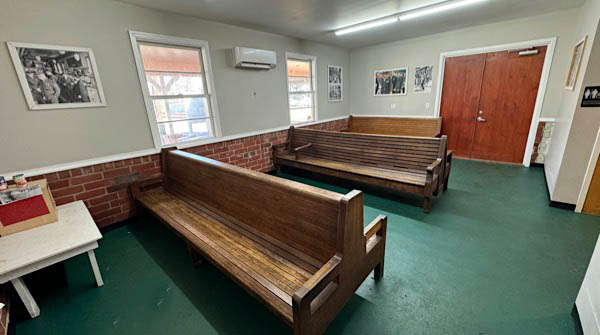
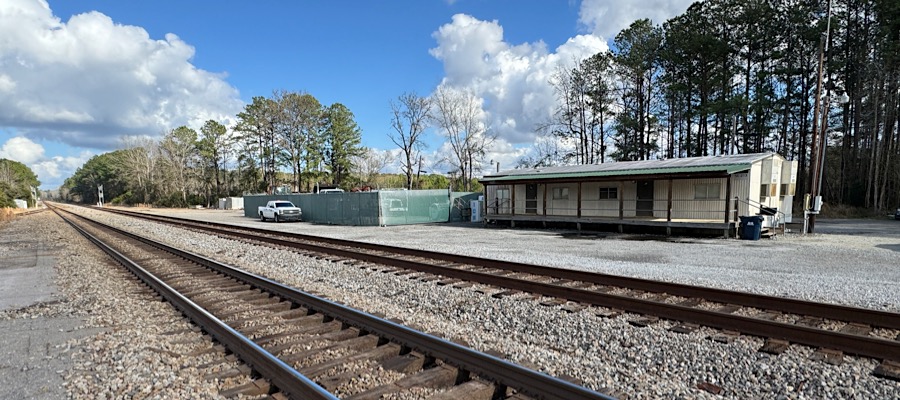
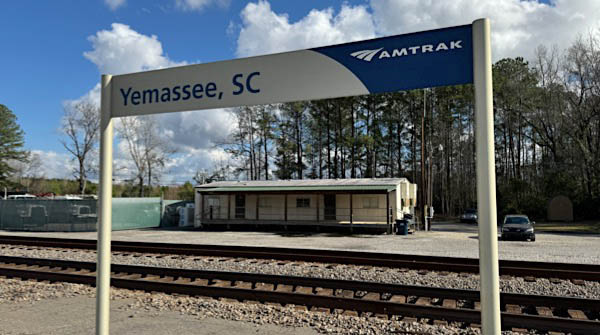
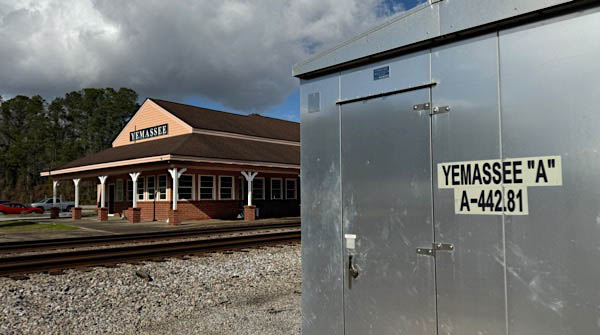
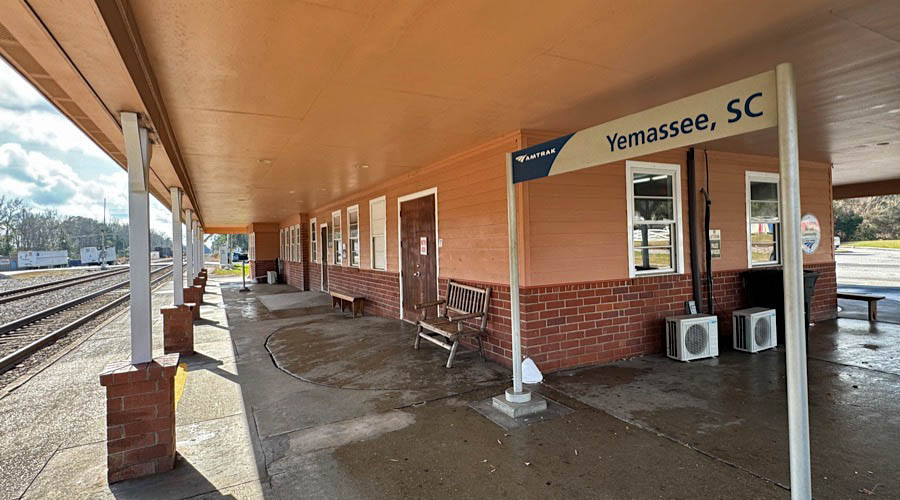
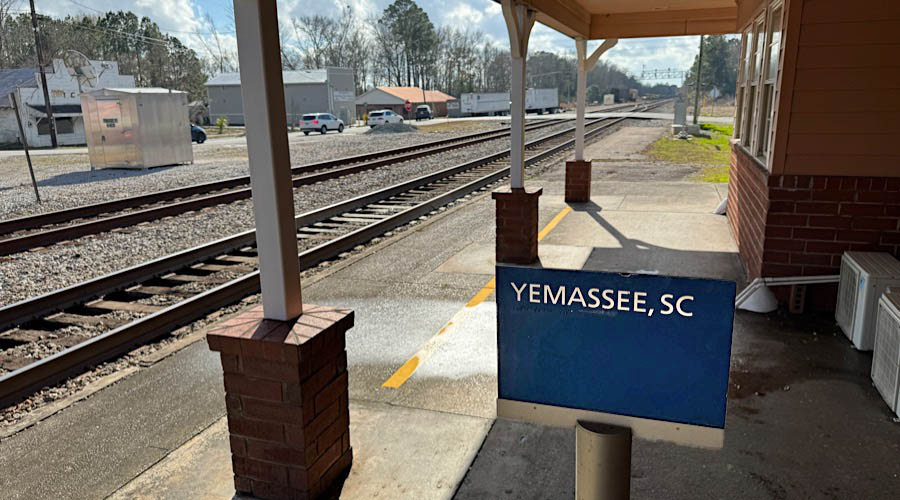
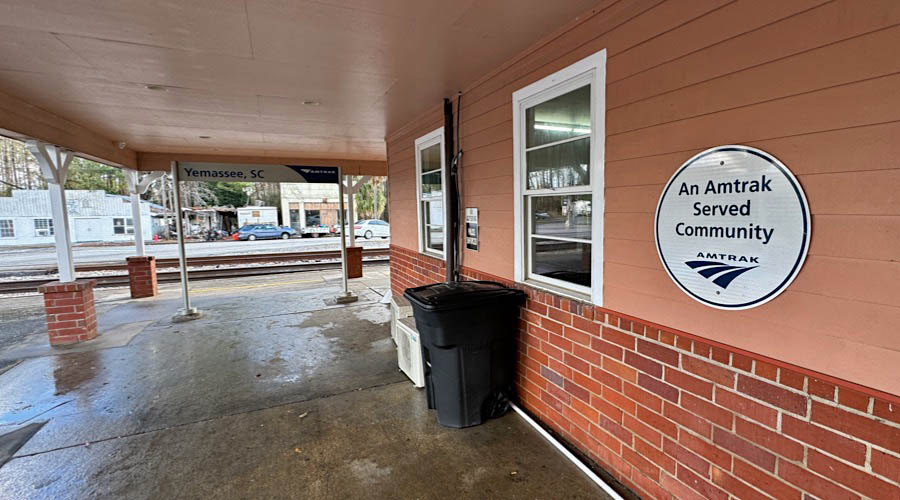
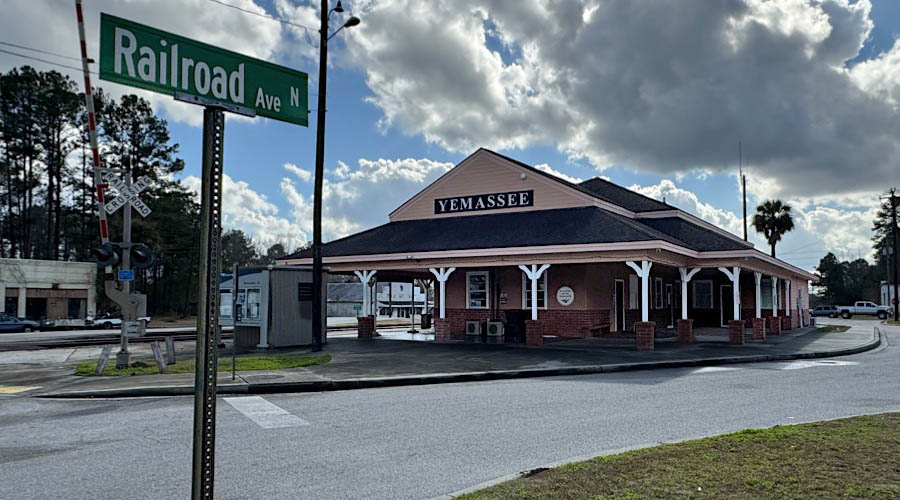
The Yemassee station consists of a platform with a sheltered area adjacent to the old Charleston & Western Carolina Railroad depot built in 1955. The city purchased the building from CSX and completed the transfer of ownership on September 17, 2010. Community members gathered at the depot on that occasion to celebrate as a representative from CSX presented the deed to Mayor J.L. Goodwin. The town also purchased approximately 0.64 acres of adjoining land.
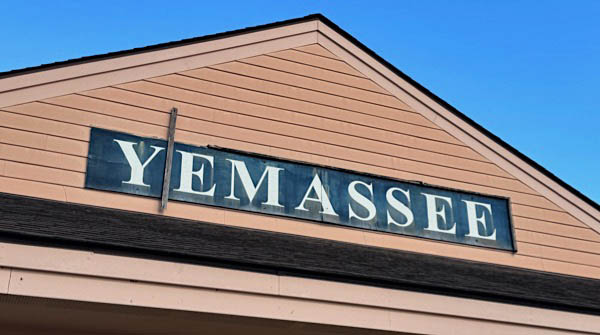
The Yemassee Revitalization Corporation, a nonprofit organization formed in 2008, planned to revitalize downtown to stimulate the local economy. The group wanted to restore the depot and worked to find funding for the renovation project. In 2011, a British reality show filmed in Yemassee, which resulted in a full cosmetic renovation of the depot’s exterior to include a new gabled roof, siding and a wrap-around porch. In summer 2016 the town received funds that will allow interior improvements to proceed. Work will include installation of a new electrical system and renovation of the restrooms.
Yemassee, SC / Jan 2024 / RWH
Yemassee, SC / Jan 2024 / RWH
Yemassee, SC / Jan 2024 / RWH
Yemassee, SC / Jan 2024 / RWH
Yemassee, SC / Jan 2024 / RWH
Yemassee, SC / Jan 2024 / RWH
Yemassee, SC / Jan 2024 / RWH
Yemassee, SC / Jan 2024 / RWH
Jan 2024 / RWH
Jan 2024 / RWH
Yemassee, SC / Jan 2024 / RWH
Jan 2024 / RWH
Jan 2024 / RWH
Jan 2024 / RWH
Yemassee, SC / Jan 2024 / RWH
Yemassee, SC / Jan 2024 / RWH
Yemassee, SC / Jan 2024 / RWH
 The Town of Yemassee is a small town rich in local history. In the late seventeenth century, when Englishman began to settle coastal Carolina, a number of tribes, mostly of Muskogean stock, inhabited the area. Of those tribes, the Yamasee Indians were the most extensive and powerful. Its territory stretched along the coast from southern Georgia to the Edisto region.
The Yamasee's two major centers of power lay between the Savannah and Combahee Rivers at Pocataligo and Coosawhatchie. Towards the end of the War between the States, Sherman's army came through the area on his infamous march to the sea from Atlanta, Georgia. All of the churches in the area were destroyed, except for the Presbyterian Church, which was used as a hospital by the union army. Blood stains on the floor are visible on the still standing church.
After that war, the Port Royal-Augusta Railroad was constructed. At that time, the railroad hamlet of Yemassee was formed from the lands of Richfield Plantation and portions of the Cuthbert lands. In 1868, a post office was established. The house where Somerest Maughn wrote the Razor's Edges is located in that area. There is also a house designed by Frank Lloyd Wright, the famous architect. The house is unique in its design as having no right angles. The house is located on Auld Brass Plantation and has been refurbished.
The town is located in the southeastern section of the county. Major highways passing through the town include Interstate 95 and Highway 68.
Yemassee, SC / Jan 2024 / RWH
Yemassee, SC / Jan 2024 / RWH
702 Camden, SC
- Silver Star

Camden, SC / Aug 2026 / RWH
- location:Camden SC
- address:1060 West Dekalb St
- type:town depot, 1 platform
- owner:CSX Transportation
- opened:1937
- builder:Seaboard Air Line
- style:Colonial Revival
- renovated:2015
- services:waiting room
- links: Amtrak | Great Stations

Camden, SC / Aug 2026 / RWH
Click to see the Camden depot plotted on a Google Maps page

Camden, SC / Aug 2026 / RWH

Camden, SC / Aug 2026 / RWH

Camden, SC / Aug 2026 / RWH


Camden, SC / Aug 2026 / RWH

Camden, SC / Aug 2026 / RWH

Camden, SC / Aug 2026 / RWH

Aug 2026 / RWH

Aug 2026 / RWH

Aug 2026 / RWH

Camden, SC / Aug 2026 / RWH

Aug 2026 / RWH

Aug 2026 / RWH

Camden, SC / Aug 2026 / RWH


Aug 2026 / RWH

Aug 2026 / RWH

Aug 2026 / RWH

Aug 2026 / RWH


Aug 2026 / RWH

Camden, SC / Aug 2026 / RWH
Camden, SC

Camden, SC / Aug 2026 / RWH


Aug 2026 / RWH

Aug 2026 / RWH

Aug 2026 / RWH

Aug 2026 / RWH

Camden, SC / Aug 2026 / RWH

Camden, SC / Aug 2026 / RWH

Camden, SC / Aug 2026 / RWH

Aug 2026 / RWH

Camden, SC / Aug 2026 / RWH

Camden, SC / Aug 2026 / RWH

Camden, SC / Aug 2026 / RWH
735 Columbia, SC
- Silver Star
Columbia, SC / Jul 2025 / RWH
- location:Columbia SC
- address:850 Pulaski Street
- type:city station, 1 platform
- owner:City of Columbia
- opened:1991
- builder:Amtrak
- style:contemporary depot
- services:tickets, baggage
- links: Amtrak | Great Stations
Columbia, SC / Jul 2025 / RWH
Columbia, SC / Jul 2025 / RWH
Click to see the Columbia station area plotted on a Google Maps page
Columbia, SC / Jul 2025 / RWH
Jul 2025 / RWH
Jul 2025 / RWH
Jul 2025 / RWH
Columbia, SC / Jul 2025 / RWH
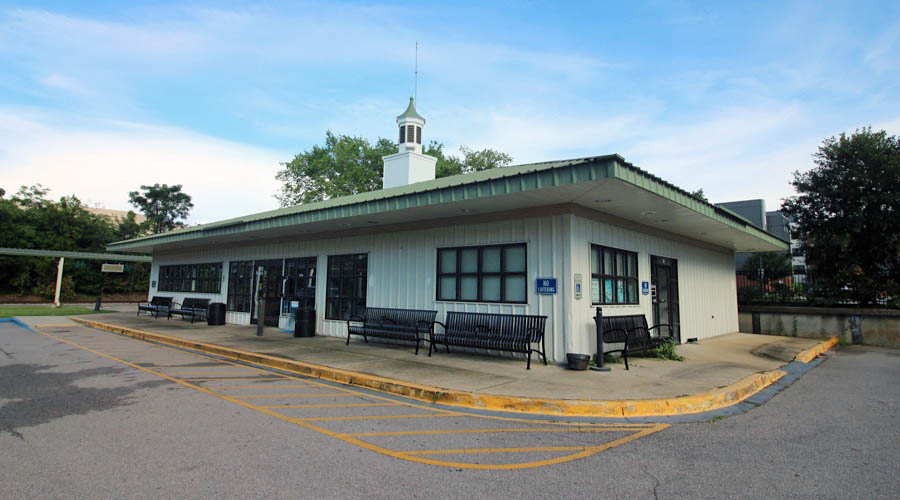
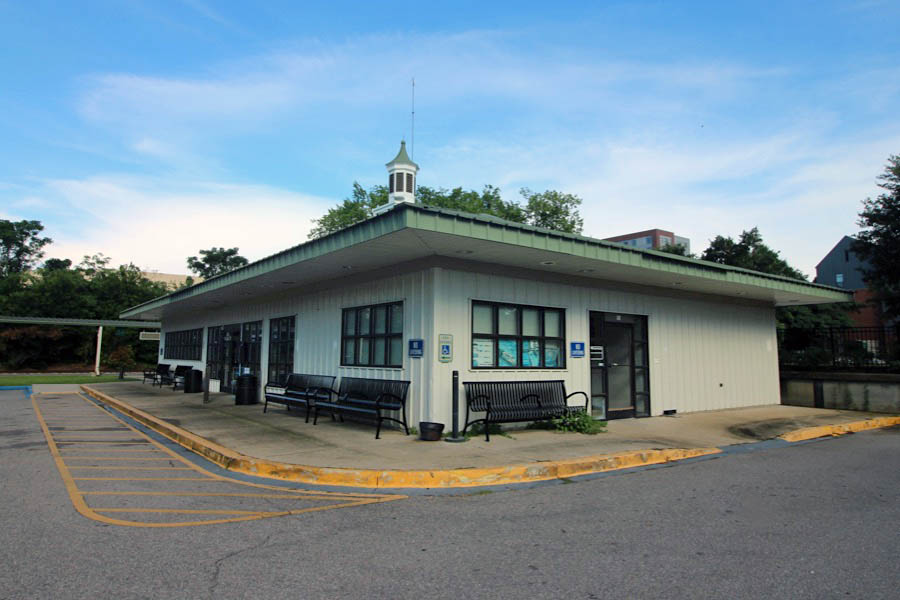
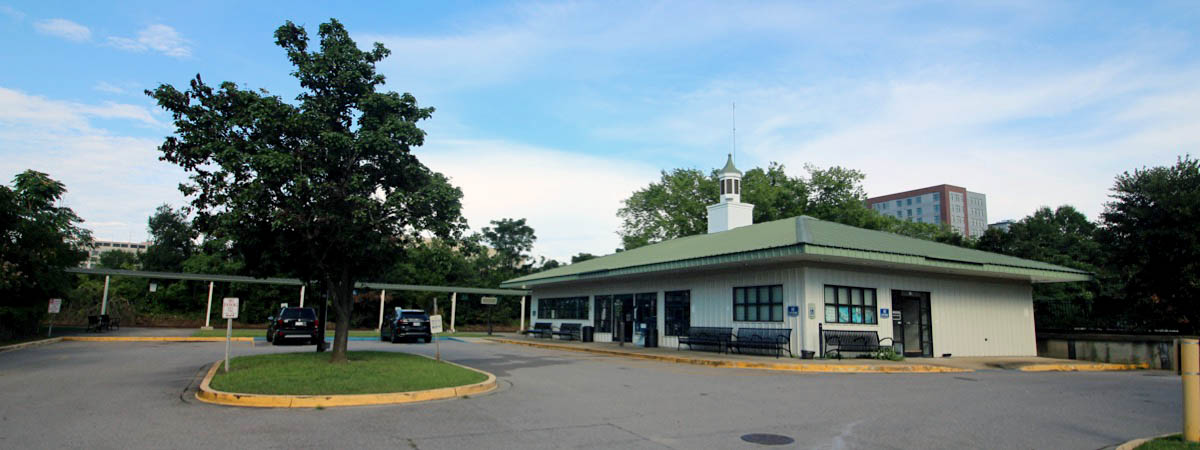
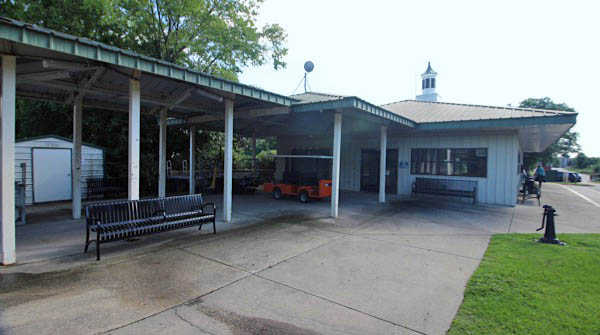
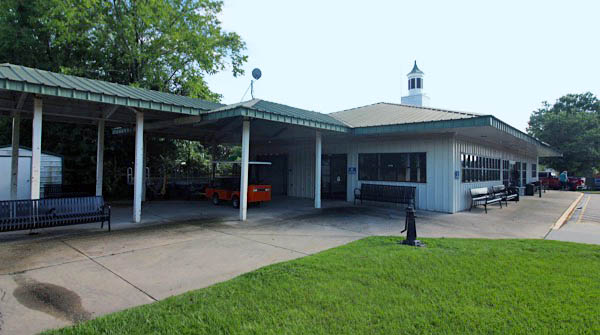
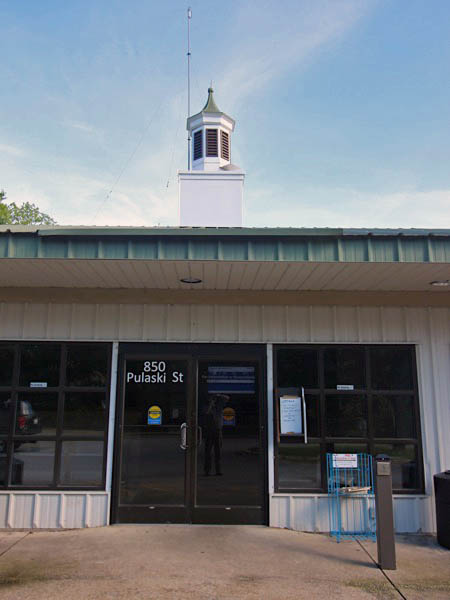
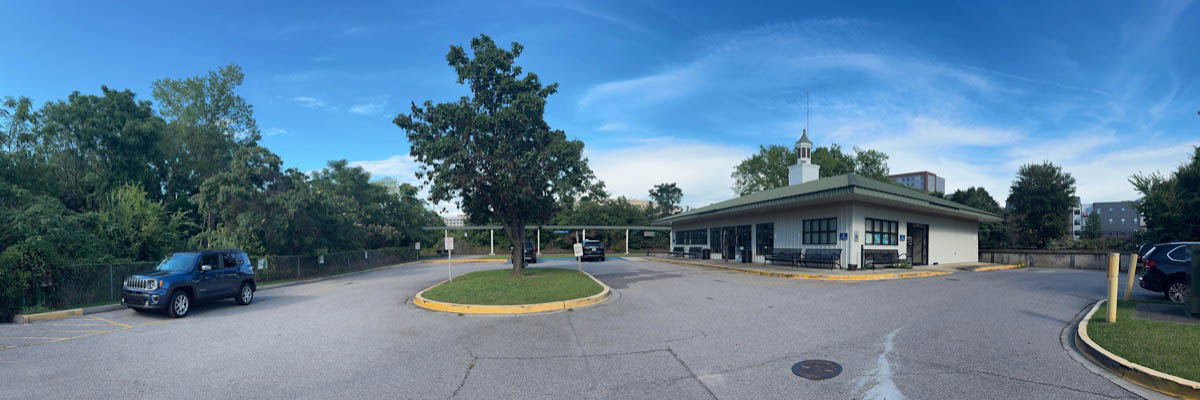
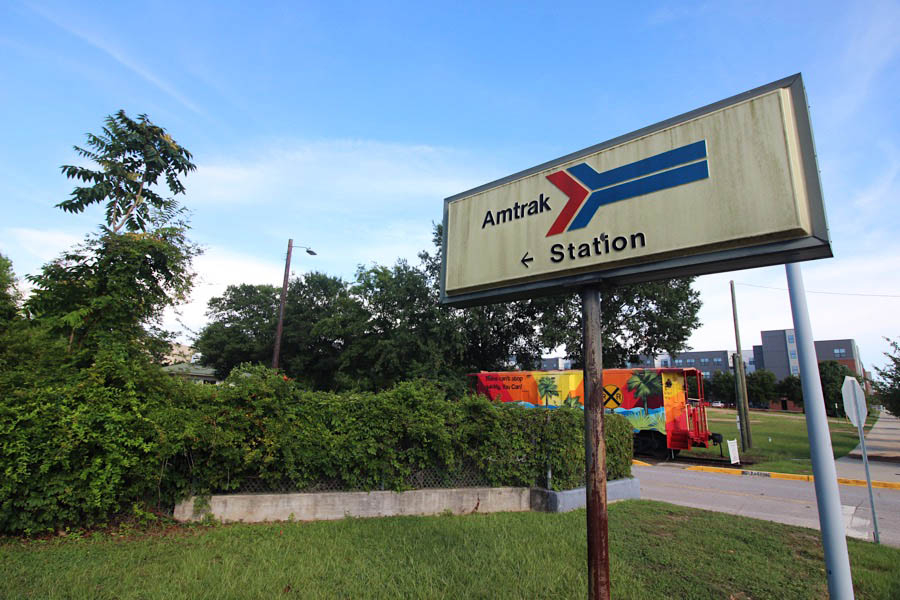
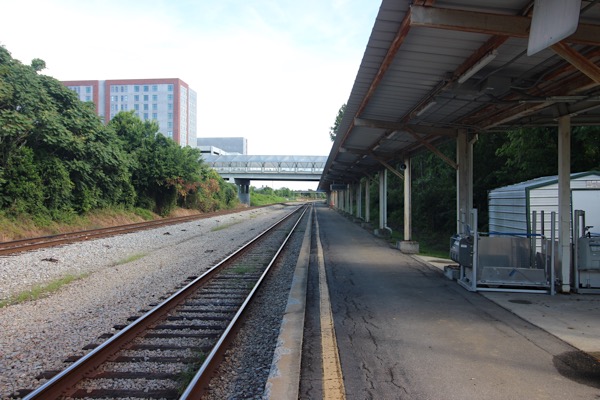
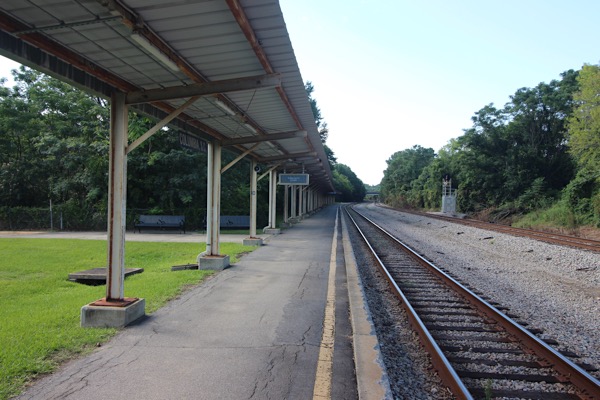
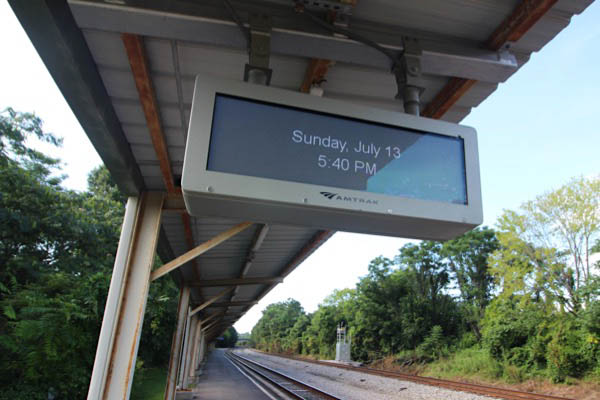
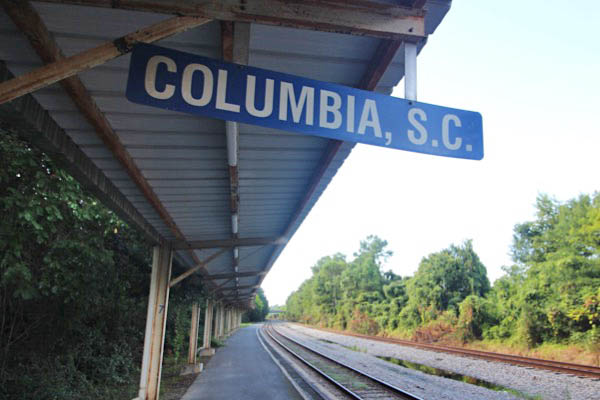
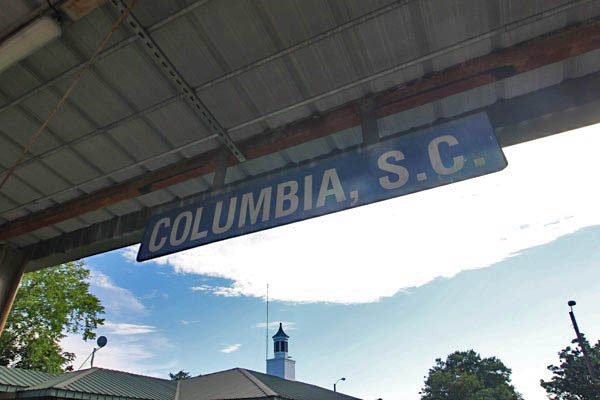
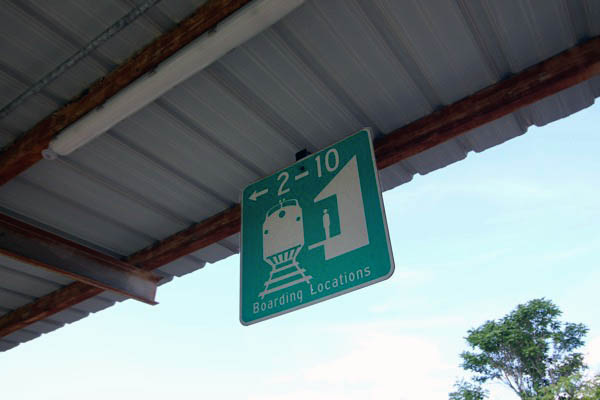
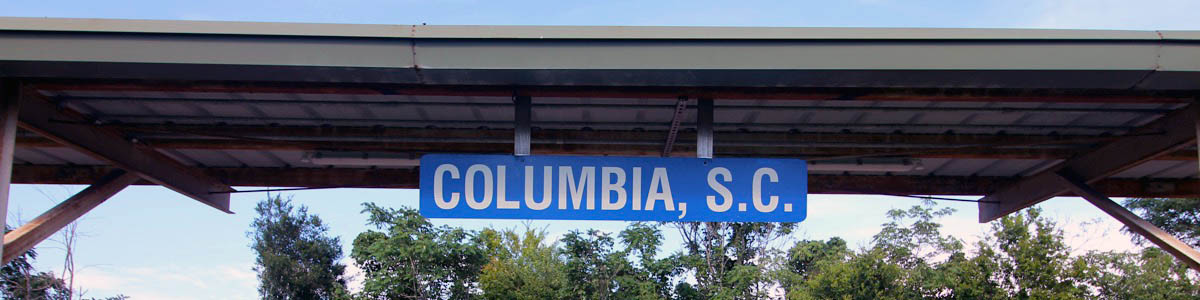
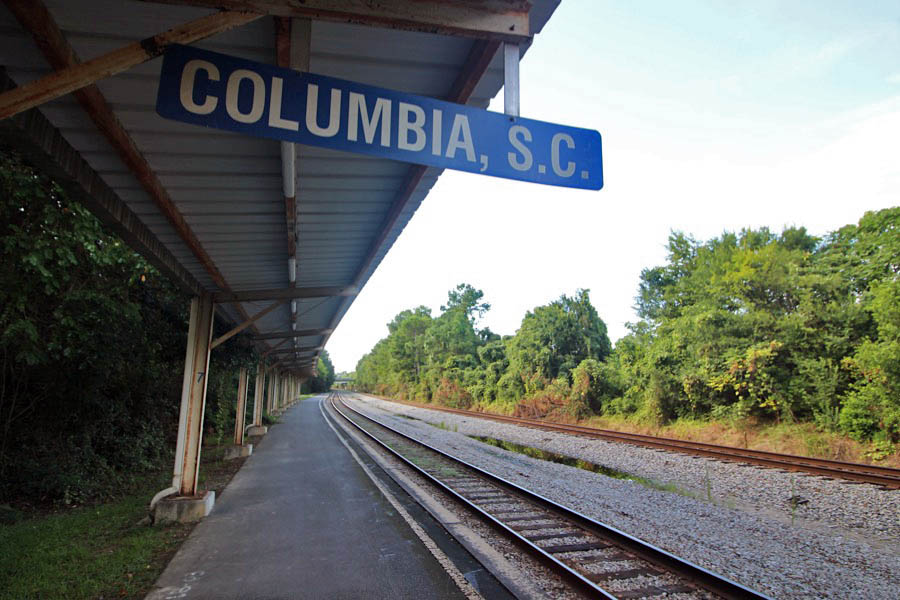
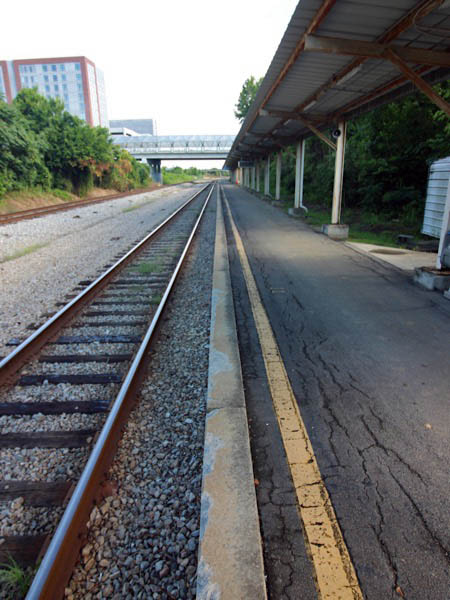
 The Amtrak station in Columbia is a steel structure, built in 1991, about three miles from the downtown area and close to the University of South Carolina campus. Amtrak moved the station to the current Pulaski Street location when the city removed the rails and the Seaboard Air Line Railway trestle along Lincoln Street. The former Seaboard Air Line and Amtrak station, built of red brick in 1903, still stands at Gervais Street. It was abandoned and then restored and made into commercial space.
Jul 2025 / RWH
Columbia, SC / Jul 2025 / RWH
Jul 2025 / RWH
Columbia, SC
Columbia, SC / Jul 2025 / RWH
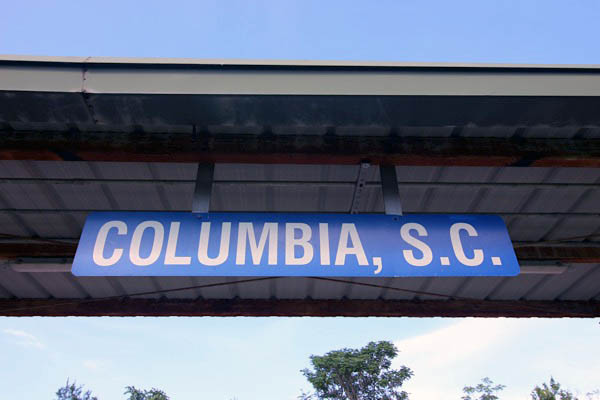
Jul 2025 / RWH
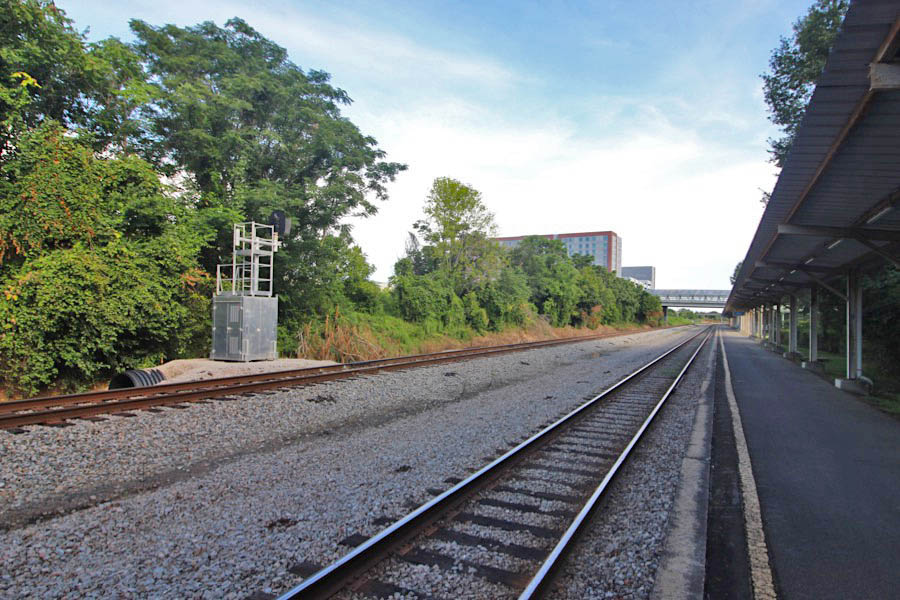
Columbia, SC / Jul 2025 / RWH
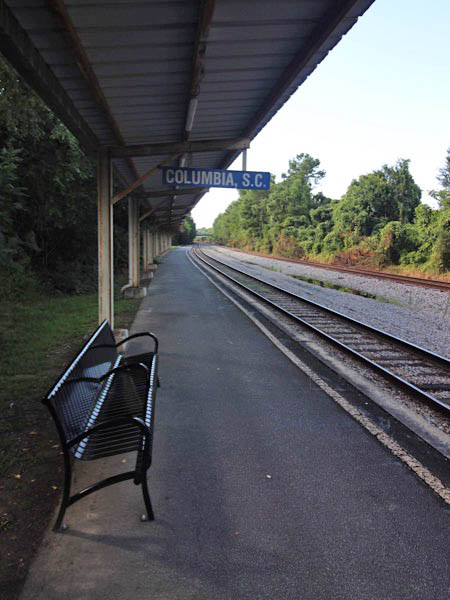
Jul 2025 / RWH
Jul 2025 / RWH
Columbia, SC / Jul 2025 / RWH
Jul 2025 / RWH
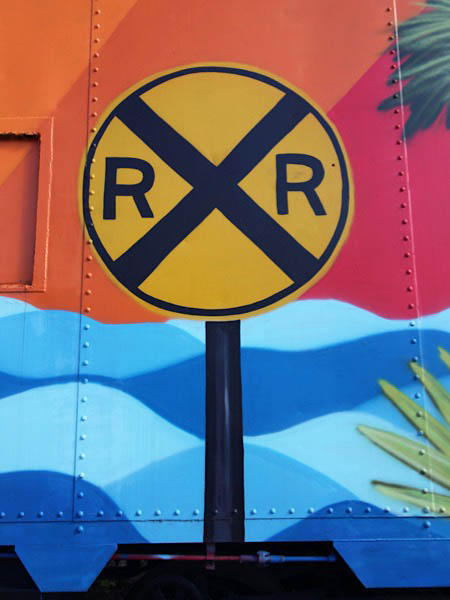
Bay Window
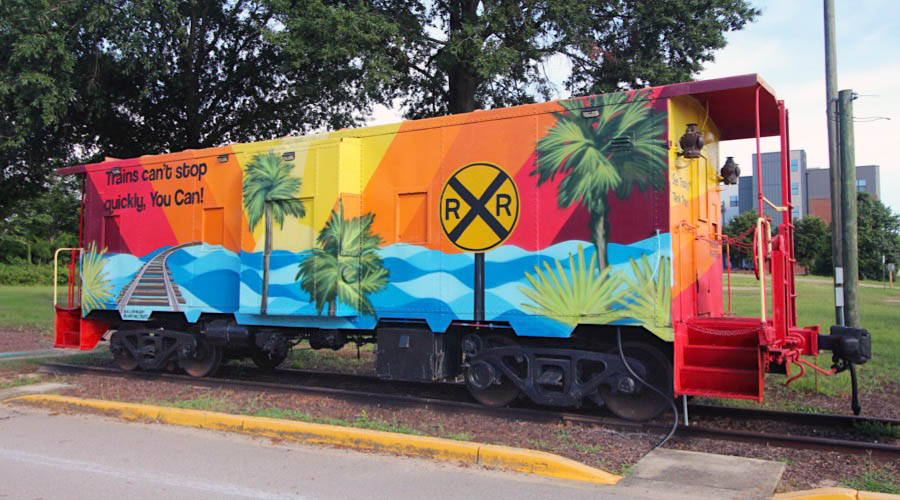
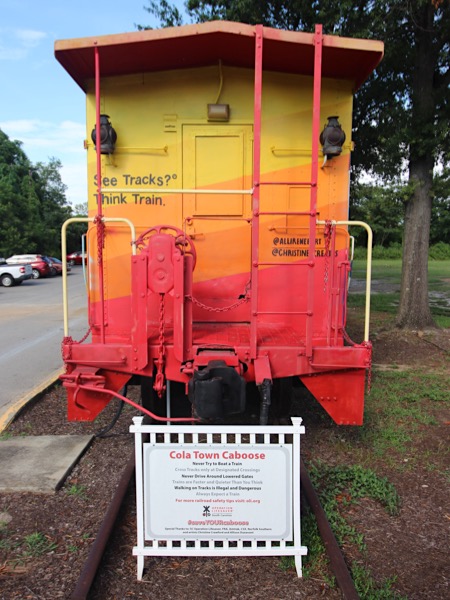
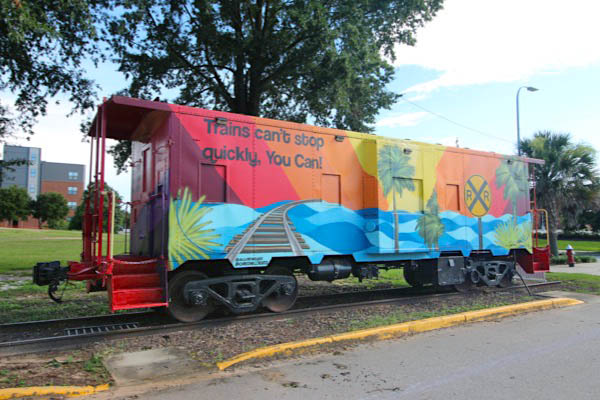
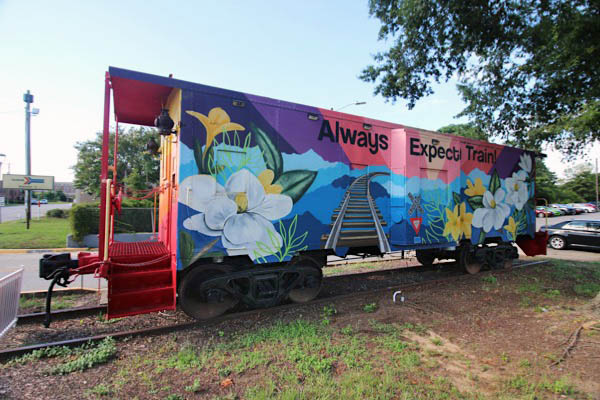
Southern Pacific #1584
Columbia, SC / Jul 2025 / RWH
Jul 2025 / RWH
Columbia, SC / Jul 2025 / RWH
Columbia, SC / Jul 2025 / RWH
Jul 2025 / RWH
Columbia, SC / Jul 2025 / RWH
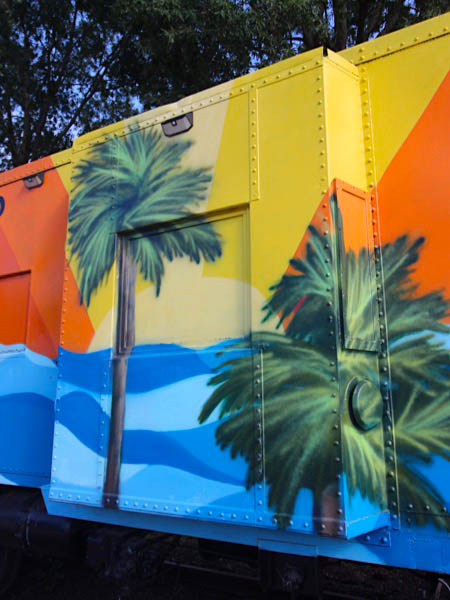
Jul 2025 / RWH
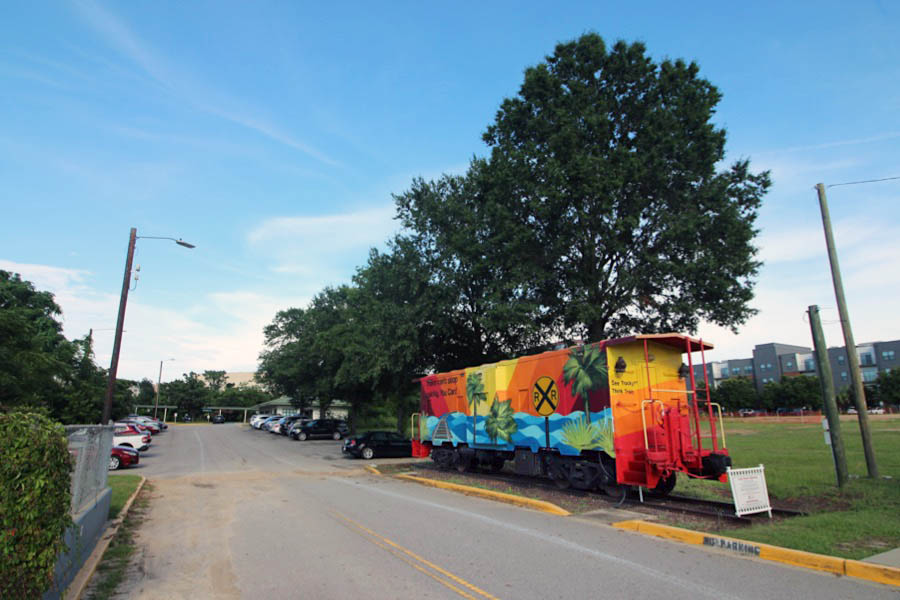
Columbia, SC / Jul 2025 / RWH
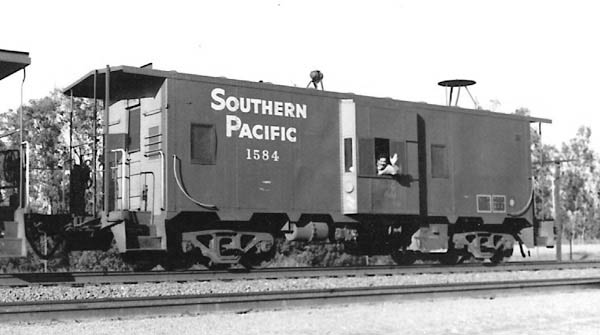
Southern Pacific #1584
Colton, Ca / Sep 1980 / John Huey 
 Georgia
830 Savannah, GA
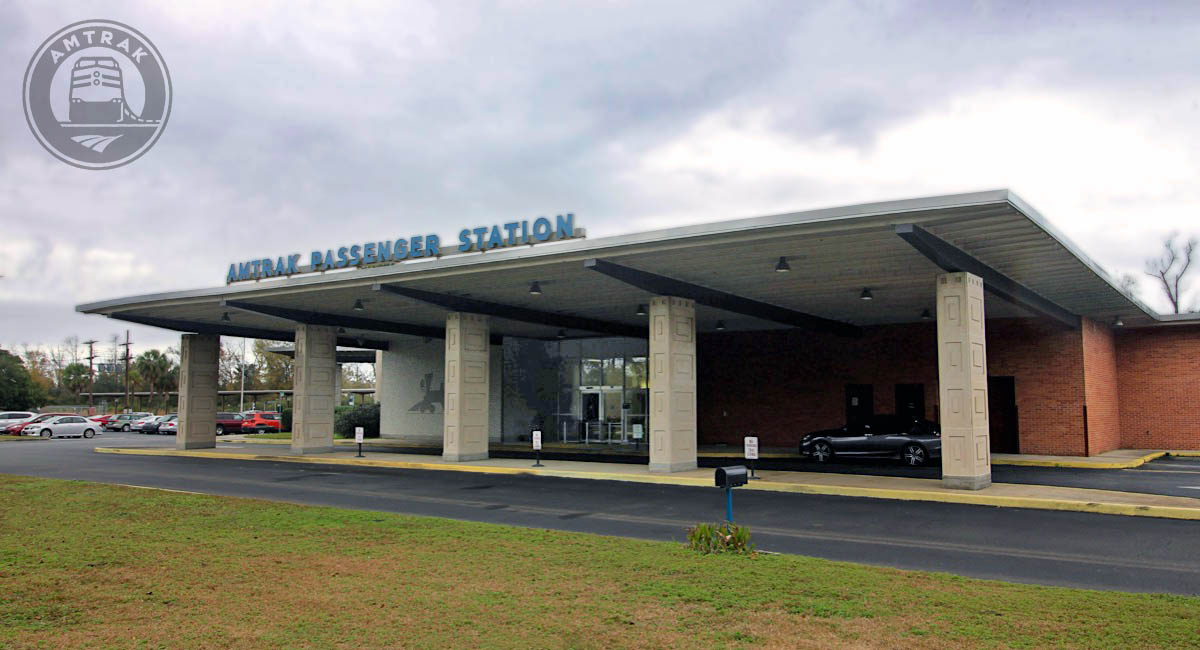
Savannah, Ga / Dec 2019 / RWH
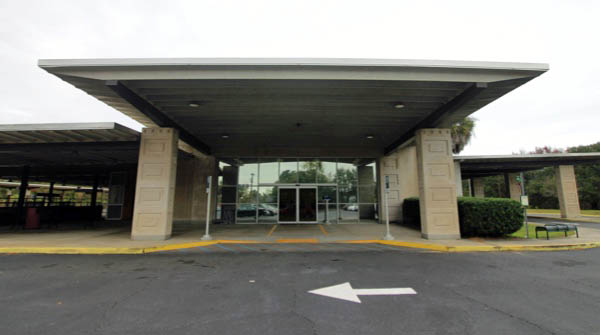
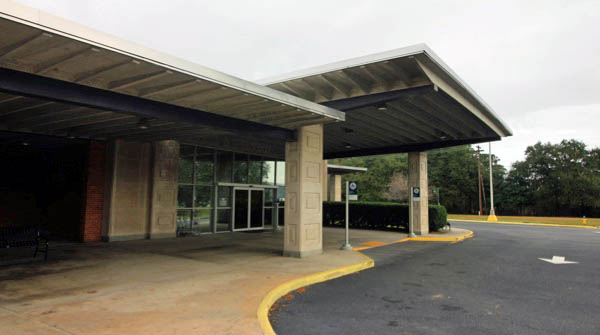
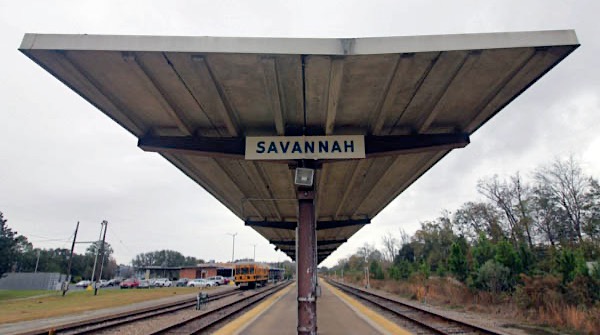
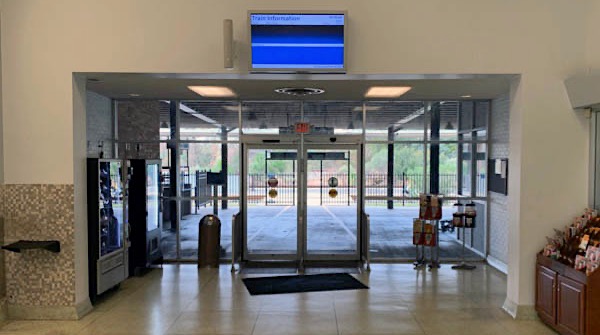
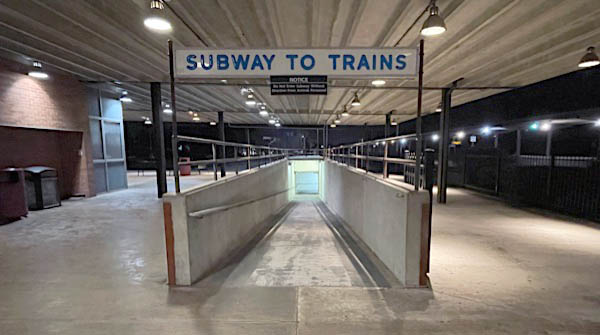
RWH
See our complete Savannah Station scrapbook in Amtrak Great Stations
southbound #97
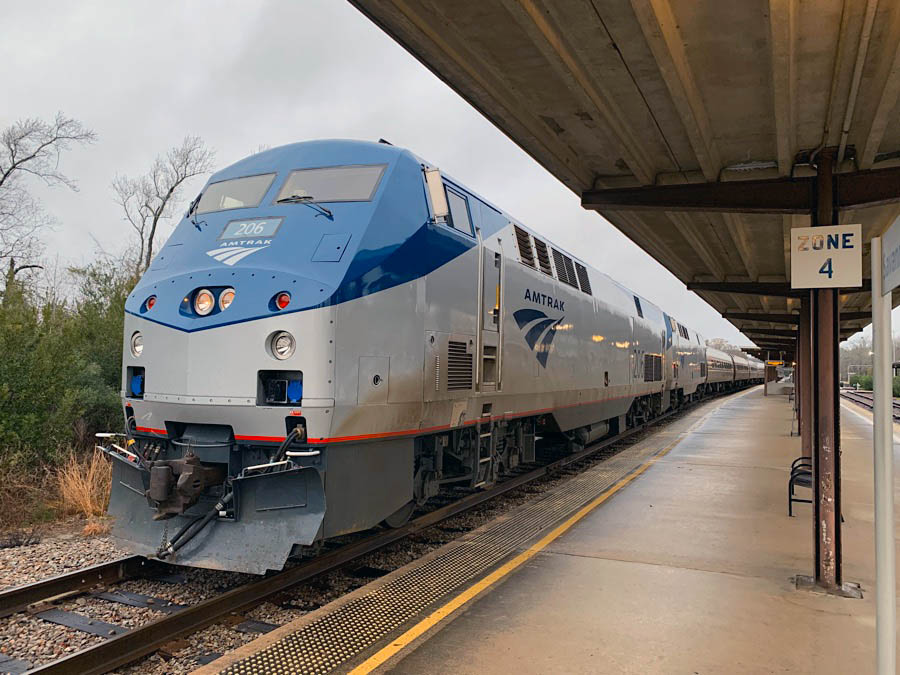
Savannah, Ga / Dec 2019 / RWH
Amtrak's
Silver Meteor
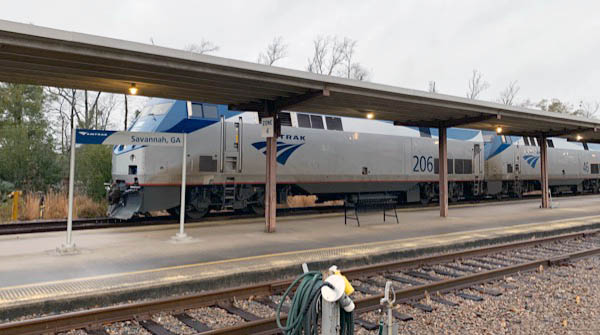
Savannah, Ga / Dec 2019 / RWH
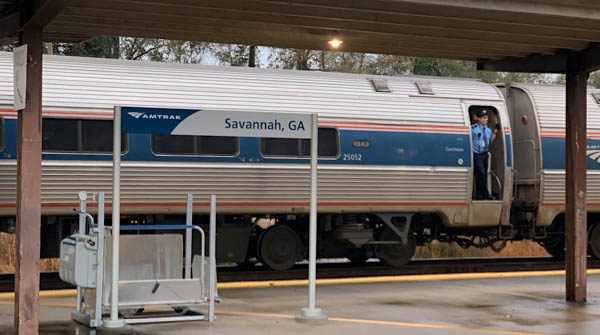
Savannah, Ga / Dec 2019 / RWH
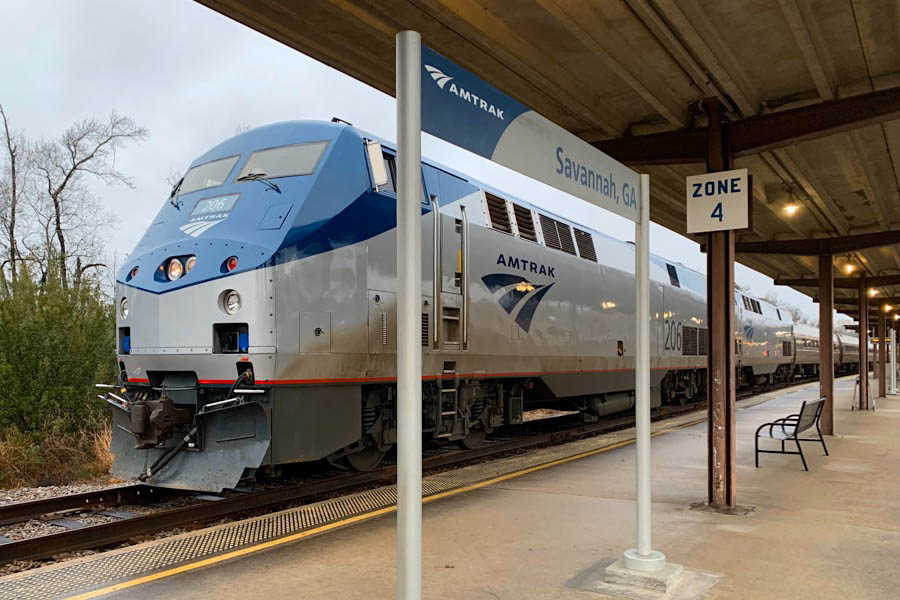
Savannah, Ga / Dec 2019 / RWH
882 Jesup, Ga
- Silver Meteor
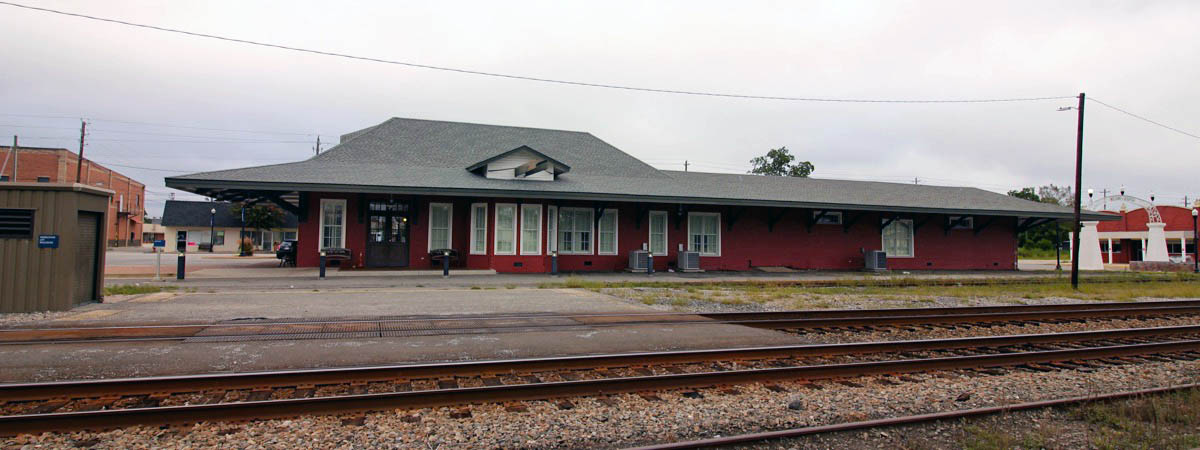
Jesup, Ga / Sep 2019 / RWH
- location:Jesup GA
- address:176 NW Broad Street
- type:town depot, 1 platform
- owner:City of Jesup
- opened:1899
- builder:Atlantic Coast Line
- style:American depot
- renovated:2012 after fire
- services:waiting room
- links: Amtrak | Great Stations
Jesup, Ga / Sep 2019 / RWH
Jesup, Ga / Sep 2019 / RWH

Click to see the Jesup depot area plotted on a Google Maps page
Jesup, Ga / Sep 2019 / RWH
Jesup, Ga / Sep 2019 / RWH
Jesup, Ga / Sep 2019 / RWH
Sep 2019 / RWH
Jesup, Ga / Sep 2019 / RWH
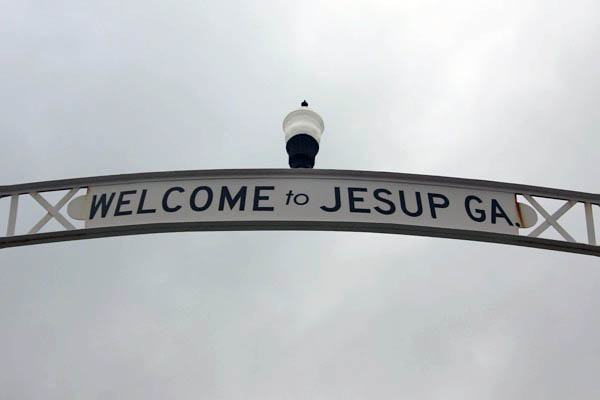
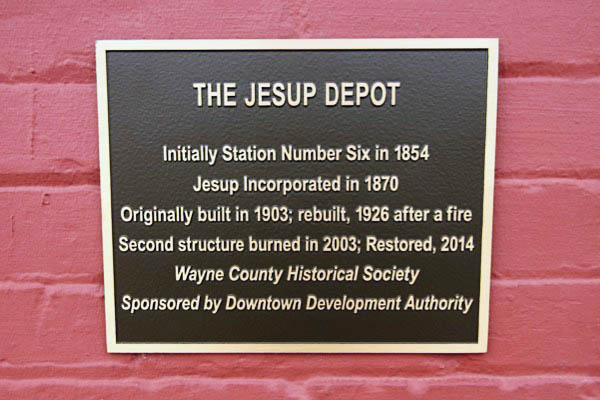
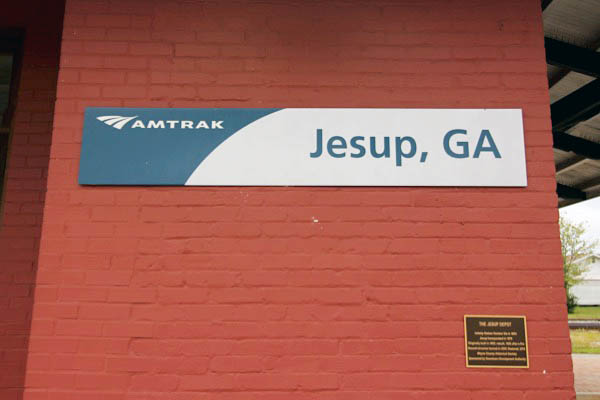
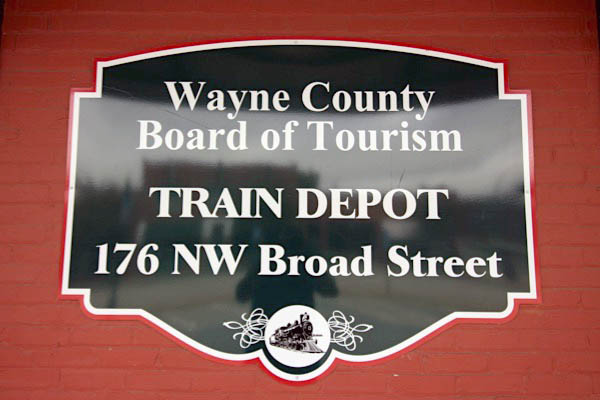
Sep 2019 / RWH
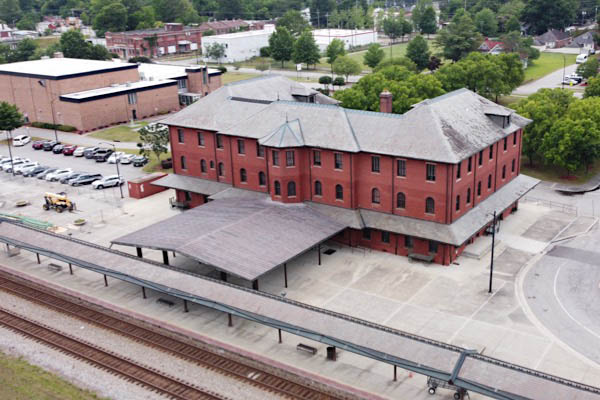
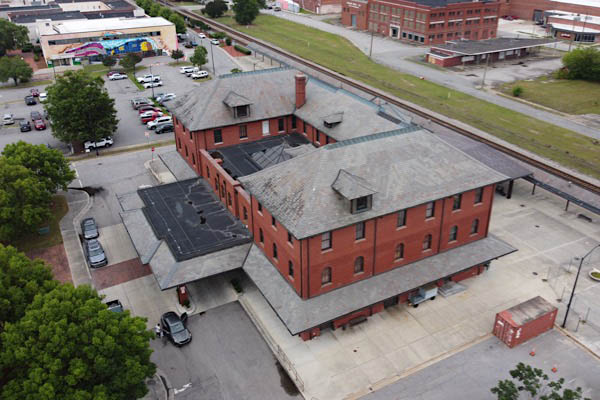
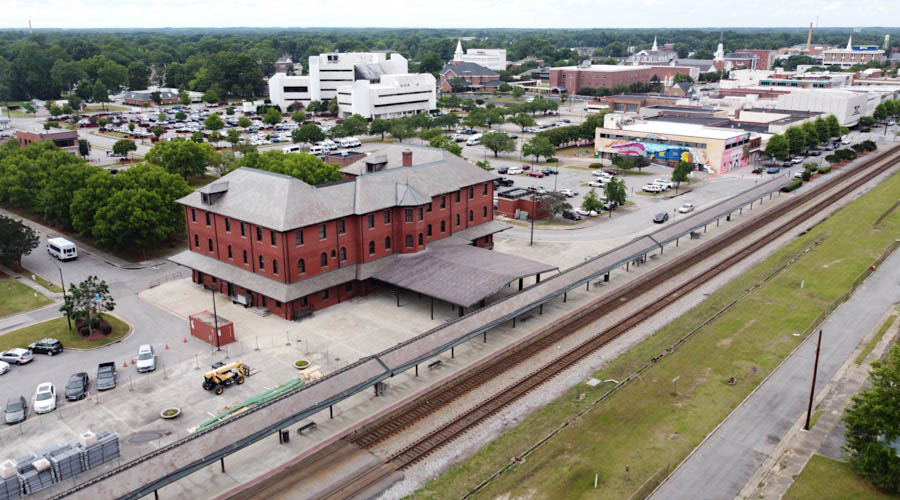
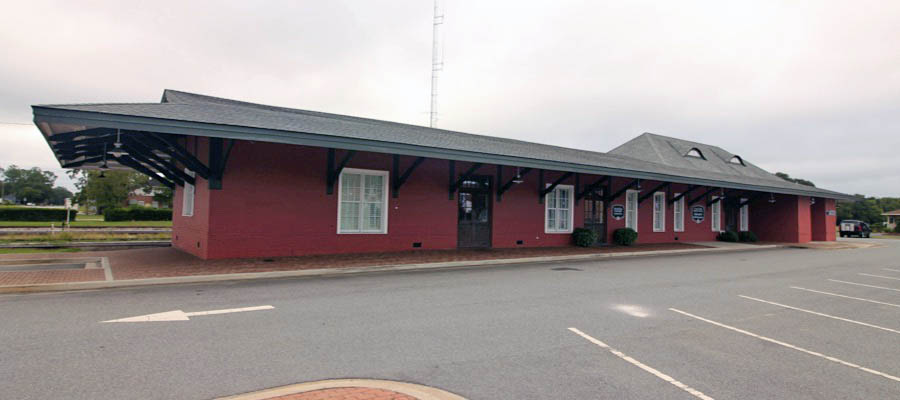
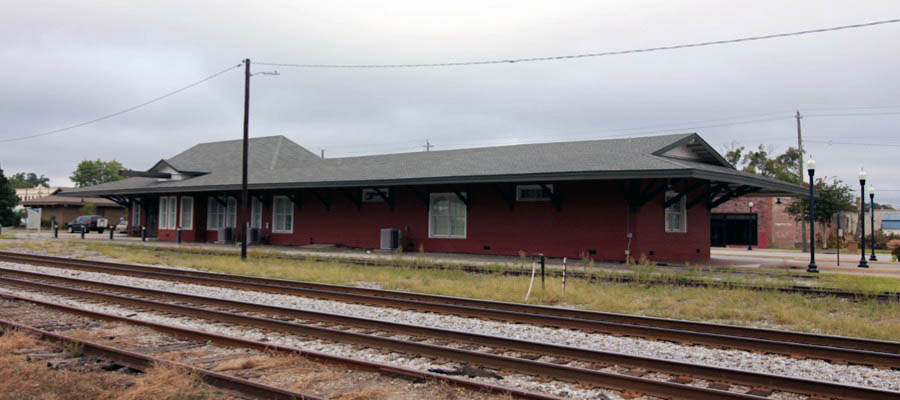
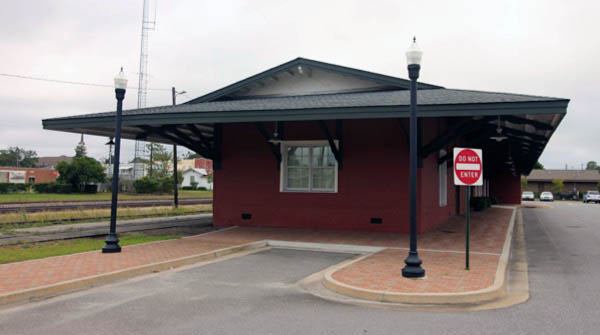
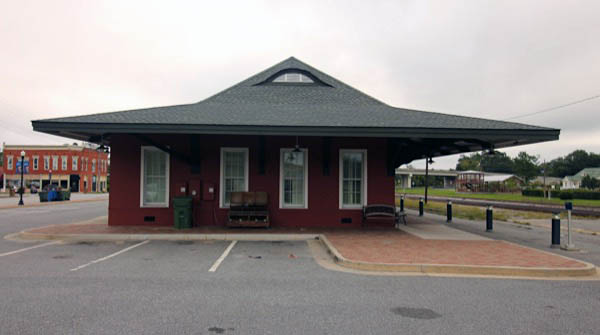
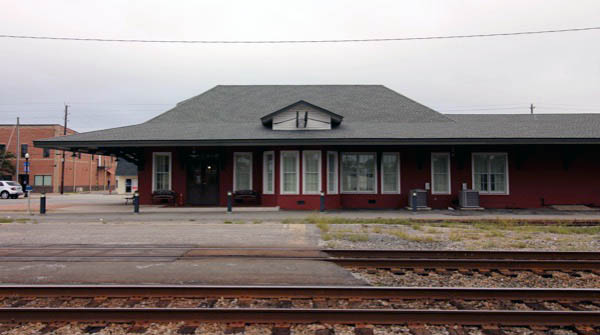
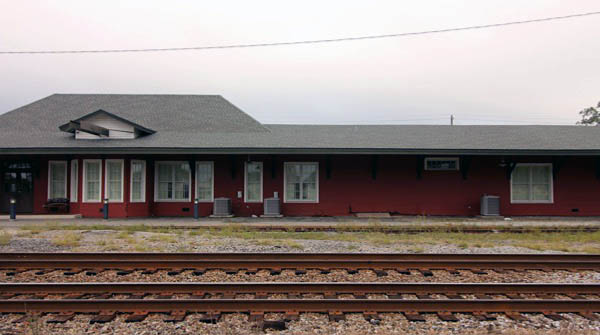
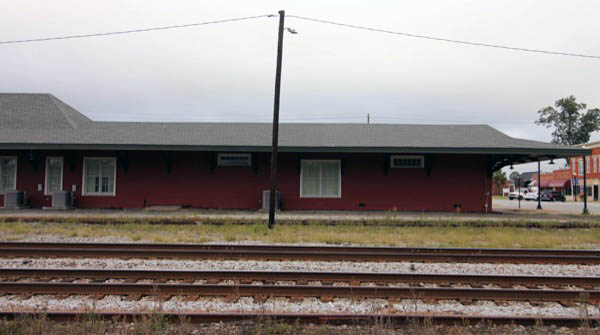
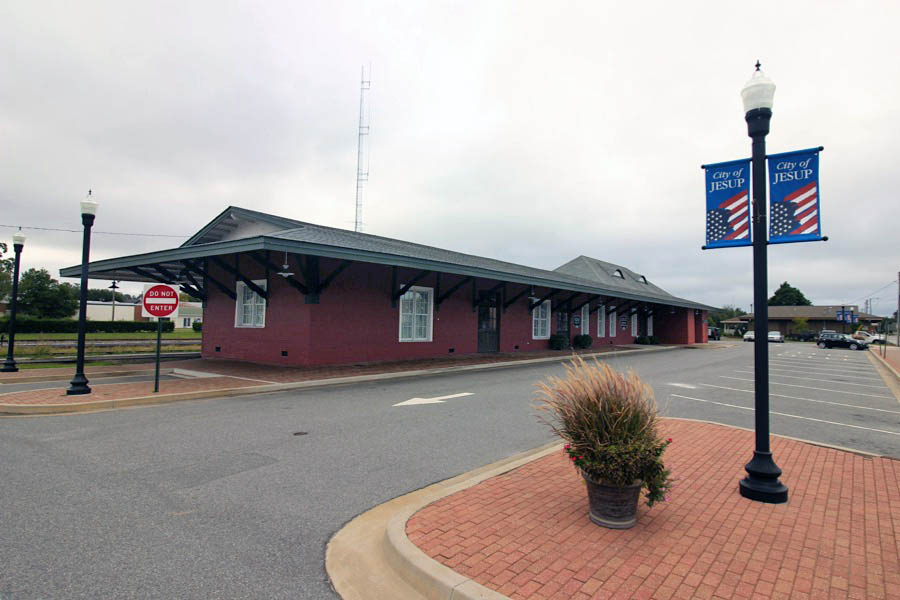
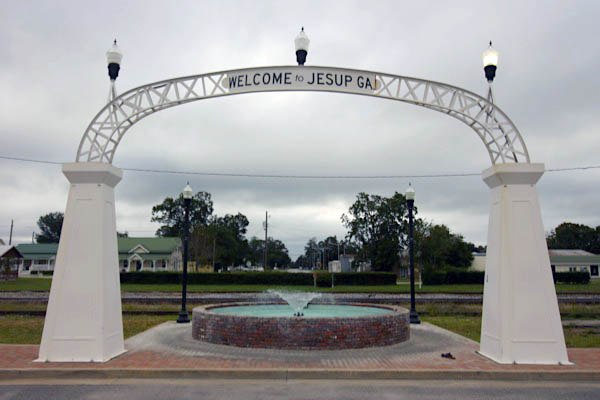
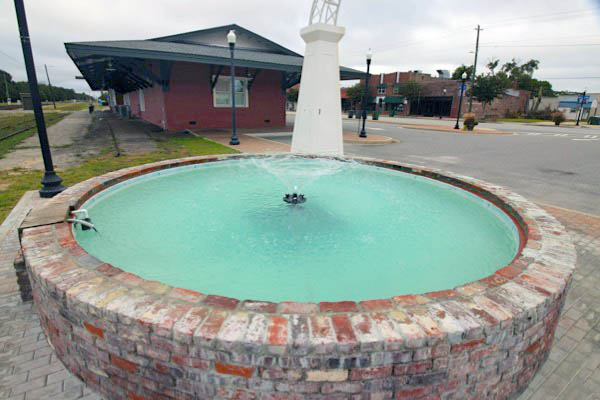
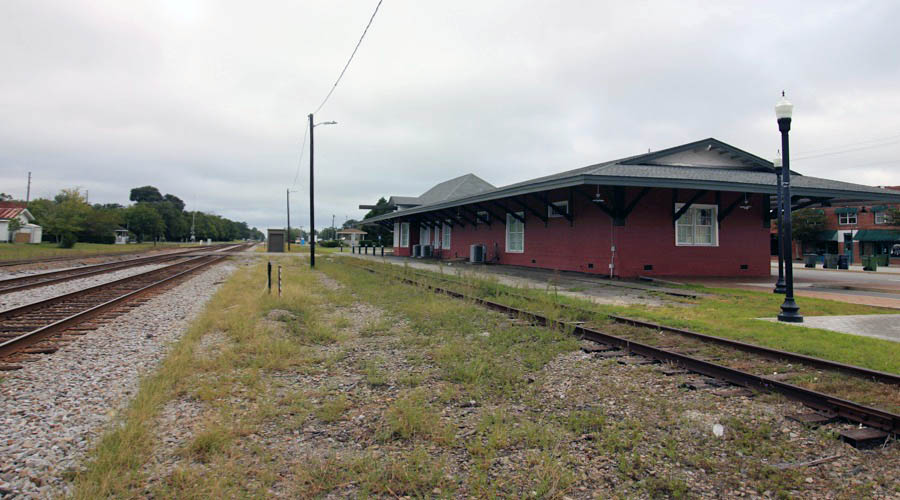
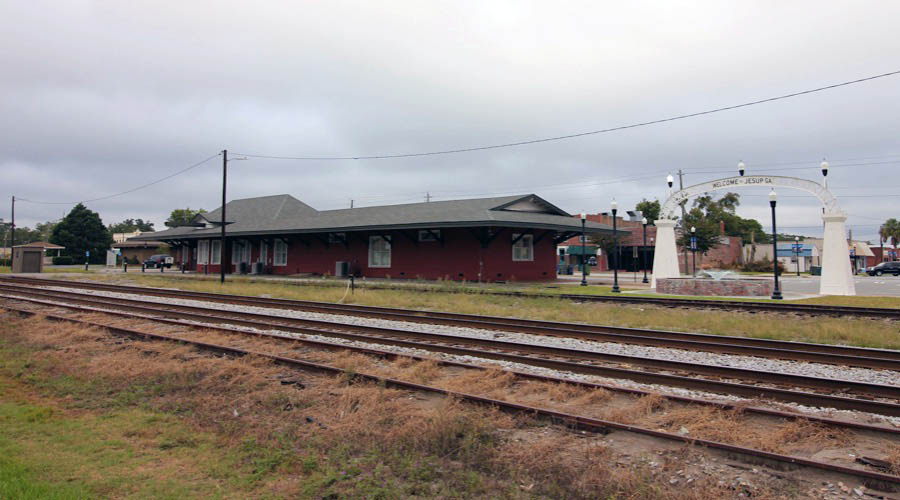
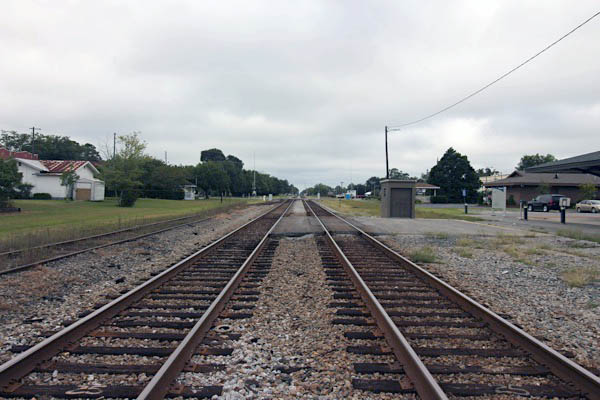
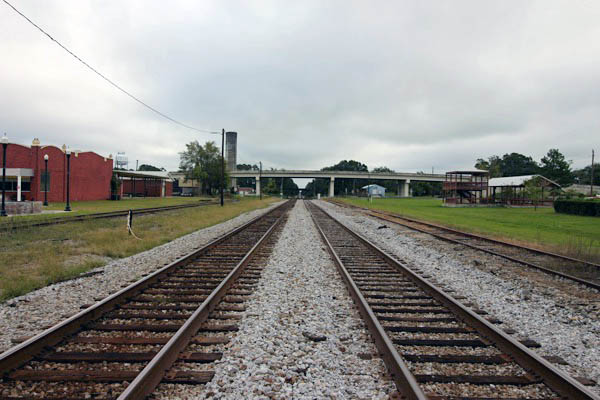
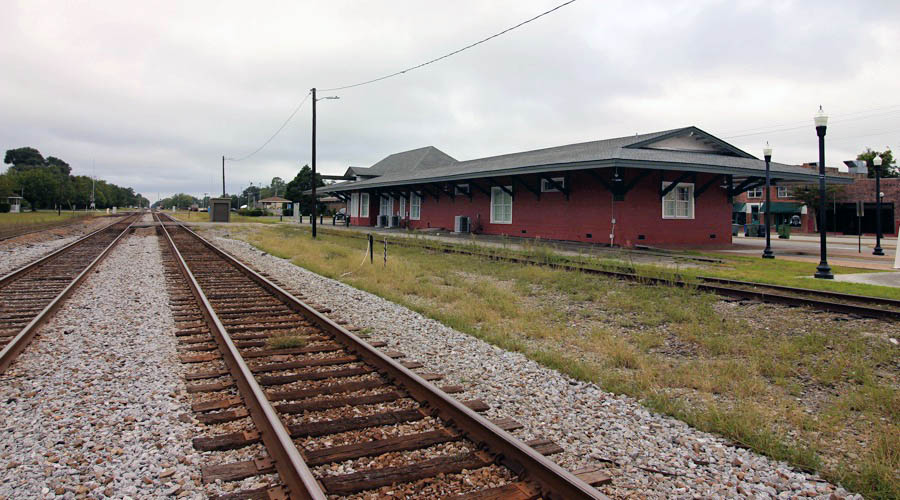
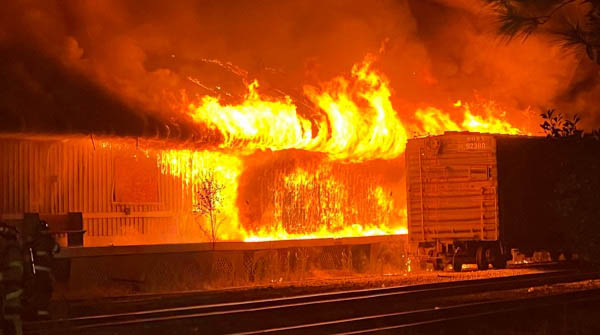 The Jesup depot, erected in 1903 by the Atlantic Coast Line Railroad (ACL), was severely damaged in February 2003 after an early morning electrical fire destroyed much of the interior and the roof. Stiff winds fed the blaze, which was only extinguished by the concerted efforts of firefighters from the town and neighboring counties. Following the accident, the depot was boarded up while the city sought funding for a full rehabilitation. Luckily, in 2005, Jesup received $836,000 in federal funds to restore the building after it was designated a High Priority Project by the Federal Highway Administration. The city also purchased the building and land from CSX Transportation, owner of the adjacent railroad line.
Years of planning culminated in a ground-breaking ceremony held at the depot on December 13, 2011 to celebrate the start of the restoration. In attendance were city and county officials as well as representatives of the local tourism board and Amtrak. Working with the Spriggs Group, a Savannah-based architectural firm with wide experience in historic preservation projects, the city decided to return the depot to its early 20th century appearance. Bron Cleveland Associates, Inc. of Atlanta oversaw project management.
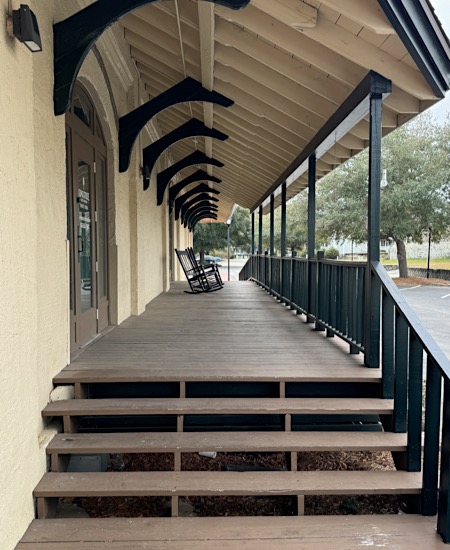
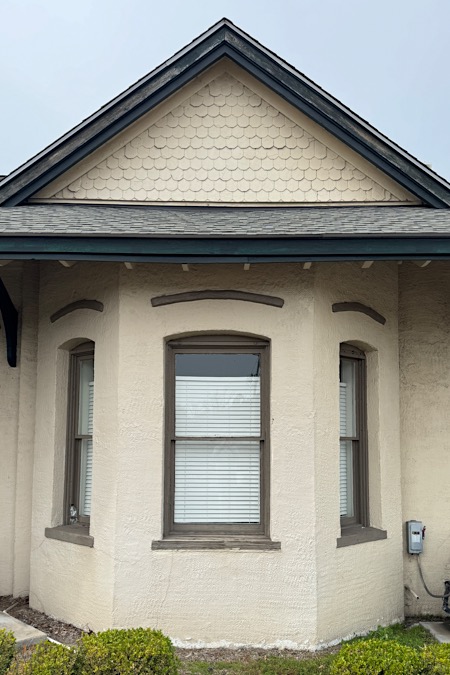
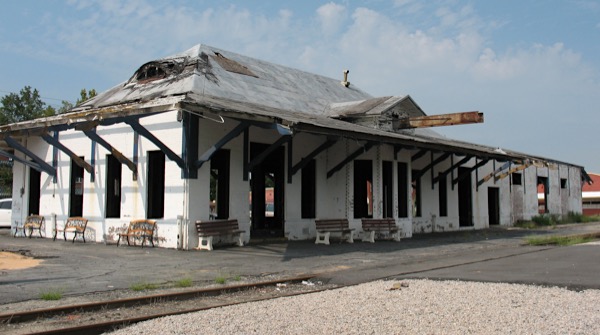 When first completed, the one story building had a distinct steep, double-hipped roof with eyebrow dormers to vent the attic. Generous and deep eaves supported by brackets sheltered passengers from inclement weather and the hot summer sun as they waited outside for the arrival of the train. Trackside, the station master could survey traffic on the line from a five-sided canted bay that had tall windows on three elevations.
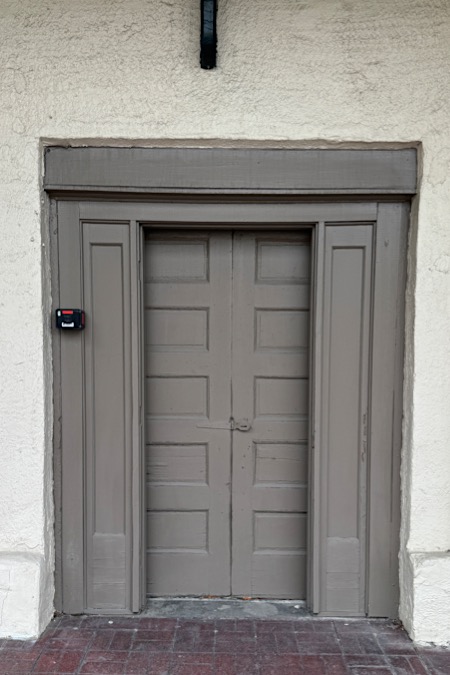
A combination depot, the building housed passenger and freight services under one roof. This dual functionality is evident on the exterior by the placement of the windows and doors. The southern half of the building was used as the waiting room, and natural light entered through large windows. A telegrapher’s office in the center of the building separated the waiting room from the freight area on the northern end. Large doors allowed carts laden with crates and luggage to be easily wheeled between the train and the depot, while small windows placed high on the wall permitted light to enter but deterred would-be thieves. According to early maps, there were other railroad structures nearby, such as a small square building adjacent to the depot serving as a restaurant; a large water tower used to fill the steam locomotive tenders; and a freight house along Broad Street.
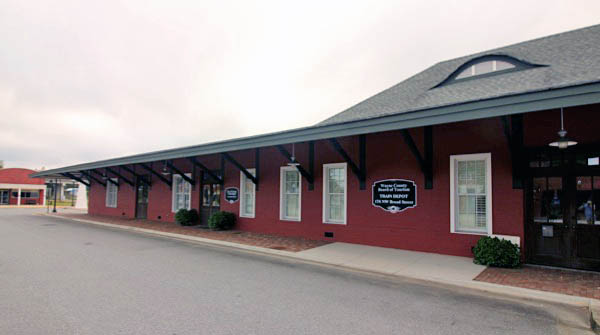
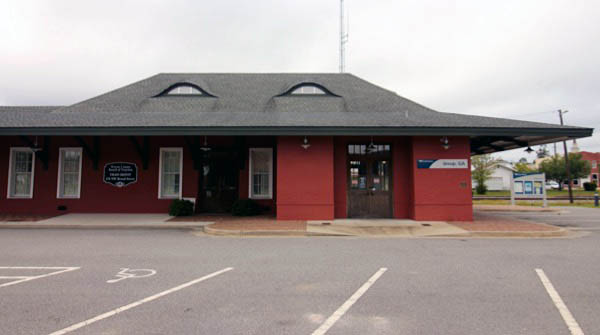
Sep 2019 / RWH
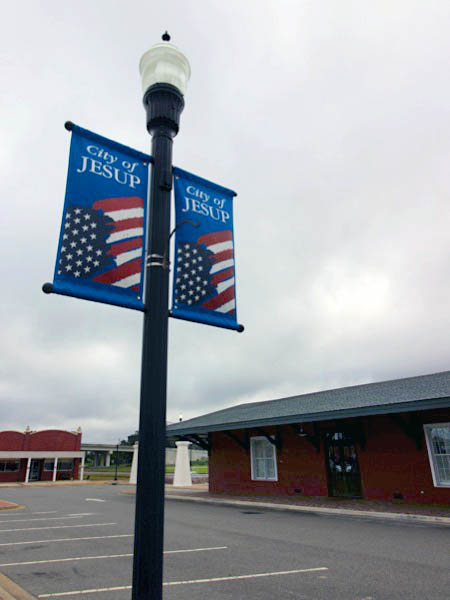
Sep 2019 / RWH
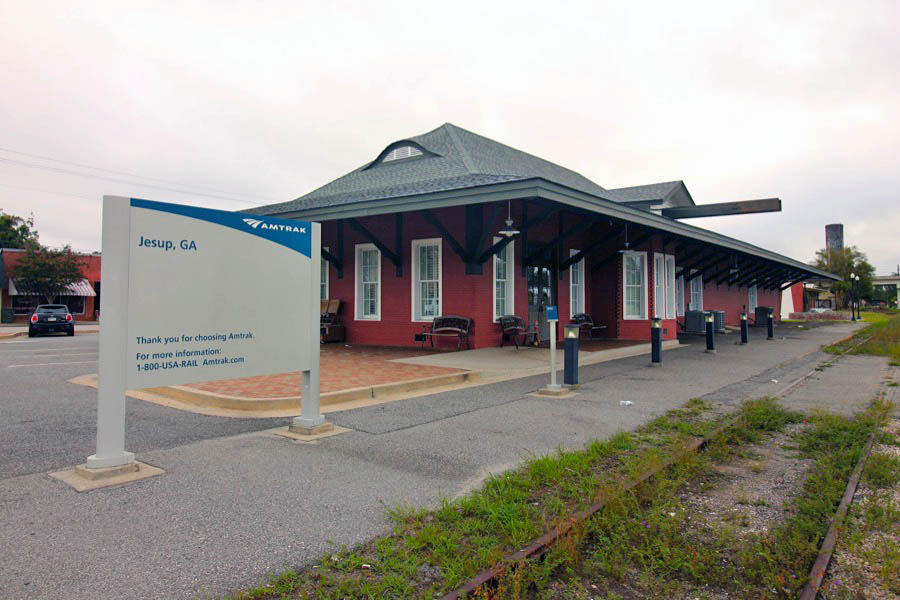
Jesup, Ga / Sep 2019 / RWH
Sep 2019 / RWH
Sep 2019 / RWH
Jesup, GA
Jesup, Ga / Sep 2019 / RWH
Jesup, Ga / Sep 2019 / RWH
Jesup, Ga / Sep 2019 / RWH
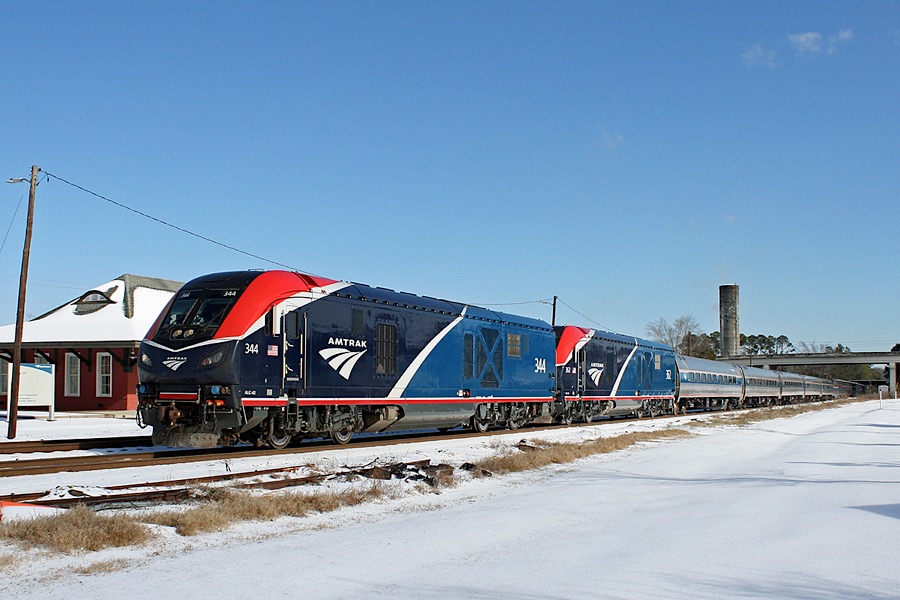
Silver Meteor
Jesup, Ga / Jan 2025 / Bob Pickering
Folkston, Ga
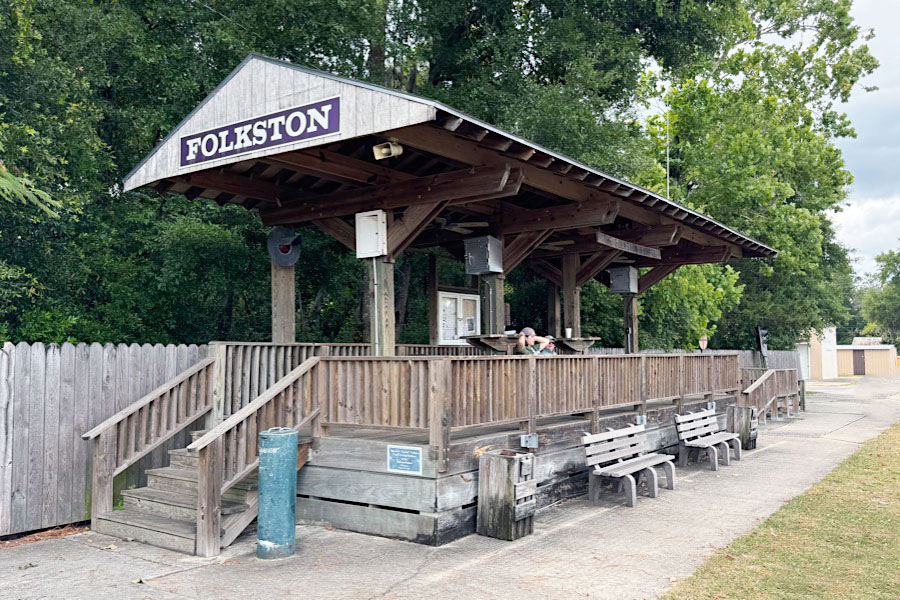
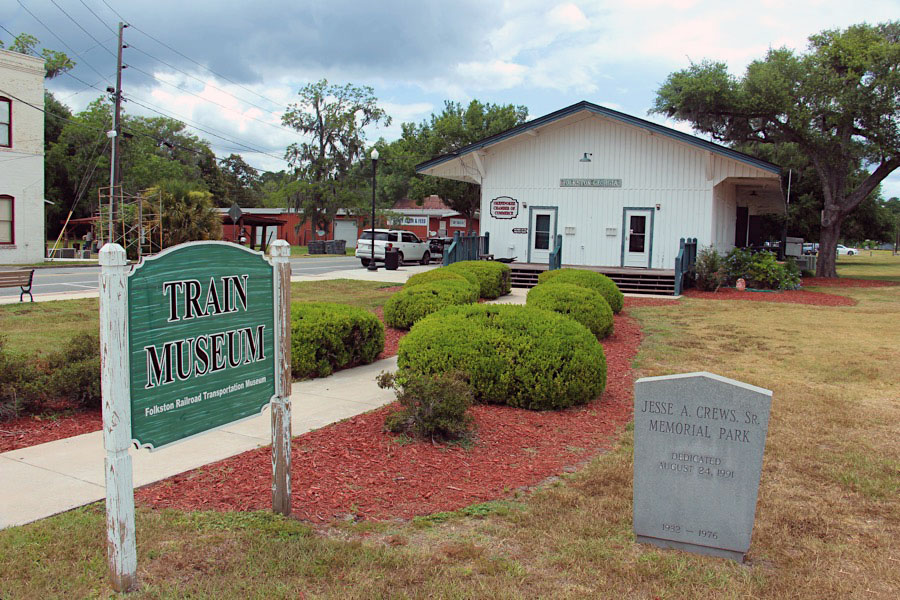
Folkston, Ga / Jun 2024 / RWH
Click to see the Folkston Funnel Railfan Park plotted on a Google Maps page
See also these related scrapbooks:
northbound #98
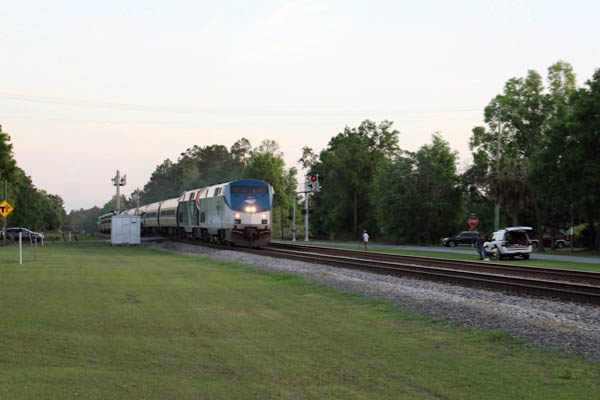
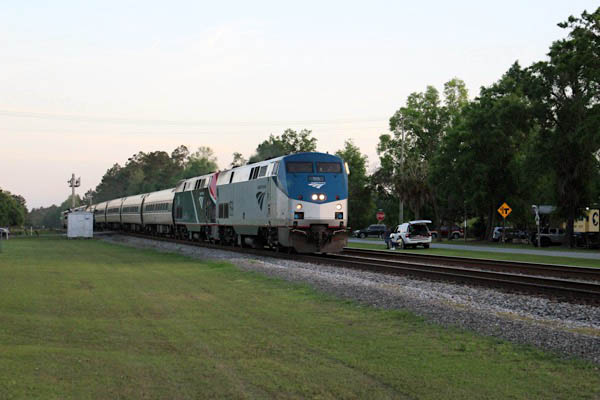
Folkston, Ga / Apr 2025 / RWH
Folkston, Ga / Apr 2025 / RWH
Amtrak's
Silver Meteor
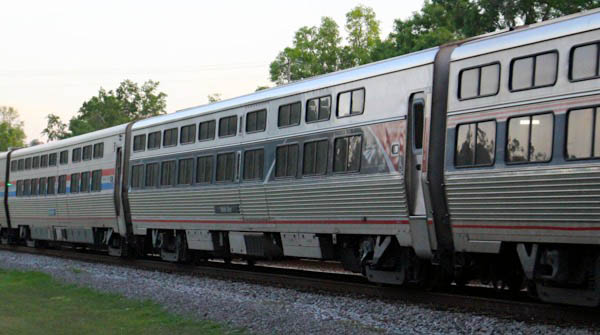
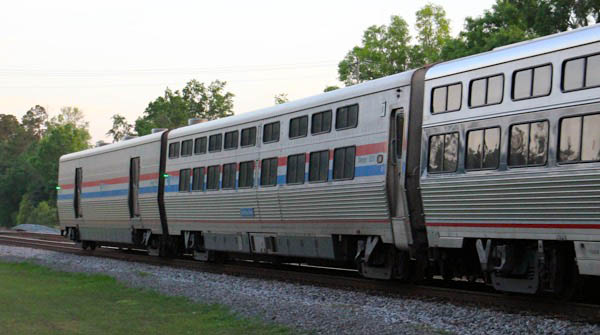
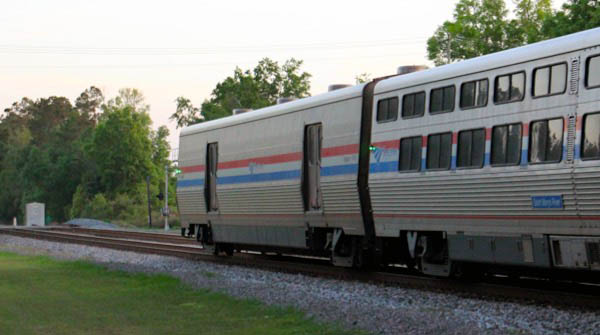
Folkston, Ga / Apr 2025 / RWH
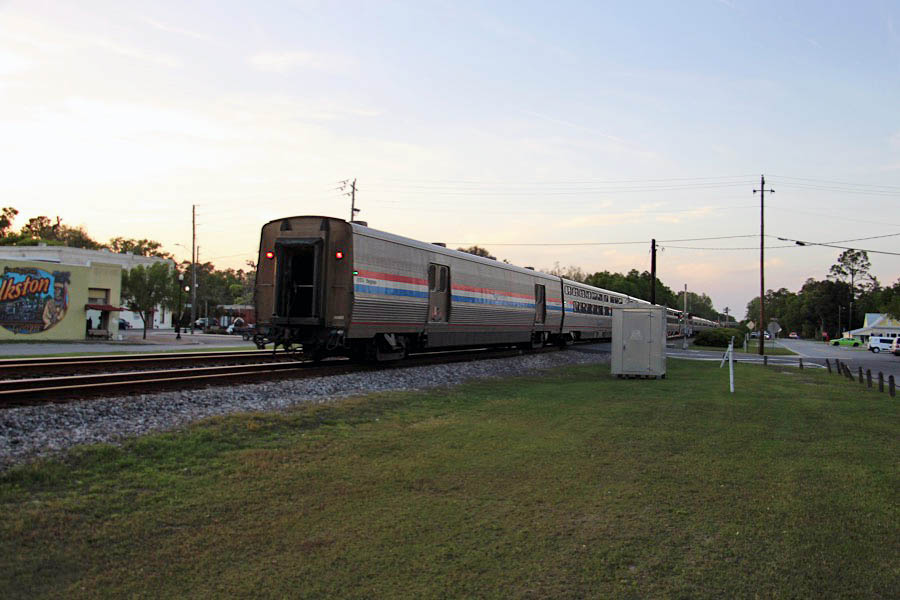
Folkston, Ga / Apr 2025 / RWH
Florida
978 Jacksonville, Fl
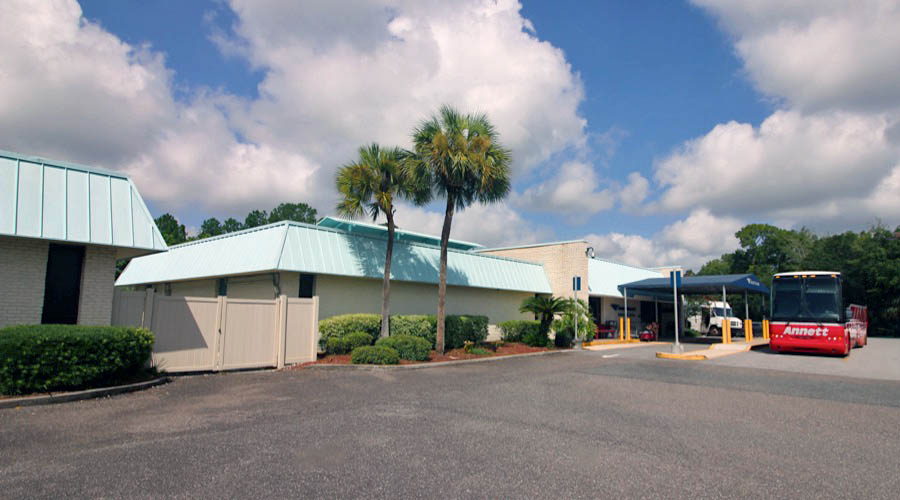
Jacksonville, Fl / Jul 2024 / RWH
- location:Jacksonville FL
- address:3570 Clifford Lane
- type:urban station, 3 platforms
- owner:Amtrak
- opened:1974
- builder:Amtrak
- style:Contemporary
- replaced:Jacksonville Union
- services:tickets, baggage
- links: Amtrak | Great Stations
Jacksonville, Fl / Jul 2024 / RWH
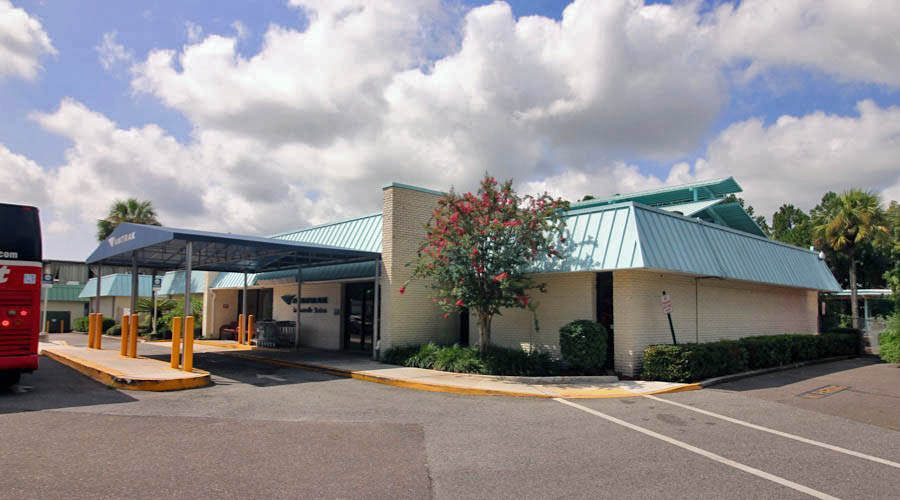
Jacksonville, Fl / Jul 2024 / RWH
Click to see the Jacksonville station area plotted on a Google Maps page
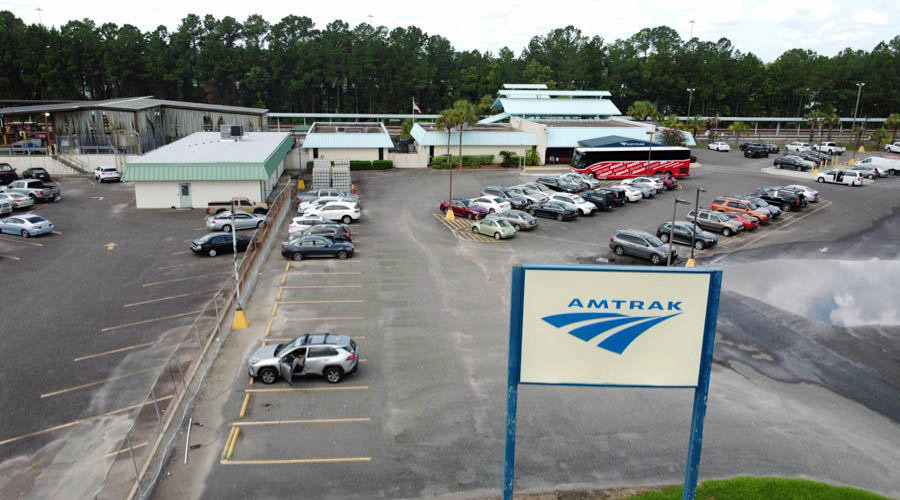
Jacksonville, Fl / Jul 2024 / RWH
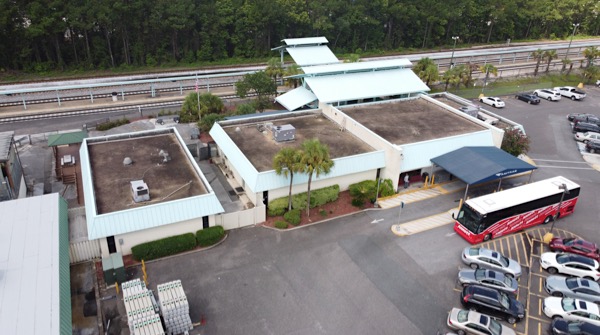
Jacksonville, Fl / Jul 2024 / RWH
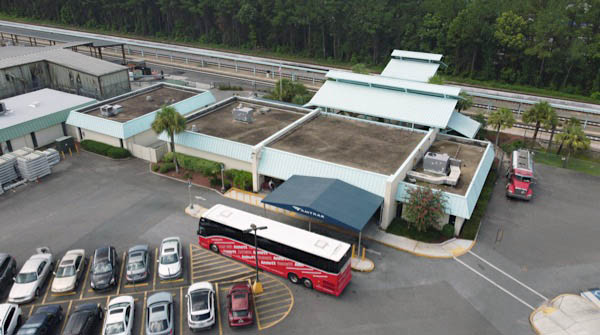
Jacksonville, Fl / Jul 2024 / RWH
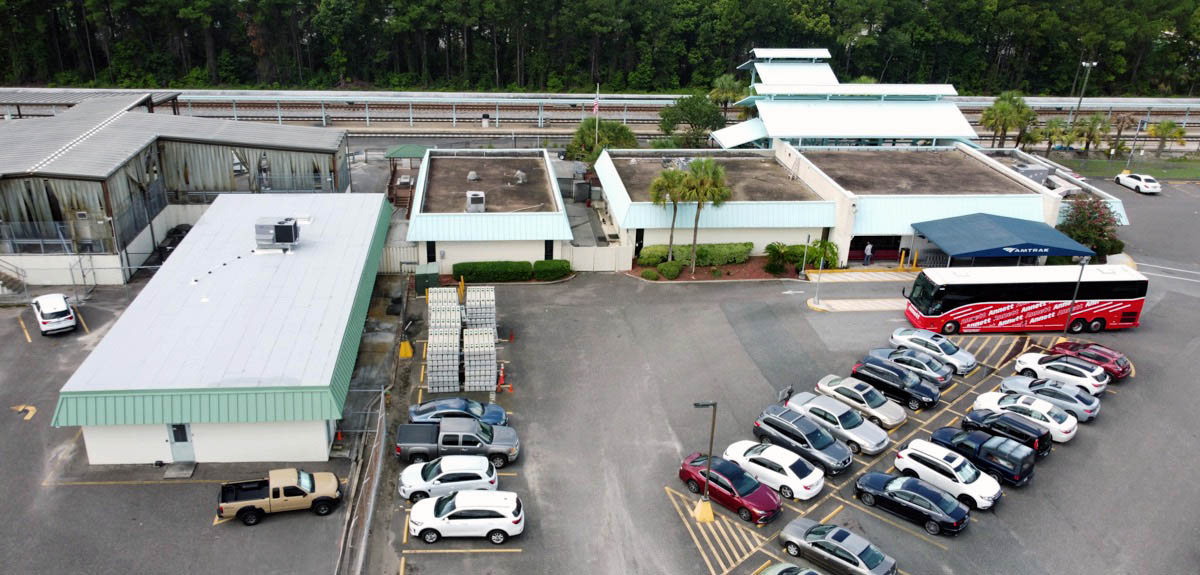
Jacksonville, Fl / Jul 2024 / RWH
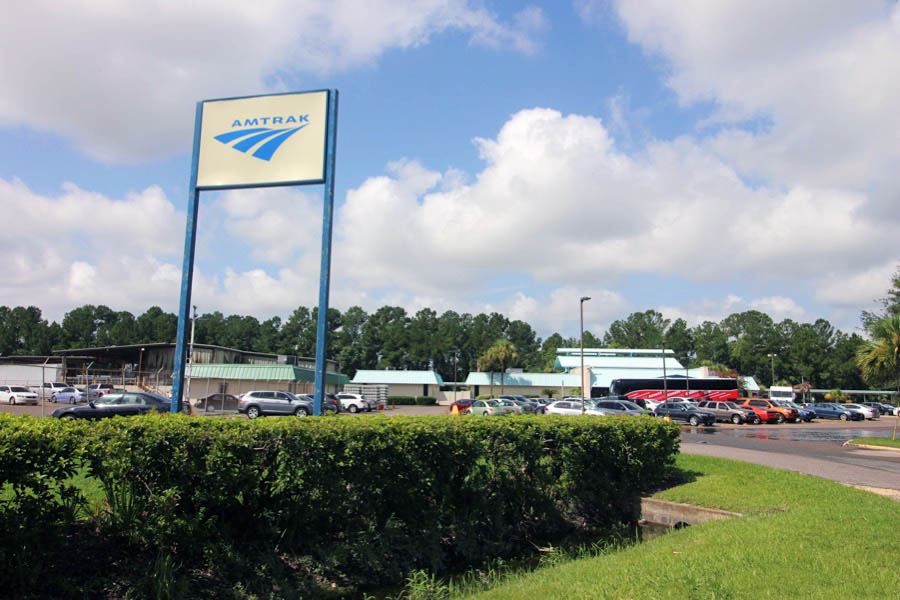
Jacksonville, Fl / Jul 2024 / RWH
Jul 2024 / RWH
Jul 2024 / RWH
Jul 2024 / RWH
Jacksonville, Fl / Jul 2024 / RWH
postcard / collection
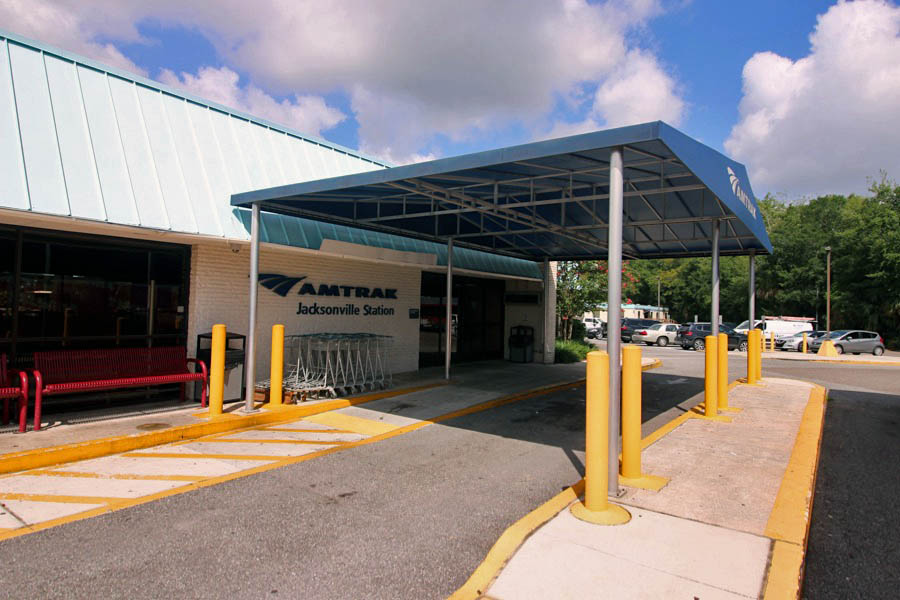
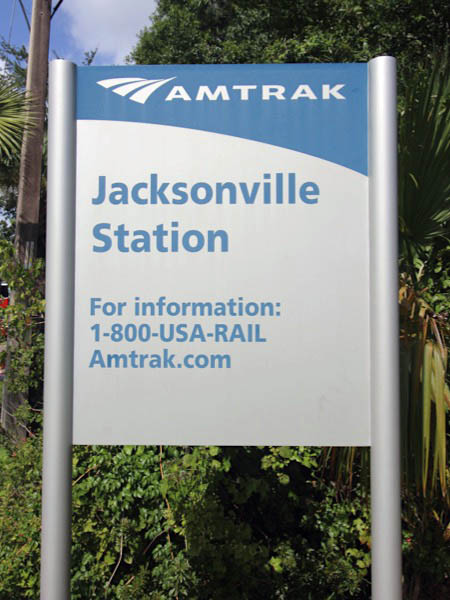
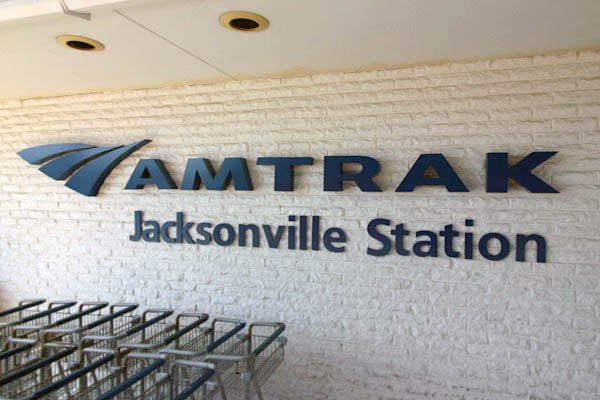
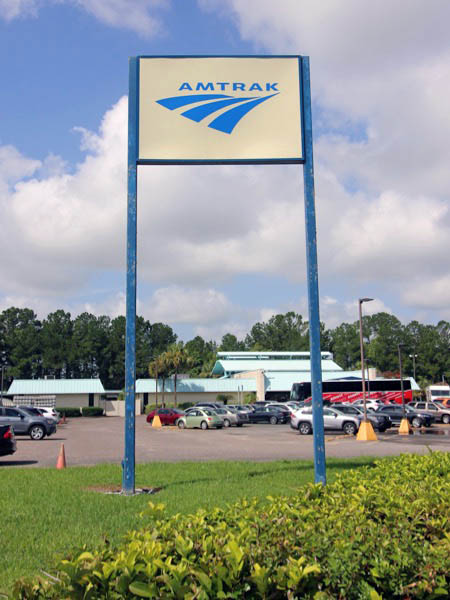
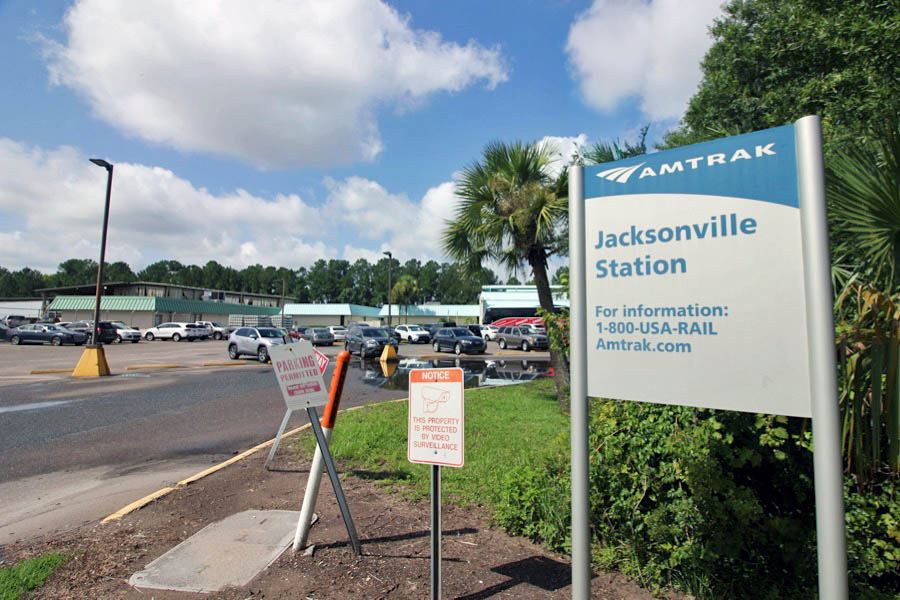
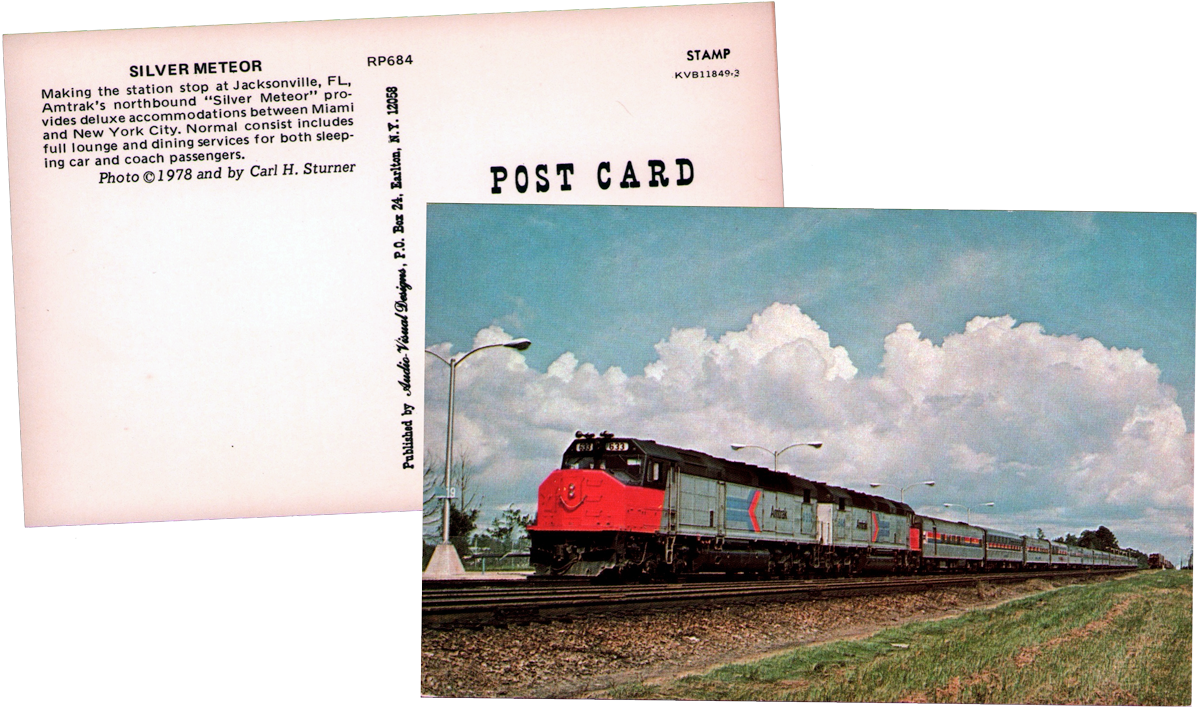
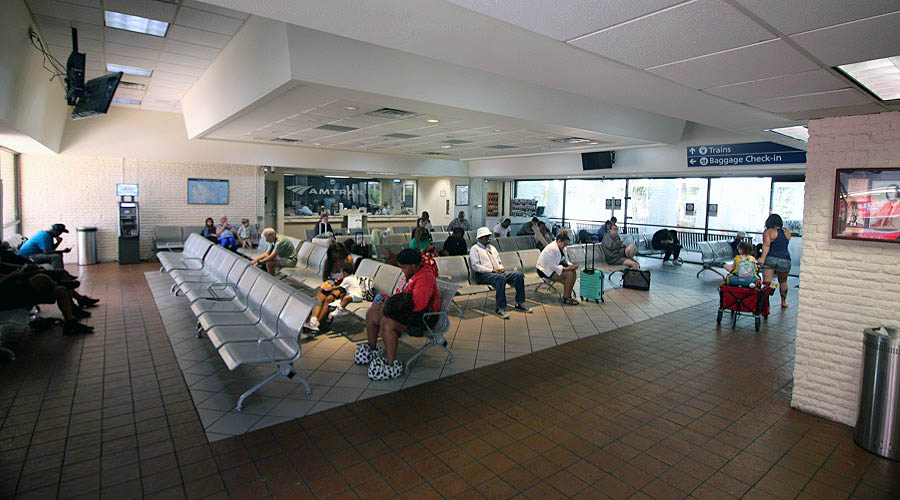
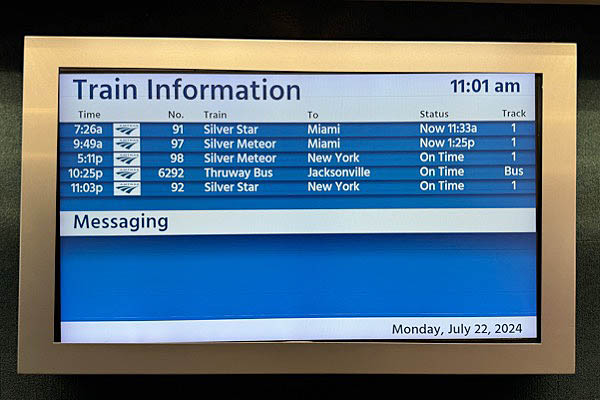
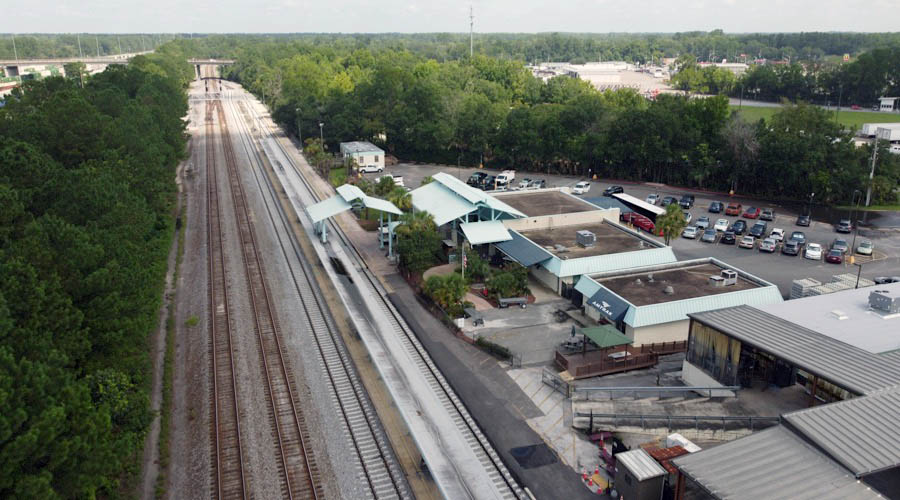
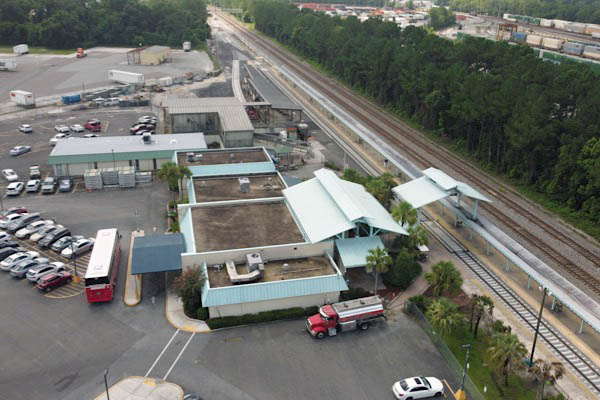
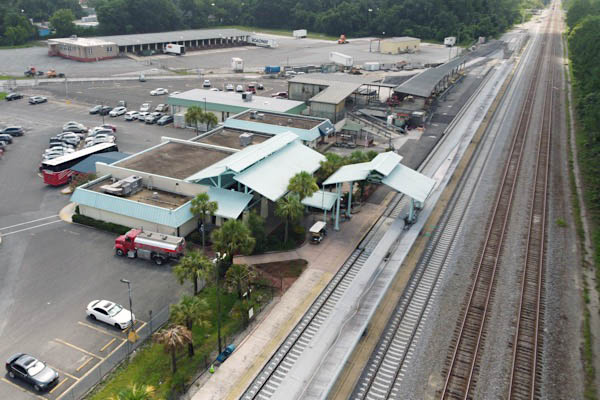
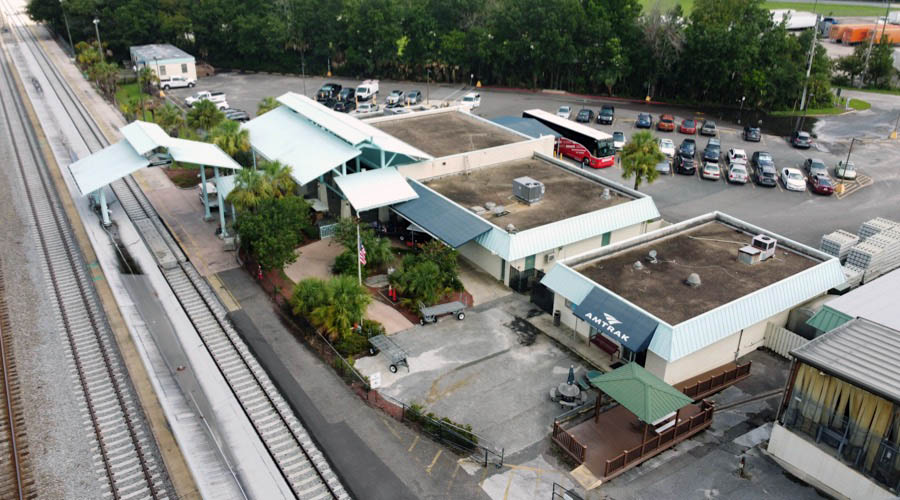
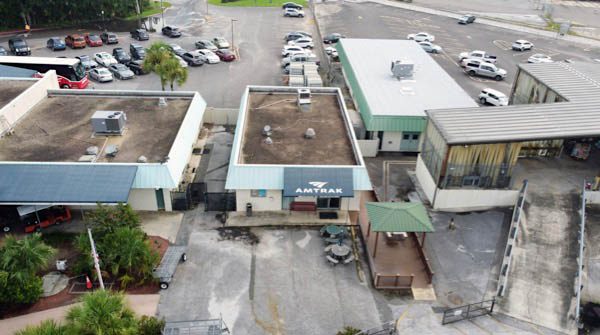
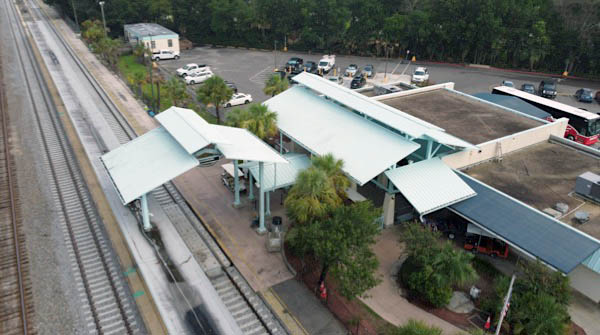
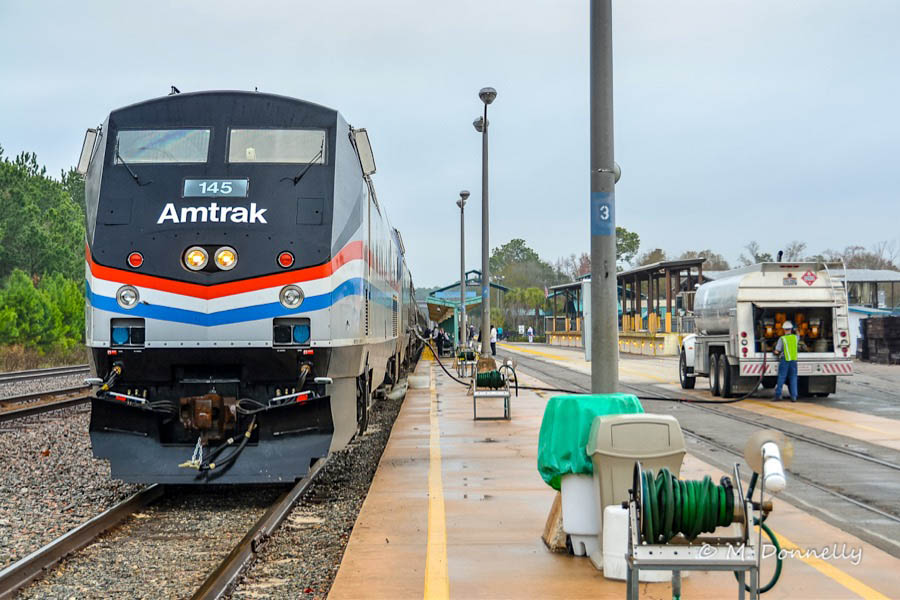
Jacksonville station is an Amtrak train station in the Northside neighborhood of Jacksonville, Florida, United States. It is served by the Floridian and Silver Meteor trains as well as Amtrak Thruway buses.
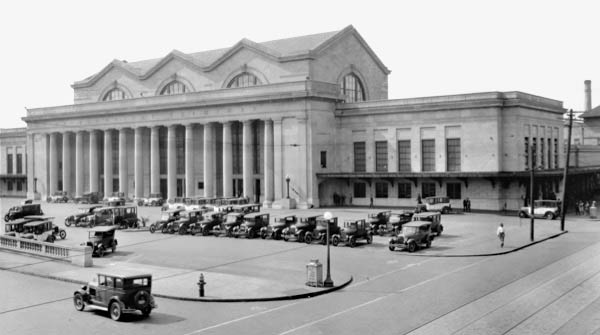 Amtrak opened the station on January 4, 1974, replacing Jacksonville Union Terminal (now Prime F. Osborn III Convention Center) downtown. The station saw eight trains daily upon opening, four in each direction. Those trains were the Silver Meteor, Silver Star, Champion, and Floridian, but also very briefly saw the Vacationer. The Floridian and Champion were discontinued in the 1979 budget cuts.
In 1993, the Sunset Limited was extended east from its New Orleans terminus all the way to Miami, and added a stop at Jacksonville. Then in 1996, the station's services were further expanded to include the newly reinstated Silver Palm running from New York to Tampa.
On November 1, 2004, however, the Silver Palm, now renamed to Palmetto, had its terminus cut back to Savannah, Georgia. Later, in 2005, the Sunset Limited was suspended east of New Orleans in the wake of Hurricane Katrina. This left the station with just two trains in each direction a day: the Silver Meteor and Silver Star. On November 10, 2024, the Silver Star was merged with the Capitol Limited as the Floridian.
Jul 2024 / RWH
Jul 2024 / RWH
Jul 2024 / RWH
Jacksonville, Fl
Jacksonville, Fl / Jul 2024 / RWH
Jacksonville, Fl / Jul 2024 / RWH
Jacksonville, Fl / Jul 2024 / RWH
Jacksonville, Fl / Jul 2024 / RWH
Jacksonville, Fl / Jul 2024 / RWH
Jacksonville, Fl / Jul 2024 / RWH
Jacksonville, Fl / Feb 2011 / Matt Donnelly
Lagniappe



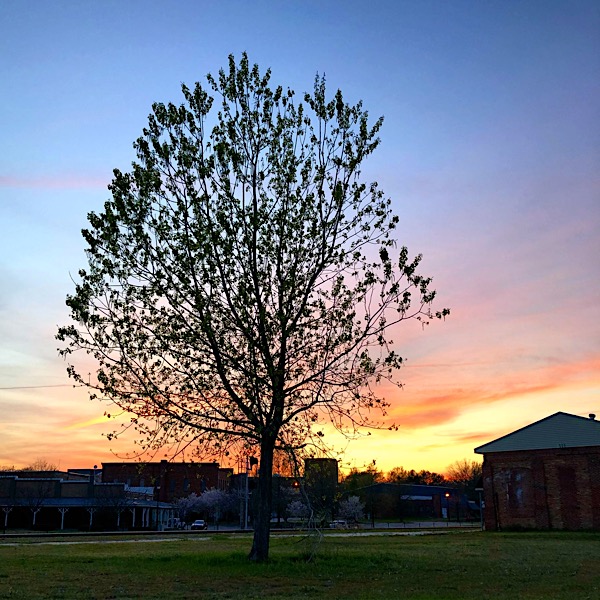
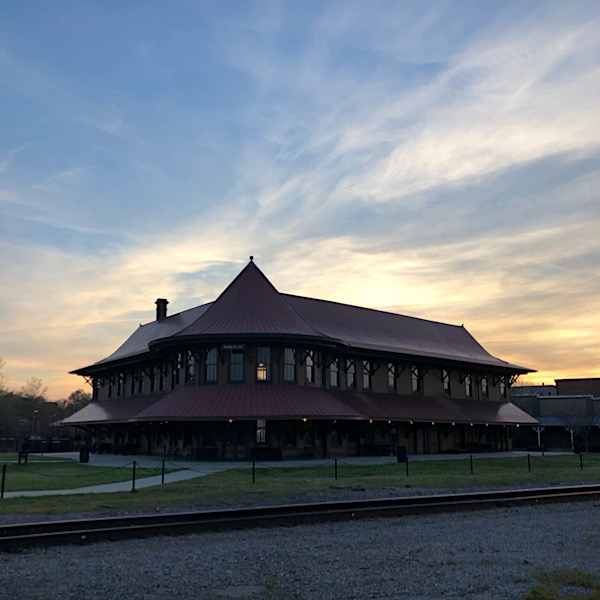
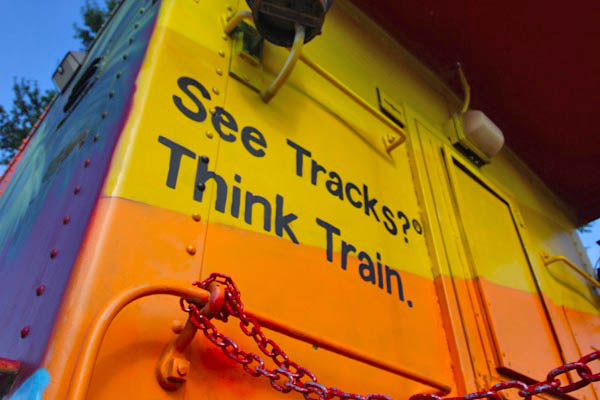
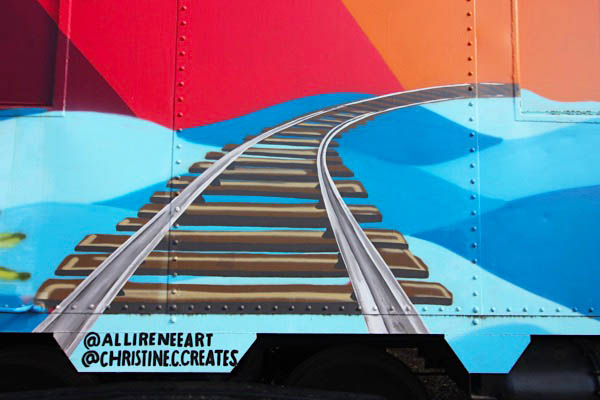
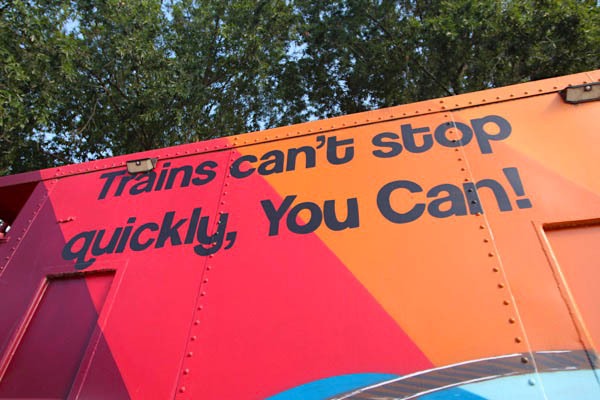
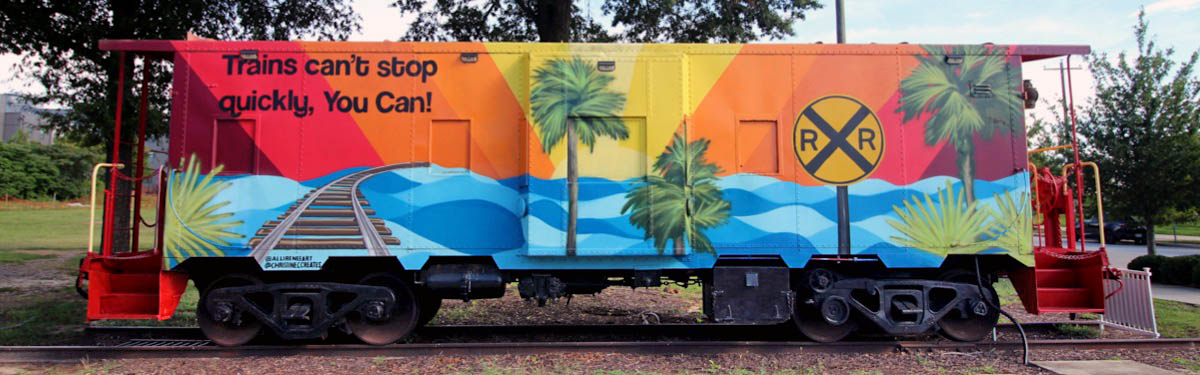
Hues at Hamlet
Hamlet, NC / Apr 2019 / RWH