
Virginia Service
Alexandria, Va / Jul 2025 / RWH
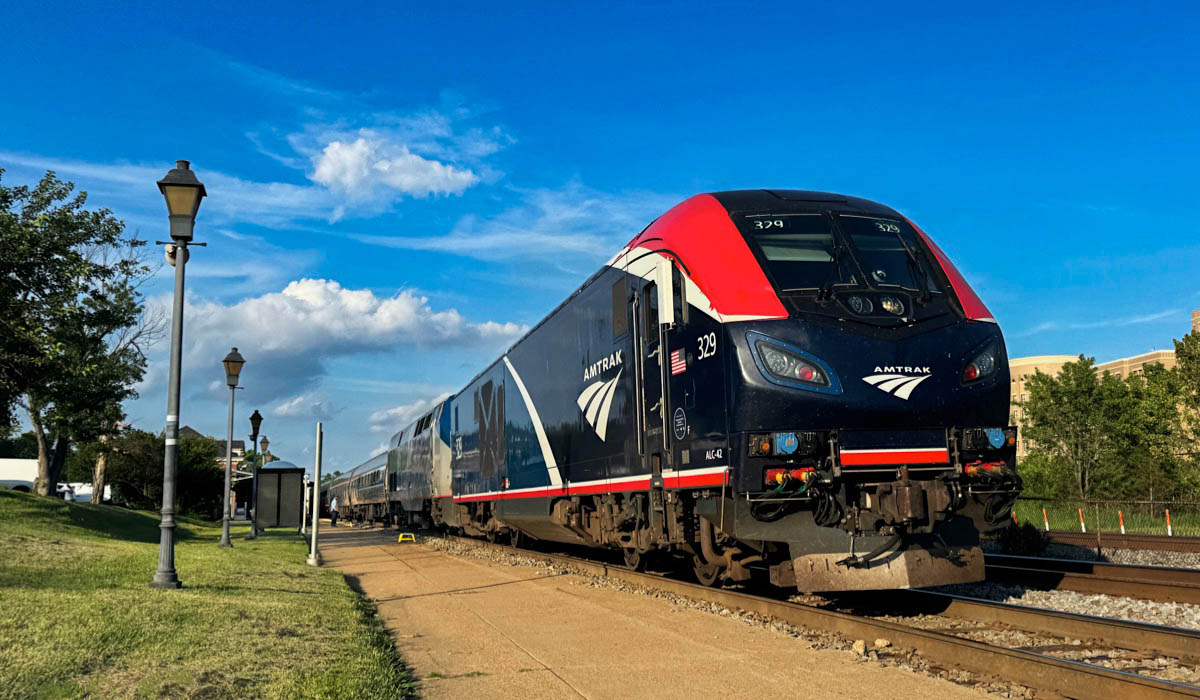
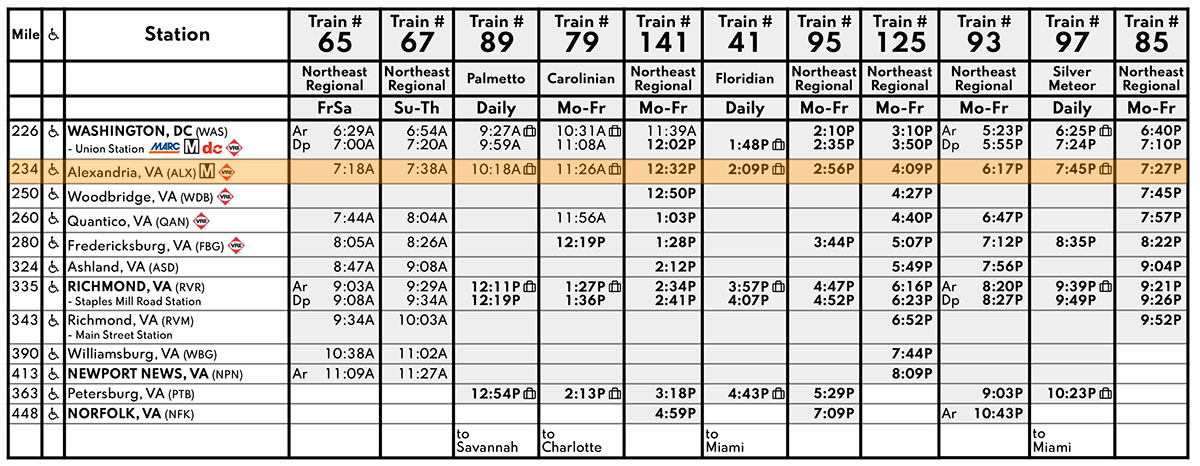
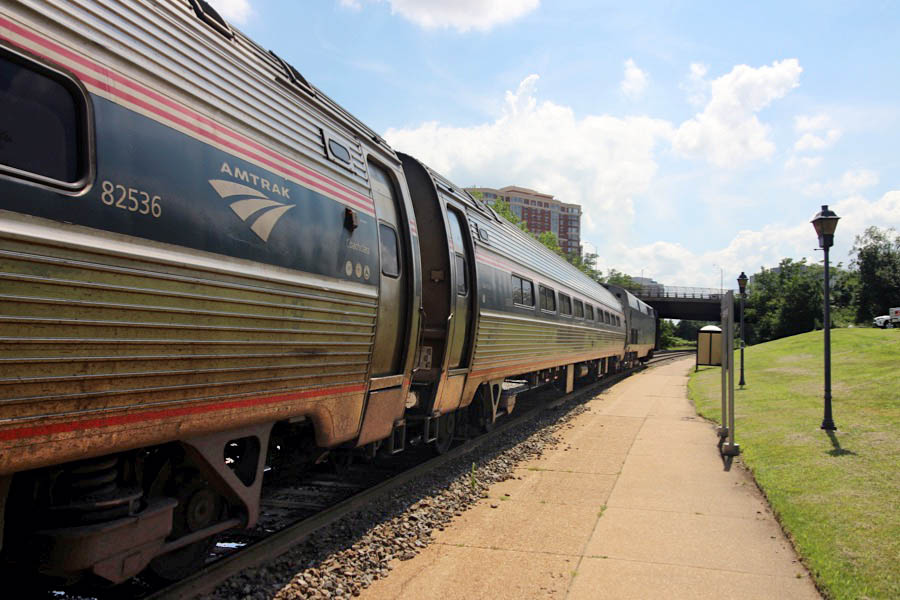
 The commonwealth of Virginia provides financial support for a series of regional passenger trains operated by Amtrak as a part of its Northeast Regional service. Collectively called the Virginia Service, their state support makes Virginia one of 15 states that underwrite Amtrak operations within their bounds. A southern extension of Amtrak's cornerstone Northeast Corridor, Virginia's 8 daily roundtrip trains originate and terminate at Roanoke, Richmond (Main Street station), Newport News, and Norfolk. All routes pass through Alexandria's busy Union station on their way to/from the Corridor via Washington DC. Most trains stop at the key stations along the Corridor, terminating in the Boston area. A standard Virginia Service consist relies almost exclusively on the Amfleet roster: a cafe/lounge car, a business class coach, and a series of regular coaches, all assigned to a single locomotive. These services have been overseen by the Virginia Passenger Rail Authority since 2020.
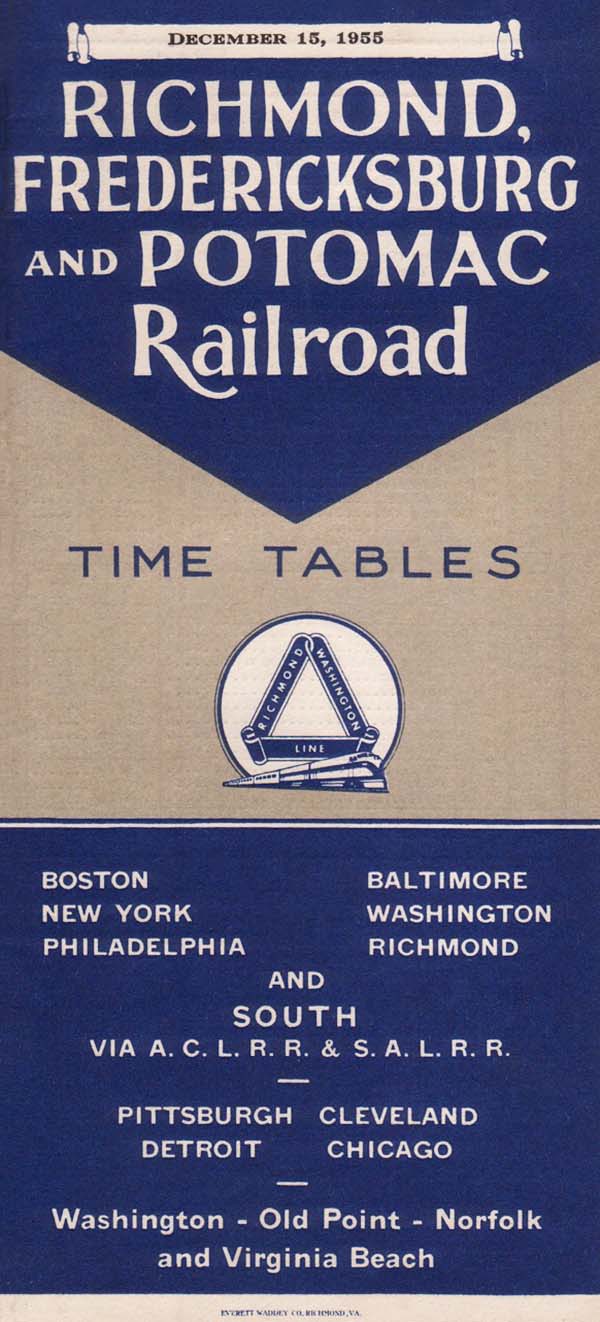
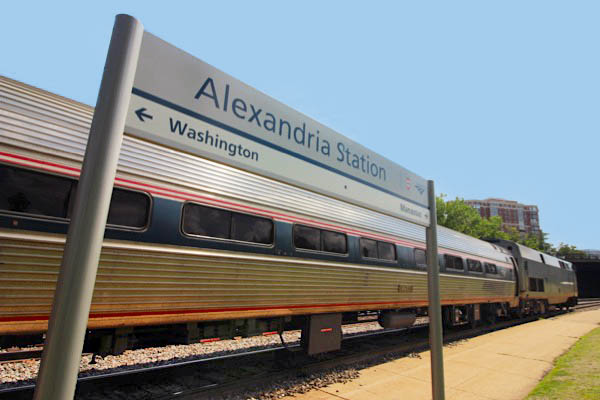 All Virginia Service movements use the northernmost portion of the former Richmond, Fredericksburg & Potomac Railroad (now CSX Transportation) between Washington and Alexandria. South of Alexandria, trains to Roanoke use the former Southern Railway mainline (now Norfolk Southern). Trains to Richmond, Norfolk, and Newport News use a series of CSX subdivisions to Richmond, including the RF&P, Richmond Terminal, and Bellwood. South of Richmond, trains to Newport News use the CSX Peninsula Subdivision, while trains to Norfolk use the CSX North End Subdivision and NS's Norfolk District (ex Norfolk & Western).
 As of 2025, Amtrak and the Commonwealth of Virginia are developing plans to extend the Virginia Service in serval corridors. Reaching beyond Roanoke, a planned extension on the former Norfolk & Western mainline would connect Christiansburg and Brisol. A new platform at Crystal City, between Washington DC and Alexandria, is being constructed. Most ambitious are plans for a Commonwealth Corridor, providing east-west state services on the Newport News–Richmond–Charlottesville–Lynchburg–Roanoke axis.
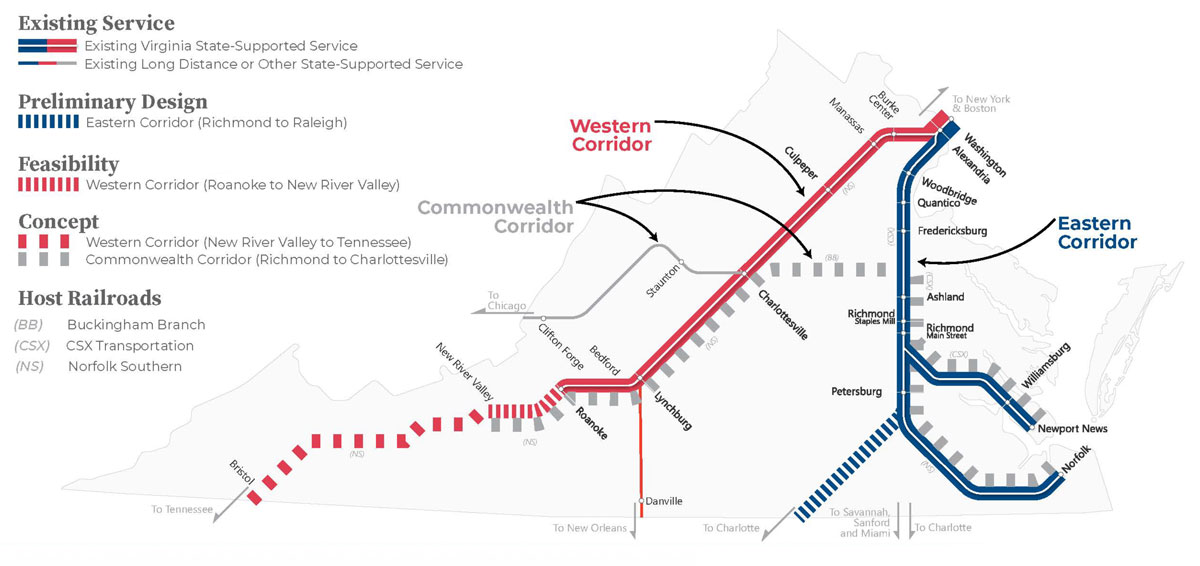
Virginia Department of Rail and Public Transportation

| Roanoke | Richmond | Newport News | Norfolk |
| 2 daily trips | 1 daily trip | 2 daily trips | 3 daily trips |
| Washington DC Alexandria Burke Center Manasas Culpeper Charlottesville Lynchburg Roanoke |
Washington DC Alexandria Woodbridge Quantico Fredericksburg Ashland Richmond Staples Mill Richmond Main Street |
Washington DC Alexandria Woodbridge Quantico Fredericksburg Ashland Richmond Staples Mill Richmond Main Street Williamsburg Newport News |
Washington DC Alexandria Woodbridge Quantico Fredericksburg Ashland Richmond Staples Mill Petersburg Norfolk |

 The Commonwealth is making generational investments delivering on its vision to provide high-performance passenger and commuter rail service that connects our communities and increases economic growth. VPRA’s implementation of these projects will change how Virginians travel, removing traffic from roads and highways, and increasing commuting options in all corners of the state while improving performance and reliability. VPRA’s partnerships, capital projects, and infrastructure enhancement programs will grow the Commonwealth’s rail network by adding additional passenger and commuter services.
RWH
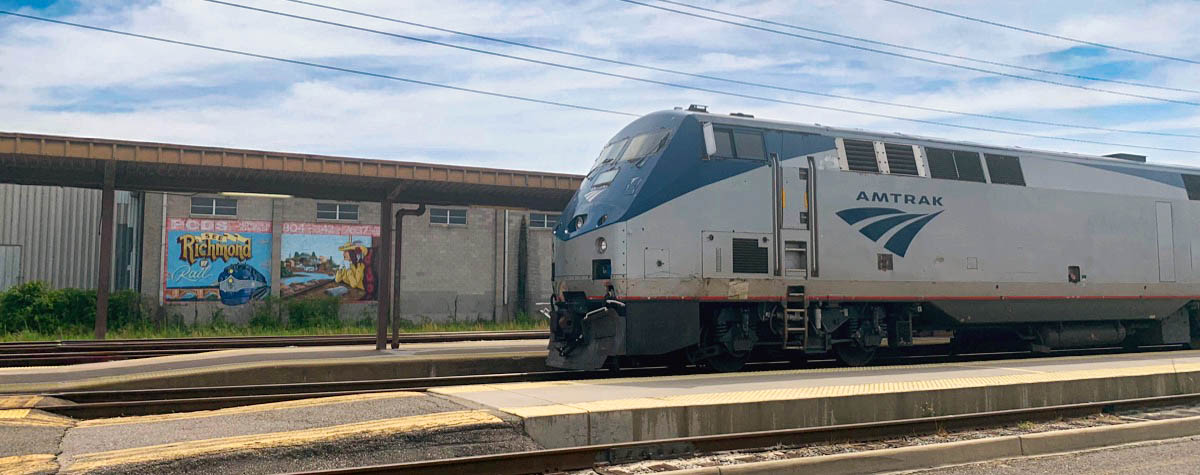
Richmond, Va / Jul 2022 / RWH

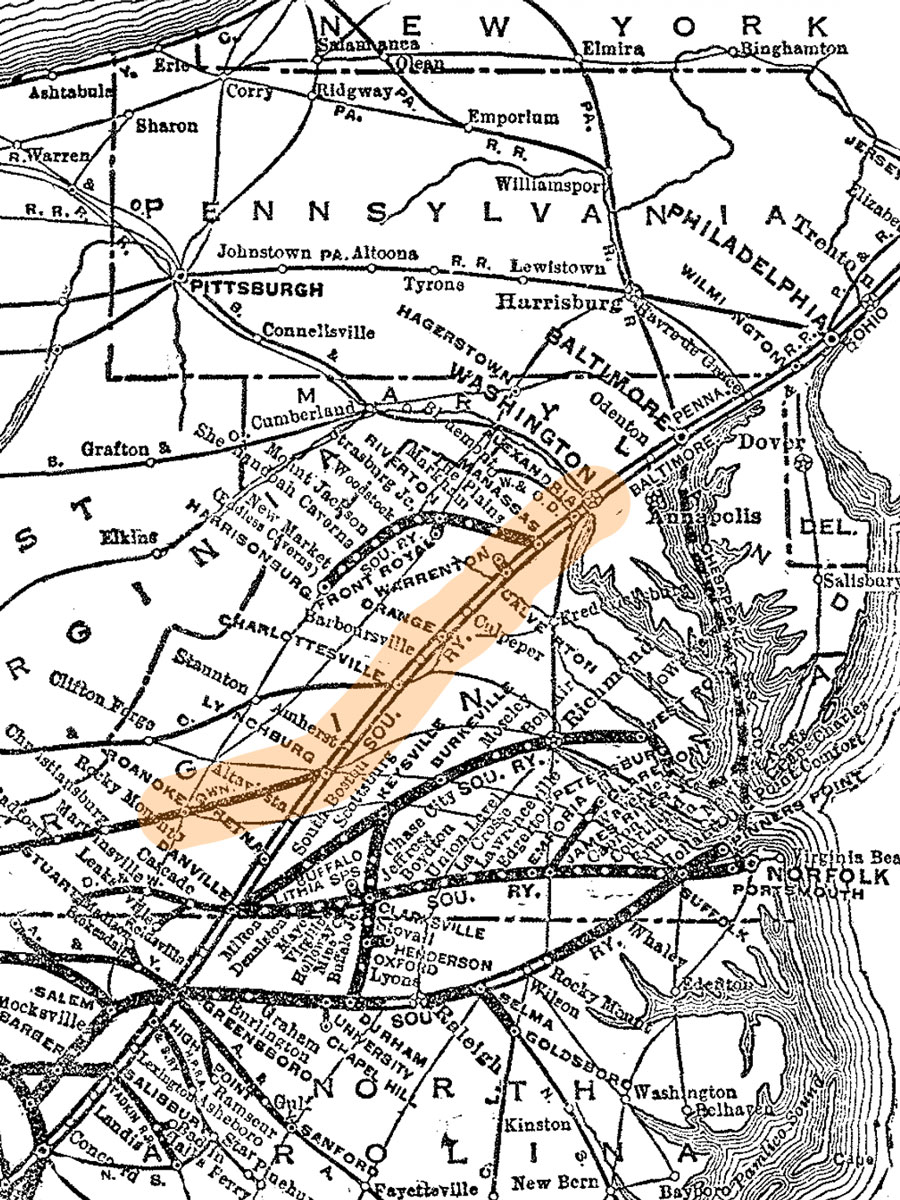
1930 Official Guide map / collection
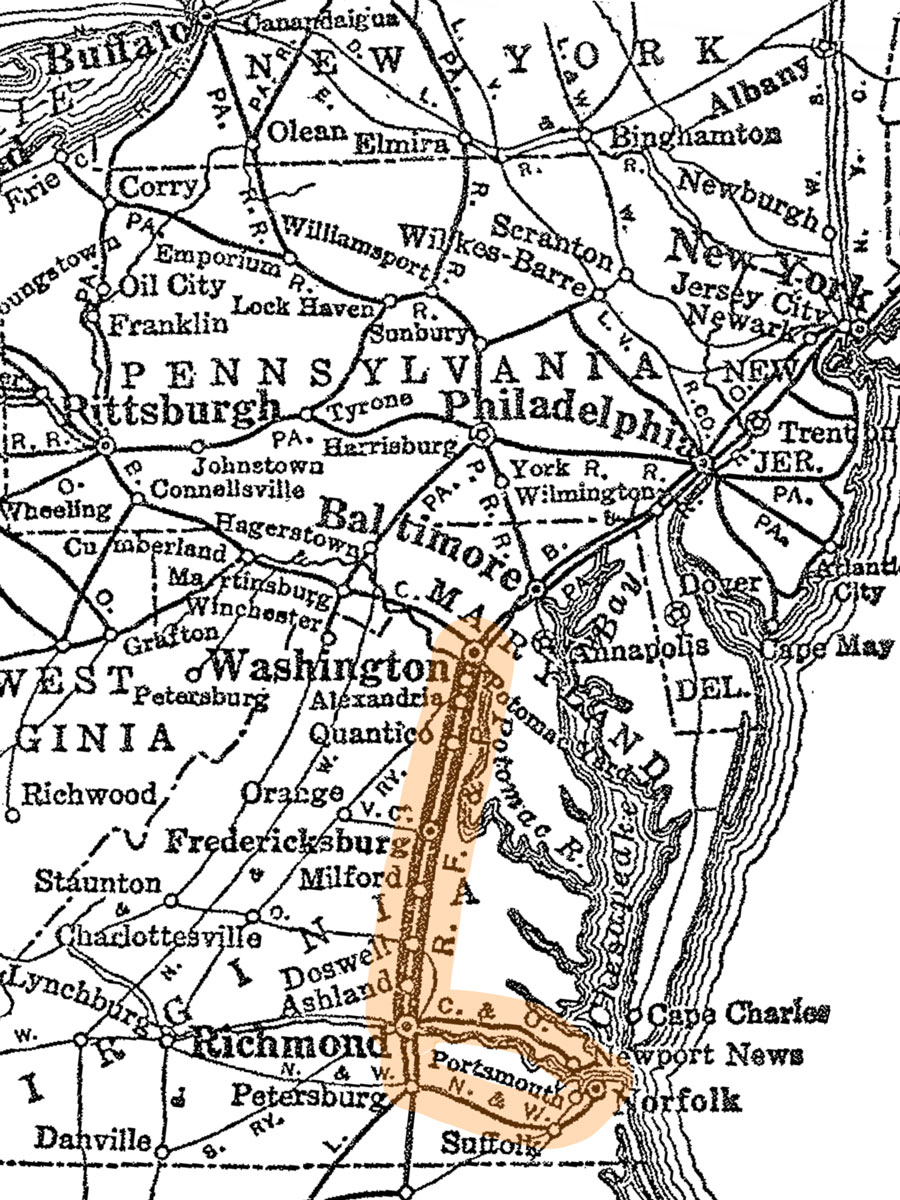
1930 Official Guide map / collection

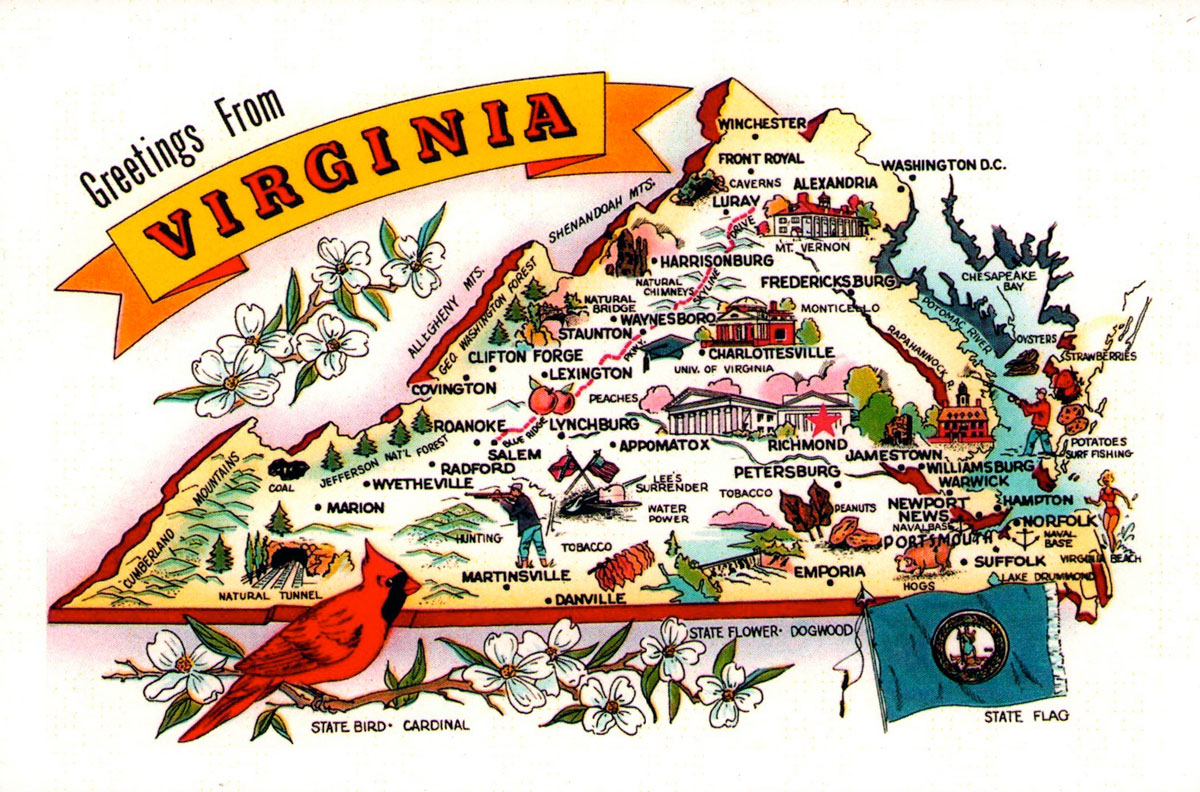
collection

jump to a
flag stop
- Washington
- Alexandria
- Burke Center
- Manassas
- Culpeper
- Charlottesville
- Lynchburg
- Roanoke
jump to a
flag stop
- Washington
- Alexandria
- Woodbridge
- Quantico
- Fredericksburg
- Ashland
- RICH Staples Mill
- RICH Main Street
- Williamsburg
- Newport News
jump to a
flag stop
- Washington
- Alexandria
- Woodbridge
- Quantico
- Fredericksburg
- Ashland
- RICH Staples Mill
- Petersburg
- Norfolk
 0 Washington DC

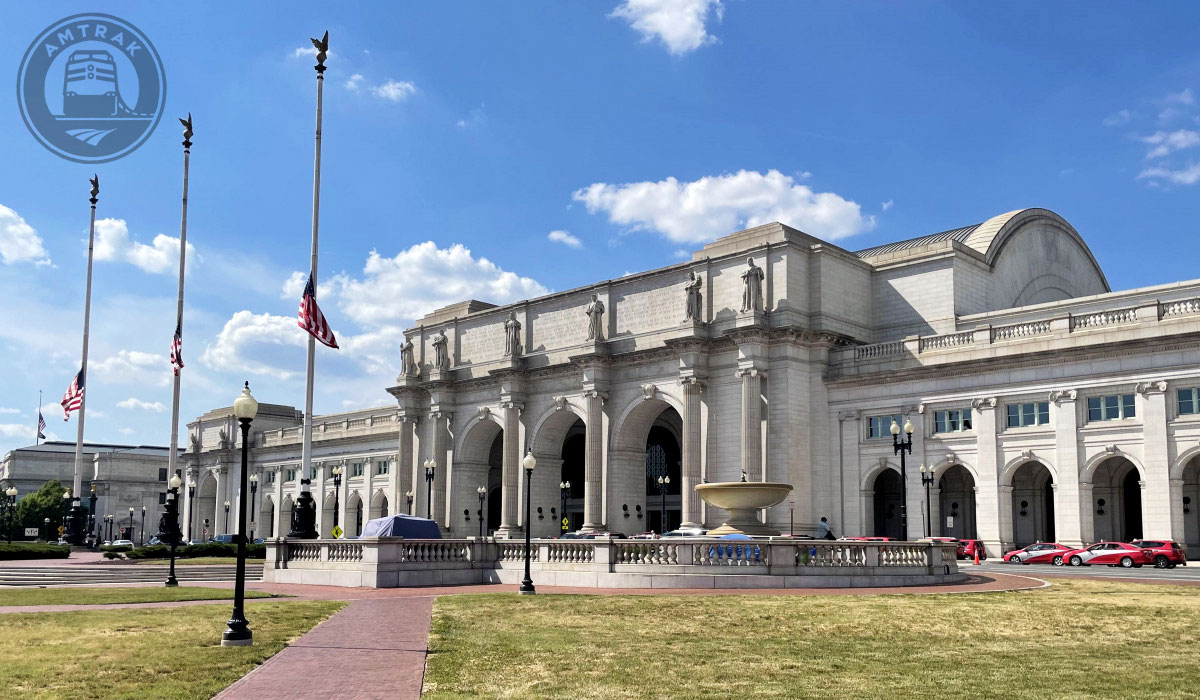
Washington, DC / Aug 2024 / RWH
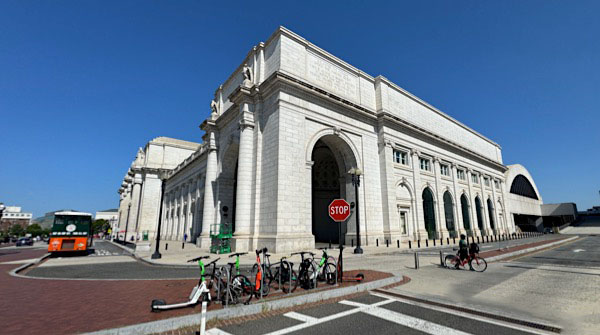
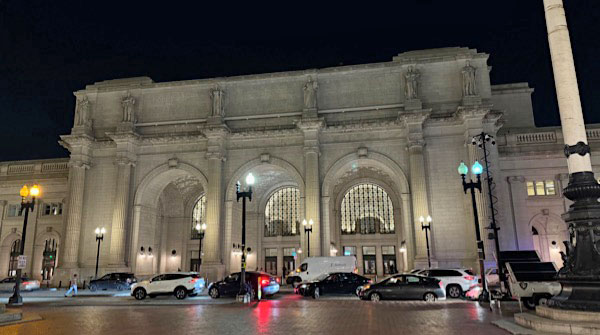
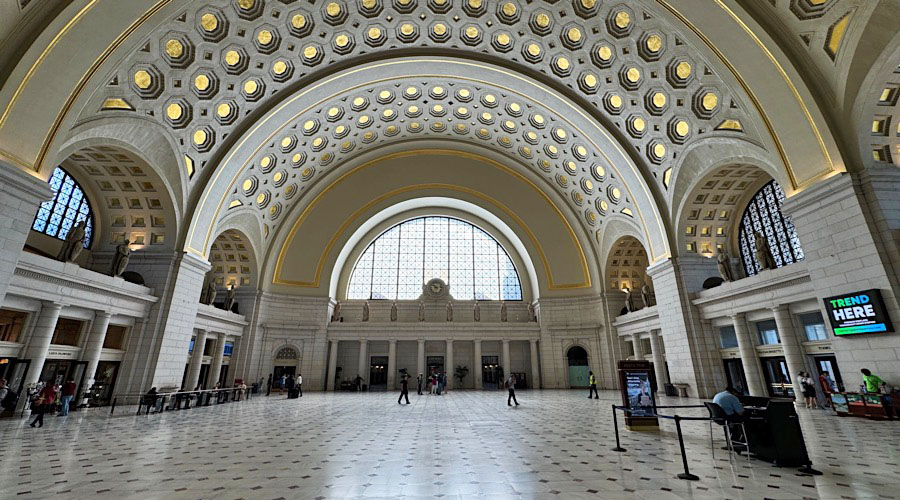
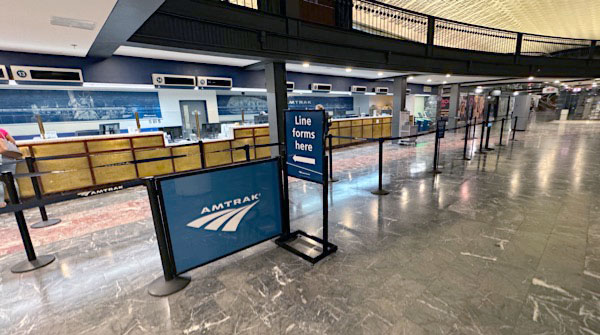
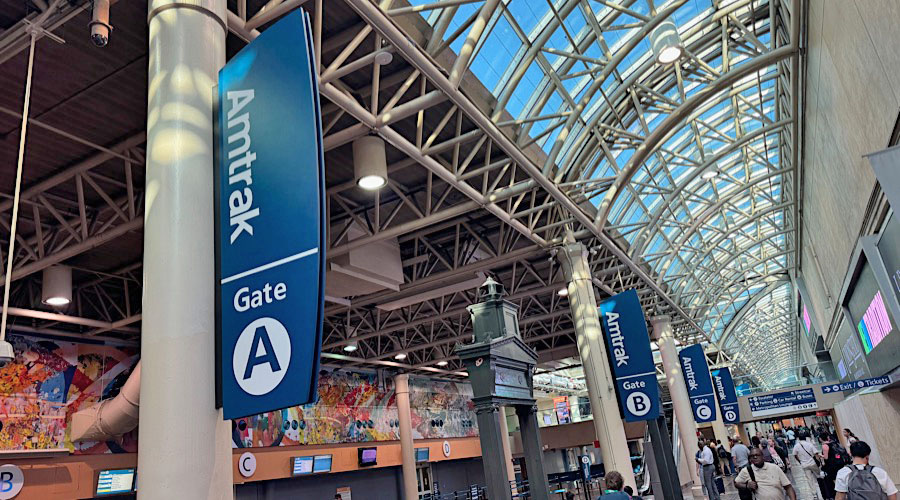
RWH

See our complete Washington Union Station scrapbook in Amtrak Great Stations
8 Alexandria
- Cardinal
- Carolinian
- Crescent
- Northeast Regional
- Palmetto
- Silver Service
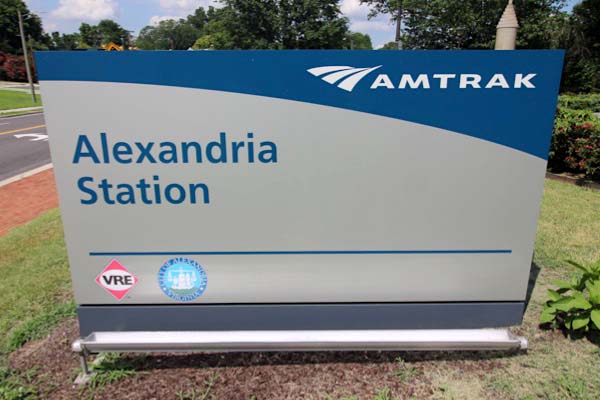
Jul 2025 / RWH
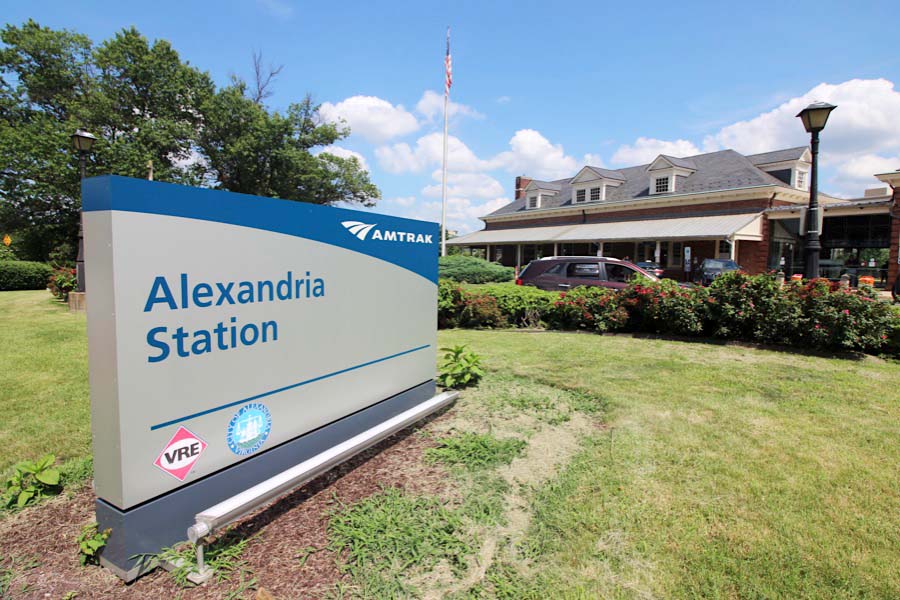
Alexandria, Va / Jul 2025 / RWH
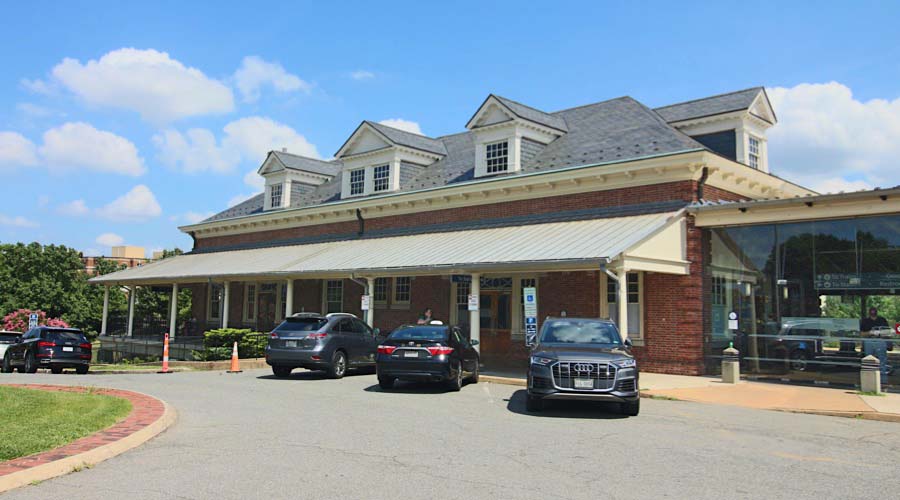
Alexandria, Va / Jul 2025 / RWH

Click to see the Alexandria Union Station plotted on a Google Maps page

- location:Alexandria, VA
- address:110 Callahan Drive
- type:city station, 2 platforms
- owner:City of Alexandria
- opened:September 1905
- builder:Southern Railway
- style:Federal Revival, brick
- renovated:1982, 1990
- services:tickets, baggage
- links: Amtrak | Great Stations
Alexandria, Va / Jul 2025 / RWH
Jul 2025 / RWH
Alexandria, Va / Jul 2025 / RWH
Alexandria, Va / Jul 2025 / RWH
postcard / collection
Jul 2025 / RWH
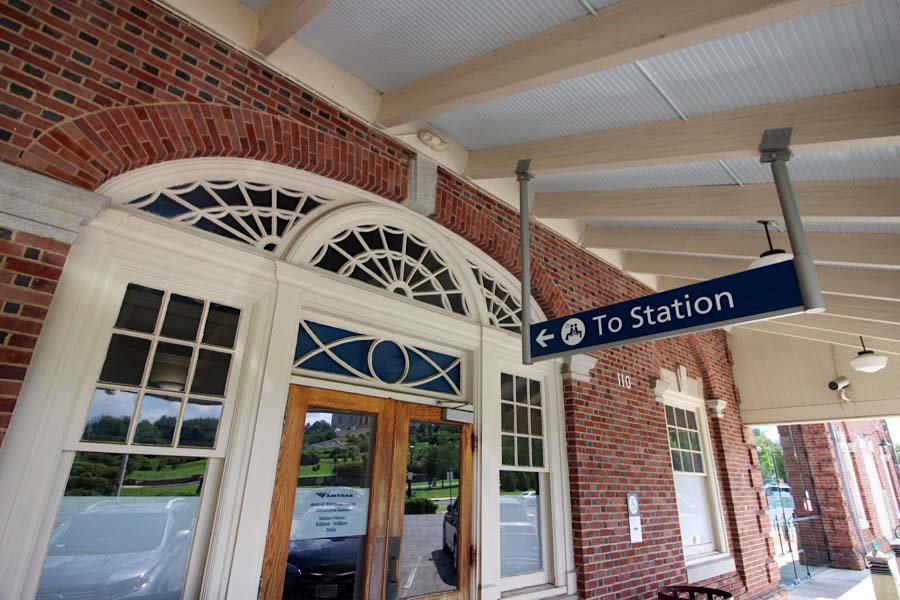
Alexandria, Va / Jul 2025 / RWH

RWH
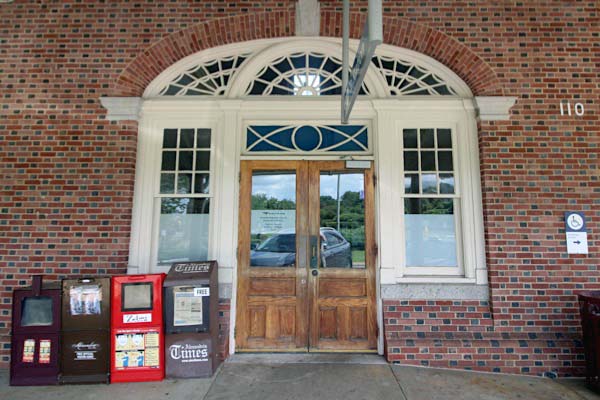
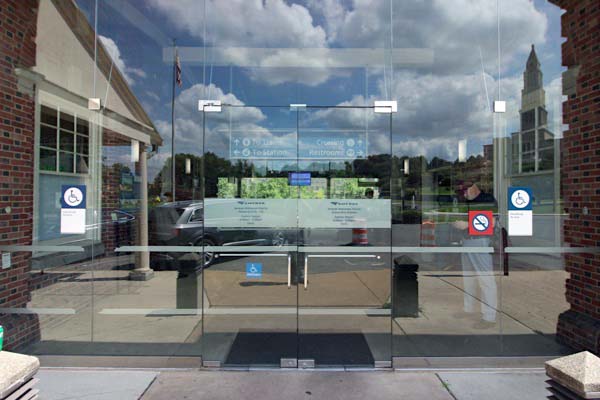
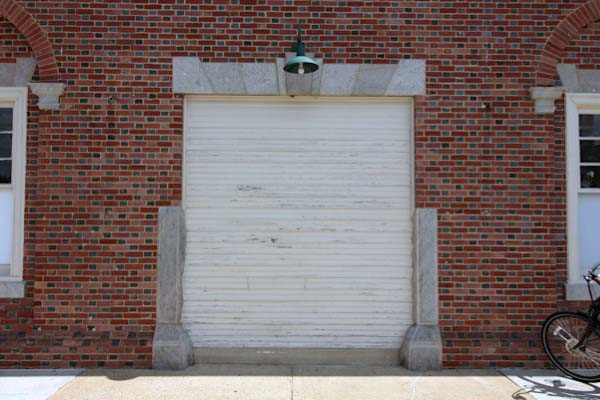
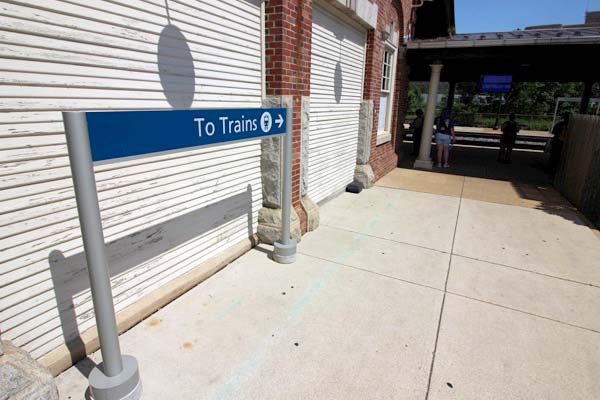
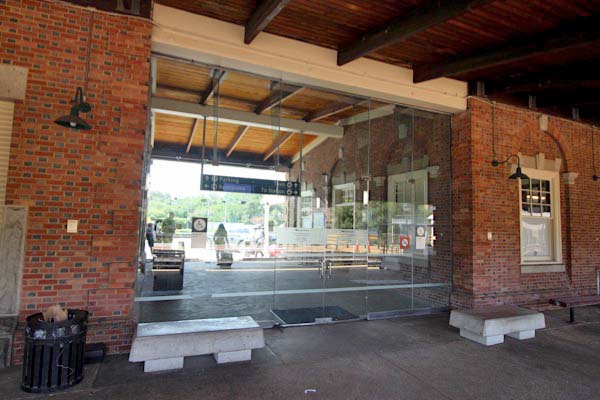
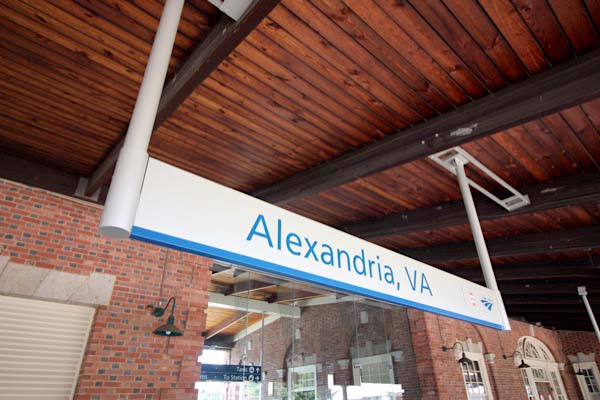
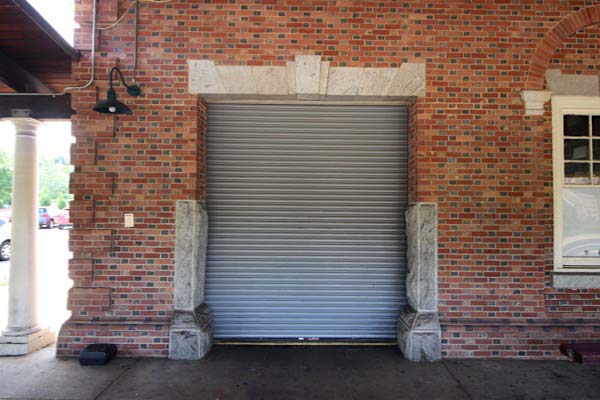
Jul 2025 / RWH
2025 Rail Passengers Association timetable / adapted RWH
Jul 2025 / RWH
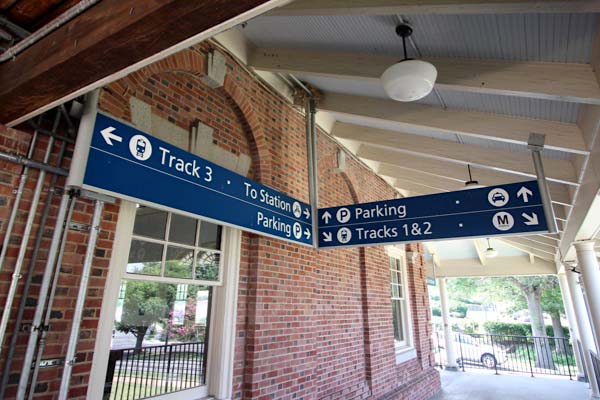
Jul 2025 / RWH
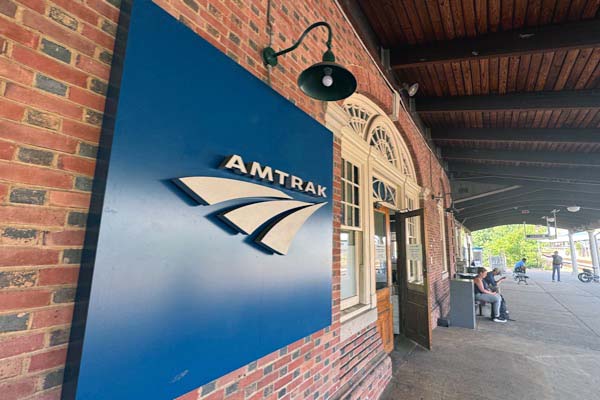
Jul 2025 / RWH
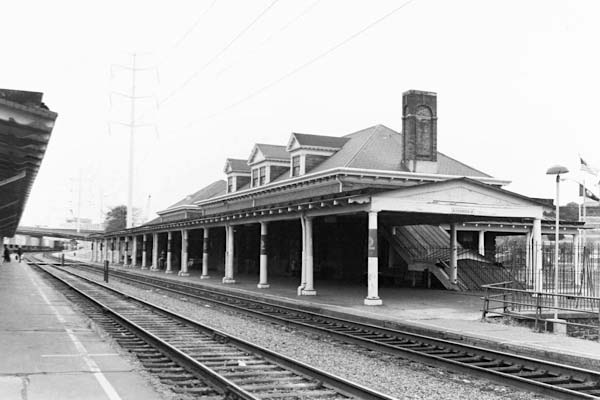
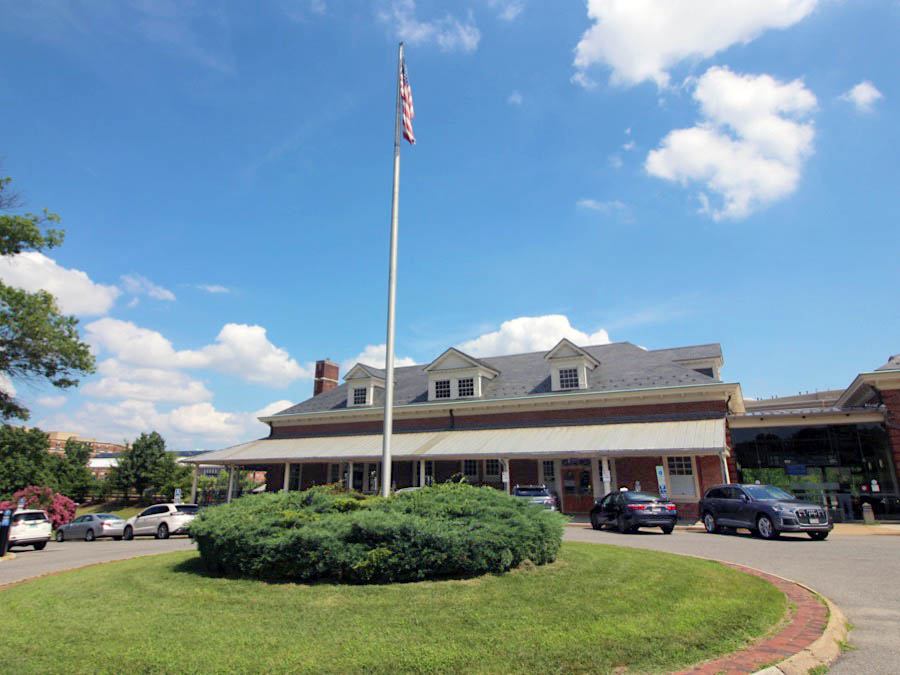
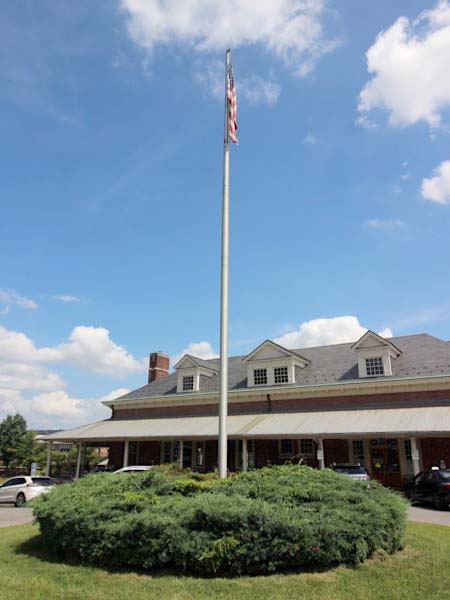
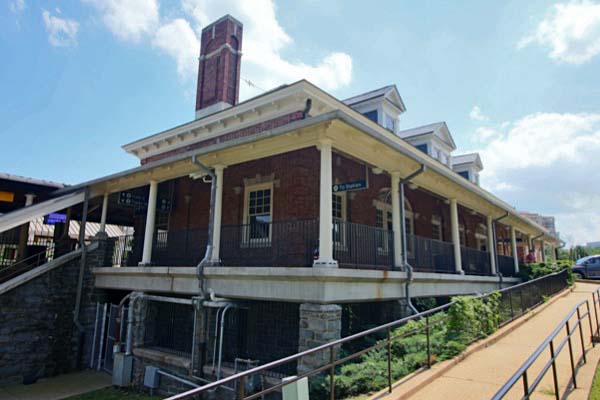
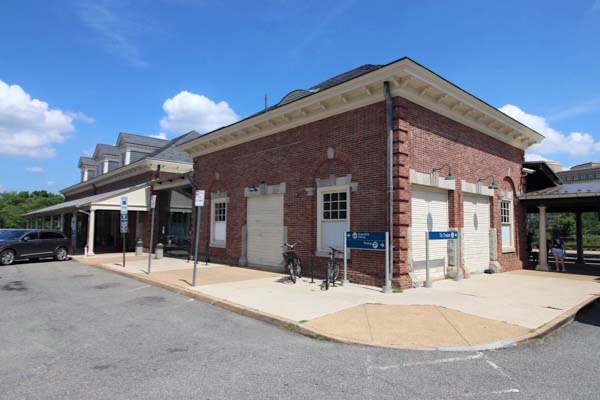
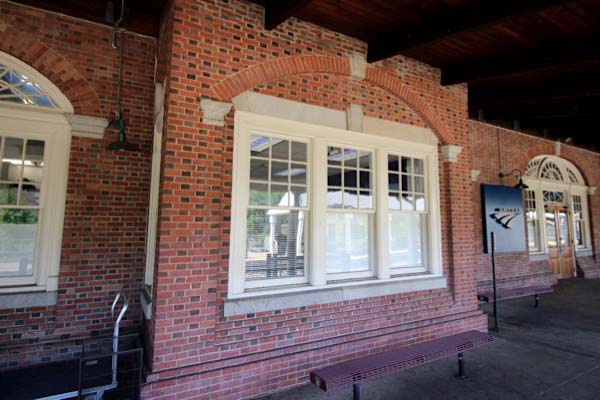
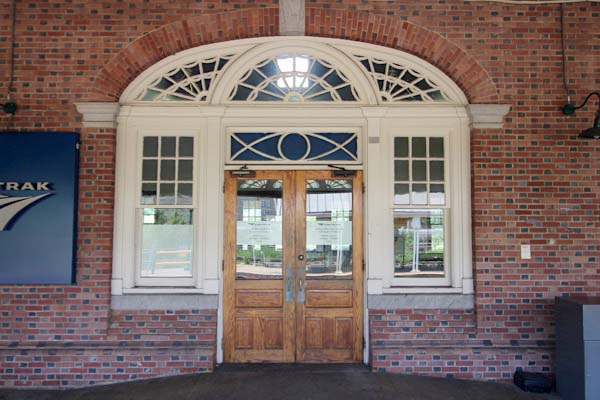
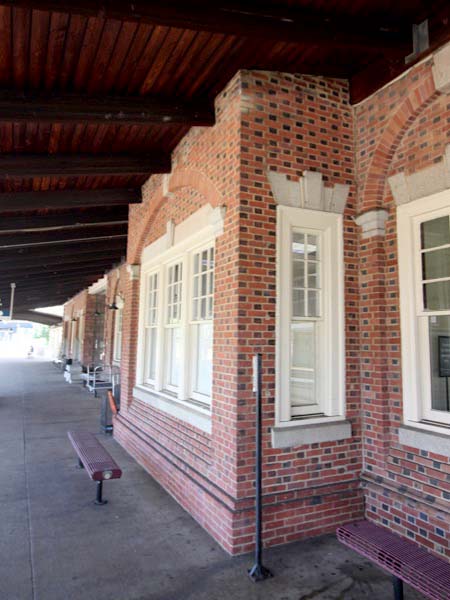
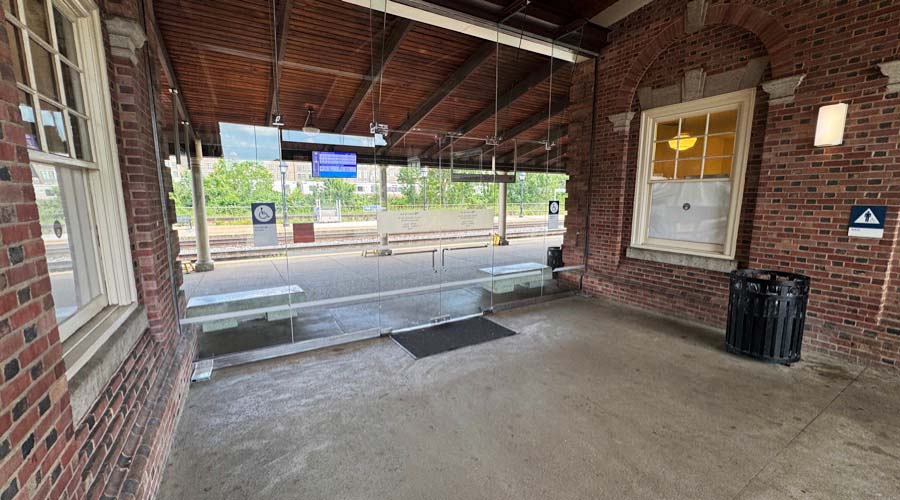
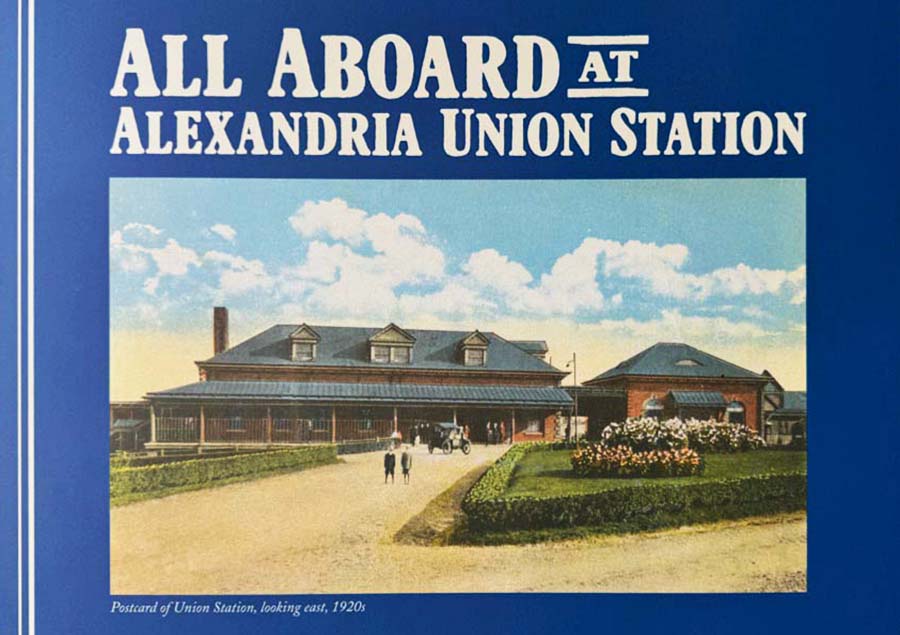
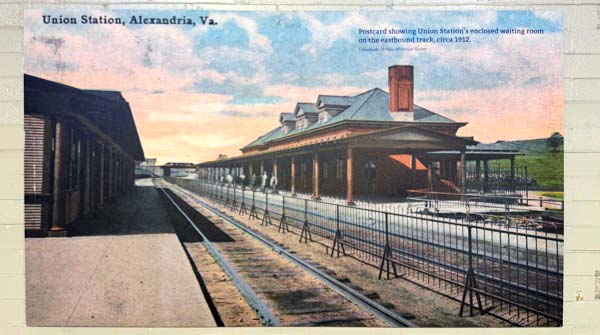
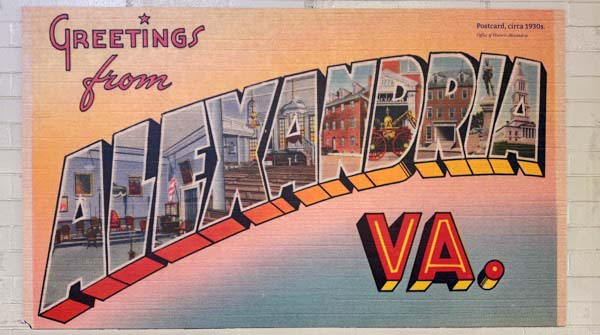
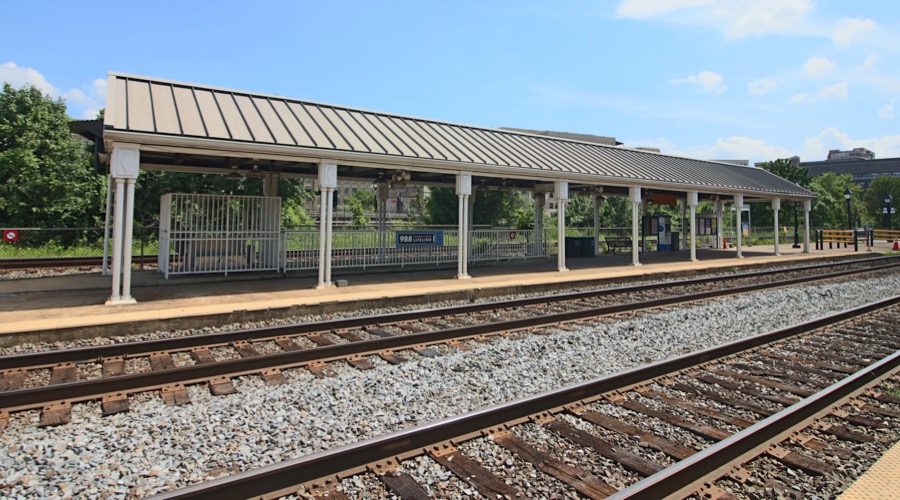
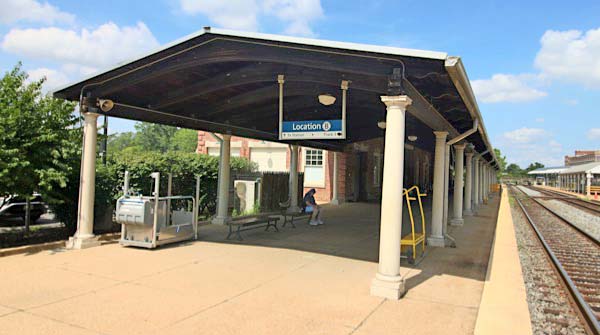
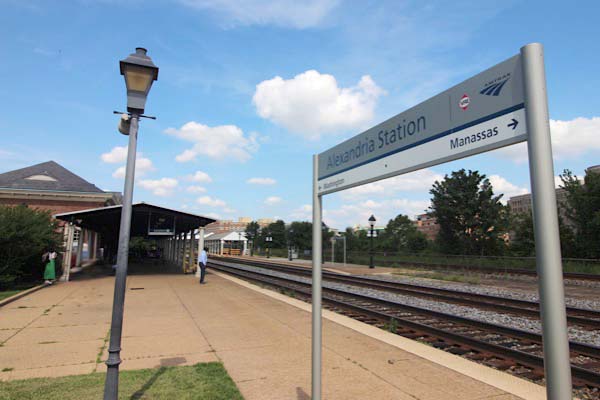
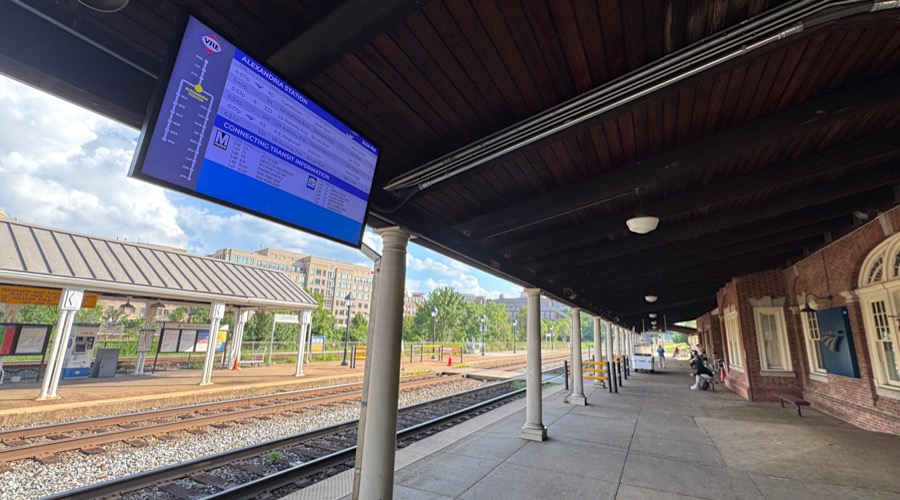
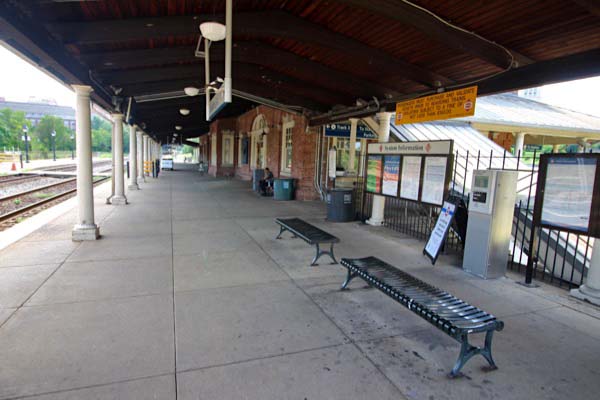
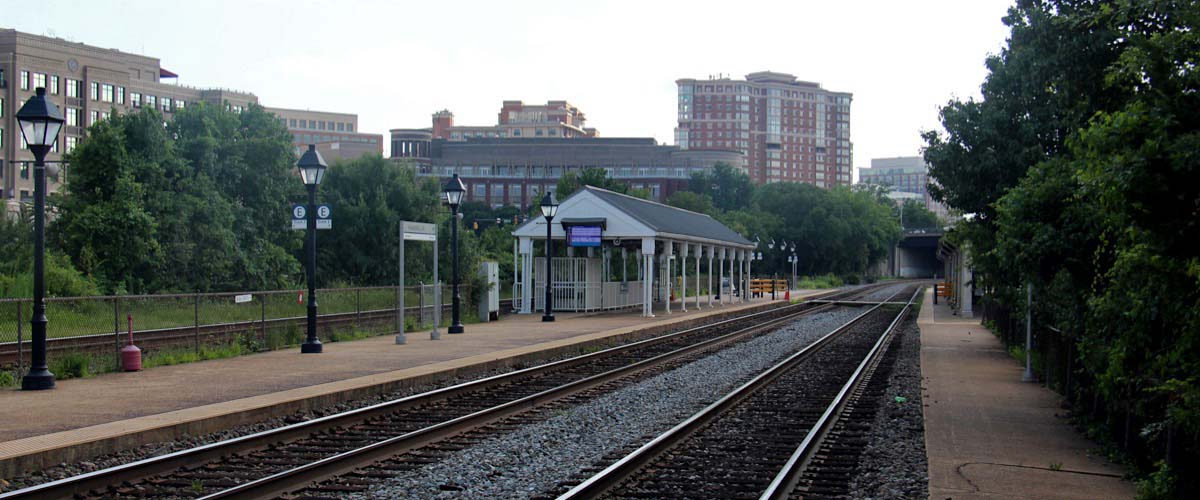
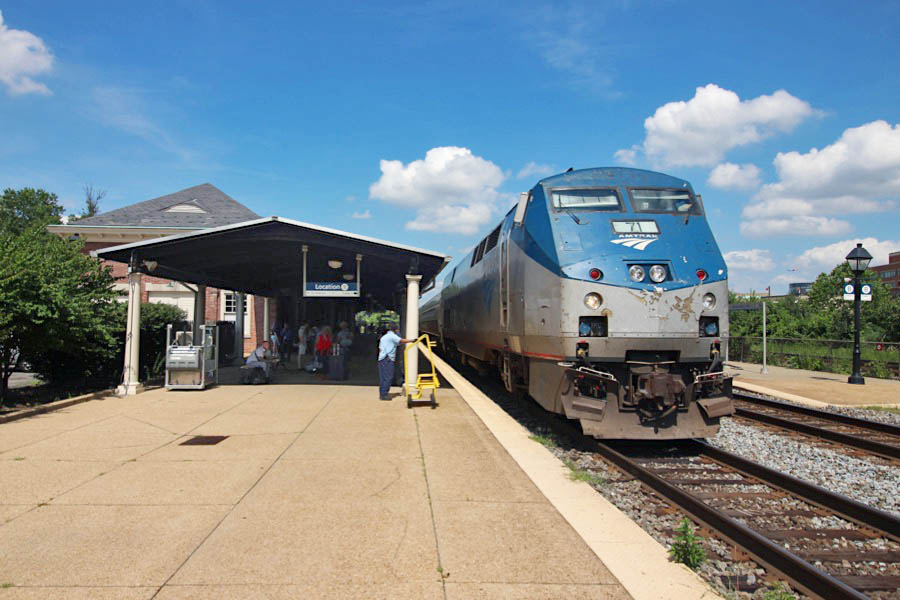
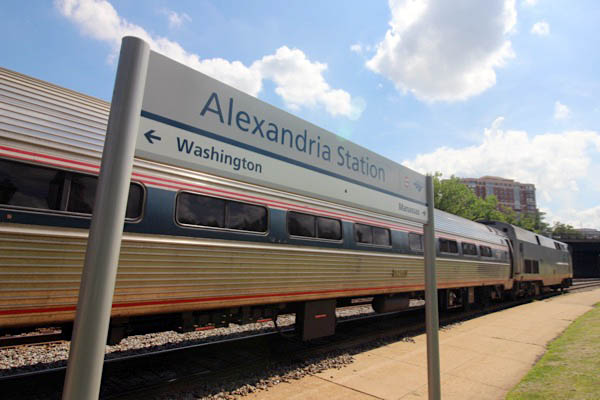
 The Amtrak station in Alexandria opened on September 15, 1905. The train station is directly adjacent to the King Street Metro station and faces the George Washington Masonic National Memorial.
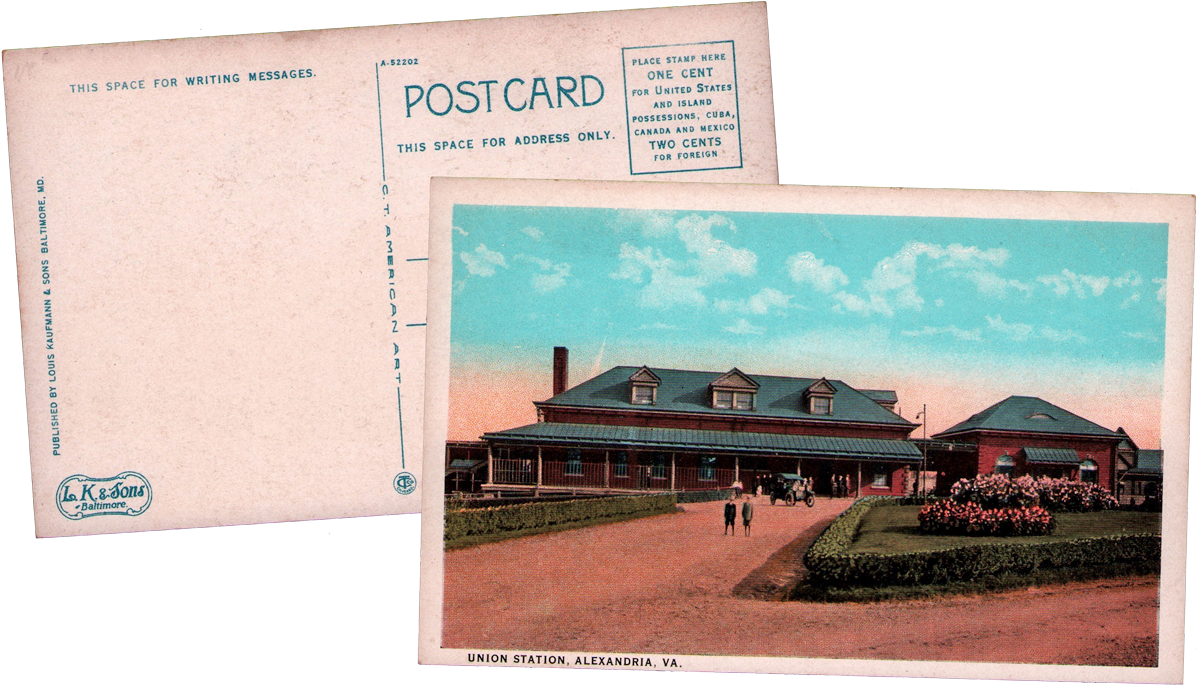
Though not as grandiose as its nearby Washington, D.C. counterpart, this “other Union Station” has a unique style of its own. The station is a one-story brick building consisting of the original main passenger depot and baggage building separated by a 20-foot wide open gateway passage and covered by a covered terrace. The designer used the Federal Revival Style: a 20th century mixture of Neoclassical architecture borrowed from buildings constructed just after the American Revolution, fitting for its location. Both original buildings are still in use. Though many minor renovations have taken place, including the slightly more extensive renovations that occurred in 1982 and the mid-1990s, the original buildings remain essentially unchanged. The limestone and granite Veterans of Foreign Wars memorial was constructed at the station in 1942.
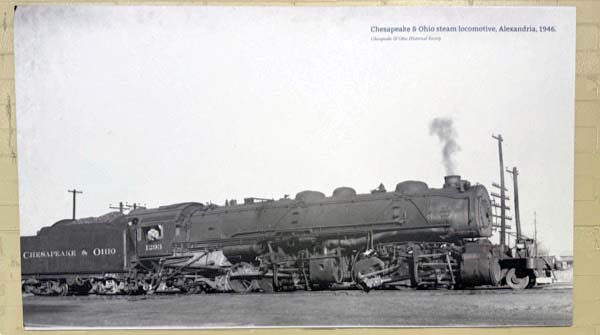
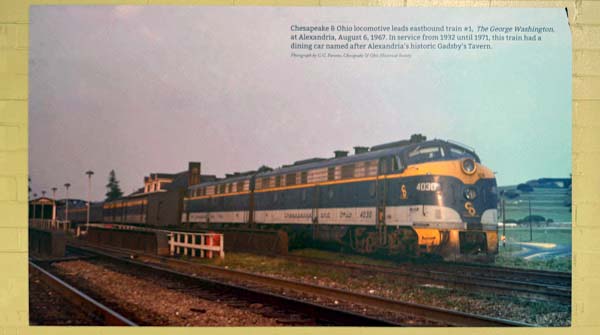
In the late 1840s, the city of Alexandria invested in five major railroad projects to better compete with Baltimore as a regional industrial and trade center, but ended up in a confusion of mergers and failures. In 1901, the railroads serving the region built Potomac Yard, a consolidated rail yard. In 1905, the city of Alexandria commissioned the Washington Southern Railway Company (later part of the Richmond, Fredericksburg & Potomac, now CSX) to build the Alexandria Union Station at a cost of $62,020.55. The station also served the Chesapeake & Ohio and Southern Railway trains.
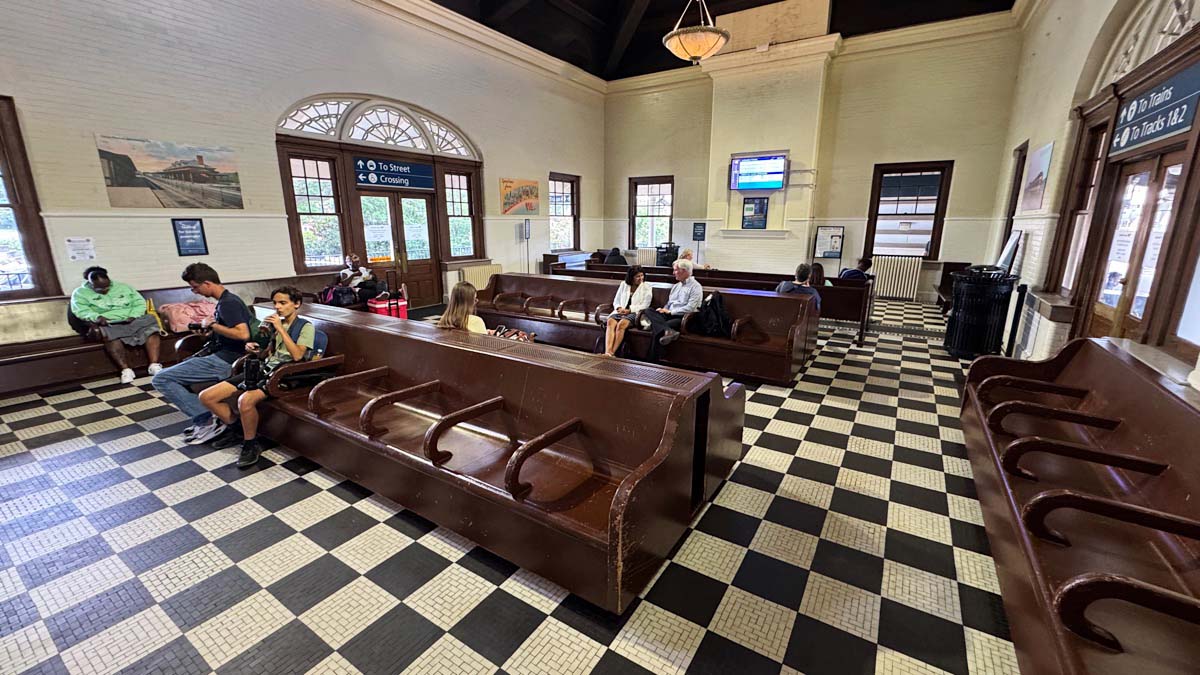
Jul 2025 / RWH
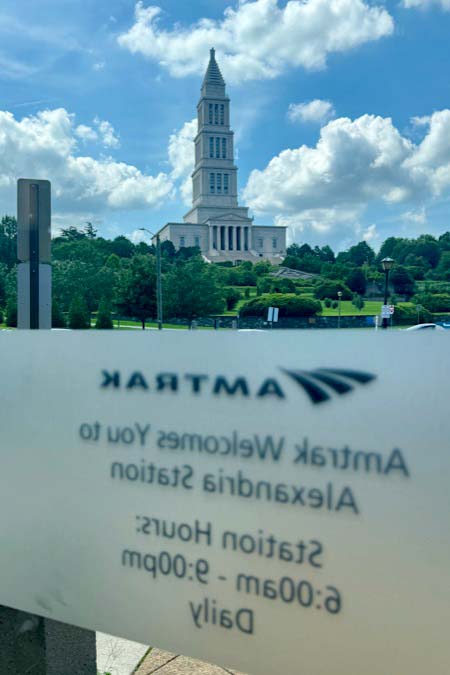
Jul 2025 / RWH
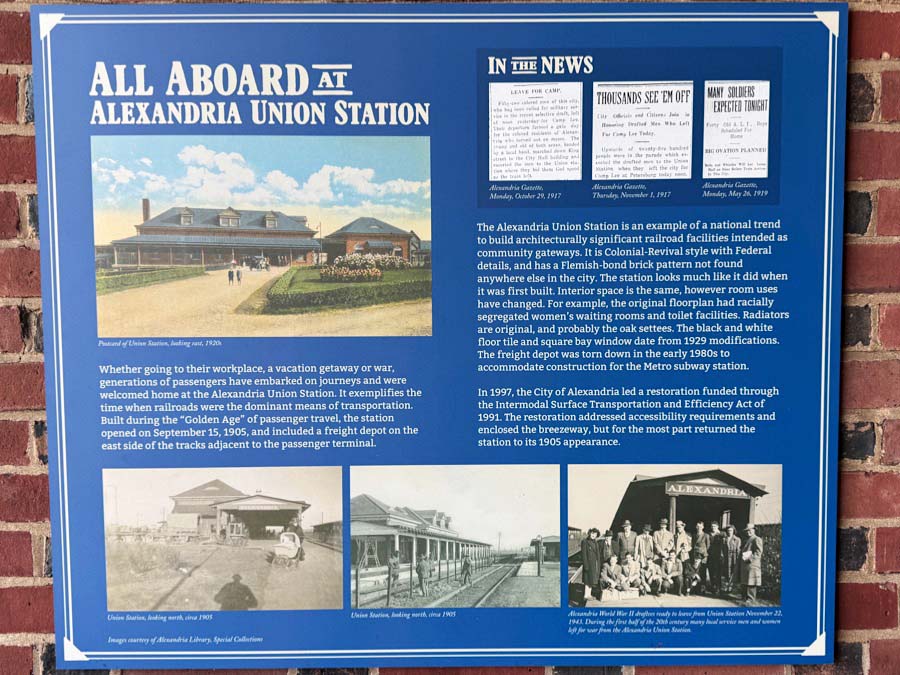
Jul 2025 / RWH
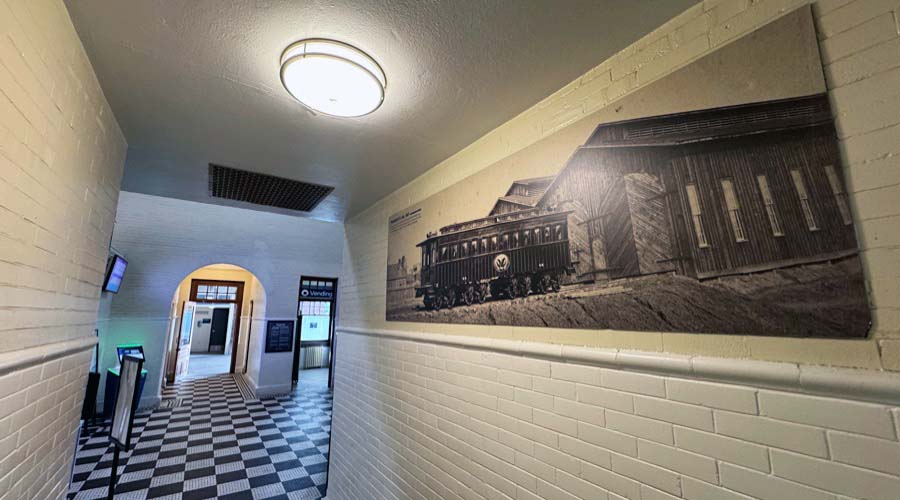
Jul 2025 / RWH
Jul 2025 / RWH
Jul 2025 / RWH
 Alexandria, Va
Alexandria, Va / Jul 2025 / RWH
Alexandria, Va / Jul 2025 / RWH
Jul 2025 / RWH
Alexandria, Va / Jul 2025 / RWH
Jul 2025 / RWH
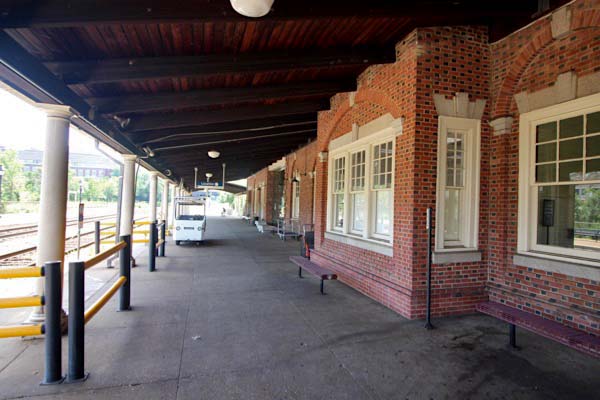
Jul 2025 / RWH
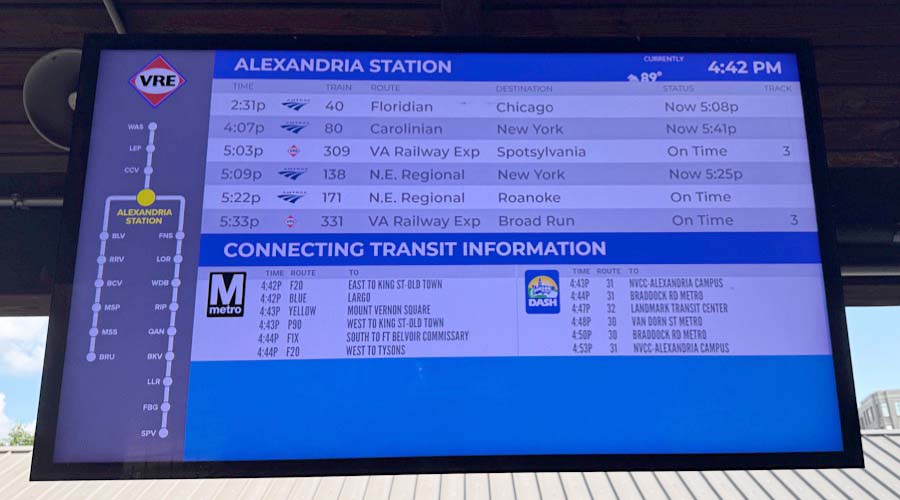
Jul 2025 / RWH
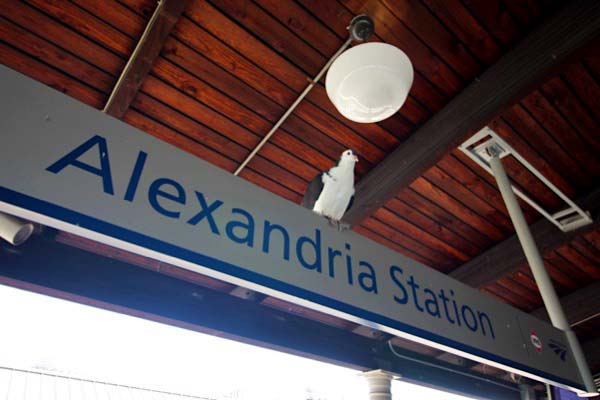
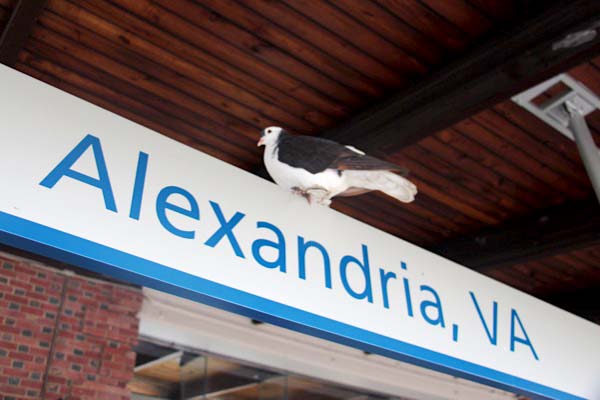
Jul 2025 / RWH
Alexandria, Va / Jul 2025 / RWH

southbound #93
Alexandria, Va / Jul 2025 / RWH
Alexandria, Va / Jul 2025 / RWH
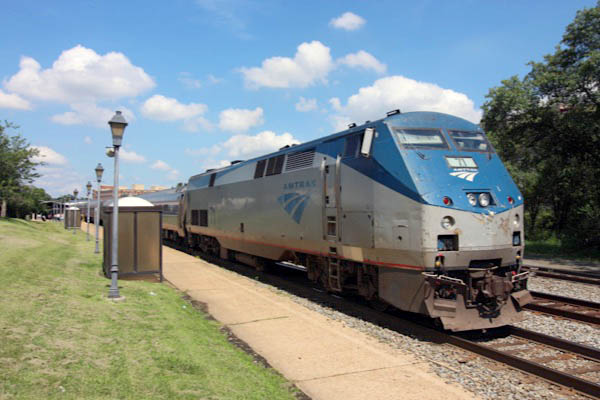
Alexandria, Va / Jul 2025 / RWH
Amtrak #71
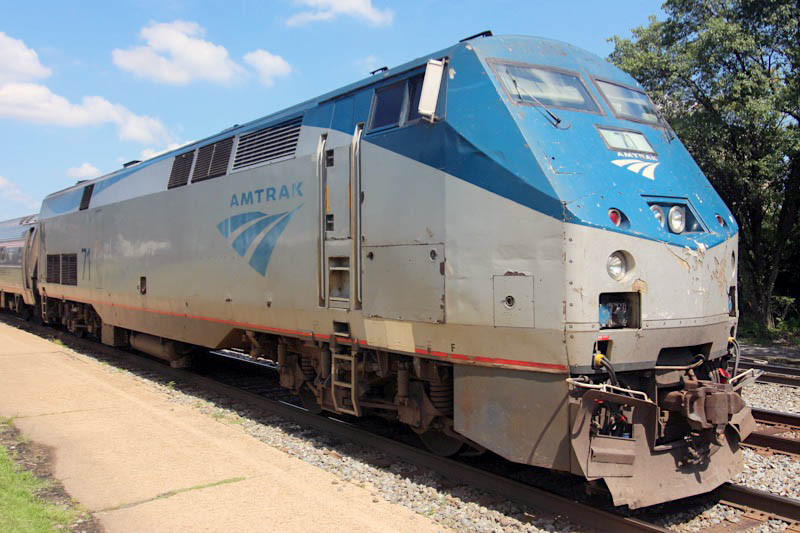
Amtrak #71
Alexandria, Va / Jul 2025 / RWH


Amtrak #71


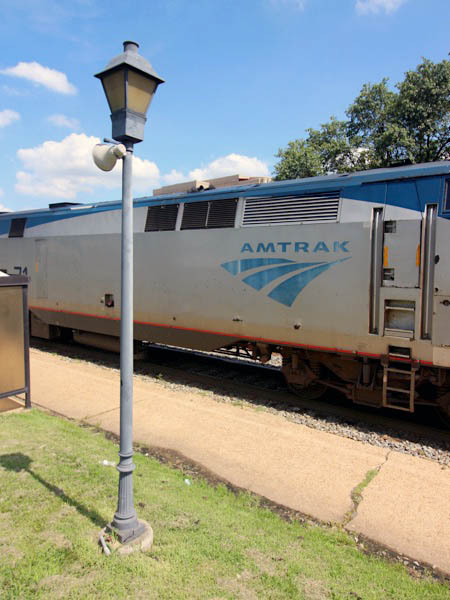
Jul 2025 / RWH
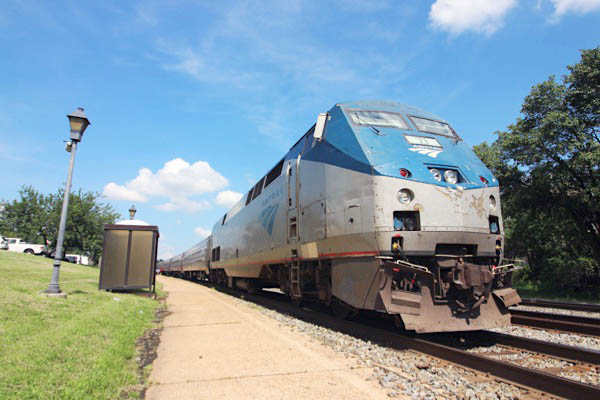
Alexandria, Va / Jul 2025 / RWH
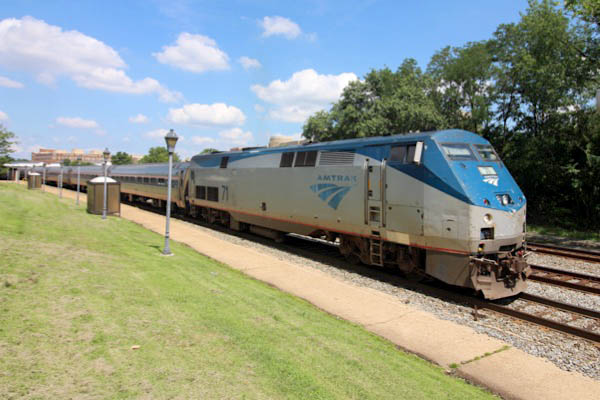
Alexandria, Va / Jul 2025 / RWH
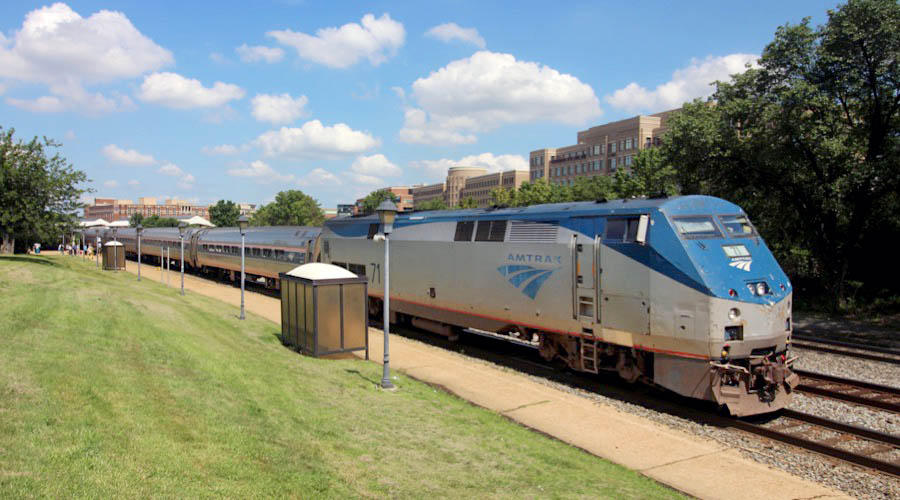
Alexandria, Va / Jul 2025 / RWH
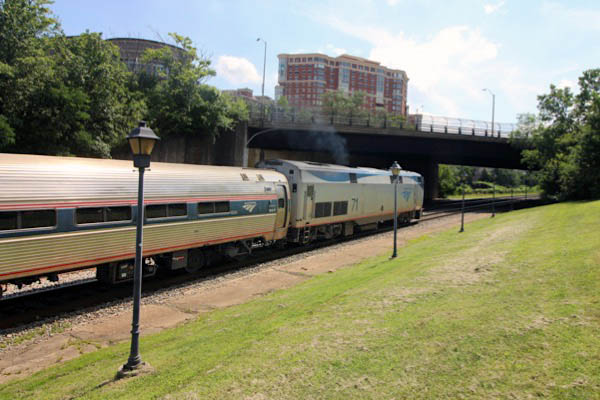
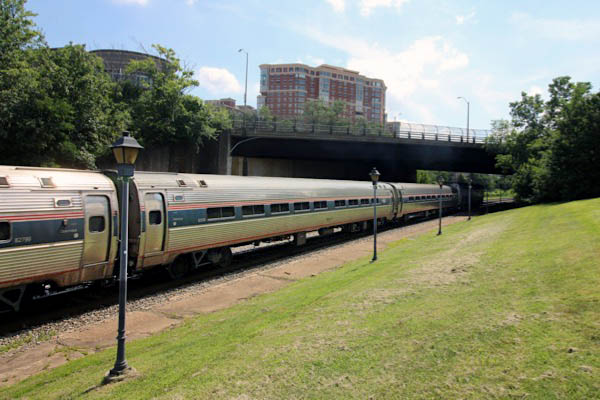
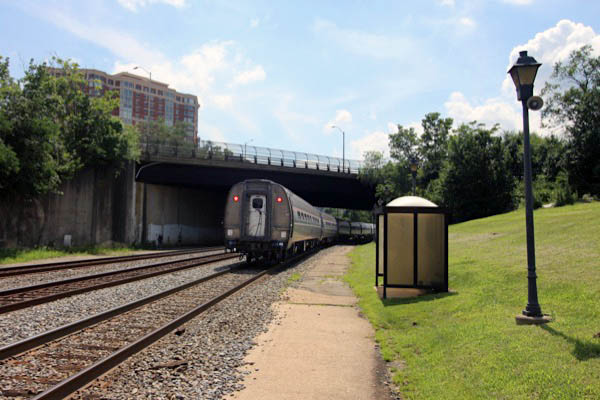
Jul 2025 / RWH
southbound #125
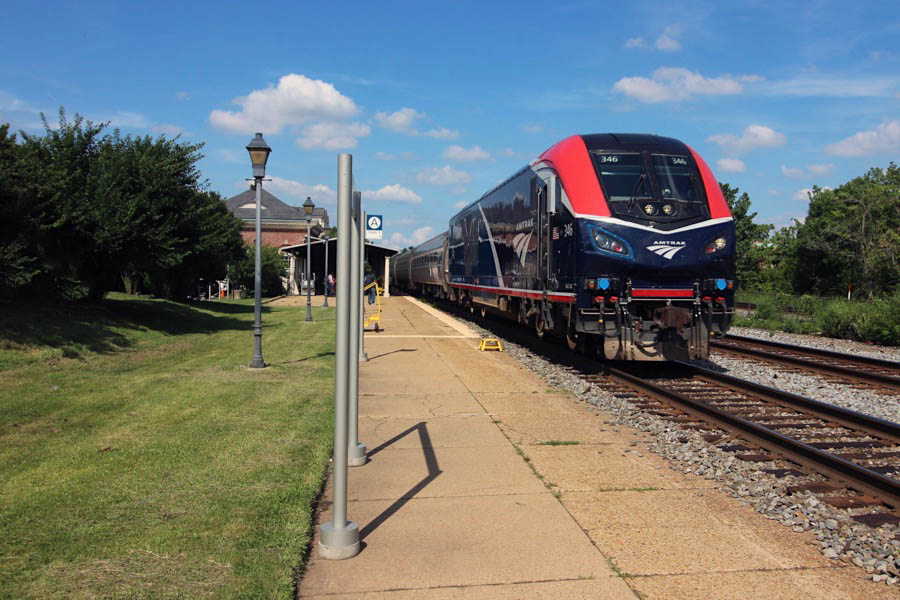
Alexandria, Va / Jul 2025 / RWH
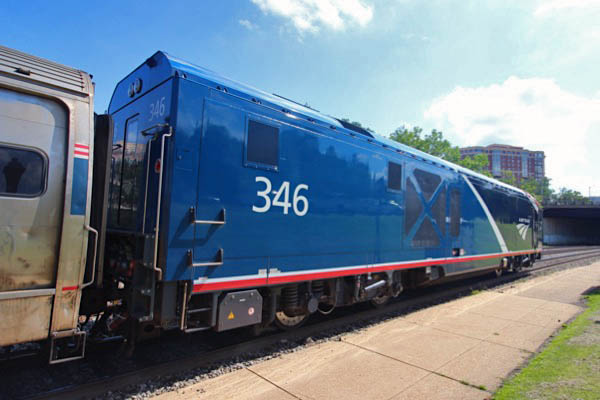
Alexandria, Va / Jul 2025 / RWH
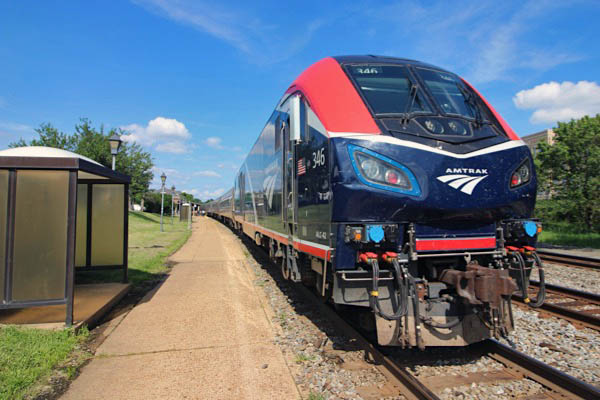
Alexandria, Va / Jul 2025 / RWH
Amtrak #346
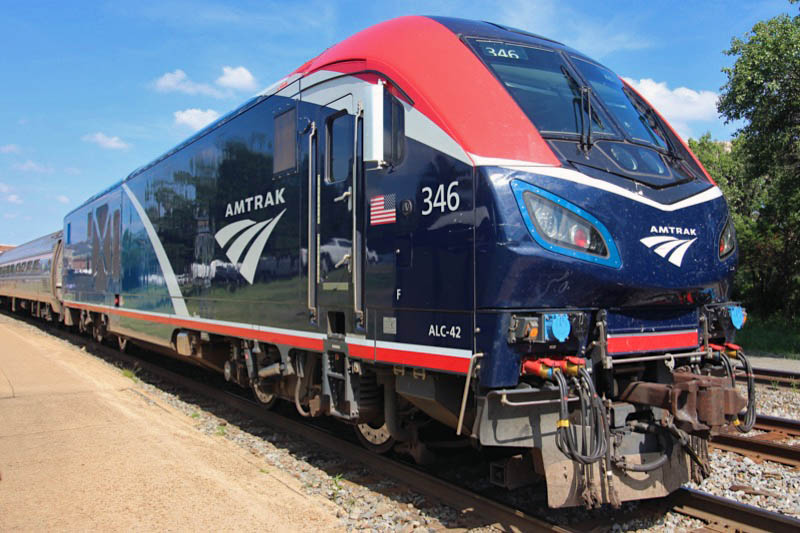
Amtrak #346
Alexandria, Va / Jul 2025 / RWH
Amtrak #346
wears Amtrak Phase VII paint scheme

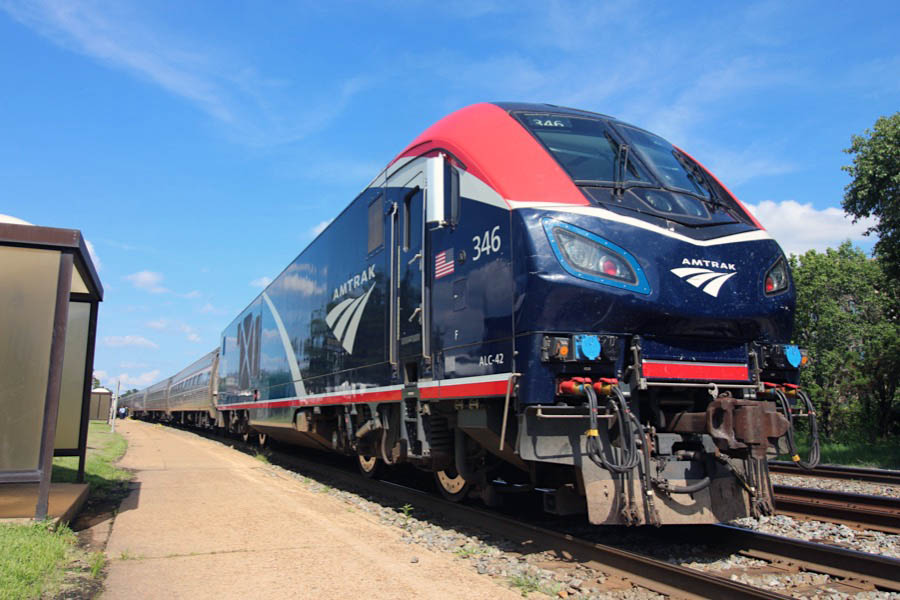
Alexandria, Va / Jul 2025 / RWH
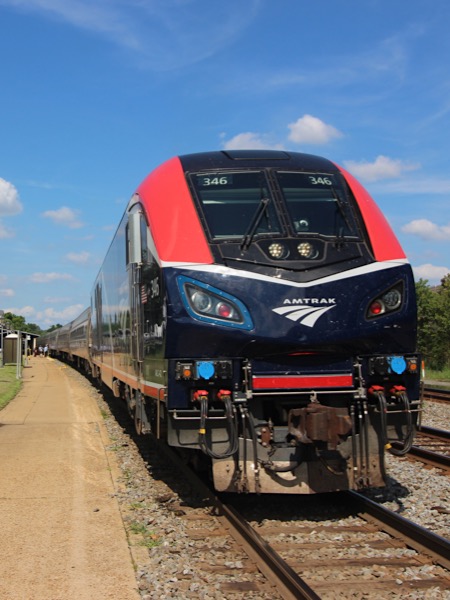
Jul 2025 / RWH
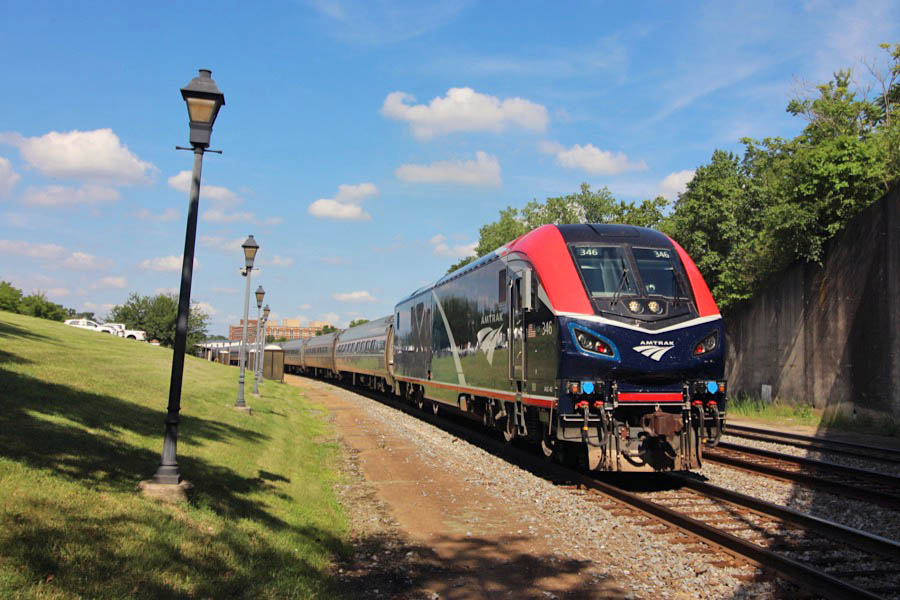
Alexandria, Va / Jul 2025 / RWH
northbound #138
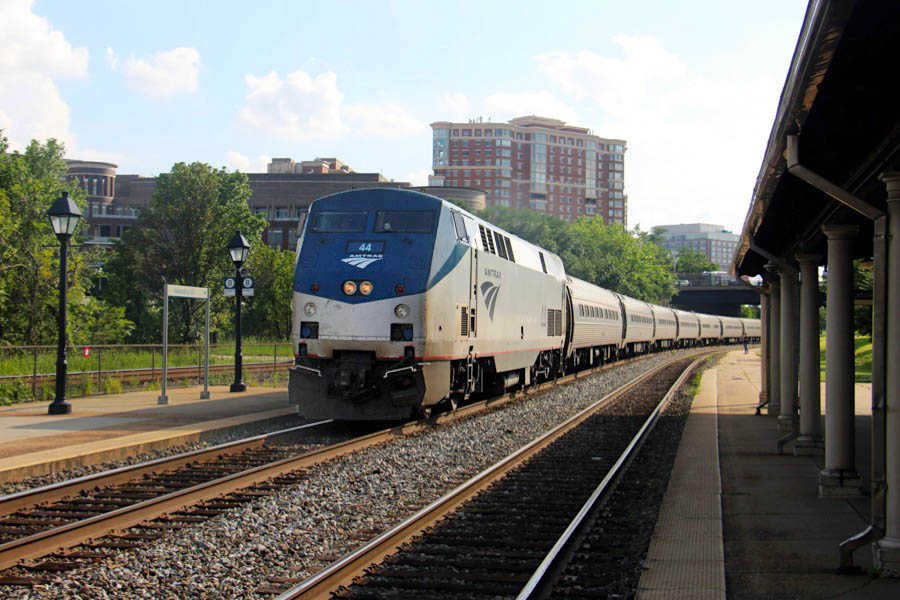
Alexandria, Va / Jul 2025 / RWH
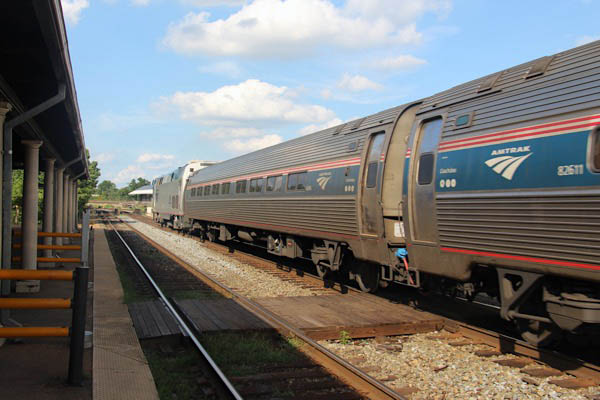
Alexandria, Va / Jul 2025 / RWH
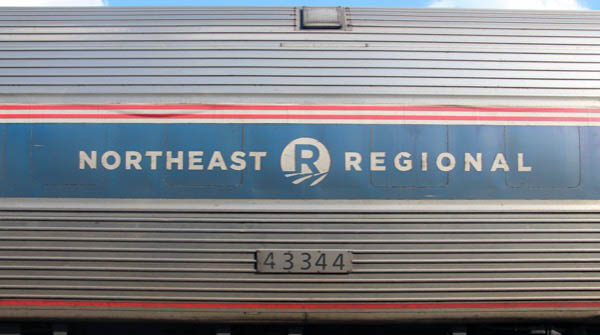
Jul 2025 / RWH
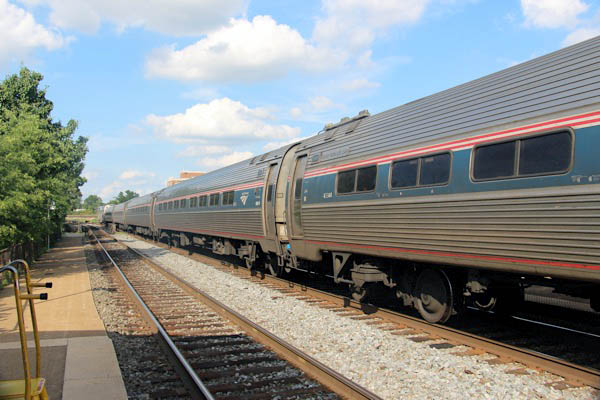
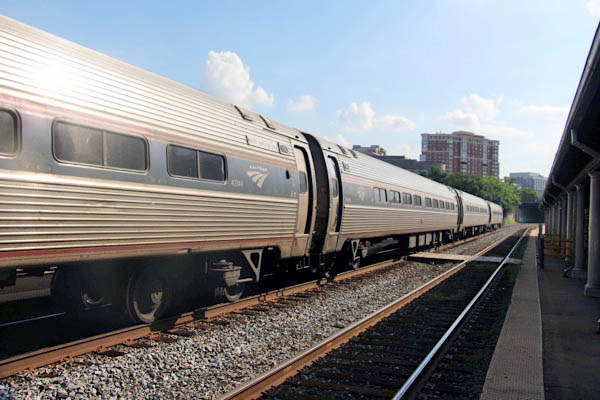
Alexandria, Va / Jul 2025 / RWH
southbound #171
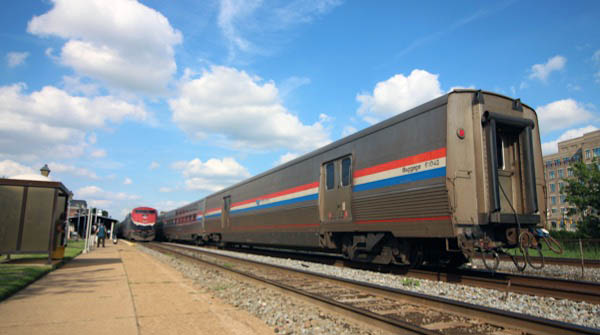
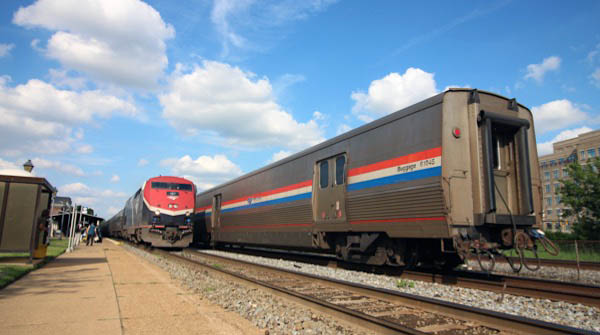
Alexandria, Va / Jul 2025 / RWH
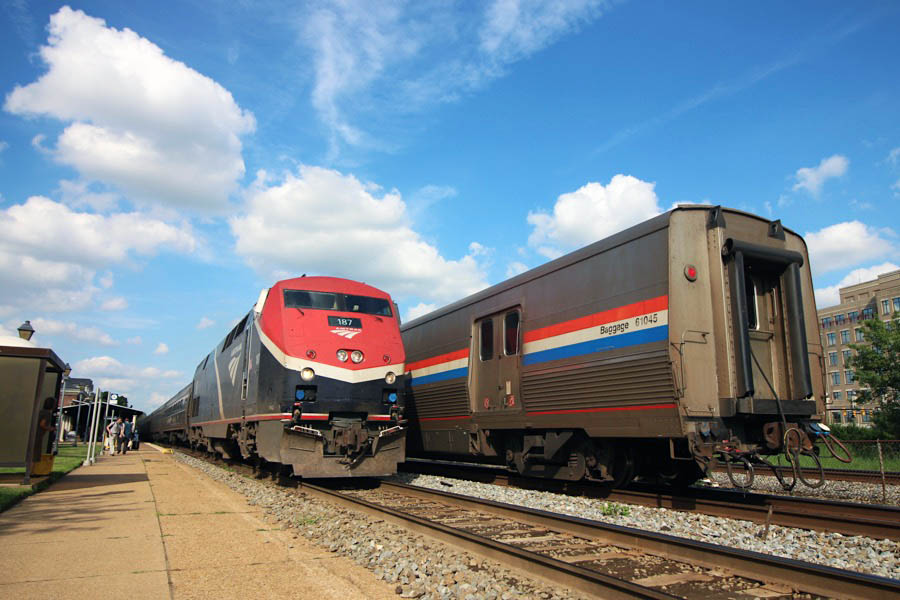
Alexandria, Va / Jul 2025 / RWH
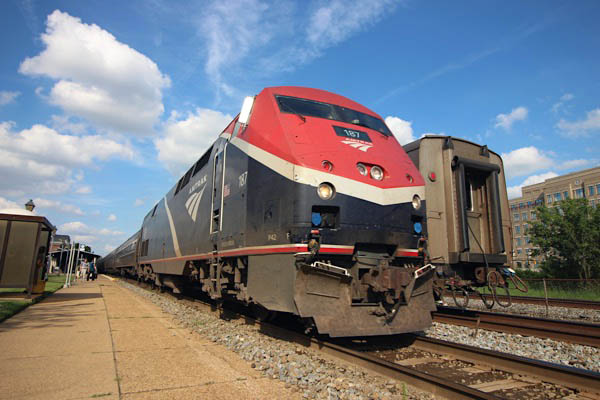
Alexandria, Va / Jul 2025 / RWH
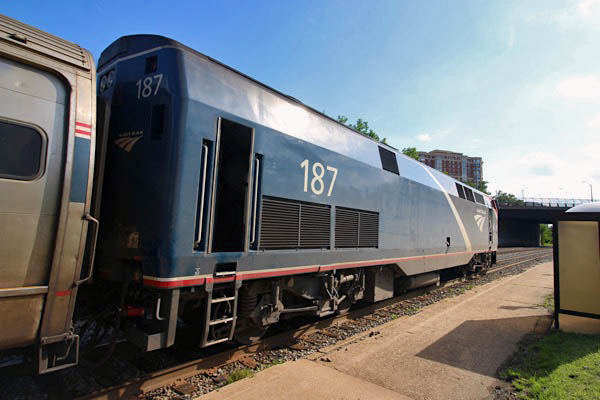
Alexandria, Va / Jul 2025 / RWH
Amtrak #187
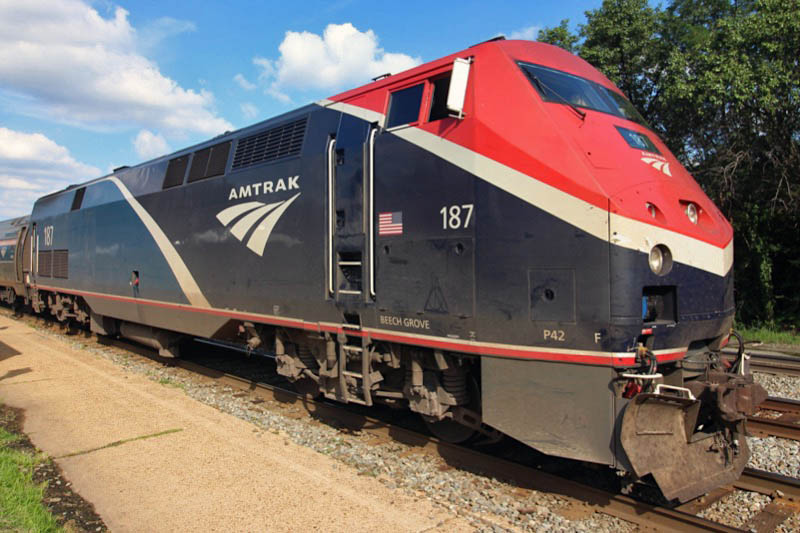
Amtrak #187
Alexandria, Va / Jul 2025 / RWH
Amtrak #187
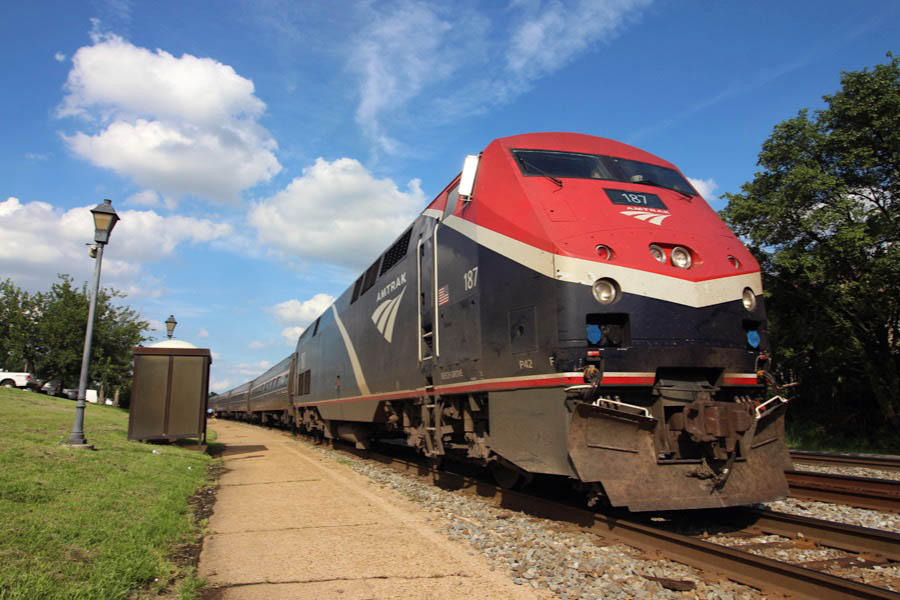
Alexandria, Va / Jul 2025 / RWH
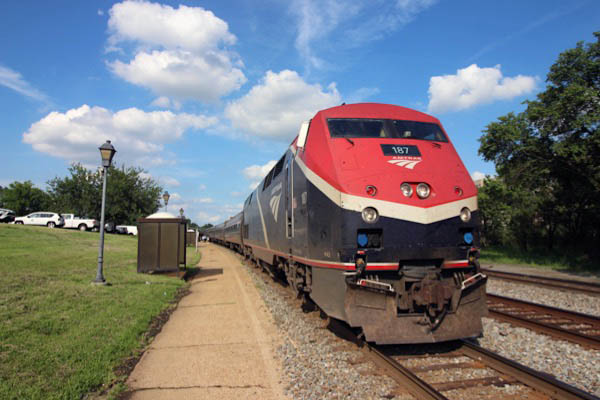
Alexandria, Va / Jul 2025 / RWH
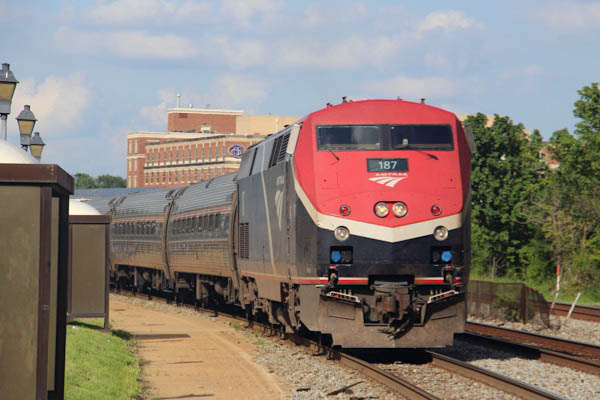
Alexandria, Va / Jul 2025 / RWH
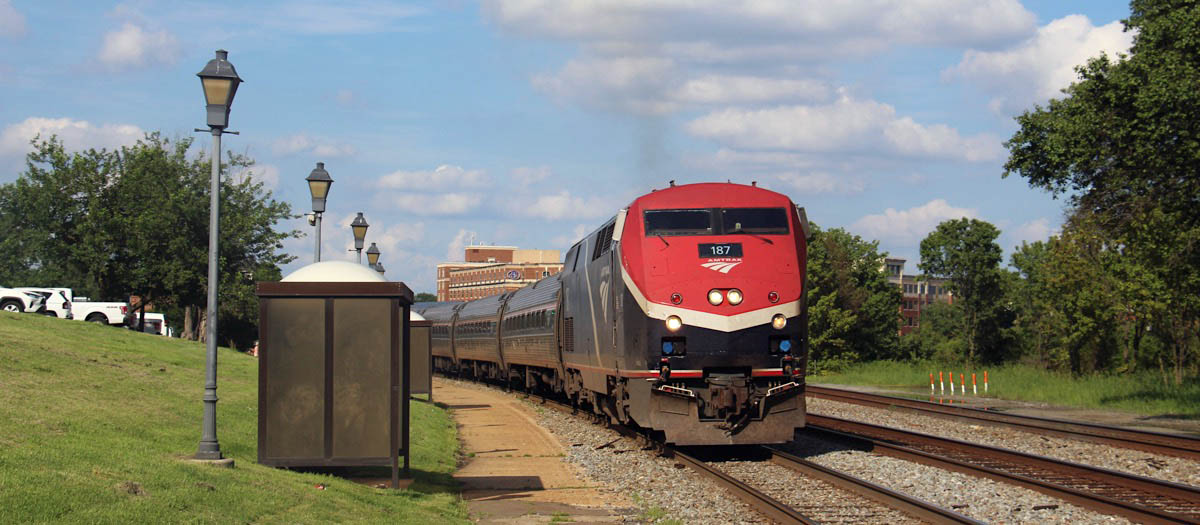
Alexandria, Va / Jul 2025 / RWH
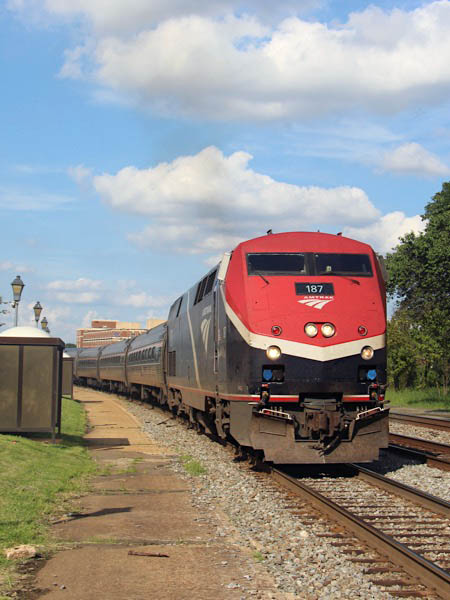
Jul 2025 / RWH
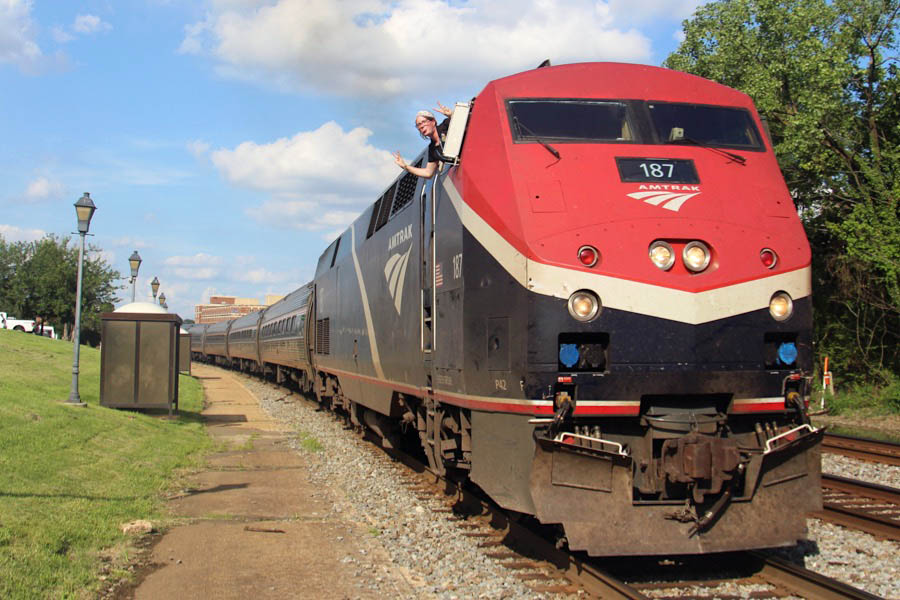
Alexandria, Va / Jul 2025 / RWH
Roanoke line

33 Manassas
- Cardinal
- Crescent
- Northeast Regional
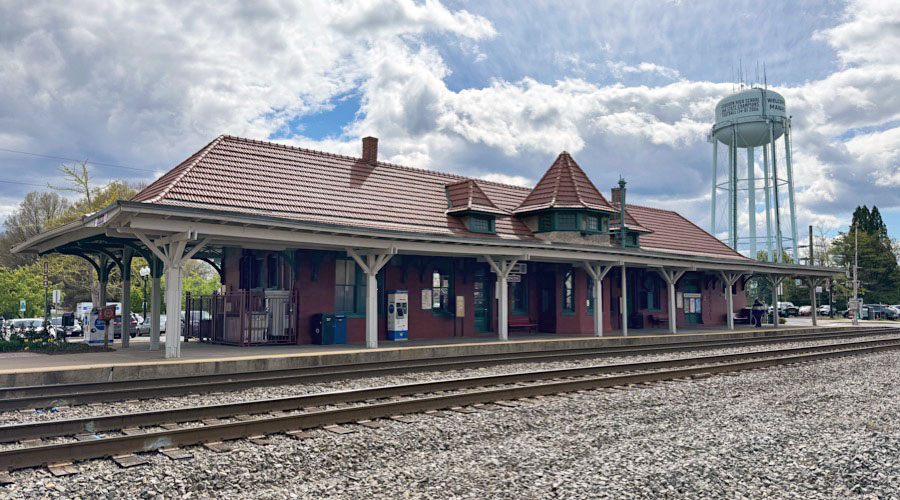
Manassas, Va / Apr 2024 / RWH
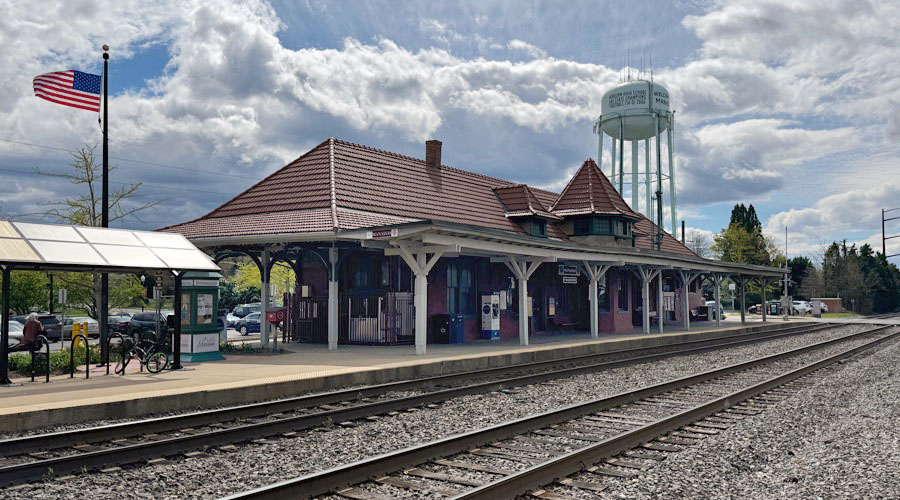
Manassas, Va / Apr 2024 / RWH
Click to see the Manassas depot area plotted on a Google Maps page
- location:Manassas, VA
- address:9431 West Street
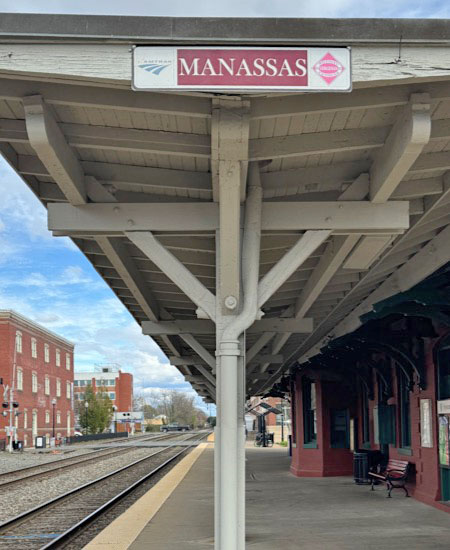
- type:city depot, 1 platform
- owner:City of Manassas
- opened:October 1914
- builder:Southern Railway
- style:Victorian, red brick
- renovated:1997
- services:none, waiting room
- links: Amtrak | Great Stations
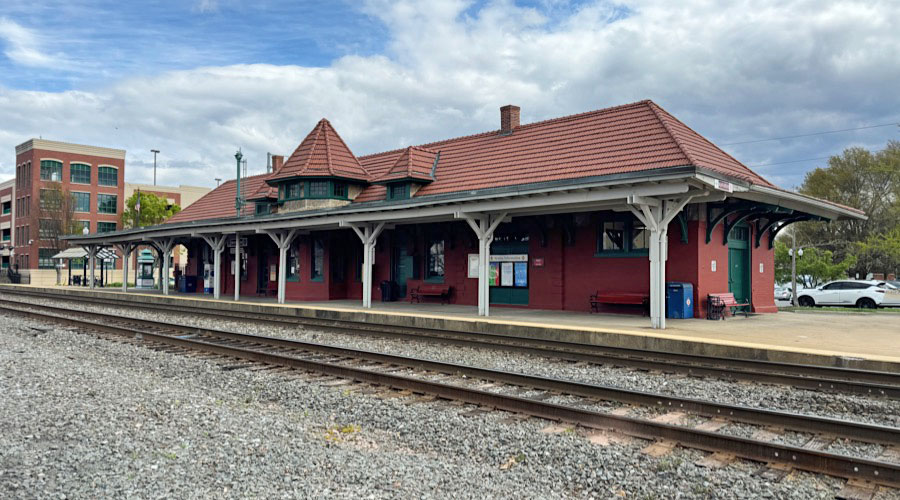
Manassas, Va / Apr 2024 / RWH
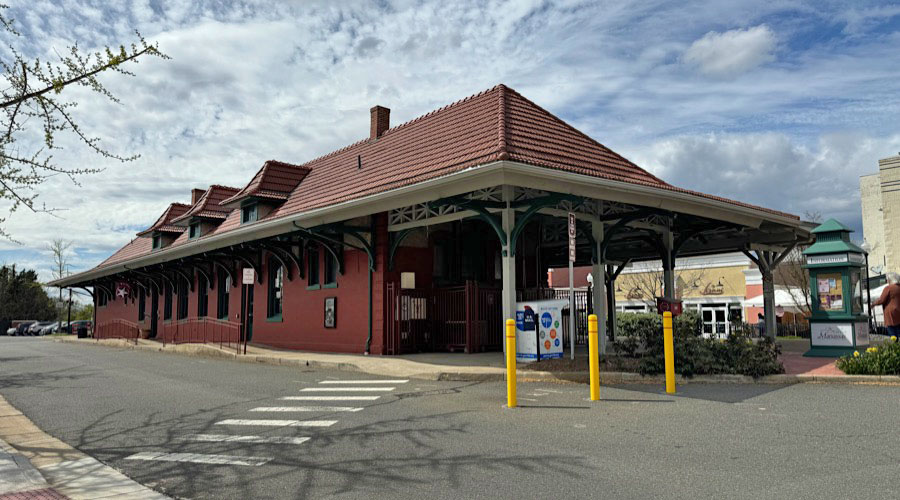
Manassas, Va / Apr 2024 / RWH
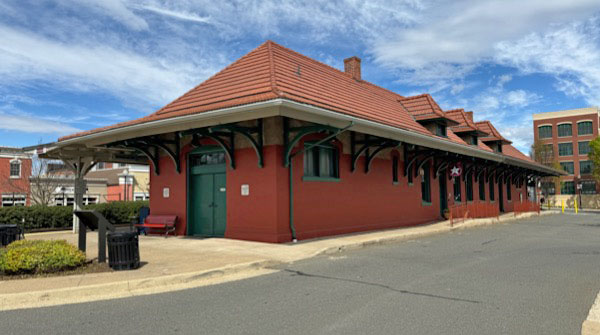
Manassas, Va / Apr 2024 / RWH
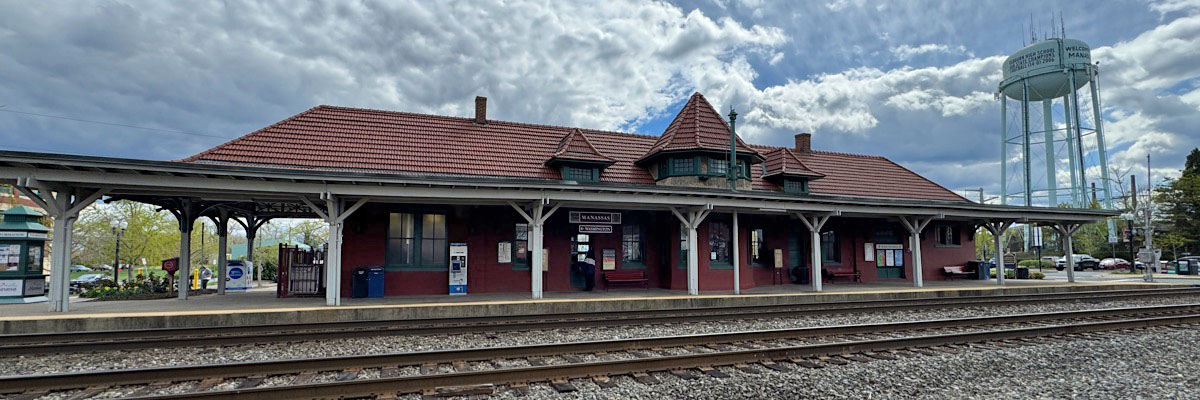
Manassas, Va / Apr 2024 / RWH
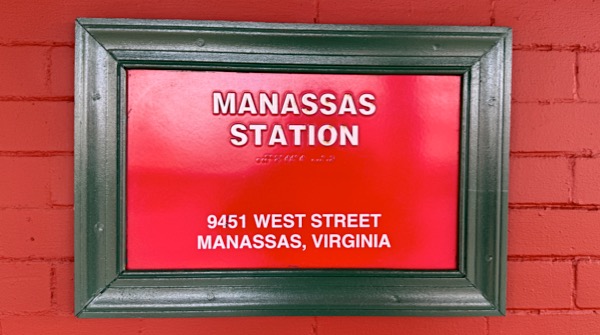
Apr 2024 / RWH
Manassas, Va / Apr 2024 / RWH
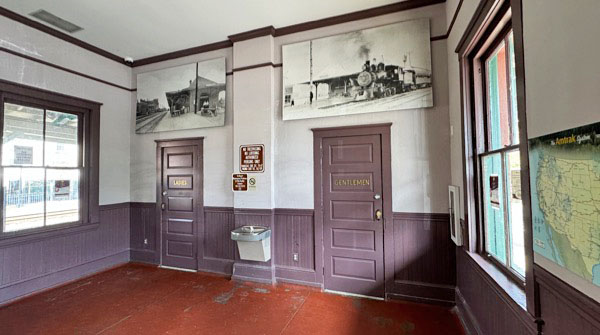
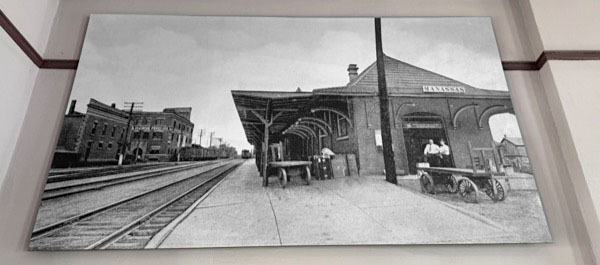
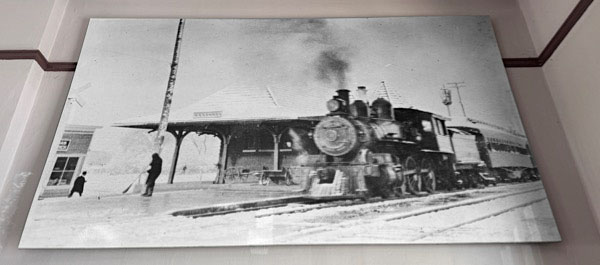
 After the Civil War, the first depot on the present site was a long frame building constructed in the 1880s following the typical depot designs of the Richmond and Danville Railroad Company, which purchased controlling interest in the Orange & Alexandria in 1886. This frame depot was dismantled in 1904 and replaced by a brick passenger depot. On June 25, 1914 a fire broke out in the baggage room and the depot burned, leaving only the foundation and walls.
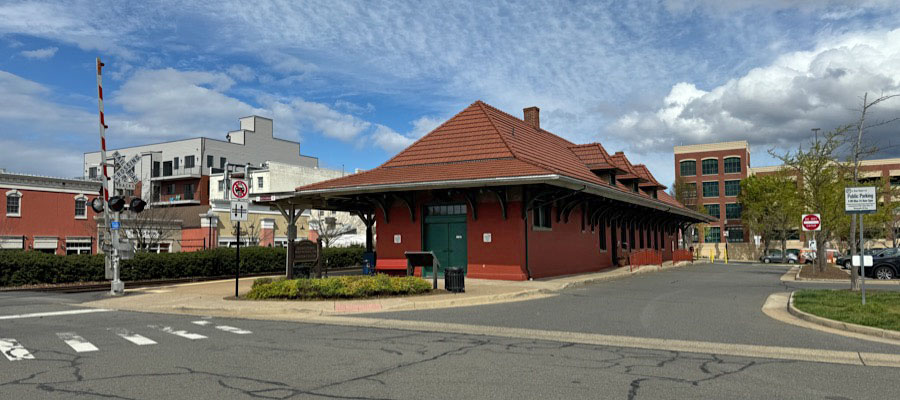
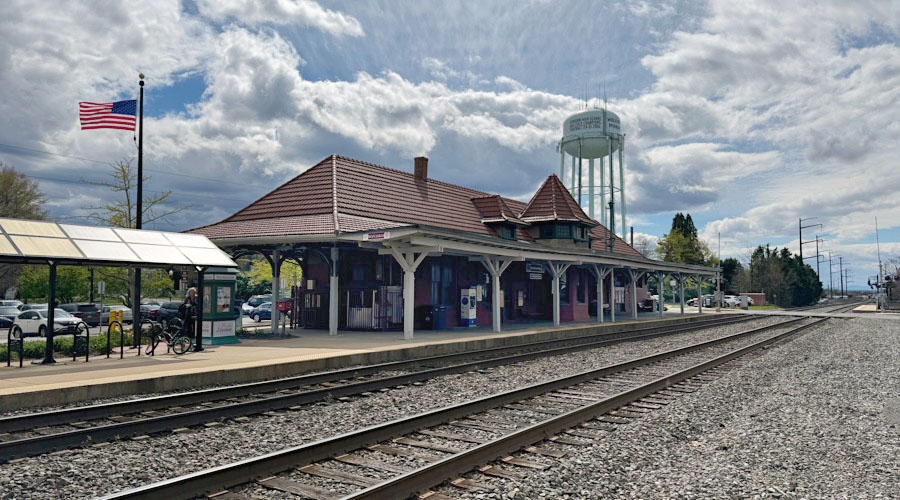
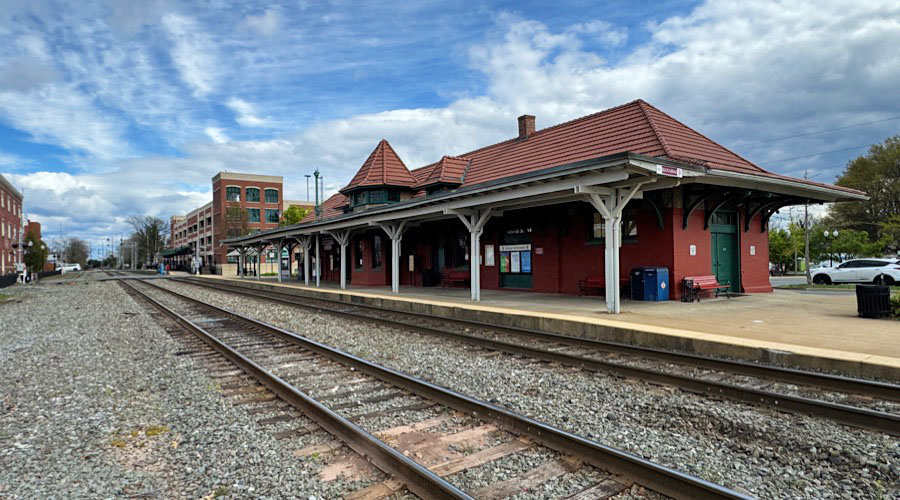
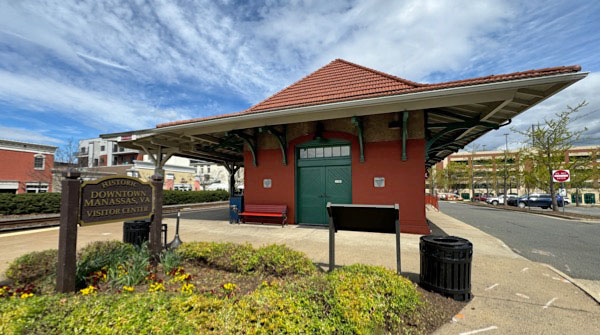
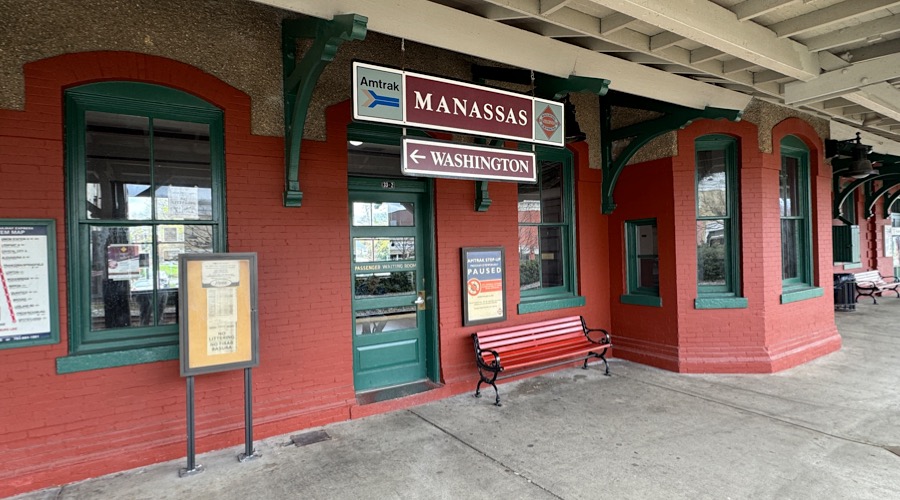
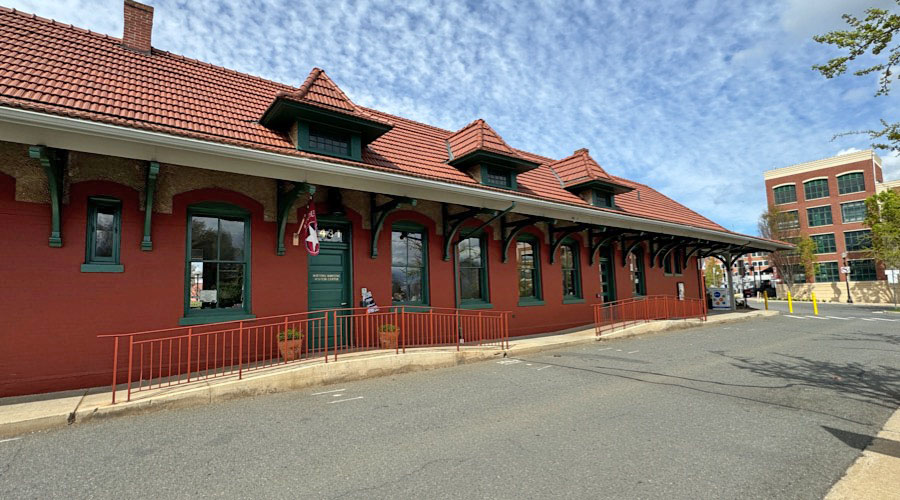
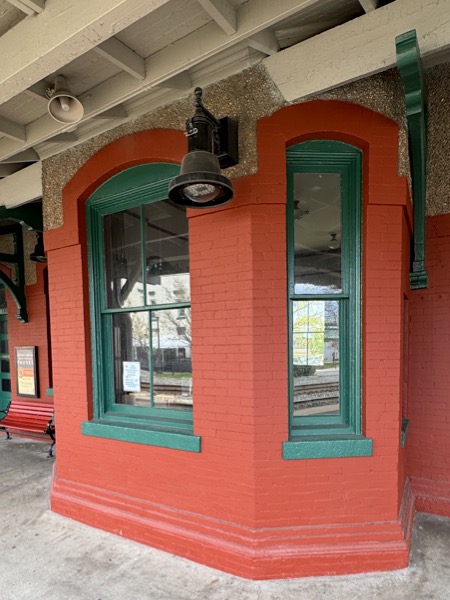
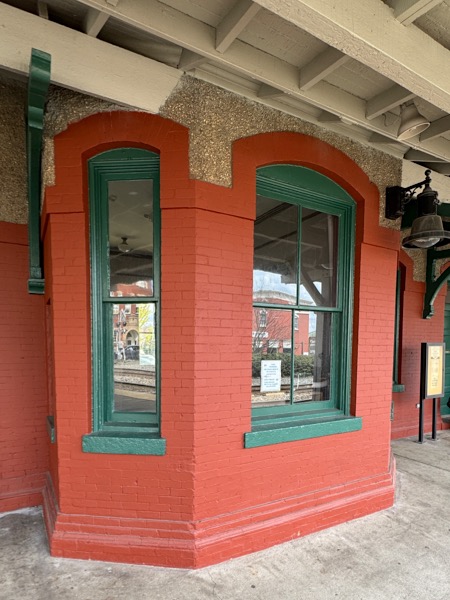
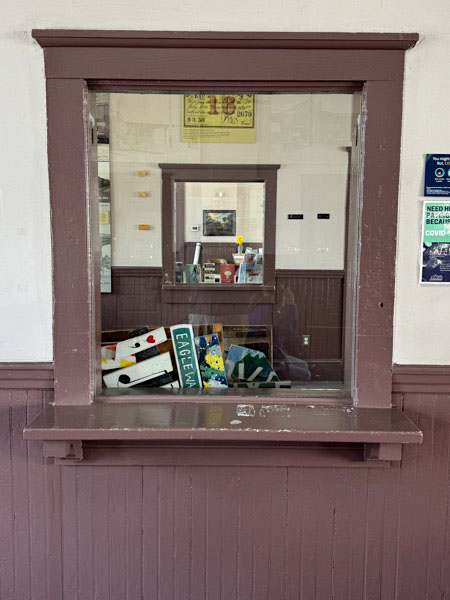
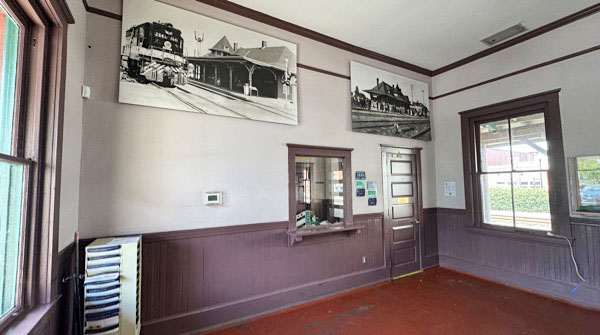
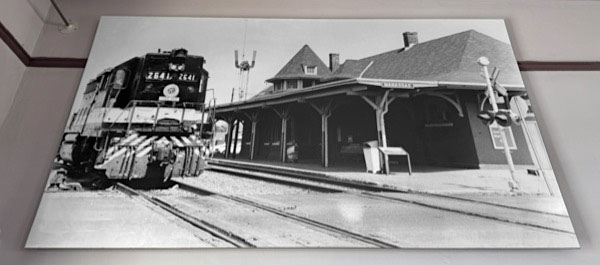
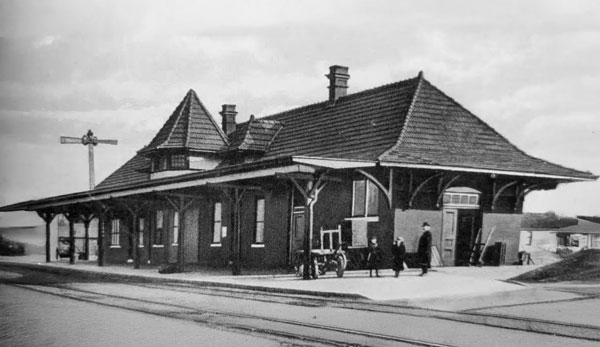 Work on the third and present depot was completed in October 1914, in a red-brick Victorian style with a ceramic tile-covered hipped roof. The structure partially incorporated the walls of the burned depot, which measured about 20 feet by 77 feet, and had four new rooms; an office, a ladies’ waiting room, men’s waiting room and a baggage and express room. The “new” structure is about 32 feet longer than the earlier one permitting a modified room arrangement and included the addition of an umbrella shed on the front and east side, the installation of electric lights, and an attractive tile roof.
 In the 1990s, the city of Manassas acquired the depot from Norfolk Southern Railway and restored the structure under the direction of The Manassas Museum System. Renovation was completed in 1997 after two and a half years of work by the city of Manassas Department of Historic Resources. The redesign was done by Dalgleish, Eichman, Gilpin, & Paxton; construction by Mass Contracting; and exhibits by PRD Group, Ltd.
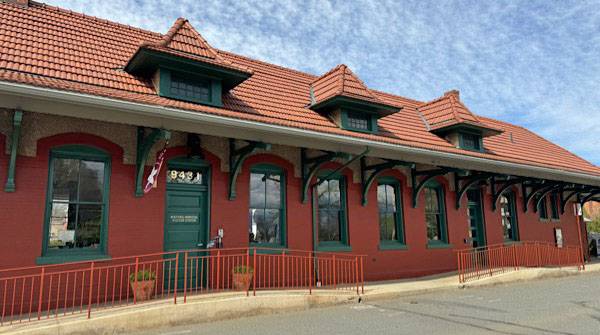
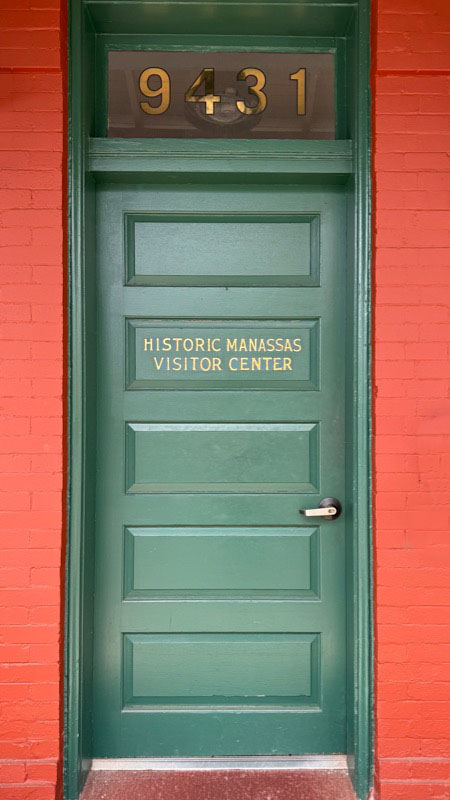
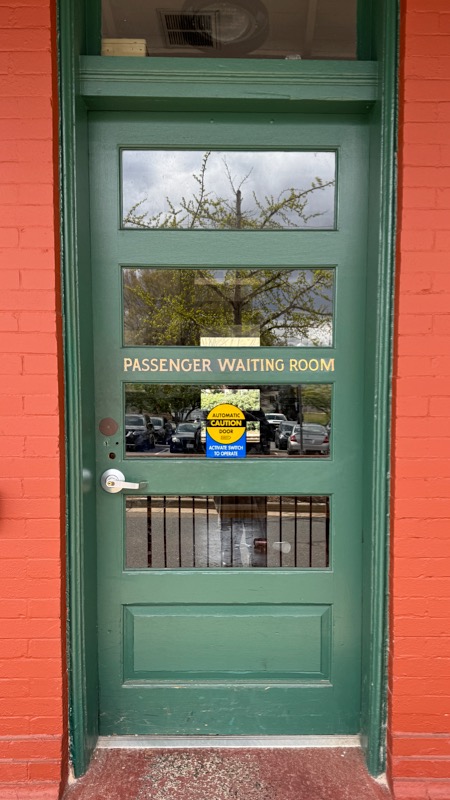
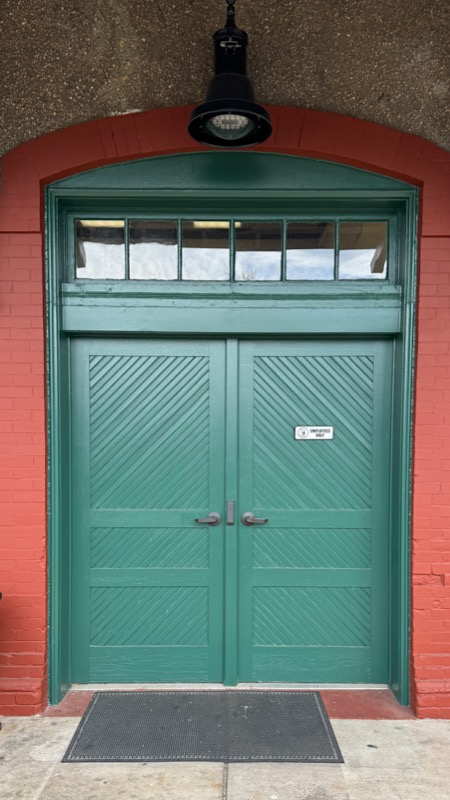
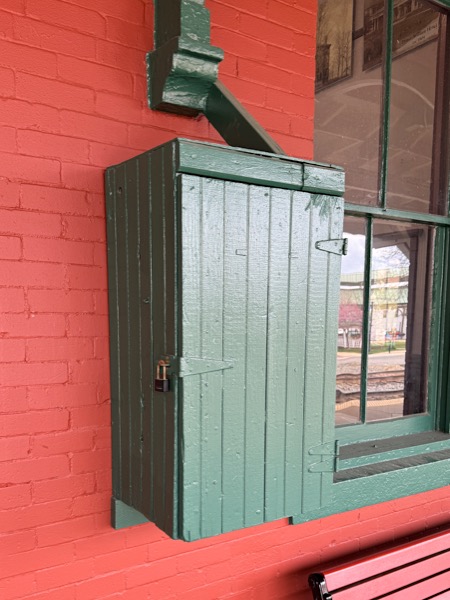
Rehabilitation included returning the building as closely as possible to its 1914 look while accommodating modern uses. Restored features include paint colors, repointed brick, new plaster, overhaul of all mechanical systems, addition of fire and security systems, wood moldings, reproductions of original doors and light fixtures and return of the distinctive clay tile roof, made by the same company that did the 1914 roof.
Manassas, Va / Apr 2024 / RWH
Apr 2024 / RWH
Apr 2024 / RWH
Apr 2024 / RWH
Apr 2024 / RWH
Apr 2024 / RWH
Apr 2024 / RWH
Apr 2024 / RWH
Apr 2024 / RWH
Manassas, VA
Apr 2024 / RWH
Apr 2024 / RWH
Apr 2024 / RWH
Apr 2024 / RWH
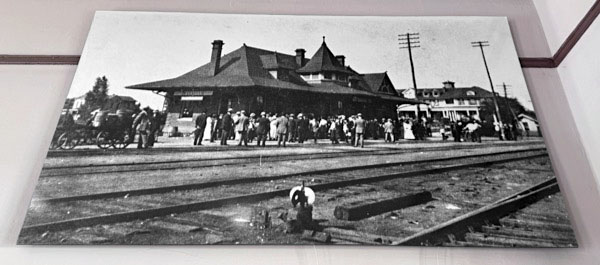
Apr 2024 / RWH
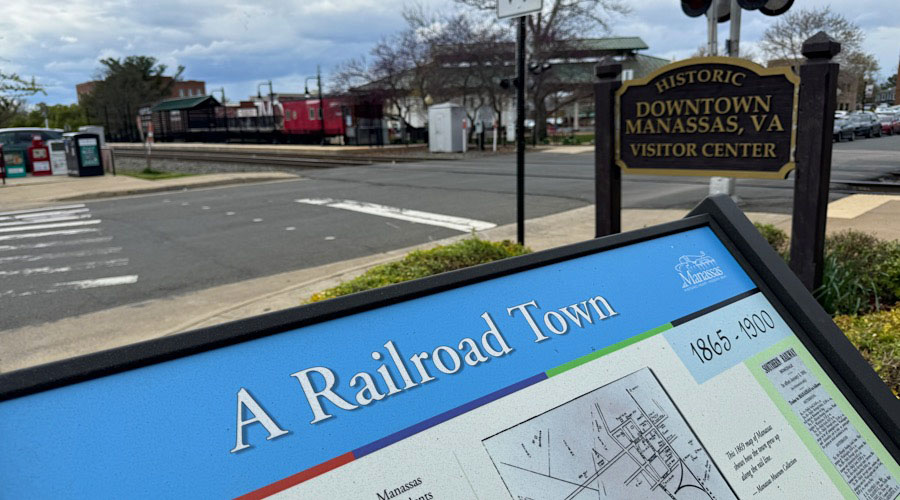
Manassas, Va / Apr 2024 / RWH
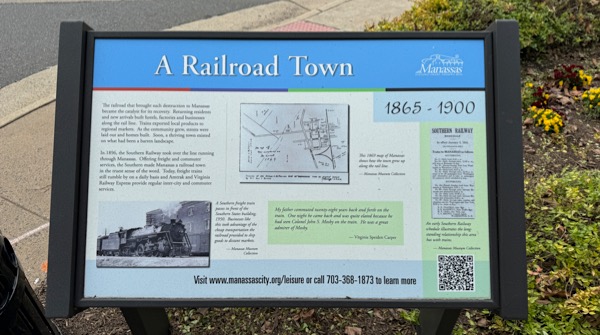
Apr 2024 / RWH
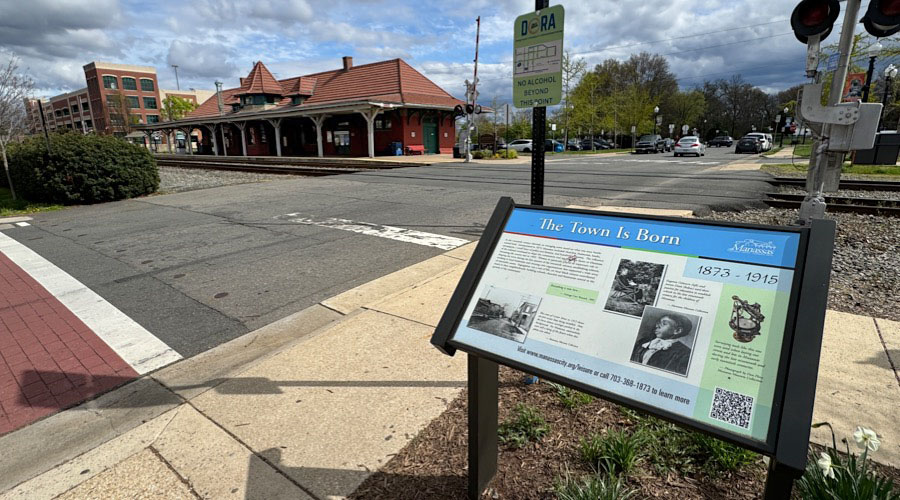
Manassas, Va / Apr 2024 / RWH
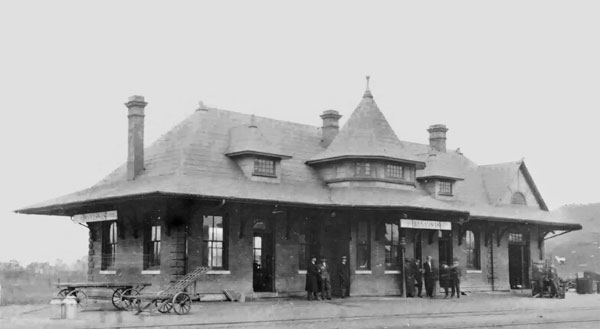
 Over the years, the Manassas Train Station witnessed many changes in the city. It was a bustling hub of activity during the 1920s and 1930s, as travelers came and went from Manassas. As the years went on, the Manassas Train Station continued to be an important landmark in the city. It survived the decline of rail travel in the mid-20th century, and today it stands as a proof to the city's rich history.
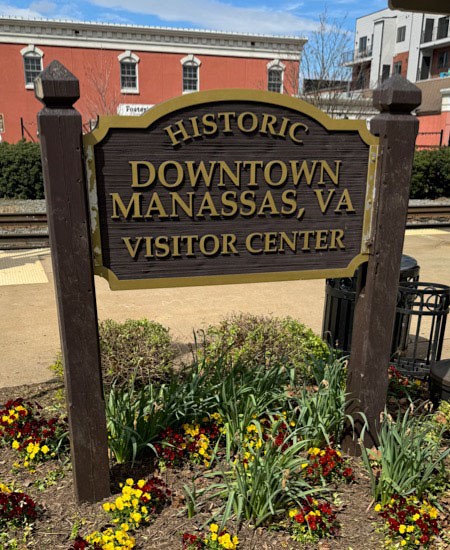
Visitors to the Train Station can still see the original features that were built over a century ago, including the distinctive red brick façade and the arched windows. The station has been restored and is now a Virginia Welcome Center and main office of Historic Manassas, Inc. It also hosts the Manassas Museum Store, offering a glimpse into the past and the role that rail travel played in our history.
The Manassas Train Station may be a silent witness to history, but it is also a living reminder of the city's past and its enduring spirit. As visitors step inside, they are transported back in time to an era when rail travel was the height of modernity and adventure. Today, the station represents the city's rich history and legacy.
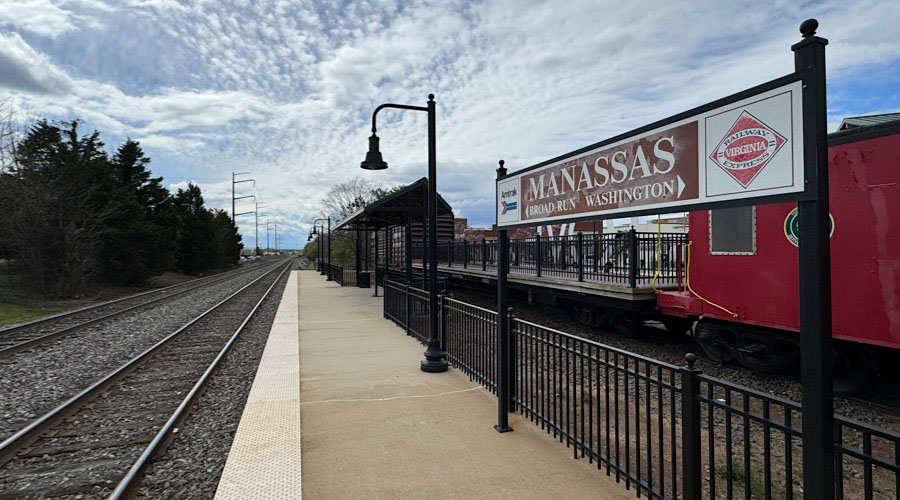
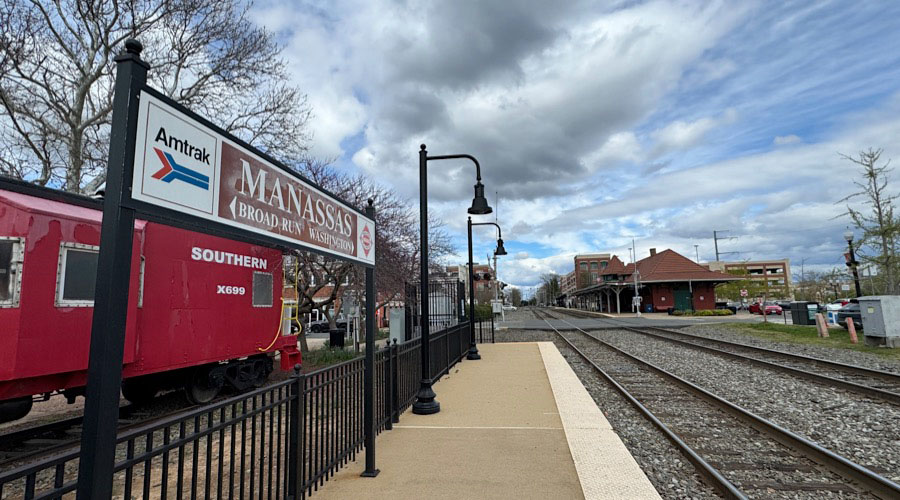
Manassas, Va / Apr 2024 / RWH
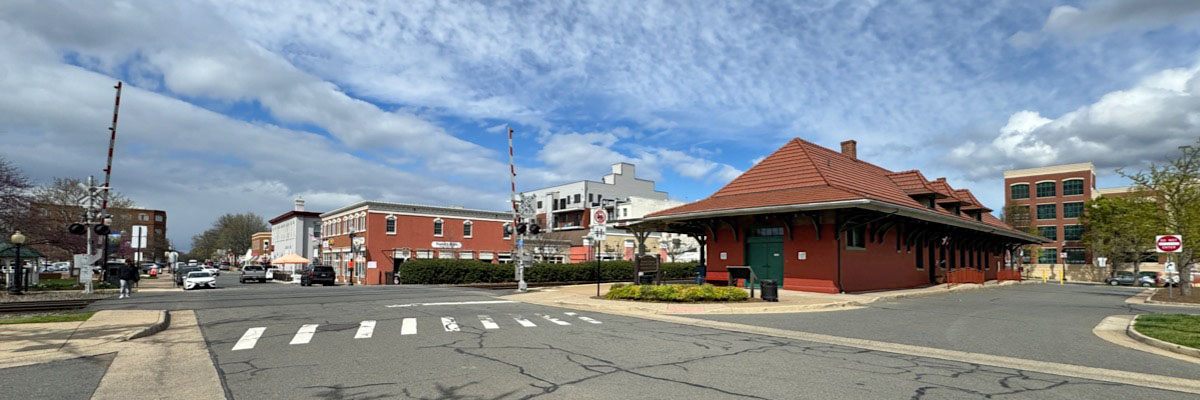
Manassas, Va / Apr 2024 / RWH
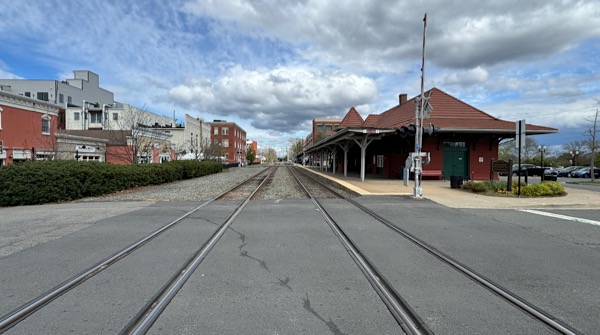
Manassas, Va / Apr 2024 / RWH
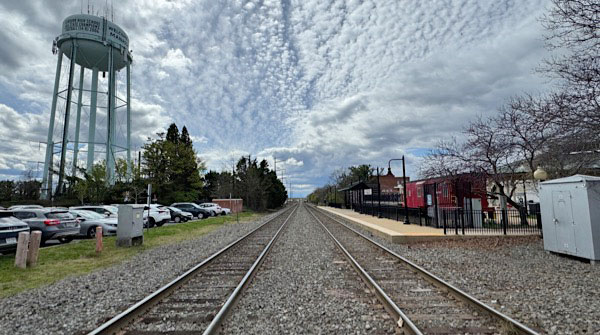
Manassas, Va / Apr 2024 / RWH
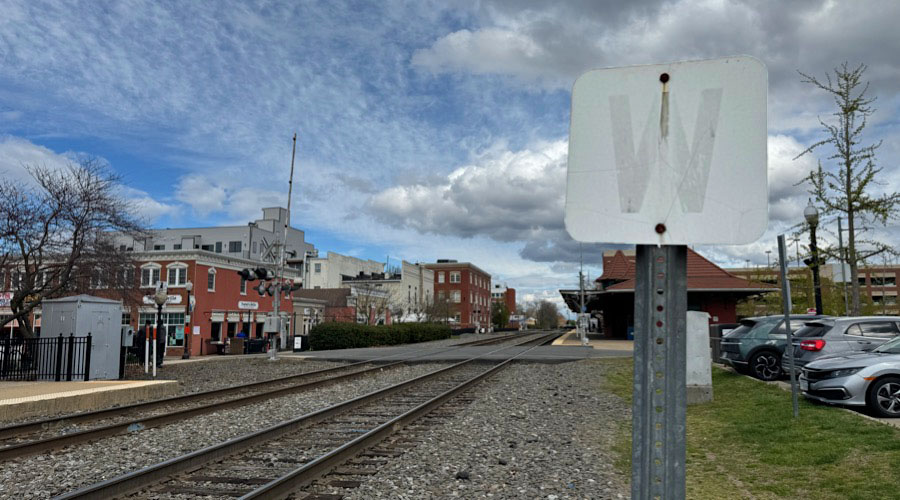
Manassas, Va / Apr 2024 / RWH
68 Culpepper
- Cardinal
- Crescent
- Northeast Regional
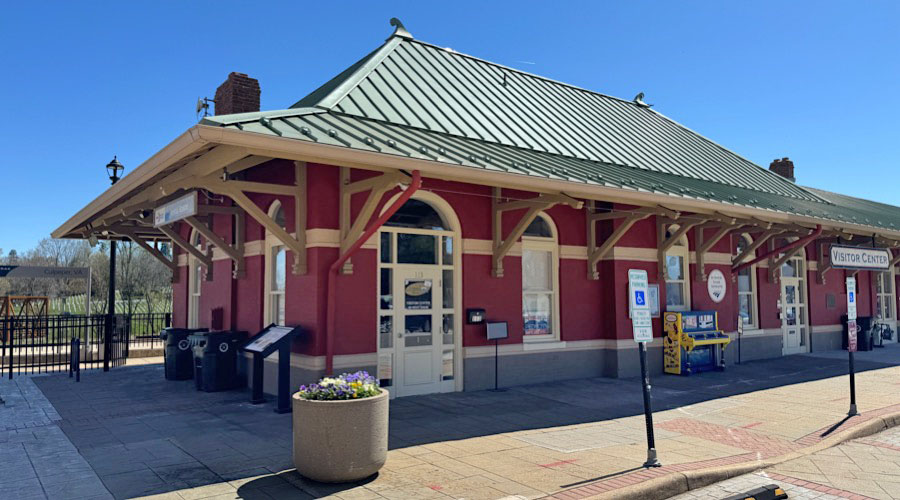
Culpeper, Va / Apr 2024 / RWH
Apr 2024 / RWH
- location:Culpeper, VA
- address:111 S Commerce St
- type:town depot, 1 platform
- owner:Town of Culpeper
- opened:1904, replaced original
- builder:Southern Railway
- style:style
- renovated:2000
- services:none, waiting room
- links: Amtrak | Great Stations
Culpeper, Va / Apr 2024 / RWH
Culpeper, Va / Apr 2024 / RWH
Culpeper, Va / Apr 2024 / RWH
Click to see the Culpeper station area plotted on a Google Maps page
Culpeper, Va / Apr 2024 / RWH
Culpeper, Va / Apr 2024 / RWH
Culpeper, Va / Apr 2024 / RWH
Apr 2024 / RWH
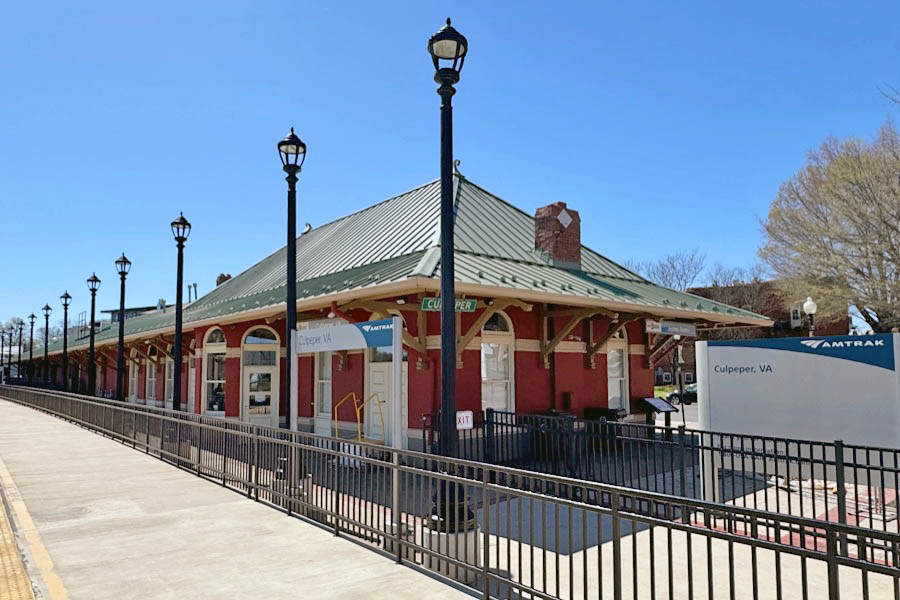
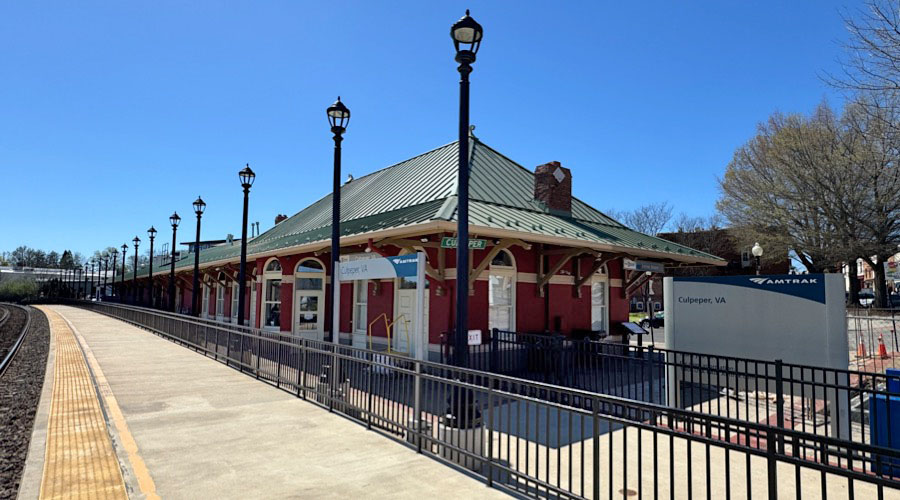
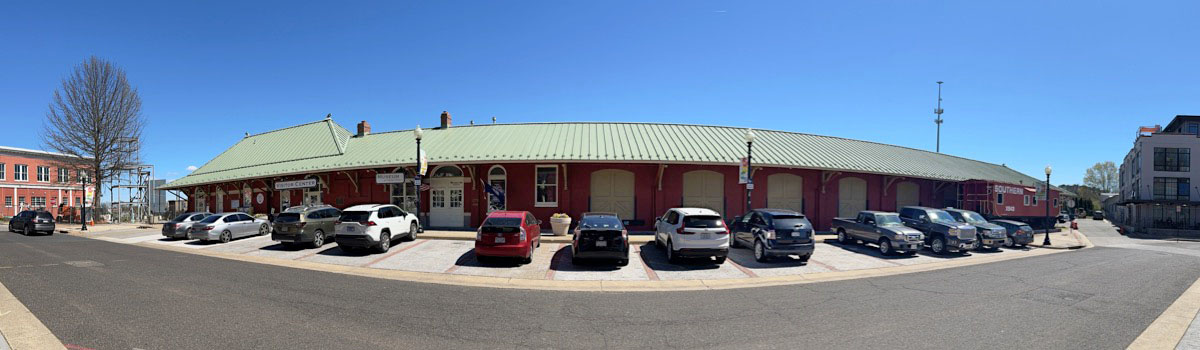
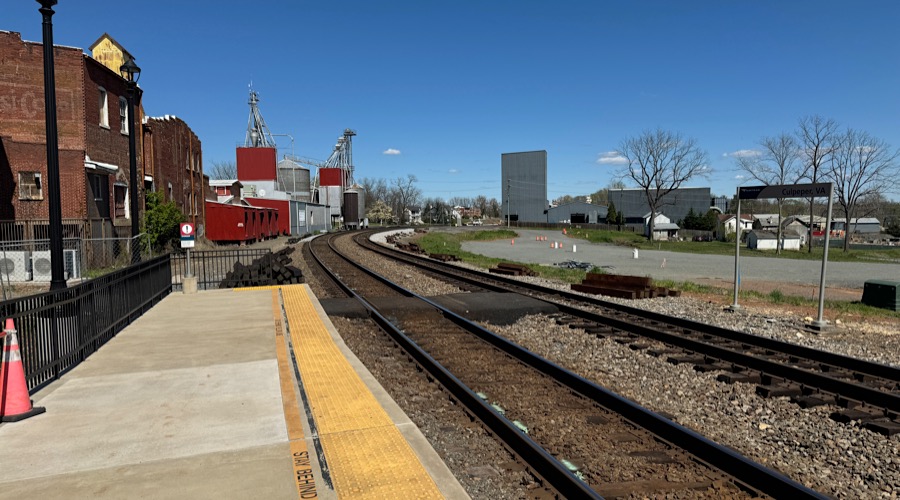
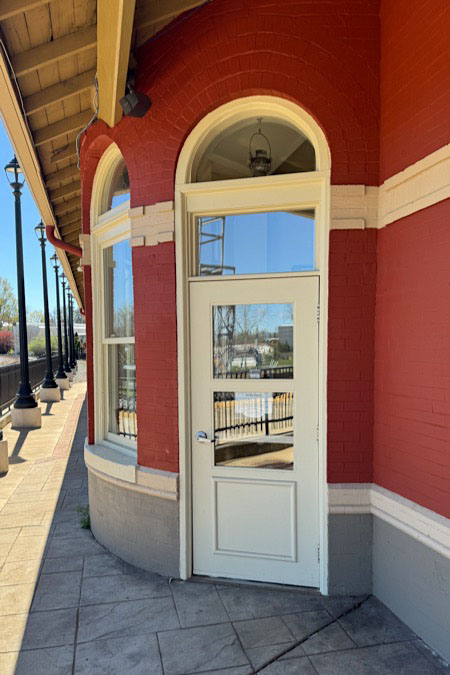
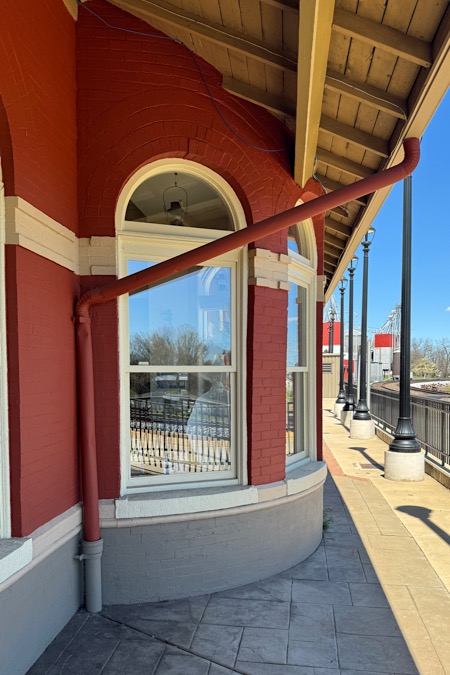
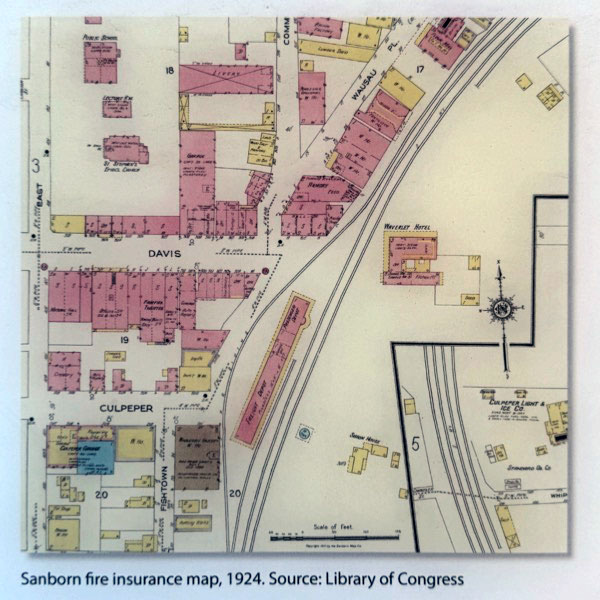
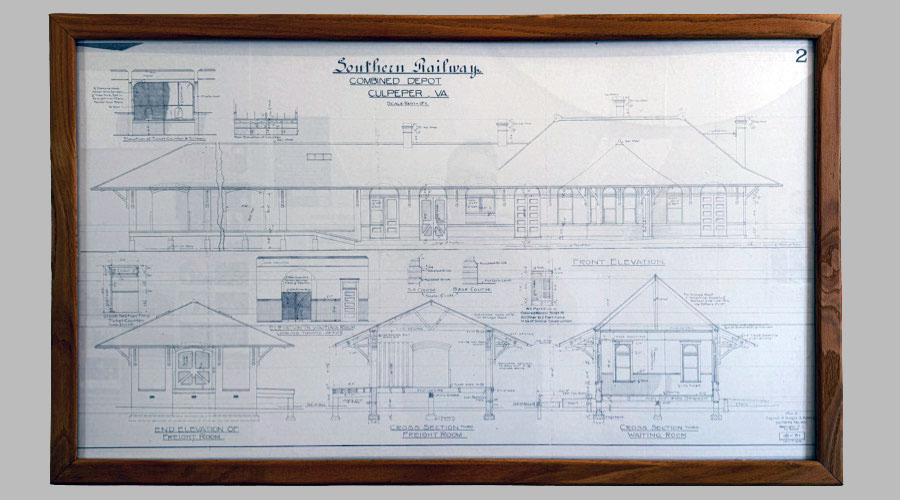
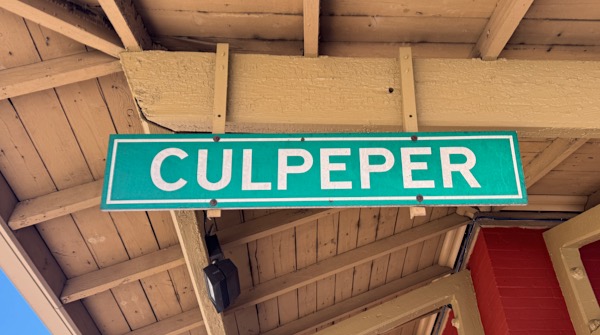
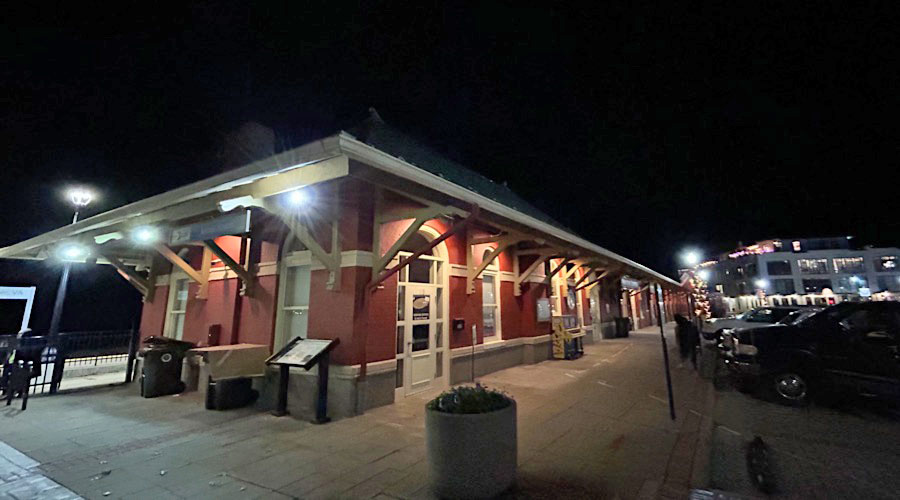
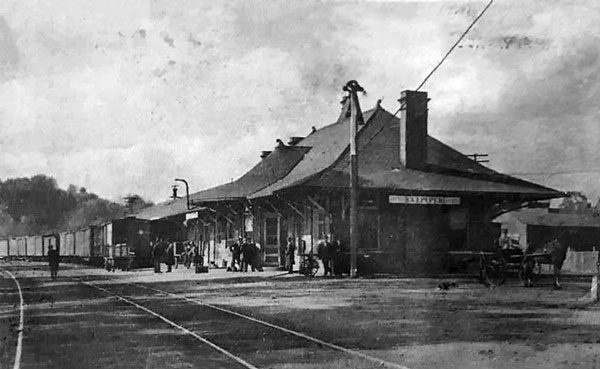 The first Culpeper station was constructed in 1852 by the Orange and Alexandria Railroad. It built two depots, one on the east side for freight and one on the west side for passengers. Though the buildings survived the Civil War, the fighting took its toll, and in 1874, a new Culpeper train depot was erected. However, it burned down in 1903 and was replaced a year later with the current one story building.
A period of decline prompted Norfolk Southern Railway (NS) to request permission to demolish a portion of the depot in 1985. A citizens’ committee formed to save the building; subsequently, the Town of Culpeper and Culpeper Renaissance, Inc. (CRI), a certified Virginia Main Street organization, began restoration work. In 1995, CRI and the town successfully prepared a $700,000 renovation grant under the Virginia Department of Transportation Enhancement Program.
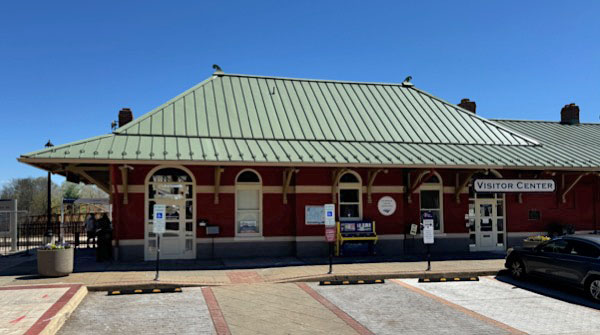
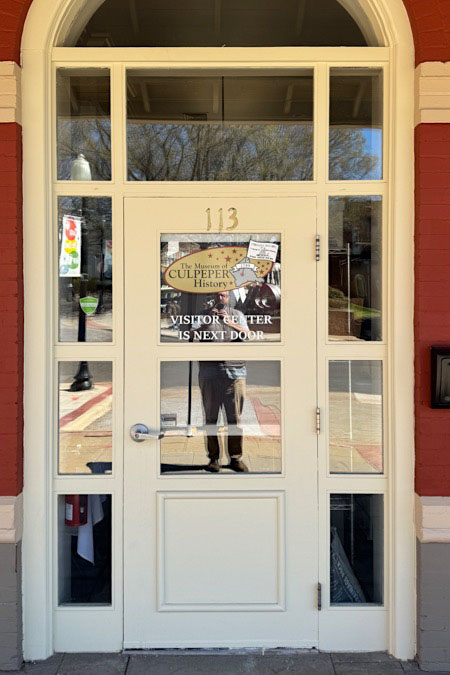
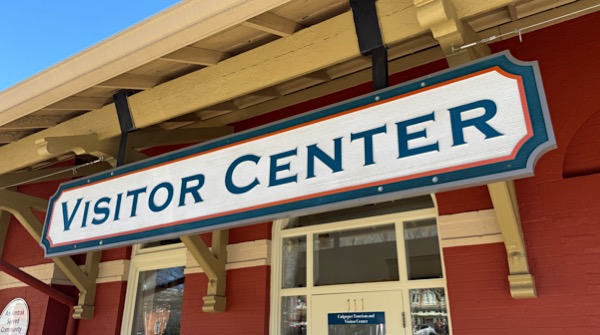
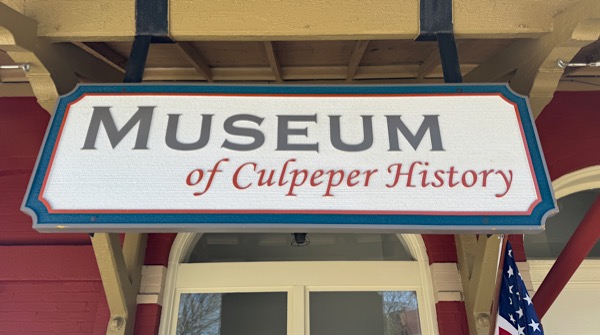
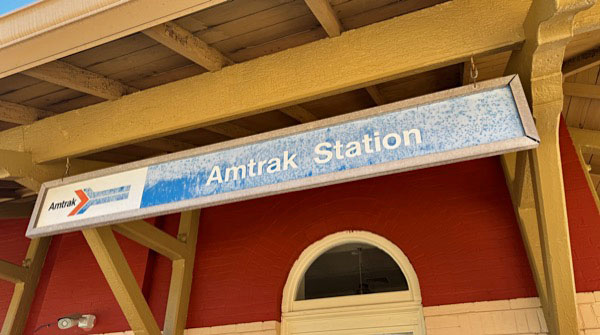
Three years later, NS officially transferred the building deed to the town, and in 2000 the renovated depot opened to the public. Additional work to the freight section was completed in 2003. Today, the station is occupied by the Culpeper Visitors Center, chamber of commerce, Culpeper Department of Tourism and the Museum of Culpeper History. The former freight section serves as conference space that can be rented for meetings and social events. The depot is truly a downtown anchor, playing host to a wide array of outdoor events, such as a vibrant weekly Farmers’ Market held from May through November.
Apr 2024 / RWH
Apr 2024 / RWH
Apr 2024 / RWH
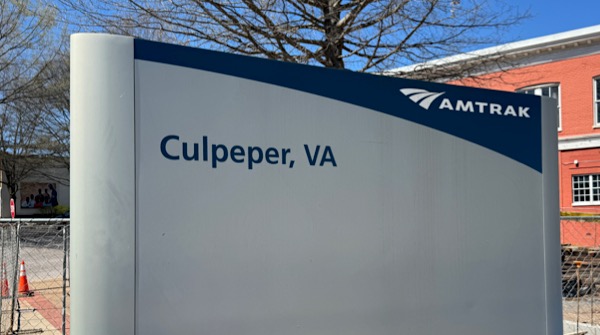
Apr 2024 / RWH
Culpeper, VA
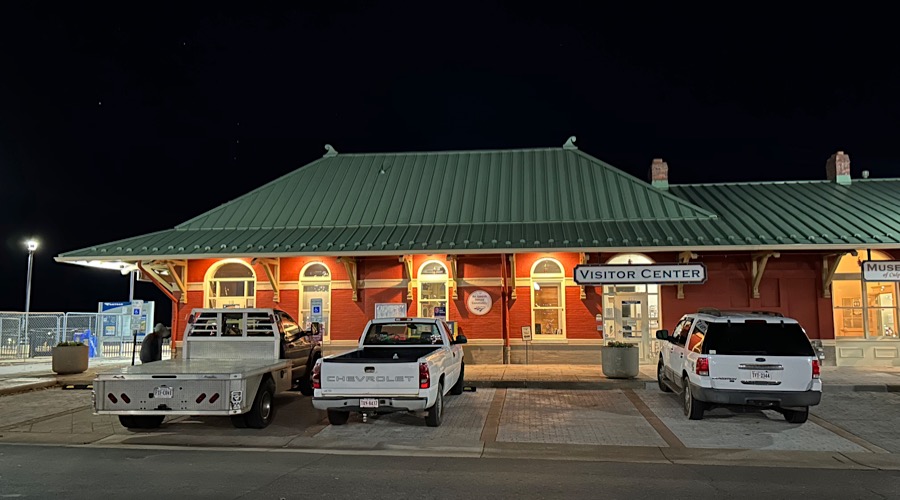
Culpeper, Va / Dec 2023 / ETH
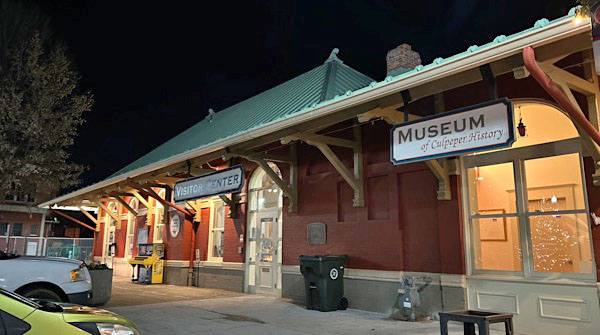
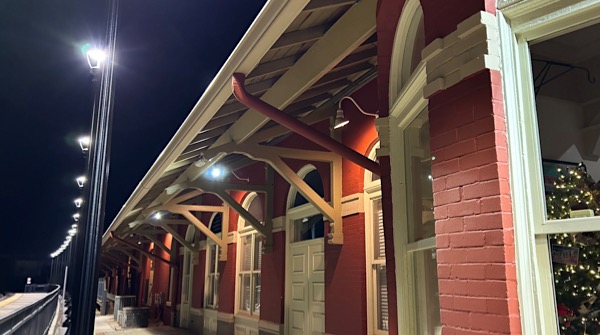
Culpeper, Va / Dec 2023 / ETH
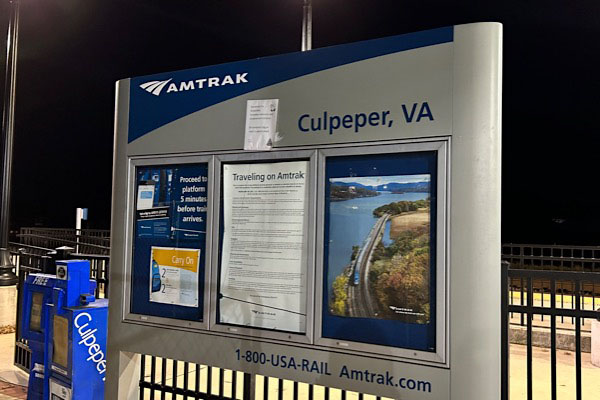
Culpeper, Va / Dec 2023 / ETH
Dec 2023 / ETH
Dec 2023 / ETH
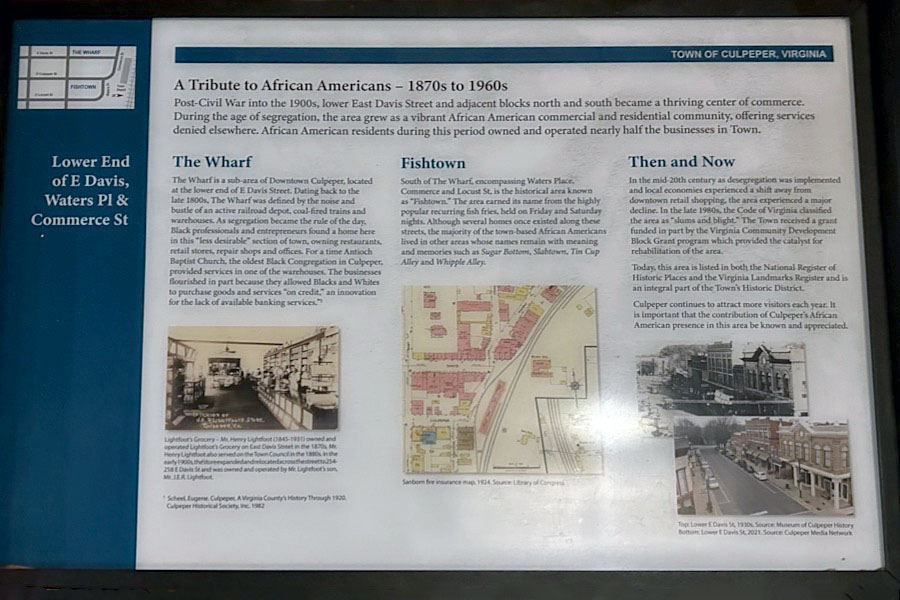
Dec 2023 / ETH
112 Charlottesville
- Cardinal
- Crescent
- Northeast Regional
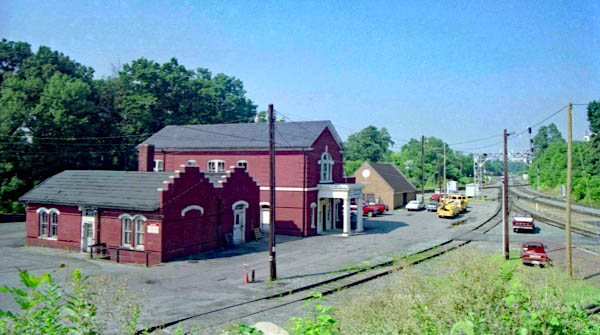
Charlottesville, Va / Aug 1989 / JCH
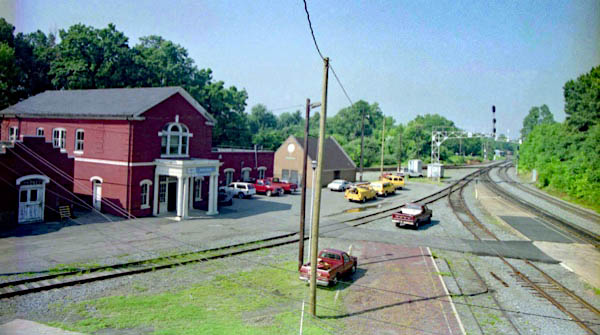
Charlottesville, Va / Aug 1989 / JCH
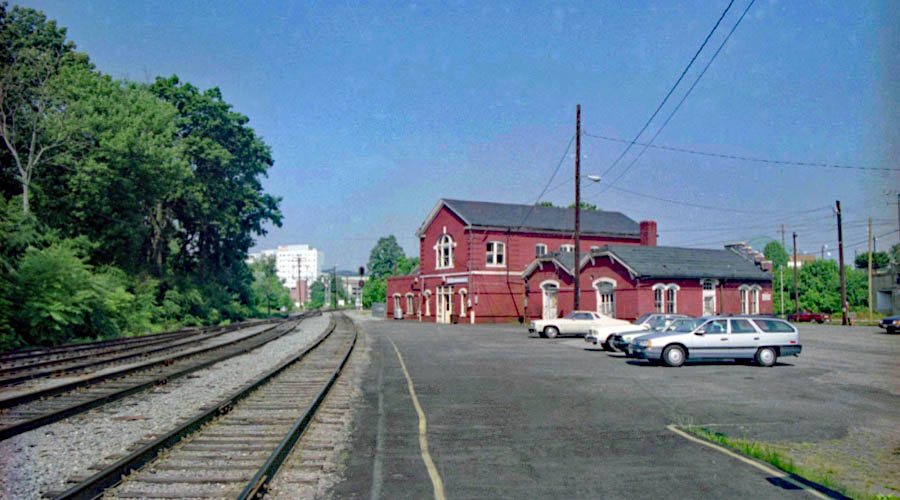
Charlottesville, Va / Aug 1989 / JCH
 Monacan village, Monasukapanough, was the first human settlement on these lands. What started as a Monacan hunting path grew into Three Notch'd Road, a trade route used by European settlers to shuttle goods between Richmond and the Appalachian Mountains. Today we call this Monacan hunting path U.S. Route 250. Without it, Charlottesville would not have become what it is today.
One of the first men to build upon this early infrastructure was Thomas Jefferson. Jefferson is undeniably the most famous figure in local history. He founded the University of Virginia down the mountain from Monticello, his mountaintop plantation. He inherited this mountaintop land, some 5,000 acres, from his father at the age of 26. He then used the labor of enslaved Africans to cultivate tobacco and construct the plantation house. Albemarle County was home to James Monroe too. Monroe, like Jefferson, also went on to become a U.S. president. James Madison lived just 26 miles northeast of Charlottesville, so we like to claim him too. Jefferson and Monroe, however, were practically next-door neighbors.
In 1850, Charlottesville welcomed its first railroad service, a technology that would later dramatically expand shipping through the area and bring more growth. Then, like any community in the South, the area lost many of its sons and brothers to the Civil War. Unlike many communities, however, the town itself was left largely unscathed--despite its central role in the manufacturing of Confederate uniforms. By 1887, the city had received its first horse drawn streetcars and kept an extra horse on hand to help cars climbing Vinegar Hill, a rough stretch of Main Street. In 1888, Charlottesville incorporated and annexed surrounding land to create a city of nearly 800 acres.
Charlottesville, Va / Nov 2016 / RWH
- location:Charlottesville, VA
- address:810 West Main St
- type:city station, 2 platforms
- owner:Union Station Partners
- opened:1885
- builder:VA Midland, C&O
- renovated:1915, 1999
- services:tickets, baggage
- links: Amtrak | Great Stations
Charlottesville, Va / Nov 2016 / RWH
Click to see the Charlottesville station area plotted on a Google Maps page
Charlottesville, Va / Nov 2016 / RWH
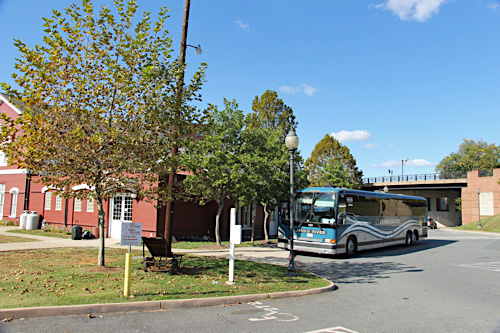
Charlottesville, Va / Nov 2016 / RWH
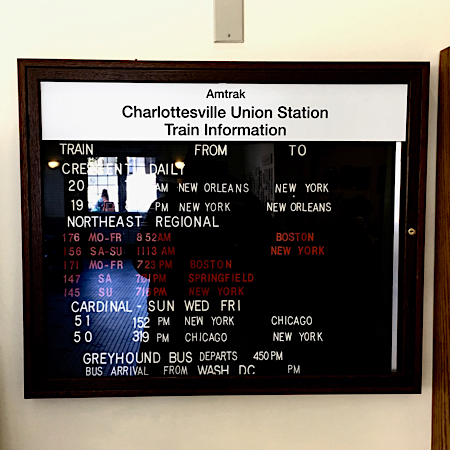
Nov 2016 / RWH
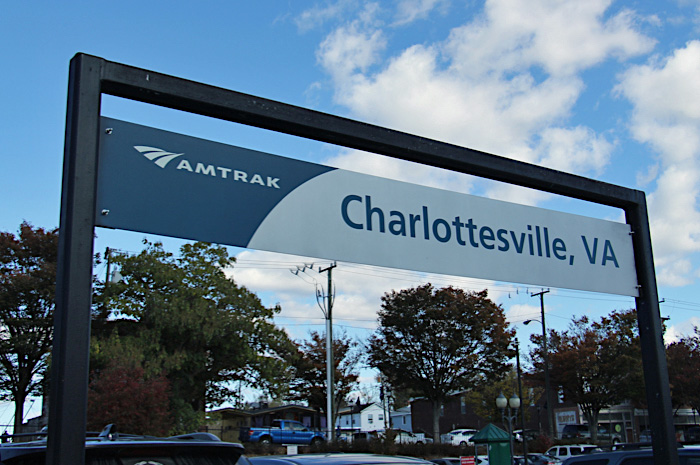
Charlottesville, Va / Nov 2016 / RWH
Charlottesville, Va / Nov 2016 / RWH
Charlottesville, Va / Nov 2016 / RWH
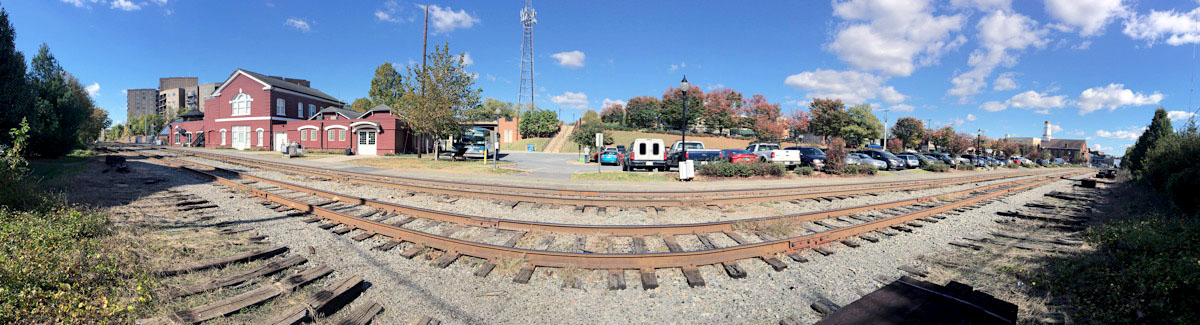
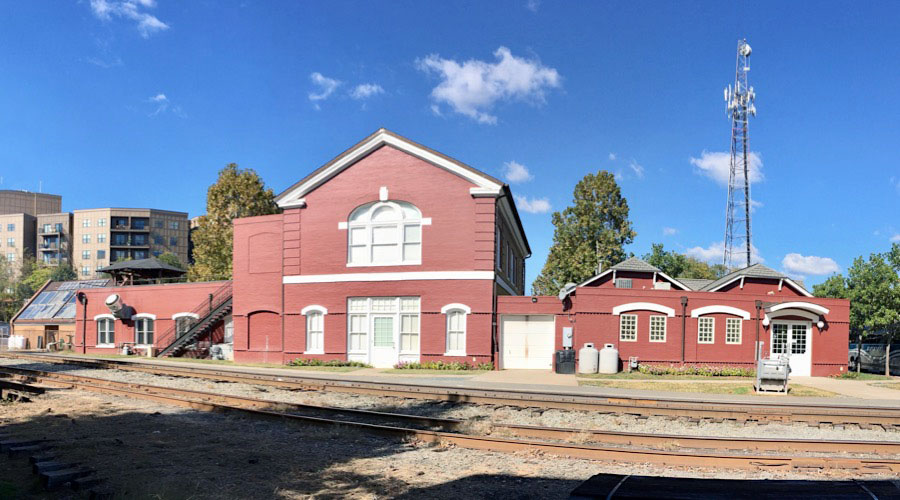
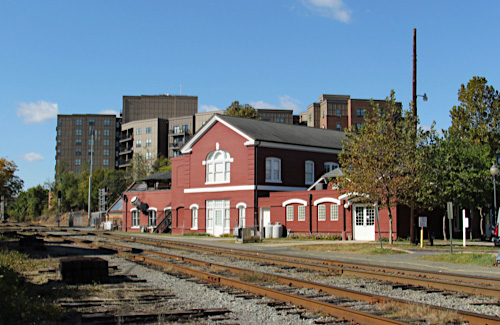
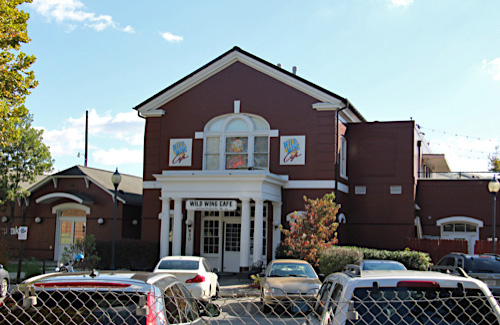
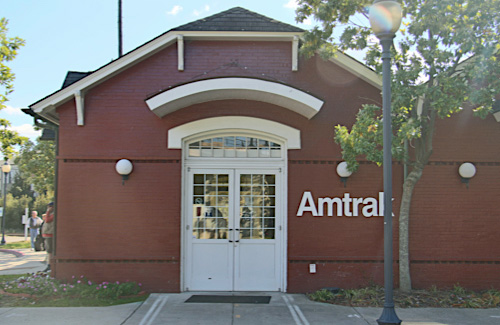
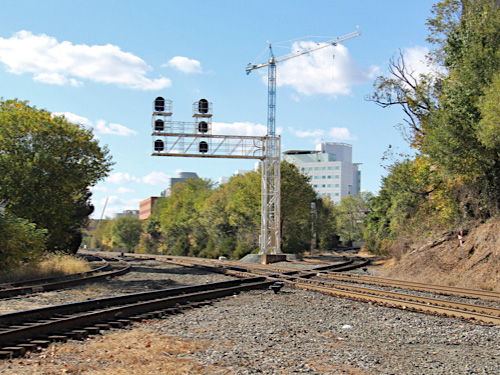
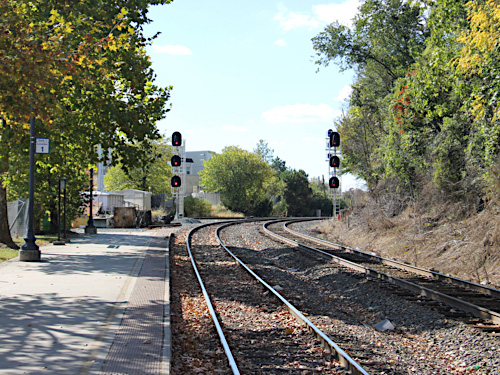
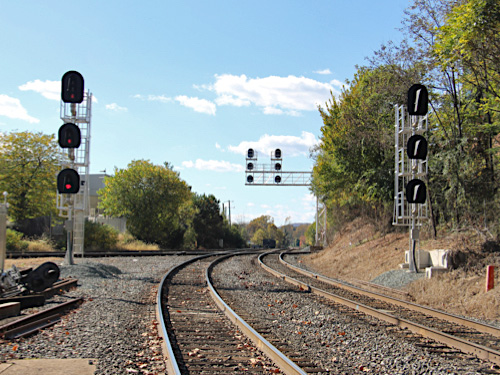
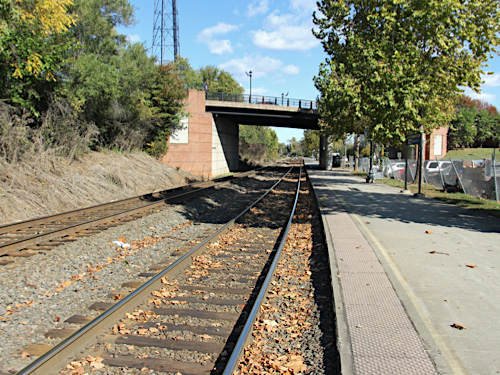
 Charlottesville’s Union Station was constructed in 1885 and sits between the University of Virginia and downtown Charlottesville. In 1999, Amtrak and the city of Charlottesville dedicated the newly renovated depot following a $700,000 effort. Amtrak moved out of the original station and into the former Railway Express Agency building built in the 1890s. The new facility has a more modern waiting area, ticket counter and restroom, as well as better parking lot access and the addition of a full-service restaurant. One of the unique features of this station is that its two trains serve the station on two separate tracks on either side of the station. The lines cross just south of the building.
Prior to this station’s construction, Charlottesville was a major rail hub, served by many trains daily. The first train service to Charlottesville was operated by the Louisa Railroad Company, which later became the Central Virginia Railroad (later Chesapeake & Ohio, now CSX). In the mid 1880s, Virginia Midland Railroad (later Southern Railway, now Norfolk Southern) created a perpendicular north-south route. This produced competition between the two rail companies and strengthened the local economy. Hotels and restaurants went up along West Main Street for the many new railroad workers, including those at a railcar repair shop.
Charlottesville, VA
Charlottesville, Va / Nov 2016 / RWH
173 Lynchburg
- Crescent
- Northeast Regional
Kemper Street Station
Lynchburg, Va / May 1973 / Garland Harper
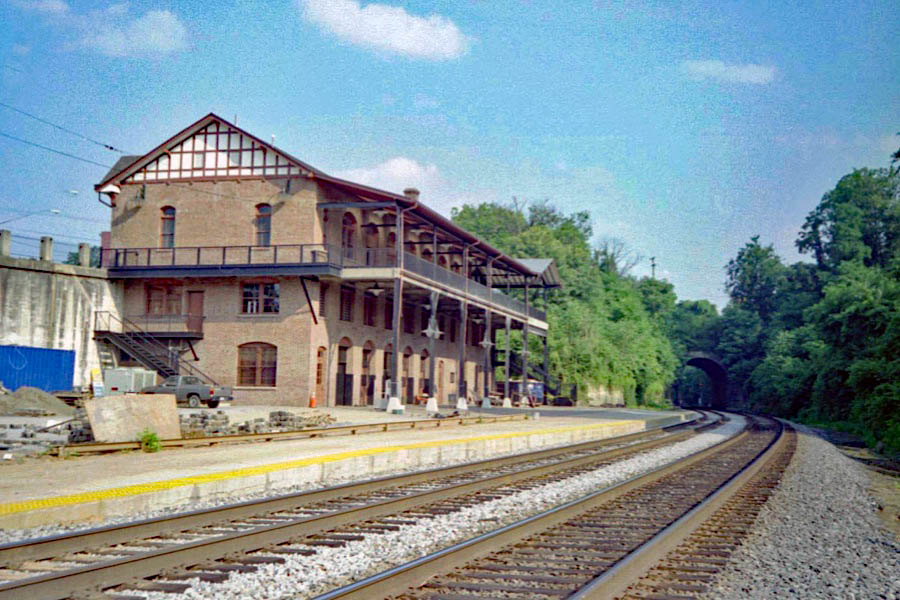
Lynchburg, Va / Jul 2001 / JCH
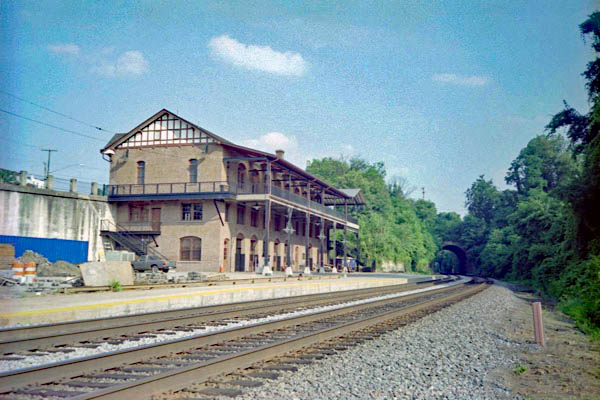
Lynchburg, Va / Jul 2001 / JCH
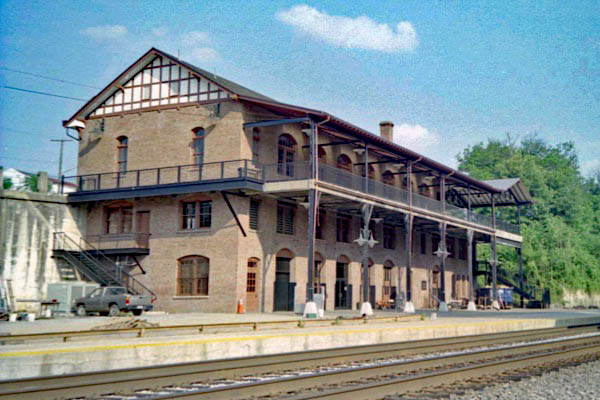
Lynchburg, Va / Jul 2001 / JCH
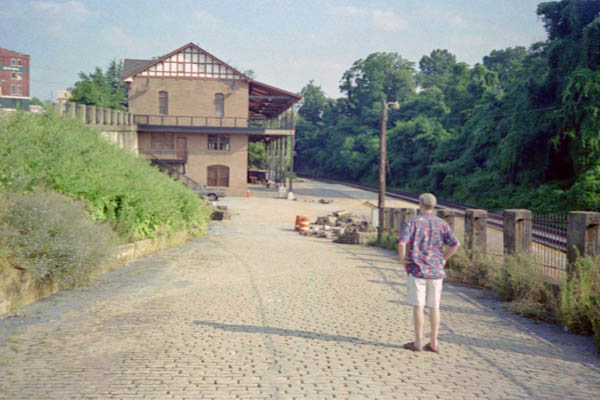
Lynchburg, Va / Jul 2001 / JCH
Lynchburg, Va / Jul 2001 / JCH
Click to see Amtrak's Lynchburg station plotted on a Google Maps page
from Southern Railways Depots - Volume 2
by Ralph Ward / collection
from Southern Railways Depots - Volume 2
by Ralph Ward / collection
Lynchburg, Va / Sep 1984 / Garland Harper
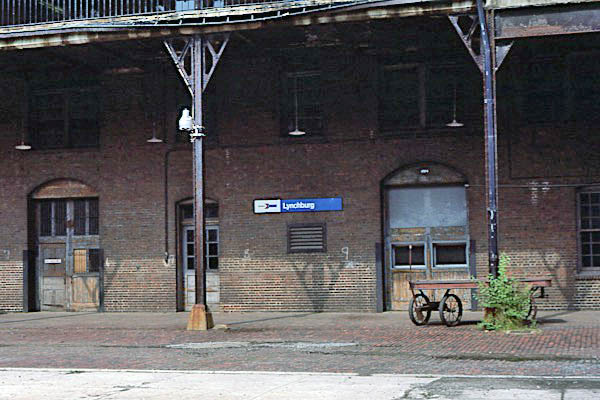
Lynchburg, Va / Jun 1984 / Garland Harper
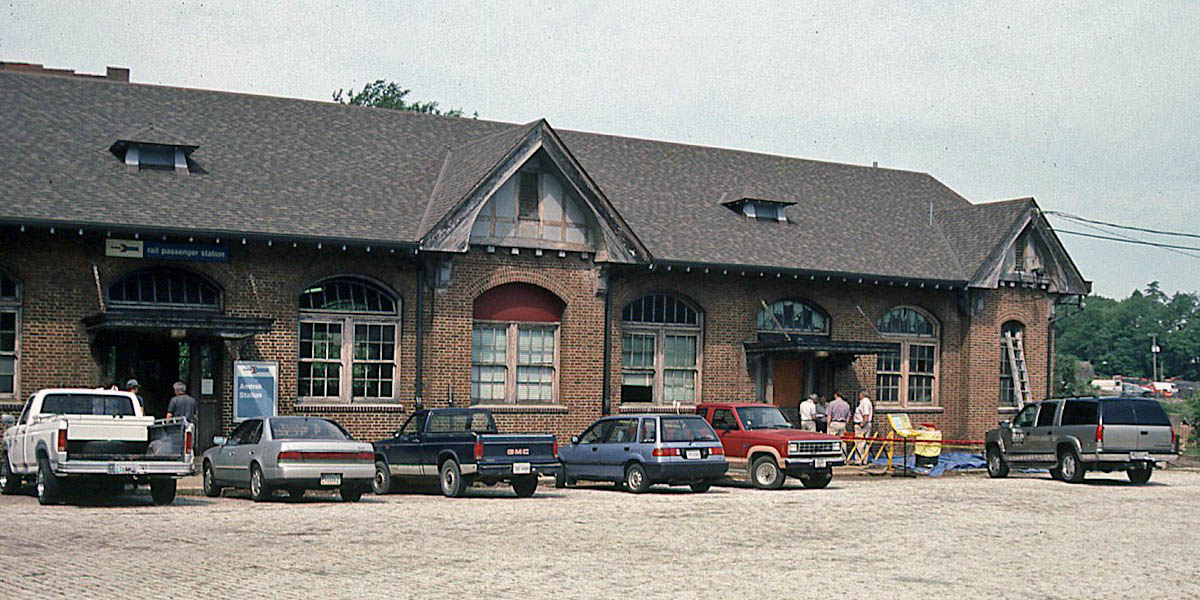
Lynchburg, Va / May 2000 / Garland Harper
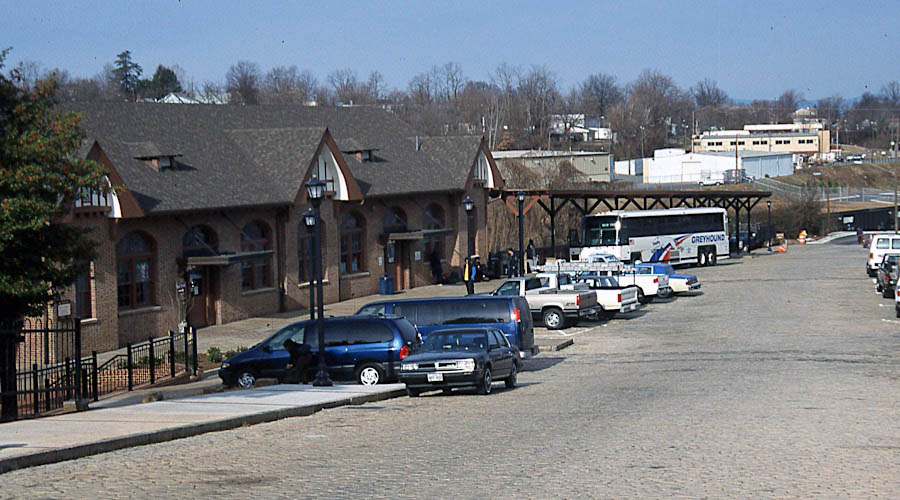
Lynchburg, Va / Jan 2002 / Garland Harper
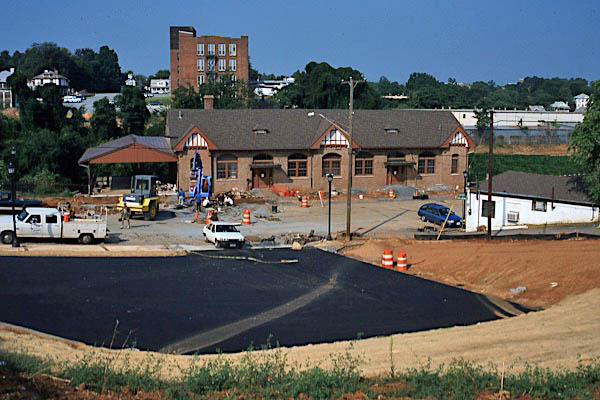
Lynchburg, Va / Aug 2001 / Garland Harper
Lynchburg, Va / Apr 2002 / Garland Harper
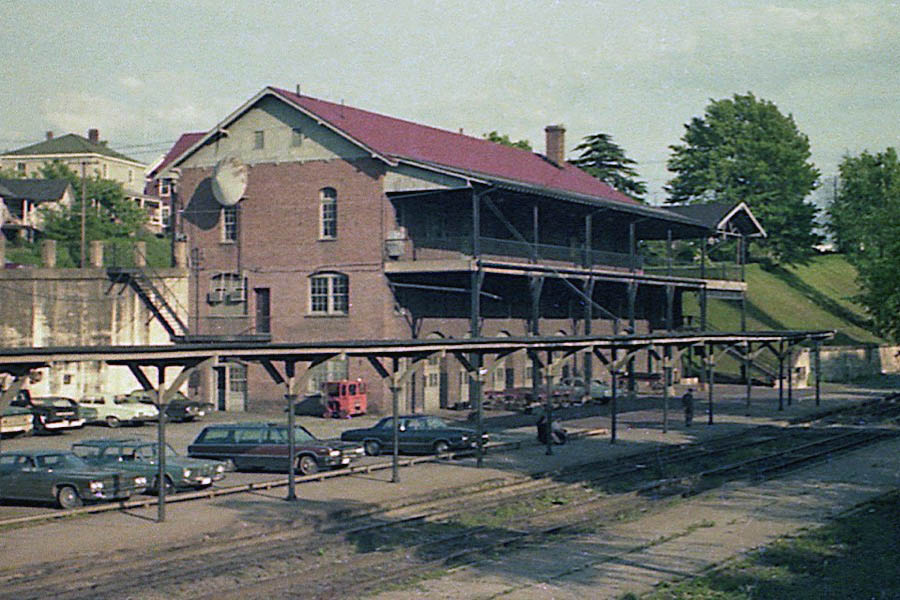
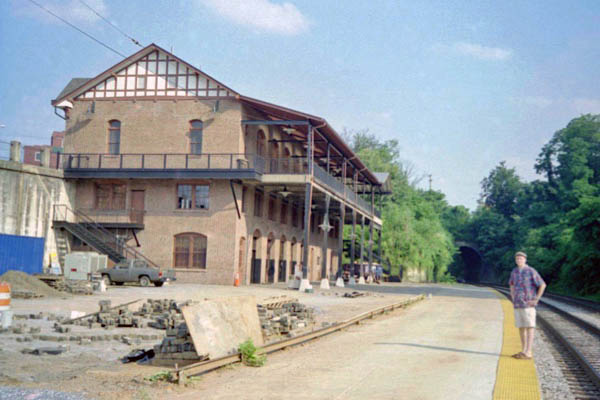
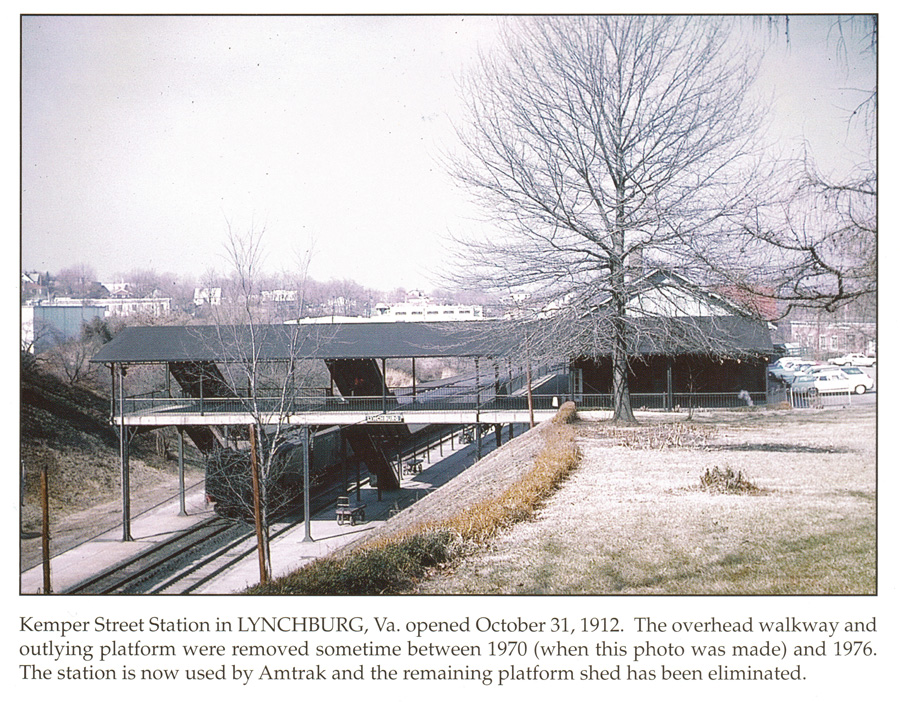
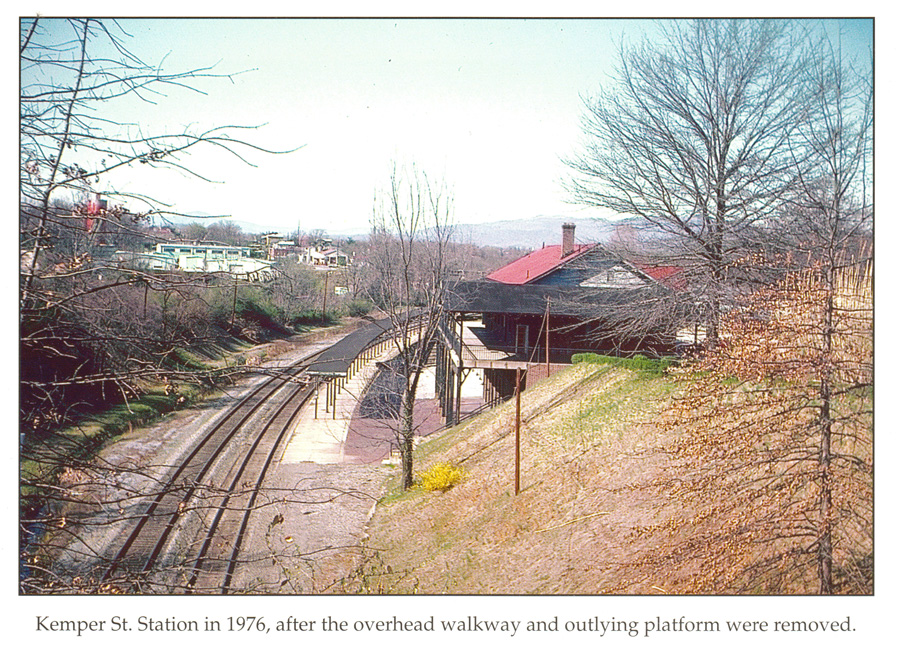
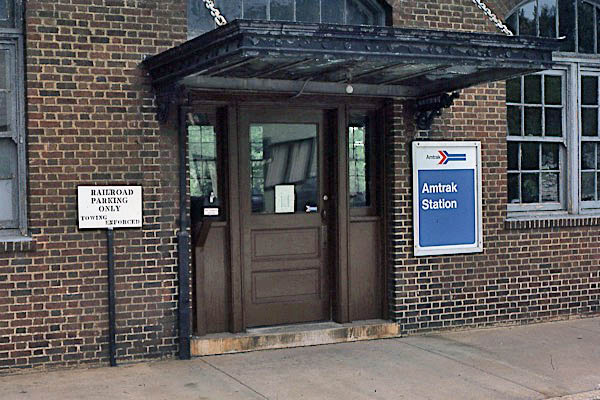
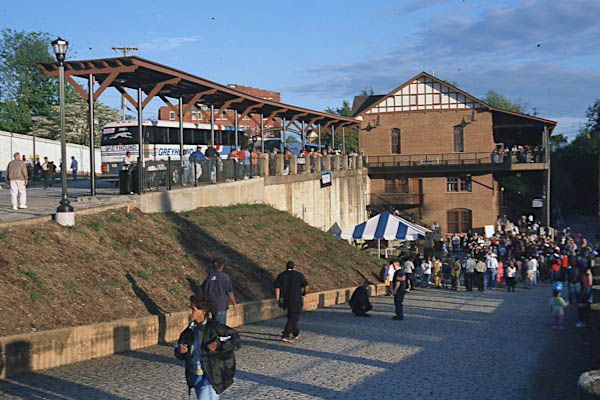
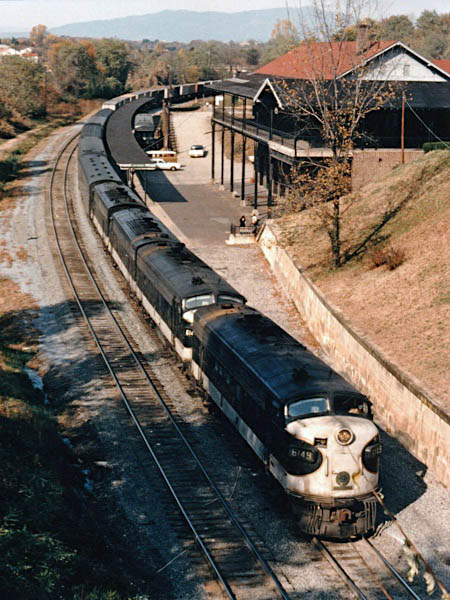
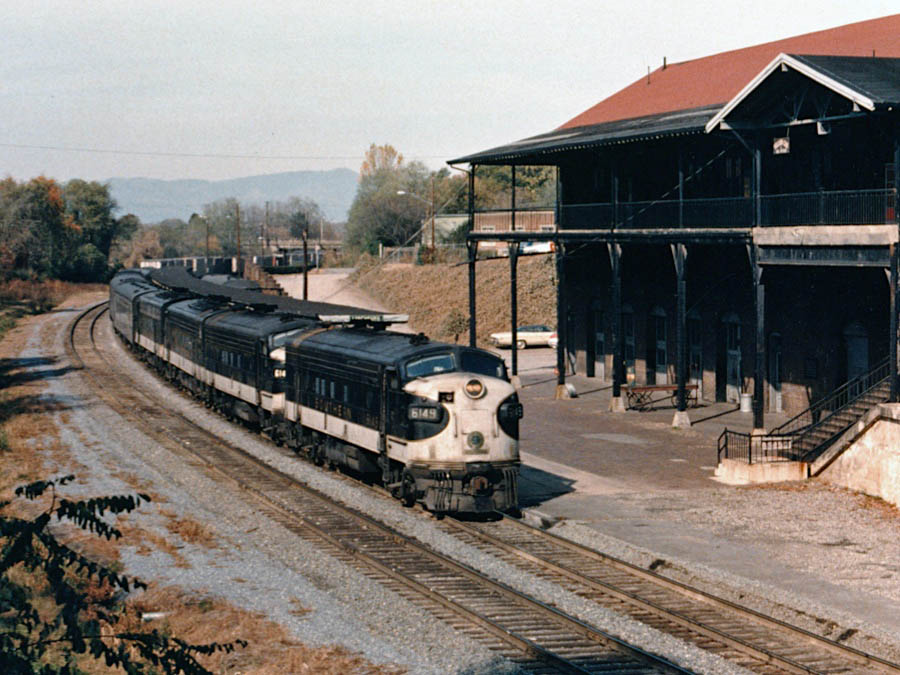
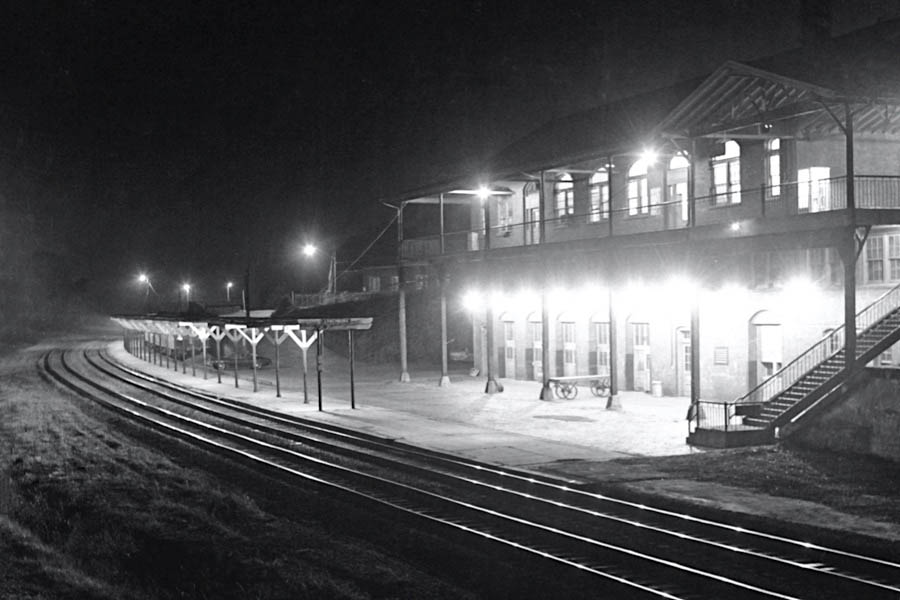
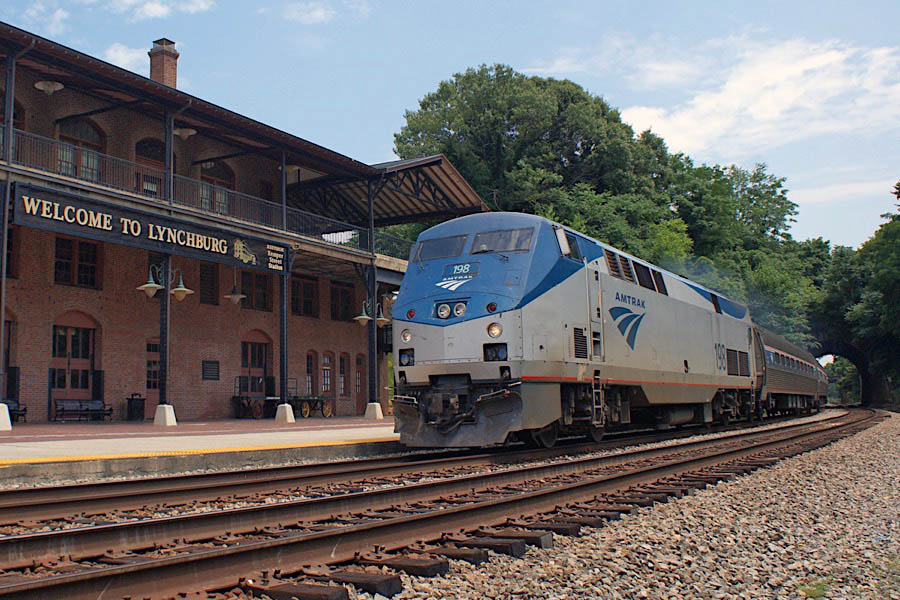
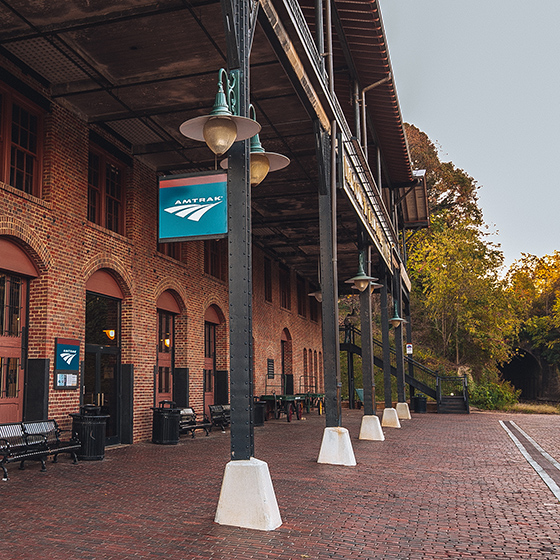 The Kemper Street station, southwest of downtown, began serving passengers on the Southern Railway line when it opened in 1912. Originally, there was a walkway over the tracks to another platform, but it was later removed. Built into the side of a hill, the station can be entered from two levels. The top floor, which contains office space, fronts Kemper St. Rail customers access the Amtrak waiting room on the ground floor via a staircase on Kemper St., or by using a driveway on the north side of the station that leads to the lower level and platform.
Over the years, Kemper Street station was neglected and fell into disrepair. The Lynchburg City Council’s determination to save the structure led to a redevelopment effort. In 2000, work began on an extensive restoration including the roof, utilities, boiler system, a historic museum display and new visitors’ center. Emphasis in design was on maintaining period lighting, finishes and the existing historic fabric of the train station. On April 26, 2002, the city of Lynchburg celebrated the restoration of the building, which in addition to transportation uses included space that could be rented for offices.
This city was named for its founder, John Lynch, who at the age of 17 started a ferry service across the James River in 1757. In 1786, the Virginia General Assembly granted a town charter to Lynch. Lynchburg was incorporated as a town in 1805 and as a city in 1852. The Society of Friends was the first religious group to settle here. Lynchburg today is often called the “City of Churches” for the large number and variety of religious buildings found in the city.
Tobacco, iron, and steel were the chief industries in early Lynchburg, making it one of the wealthiest cities per capita in the United States in the latter part of the 19th century. Transportation facilities included the James River Batteau, and later the James River and Kanawha Canal, then four railroads through the city, including the Virginia and Tennessee Railroad and the Norfolk and Petersburg Railroad.
Lynchburg served as a major storage depot during the Civil War, as well as a burial place for many of the war’s casualties. The breastworks for the defense of the city can still be seen at Fort Early. Lynchburg is also close to the Appomattox Court House, where the Civil War ended on April 9, 1865.
collection
Lynchburg, Va / 1970s / collection
Lynchburg, Va / 1970s / collection
Lynchburg, VA
Lynchburg, Va / Jun 2017 / Garland Harper
226 Roanoke, VA
- Northeast Regional
Roanoke, Va / Mar 2026 / RWH
Mar 2026 / RWH
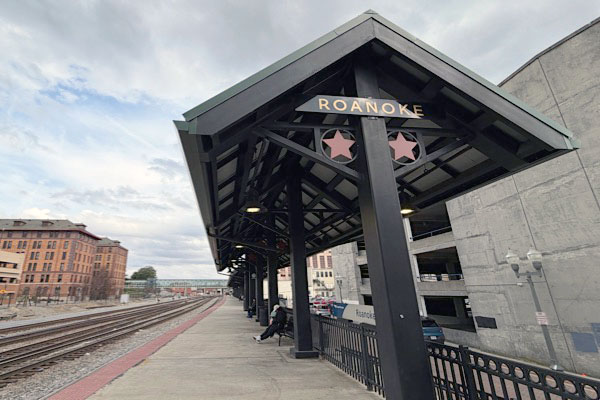
Roanoke, Va / Mar 2026 / RWH
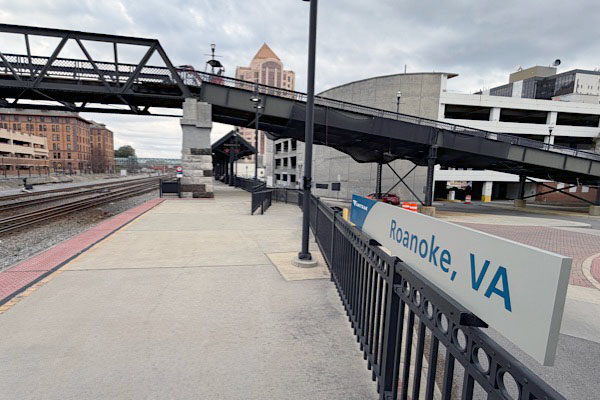
Roanoke, Va / Mar 2026 / RWH
Click to see the Roanoke passenger platform area plotted on a Google Maps page
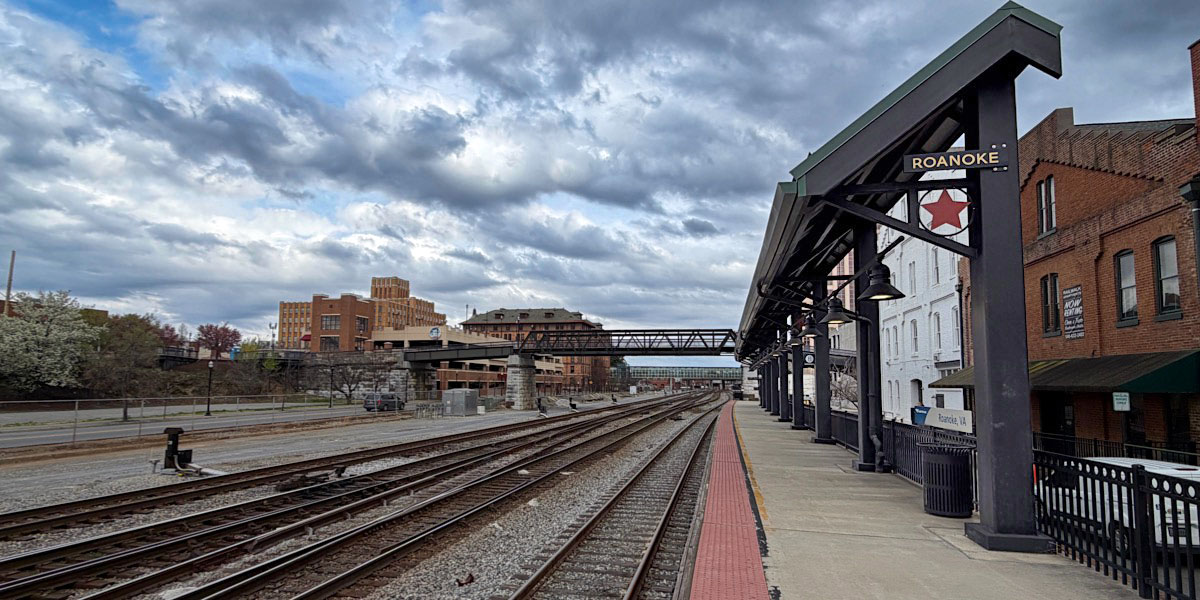
Roanoke, Va / Mar 2026 / RWH
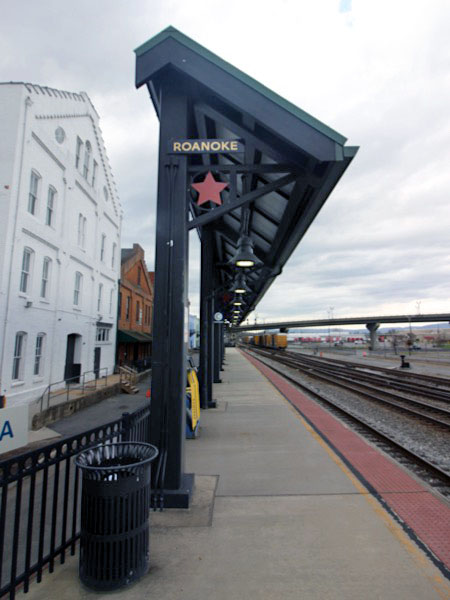
Mar 2026 / RWH
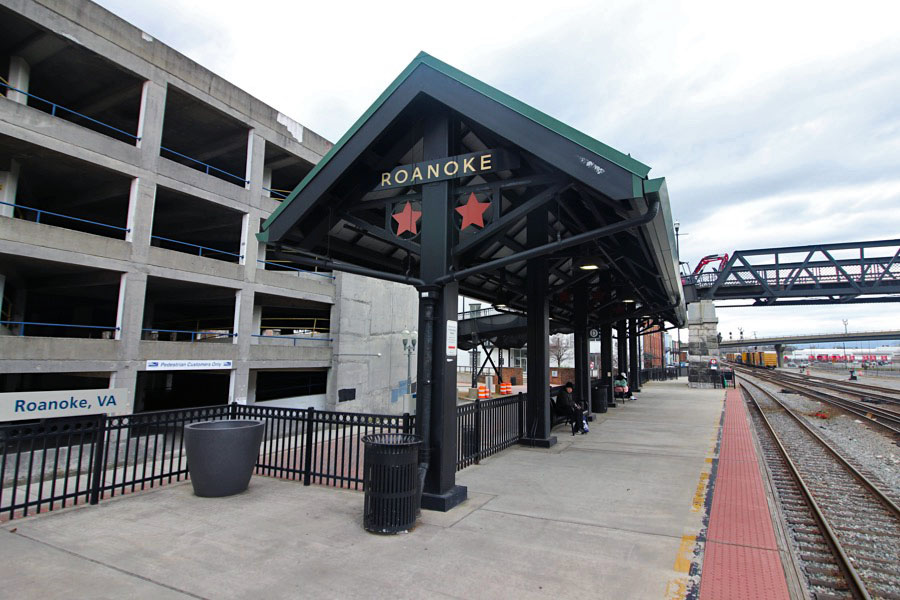
Roanoke, Va / Mar 2026 / RWH
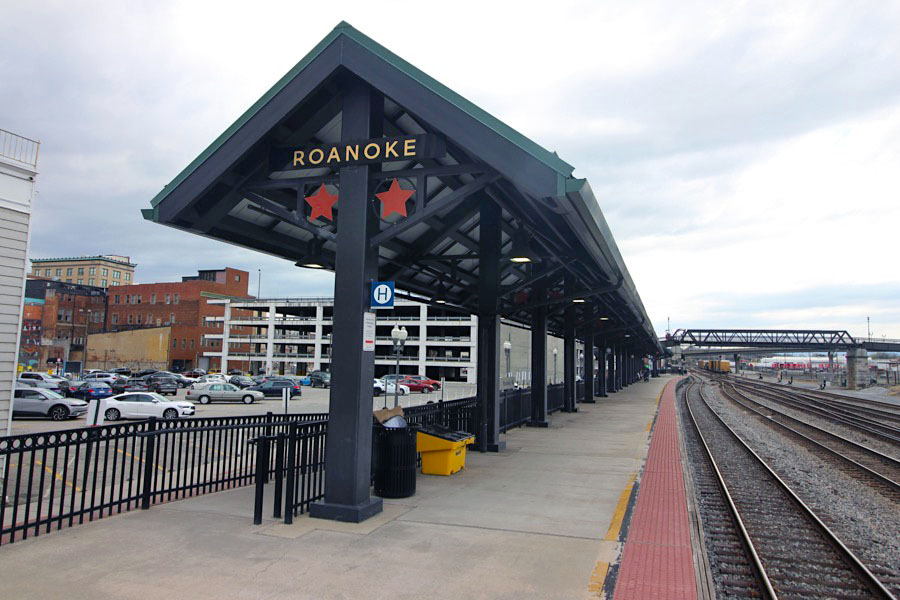
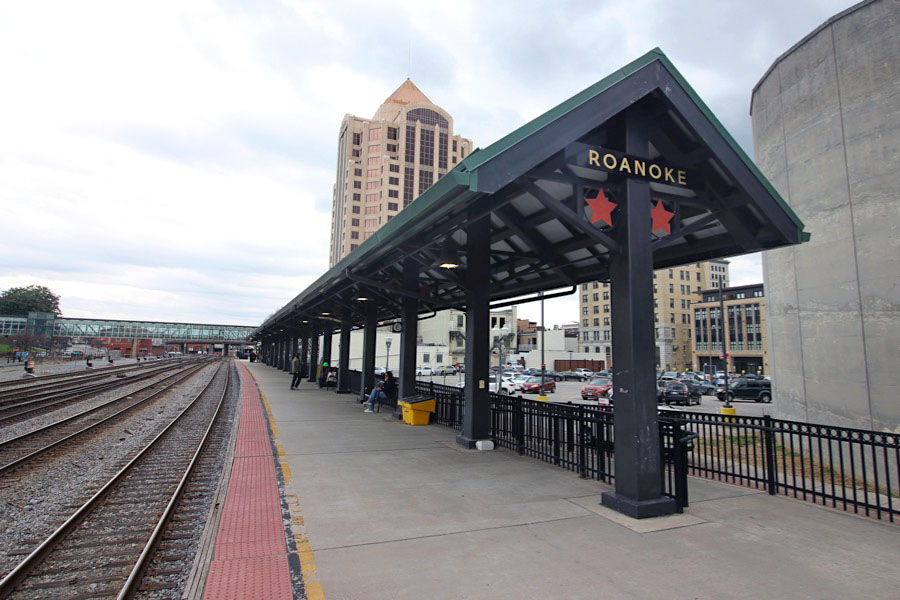
Roanoke, Va / Mar 2026 / RWH
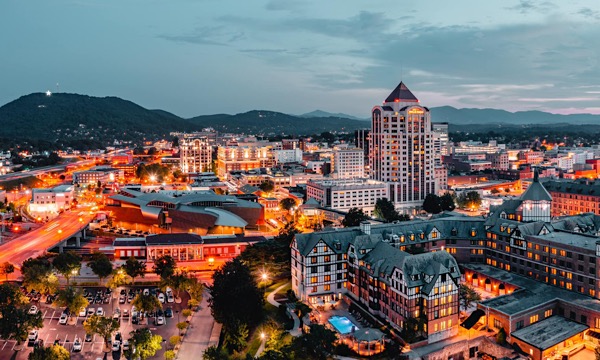
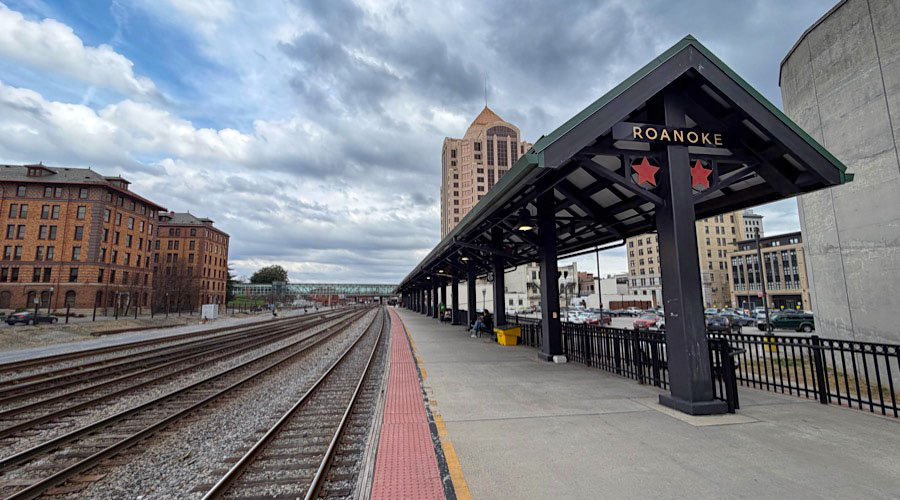
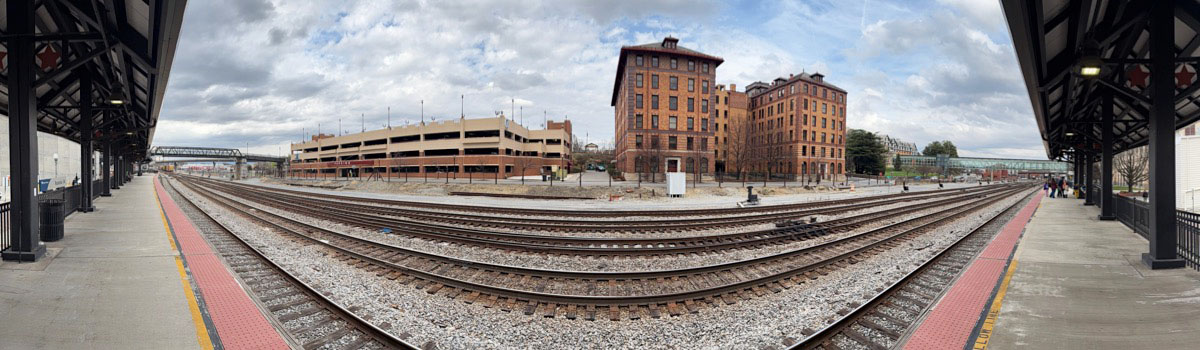
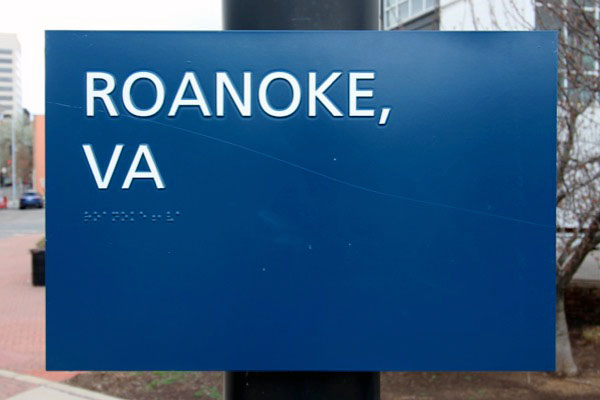
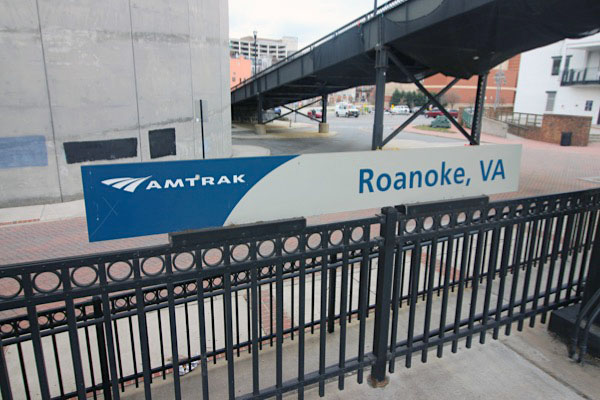
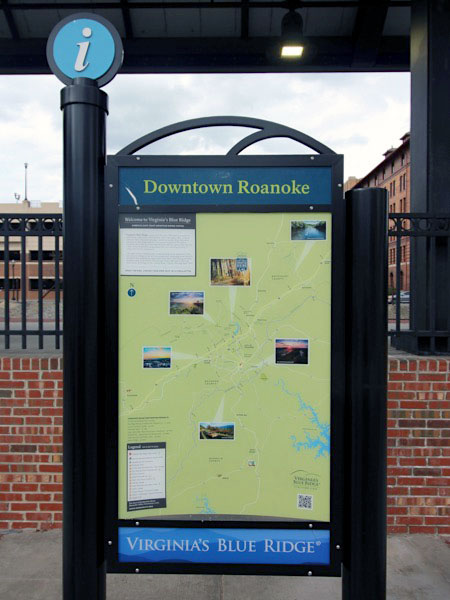
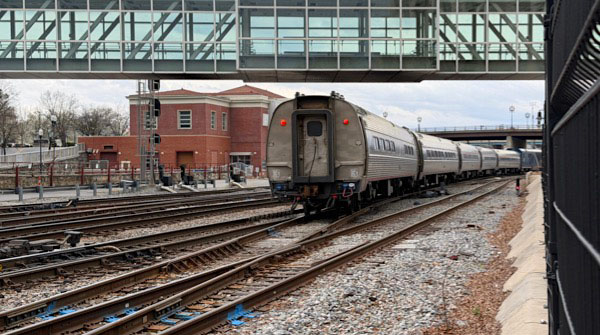
 Located in a valley of the same name nestled in the breathtaking Blue Ridge Mountains, Roanoke regained Amtrak service on Oct. 31, 2017. Prior to the launch of twice daily Northeast Regional service (Roanoke-Washington-Boston), the city had not enjoyed regularly scheduled passenger rail service since 1979 when the Hilltopper (Catlettsburg, Ky.-Washington-Boston) was discontinued. One day earlier, an inaugural train ran from Lynchburg, Va., the previous route terminus, to Roanoke to celebrate the expansion of service. A second daily roundtrip was added in July 2022.
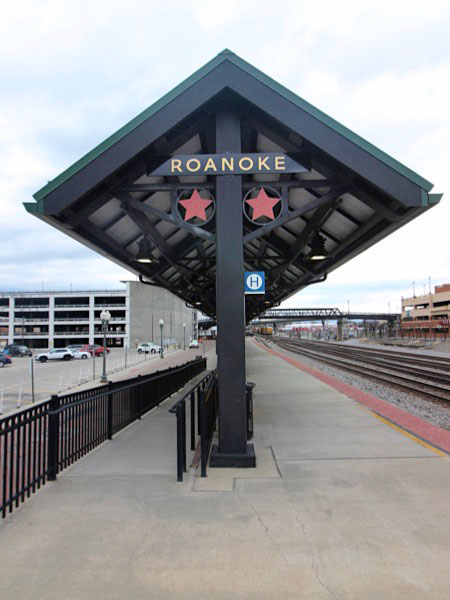
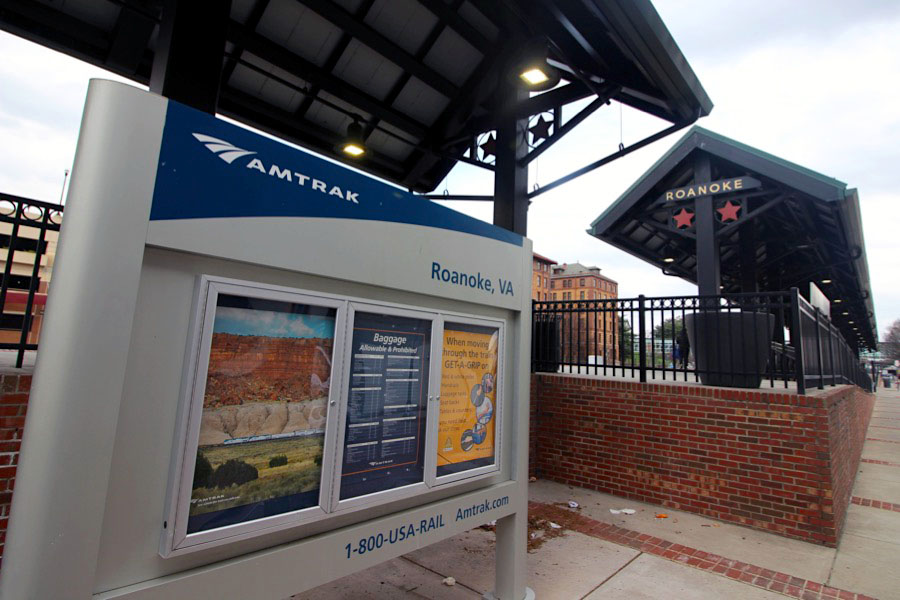
The new Roanoke station, consisting of an accessible, high-level platform with a canopy, is located in the heart of downtown and within walking distance of major attractions including the Virginia Museum of Transportation, Taubman Museum of Art and the City Market area. Numerous Valley Metro bus routes also run through downtown within blocks of the station.
Amtrak, the Virginia Department of Rail and Public Transportation (DRPT), and the city of Roanoke partnered to bring intercity passenger rail service back to the city. Since 2009, DRPT has overseen popular service expansions to Richmond, Lynchburg and Norfolk. Northeast Regional service within Virginia is funded in part through grants made available by the Commonwealth of Virginia.
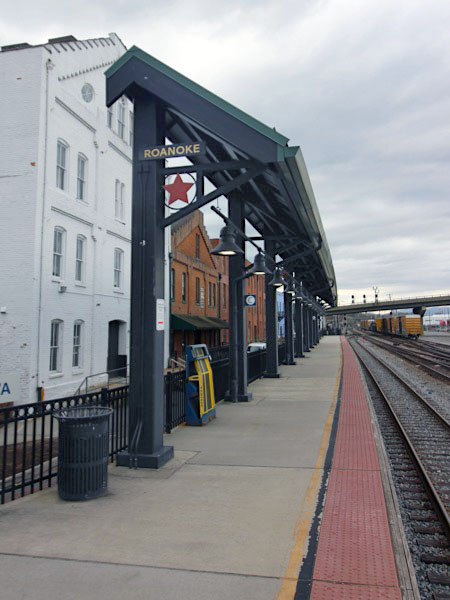
Mar 2026 / RWH
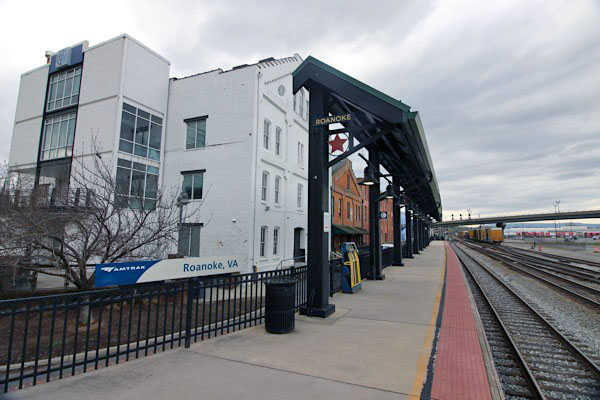
Roanoke, Va / Mar 2026 / RWH
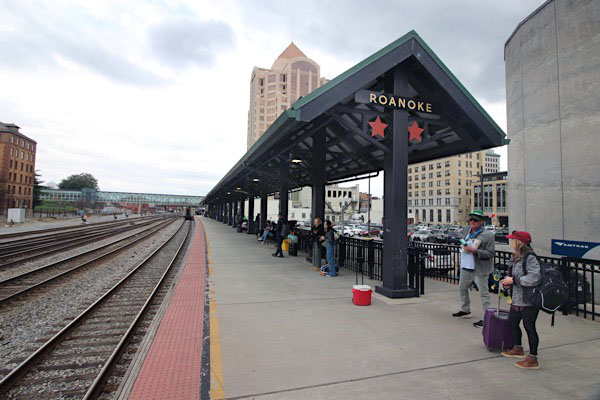
Roanoke, Va / Mar 2026 / RWH
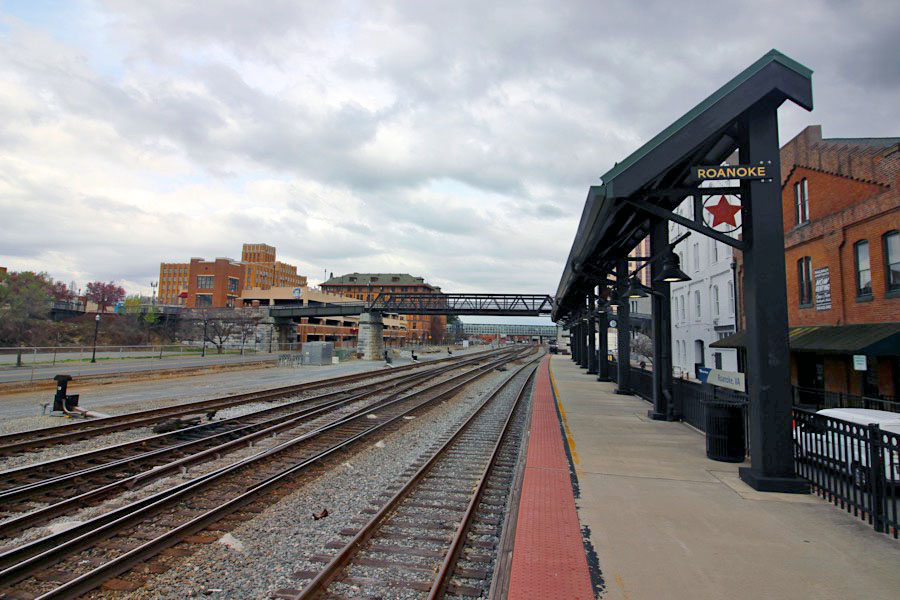
Roanoke, Va / Mar 2026 / RWH
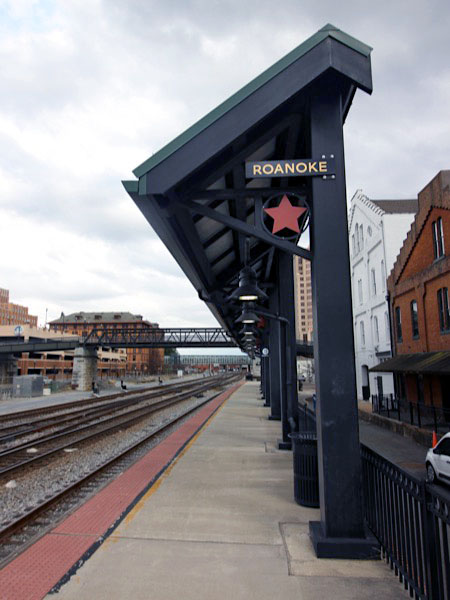
Mar 2026 / RWH
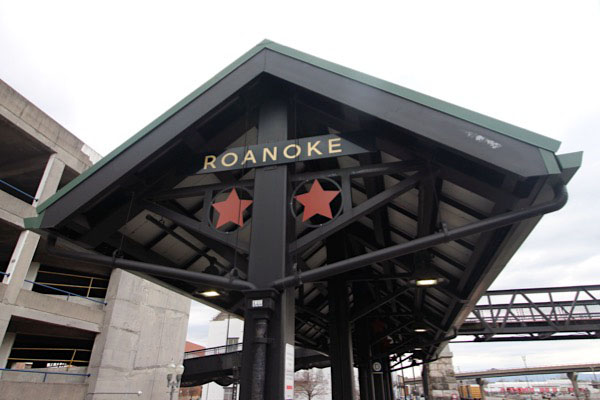
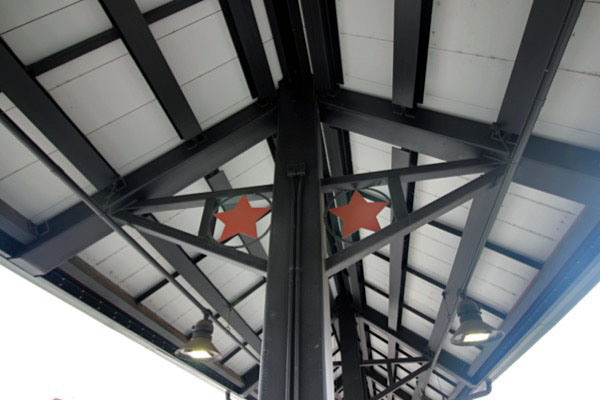
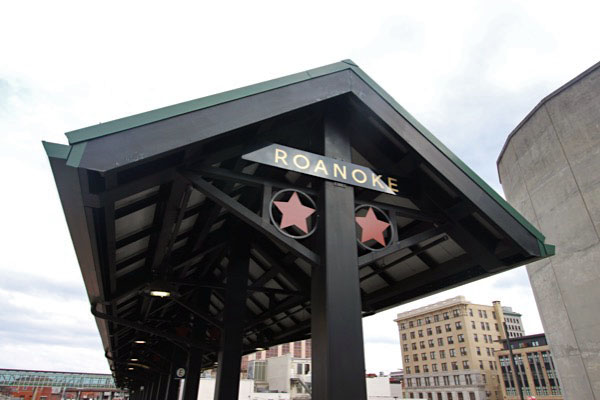
Mar 2026 / RWH
Roanoke, Va / Mar 2026 / RWH
Roanoke, VA
Mar 2026 / RWH
Mar 2026 / RWH
Mar 2026 / RWH
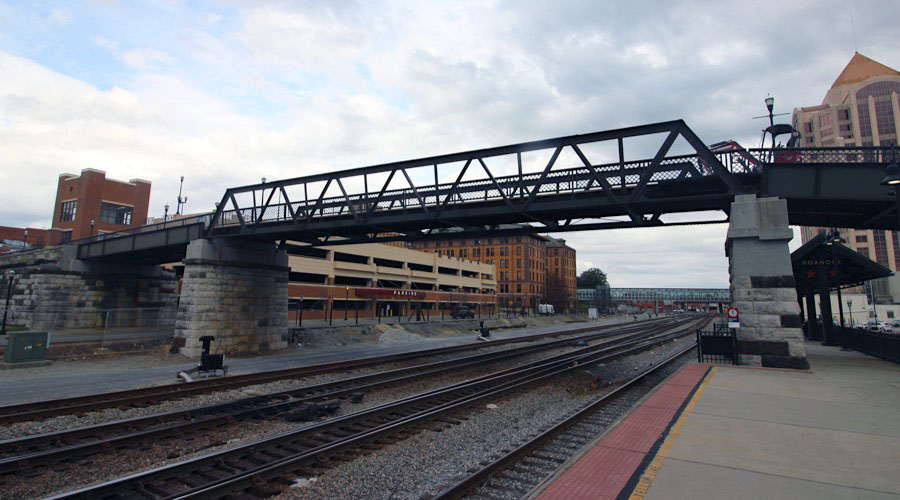
Roanoke, Va / Mar 2026 / RWH
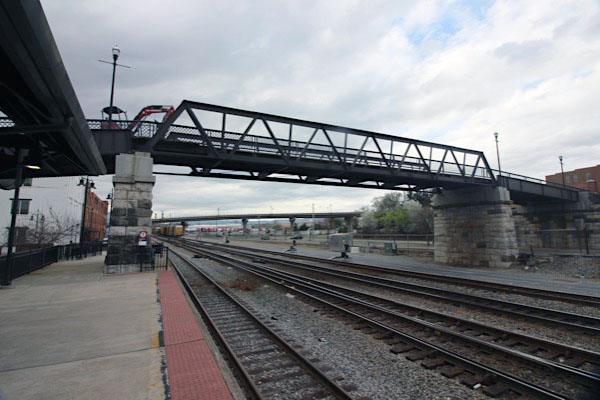
Roanoke, Va / Mar 2026 / RWH
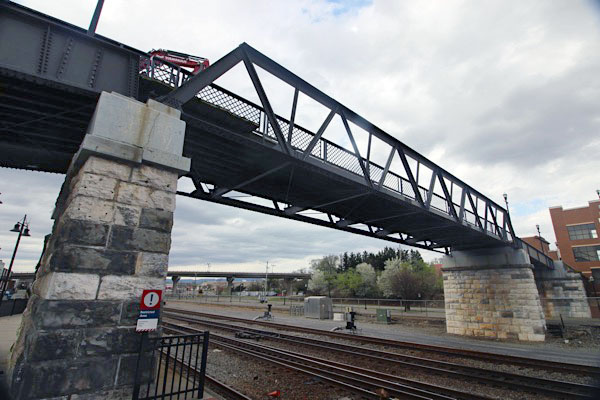
Mar 2026 / RWH
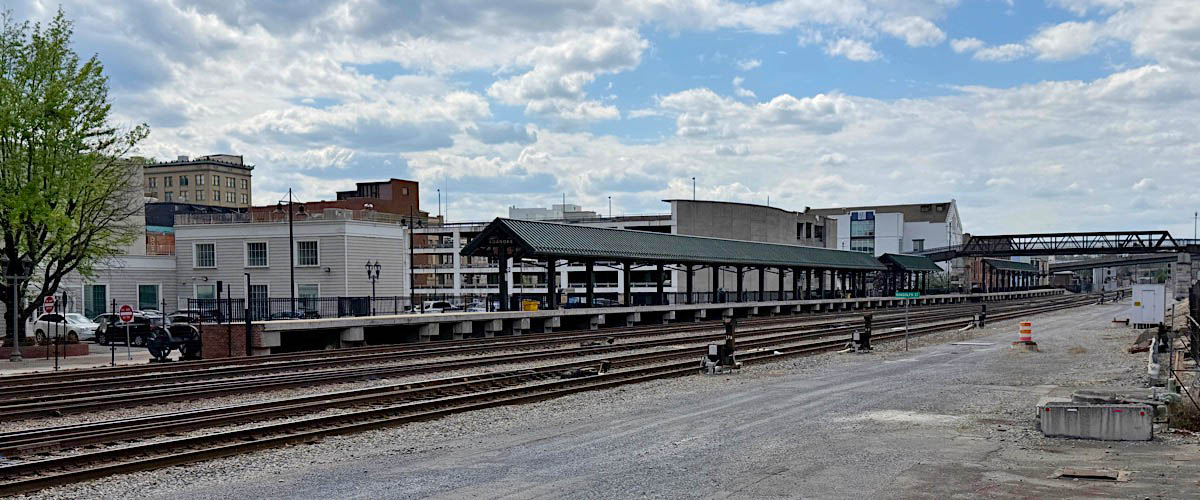
Roanoke, Va / Apr 2026 / RWH
See also these related scrapbooks:
- O. Winston Link Museum in Preservation
- Virginia Museum of Transportation in Preservation
- Virginia Creeper Trail in Preservation
 Precision Transportation
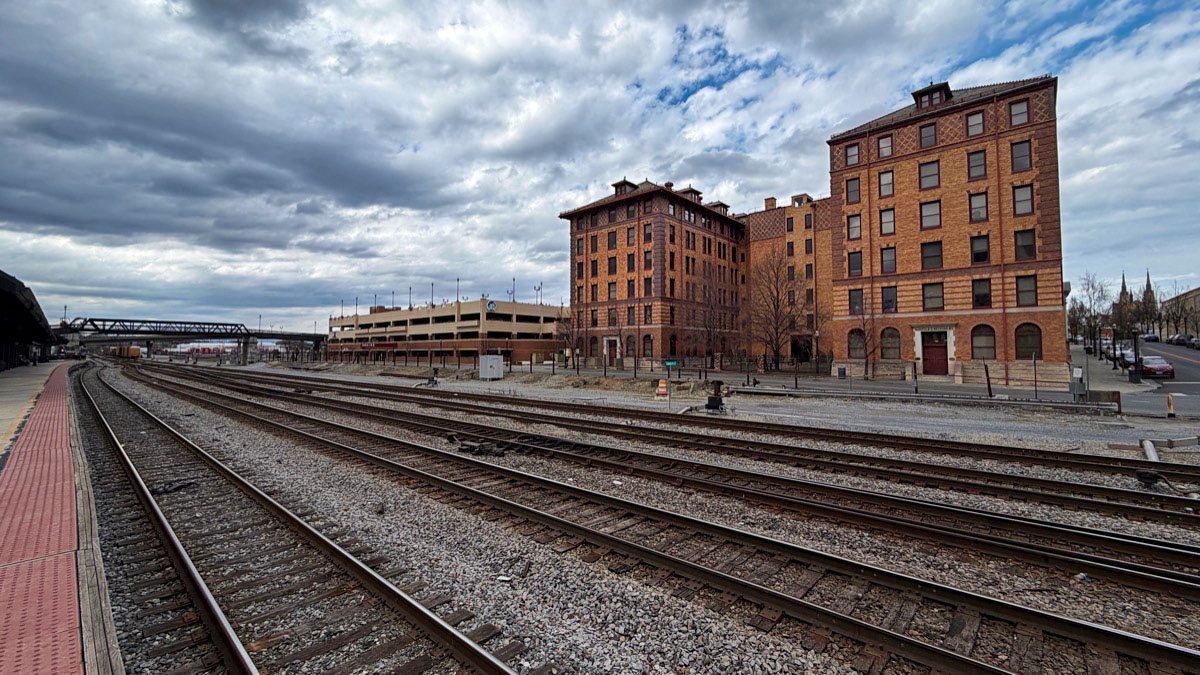
Roanoke, Va / Mar 2026 / RWH
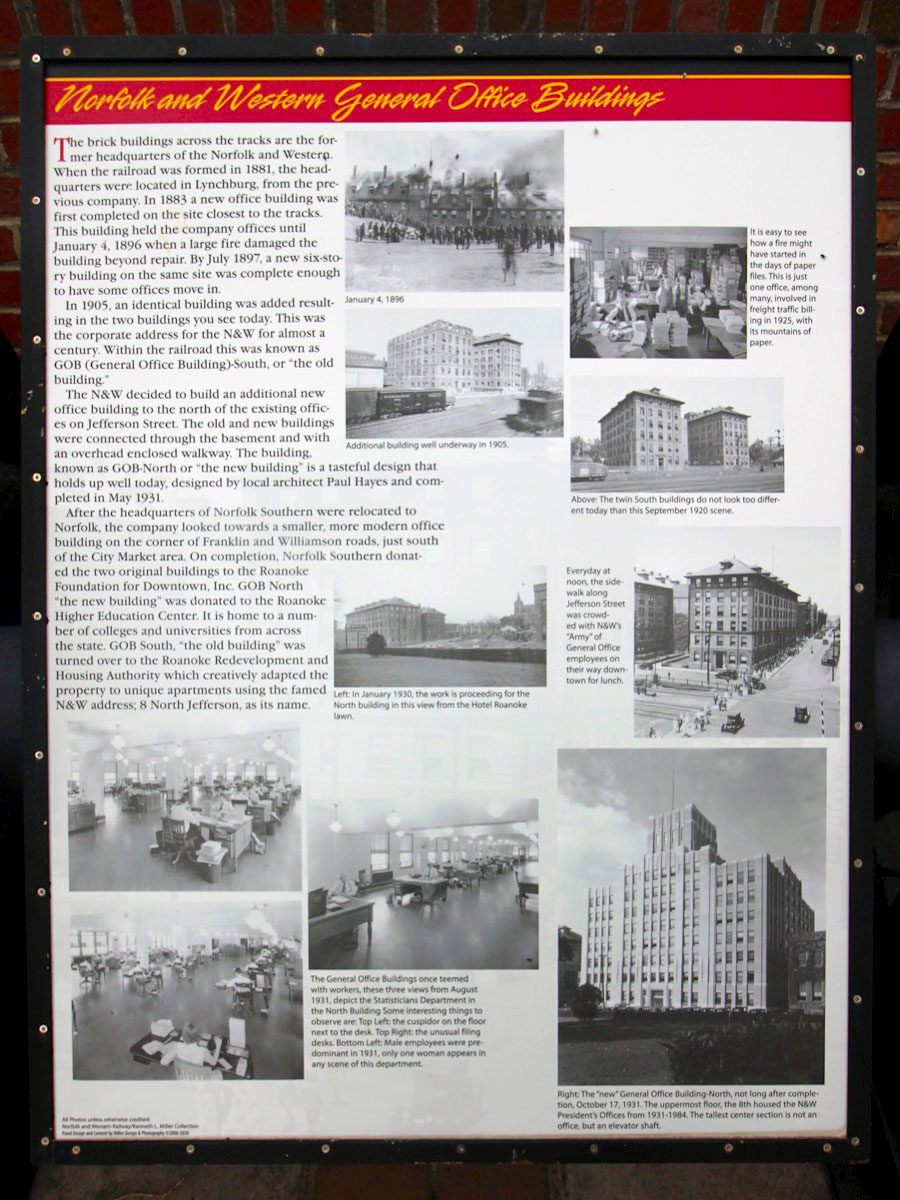
Mar 2026 / RWH
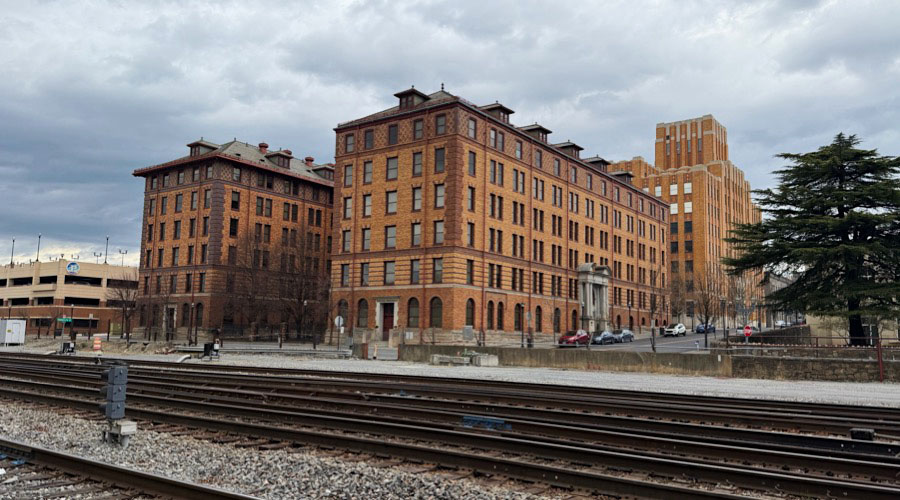
Roanoke, Va / Mar 2026 / RWH

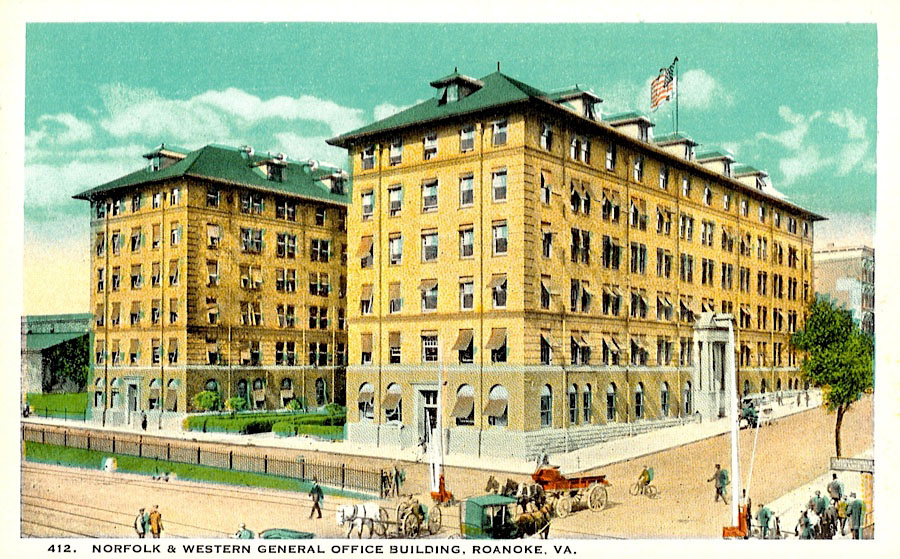
postcard / collection
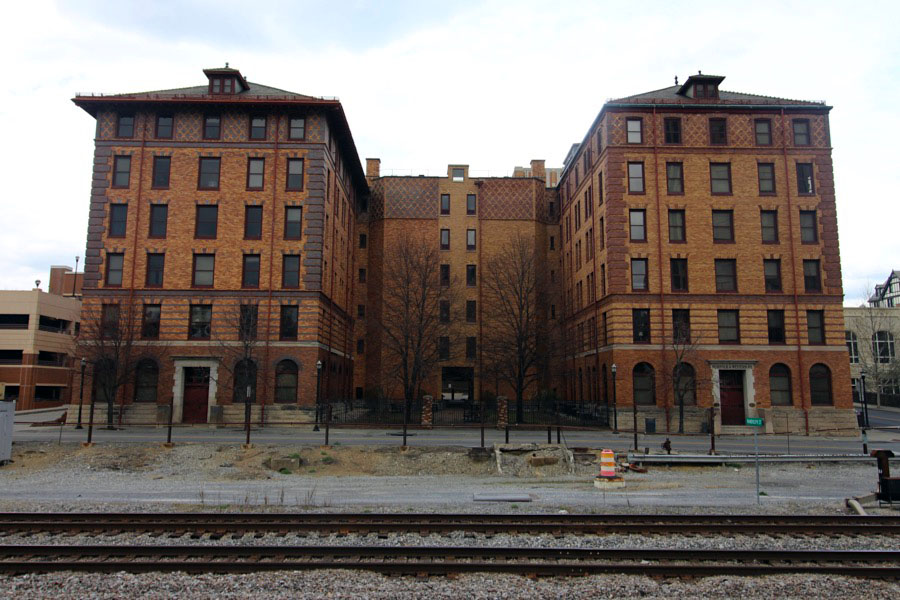
Roanoke, Va / Mar 2026 / RWH
Click to see the former Norfolk & Western headquarters plotted on a Google Maps page
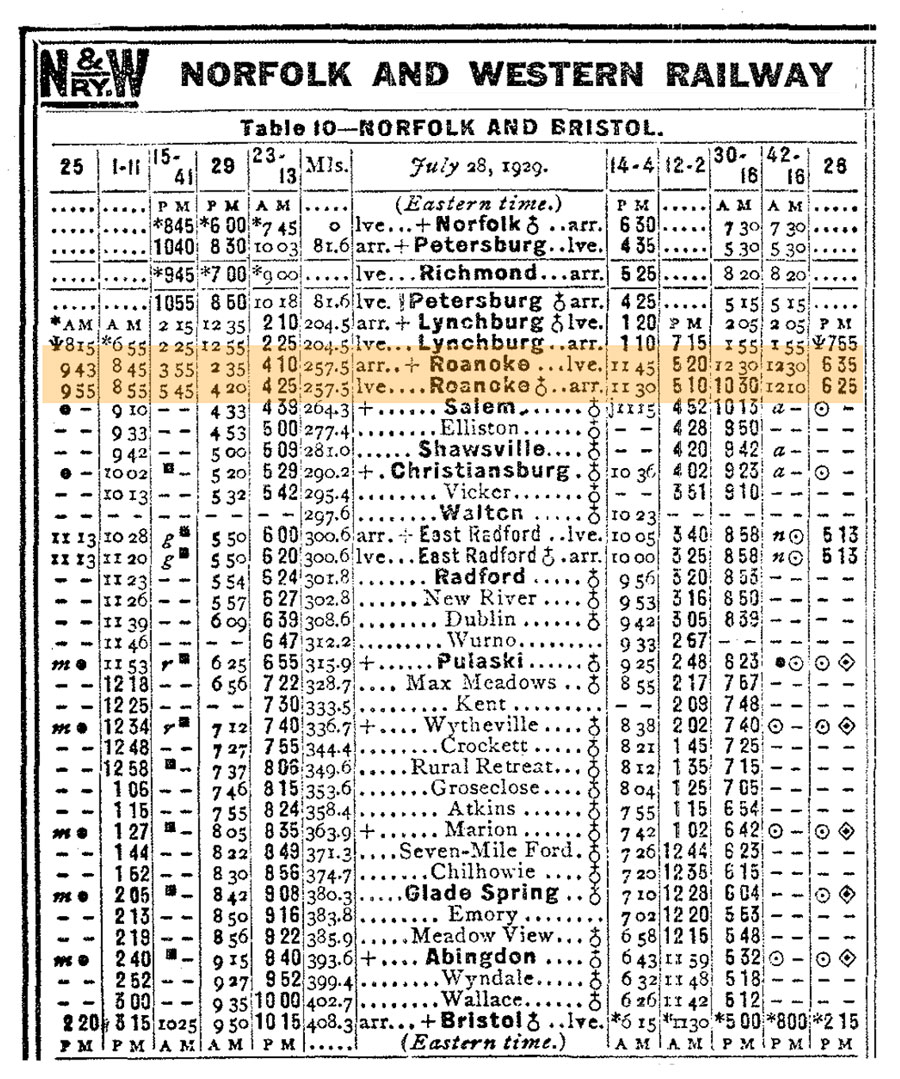
1930 Official Guide ad / collection
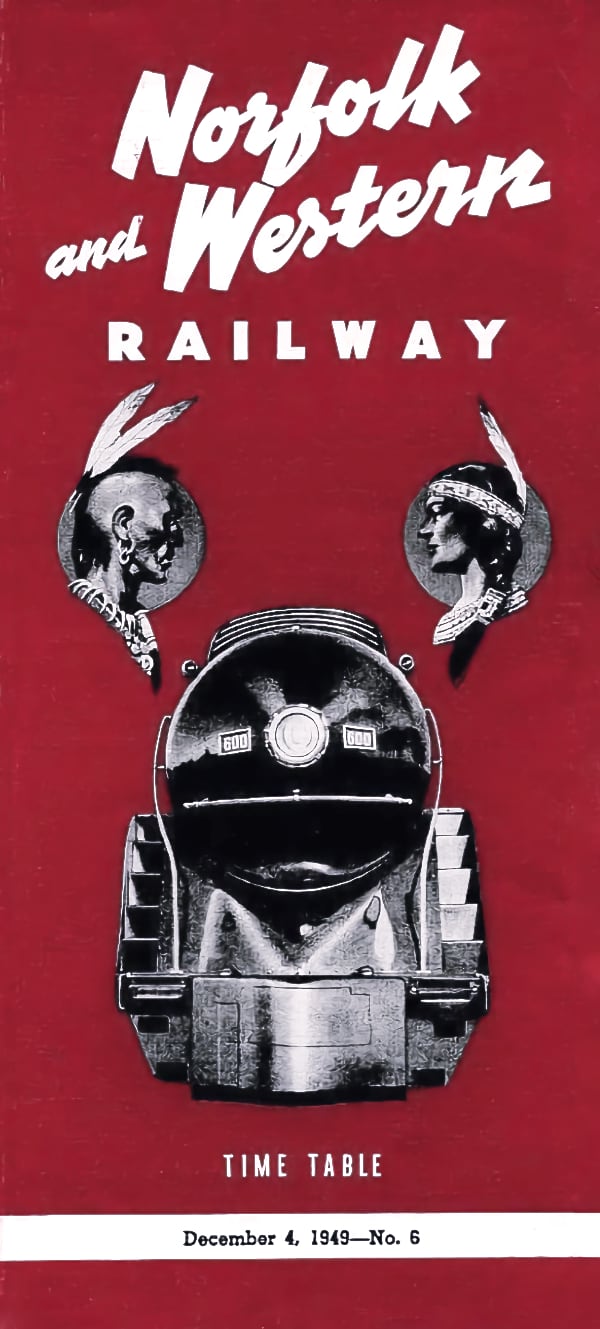
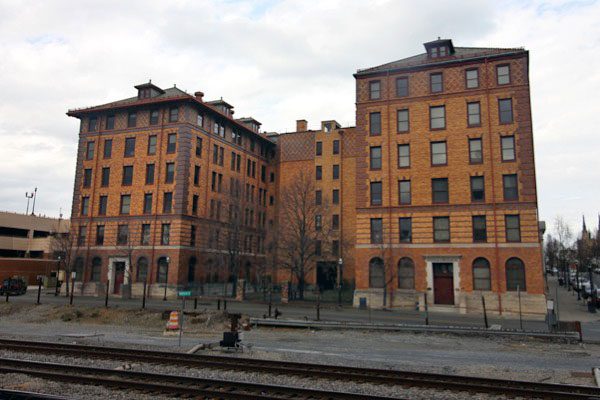
Roanoke, Va / Mar 2026 / RWH
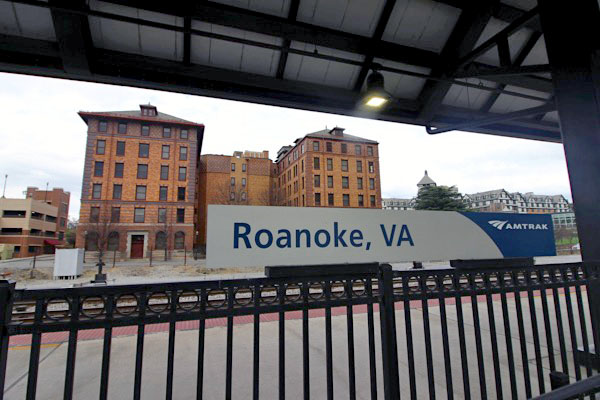
Roanoke, Va / Mar 2026 / RWH
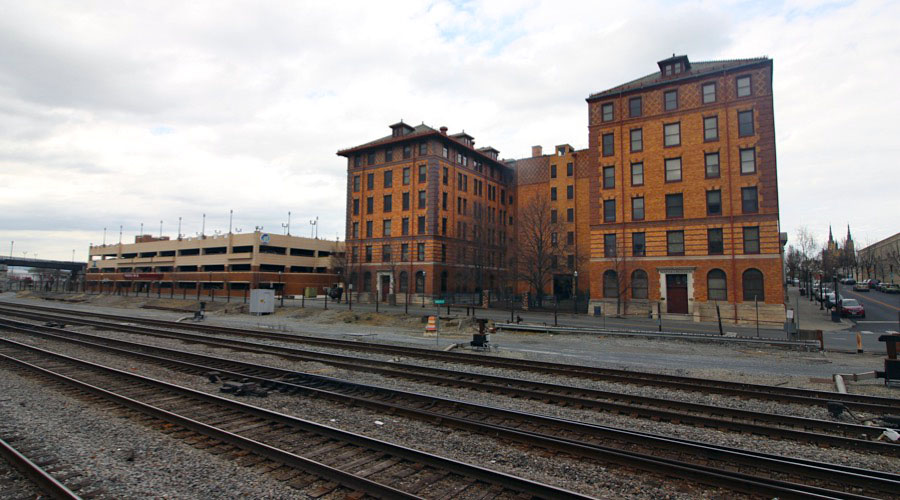
Roanoke, Va / Mar 2026 / RWH
See also our complete Norfolk & Western Fallen Flag scrapbook in Mainlines
northbound #66
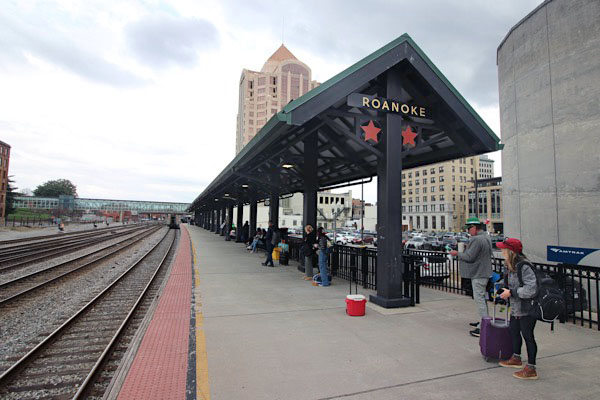
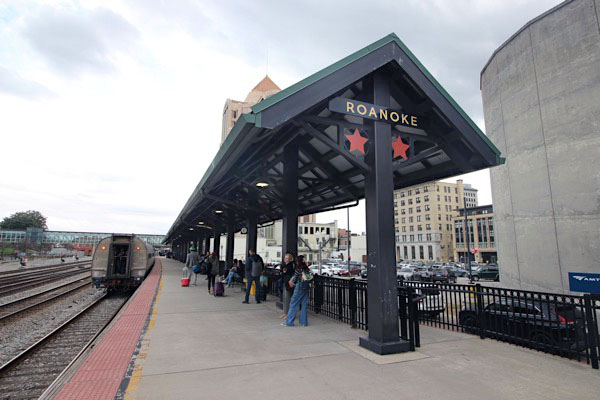
Roanoke, Va / Mar 2026 / RWH
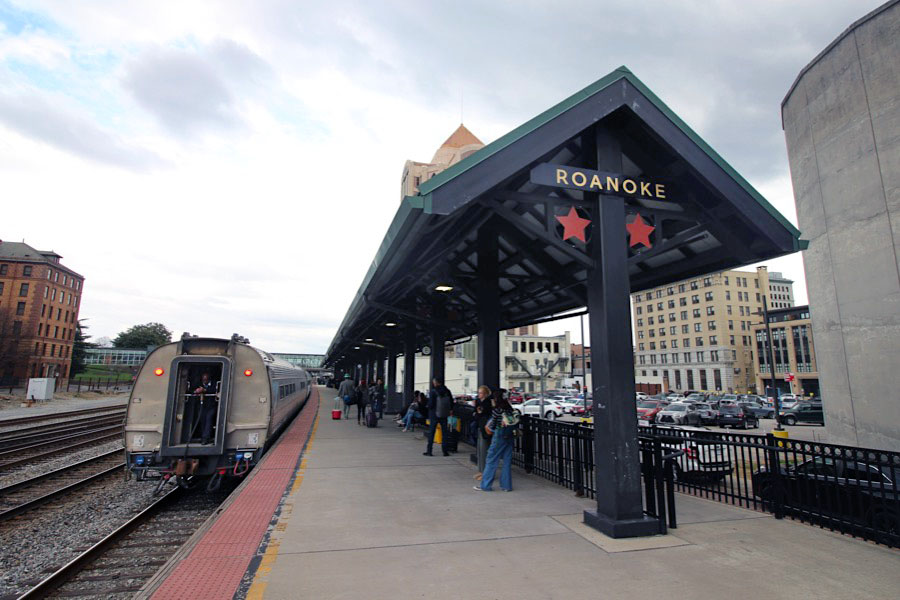
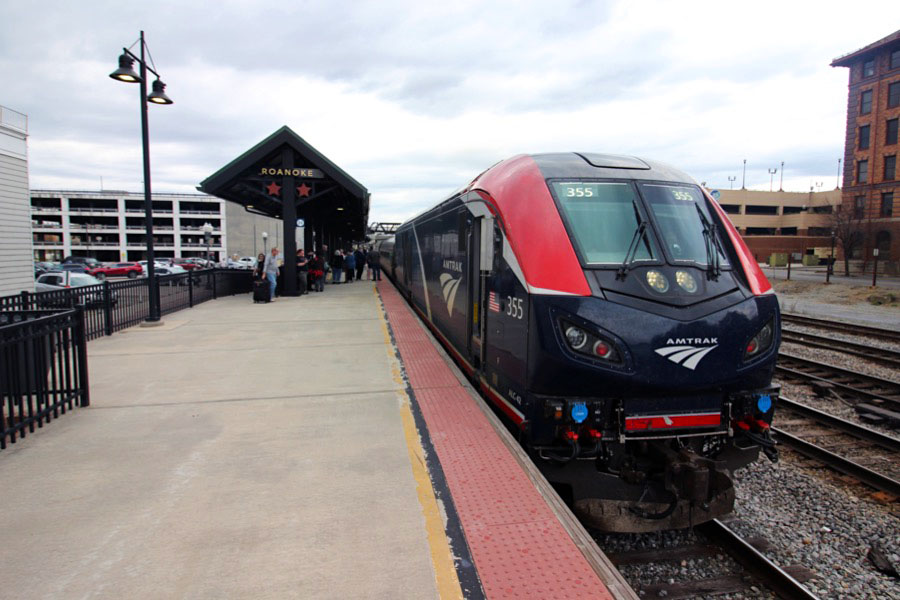
Roanoke, Va / Mar 2026 / RWH
Amtrak's
Virginia Service
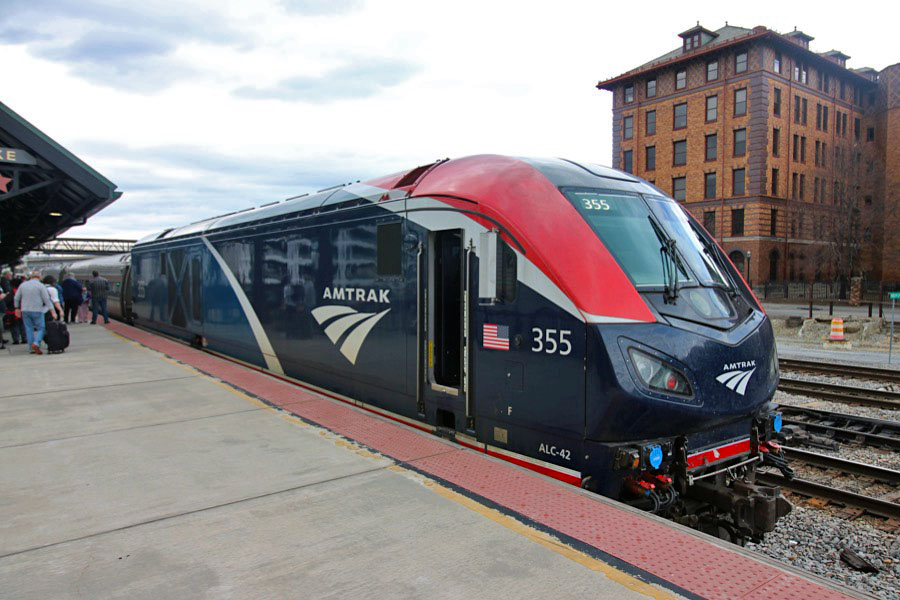
Amtrak #355
Siemens ALC-42 Charger
Roanoke, Va / Mar 2026 / RWH

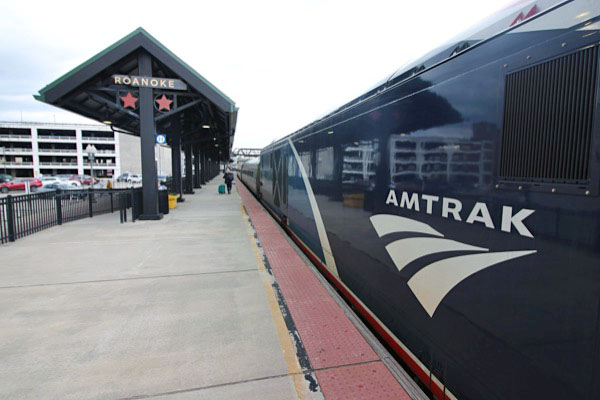
Roanoke, Va / Mar 2026 / RWH
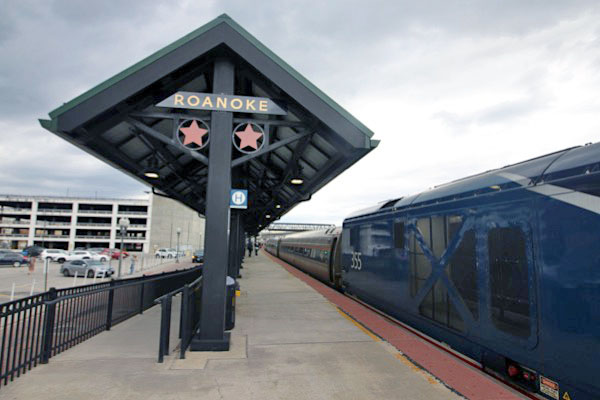
Mar 2026 / RWH
Mar 2026 / RWH
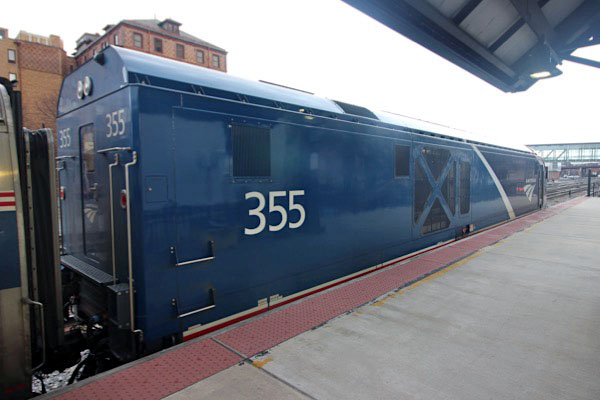
Mar 2026 / RWH
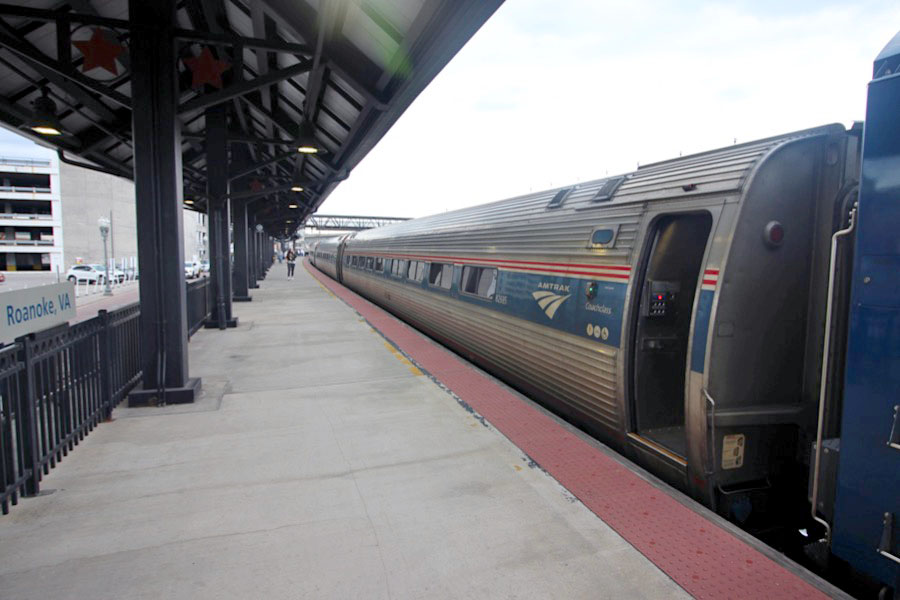
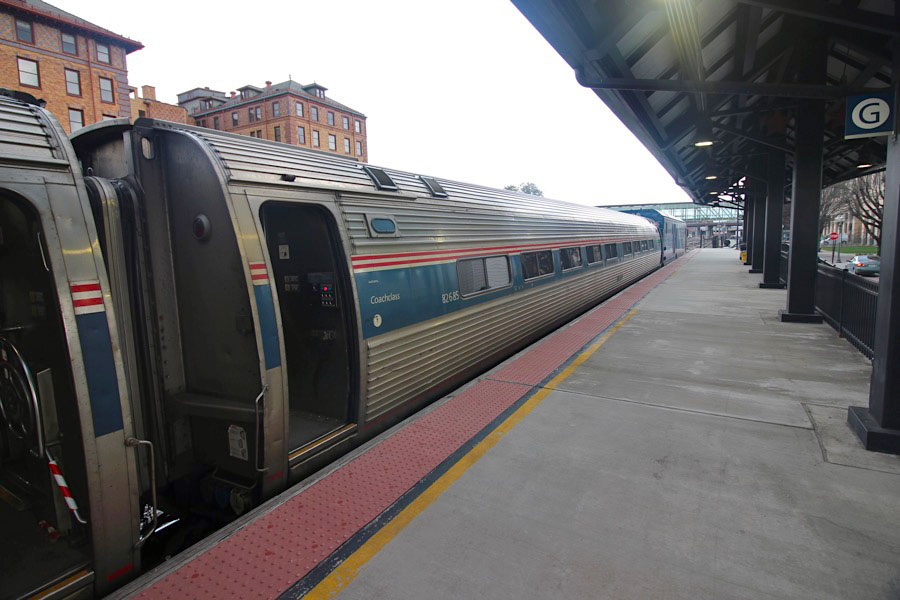
Roanoke, Va / Mar 2026 / RWH
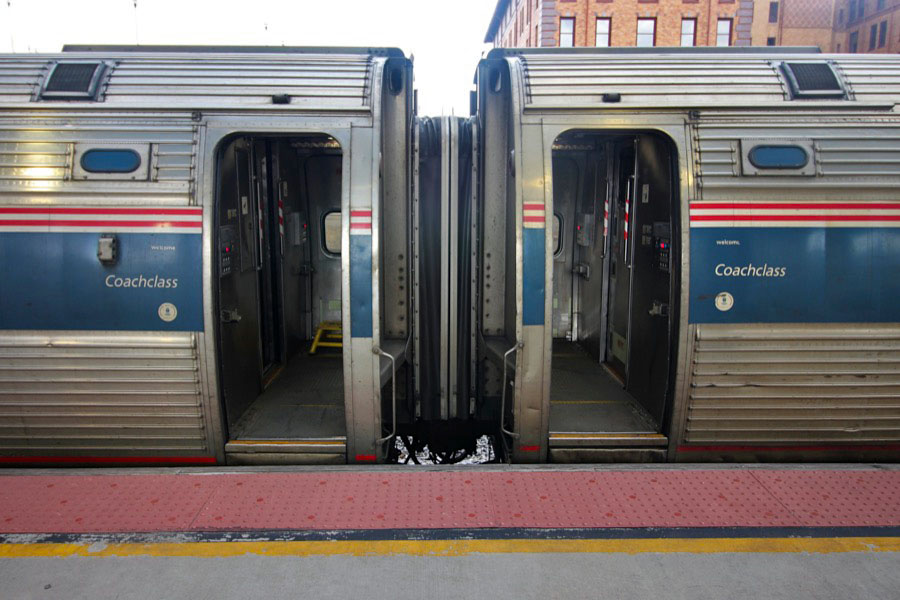
Mar 2026 / RWH
Mar 2026 / RWH
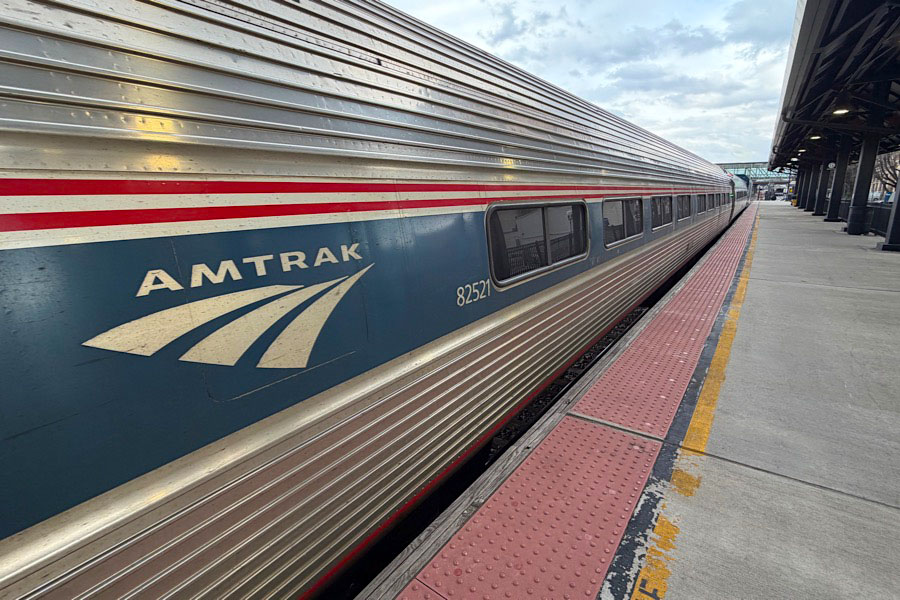
Roanoke, Va / Mar 2026 / RWH
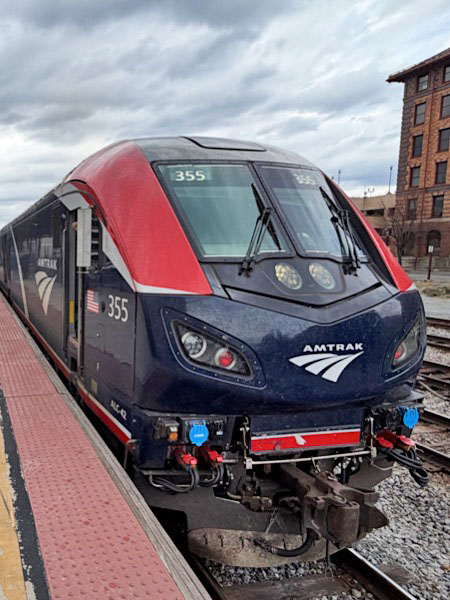
Mar 2026 / RWH
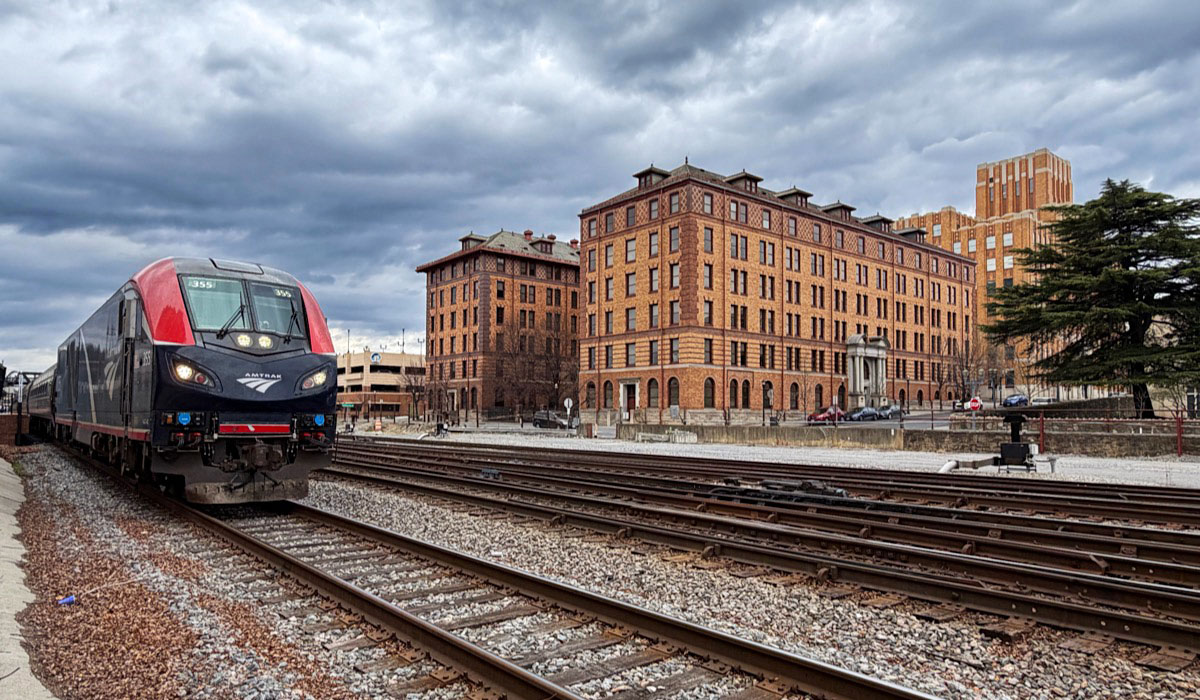
Roanoke, Va / Mar 2026 / RWH
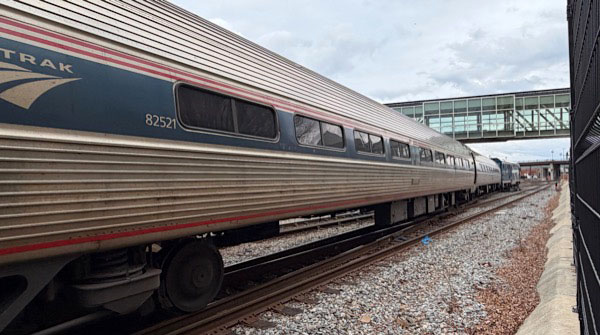
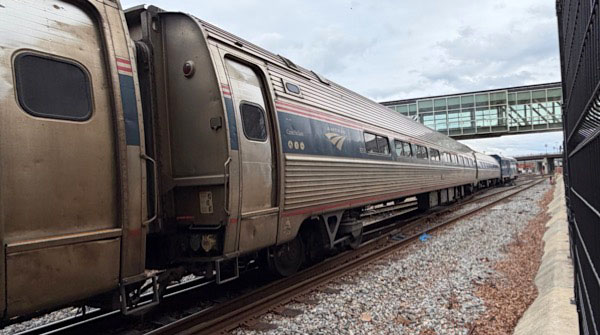
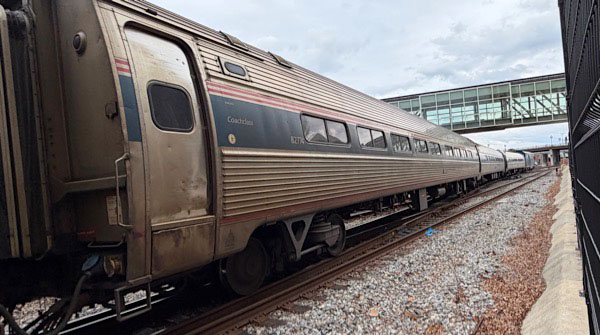
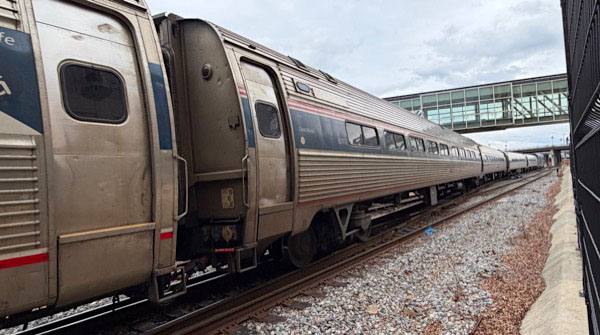
Roanoke, Va / Mar 2026 / RWH
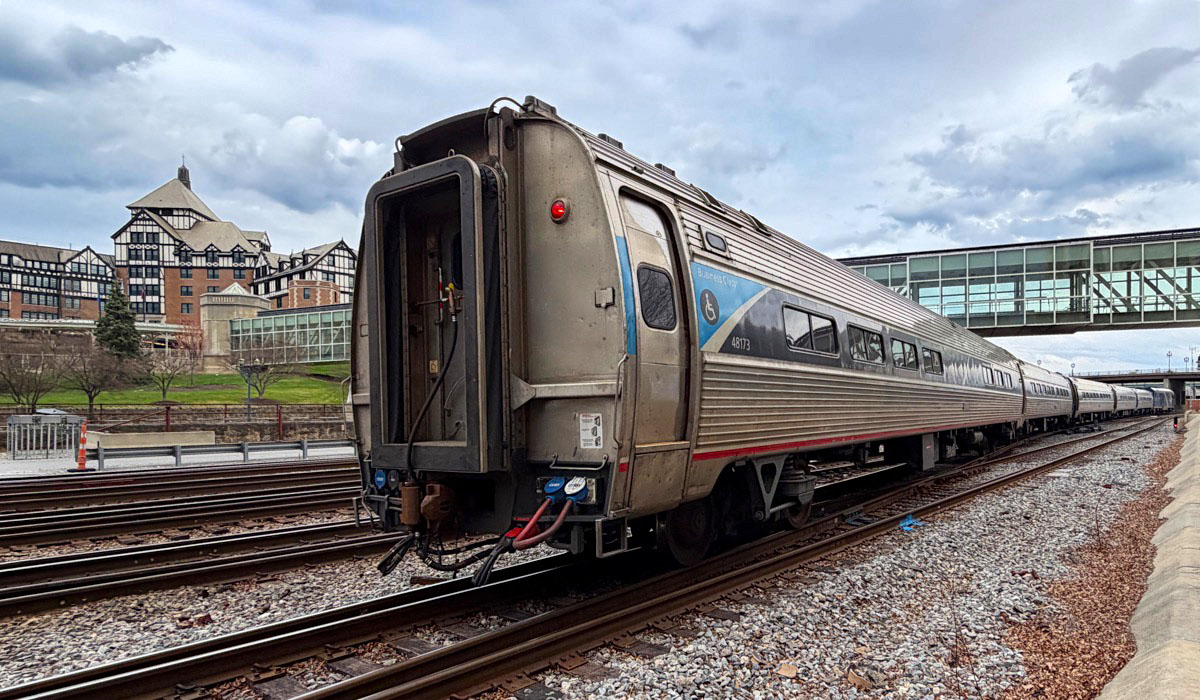
Roanoke, Va / Mar 2026 / RWH
Roanoke, Va / Mar 2026 / RWH
Newport News line

54 Fredericksburg
- Carolinian
- Northeast Regional
- Silver Meteor
Fredericksburg, Va / Jun 2023 / RWH
- location:Fredericksburg VA
- address:425 Princess Anne St
- type:city station, 2 platforms
- owner:VA Dept Pub Transport
- opened:1910
- builder:RF&P Railroad
- style:Colonial Revival brick
- renovated:2010, 2024
- services:none, platform only
- links: Amtrak | Great Stations
Fredericksburg, Va / Jun 2023 / RWH
Click to see the Fredericksburg station area plotted on a Google Maps page
Fredericksburg, Va / Jun 2023 / RWH
Fredericksburg, Va / Jun 2023 / RWH
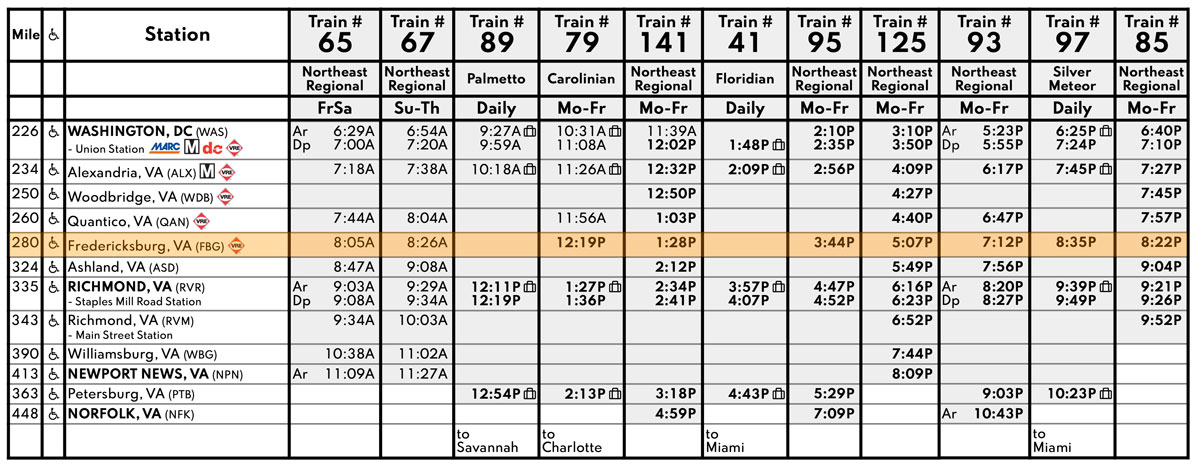
2025 Rail Passengers Association southbound timetable / adapted RWH
Fredericksburg, Va / Jun 2023 / RWH
Fredericksburg, Va / Jun 2023 / RWH
Jun 2023 / RWH
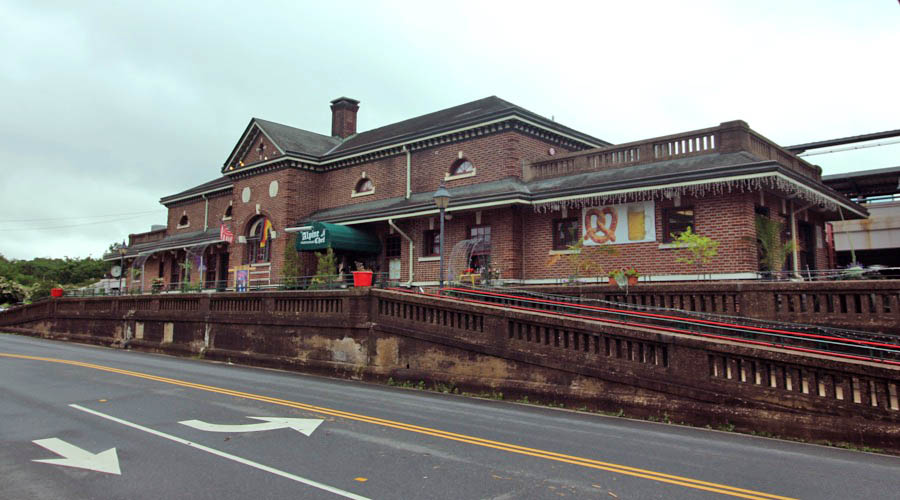
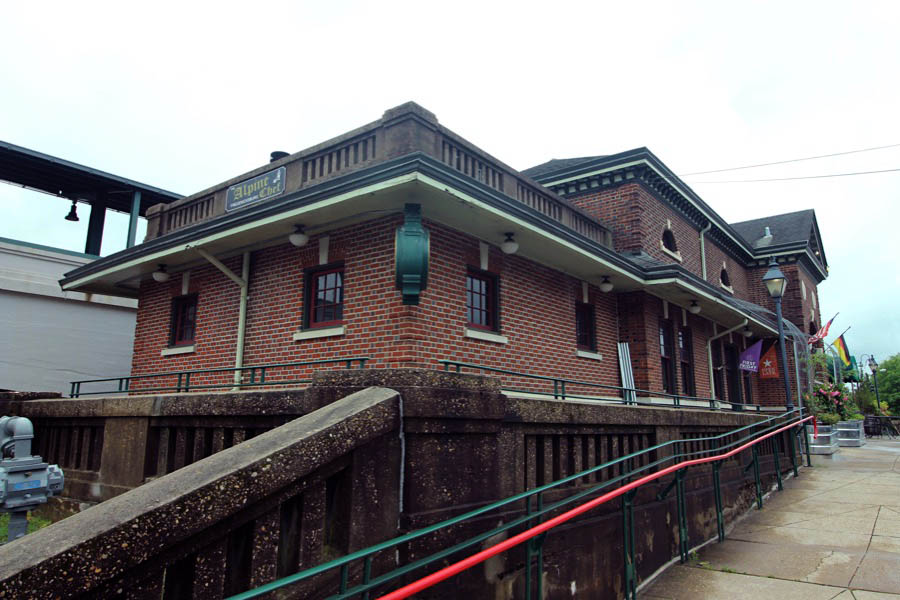
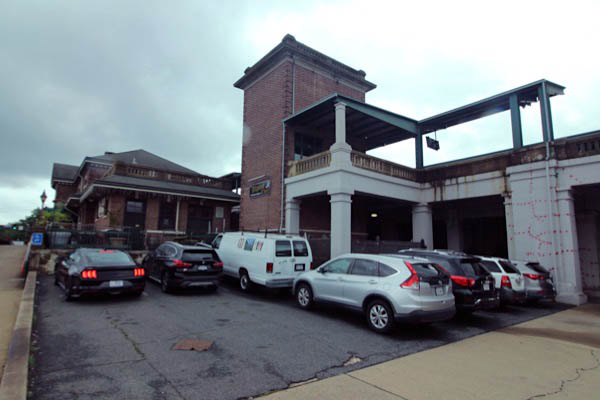
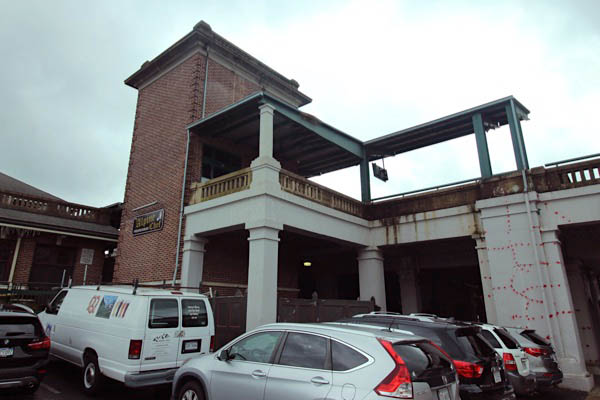
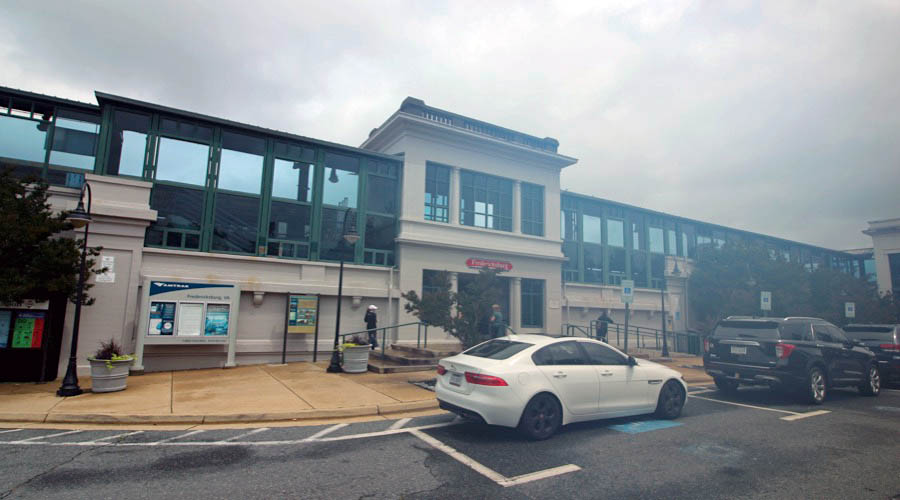
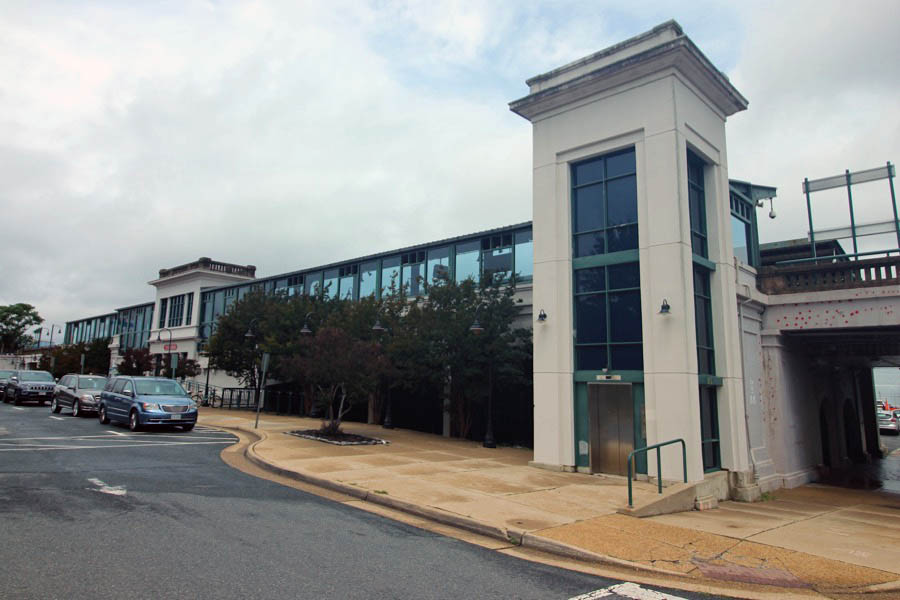
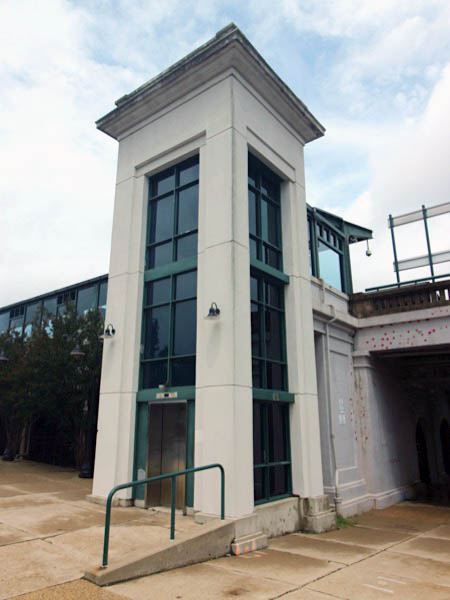
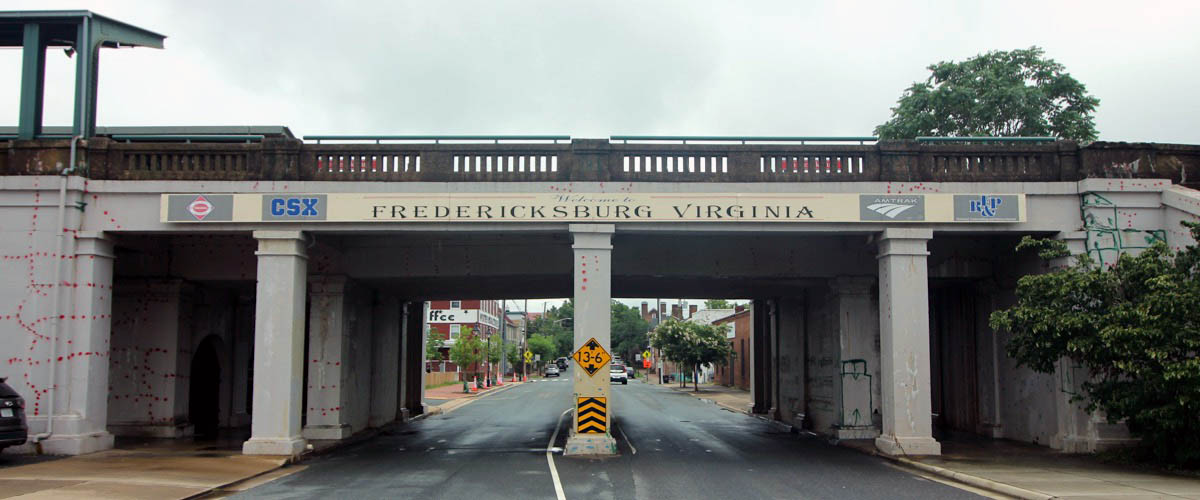
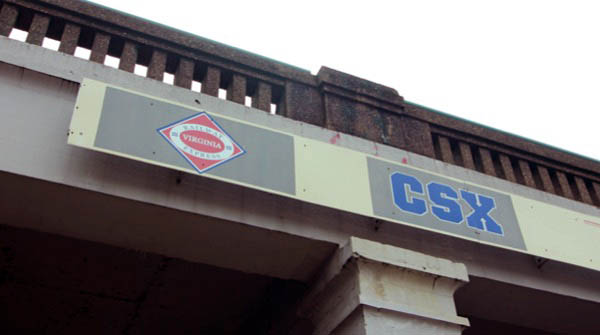
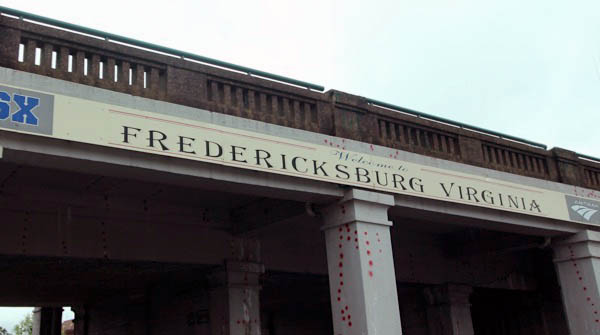
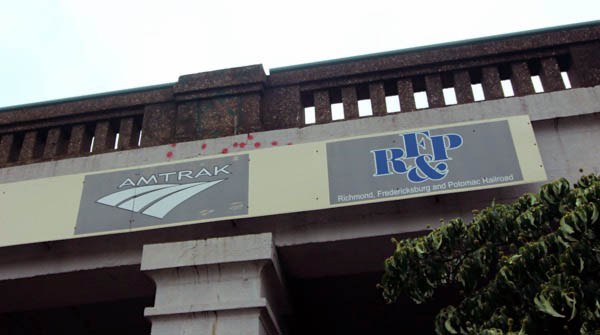
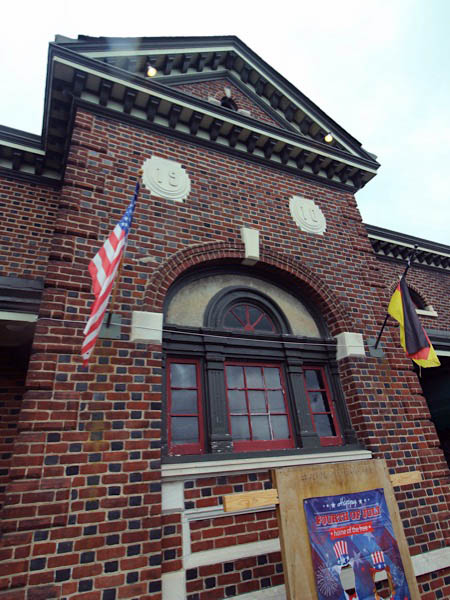
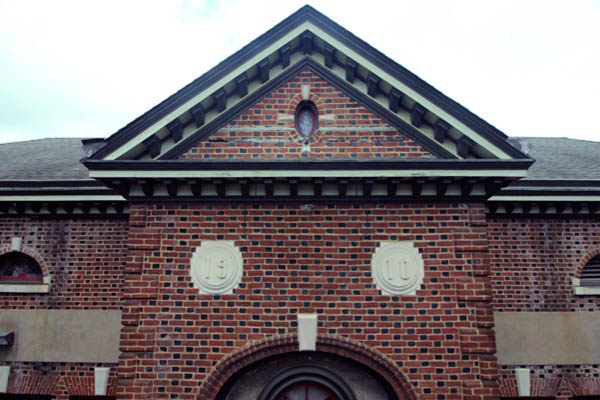
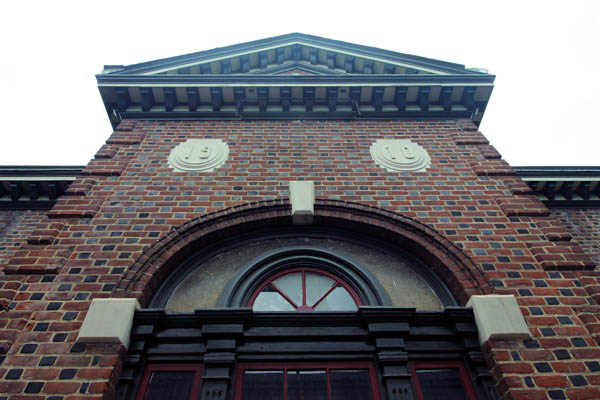
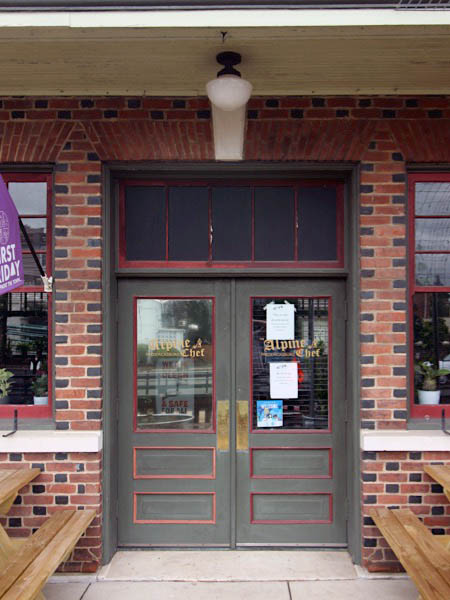
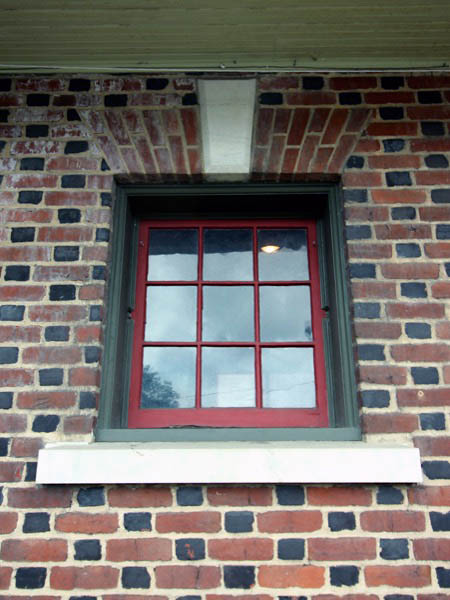
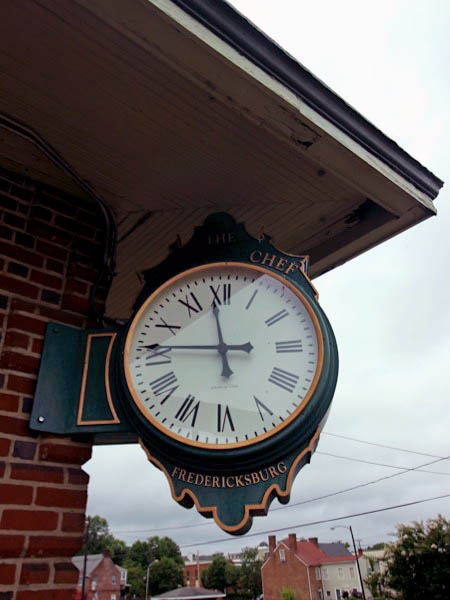
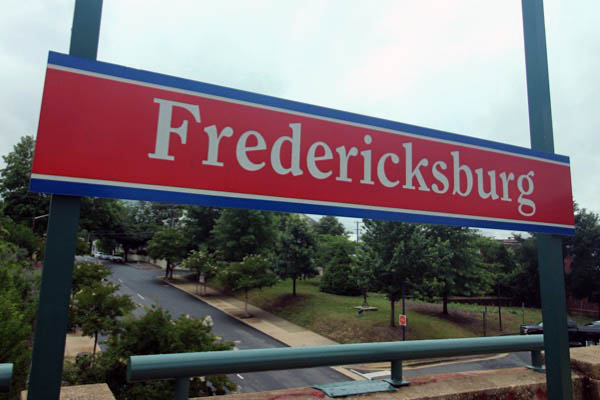
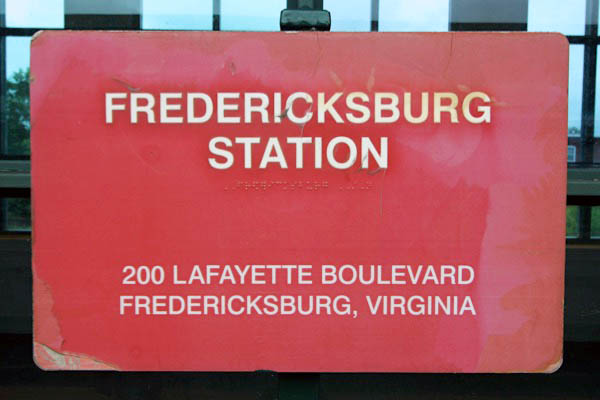
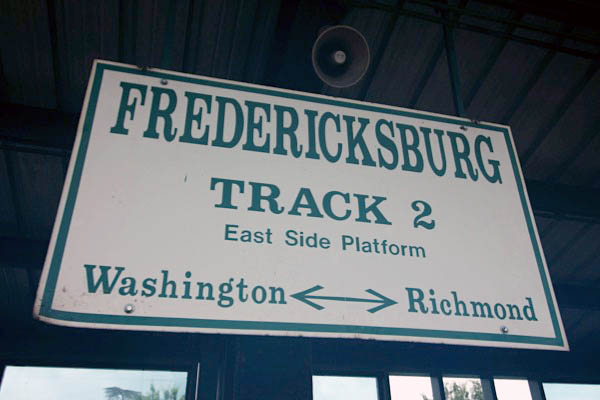
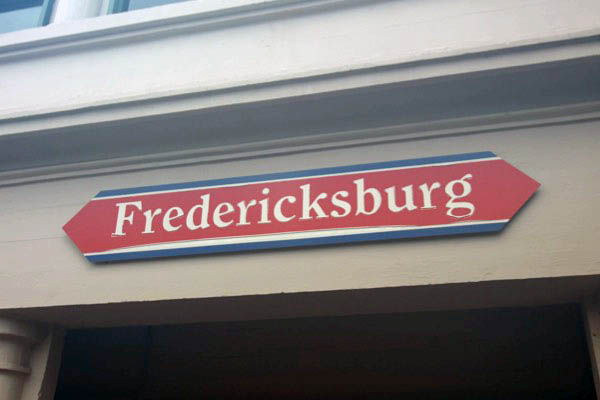
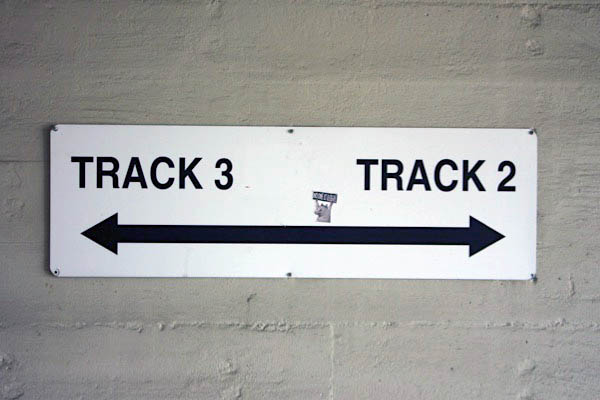
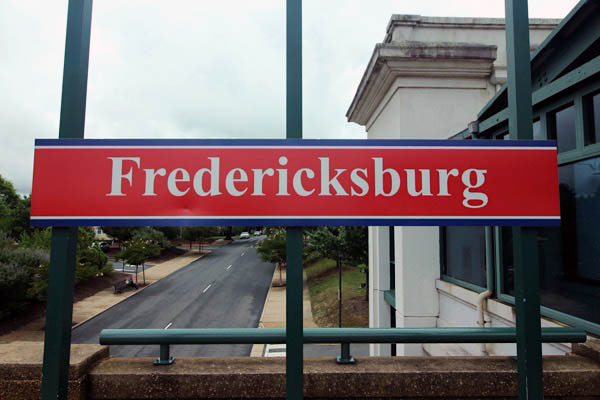
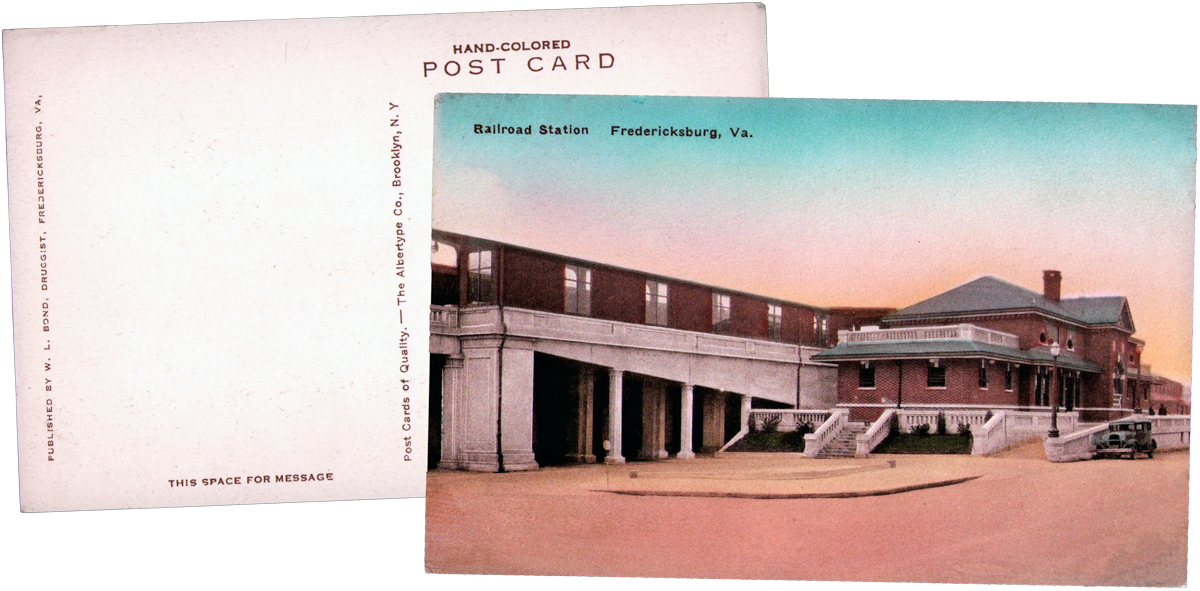
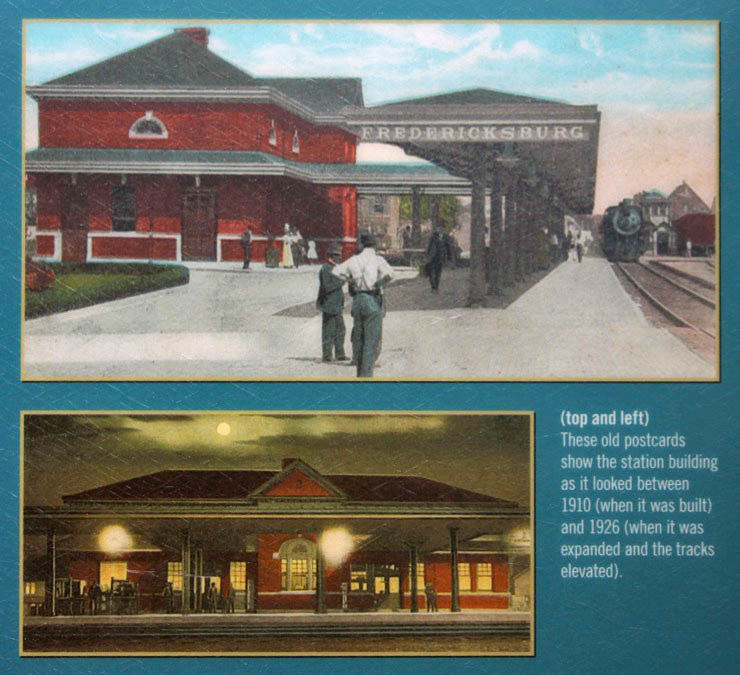
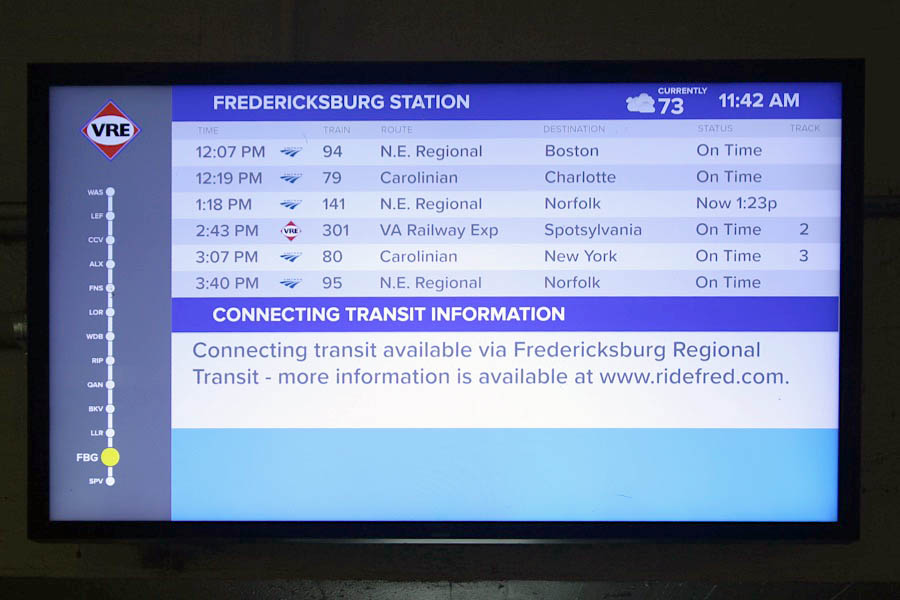
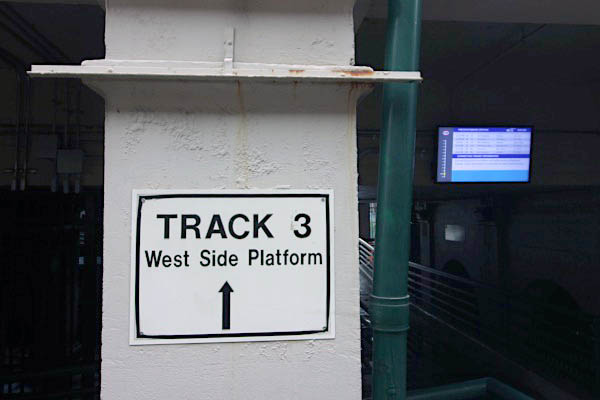
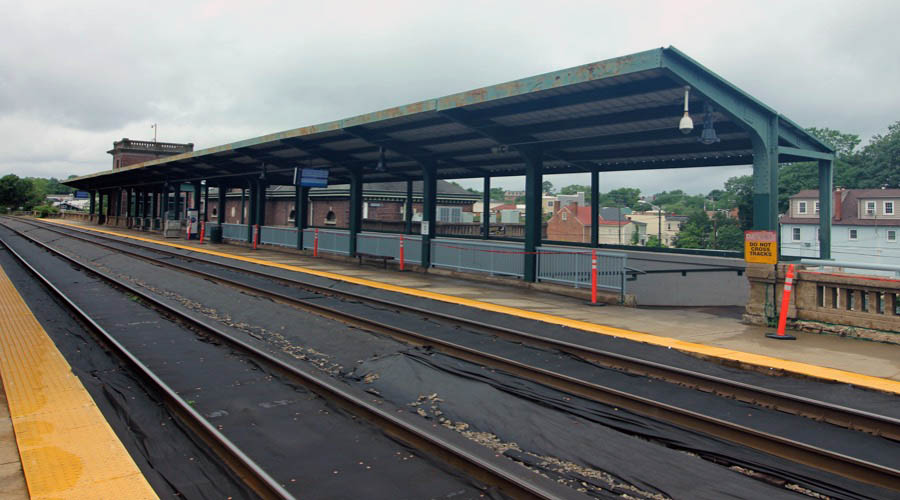
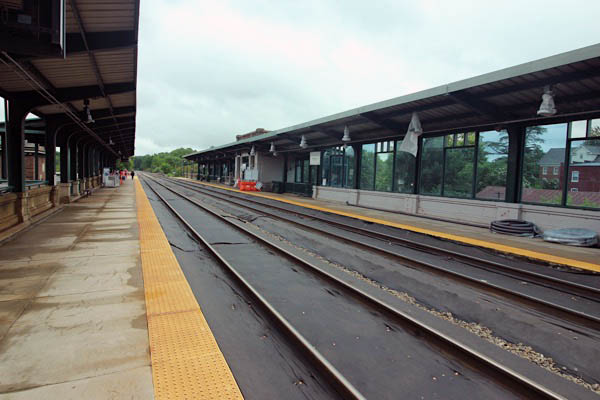
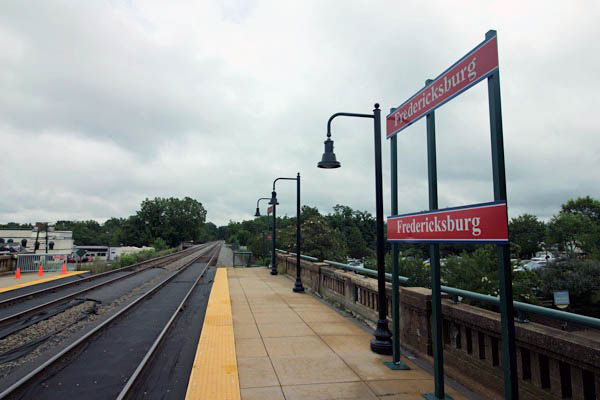
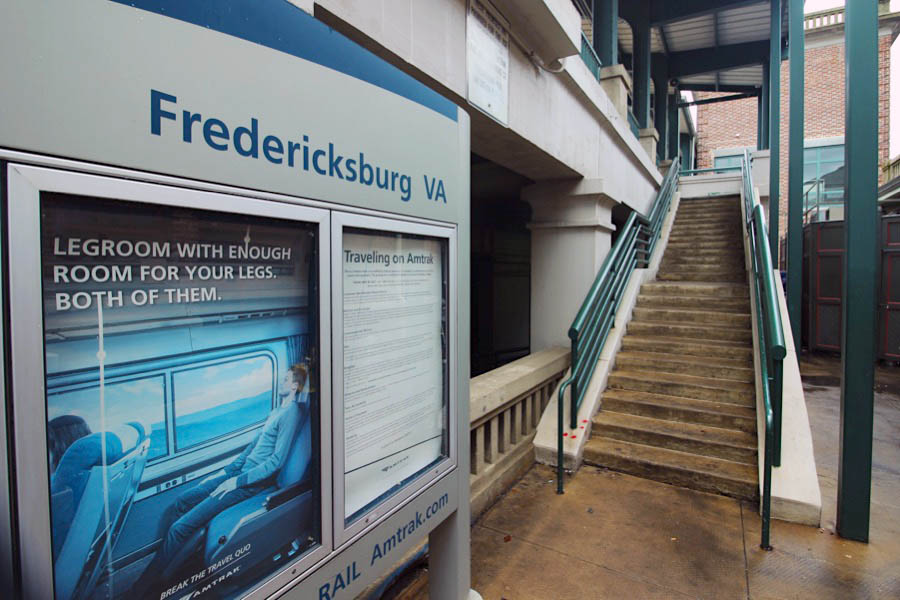
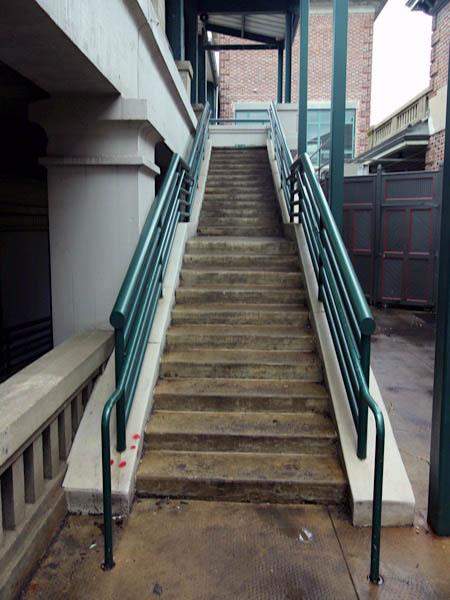
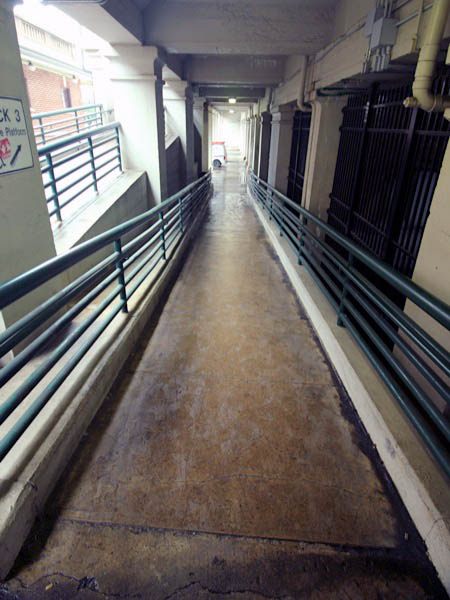
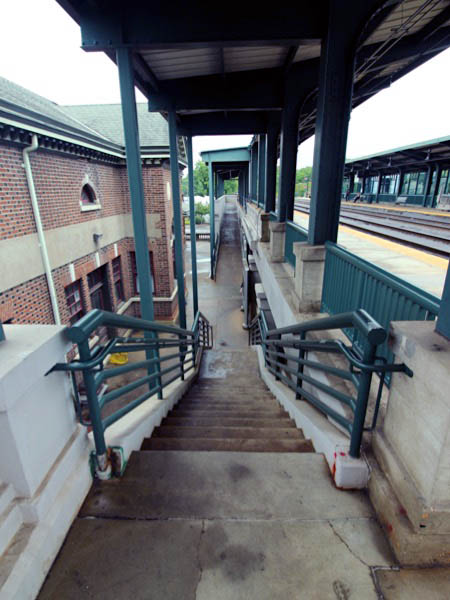
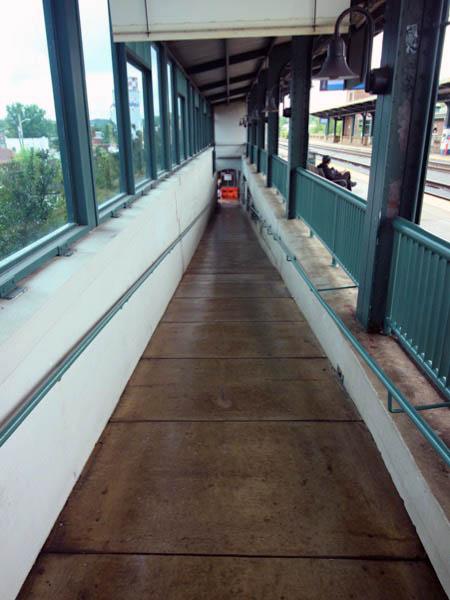
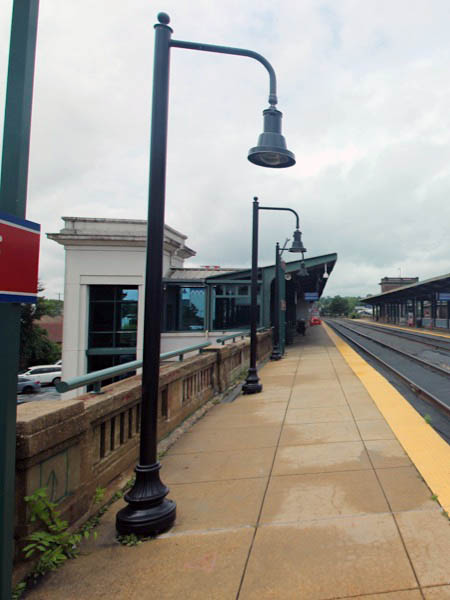
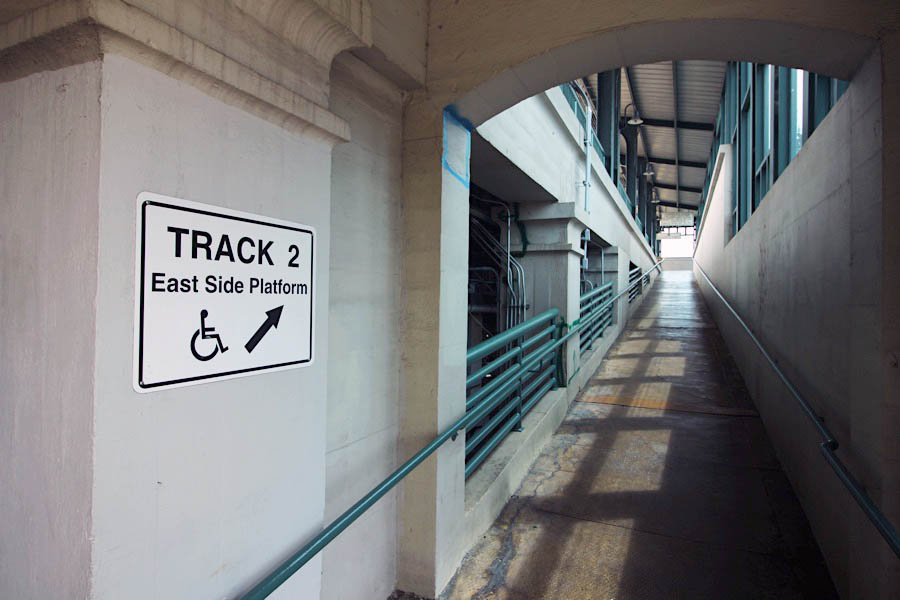
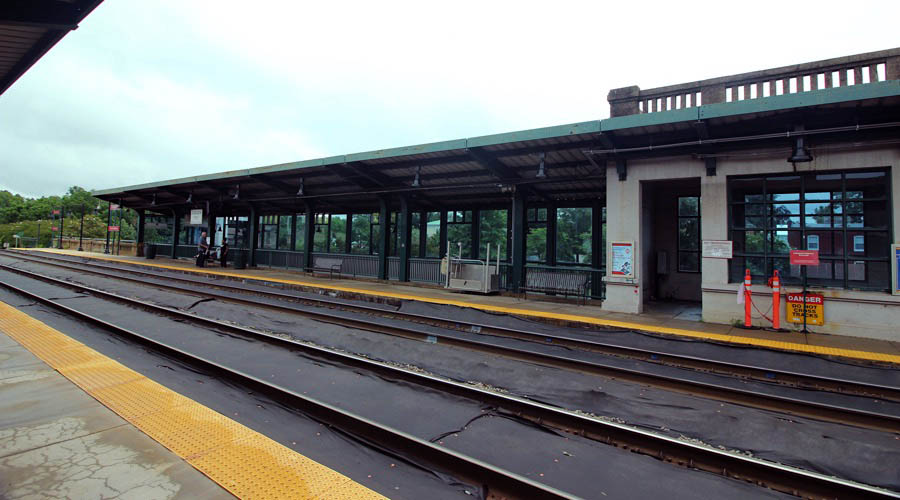
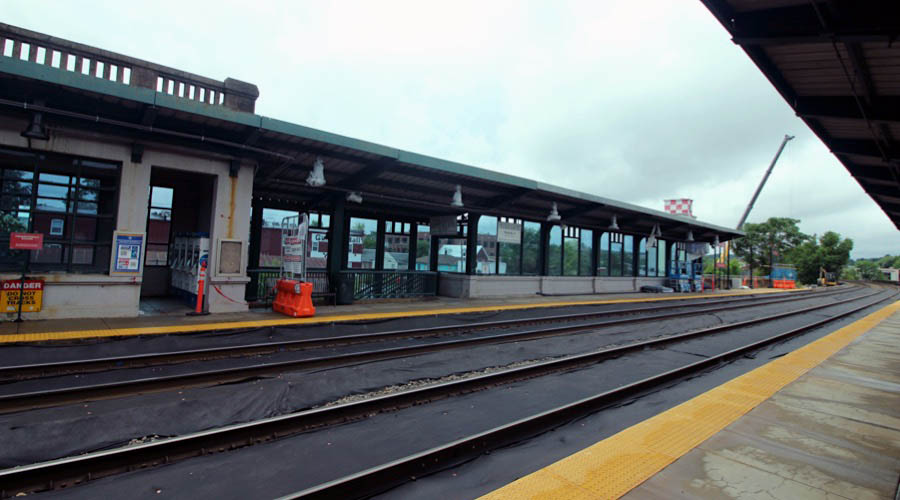
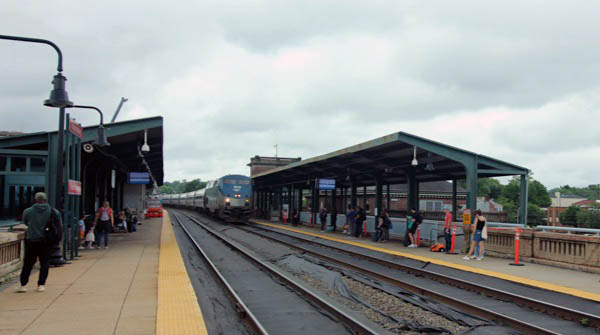
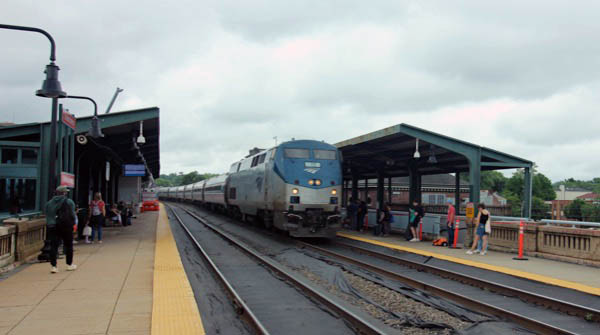
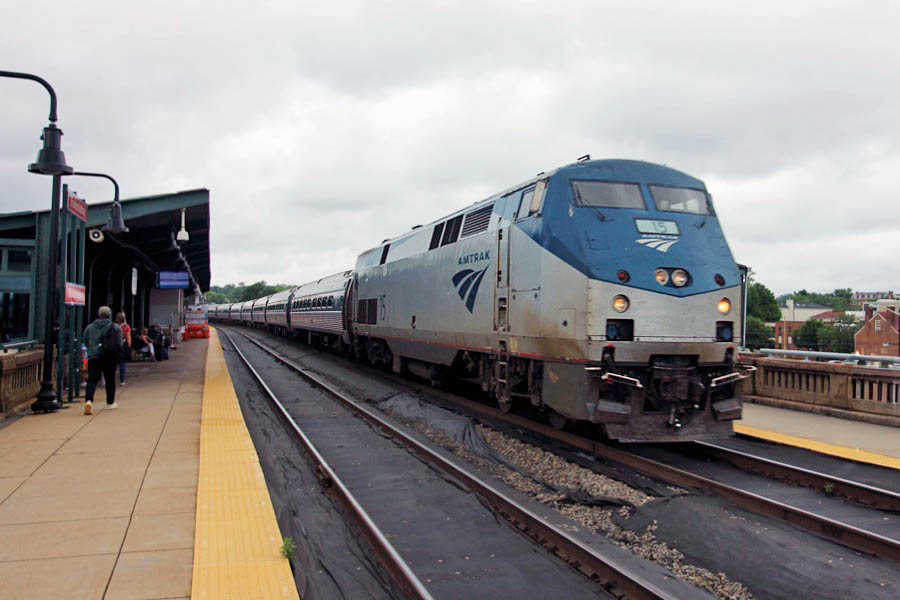
The Amtrak station in Fredericksburg consists of a platform and shelter adjacent to the 1910 brick depot, which is located one block from the Rappahannock River waterfront. Today, the building is occupied by a restaurant. The platforms and shelters run over Sophia, Caroline, Princess Anne and Charles streets in the historic downtown, and an elaborate system of stairs and ramps is used to reach the platforms from street level. The station is also served by Virginia Railway Express (VRE) commuter trains that link the area with the nation’s capital, as well as by local buses.
Fredericksburg, Va / Jun 2023 / RWH
Jun 2023 / RWH
Jun 2023 / RWH
Jun 2023 / RWH
Jun 2023 / RWH
Jun 2023 / RWH
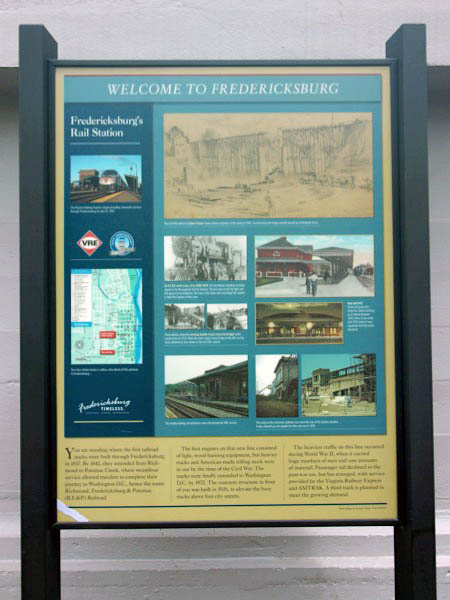
 ail has been important in Fredericksburg since the Richmond, Fredericksburg and Potomac Railroad was chartered in 1834 to run a line through from Richmond up to the Potomac River at Aquia Creek. Controlling the railroad through Fredericksburg was at issue during the American Civil War. After the war, by 1872, connections went through to Washington, D.C., giving this portion of Virginia an all-rail route from Richmond and across the Potomac to Washington.
Jun 2023 / RWH
postcard / collection
Jun 2023 / RWH
Jun 2023 / RWH
Jun 2023 / RWH
Jun 2023 / RWH
Fredericksburg, VA
Fredericksburg, Va / Jun 2023 / RWH
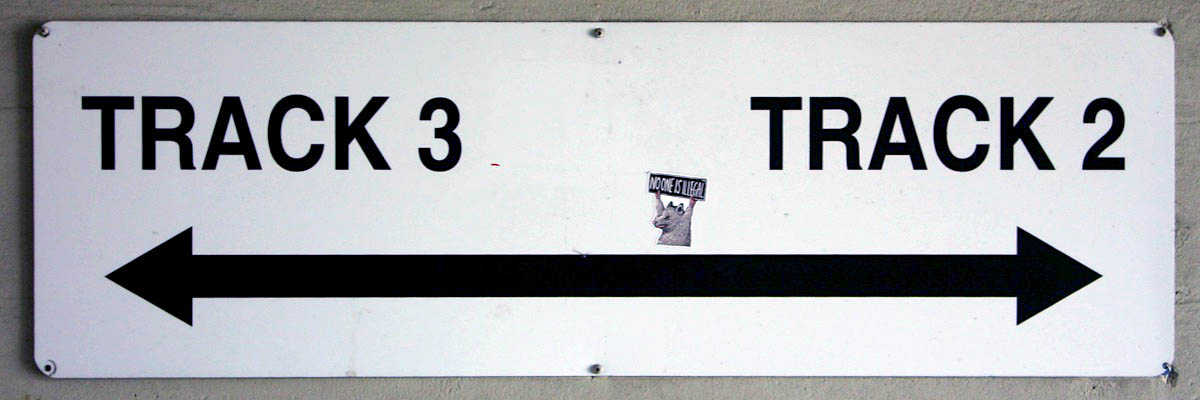
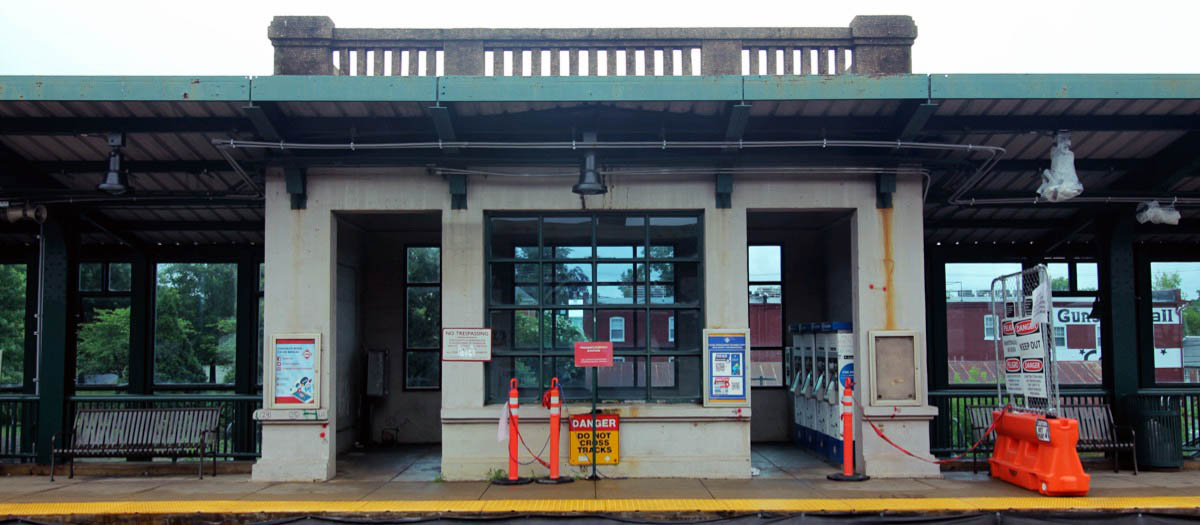
Fredericksburg, Va / Jun 2023 / RWH
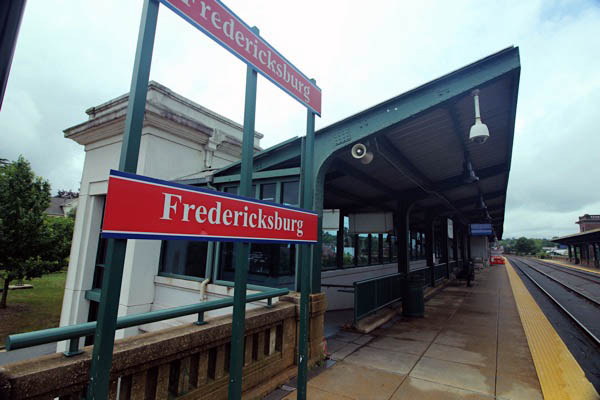
Fredericksburg, Va / Jun 2023 / RWH
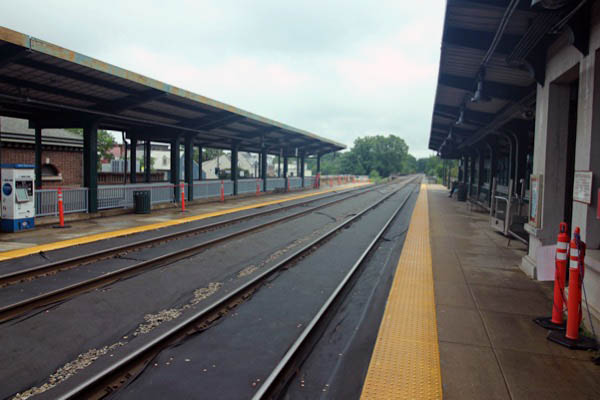
Fredericksburg, Va / Jun 2023 / RWH
Fredericksburg, Va / Jun 2023 / RWH
Fredericksburg, Va / Jun 2023 / RWH
Jun 2023 / RWH
Jun 2023 / RWH
Jun 2023 / RWH
Jun 2023 / RWH
Jun 2023 / RWH
Fredericksburg, Va / Jun 2023 / RWH
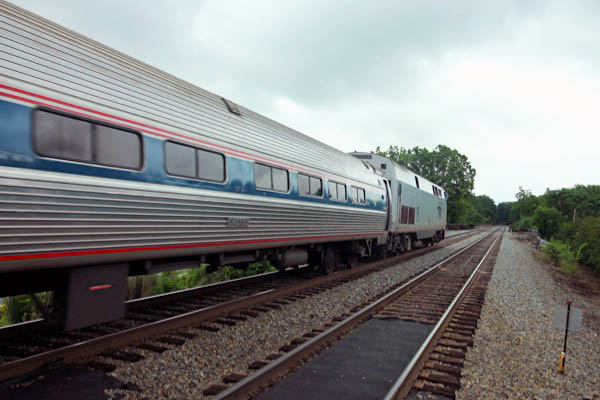
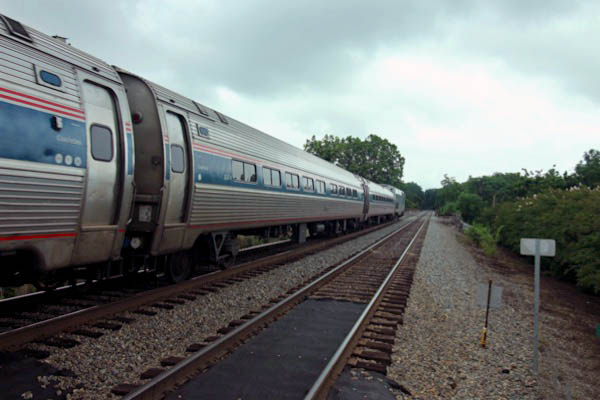
northbound #94
Fredericksburg, Va / Jun 2023 / RWH
Fredericksburg, Va / Jun 2023 / RWH
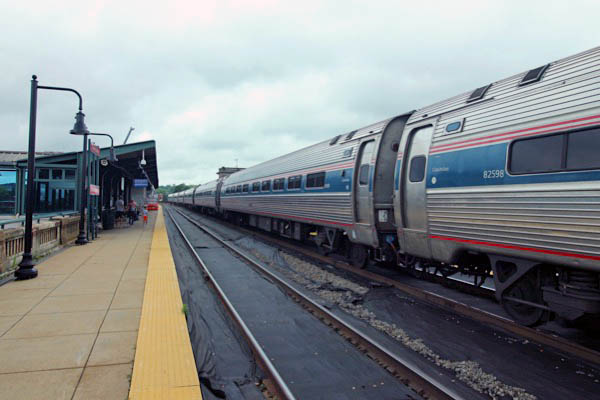
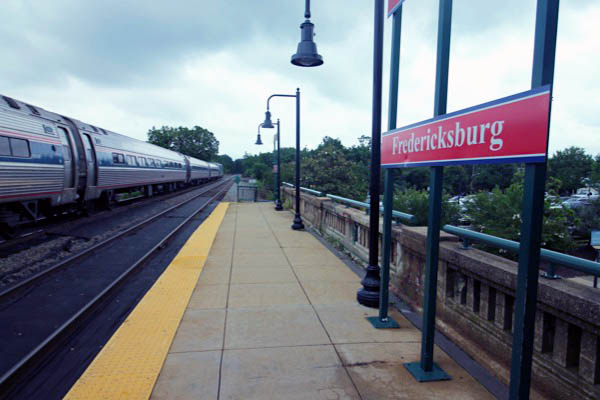
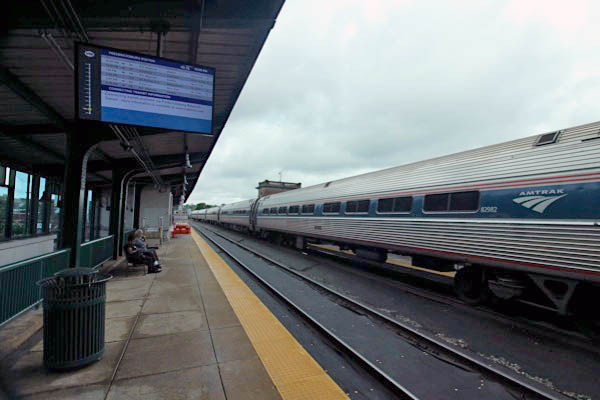
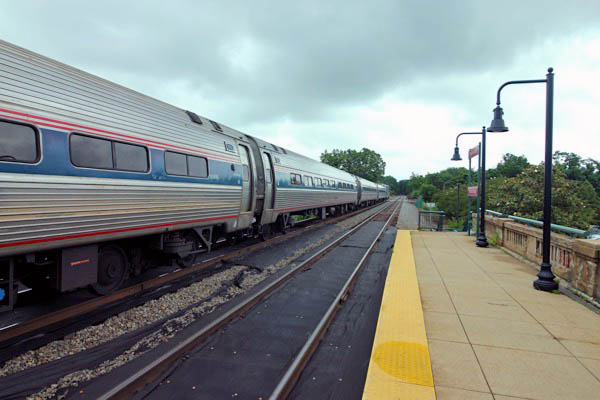
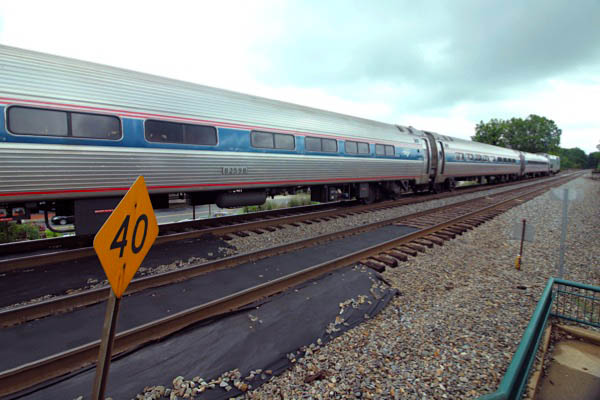
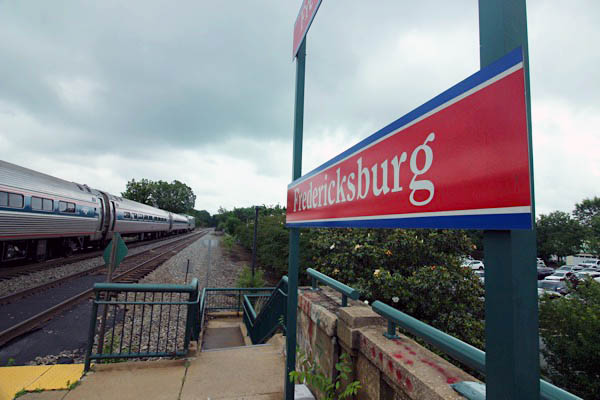
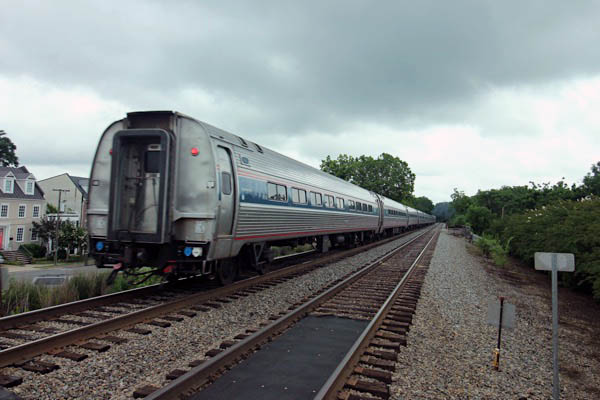
Fredericksburg, Va / Jun 2023 / RWH
98 Ashland
- Northeast Regional
Ashland, Va / Dec 2017 / RWH
Click to see the Ashland depot area plotted on a Google Maps page
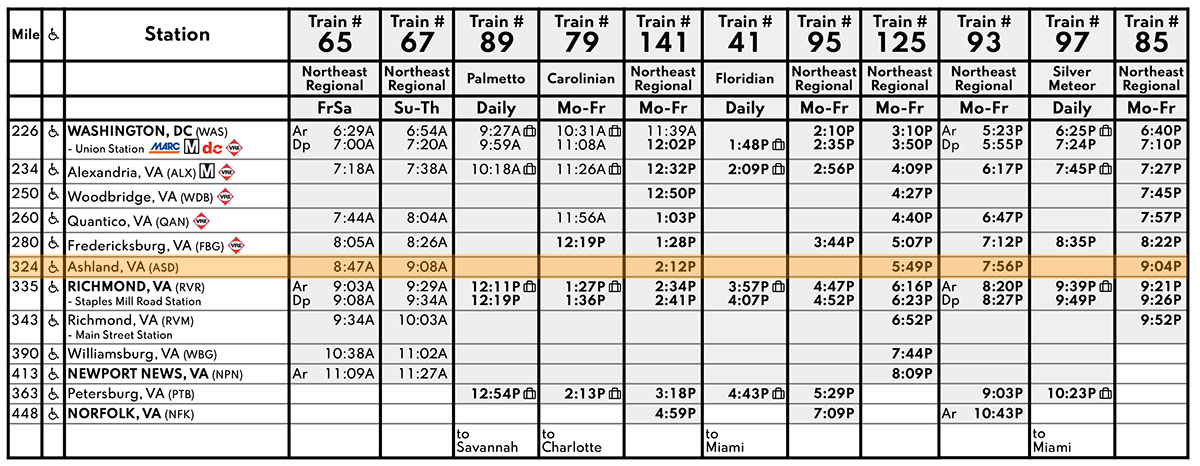
2025 Rail Passengers Association timetable / adapted RWH
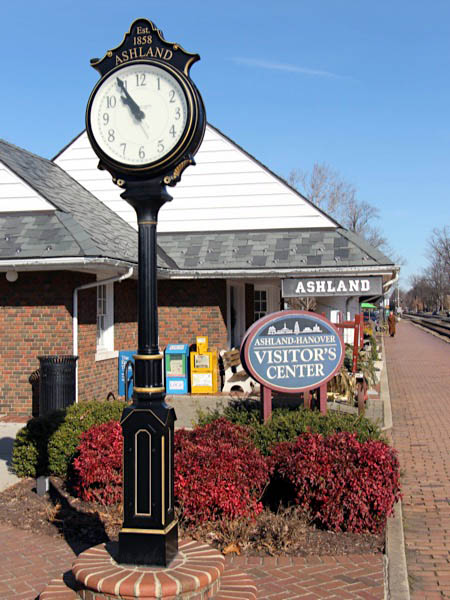
Dec 2017 / RWH
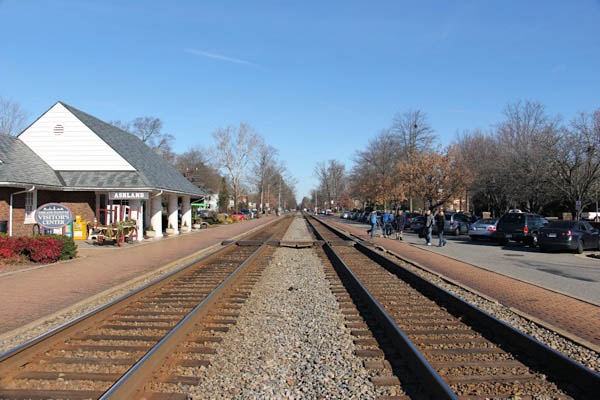
Dec 2017 / RWH
Dec 2017 / RWH
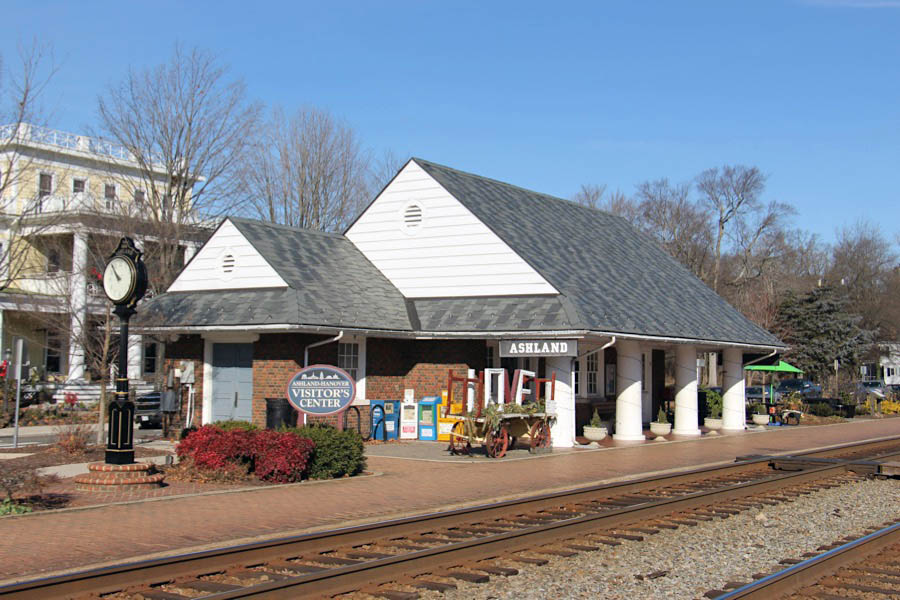
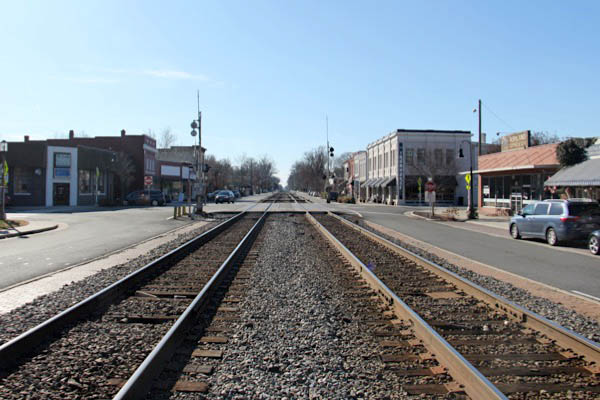
 The Amtrak station in Ashland consists of platforms with shelters. Amtrak trains provide a picturesque view for passengers riding through or stopping at this small Richmond suburb and college town. The rails run in a median between the two central streets, which are lined with beautiful shade trees and a variety of Colonial Revival and Queen Anne homes, college and commercial buildings.
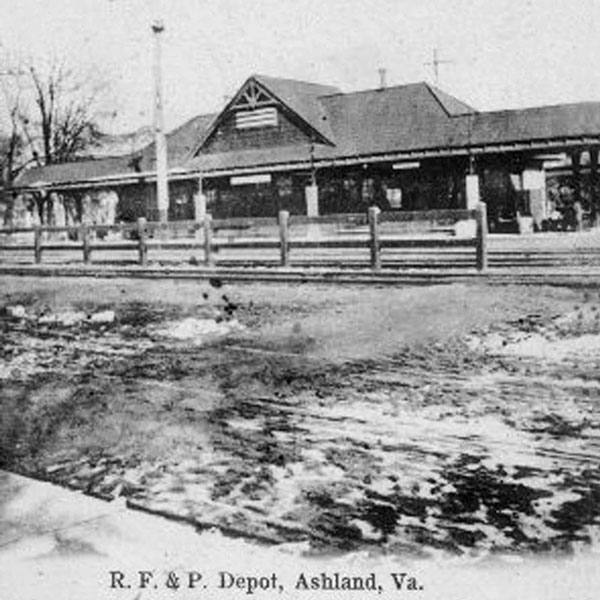
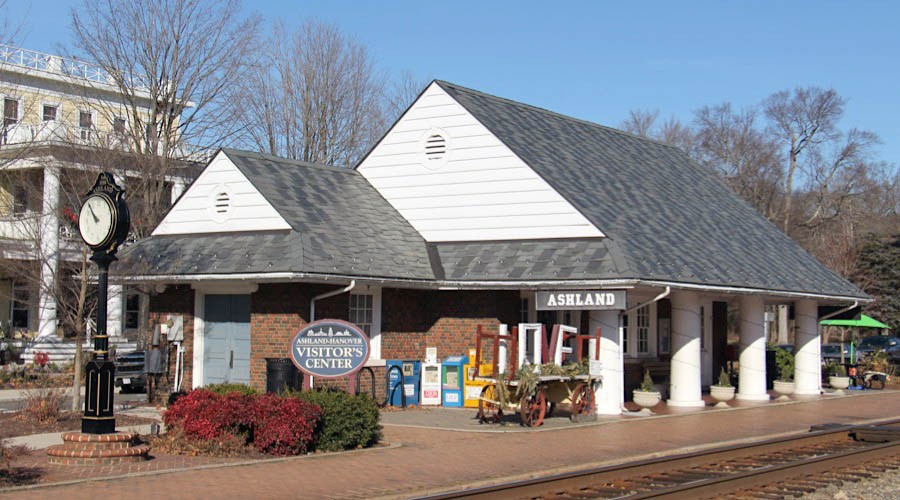
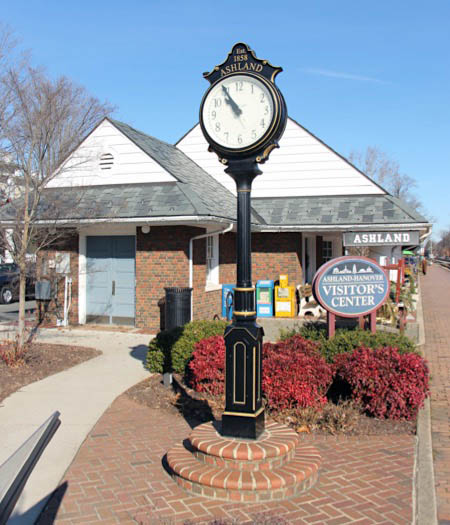
The current Colonial Revival depot replaced an older structure built in 1890. Designed by W.P. Lee and completed in 1923 by Aubrey Hunt of Ashland, the brick depot stands 1.5 stories high under a gabled slate roof. A trackside porch supported by four over-sized whitewashed columns provides a pleasant waiting area for Amtrak customers and train enthusiasts who enjoy photographing trains as they pass through town. Benches offer a place to rest, while mature trees close to the building provide cooling shade in the hot Virginia summers. Inside, the Ashland Visitors Center maintains a small museum in one of the former waiting rooms. While the historic building is not listed on the National Register of Historic Places, it is part of Ashland’s 159-acre historic district, which received its listing in 1983.
Ashland, VA
Ashland, Va / Dec 2017 / RWH
Dec 2017 / RWH
northbound #94
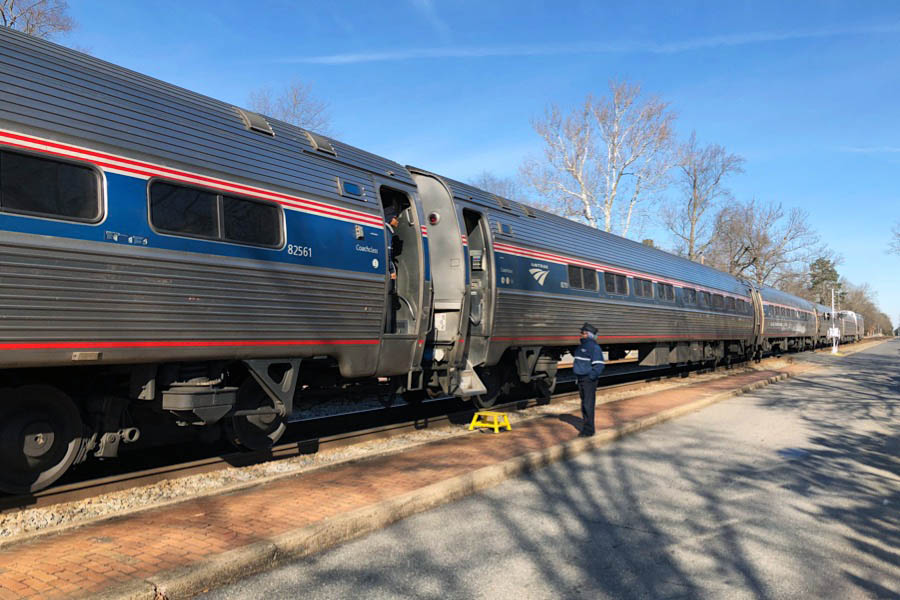
Ashland, Va / Dec 2017 / RWH
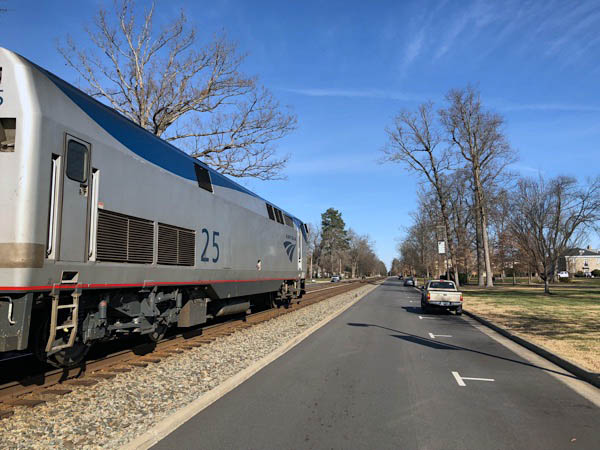
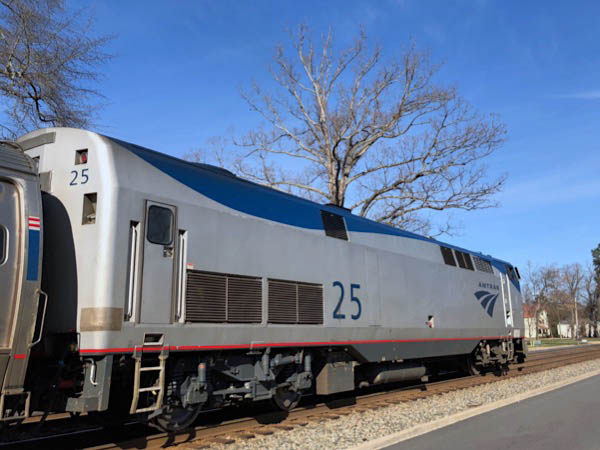
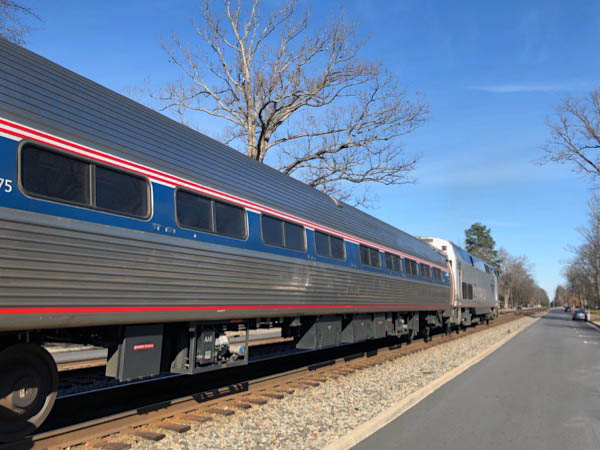
Dec 2017 / RWH
109 Richmond — Staples Mill
- Carolinian
- Northeast Regional
- Palmetto
- Silver Service
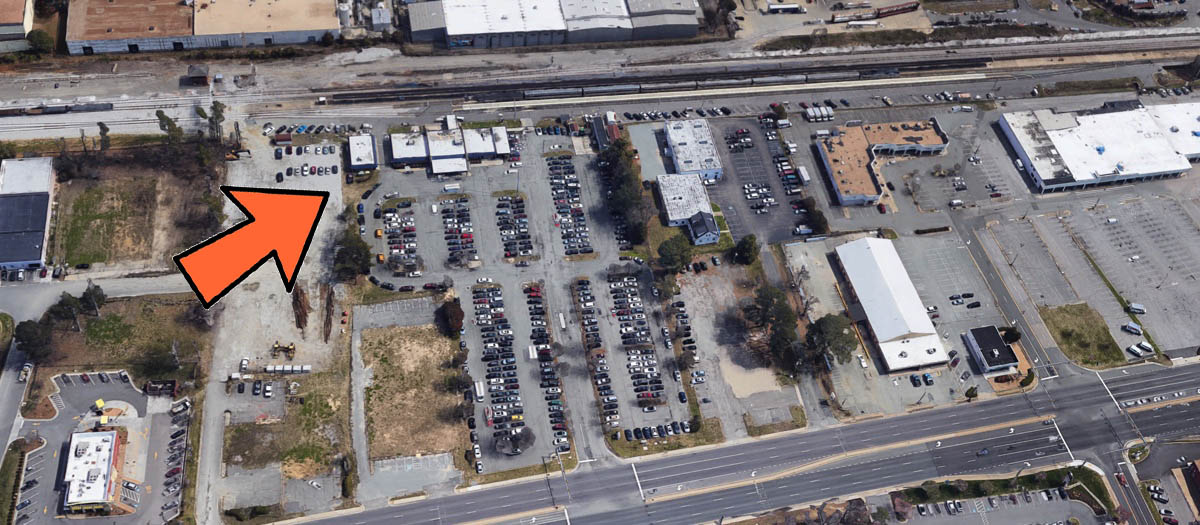
Staples Mill Road overhead / Google Maps
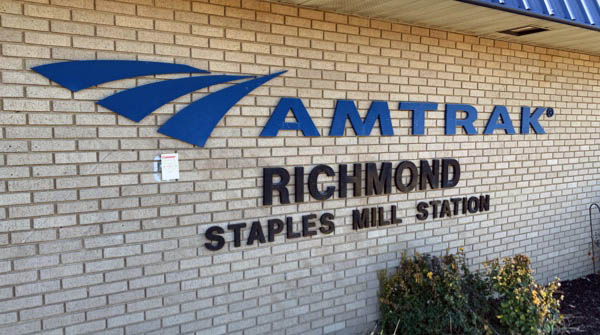
Dec 2019 / RWH
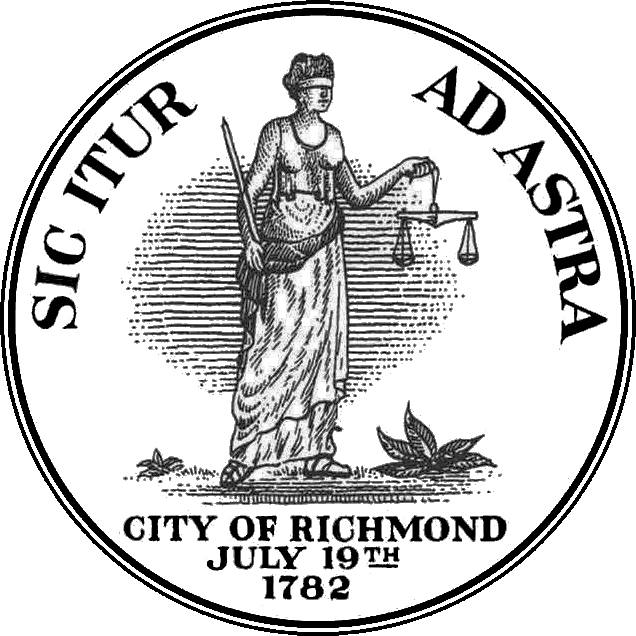

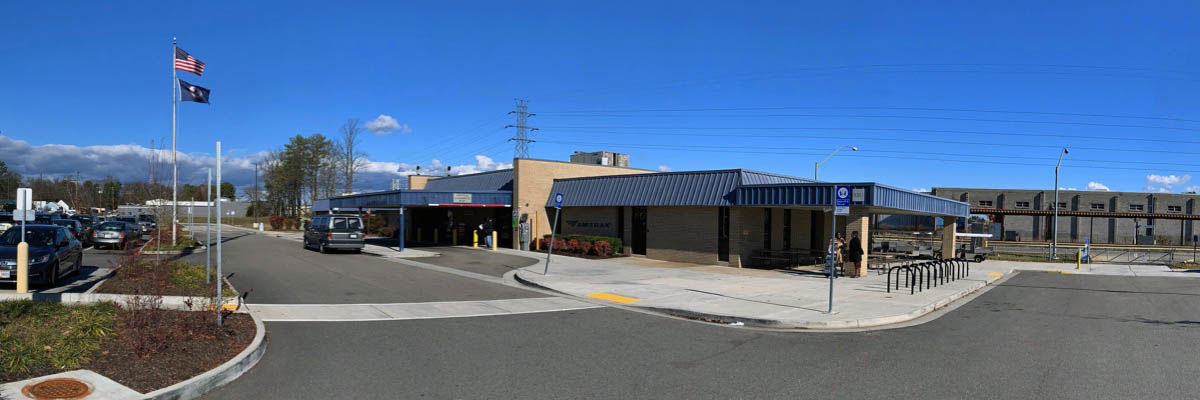
Richmond, Va / Dec 2019 / RWH
- location:Staples Mill Road
- address:7519 Staples Mill Road
- type:urban station, 2 platforms
- owner:Amtrak
- opened:Nov 1975, relocation
- builder:Amtrak
- style:mode, brick and steel
- renovated:2018
- services:tickets, baggage
- links: Amtrak | Great Stations
Richmond, Va / Dec 2019 / RWH
Click to see the Staples Mill Road station plotted on a Google Maps page
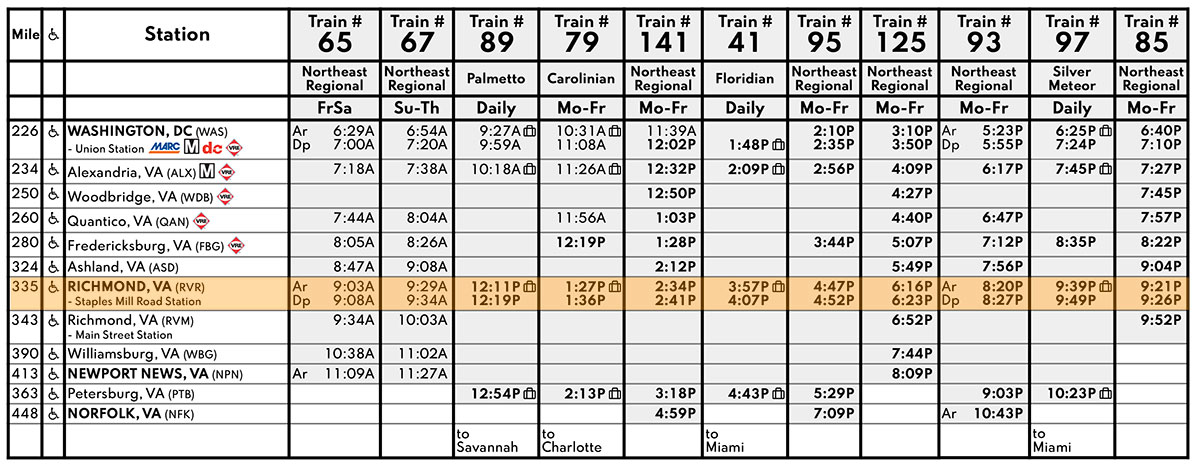
2025 Rail Passengers Association timetable / adapted RWH
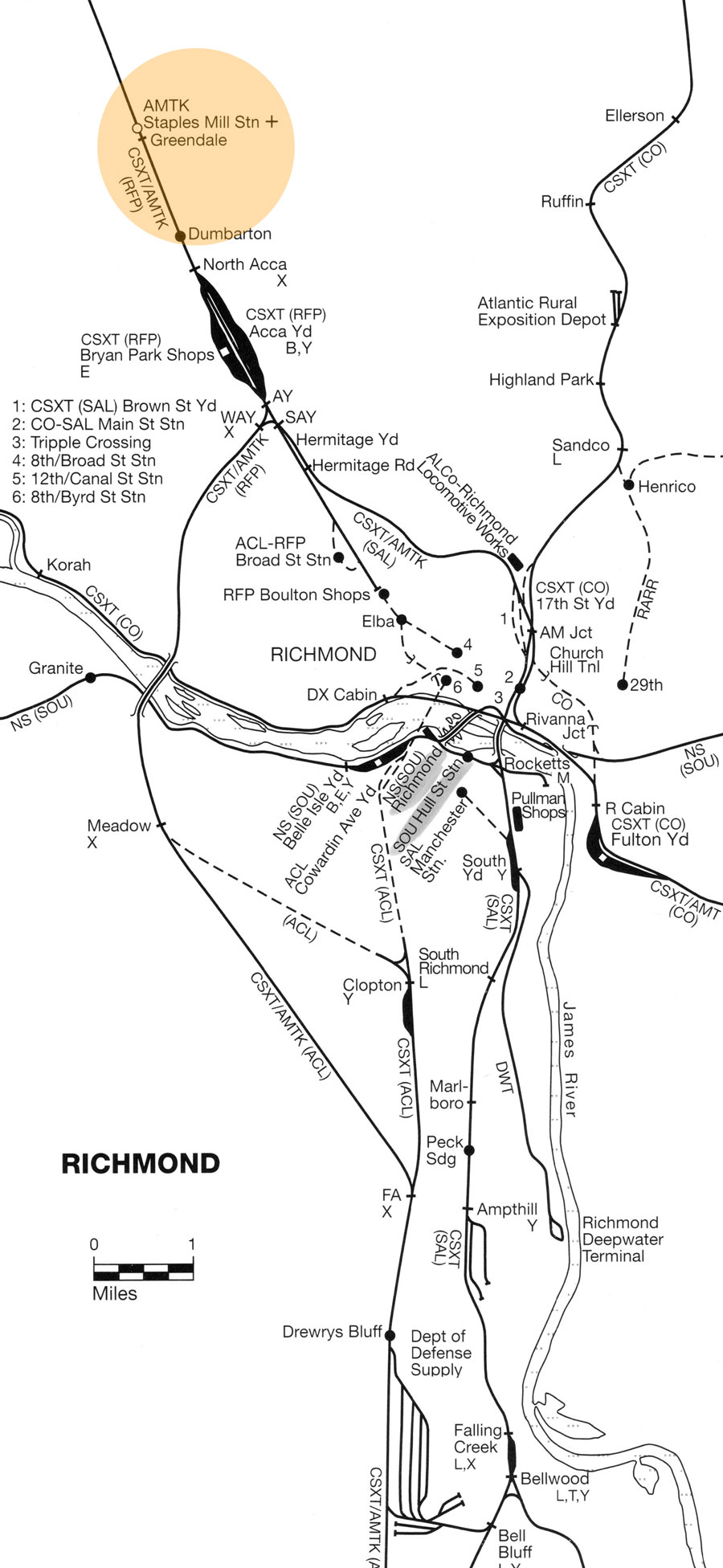
from SPV Comprehensive Railroad Atlas
/ collection
Richmond, Va / Dec 2019 / RWH
Richmond, Va / Dec 2019 / RWH
Richmond, Va / Dec 2019 / RWH
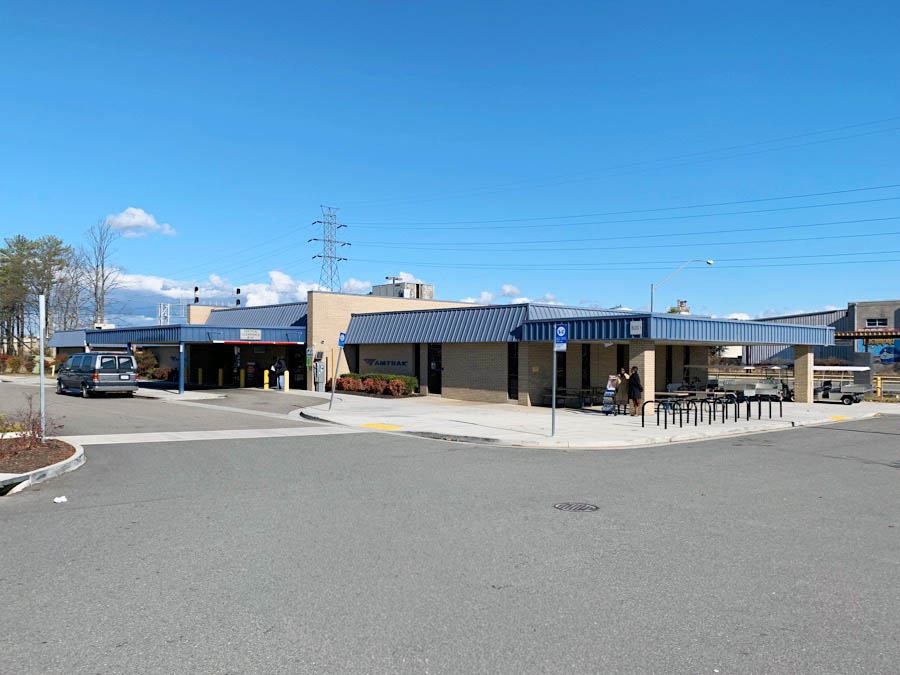
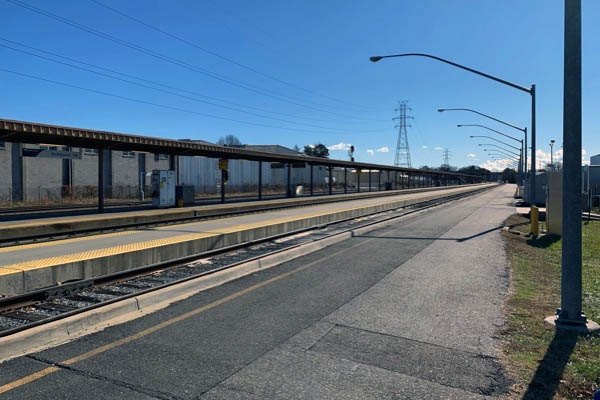
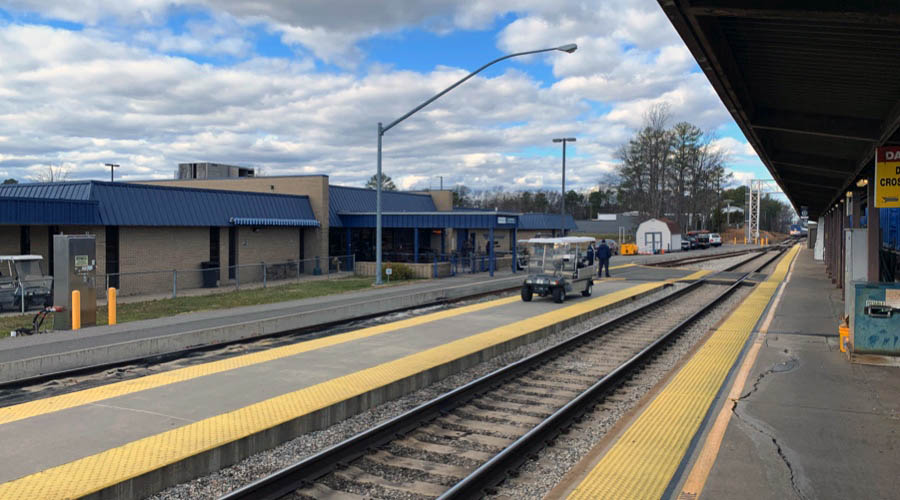
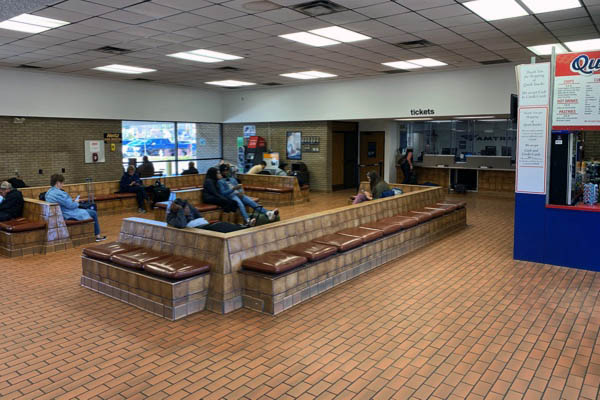
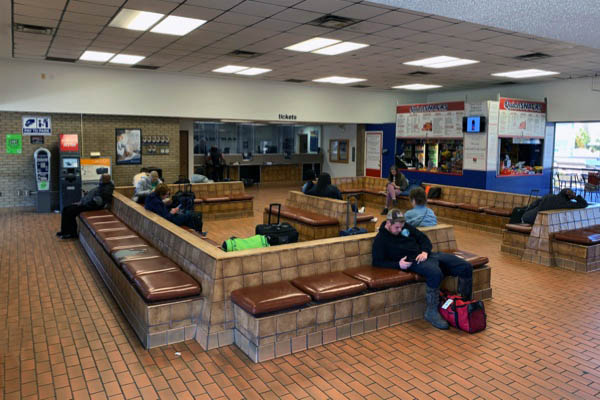
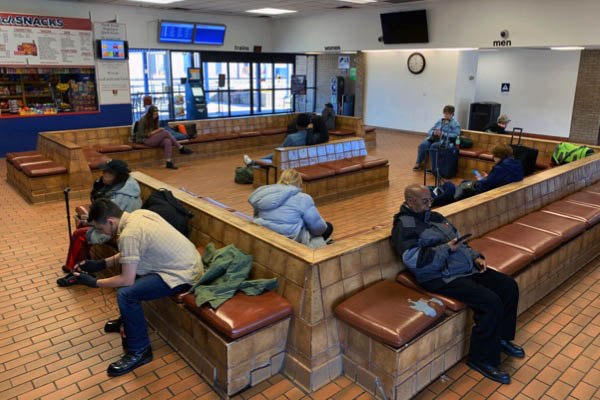
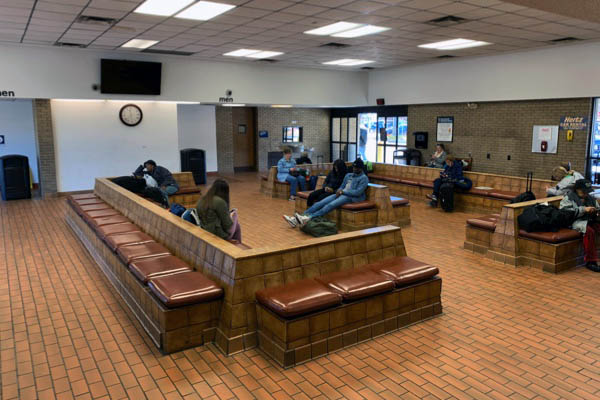
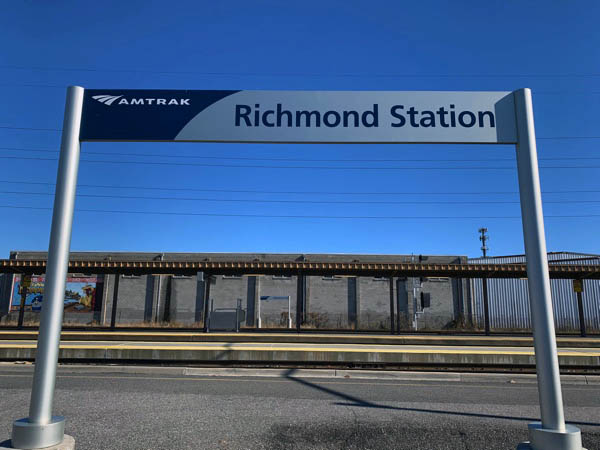
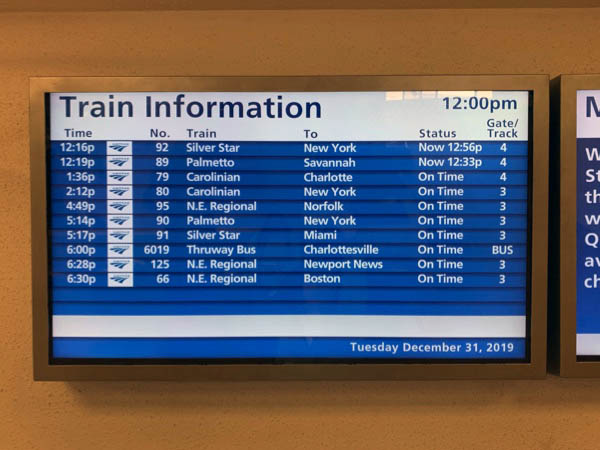
 The Staples Mill Road station is located just north of Richmond in the Henrico County suburbs, and is the busiest Amtrak facility in the Southeast. It opened in Nov. 1975, built to replace the historic, neoclassical Broad Street Station sited about three-and-a-half miles south and adjacent to Richmond’s famous Fan District. The new station facilitated train movements, cutting about 10 minutes from the run times of New York-Florida trains. Following a public open house on Nov. 14, the northbound Silver Star (New York – St. Petersburg/Miami) was the first train to stop at the facility the following day.
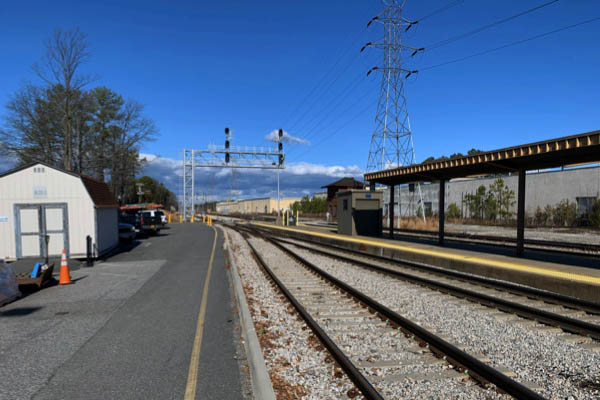
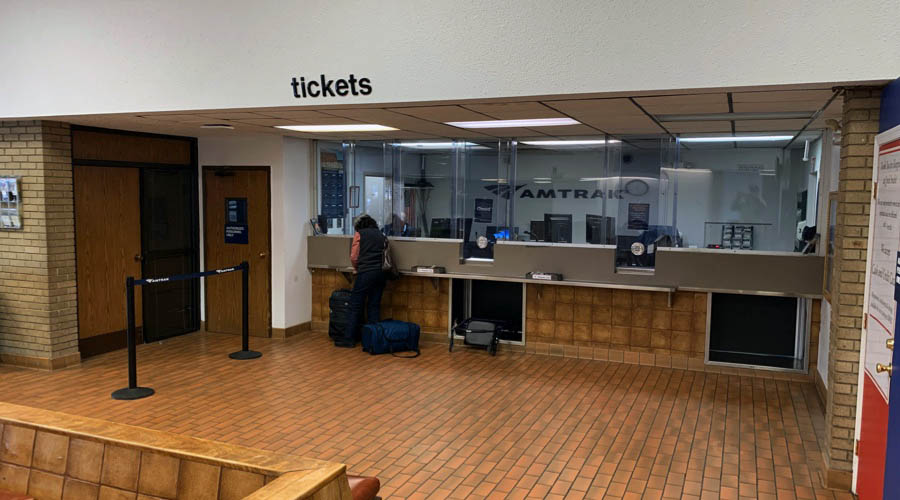
Designed by David Volkert and Associates, with Roderick Slater as the main architect, the station consists of a one-story building of buff brick and steel construction with two tracks served by one platform. Walls of windows allow natural light to flood the waiting room, which features built-in bench seating. Minor renovations over the years included the expansion of the parking lot and inclusion of employee parking, as well as the addition of a mechanical department. This station has a waiting room and is staffed by Amtrak employees; Richmond is served by more than a dozen daily trains. Northeast Regional service within Virginia is funded in part through grants made available by the Commonwealth of Virginia.
Dec 2019 / RWH
Dec 2019 / RWH
Dec 2019 / RWH
Dec 2019 / RWH
Dec 2019 / RWH
 Richmond has been served by multiple railroads since the 1830's. The five lines fanning out from the city in 1861 were a major reason for choosing Richmond as the capital of the Confederacy. With rail consolidation after the war, the names changed but for much of the 20th. century the city still hosted six major lines. The corporate headquarters of the Richmond, Fredericksburg and Potomac (RF&P) Railroad, and CSX were located in the city.
See also our complete Richmond Railroad Museum scrapbook in Preservation
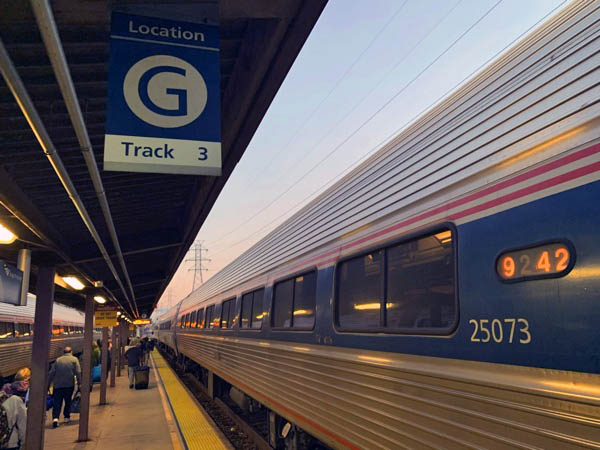
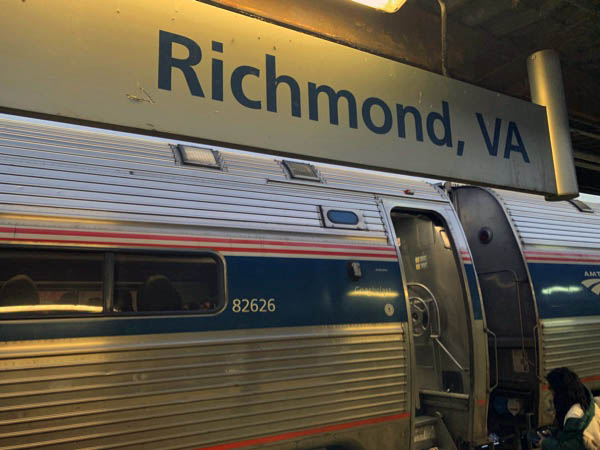
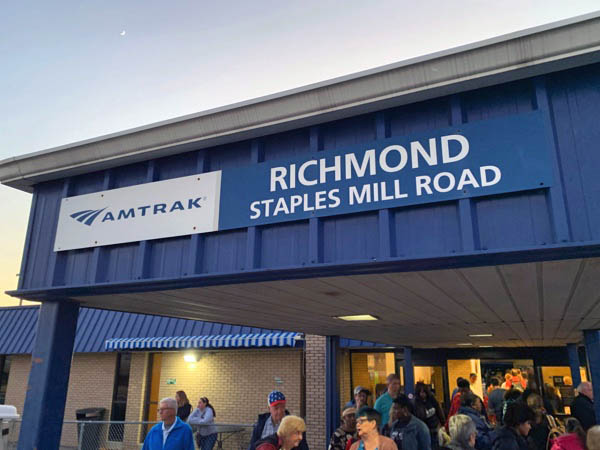
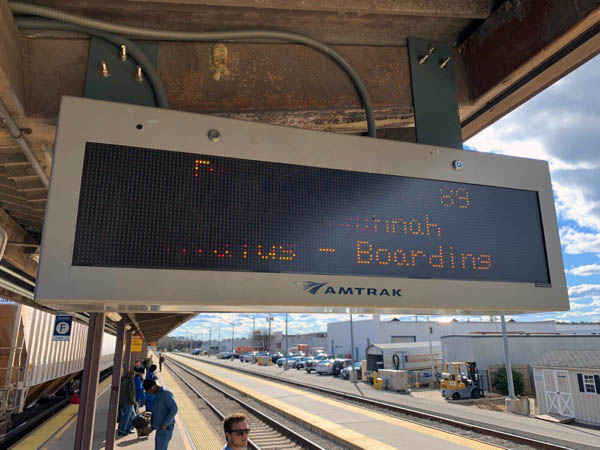
Dec 2019 / RWH
Richmond, Va
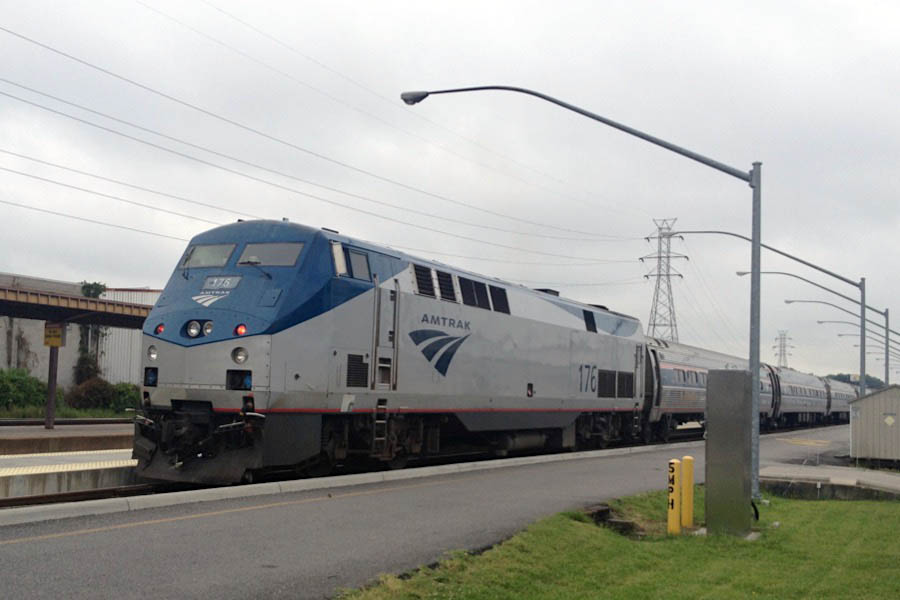
Richmond, Va / Jun 2013 / RWH
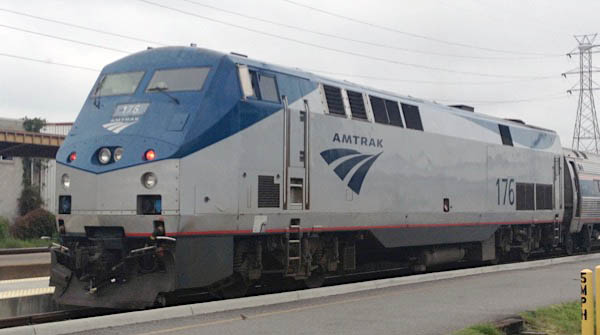
Richmond, Va / Jun 2013 / RWH
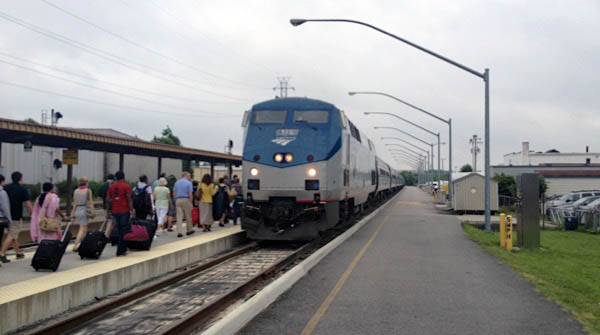
Richmond, Va / Jun 2013 / RWH

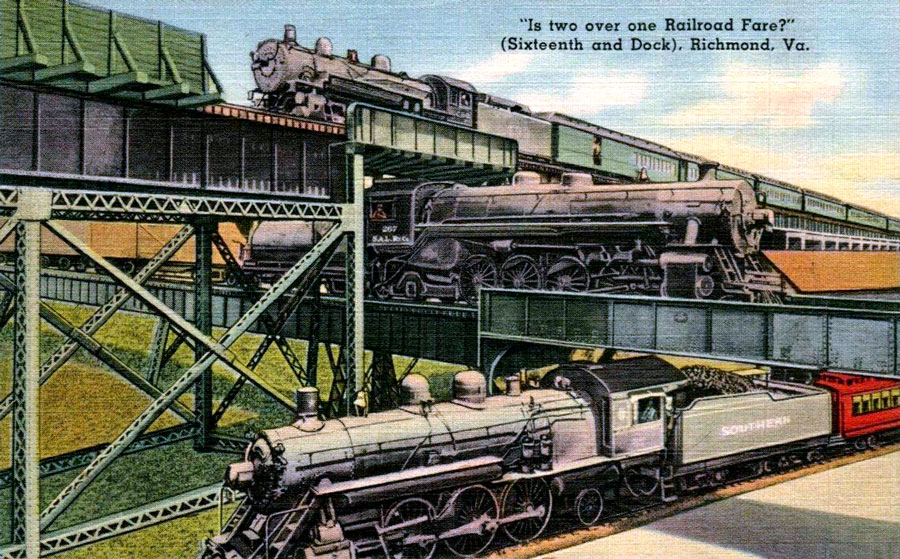 A decade after the Civil War, Richmond resumed its position as a major urban center of economic productivity with iron front buildings and massive brick factories. Canal traffic peaked in the 1860s, with railroads becoming the dominant shipping method. Richmond became a major railroad crossroads, showcasing the world's first triple railroad crossing. Tobacco warehousing and processing continued to play a central economic role, advanced by the world's first cigarette-rolling machine that James Albert Bonsack of Roanoke invented between 1880 and 1881.
Another important contributor to Richmond's resurgence was the Richmond Union Passenger Railway, a trolley system developed by electric power pioneer Frank J. Sprague. The system opened its first Richmond line in 1888, using an overhead wire and a trolley pole to connect to the current and electric motors on the car's trucks. The success led to electric streetcar lines rapidly spreading to other cities. A post-World War II transition to buses from streetcars began in May 1947 and was completed on November 25, 1949.
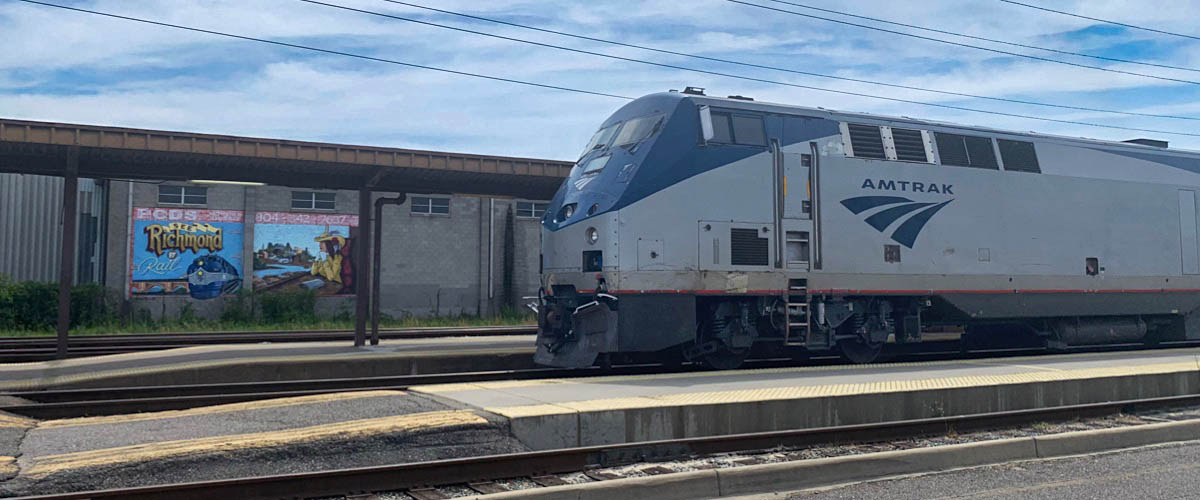
Richmond, Va / Jul 2022 / RWH
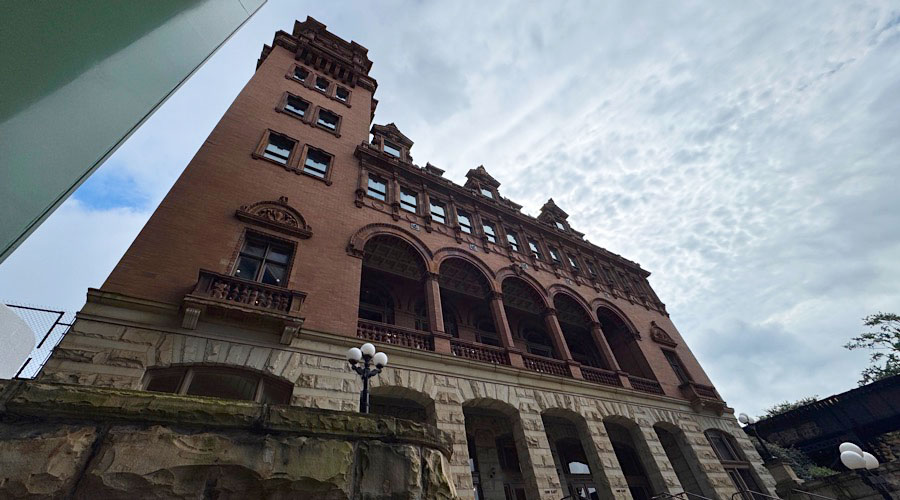
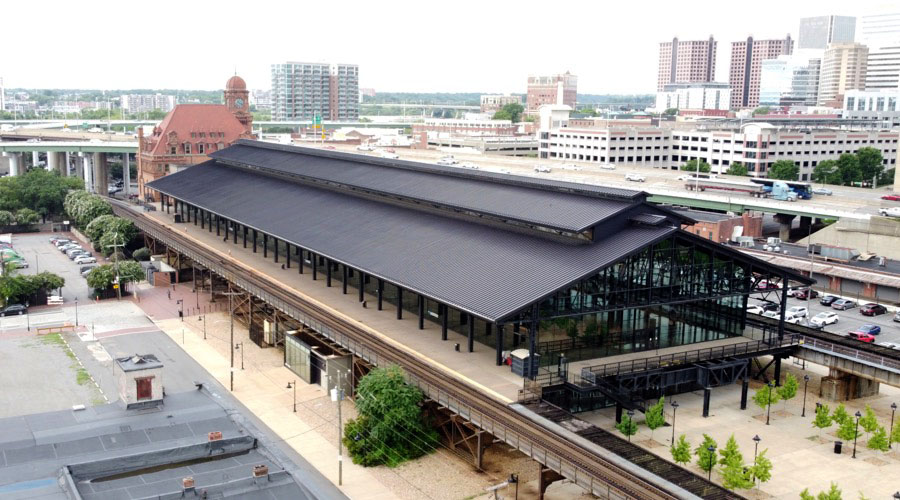
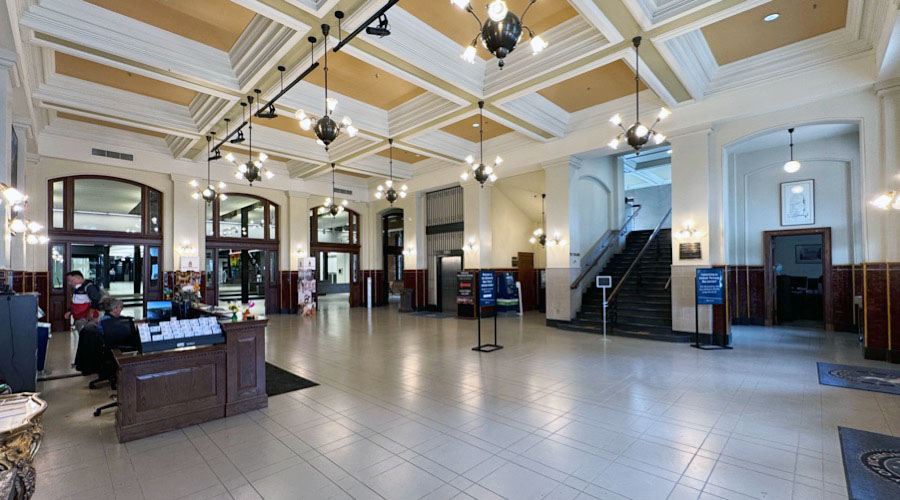
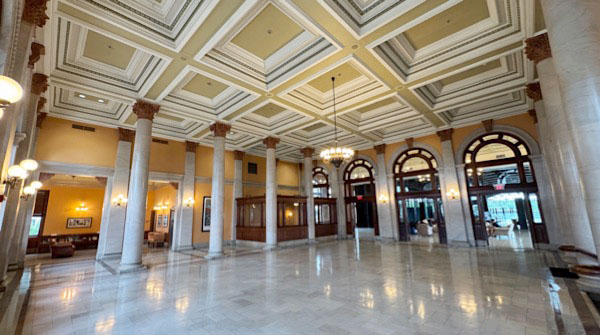
117 Richmond — Main Street
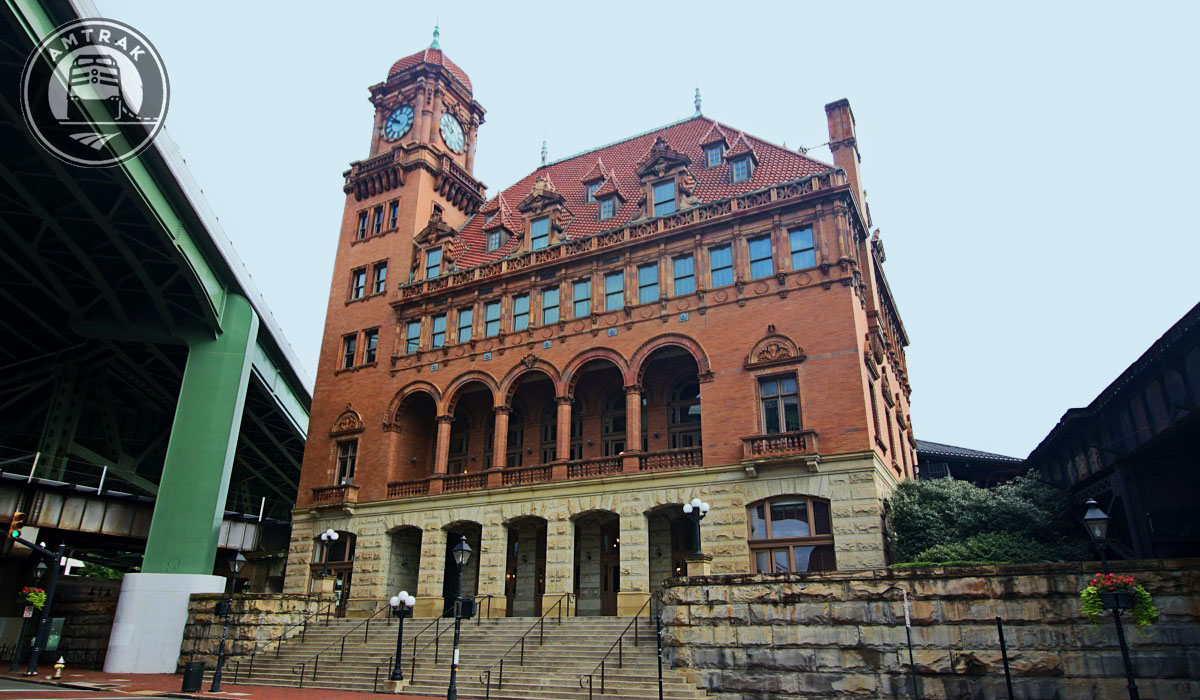
Richmond, Va / Jul 2025 / RWH
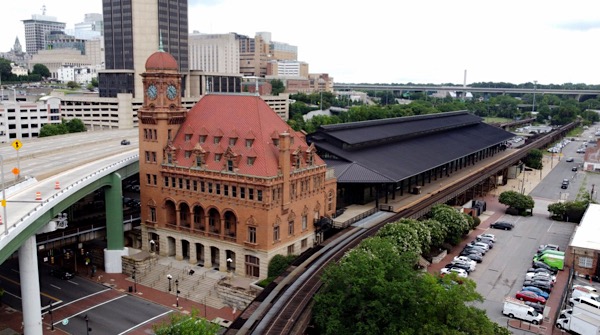
RWH
See our complete Richmond Main Street Station scrapbook in Amtrak Great Stations
Norfolk line

137 Petersburg
- Carolinian
- Northeast Regional
- Palmetto
- Silver Service
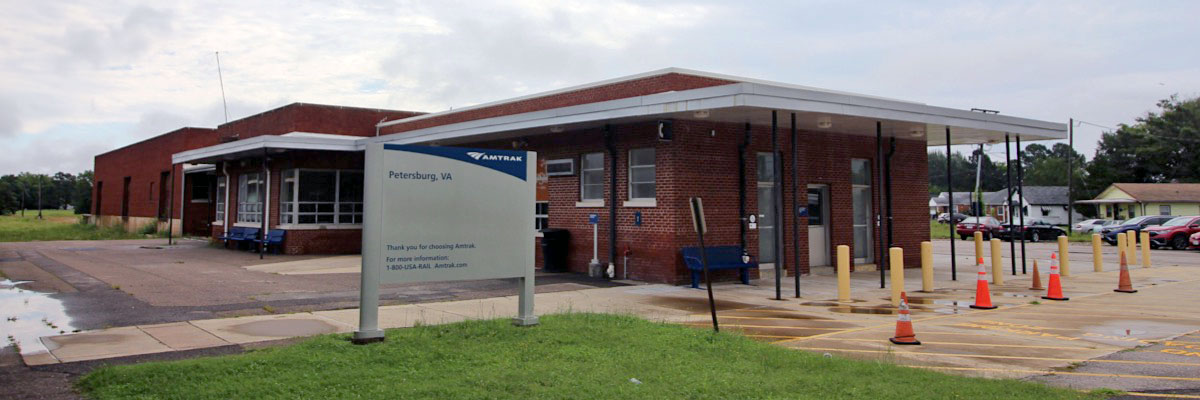
Petersburg, Va / Jul 2025 / RWH
Click to see the Petersburg station plotted on a Google Maps page
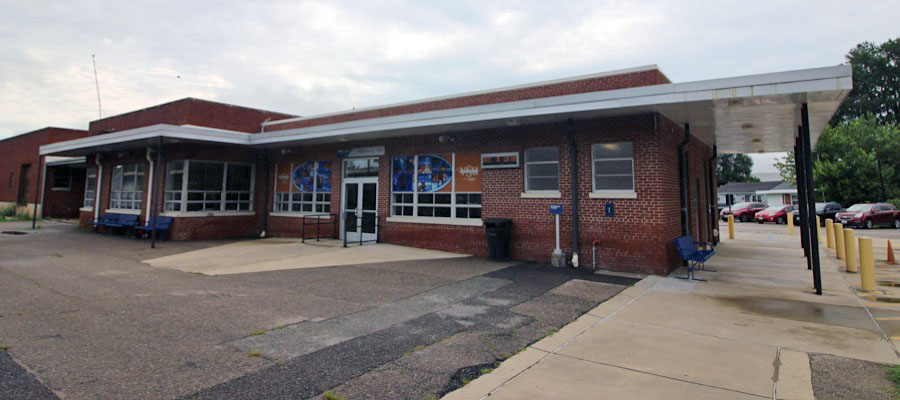
Petersburg, Va / Jul 2025 / RWH
- location:Petersburg, VA
- address:3516 South Street
- type:city station, 1 platform
- owner:VA Passenger Rail Auth
- opened:1955
- builder:Atlantic Coast Line
- style:Mid-century Modern
- renovated:1980
- services:tickets, baggage
- links: Amtrak | Great Stations
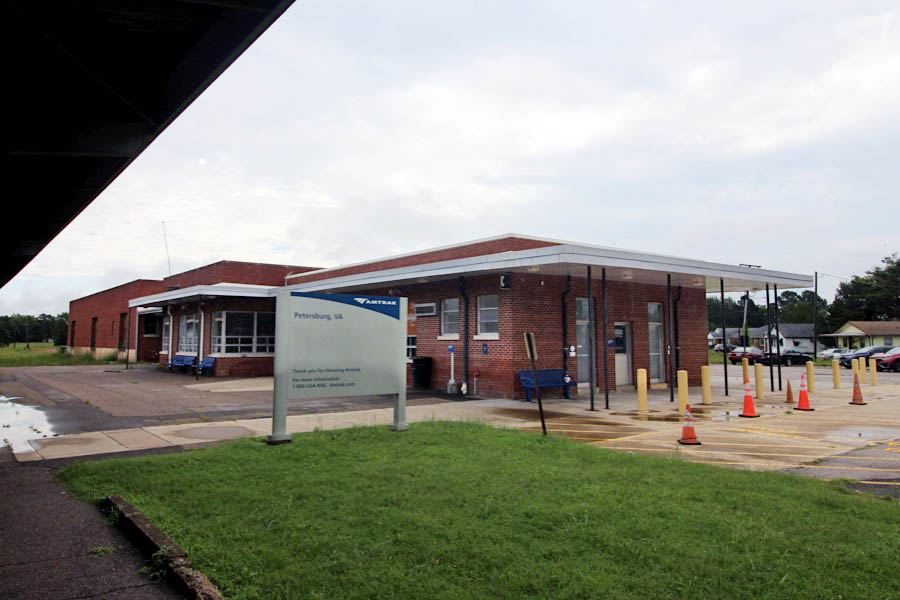
Petersburg, Va / Jul 2025 / RWH
Petersburg, Va / Jul 2025 / RWH
Petersburg, Va / Jul 2025 / RWH
2025 Rail Passengers Association timetable / adapted RWH
Petersburg, Va / Jul 2025 / RWH
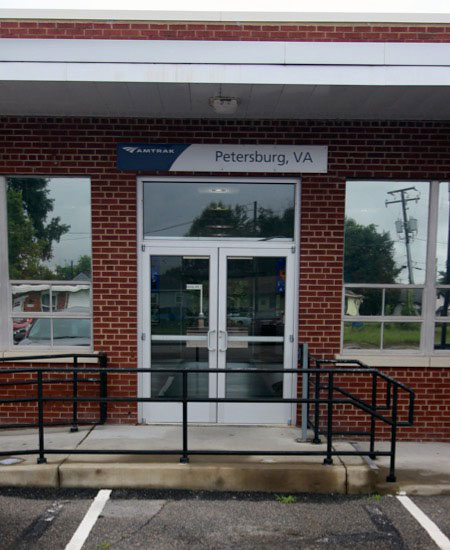
Jul 2025 / RWH
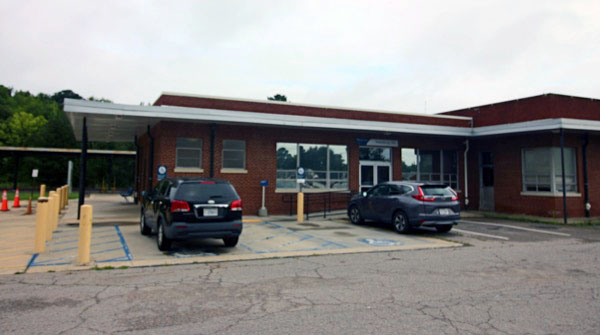
Petersburg, Va / Jul 2025 / RWH
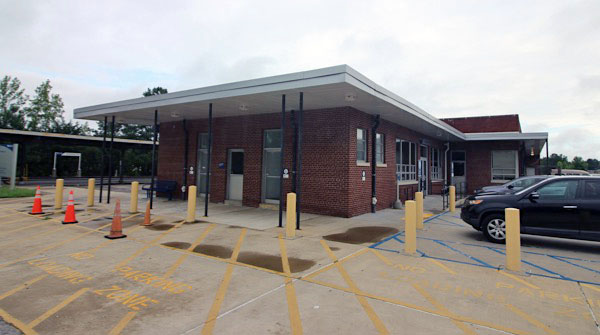
Petersburg, Va / Jul 2025 / RWH
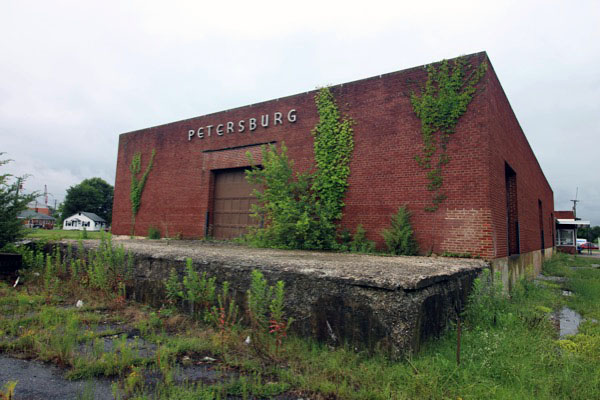
Petersburg, Va / Jul 2025 / RWH
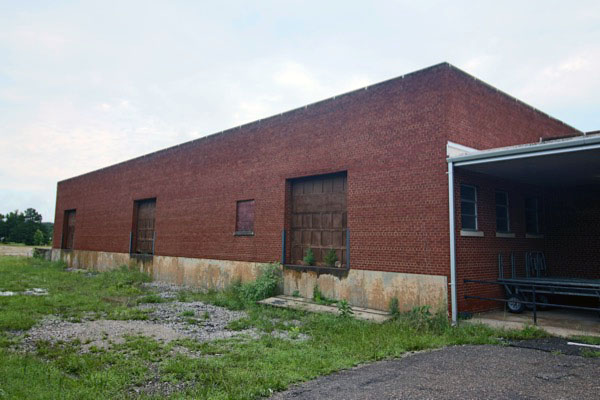
Jul 2025 / RWH
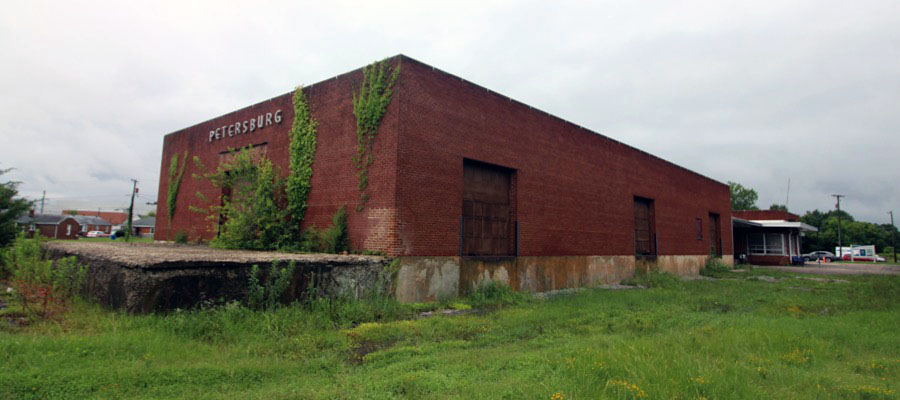
Petersburg, Va / Jul 2025 / RWH
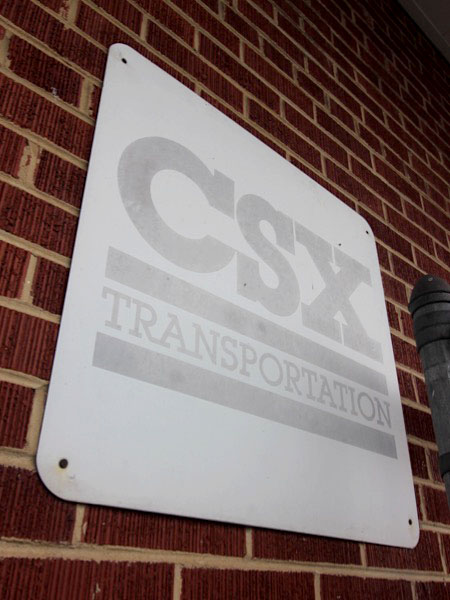
Jul 2025 / RWH
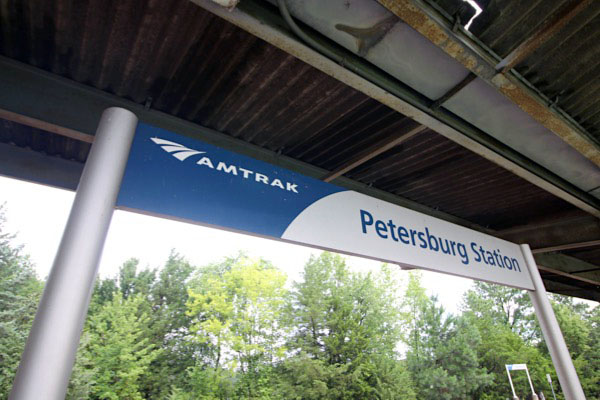
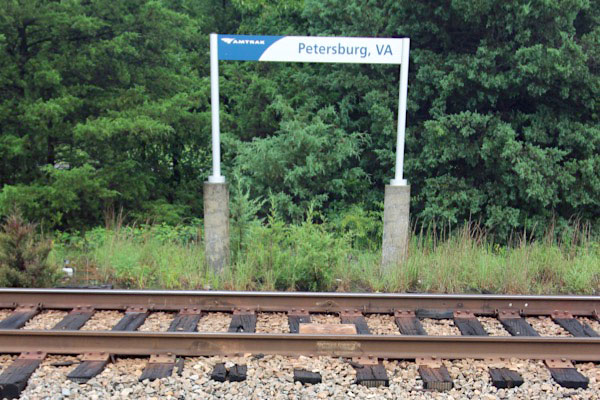
Jul 2025 / RWH
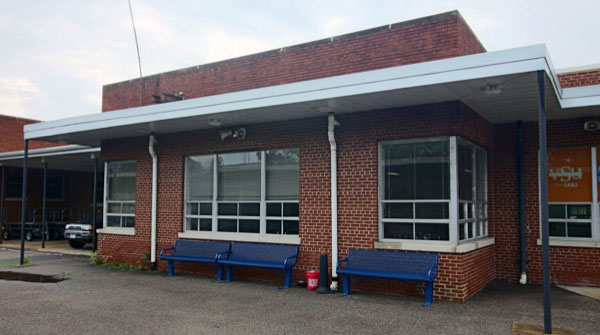
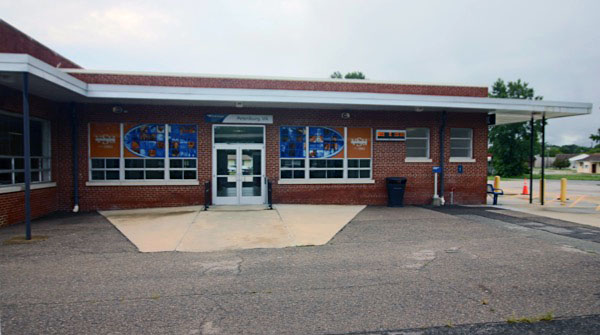
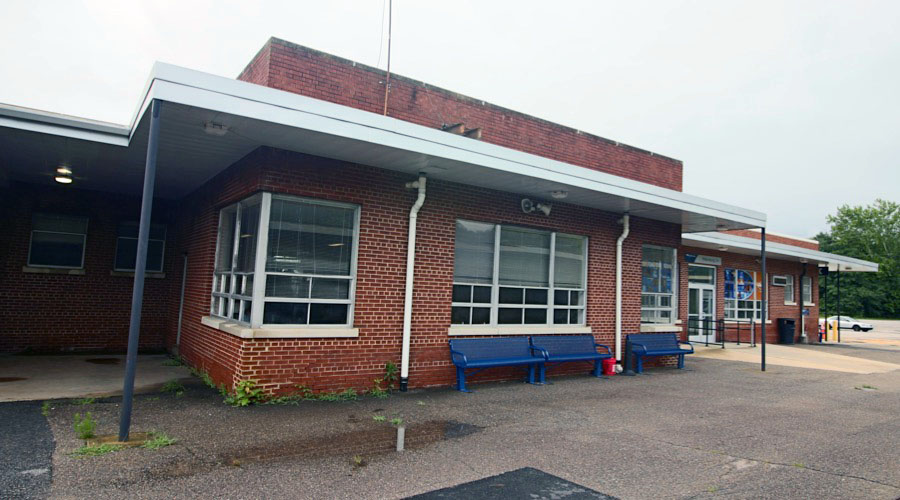
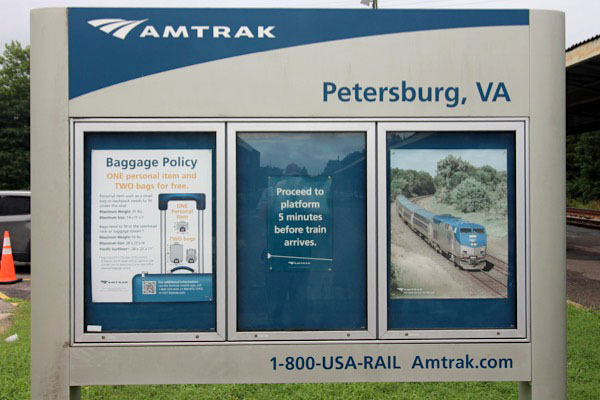
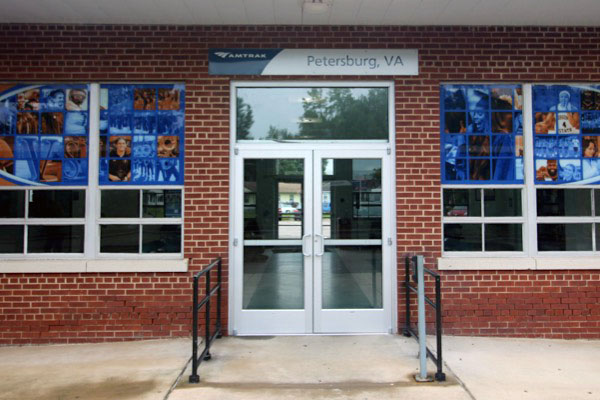
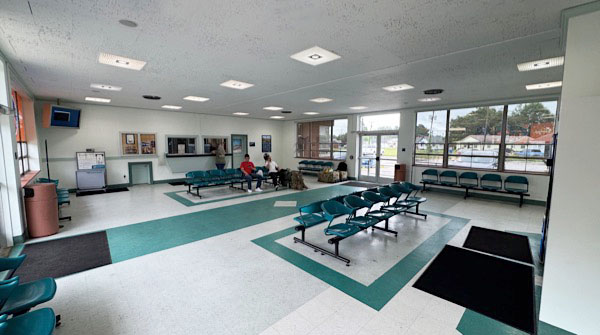
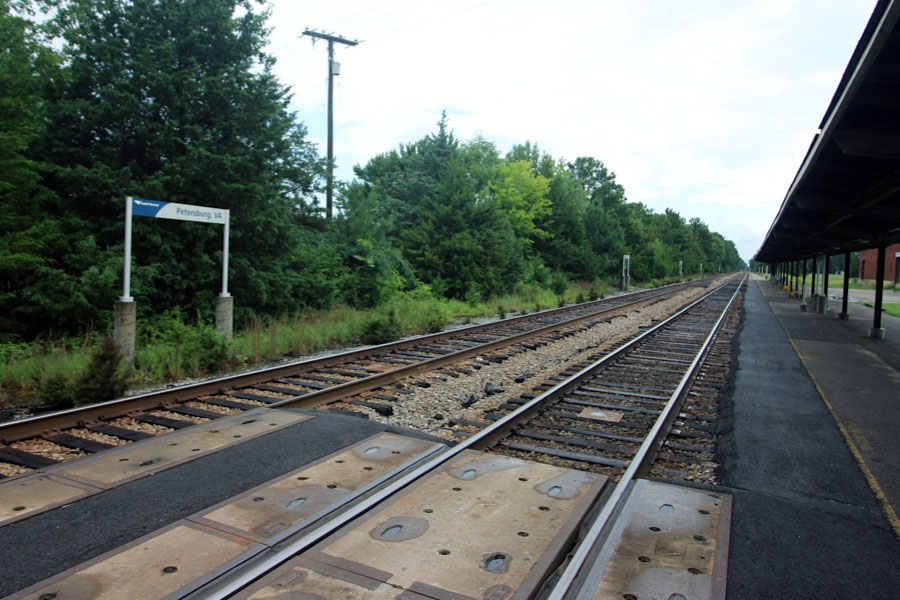
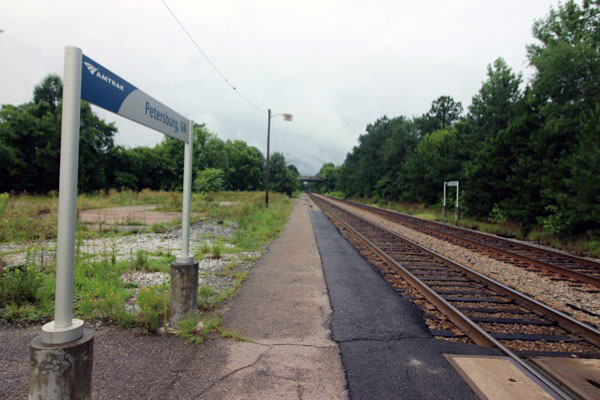
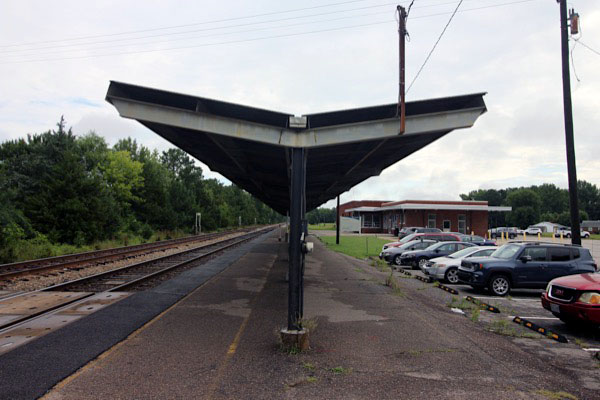
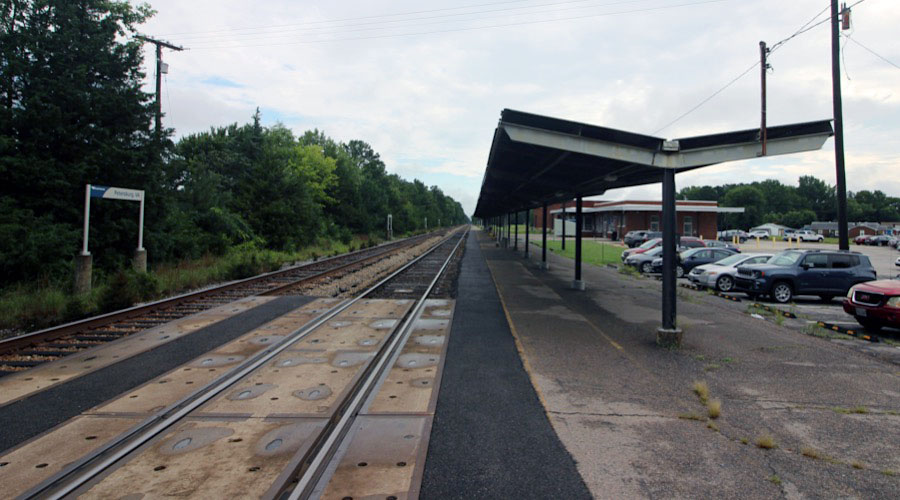
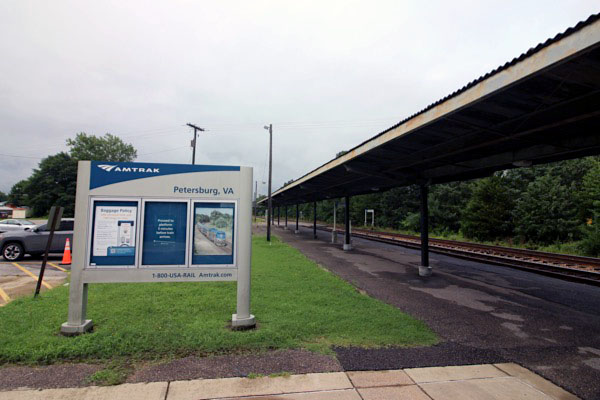
The Petersburg rail station, a one-story brick building, was constructed in 1955 by the Atlantic Coast Line Railroad and is located near the Appomattox River. CSX leases the southern portion of the station to Amtrak and the northern area is unoccupied. In the late 1980s, the depot saw a few minor renovations, including an expanded waiting room, new floors and furniture and the removal of an interior wall.
The city of Petersburg’s roots are embedded in its routes. Originally a Powhattan settlement, people came over from England and settled at Fort Henry. Petersburg grew out of the expansion of Fort Henry. The Port of Petersburg drew many merchants, as it was a major hub for commercial transportation and processing of goods.
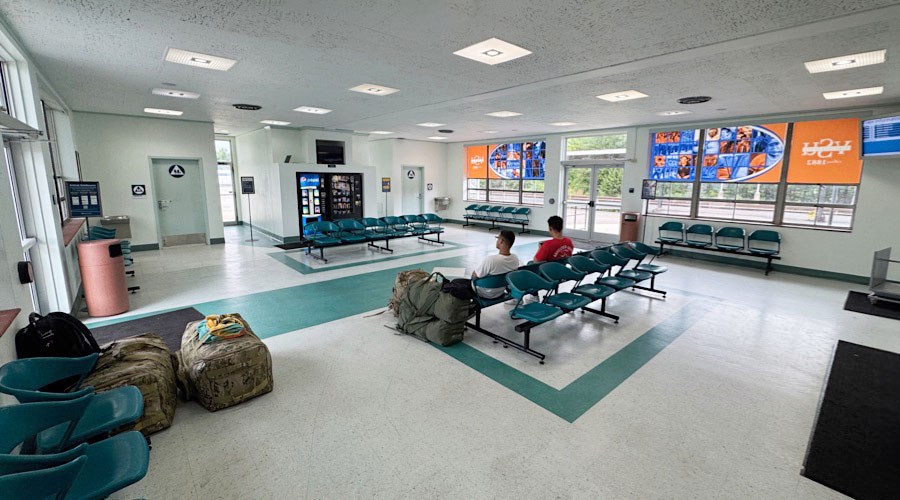
Jul 2025 / RWH
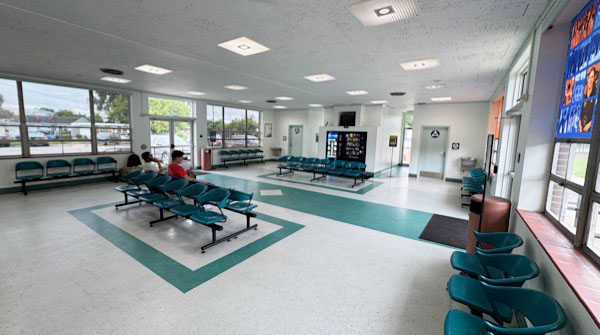
Jul 2025 / RWH
Petersburg, Va
Petersburg, Va / Jul 2025 / RWH
Petersburg, Va / Jul 2025 / RWH
Petersburg, Va / Jul 2025 / RWH
Petersburg, Va / Jul 2025 / RWH
Petersburg, Va / Jul 2025 / RWH
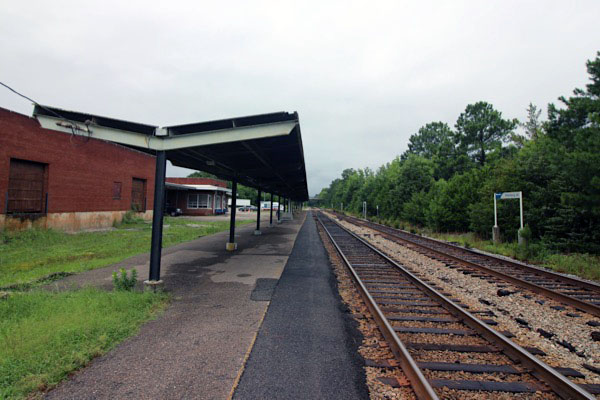
Petersburg, Va / Jul 2025 / RWH
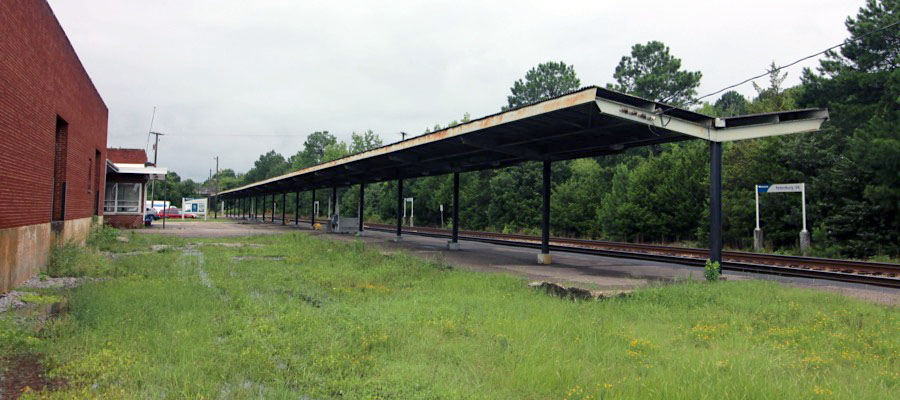
Petersburg, Va / Jul 2025 / RWH
Lagniappe


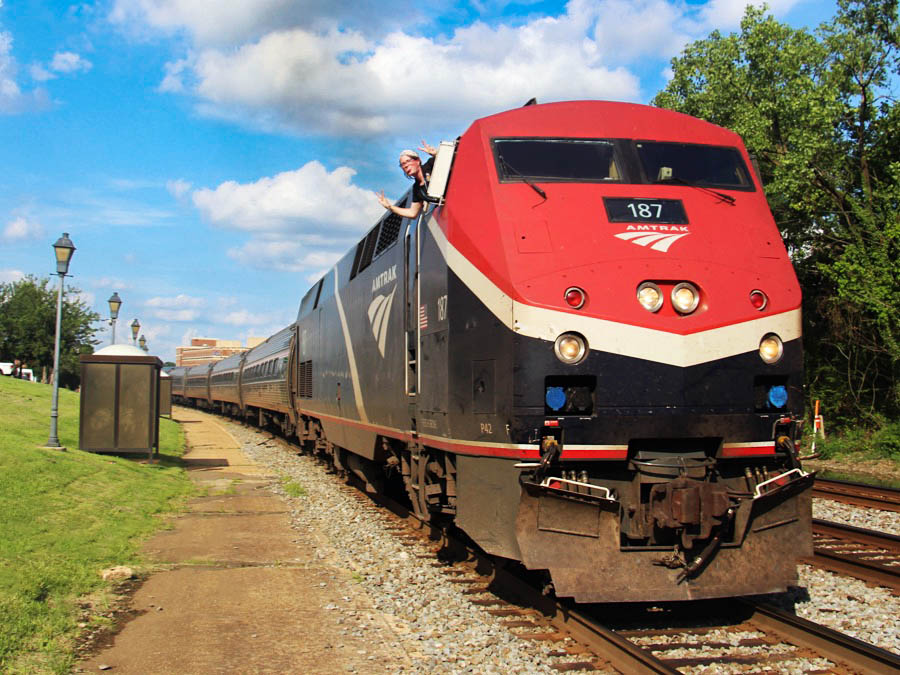
Genesis Glamour Gal
Alexandria, Va / Jul 2025 / RWH
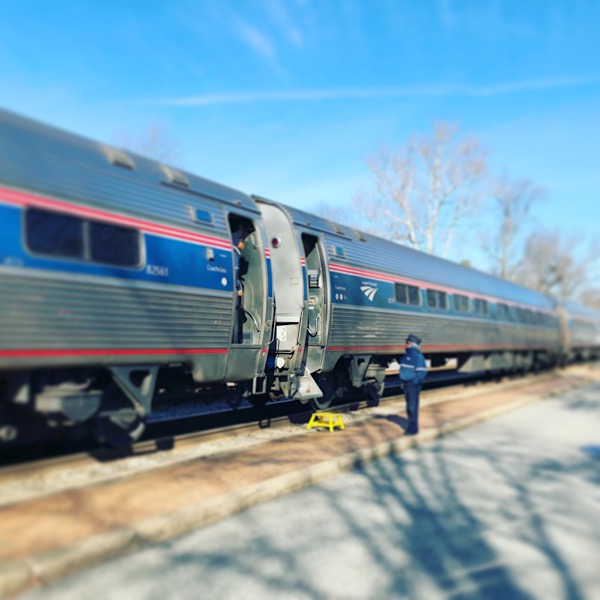
Station Work
Ashland, Va / Dec 2017 / RWH
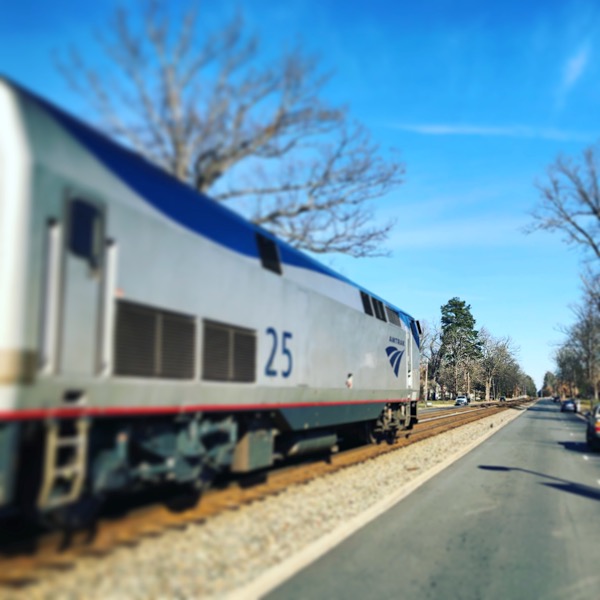
Northbound
Ashland, Va / Dec 2017 / RWH
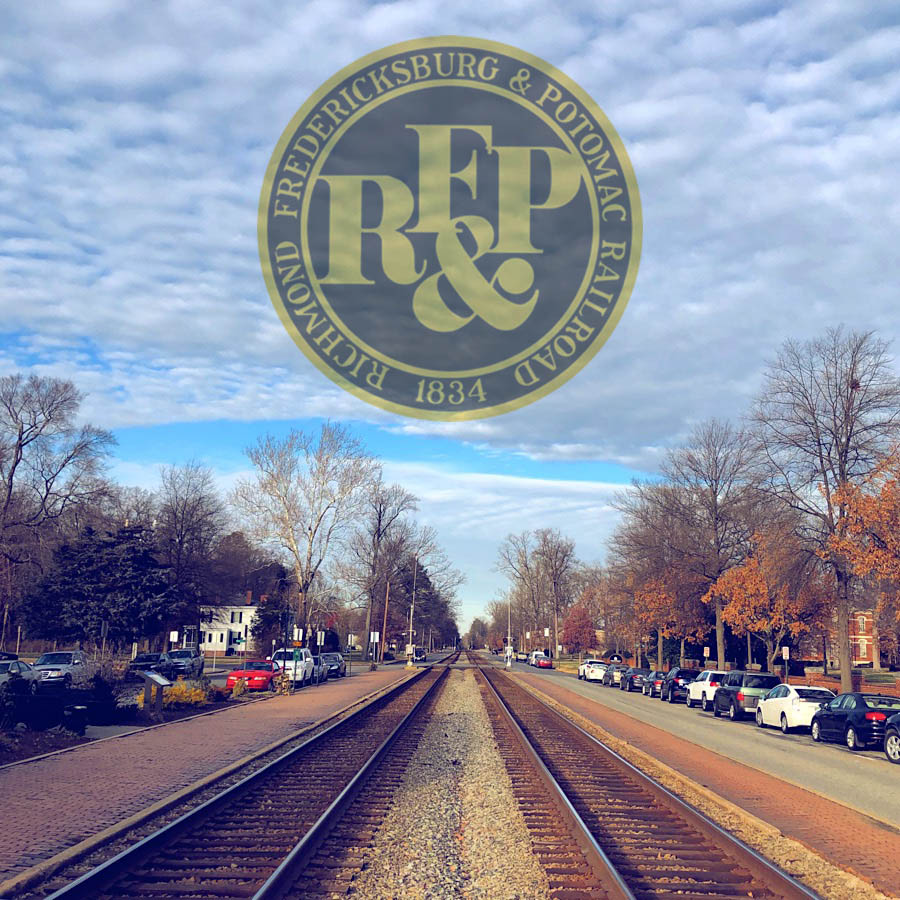
Mr. Harvey's Mainline
Ashland, Va / Dec 2017 / RWH
 Snapshots

Jun 2013 / RWH
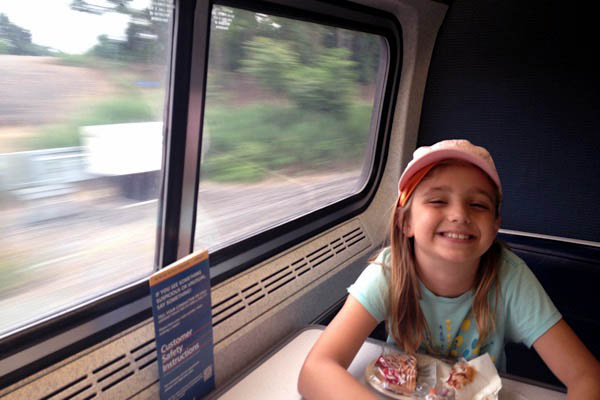
Arkendale, Va / Jun 2013 / RWH

Arkendale, Va / Jun 2013 / ETH
Roanoke, Va / Mar 2026 / RWH
Links / Sources
- Wikipedia article for Amtrak Virginia
- Virginia Passenger Rail Authority website