
Carolinian
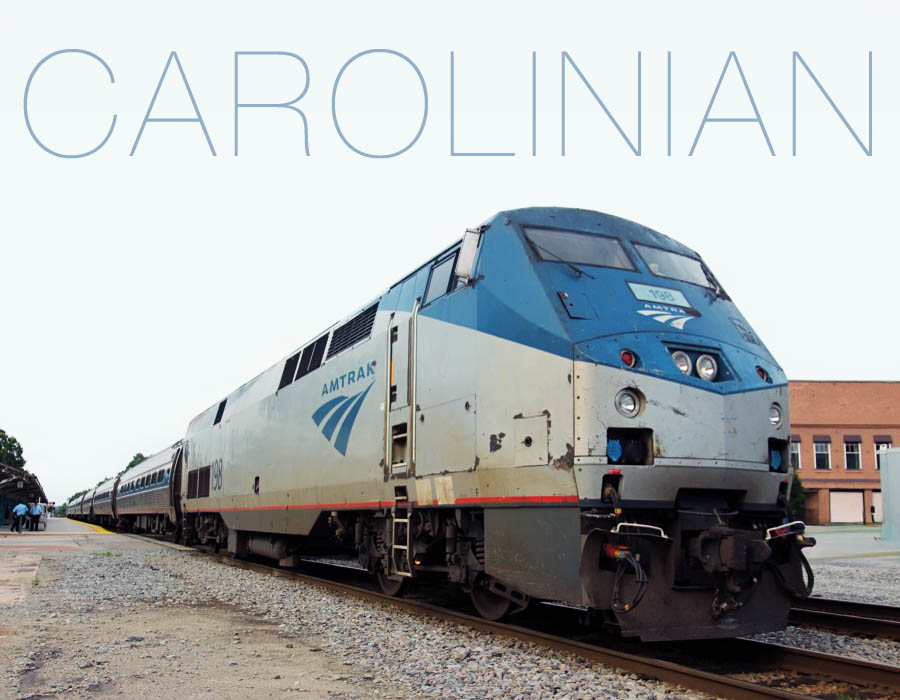
Wilson, NC / Jun 2023 / RWH
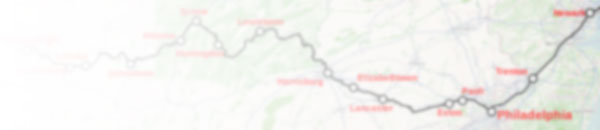
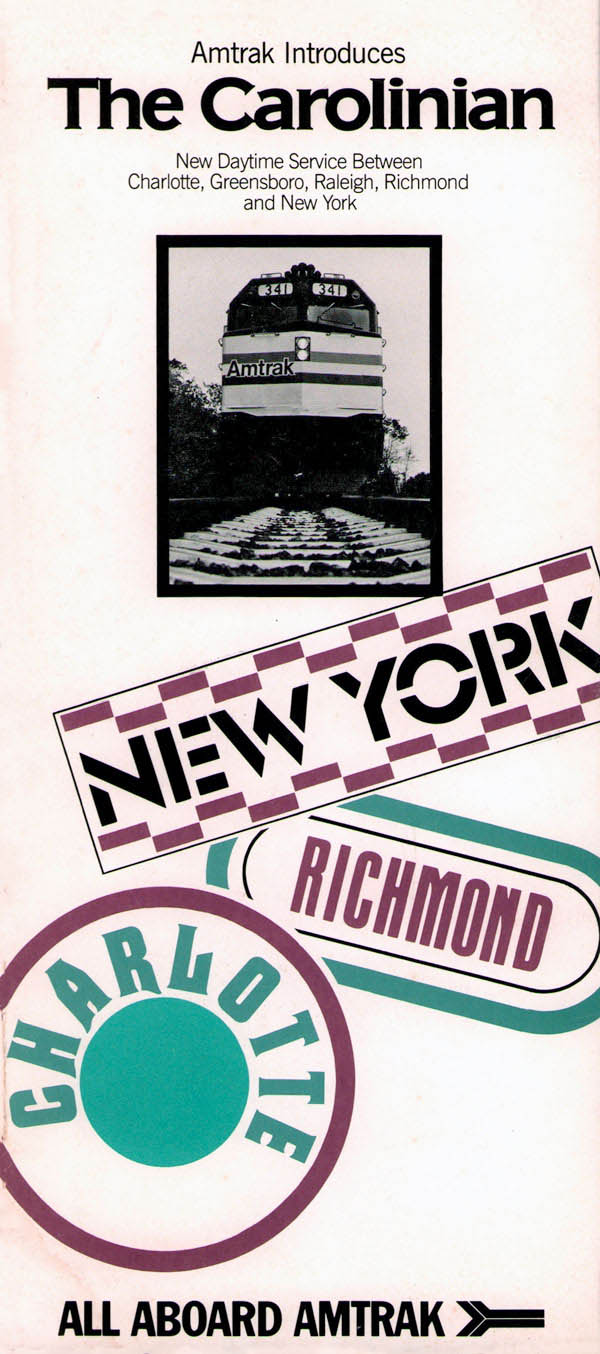
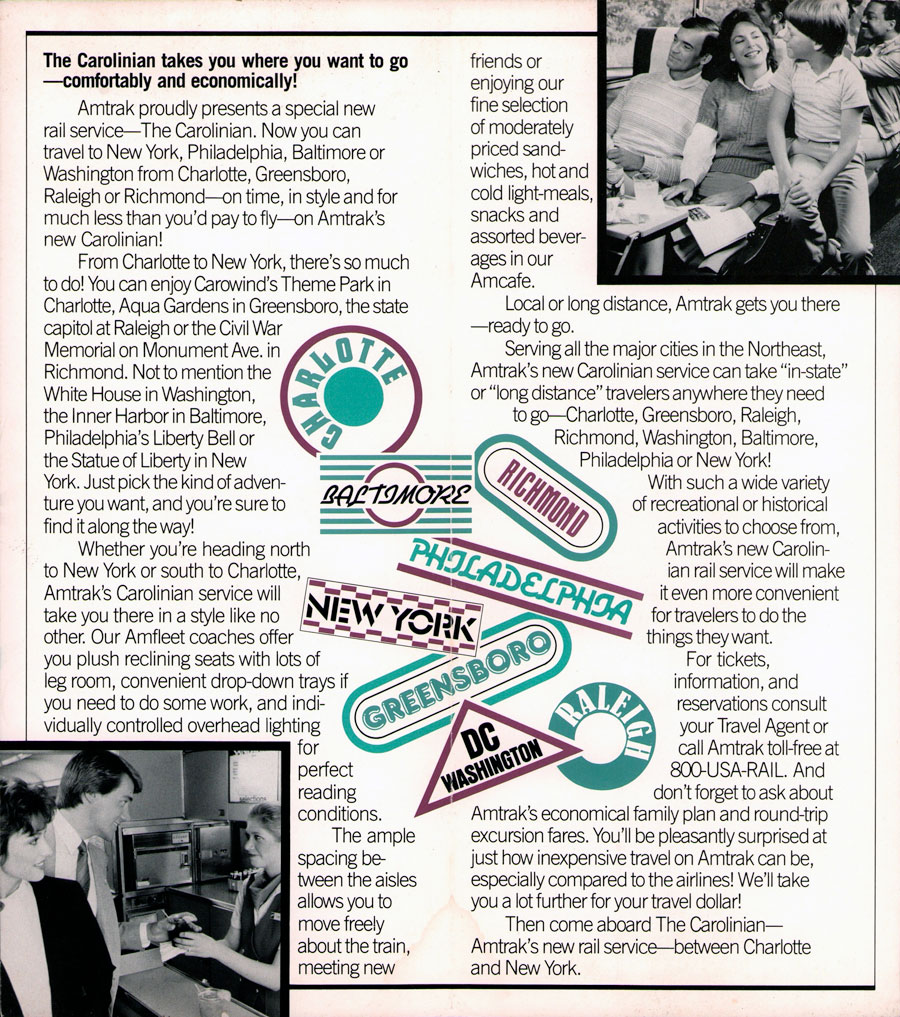
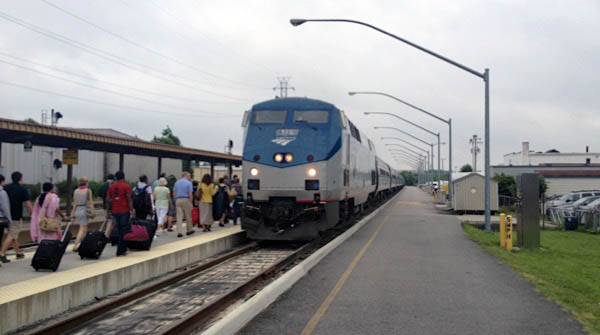
 The Carolinian is a state-supported Amtrak passenger train that links the Carolinas with the Northeast Corridor. At 704 route miles, this service is the longest state-supported route in the Amtrak system. In 1984, the state of North Carolina and Amtrak launched the first Carolinian as a new service running between Charlotte, North Carolina, and New York City, providing a direct connection from the rapidly growing Piedmont region to the major cities of the Northeast. From Richmond north, the Carolinian was combined with the Palmetto for its journey through the Northeast Corridor. Although the service was popular, most passengers travelled within the state of North Carolina. Lacking interstate revenue, Amtrak dropped the service in 1985 when the state would not increase its subsidy.
 With fresh backing from the North Carolina Department of Transportation, the Carolinian returned to service in 1990 as a section of the Palmetto north of Rocky Mount. More successful this time, in 1991 Amtrak granted the train an independent routing to and from New York City. The state’s commitment to funding passenger rail improvements — including track upgrades, station renovations, and equipment — helped stabilize the train’s operations and improve reliability. The restored service connects 13 stops in North Carolina with Richmond, Washington, Philadelphia, and New York, making it a key link between the Southeast and the Northeast.
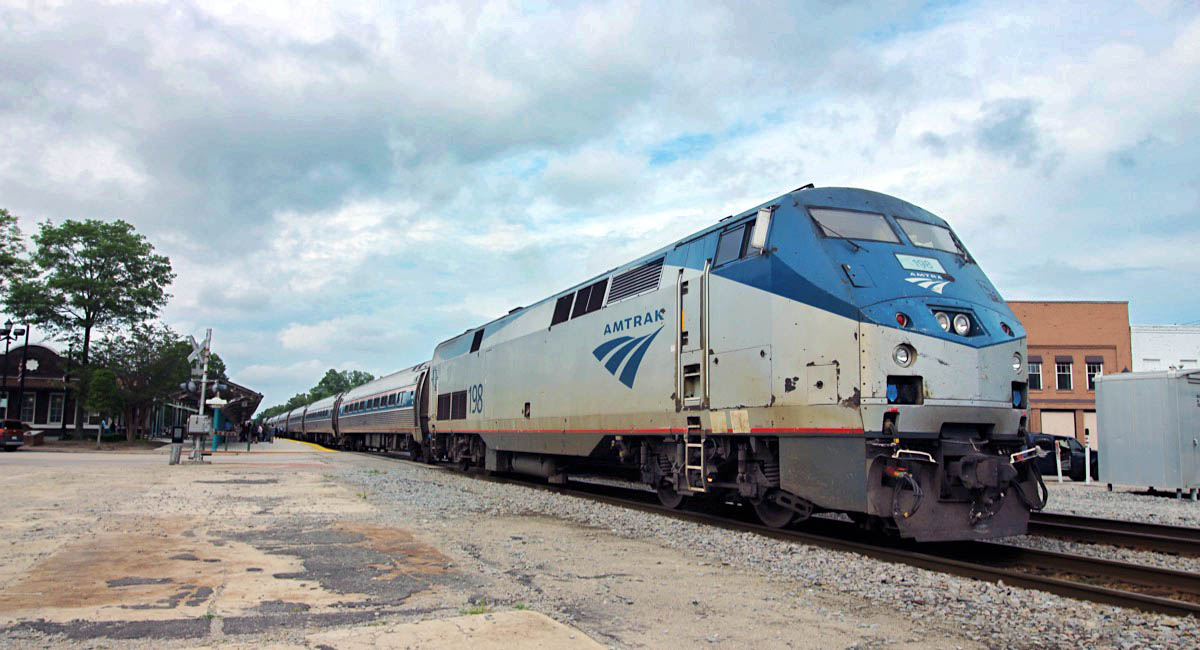
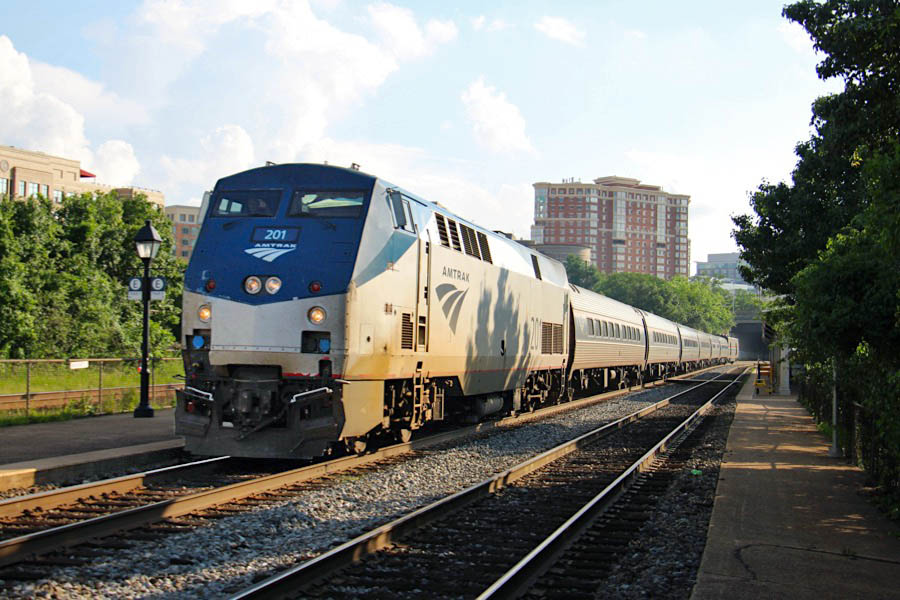
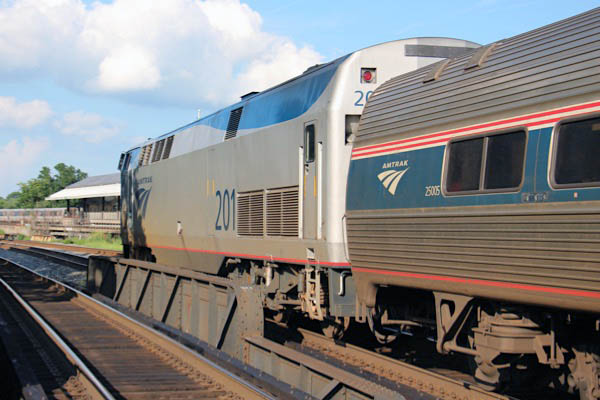
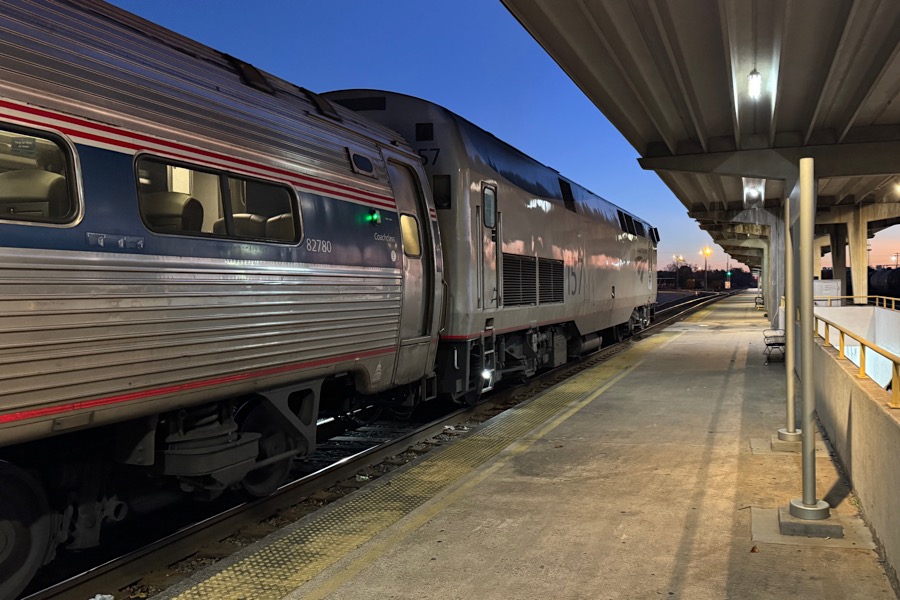
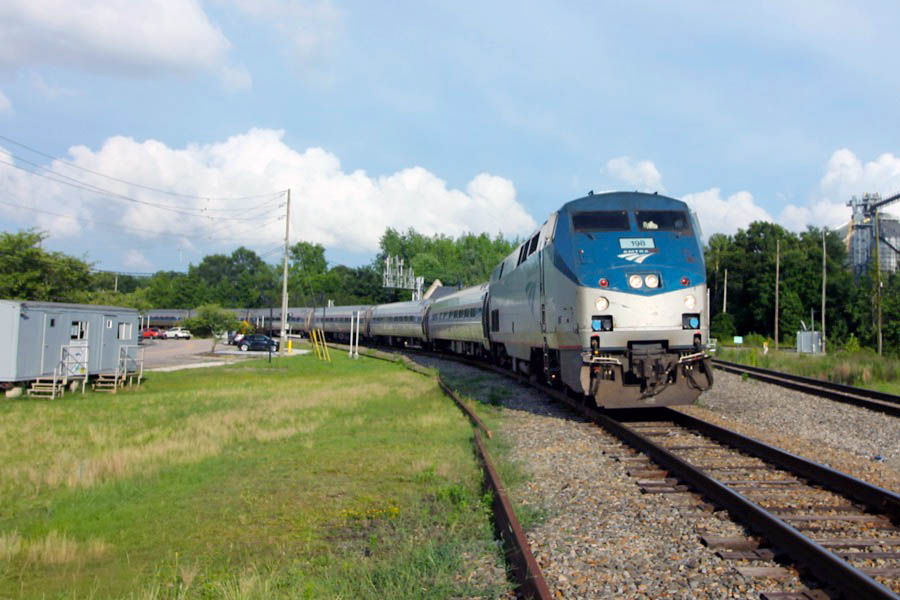
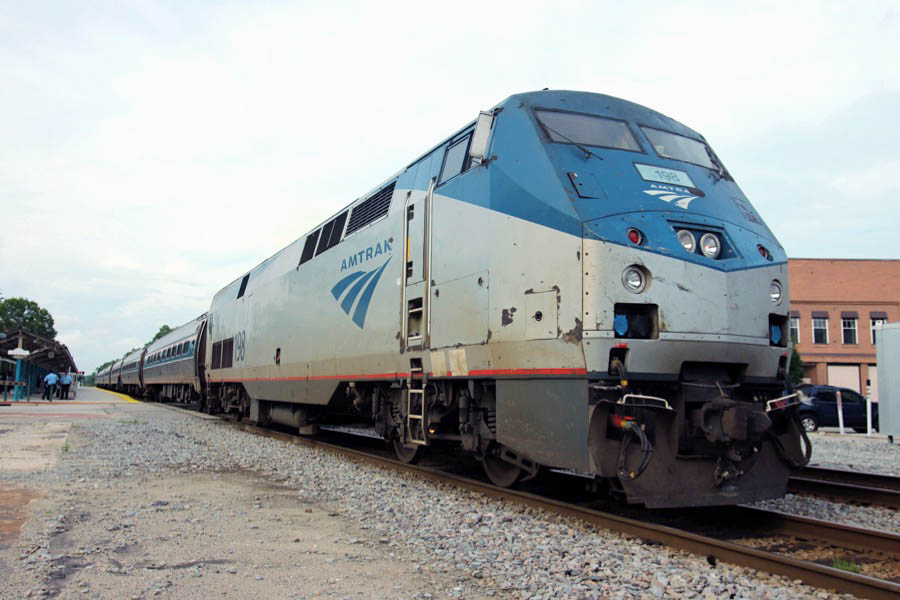
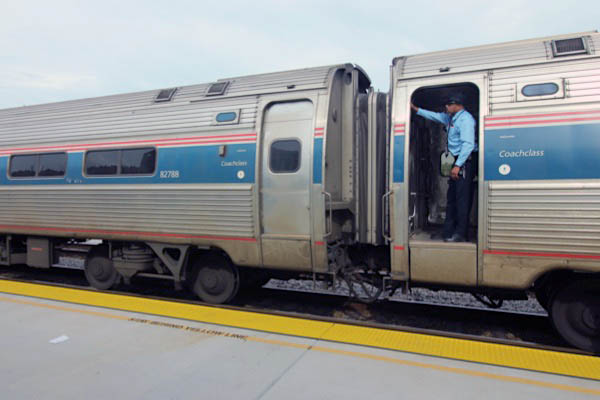
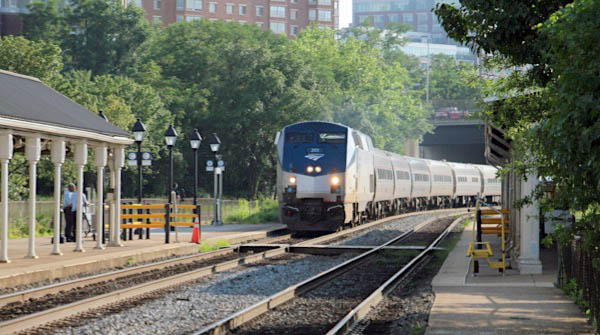
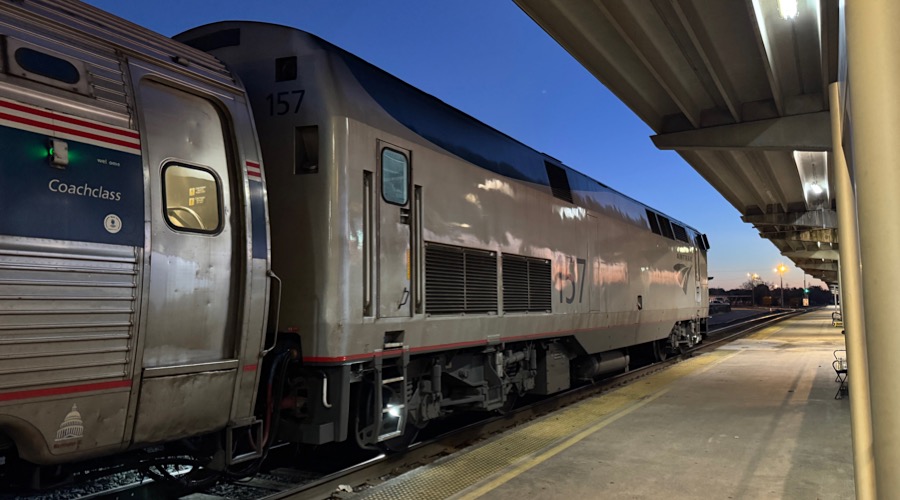
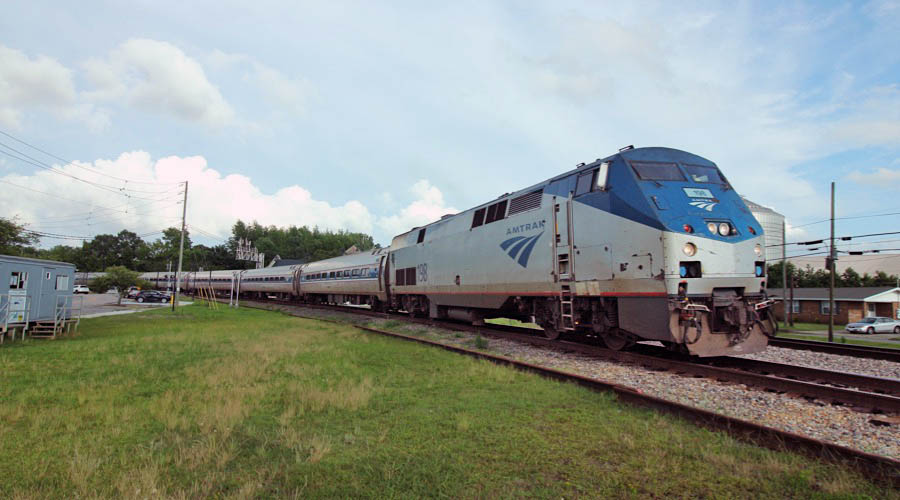
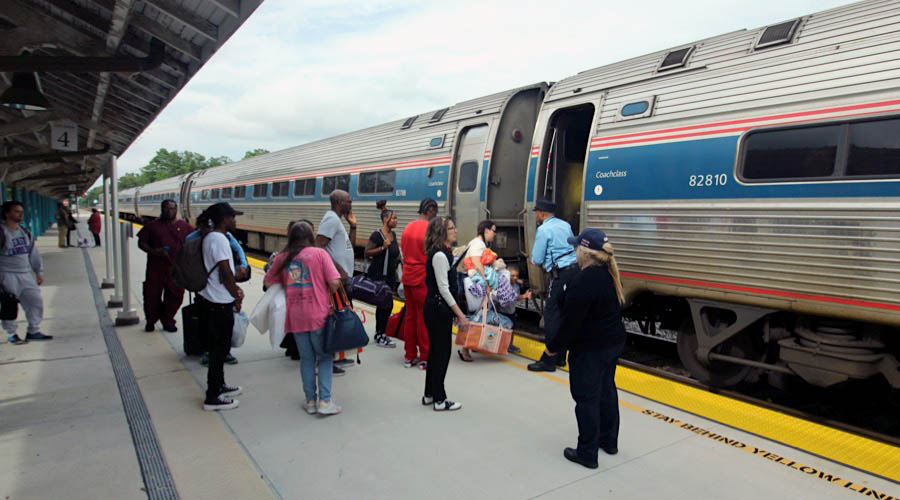
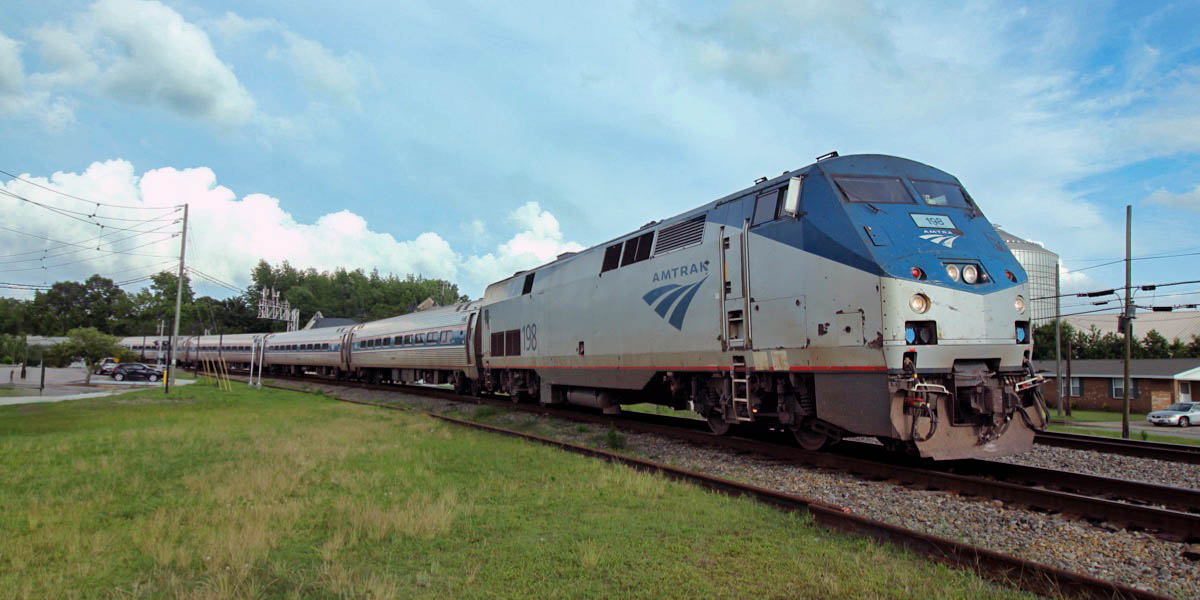
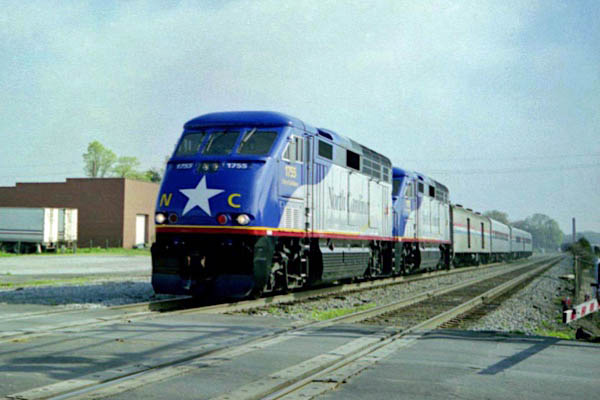
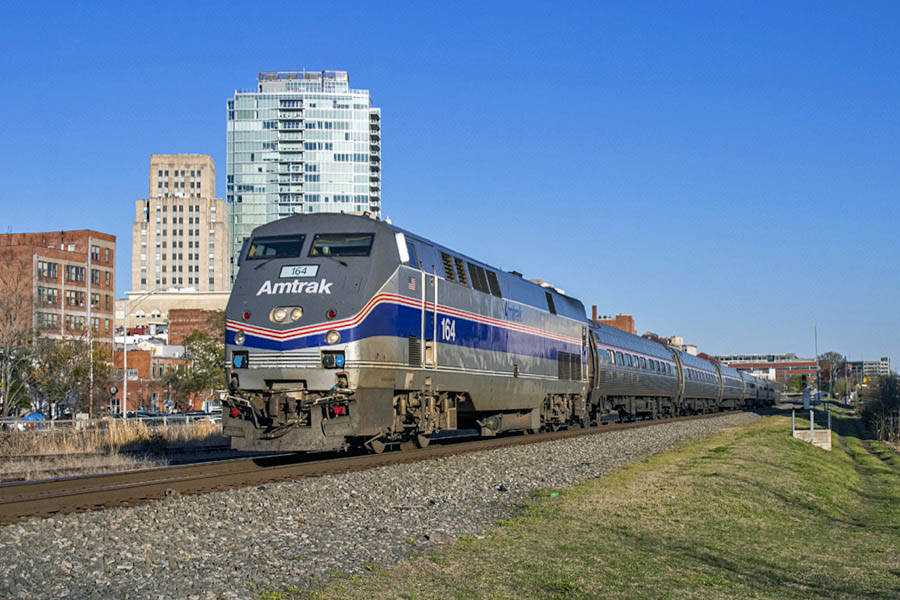
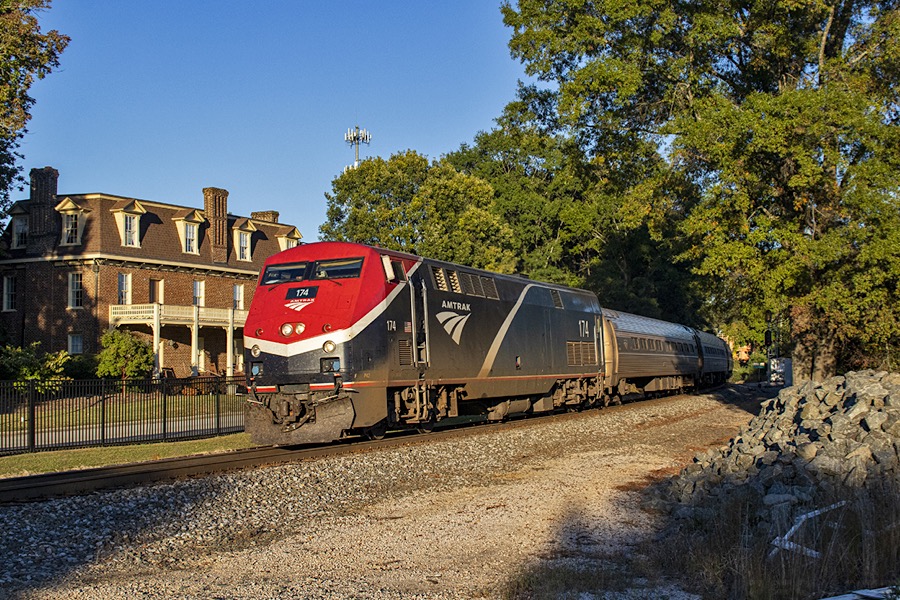
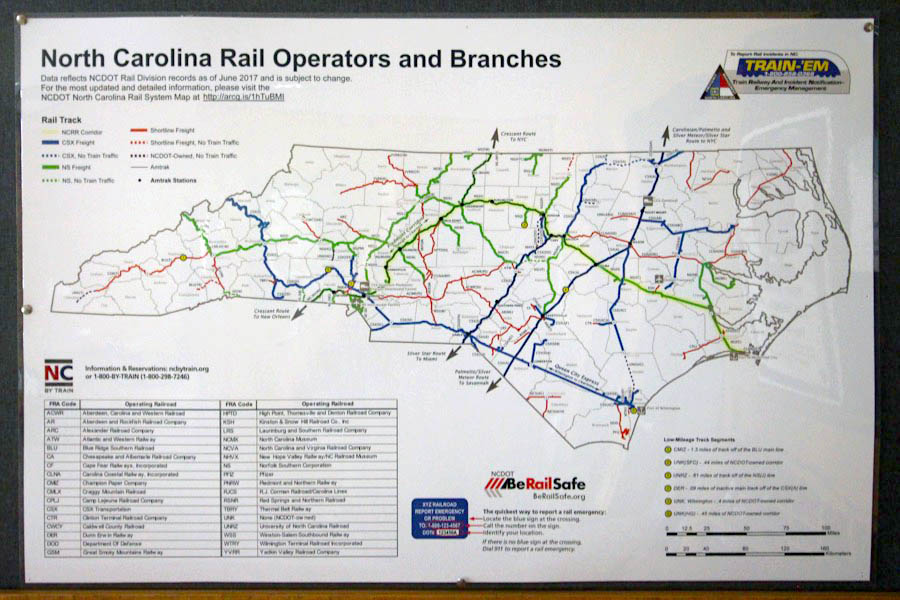
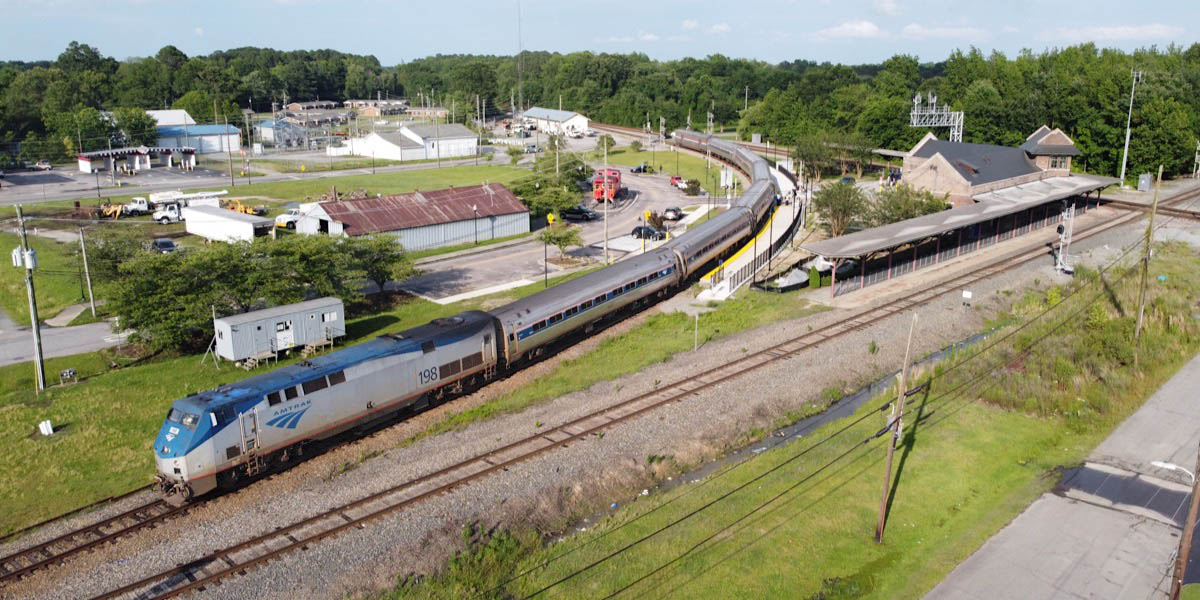
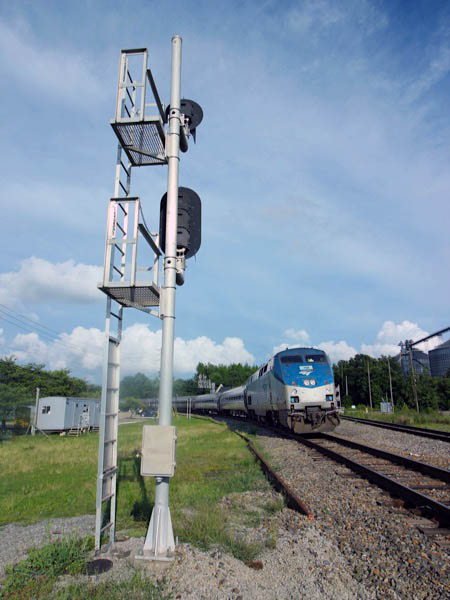
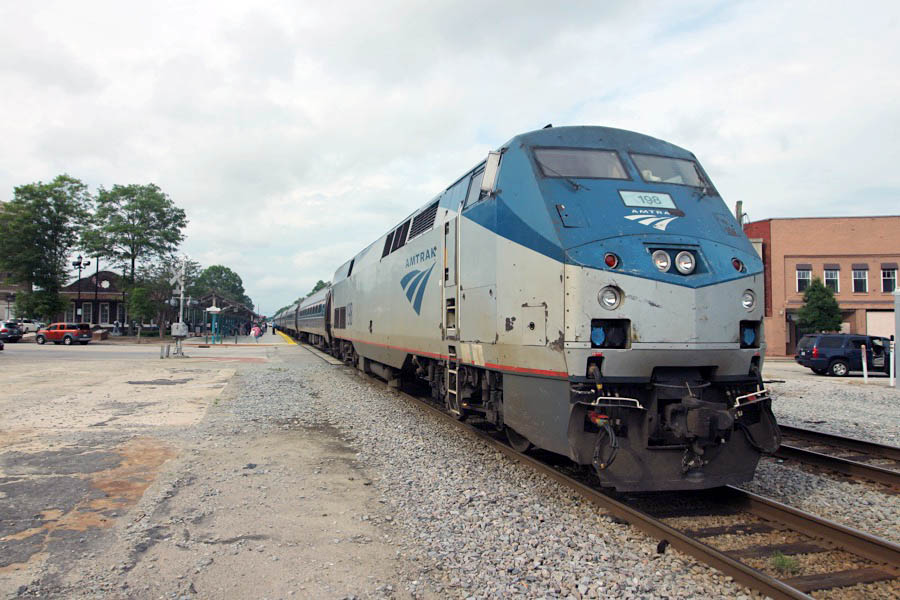
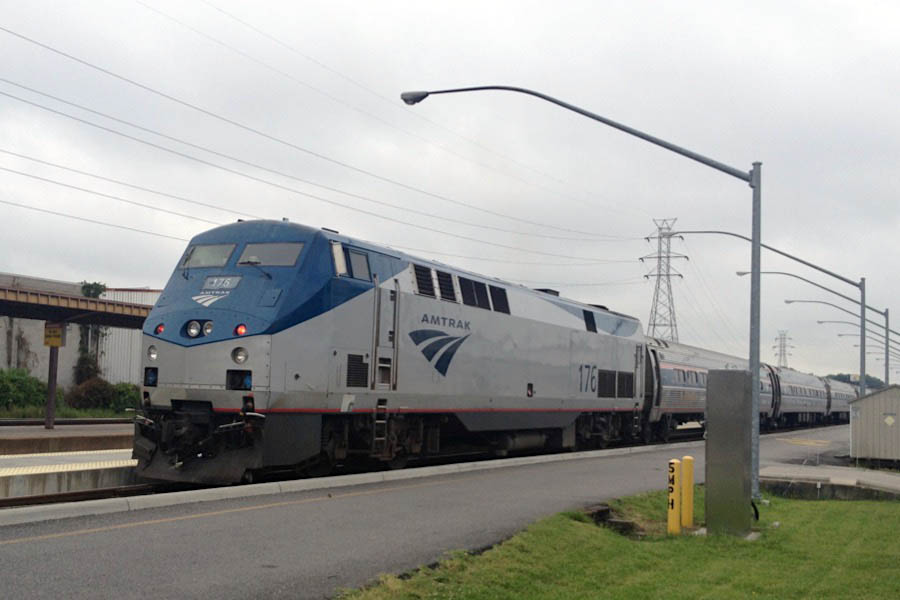
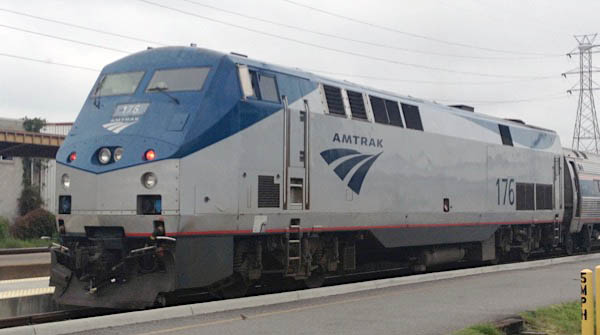
 Today the Carolinian operates daily between Charlotte and New York, sharing portions of its route with other Amtrak services such as the Crescent, the Palmetto, and North Carolina’s Piedmont commuter trains. Typical Carolinian consists include one locomotive and 7 Amfleet cars, including a lounge/cafe combination and Viewliner series baggage car. Southbound trains are wyed in Charlotte each night for the return trip northbound each morning.
Supported by the state of North Carolina and integrated with Amtrak's vibrant eastern regional rail network, the Carolinian demonstrates the success of state-supported passenger rail.
Today the Carolinian operates daily between Charlotte and New York, sharing portions of its route with other Amtrak services such as the Crescent, the Palmetto, and North Carolina’s Piedmont commuter trains. Typical Carolinian consists include one locomotive and 7 Amfleet cars, including a lounge/cafe combination and Viewliner series baggage car. Southbound trains are wyed in Charlotte each night for the return trip northbound each morning.
Supported by the state of North Carolina and integrated with Amtrak's vibrant eastern regional rail network, the Carolinian demonstrates the success of state-supported passenger rail.

See also our complete North Carolina DOT Piedmont Service scrapbook in Transit

- service
Carolinian - regionMid-Atlantic
- type
state-supported regional - numbers
79 southbound
80 northbound - termini
New York City NY
Charlotte NC - stops24
- distance704 miles
- time~ 14 hours
- frequencydaily
- classes
Coach, Business - equipment
Amfleet single level - services
cafe car - startedMay 1990
- mainlinesNS, CSX
- links
Amtrak | Wikipedia
collection


| station | code |  | miles | #79 | #80 |
|---|---|---|---|---|---|
| Carolinian | Carolinian | ||||
| daily | daily | ||||
read up  | read down  | ||||
Charlotte NC | CLT | | 0 | 8:56 pm | 6:45 am |
| Kannapolis NC | KAN | 26 | 8:23 pm | 7:10 am | |
| Salisbury NC | SAL | 42 | 8:06 pm | 7:28 am | |
| High Point NC | HPT | 76 | 7:32 pm | 8:02 am | |
| Greensboro NC | GRP | | 92 | 7:12 pm | 8:20 am |
| Burlington NC | BNC | 113 | 6:48 pm | 8:46 am | |
| Durham NC | DNC | | 147 | 6:04 pm | 9:27 am |
| Cary NC | CYN | | 165 | 5:43 pm | 9:47 am |
| Raleigh NC | RGH | | 173 | 5:22 pm | 10:05 am |
| Selma-Smithfield NC | SSM | 202 | 4:38 pm | 10:48 am | |
| Wilson NC | WLN | | 228 | 4:05 pm | 11:18 am |
| Rocky Mount NC | RMT | | 244 | 3:46 pm | 11:35 am |
Petersburg VA | PTB | | 342 | 2:13 pm | 1:11 pm |
| Richmond VA | RVR | | 370 | 1:27 pm | 2:04 pm |
| Fredericksburg VA | FBG | 425 | 12:19 pm | 3:07 pm | |
| Quantico VA | QAN | 445 | 11:56 am | 3:29 pm | |
| Alexandria VA | ALX | | 471 | 11:26 am | 4:03 pm |
Washington DC | WAS | | 479 | 10:31 am | 4:31 pm |
Baltimore MD | BAL | | 520 | 9:43 am | 5:47 pm |
Wilmington DE | WIL | | 589 | 8:59 am | 6:36 pm |
Philadelphia PA | PHL | | 614 | 8:31 am | 7:00 pm |
Trenton NJ | TRE | 647 | 8:04 am | 7:32 pm | |
| Newark NJ | NWK | | 695 | 7:20 am | 8:12 pm |
New York NY | NYP | | 705 | 7:04 am | 8:35 pm |
stations listed in orange above are featured in our route scrapbook below
RWH
RWH
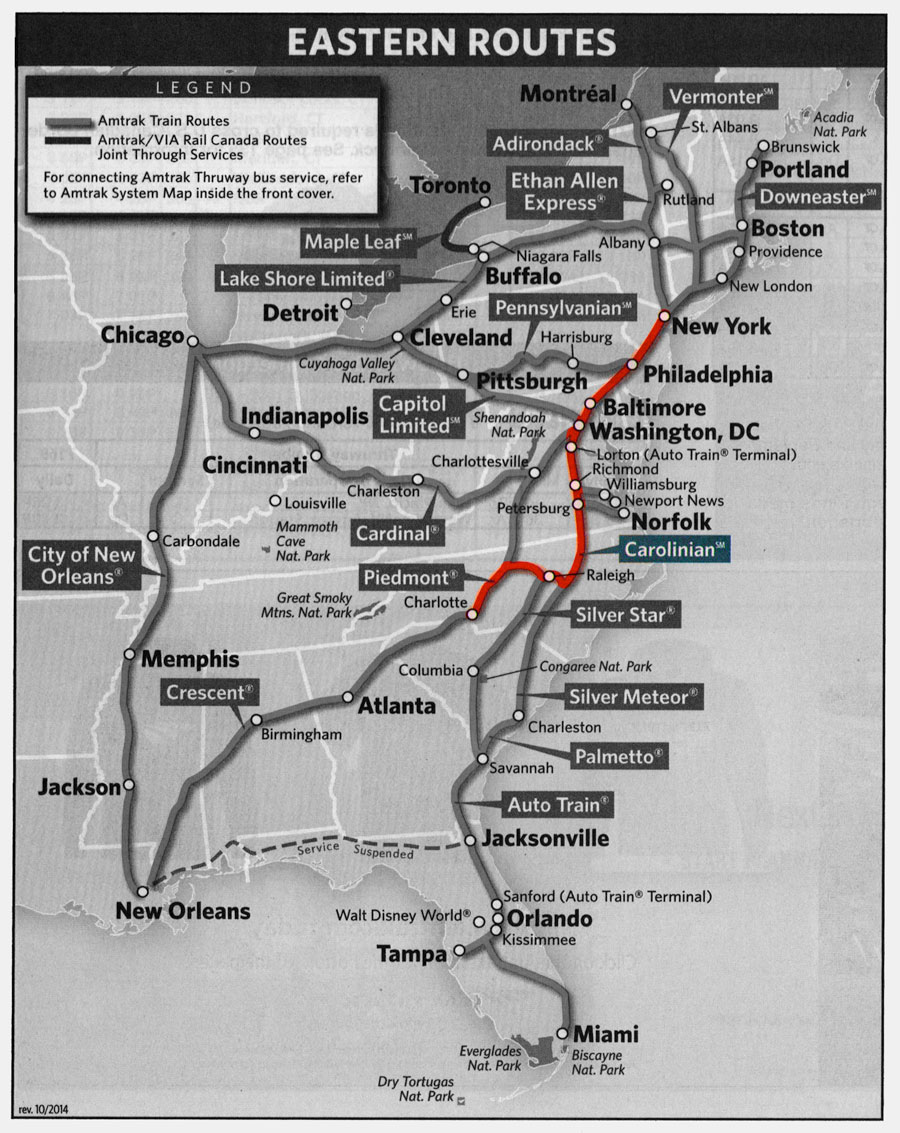
2014 eastern routes map / adapted RWH
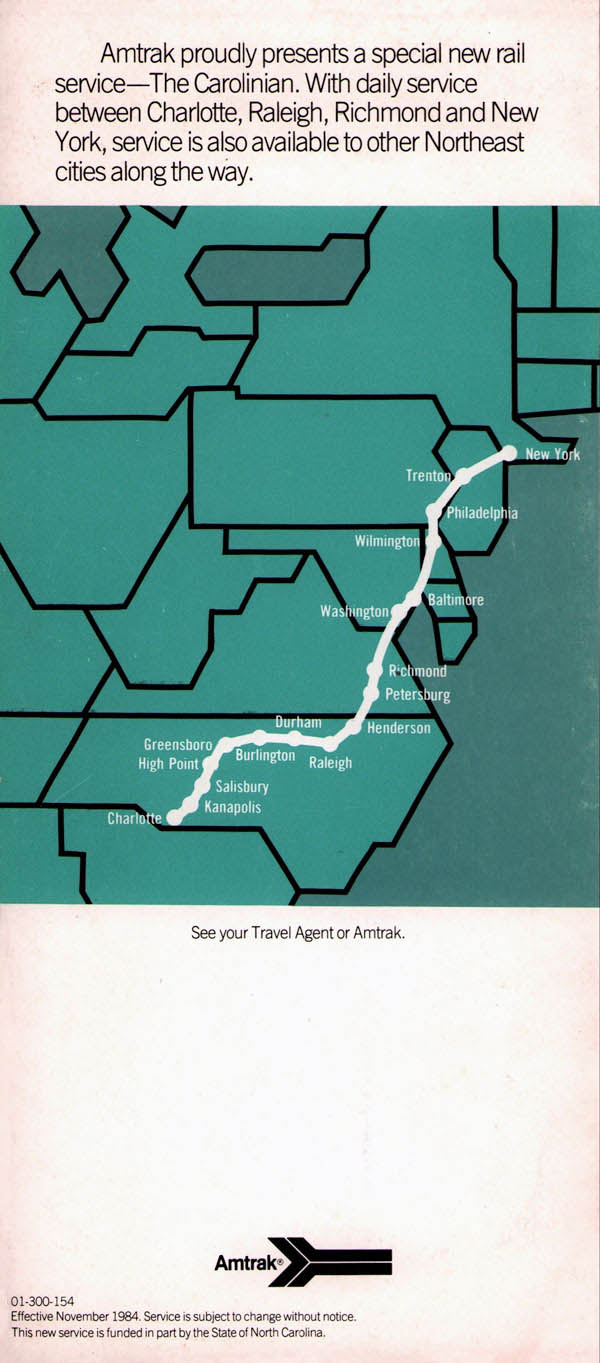
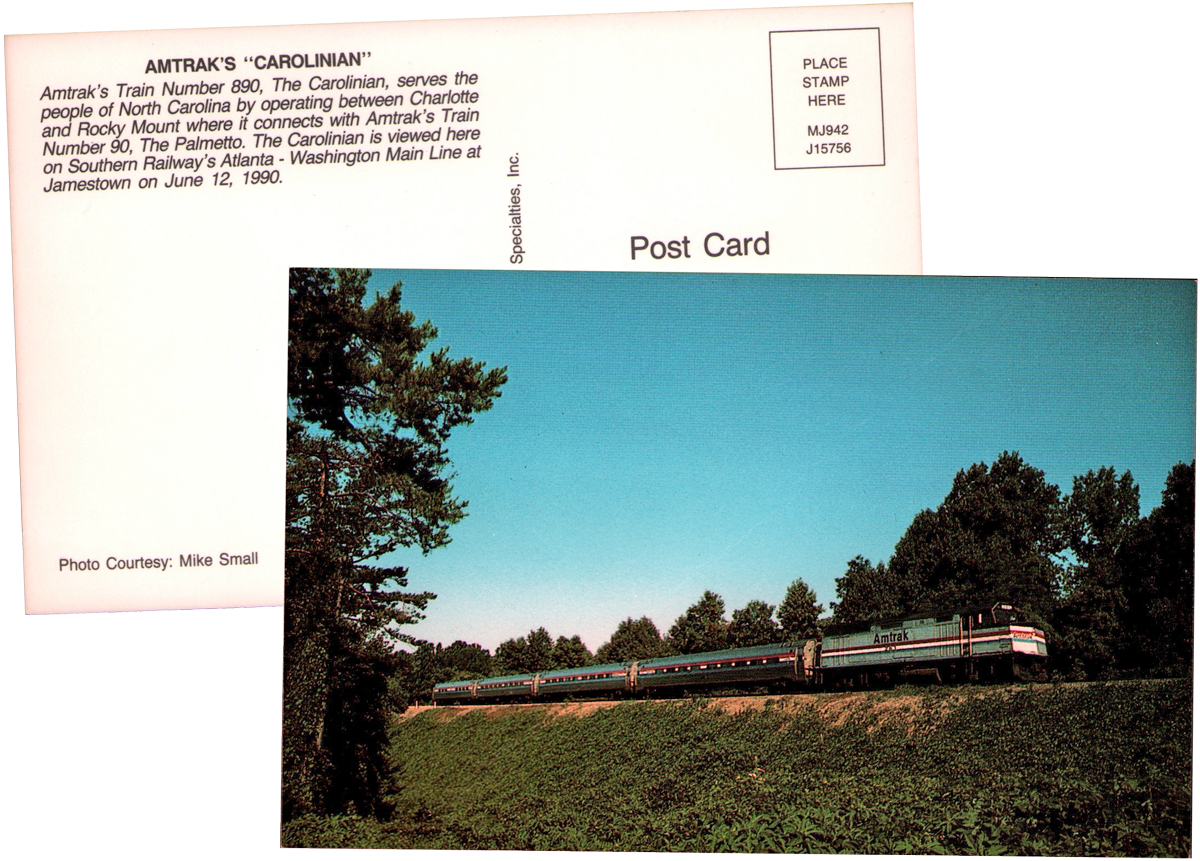
postcard / collection

collection
Selma, NC / Jun 2023 / RWH

Our Carolinian route scrapbook runs northbound
starting at Charlotte and ending at New York City
North Carolina
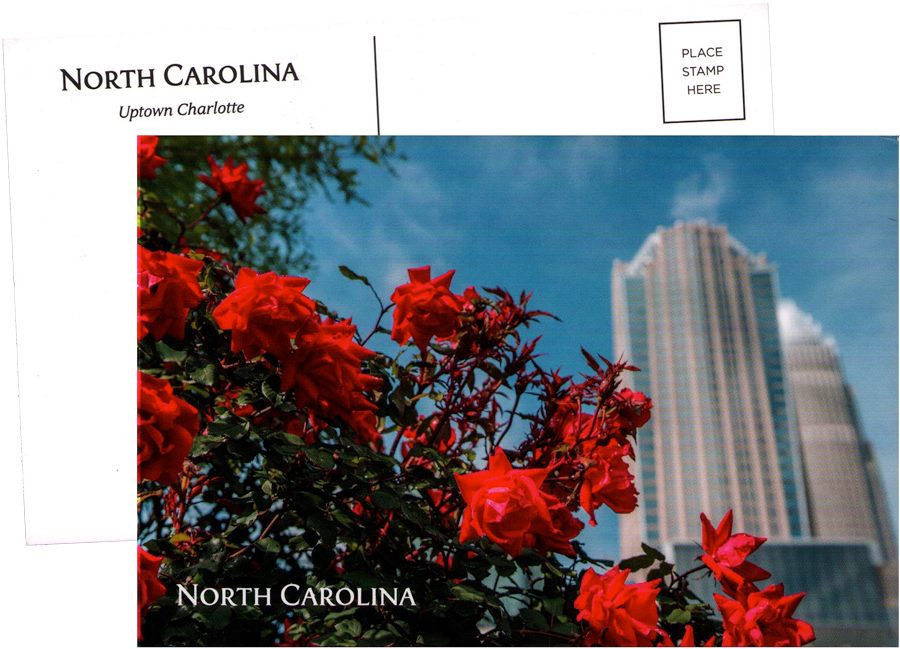
postcard / collection
 0 Charlotte, NC
- Carolinian
- Crescent
- Piedmont
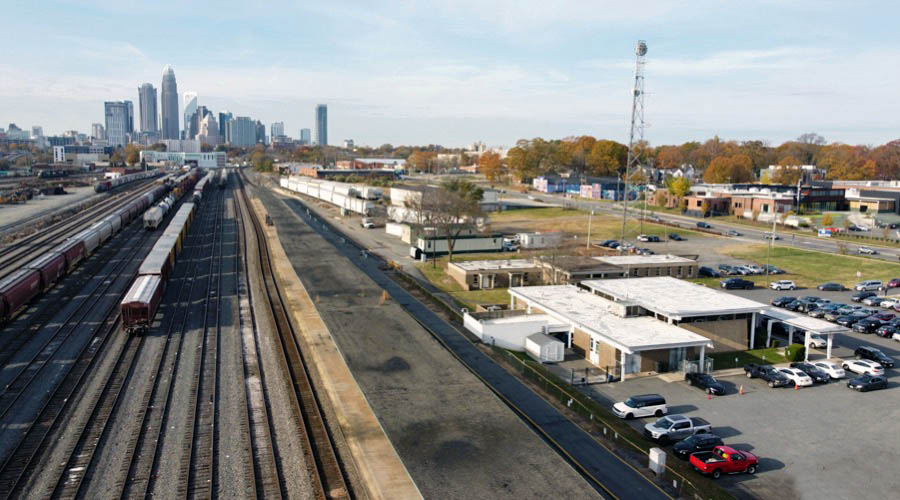
Charlotte, NC / Nov 2024 / RWH

- location:Charlotte NC
- address:1914 N Tryon St
- type:city station, 2 platforms
- owner:Norfolk Southern
- opened:1962
- builder:Southern Railway
- style:Mid-century Modern
- renovated:2002 upgrade
- services:tickets, baggage
- links: Amtrak | Great Stations
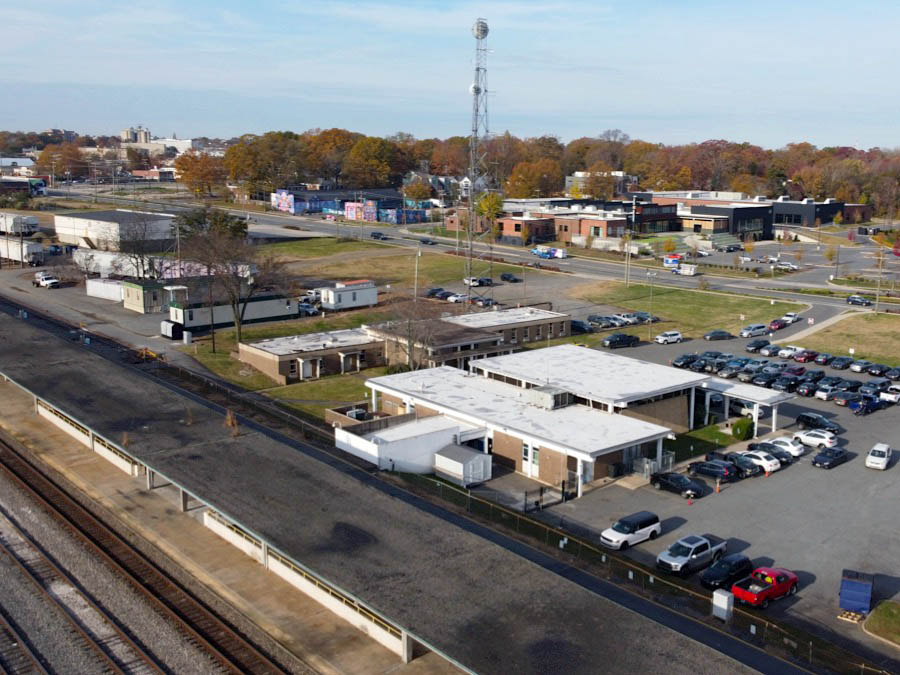
Charlotte, NC / Nov 2024 / RWH
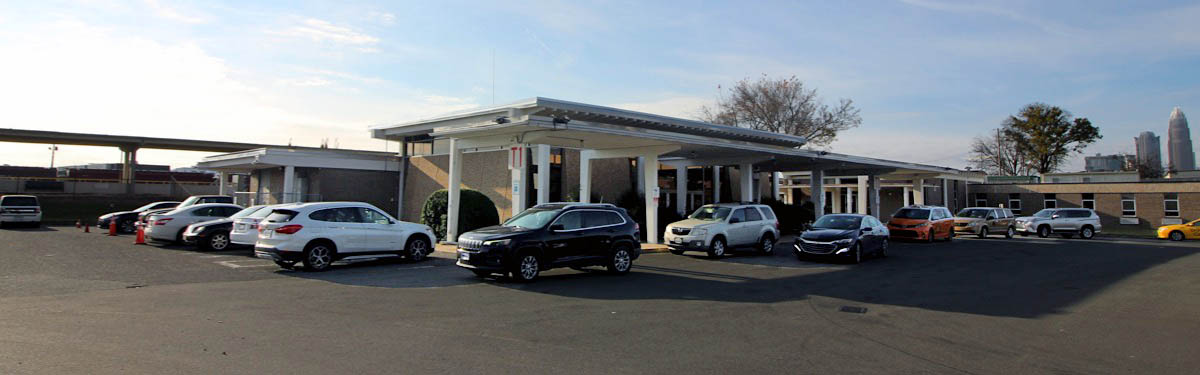
Charlotte, NC / Nov 2024 / RWH

Click to see the Charlotte Amtrak station plotted on a Google Maps page
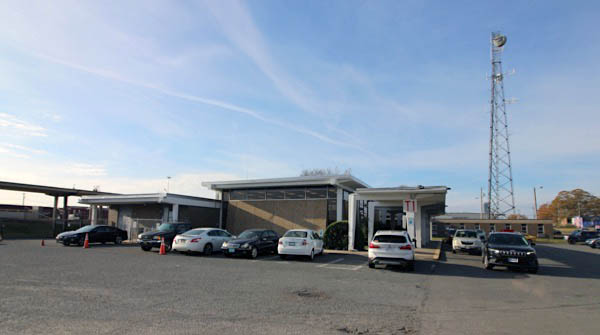
Charlotte, NC / Nov 2024 / RWH
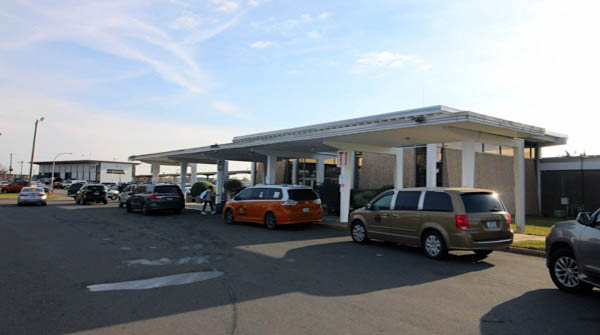
Charlotte, NC / Nov 2024 / RWH


 Charlotte, located in Mecklenburg County, is the largest city in North Carolina. The area was first settled in 1755 when Thomas Polk, uncle of future United States President James K. Polk, built a residence at the intersection of two American Indian trading paths between the Yadkin and Catawba Rivers, the north south route being part of the Great Wagon Road leading from Pennsylvania into the North Carolina foothills. Charlotte was named in honor of Queen Charlotte of Mecklenburg-Streilitz, who had become Queen Consort of King George III of England the year before the city’s founding in 1768; today, the city is well-known by its nickname—the “Queen City.”
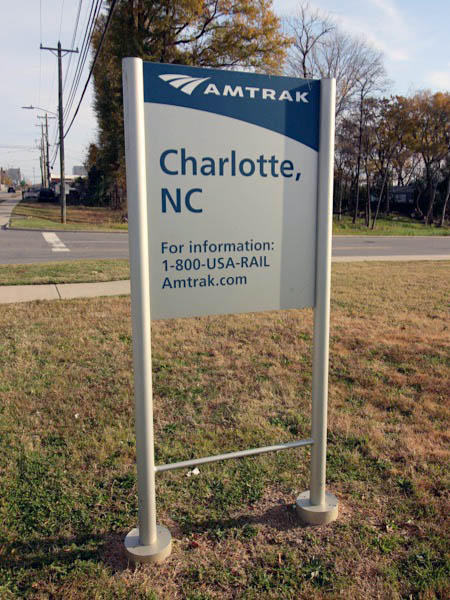
Nov 2024 / RWH
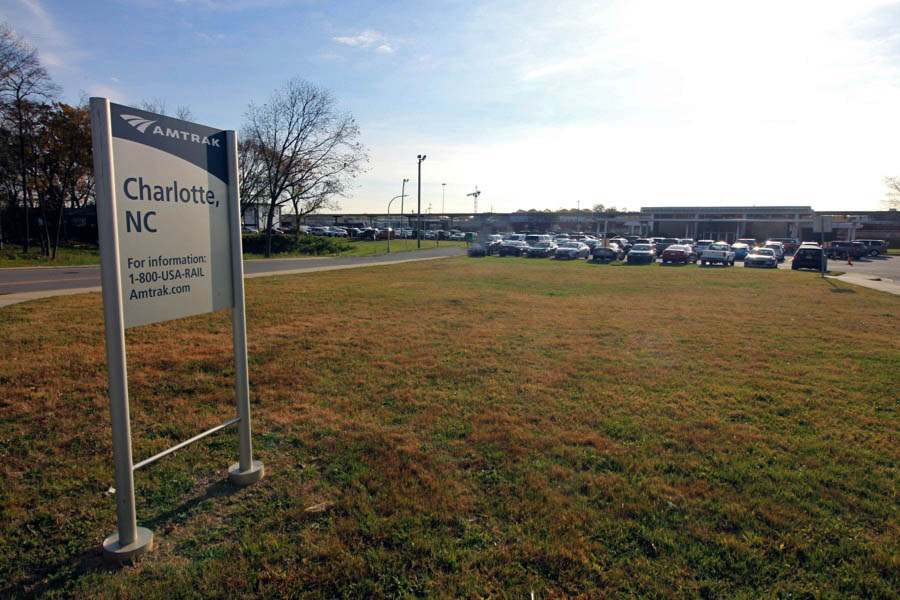
Charlotte, NC / Nov 2024 / RWH
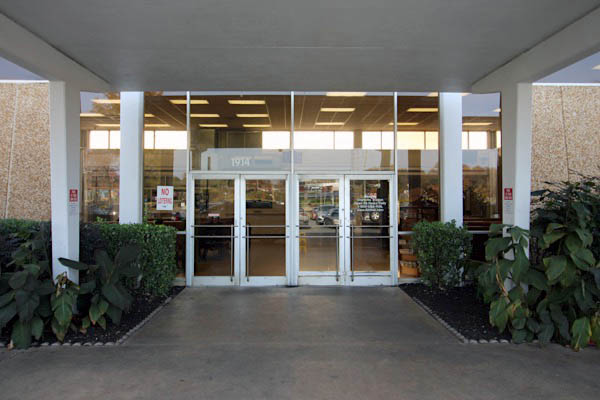
Nov 2024 / RWH
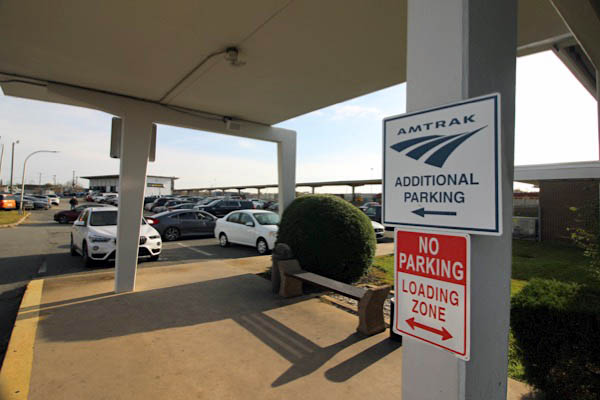
Nov 2024 / RWH
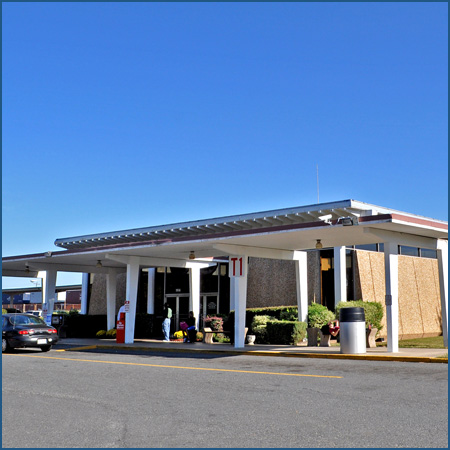
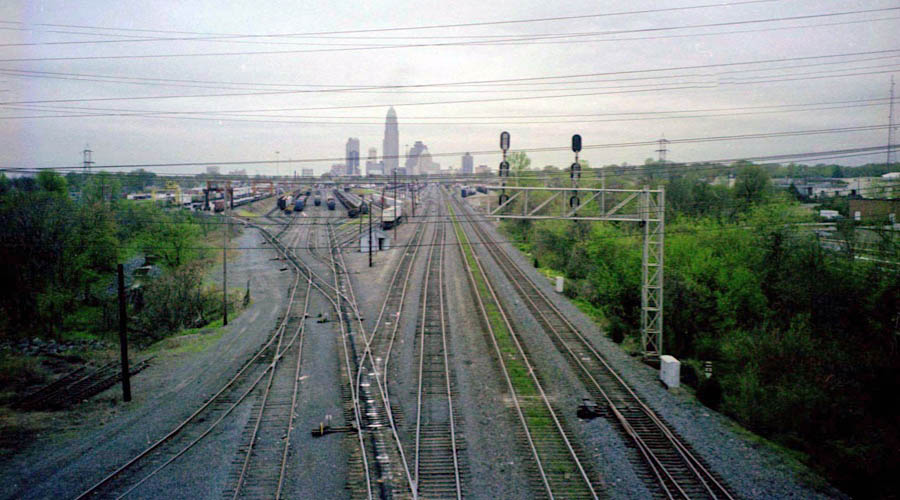
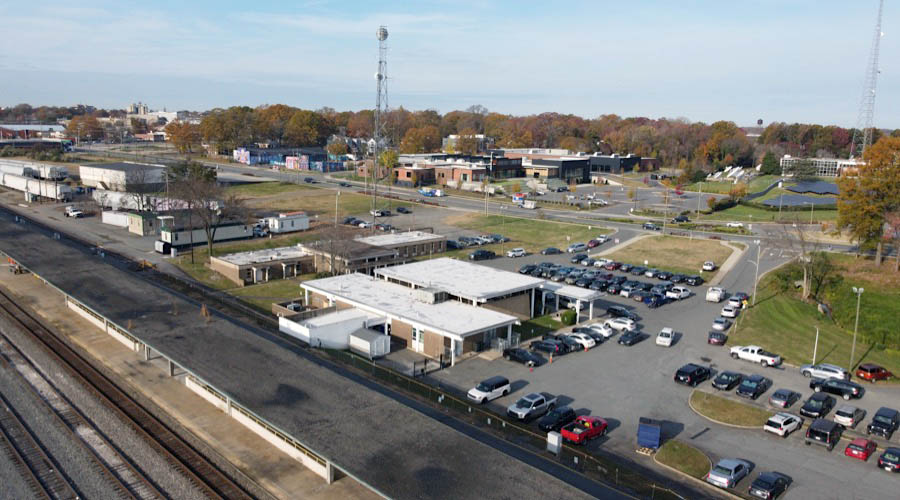
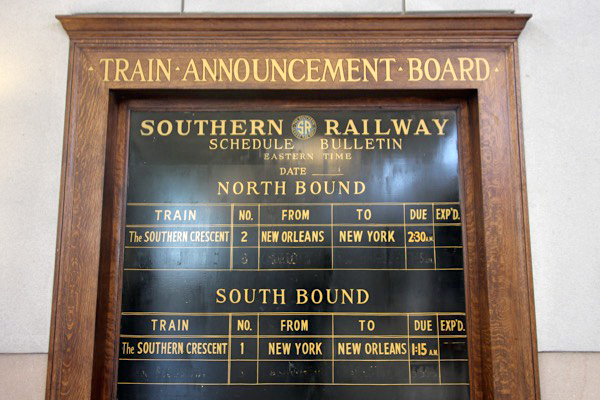
 Located approximately two miles northeast of downtown in the busy Norfolk Southern rail yard, the current Charlotte station was built for the Southern Railway in 1962 to house passenger service functions and railroad division offices. A new station was needed due to a grade-separation project that required the relocation of various railroad facilities.
Designed by local architectural firm Walter Hook Associates, Inc., the structure was meant to be quickly erected and therefore included the use of an exposed precast concrete framing system. A mail building (freight depot) and boiler house were constructed to the northeast as part of the station project.
 In addition to the framing components, the exterior incorporates dark brown brick and large, angled precast concrete panels covered in pebble-dash. Interspersed with these heavy, solid elements are walls of glass, which coupled with clerestory windows beneath the roof, allow ample natural light to flood the waiting room. Due to the clerestory windows, from a distance, the roof almost seems to float above the building.
In keeping with the aesthetics of mid-century modern architecture, the station has minimal applied ornamentation. Rather, the materials themselves are the main decorative elements, with the textured pebble-dash panels featuring prominently in the design of the exterior and interior. Inside, terrazzo floors are durable yet elegant, appropriate for a high-traffic area.
Charlotte, NC / Apr 1999 / RWH
Charlotte, NC / Nov 2024 / RWH
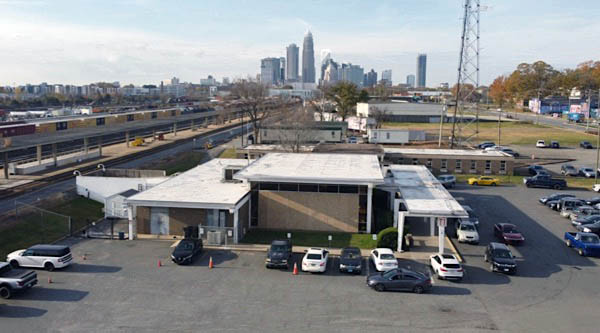
Charlotte, NC / Nov 2024 / RWH
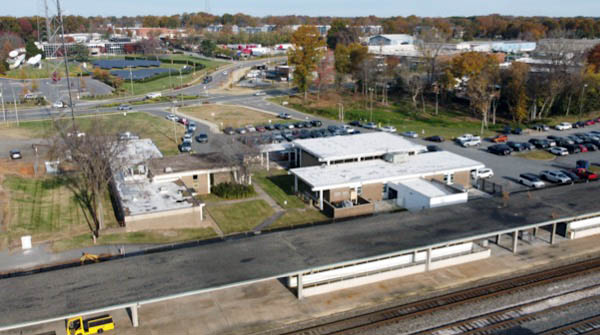
Charlotte, NC / Nov 2024 / RWH
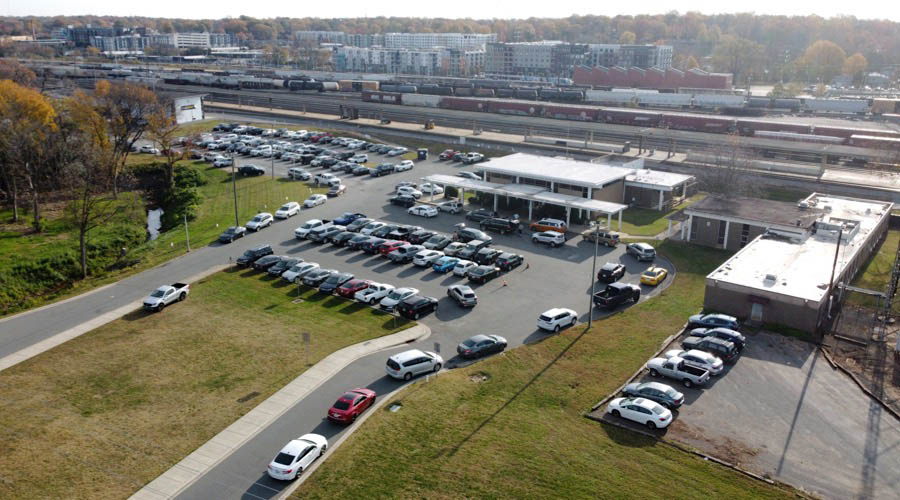
Charlotte, NC / Nov 2024 / RWH
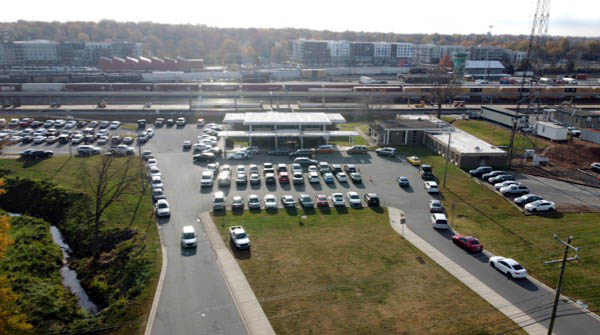
Charlotte, NC / Nov 2024 / RWH
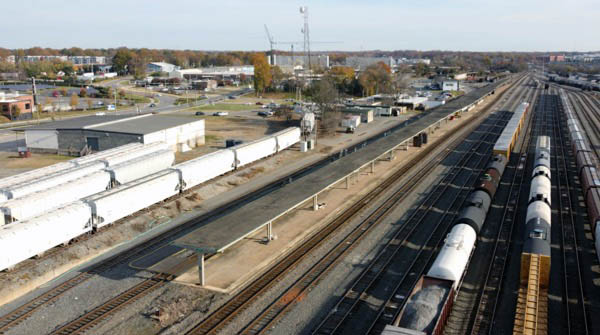
Charlotte, NC / Nov 2024 / RWH
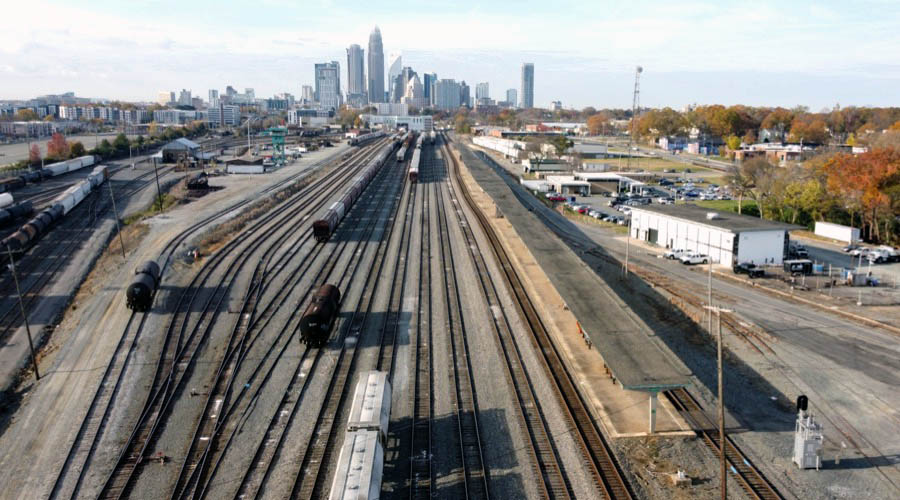
Charlotte, NC / Nov 2024 / RWH
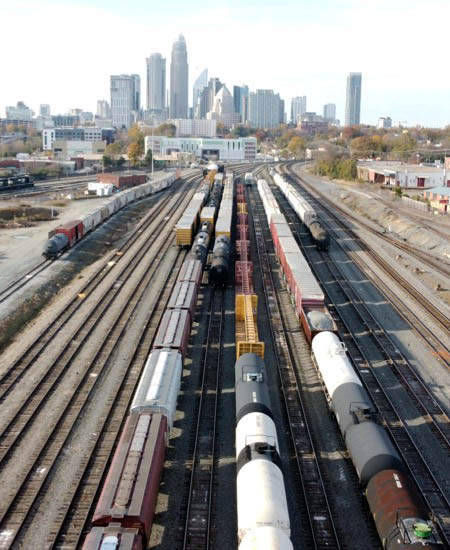
Nov 2024 / RWH
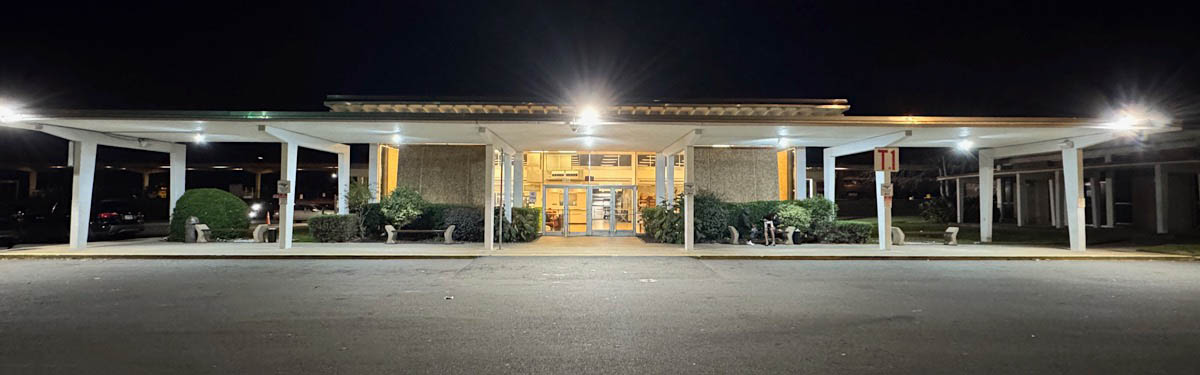
Charlotte, NC / Nov 2024 / RWH
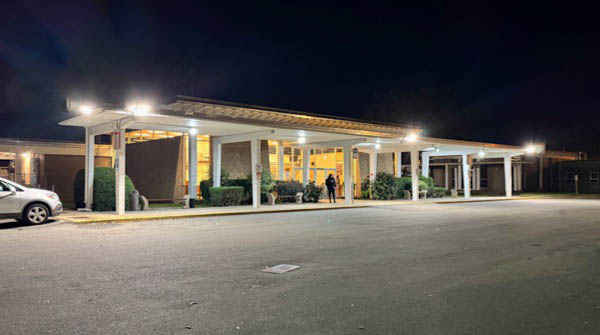
Charlotte, NC / Nov 2024 / RWH
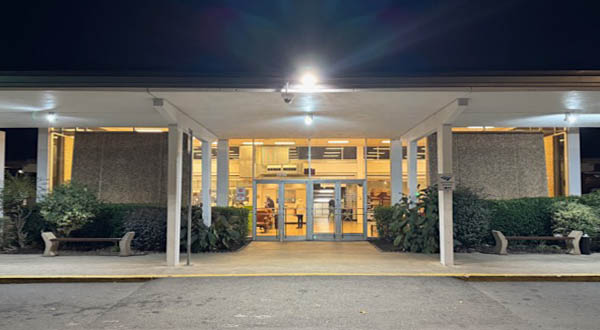
Nov 2024 / RWH
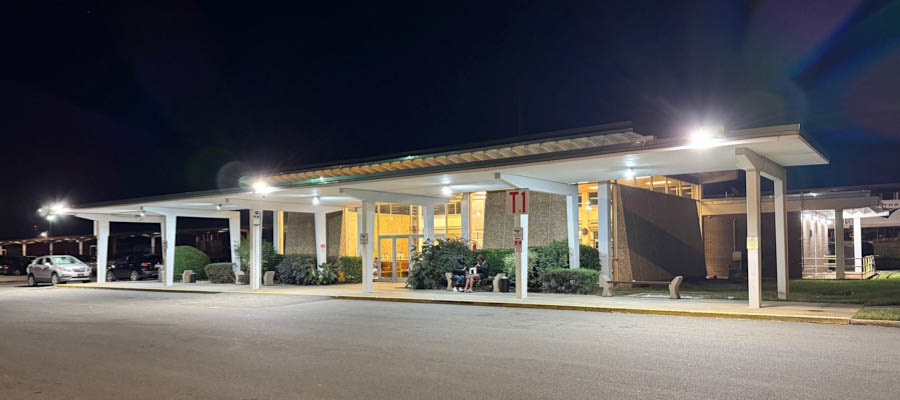
Charlotte, NC / Nov 2024 / RWH
 Charlotte, NC
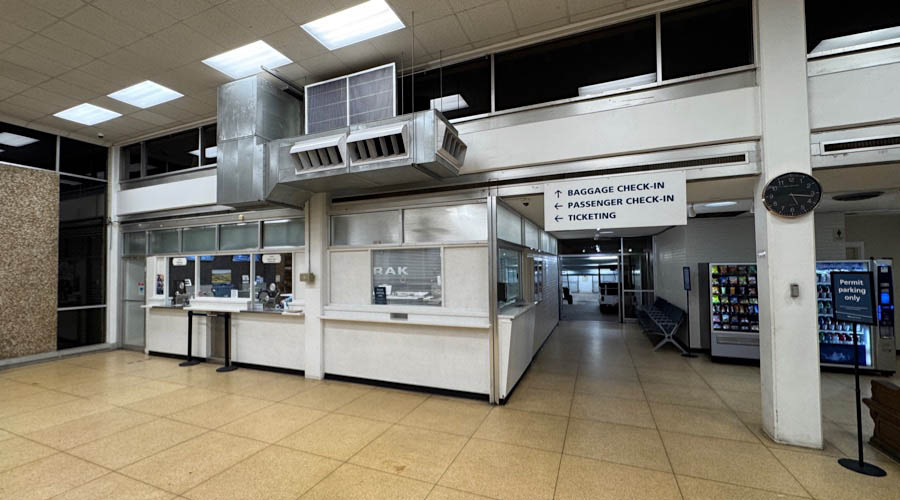
Nov 2024 / RWH
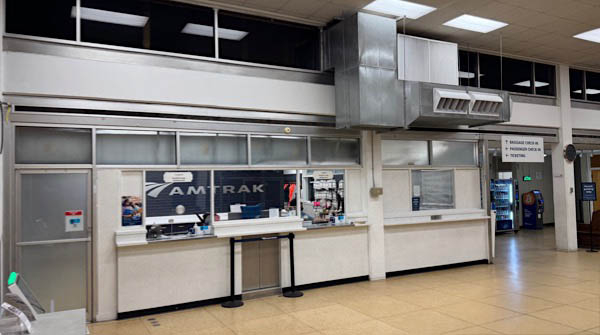
Nov 2024 / RWH
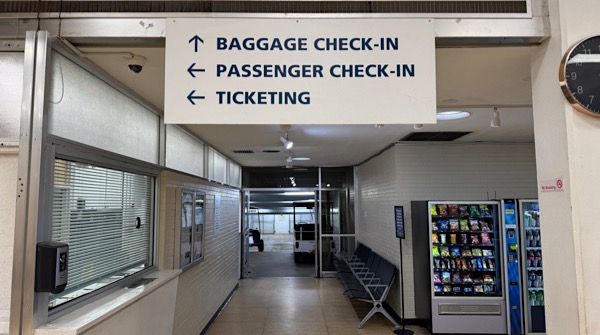
Nov 2024 / RWH
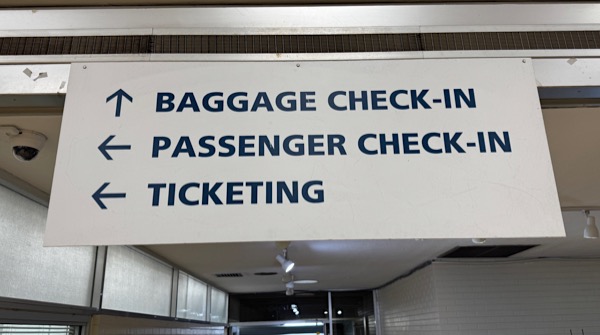
Nov 2024 / RWH
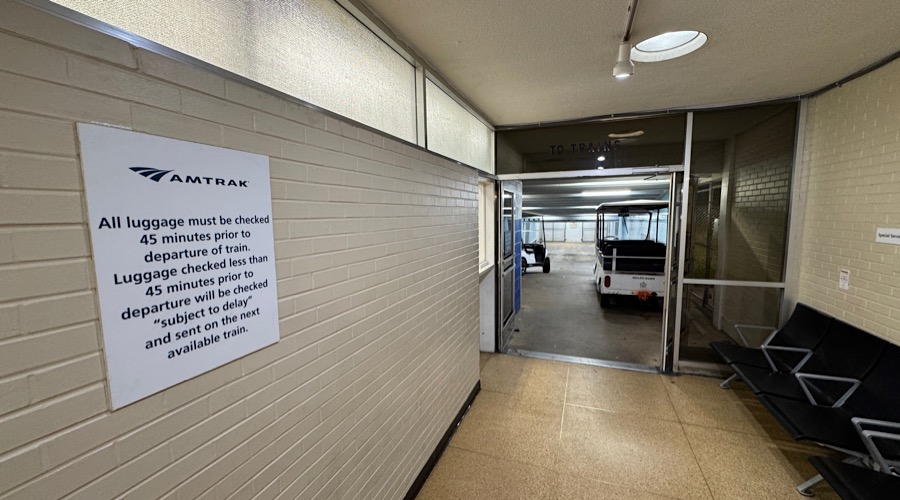
Nov 2024 / RWH
northbound #80
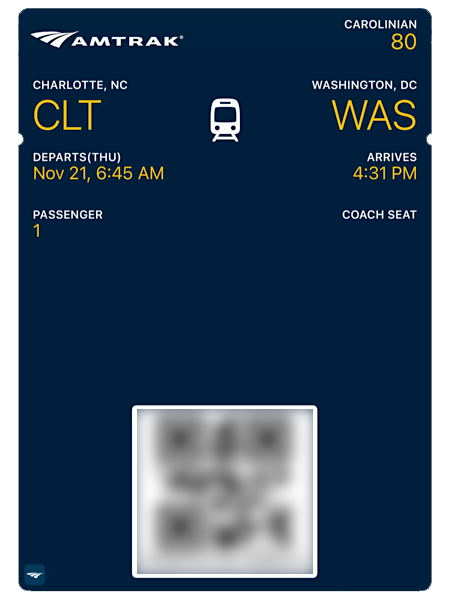
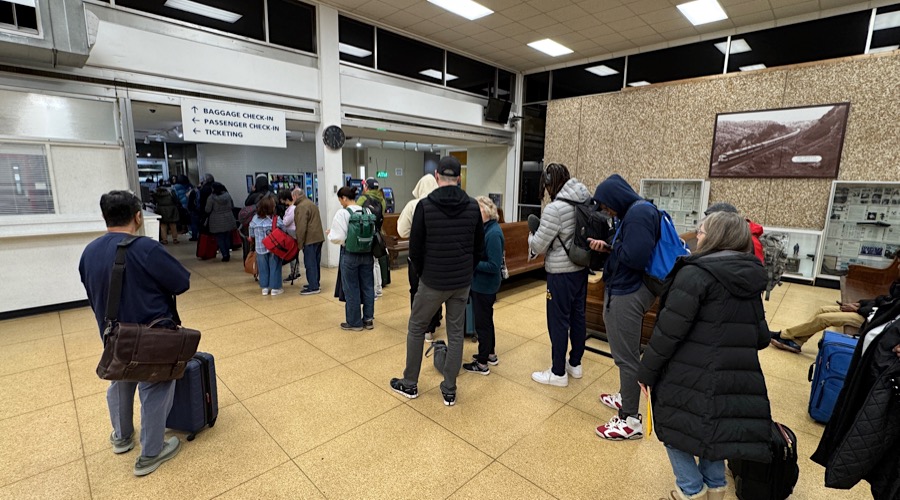
Charlotte, NC / Nov 2024 / RWH
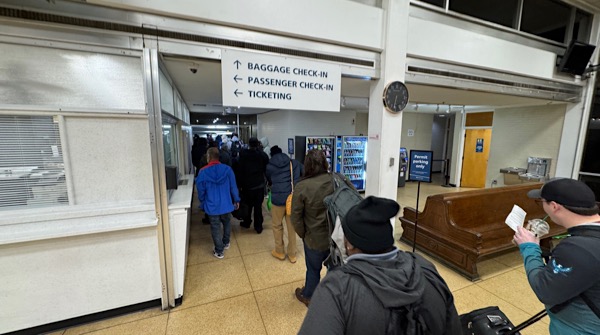
Nov 2024 / RWH
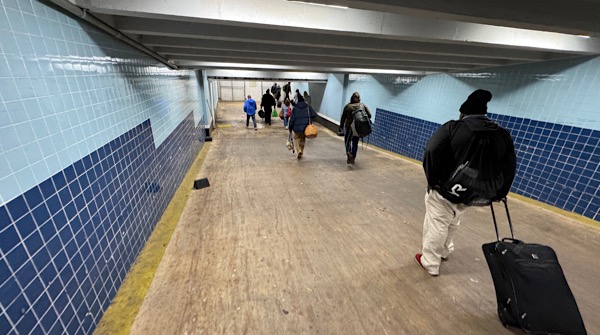
Nov 2024 / RWH
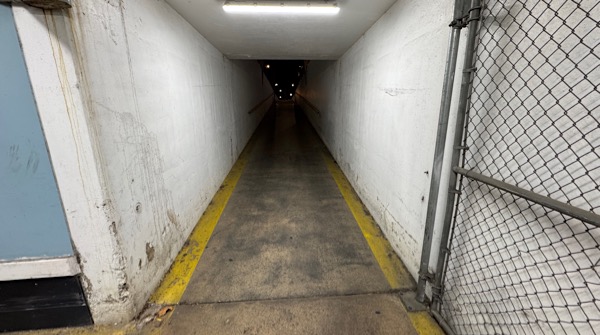
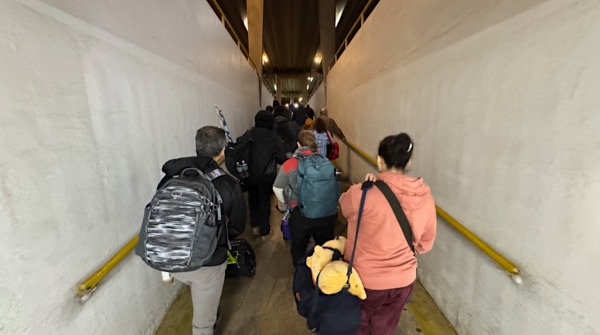
Nov 2024 / RWH
Charlotte, NC / Nov 2024 / RWH
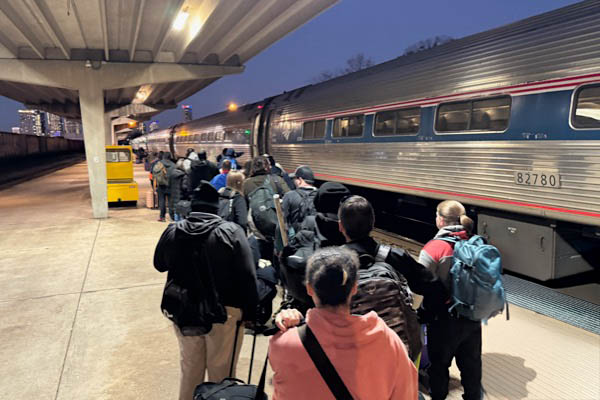
Nov 2024 / RWH
Charlotte, NC / Nov 2024 / RWH
southbound #79
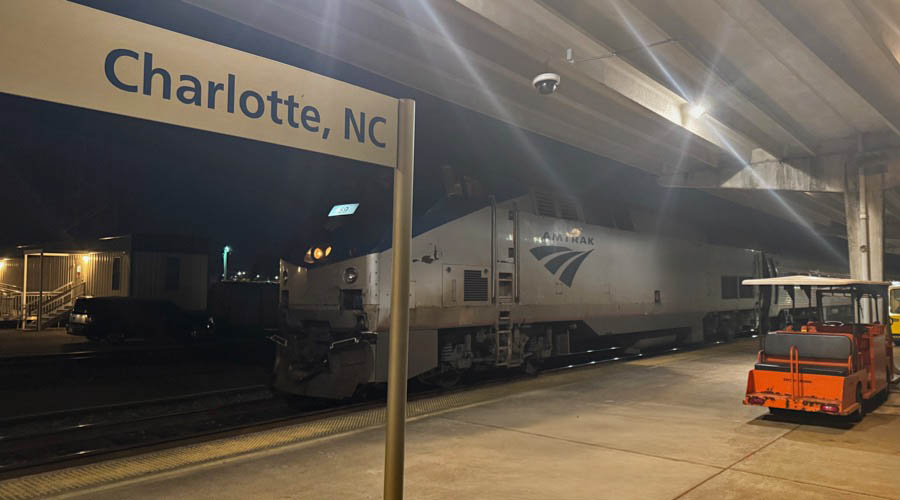
Charlotte, NC / Nov 2024 / RWH
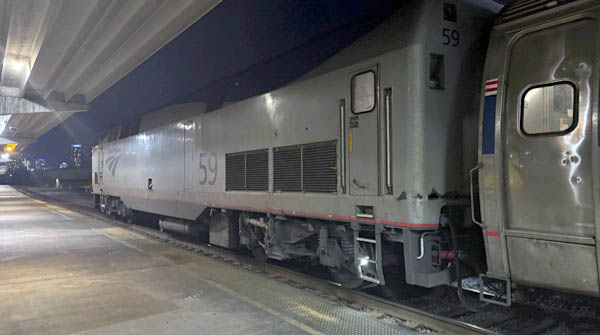
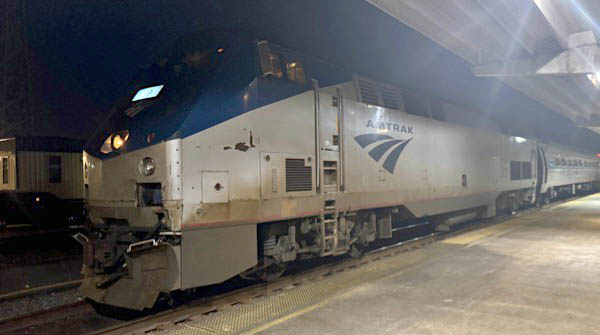
Charlotte, NC / Nov 2024 / RWH
Amtrak's
Carolinian
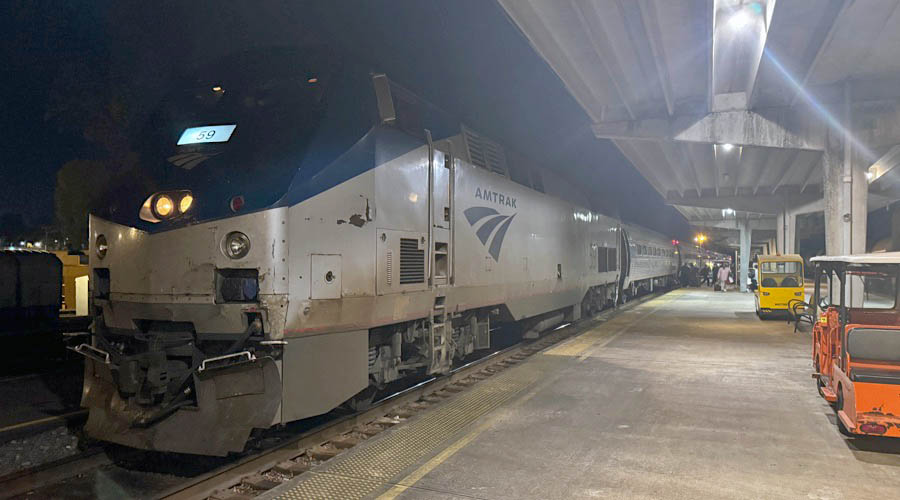
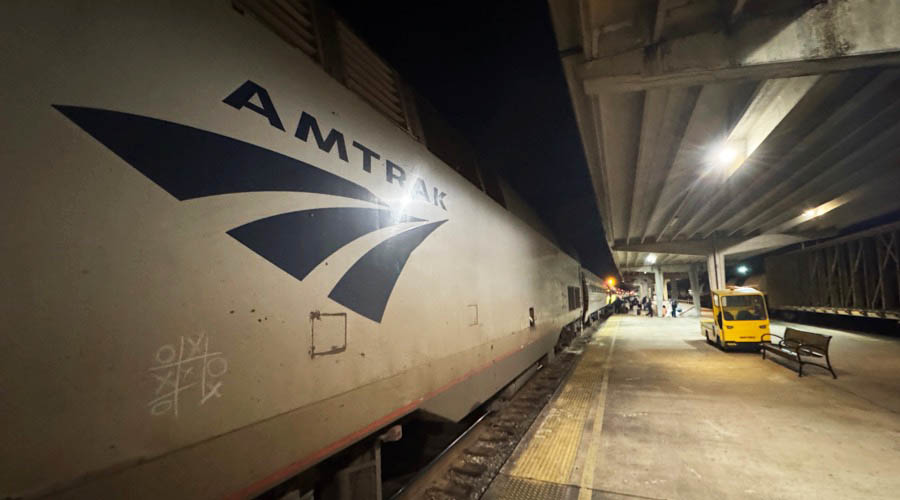
Charlotte, NC / Nov 2024 / RWH
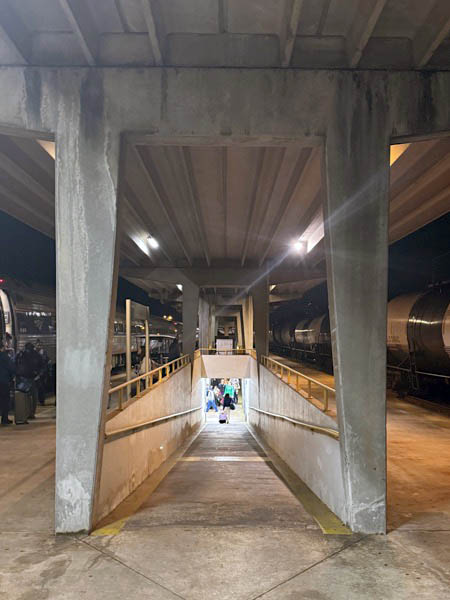
Nov 2024 / RWH
Nov 2024 / RWH
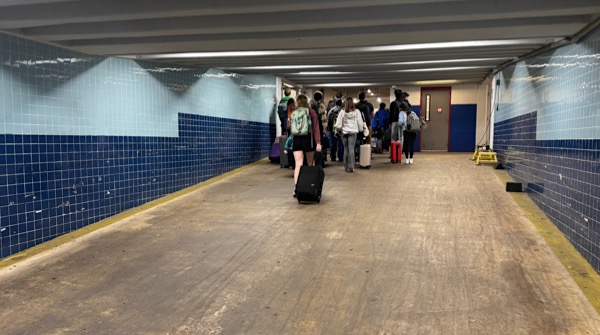
Nov 2024 / RWH
See also our complete Amtrak Crescent Central States Scrapbook for more Charlotte action
26 Kannapolis, NC
- Carolinian
- Piedmont
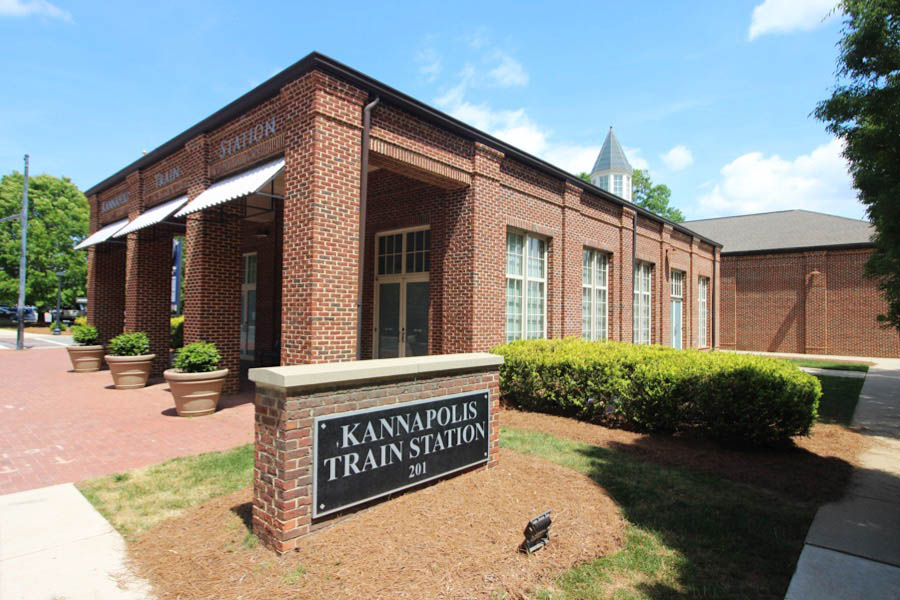
Kannapolis, NC / Apr 2025 / RWH
- location:Kannapolis NC
- address:201 S Main St
- type:city station, 1 platform
- owner:City of Kannapolis
- opened:2004
- builder:City of Kannapolis
- style:Colonial Revival
- services:waiting room
- links: Amtrak | Great Stations
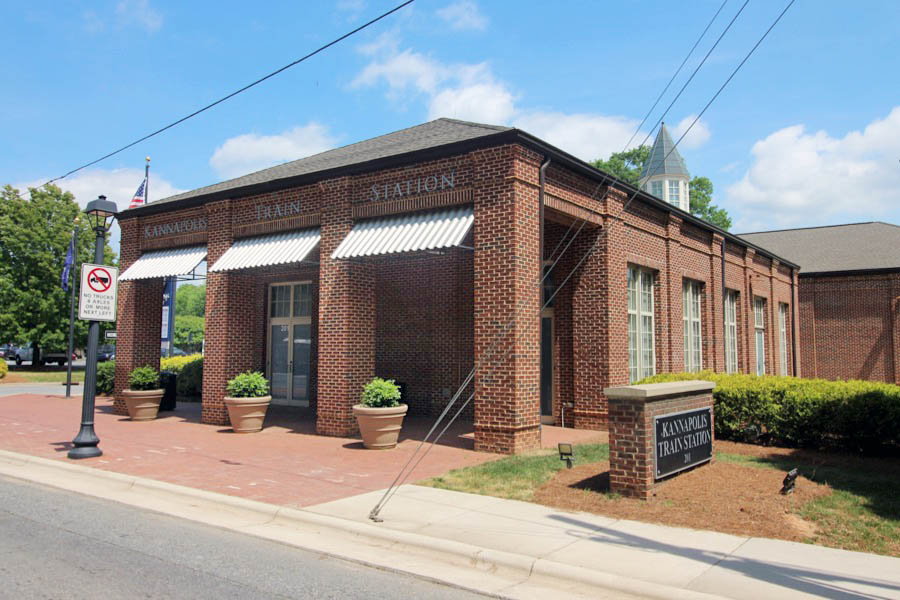
Kannapolis, NC / Apr 2025 / RWH
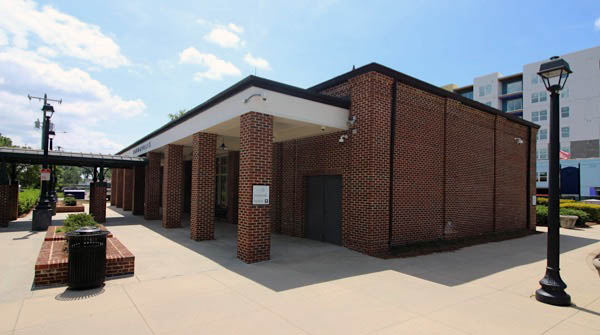
Kannapolis, NC / Apr 2025 / RWH
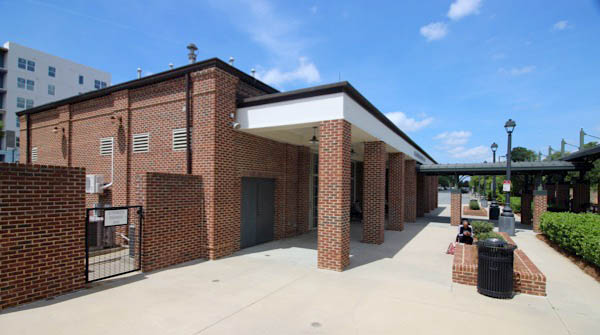
Kannapolis, NC / Apr 2025 / RWH
Click to see the Kannapolis station plotted on a Google Maps page
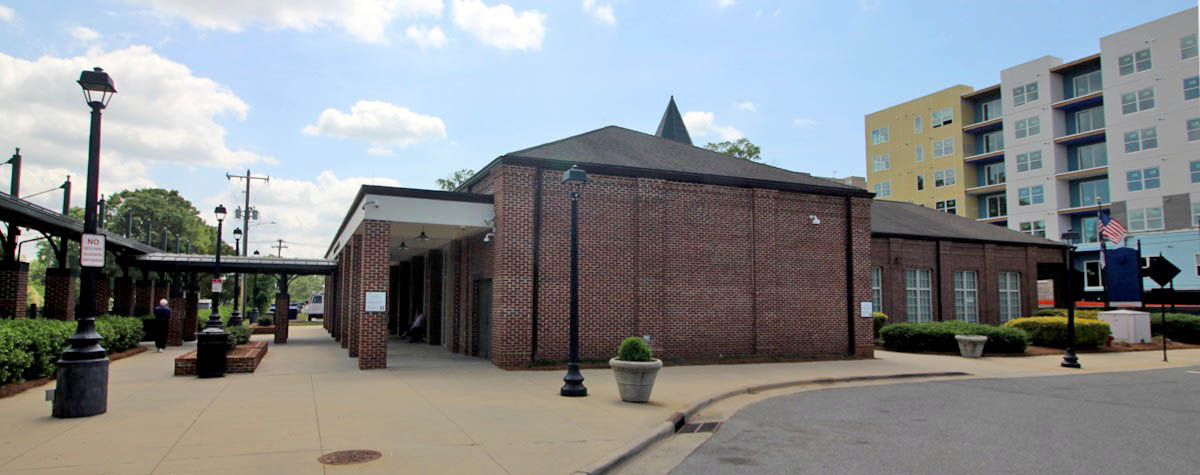
Kannapolis, NC / Apr 2025 / RWH
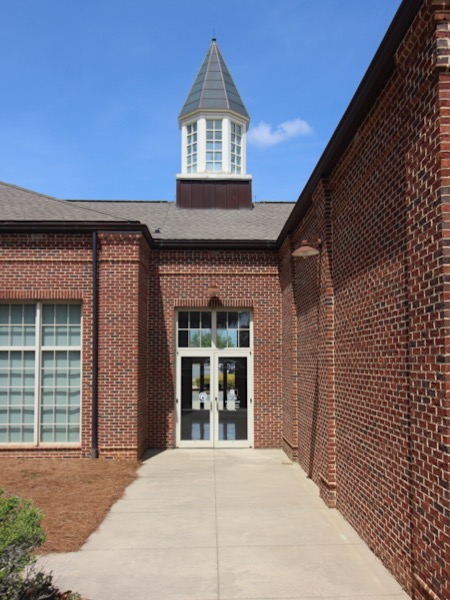
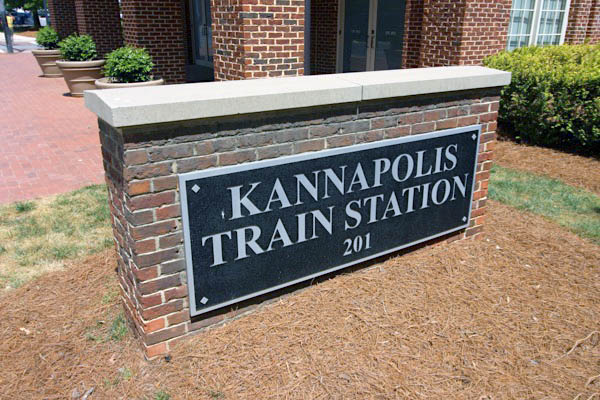
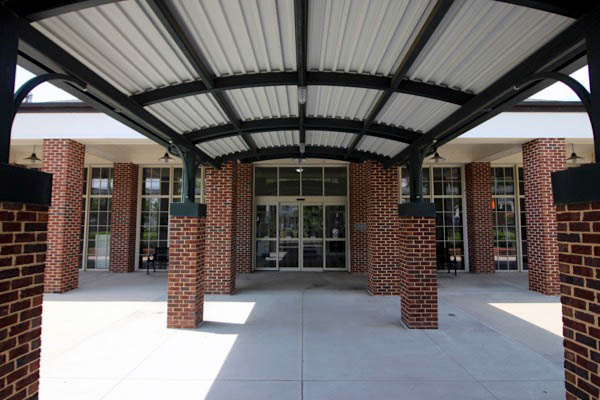
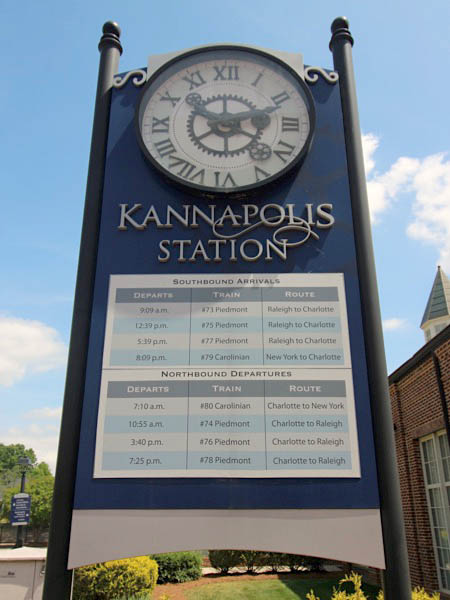
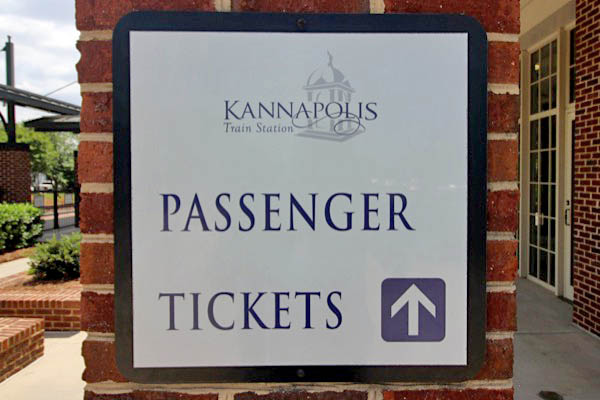
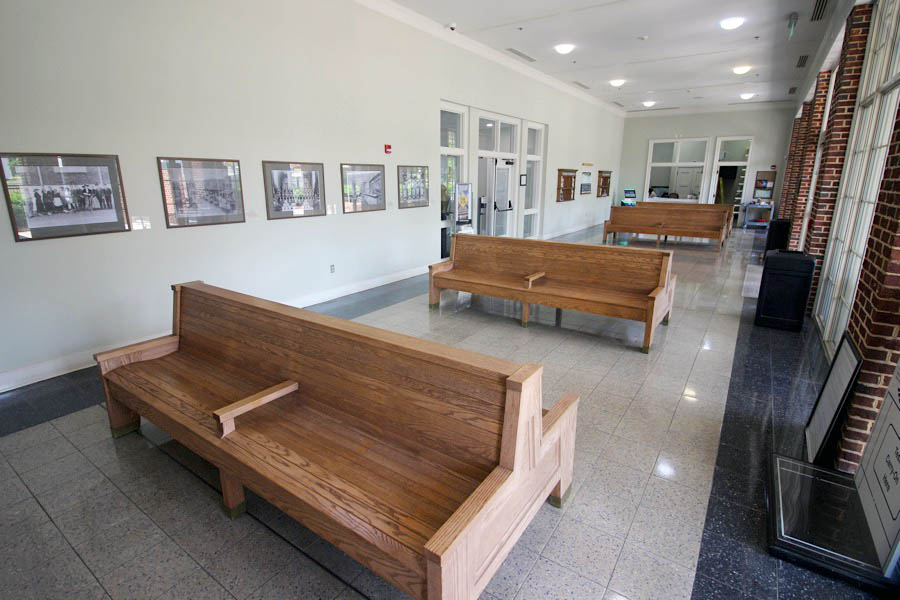
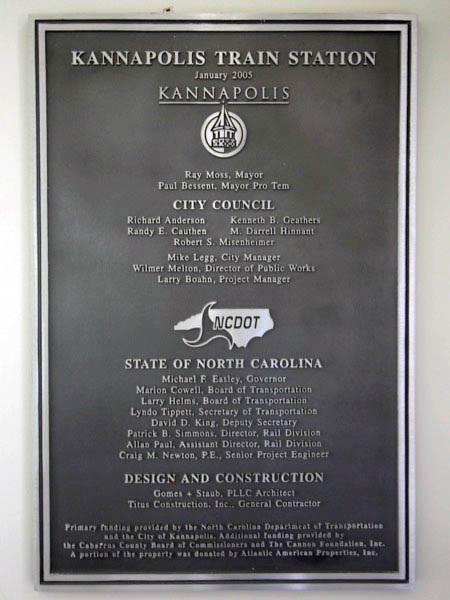
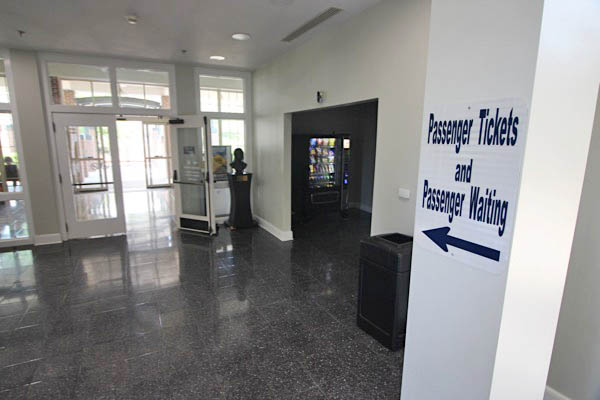
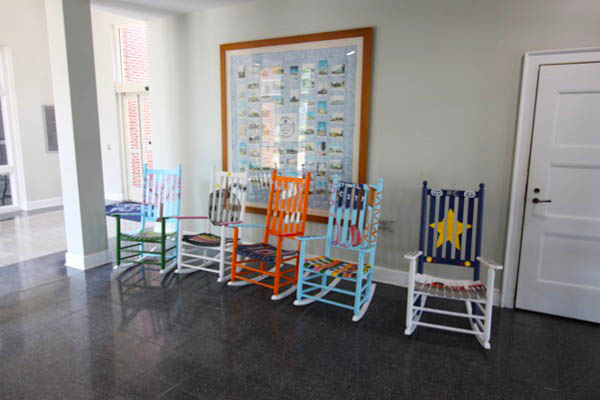
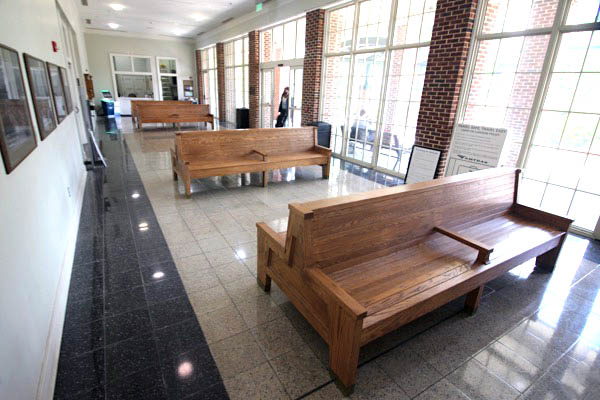
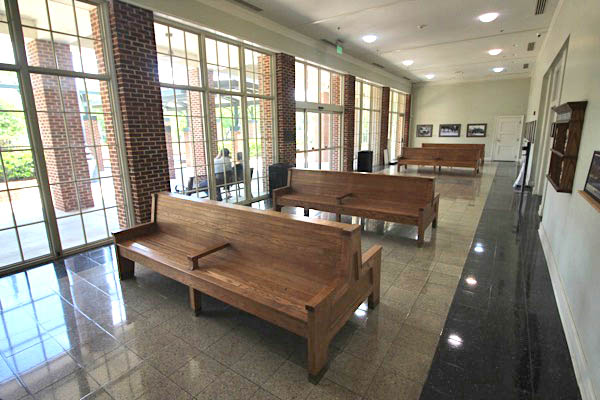
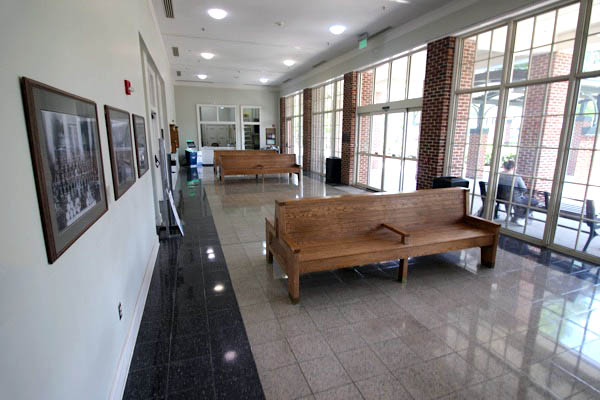
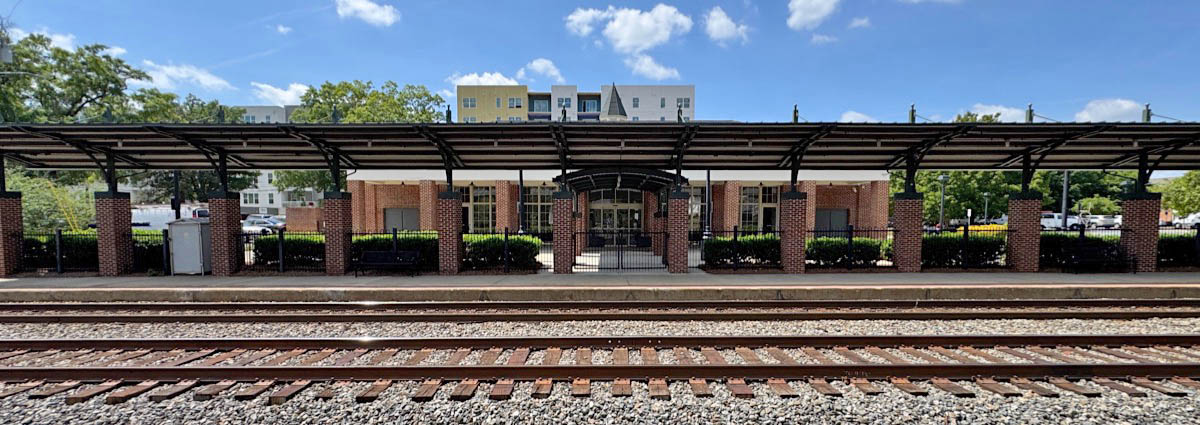
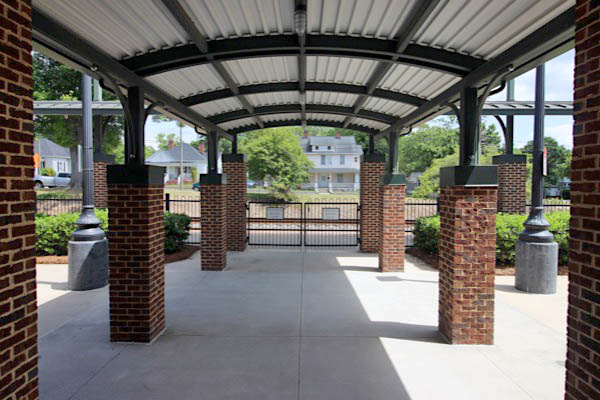
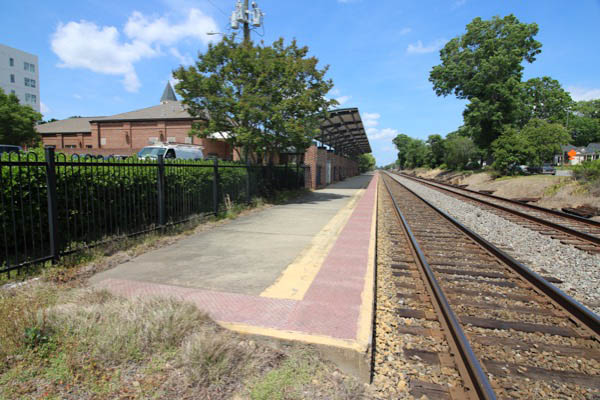
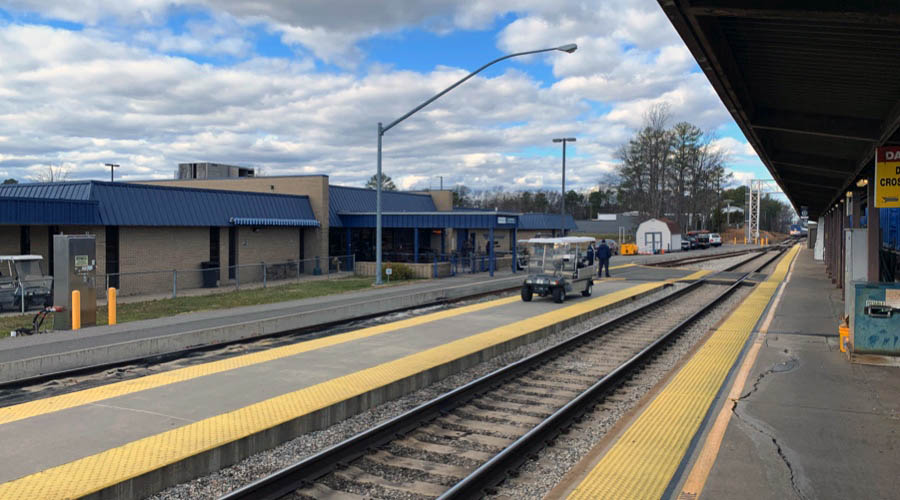
The modern Kannapolis station opened in December 2004, with a grand opening taking place February 23, 2005. This building replaced a temporary facility, which had in turn taken the place of the former train station. Designed in the Colonial Revival style, the station blends into the architecture of the downtown area where it sits. Unique features of the building include high ceilings, a cupola modeled after the city’s logo and architectural accents consistent with the general colonial style. In addition to the Amtrak waiting room, the station also has an events space that was originally used for city council meetings until a new city hall opened in 2016.
Apr 2025 / RWH
Apr 2025 / RWH
Apr 2025 / RWH
Apr 2025 / RWH
Apr 2025 / RWH
Apr 2025 / RWH
Kannapolis, NC / Apr 2025 / RWH

Apr 2025 / RWH
Apr 2025 / RWH
Apr 2025 / RWH
Apr 2025 / RWH
Kannapolis, NC
Kannapolis, NC / Apr 2025 / RWH
Apr 2025 / RWH
Kannapolis, NC / Apr 2025 / RWH
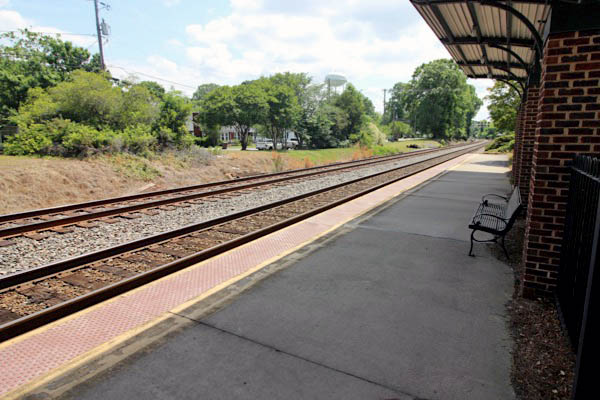
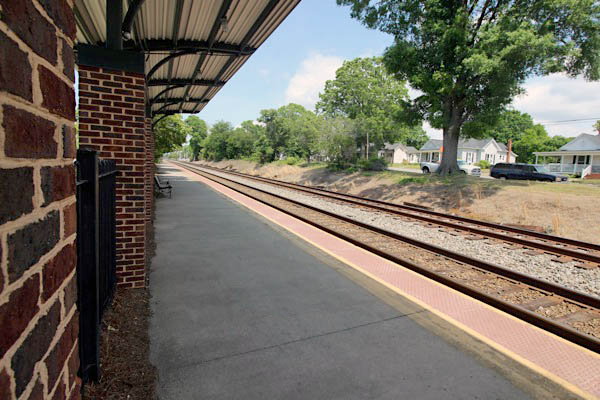
Kannapolis, NC / Apr 2025 / RWH
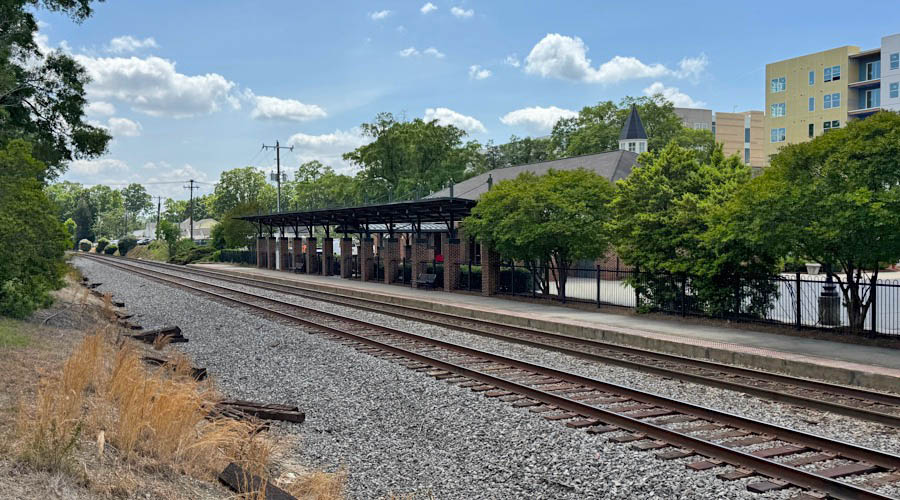
Kannapolis, NC / Apr 2025 / RWH
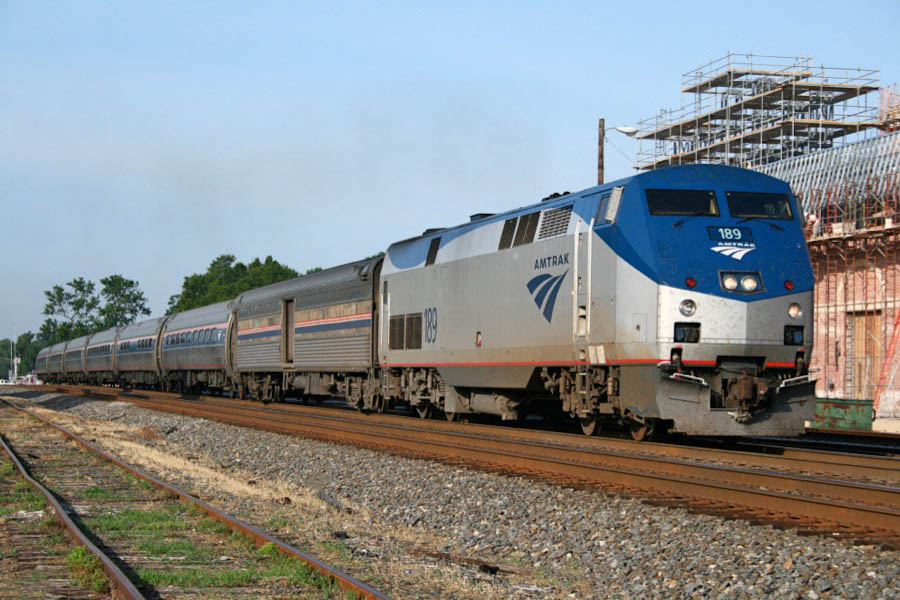
Kannapolis, NC / Jun 2007 / Matt Robie 
42 Salisbury, NC
- Carolinian
- Crescent
- Piedmont
May 2025 / RWH
Salisbury, NC / May 2025 / RWH
- location:Salisbury NC
- address:215 Depot Street
- type:city station, 1 platform
- owner:Historic Salisbury
- opened:1908
- builder:Southern Railway
- style:Spanish Mission
- renovated:1996
- services:waiting room
- links: Amtrak | Great Stations
Salisbury, NC / May 2025 / RWH
Click to see the Salisbury station plotted on a Google Maps page
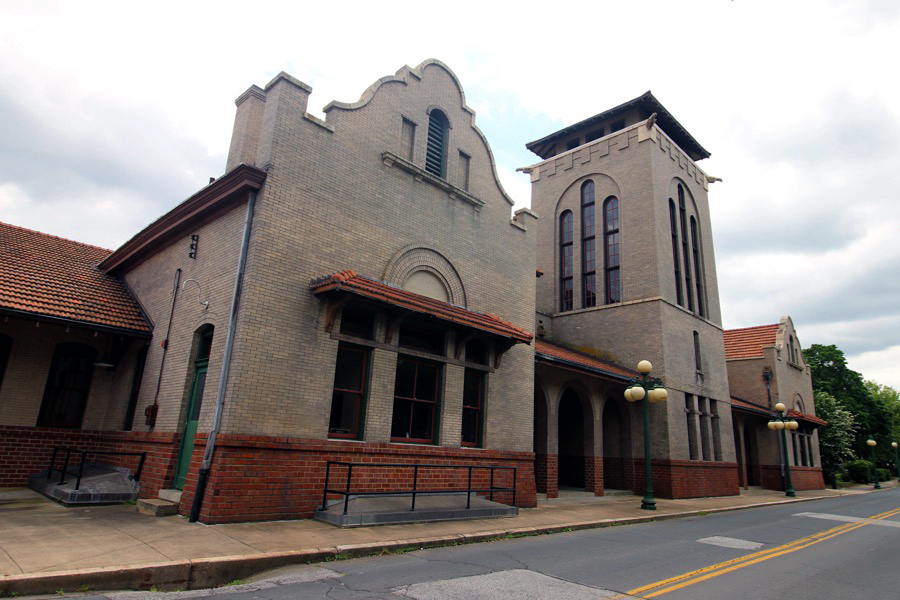
Salisbury, NC / May 2025 / RWH
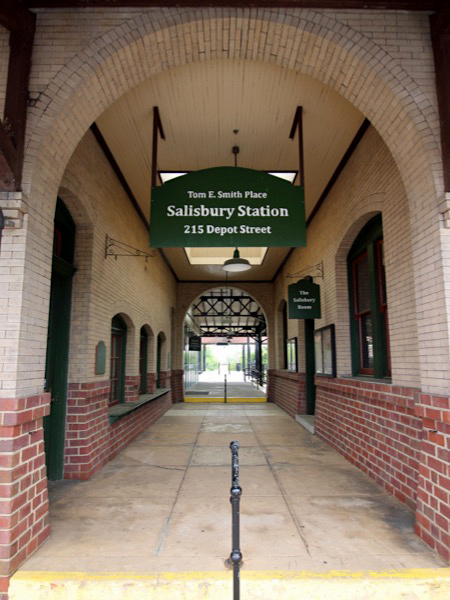
May 2025 / RWH
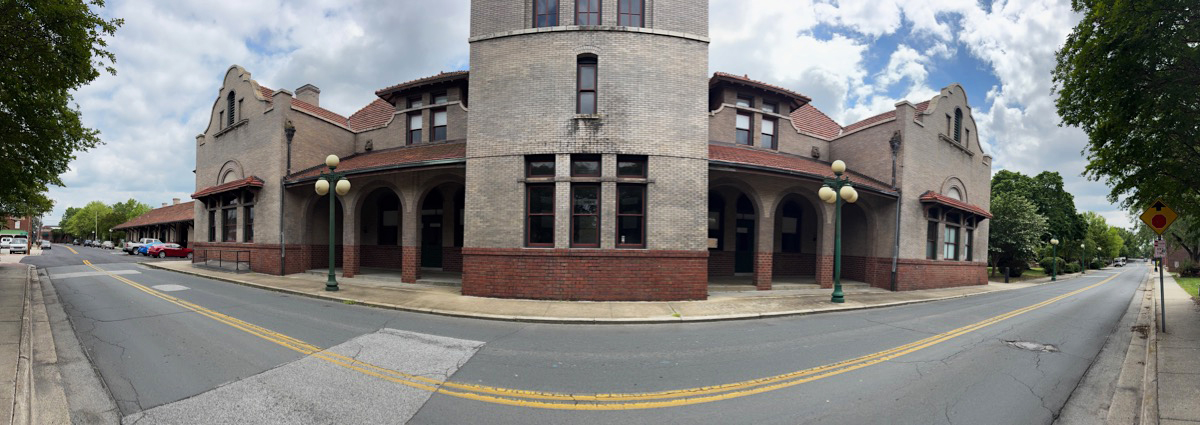
Salisbury, NC / May 2025 / RWH
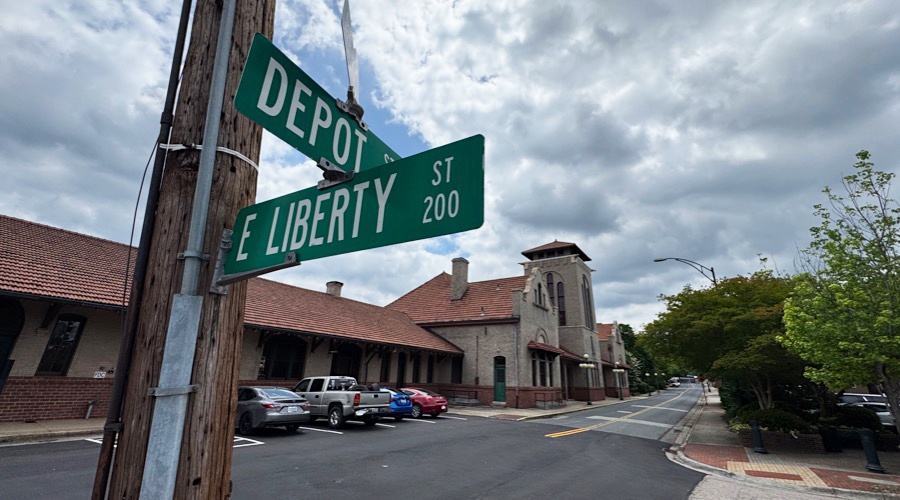
Salisbury, NC / May 2025 / RWH
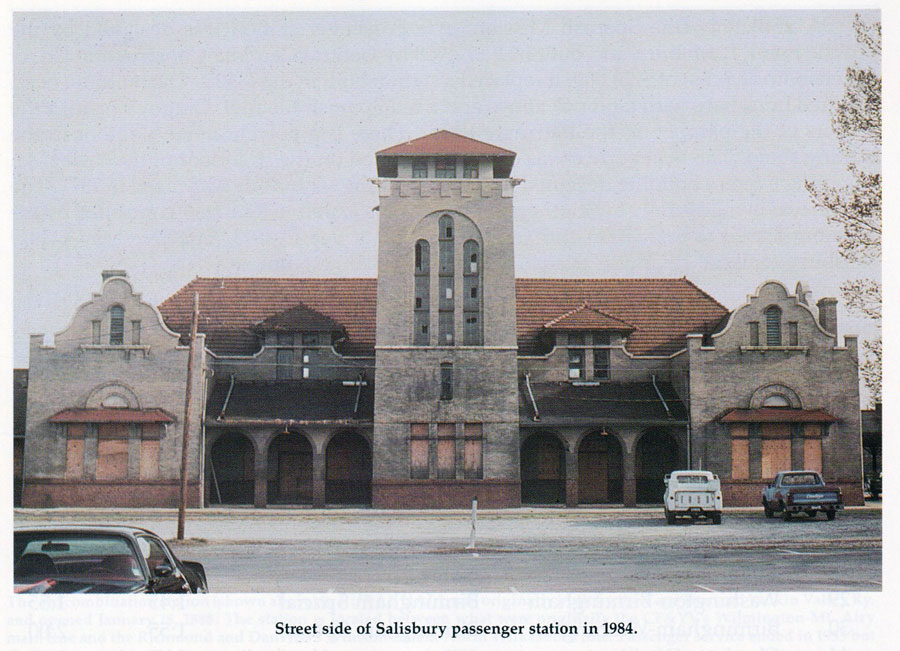
from Southern Railway Depots - Volume 1
by Ralph Ward / collection
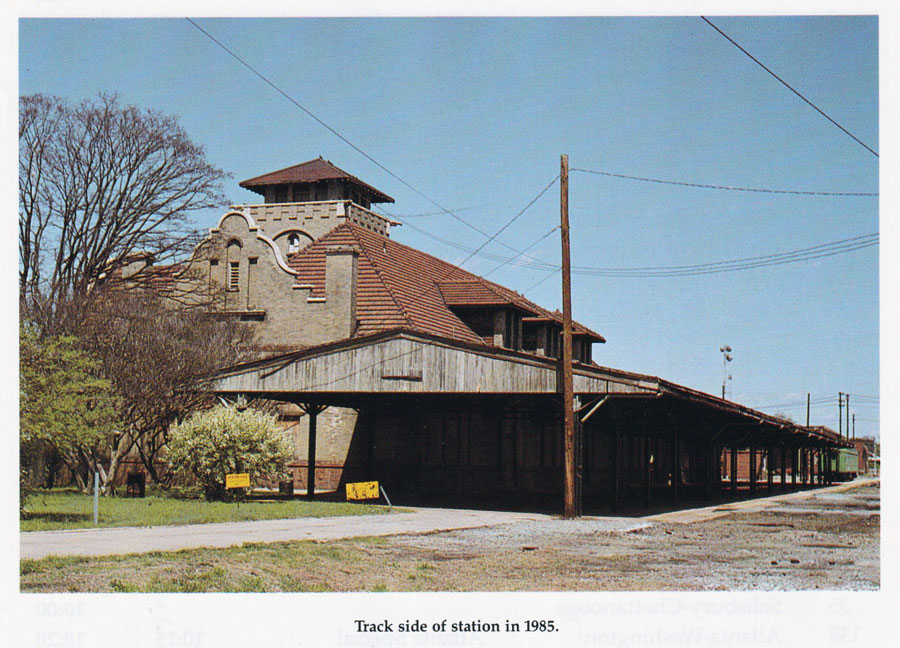
from Southern Railway Depots - Volume 1
by Ralph Ward / collection
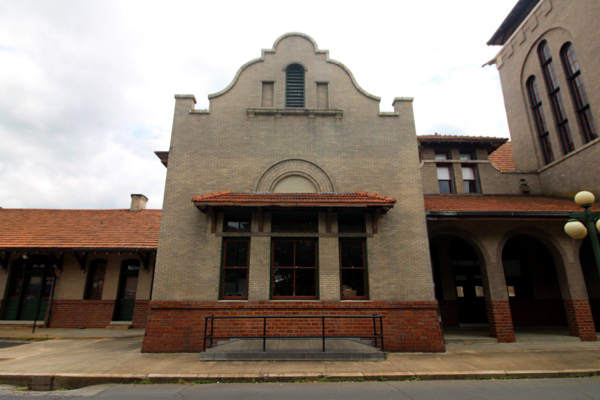
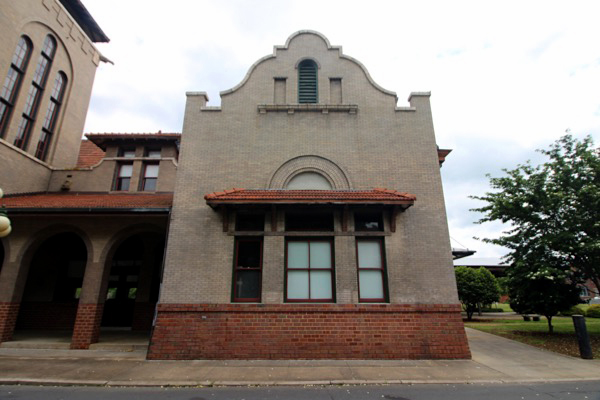
May 2025 / RWH
May 2025 / RWH
May 2025 / RWH
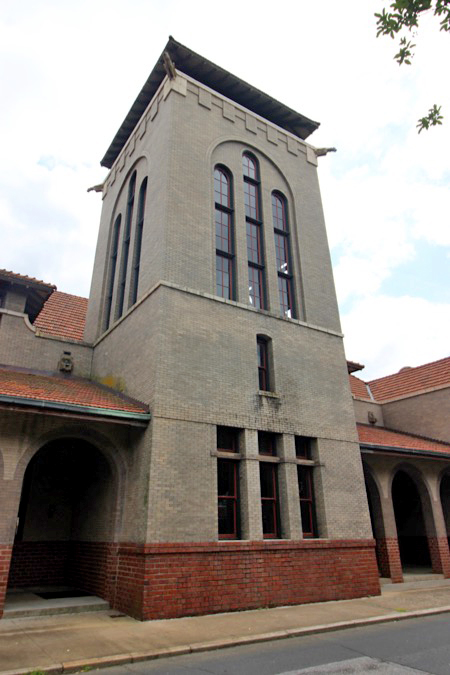
May 2025 / RWH
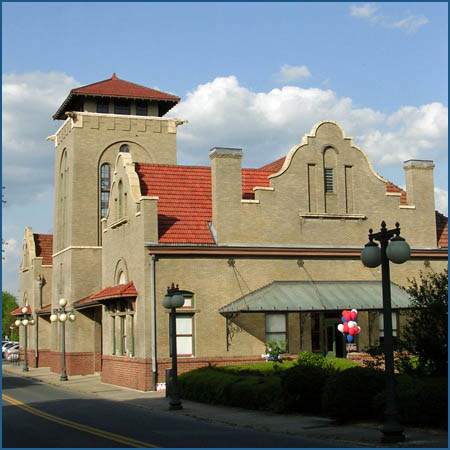
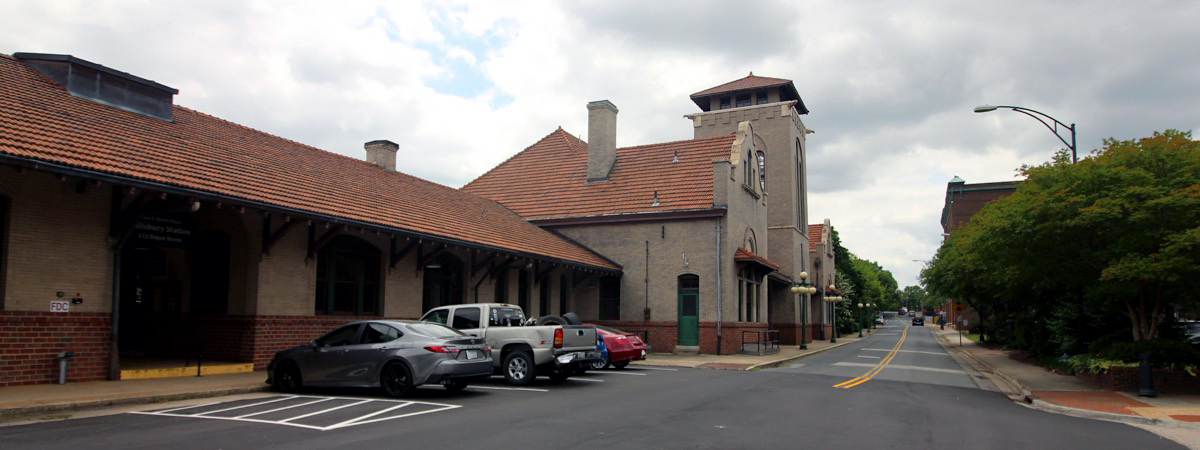
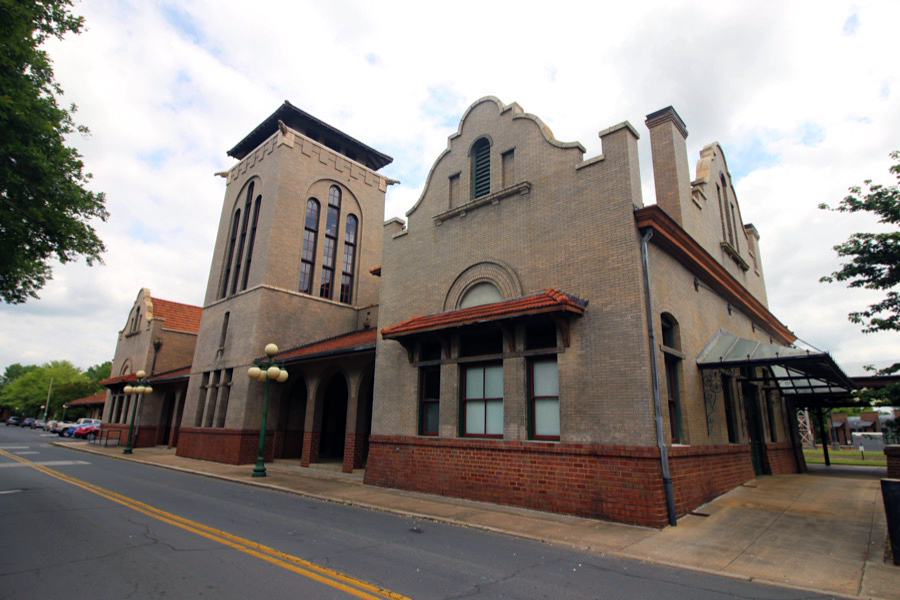
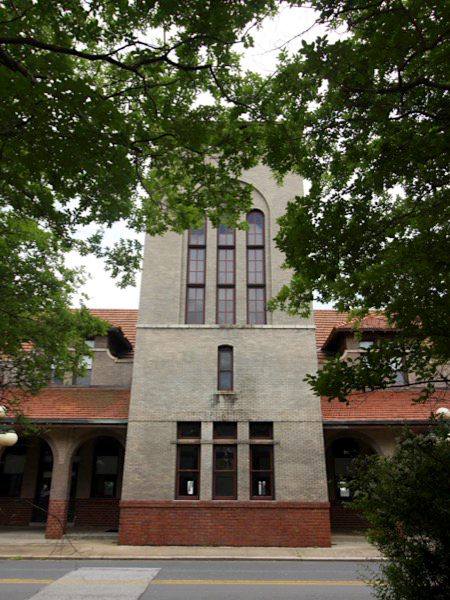
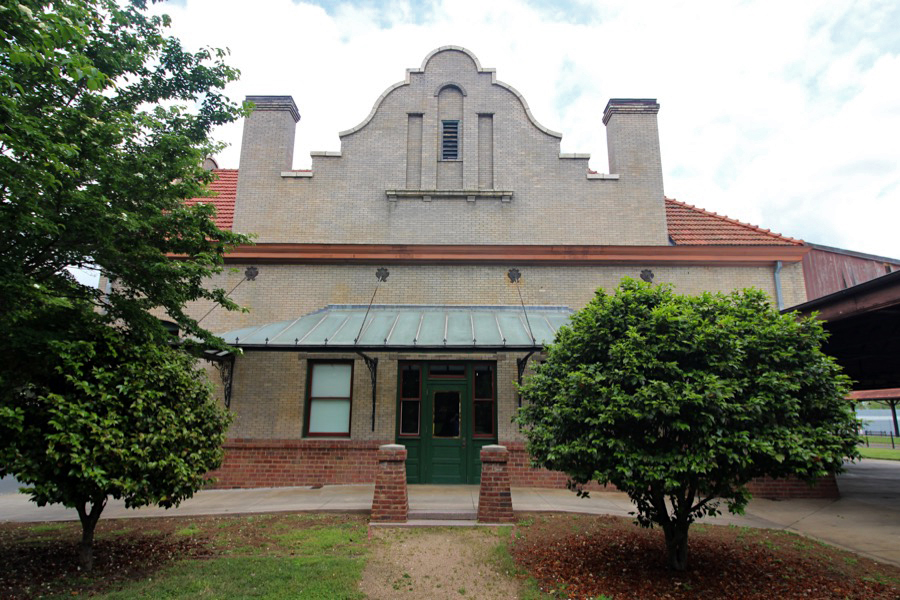
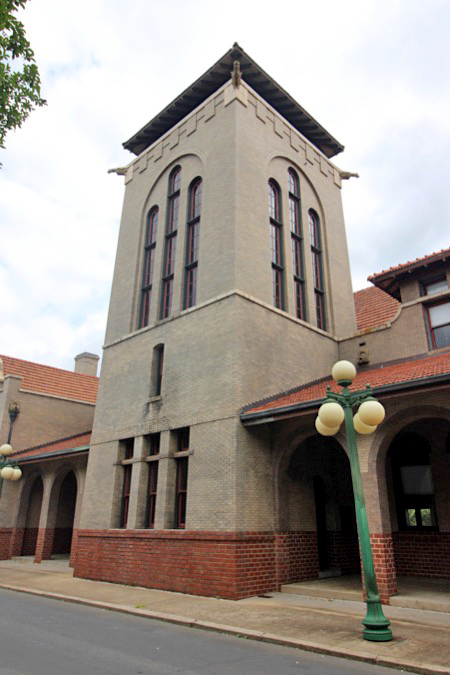
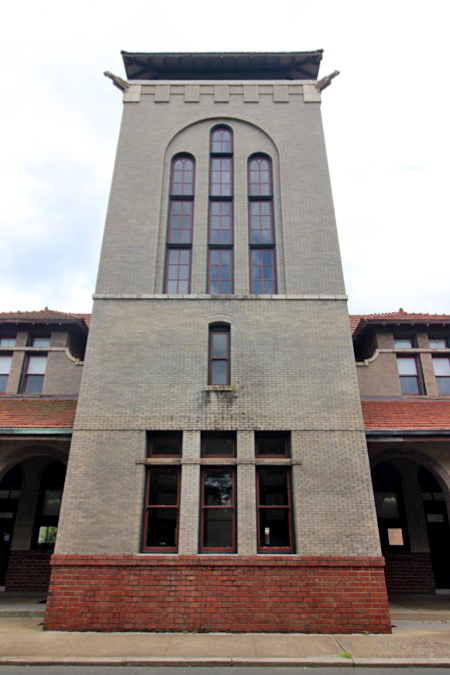
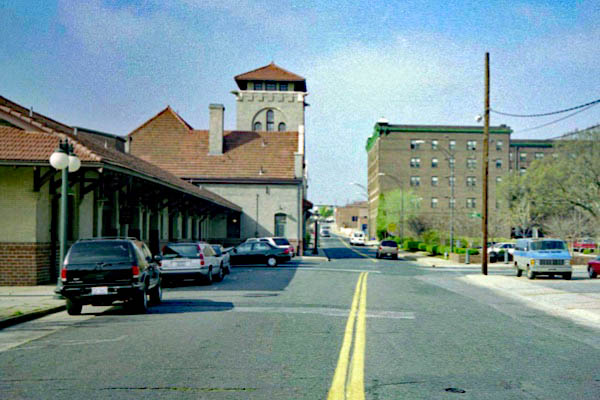
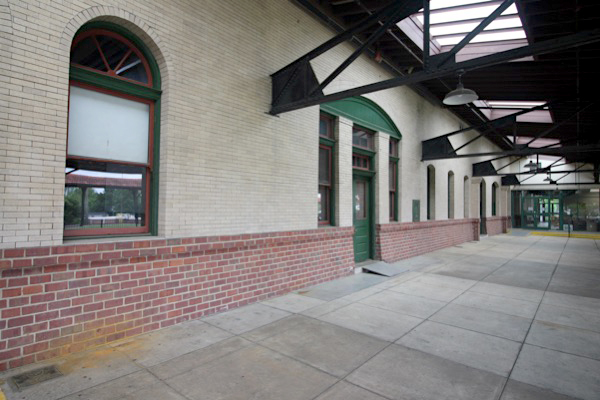
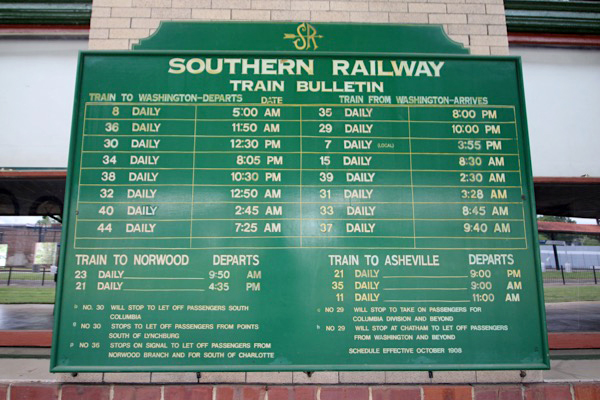
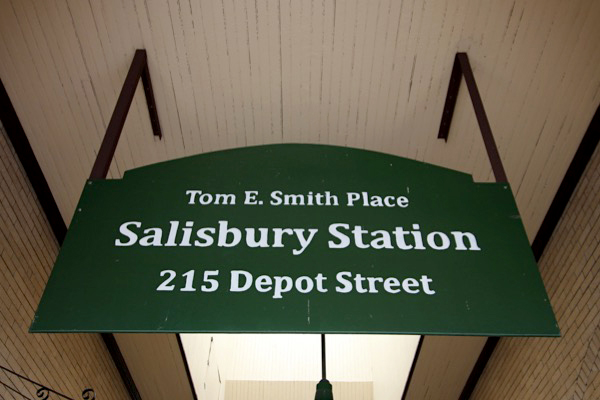
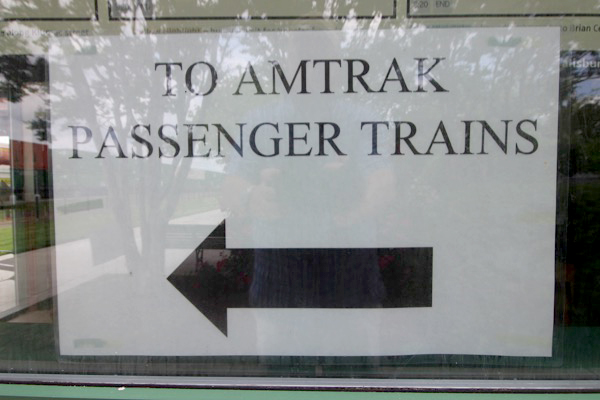
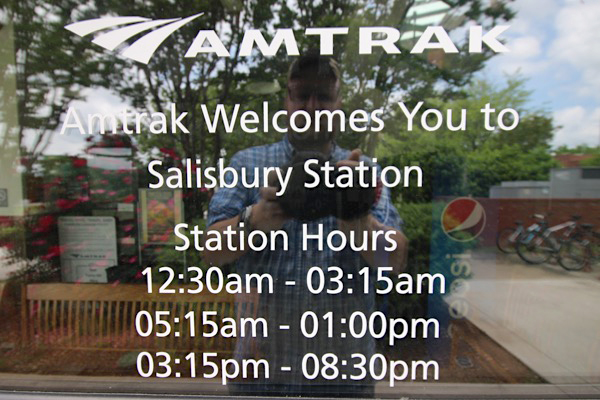
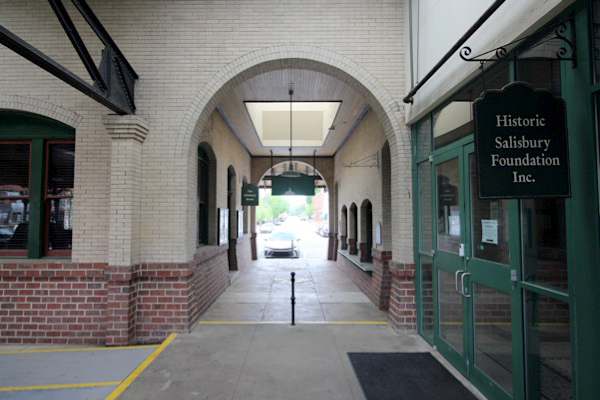
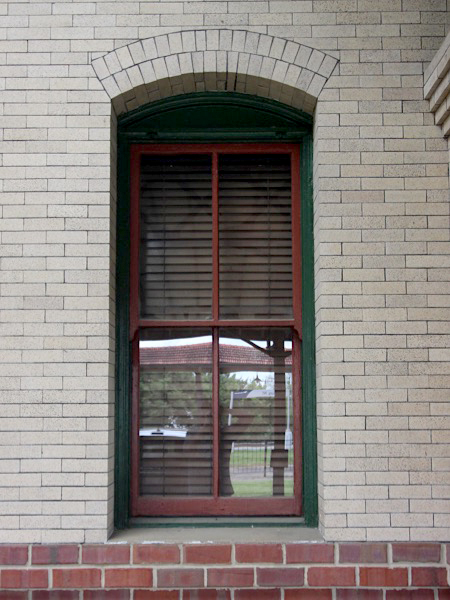
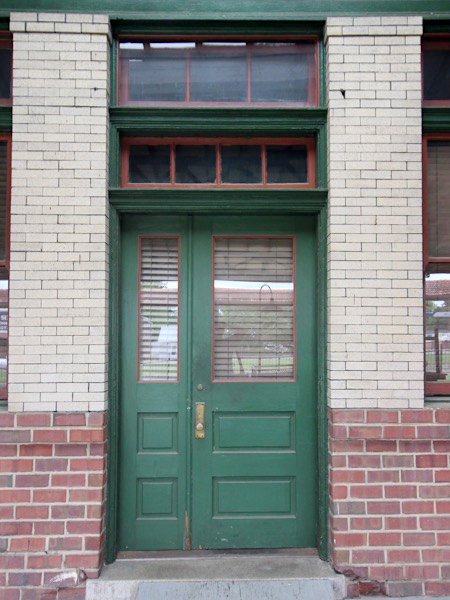
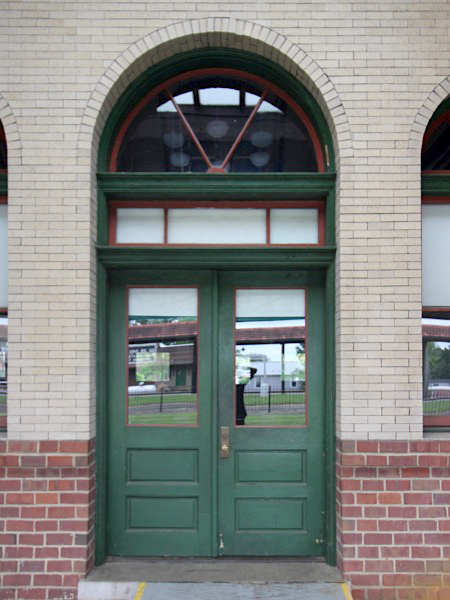
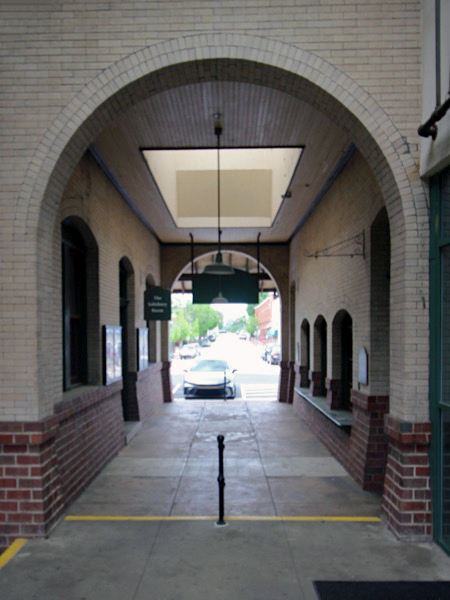
 The brick and ceramic tile Salisbury station was designed by Frank P. Milburn for Southern Railway in the Spanish Mission style. It opened in 1908, becoming one of North Carolina’s gateways to its Piedmont region. The stop was originally on the main-line between Washington, D.C. and Atlanta, Ga.; at it height of its use in 1911, as many as 44 trains per day passed through.
The Salisbury passenger station was added to the National Register of Historic Places in 1976. The building spans two city blocks and includes a two-course water table dividing the dark red brick base and tan brick body on the building, Spanish tile roof, and a dominating central three and one-half-story tower ornamented by projecting gargoyles.
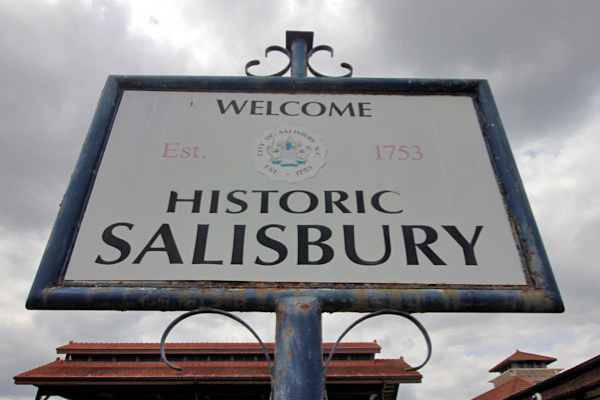
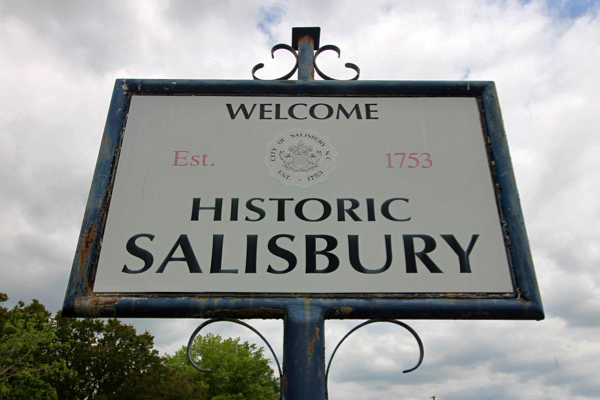
Founded in 1753 in Rowan County, Salisbury is one of North Carolina’s oldest cities. Daniel Boone’s father, Squire Boone, was one of the first justices appointed in the county, and young Daniel hunted and fished on the Yadkin River years before making his reputation as a wilderness pathfinder. A marker on the Salisbury Square identifies the beginning of the famous Boone Trail. Andrew Jackson, who eventually became the seventh president of the United States, also lived for a while in Salisbury, where he started his law career before moving to Tennessee.
By 1855, Salisbury had become an important rail junction, connecting the Piedmont to eastern North Carolina. It is during this period that many of the beautiful structures in the town were built. Sadly, Salisbury is most often remembered as the site of a very large Confederate military prison during the Civil War where, due to blockades of food and medicine during the latter part of the war, thousands of prisoners died of disease and starvation. However, the citizens of the town were not insensible to their conditions, and provided what charity they could, though they were far outnumbered by the prisoners. After surrender in 1865, the many thousands incarcerated were released, and the prison burned. Though many graves were moved, it is estimated that about 5,000 Union soldiers still lie in unmarked graves in the beautifully maintained historic Salisbury National Cemetery.
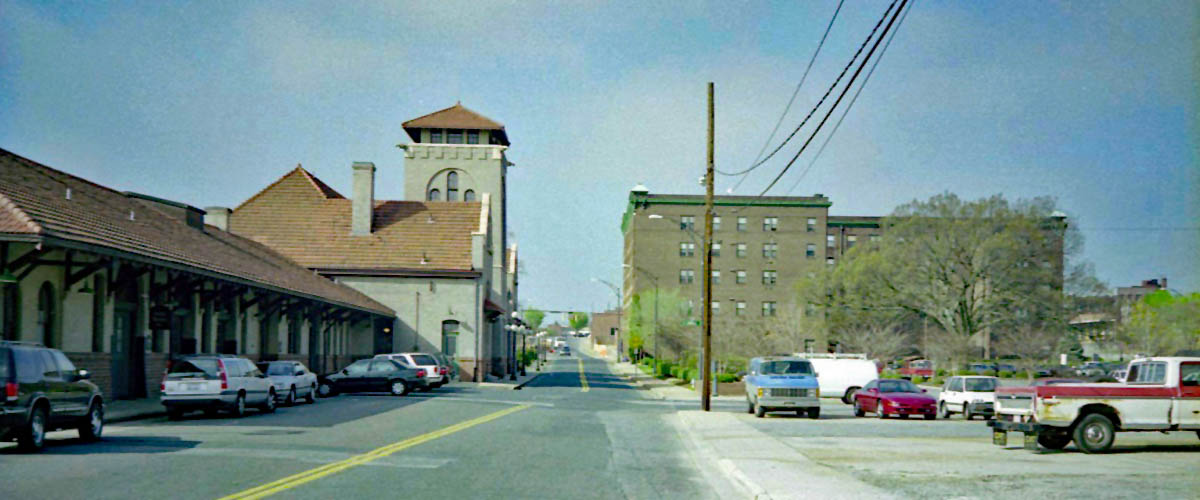
Salisbury, NC / Apr 1999 / JCH
Salisbury, NC / Apr 1999 / JCH
Salisbury, NC / Apr 1999 / JCH
Salisbury, NC / May 2025 / RWH
May 2025 / RWH
May 2025 / RWH
May 2025 / RWH
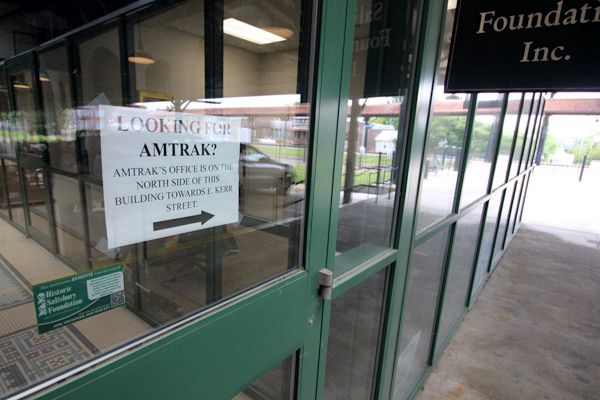
May 2025 / RWH
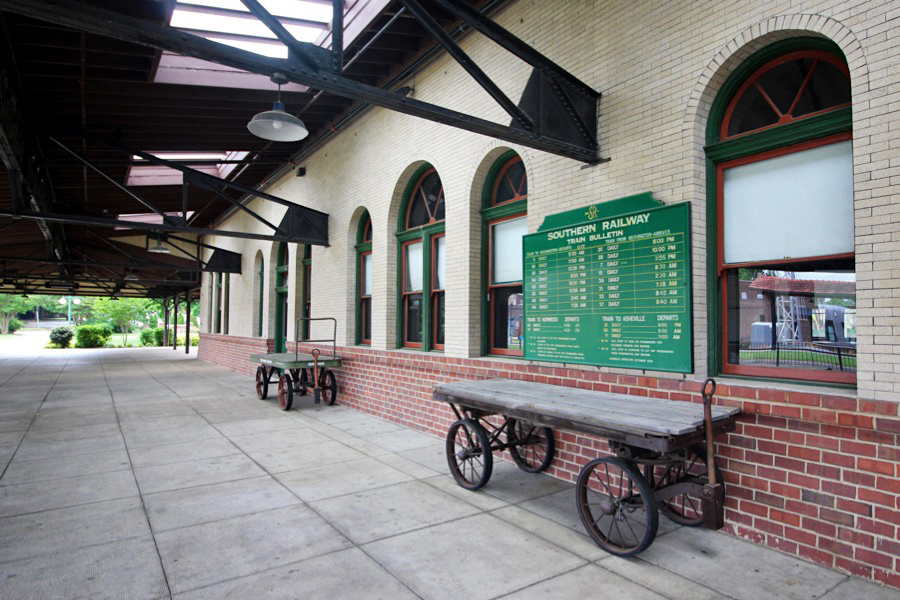
May 2025 / RWH
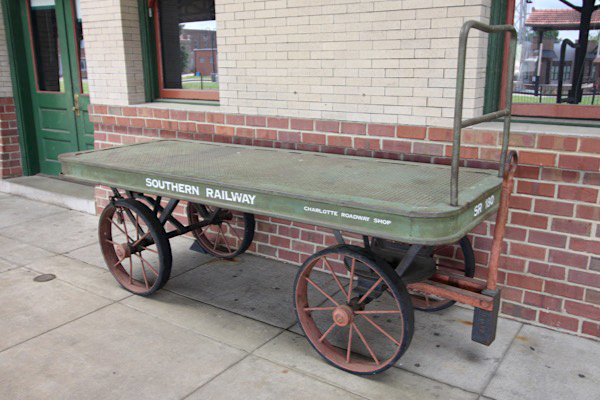
May 2025 / RWH
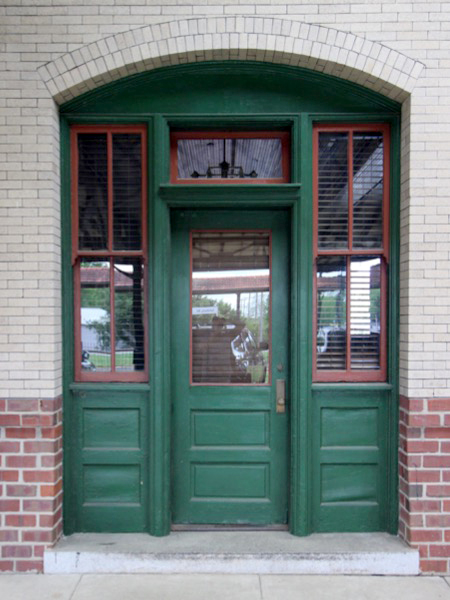
May 2025 / RWH
May 2025 / RWH
Salisbury, NC / May 2025 / RWH
May 2025 / RWH
 Salisbury Squares
Salisbury, NC / May 2025 / RWH
Salisbury, NC / May 2025 / RWH
May 2025 / RWH
May 2025 / RWH
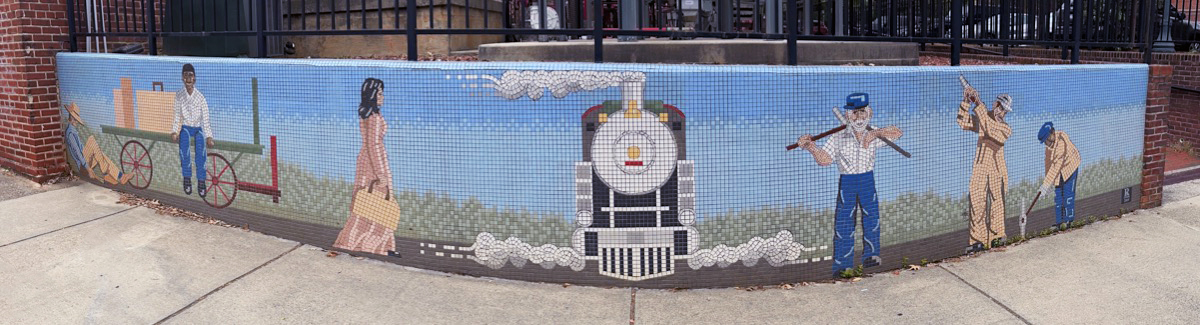
May 2025 / RWH
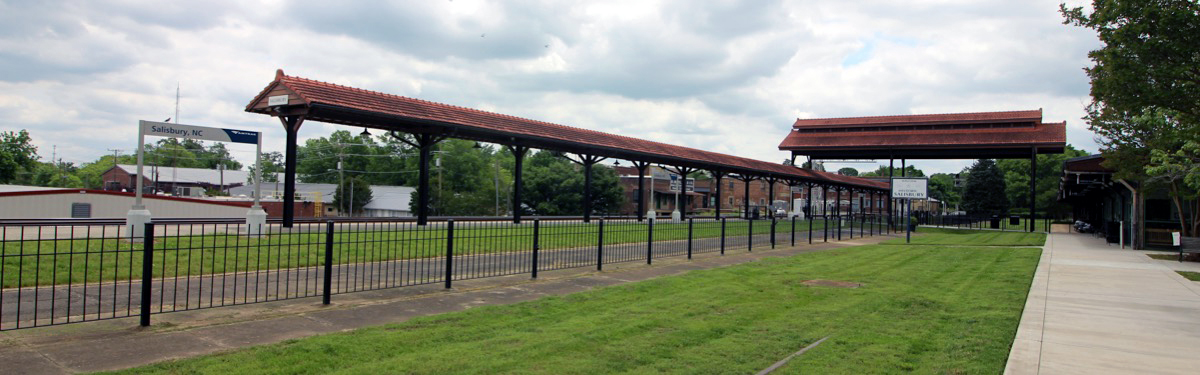
Salisbury, NC / May 2025 / RWH
Salisbury, NC
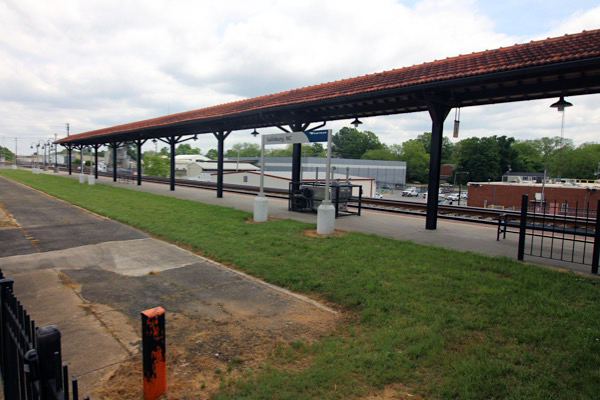
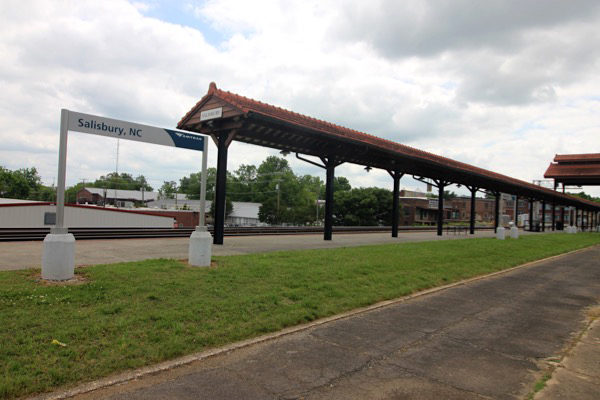
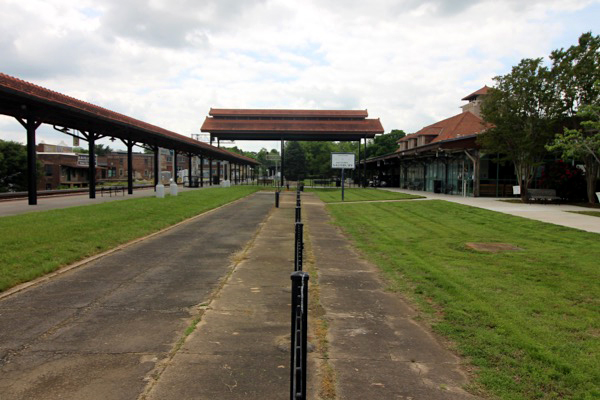
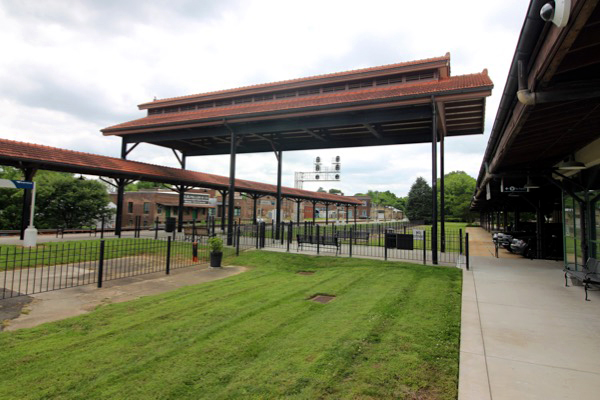
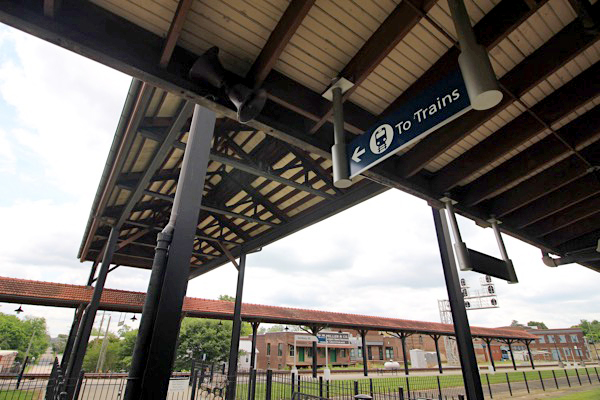
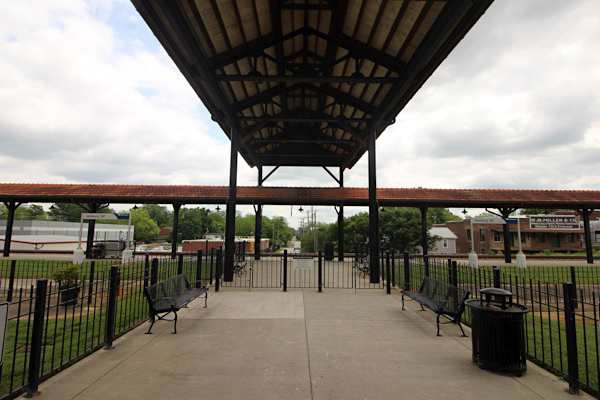
May 2025 / RWH
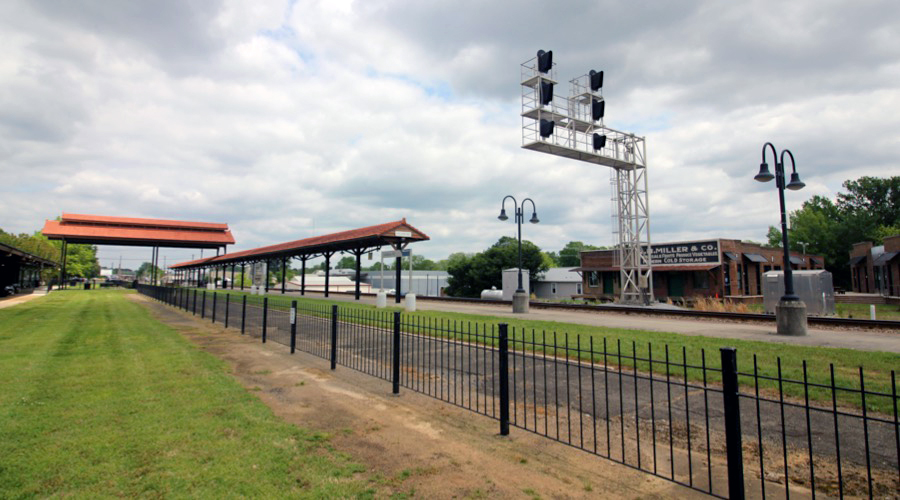
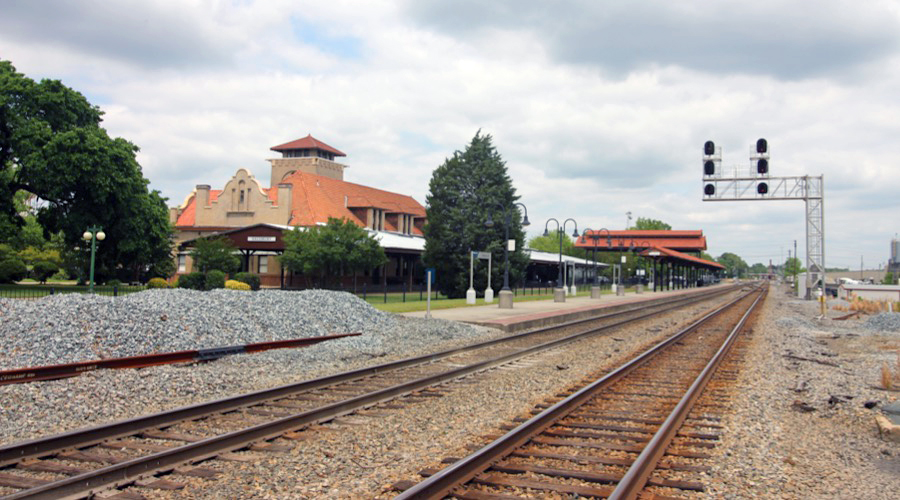
Salisbury, NC / May 2025 / RWH
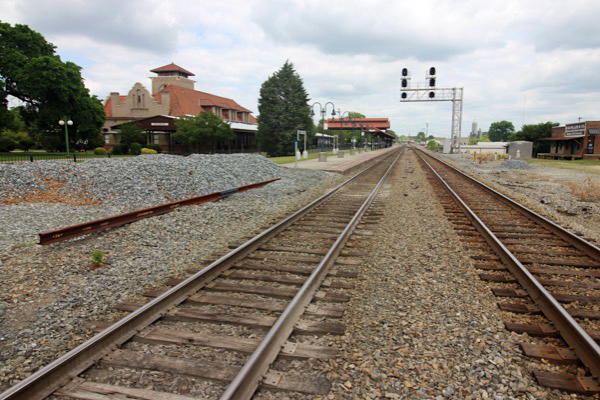
Salisbury, NC / May 2025 / RWH
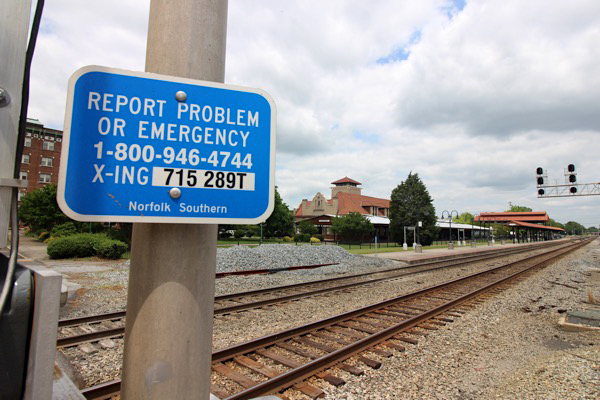
Salisbury, NC / May 2025 / RWH
Salisbury, NC / May 2025 / RWH
Salisbury, NC / Apr 1999 / JCH
Salisbury, NC / Apr 1999 / JCH
Salisbury, NC / Apr 1999 / JCH
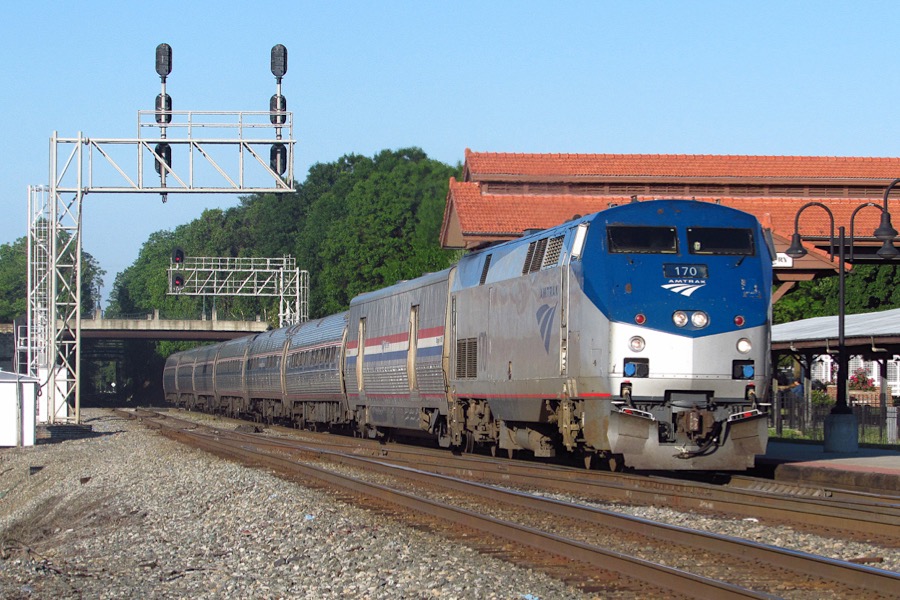
Salisbury, NC / May 2015 / Christopher Rambo
See also our nearby North Carolina Transportation Museum scrapbook in Preservation
76 High Point, NC
- Carolinian
- Crescent
- Piedmont
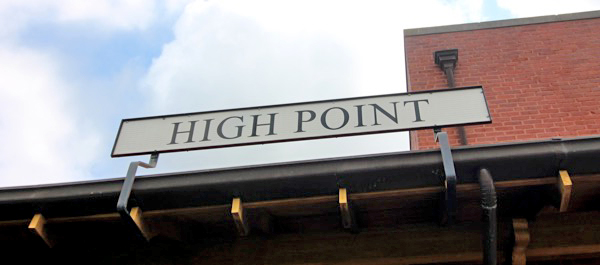
May 2025 / RWH

- location:High Point NC
- address:100 W High Ave
- type:city depot, 2 platforms
- owner:City of High Point
- opened:1907
- builder:Southern Railway
- style:Richardsonian Roman
- renovated:2003
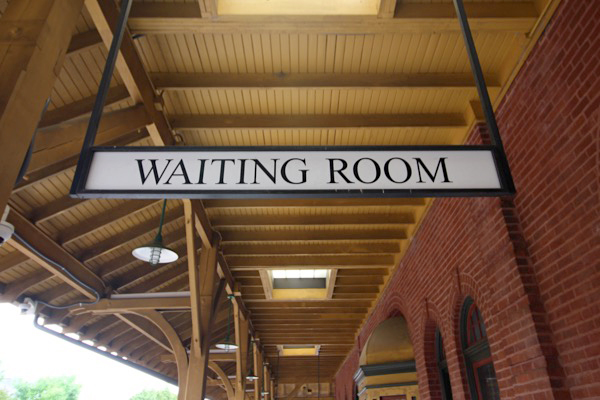
- services:tickets, waiting room
- links: Amtrak | Great Stations
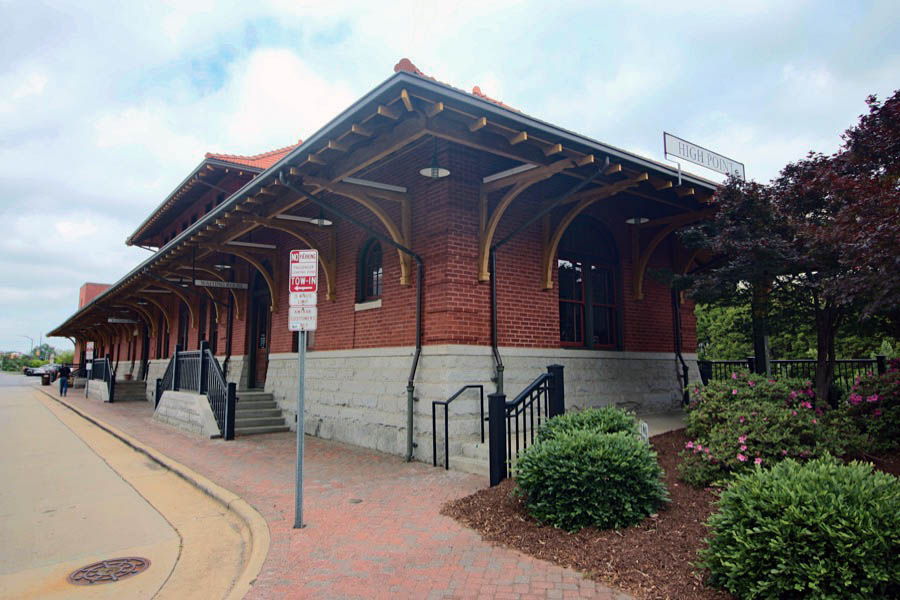
High Point, NC / May 2025 / RWH
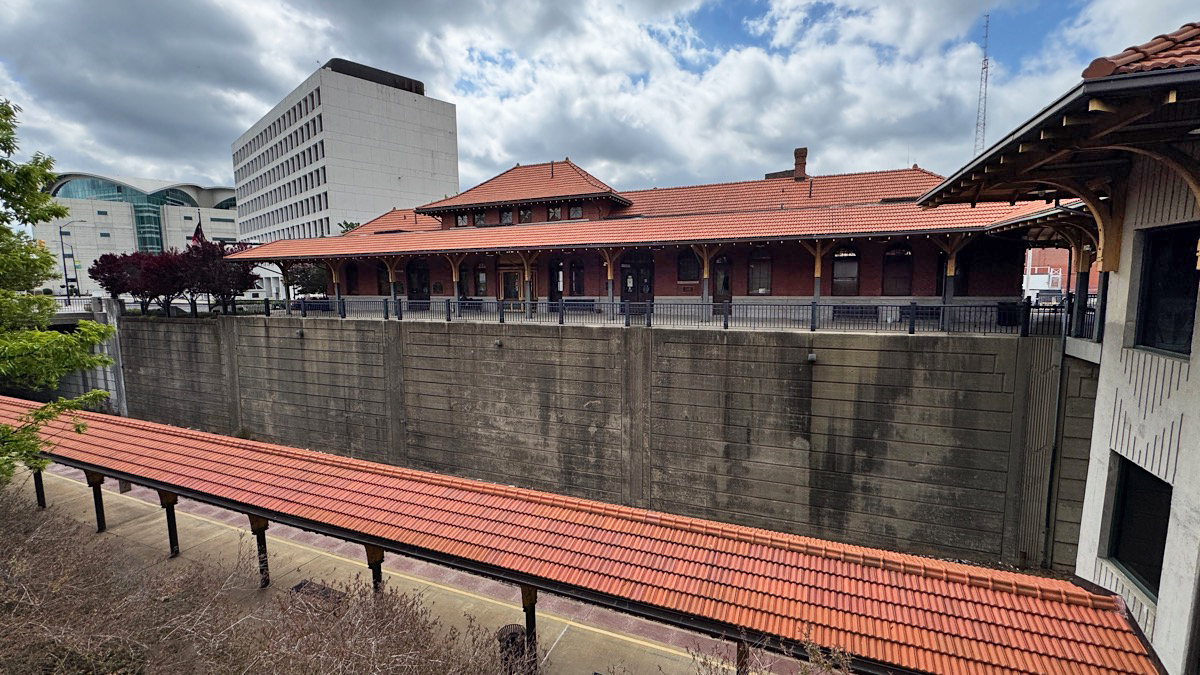
High Point, NC / May 2025 / RWH
Click to see the High Point station plotted on a Google Maps page
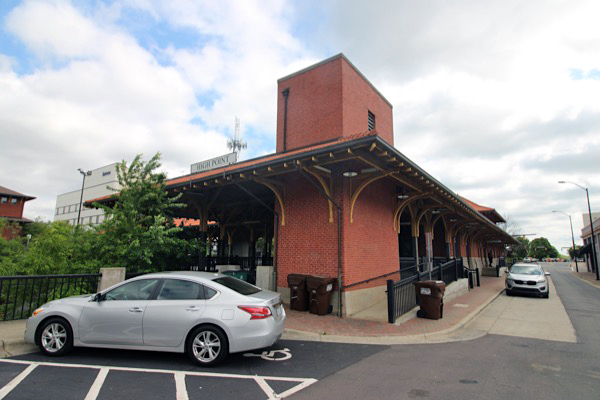
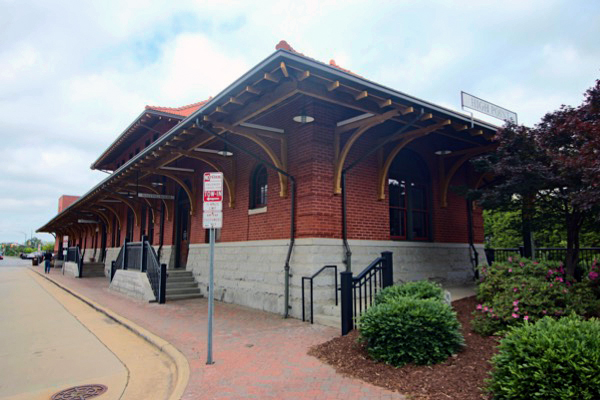
Jul 2025 / RWH
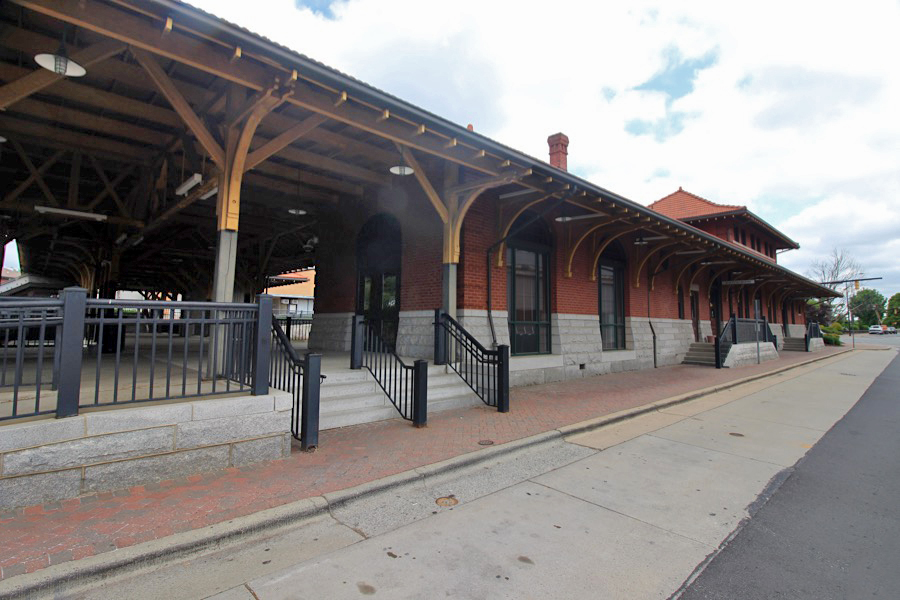
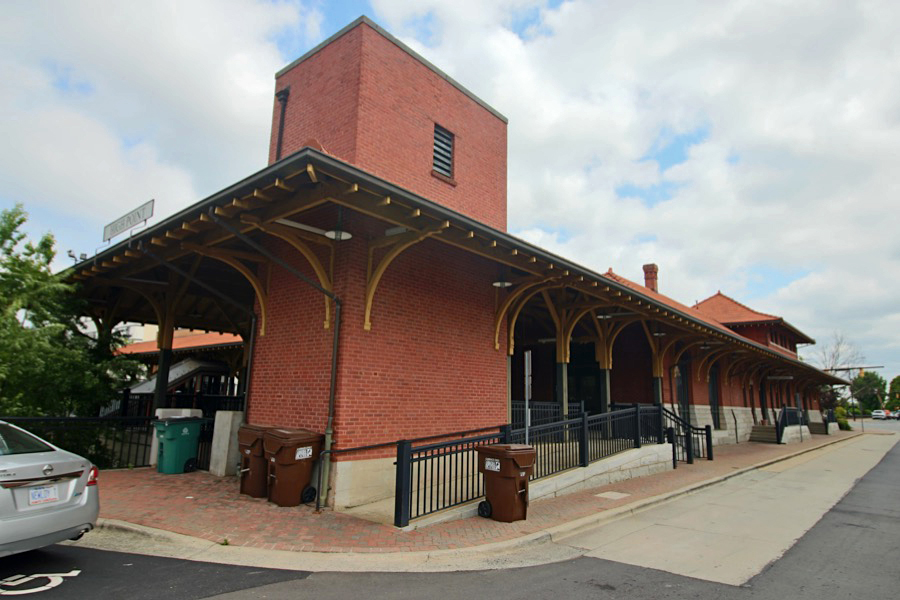
High Point, NC / May 2025 / RWH
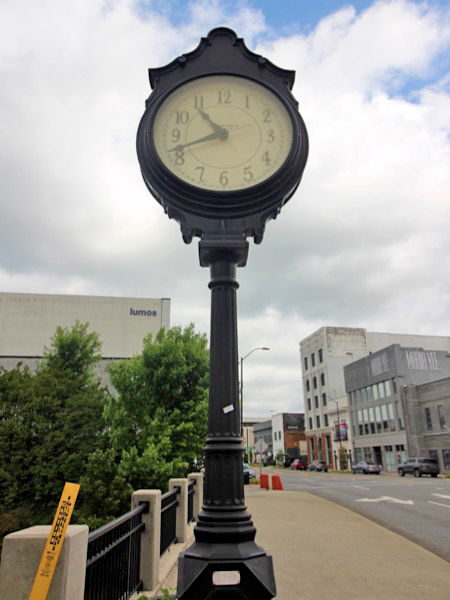
Jul 2025 / RWH
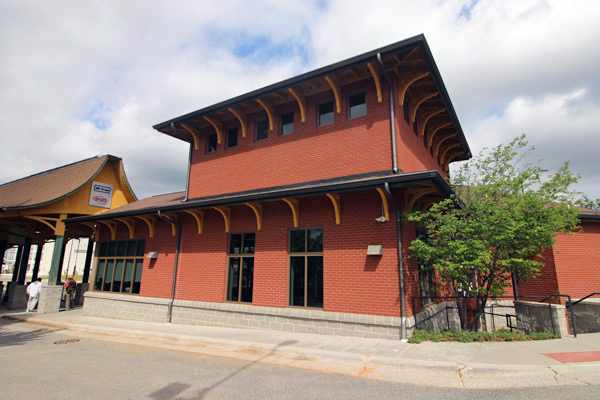
High Point, NC / May 2025 / RWH
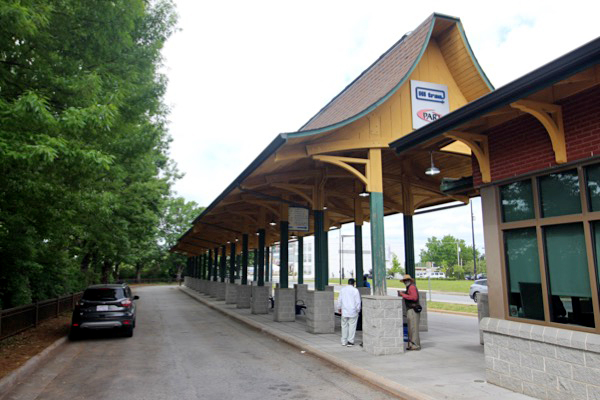
High Point, NC / May 2025 / RWH
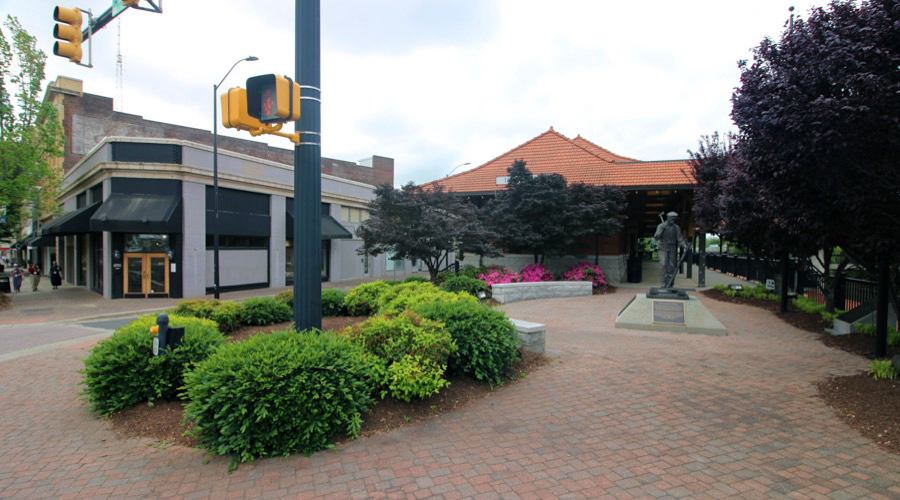
High Point, NC / May 2025 / RWH
Jul 2025 / RWH
Jul 2025 / RWH
Jul 2025 / RWH
High Point, NC / Jun 1991 / JCH
from Southern Railway Depots - Volume 1
by Ralph Ward / collection
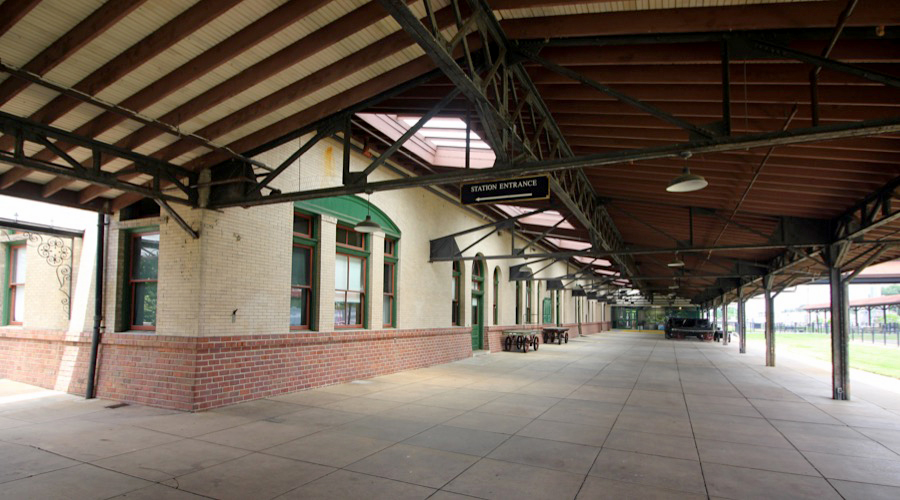
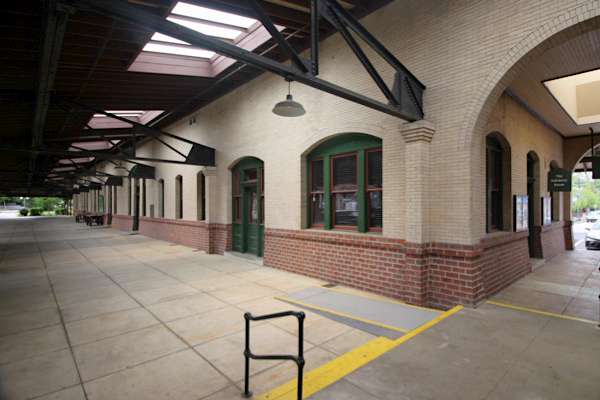
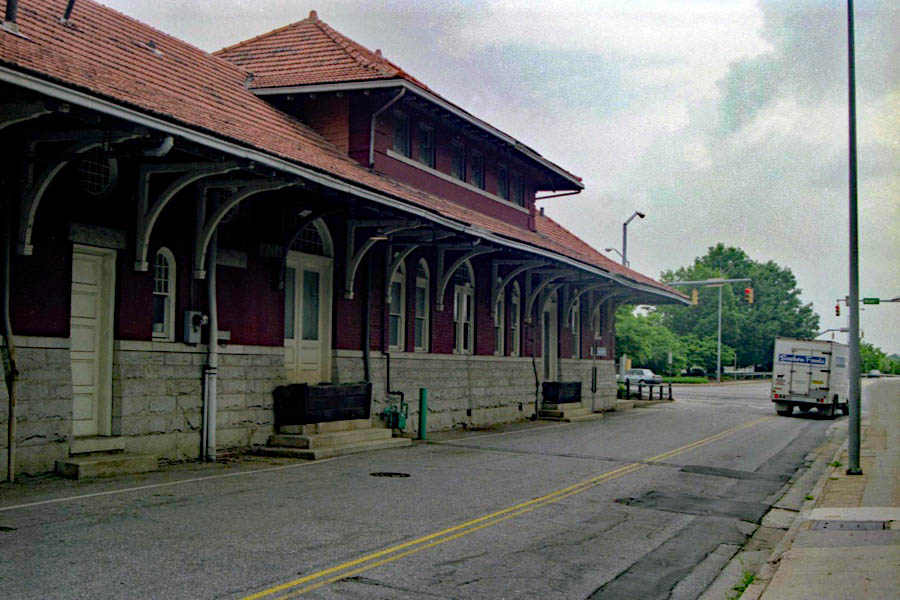
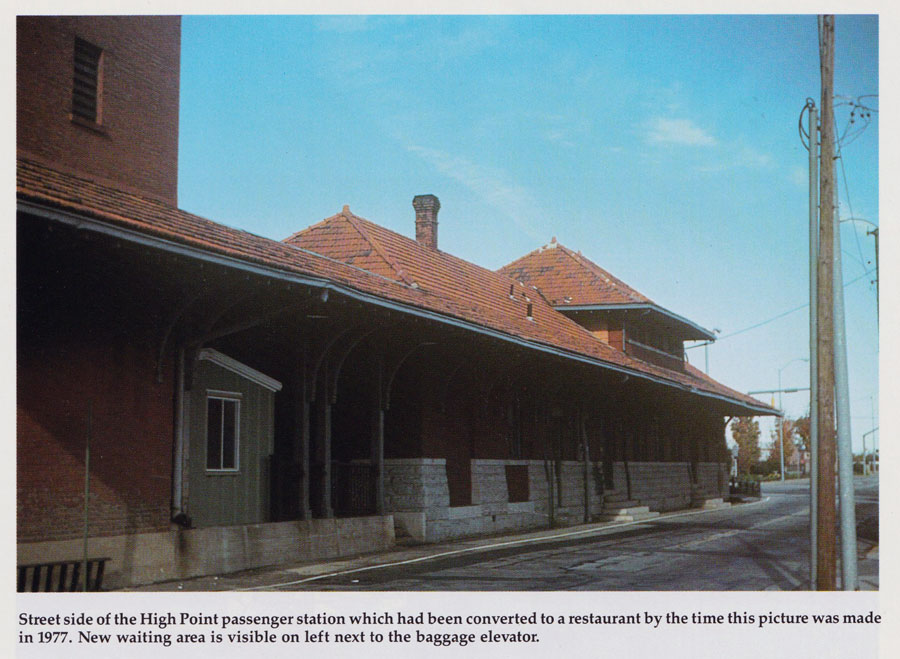
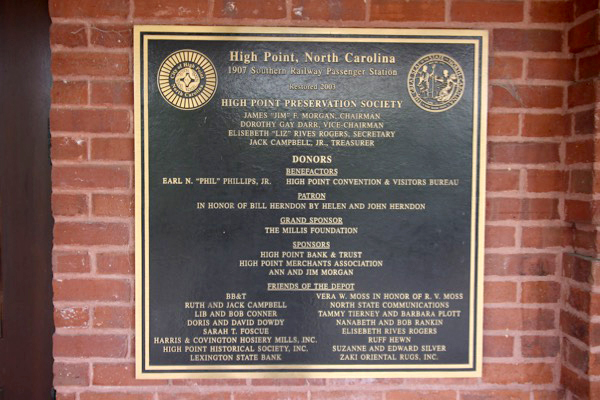
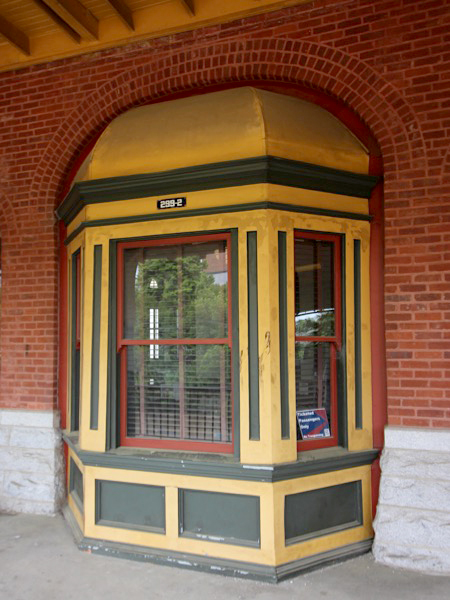
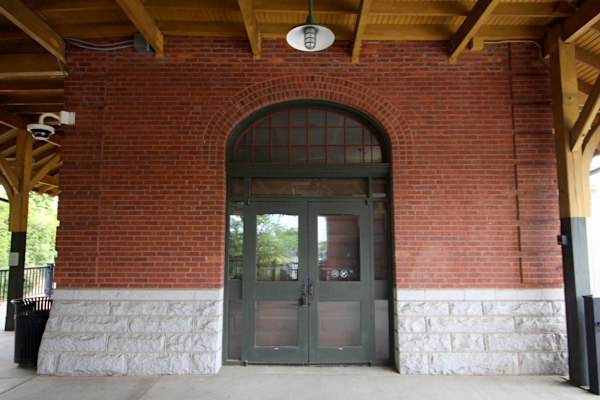
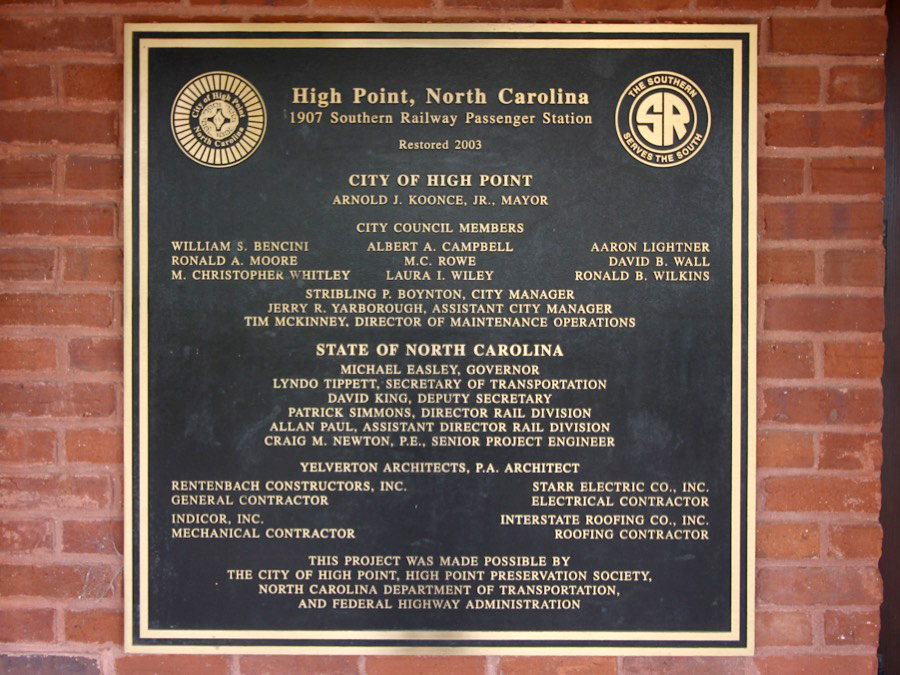
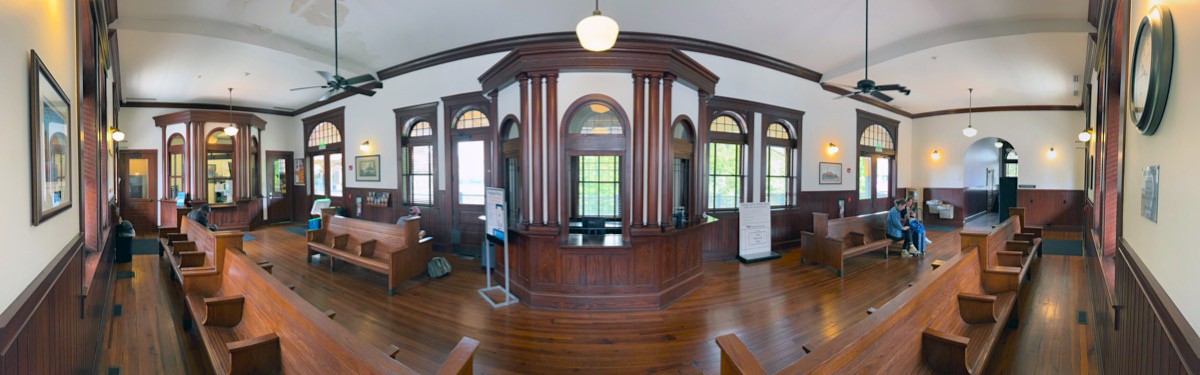
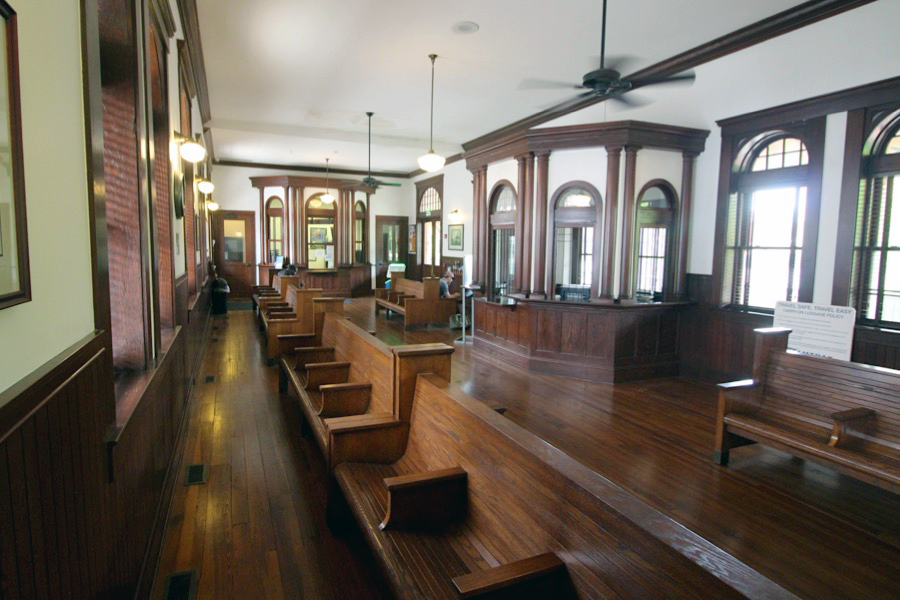
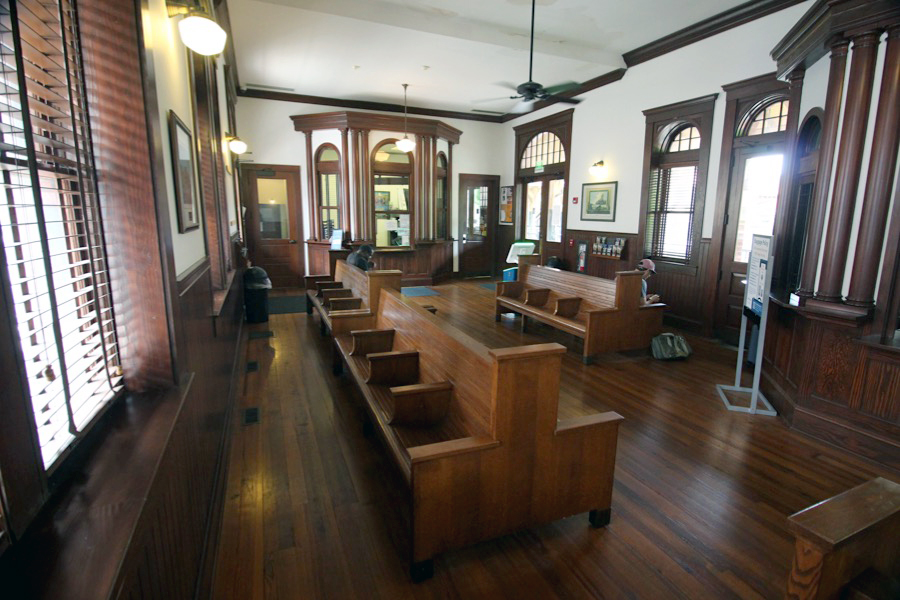
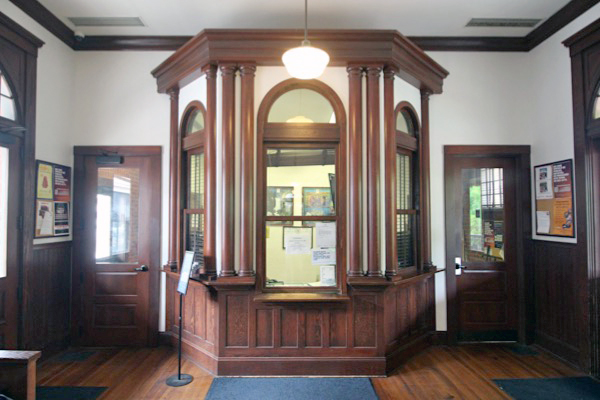
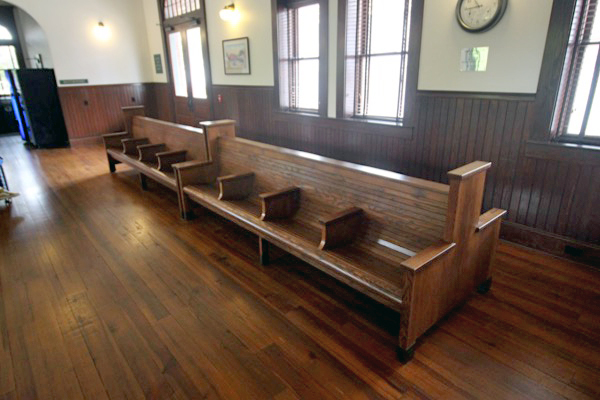
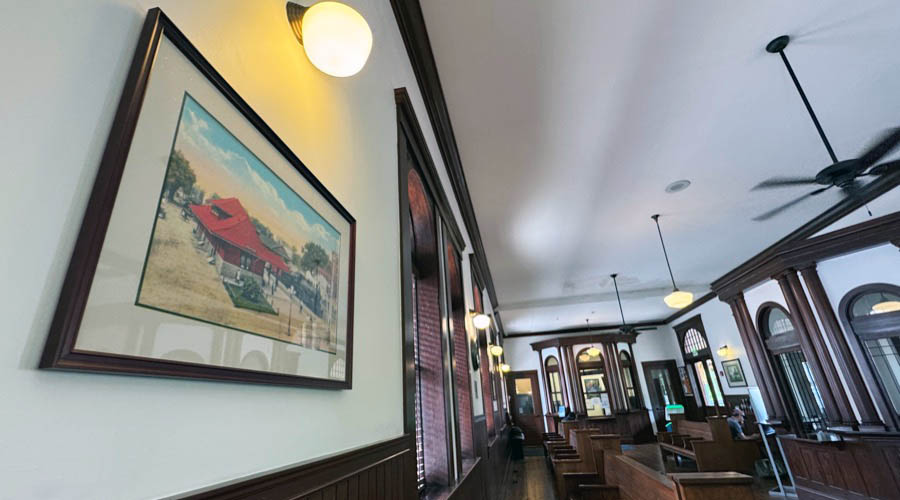
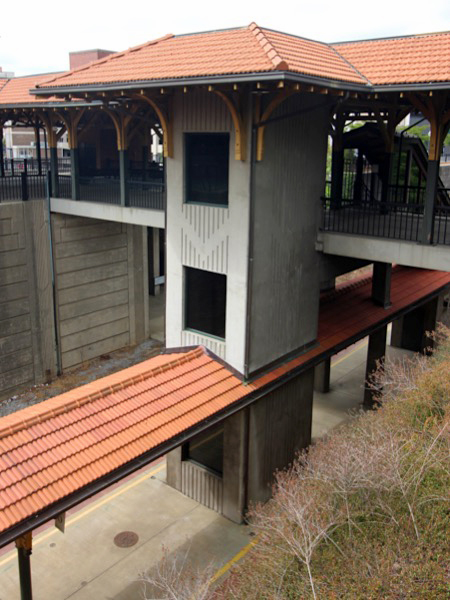
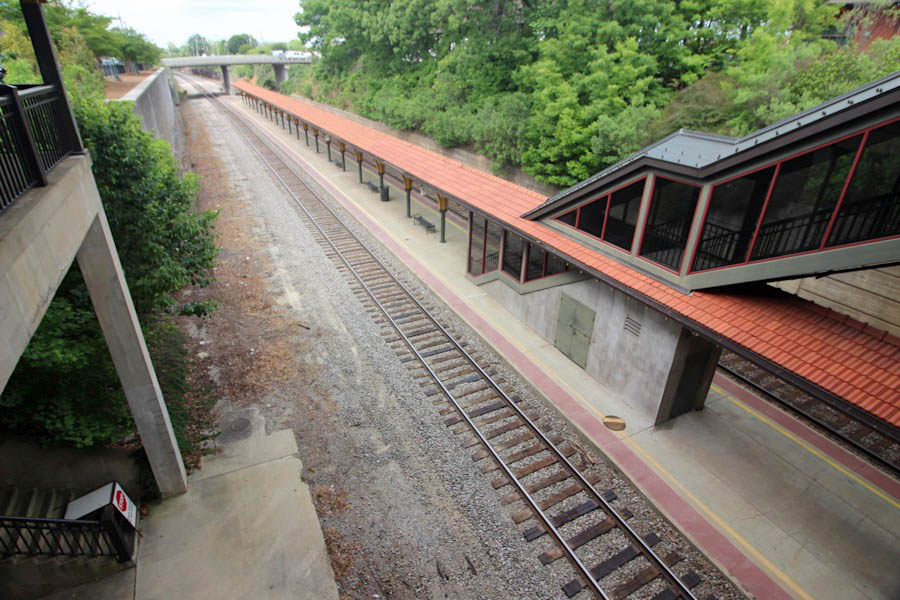
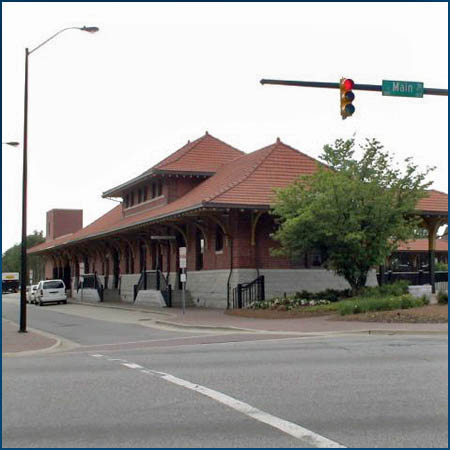 The High Point passenger depot is a brick and stone structure built in 1907 by the Southern Railway Company in the heart of downtown High Point. It was designed in the Richardson Romanesque architectural style, with a rusticated ashlar base and tiled hip roof.
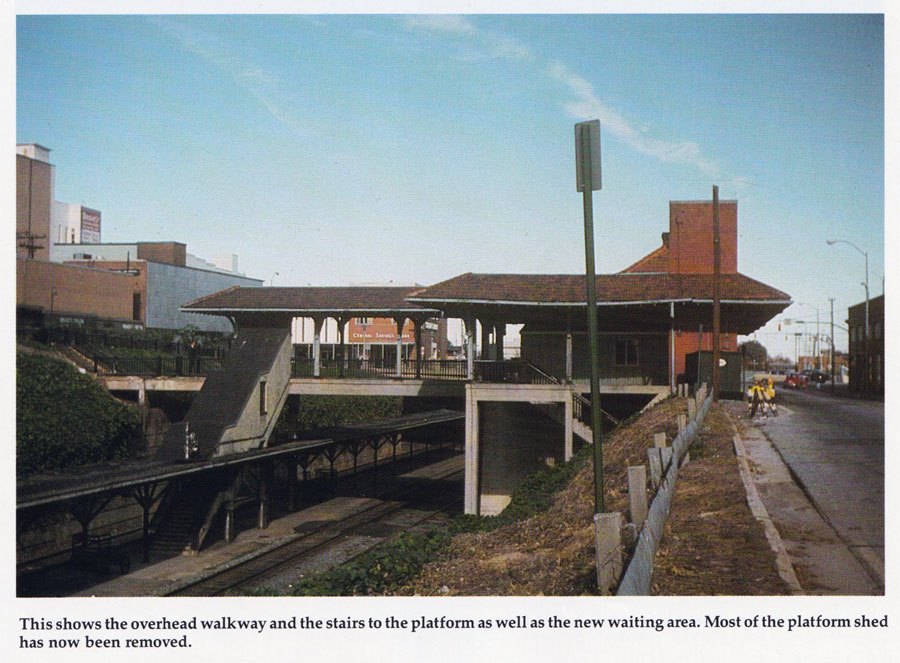
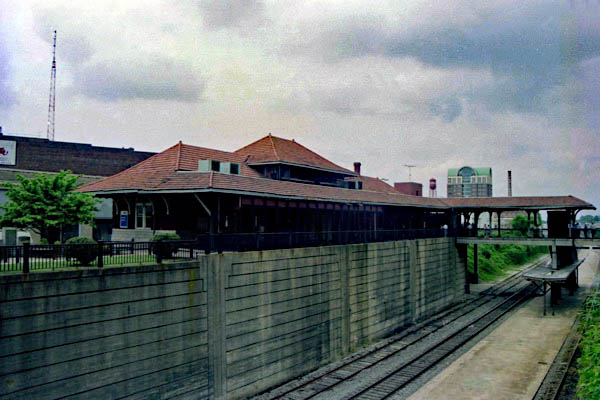
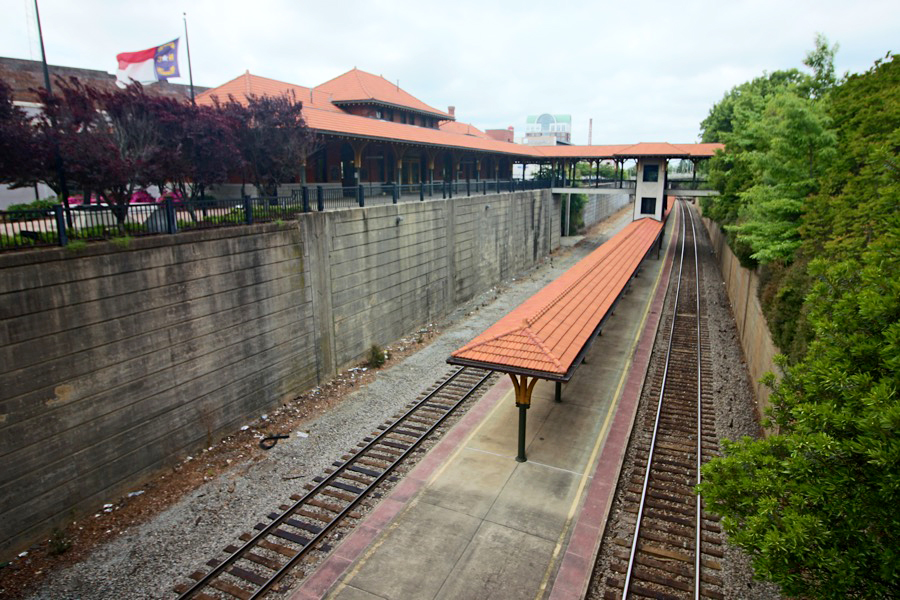
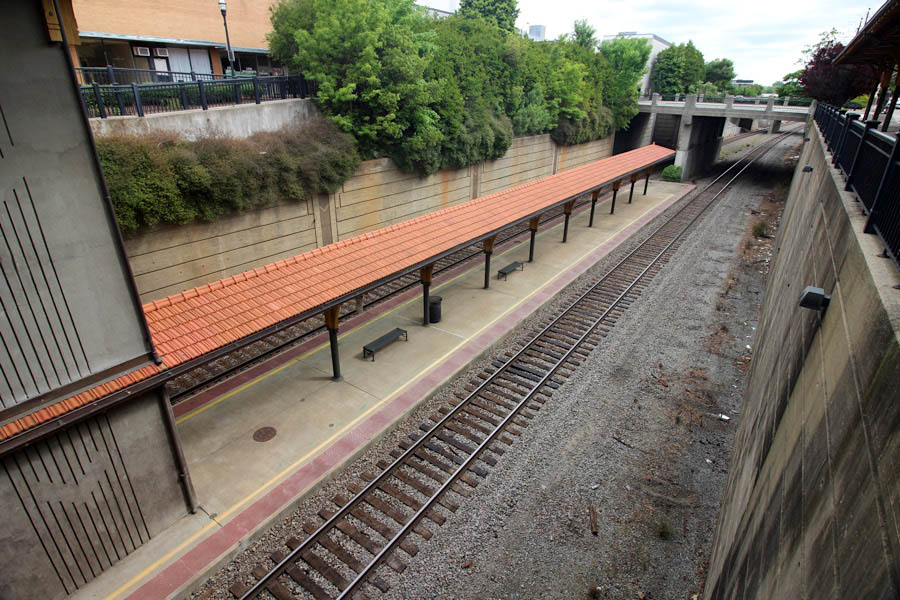
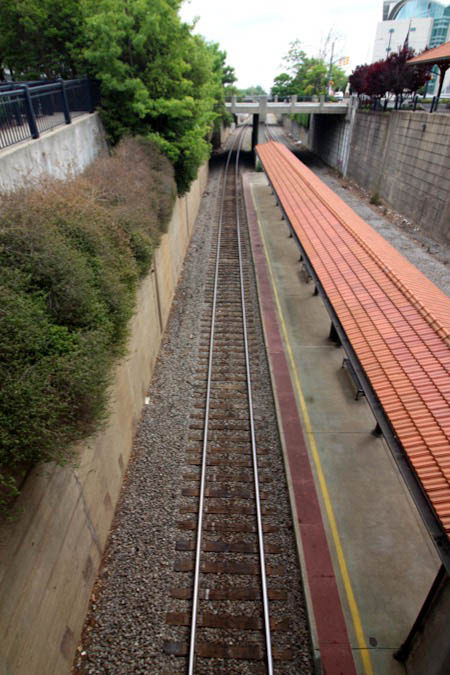
As in many cities, trains and street crossings began to impede growing automobile traffic. In the late 1930s, a city-state-federal project built a one-mile trench up to 35 feet deep through which the trains could travel. The retaining walls at the station included Moderne-detailed concrete. A walkway across the tracks and a passenger staircase to the platform at track level were constructed.
In the mid-1970s, Southern Railway leased the station to a restaurant and built a small green metal building at the rear of the station for passengers. Southern Railway (now Norfolk Southern) reached an agreement for Amtrak to take over passenger service in 1978, and Amtrak took over Southern’s passenger operations in 1979.
By 1990, the station and platform were in disrepair, dirty and the restaurant failing. The city government considered demolishing the station entirely. However, some High Point citizens made station restoration their cause. Three years later, the city government saw merit in the project and joined the North Carolina Department of Transportation in preparing a $3 million request for funds to restore and enhance the station.
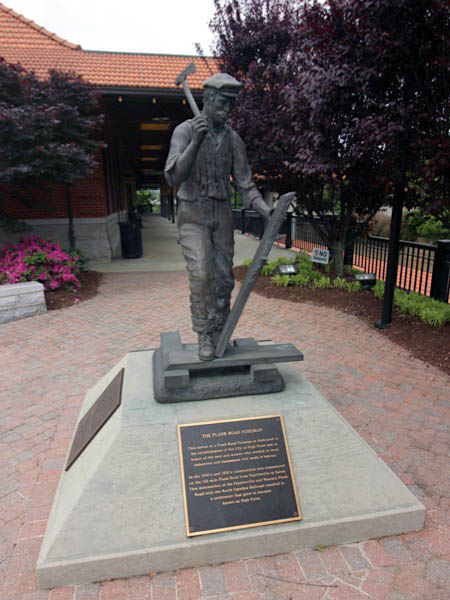
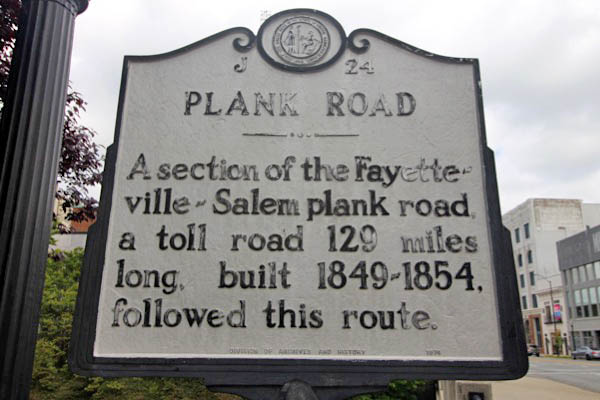
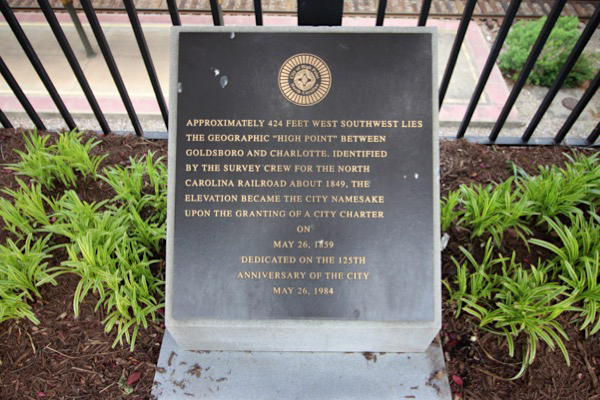
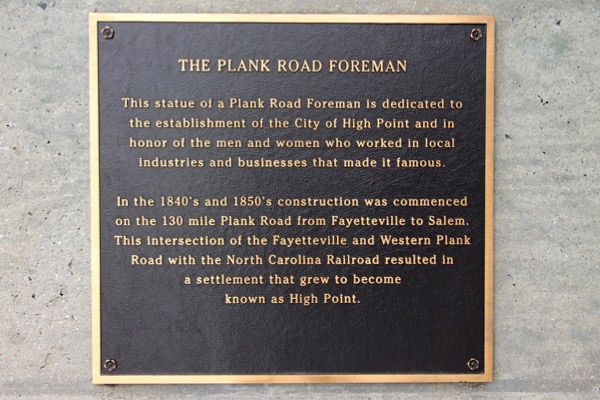
High Point was located at the highest point of the 1856 NCRR between Charlotte and Goldsboro where it intersected the 1852 Great Western Plank Road. Its central location and transportation allowed for the delivery of raw materials like cotton and lumber and processed goods in and out of the city and contributed to its early growth. High Point was incorporated in 1859. Before it became a major manufacturing center, the most important industries were tobacco, woodworking and textiles. The first of many High Point furniture factories was opened in 1889.
from Southern Railway Depots - Volume 1
by Ralph Ward / collection
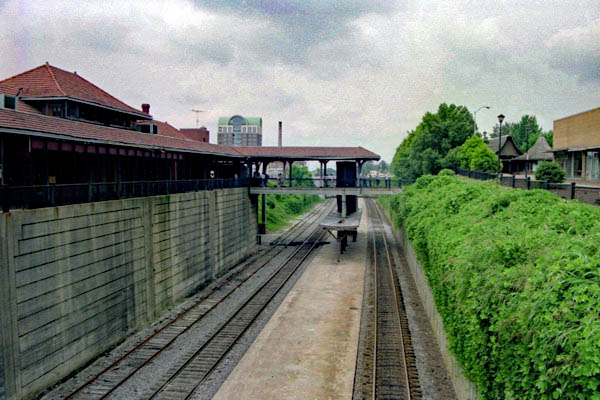
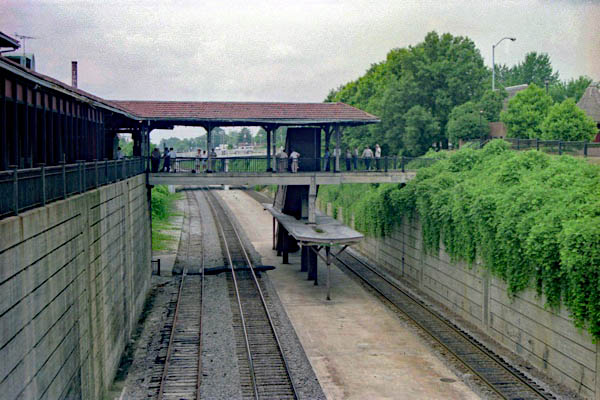
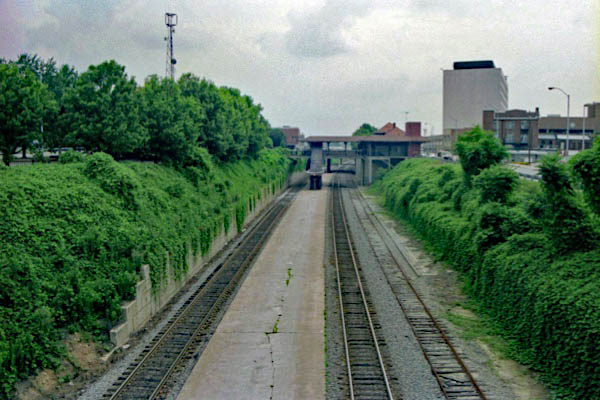
High Point, NC / Jun 1991 / JCH
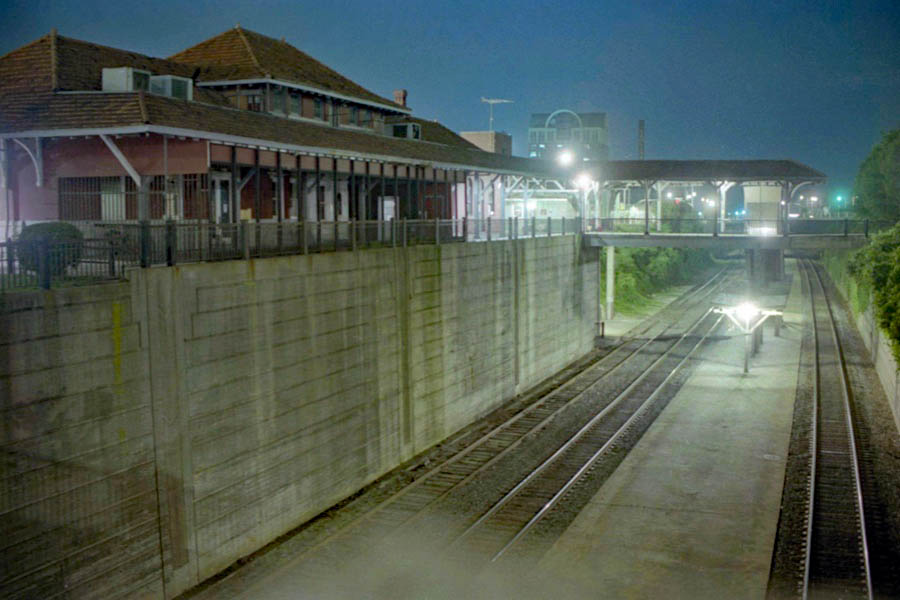
High Point, NC / Jun 1991 / JCH
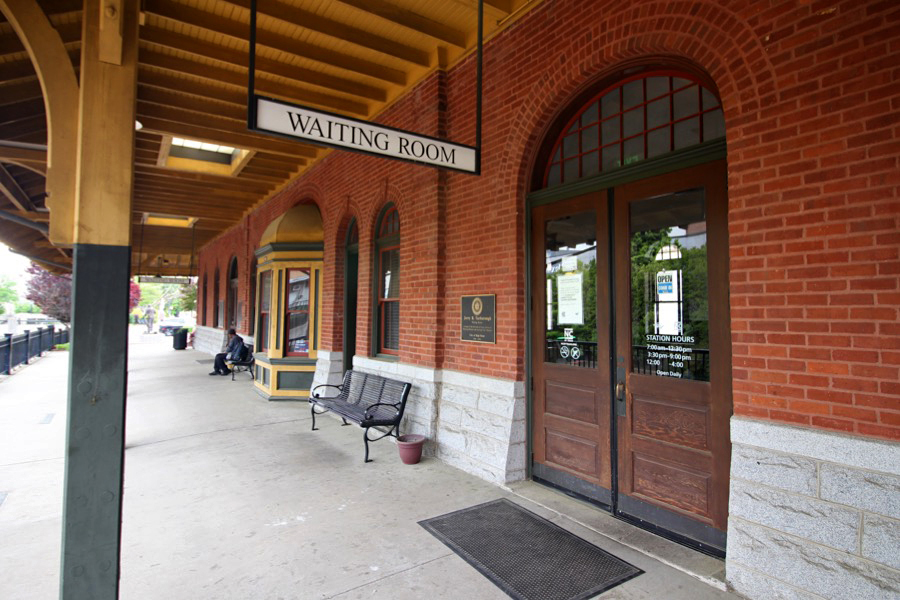
High Point, NC / May 2025 / RWH
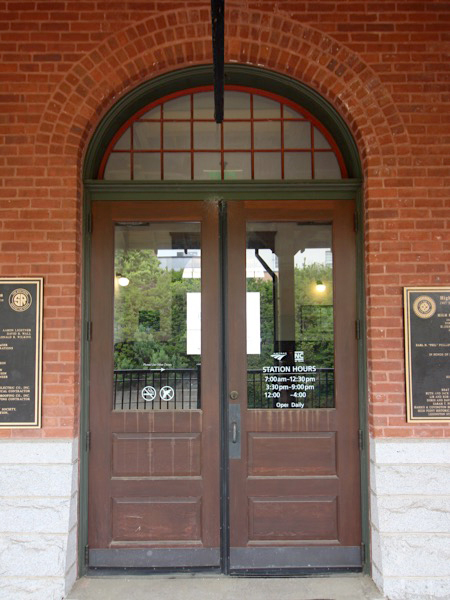
Jul 2025 / RWH
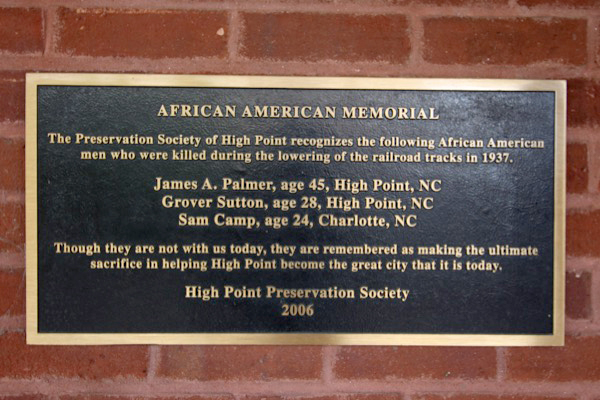
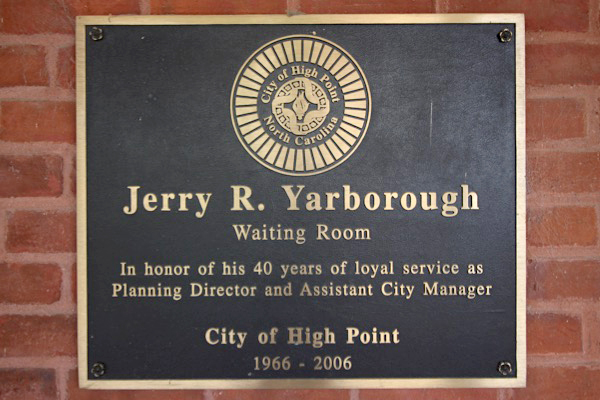
Jul 2025 / RWH
Jul 2025 / RWH
Jul 2025 / RWH
Jul 2025 / RWH
collection
Jul 2025 / RWH
RWH
RWH
Jul 2025 / RWH
Jul 2025 / RWH
Jul 2025 / RWH
Jul 2025 / RWH
Jul 2025 / RWH
High Point, NC
High Point, NC / May 2025 / RWH
Jul 2025 / RWH

RWH
High Point, NC / May 2025 / RWH
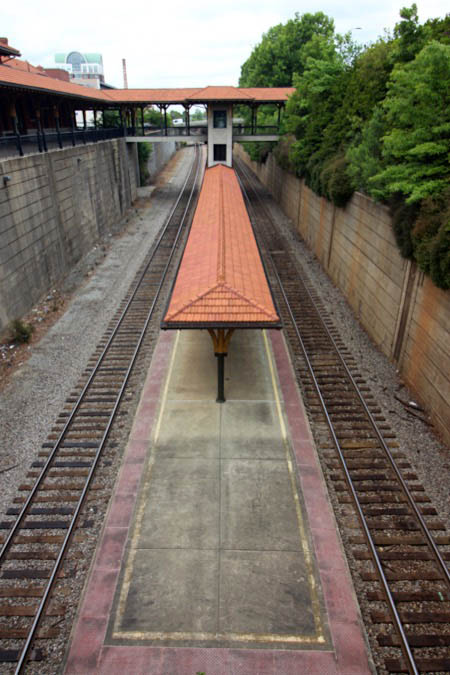
Jul 2025 / RWH
92 Greensboro, NC
- Carolinian
- Crescent
- Piedmont
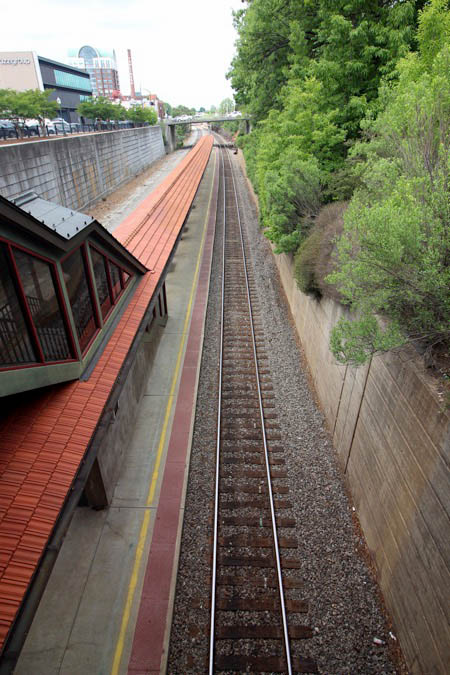
Jul 2025 / RWH
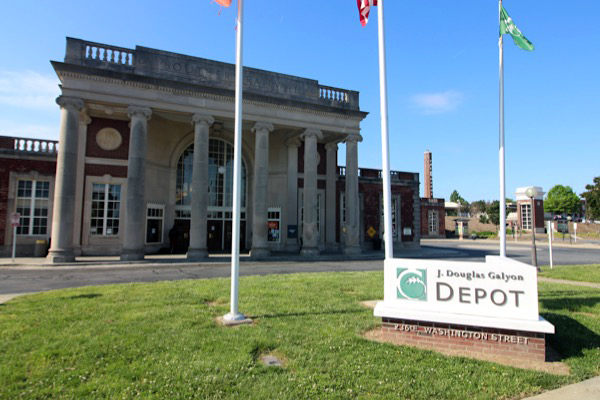
Greensboro, NC / May 2025 / RWH
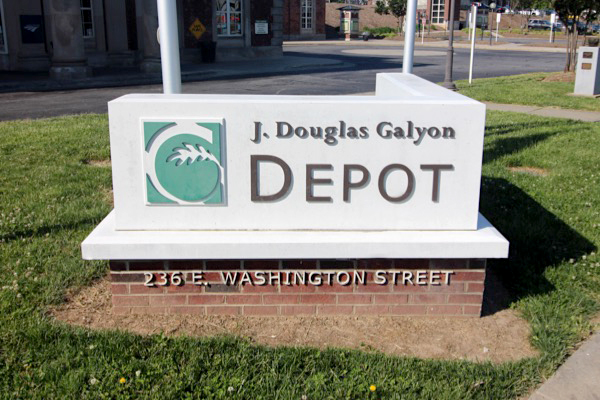
- name:J. Douglas Galyon Depot
- address:236 E Washington St
- type:city station, 4 platforms
- owner:City of Greensboro
- opened:1927
- builder:Southern Railway
- style:Beaux-Arts
- renovated:2003
- services:tickets, baggage
- links: Amtrak | Great Stations
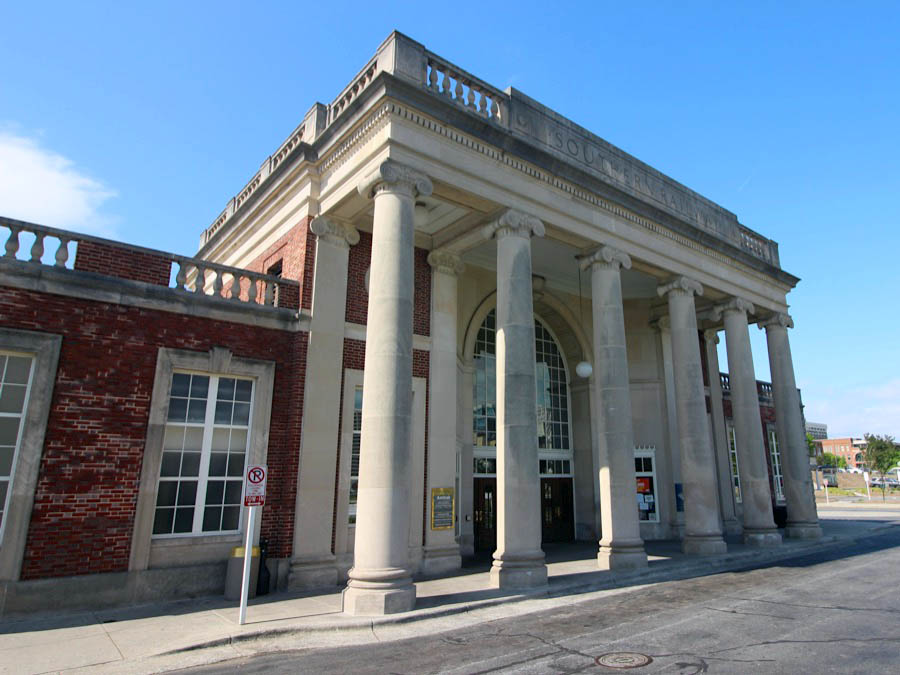
Greensboro, NC / May 2025 / RWH
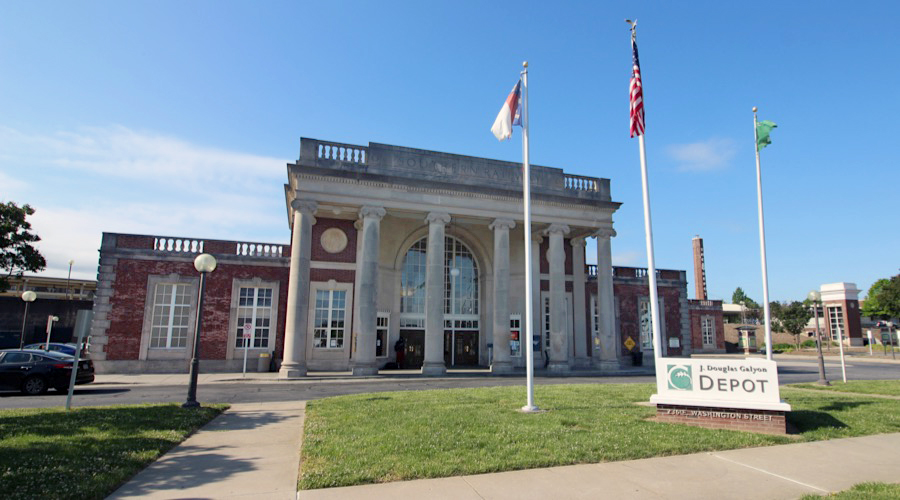
Greensboro, NC / May 2025 / RWH
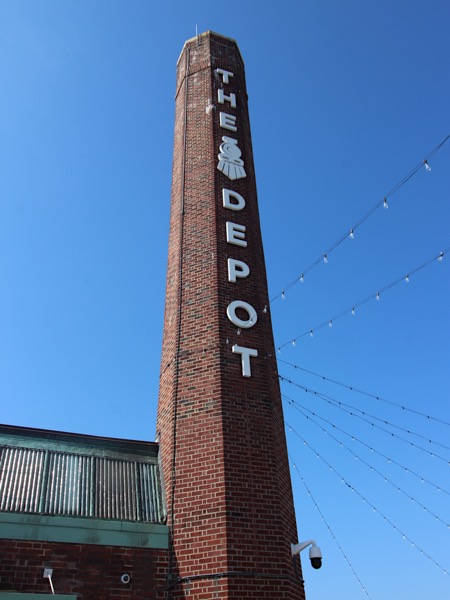
Jul 2025 / RWH
Click to see the Greensboro Amtrak station plotted on a Google Maps page
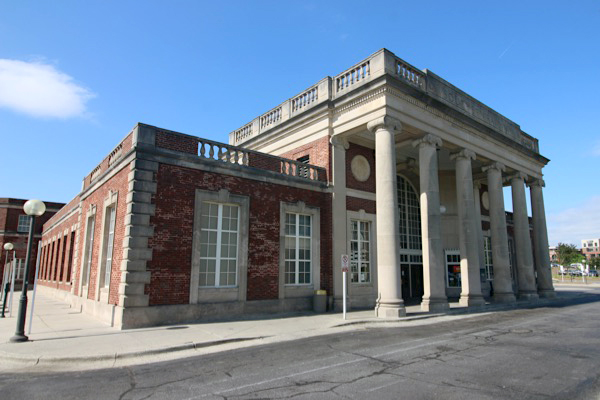
Jul 2025 / RWH
Greensboro, NC / May 2025 / RWH
from Southern Railway Depots - Volume 1
by Ralph Ward / collection
Jul 2025 / RWH
Greensboro, NC / May 2025 / RWH
Jul 2025 / RWH
Greensboro, NC / May 2025 / RWH
Jul 2025 / RWH
Greensboro, NC / May 2025 / RWH
Jul 2025 / RWH
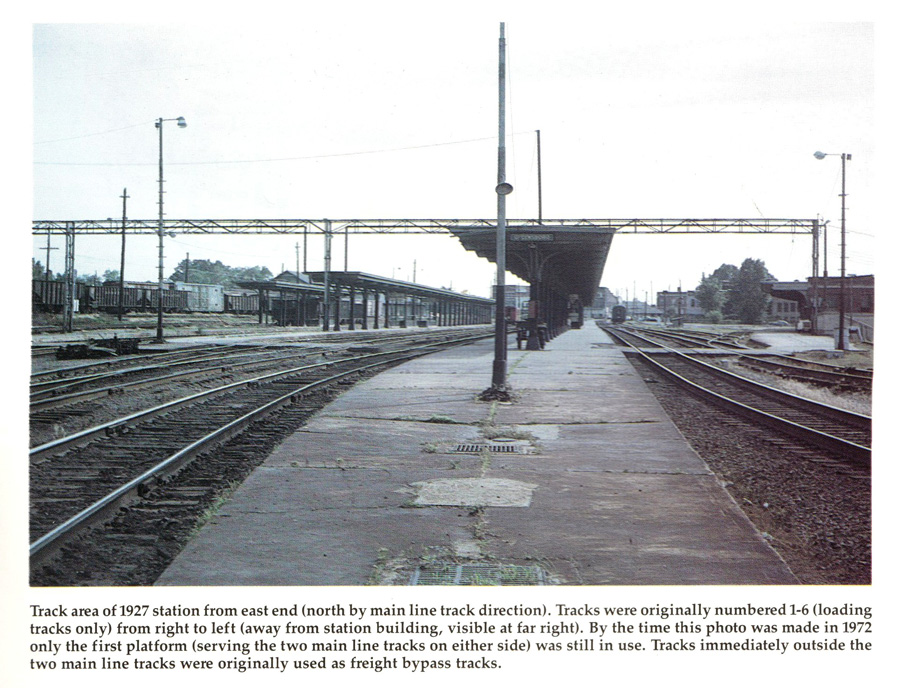
from Southern Railway Depots - Volume 1
by Ralph Ward / collection
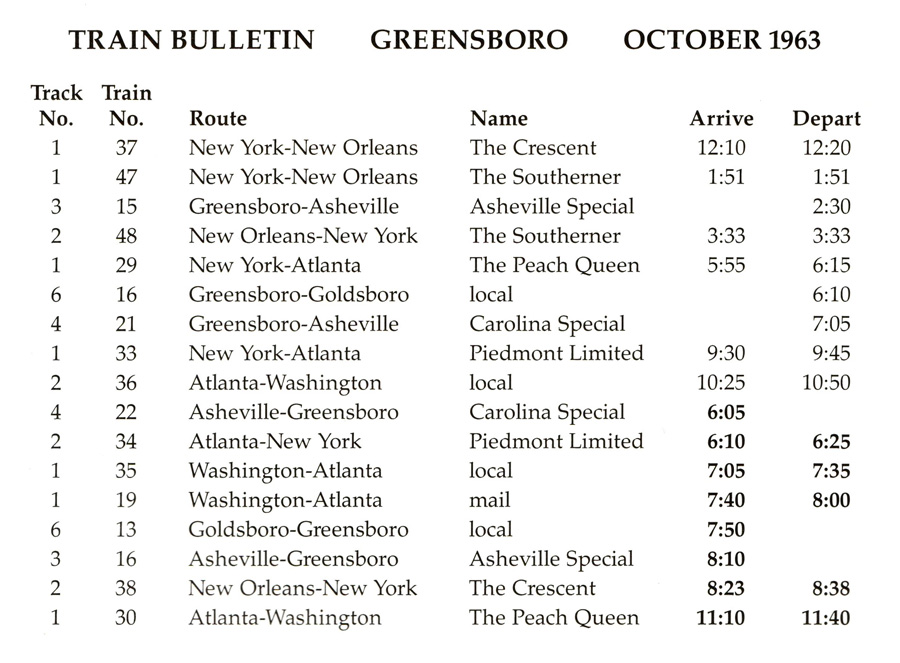
from Southern Railway Depots - Volume 1
by Ralph Ward / collection
Greensboro, NC
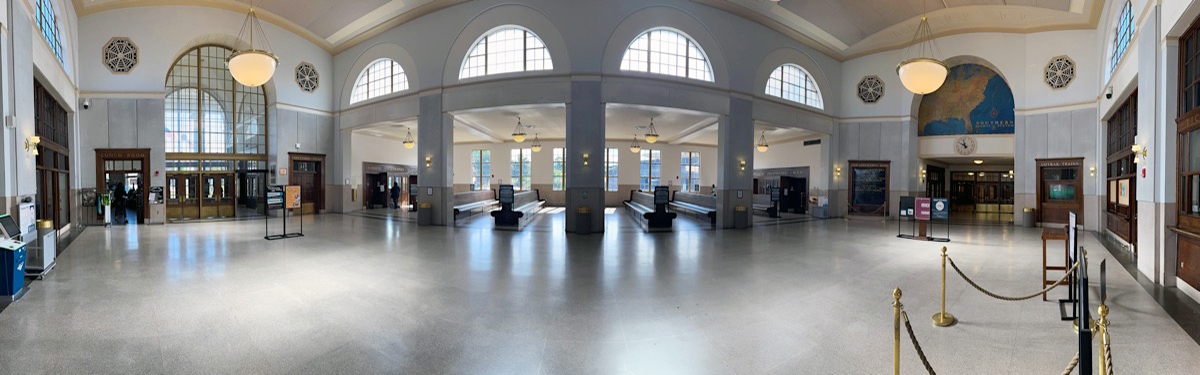
Jul 2025 / RWH
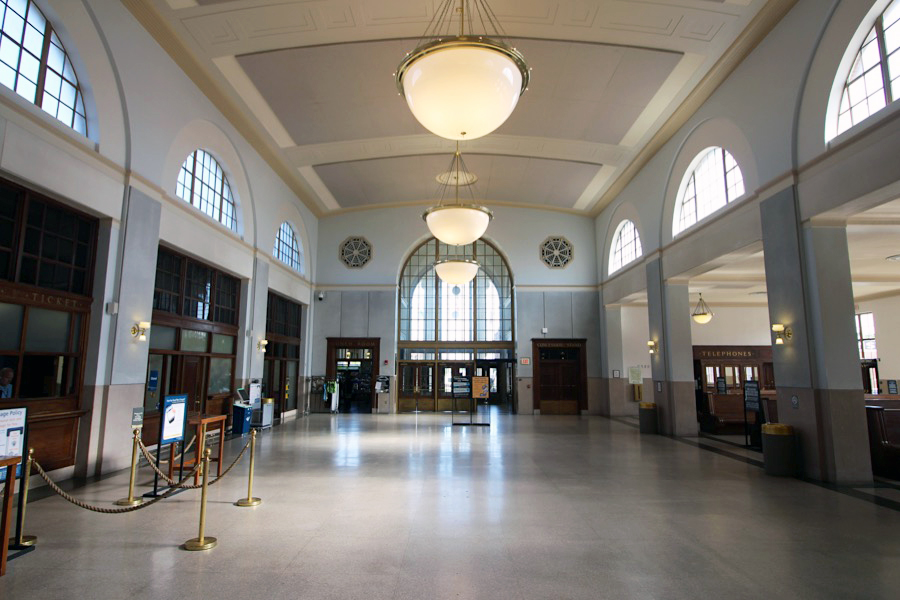
Jul 2025 / RWH

Jul 2025 / RWH
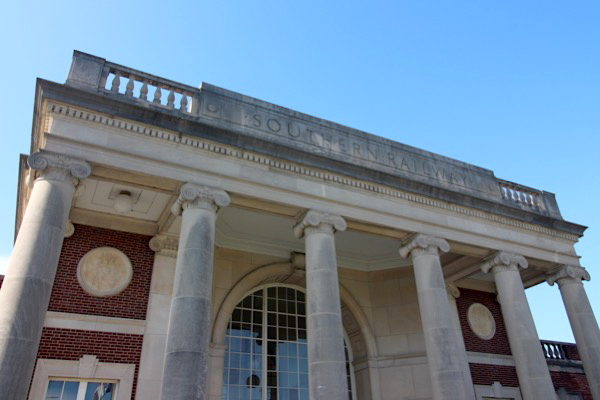
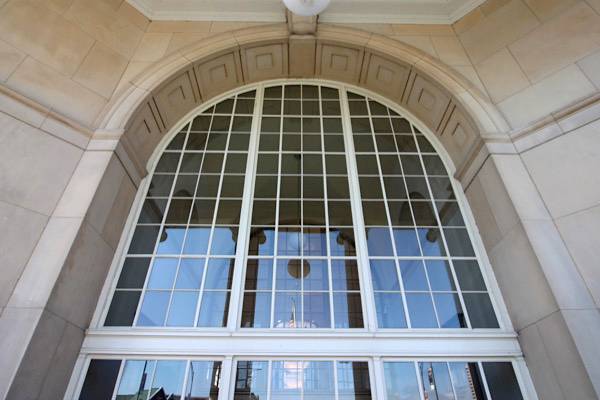
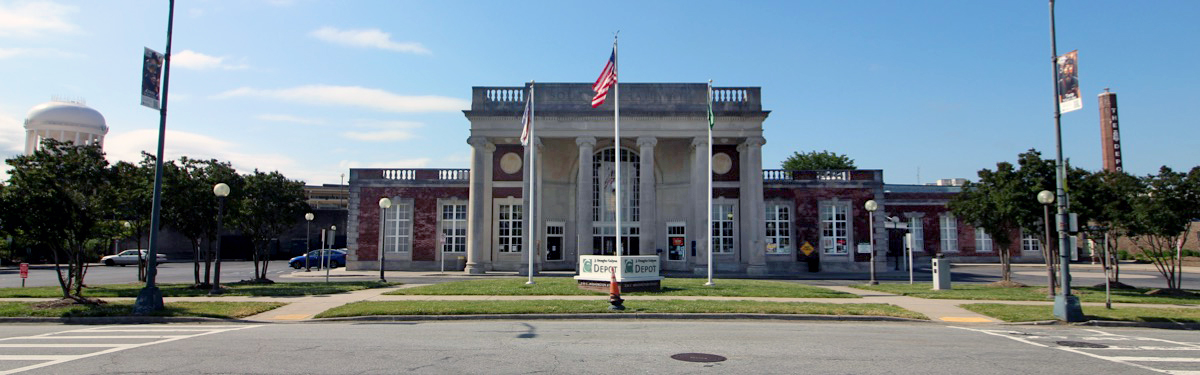
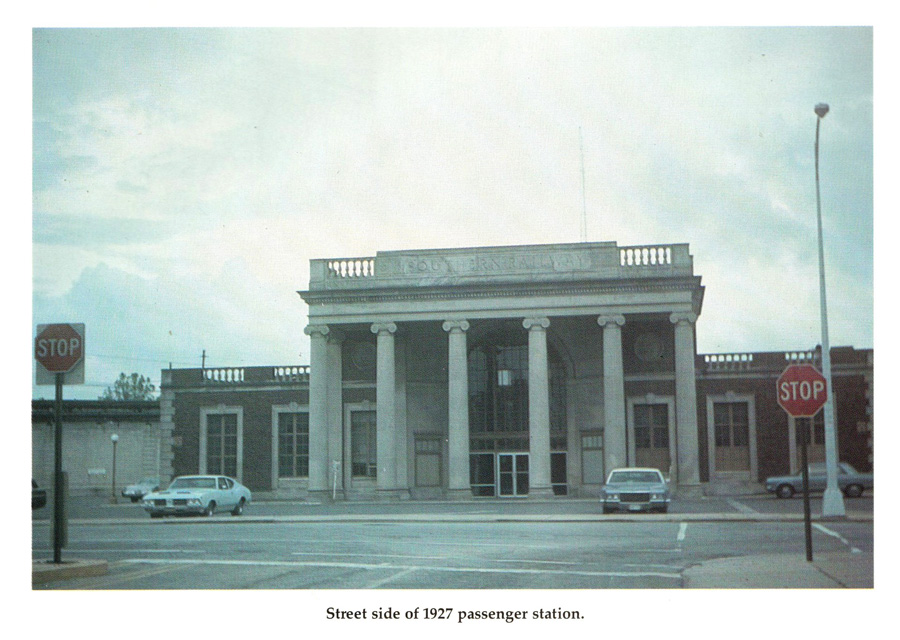
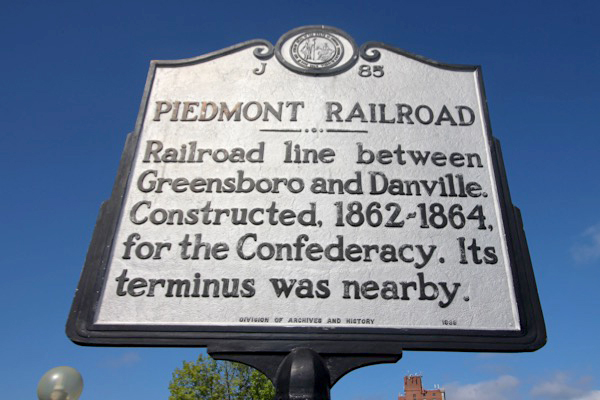
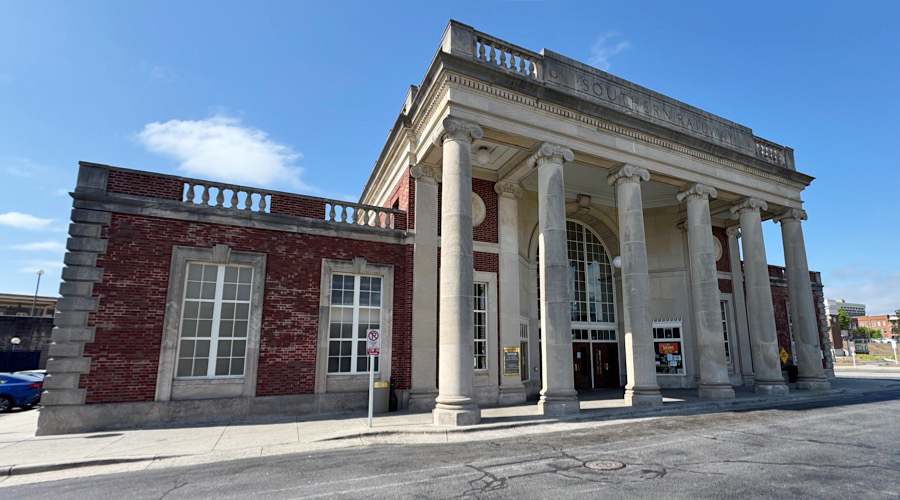
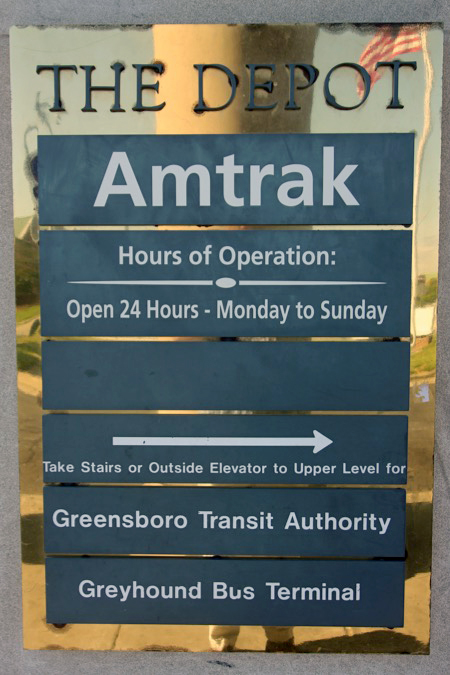
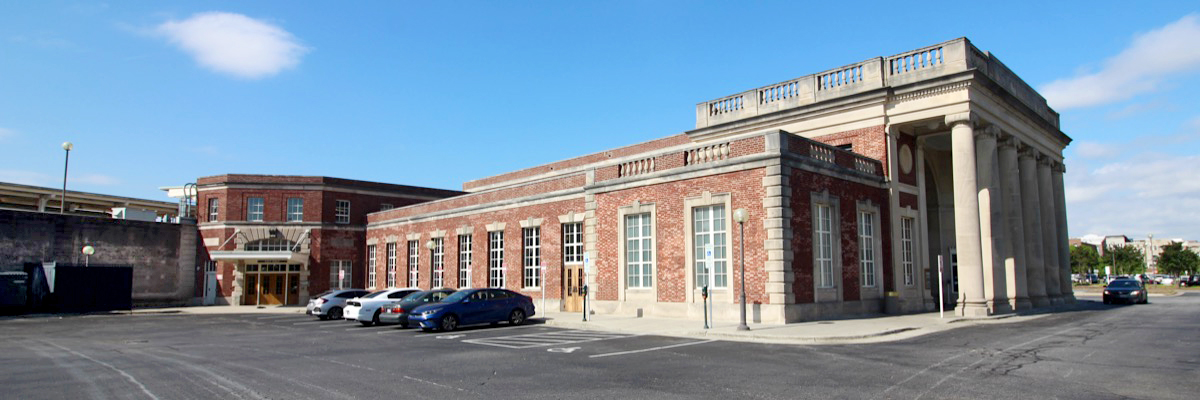
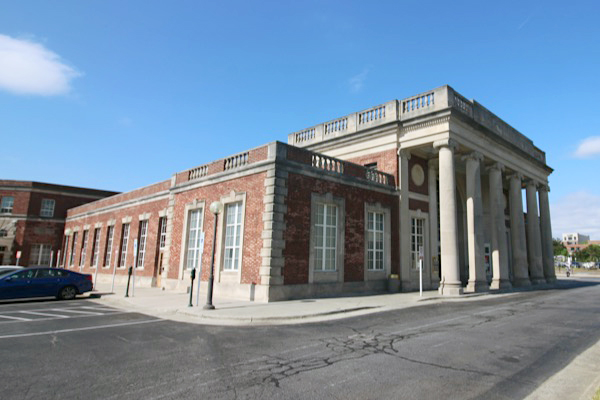
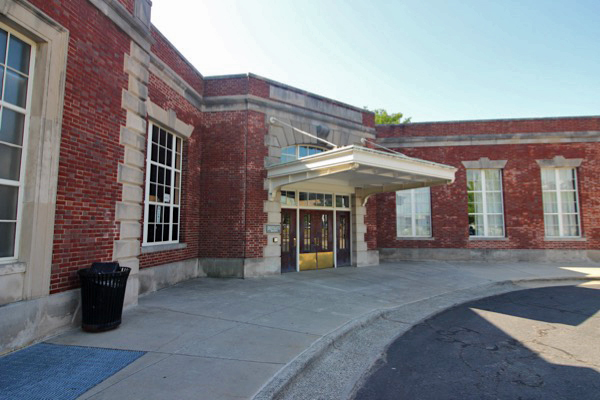
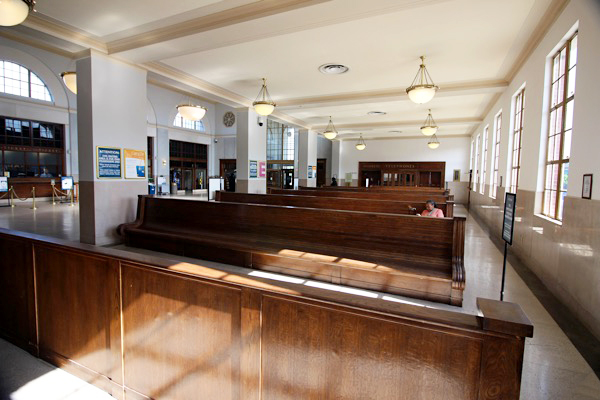
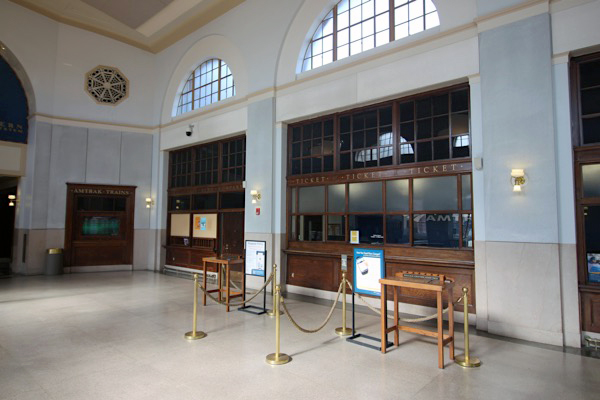
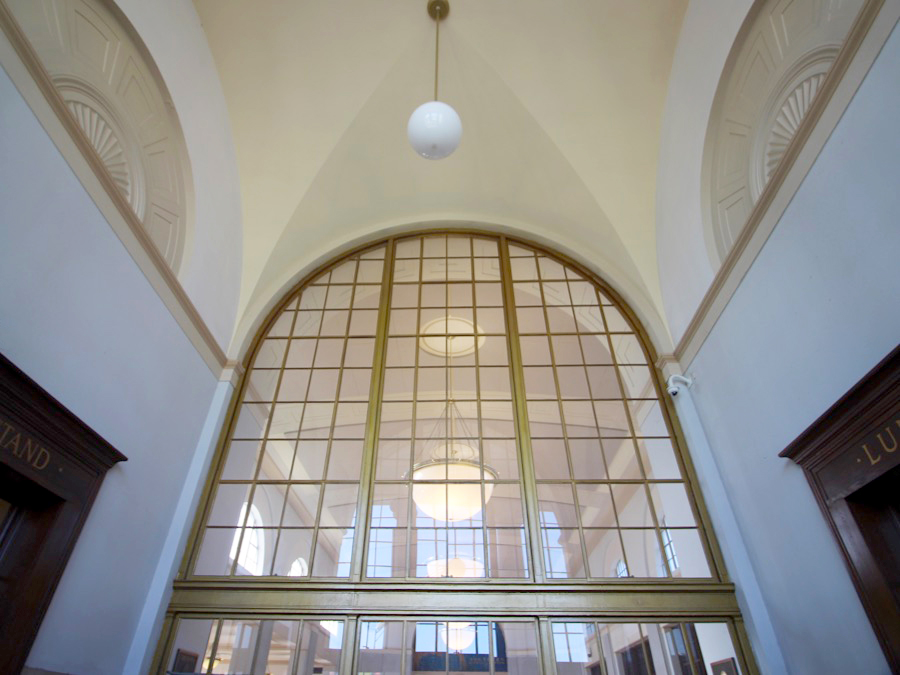
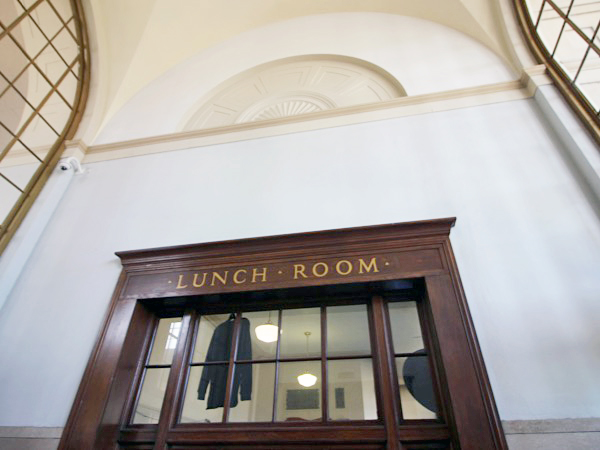
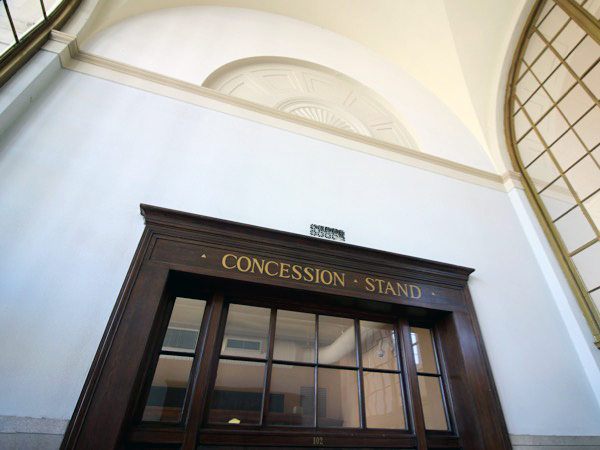
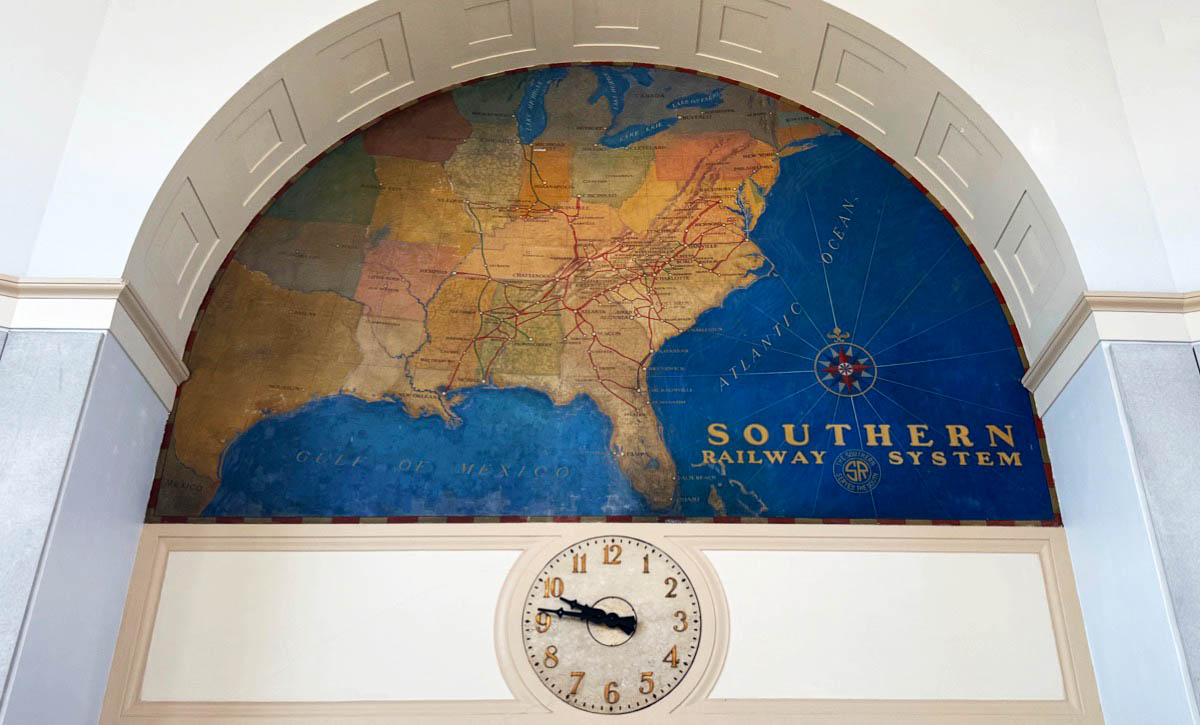
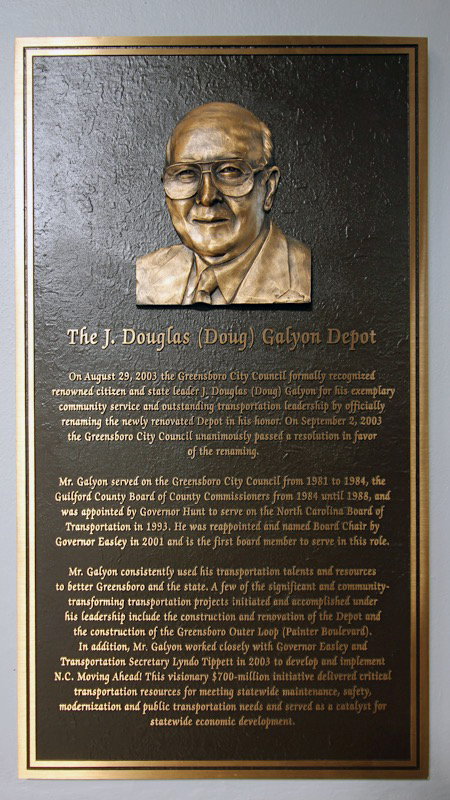
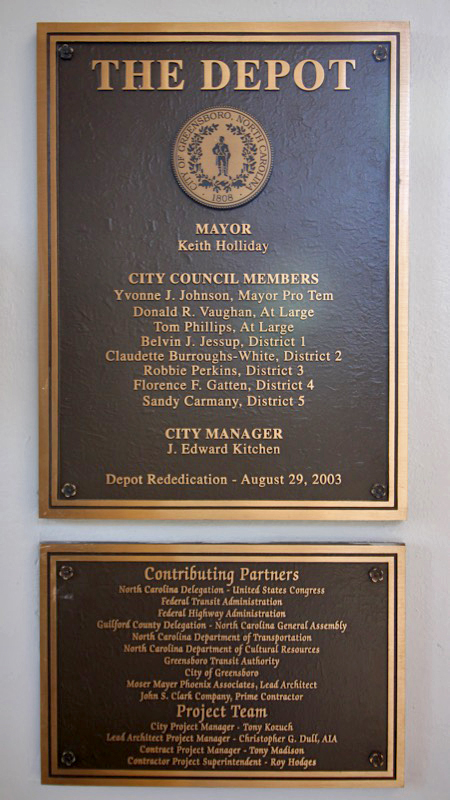
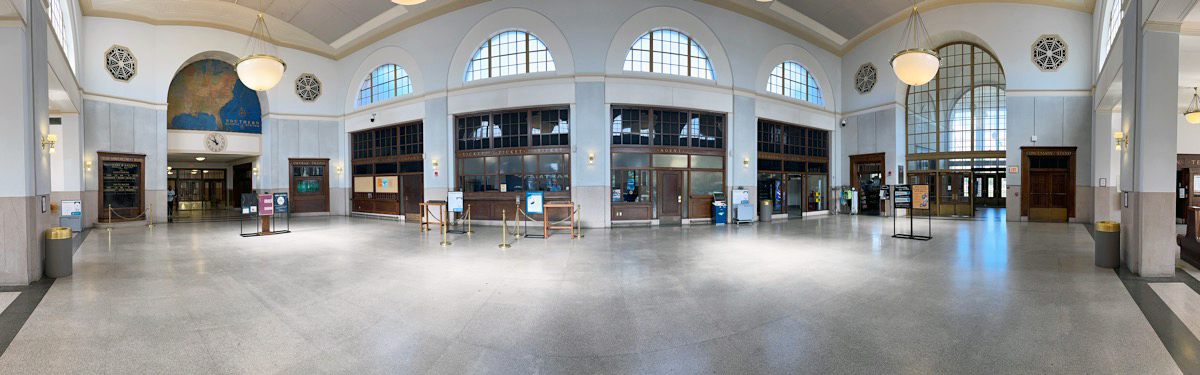
 The Greensboro passenger station, now referred to as the J. Douglas Galyon Depot, reopened on October 1, 2005. The grand building was originally erected by the Southern Railway in 1927 to serve it and the Atlantic & Yadkin Railroad. At its peak in the 1940s, more than 40 passenger trains came through the station daily. Designed by the New York architectural firm of Fellheimer and Wagner, the station has a main waiting room with an impressive mural of the Southern Railway network during the 1920s. A pedestrian tunnel extends from the waiting room, under the tracks and up to the train platforms.
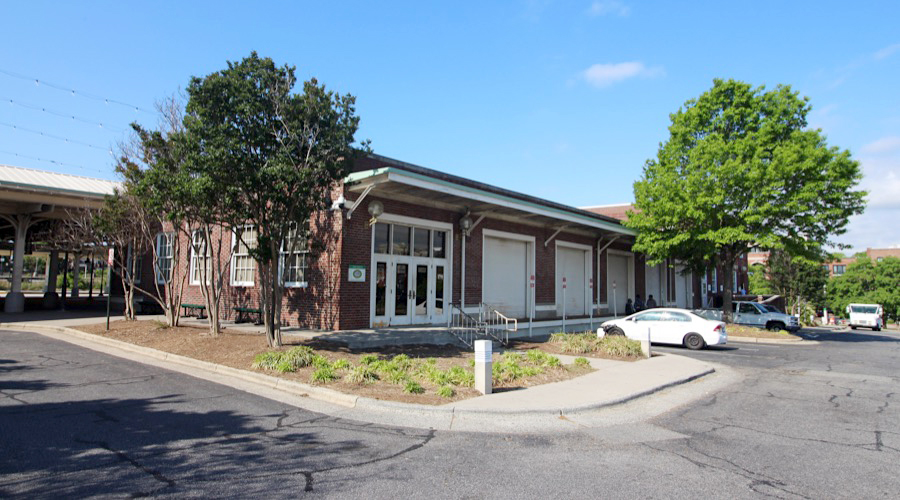
Following the decline of passenger railroading after World War II, the station was closed in May 1979; Southern subsequently donated it to the city. From then until 2005, rail passengers waited for the train in a small freight railroad office several miles west of downtown. The North Carolina Department of Transportation and city of Greensboro began working together in 1993 on plans to return passenger rail service to the original station and improve connections with other modes of transportation.
Restoration included reconfiguring a portion of the tracks near the station, extending the former passenger tunnel, and building a new baggage tunnel, boarding platforms and canopies for train passengers. Modernizations included track side escalators and digital arrival/departure monitors; significant effort was made to retain the original 1920s appearance of this beautiful station.
Greensboro, NC / May 2025 / RWH
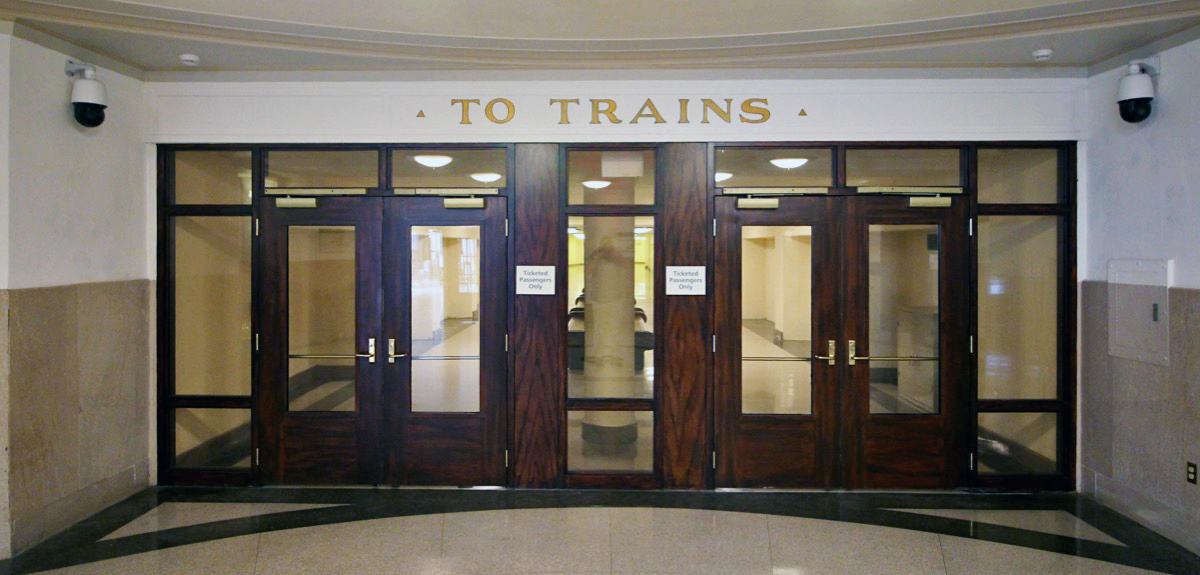
Jul 2025 / RWH
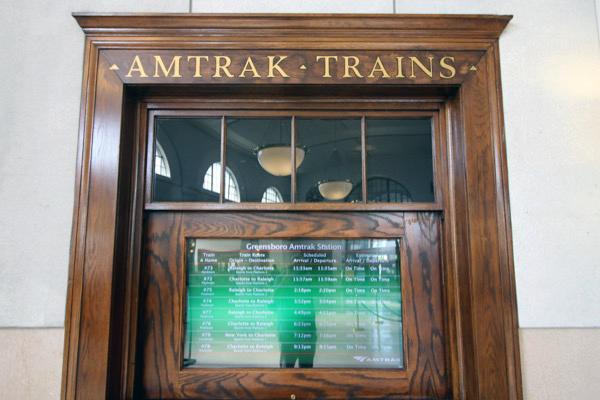
Jul 2025 / RWH
Jul 2025 / RWH
Jul 2025 / RWH
Jul 2025 / RWH
1930 Official Guide ad / collection
Jul 2025 / RWH
Jul 2025 / RWH
Jul 2025 / RWH
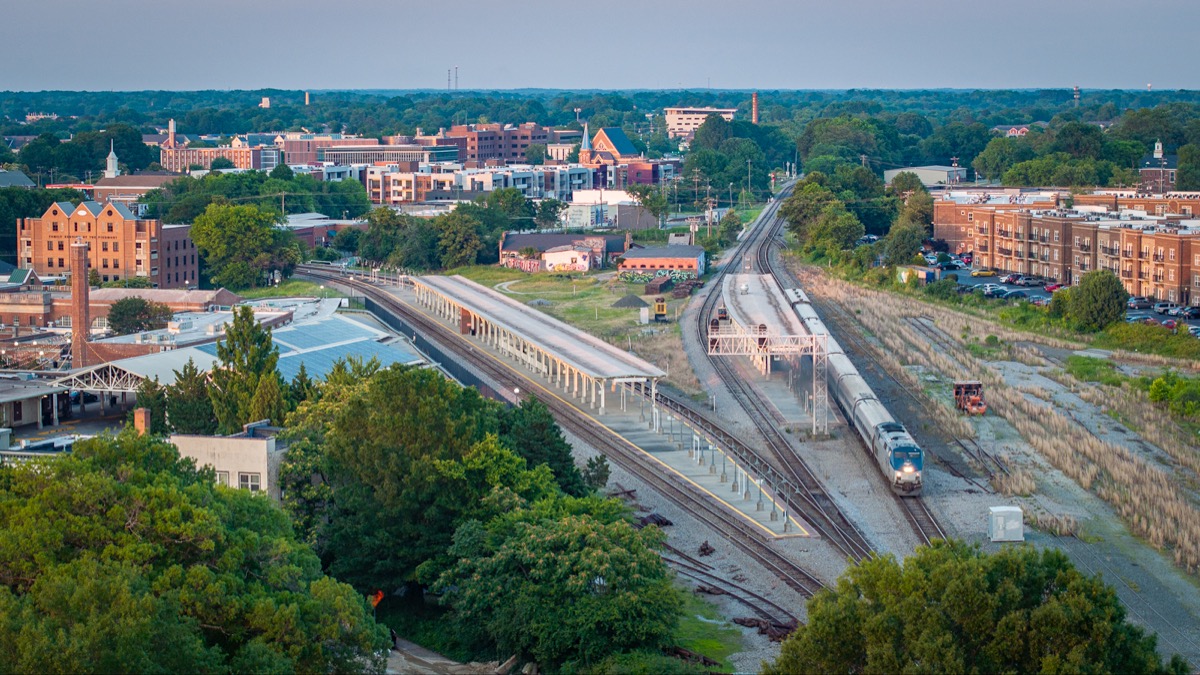
Greensboro, NC / Jun 2025 / Greg Dahbura
113 Burlington, NC
- Carolinian
- Piedmont
Burlington, NC / Apr 2025 / RWH


Burlington, NC / Apr 2025 / RWH
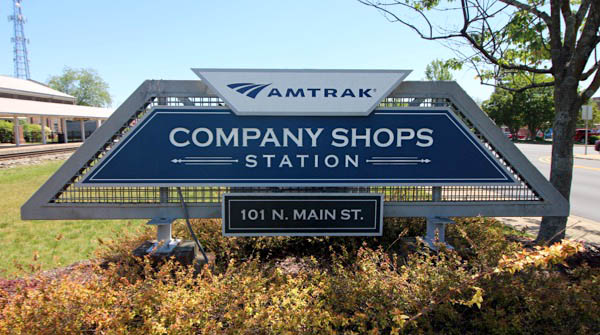
- name:Company Shops Station
- address:101 N Main Street
- type:city depot, 1 platform
- owner:North Carolina Railroad
- opened:locomotive shops 1857
- builder:North Carolina RR
- style:adaptive reuse
- renovated:2003
- services:waiting room
- links: Amtrak | Great Stations
Burlington, NC / Apr 2025 / RWH
Click to see the Company Shops Railroad Station plotted on a Google Maps page
Apr 2025 / RWH

Burlington, NC / Apr 2025 / RWH
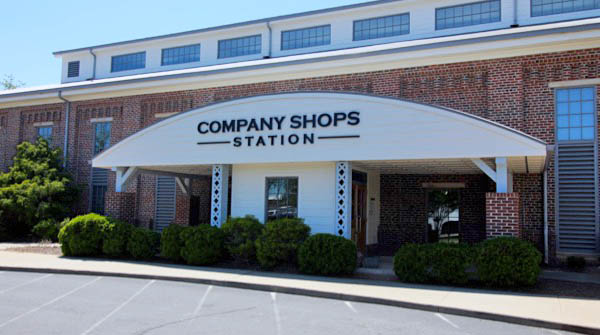
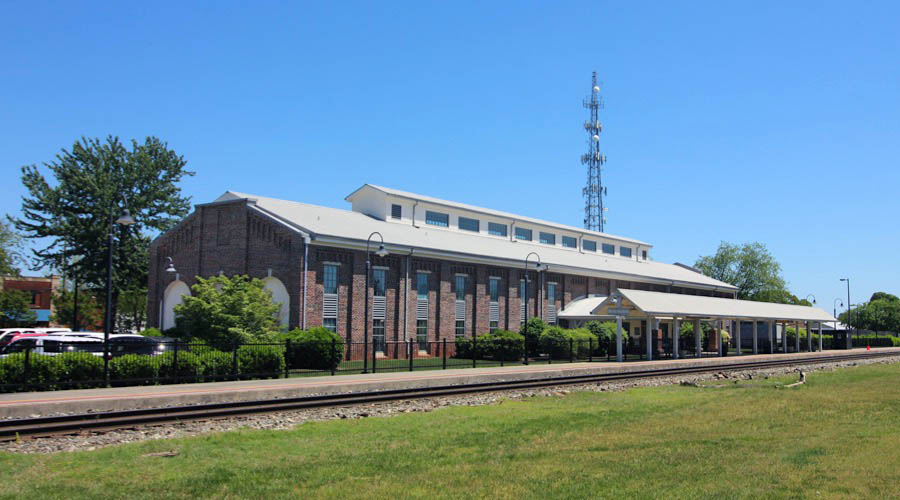
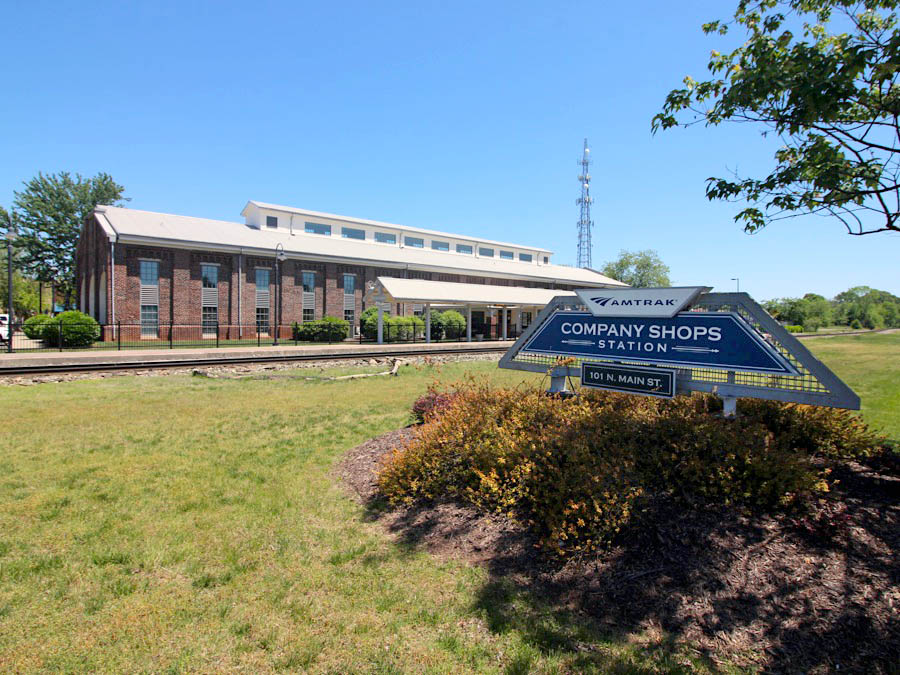
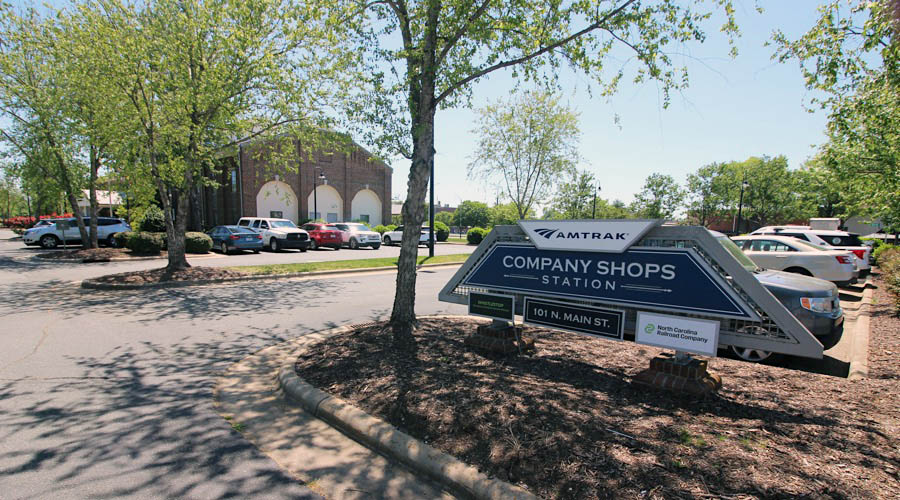
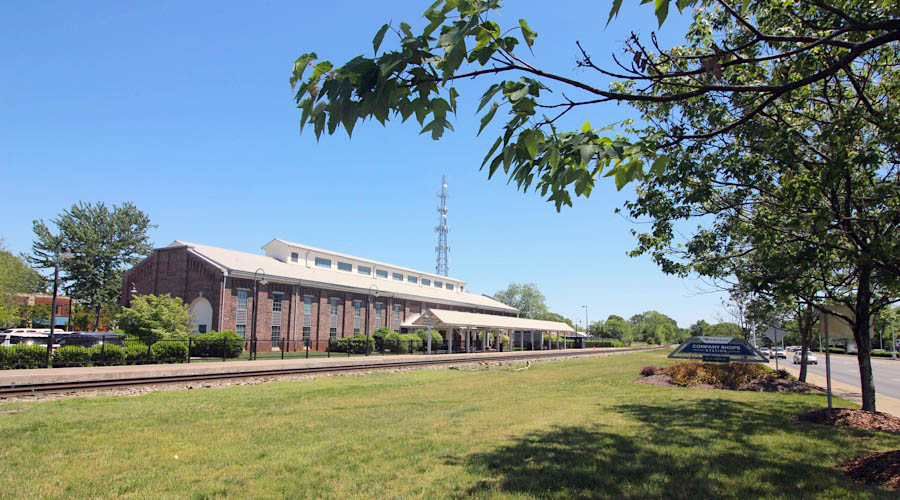
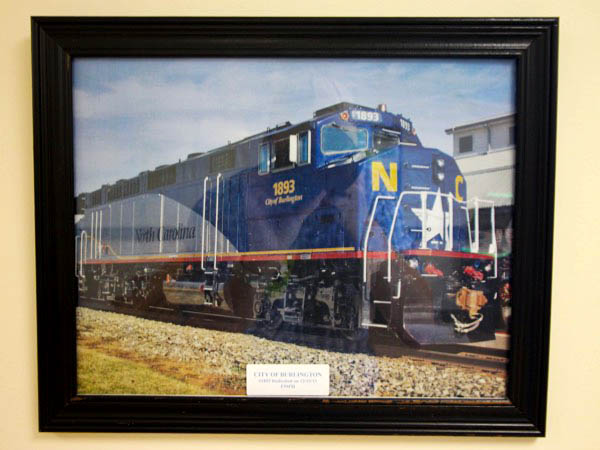
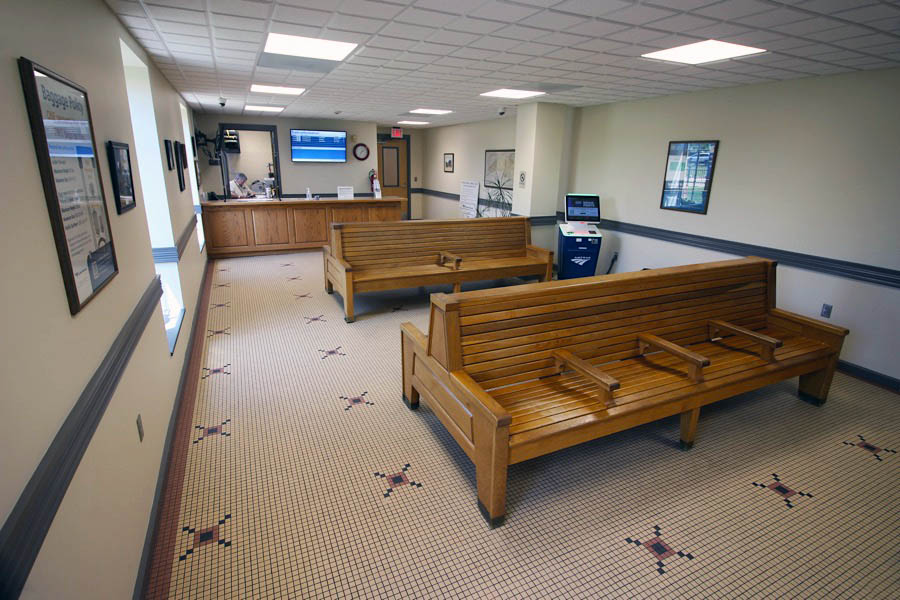
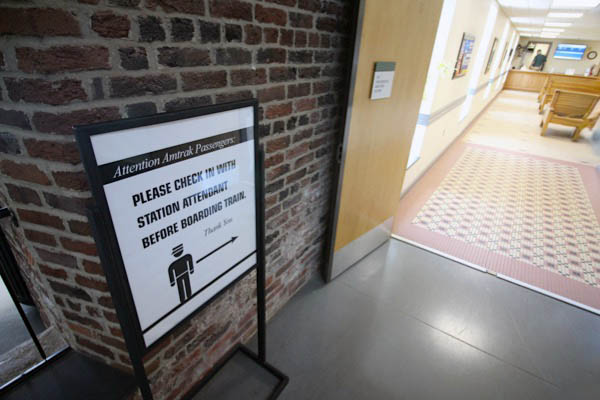
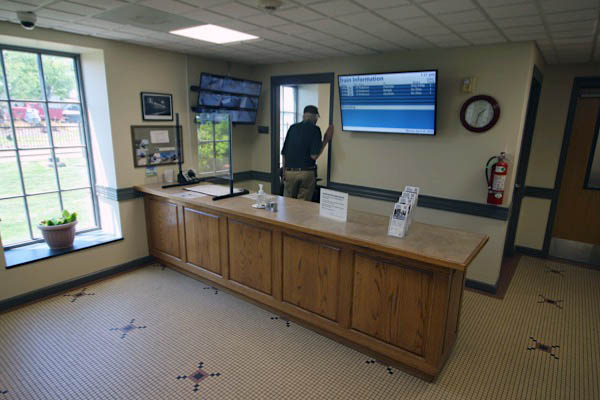
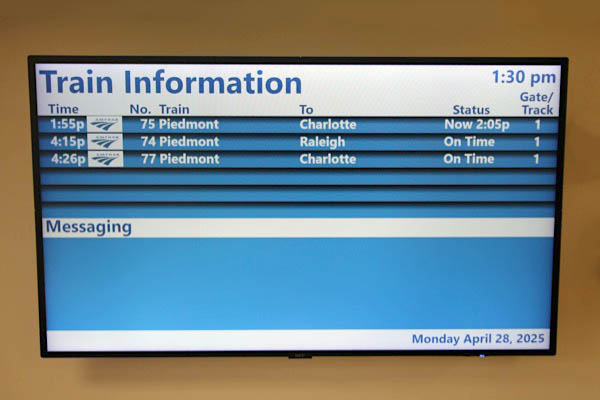
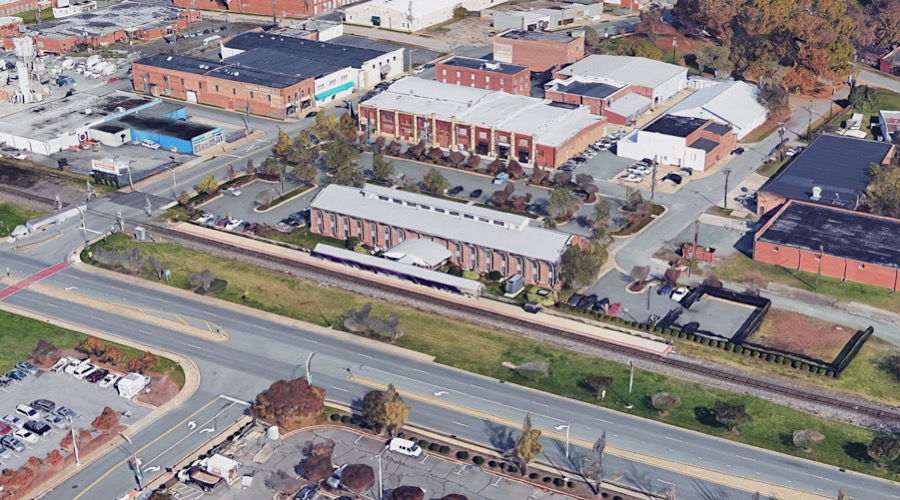
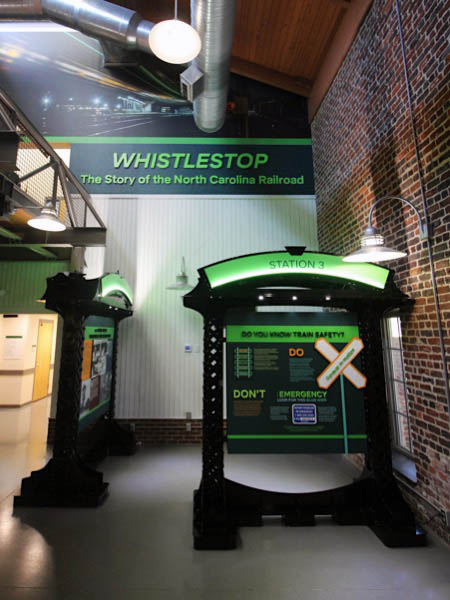
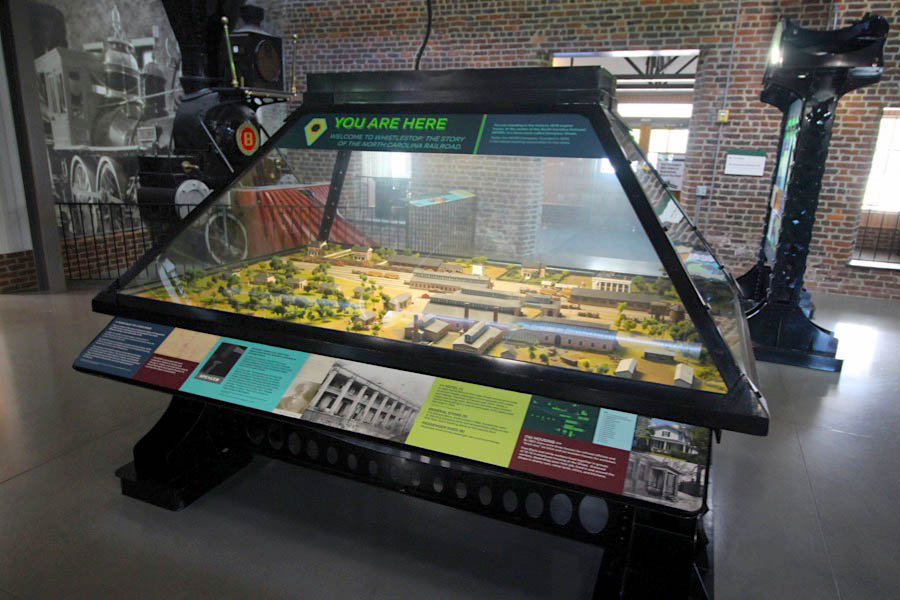
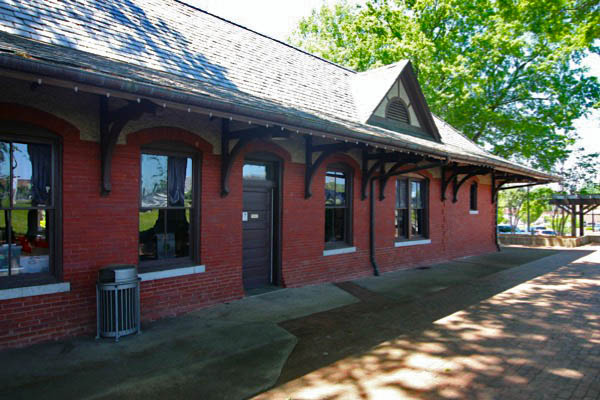
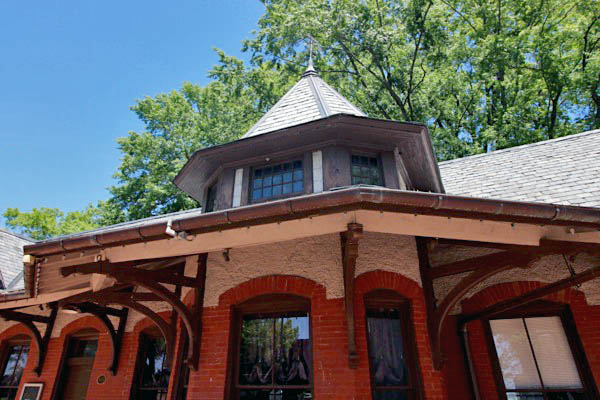
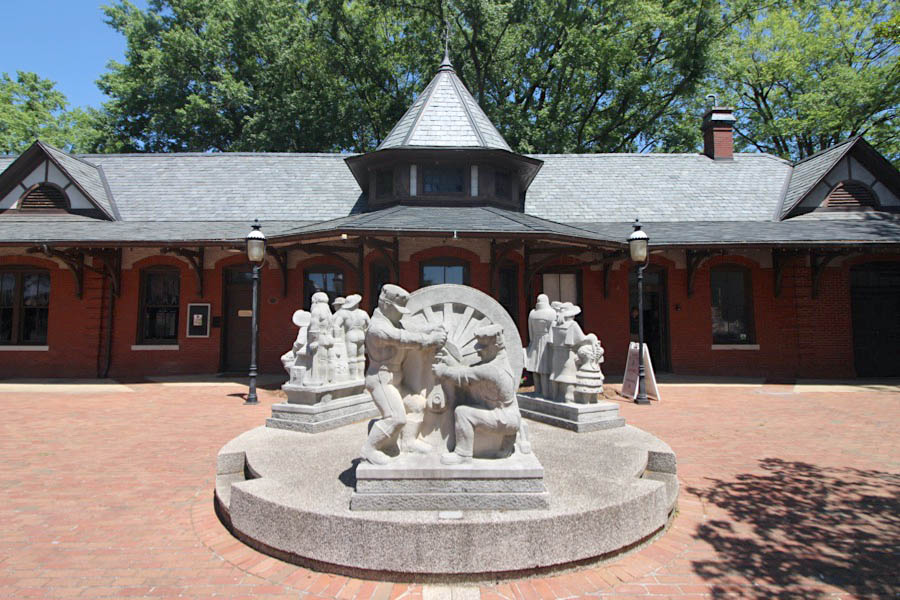
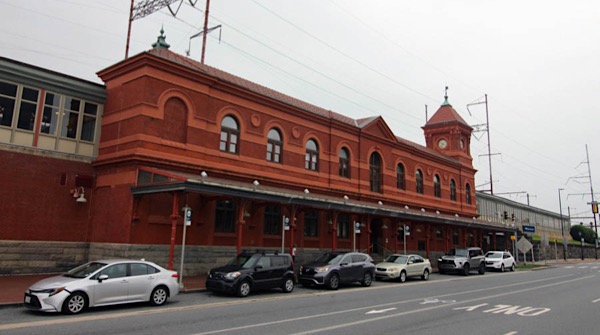
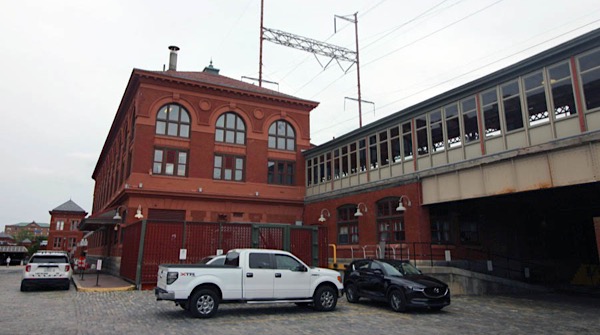
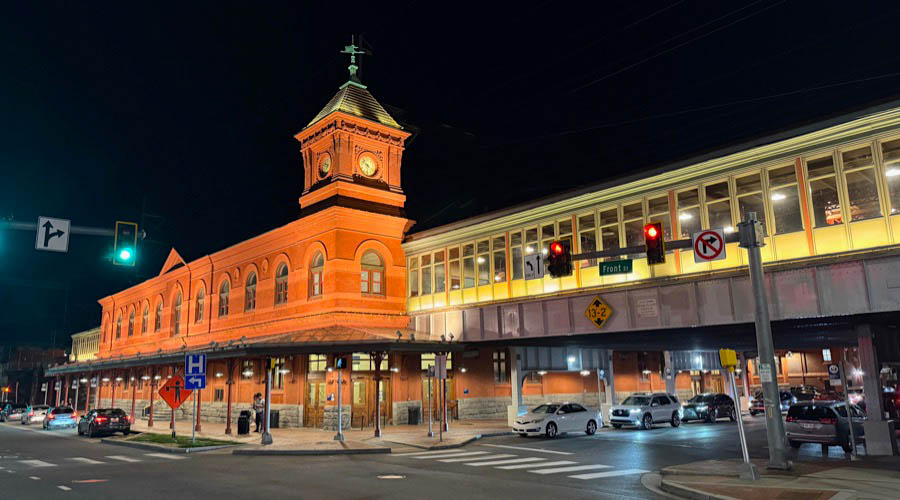
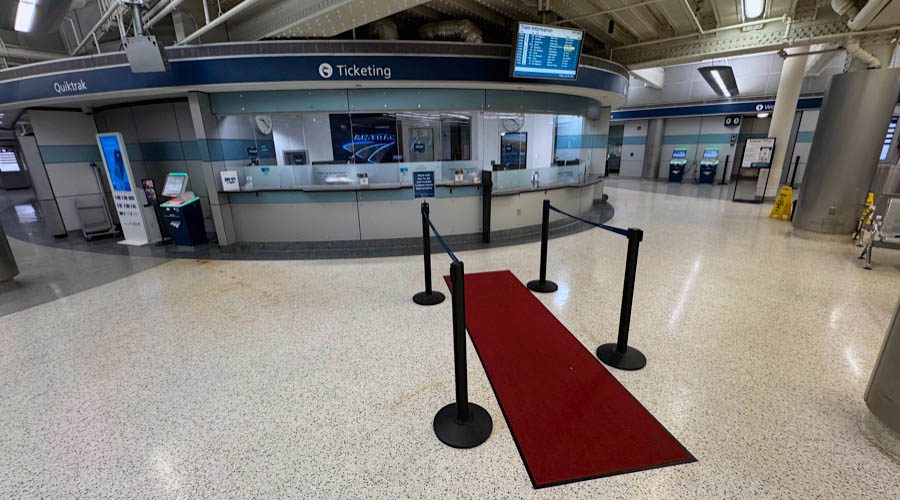
The Amtrak station in Burlington, opened in July 2003, is sited in the former engine house of the North Carolina Railroad (NCRR), the only remnant of a railroad maintenance facility built in the 1850s. The renovated building, which also houses the NCRR Whistlestop Museum in its lobby, as well as city offices, is called the Company Shops Station.
Moser, Mayer, and Phoenix, Architects, created a design to incorporate many of the architectural features of the former engine house and yet make it fit for modern tenants. The barrel roof was removed to recreate the silhouette from the 1800s. A baking soda solution was applied to the soft brick of the building to remove the white paint and revealed detail not previously visible. Overall, this adaptive reuse of the historic property has had a positive impact on the look of the downtown section, according to its residents. It also won an award for excellence from the Main Street, North Carolina division of the state Department of Commerce.
Burlington, NC / Apr 2025 / RWH
Apr 2025 / RWH
Apr 2025 / RWH
Apr 2025 / RWH
Apr 2025 / RWH
Burlington, NC
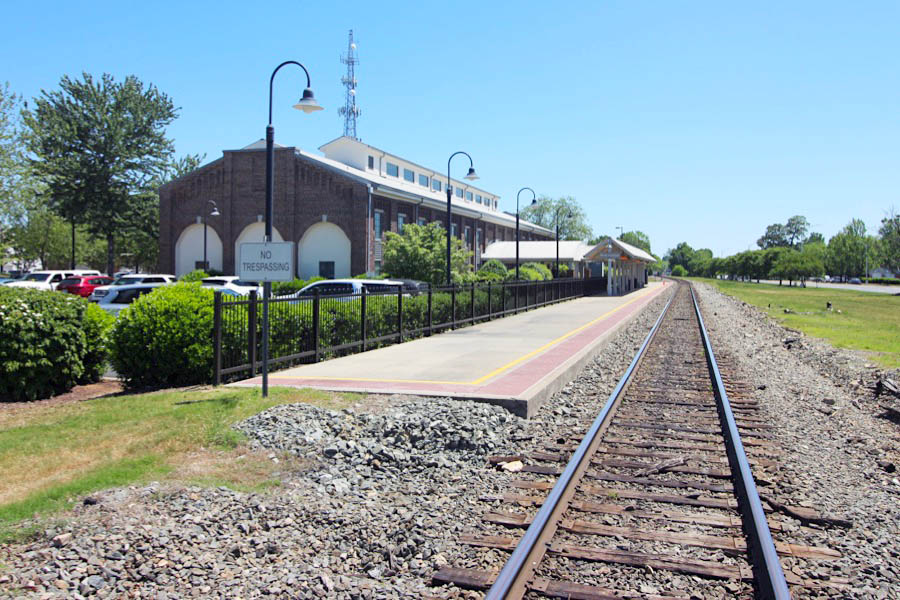
Burlington, NC / Apr 2025 / RWH
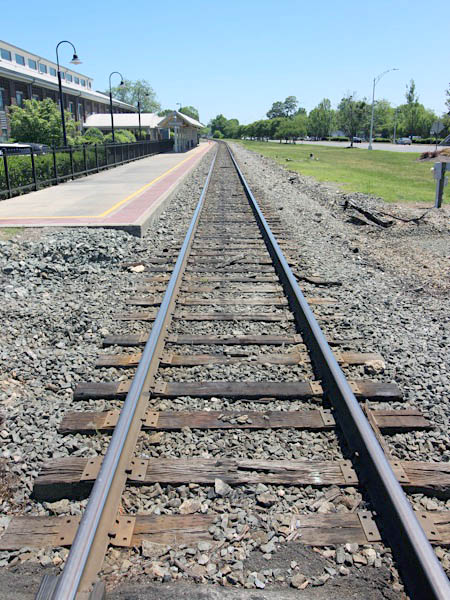
Apr 2025 / RWH
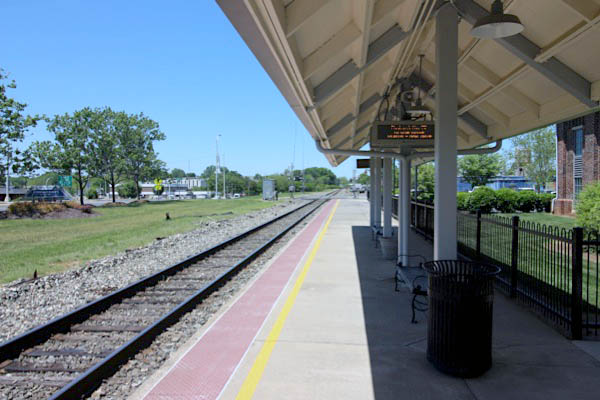
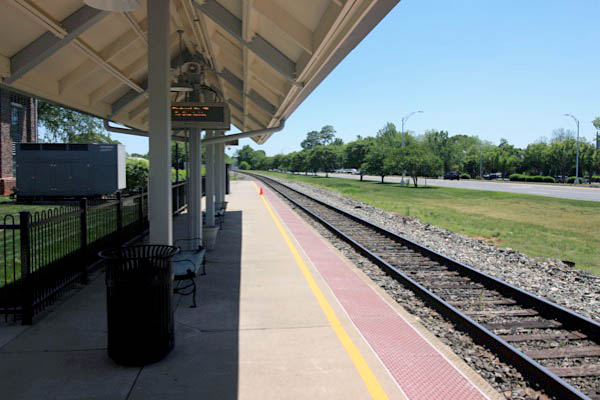
Burlington, NC / Apr 2025 / RWH
Burlington, NC / Apr 2025 / RWH
Google Maps
North Carolina Railroad
Apr 2025 / RWH

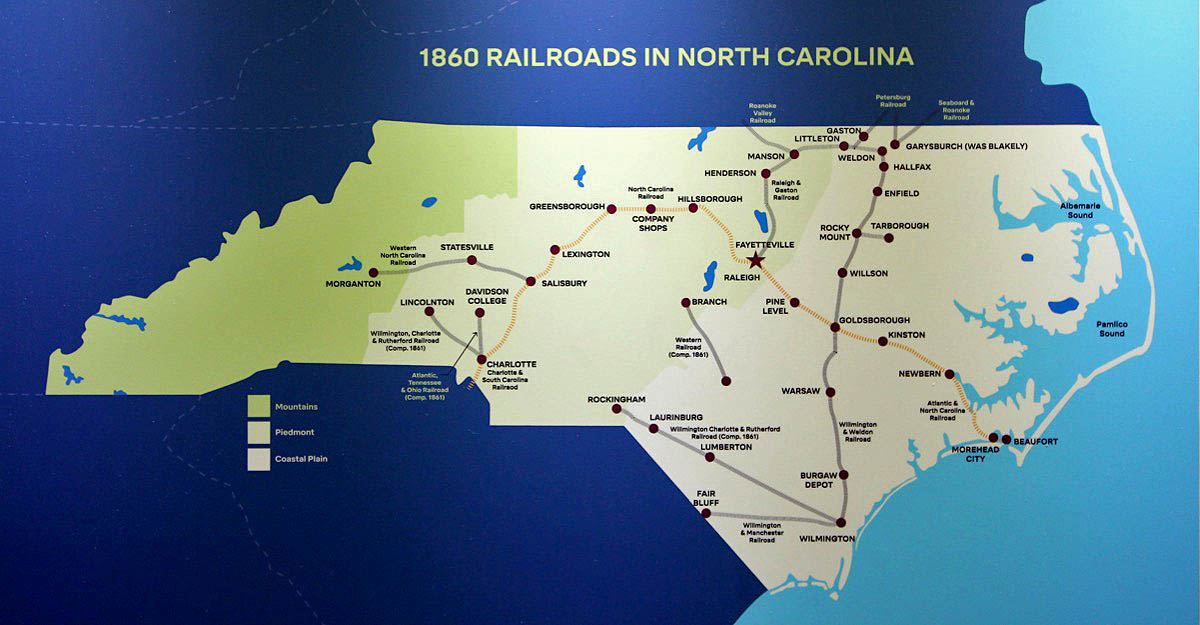
The North Carolina Railroad (reporting mark NCRR) is a 317-mile state-owned rail corridor extending from Morehead City, North Carolina, to Charlotte. The railroad carries over 70 freight trains (operated by the Norfolk Southern Railway) and ten passenger trains (Amtrak's Carolinian and Piedmont) daily. The railroad works with the North Carolina Department of Commerce and the North Carolina Department of Transportation on capital-improvement projects.
Apr 2025 / RWH
Apr 2025 / RWH

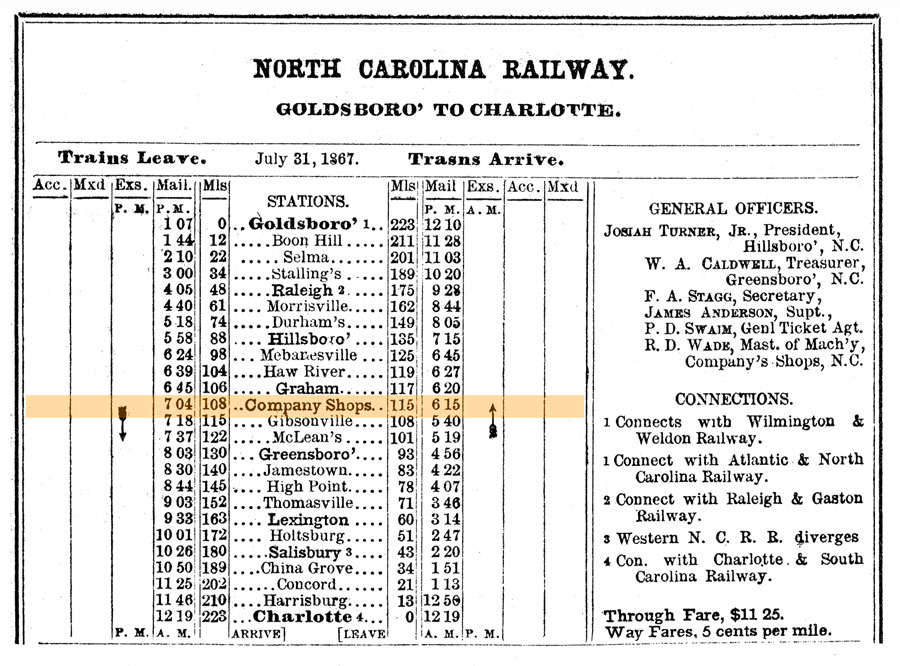
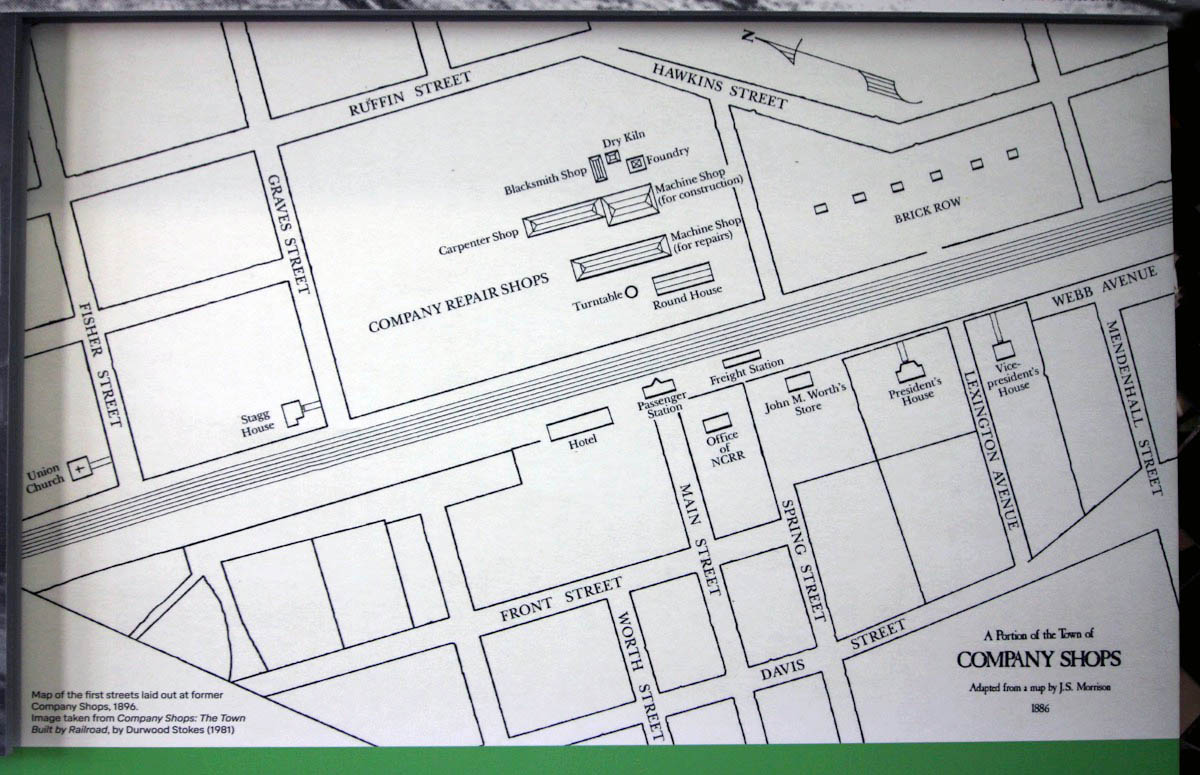
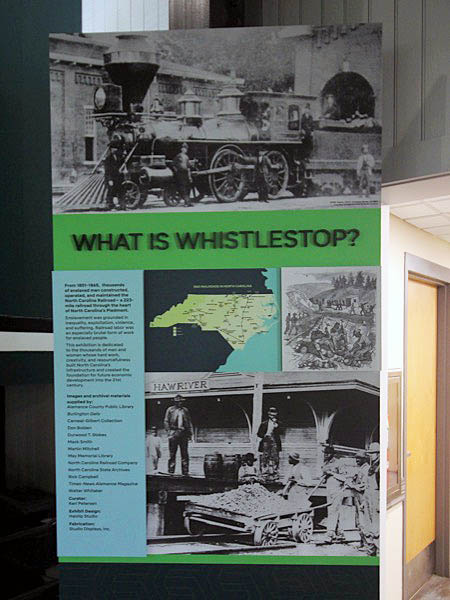
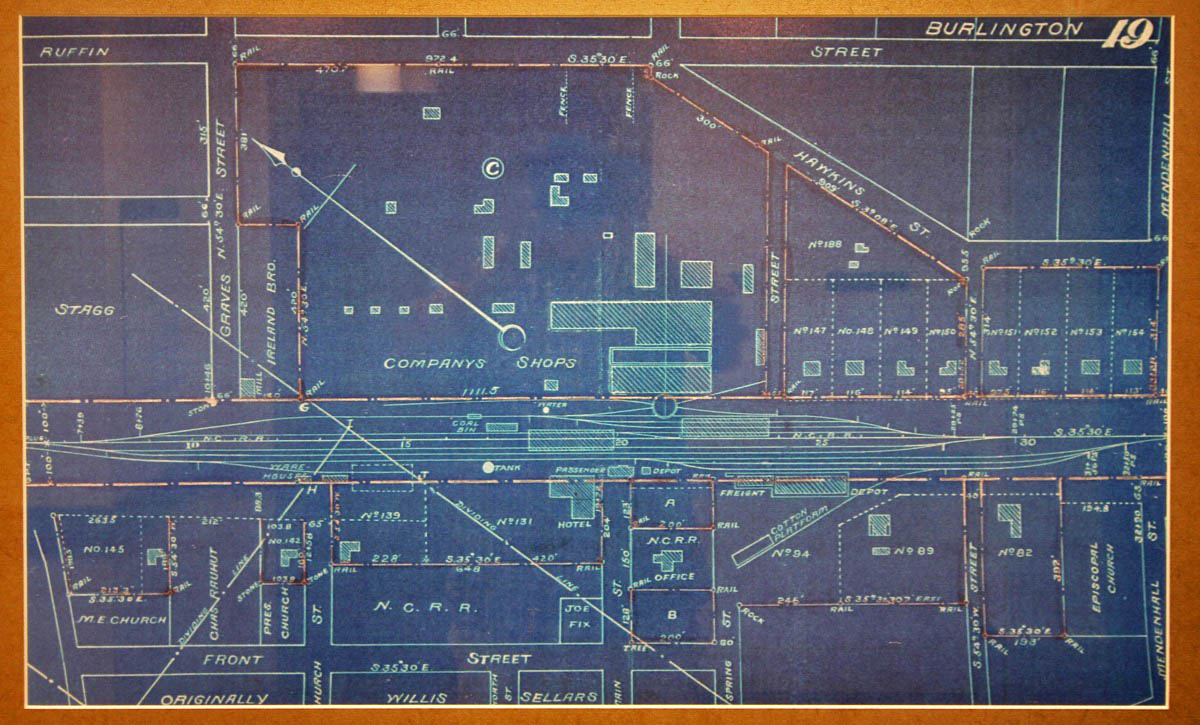
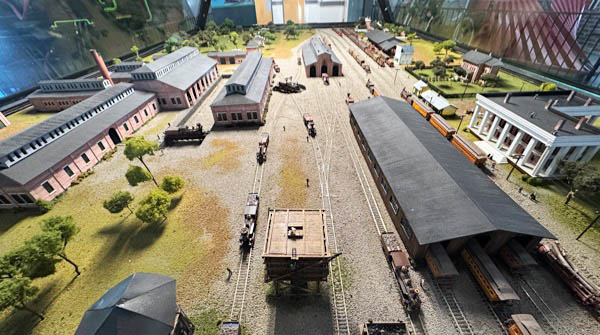
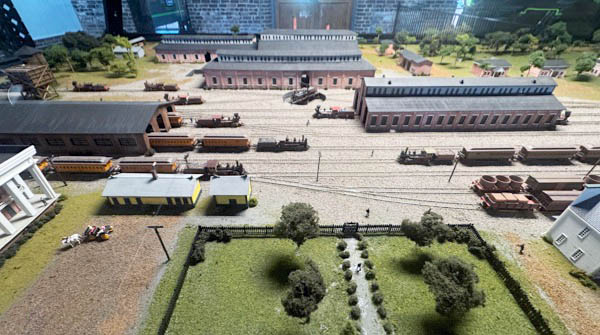
 Chartered in 1849 and completed in 1856, the North Carolina Railroad followed a crescent-shaped route from Goldsboro through Raleigh, Durham, Hillsborough, Greensboro, and Salisbury to Charlotte. In August 1853 its directors voted to construct shops within five miles of the railway center, and the following May the company bought eight tracts of land totaling approximately 632 acres. The directors were committed to the concept of a company town characteristic of nineteenth-century industrial development; although the railway's construction covered less than 30 acres, the directors wanted the additional land to control development and ensure adequate police oversight of the community where their workers lived.
Construction began in the summer of 1855, and by 1859 there were 57 buildings in the village. Seven shop structures were built: two engine or machine shops, a blacksmith shop, a foundry, a carpentry shop, an engine shed, and a car shed. Workmen in the shops were capable of completely rebuilding engines, constructing boxcars, and repairing all of the railroad's equipment. In addition to the shops, the workers erected a passenger and freight station, a two-story hotel, houses for workers, and three larger houses for railway officials, one of which served as company headquarters.
1868 Official Guide ad / collection



Apr 2025 / RWH
Apr 2025 / RWH
Apr 2025 / RWH
Apr 2025 / RWH
Apr 2025 / RWH
Apr 2025 / RWH

Check out North Carolina Railroad Company to see more about today's company
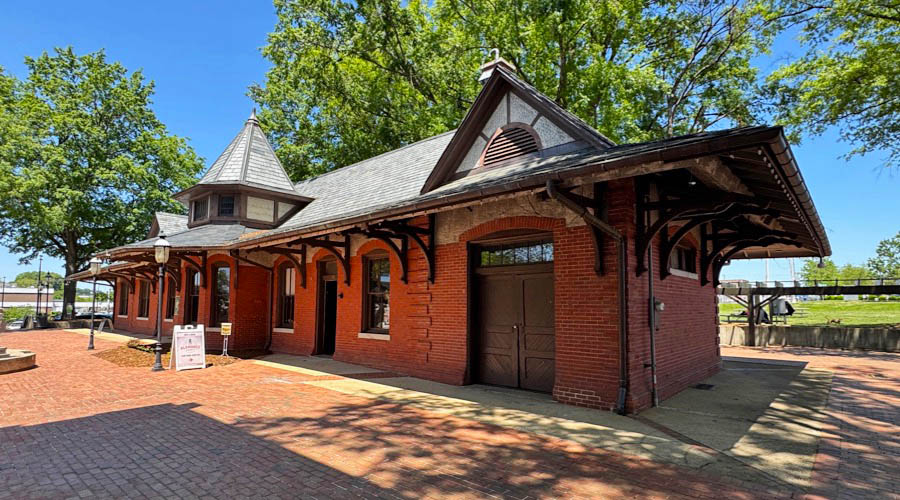
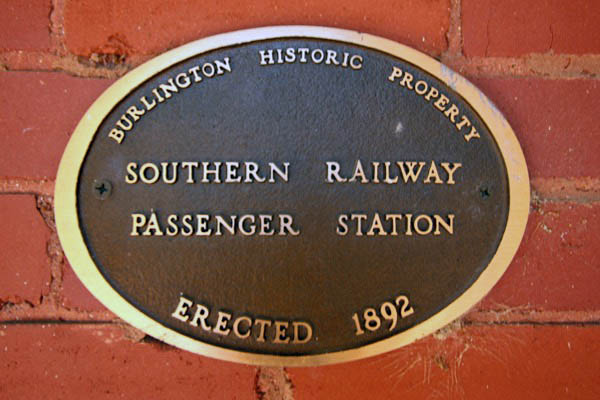
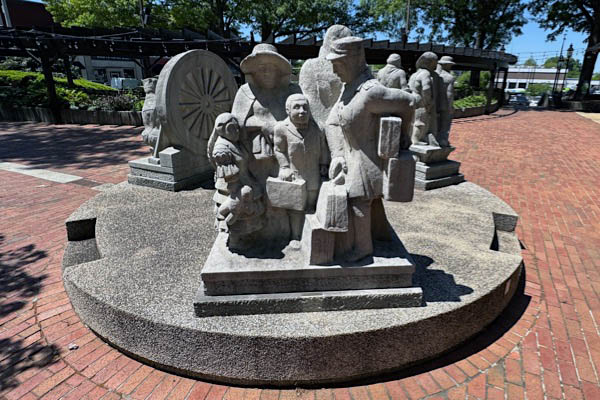
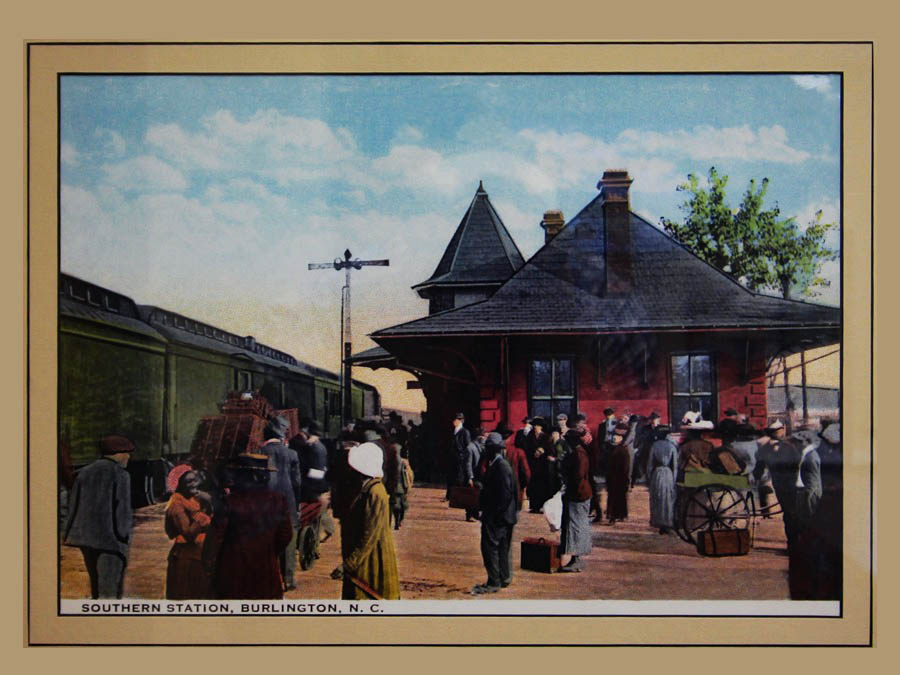
Burlington, NC / Apr 2025 / RWH
Click to see the former Southern Railway depot plotted on a Google Maps page
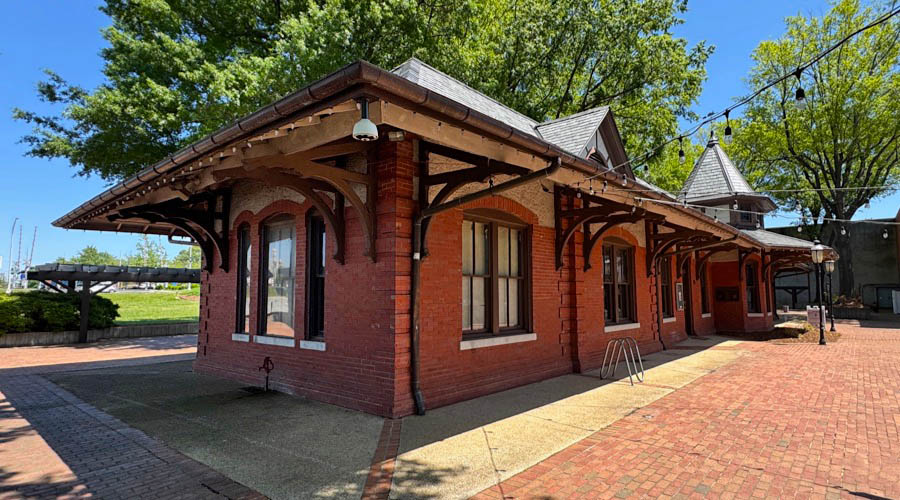
Burlington, NC / Apr 2025 / RWH
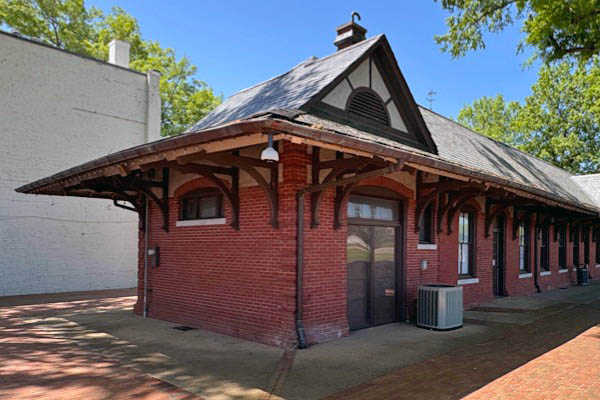
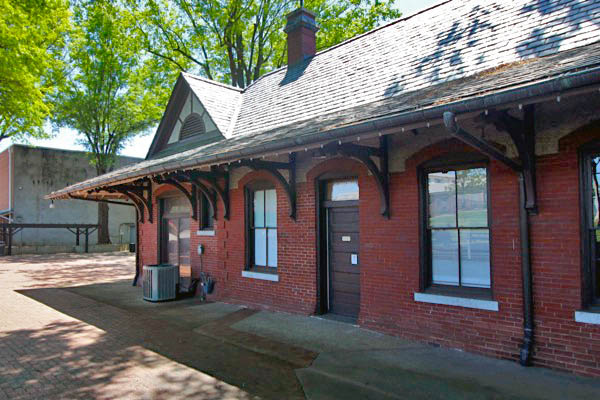
Apr 2025 / RWH
Burlington, NC / Apr 2025 / RWH
Apr 2025 / RWH
Apr 2025 / RWH
Apr 2025 / RWH
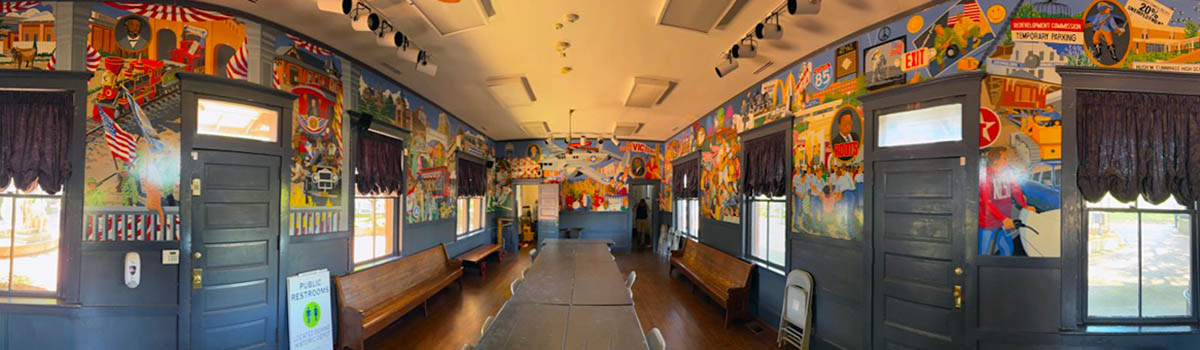
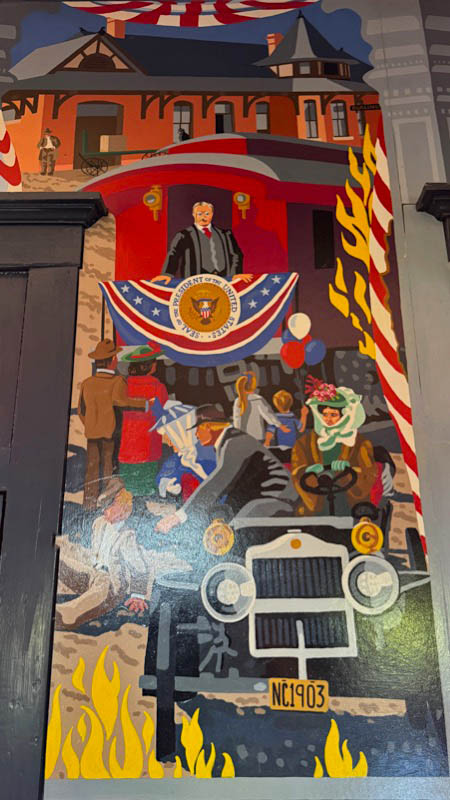
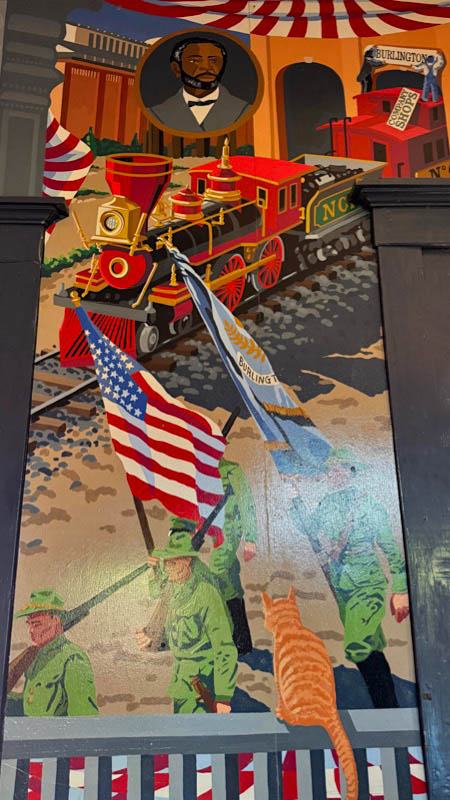
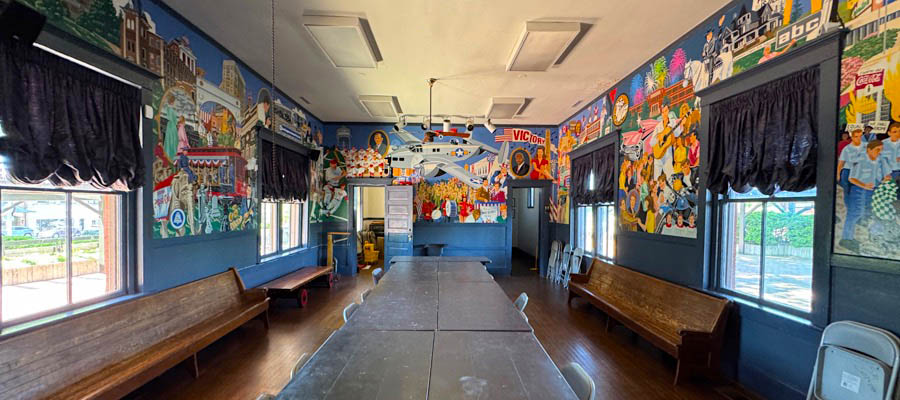
Station Murals
Apr 2025 / RWH
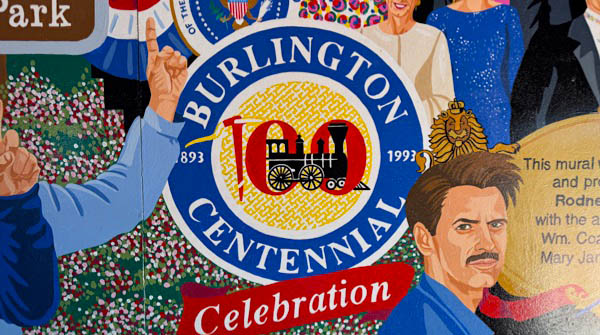

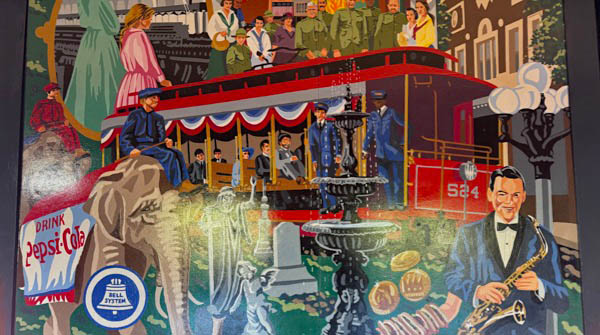
Apr 2025 / RWH
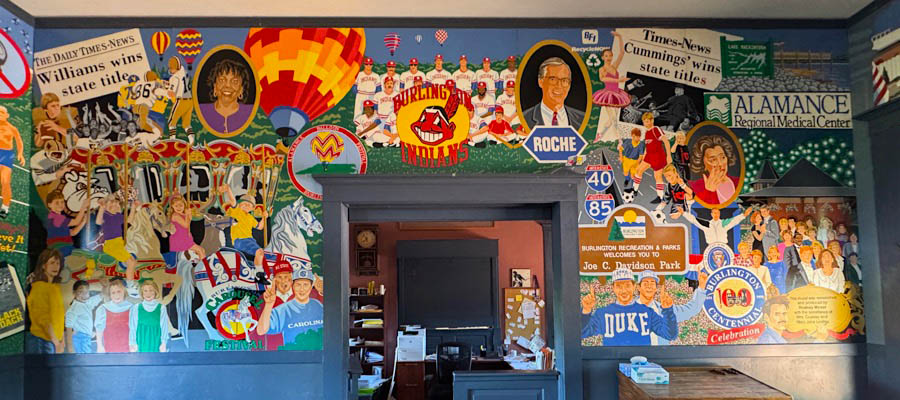
Apr 2025 / RWH
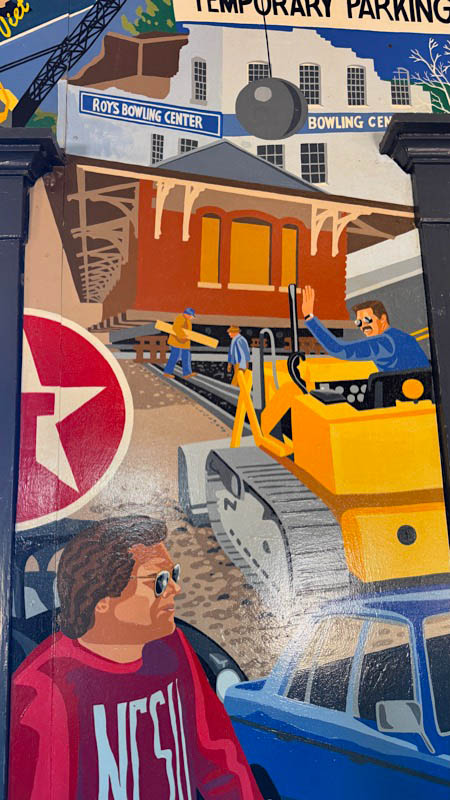
Apr 2025 / RWH
Apr 2025 / RWH
147 Durham, NC
- Carolinian
- Piedmont
Durham, NC / Jul 2025 / RWH

- name:Walker Warehouse
- address:601 W Main Street
- type:city station, 1 platform
- owner:City of Durham
- opened:1996
- rebuilder:City of Durham
- style:adaptive reuse
- renovated:2009
- services:tickets, baggage
- links: Amtrak | Great Stations
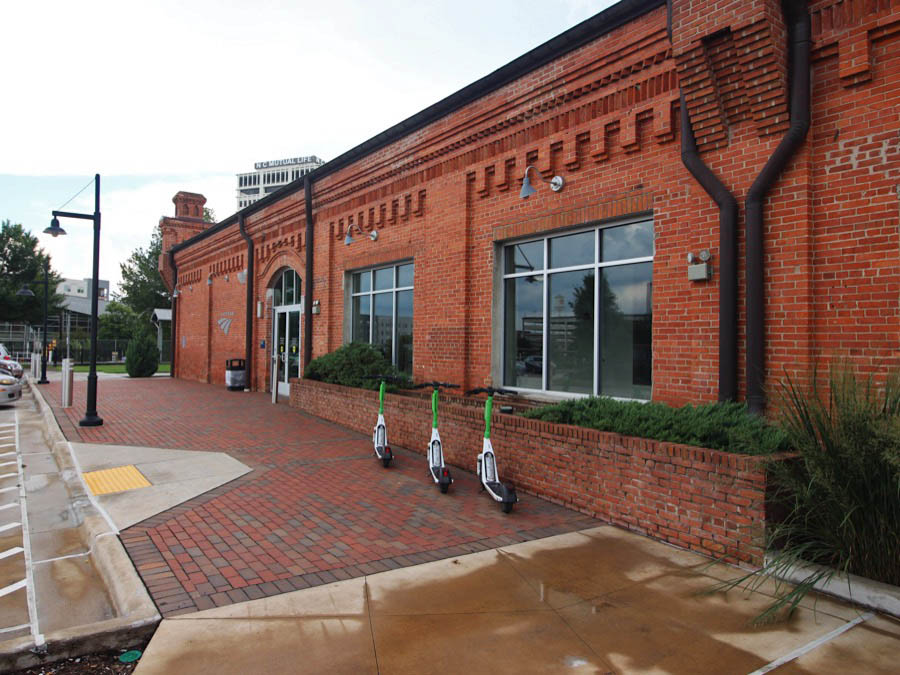
Durham, NC / Jul 2025 / RWH
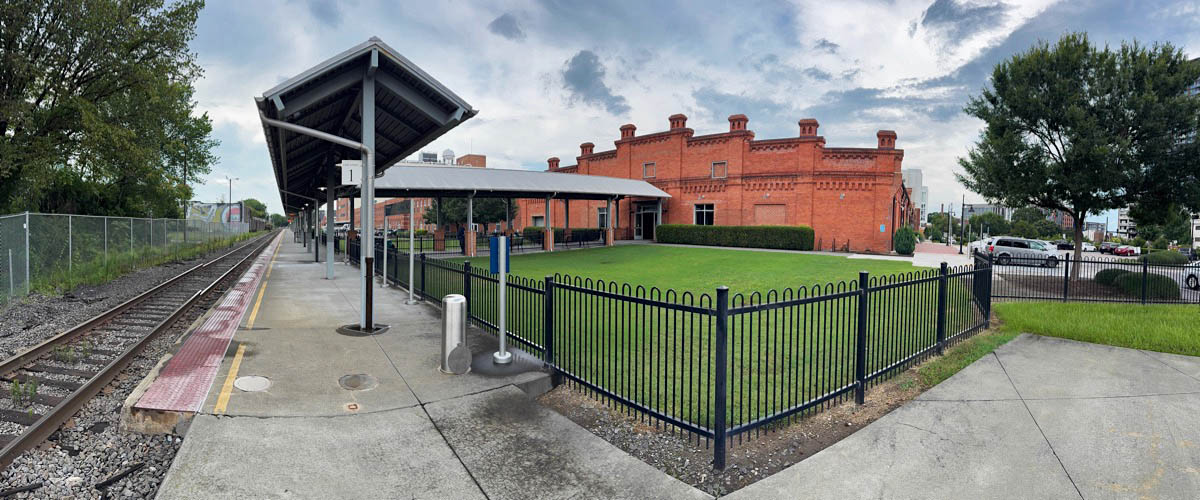
Durham, NC / Jul 2025 / RWH
Click to see the Durham station area plotted on a Google Maps page
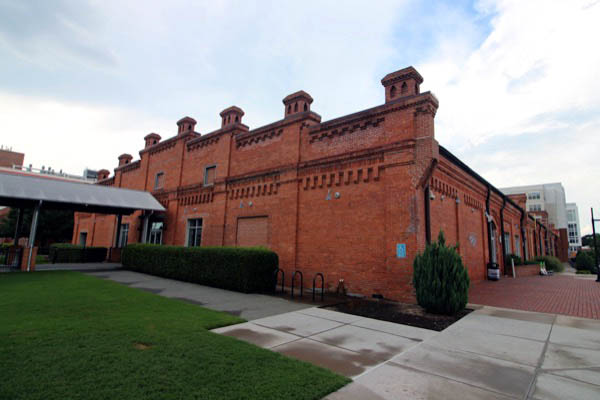
Durham, NC / Jul 2025 / RWH
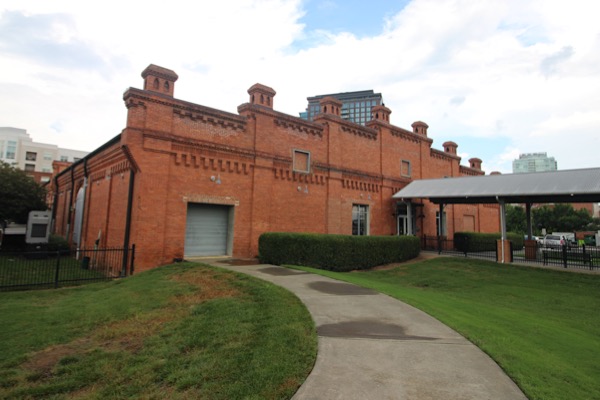
Durham, NC / Jul 2025 / RWH
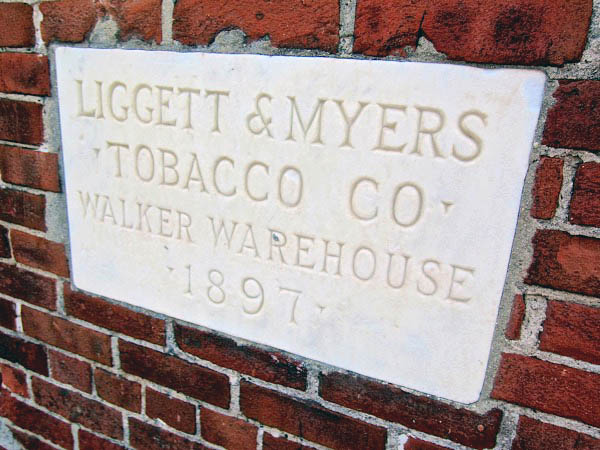
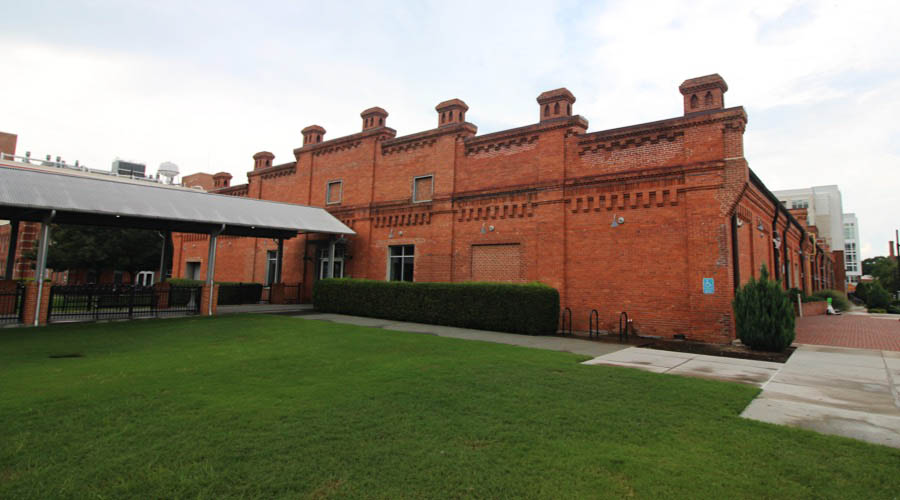
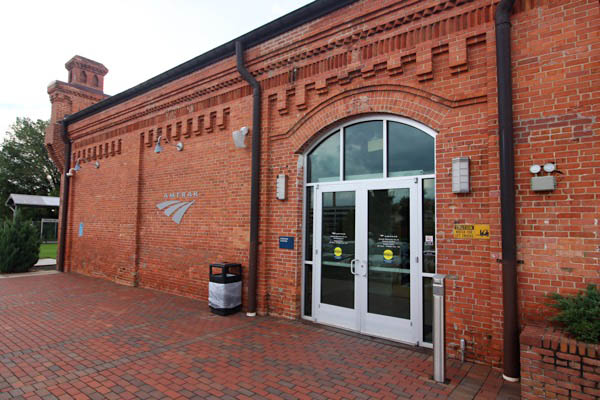
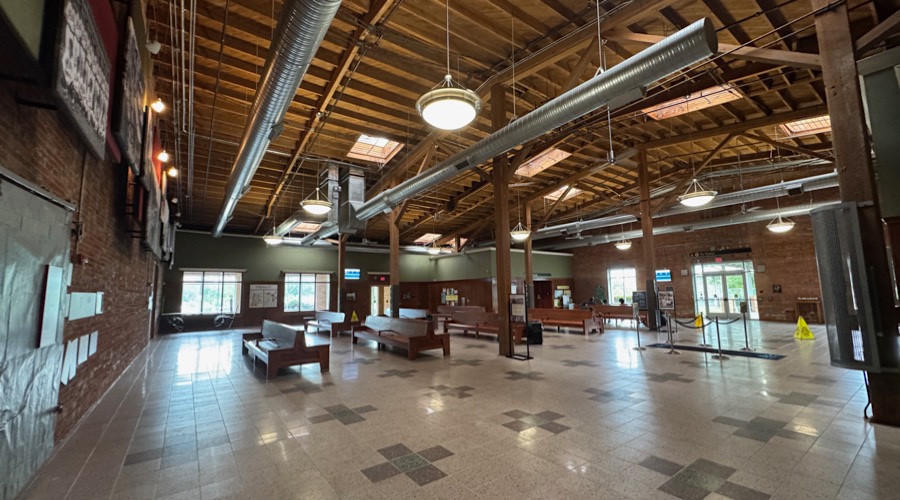
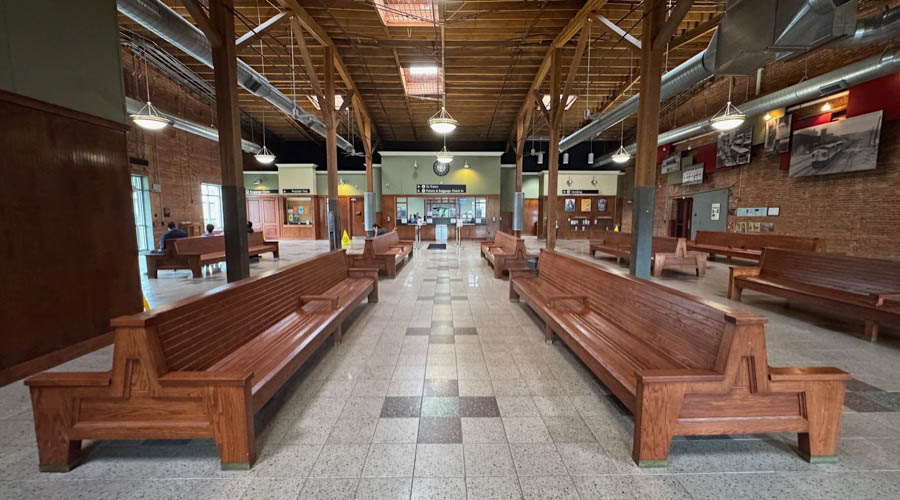
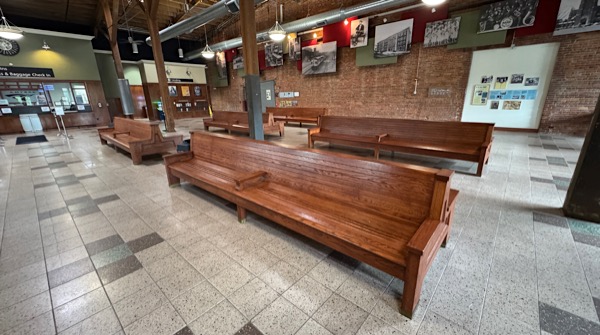
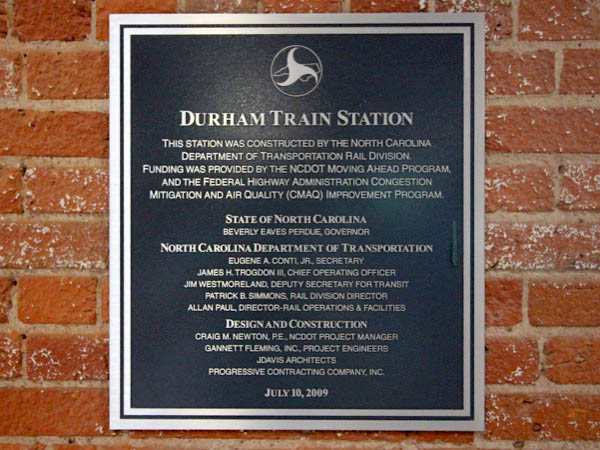
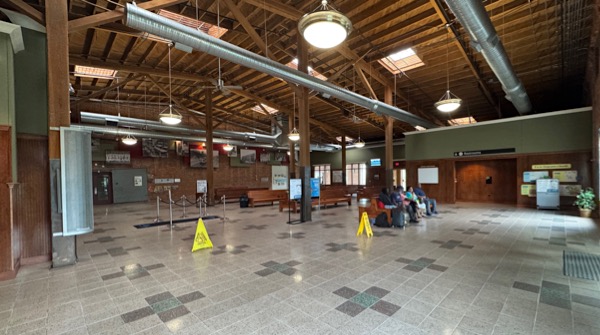
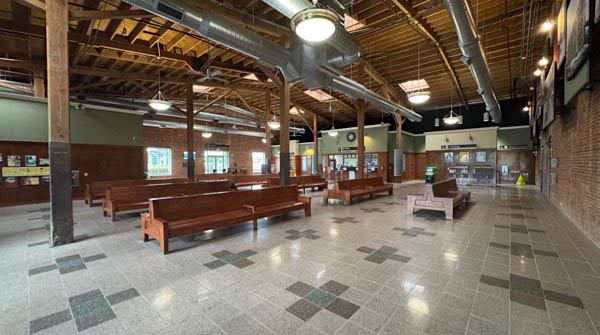
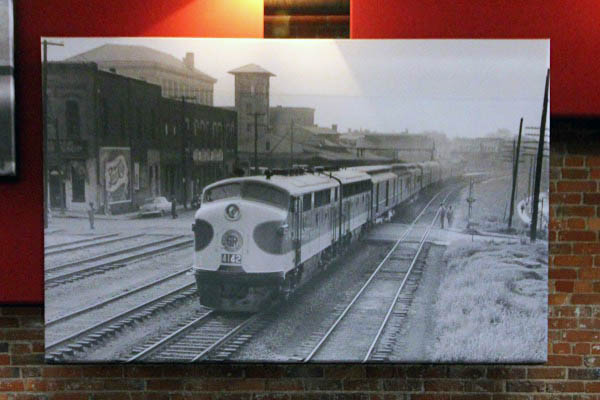
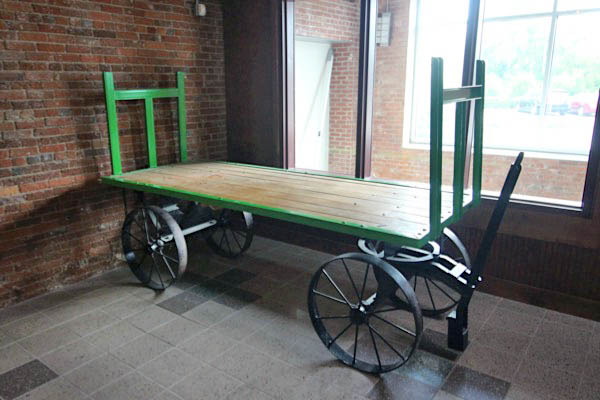
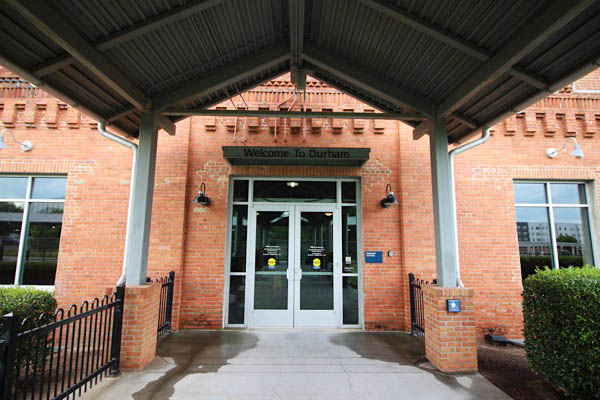
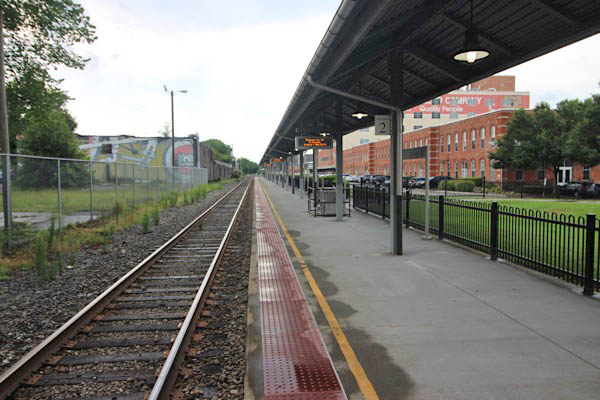
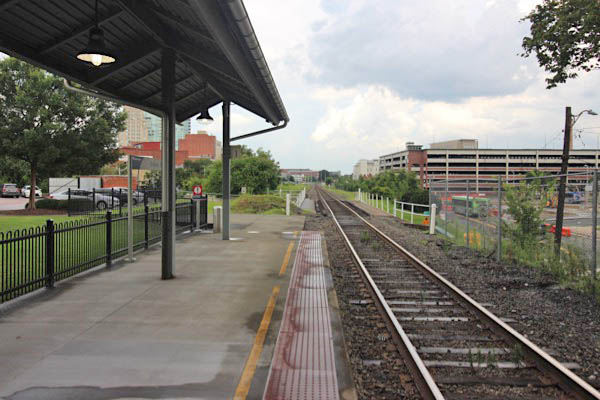
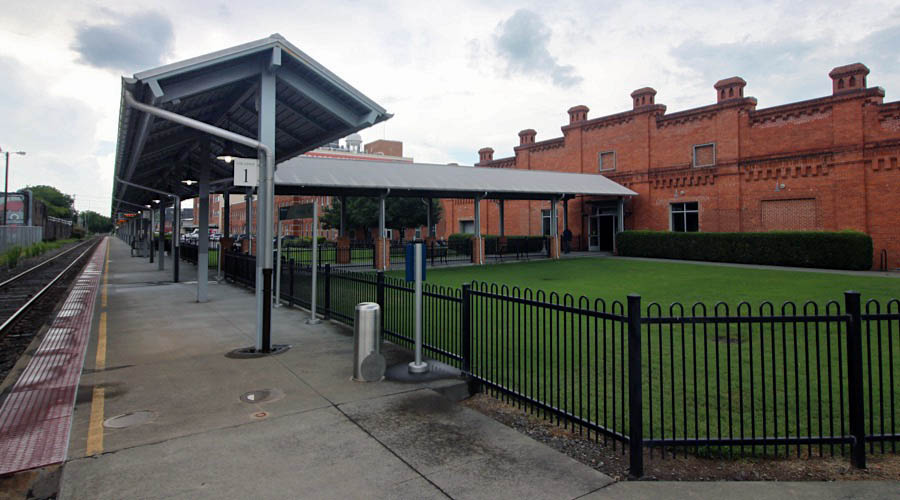
 On July 8, 2009, Amtrak began serving the current station in Durham located in the restored Walker Warehouse, a historic brick structure erected in 1897 by the American Tobacco Company trust. Included in the Bright Leaf National Register Historic District, the former warehouse is marked by impressive decorative brickwork such as corbeled pendants and mousetoothing at the cornice and parapet. The Walker Warehouse is part of the West Village redevelopment project, which encompasses seven former tobacco warehouses, constructed between 1884 and 1949, that are being converted into loft apartments and office, laboratory, retail and entertainment space.
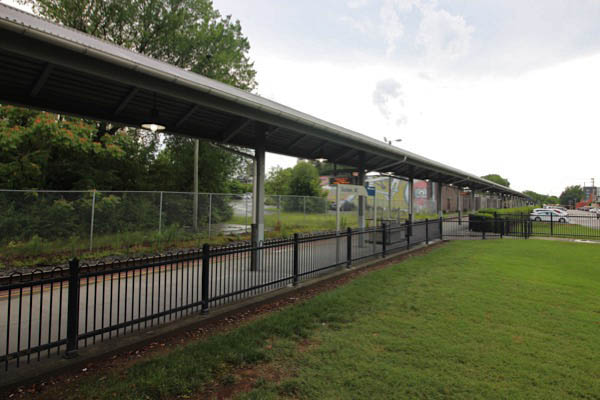
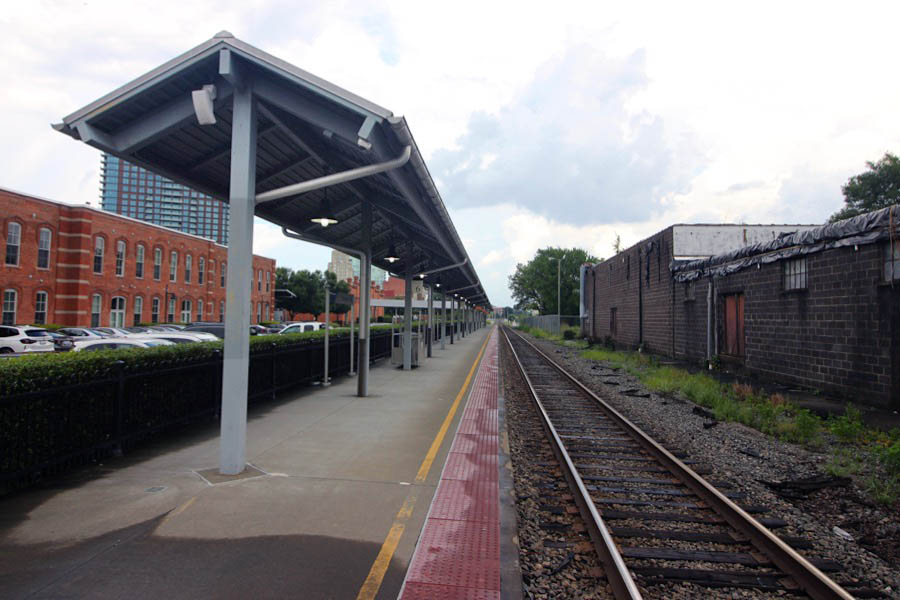
The new station was a joint venture of the North Carolina Department of Transportation (NCDOT) and the city of Durham. The former entered into an agreement with developer Blue Devil Partners to lease and up-fit one third of the Walker Warehouse, while the city was responsible for 25 percent of the lease costs. The NCDOT also constructed a 600-foot long boarding platform with a 300-foot canopy and a covered walkway extending from the station building; this work was funded with $1.25 million in federal Congestion Mitigation and Air Quality Improvement Program (CMAQ) funds. Across the tracks from the Amtrak depot is “Durham Station,” a transit terminal served by city, regional and intercity bus providers.
Prior to the renovation of the Walker Warehouse, the NCDOT and Durham jointly opened an interim modular station in 1996 to provide accessible ticketing, a waiting room, baggage handling and restrooms. Staffed by a full-time Amtrak station agent, it in turn had replaced a small shelter used by passengers since 1990.
Jul 2025 / RWH
Jul 2025 / RWH
Jul 2025 / RWH
Jul 2025 / RWH
Jul 2025 / RWH
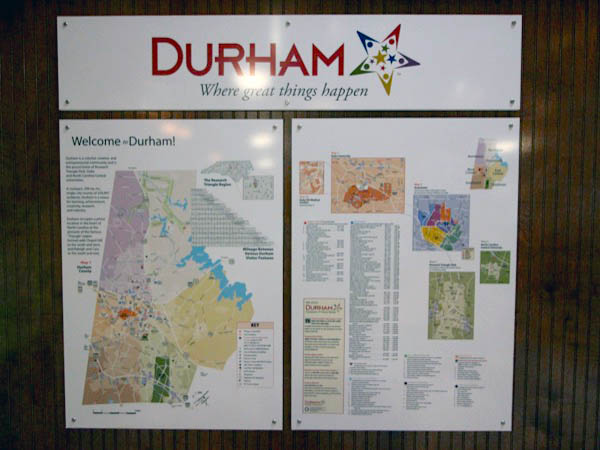
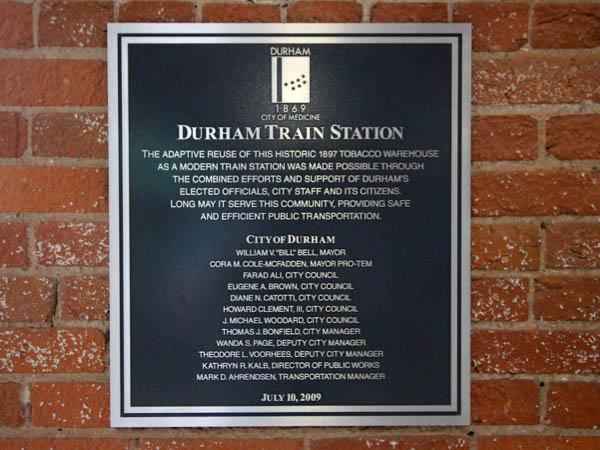
Jul 2025 / RWH
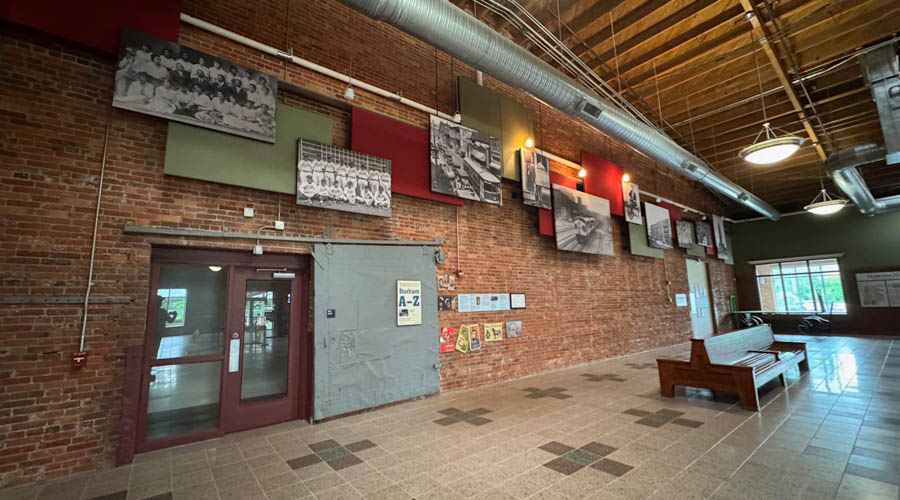
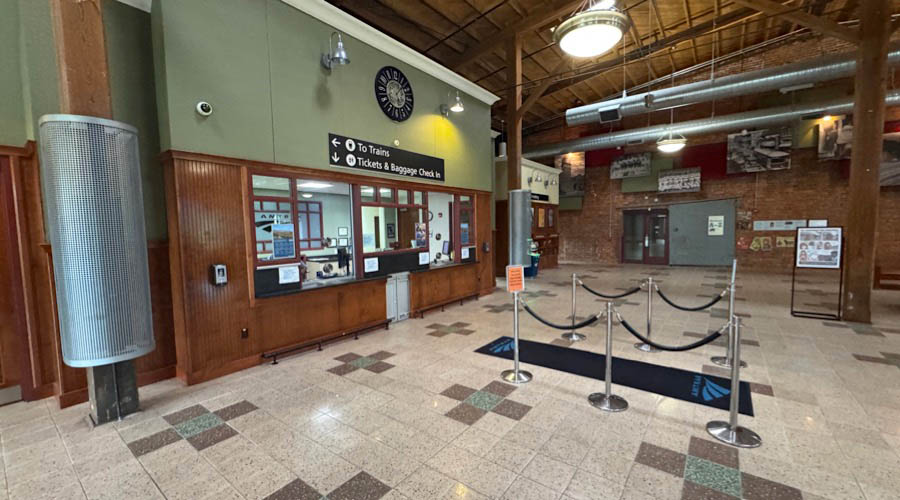
Jul 2025 / RWH
Jul 2025 / RWH
Jul 2025 / RWH

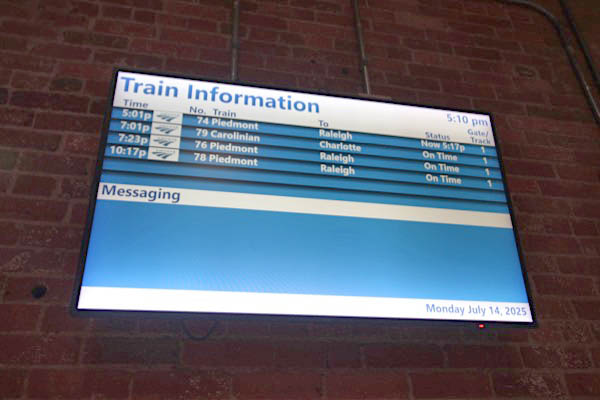
Jul 2025 / RWH

Jul 2025 / RWH
Durham, NC
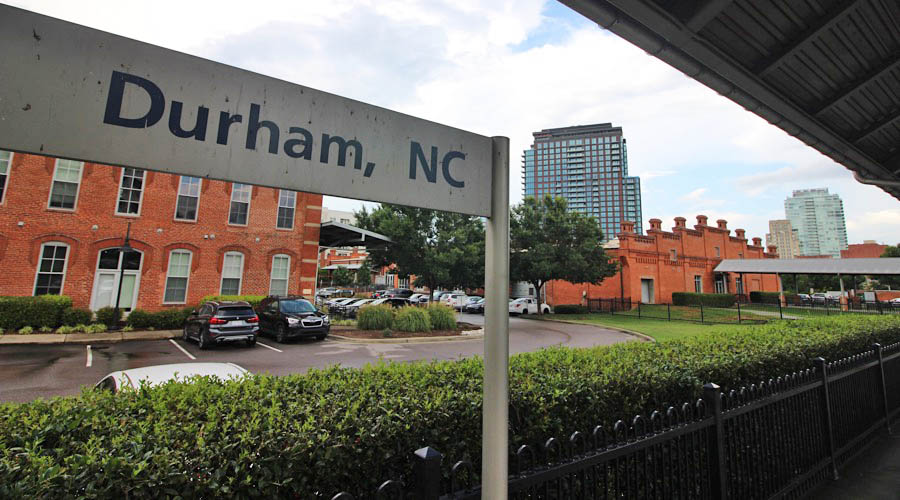
Durham, NC / Jul 2025 / RWH
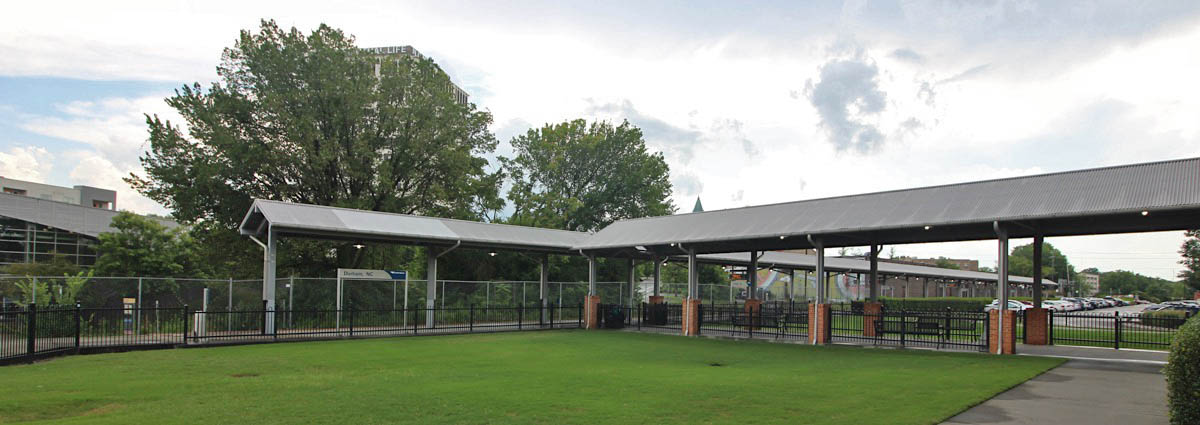
Durham, NC / Jul 2025 / RWH
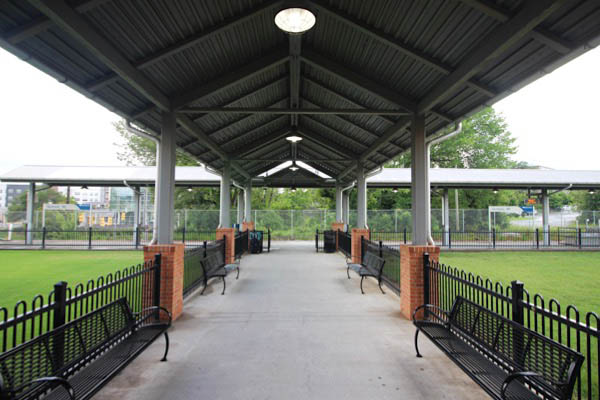
Jul 2025 / RWH
Jul 2025 / RWH
Jul 2025 / RWH
Durham, NC / Jul 2025 / RWH
Durham, NC / Jul 2025 / RWH
Durham, NC / Jul 2025 / RWH
Durham, NC / Jul 2025 / RWH
Durham, NC / Mar 2025 / Mark McDougall
165 Cary, NC
- Carolinian
- Piedmont
- Silver Star
Cary, NC / Jul 2025 / RWH
- location:Cary NC
- address:211 N Academy Street
- type:town station, 2 platforms
- owner:Town of Cary
- opened:1996
- builder:Town of Cary
- style:contemporary depot
- expanded:2006
- services:tickets, baggage
- links: Amtrak | Great Stations
Cary, NC / Jul 2025 / RWH
Google Maps
Click to see the Cary station area plotted on a Google Maps page
Jul 2025 / RWH
Jul 2025 / RWH
Jul 2025 / RWH
Jul 2025 / RWH
Jul 2025 / RWH
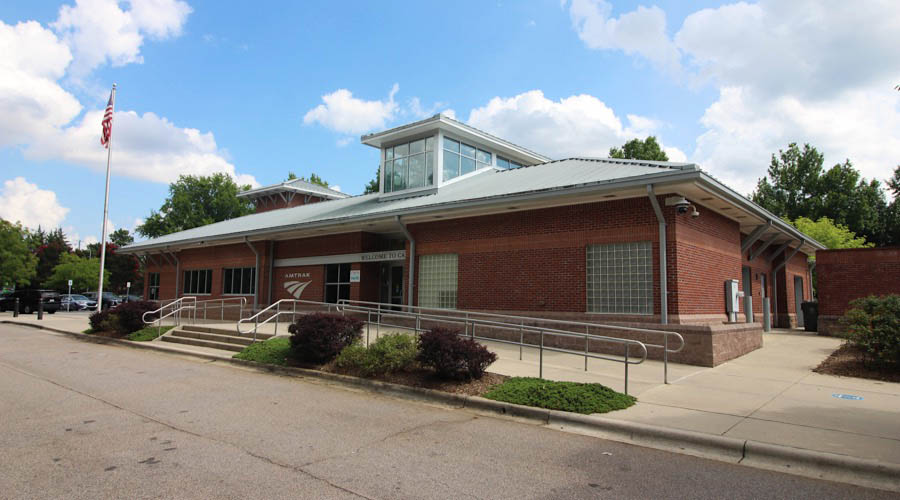
Cary, NC / Jul 2025 / RWH
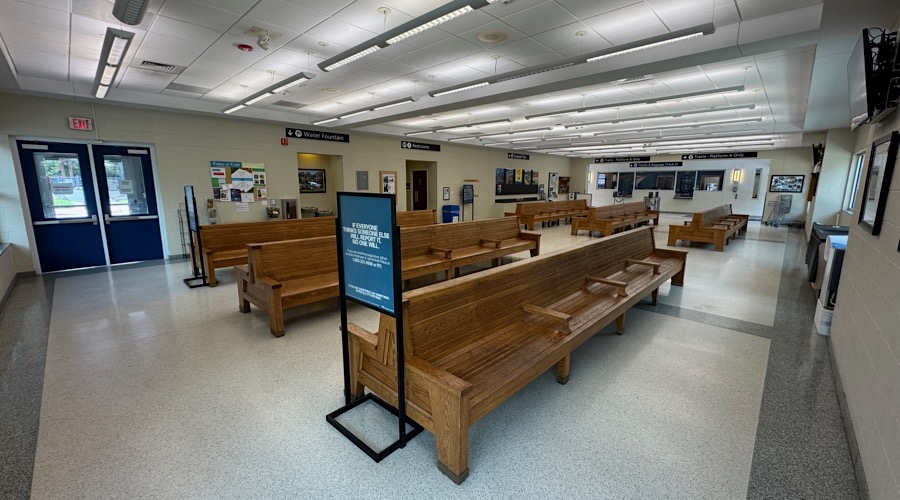
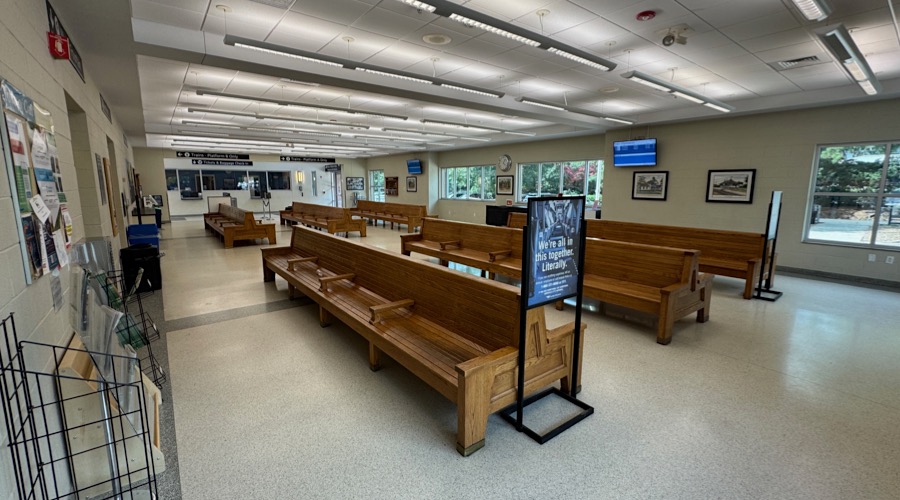
Jul 2025 / RWH
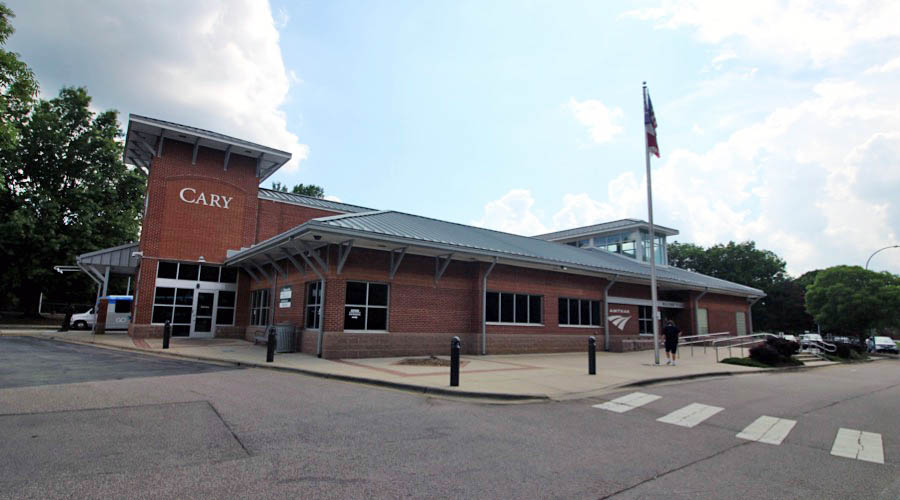
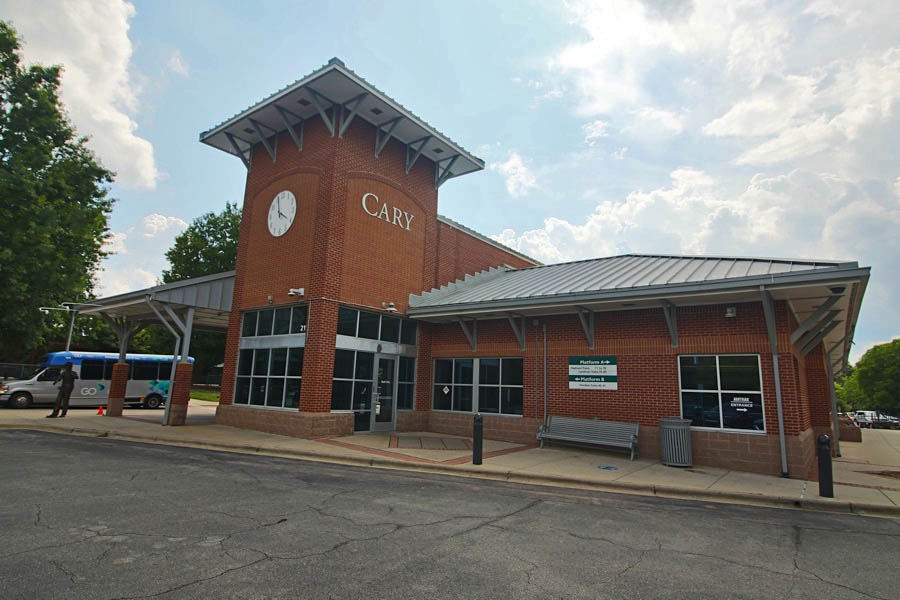
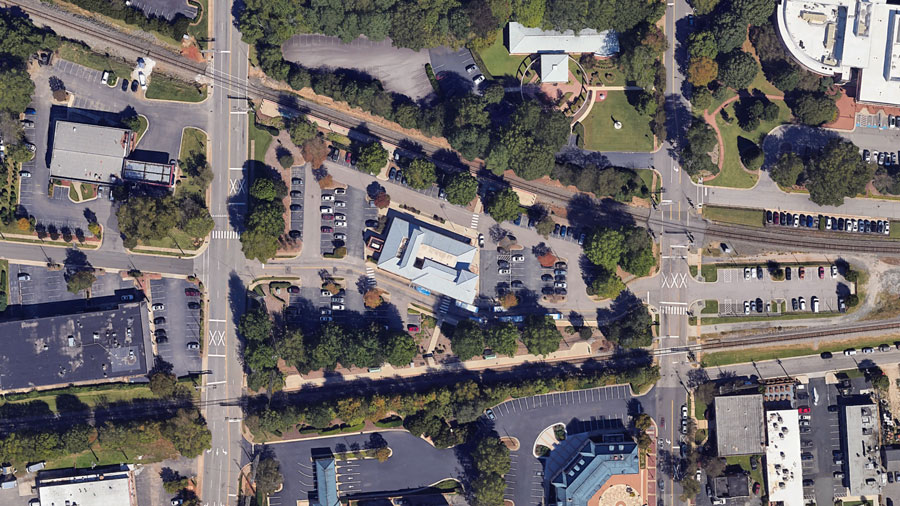
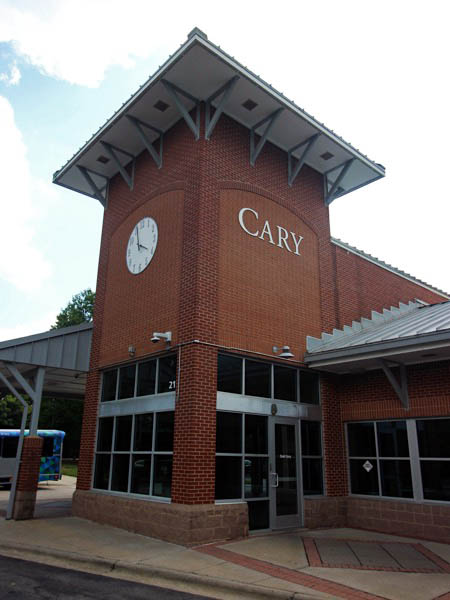
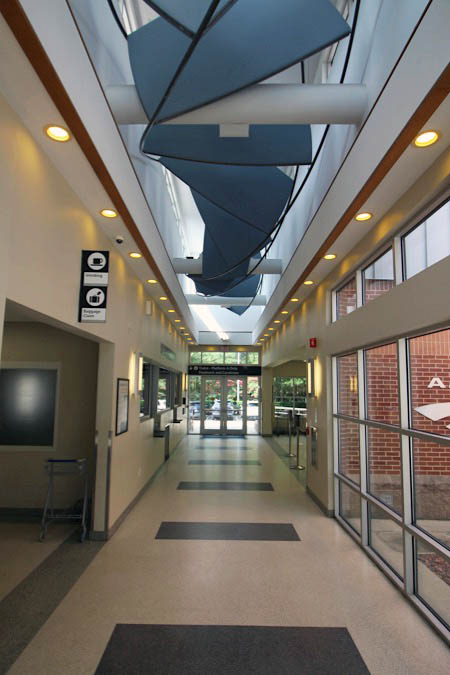
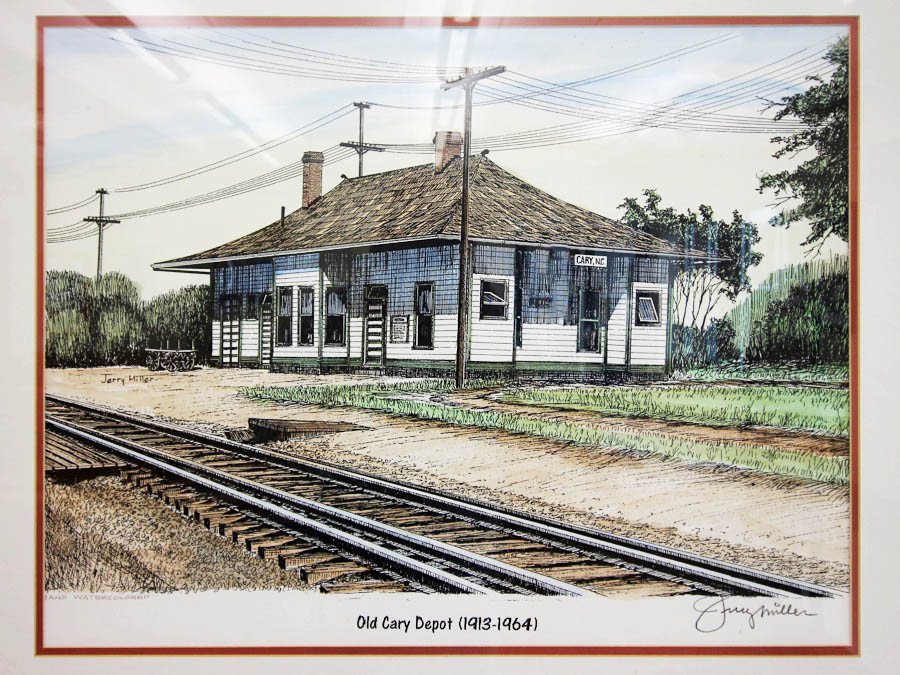
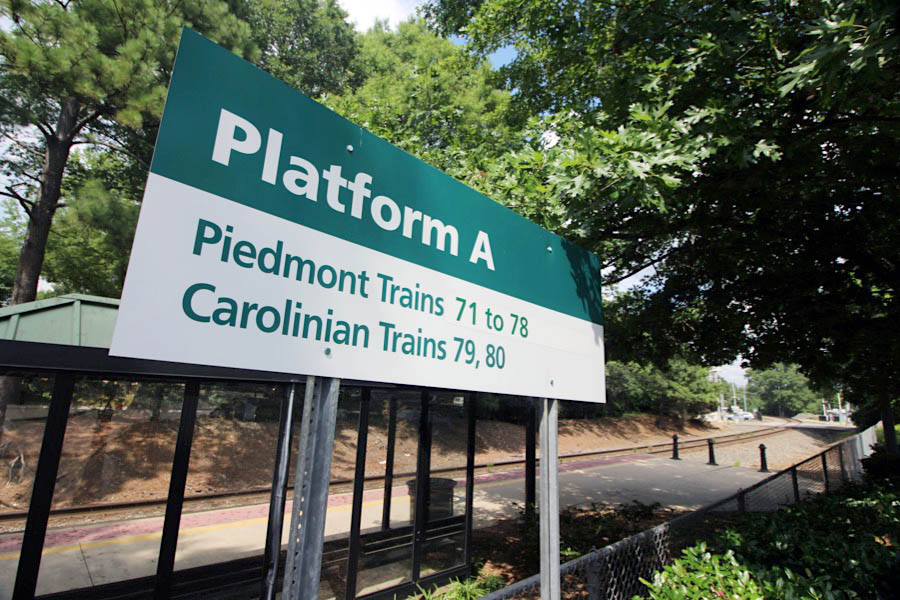
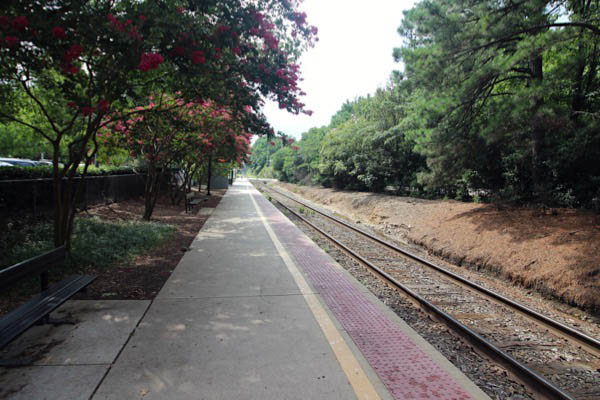
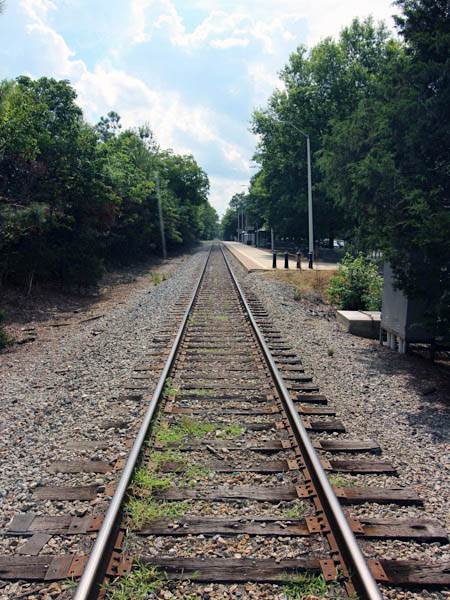
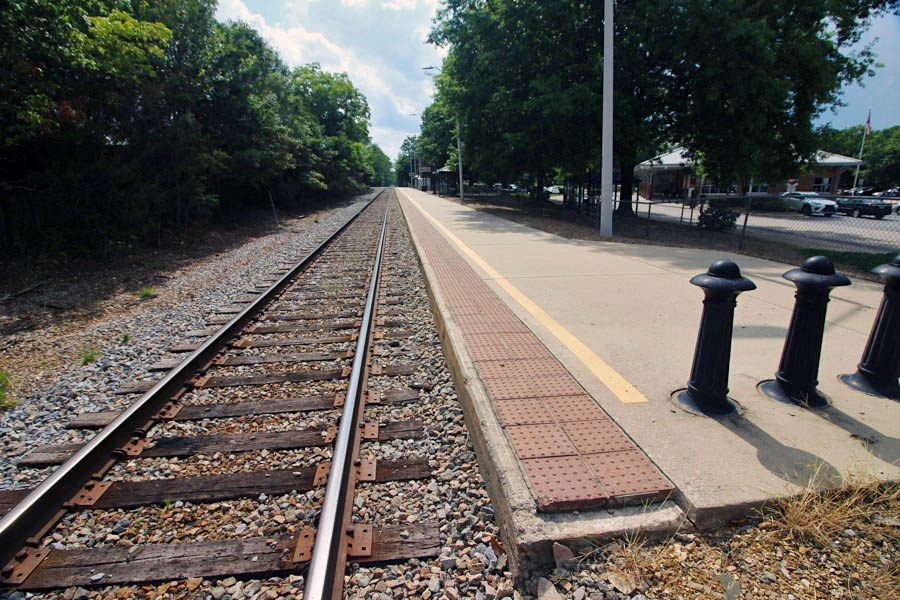
 The current Amtrak station in Cary was built in 1996 and sits where two rail lines diverge to head west and south. It contains a waiting area for Amtrak passengers and local and regional bus patrons. Cary’s historic station was torn down in the 1970s, so when rail passenger service resumed in Cary in 1995, it was on a 200-foot platform with shelter beside the North Carolina Railroad (NCRR) “H” Line tracks on the north side of the property. The North Carolina Department of Transportation (NCDOT) Rail Division paid $100,000 to construct the platform and shelter prior to the opening of the new depot, which was funded through $637,000 from the town and $100,000 from the Triangle Transit Authority.
In 2006, a platform was constructed on the CSX “S” Line south of the depot, which allowed the Silver Star (New York-Tampa-Miami) to began service to Cary. NCDOT covered 90 percent of the platform costs while the town contributed $30,000. Five years later, the depot was expanded with NCDOT and Federal Railroad Administration funds totaling approximately $2 million; the building reopened on September 1, 2011.
Jul 2025 / RWH
Jul 2025 / RWH
Cary, NC
Cary, NC / Jul 2025 / RWH
Cary, NC / Jul 2025 / RWH
Cary, NC / Jul 2025 / RWH
Cary, NC / Jul 2025 / RWH
Jul 2025 / RWH
Jul 2025 / RWH
Cary, NC / Jul 2025 / RWH
Cary, NC / Oct 2024 / Mark MacDougall
173 Raleigh, NC
- Carolinian
- Piedmont
- Silver Star
Jul 2025 / RWH
- name:Raleigh Union Station
- address:510 W Martin Street
- type:city station, 2 platforms
- owner:City of Raleigh
- opened:2018
- builder:City of Raleigh
- style:adaptive reuse
- services:tickets, baggage
- links: Amtrak | Great Stations
Raleigh, NC / Jul 2025 / RWH
Click to see the Raleigh Union Station complex plotted on a Google Maps page
Wikipedia Commons
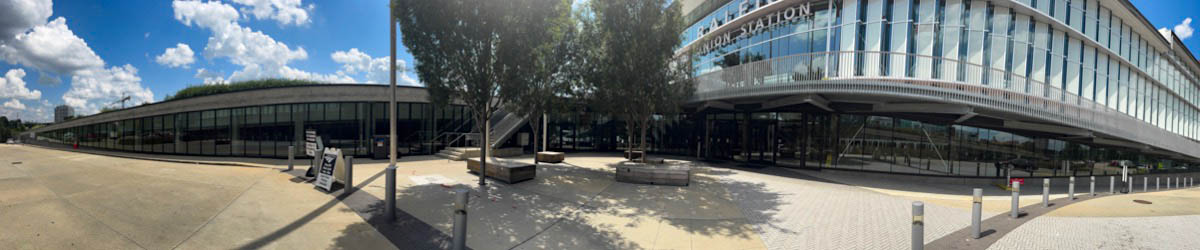
Raleigh, NC / Jul 2025 / RWH
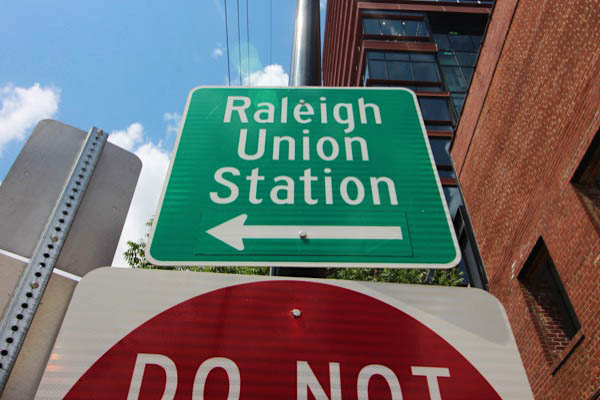
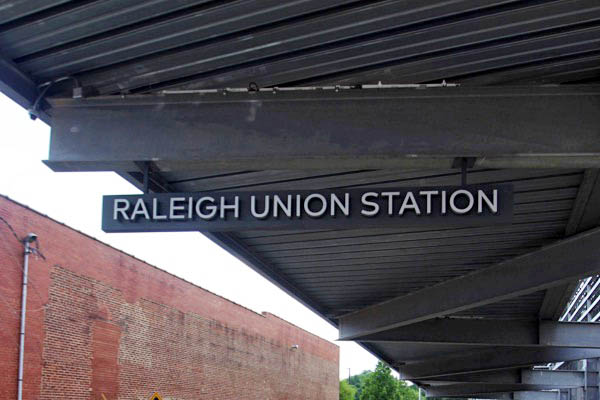
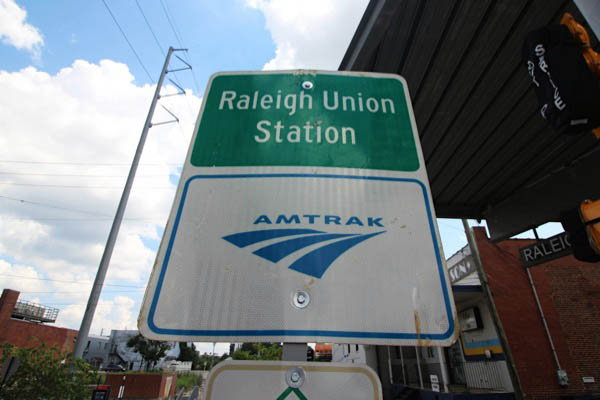
Jul 2025 / RWH
Google Maps
Jul 2025 / RWH
Jul 2025 / RWH
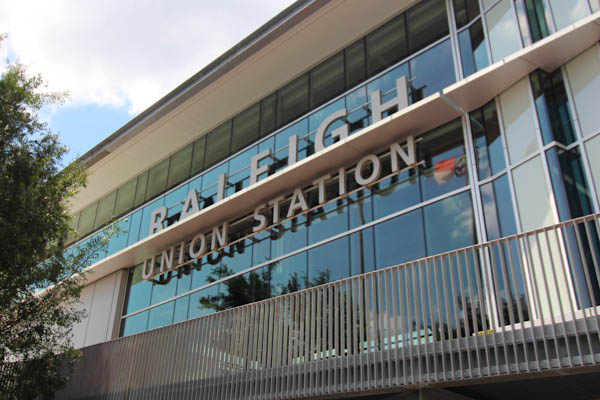
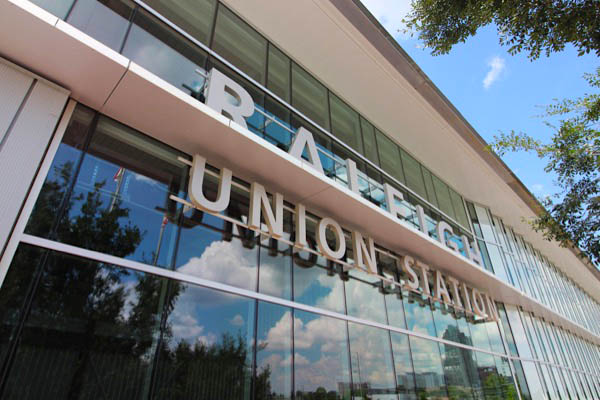
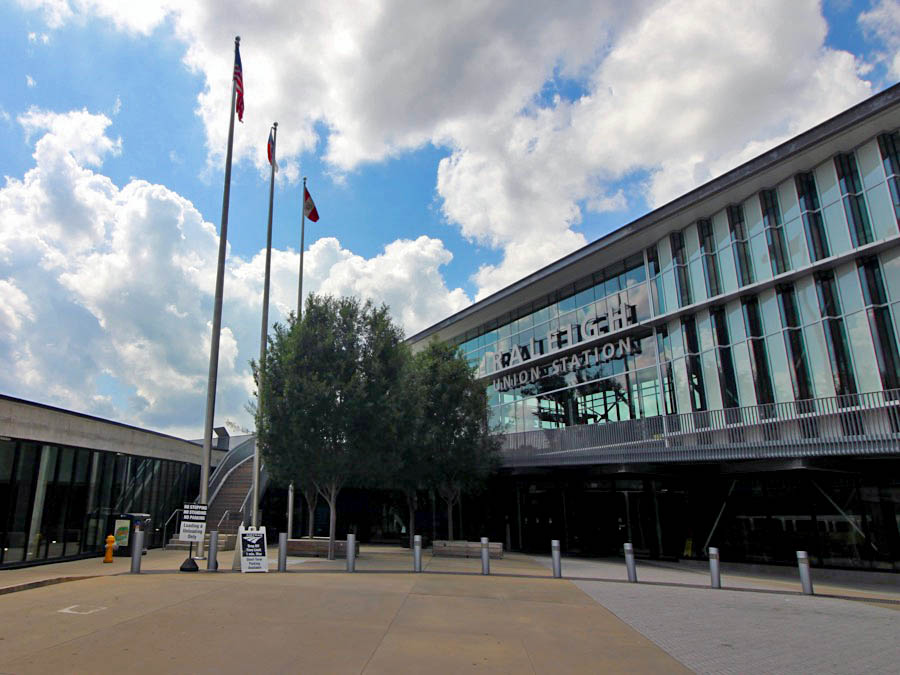
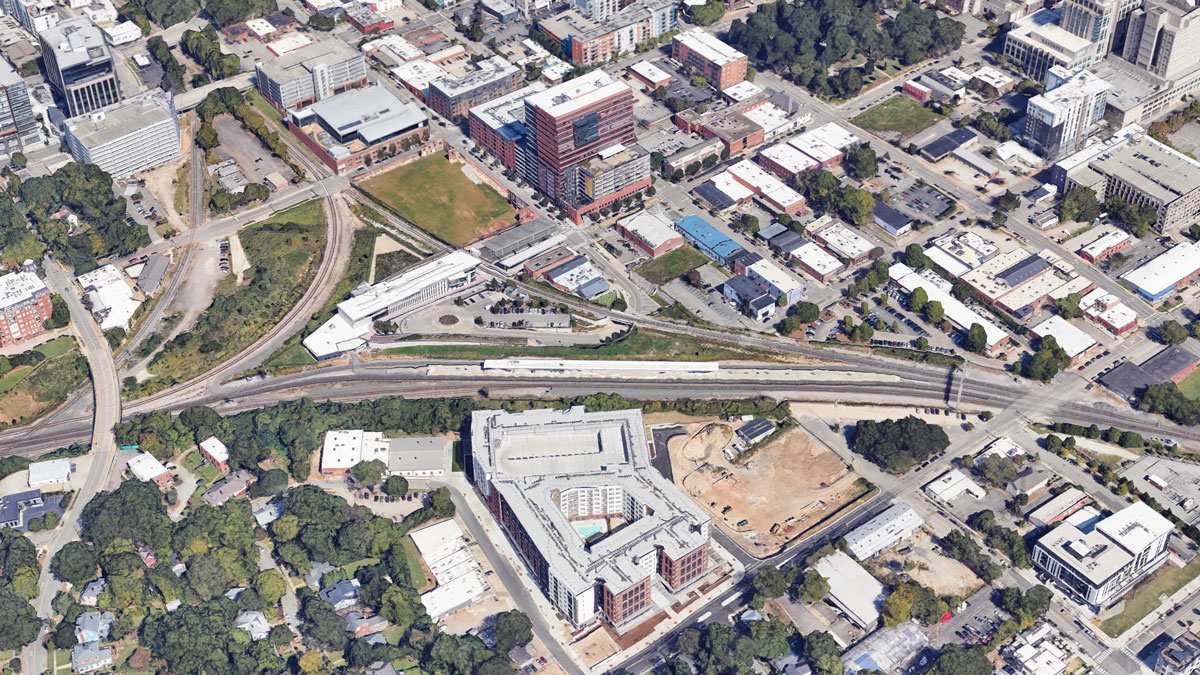
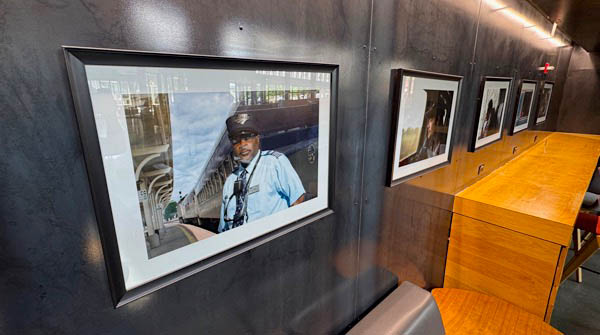
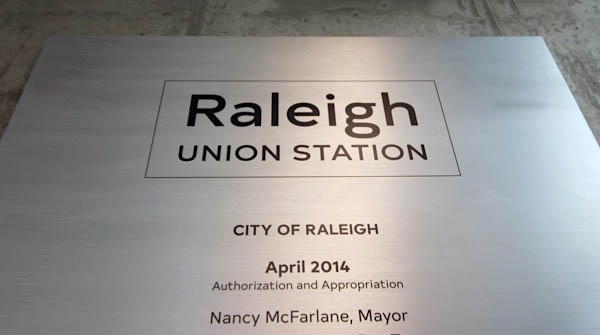
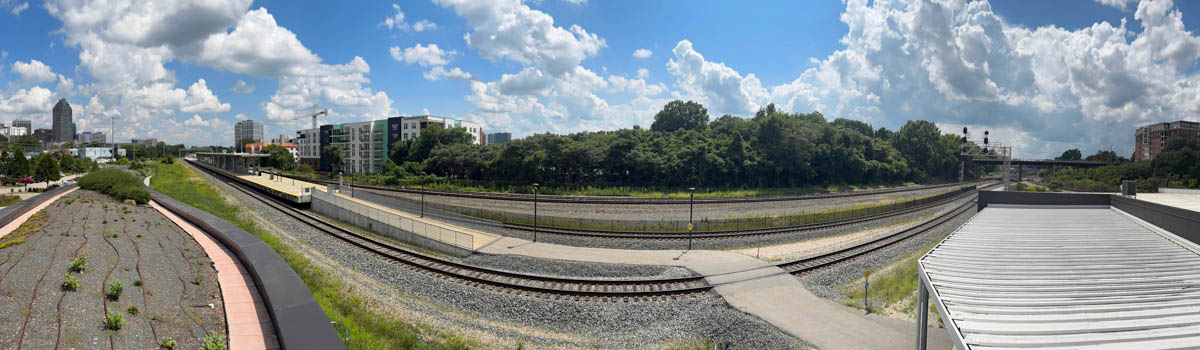
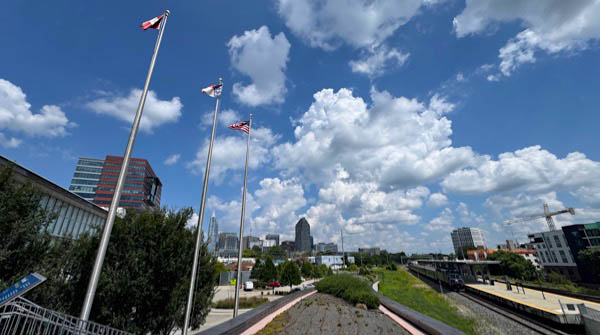
 Passenger trains began serving Raleigh Union Station on July 10, 2018. Located in the city’s Warehouse District on the western edge of downtown and just two blocks from Nash Square, Union Station sits inside the Boylan Wye, a crucial piece of North Carolina’s railroad infrastructure where lines owned by CSX, Norfolk Southern and the North Carolina Railroad meet.

In January 2012, the mayor and the city council endorsed a recommendation by the city’s appointed Passenger Rail Task Force to adapt the vacant Dillon Supply warehouse to serve as the centerpiece of a new multimodal transportation center. The vision called for the new Union Station to house Amtrak and local, regional and intercity buses, while also providing opportunities for future expansion to accommodate proposed commuter and high-speed rail services.
City, state and federal leaders gathered to break ground on Union Station in May 2015, and construction lasted into early 2018. The nearly $89 million project included rehabilitation of the 1940s-era warehouse, track and platform construction, and signal and switch improvements. Passenger areas are five times as large as those in the previous station to better handle growing ridership.
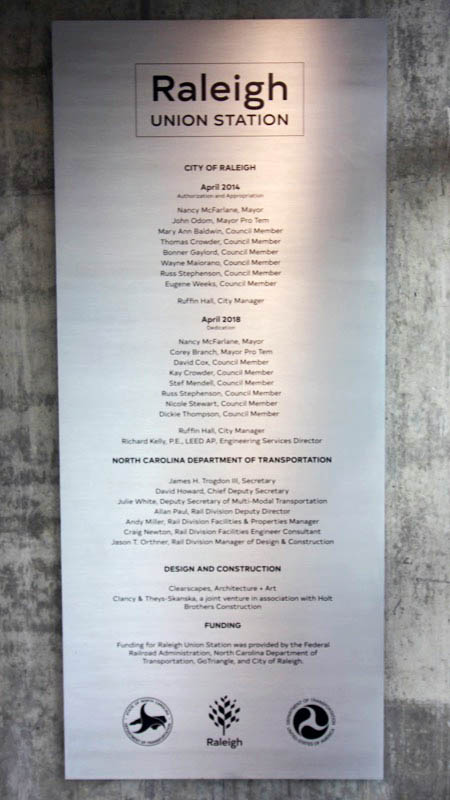
The Raleigh Union Station project was made possible through close coordination among the City of Raleigh, Federal Railroad Administration, North Carolina Department of Transportation (NCDOT) Rail Division, GoTriangle, and other stakeholders. The city oversaw station and site construction while NCDOT managed the track and rail infrastructure work.
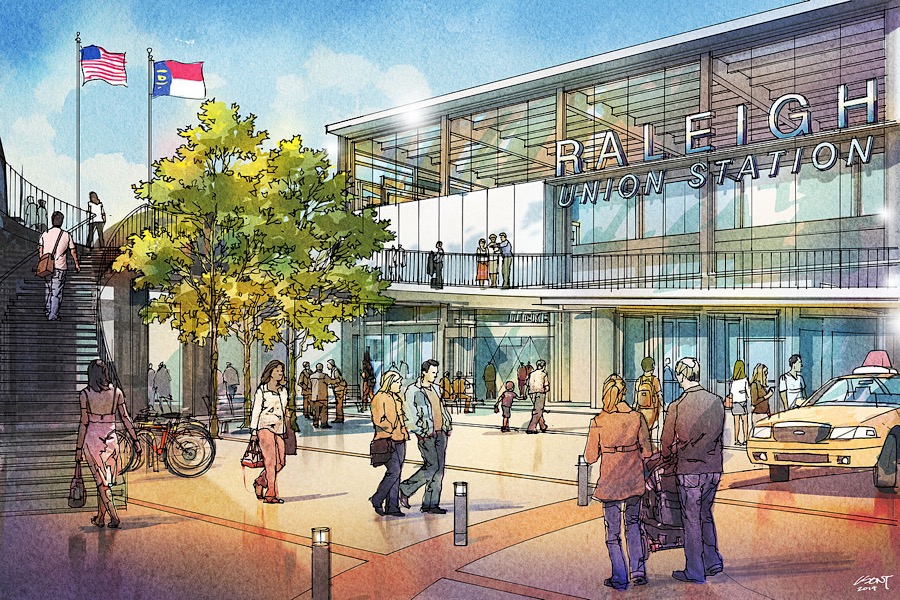
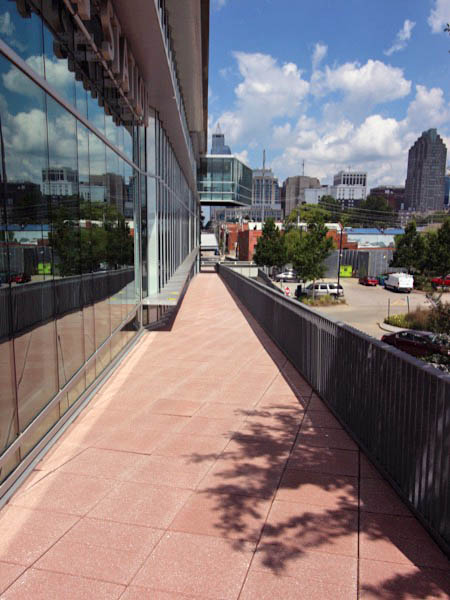
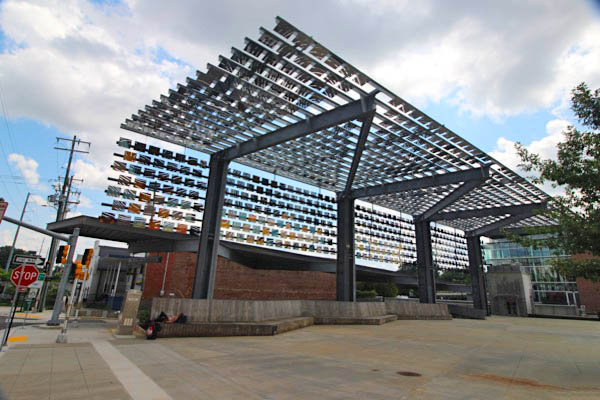
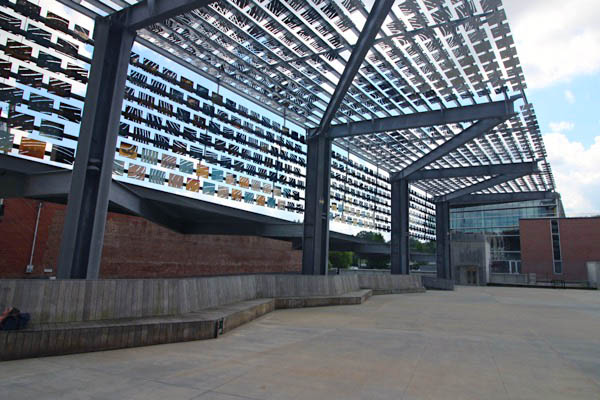
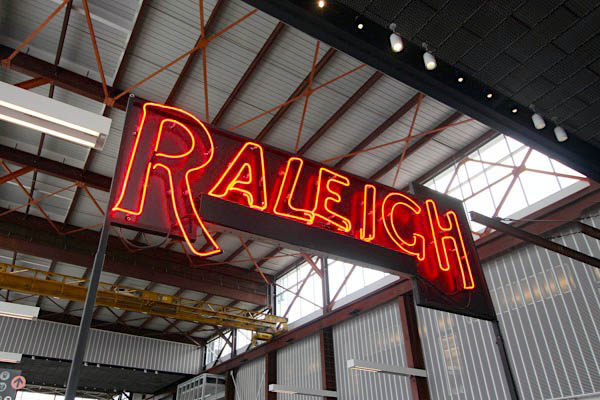
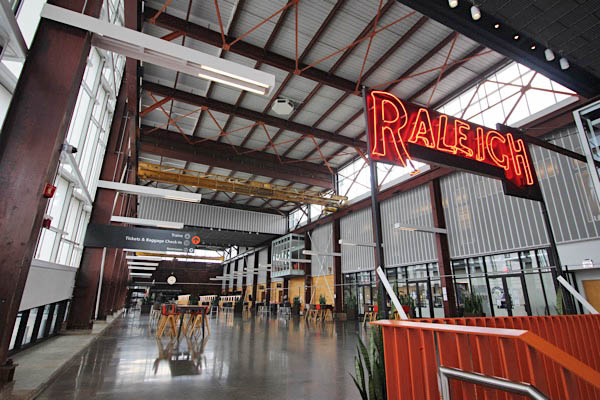
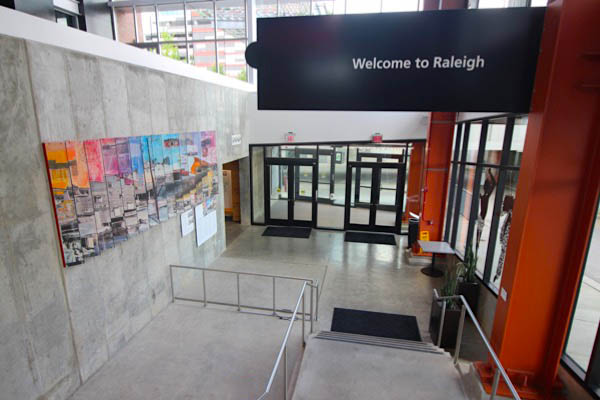
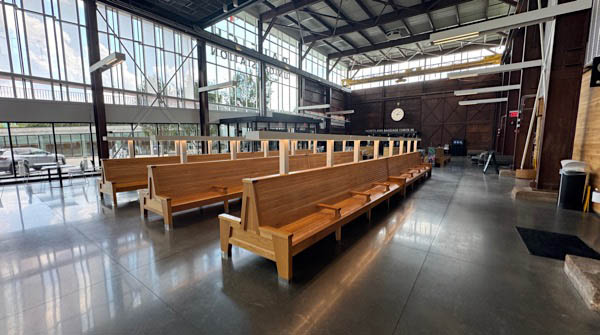
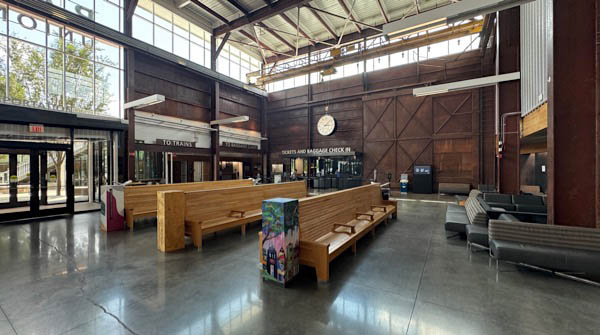
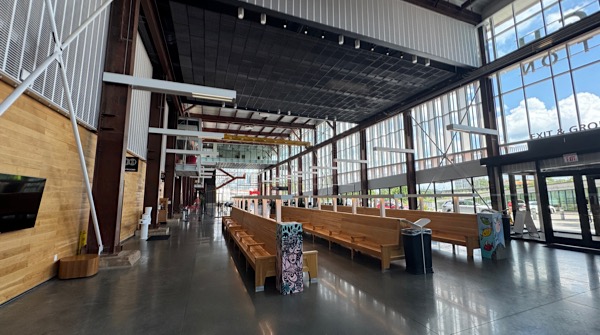
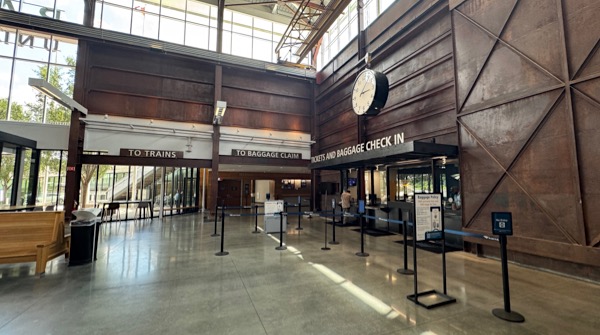
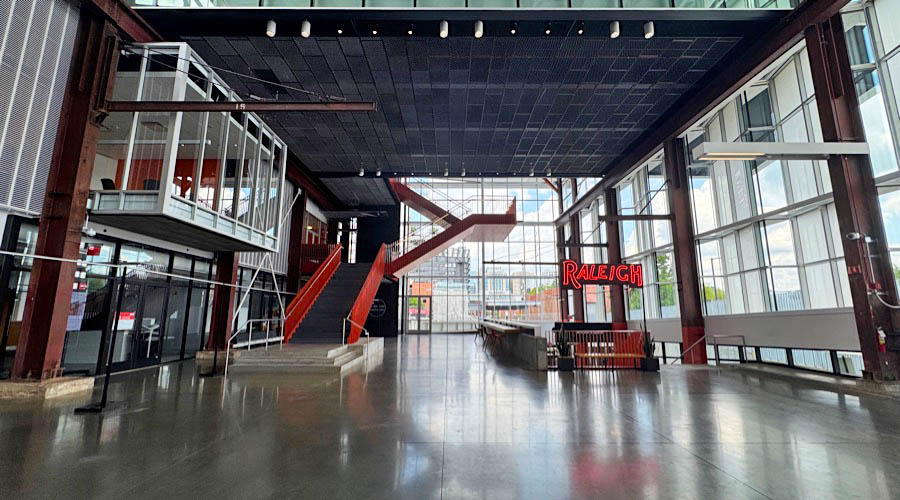
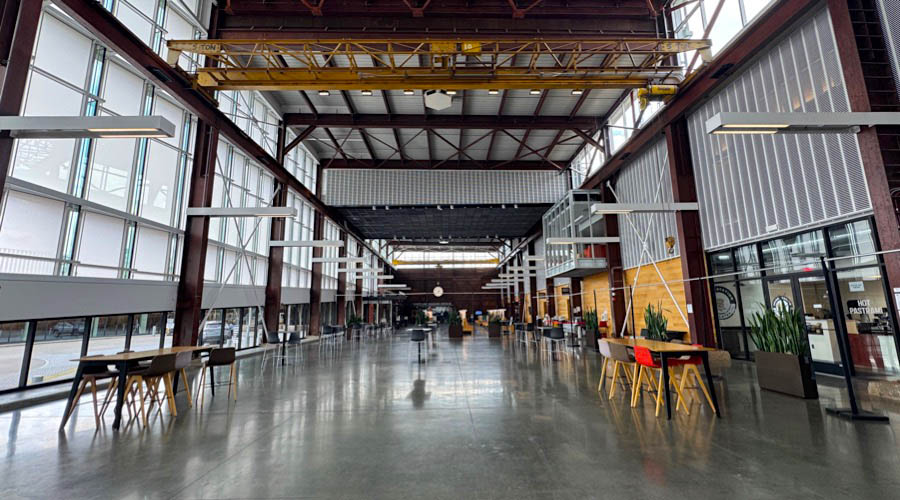
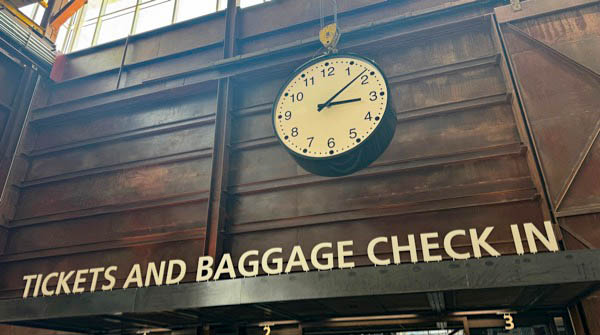
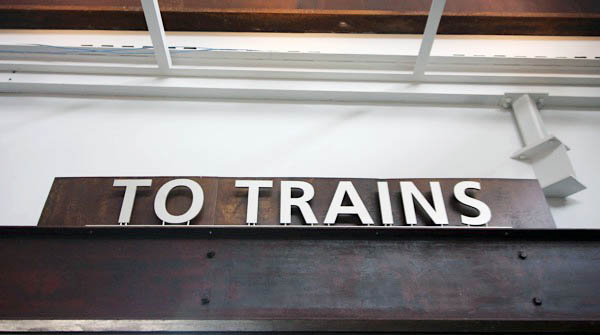
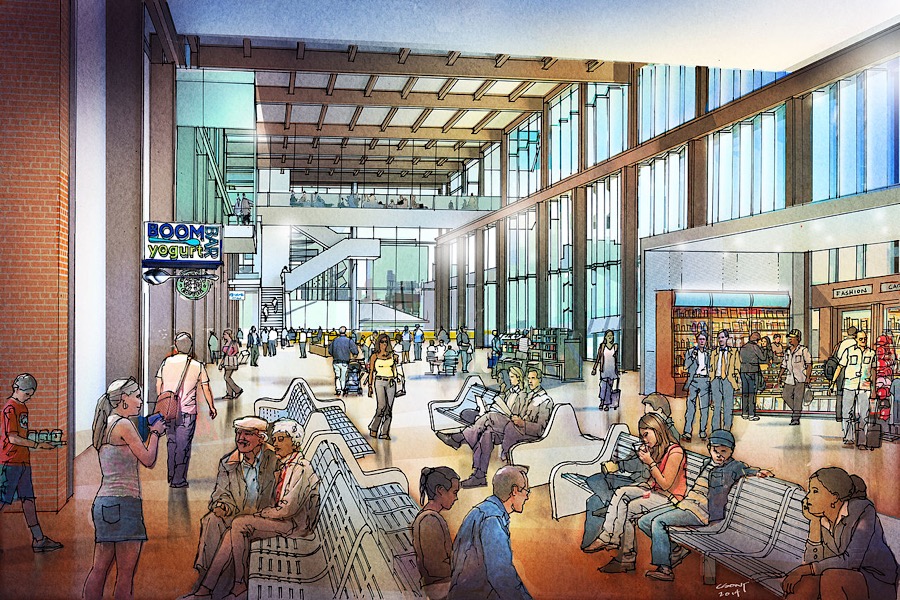
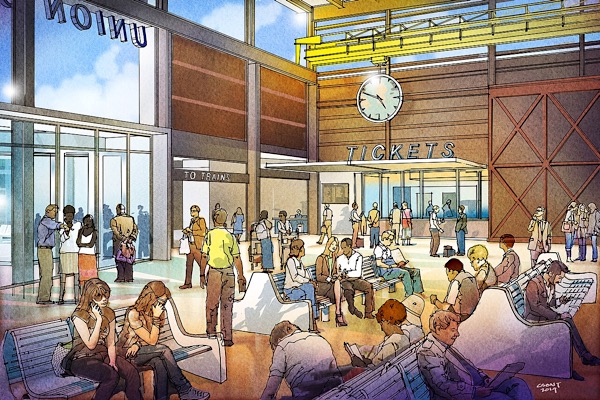 Designed by Clearscapes, the station marries the skeleton of the old warehouse with contemporary design. As passengers approach from West Street or the platform, they are greeted by soaring facades of glass that allow natural light to brighten interior spaces. A roundabout on the south end makes for easy pickup and drop offs, while to the east of the station a civic plaza sheltered by a canopy encourages a variety of community gatherings.
In the Main Hall, customers may relax in comfortable seating or plug in at a work station. The space showcases the building’s warehouse origins by reusing the steel framing – columns and beams – to create dramatic, high ceilings. Two gantry cranes, once used to move steel and other materials around the warehouse, also remain in place high above the floor. The station includes Amtrak ticket counters and leasable space for retail, office and restaurant use that ensure the station remains busy throughout the day.

Jul 2025 / RWH
Jul 2025 / RWH
Jul 2025 / RWH
Jul 2025 / RWH

Jul 2025 / RWH
Jul 2025 / RWH
Jul 2025 / RWH

Jul 2025 / RWH
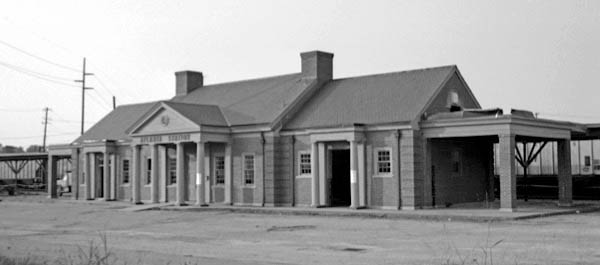
 Raleigh Union Station is the third facility Amtrak has served in the “City of Oaks” since 1971. Until moving to Union Station, Amtrak used a small Colonial Revival brick depot on Cabarrus Street a few blocks to the southeast. It was opened by the Southern Railway in 1950 after moving from the city’s old Union Station on the west side of Nash Square. Amtrak relocated to the Cabarrus Street facility in 1986 from the former Seaboard Air Line depot north of downtown. The move was necessitated by freight railroad CSX’s abandonment of track between Petersburg, Va., and Raleigh, which forced Amtrak to reroute the Silver Star (New York-Miami) via Rocky Mount, N.C. The Cabarrus Street station no longer stands, having been demolished soon after Union Station opened.

Jul 2025 / RWH
Wikipedia Commons
 Raleigh, NC
Raleigh, NC / Jul 2025 / RWH
Raleigh, NC / Jul 2025 / RWH
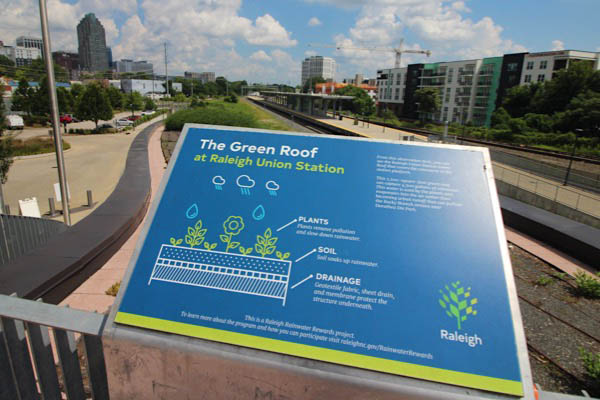
Jul 2025 / RWH
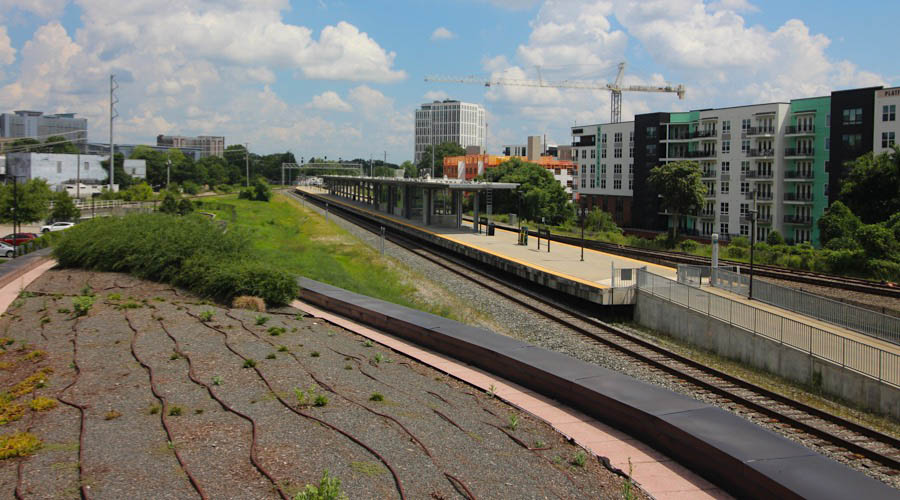
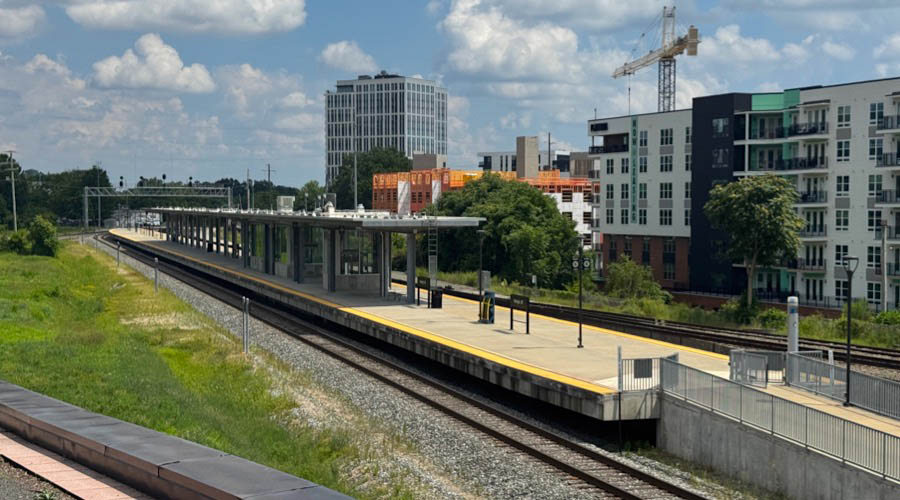
Raleigh, NC / Jul 2025 / RWH
northbound #80
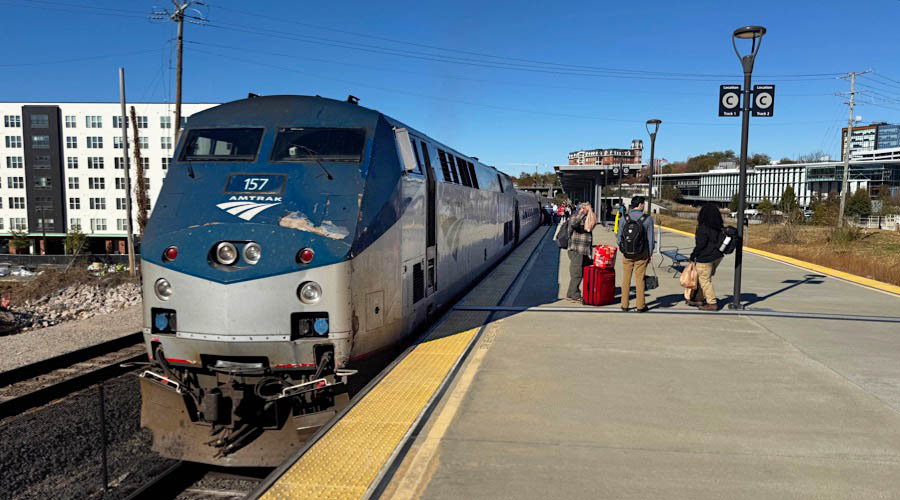
Raleigh, NC / Nov 2024 / RWH
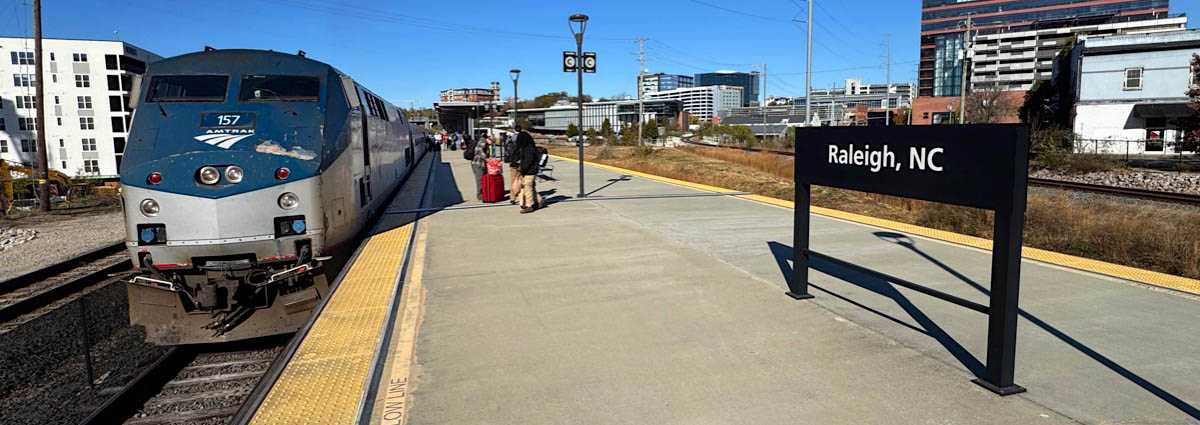
Raleigh, NC / Nov 2024 / RWH
Amtrak's
Carolinian
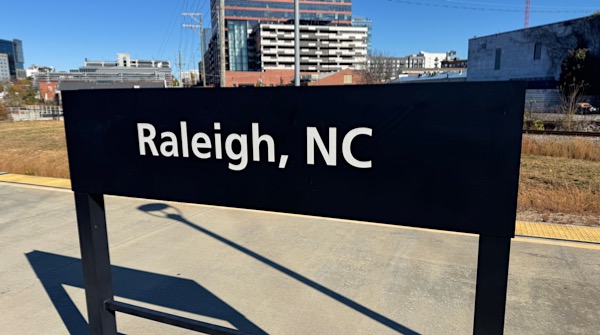
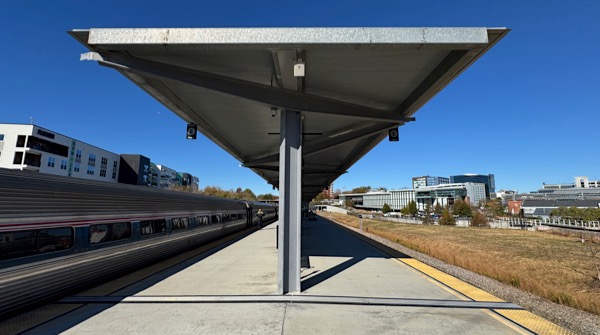
Nov 2024 / RWH
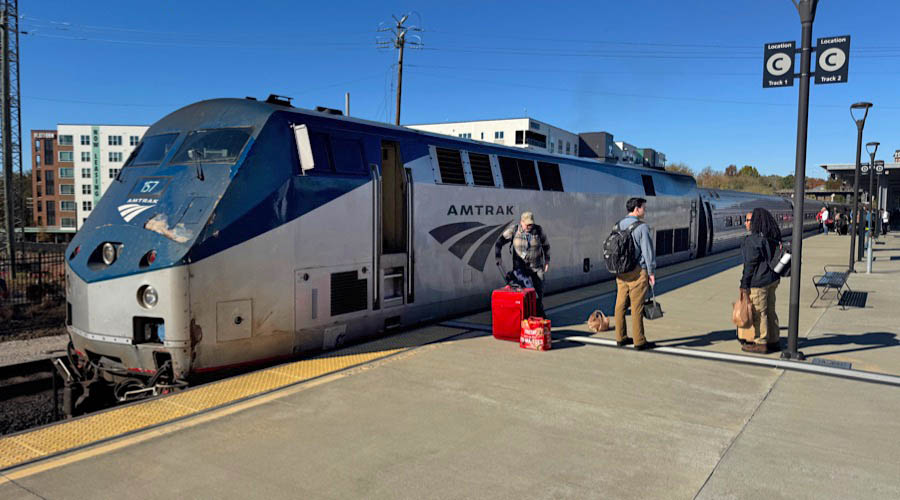
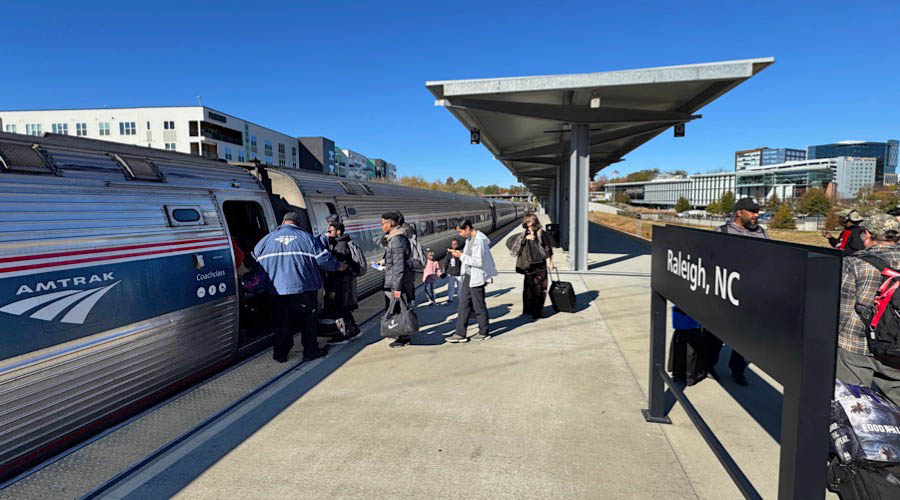
Raleigh, NC / Nov 2024 / RWH
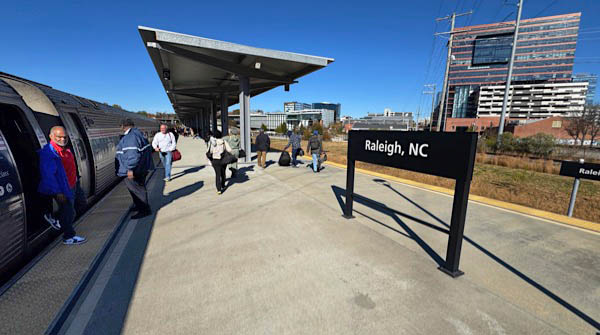
Raleigh, NC / Nov 2024 / RWH
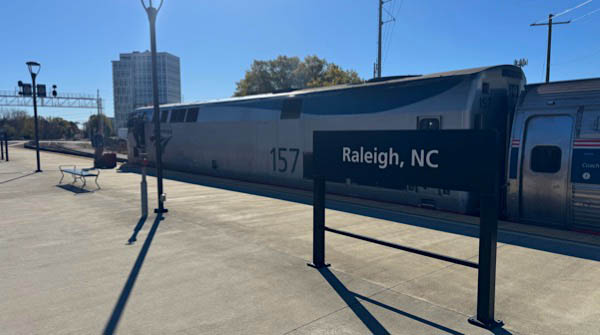
Raleigh, NC / Nov 2024 / RWH
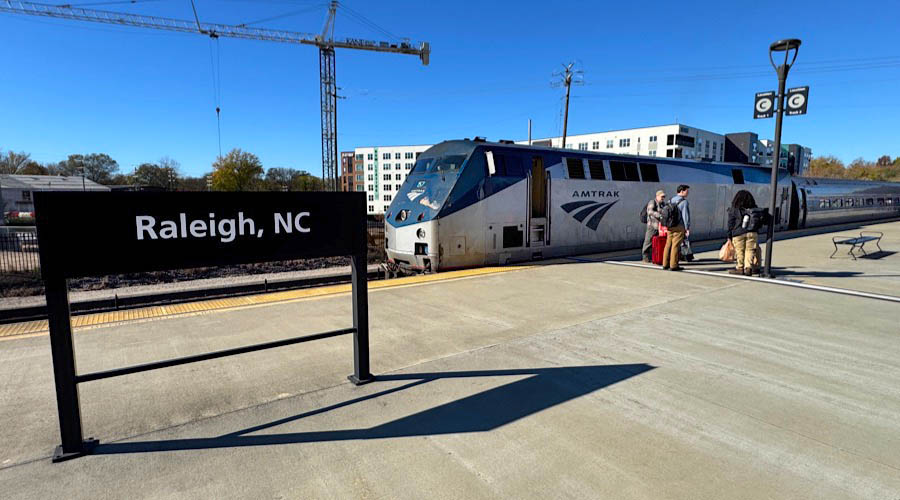
Raleigh, NC / Nov 2024 / RWH
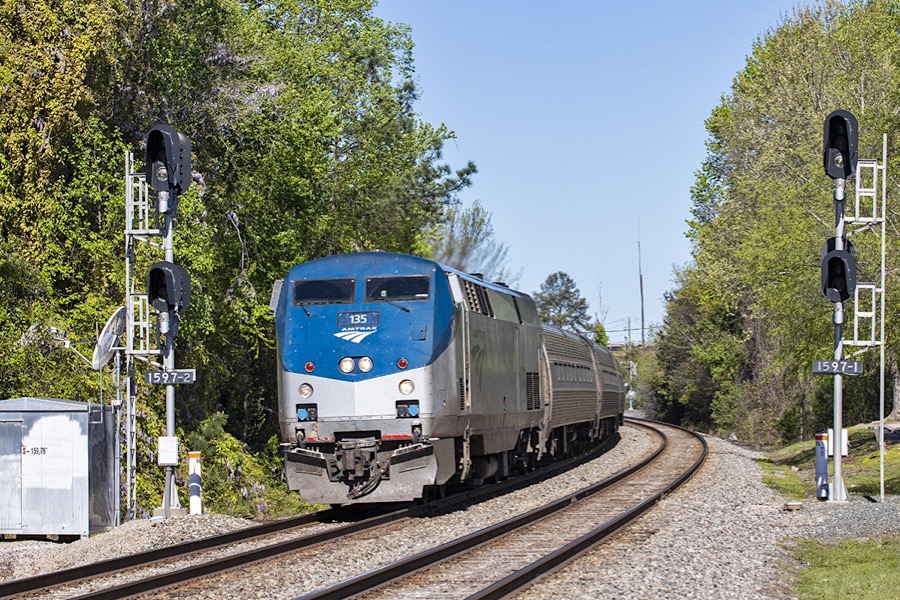
Raleigh, NC / Apr 2024 / Mark MacDougall
202 Selma-Smithfield
- Carolinian
- Palmetto
Selma, NC / Jun 2023 / RWH
- name:Selma Union Station
- address:500 E Railroad St
- type:town union, 2 platforms
- owner:Town of Selma
- opened:1925
- builder:Atlantic Coast Line
- renovated:2002
- services:waiting room
- links: Amtrak | Great Stations
Selma, NC / Jan 1993 / Harold Hodnett 
Selma, NC / Jun 2023 / RWH
Click to see the Selma-Smithfield joint station plotted on a Google Maps page
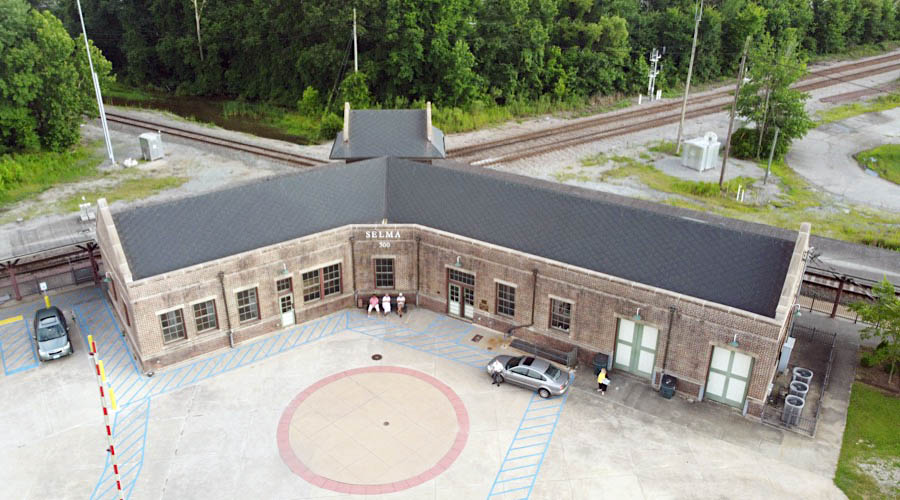
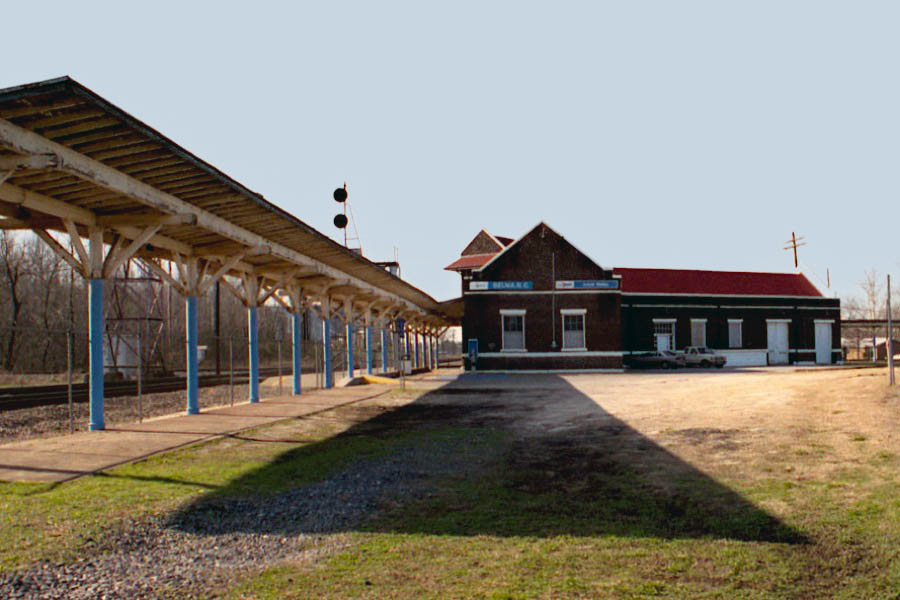
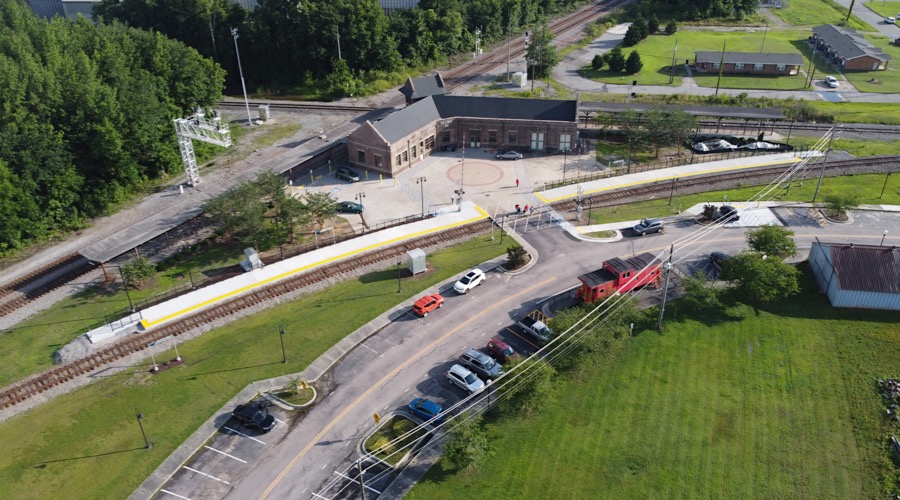
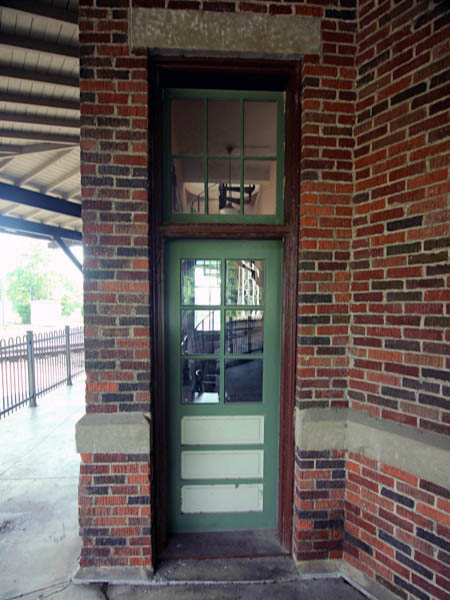
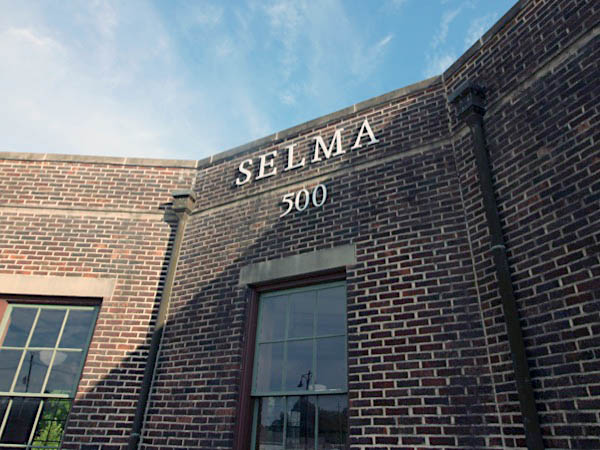
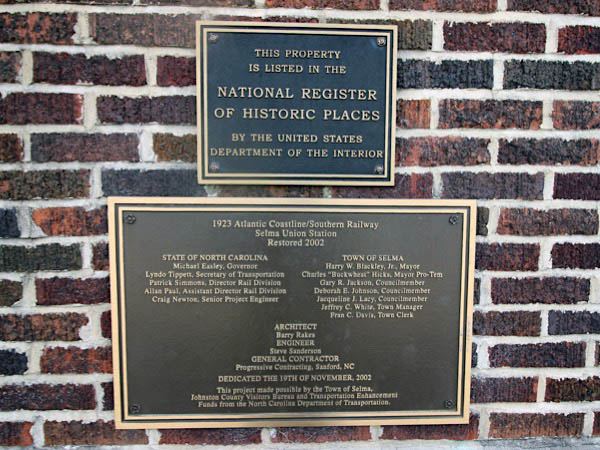
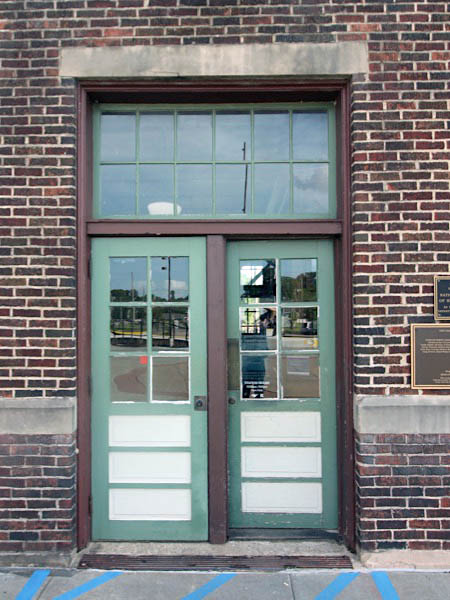
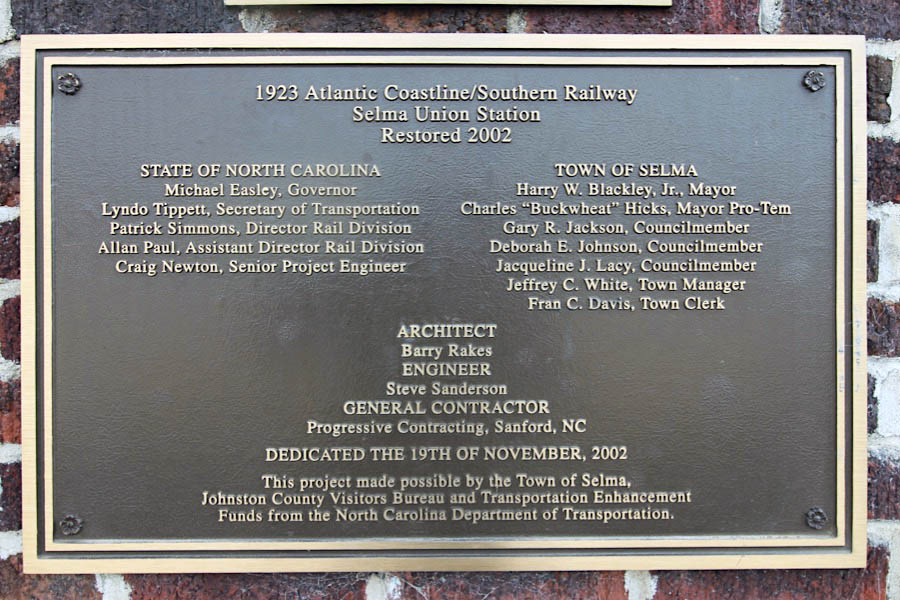
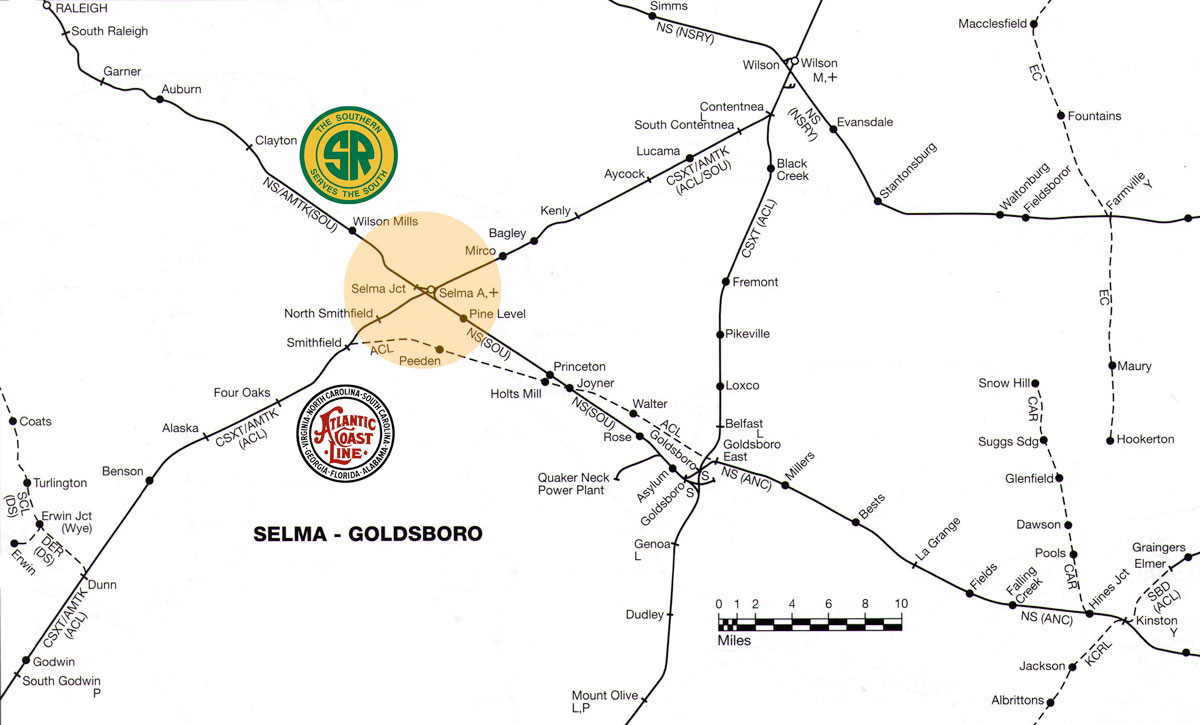
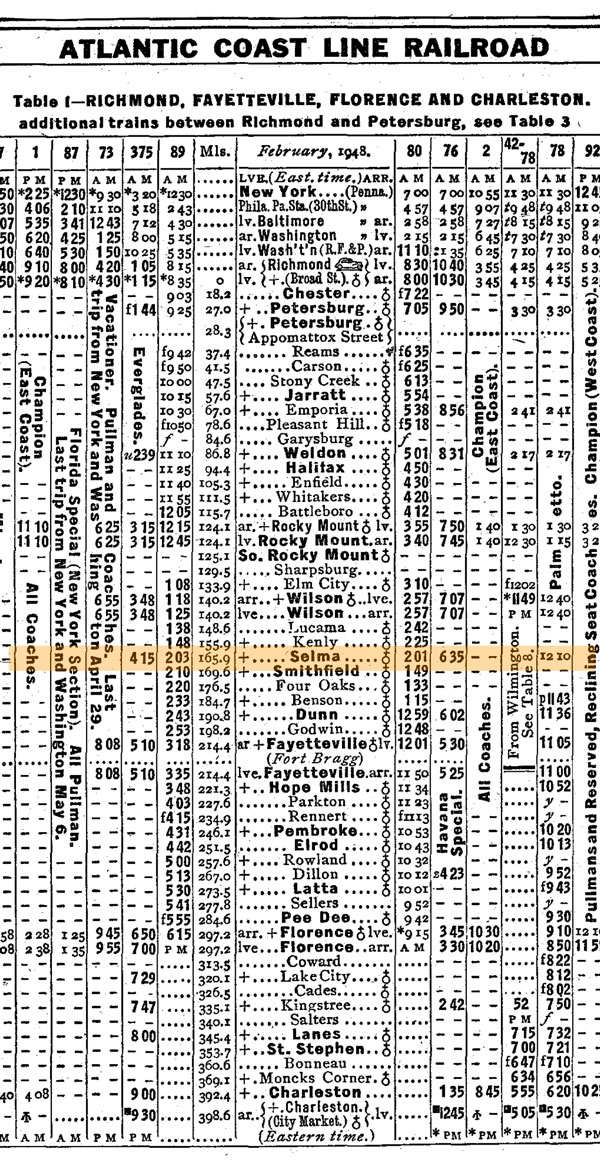
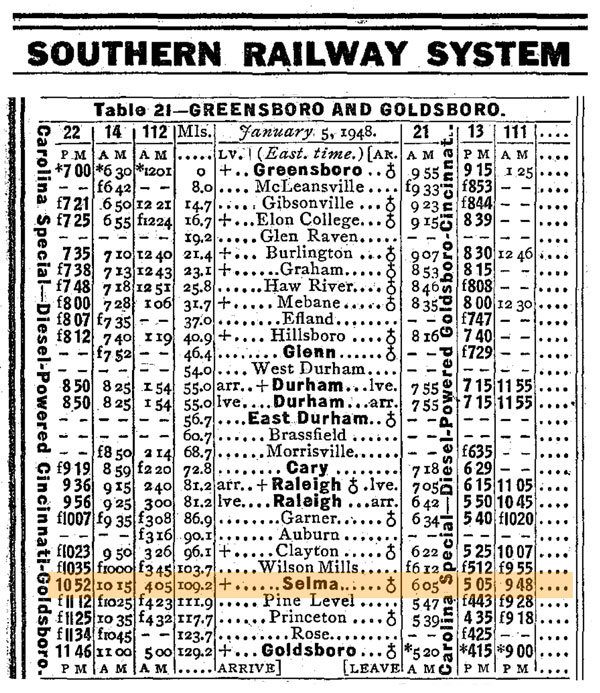
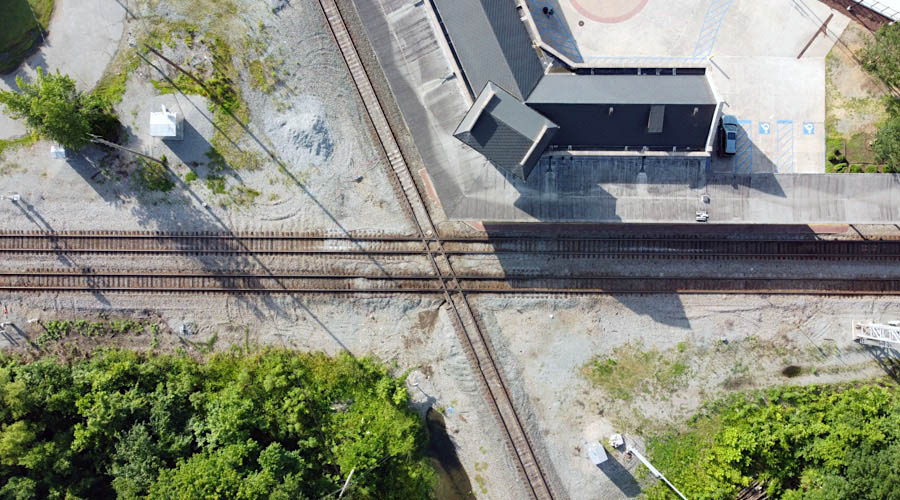
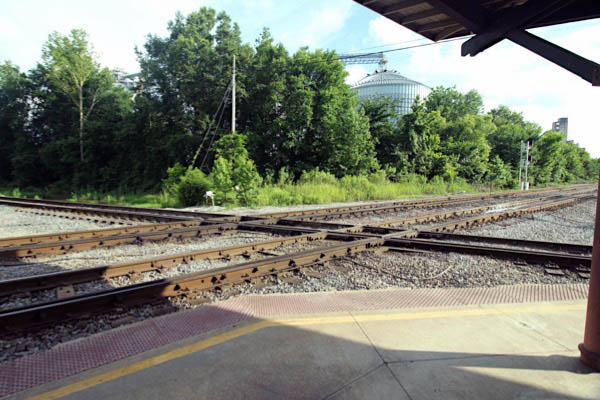
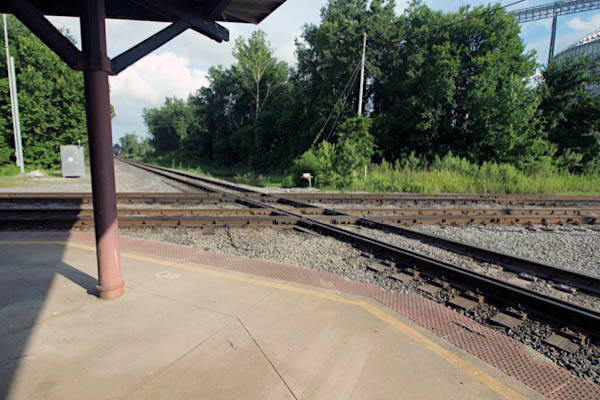
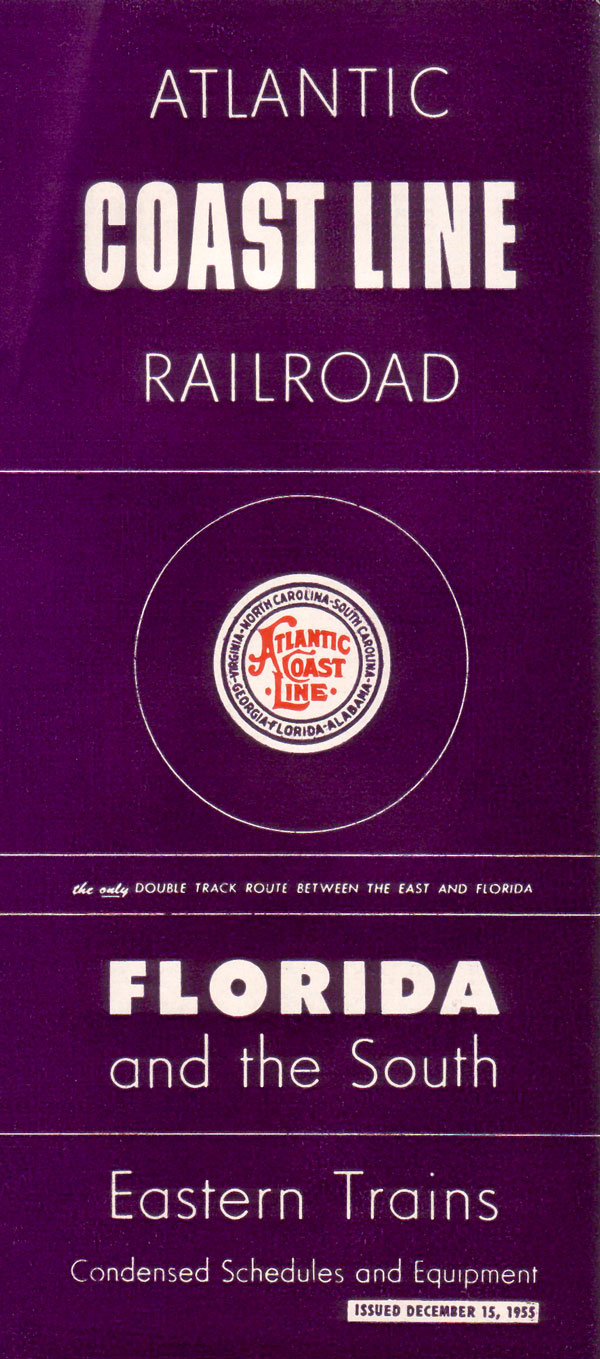
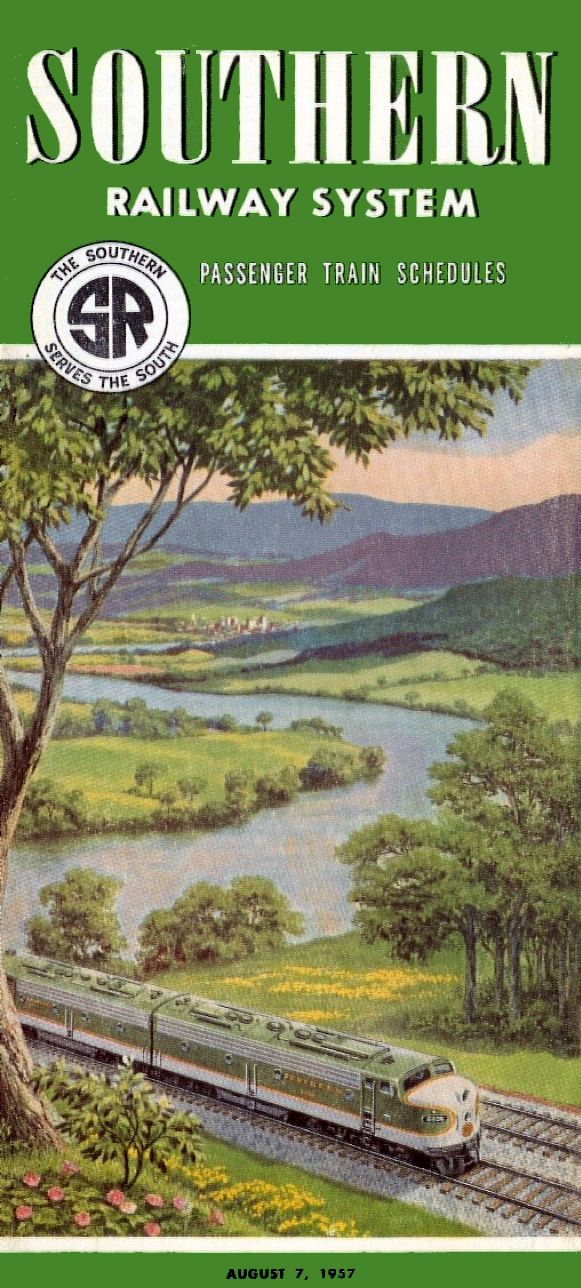
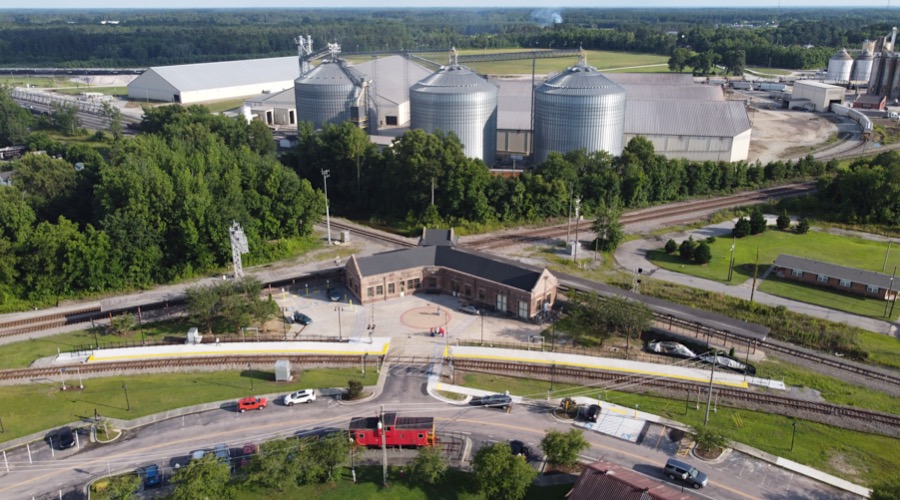
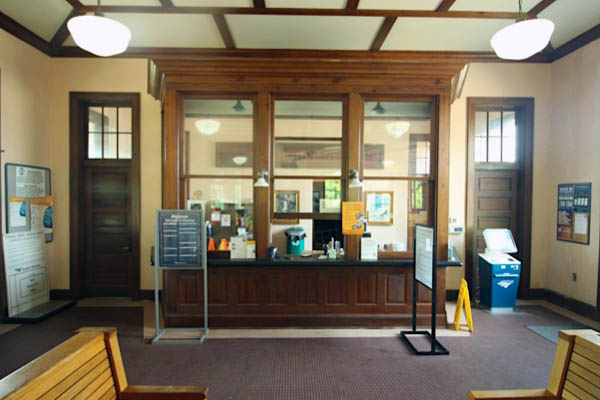
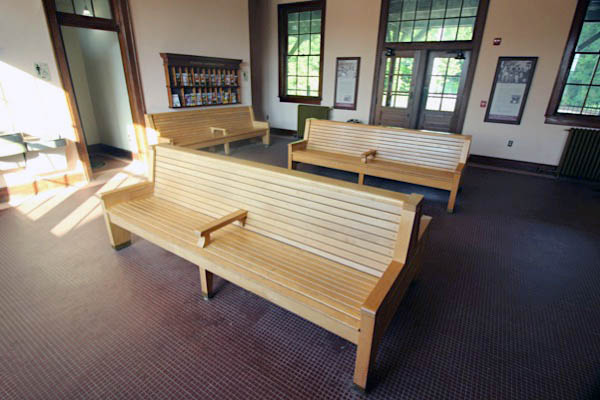
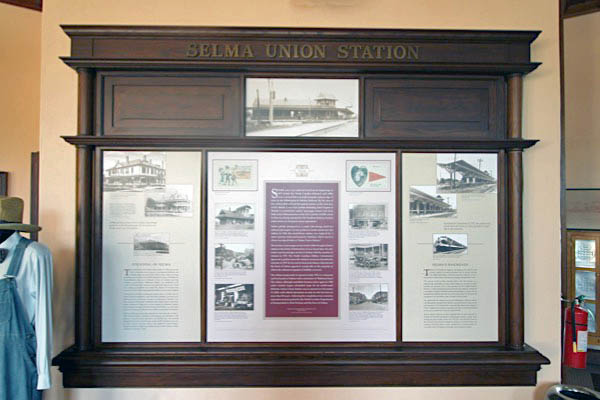
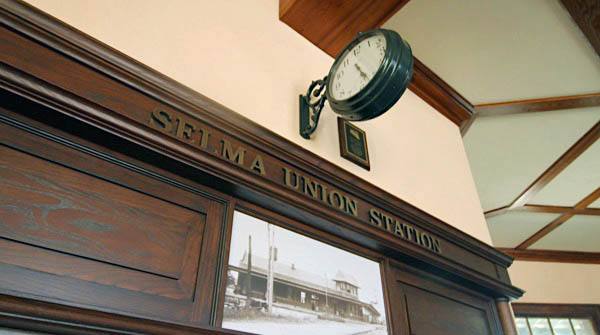
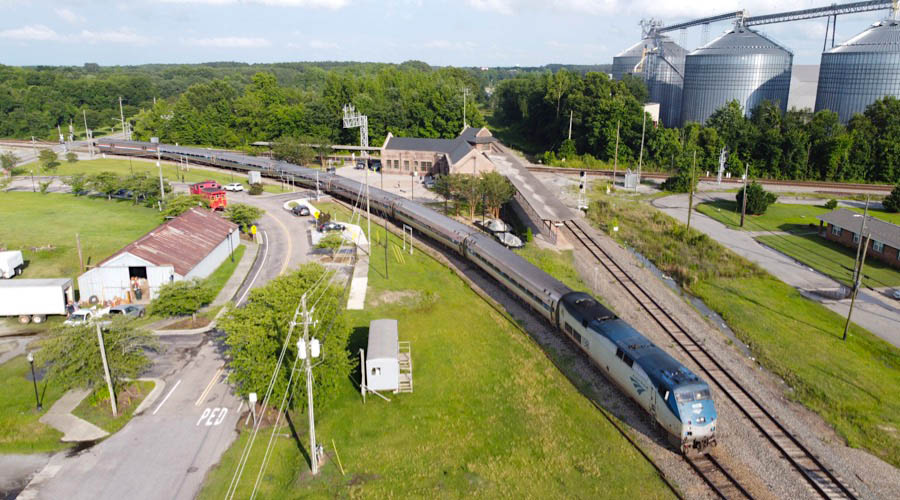
 Selma Union Depot was constructed in 1924 to serve the Atlantic Coast Line (ACL) Railroad and the Southern Railway (SR). Designed by architect A.M. Griffin, the masonry structure has a “V” shape due to its location at the crossing of the north-south ACL and east-west SR. The layout included a platform to serve each railroad, with a two-story tower for railroad signal operators located at the center where the two wings of the building meet.
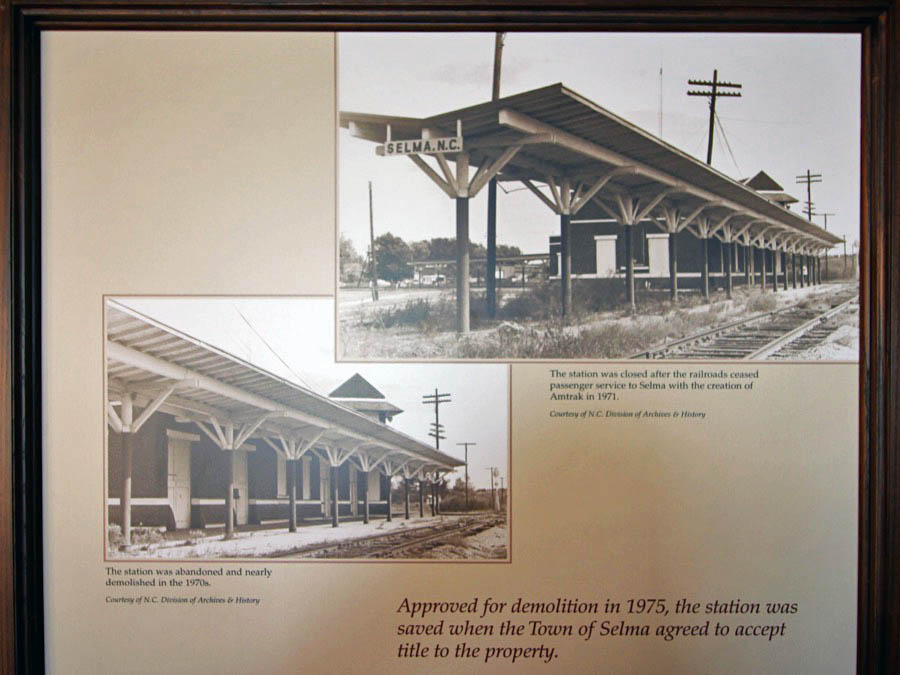
To the people of Selma, the depot has long been more than just a transportation hub: Selma was born as a railroad town, and the depot is a significant piece of its history. The community’s love for its station shone through when the North Carolina Utilities Commission approved a railroad petition to tear the building down in 1975; it was saved when the city objected to the demolition. The city then acquired the deed to the property and relieved the railroad of liability concerns.
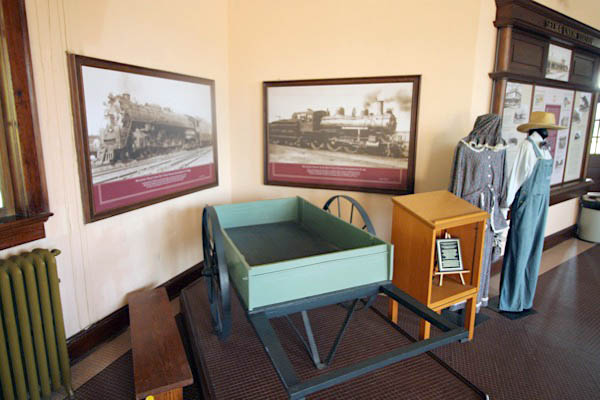
Union Depot reopened temporarily in 1976 as a museum and as the center for Selma’s first celebration of “Railroad Days.” Currently, the “Railroad Days” celebration is observed on the first weekend in October, commemorating the city’s railroad heritage. Numerous railroad displays and activities take place in the historic downtown and at the station. In 1982, the building was added to the National Register of Historic Places.
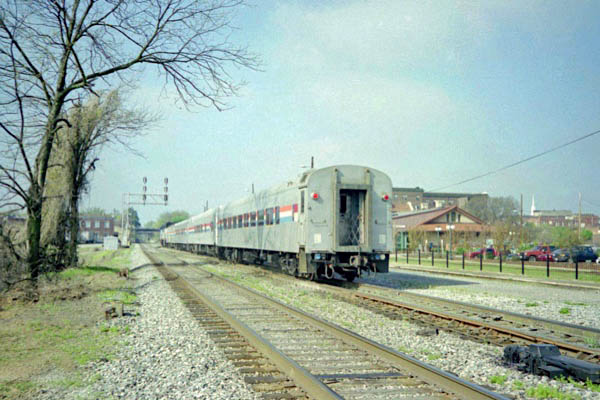
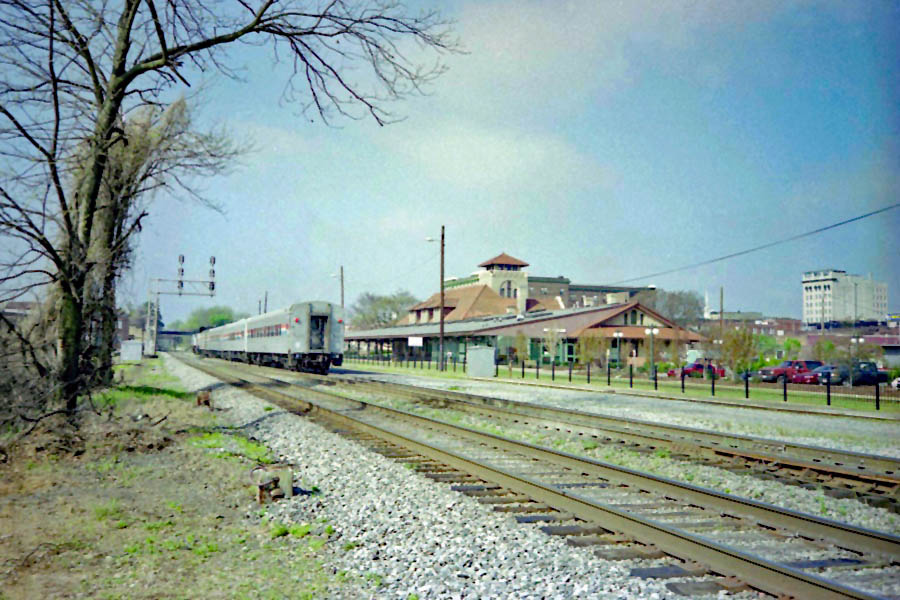
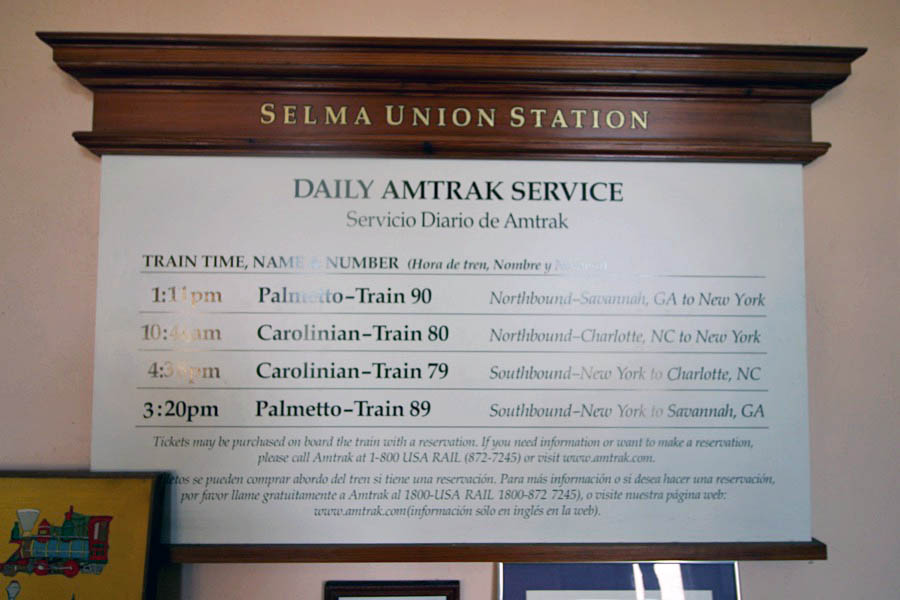
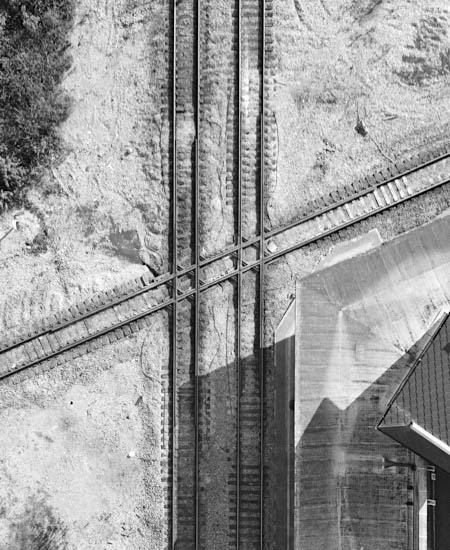 That same year, it reopened as an active train station when Amtrak added a scheduled stop for the Palmetto. Around this time, the ACL built a new curved connecting track on the north side of the station to allow trains to move between the north-south and east-west tracks. Subsequently, the station is now surrounded by tracks. More Amtrak service at Selma was established in 1984, when the state-supported Carolinian was initiated on a Charlotte-Selma-New York City route, before being suspended in 1985. The current iteration of the Carolinian began operating in 1990 and has called at Selma since then. Due to the configuration of the station at the crossing of the two rail lines, Palmetto customers use a platform on the southeast side of the depot, while Carolinian passengers use a platform to the north.
Officially, Selma was chartered in 1873, yet to those who live there, the city was truly born on May 1, 1867, when the first lots were sold around the Mitchner station on the North Carolina Railroad. Mitchner station was built in 1855 and is now believed to be the oldest surviving train station in North Carolina. During the Civil War, Confederate troops occupied the Mitchner station to make a stand. By the evening, Union troops had managed to surround the Confederate soldiers, causing them to abandon the depot.
Jun 2023 / RWH
Jun 2023 / RWH
Jun 2023 / RWH
Jun 2023 / RWH
Jun 2023 / RWH
adapted from SPV Comprehensive Railroad Atlas / collection
1948 Official Guide ad / collection
1948 Official Guide ad / collection
Selma, NC / Jun 2023 / RWH
Selma, NC / Jun 2023 / RWH
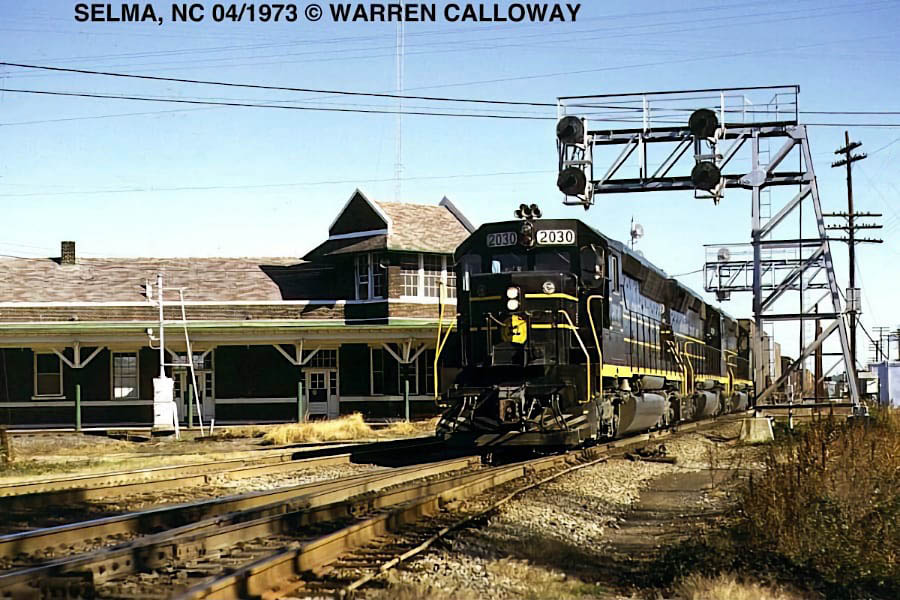
Selma, NC / Apr 1973 / Warren Calloway
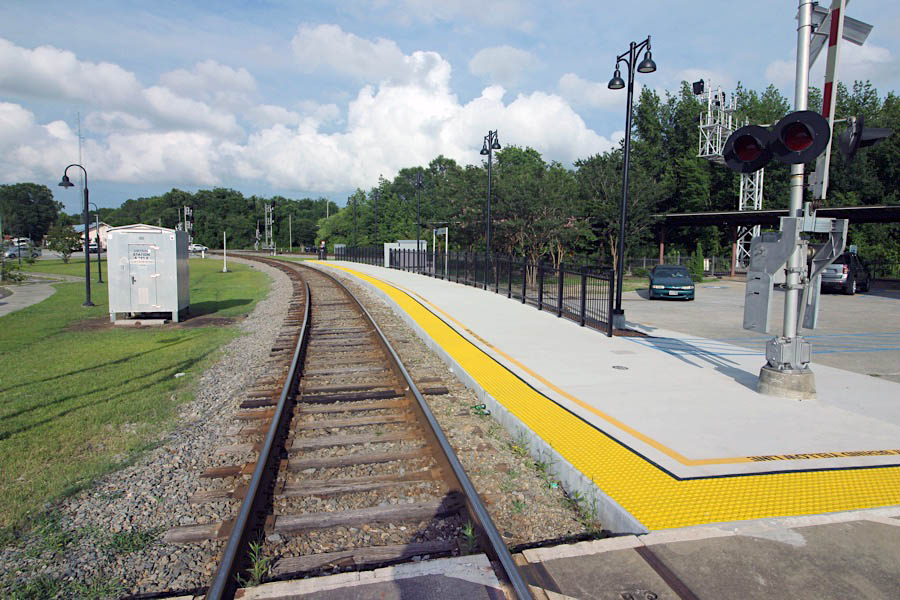
Selma, NC / Jun 2023 / RWH
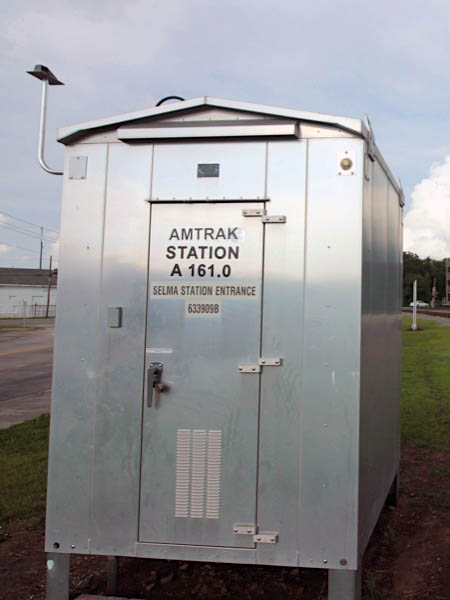
Jun 2023 / RWH
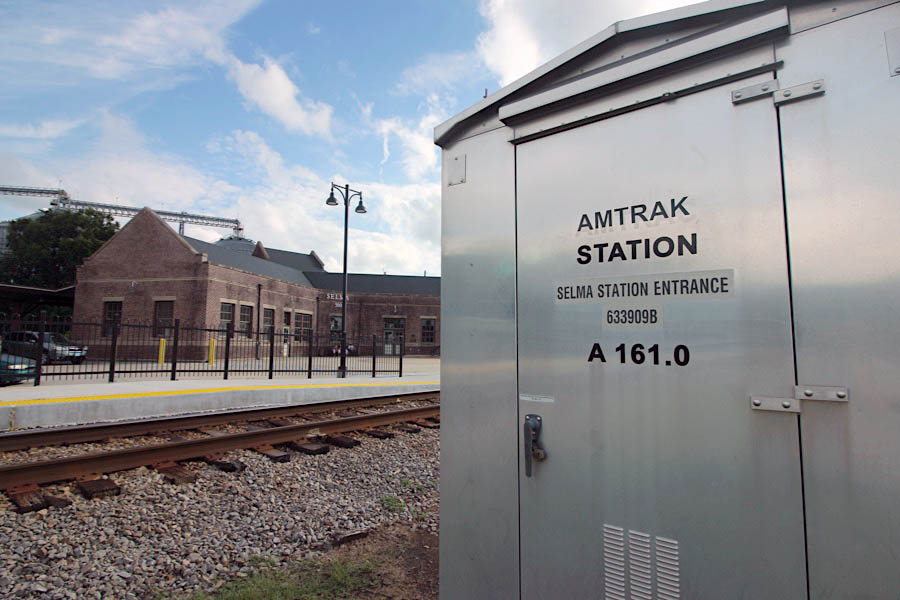
Selma, NC / Jun 2023 / RWH
Selma, NC / Jun 2023 / RWH
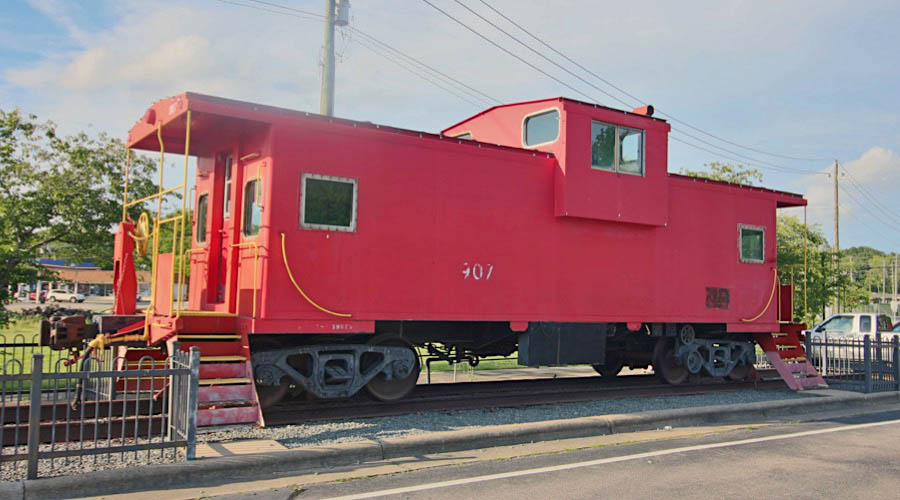
Richmond Fredericksburg & Potomac #907
Selma, NC / Jun 2023 / RWH
Selma was officially chartered as a Town on February 11, 1873, but the Town’s true birth took place on May 1, 1867, when there was a public sale of lots around a newly established station on the North Carolina Railroad. Selma was born as a “Railroad Town,” and our rail heritage is still evident today, with our recently renovated 1924 Union Depot (Selma Union Depot) supporting Amtrak service.
The Town is also home to the Mitchener Station, which was built in 1855 and it is thought to be the oldest surviving train station in North Carolina. When Interstate 95 was built in the late 1950s, the Town experienced growth due to its proximity to the Interstate. Today, there are many hotels and restaurants located in the area for visitors traveling on Interstate
Jun 2023 / RWH
Selma-Smithfield, NC
Jun 2023 / RWH
Jun 2023 / RWH
Jun 2023 / RWH
Jun 2023 / RWH
Jun 2023 / RWH
See also our Amtrak Palmetto route scrapbook for more Selma NC images
southbound #79
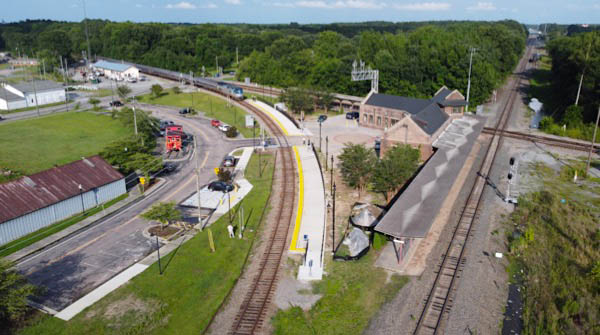
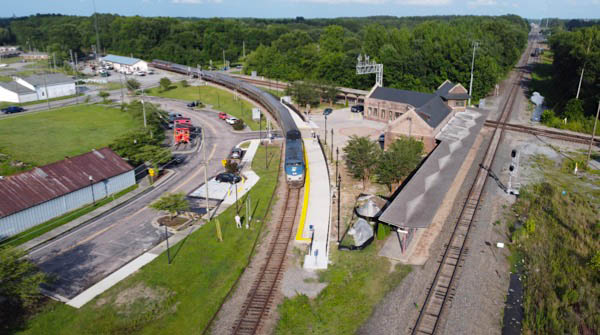
Selma, NC / Jun 2023 / RWH
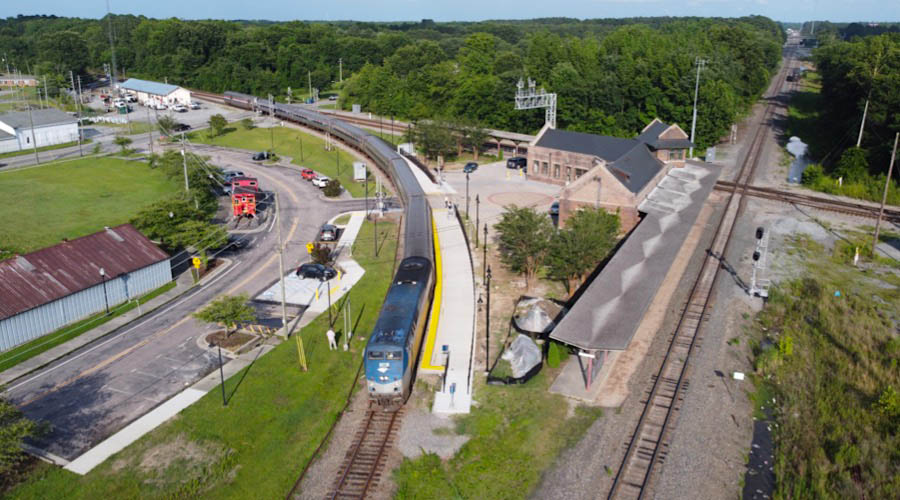
Selma, NC / Jun 2023 / RWH
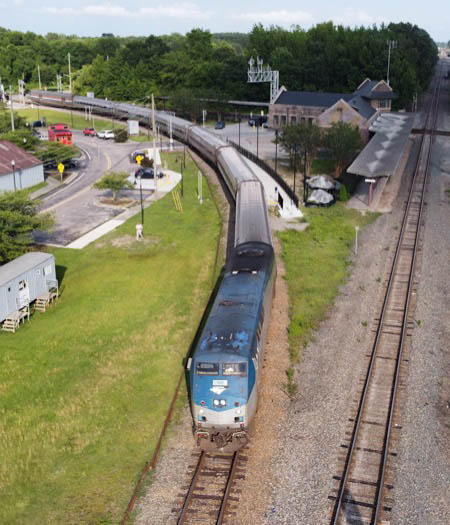
Jun 2023 / RWH
Selma, NC / Jun 2023 / RWH
Selma, NC / Jun 2023 / RWH
Selma, NC / Jun 2023 / RWH
Selma, NC / Jun 2023 / RWH
Jun 2023 / RWH
Selma, NC / Jun 2023 / RWH
Selma, NC / Nov 2024 / RWH
228 Wilson, NC
- Carolinian
- Palmetto
Jun 2023 / RWH

Wilson, NC / Jun 2023 / RWH
Wilson, NC / Jun 2023 / RWH
Click to see the Wilson depot plotted on a Google Maps page
- name:GK Butterfield Station
- address:401 E Nash St
- type:town depot, 1 platform
- owner:City of Wilson
- opened:1924
- builder:Atlantic Coast Line
- style:Flemish
- renovated:1198
- services:tickets, baggage
- links: Amtrak | Great Stations
Wilson, NC / Jun 2023 / RWH
Wilson, NC / Jun 2023 / RWH
Wilson, NC / Jun 2023 / RWH
Jun 2023 / RWH
Wilson, NC / Jun 2023 / RWH
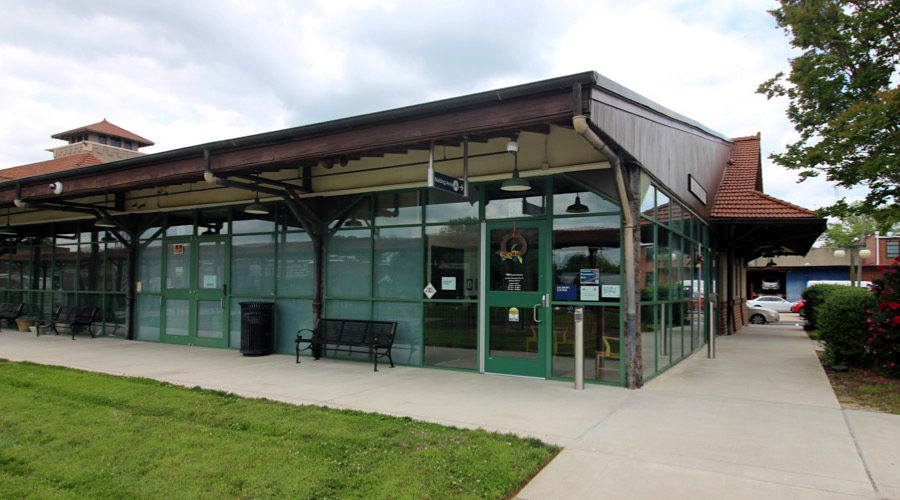
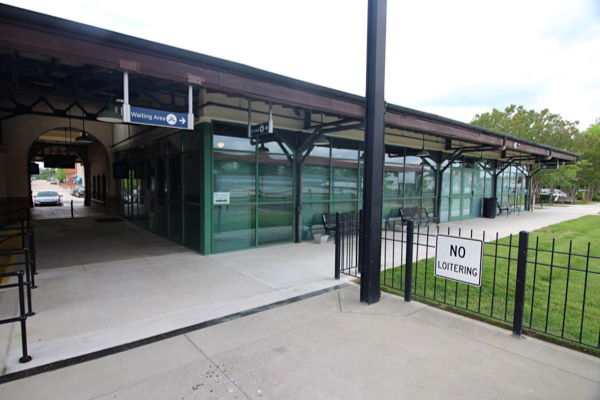
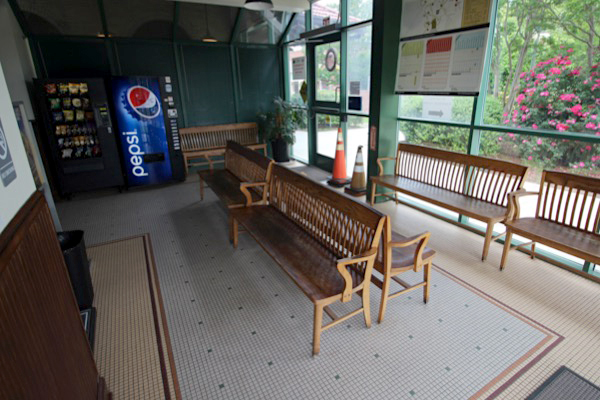
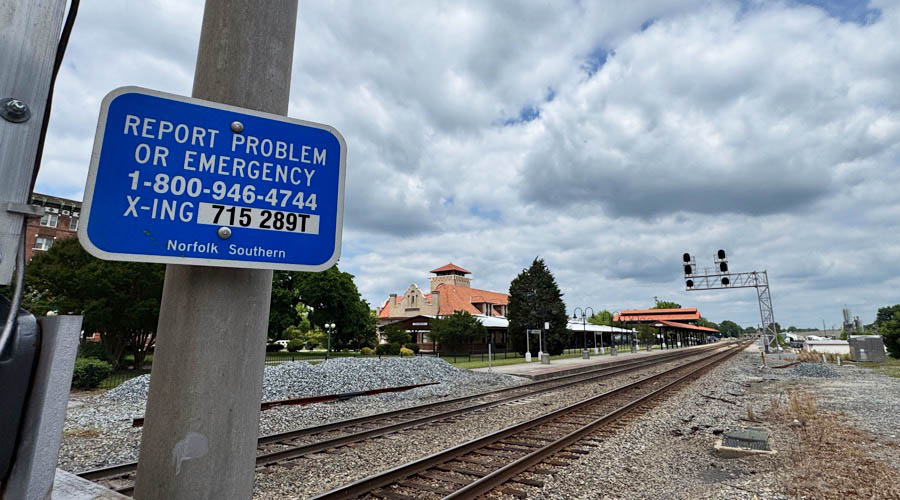
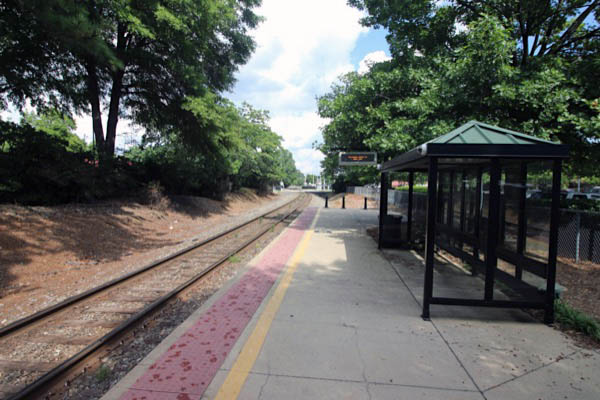
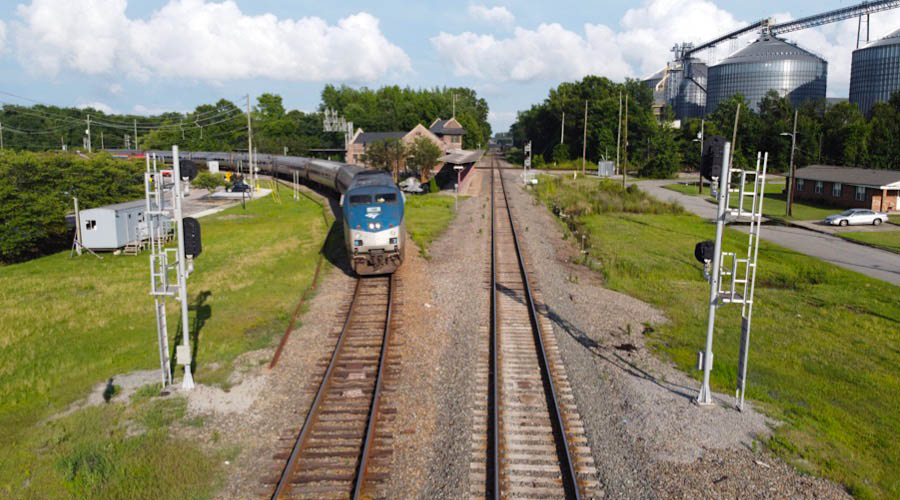
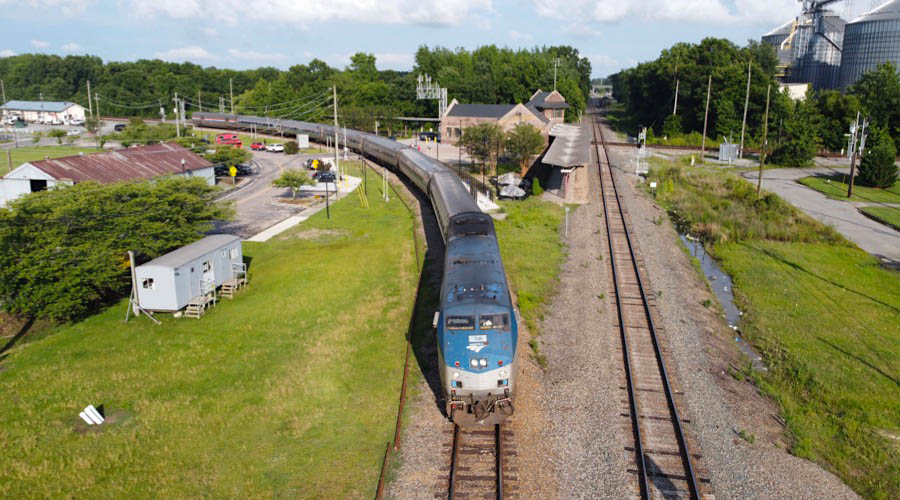
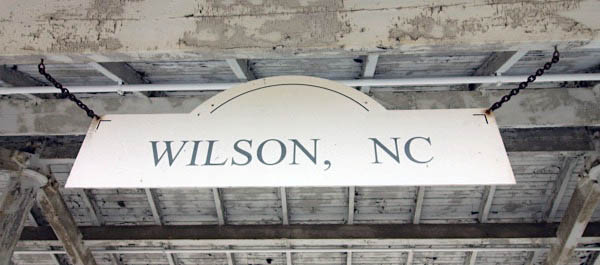
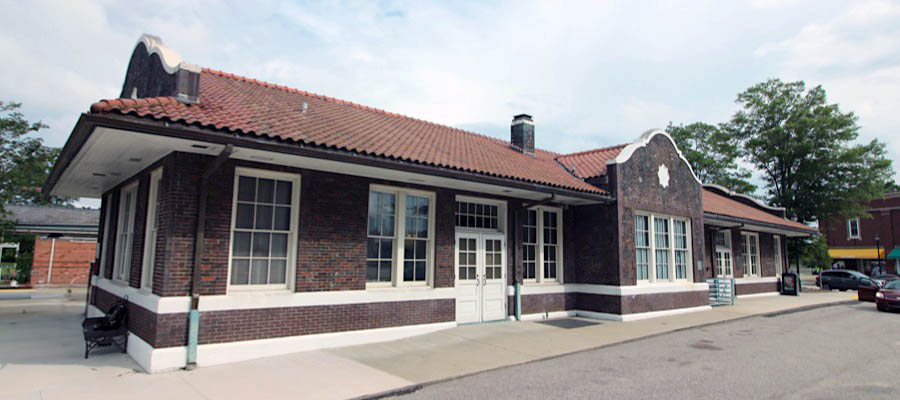
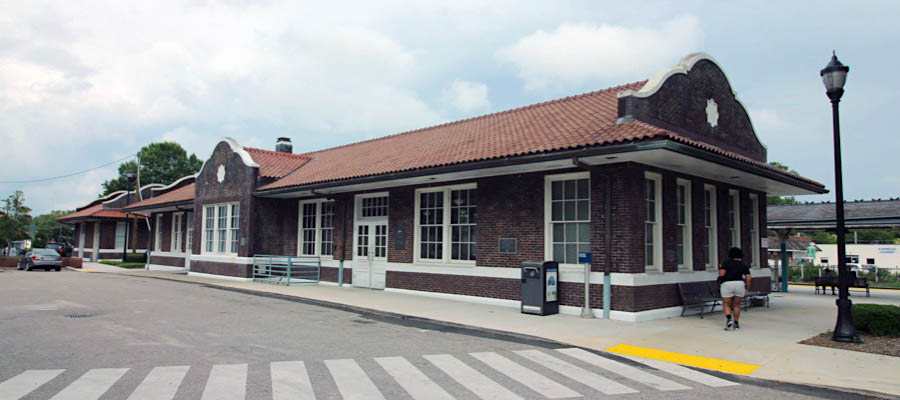
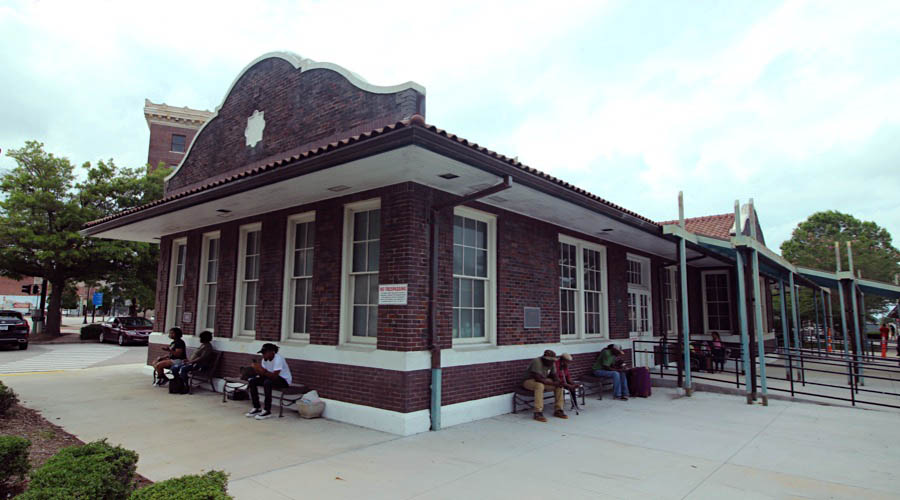
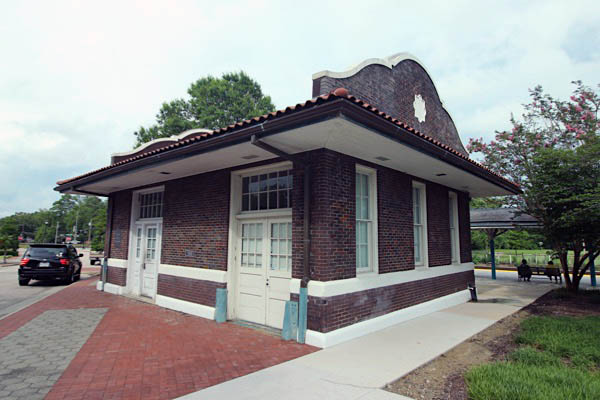
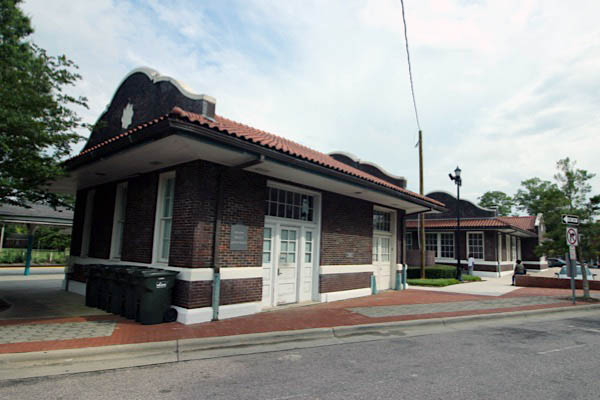
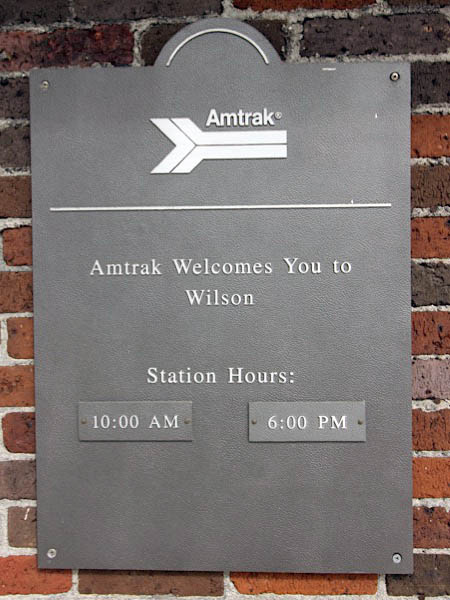
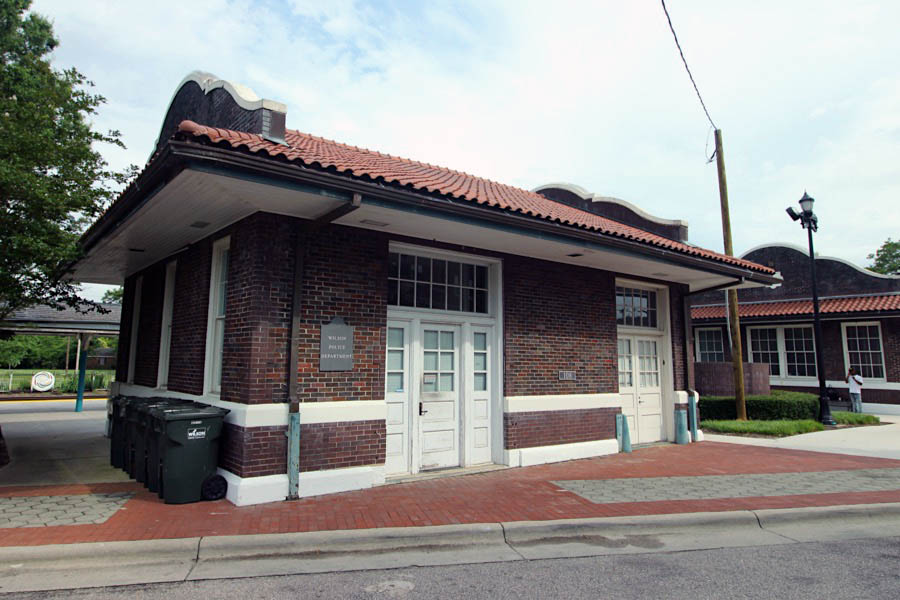
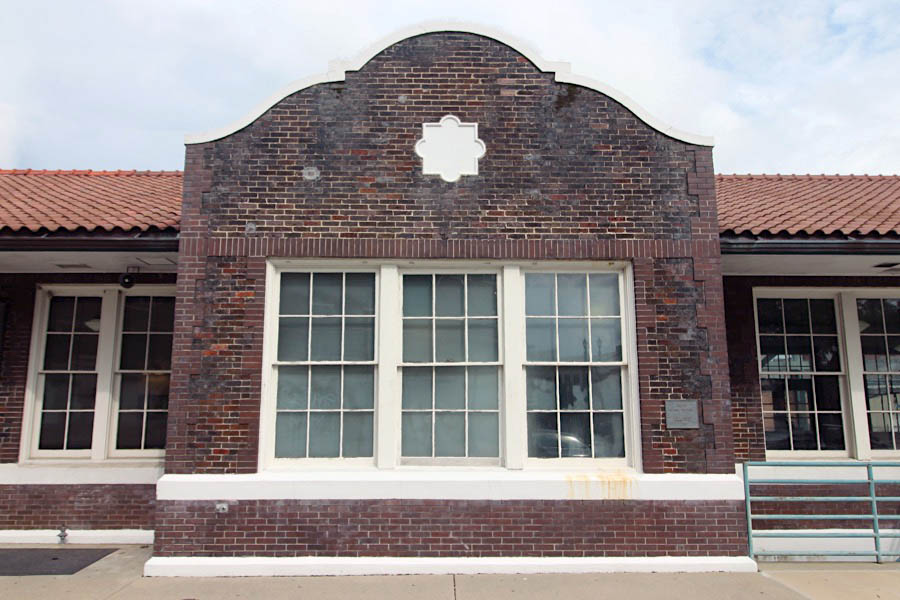
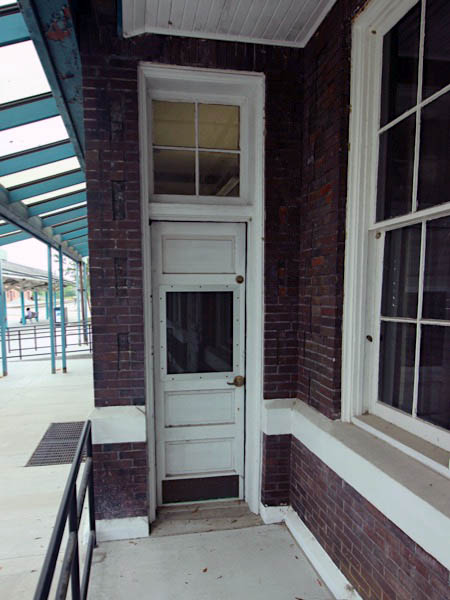
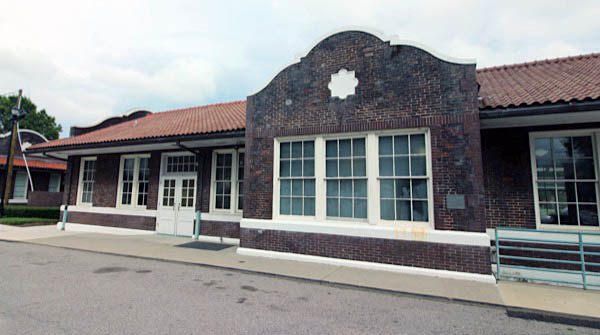
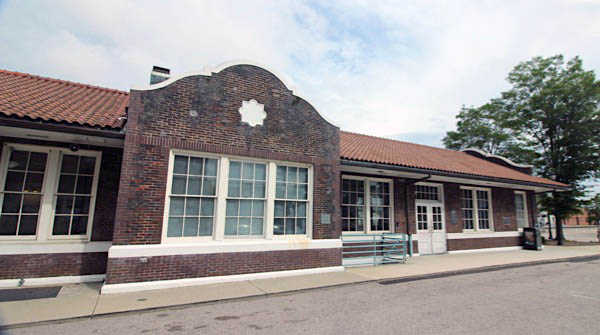
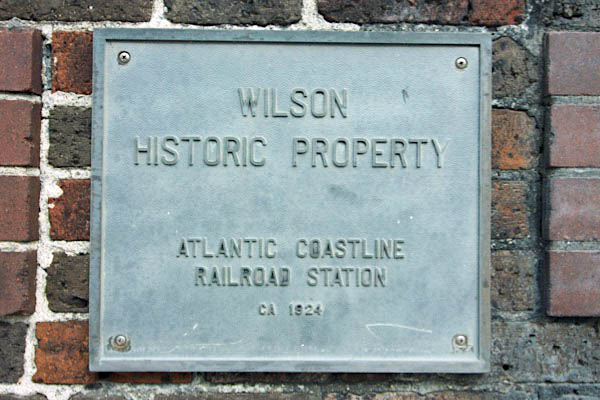
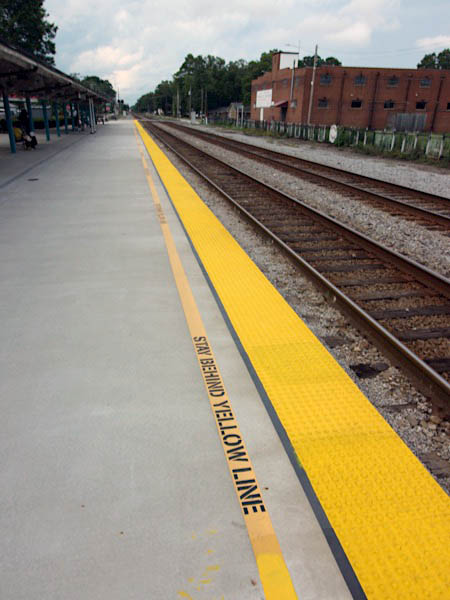
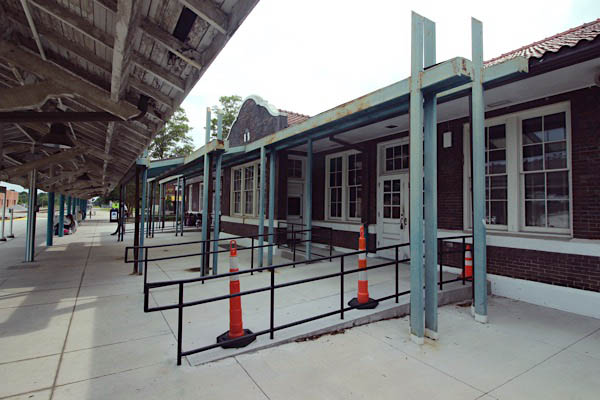
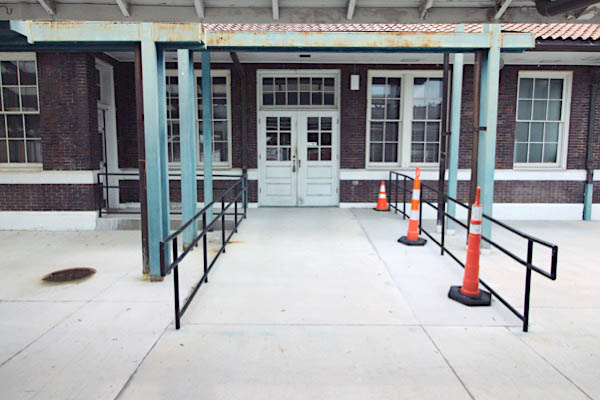
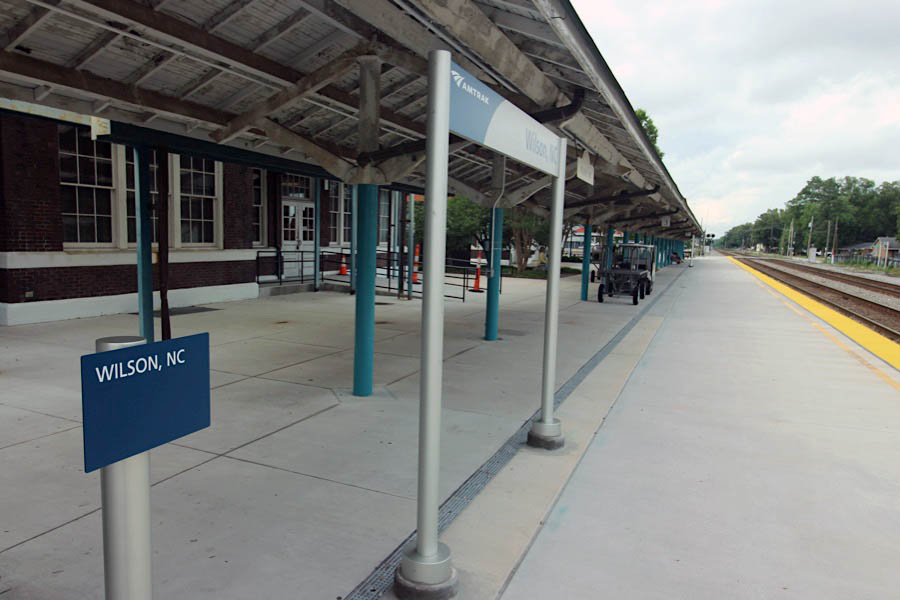
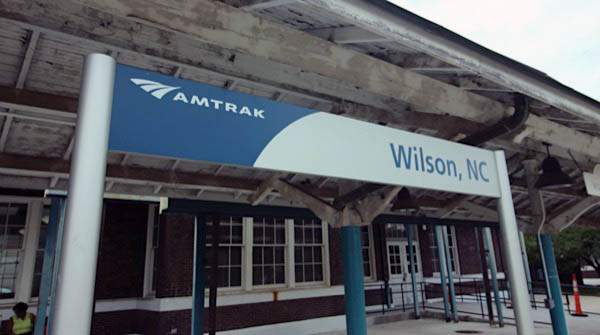
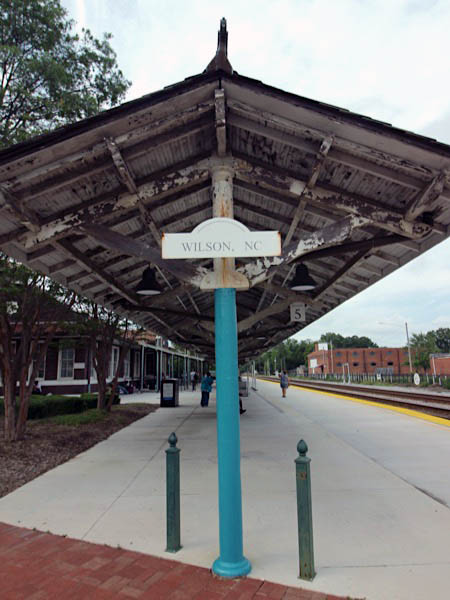
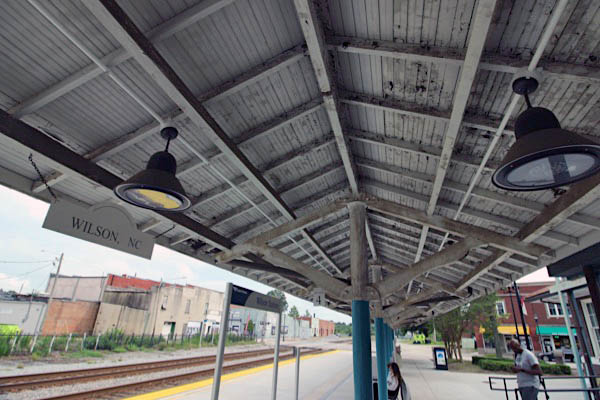
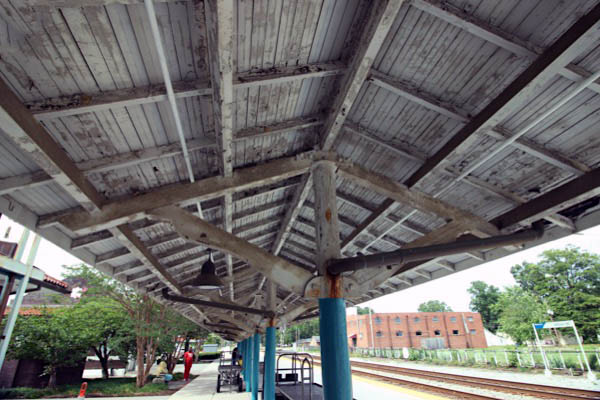
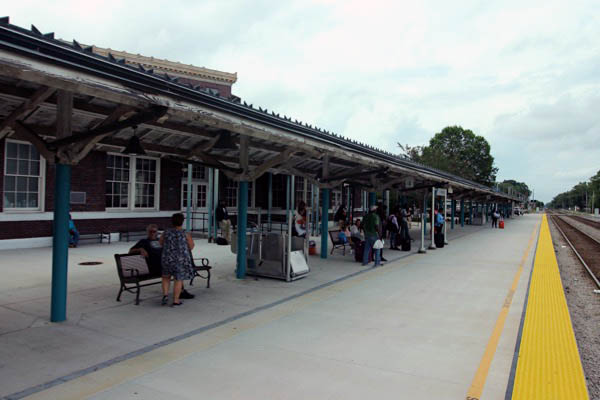
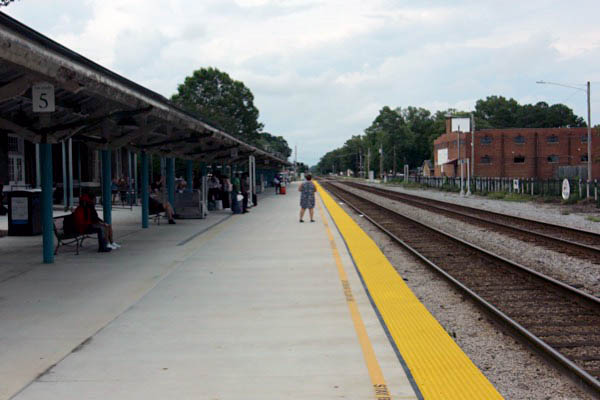
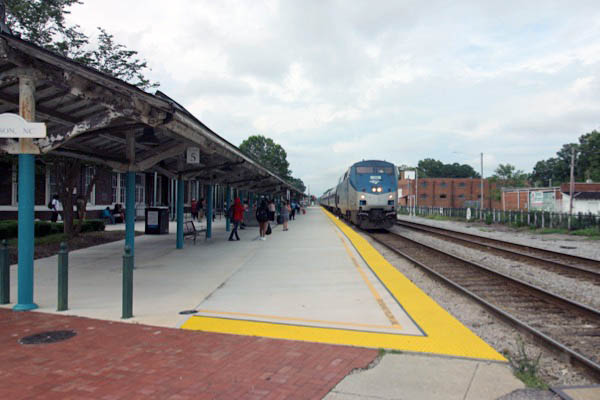
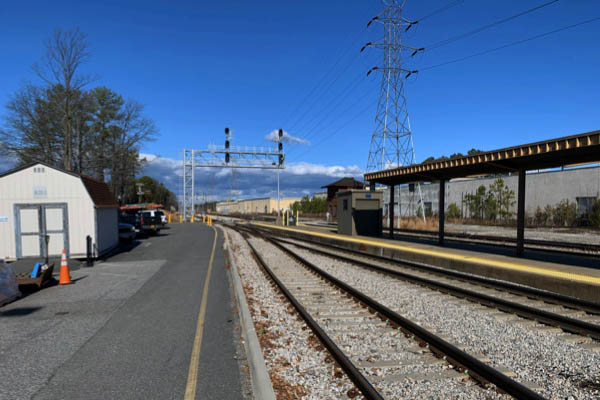
 The Wilson Amtrak station was constructed in 1924 by the Atlantic Coast Line Railroad. Designed by A.M. Griffin in the Flemish style, this one-story brick building sports Spanish terra cotta roof tiles and an umbrella canopy that stretches the length of the station.
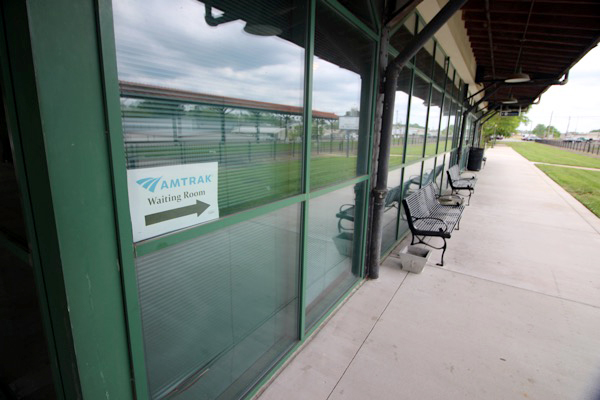
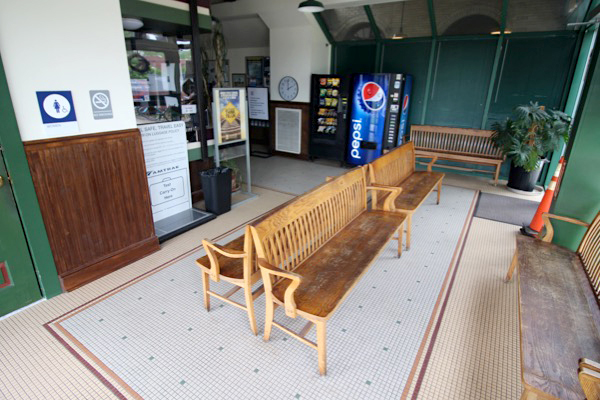
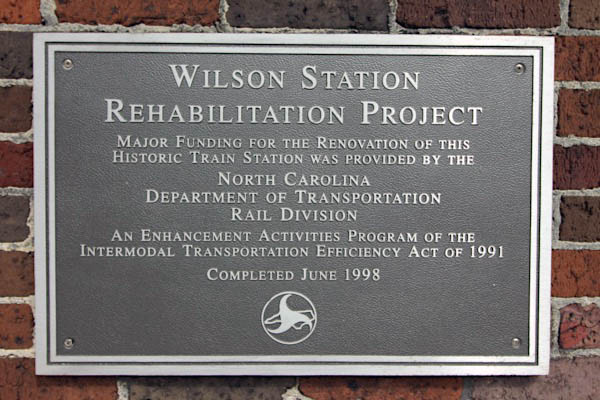
Though the station underwent major renovations by the turn of the 20th century, workers took care not to destroy the architecture of the building. The restoration took place in three phases. In phase one, the station was completely rebuilt and modernized while preserving and restoring the original architecture. A new platform in compliance with the Americans with Disabilities Act and canopy connecting the station with the platform were constructed, as well as a waiting room, baggage room, ticket office and vending area. The construction began in 1996 and was completed two years later. In phase two of the restoration process, the city and state added long-term parking facilities and enhanced the look of the station with the addition of some landscaping. Phase two construction was completed in 2003. Phase three involved canopy restoration. The entire renovation project cost about $3 million.
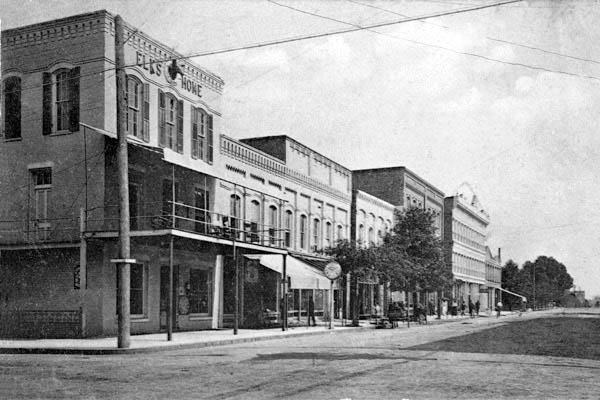 Like many small towns in the 19th century, the railroad was the center of growth and prosperity for Wilson. In late 1839, the Wilmington-Weldon and Raleigh Railroad completed tracks that stopped through two stations: Toisnot Junction Station and Hickory Grove. The town of Wilson was born by joining together the town of Toisnot Junction and Hickory Grove. It was named for General Louis Dicken Wilson, a state senator and an early advocate of the public school movement.
Wilson, known as the City of Beautiful Trees, was incorporated in 1849 as a farm market. At the time, tar and turpentine were the primary cash products, with cotton growing in importance in the 1860s. After the Civil War, farmers found a better market in tobacco, and by the turn of the 20th century, Wilson became the world’s largest bright leaf tobacco market. Wilson is also home to Imagination Station, an imaginative science learning center for children.
Jun 2023 / RWH
Jun 2023 / RWH
Wilson, NC / Jun 2023 / RWH
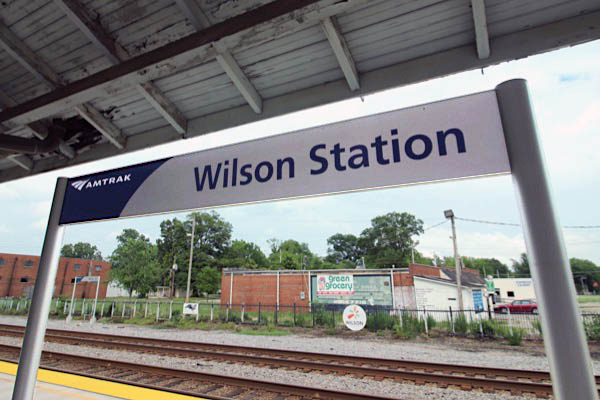
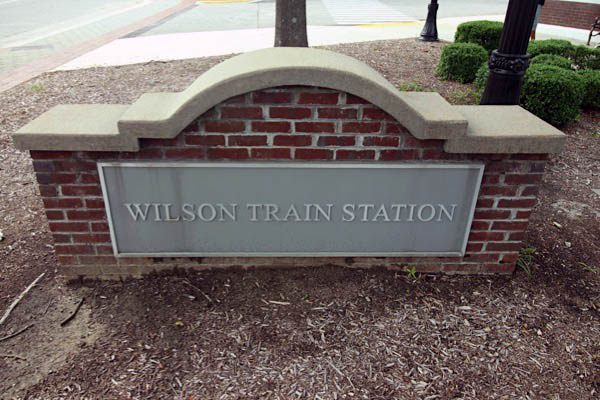
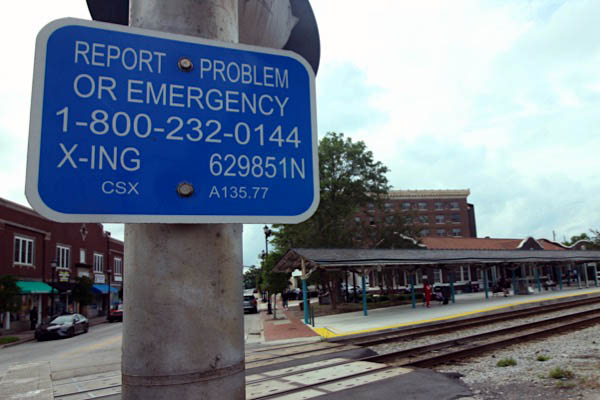
Jun 2023 / RWH
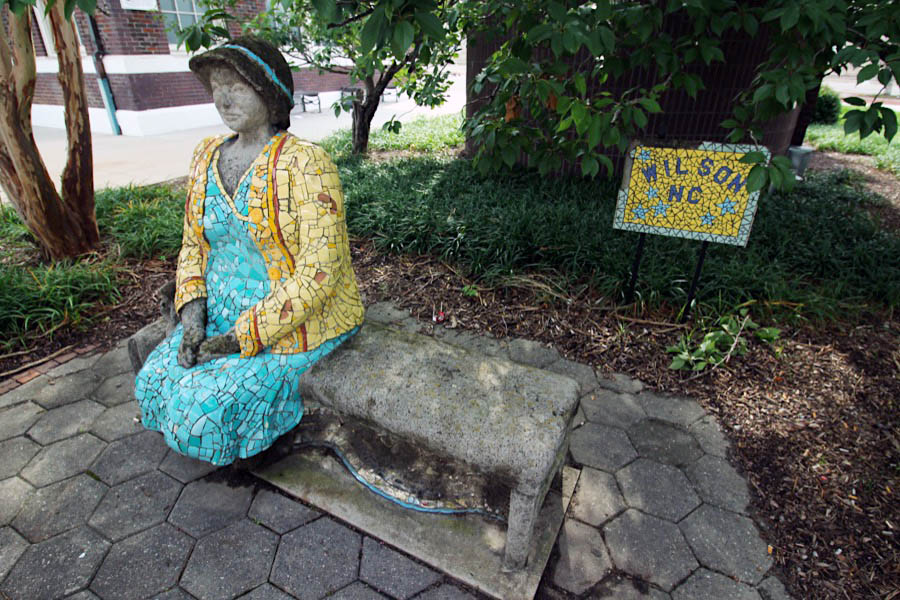
Jun 2023 / RWH
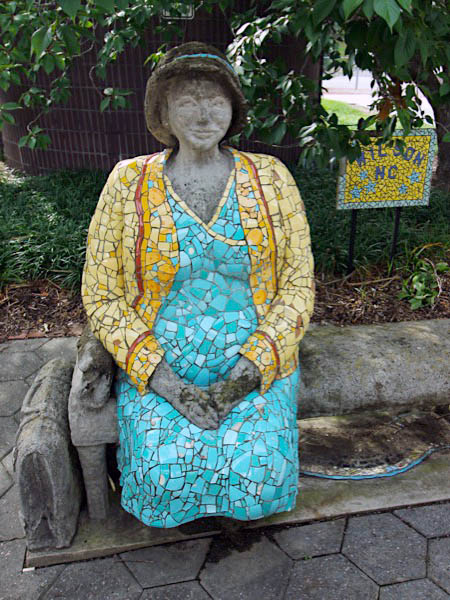
Jun 2023 / RWH
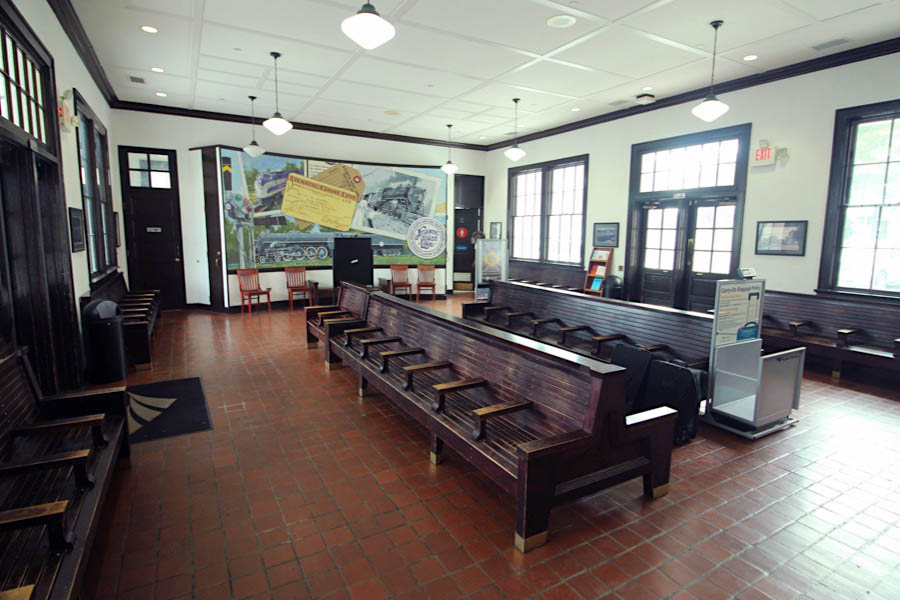
Jun 2023 / RWH
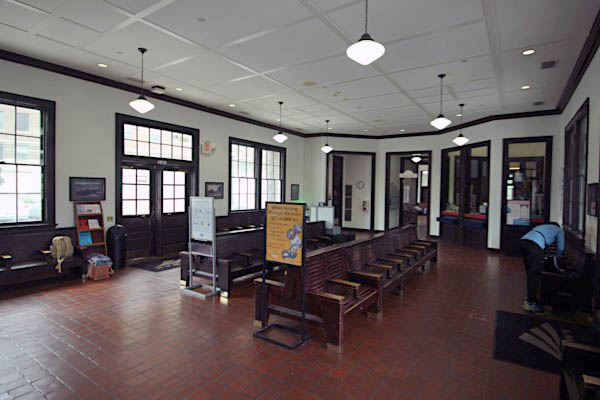
Jun 2023 / RWH
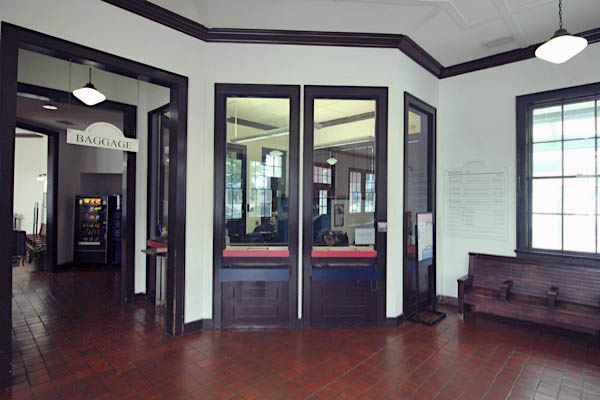
Jun 2023 / RWH
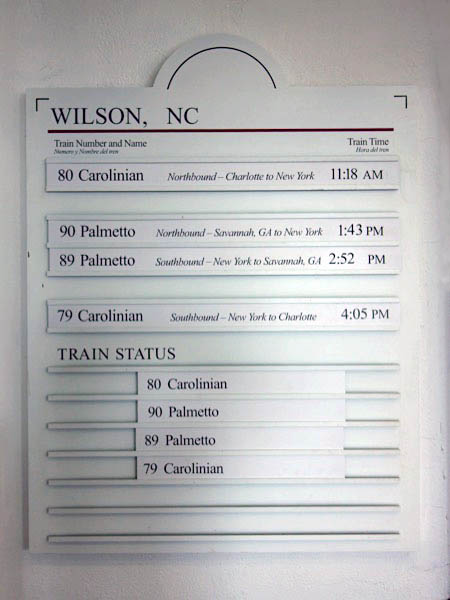
Jun 2023 / RWH
Jun 2023 / RWH
Jun 2023 / RWH
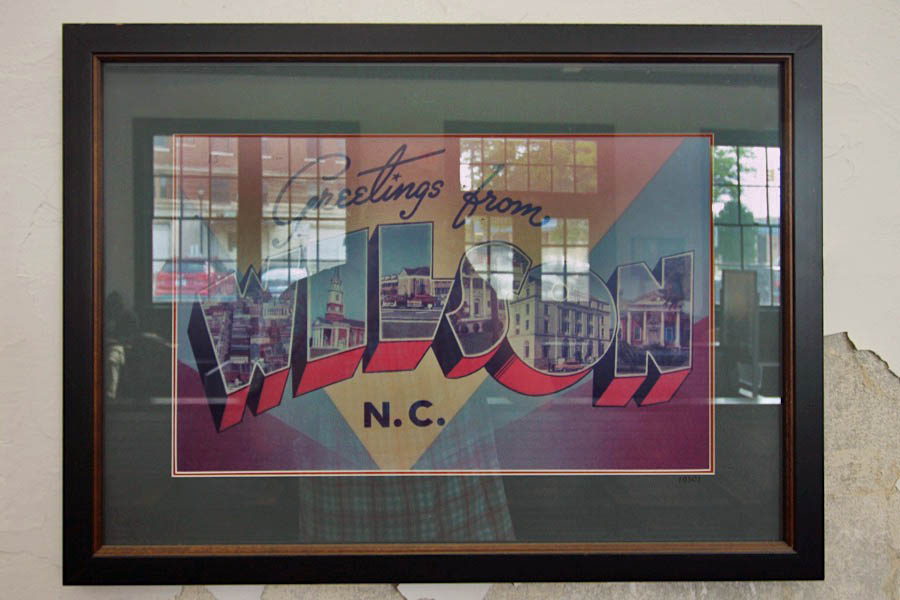
Jun 2023 / RWH
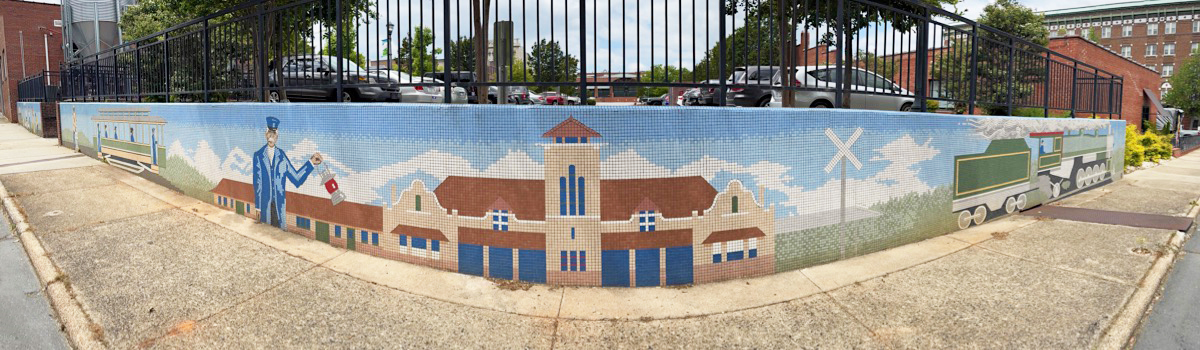
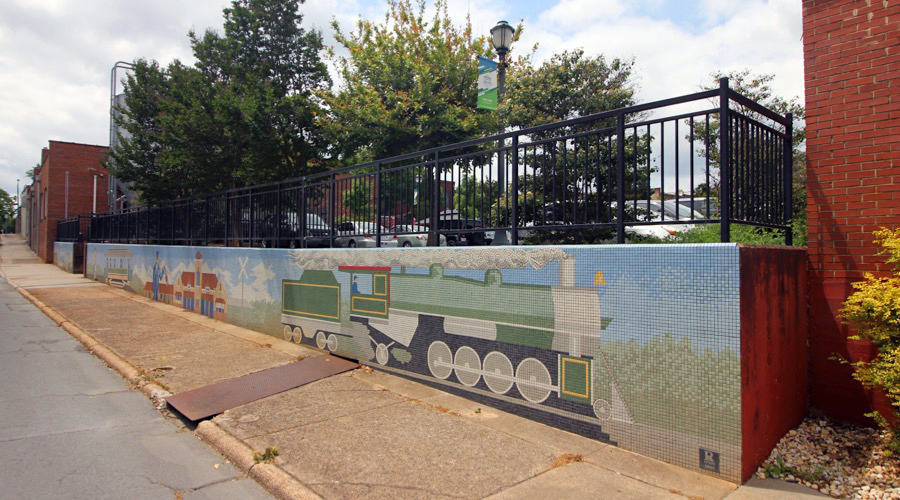
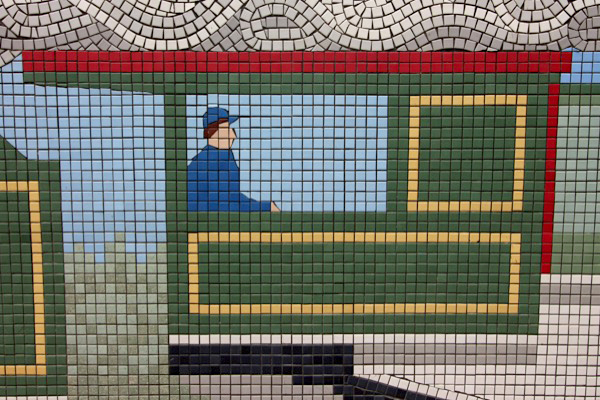
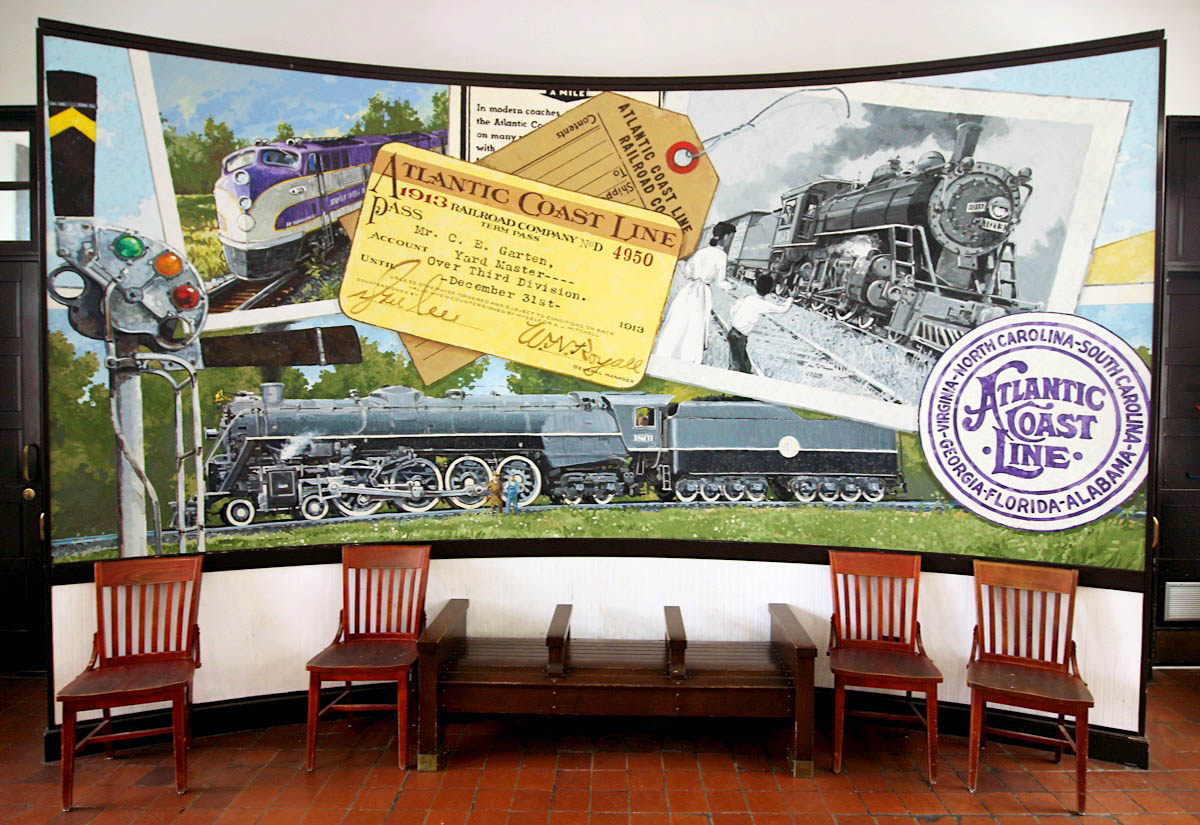
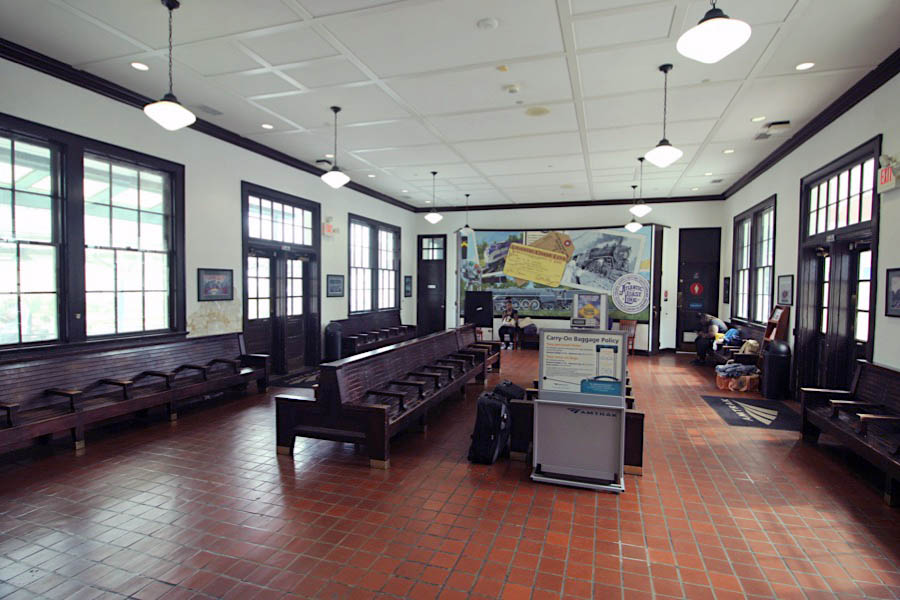
 In 1999, a 19′ by 10′ mural for the station’s waiting room was completed. It was commissioned by the North Carolina Department of Transportation and painted by artist Michael Brown. The mural depicts 100 years of railroad history in Wilson.
Jun 2023 / RWH
Jun 2023 / RWH
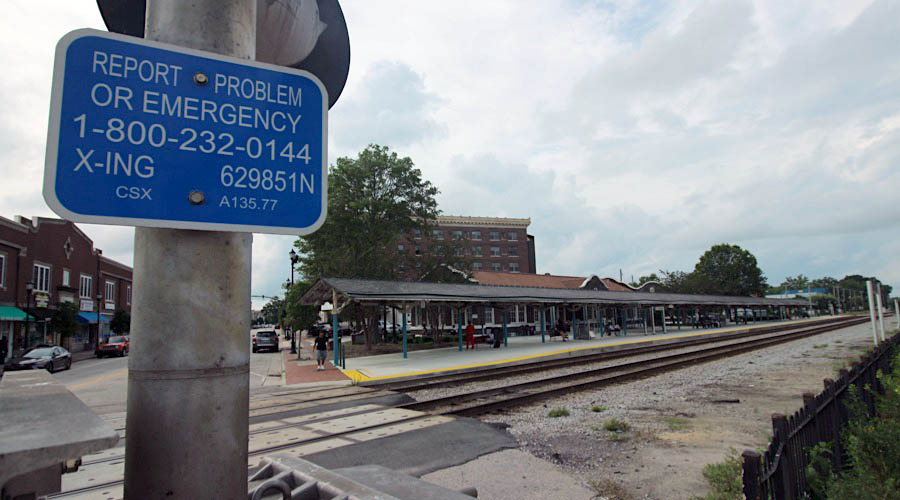
 Once heralded as "The World's Greatest Tobacco Market," Wilson, NC is now a thriving city of almost 50,000 people that has successfully recruited new business including pharmaceuticals, banking, and medical to replace the lost tobacco market revenue. During the heyday of the tobacco market in the late 1800s and early 1900s, its success drew prosperous farmers and businessmen to establish majestic homes downtown along West Nash Street, widely known as one of the most beautiful residential areas in North Carolina. Now lining the avenues of the downtown business district, historically-preserved architecture with high speed fiber optic internet blends the visions of yesteryear with the inspiration of tomorrow. Weathered brick tobacco warehouses and a Classical Revival courthouse share street space with today’s boutique shops, a regional business incubator and burgeoning arts community. A whimsical whirligig “farm” of massive, wind-driven, kinetic sculptures designed and constructed by renowned folk artist, Vollis Simpson, provides an arts-driven economic development engine for downtown revitalization.
Wilson, NC / Jun 2023 / RWH
Wilson, NC
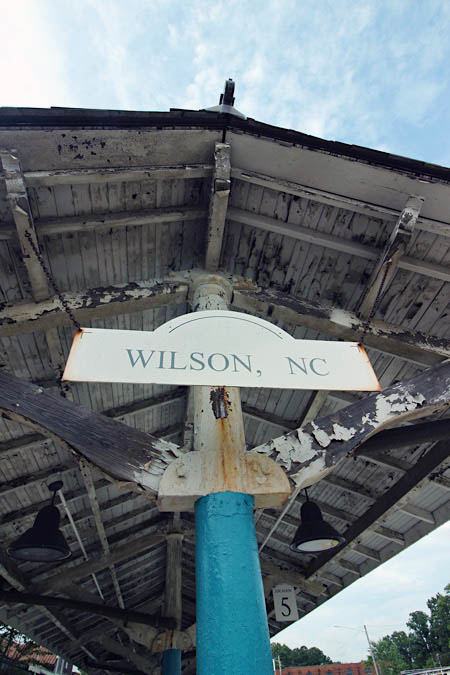
Jun 2023 / RWH
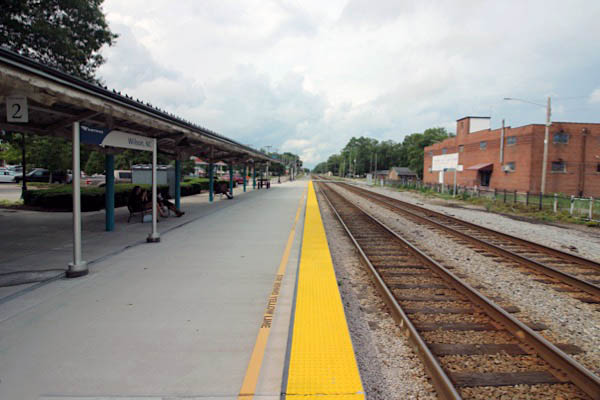
Wilson, NC / Jun 2023 / RWH
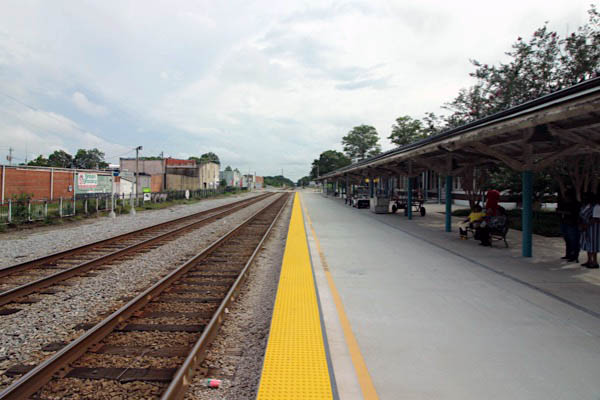
Wilson, NC / Jun 2023 / RWH
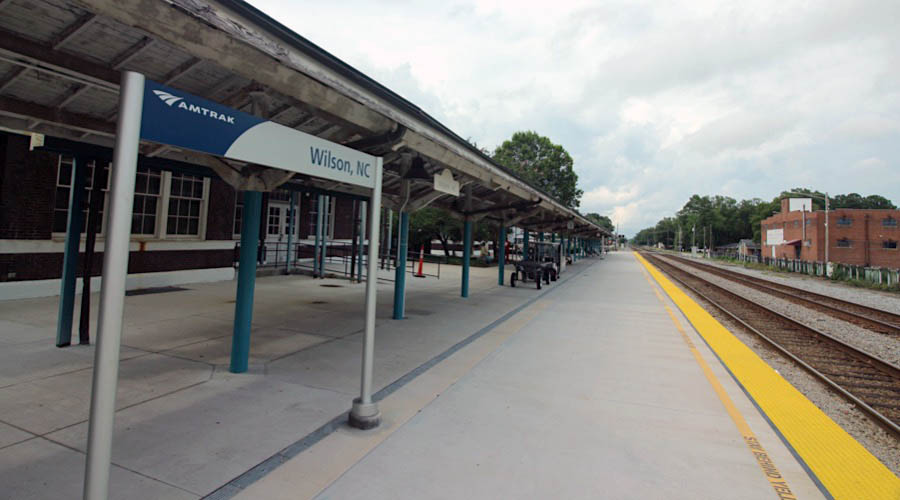
Wilson, NC / Jun 2023 / RWH
Jun 2023 / RWH
Jun 2023 / RWH
Jun 2023 / RWH
Wilson, NC / Jun 2023 / RWH
Jun 2023 / RWH
Jun 2023 / RWH
Jun 2023 / RWH
Jun 2023 / RWH
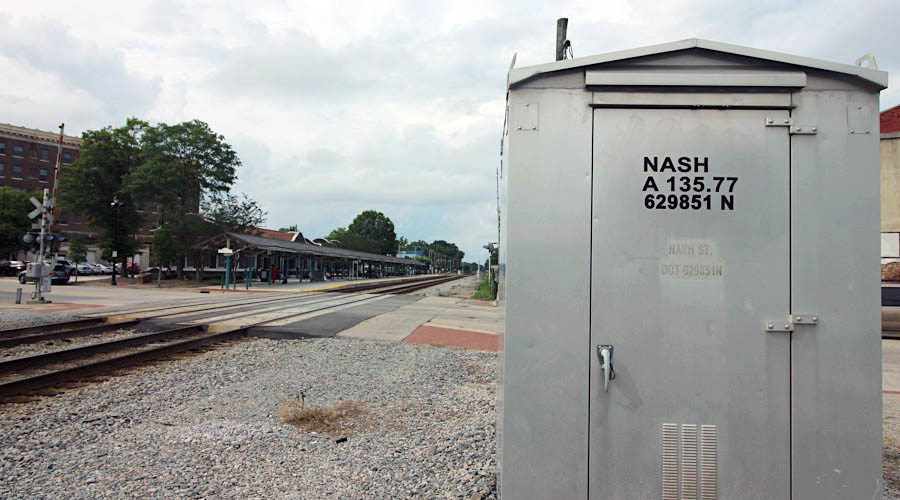
Wilson, NC / Jun 2023 / RWH
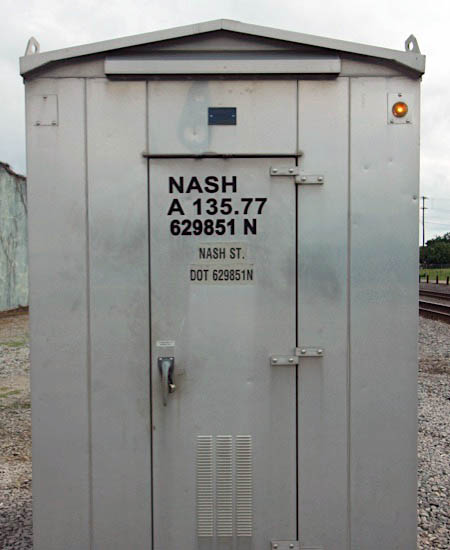
Jun 2023 / RWH
 CSX Mainline Action
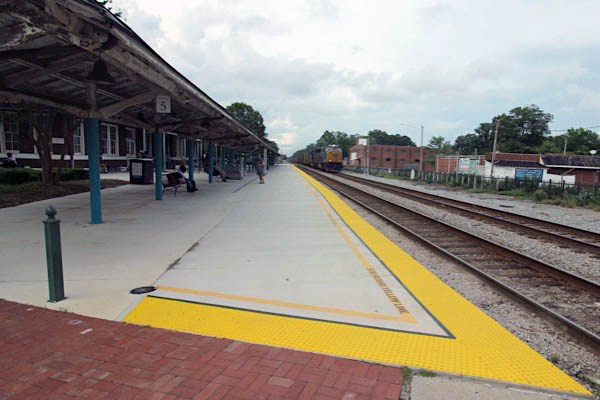
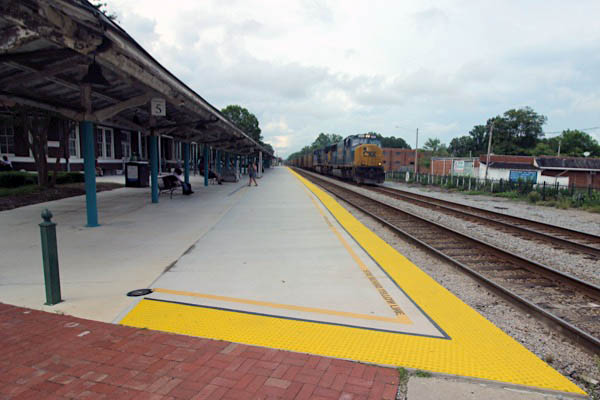
Wilson, NC / Jun 2023 / RWH
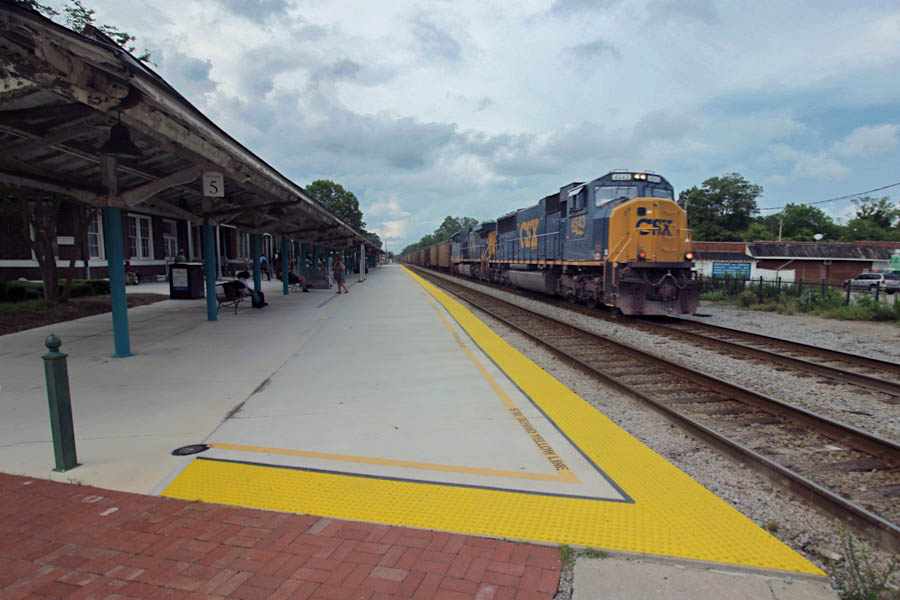
Wilson, NC / Jun 2023 / RWH
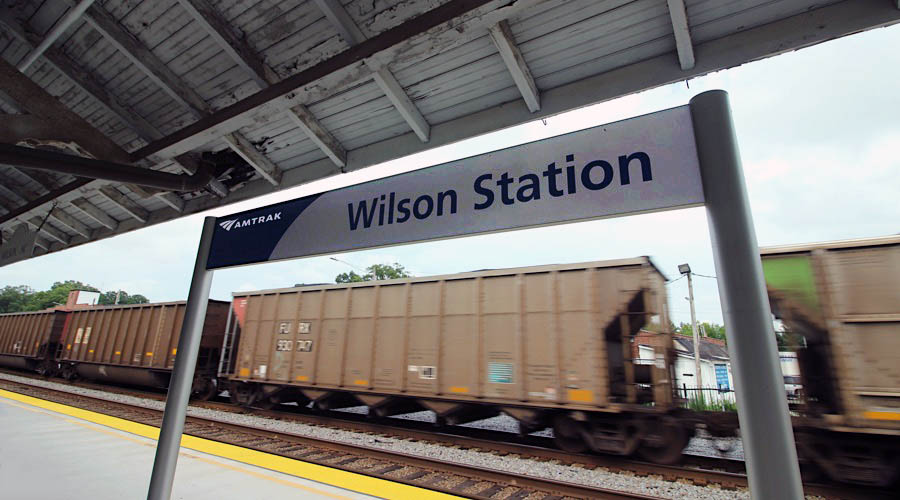
Wilson, NC / Jun 2023 / RWH
southbound #79
Jun 2023 / RWH
Wilson, NC / Jun 2023 / RWH
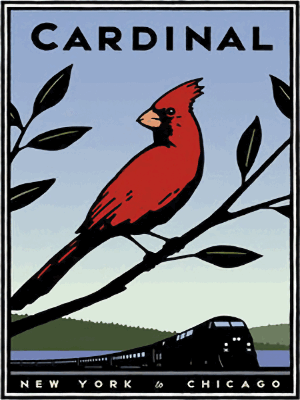 Amtrak's
Carolinian
Amtrak's
Carolinian
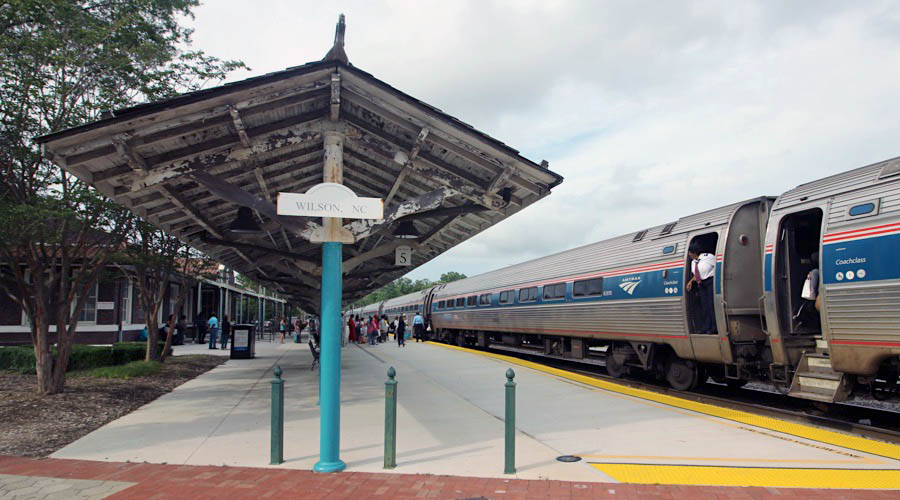
Wilson, NC / Jun 2023 / RWH
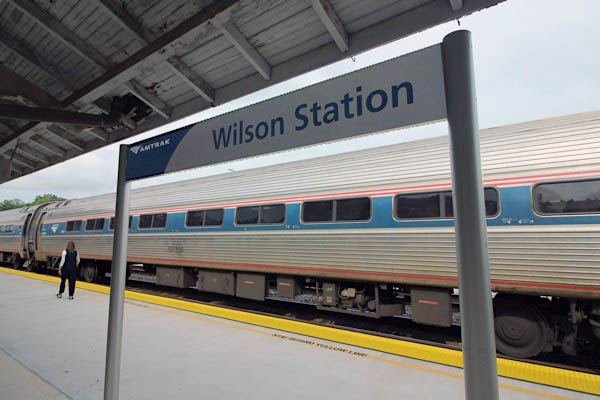
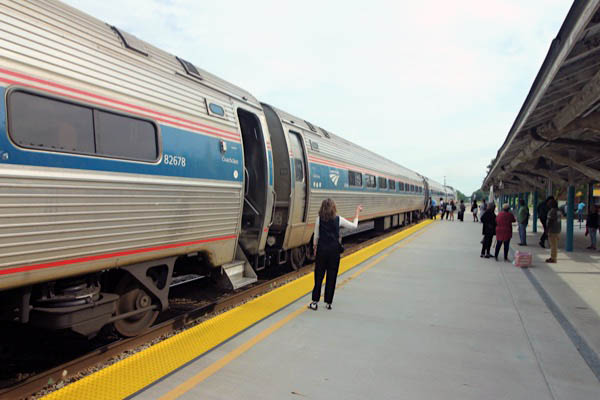
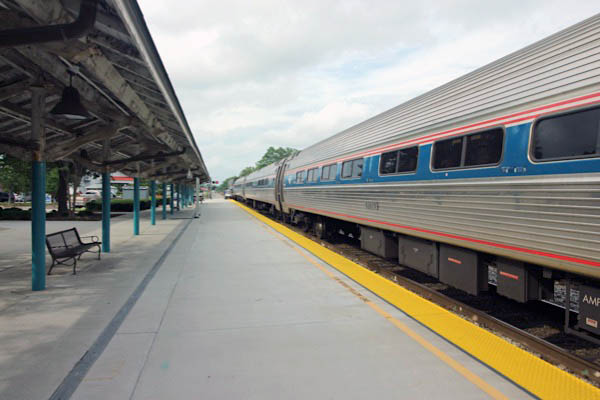
Wilson, NC / Jun 2023 / RWH
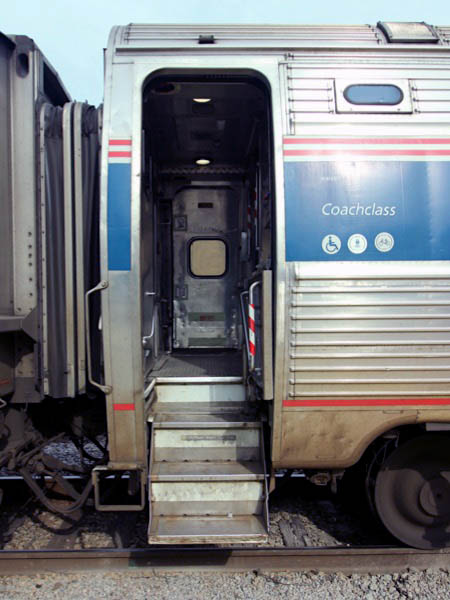
Jun 2023 / RWH
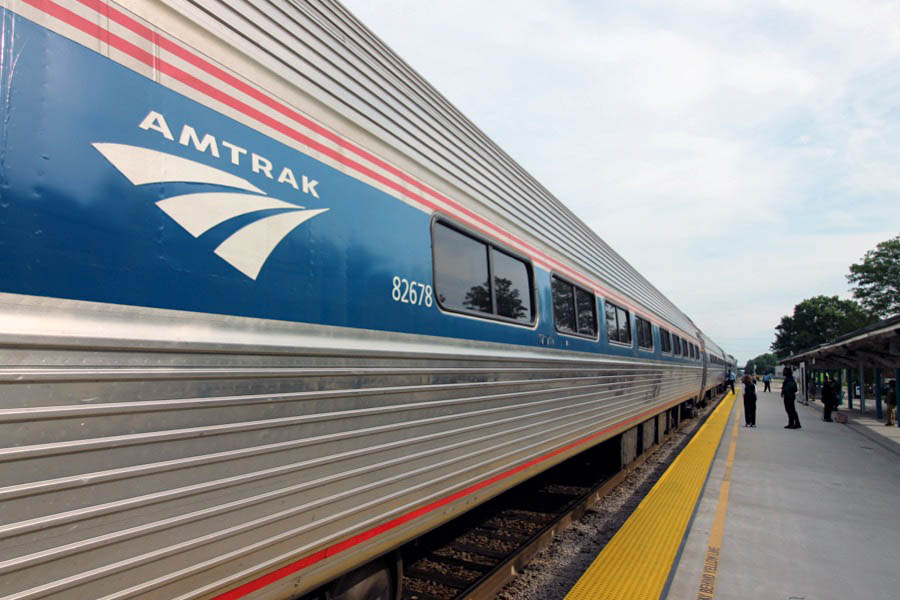
Wilson, NC / Jun 2023 / RWH
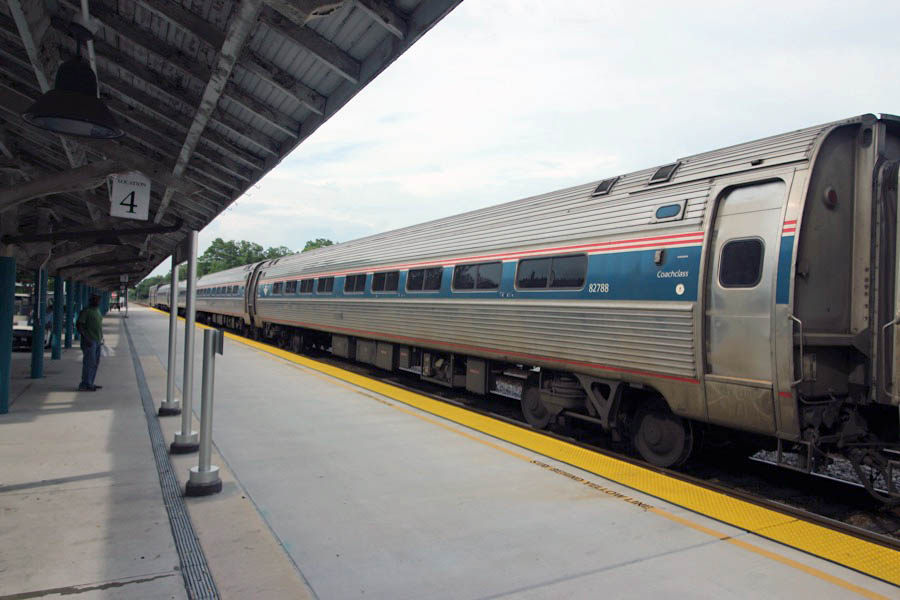
Wilson, NC / Jun 2023 / RWH
Jun 2023 / RWH
Jun 2023 / RWH
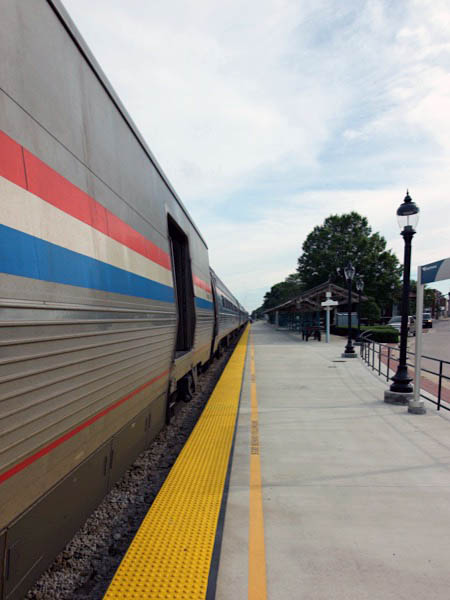
Jun 2023 / RWH
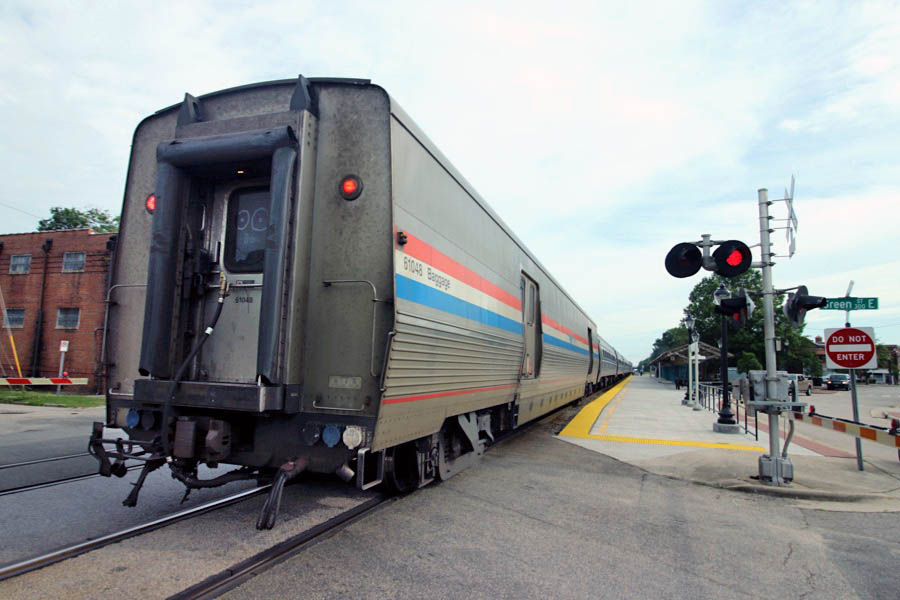
Wilson, NC / Jun 2023 / RWH
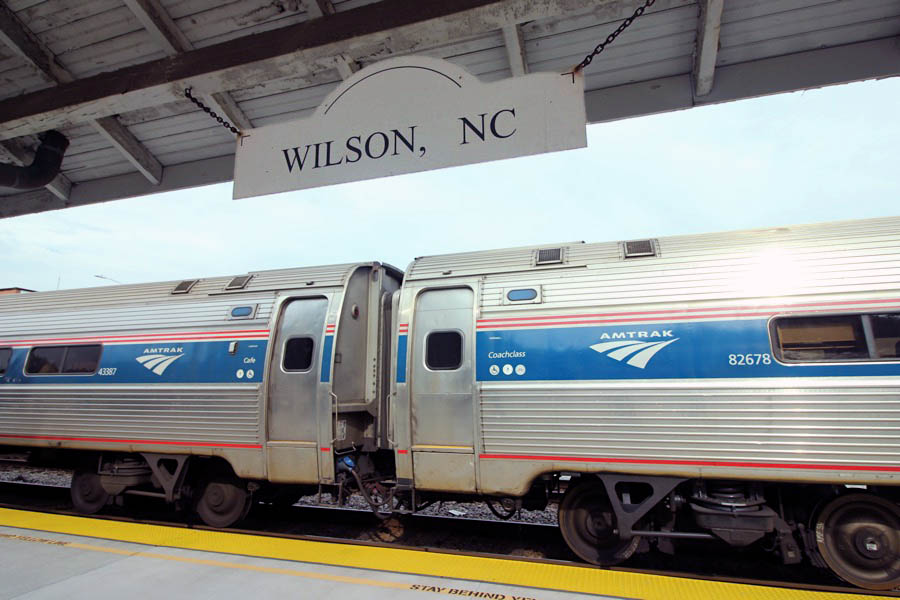
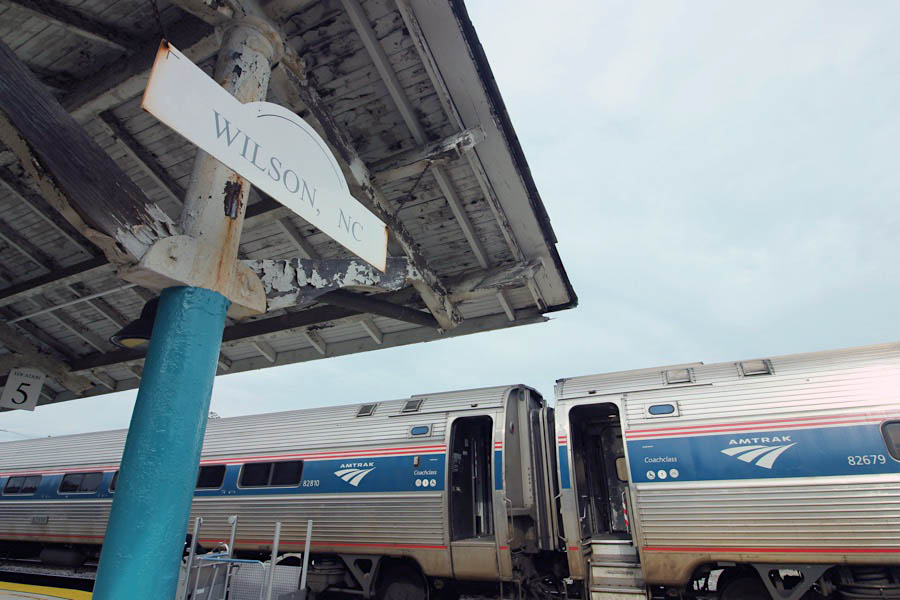
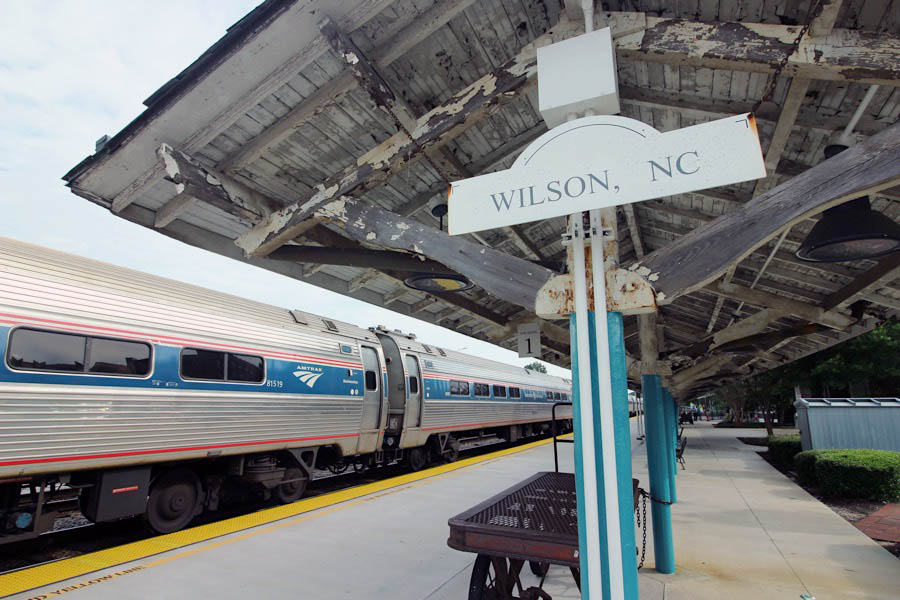
Wilson, NC / Jun 2023 / RWH
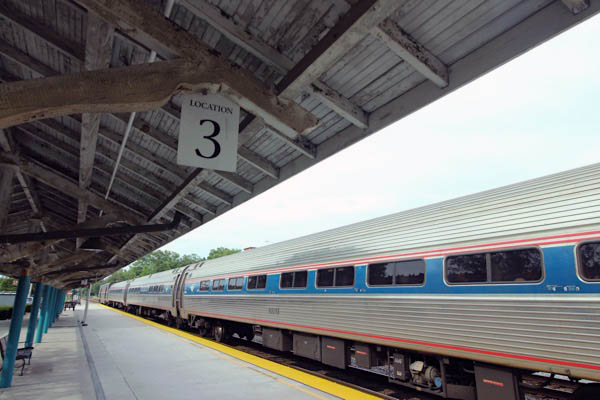
Wilson, NC / Jun 2023 / RWH
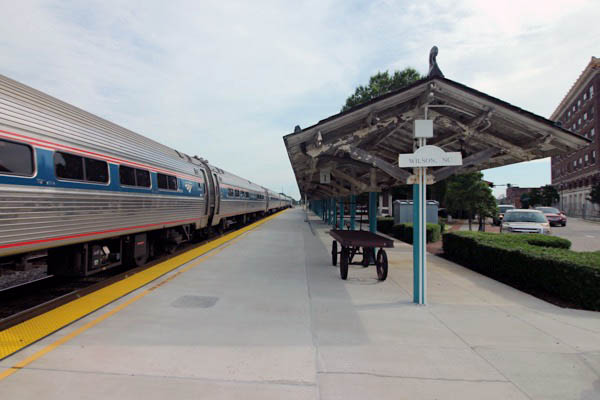
Wilson, NC / Jun 2023 / RWH
Amtrak #198
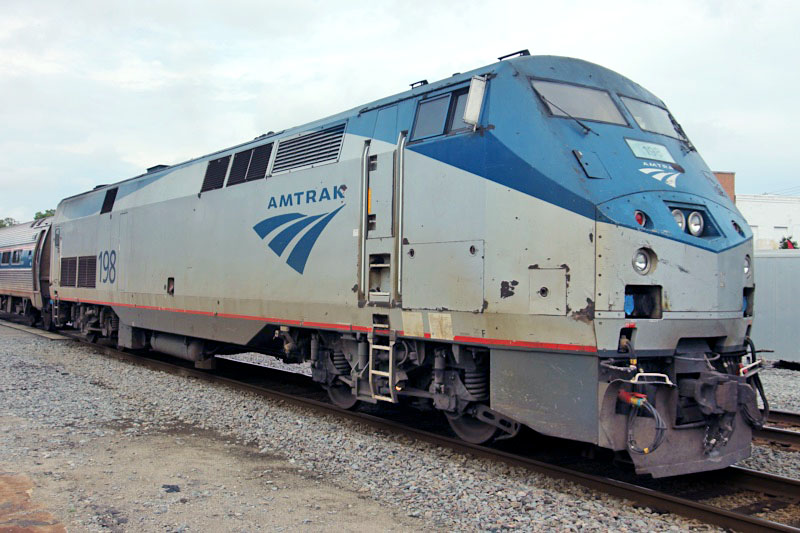
Amtrak #198
Wilson, NC / Jun 2023 / RWH

Amtrak #198


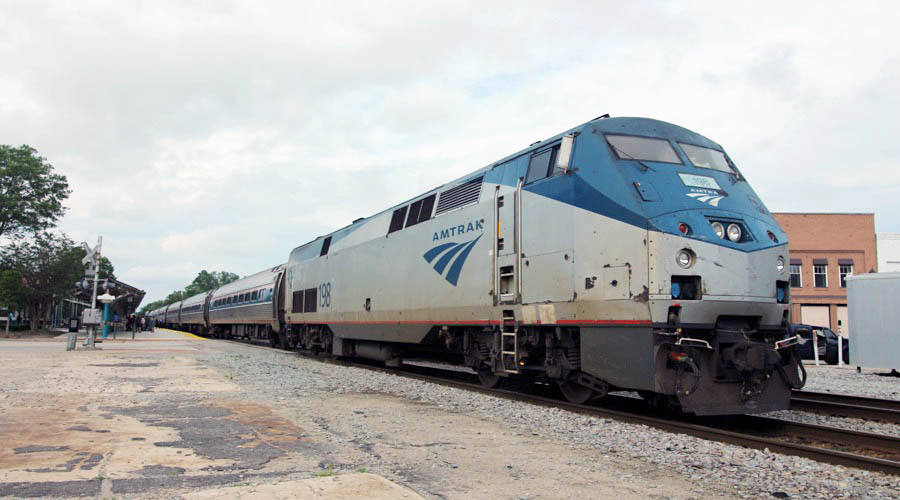
Wilson, NC / Jun 2023 / RWH
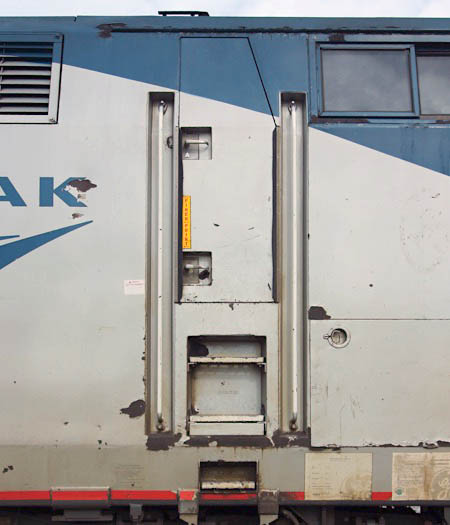
Jun 2023 / RWH
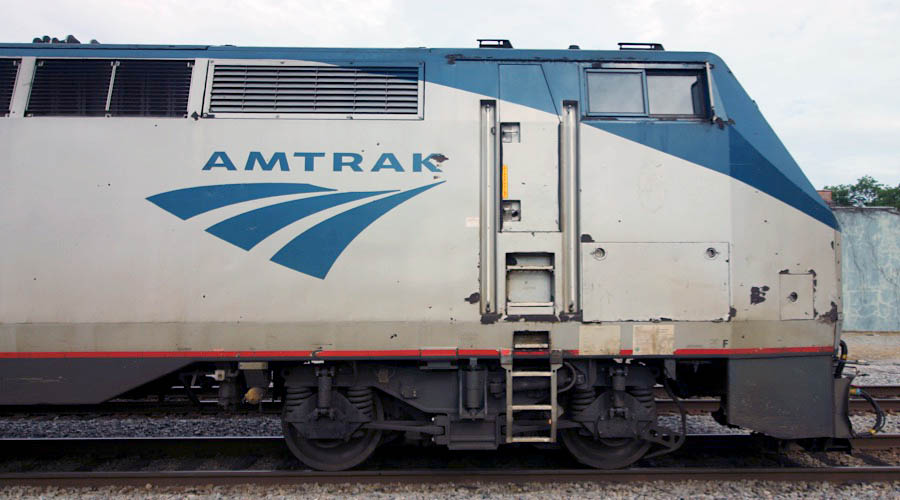
Jun 2023 / RWH
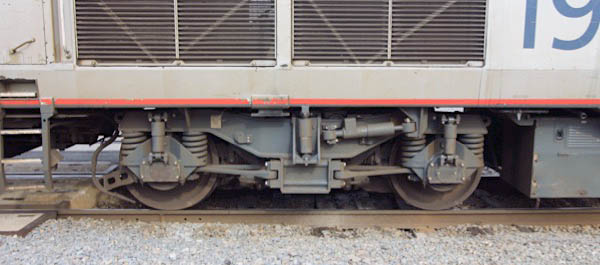
Jun 2023 / RWH
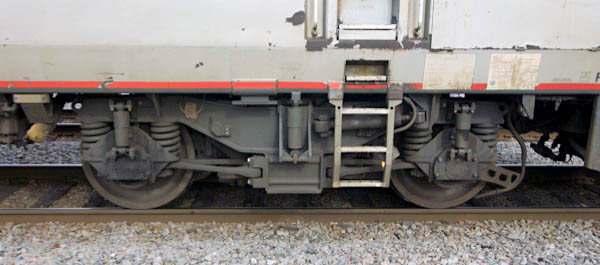
Jun 2023 / RWH
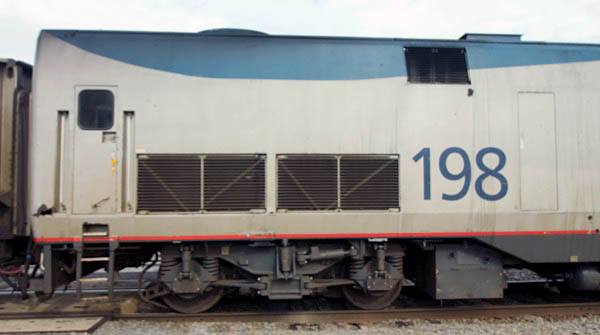
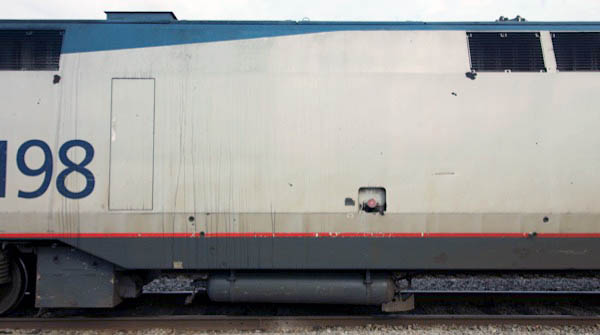
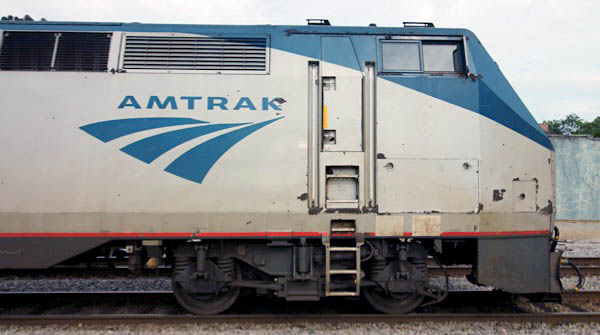
Jun 2023 / RWH
Wilson, NC / Jun 2023 / RWH
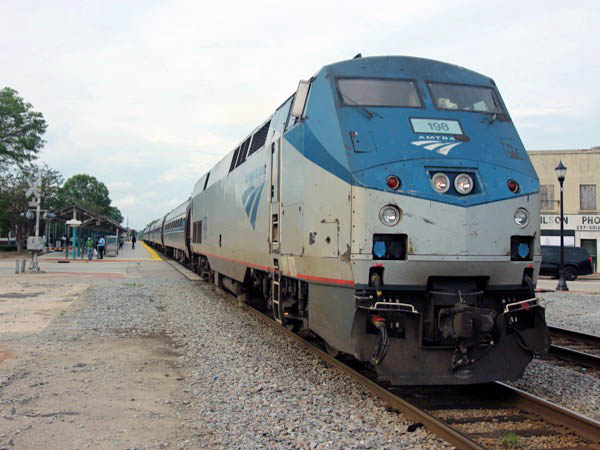
Wilson, NC / Jun 2023 / RWH
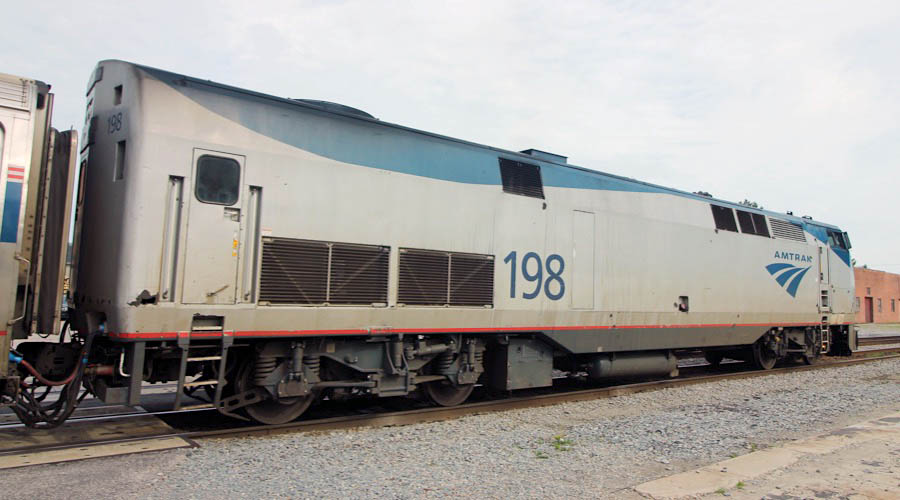
Wilson, NC / Jun 2023 / RWH
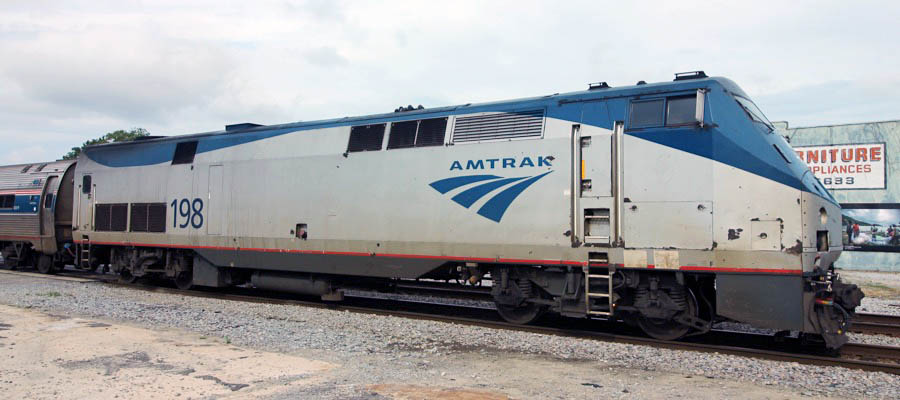
Wilson, NC / Jun 2023 / RWH
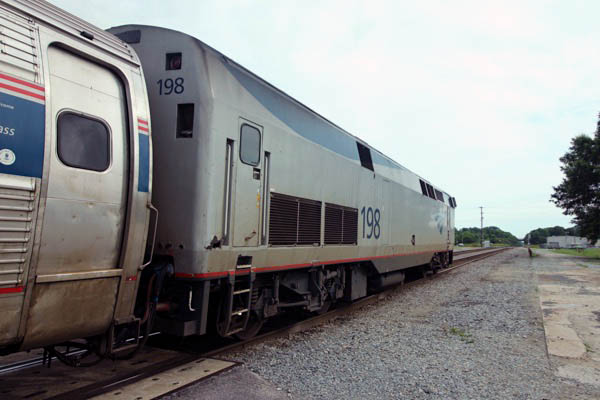
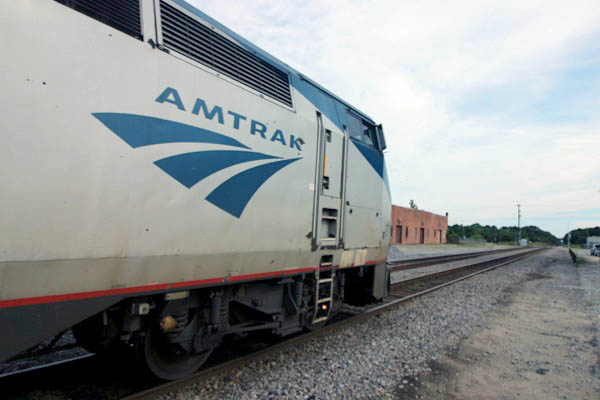
Wilson, NC / Jun 2023 / RWH
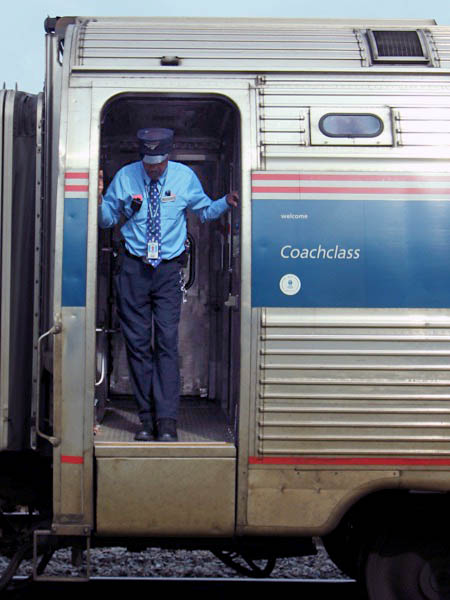
Jun 2023 / RWH
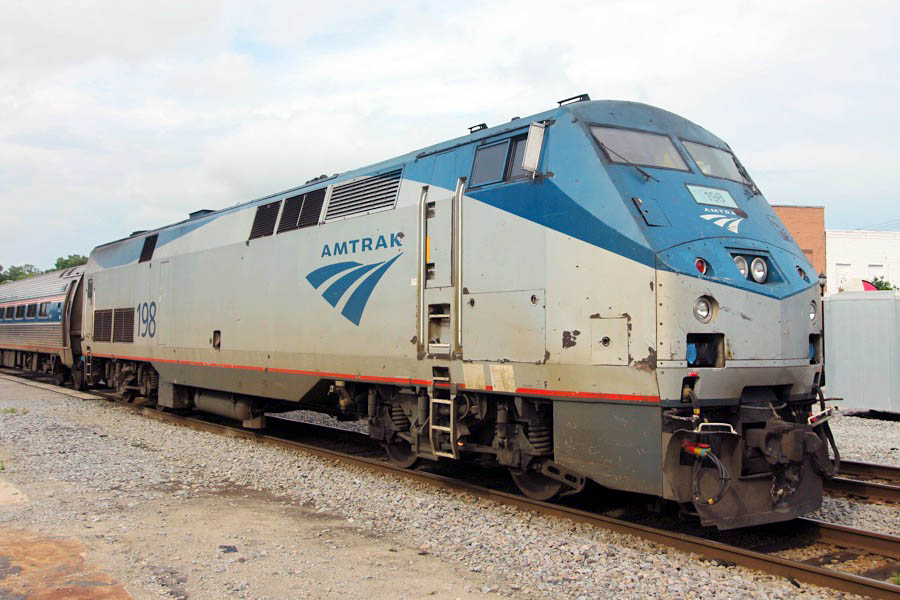
Wilson, NC / Jun 2023 / RWH
244 Rocky Mount, NC
- Carolinian
- Palmetto
- Silver Service
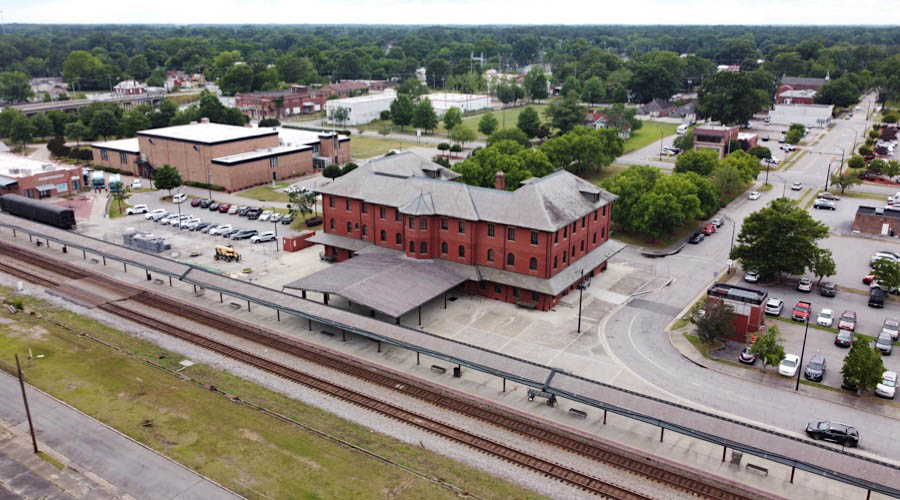
Rocky Mount, NC / Jun 2023 / RWH
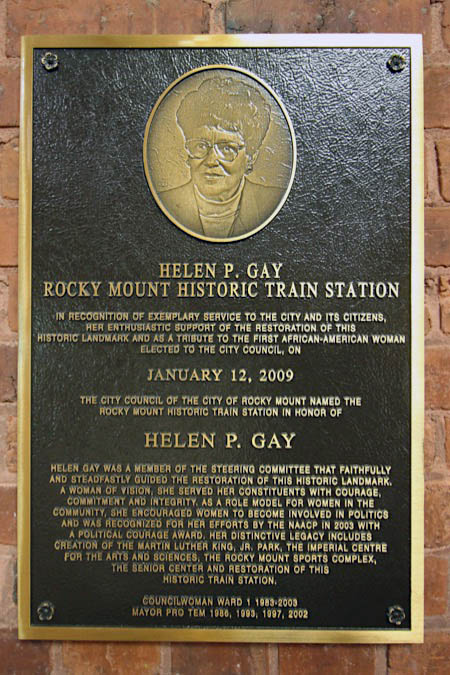
- name:Helen Gay Train Station
- address:101 Hammond Street
- type:city station, 1 platform
- owner:City of Rocky Mount
- opened:1893
- builder:Wilmington & Weldon
- style:Romanesque Revival
- renovated:1916, 2000
- services:tickets, baggage
- links: Amtrak | Great Stations
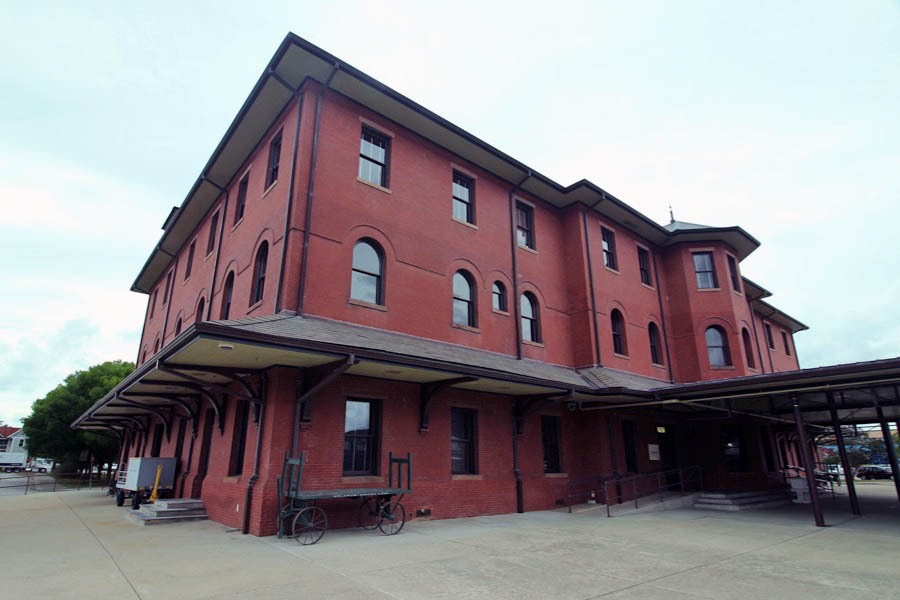
Rocky Mount, NC / Jun 2023 / RWH
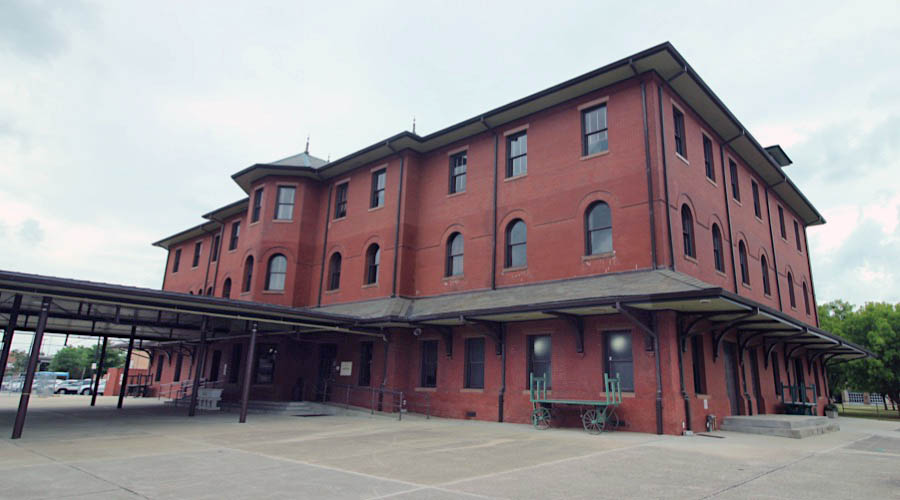
Rocky Mount, NC / Jun 2023 / RWH
Click to see the Rocky Mount station area plotted on a Google Maps page
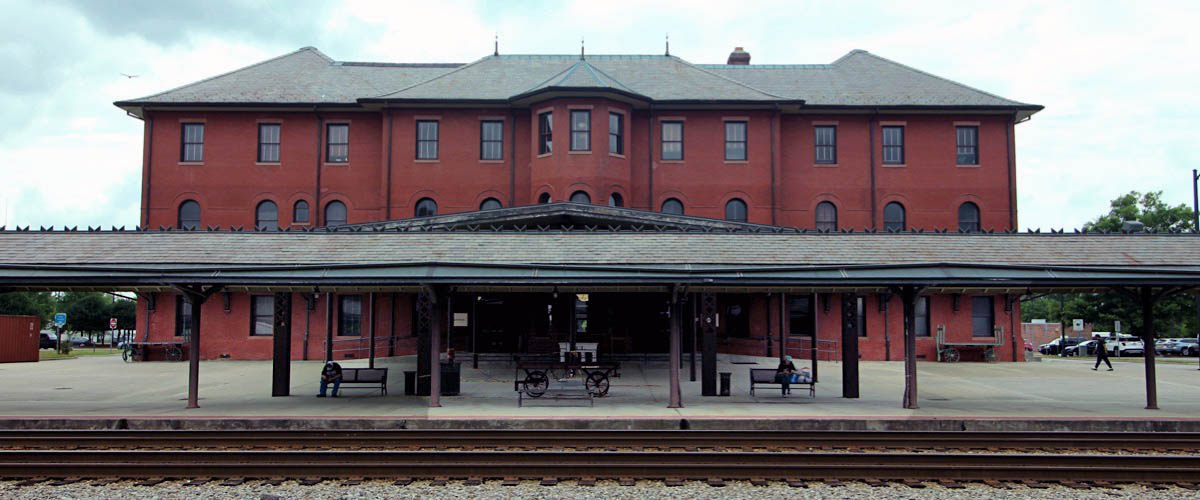
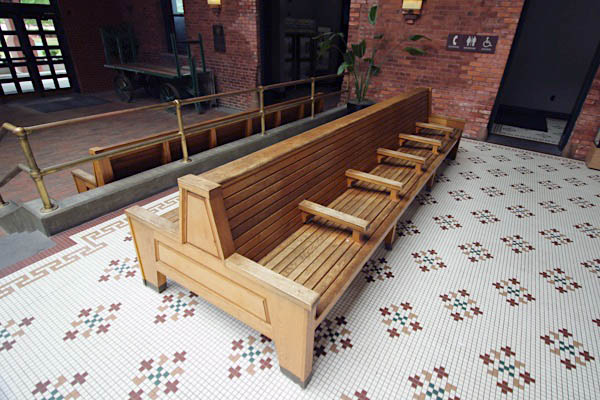
Rocky Mount, NC / Jun 2023 / RWH
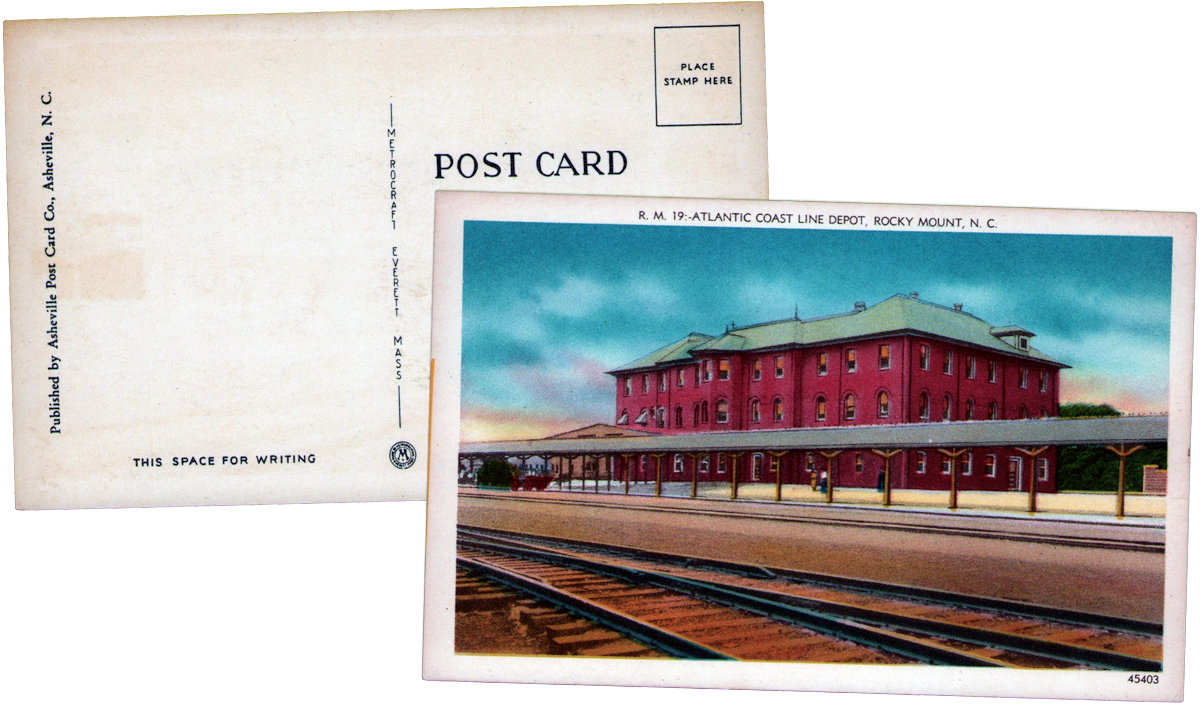
postcard / collection
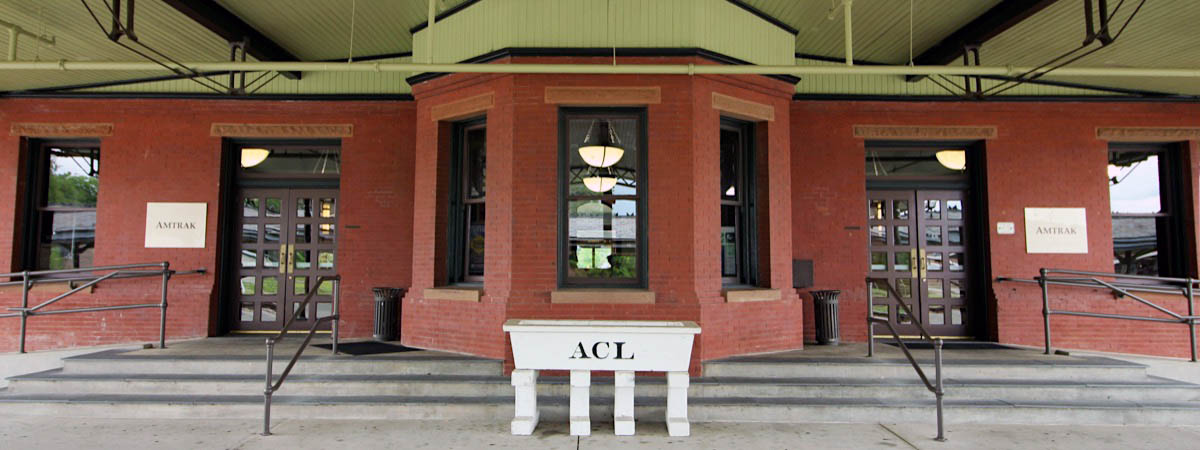
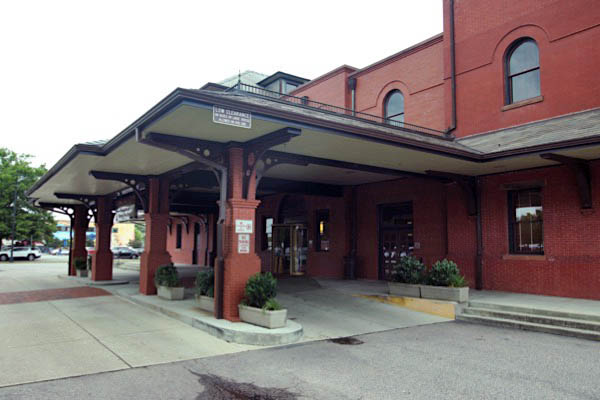
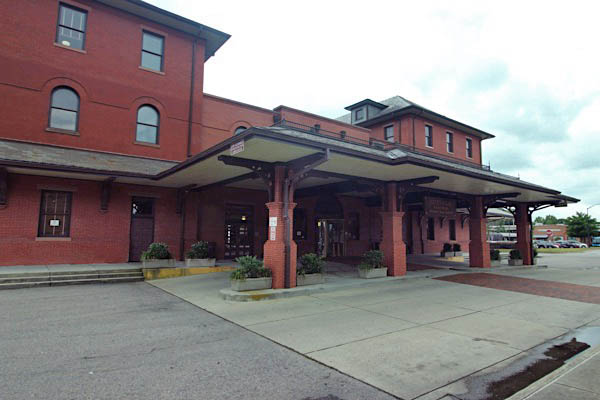
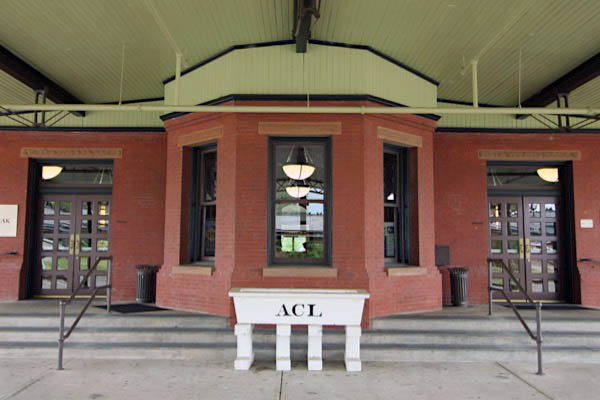
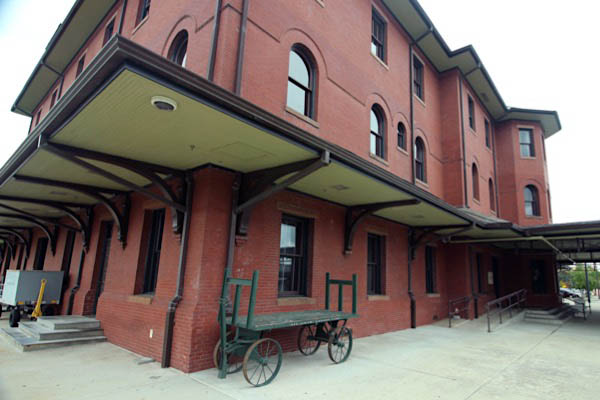
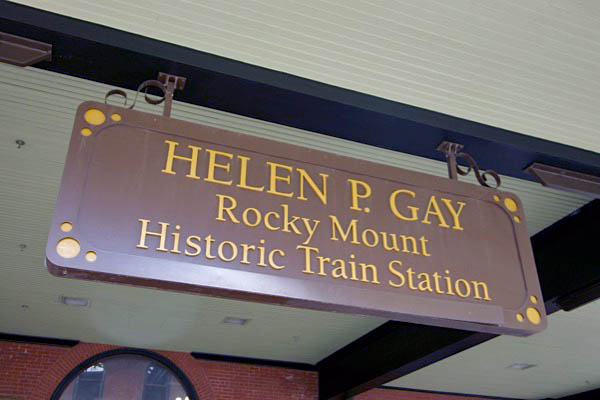
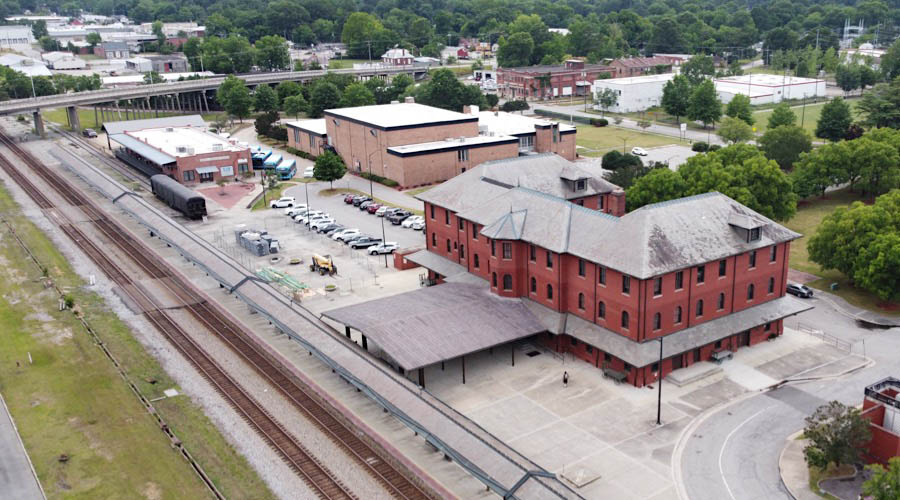
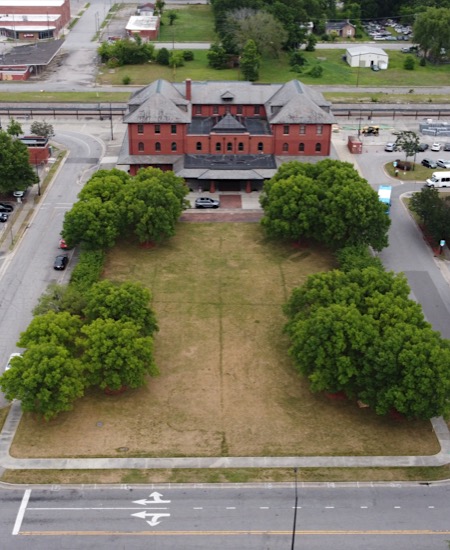
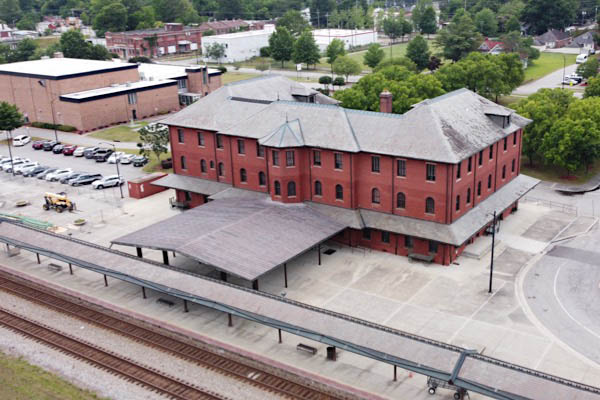
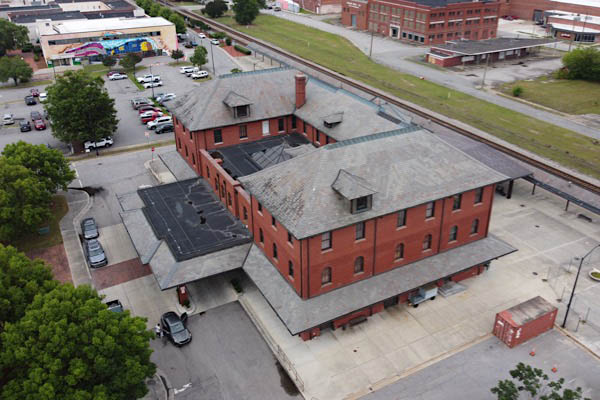
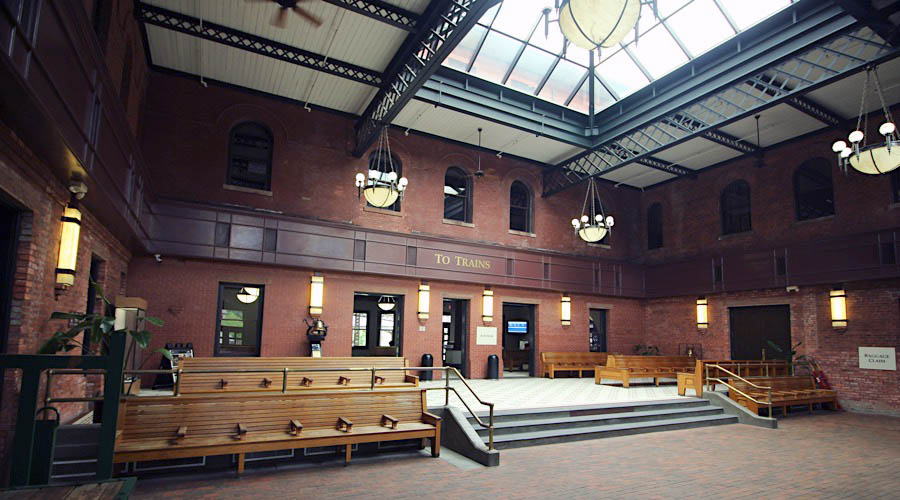
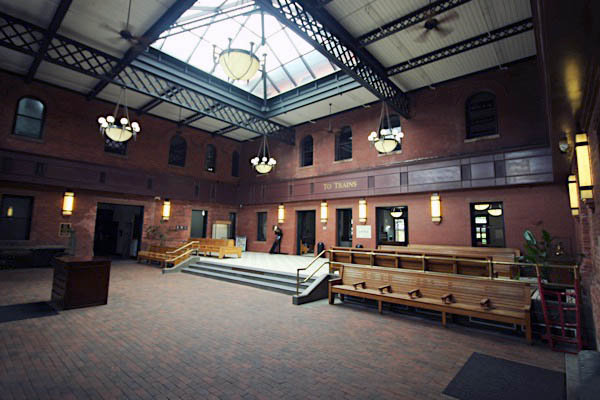
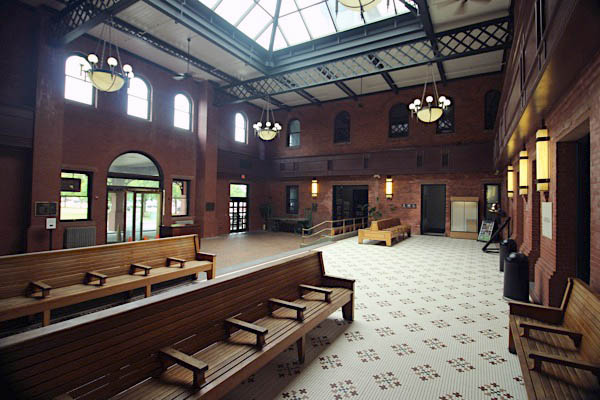
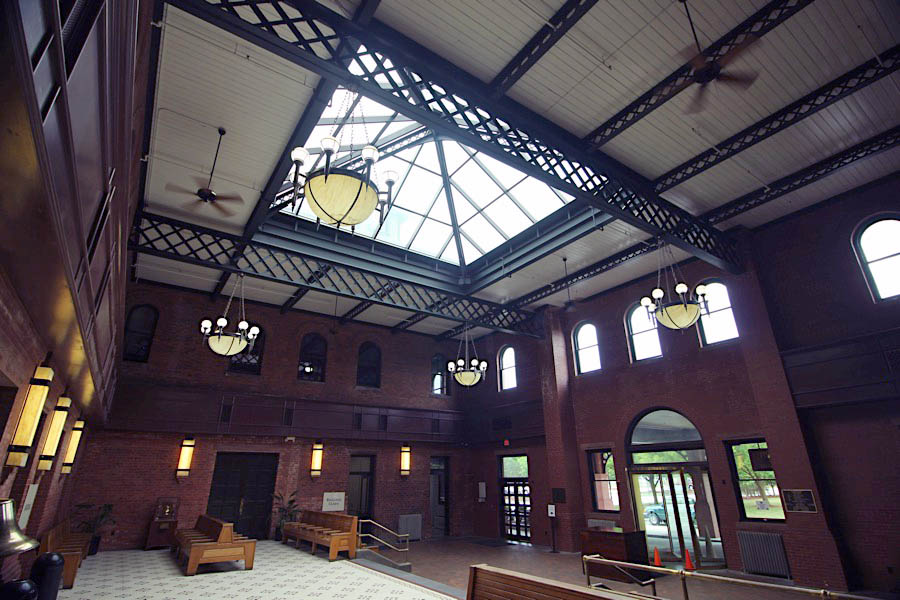
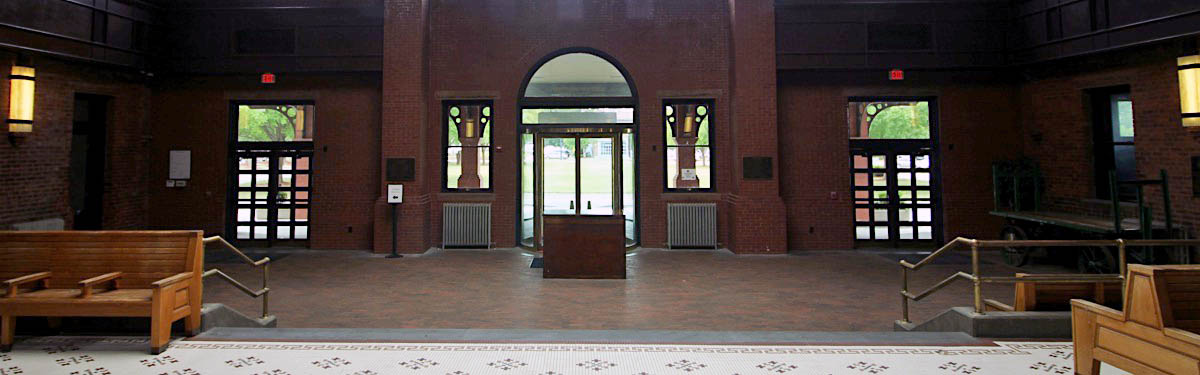
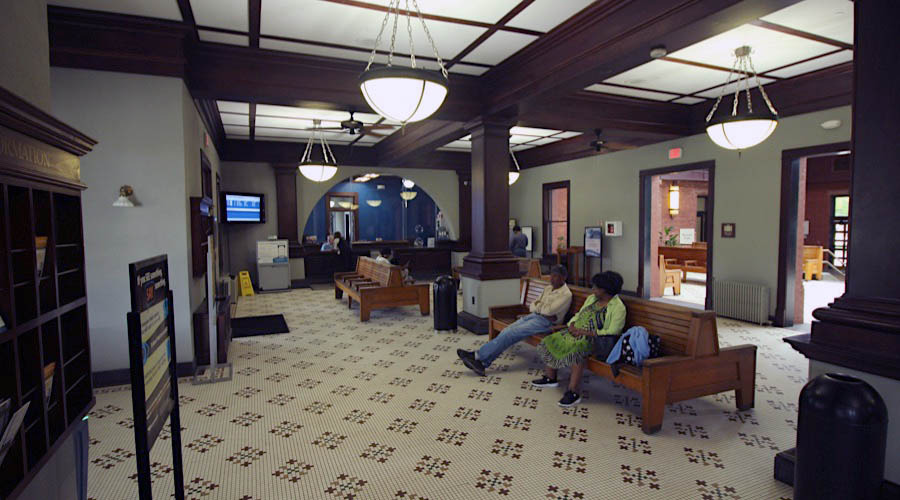
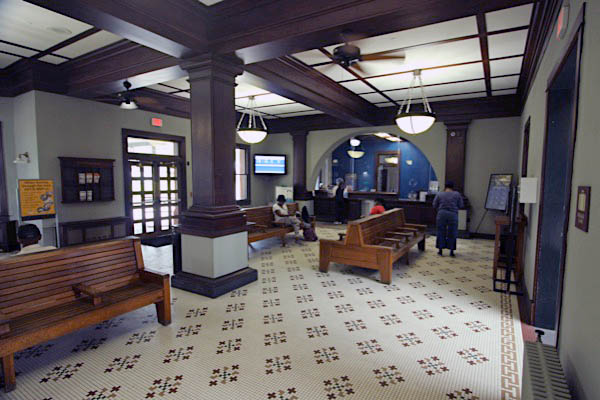
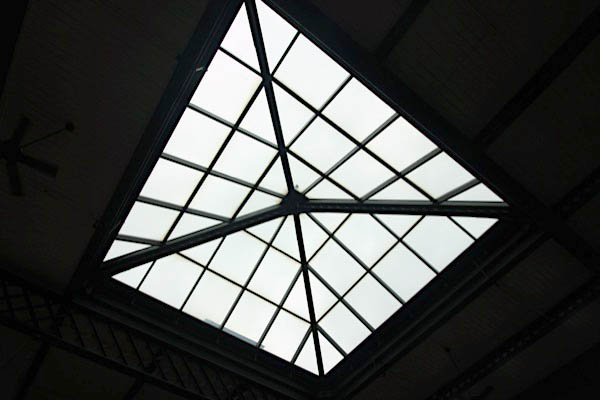
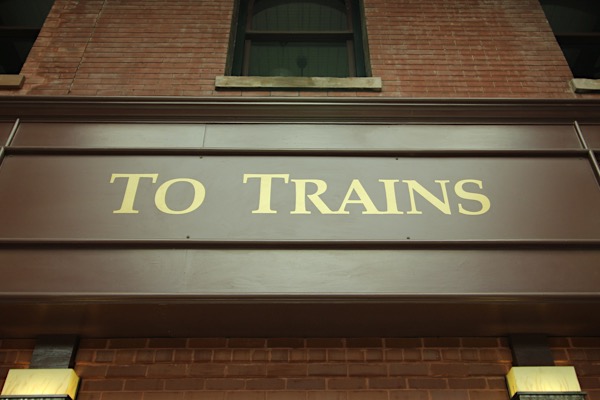
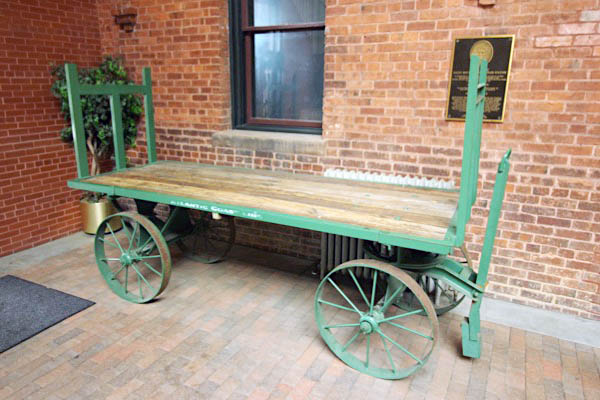
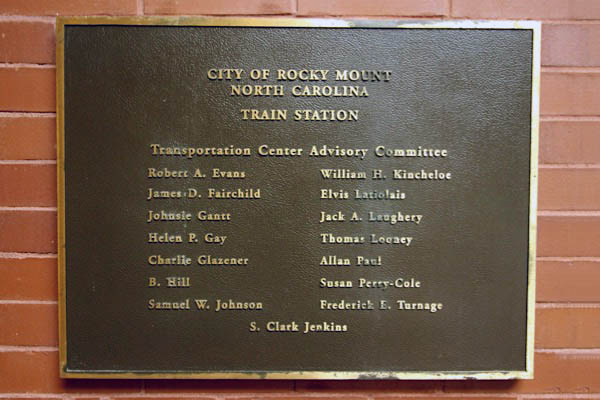
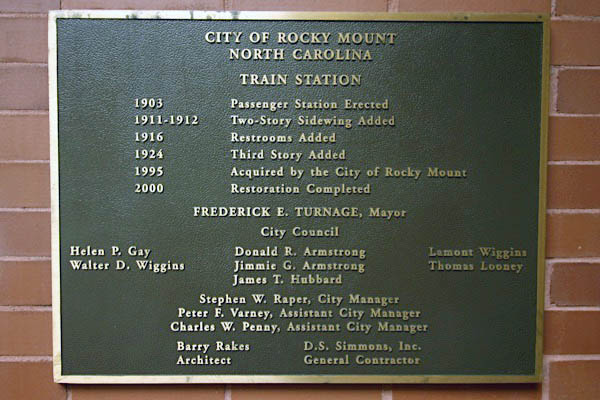
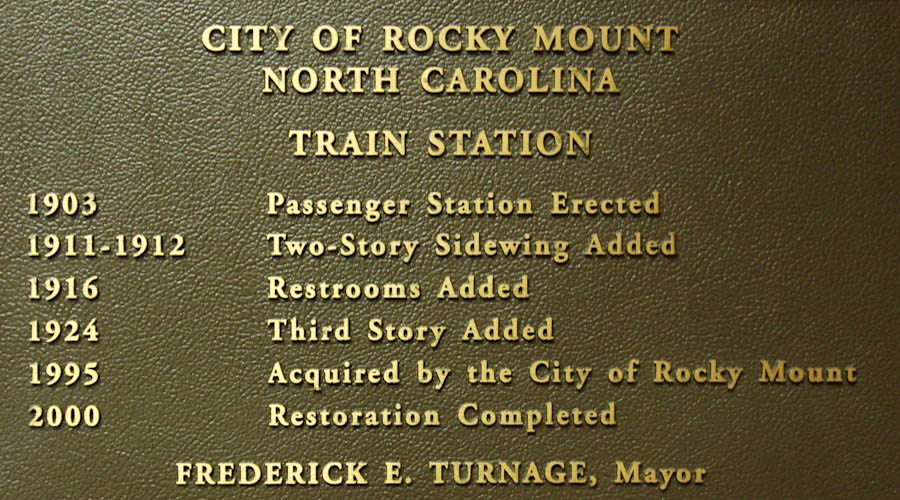
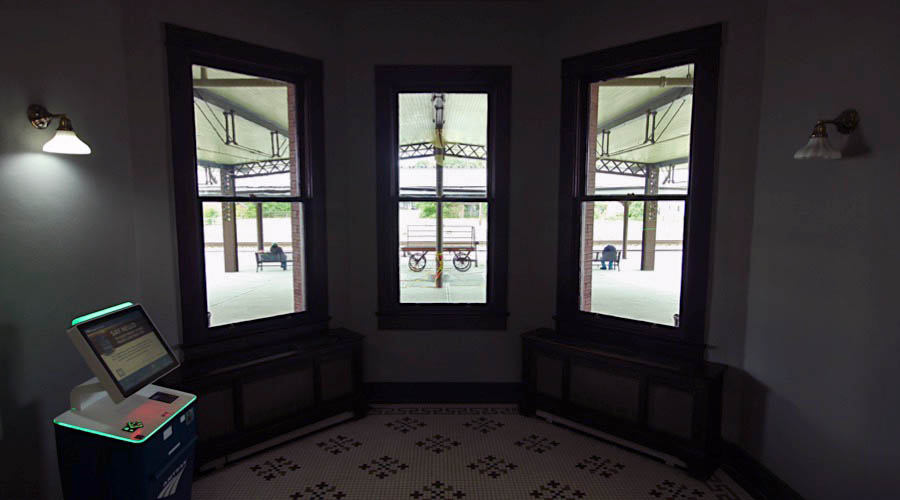
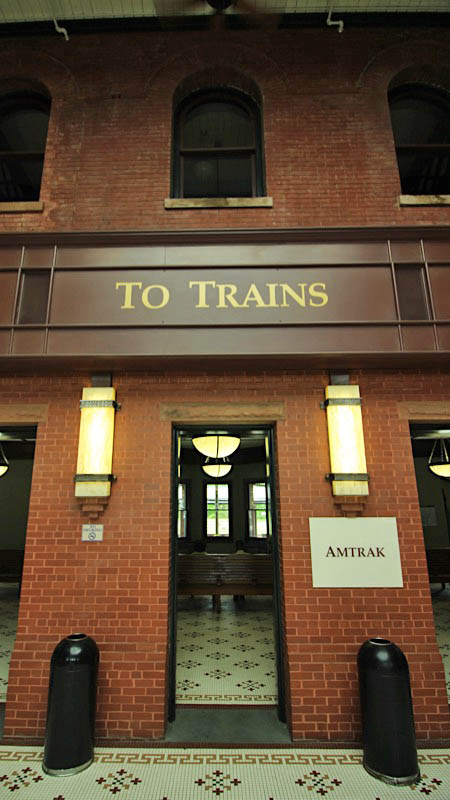
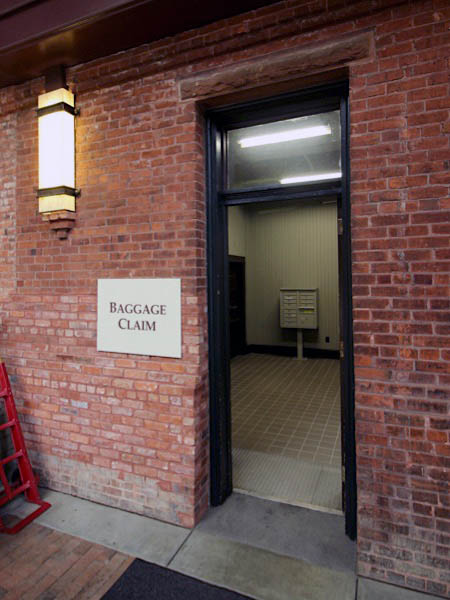
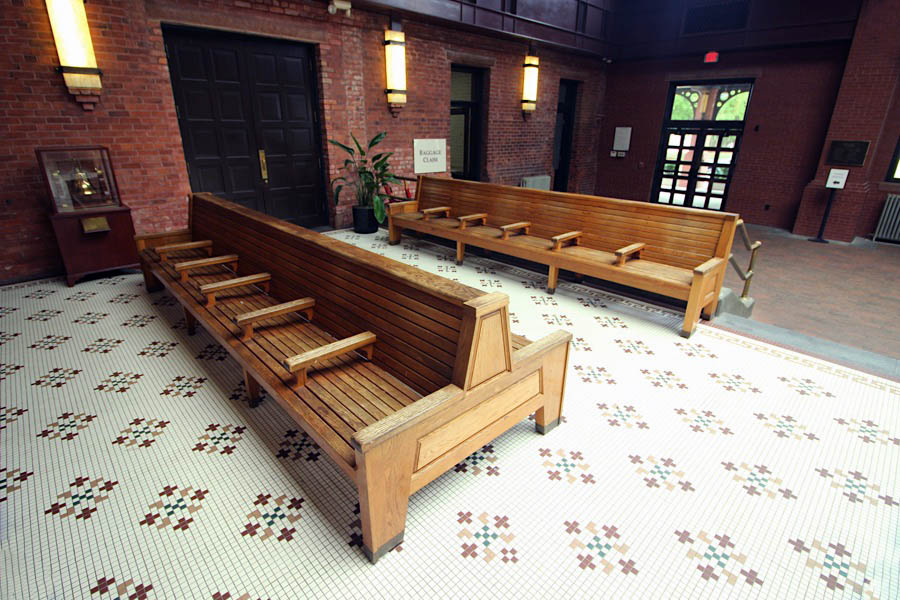
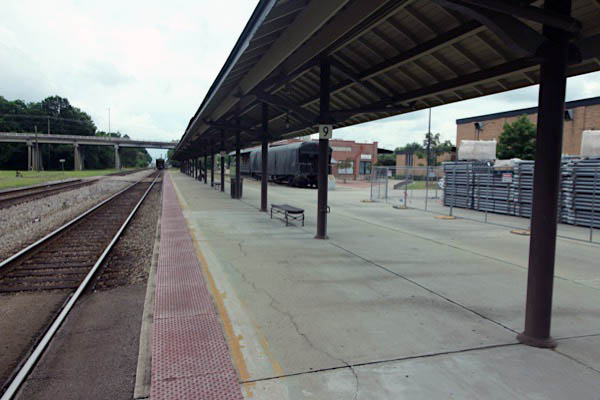
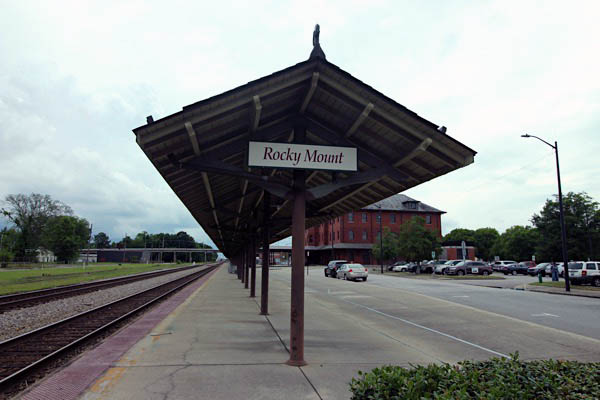
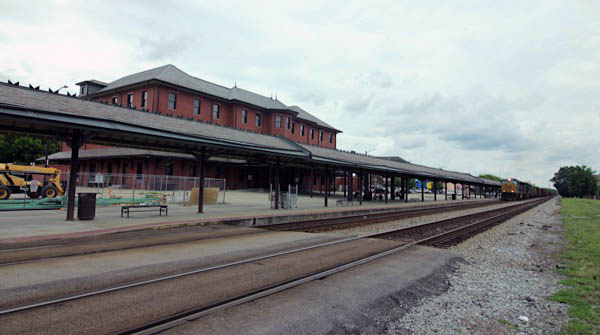
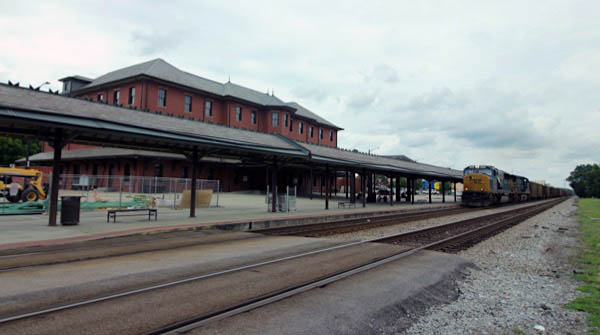
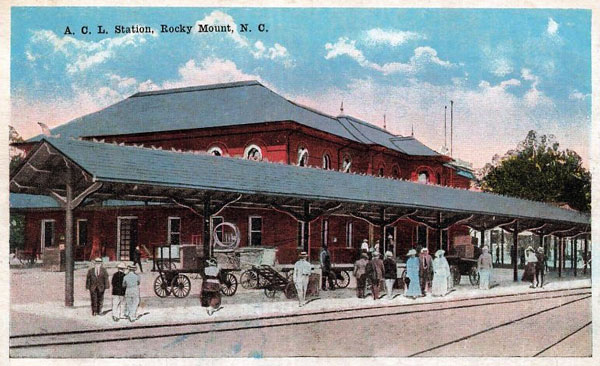 The Rocky Mount rail station was constructed in 1893 by the Wilmington & Weldon Railroad as a two-story brick Romanesque station with one-story wings. Since then, the station’s structure has undergone major changes. In 1911-12, the new owner, the Atlantic Coast Line Railroad, turned the one-story wings into three-story wings. A few years later, a third story was added to the entire building. In the 1960s, an addition was constructed between the wings to store railroad switches and signal equipment, but was later removed.
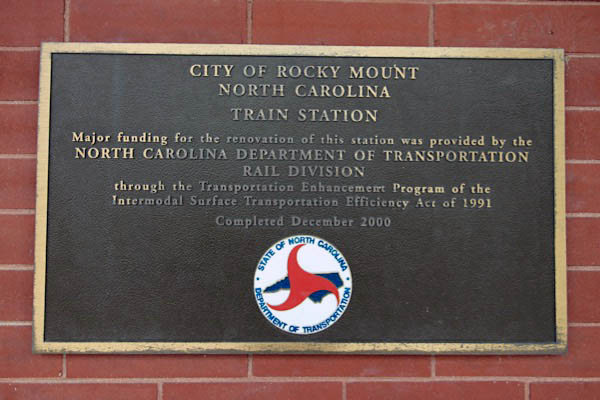
Because the building is part of Rocky Mount’s historic district, it was included in the downtown rehabilitation master plan with renovation starting in 1997. A new entryway was added to the building to allow passengers to enter the station from the street. Canopies were reconstructed, and a new ADA-compliant platform was built. A “commons” park was built in the front yard of the station, as well as improved driveways, parking and streetscaping. The construction finished in December 2000 at a cost of about $9 million with financing coming from a mix of federal, state and local funds.
Rocky Mount’s early days revolved around the first post office, established in 1816, which brought its name into documented history. The Wilmington & Weldon Railroad became Rocky Mount’s main connection to the outside world, yet did not cause immediate growth for the town. Only in the late 1800s did the railroad exert a powerful influence on Rocky Mount, helping spread the fame of Nash County apple brandy. By the turn of the 20th century, Rocky Mount’s population grew to 3,000. The growth and prosperity was influenced by the main railroad line, the well-established cotton mill and productive farmland.
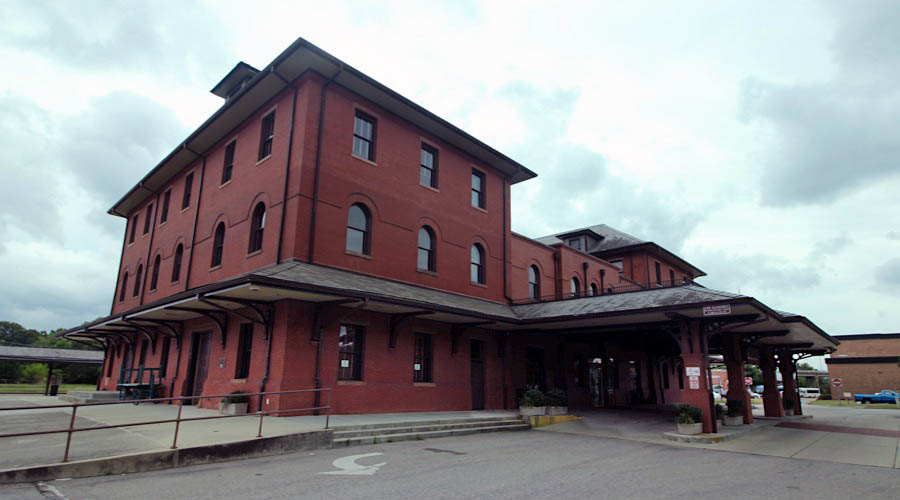
Rocky Mount, NC / Jun 2023 / RWH
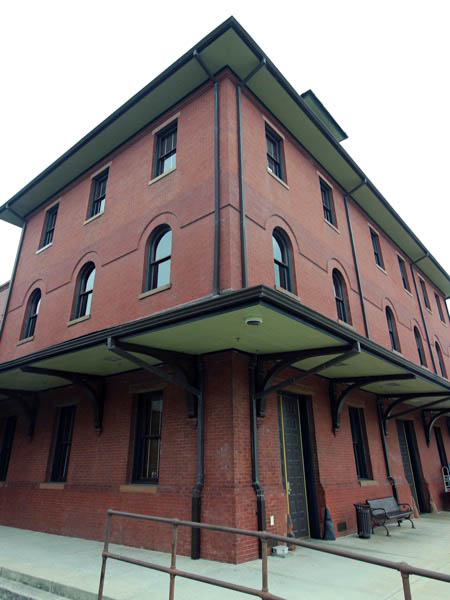
Rocky Mount, NC / Jun 2023 / RWH
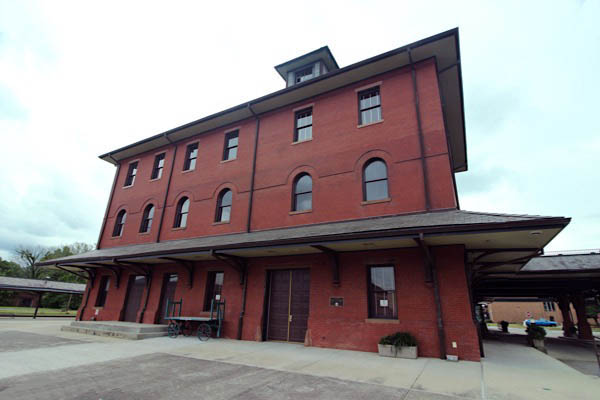
Rocky Mount, NC / Jun 2023 / RWH
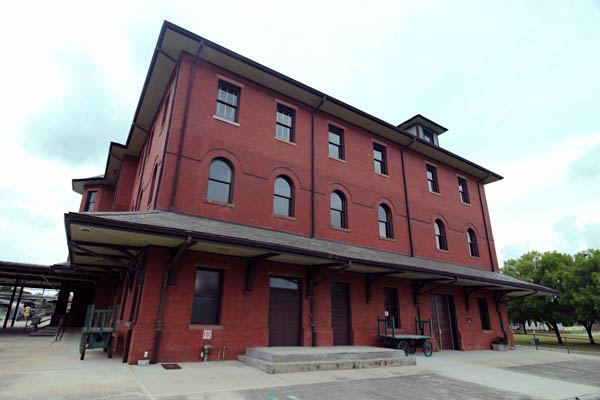
Rocky Mount, NC / Jun 2023 / RWH
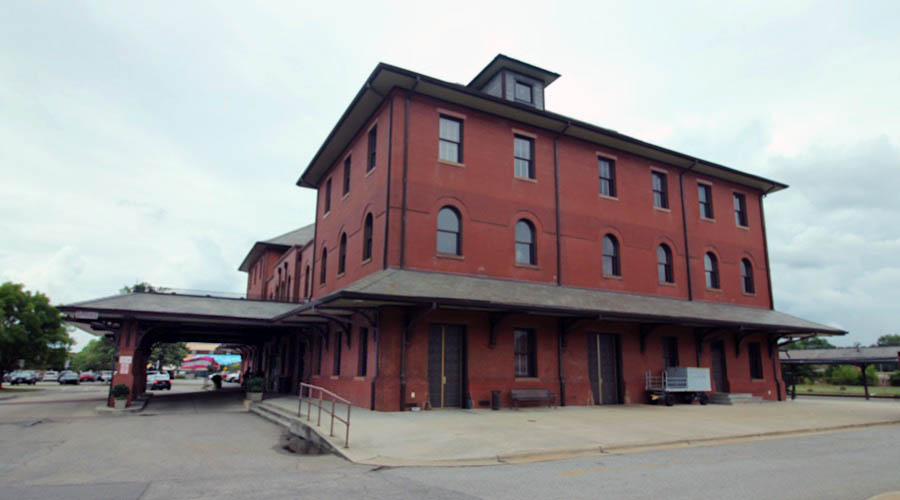
Rocky Mount, NC / Jun 2023 / RWH
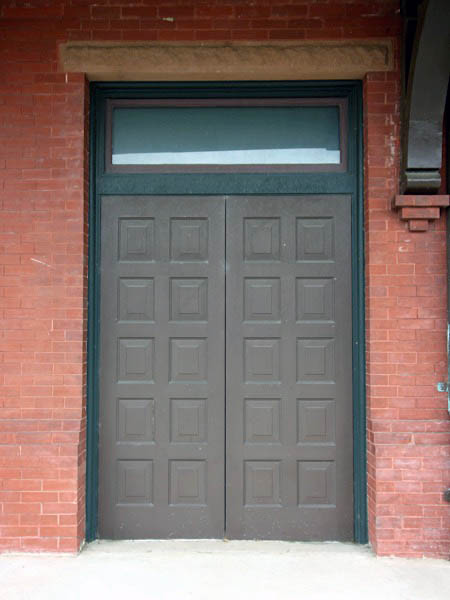
Jun 2023 / RWH
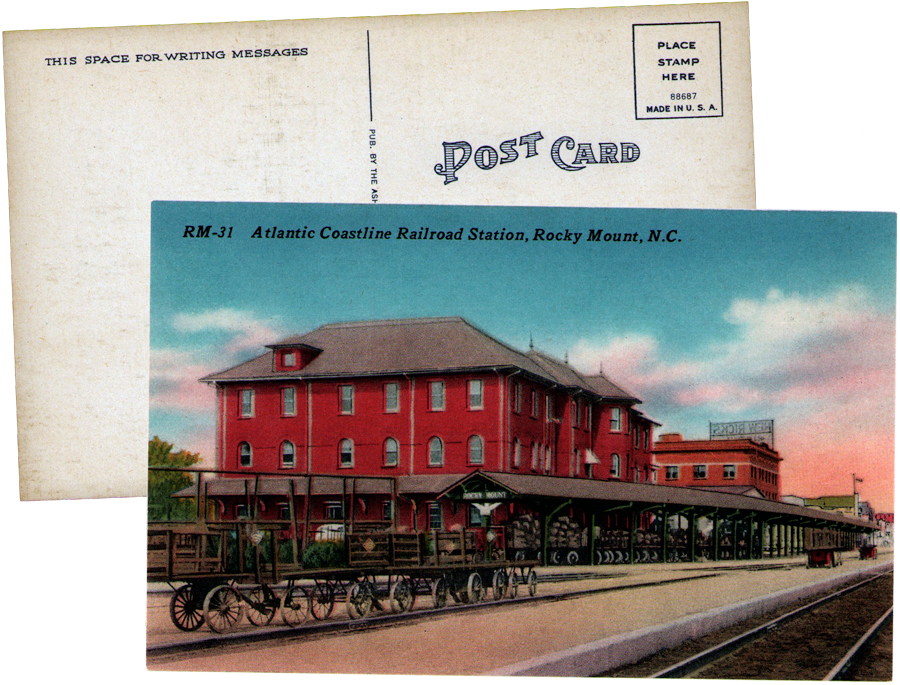
postcard / collection
1910 Official Guide ad / collection
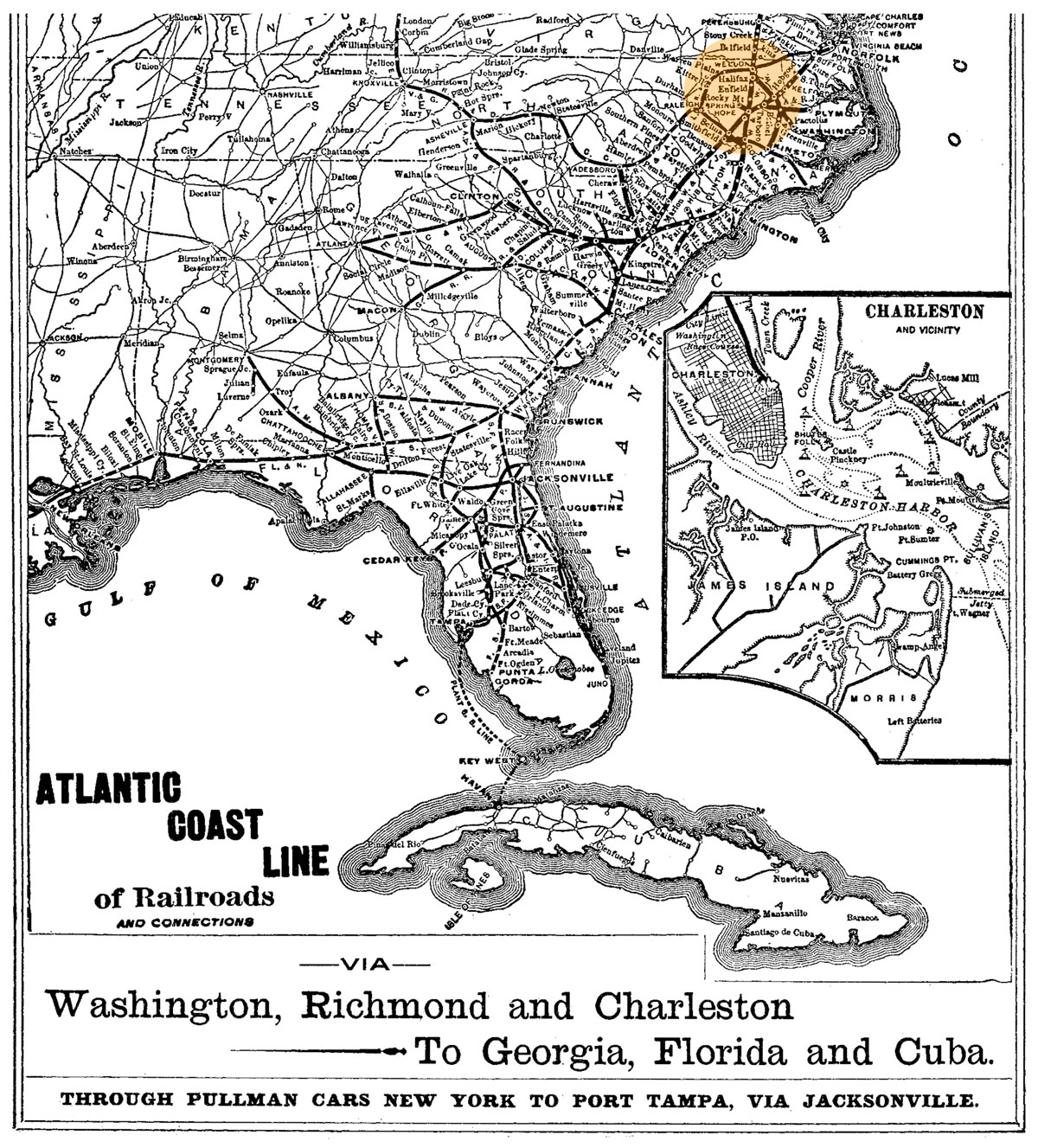
1893 Official Guide map / collection
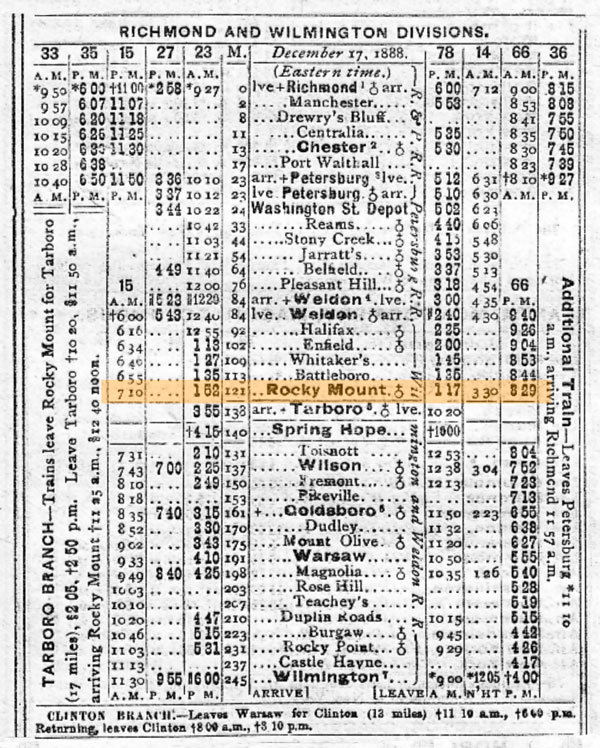
1889 Official Guide ad / collection
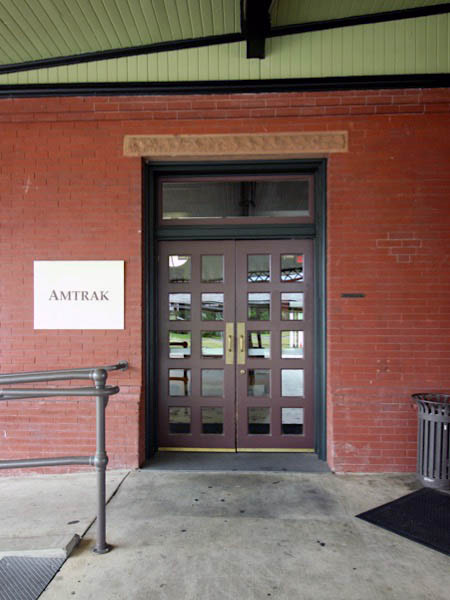
Jun 2023 / RWH

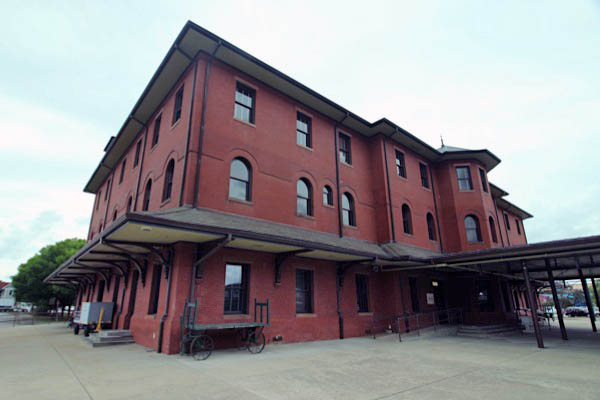
Rocky Mount, NC / Jun 2023 / RWH
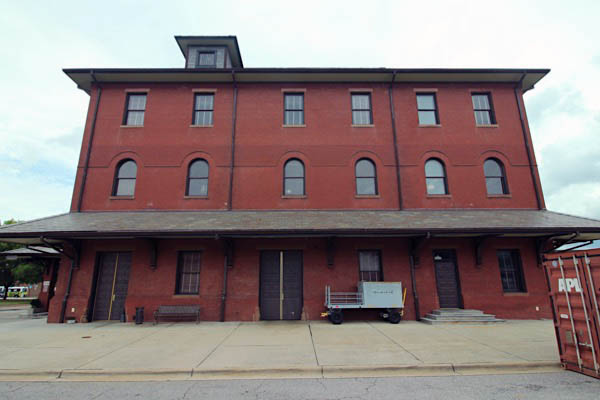
Rocky Mount, NC / Jun 2023 / RWH
Jun 2023 / RWH
Jun 2023 / RWH
Jun 2023 / RWH
Jun 2023 / RWH
Jun 2023 / RWH

The physical reminders of Rocky Mount’s legacy however, are rapidly disappearing — its railroad heritage. The friendly picturesque All-American town that straddled the double main line tracks of Champion McDowell Davis’ great Atlantic Coast Line Railroad is fast becoming a fleeting memory. Once home to thousands of skilled machinists, electricians, black smiths, laborers and others, who kept the lights glowing ‘round the clock at the sprawling Emerson Shops complex, armies of brakemen, conductors, firemen and engineers who stoked the fires of hungry steam locomotives or made up and took apart trains of valuable manufactured goods and precious agricultural commodities, Rocky Mount appears amicable to forgetting why it was born and the reason it was one of the most important rail junctions on the east coast of the United States.
Rocky Mount isn’t alone. Altoona, PA, Huntington, WV and Omaha, NB are other towns that came into existence because the gods of railroading identified a vacant parcel of land located at just the right distance between two other points on a railroad map, picked it up, breathed life into its lungs and gave birth to it. Steel rails fed it, clothed it and caused its heart to beat vibrantly for many, many years. Only those who sold railroad workers their clothes, their groceries, their automobiles, and others who taught their children to read and write, fixed their appliances and paved their streets didn’t work for the railroad directly, but owed their own livelihoods to it.
But while some of these other towns were able to adapt their facilities to grow and expand, thus insuring their importance and long term viability, Rocky Mount was just too close to Richmond, too close to Florence. Its shops weren’t as modern as those in Waycross or Jacksonville. The winds that used to blow across the bridge yard and echo off the walls of the shops where hundreds of passenger and freight cars were built, where the ACL’s entire fleet of Electro Motive diesels and steam engines were rebuilt, are now vacant. Where thousands of workers once whistled on their way to the erecting bay, the tall grass now sings a sad lonely wail.
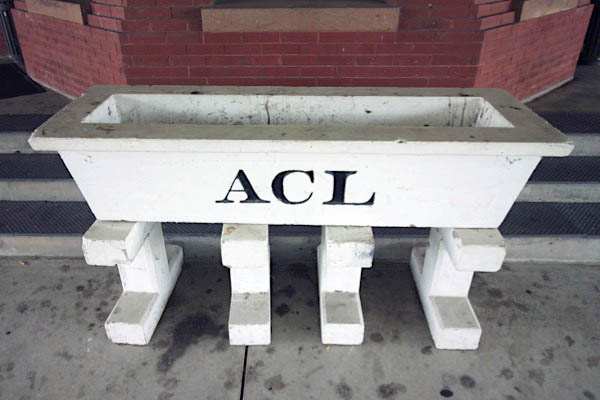
Jun 2023 / RWH
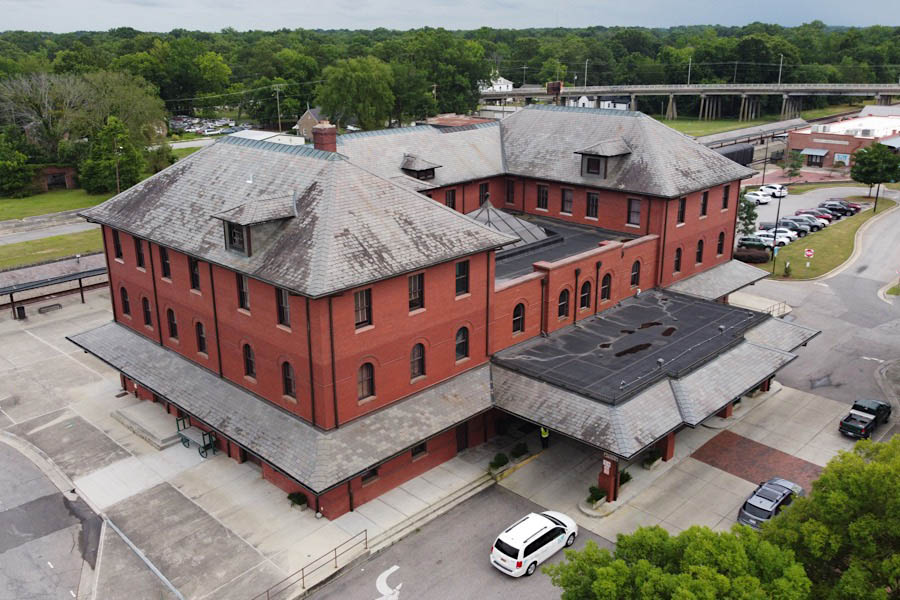
Rocky Mount, NC / Jun 2023 / RWH
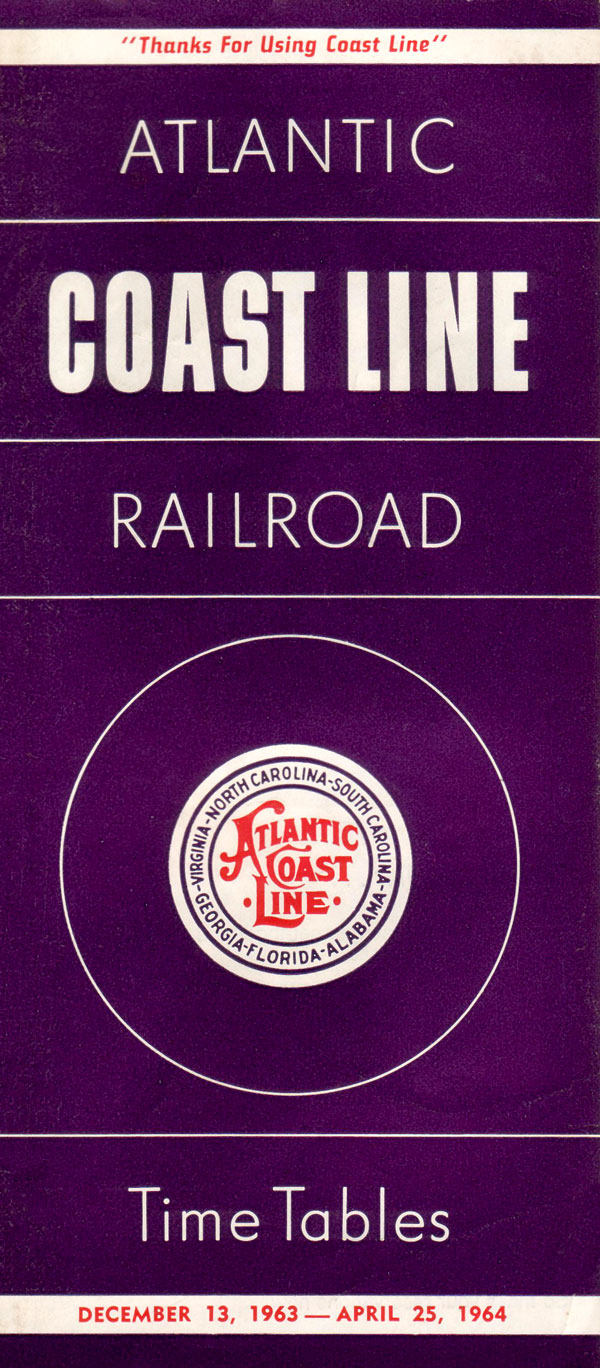
Rocky Mount, NC / Jun 2023 / RWH
Jun 2023 / RWH
Rocky Mount, NC / Jun 2023 / RWH
Rocky Mount, NC / Jun 2023 / RWH
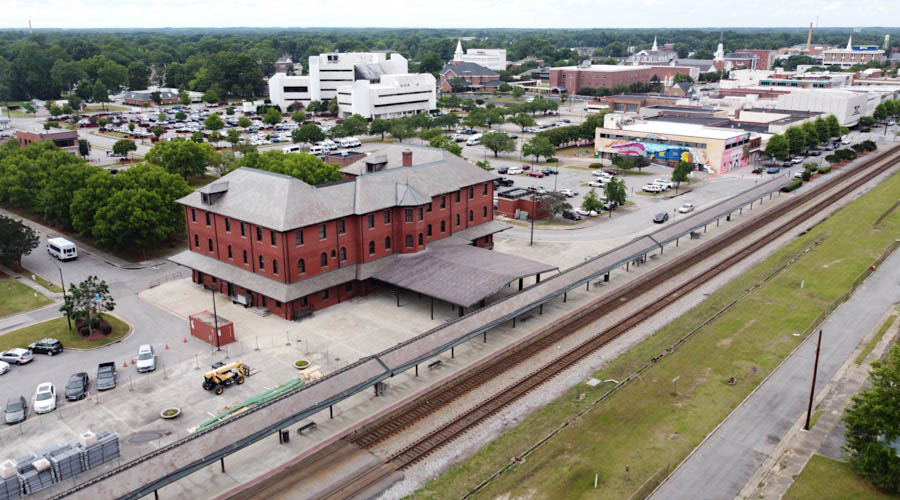
Rocky Mount, NC / Jun 2023 / RWH
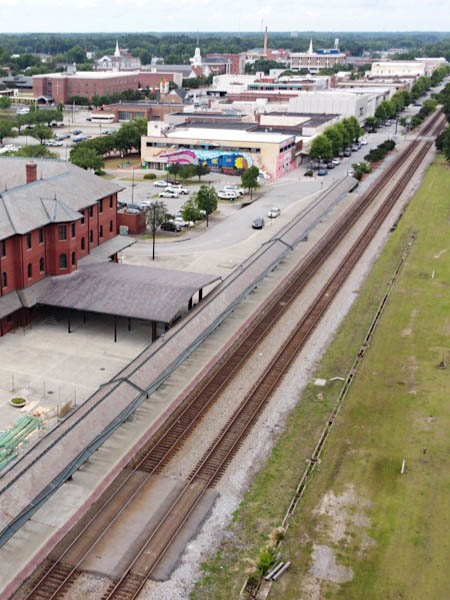
Jun 2023 / RWH
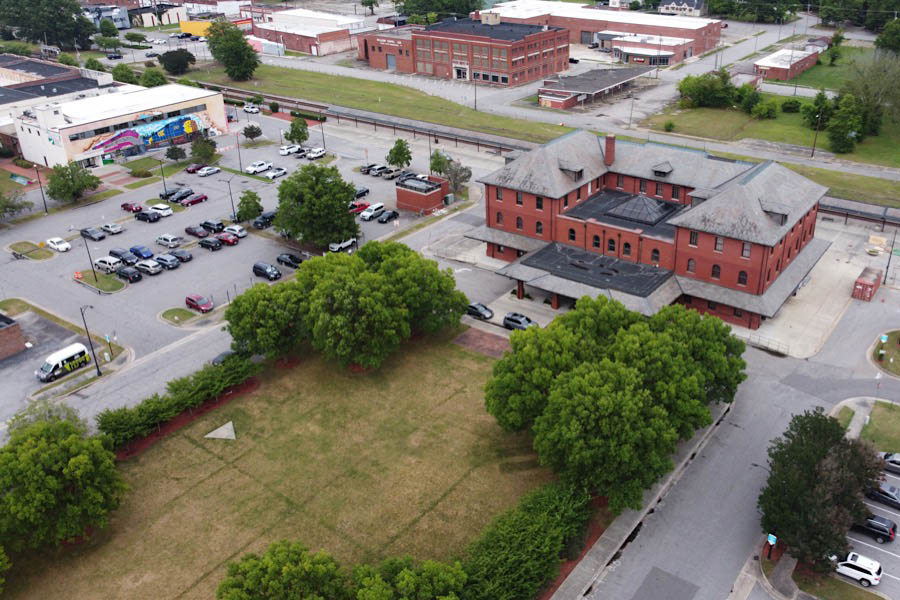
Rocky Mount, NC / Jun 2023 / RWH
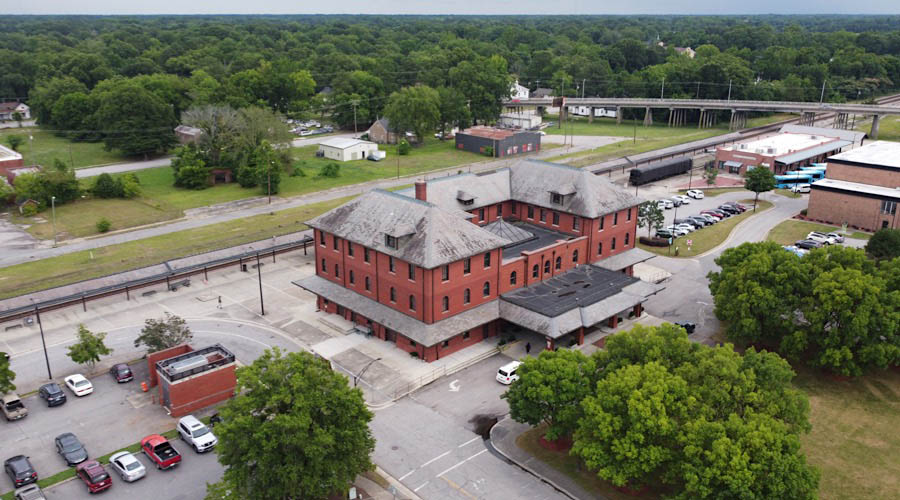
Rocky Mount, NC / Jun 2023 / RWH
Jun 2023 / RWH
Jun 2023 / RWH
Jun 2023 / RWH
Jun 2023 / RWH
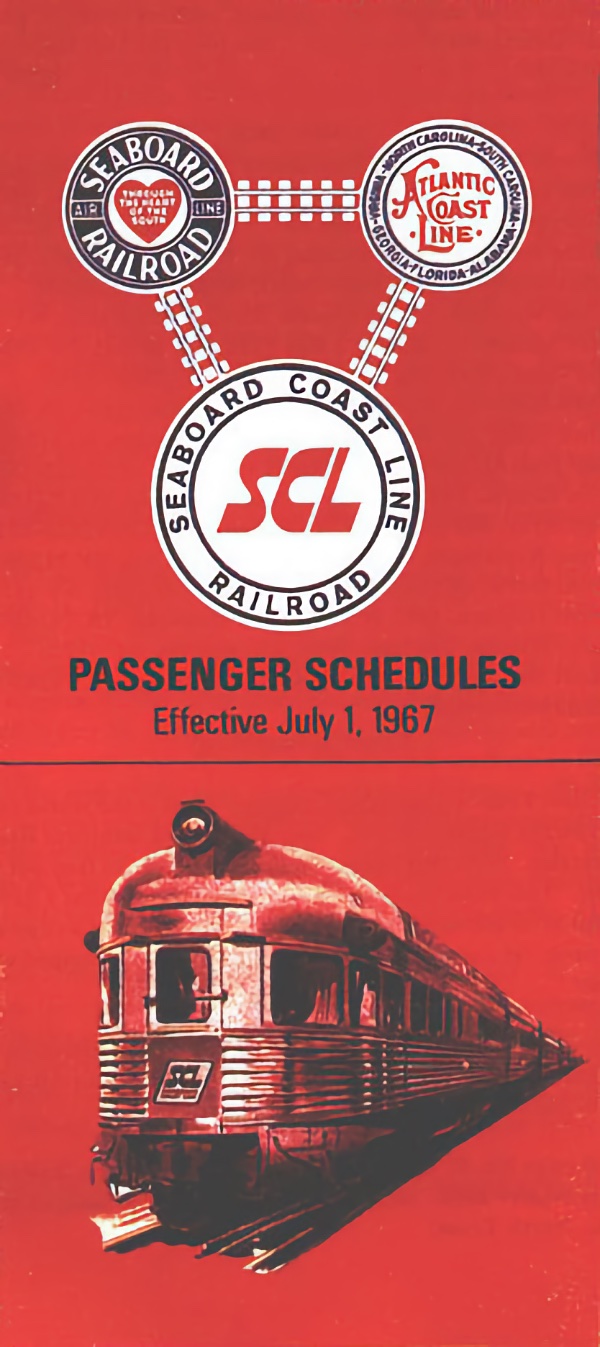
Jun 2023 / RWH
Jun 2023 / RWH
Jun 2023 / RWH
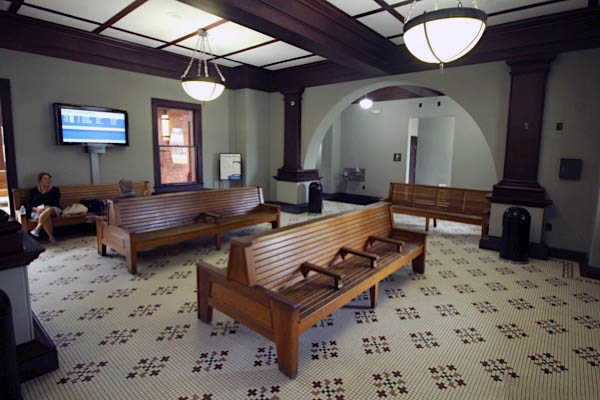
Jun 2023 / RWH
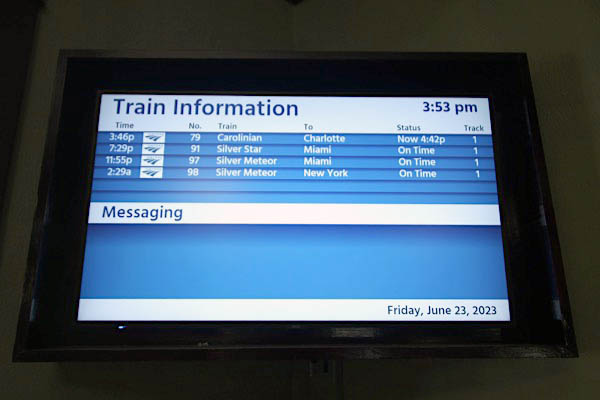
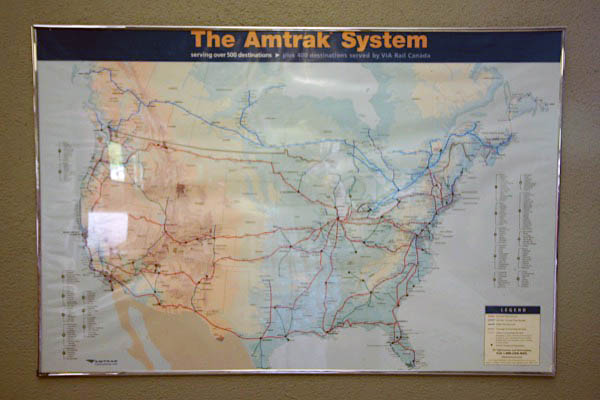
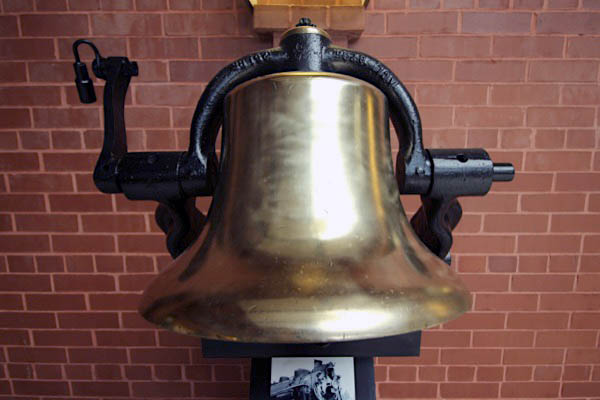
Jun 2023 / RWH
Jun 2023 / RWH
Jun 2023 / RWH
Jun 2023 / RWH
Jun 2023 / RWH
Jun 2023 / RWH
Jun 2023 / RWH
Jun 2023 / RWH
Jun 2023 / RWH
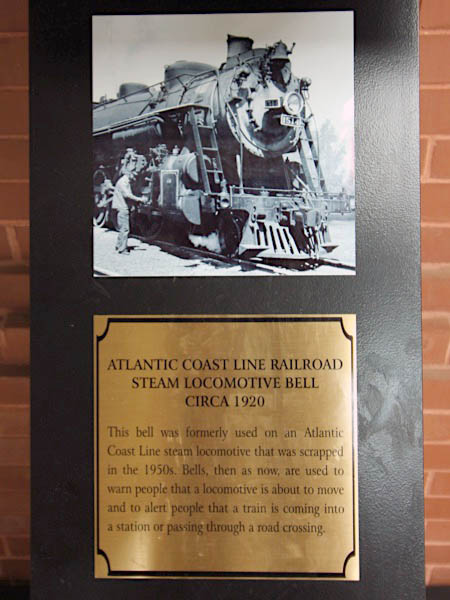
Jun 2023 / RWH
Rocky Mount, NC
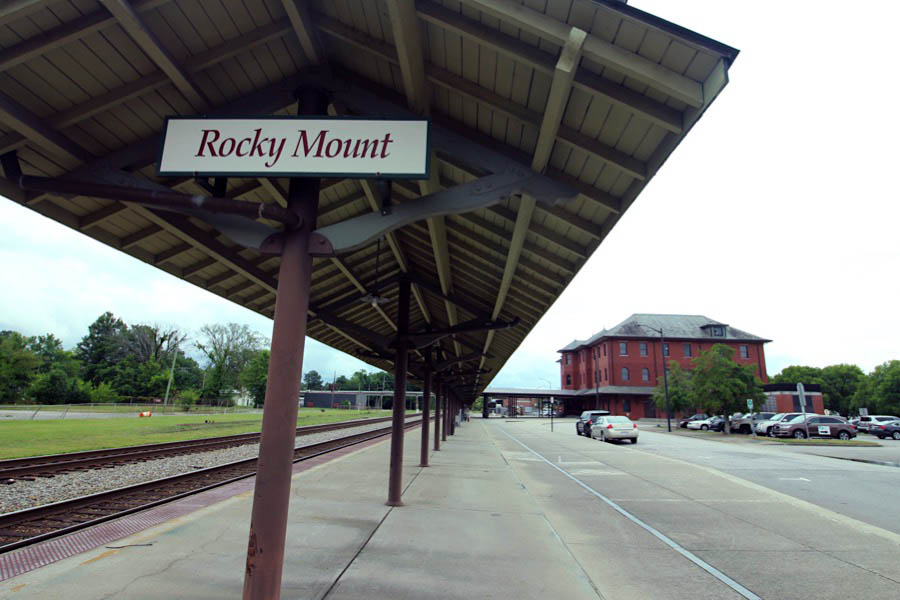
Rocky Mount, NC / Jun 2023 / RWH
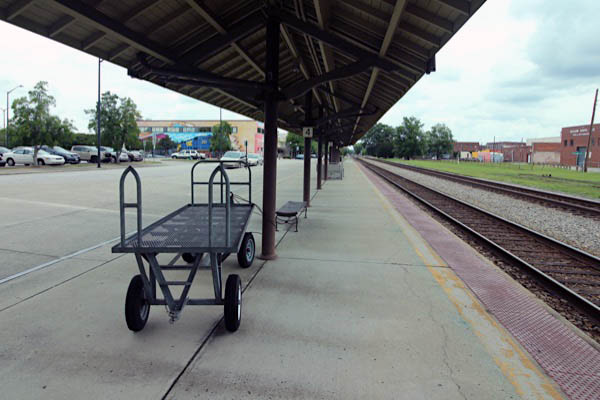
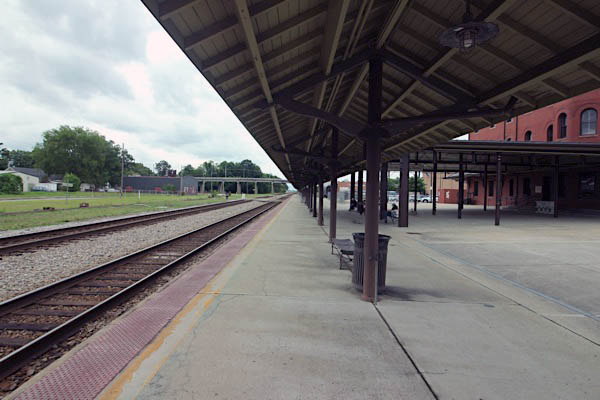
Rocky Mount, NC / Jun 2023 / RWH
CSX Mainline Action
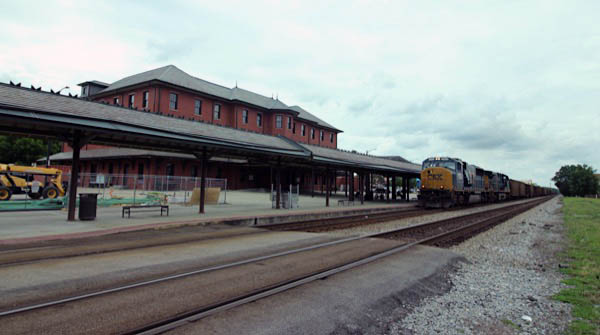
Rocky Mount, NC / Jun 2023 / RWH
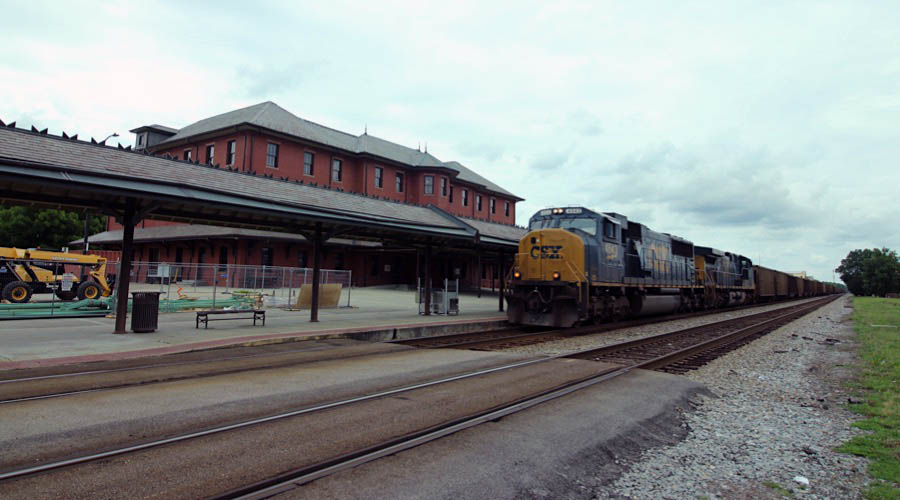
Rocky Mount, NC / Jun 2023 / RWH
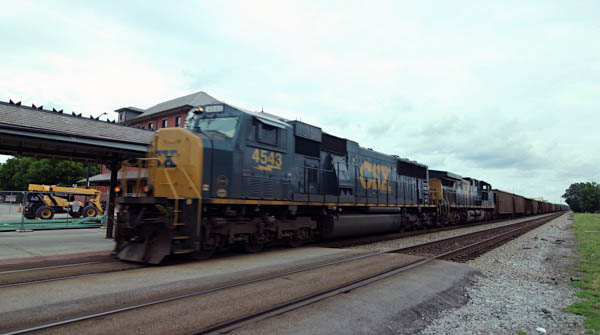
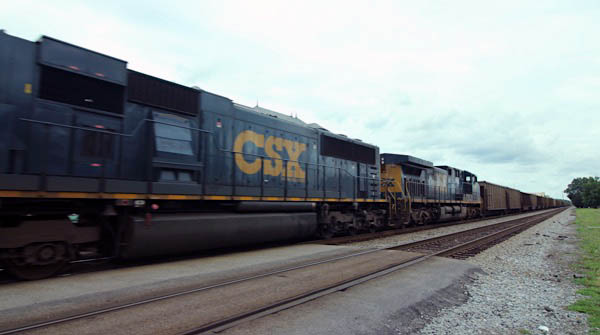
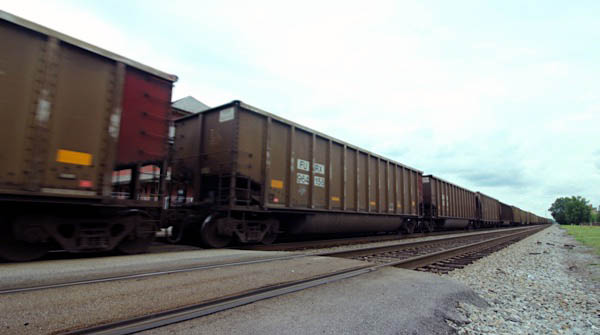
Rocky Mount, NC / Jun 2023 / RWH
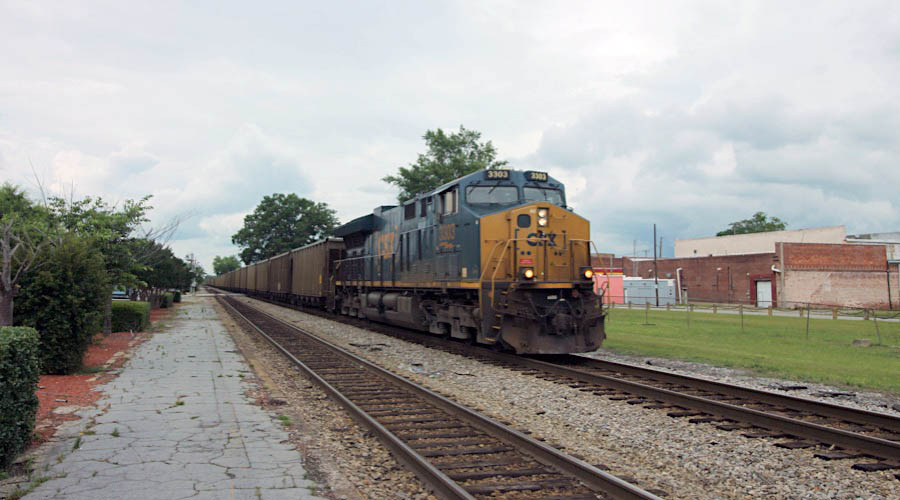
Rocky Mount, NC / Jun 2023 / RWH
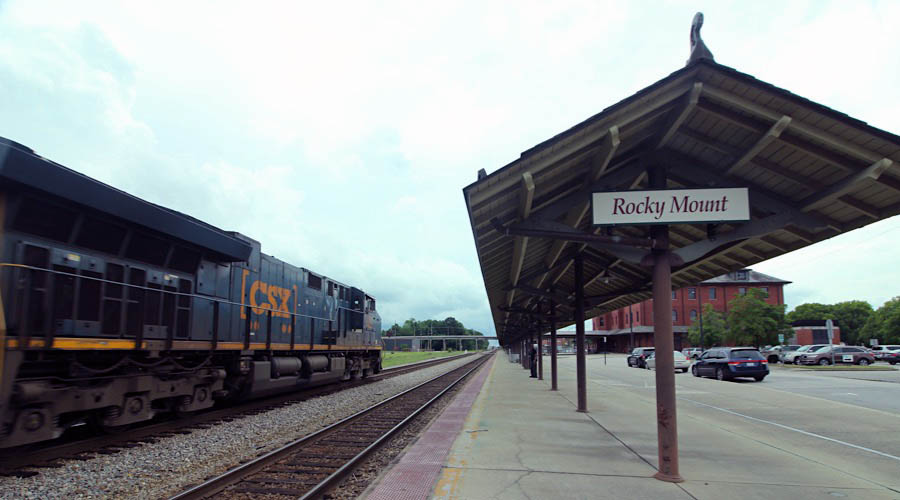
Rocky Mount, NC / Jun 2023 / RWH
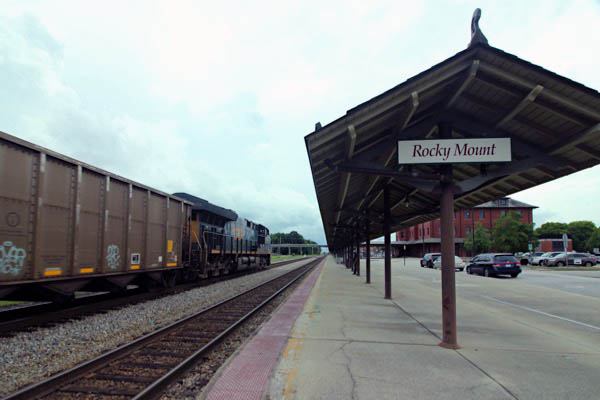
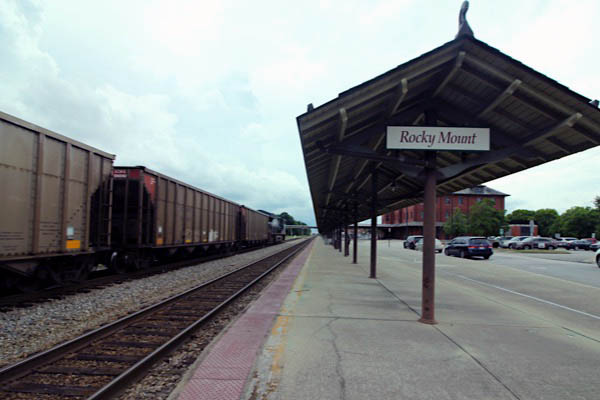
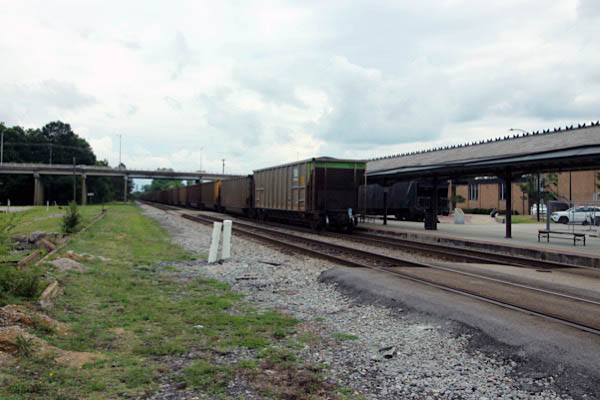
Rocky Mount, NC / Jun 2023 / RWH
See also our complete CSX Transportation scrapbook in Mainlines
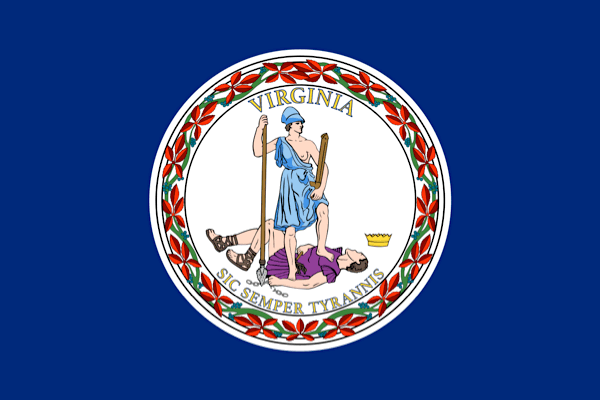 Virginia
342 Petersburg, Va
- Carolinian
- Northeast Regional
- Palmetto
- Silver Service
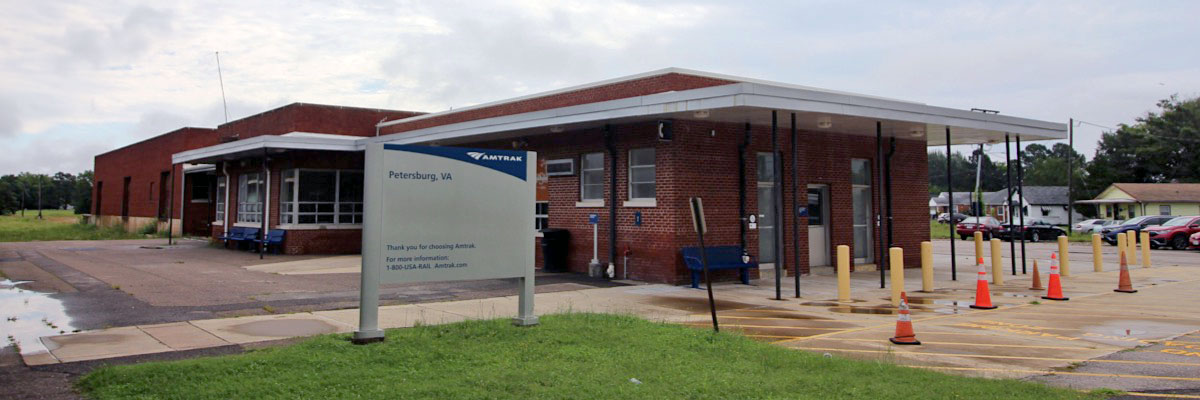
Petersburg, Va / Jul 2025 / RWH
Click to see the Petersburg station plotted on a Google Maps page
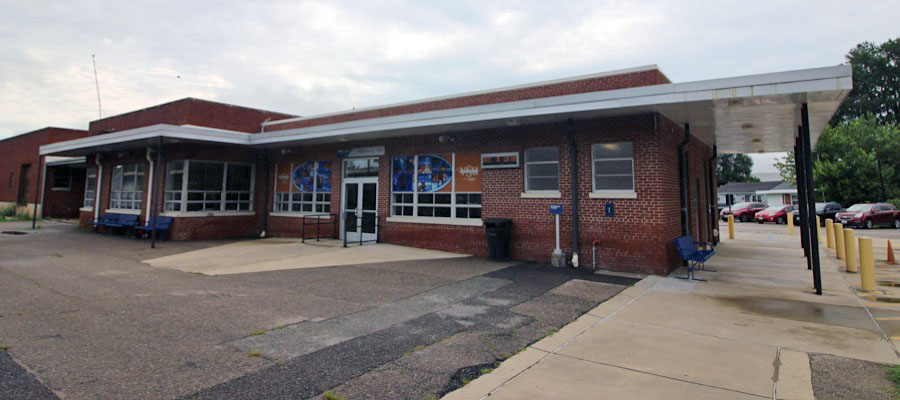
Petersburg, Va / Jul 2025 / RWH
- location:Petersburg, VA
- address:3516 South Street
- type:city station, 1 platform
- owner:VA Passenger Rail Auth
- opened:1955
- builder:Atlantic Coast Line
- style:Mid-century Modern
- renovated:1980
- services:tickets, baggage
- links: Amtrak | Great Stations
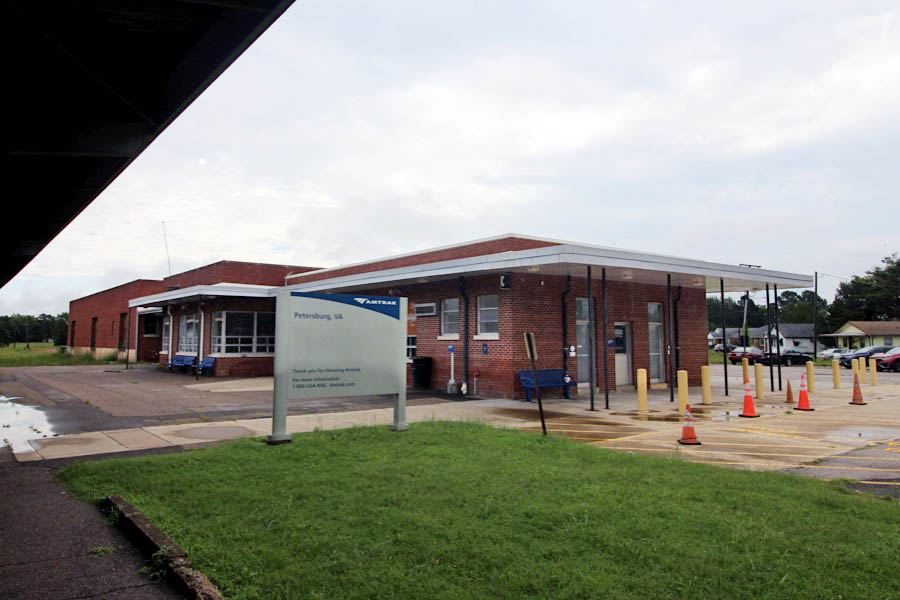
Petersburg, Va / Jul 2025 / RWH
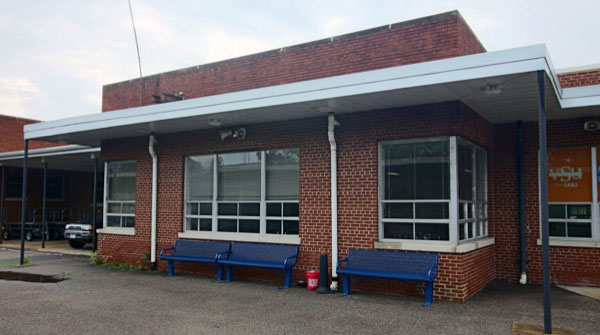
Petersburg, Va / Jul 2025 / RWH
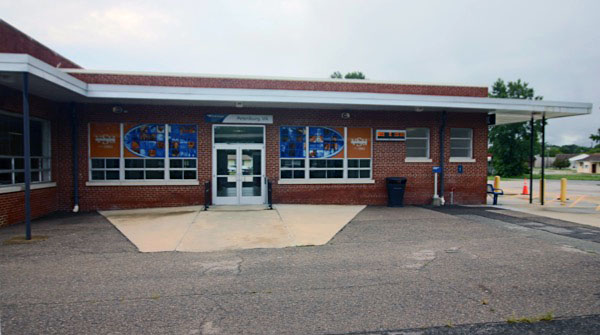
Petersburg, Va / Jul 2025 / RWH
Petersburg, Va / Jul 2025 / RWH
Jul 2025 / RWH
Petersburg, Va / Jul 2025 / RWH
Petersburg, Va / Jul 2025 / RWH
Petersburg, Va / Jul 2025 / RWH
Jul 2025 / RWH
Petersburg, Va / Jul 2025 / RWH
Jul 2025 / RWH
Jul 2025 / RWH
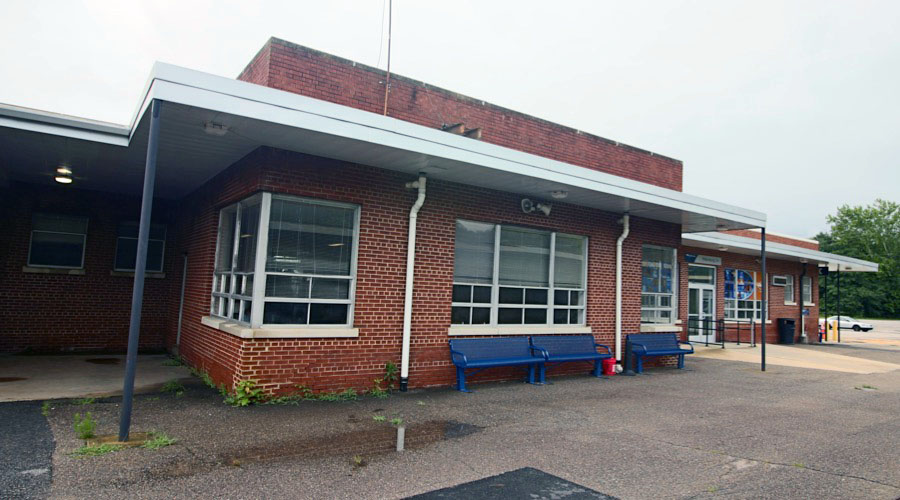
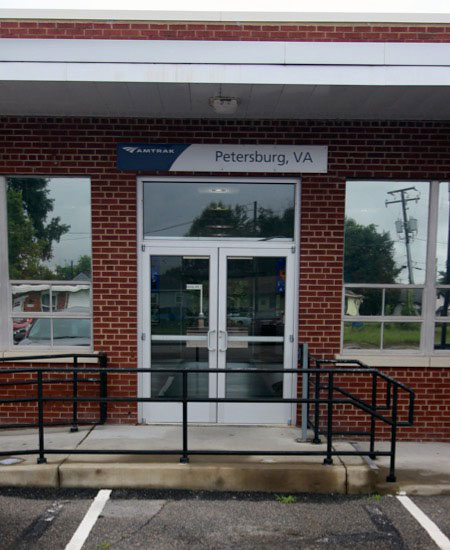
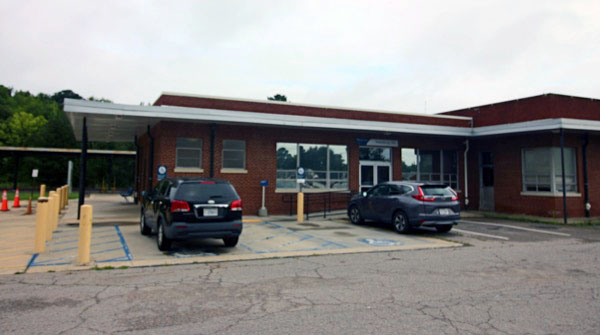
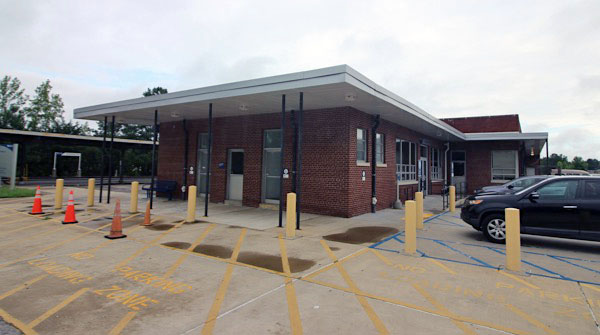
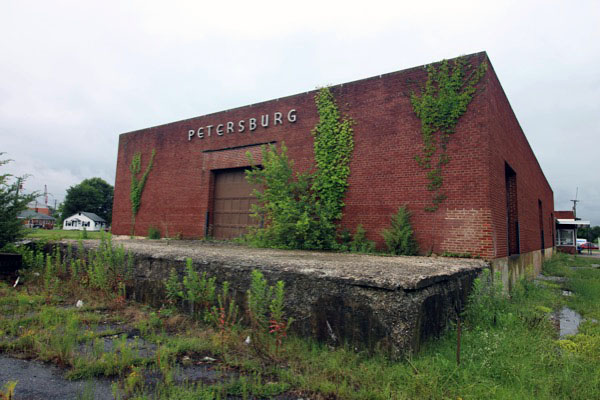
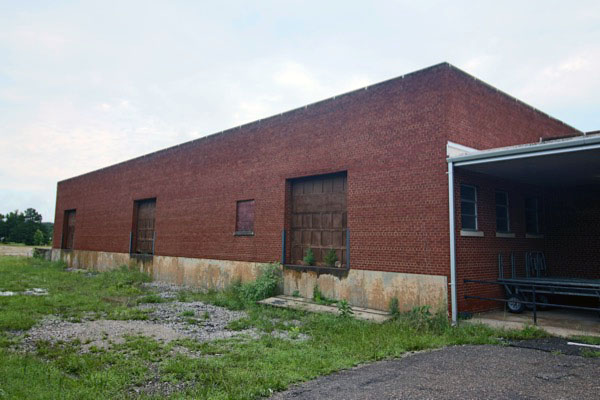
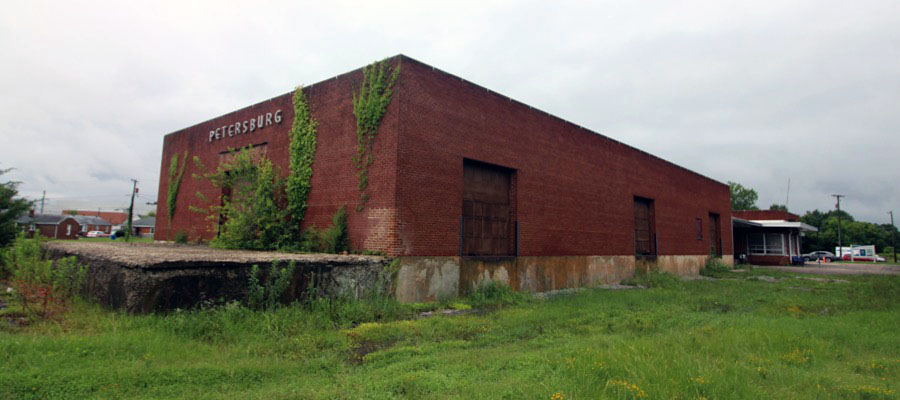
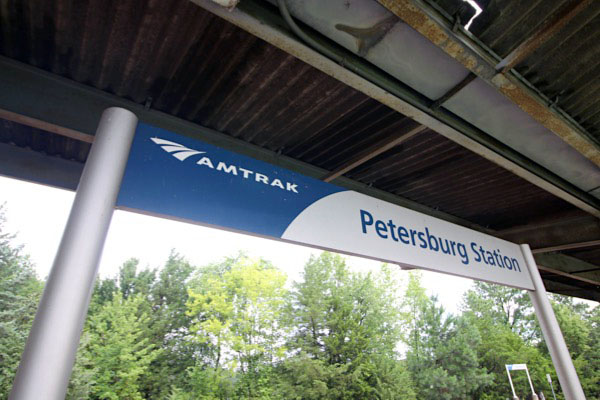
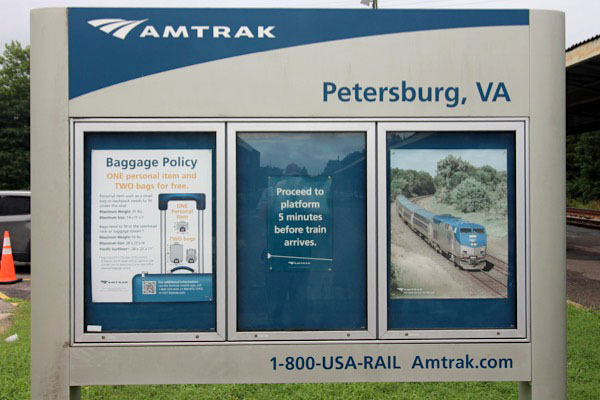
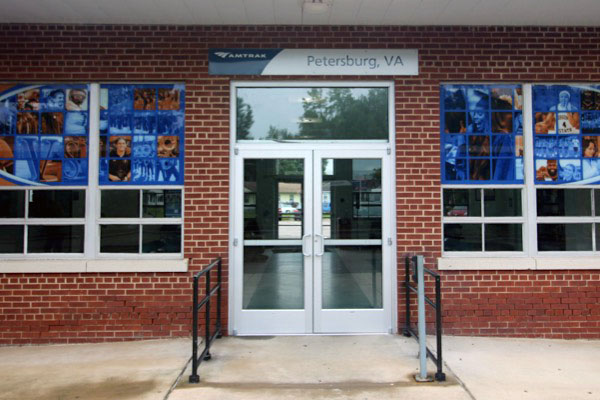
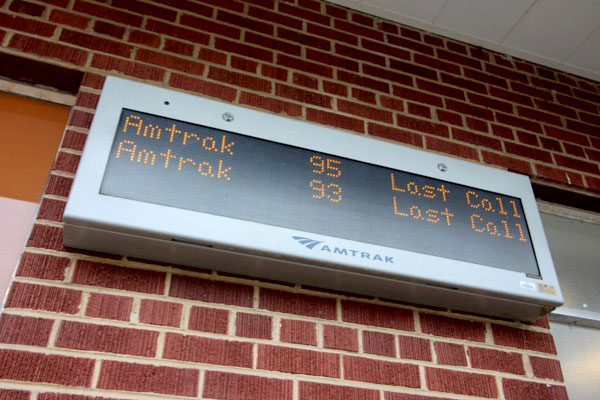
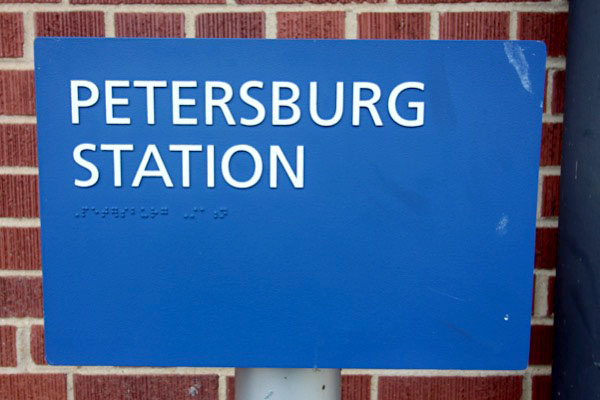
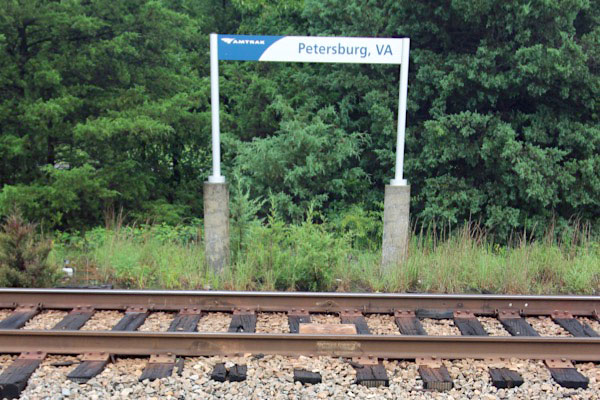
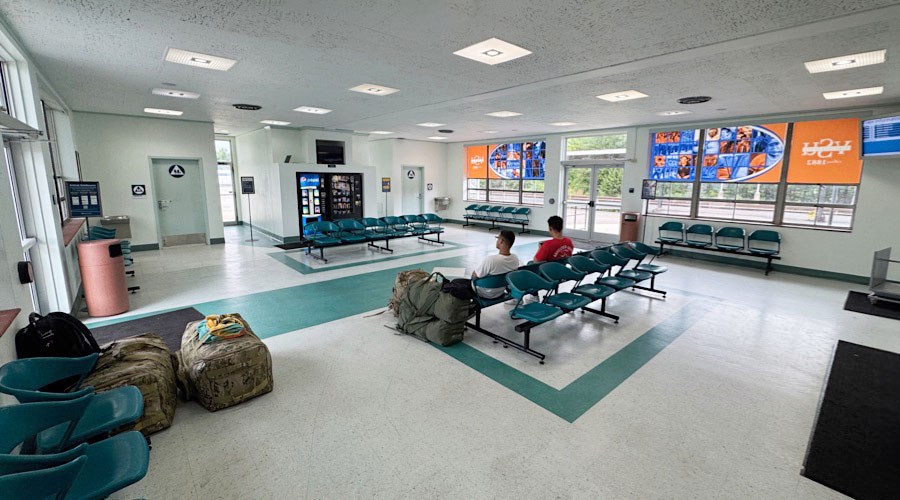
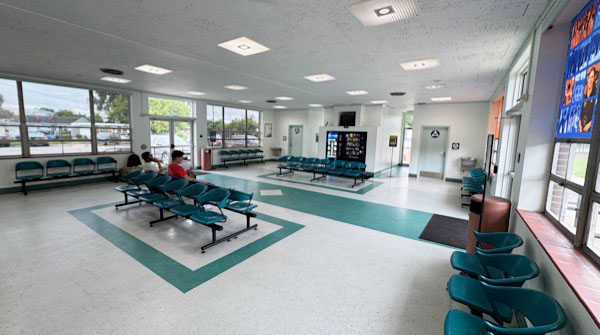
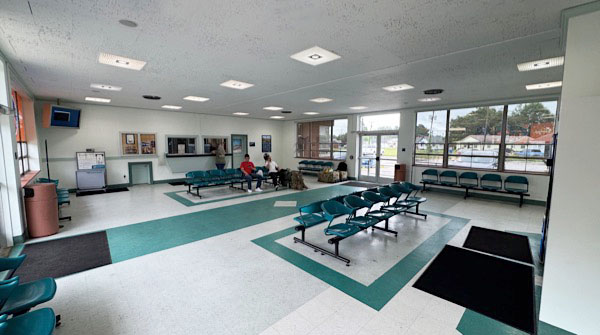
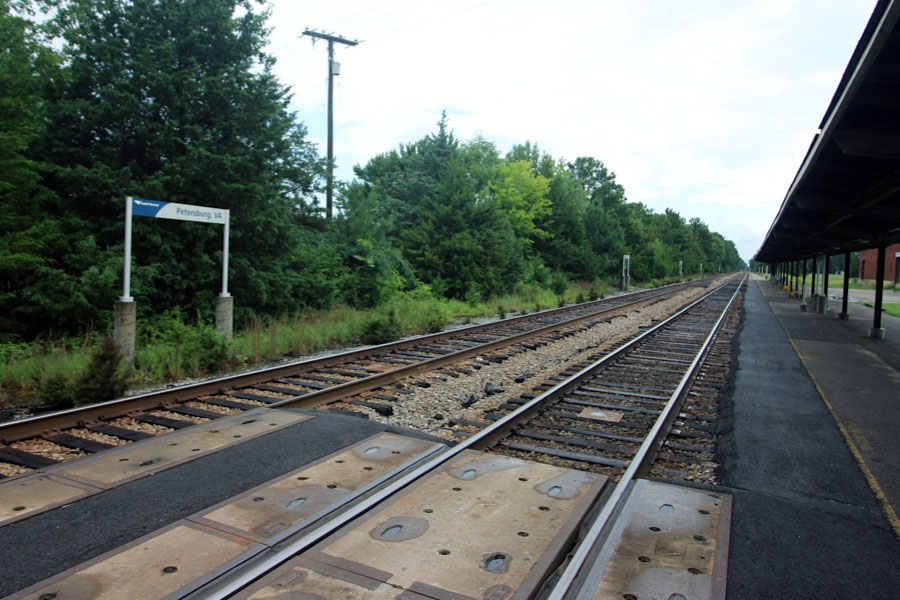
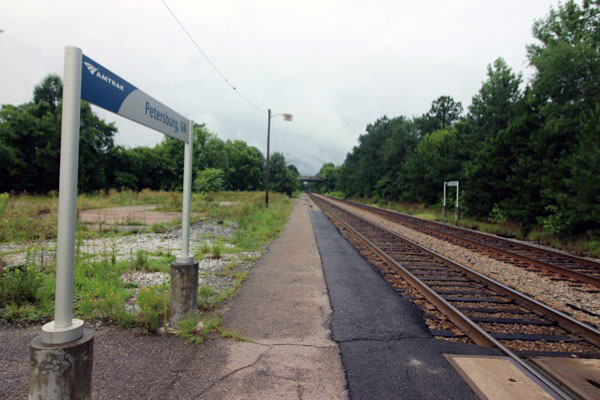
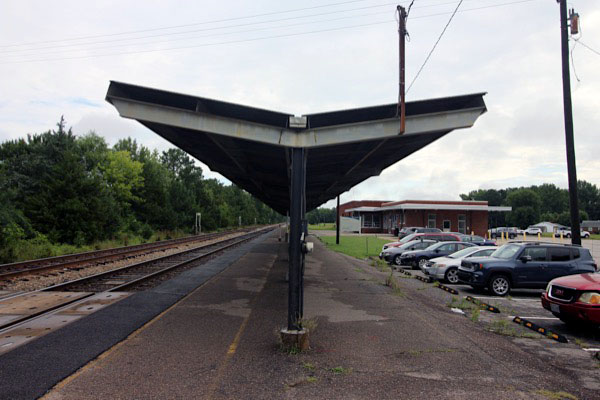
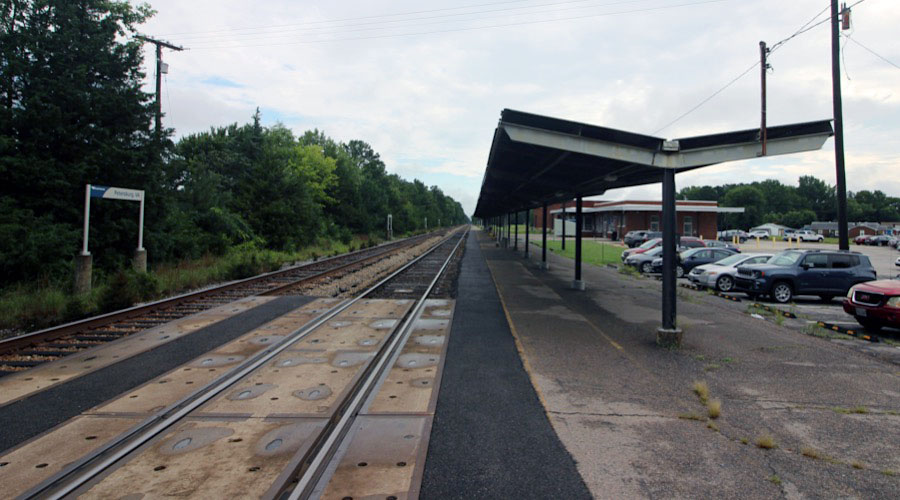
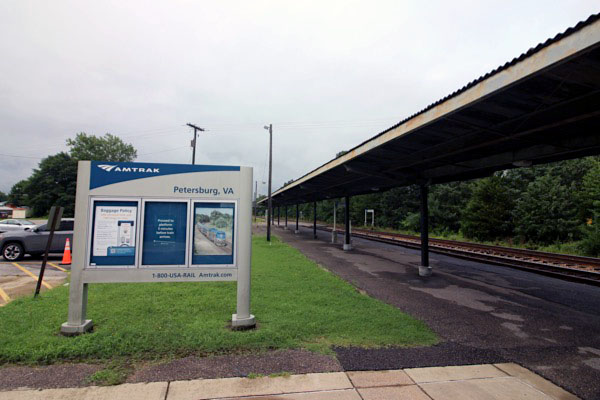
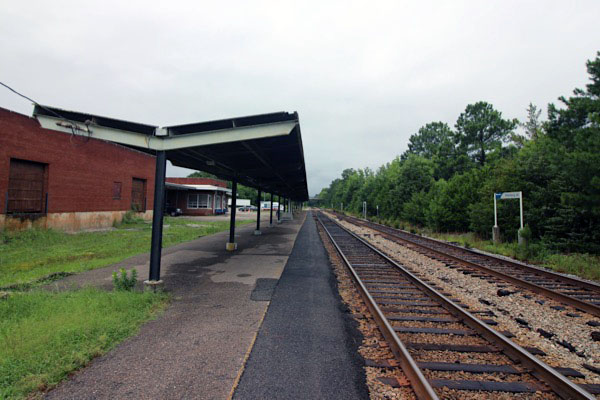
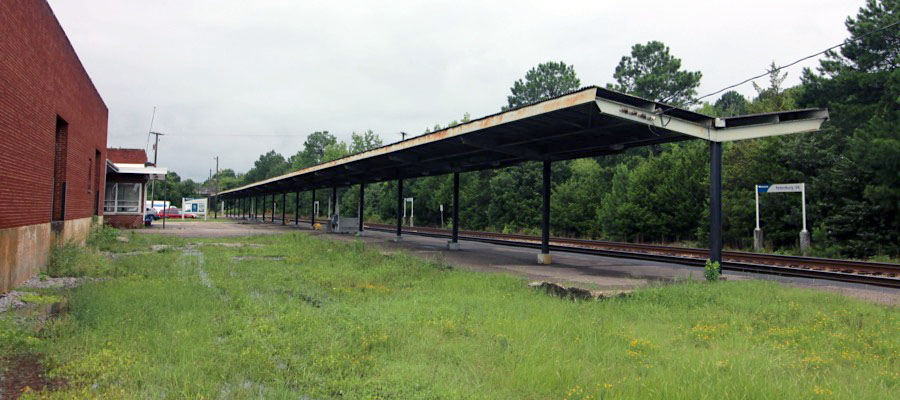
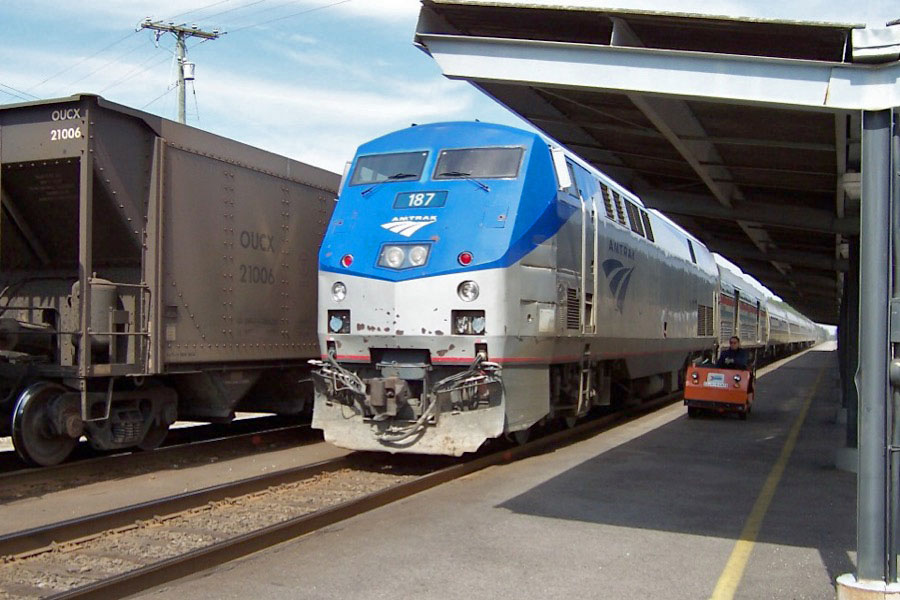
The Petersburg rail station, a one-story brick building, was constructed in 1955 by the Atlantic Coast Line Railroad and is located near the Appomattox River. CSX leases the southern portion of the station to Amtrak and the northern area is unoccupied. In the late 1980s, the depot saw a few minor renovations, including an expanded waiting room, new floors and furniture and the removal of an interior wall.
The city of Petersburg’s roots are embedded in its routes. Originally a Powhattan settlement, people came over from England and settled at Fort Henry. Petersburg grew out of the expansion of Fort Henry. The Port of Petersburg drew many merchants, as it was a major hub for commercial transportation and processing of goods.
Jul 2025 / RWH
Jul 2025 / RWH
Petersburg, Va
Petersburg, Va / Jul 2025 / RWH
Petersburg, Va / Jul 2025 / RWH
Petersburg, Va / Jul 2025 / RWH
Petersburg, Va / Jul 2025 / RWH
Petersburg, Va / Jul 2025 / RWH
Petersburg, Va / Jul 2025 / RWH
Petersburg, Va / Jul 2025 / RWH
Petersburg, Va / Jun 2006 / Virgil Fitzpatrick
370 Richmond, Va
- Carolinian
- Northeast Regional
- Palmetto
- Silver Service
Staples Mill Road overhead / Google Maps
Dec 2019 / RWH

Richmond, Va / Dec 2019 / RWH
- location:Staples Mill Road
- address:7519 Staples Mill Road
- type:urban station, 2 platforms
- owner:Amtrak
- opened:Nov 1975, relocation
- builder:Amtrak
- style:mode, brick and steel
- renovated:2018
- services:tickets, baggage
- links: Amtrak | Great Stations
Richmond, Va / Dec 2019 / RWH
Click to see the Staples Mill Road station plotted on a Google Maps page
from SPV Comprehensive Railroad Atlas
/ collection
Richmond, Va / Dec 2019 / RWH
Richmond, Va / Dec 2019 / RWH
Richmond, Va / Dec 2019 / RWH
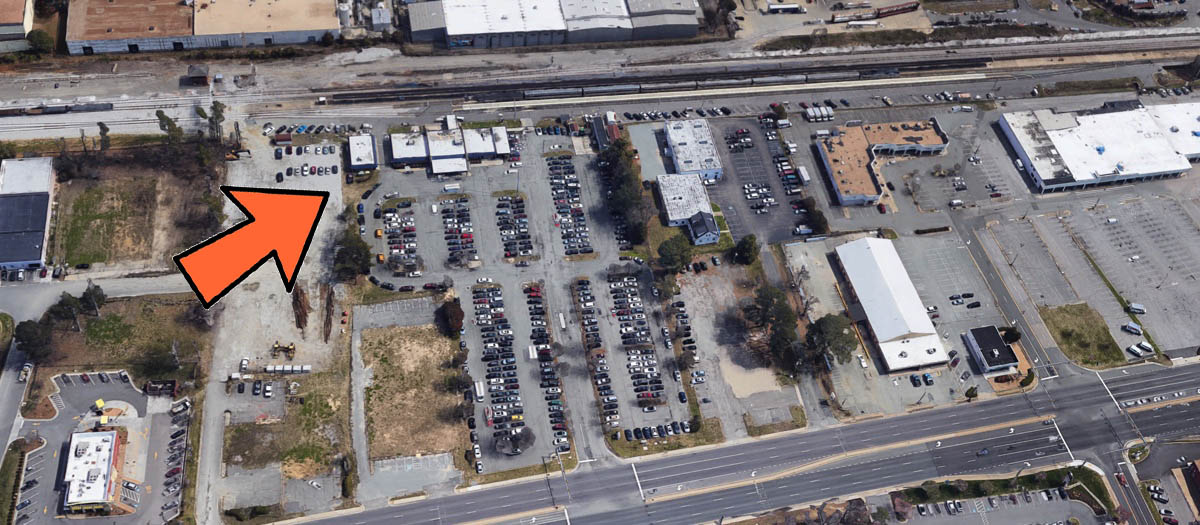
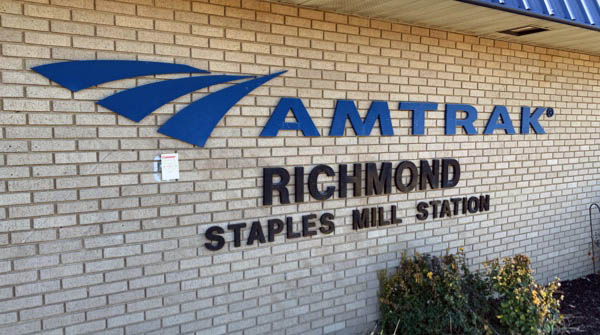
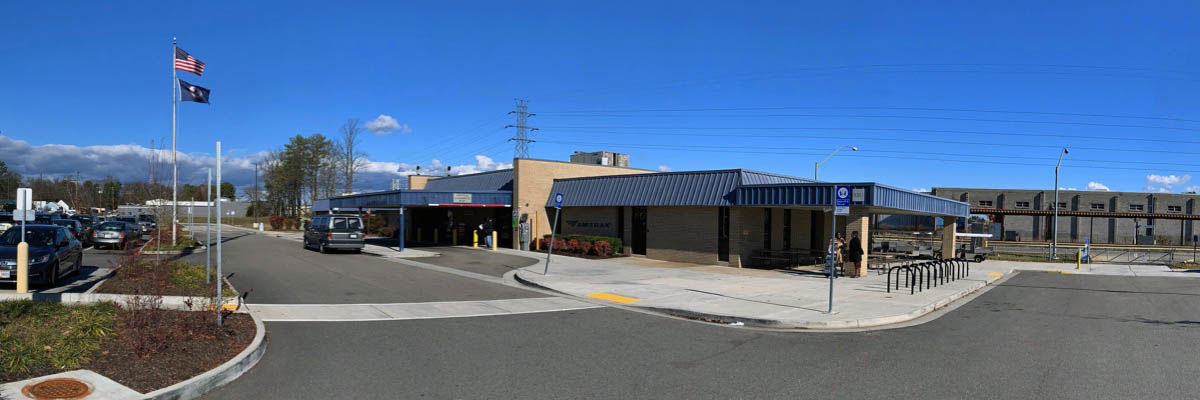
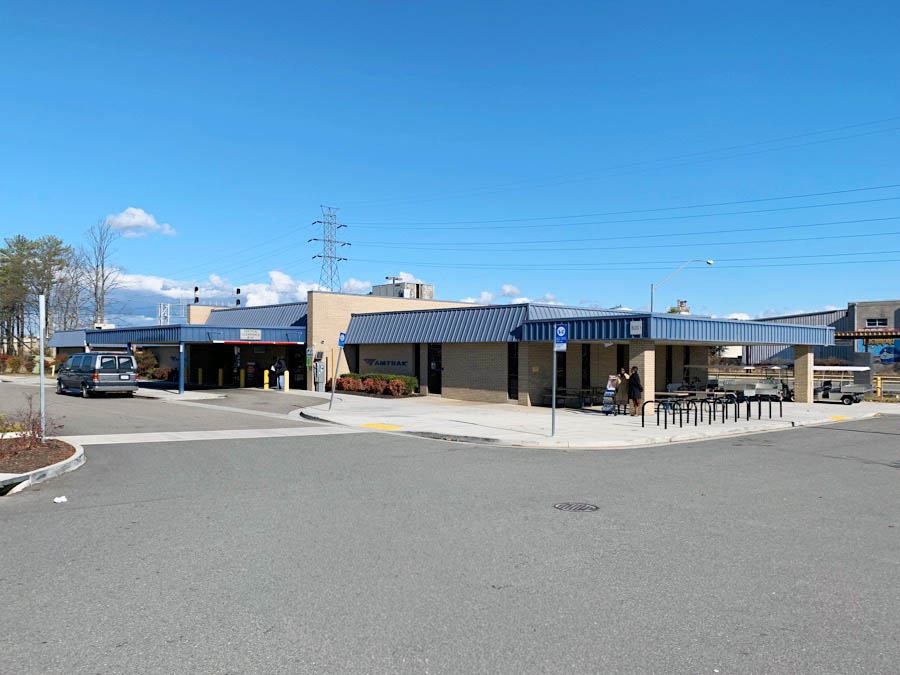
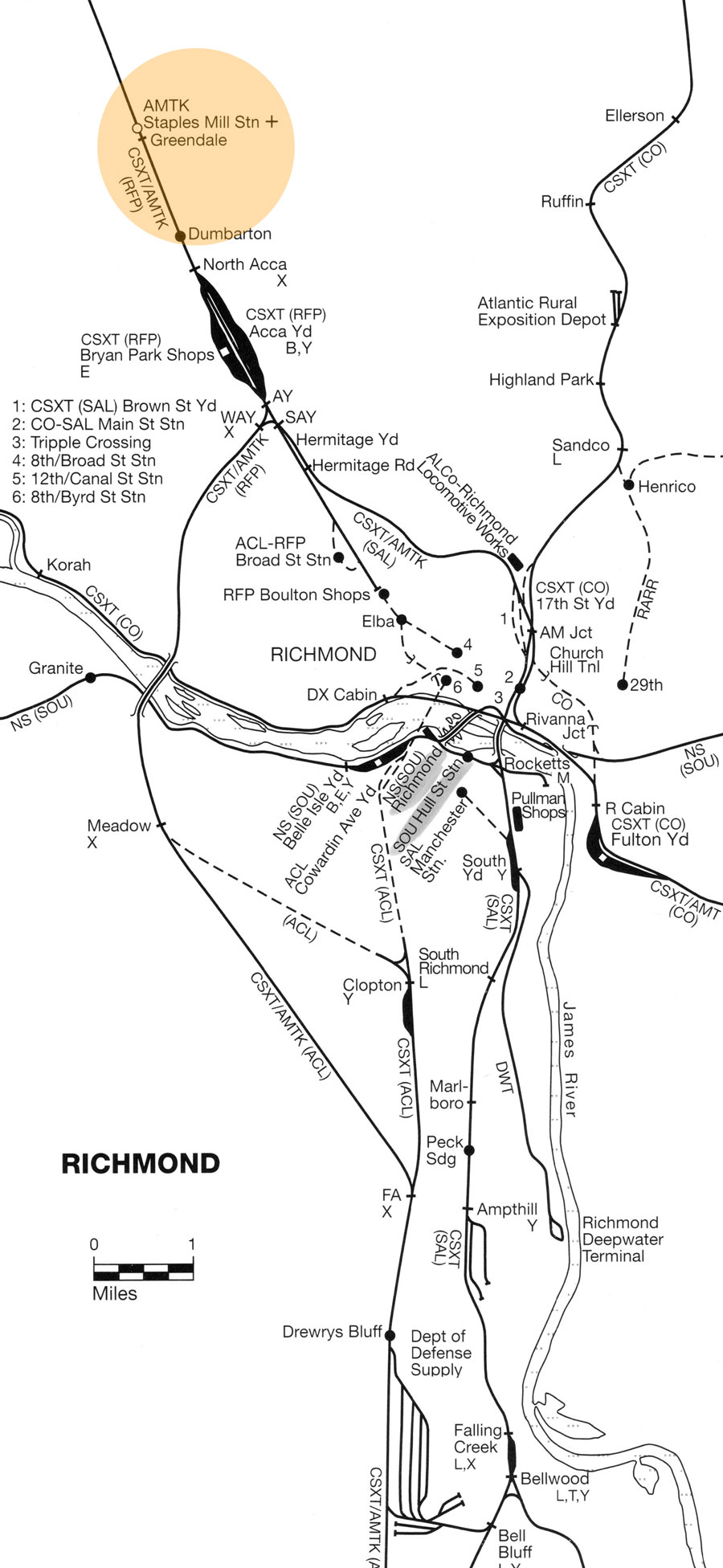
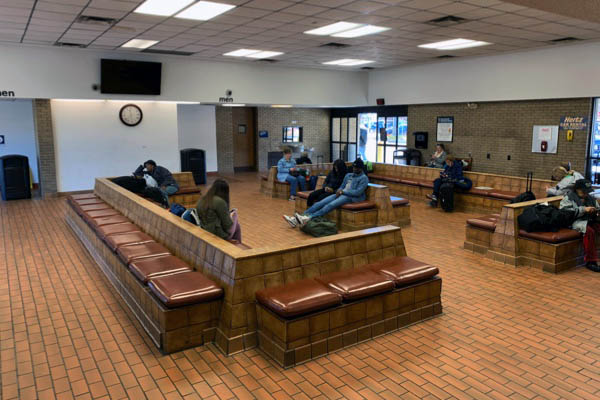
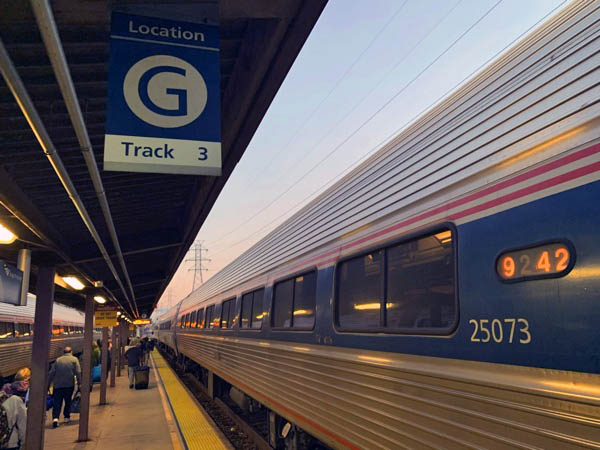
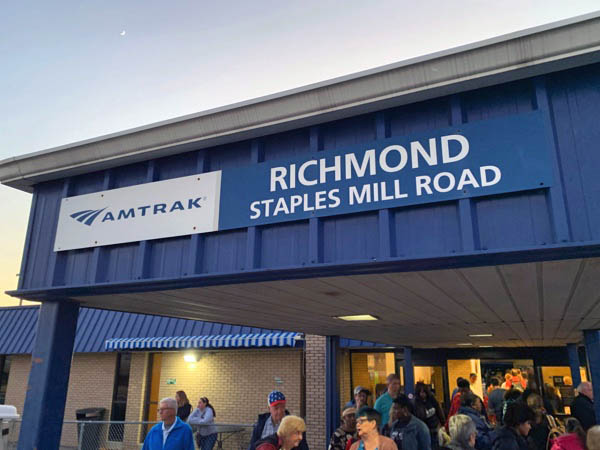
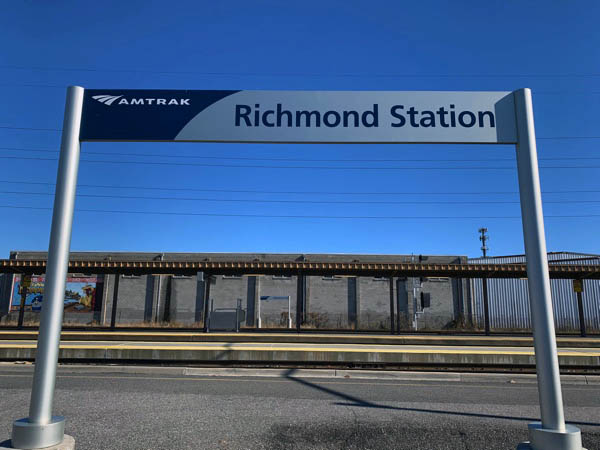
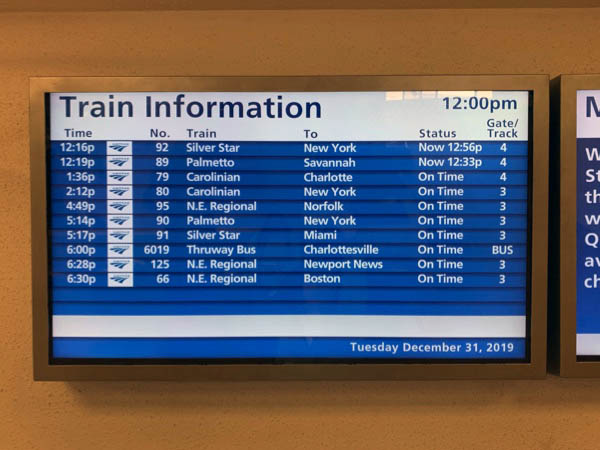
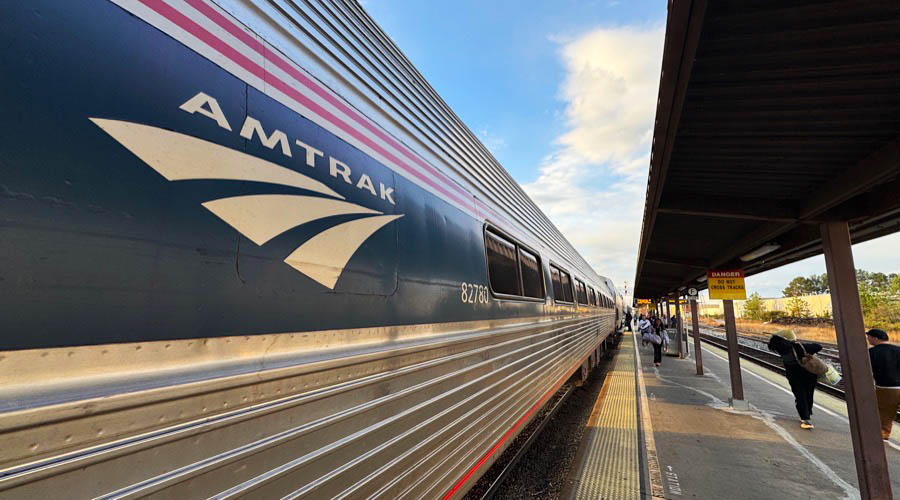
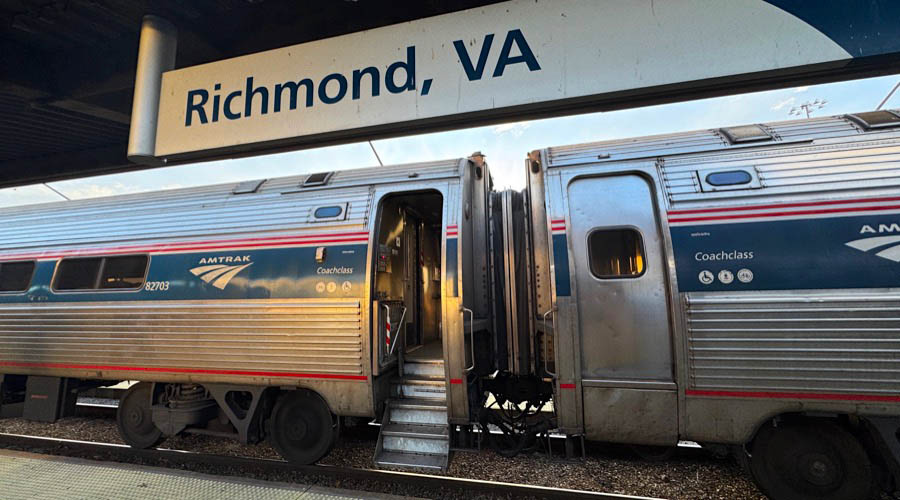
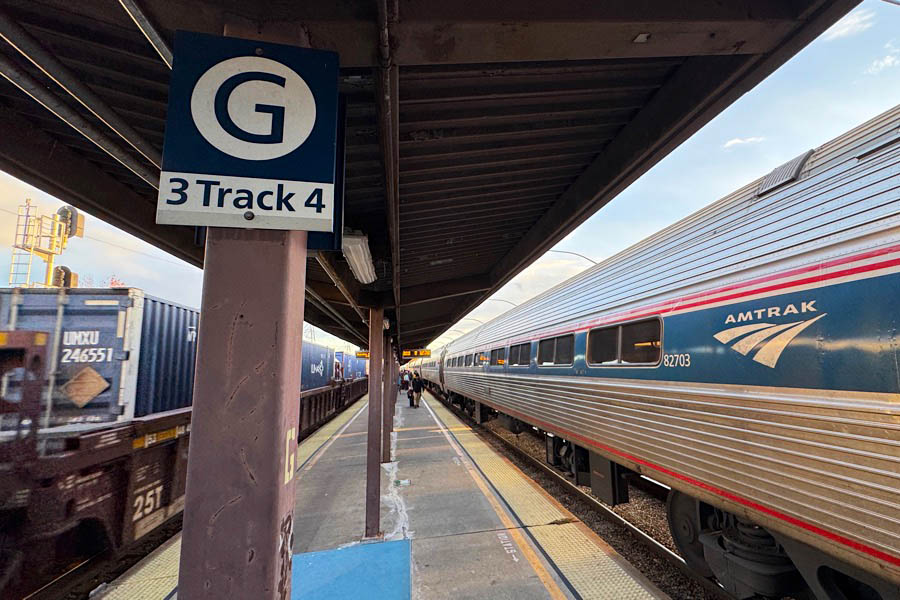
 The Staples Mill Road station is located just north of Richmond in the Henrico County suburbs, and is the busiest Amtrak facility in the Southeast. It opened in Nov. 1975, built to replace the historic, neoclassical Broad Street Station sited about three-and-a-half miles south and adjacent to Richmond’s famous Fan District. The new station facilitated train movements, cutting about 10 minutes from the run times of New York-Florida trains. Following a public open house on Nov. 14, the northbound Silver Star (New York – St. Petersburg/Miami) was the first train to stop at the facility the following day.
Designed by David Volkert and Associates, with Roderick Slater as the main architect, the station consists of a one-story building of buff brick and steel construction with two tracks served by one platform. Walls of windows allow natural light to flood the waiting room, which features built-in bench seating. Minor renovations over the years included the expansion of the parking lot and inclusion of employee parking, as well as the addition of a mechanical department. This station has a waiting room and is staffed by Amtrak employees; Richmond is served by more than a dozen daily trains. Northeast Regional service within Virginia is funded in part through grants made available by the Commonwealth of Virginia.
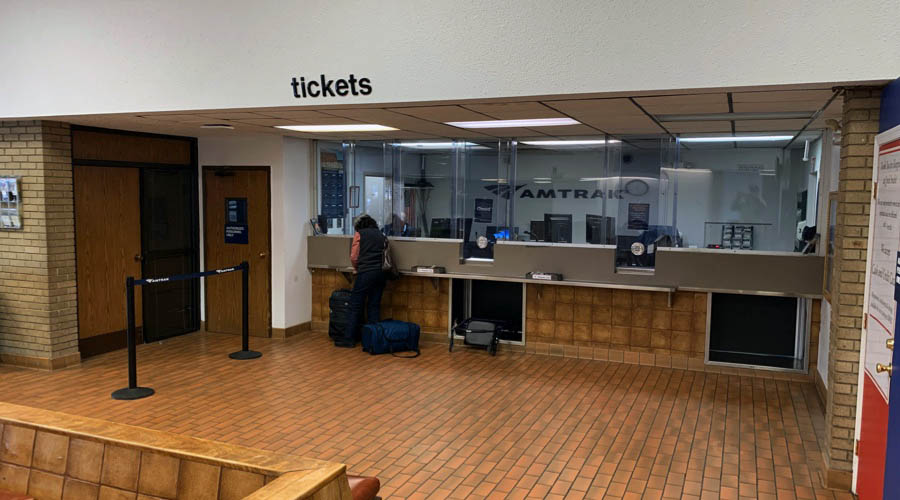
Dec 2019 / RWH
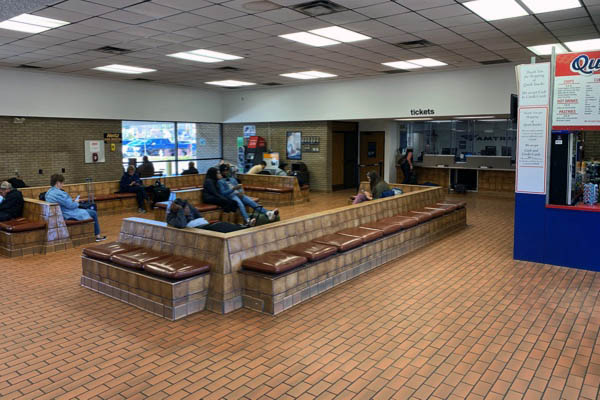
Dec 2019 / RWH
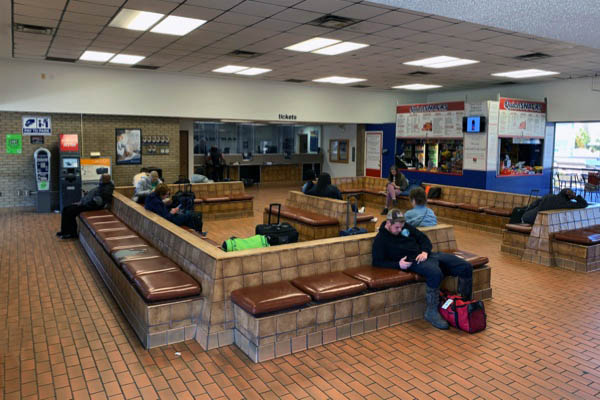
Dec 2019 / RWH
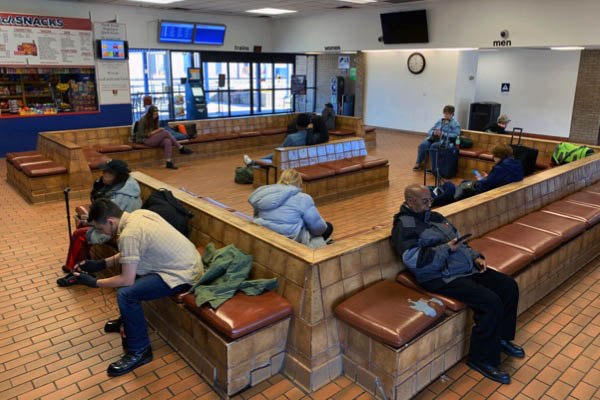
Dec 2019 / RWH
Dec 2019 / RWH
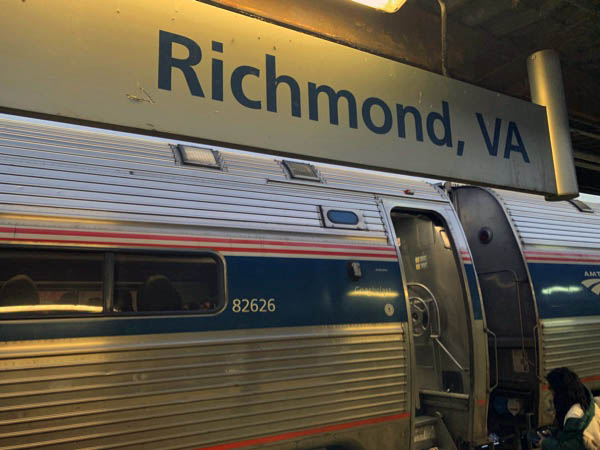
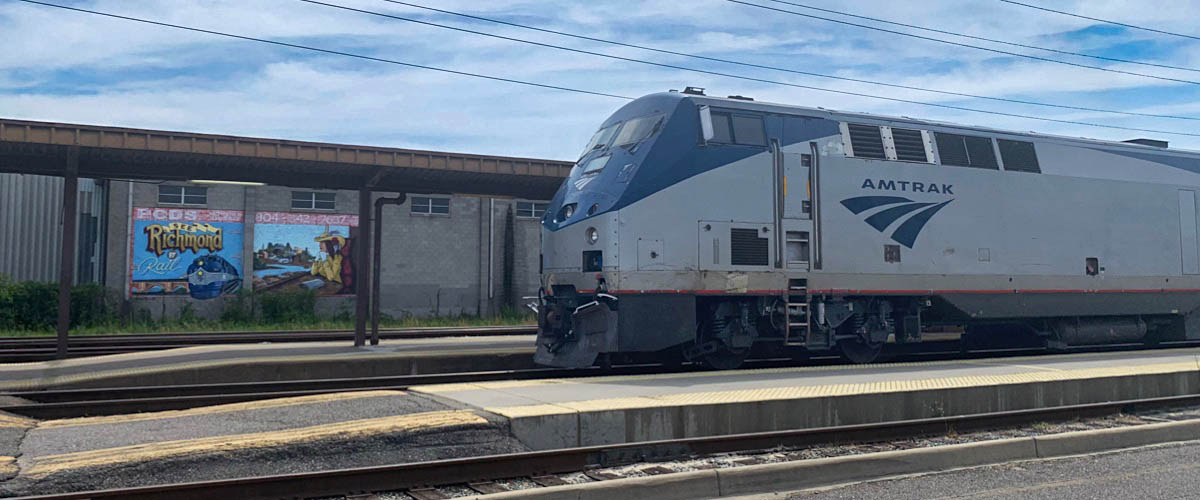
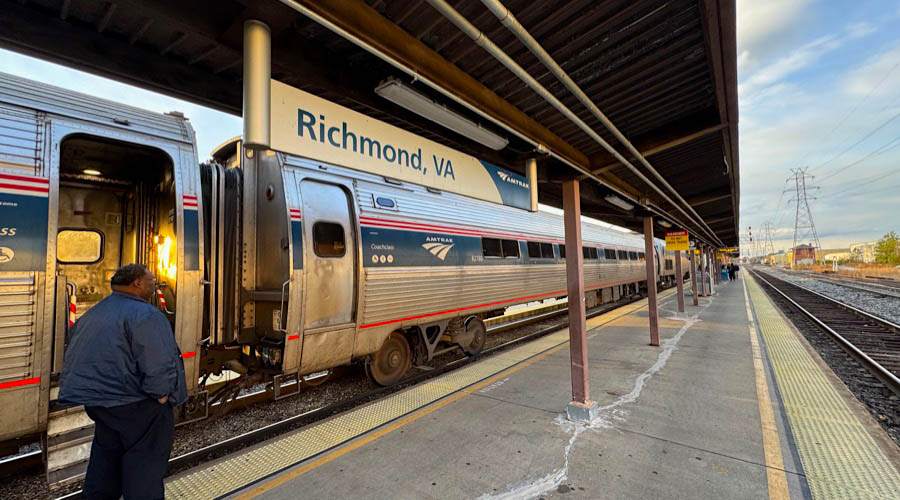
 Richmond has been served by multiple railroads since the 1830's. The five lines fanning out from the city in 1861 were a major reason for choosing Richmond as the capital of the Confederacy. With rail consolidation after the war, the names changed but for much of the 20th. century the city still hosted six major lines. The corporate headquarters of the Richmond, Fredericksburg and Potomac (RF&P) Railroad, and CSX were located in the city.
See also our complete Richmond Railroad Museum scrapbook in Preservation
Dec 2019 / RWH
Richmond, Va
Richmond, Va / Jun 2013 / RWH
Richmond, Va / Jun 2013 / RWH
Richmond, Va / Jun 2013 / RWH
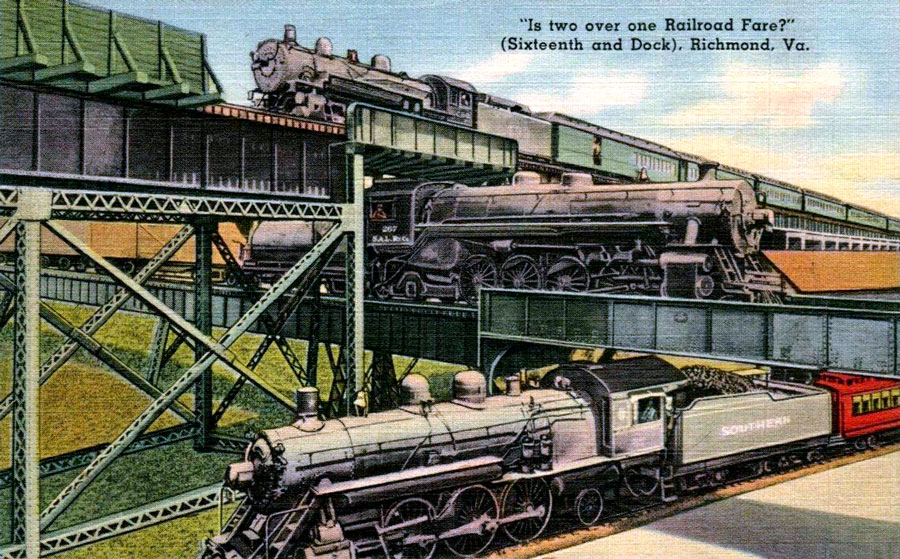 A decade after the Civil War, Richmond resumed its position as a major urban center of economic productivity with iron front buildings and massive brick factories. Canal traffic peaked in the 1860s, with railroads becoming the dominant shipping method. Richmond became a major railroad crossroads, showcasing the world's first triple railroad crossing. Tobacco warehousing and processing continued to play a central economic role, advanced by the world's first cigarette-rolling machine that James Albert Bonsack of Roanoke invented between 1880 and 1881.
Another important contributor to Richmond's resurgence was the Richmond Union Passenger Railway, a trolley system developed by electric power pioneer Frank J. Sprague. The system opened its first Richmond line in 1888, using an overhead wire and a trolley pole to connect to the current and electric motors on the car's trucks. The success led to electric streetcar lines rapidly spreading to other cities. A post-World War II transition to buses from streetcars began in May 1947 and was completed on November 25, 1949.
Richmond, Va / Jul 2022 / RWH
northbound #80
Richmond, Va / Nov 2024 / RWH
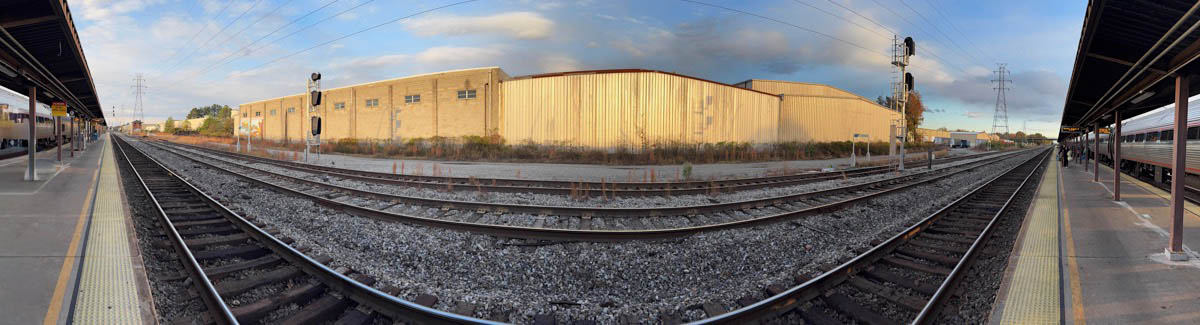
Richmond, Va / Nov 2024 / RWH
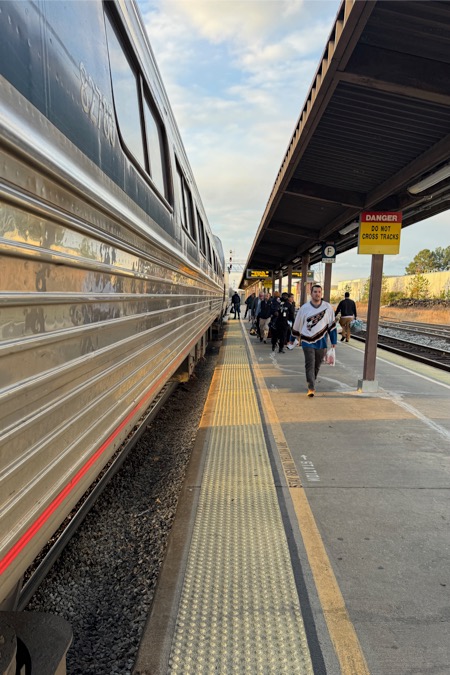
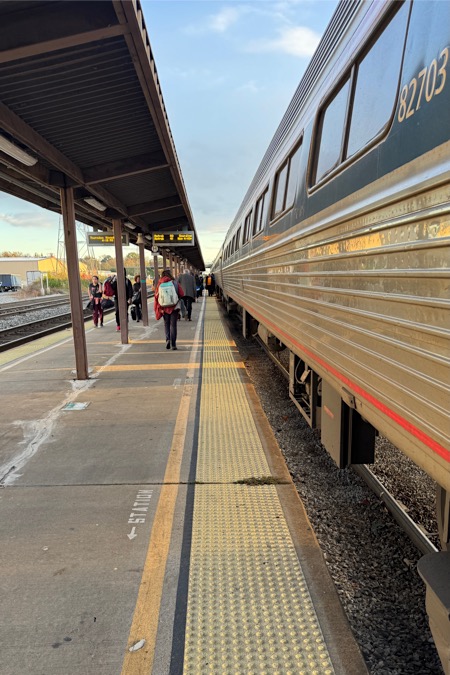
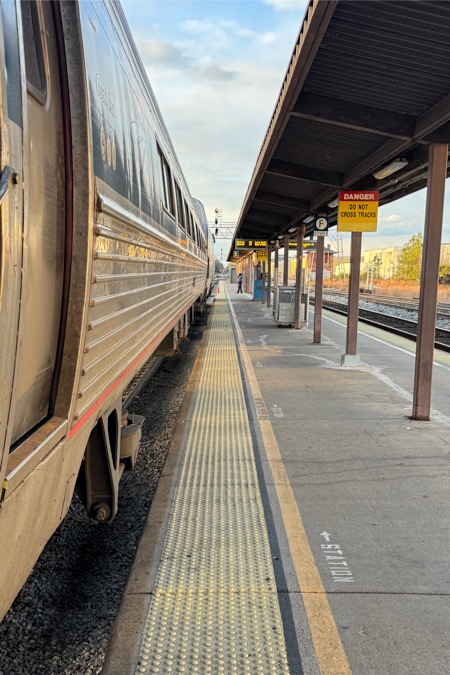
Nov 2024 / RWH
Amtrak's
Carolinian
Richmond, Va / Nov 2024 / RWH
Richmond, Va / Nov 2024 / RWH
Nov 2024 / RWH
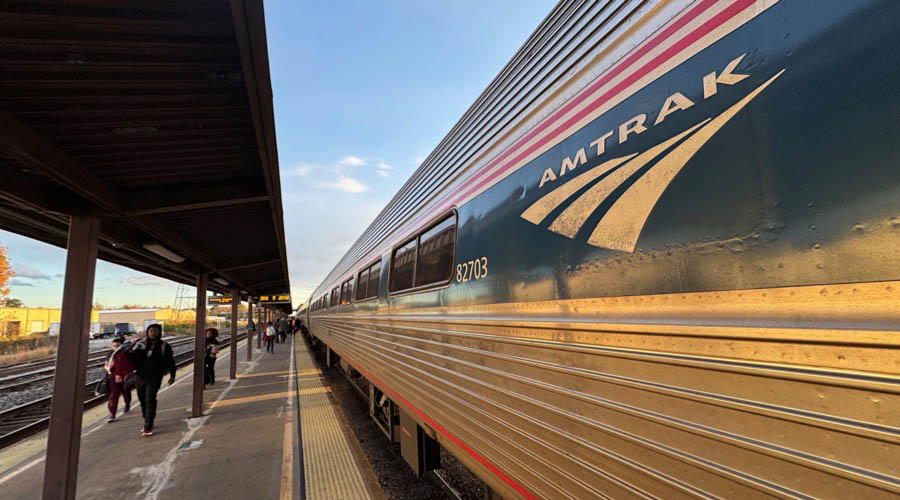
Richmond, Va / Nov 2024 / RWH
425 Fredericksburg
- Carolinian
- Northeast Regional
- Silver Meteor
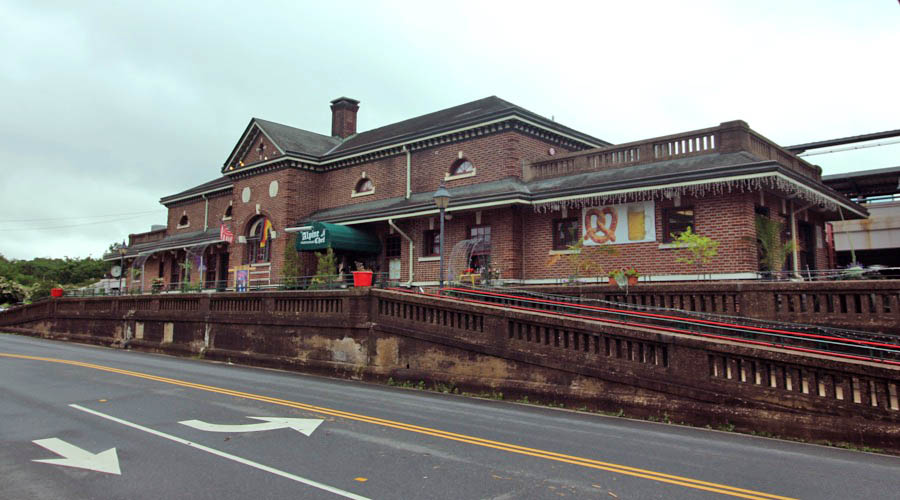
Fredericksburg, Va / Jun 2023 / RWH
- location:Fredericksburg VA
- address:425 Princess Anne St
- type:city station, 2 platforms
- owner:VA Dept Pub Transport
- opened:1910
- builder:RF&P Railroad
- style:Colonial Revival brick
- renovated:2010, 2024
- services:none, platform only
- links: Amtrak | Great Stations
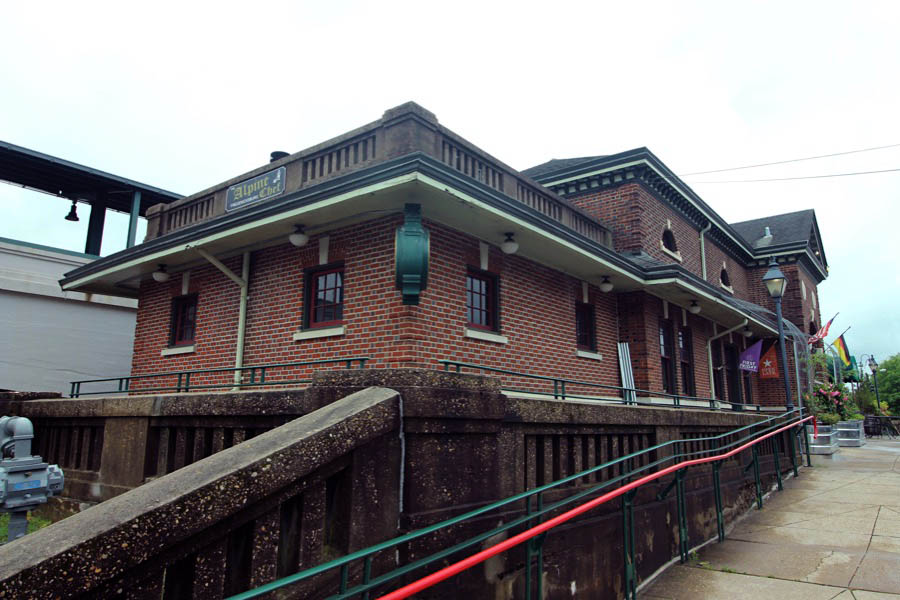
Fredericksburg, Va / Jun 2023 / RWH
Click to see the Fredericksburg station area plotted on a Google Maps page
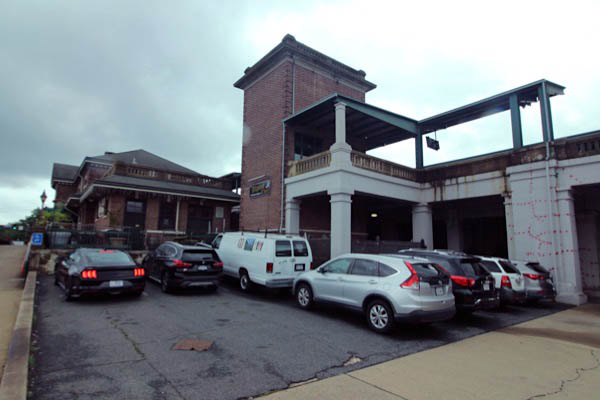
Fredericksburg, Va / Jun 2023 / RWH
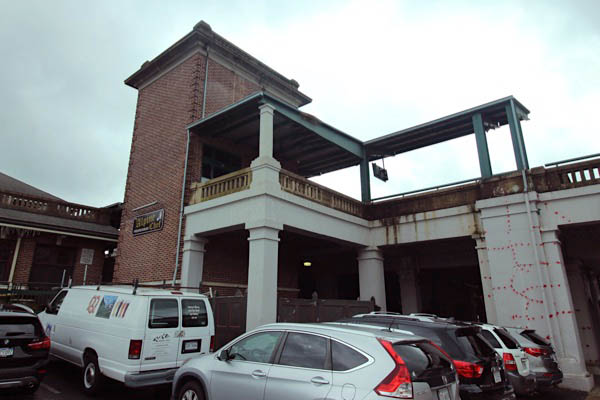
Fredericksburg, Va / Jun 2023 / RWH
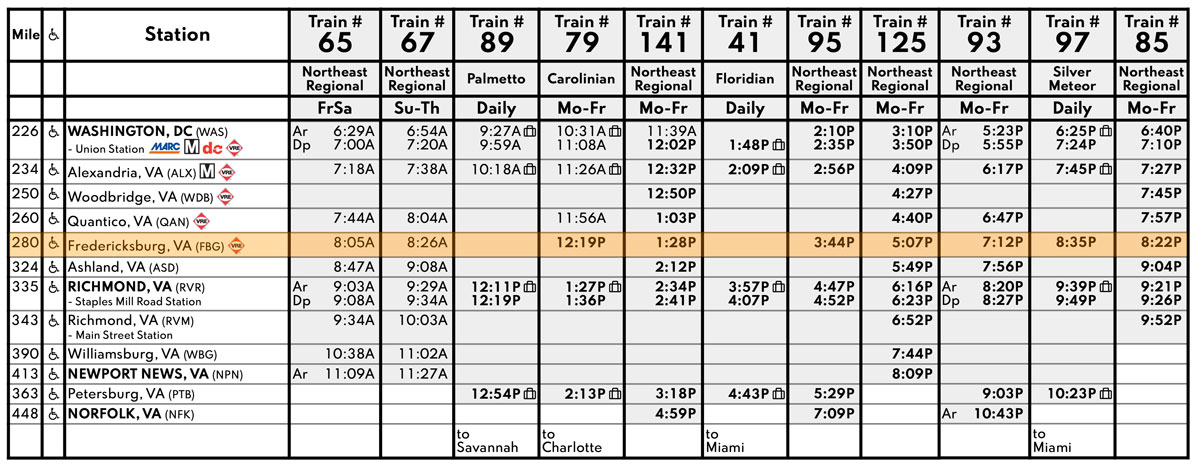
2025 Rail Passengers Association southbound timetable / adapted RWH
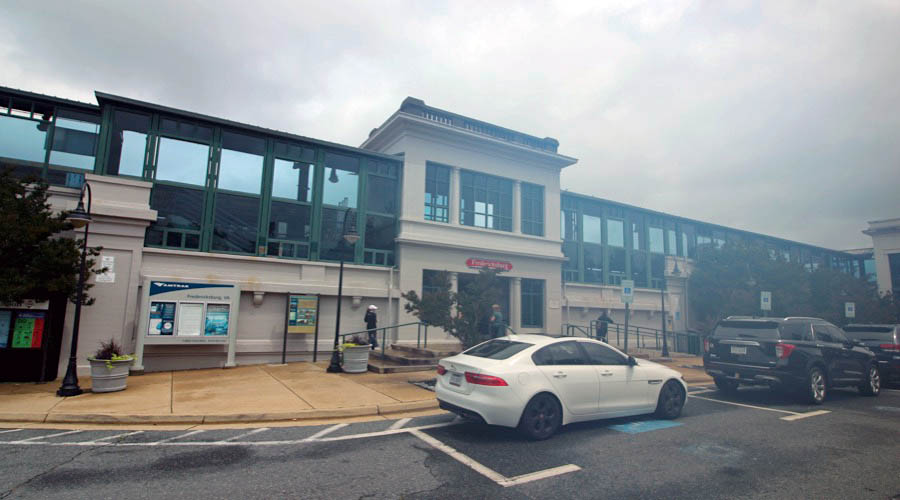
Fredericksburg, Va / Jun 2023 / RWH
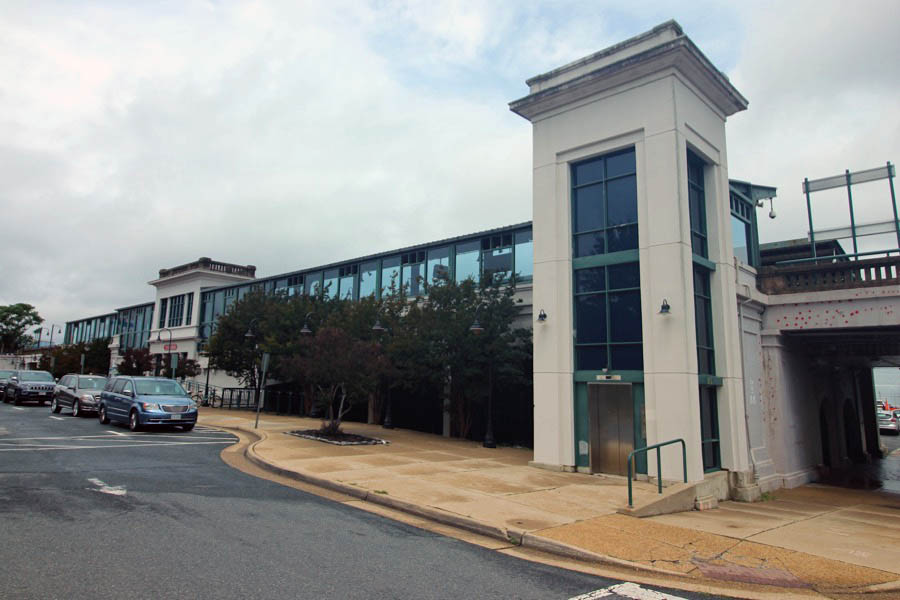
Fredericksburg, Va / Jun 2023 / RWH
Jun 2023 / RWH
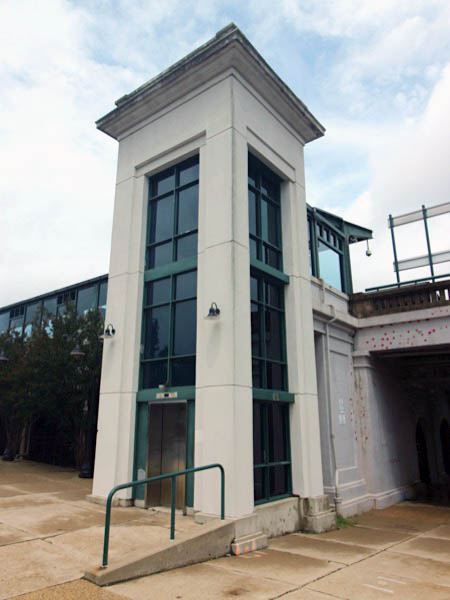
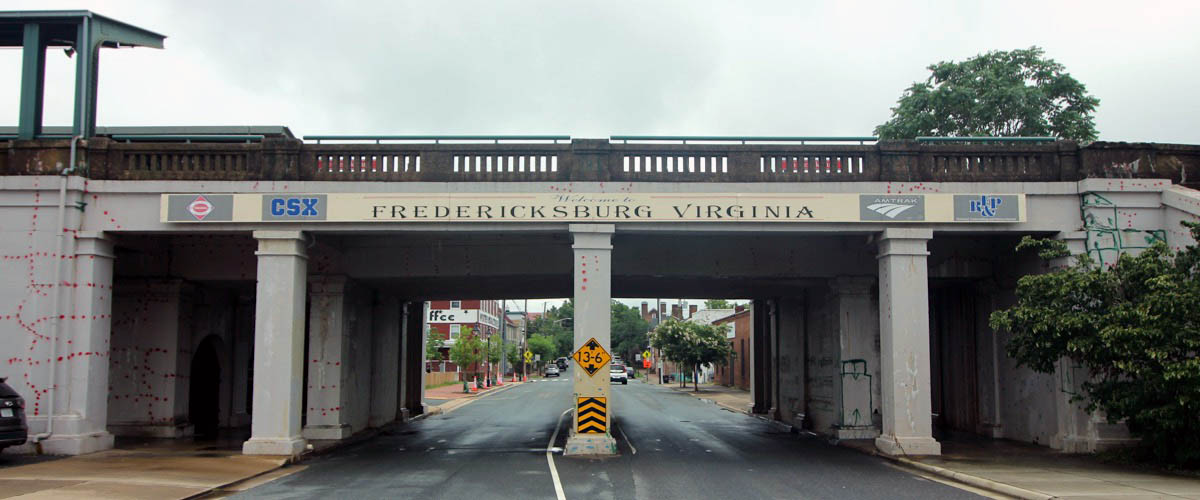
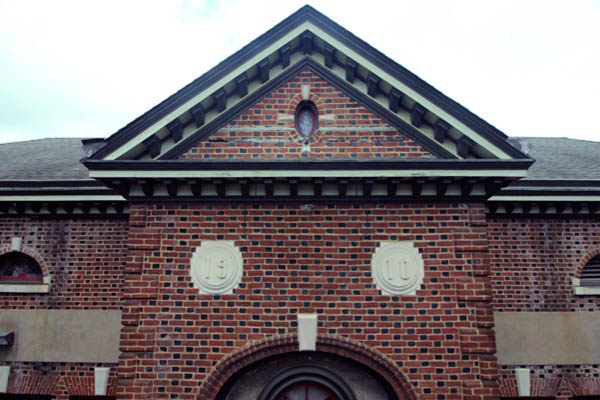
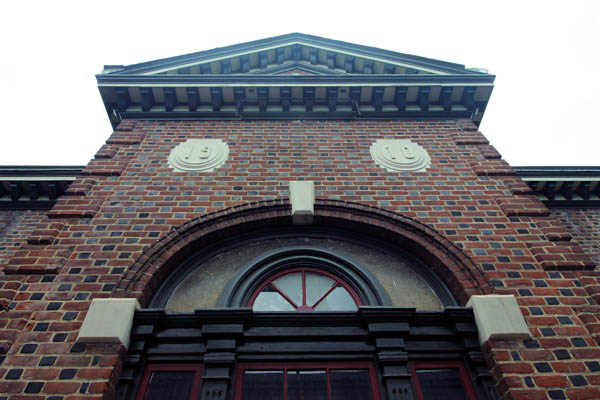
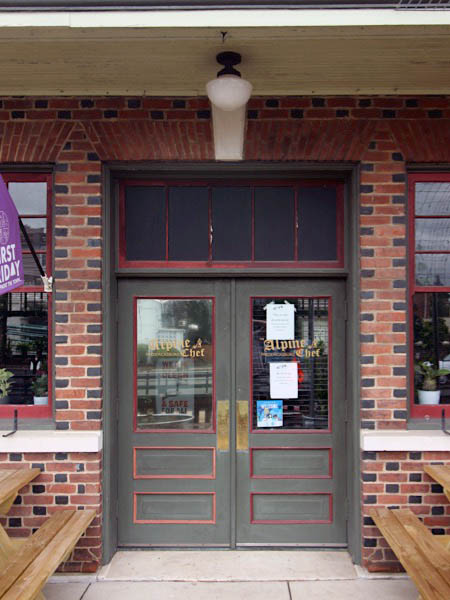
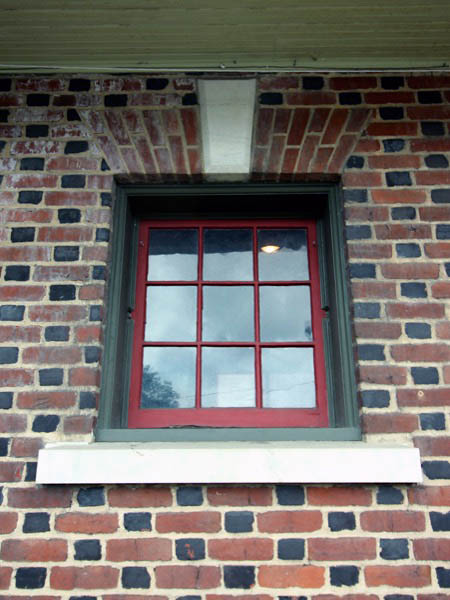
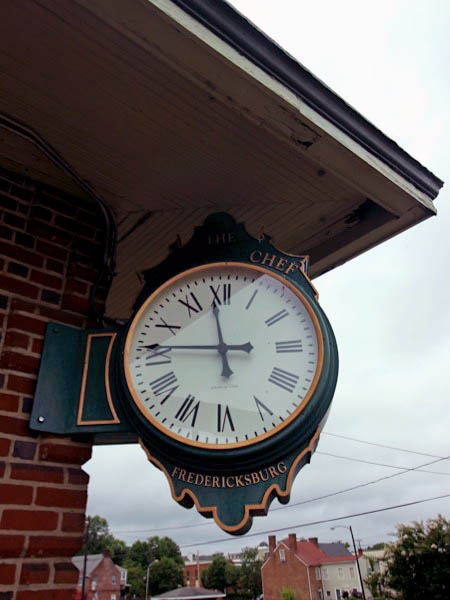
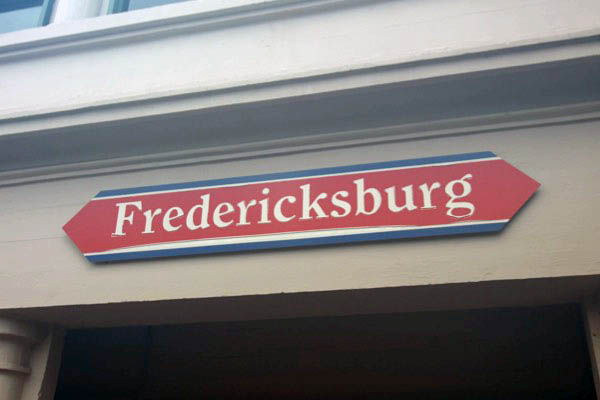
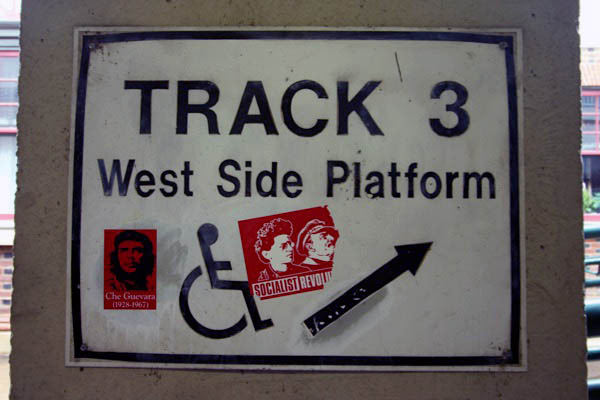
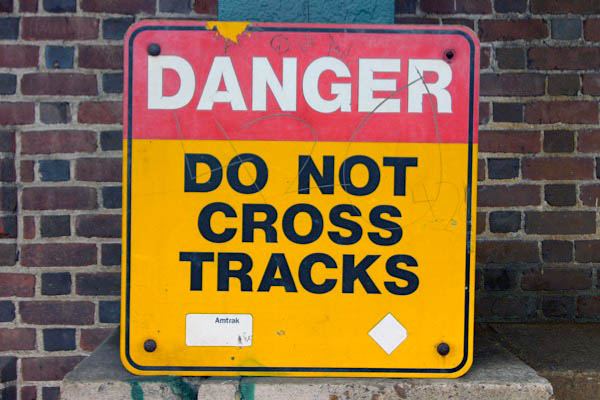
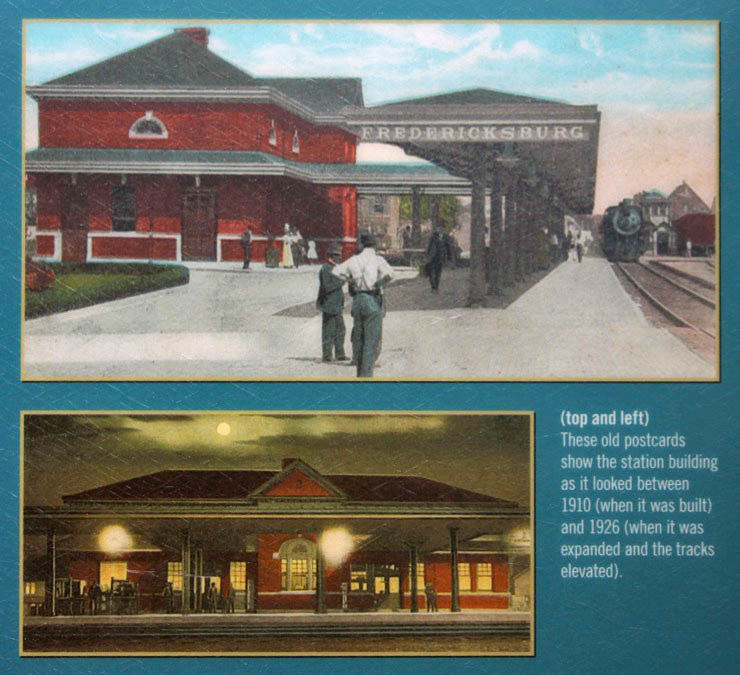
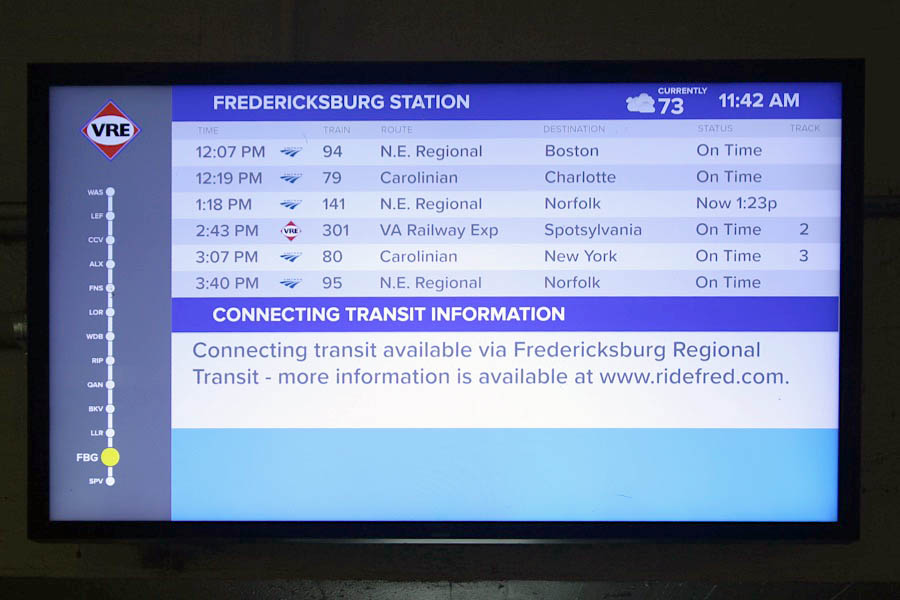
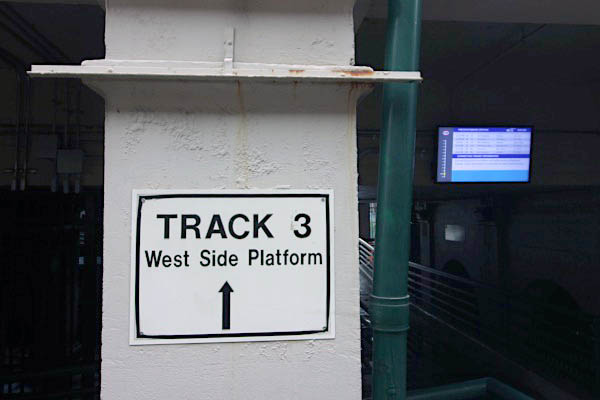
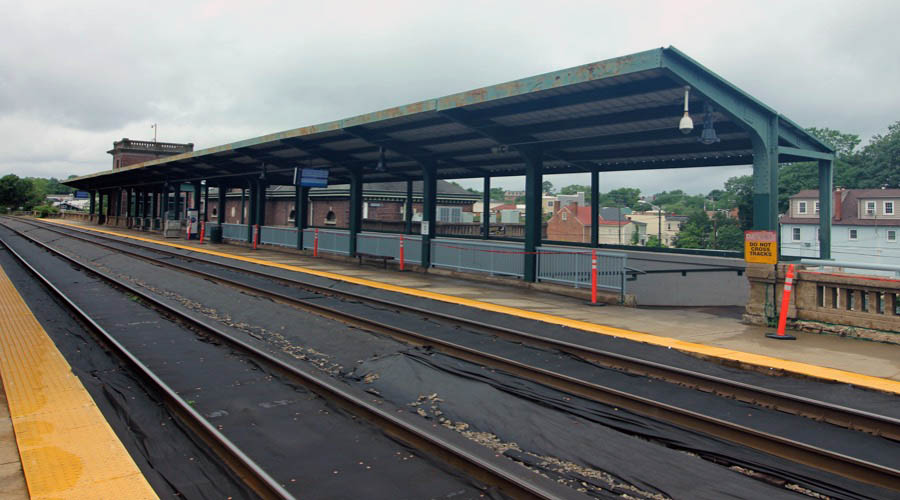
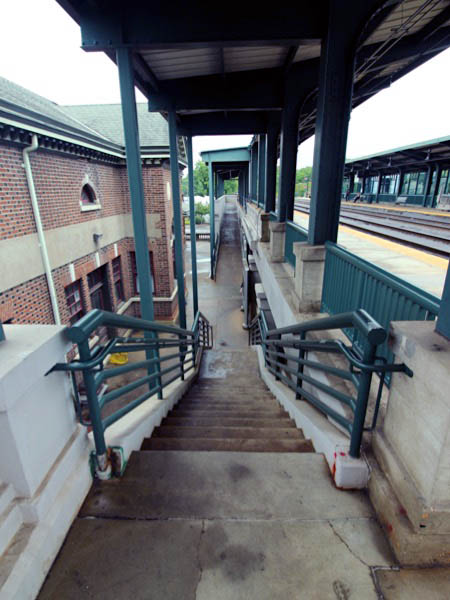
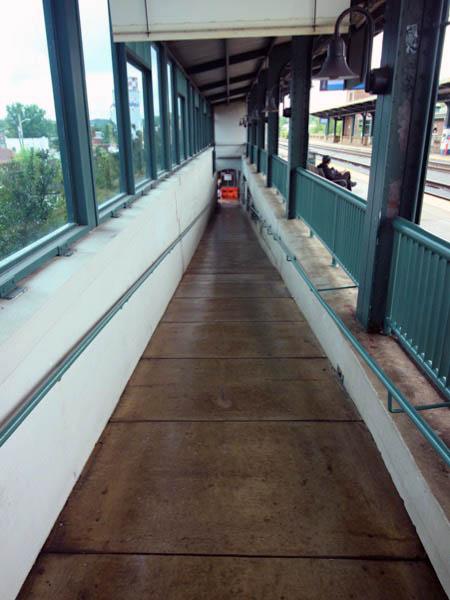
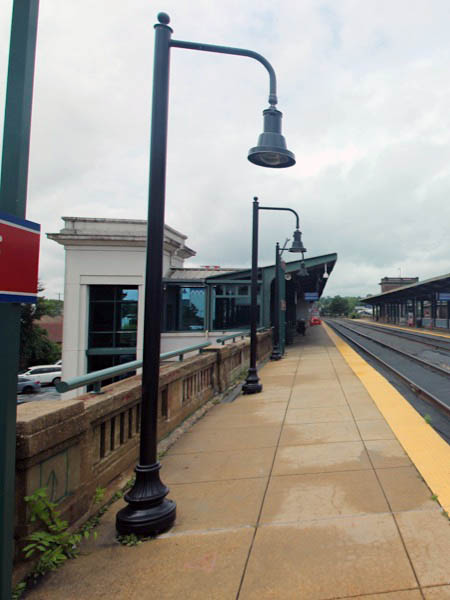
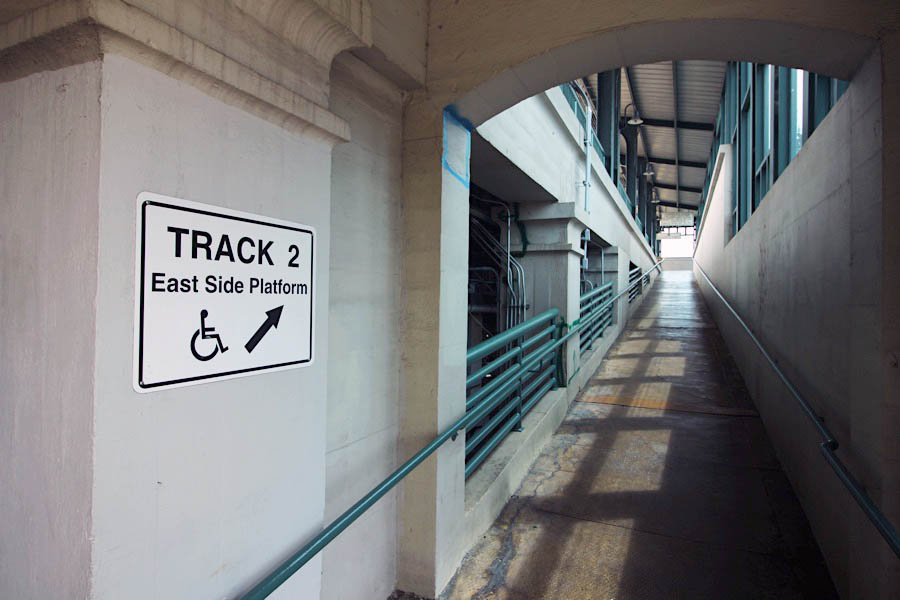
The Amtrak station in Fredericksburg consists of a platform and shelter adjacent to the 1910 brick depot, which is located one block from the Rappahannock River waterfront. Today, the building is occupied by a restaurant. The platforms and shelters run over Sophia, Caroline, Princess Anne and Charles streets in the historic downtown, and an elaborate system of stairs and ramps is used to reach the platforms from street level. The station is also served by Virginia Railway Express (VRE) commuter trains that link the area with the nation’s capital, as well as by local buses.
Fredericksburg, Va / Jun 2023 / RWH
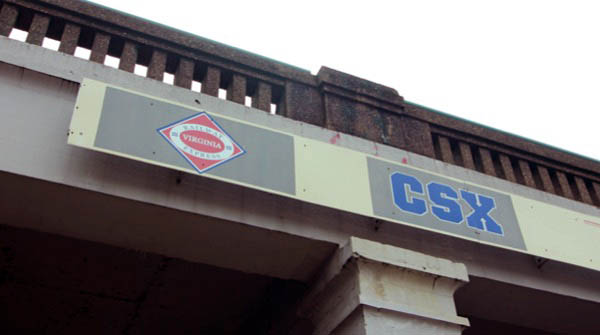
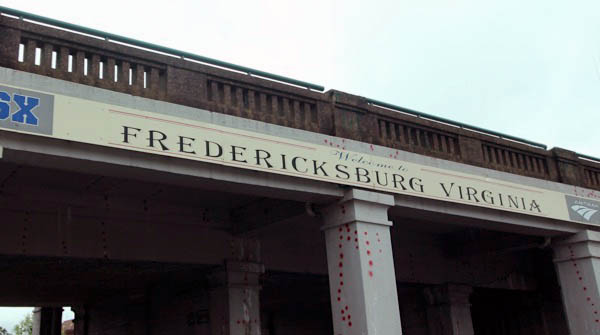
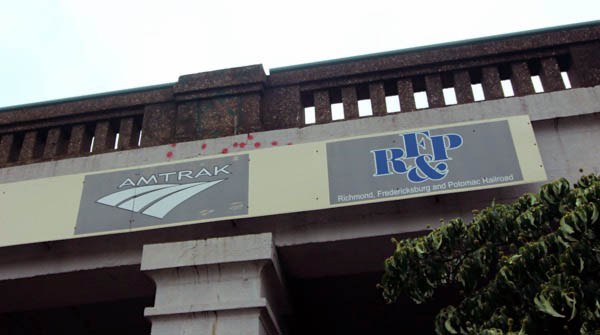
Jun 2023 / RWH
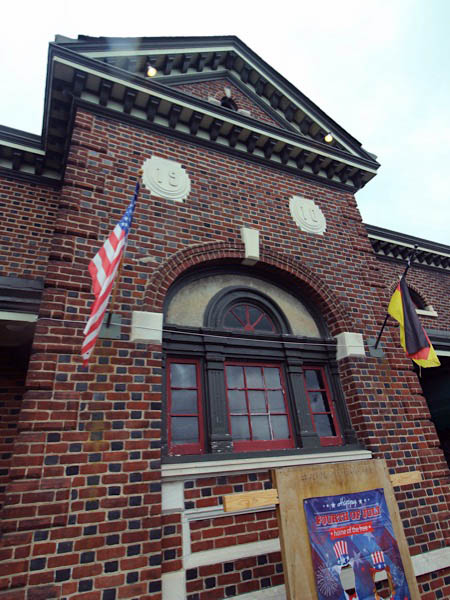
Jun 2023 / RWH
Jun 2023 / RWH
Jun 2023 / RWH
Jun 2023 / RWH
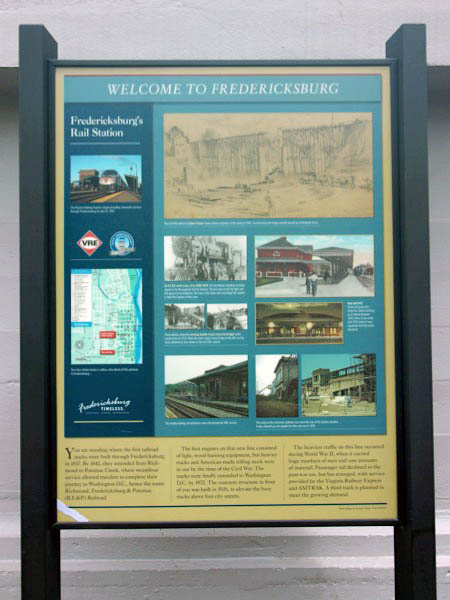
 ail has been important in Fredericksburg since the Richmond, Fredericksburg and Potomac Railroad was chartered in 1834 to run a line through from Richmond up to the Potomac River at Aquia Creek. Controlling the railroad through Fredericksburg was at issue during the American Civil War. After the war, by 1872, connections went through to Washington, D.C., giving this portion of Virginia an all-rail route from Richmond and across the Potomac to Washington.
Jun 2023 / RWH
Jun 2023 / RWH
Jun 2023 / RWH
Jun 2023 / RWH
Jun 2023 / RWH
Fredericksburg, VA
Fredericksburg, Va / Jun 2023 / RWH
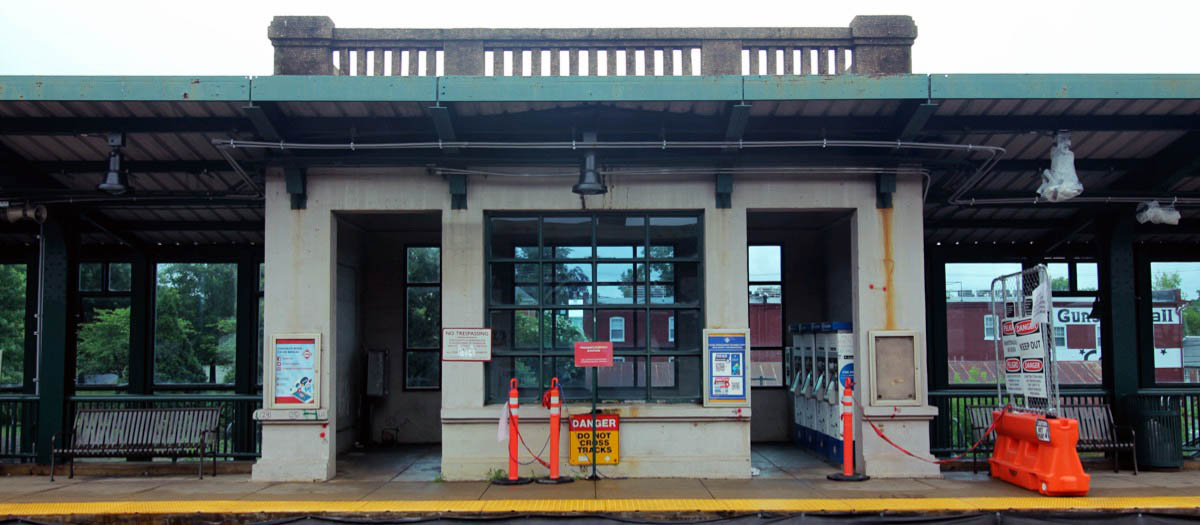
Fredericksburg, Va / Jun 2023 / RWH
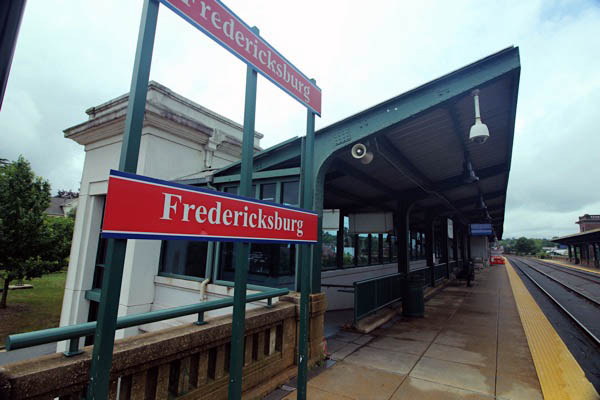
Fredericksburg, Va / Jun 2023 / RWH
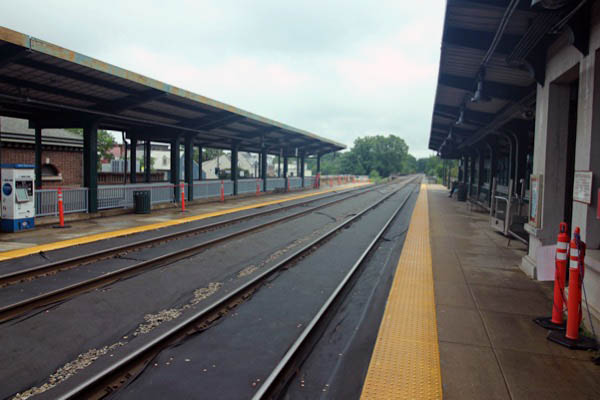
Fredericksburg, Va / Jun 2023 / RWH
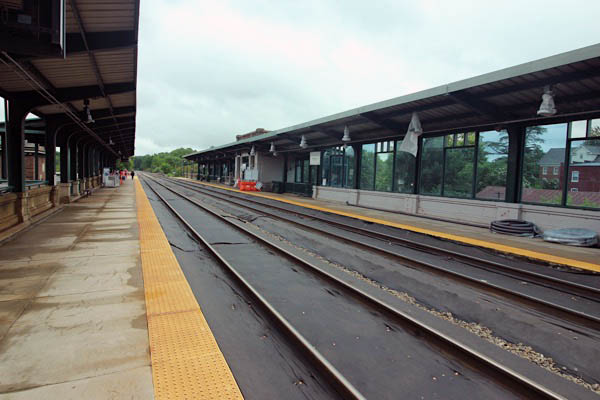
Fredericksburg, Va / Jun 2023 / RWH
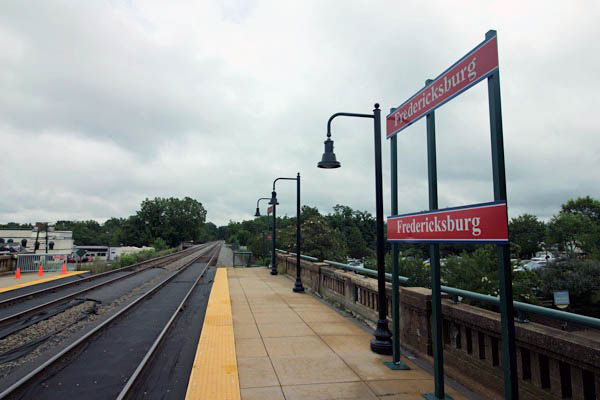
Fredericksburg, Va / Jun 2023 / RWH
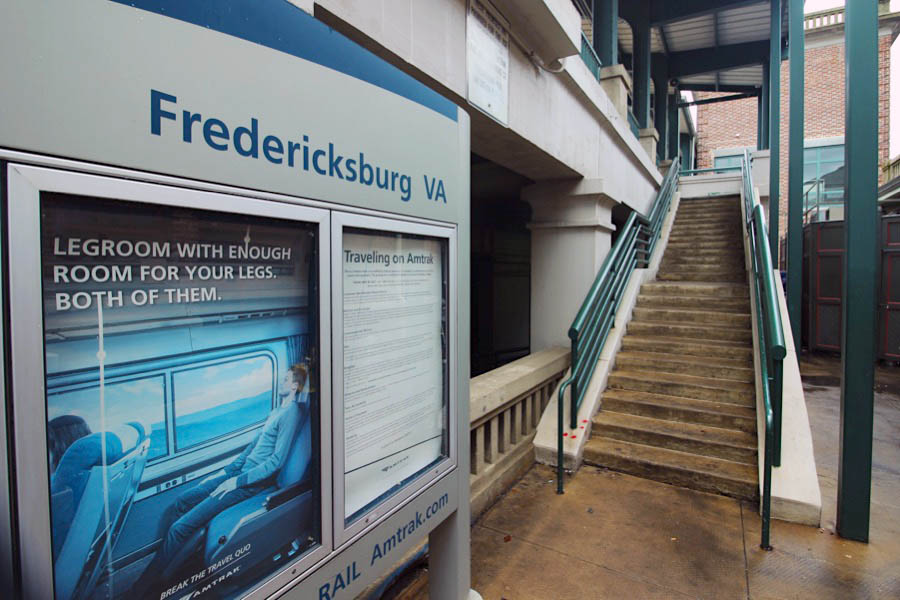
Jun 2023 / RWH
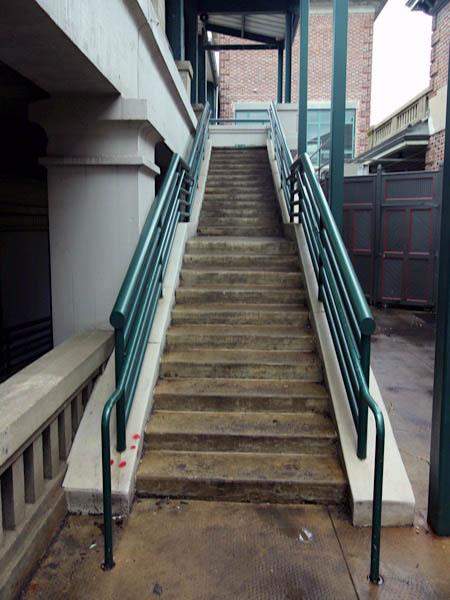
Jun 2023 / RWH
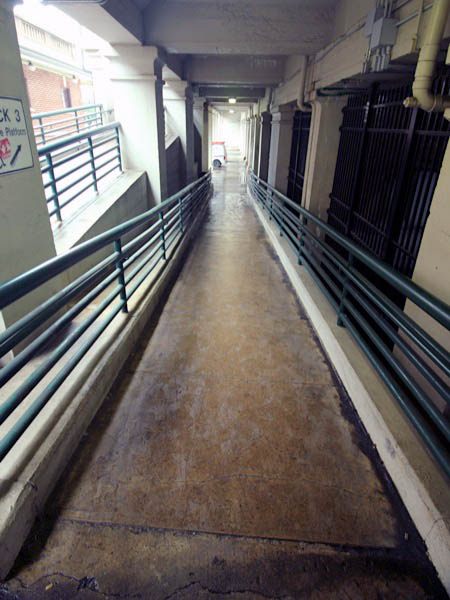
Jun 2023 / RWH
Jun 2023 / RWH
Jun 2023 / RWH
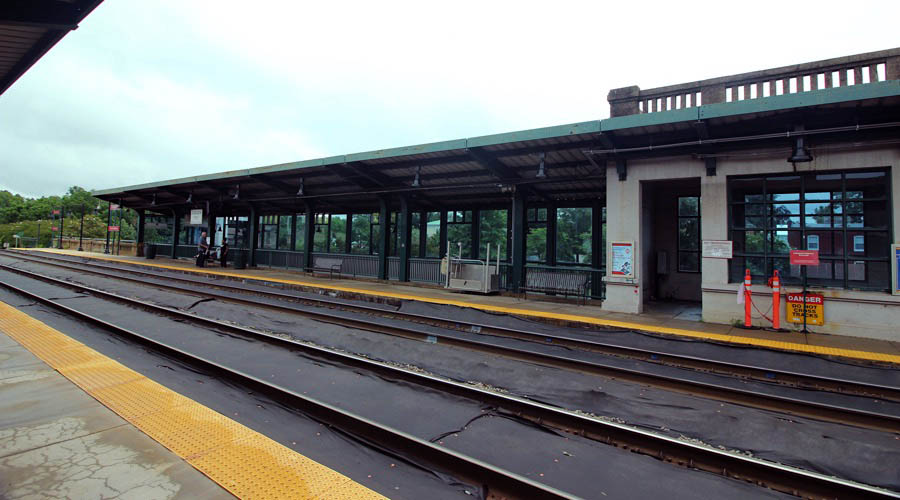
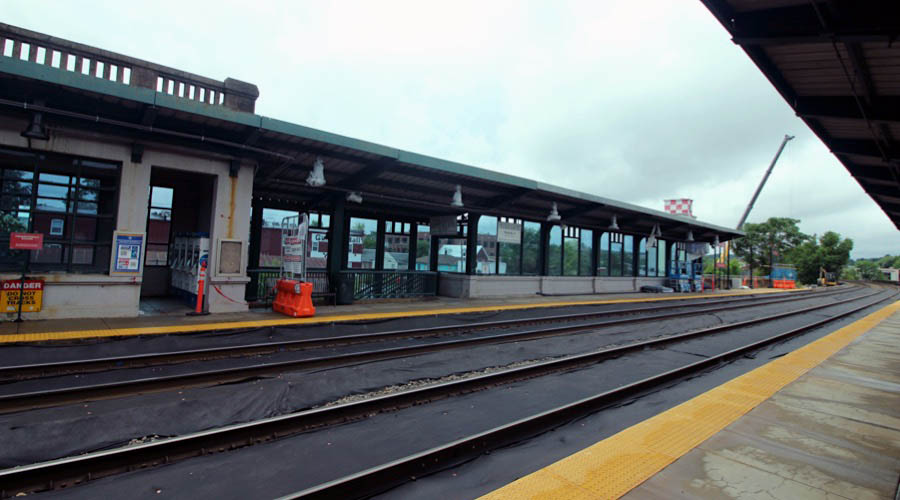
Fredericksburg, Va / Jun 2023 / RWH
471 Alexandria
- Cardinal
- Carolinian
- Crescent
- Northeast Regional
- Palmetto
- Silver Service
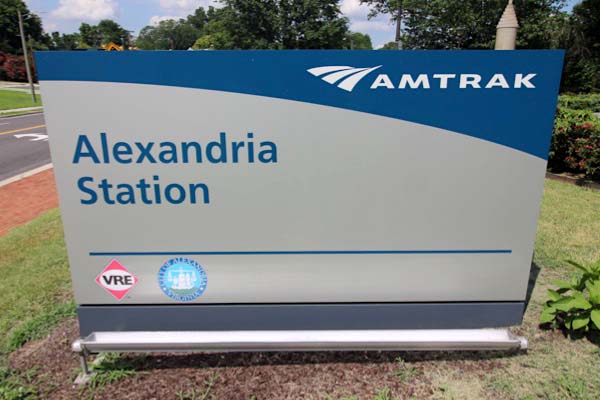
Jul 2025 / RWH
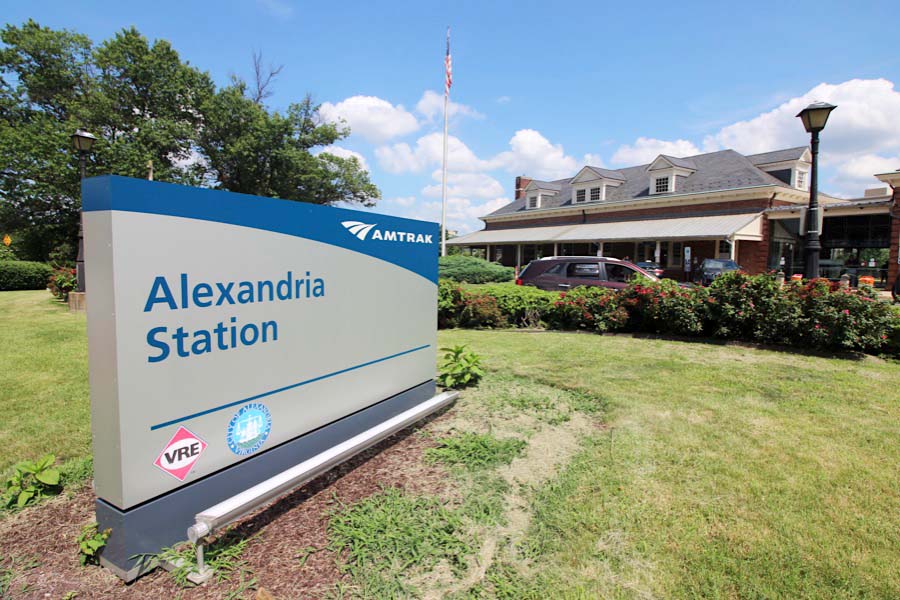
Alexandria, Va / Jul 2025 / RWH
Alexandria, Va / Jul 2025 / RWH
Click to see the Alexandria Union Station plotted on a Google Maps page
- location:Alexandria, VA
- address:110 Callahan Drive
- type:city station, 2 platforms
- owner:City of Alexandria
- opened:September 1905
- builder:Southern Railway
- style:Federal Revival, brick
- renovated:1982, 1990
- services:tickets, baggage
- links: Amtrak | Great Stations
Alexandria, Va / Jul 2025 / RWH
Jul 2025 / RWH
Alexandria, Va / Jul 2025 / RWH
Alexandria, Va / Jul 2025 / RWH
postcard / collection
Jul 2025 / RWH
Alexandria, Va / Jul 2025 / RWH

RWH
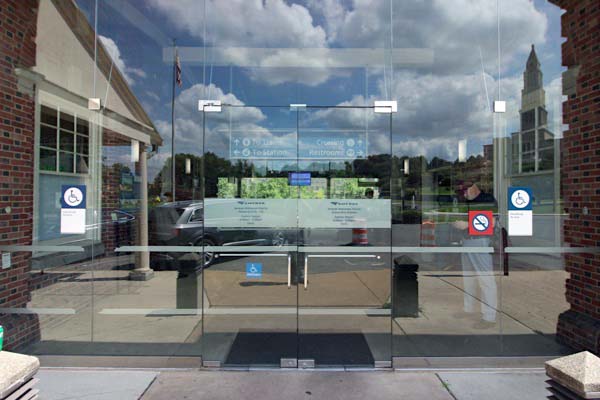
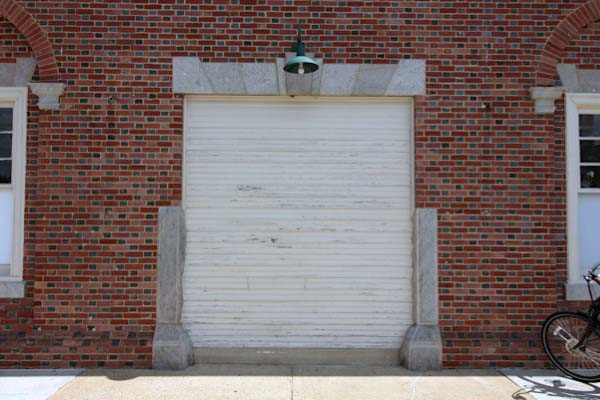
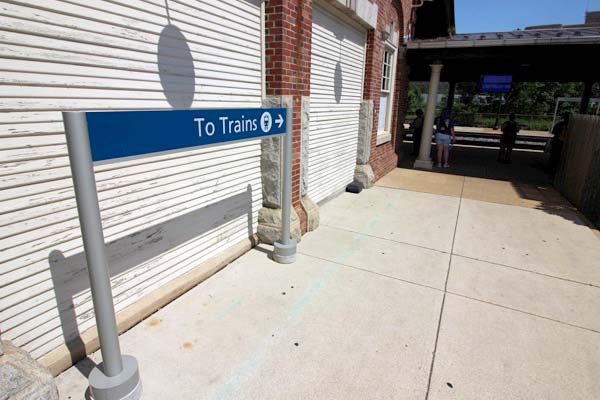
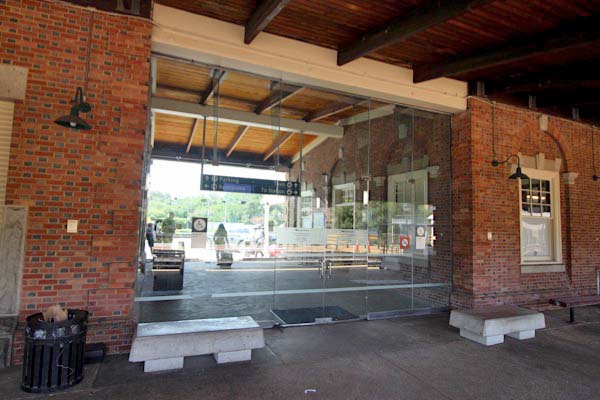
Jul 2025 / RWH
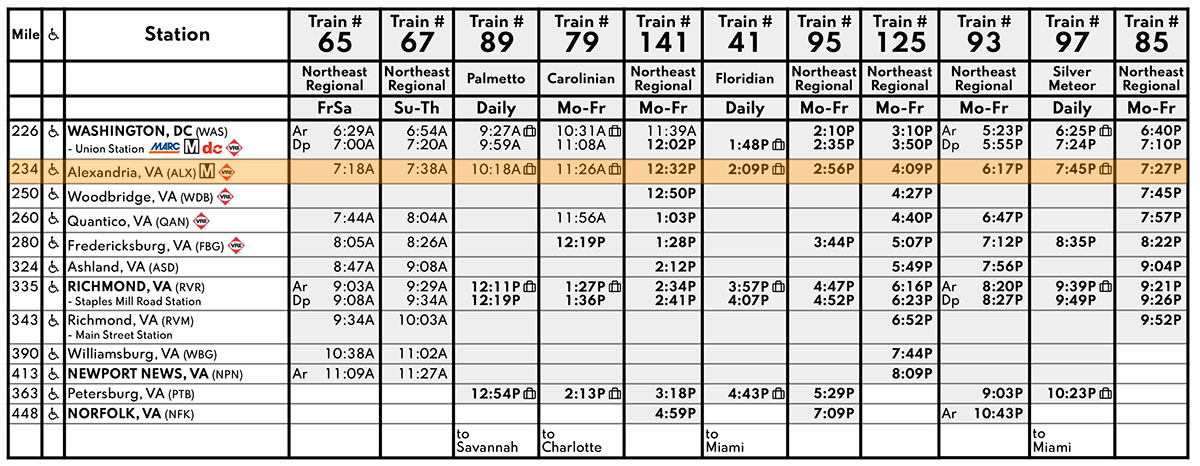
2025 Rail Passengers Association timetable / adapted RWH
Jul 2025 / RWH
Jul 2025 / RWH
Jul 2025 / RWH
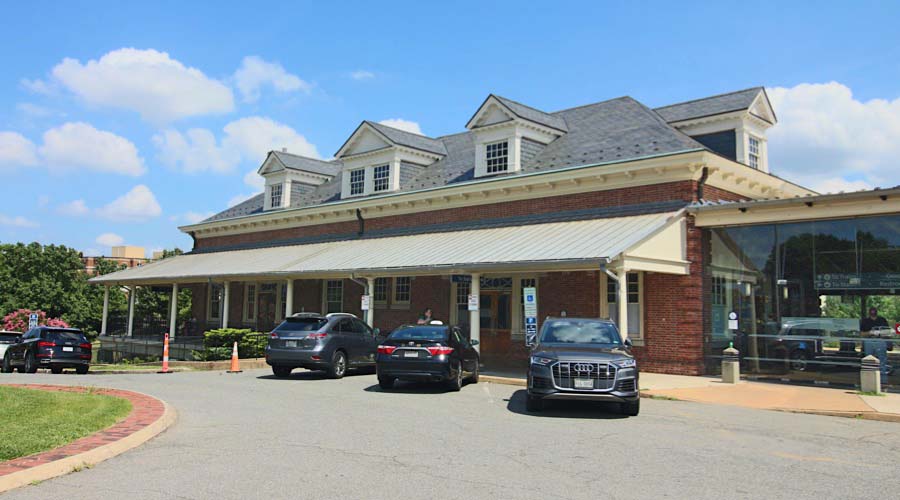
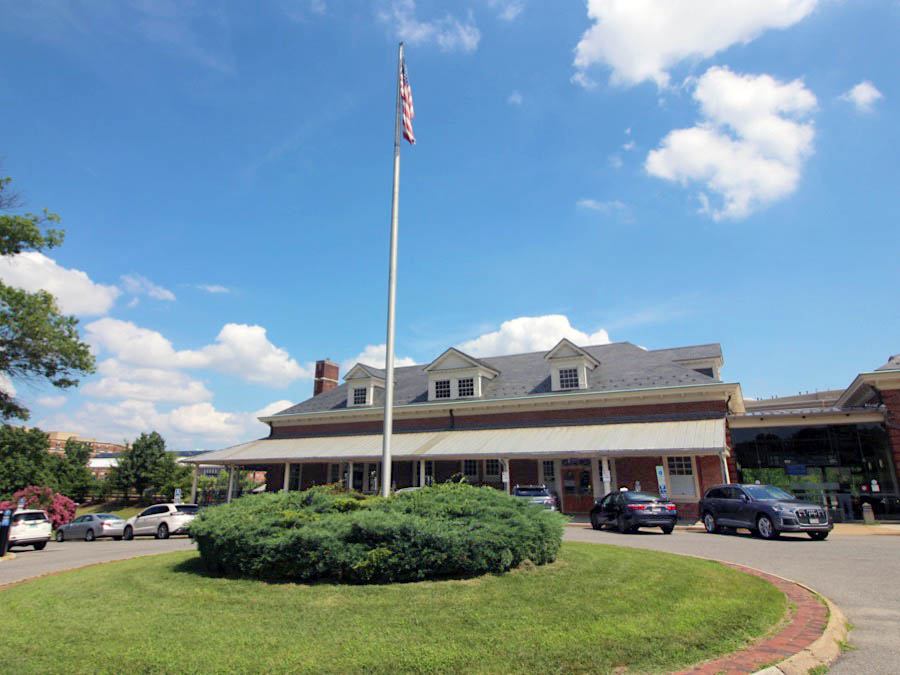
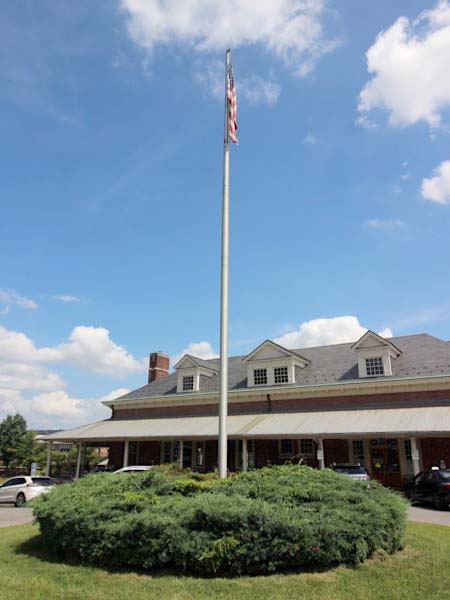
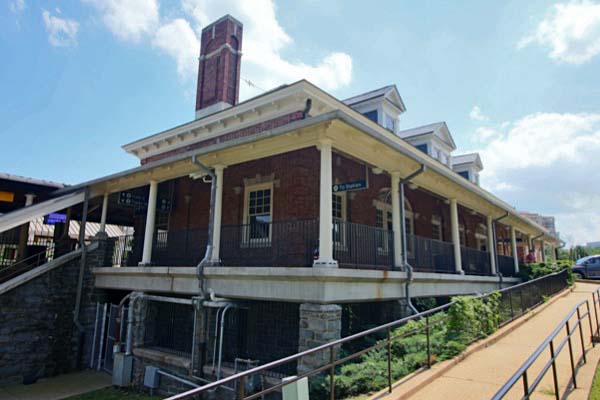
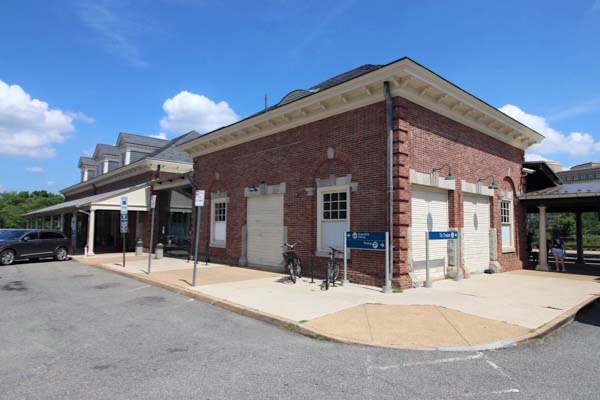
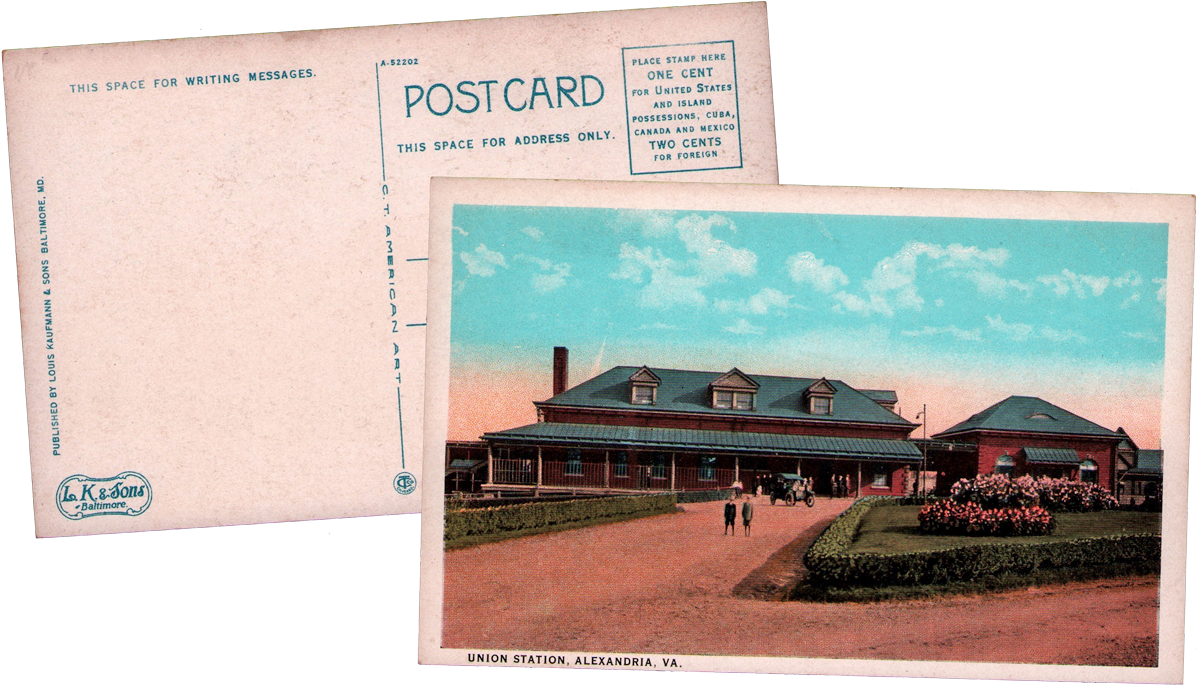
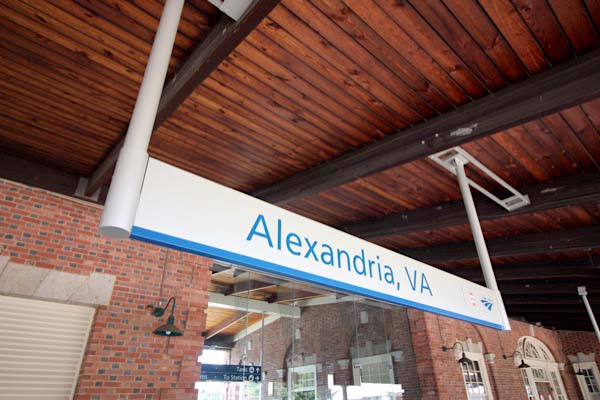
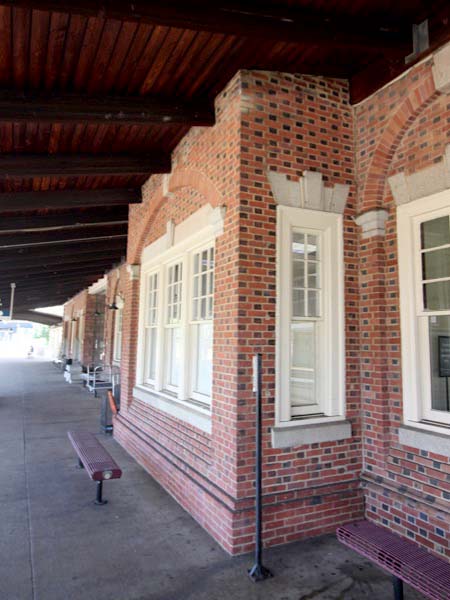
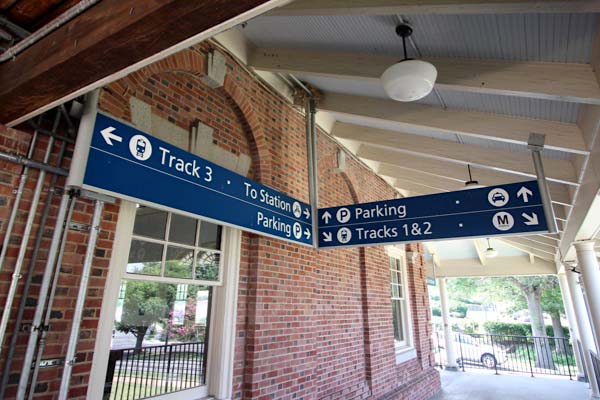
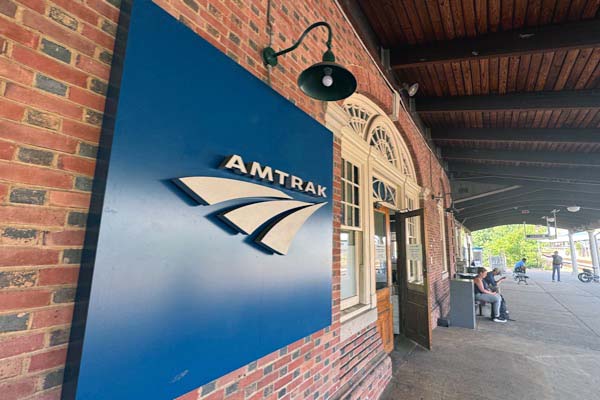
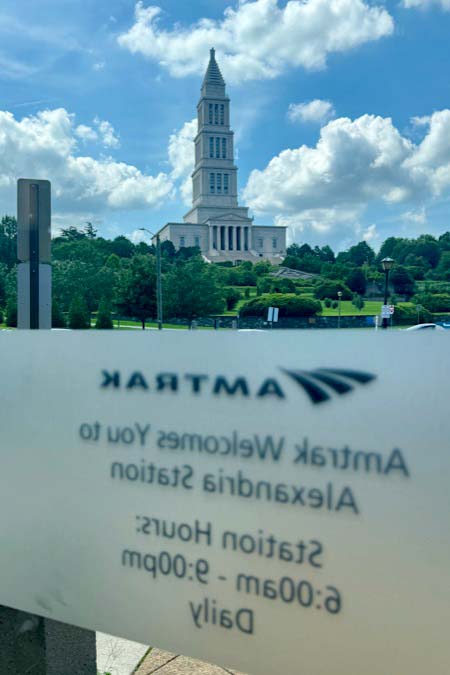
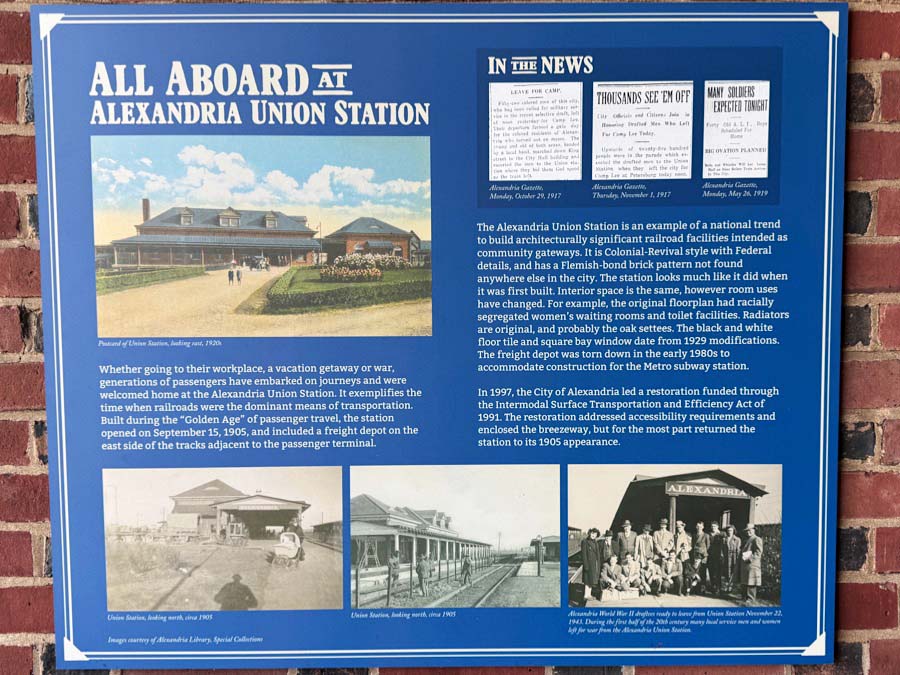
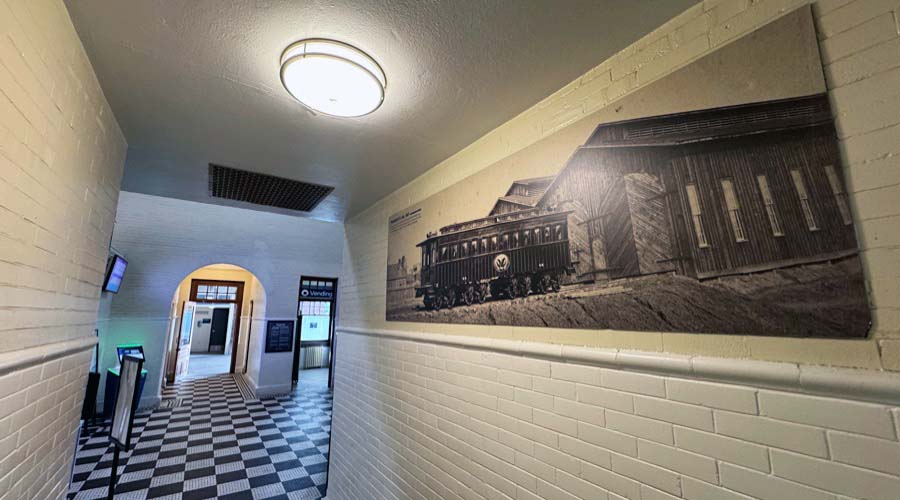
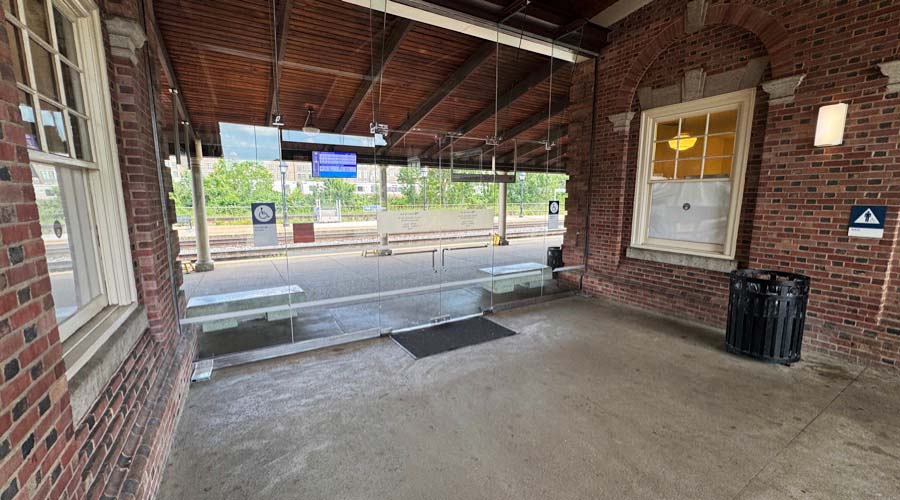
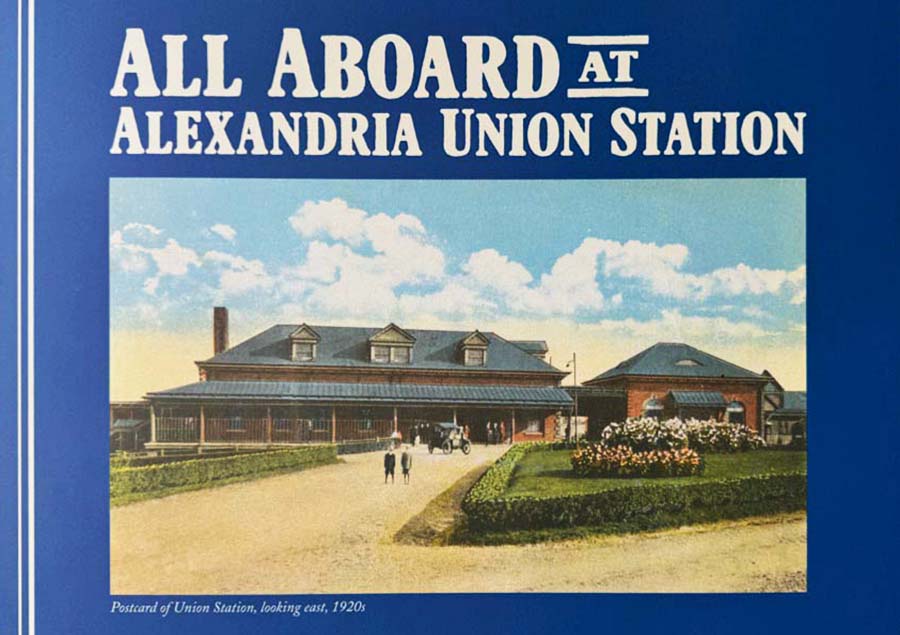
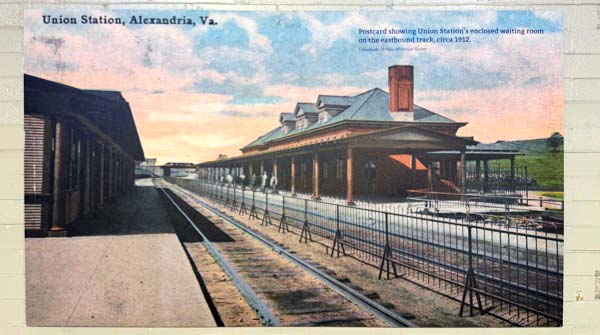
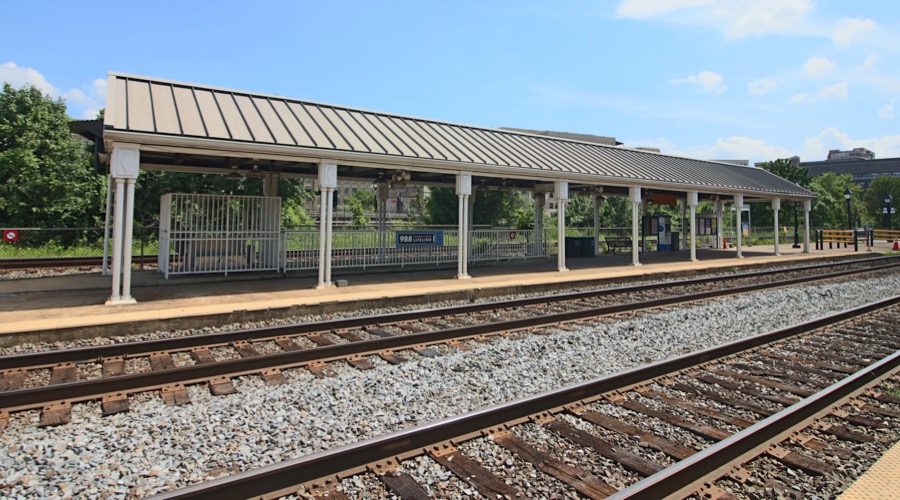
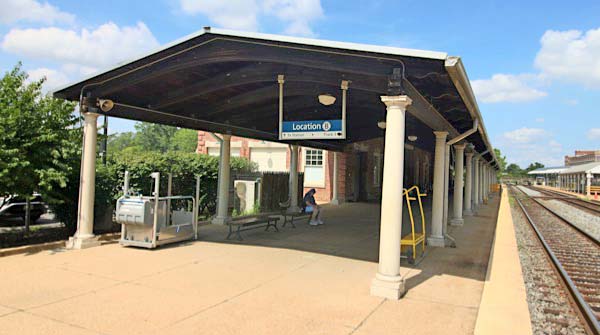
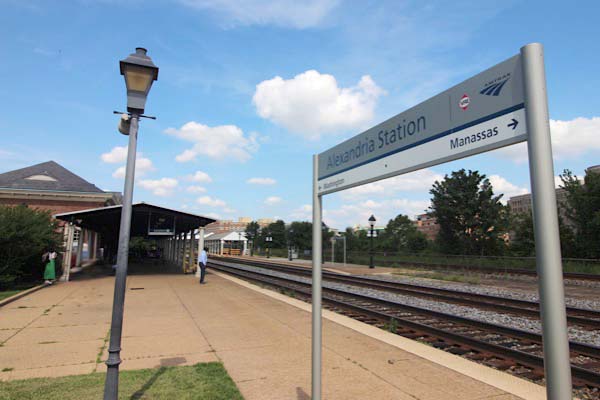
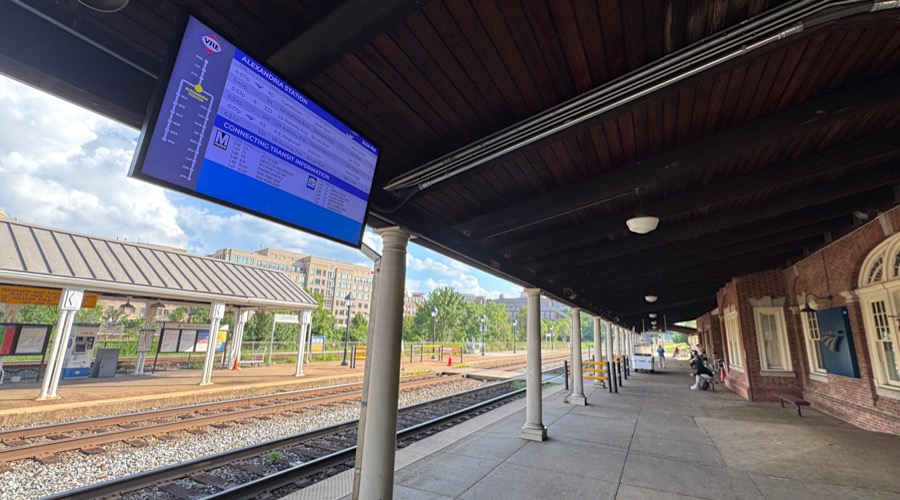
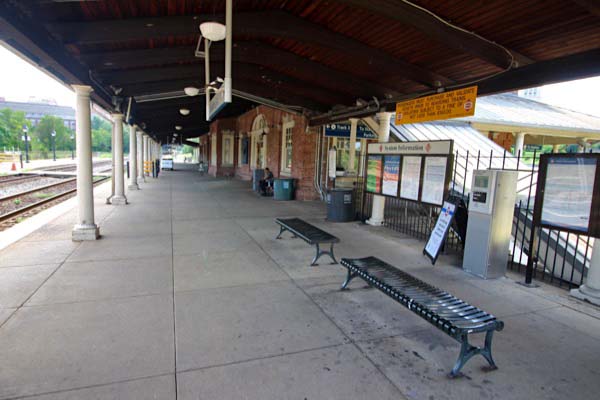
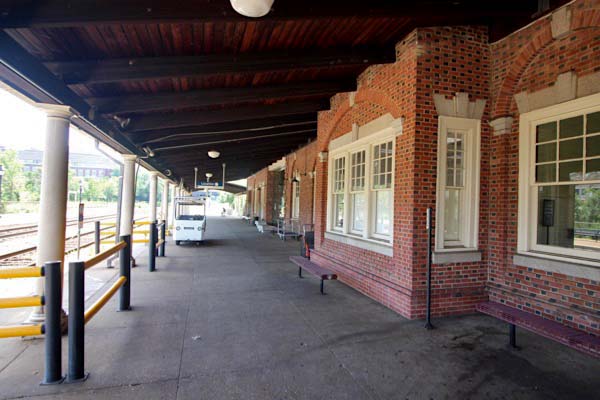
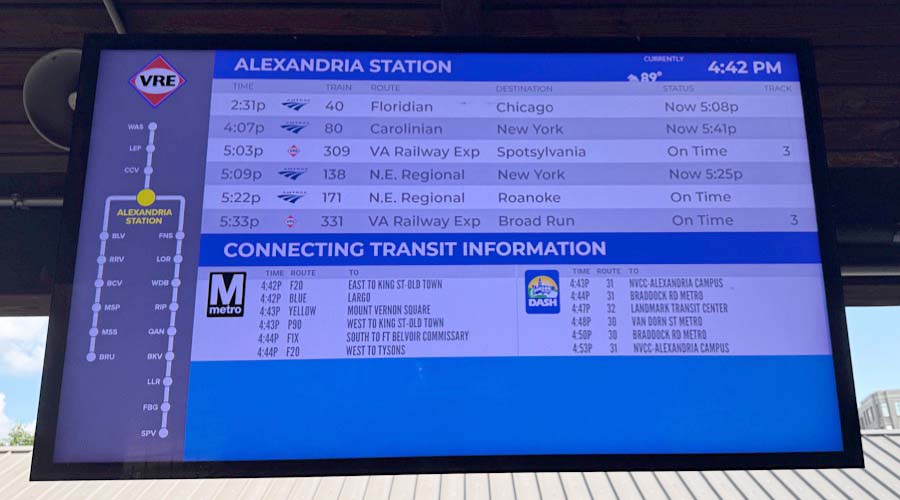
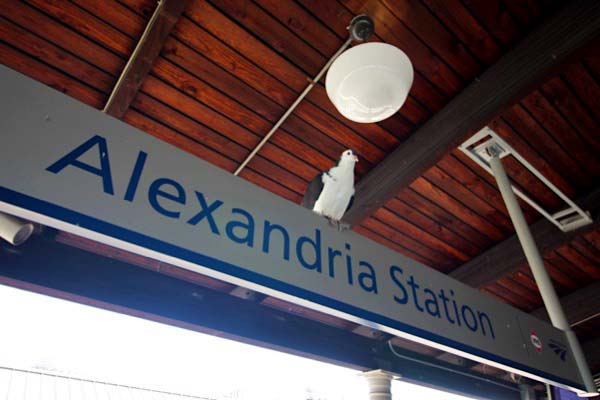
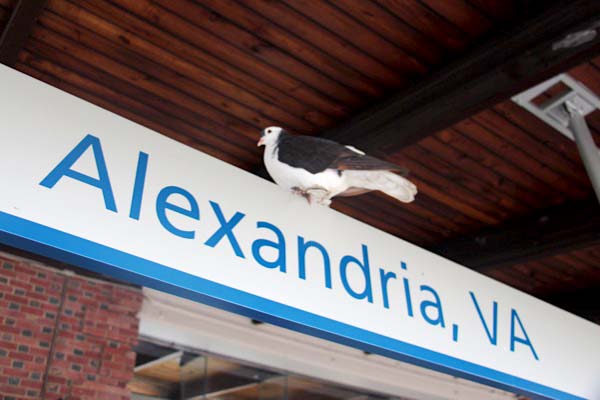
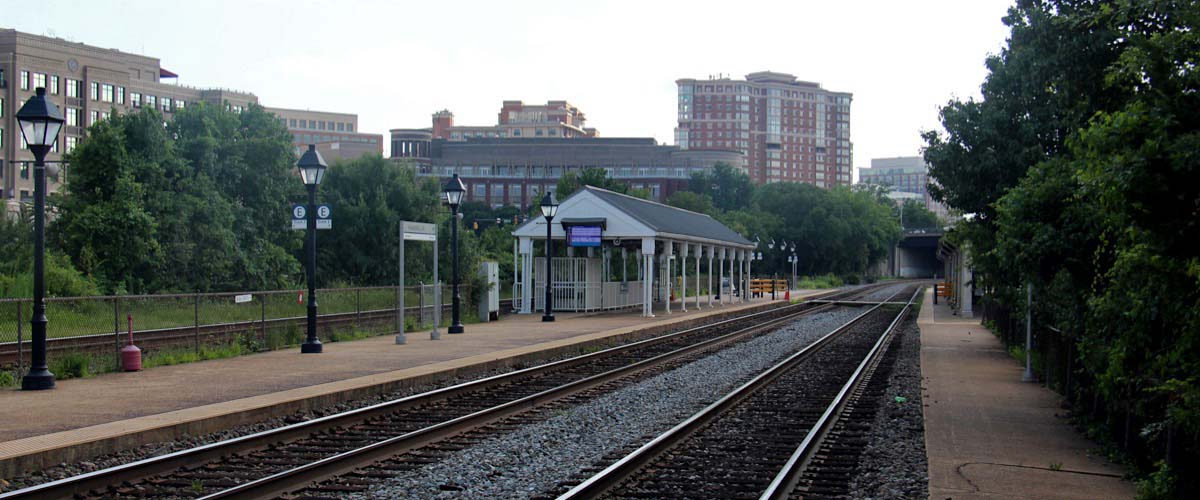
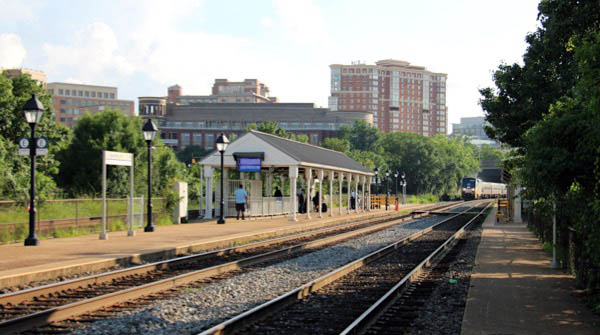
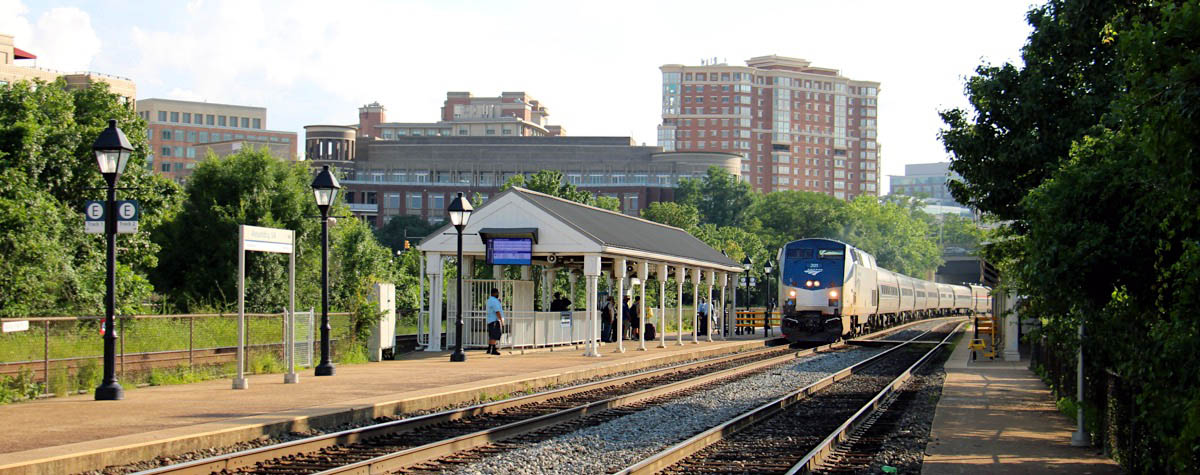
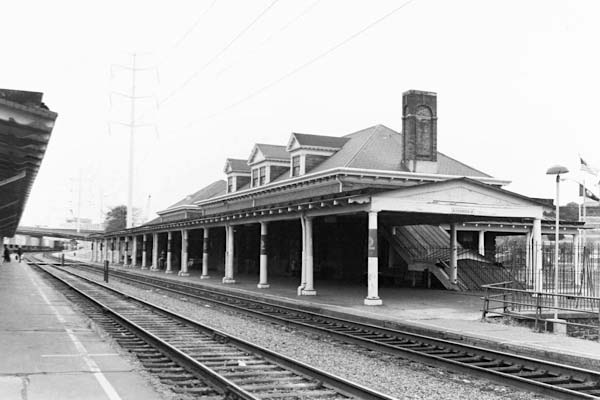 The Amtrak station in Alexandria opened on September 15, 1905. The train station is directly adjacent to the King Street Metro station and faces the George Washington Masonic National Memorial.
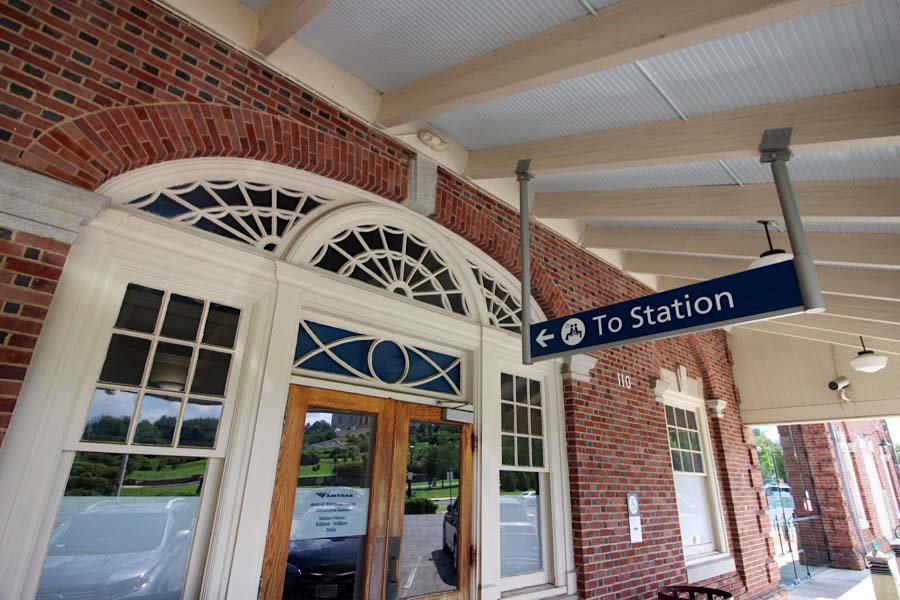
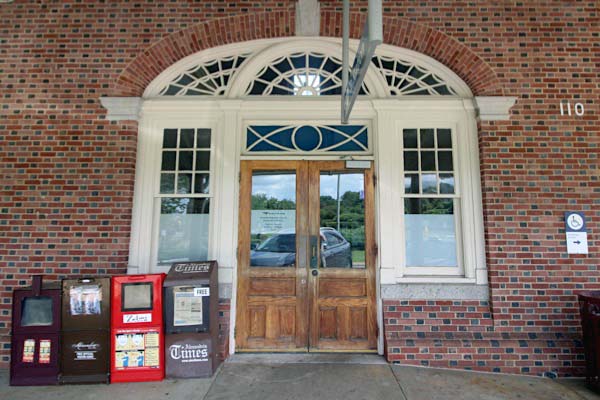
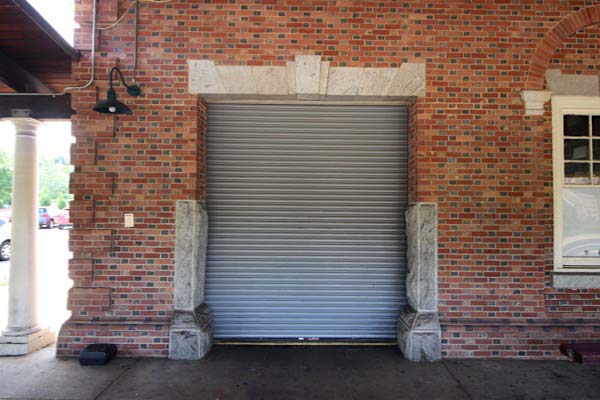
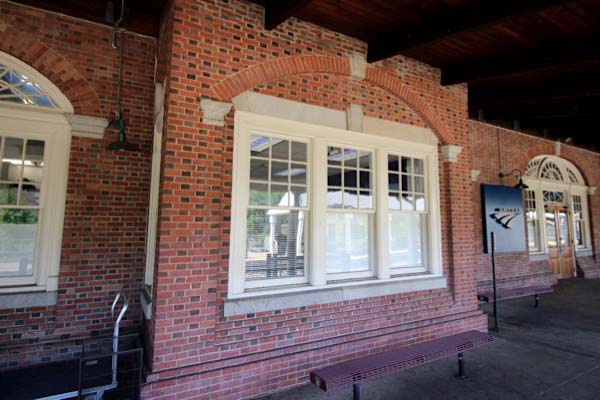
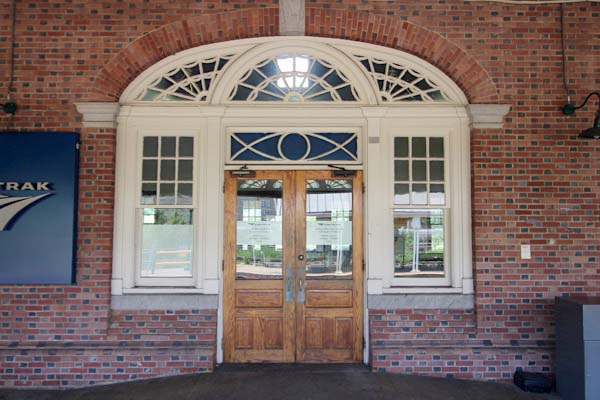
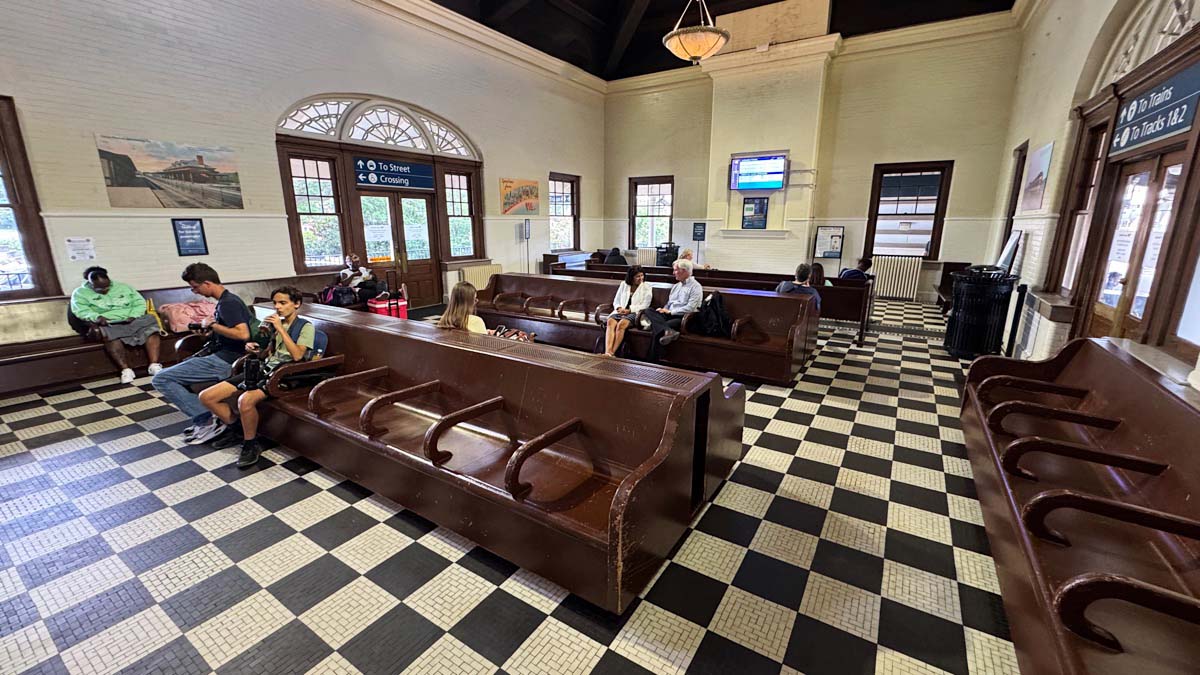
Though not as grandiose as its nearby Washington, D.C. counterpart, this “other Union Station” has a unique style of its own. The station is a one-story brick building consisting of the original main passenger depot and baggage building separated by a 20-foot wide open gateway passage and covered by a covered terrace. The designer used the Federal Revival Style: a 20th century mixture of Neoclassical architecture borrowed from buildings constructed just after the American Revolution, fitting for its location. Both original buildings are still in use. Though many minor renovations have taken place, including the slightly more extensive renovations that occurred in 1982 and the mid-1990s, the original buildings remain essentially unchanged. The limestone and granite Veterans of Foreign Wars memorial was constructed at the station in 1942.
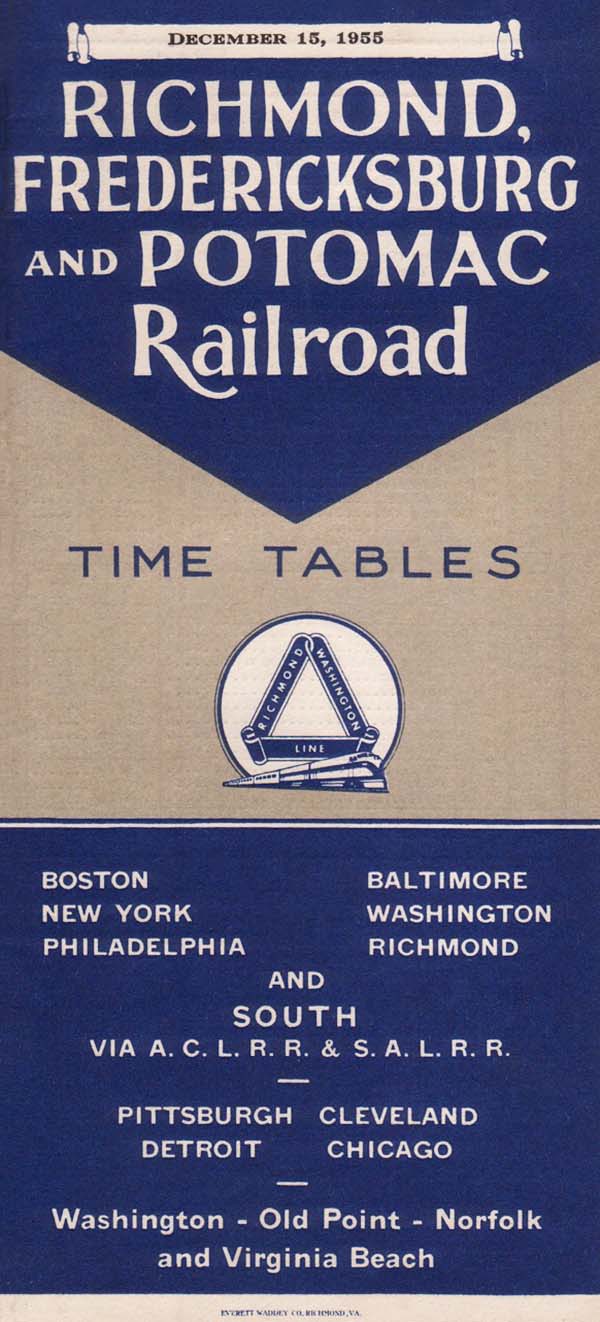
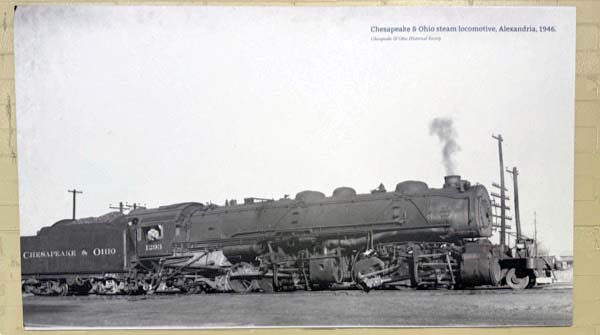
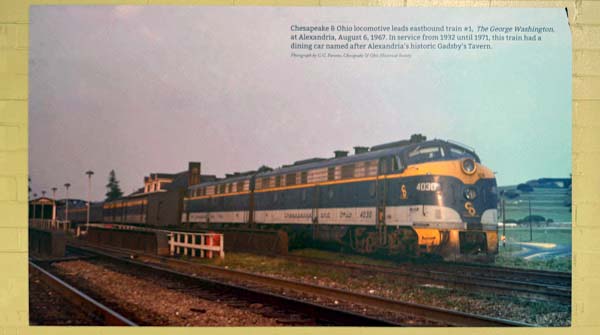
In the late 1840s, the city of Alexandria invested in five major railroad projects to better compete with Baltimore as a regional industrial and trade center, but ended up in a confusion of mergers and failures. In 1901, the railroads serving the region built Potomac Yard, a consolidated rail yard. In 1905, the city of Alexandria commissioned the Washington Southern Railway Company (later part of the Richmond, Fredericksburg & Potomac, now CSX) to build the Alexandria Union Station at a cost of $62,020.55. The station also served the Chesapeake & Ohio and Southern Railway trains.
Jul 2025 / RWH
Jul 2025 / RWH
Jul 2025 / RWH
Jul 2025 / RWH
Jul 2025 / RWH
Jul 2025 / RWH
Alexandria, Va
Alexandria, Va / Jul 2025 / RWH
Alexandria, Va / Jul 2025 / RWH
Jul 2025 / RWH
Alexandria, Va / Jul 2025 / RWH
Jul 2025 / RWH
Jul 2025 / RWH
Jul 2025 / RWH
Jul 2025 / RWH
Alexandria, Va / Jul 2025 / RWH
northbound #80
Jul 2025 / RWH
Alexandria, Va / Jul 2025 / RWH
Alexandria, Va / Jul 2025 / RWH
Alexandria, Va / Jul 2025 / RWH
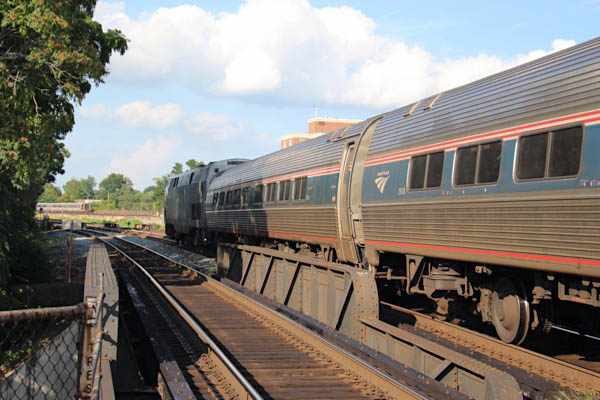
Alexandria, Va / Jul 2025 / RWH
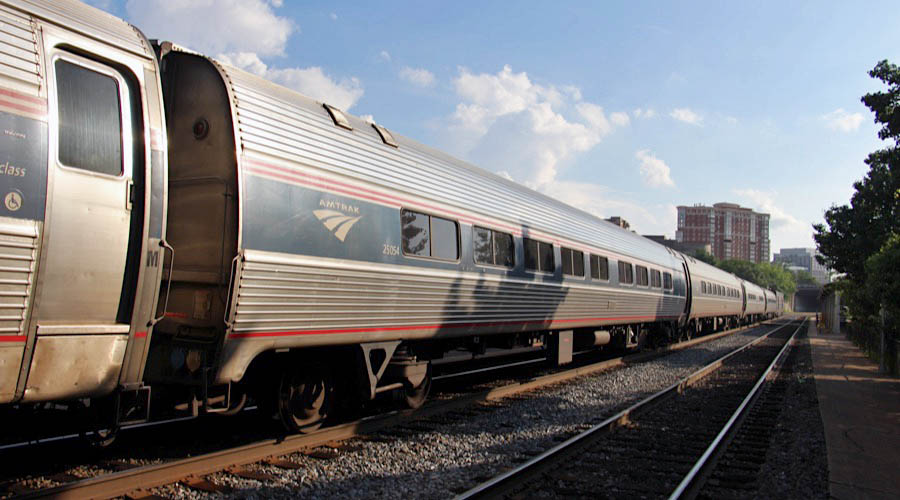
Alexandria, Va / Jul 2025 / RWH
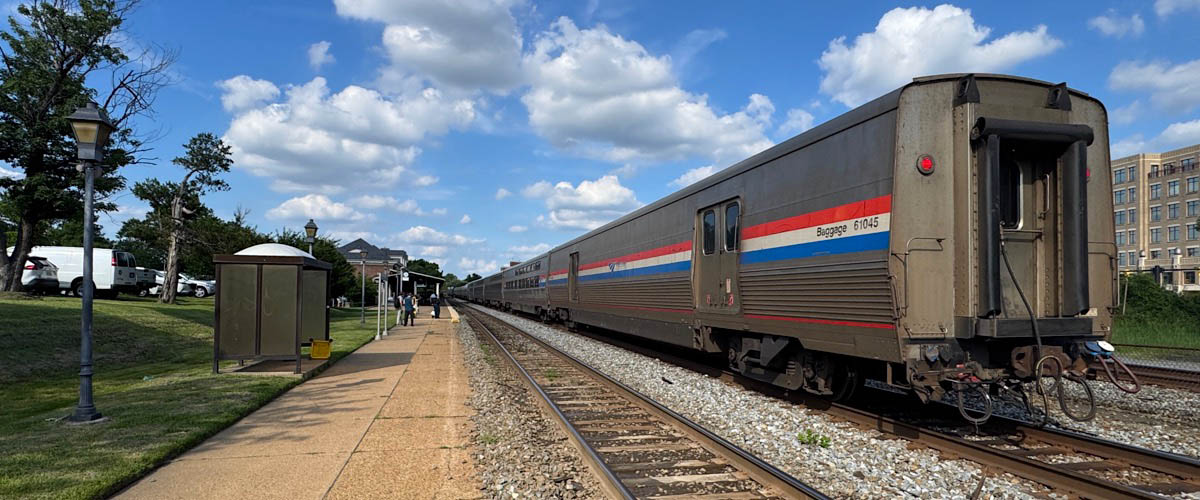
Alexandria, Va / Jul 2025 / RWH
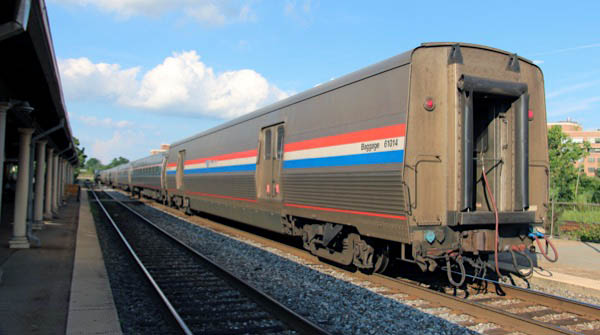
Alexandria, Va / Jul 2025 / RWH
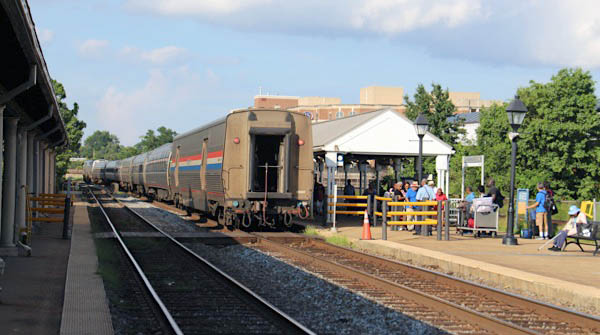
Alexandria, Va / Jul 2025 / RWH
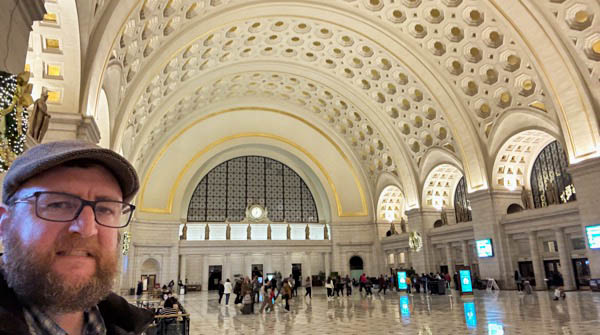
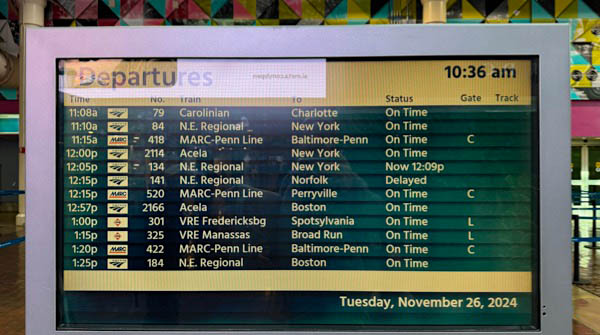
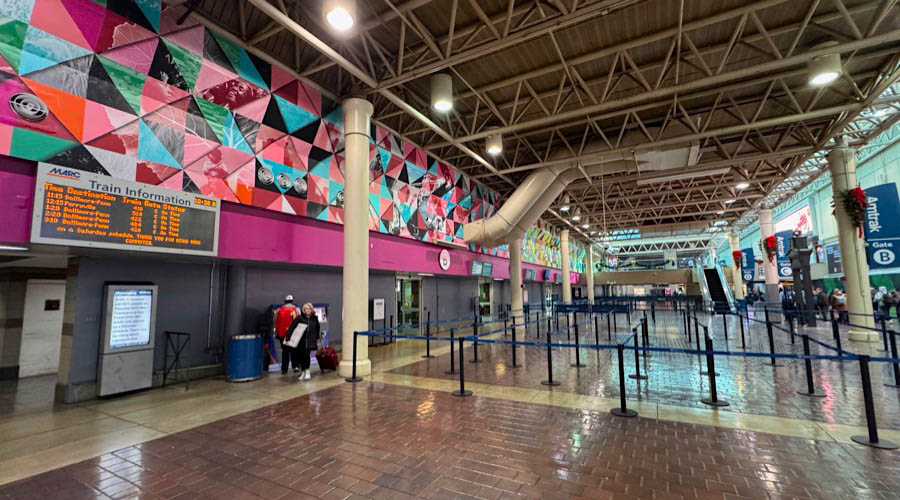
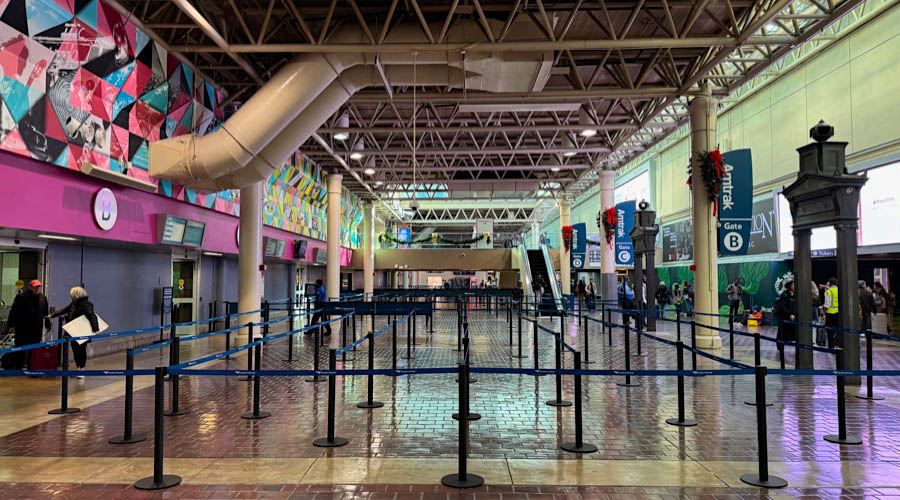
479 Washington DC

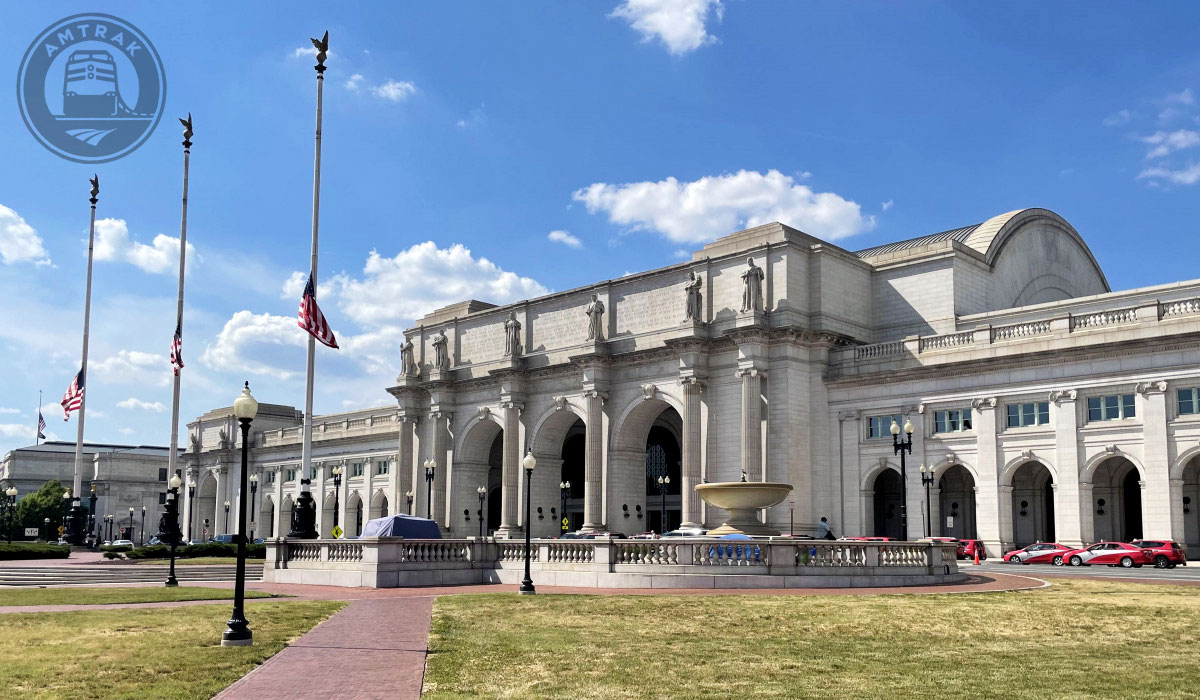
Washington, DC / Aug 2024 / RWH
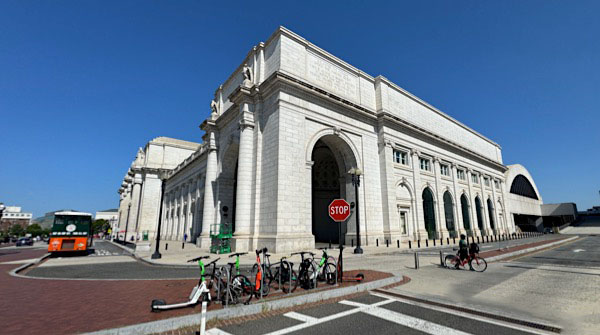
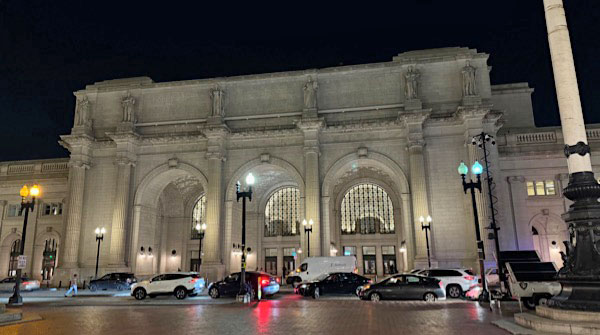
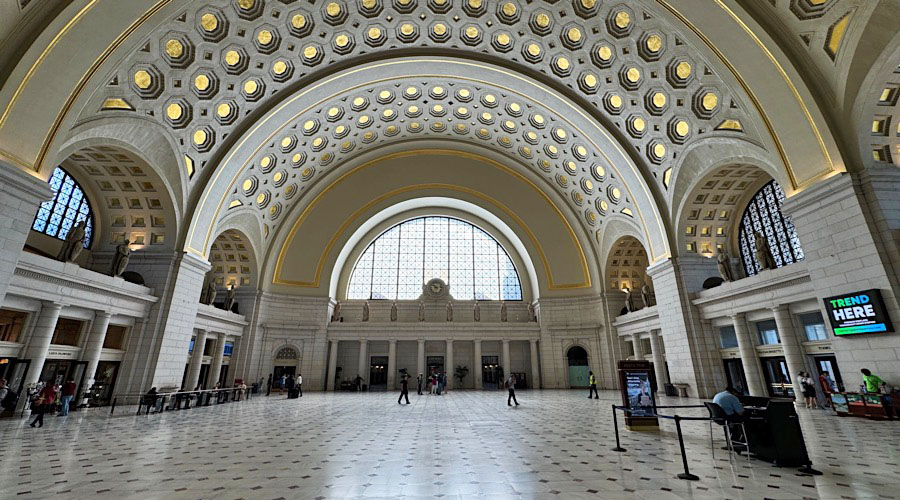
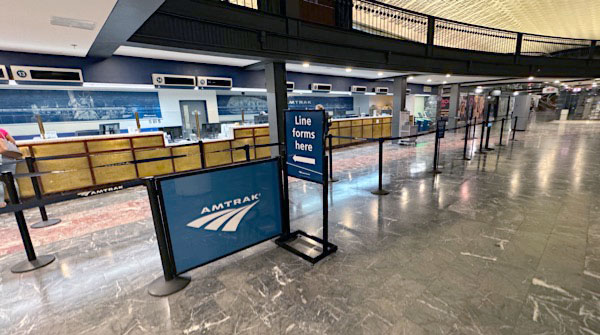
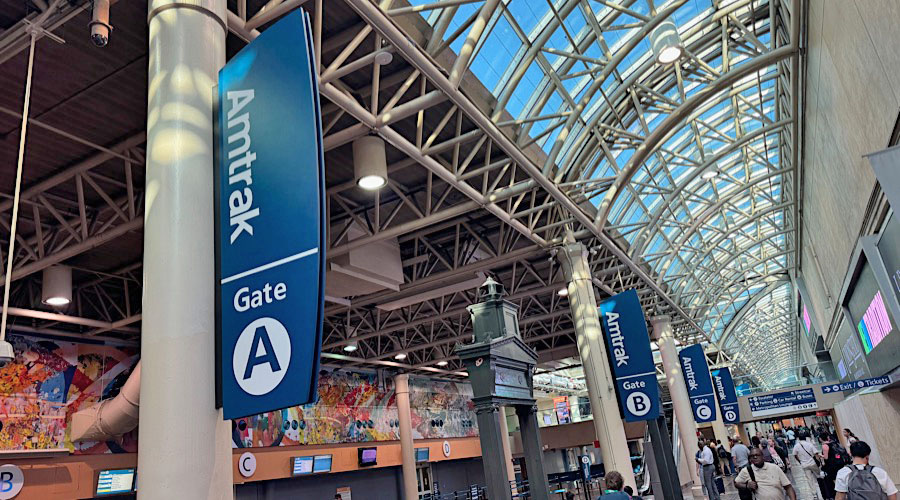
RWH
See our complete Washington Union Station scrapbook in Amtrak Great Stations
northbound #80
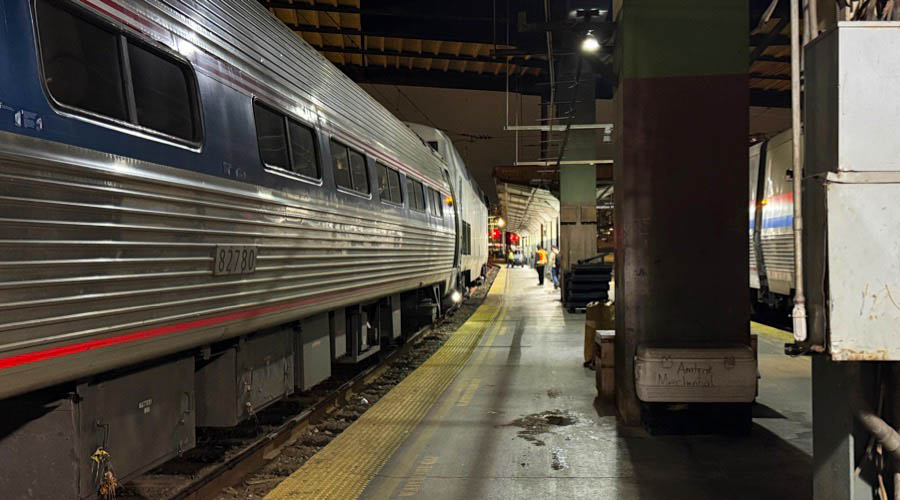
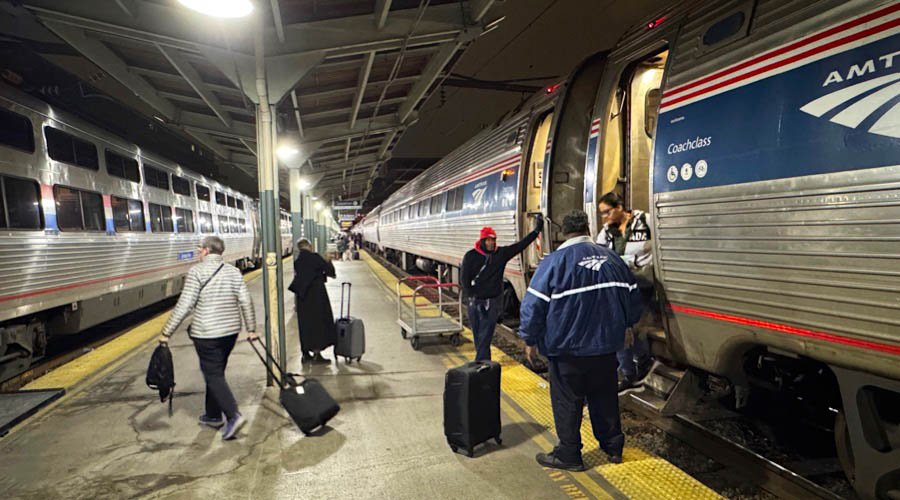
Washington, DC / Nov 2024 / RWH
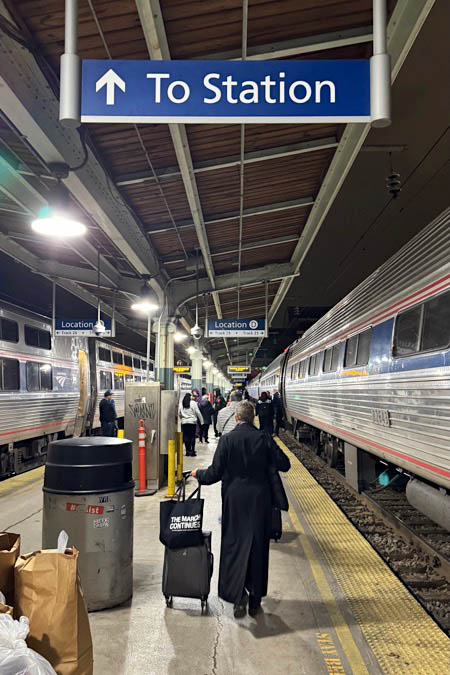
Nov 2024 / RWH
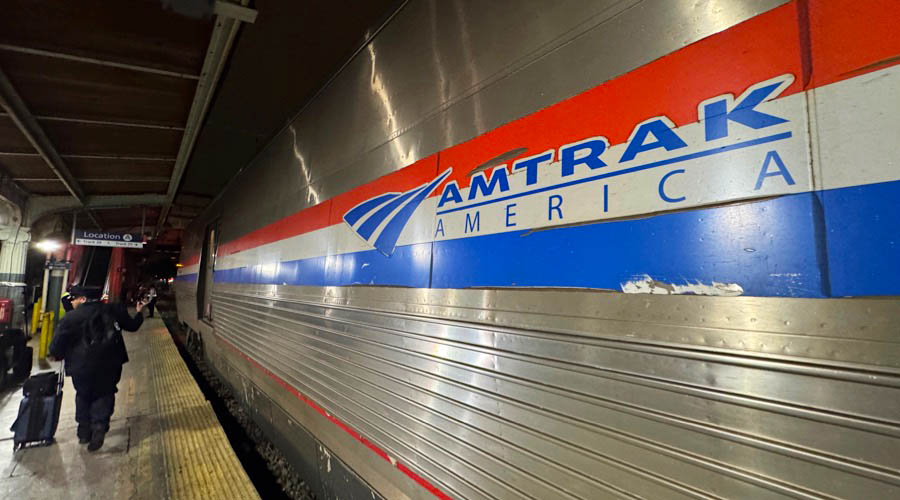
Nov 2024 / RWH
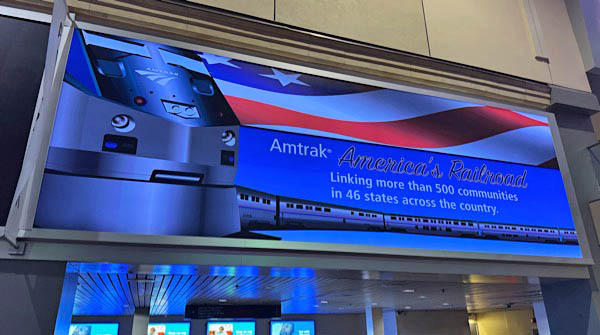
Nov 2024 / RWH
Nov 2024 / RWH
southbound #79
Nov 2024 / RWH
Washington, DC / Nov 2024 / RWH
Nov 2024 / RWH
Amtrak's
Carolinian
Nov 2024 / RWH
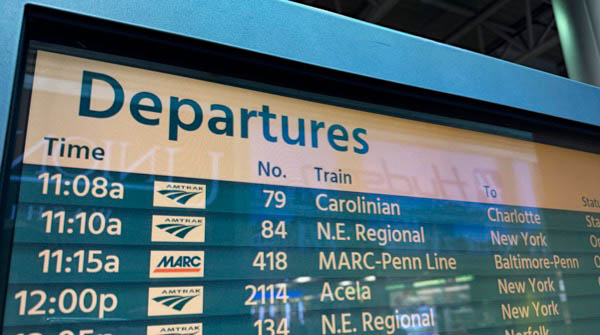
Nov 2024 / RWH
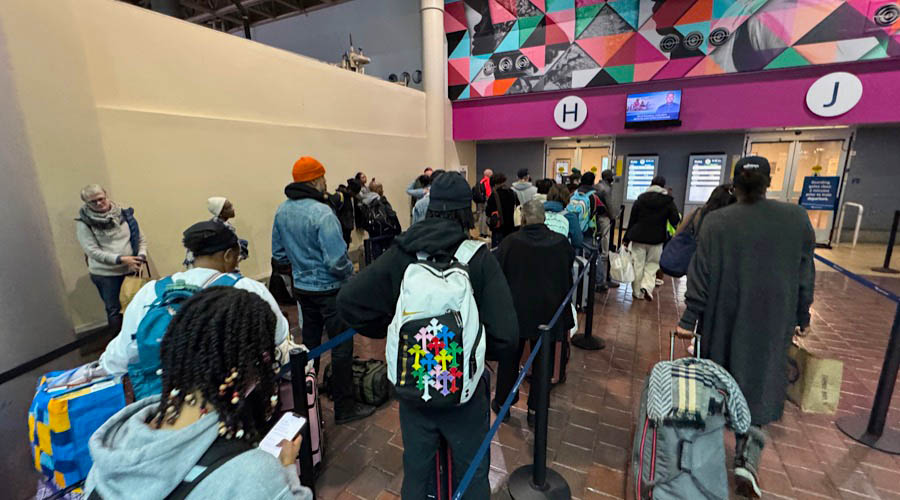
Nov 2024 / RWH
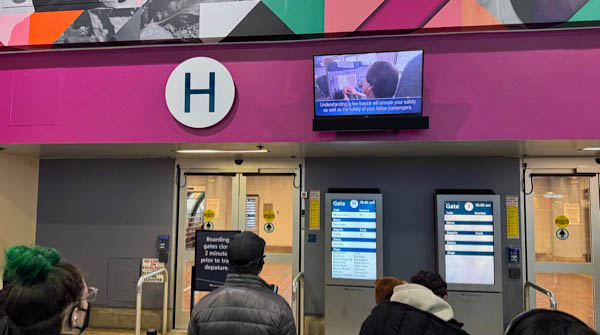
Nov 2024 / RWH
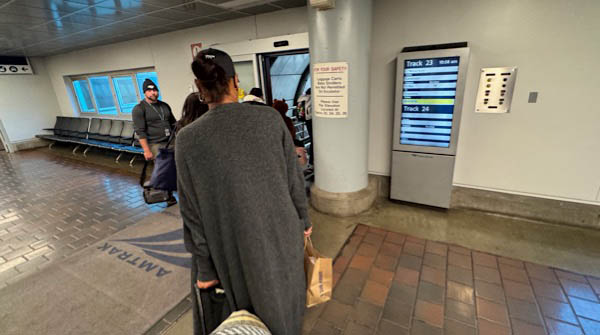
Nov 2024 / RWH
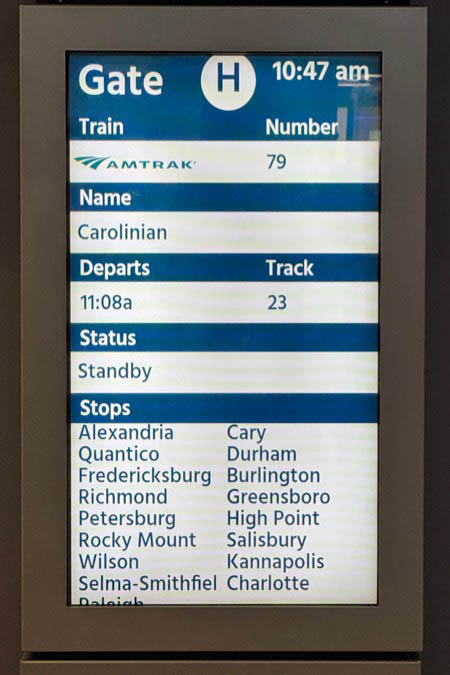
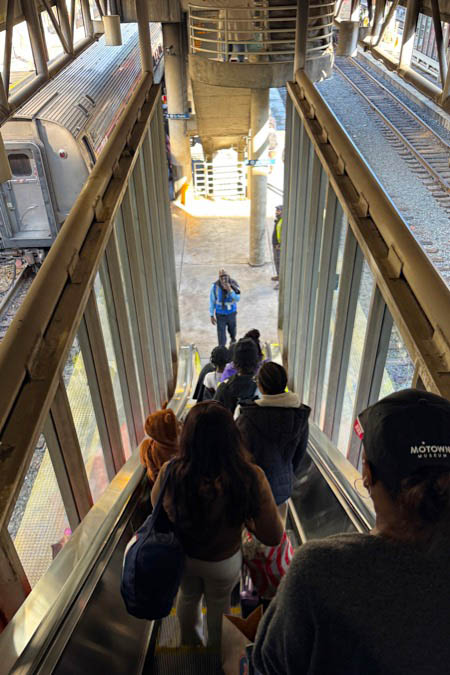
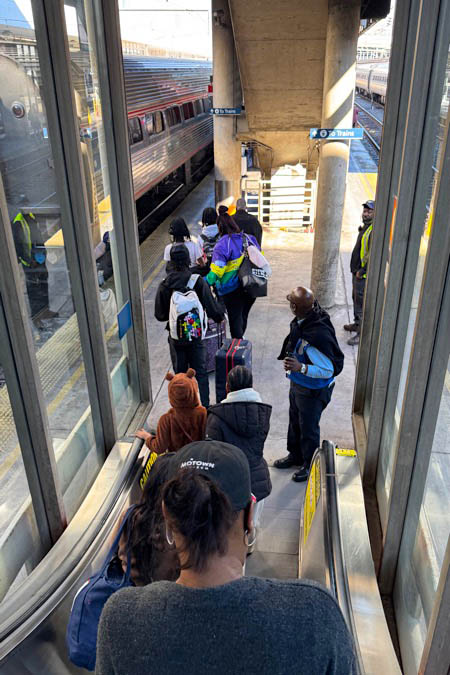
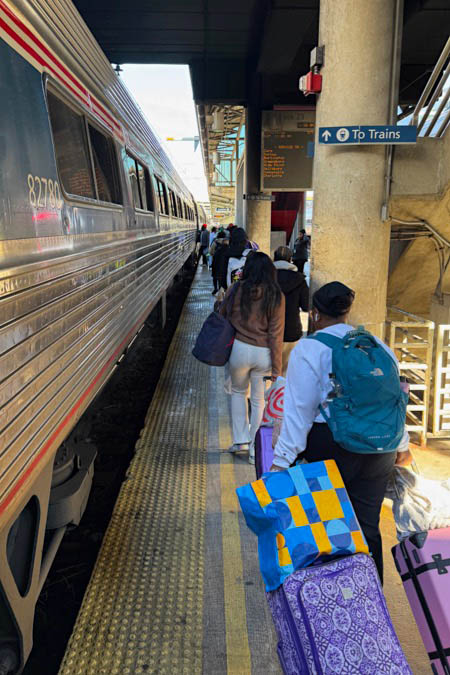
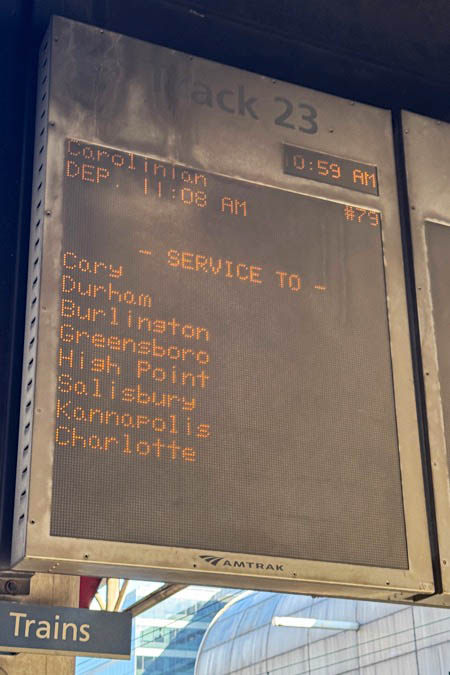
Nov 2024 / RWH
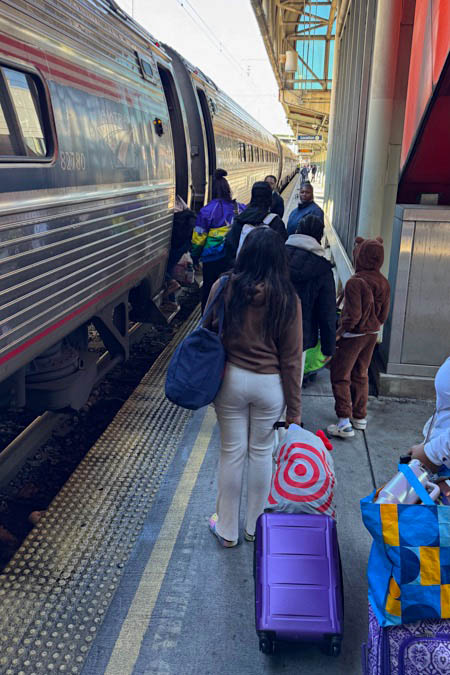
Washington, DC / Nov 2024 / RWH
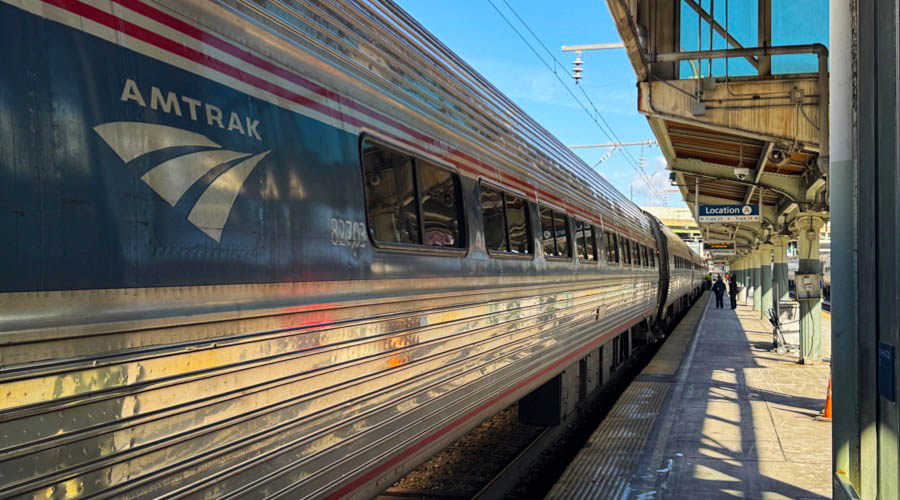
Nov 2024 / RWH
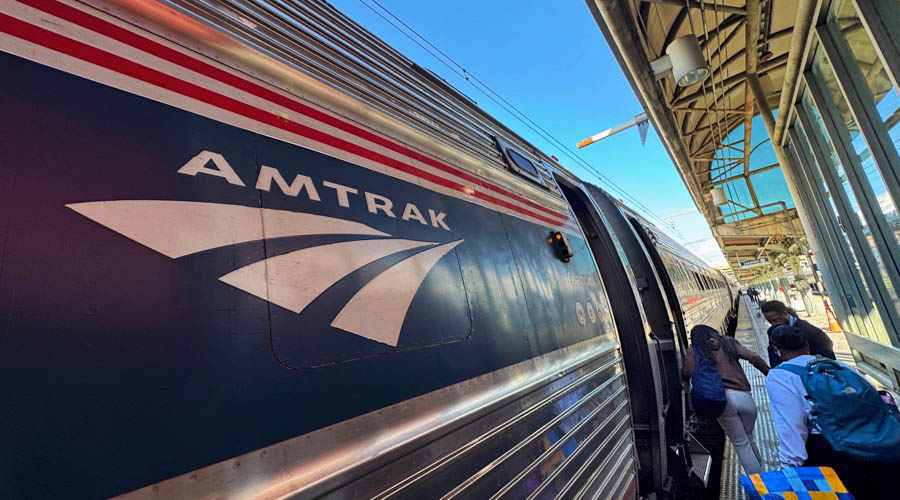
Washington, DC / Nov 2024 / RWH
520 Baltimore, Md
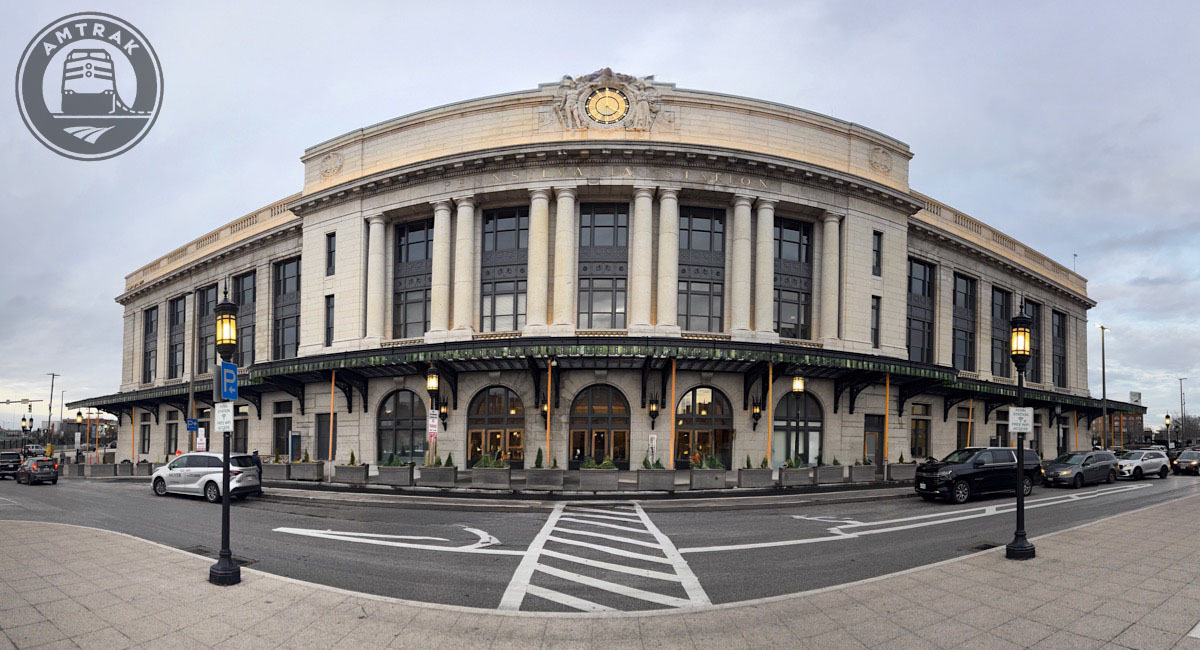
Baltimore, MD / Dec 2024 / RWH
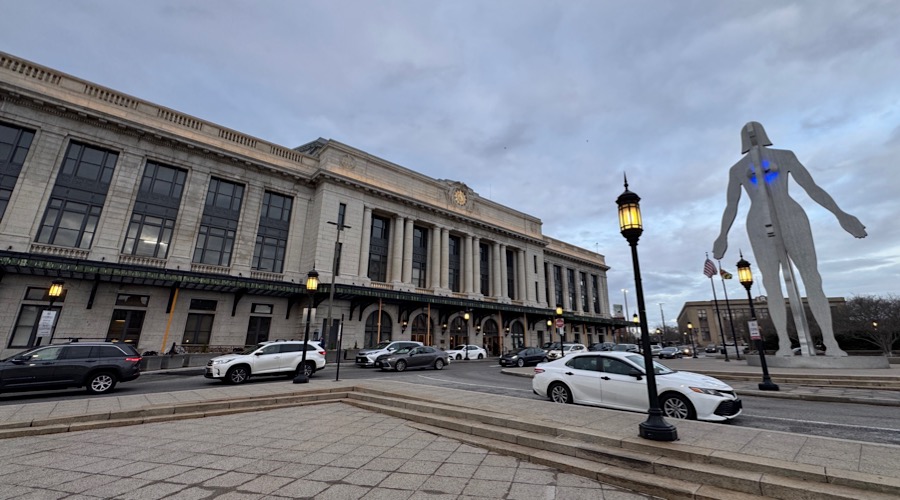
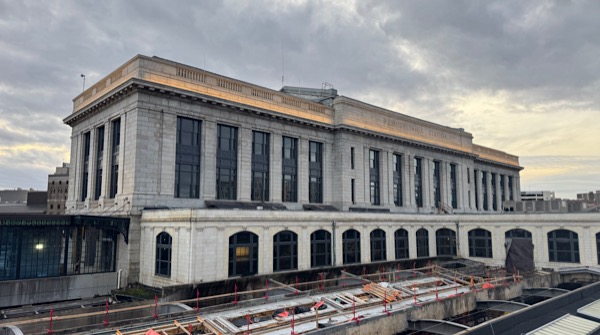
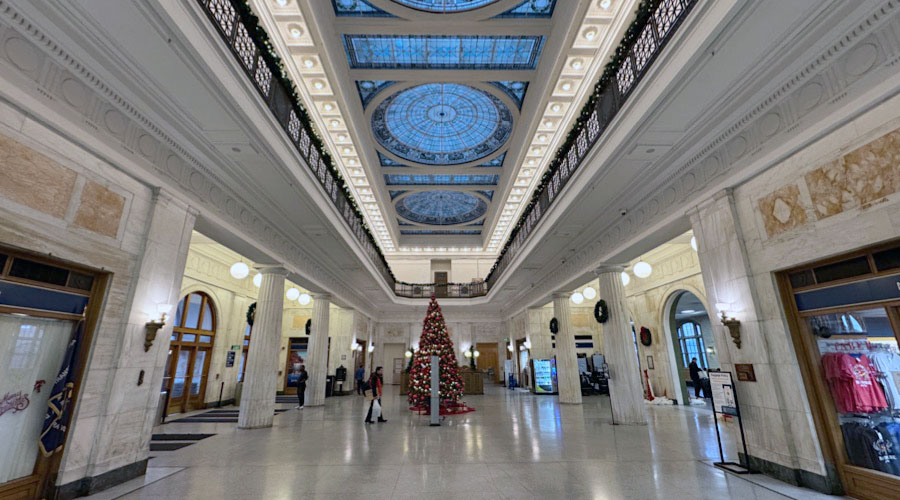
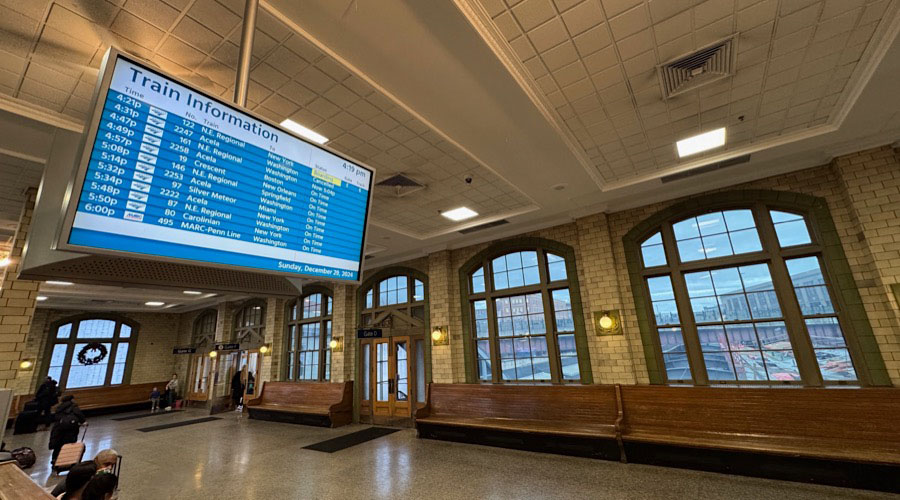
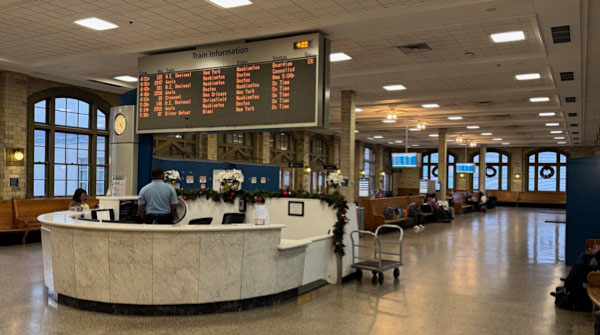
RWH
See our complete Baltimore Penn Station scrapbook in Amtrak Great Stations
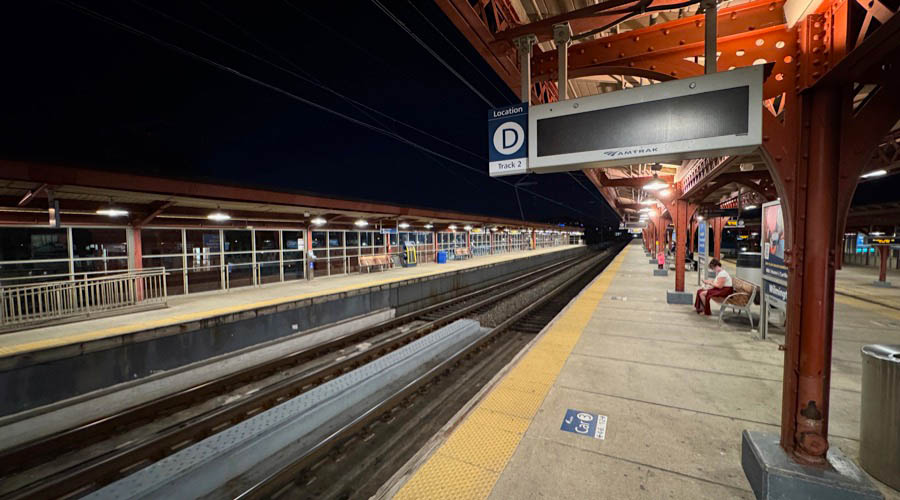
589 Wilmington, De
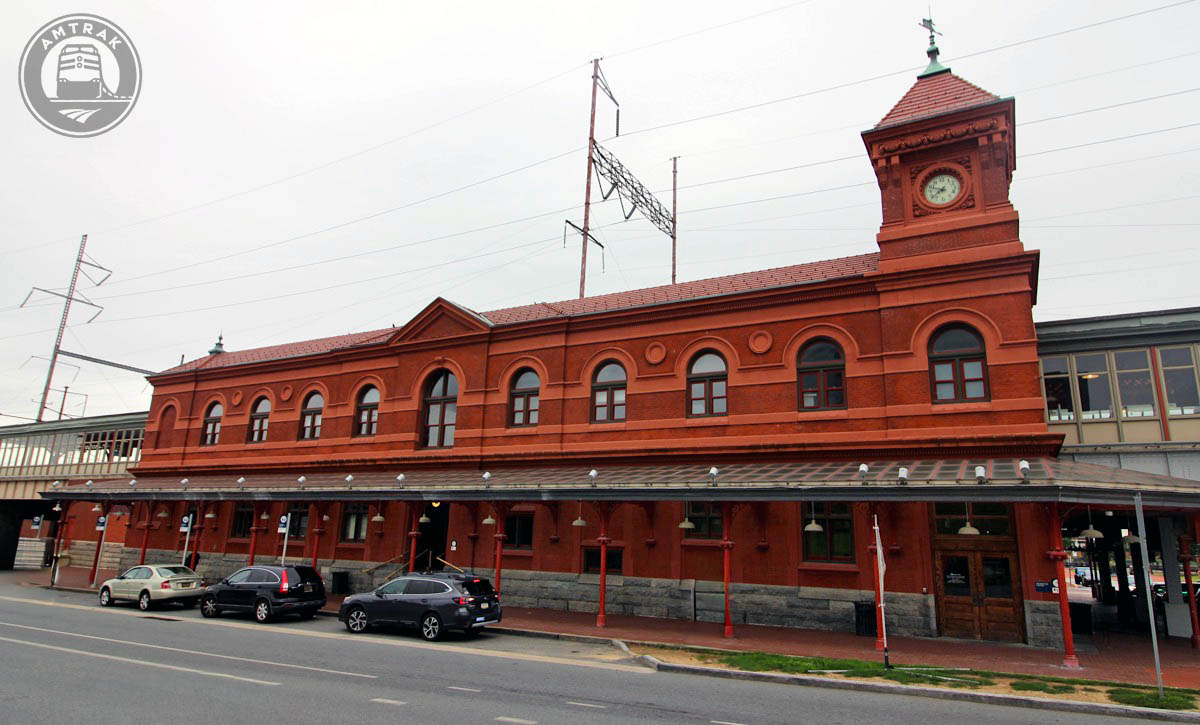
Wilmington, De / Jul 2025 / RWH
RWH
See our complete Wilmington Station scrapbook in Amtrak Great Stations
614 Philadelphia, Pa
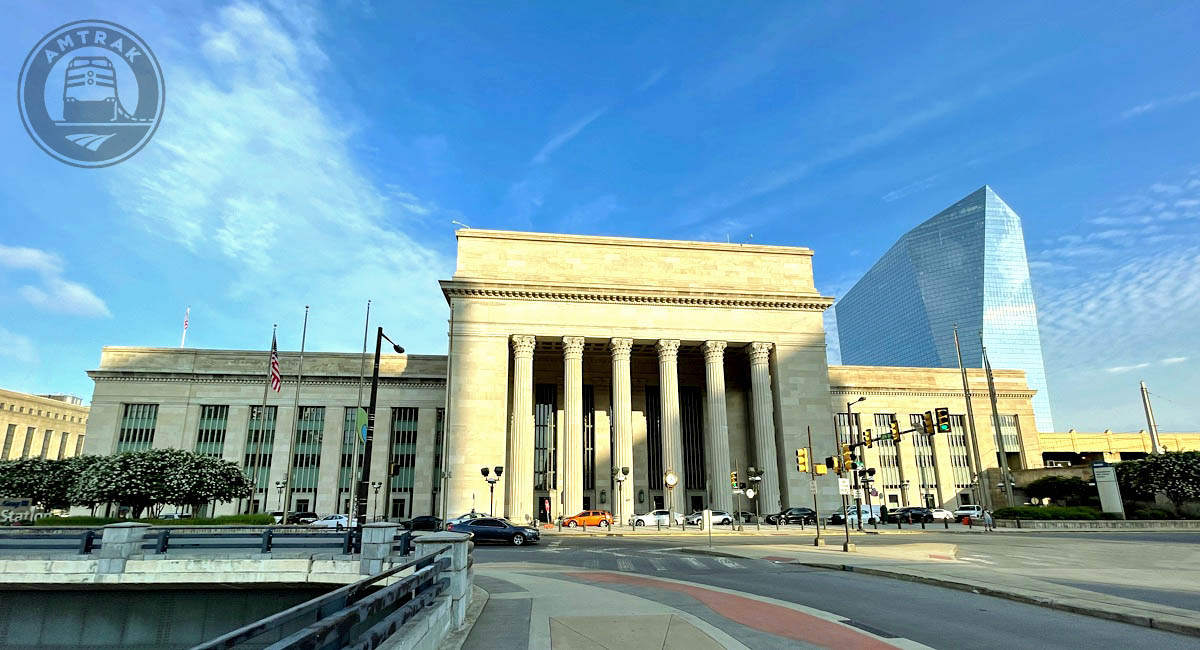
Philadelphia, Pa / Jul 2022 / RWH
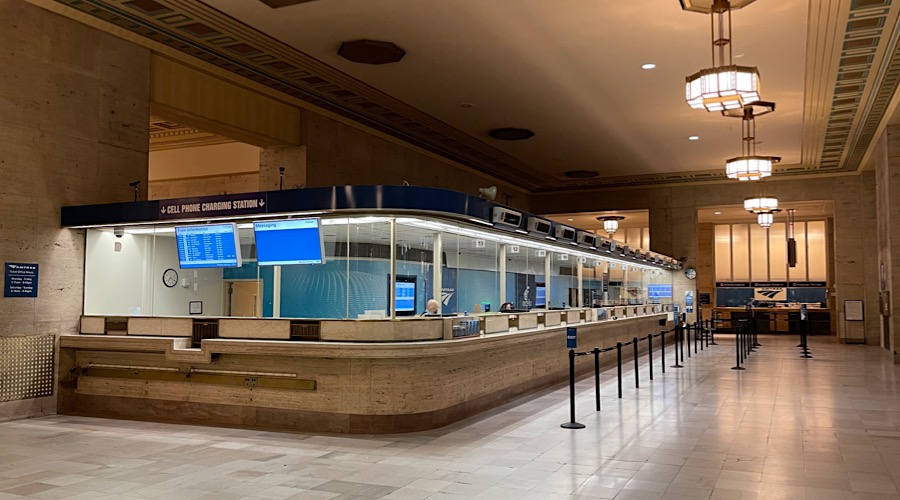
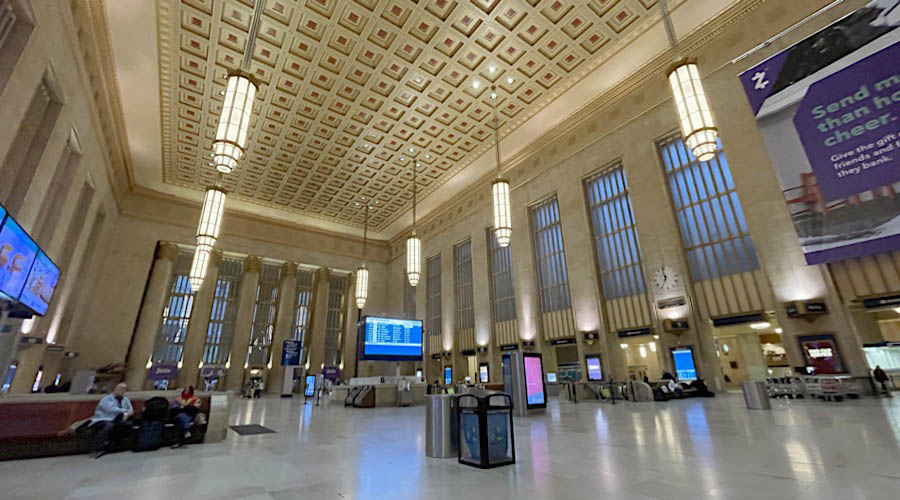
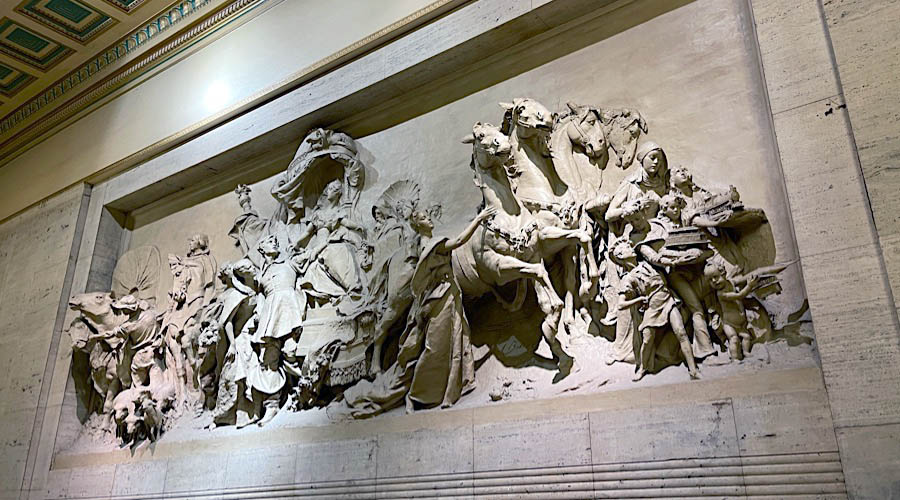
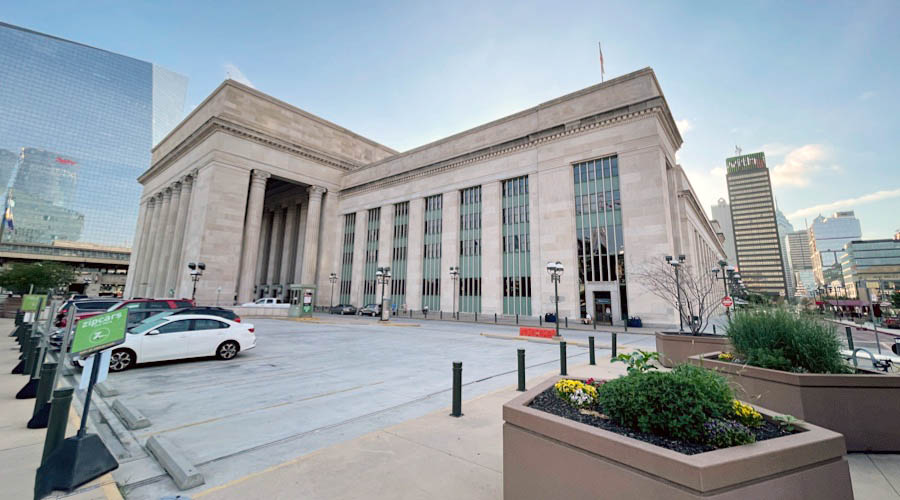
See our complete Philadelphia 30th Street Station scrapbook in Amtrak Great Stations
705 New York, NY
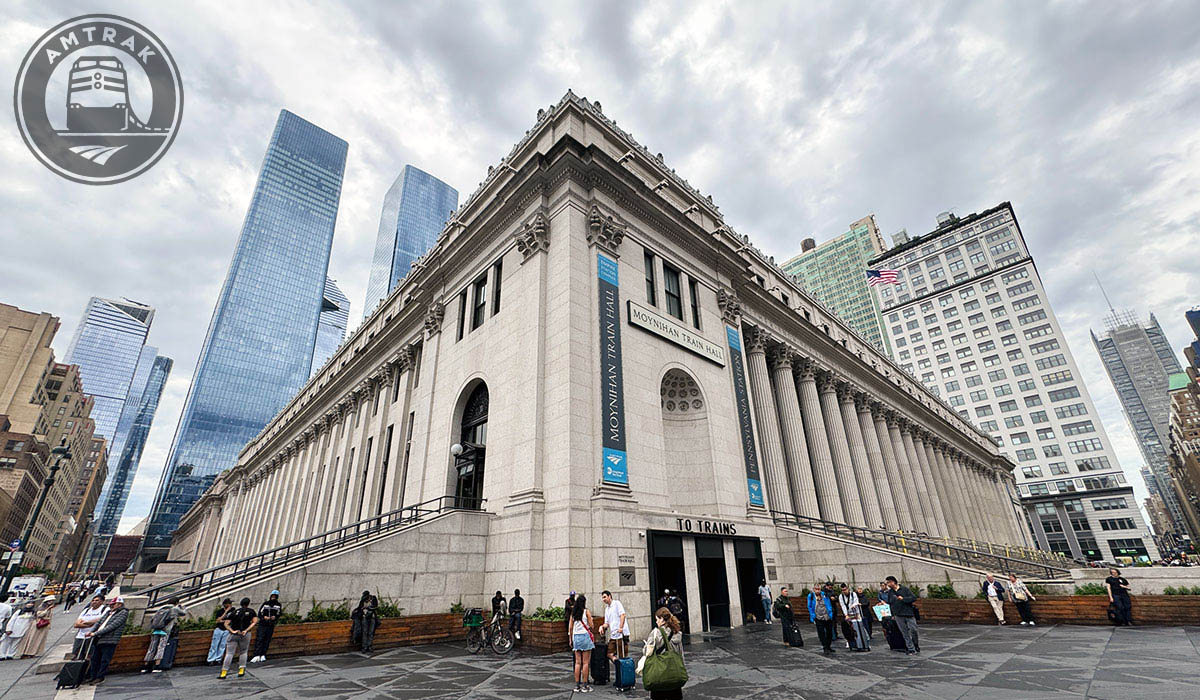
New York, NY / May 2024 / RWH

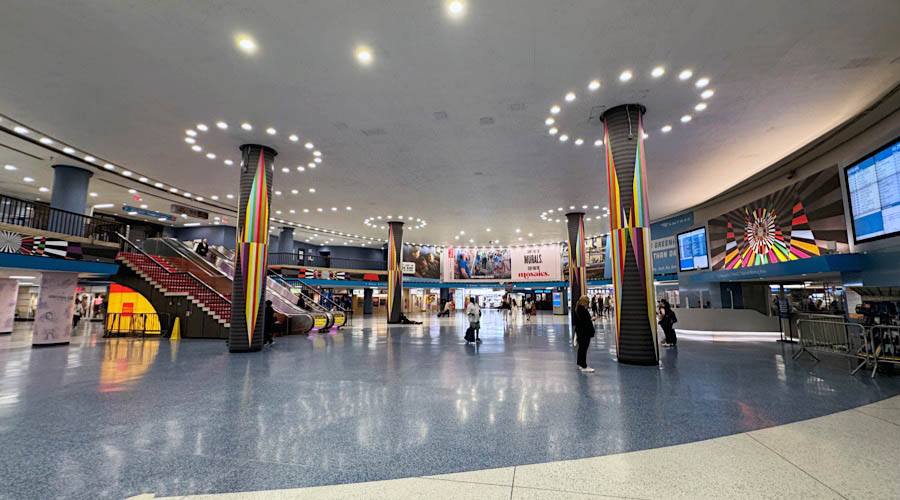
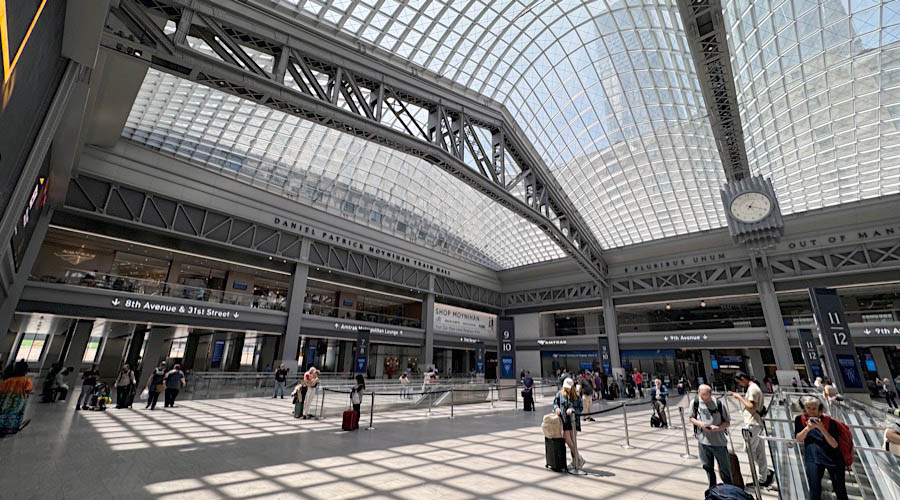
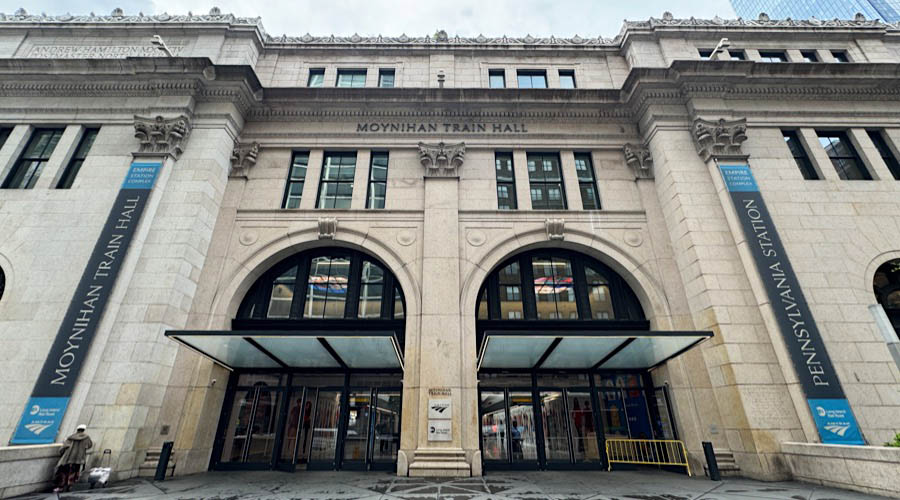
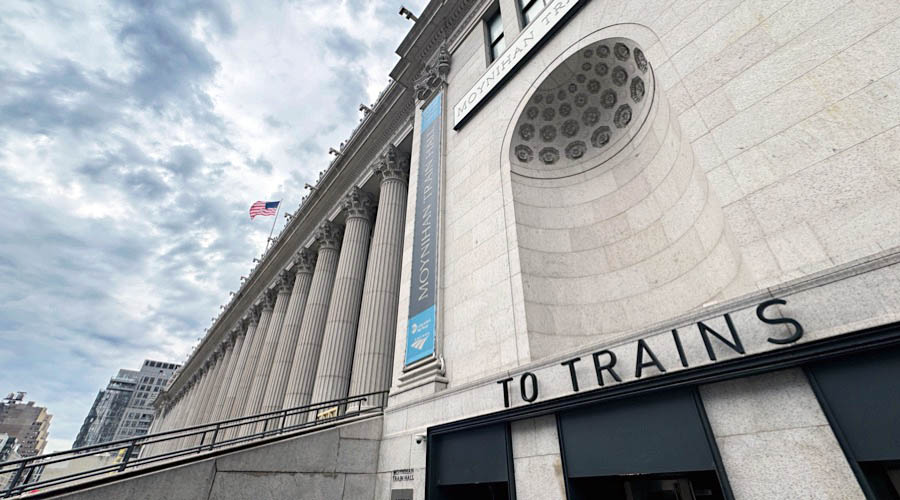
RWH
See our complete New York Penn Station scrapbook in Amtrak Great Stations
Lagniappe



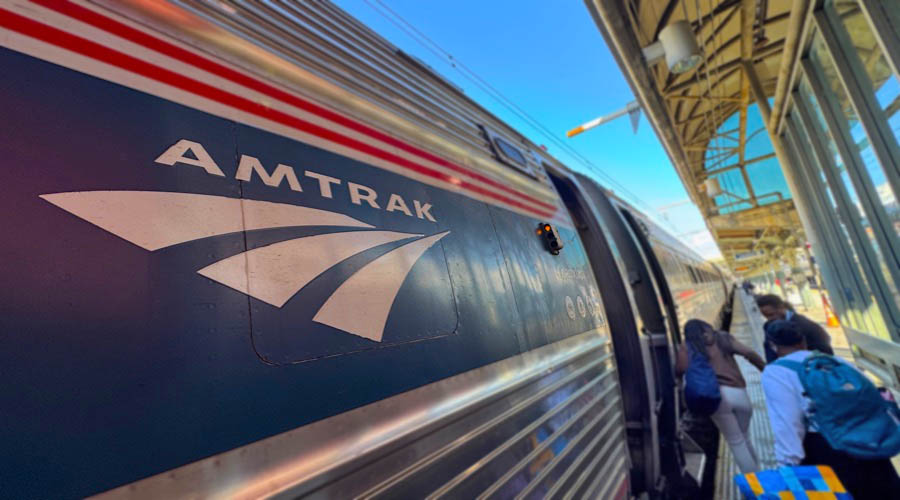
State Sponsored Shuttling
Wilson, NC / image and artwork RWH
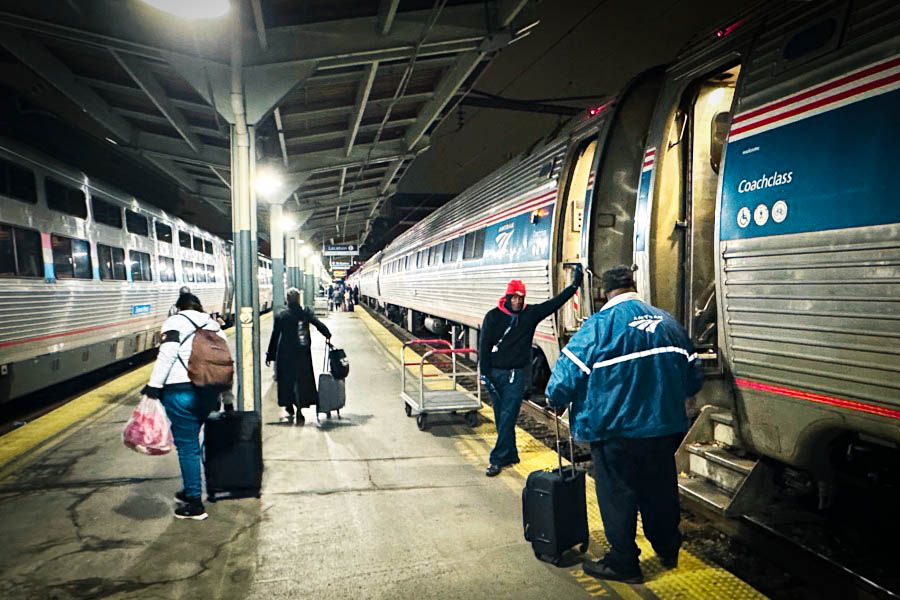
A Salute to Station Work
Washington, DC / Nov 2024 / RWH
Bring On the Night
Washington, DC / Nov 2024 / RWH
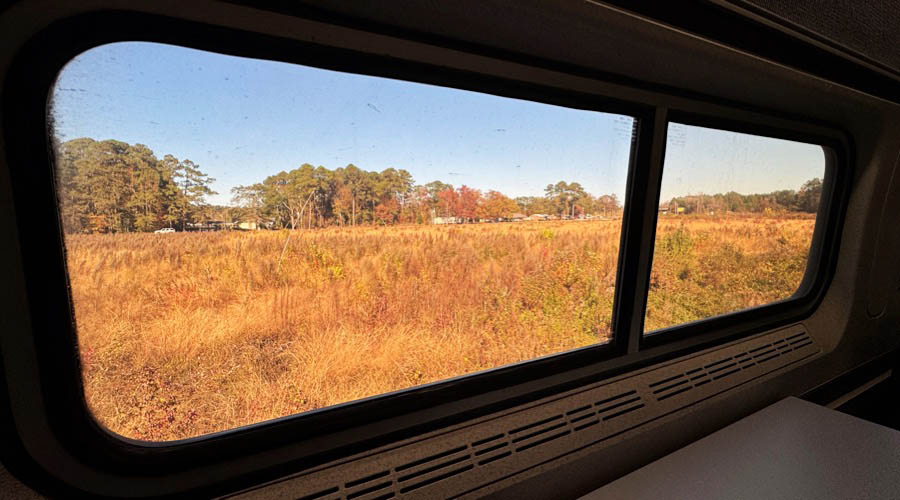
Carolina Colorful
Bagley, NC / Nov 2024 / RWH

Apparitions
Aycock Crossing, NC / Nov 2024 / RWH
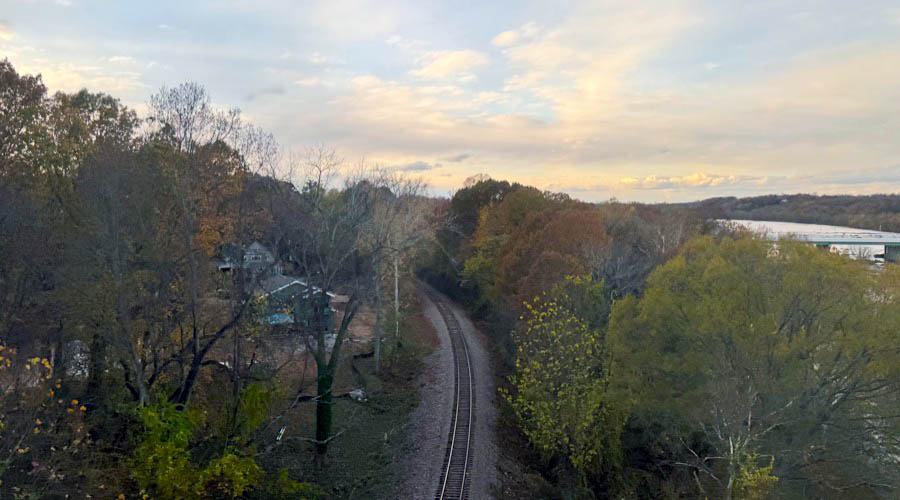
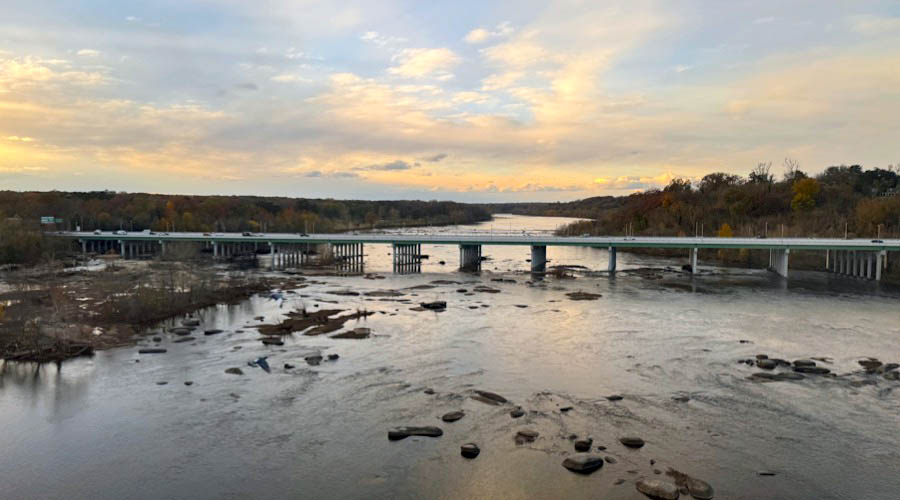
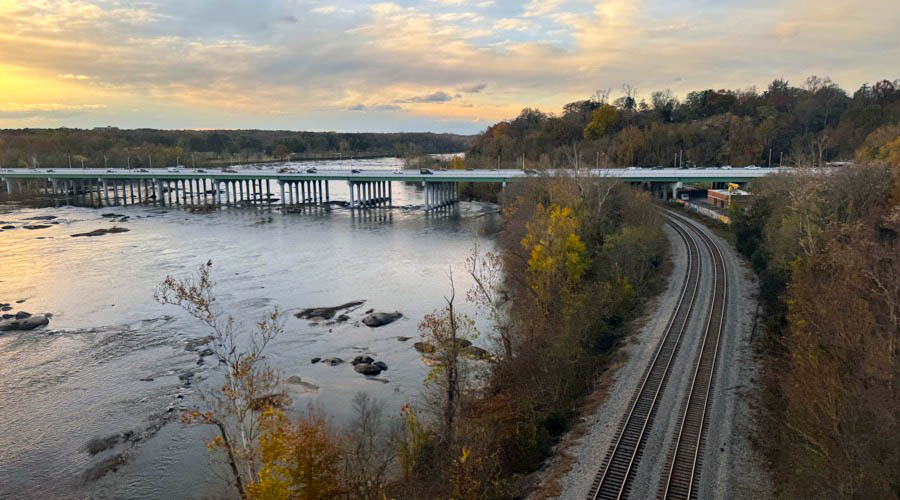
James River Ramblings
Richmond, Va / Nov 2024 / RWH
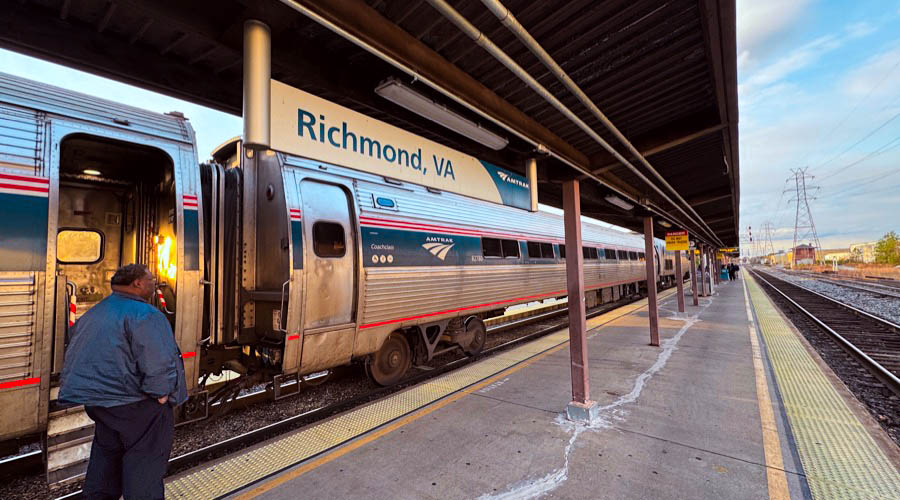
Staples Mill Sentinel
Richmond, Va / Nov 2024 / RWH
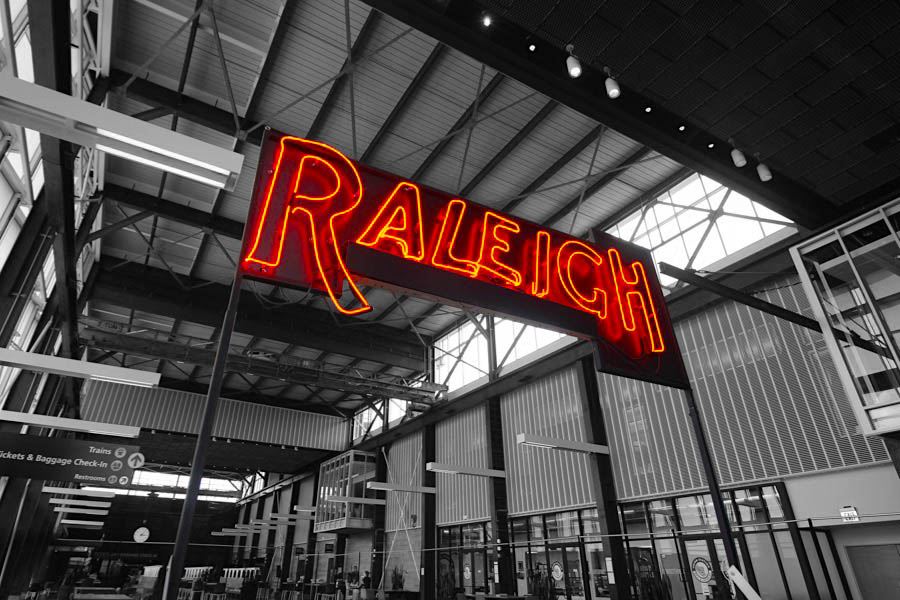
Adaptive Reuse at Raleigh
Raleigh, NC / Jul 2025 / RWH
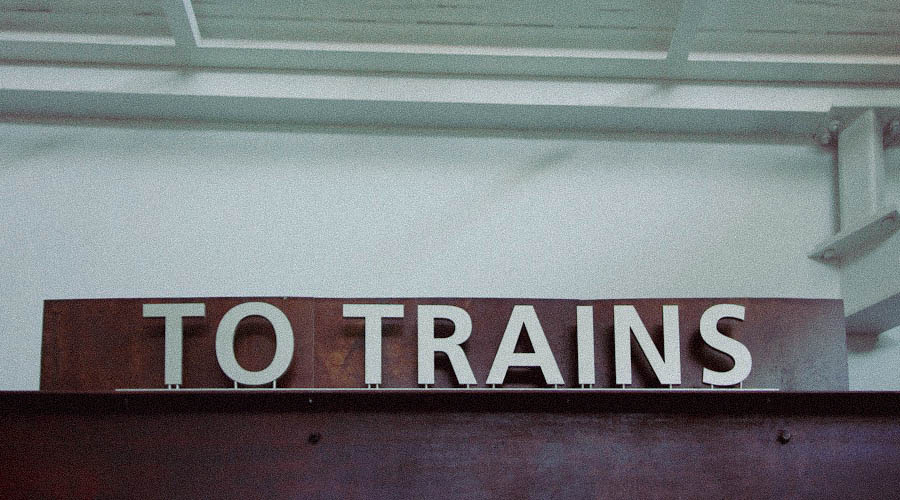
Moving In the Right Direction
Raleigh, NC / Jul 2025 / RWH
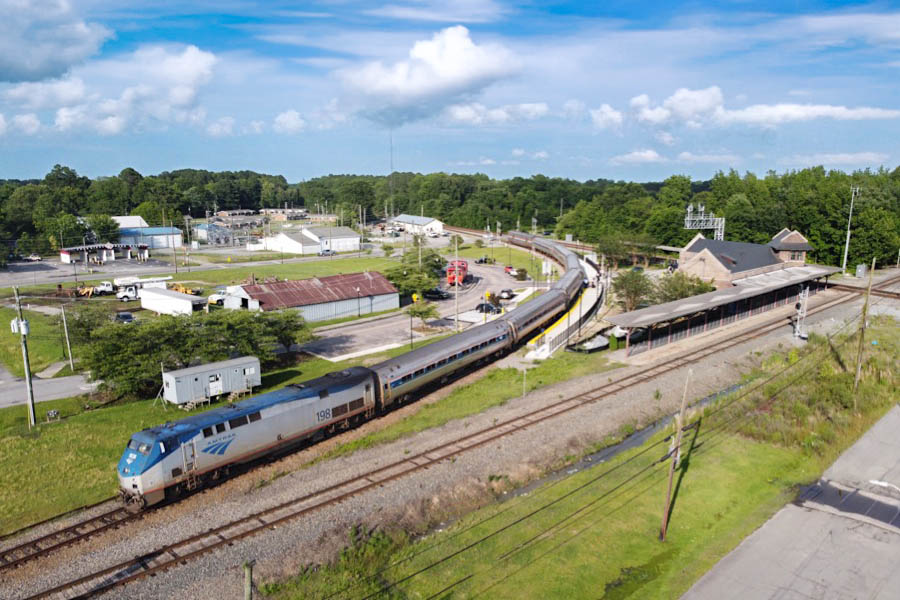
The Scene at Selma-Smithfield
Selma, NC / Jun 2023 / RWH
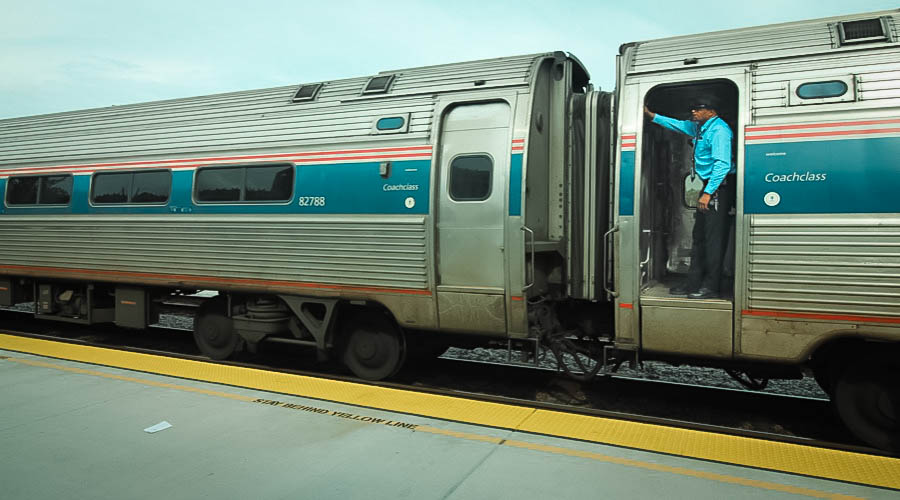
The Keen Eye of the Captain
Wilson, NC / Jun 2023 / RWH

Rearview Railfan
Wilson, NC / Jun 2023 / RWH
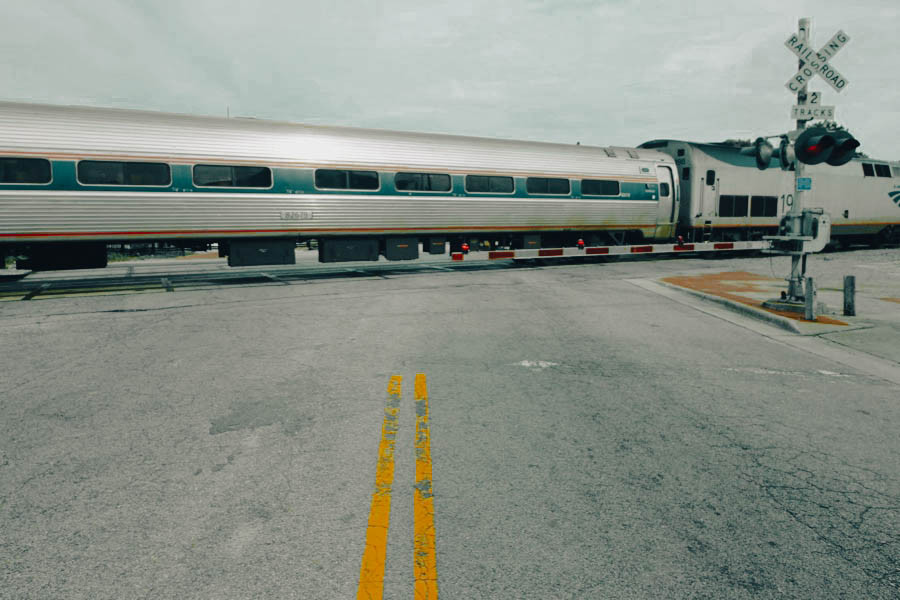
Curtailed at the Crossbucks
Wilson, NC / Jun 2023 / RWH
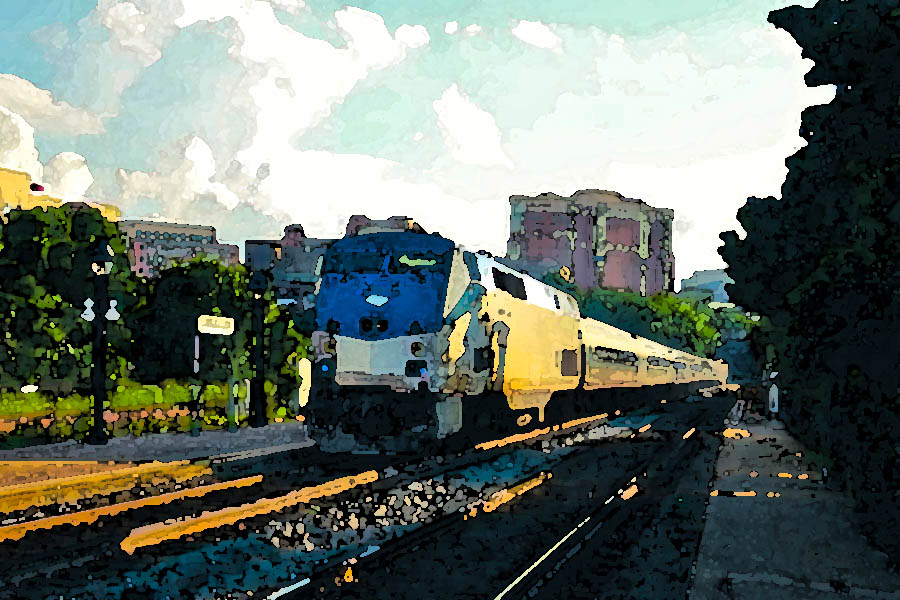
Carolinian Calls on Alexandria
Alexandria, Va / image and artwork RWH
Links / Sources
- Amtrak's Carolinian page
- Wikipedia article for Carolinian
- North Carolina Department of Transportation Carolinian page