
City of New Orleans
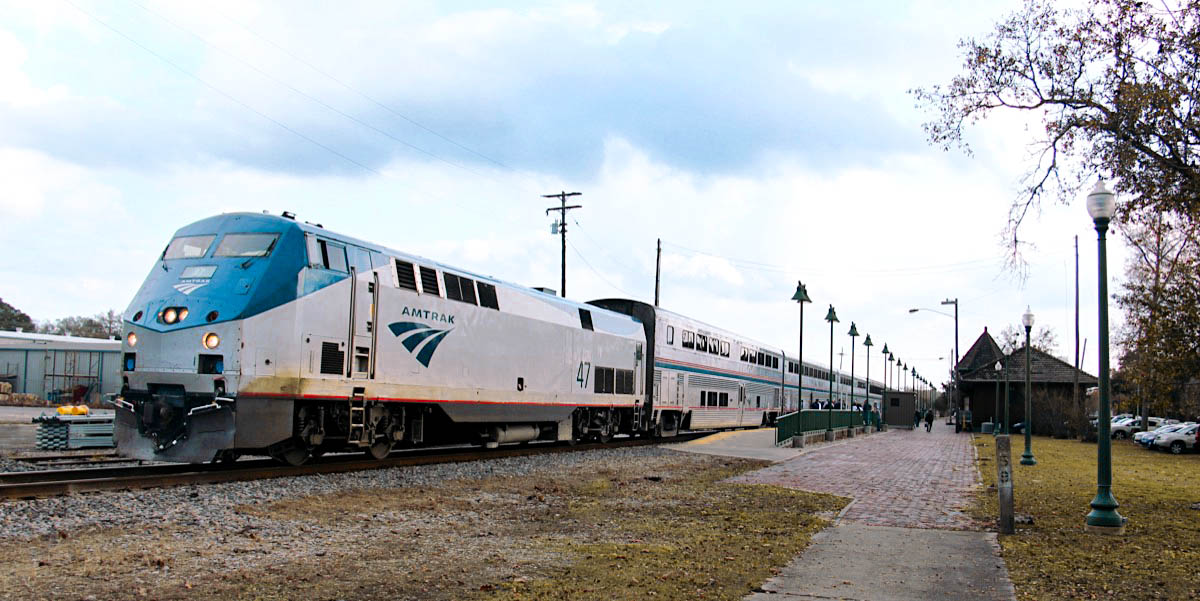
Hammond, La / Dec 2016 / RWH
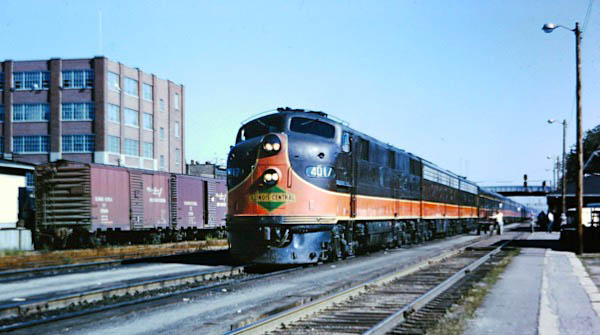
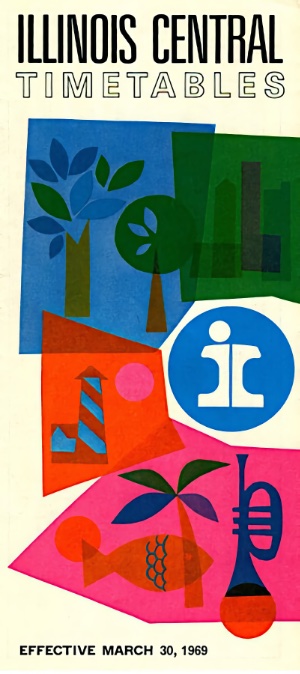
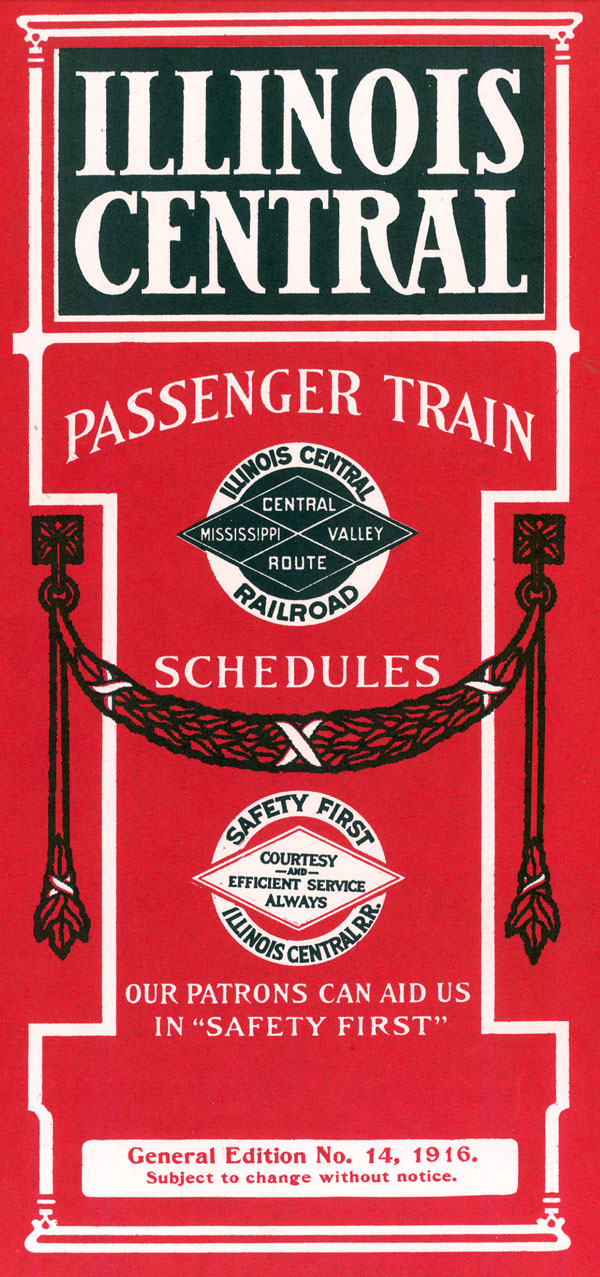
 The City of New Orleans is one of the most historically significant long-distance passenger trains in the United States, tracing its origins to the Illinois Central Railroad — once the "Mainline of Mid-America". Introduced in 1947 as a streamlined coach service between Chicago and New Orleans, the train was designed to offer a faster, more modern alternative to earlier heavyweight services on the same route. IC's City of New Orleans was a daytime coach alternative to the road's famous Panama Limited, the daily overnight all-sleeper train also connecting New Orleans and Chicago. Both trains became known for their dependable schedule and strong patronage, serving major Mississippi River corridor cities such as Memphis and Jackson, while reinforcing the Illinois Central’s reputation for operational efficiency. The original IC-operated services ended in 1971 amid the nationwide decline of intercity passenger rail.
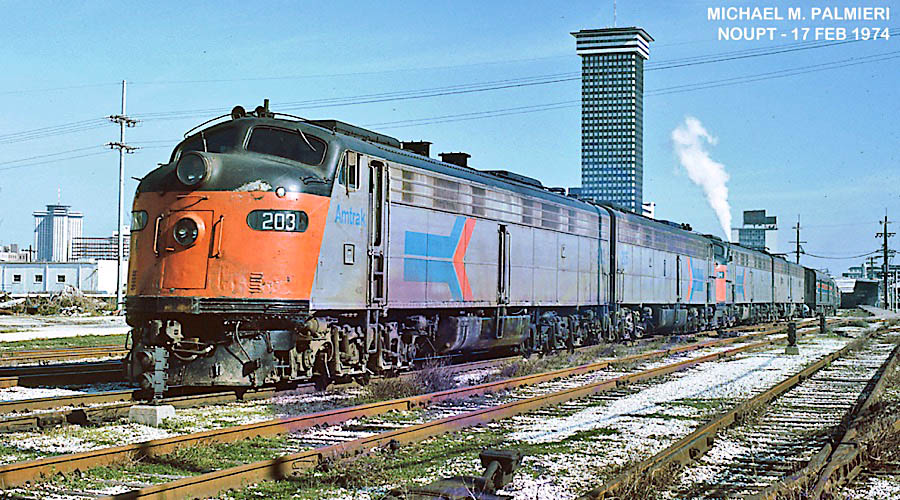
 When Amtrak assumed responsibility for most intercity passenger service in 1971, the City of New Orleans name and route were initially retained but soon dropped, only to be reinstated in 1981 after a decade-long experiment with the continuation of the Panama Limited name and schedule. Since 1981, the City has operated as a once-daily, overnight long-distance service linking the Midwest and the Gulf Coast, generally maintaining the historic Illinois Central alignment. Essentially, today's Amtrak movement carries on the Panama Limited's overnight schedule with the City of New Orleans' moniker — made famous in large part by the popular Steve Goodman folk song (1971) about the train's final years before Amtrak.
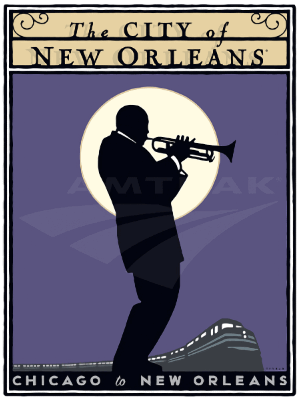
 Over time, equipment, onboard services, and schedules have evolved. For years a daily hodgepodge of Heritage rolling stock (including dome cars) and then-new Amfleet coaches, today's City makes use of 2-level Superliner coach and sleeper equipment — usually with one locomotive in the lead. In 1995,the train's routing in northern Mississippi was changed from the more easterly Grenada District, through Winona, to the more westerly and flatter Yazoo District, through Greenwood. Additional corridor service on the northern segment of the route is provided by the Illini and Saluki between Chicago and Carbondale, Illinois. The City of New Orleans is the only Amtrak train to serve Tennessee.
Despite adaptation by Amtrak, the train’s core role has remained consistent: providing essential north-south intercity transportation across the central Mississippi Valley while preserving a direct lineage to two of the classic names of American passenger railroading.
Over time, equipment, onboard services, and schedules have evolved. For years a daily hodgepodge of Heritage rolling stock (including dome cars) and then-new Amfleet coaches, today's City makes use of 2-level Superliner coach and sleeper equipment — usually with one locomotive in the lead. In 1995,the train's routing in northern Mississippi was changed from the more easterly Grenada District, through Winona, to the more westerly and flatter Yazoo District, through Greenwood. Additional corridor service on the northern segment of the route is provided by the Illini and Saluki between Chicago and Carbondale, Illinois. The City of New Orleans is the only Amtrak train to serve Tennessee.
Despite adaptation by Amtrak, the train’s core role has remained consistent: providing essential north-south intercity transportation across the central Mississippi Valley while preserving a direct lineage to two of the classic names of American passenger railroading.

- service
City of New Orleans - regionCentral
- typelong-distance
- numbers
#58 northbound
#59 southbound - termini
Chicago IL
New Orleans LA - stops17
- distance934 miles
- time~ 20 hours
- frequencydaily
- classes
Coach, Sleeper - equipment
Superliner 2-level - services
cafe car, dining car, checked baggage - startedFeb 1981
- predecessors
IC Panama Limited
IC City of New Orleans - mainlineCN
- links
Amtrak | Wikipedia
collection


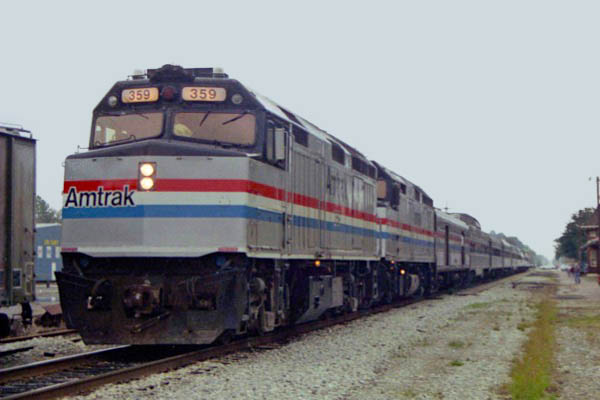
Hammond, La / Sep 1996 / RWH


jump to a
flag stop

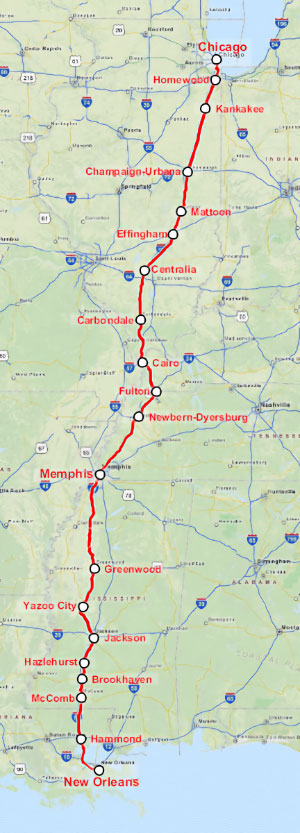
route map / Wikipedia
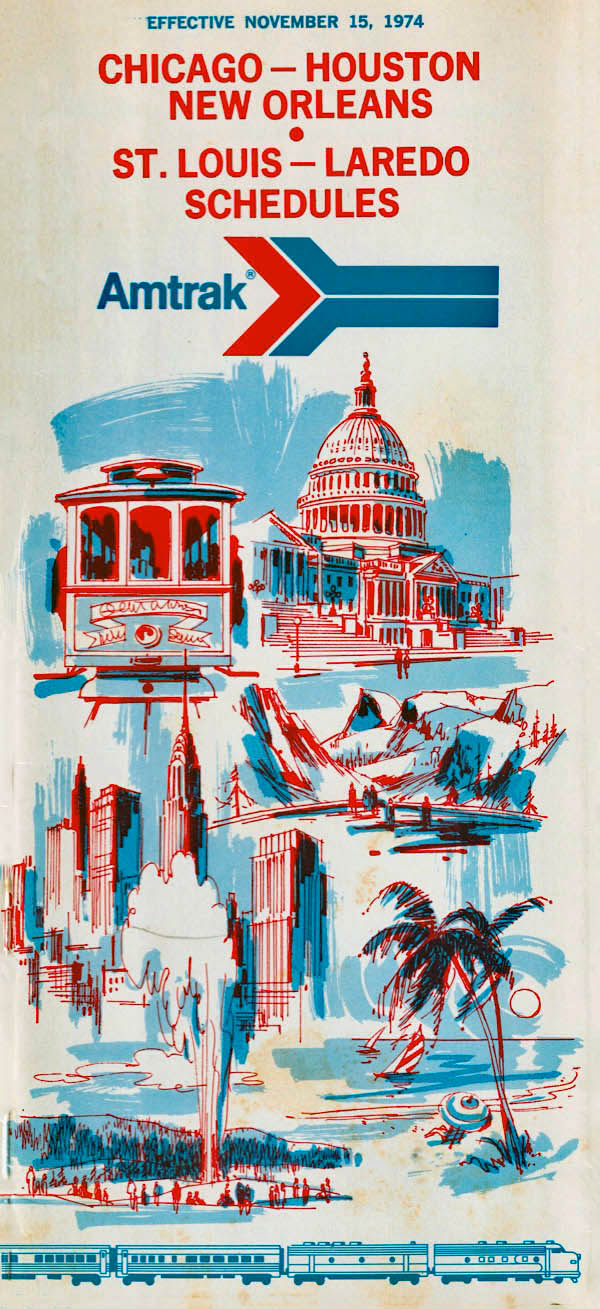
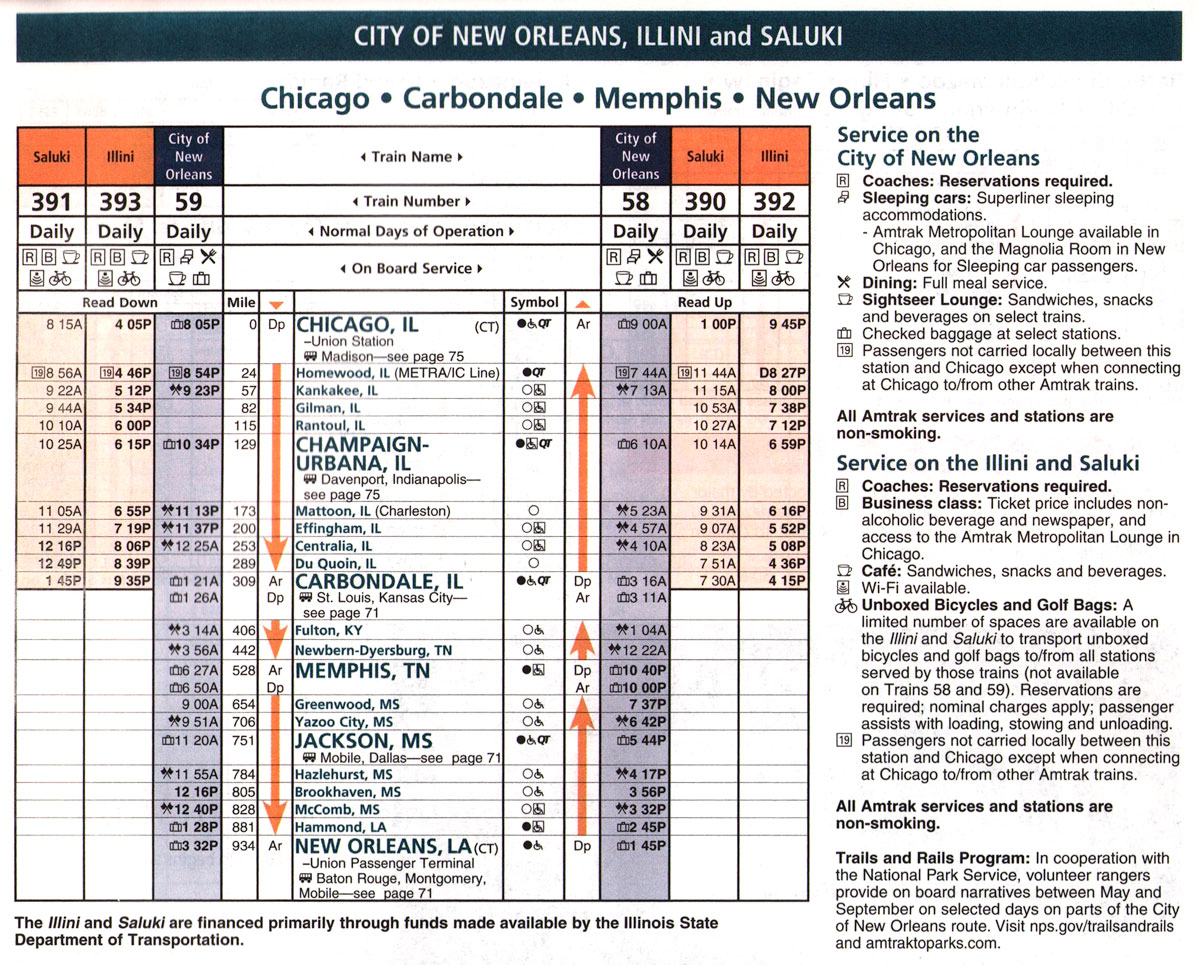
2016 Amtrak timetable / collection
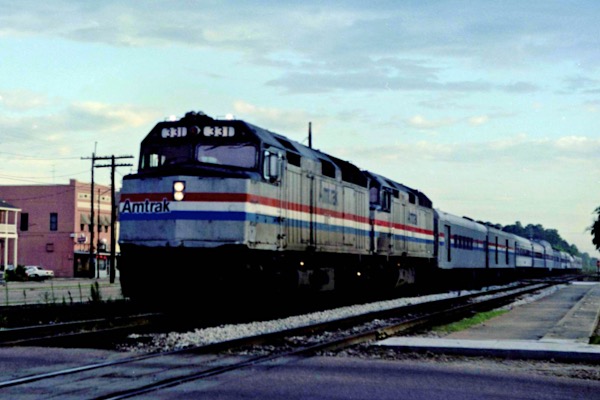
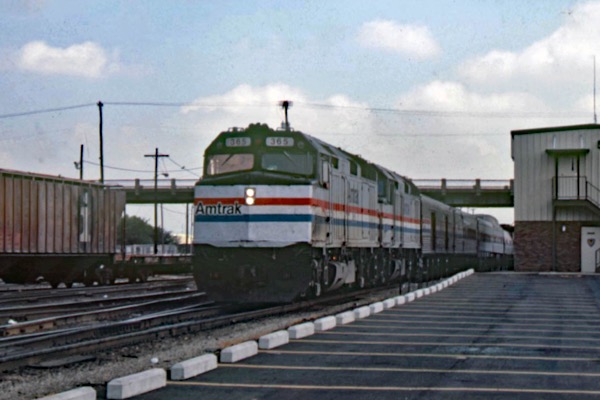
Oct 1986 and Jul 1987 / RWH
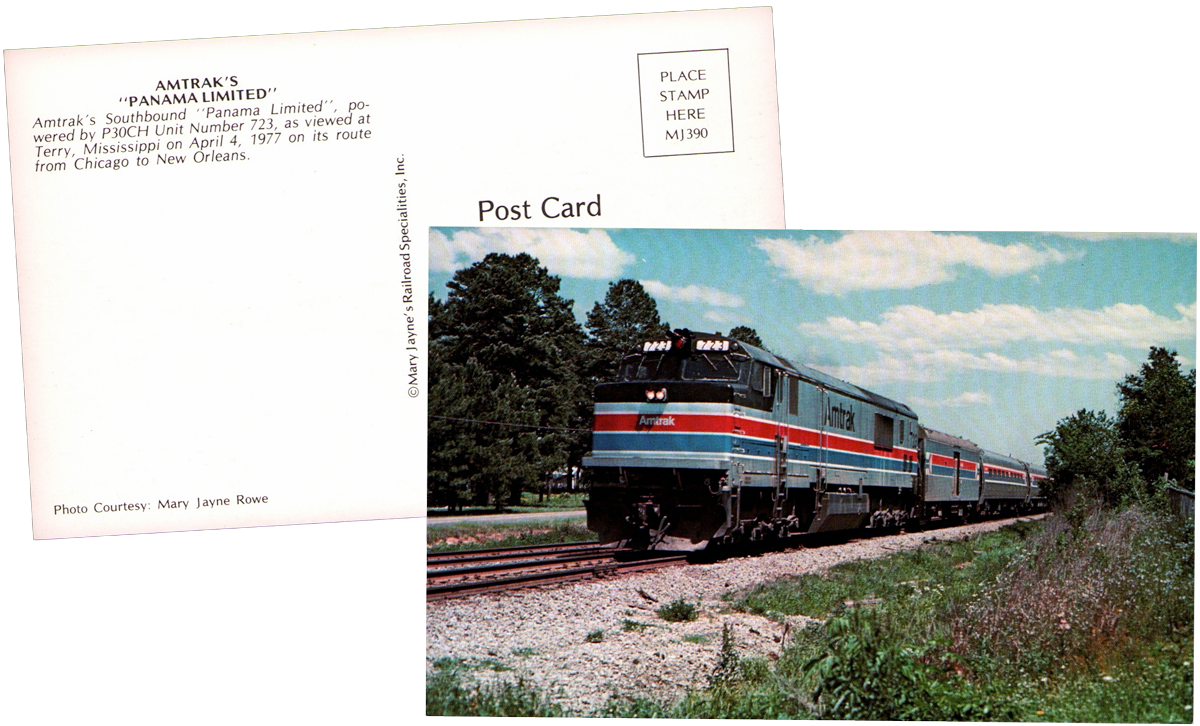
 Panama Limited

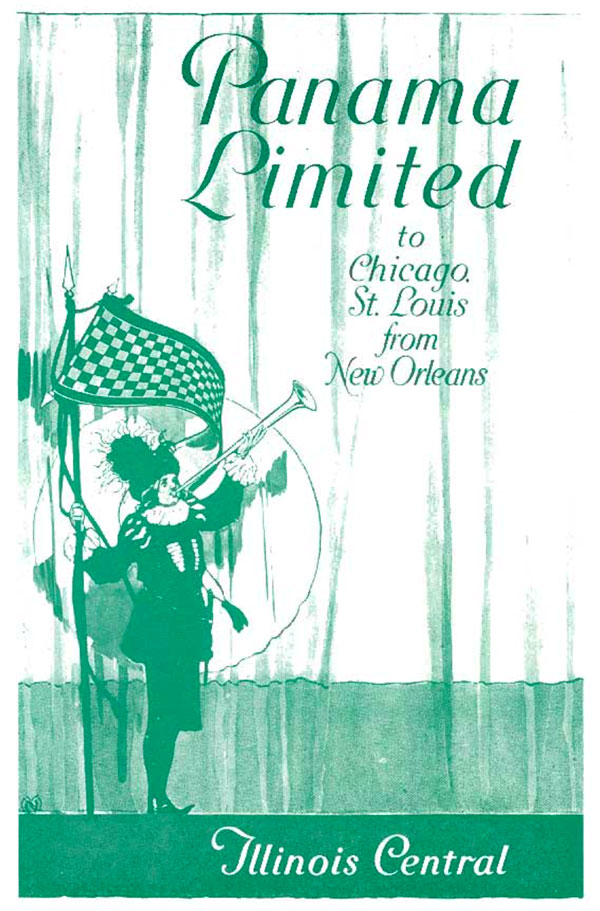

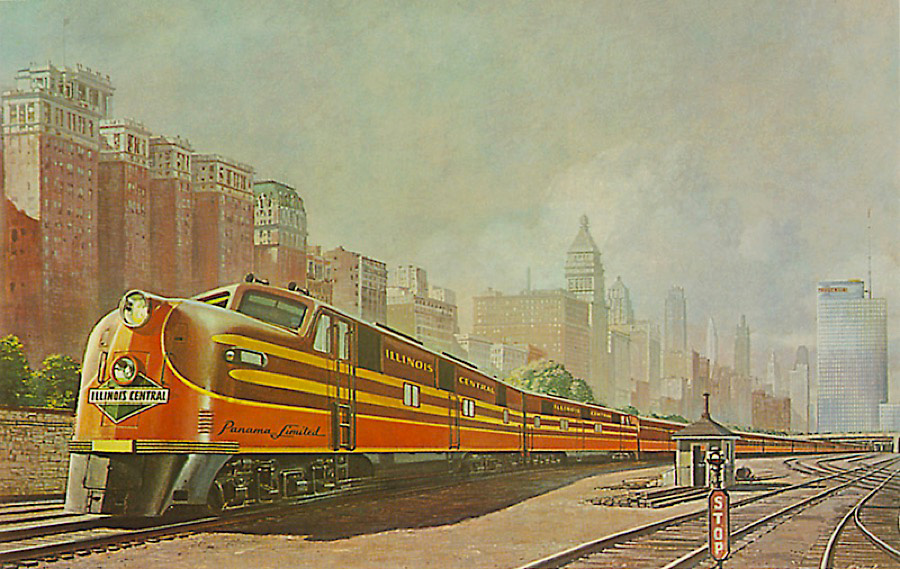
postcard / collection
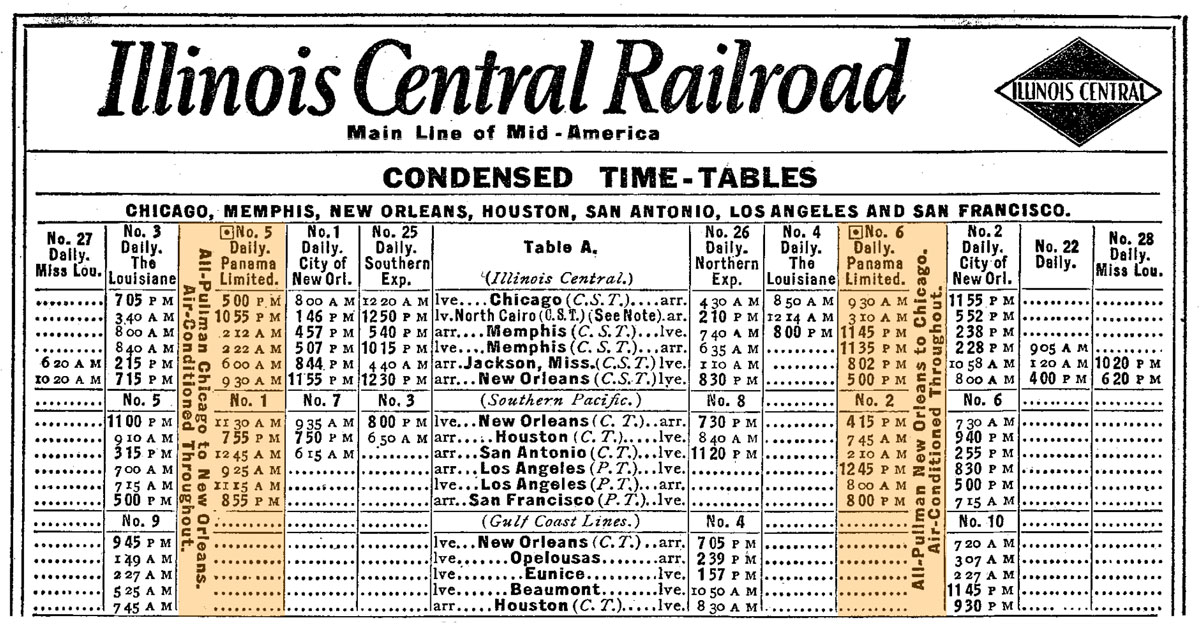
1948 Official Guide ad / collection

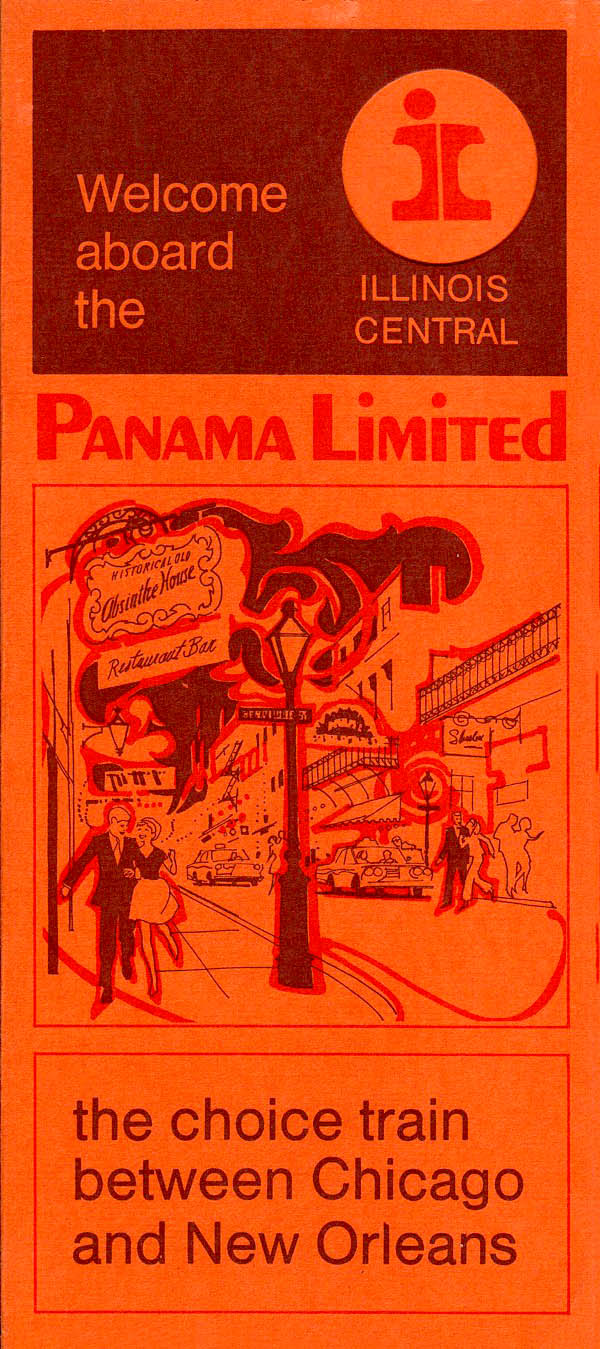
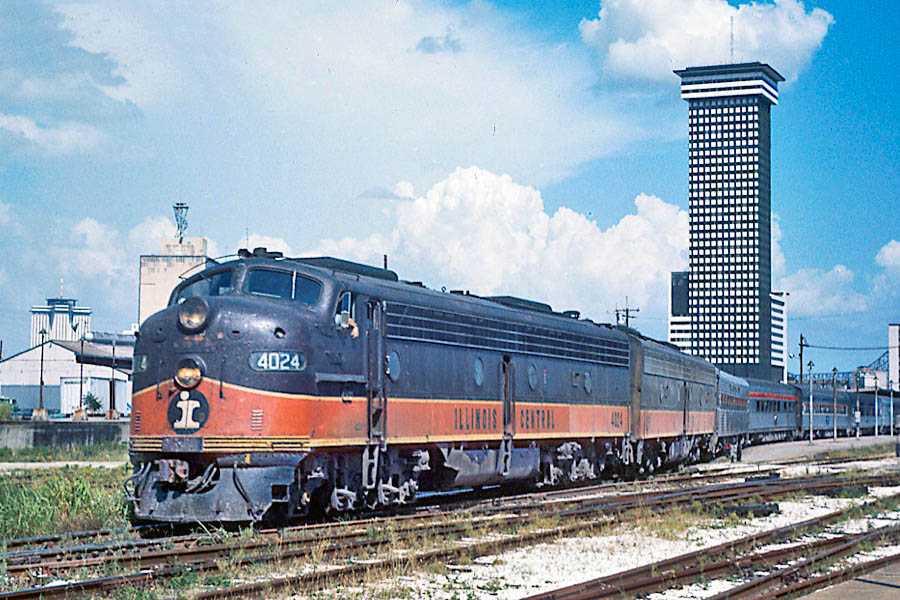
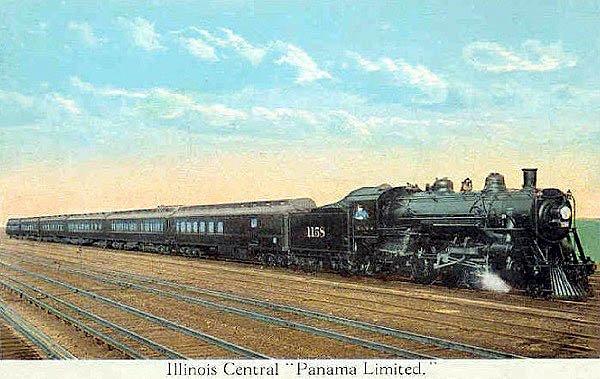 The Panama Limited was a passenger train operated from 1911 to 1971 between Chicago, Illinois, and New Orleans, Louisiana. The flagship train of the Illinois Central Railroad, it took its name from the Panama Canal, which in 1911 was three years from completion. For most of its career, the train was "all-Pullman", carrying sleeping cars only. The Panama Limited was one of many trains discontinued when Amtrak began operations in 1971, though Amtrak revived the name later that year and continued it until 1981.
The Panama Limited maintained a high level of service until the Amtrak era. It was noted for its dining car service, with a first-rate culinary staff and creole fare in the Vieux Carre-themed dining cars, a service which the Illinois Central marketed heavily. A well-known multi-course meal on the Panama Limited was the "Kings Dinner," for about $10; other deluxe, complete meals such as steak or lobster, including wine or cocktail, were priced around $4 to $5. In 1952, the Illinois Central acquired several 2-unit 175-foot dining cars from the Chesapeake & Ohio Railroad which it used on the Panama. With the Pennsylvania's Broadway Limited, it was one of the last two all-Pullman trains in the United States.
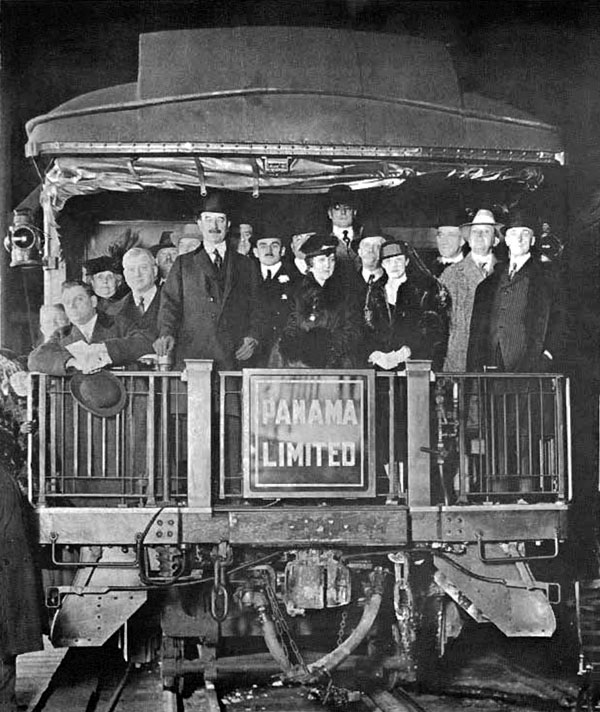 The Panama Limited maintained a high level of service until the Amtrak era. It was noted for its dining car service, with a first-rate culinary staff and creole fare in the Vieux Carre-themed dining cars, a service which the Illinois Central marketed heavily. A well-known multi-course meal on the Panama Limited was the "Kings Dinner," for about $10; other deluxe, complete meals such as steak or lobster, including wine or cocktail, were priced around $4 to $5. In 1952, the Illinois Central acquired several 2-unit 175-foot dining cars from the Chesapeake & Ohio Railroad which it used on the Panama. With the Pennsylvania's Broadway Limited, it was one of the last two all-Pullman trains in the United States.
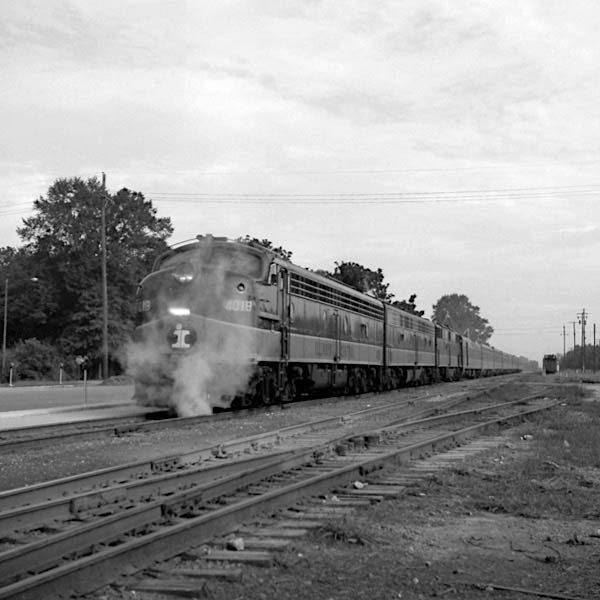
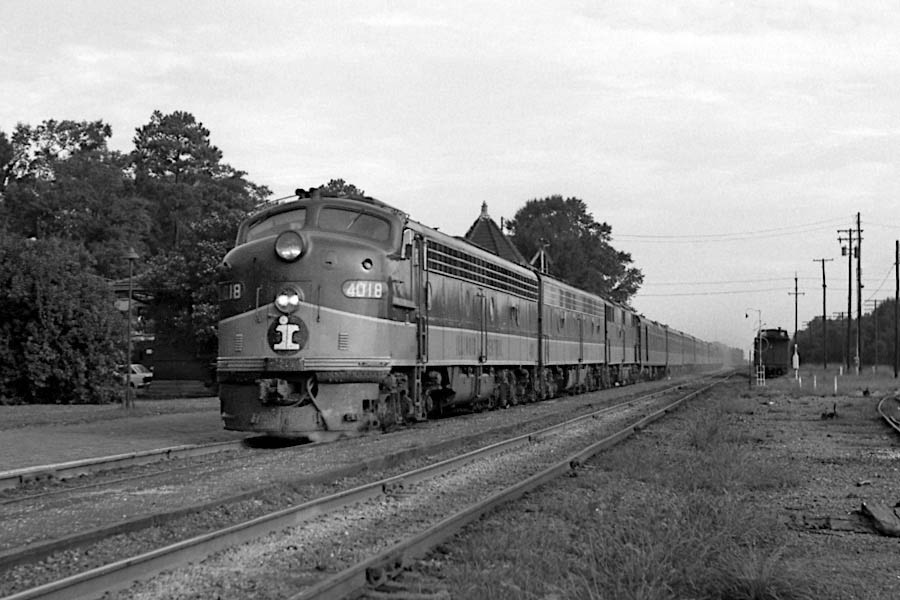
Hammond, La / Aug 1969 / JCH
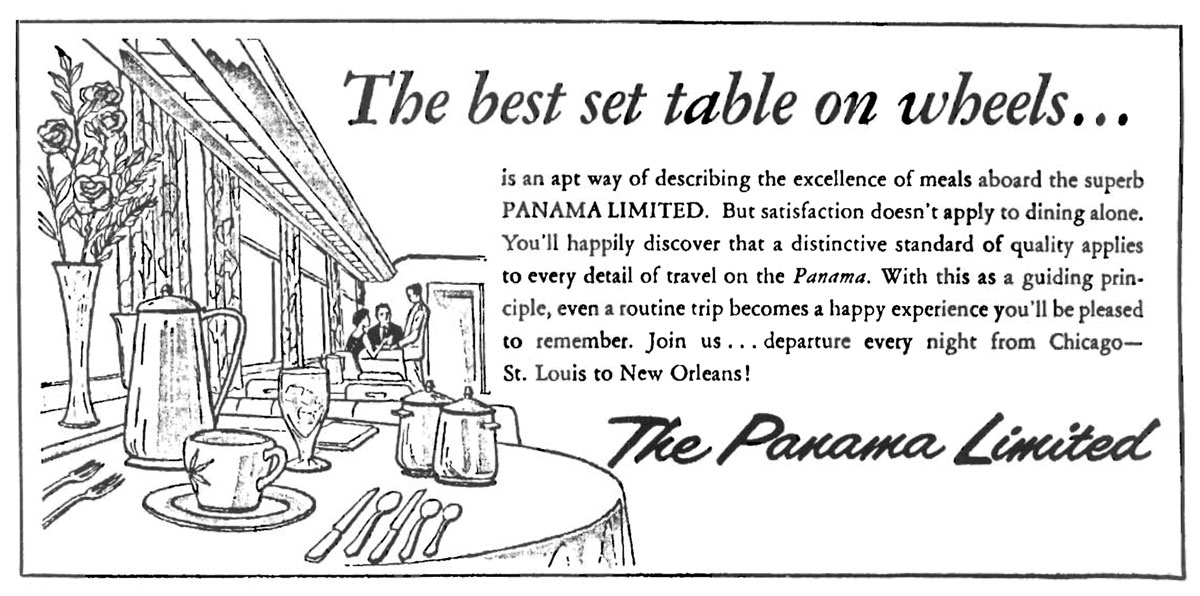
collection
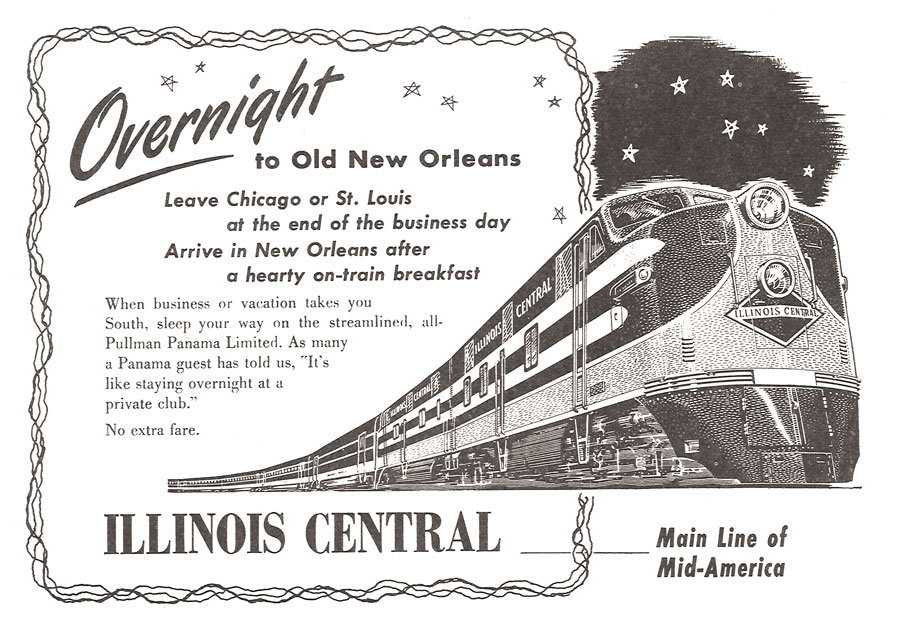
collection
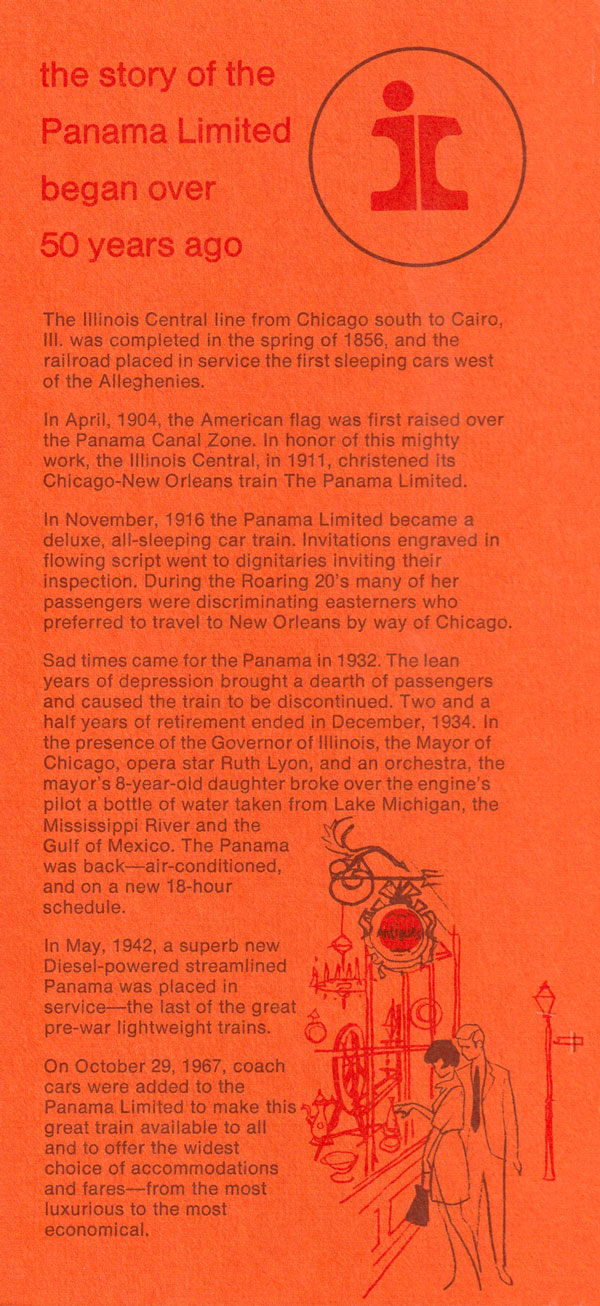
collection
Amtrak's Panama Limited
New Orleans, La / Feb 1974 / collection

See also our complete Illinois Central Passenger Train scrapbook in Mainlines
City of New Orleans

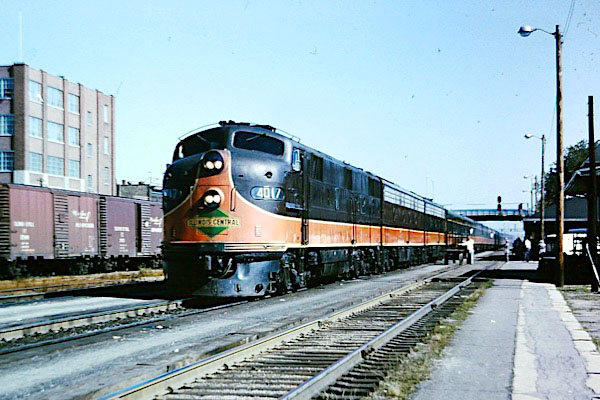
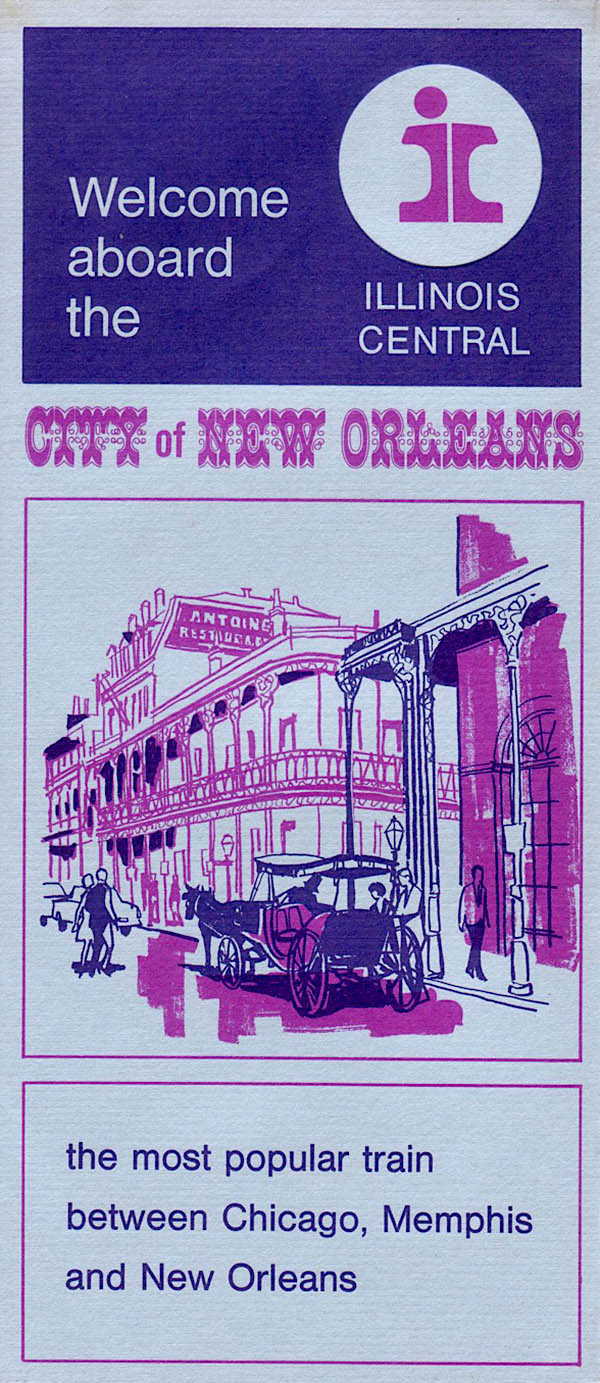
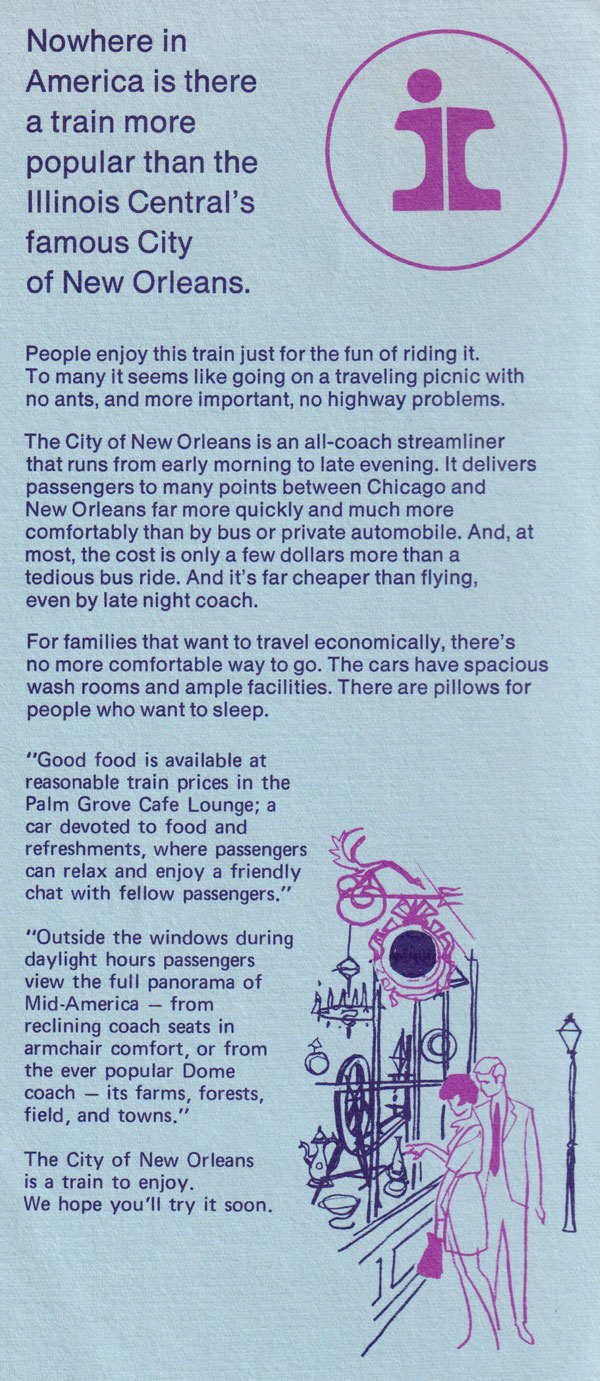
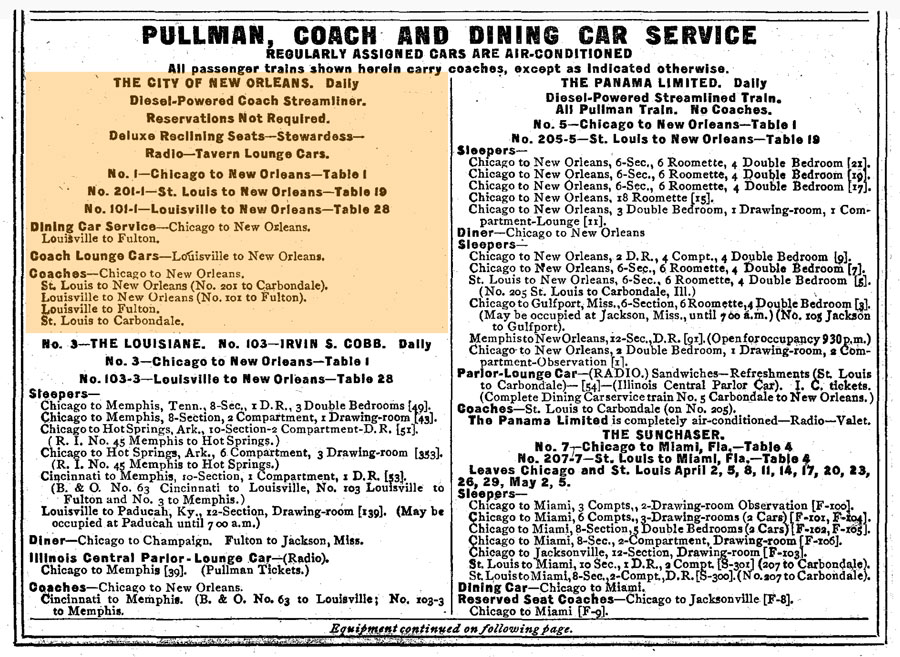
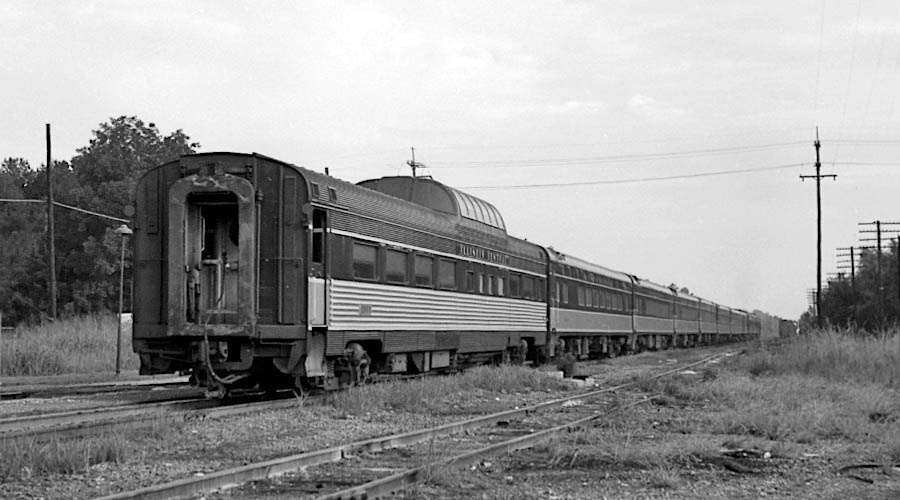
 The Illinois Central Railroad introduced the original City of New Orleans on April 27, 1947. It was a daytime, all-coach companion to the overnight Panama Limited, which had been all-Pullman for most of its run. EMD E7 diesel locomotives pulled new lightweight Pullman Company coaches. The 921-mile route, which the City of New Orleans covered in 15 hours 55 minutes, was the longest daytime schedule in the United States. The City of New Orleans exchanged St. Louis—New Orleans through cars at Carbondale, Illinois and Louisville—New Orleans cars at Fulton, Kentucky. The average speed of the new train was nearly 60 mph with a maximum of 100 mph; a result of the largely flat route of the Illinois Central along the Mississippi River. By October 25, 1959, the timetable had lengthened to 16 hours 30 minutes. The train remained popular throughout the 1960s and gained ex-Missouri Pacific Railroad dome coaches in 1967.
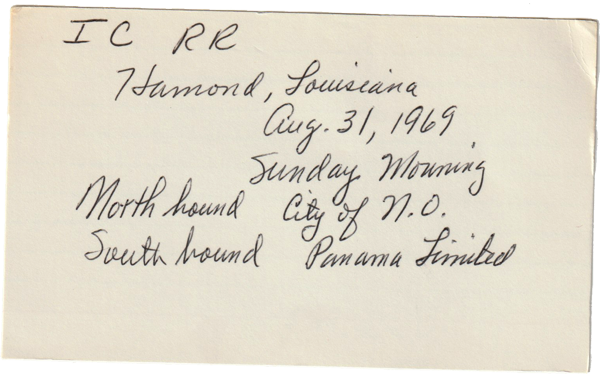
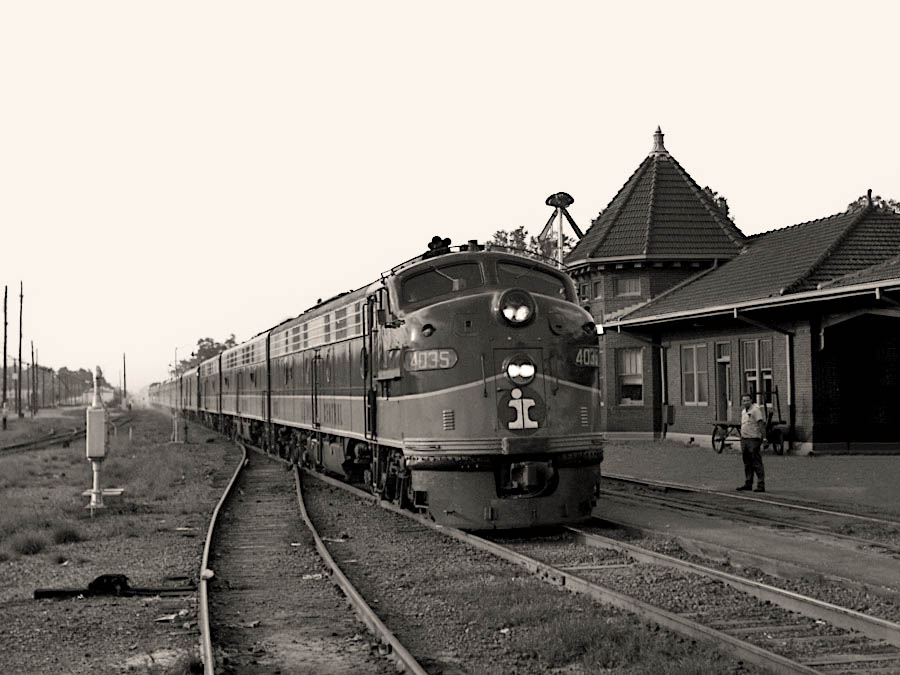
Hammond, La / Aug 1969 / JCH
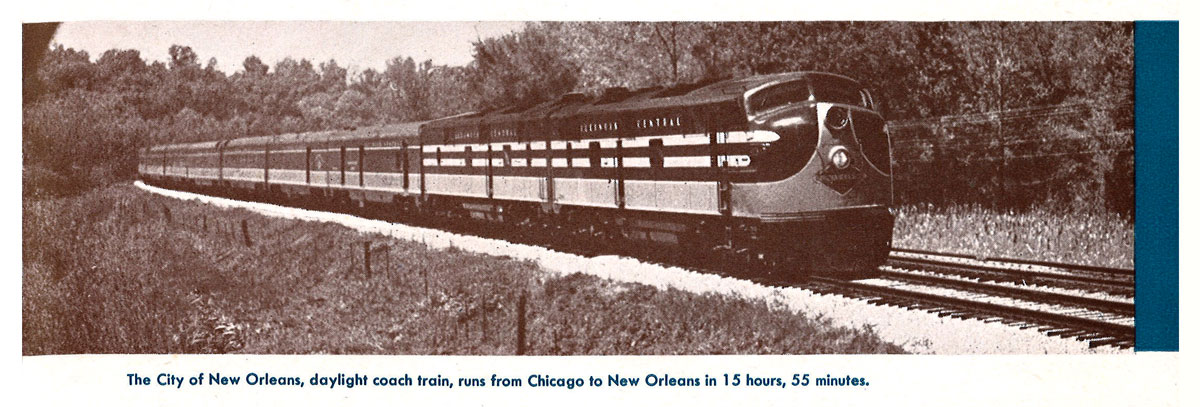
from 1951 Illinois Central Annual Report / collection
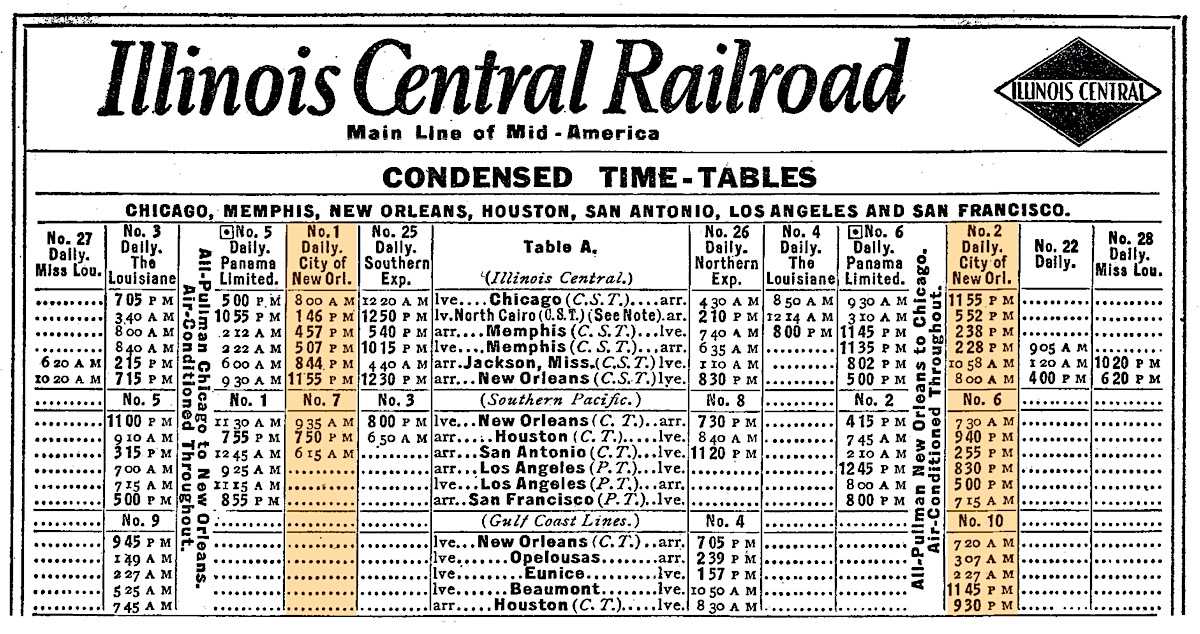
1948 Official Guide ad / collection
1948 Official Guide ad / collection
Hammond, La / Aug 1969 / JCH
See also our complete Illinois Central Passenger Train scrapbook in Mainlines

| station | code |  | miles | #58 | #59 |
|---|---|---|---|---|---|
| City of New Orleans | City of New Orleans | ||||
| daily | daily | ||||
read down  | read up  | ||||
New Orleans LA | NOL | | 0 | 1:45 pm | 3:47 pm |
| Hammond LA | HMD | | 53 | 2:45 pm | 1:28 pm |
McComb MS | MCB | 106 | 3:32 pm | 12:40 pm | |
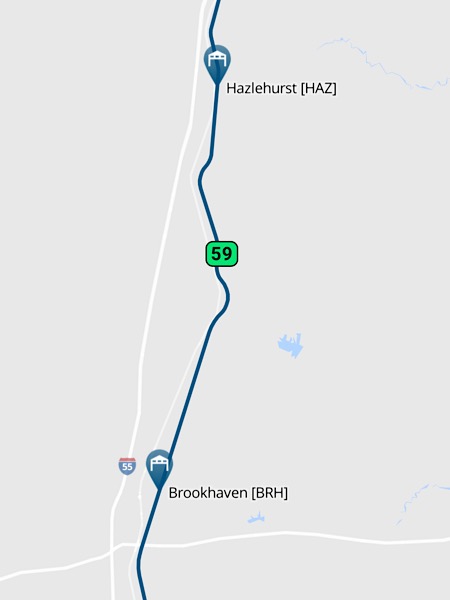
| Brookhaven MS | BRH | 129 | 3:56 pm | 12:16 pm | |
| Hazlehurst MS | HAZ | 150 | 4:17 pm | 11:55 am | |
| Jackson MS | JAN | | 183 | 5:28 pm | 11:12 am |
| Yazoo City MS | YAZ | 228 | 6:42 pm | 9:51 am | |
| Greenwood MS | GWD | 280 | 7:32 pm | 8:55 am | |
| Marks MS | MKS | 337 | 8:31 pm | 8:01 am | |
Memphis TN | MEM | | 406 | 10:20 pm | 6:27 am |
| Newbern-Dyserburg TN | NBN | 492 | 12:22 am | 3:56 am | |
Fulton KY | FTN | 528 | 1:04 am | 3:14 am | |
Carbondale IL | CDL | | 625 | 3:11 am | 1:21 am |
| Centralia IL | CEN | 681 | 4:10 am | 12:25 am | |
| Effingham IL | EFG | 734 | 4:57 am | 11:37 pm | |
| Mattoon IL | MAT | 761 | 5:23 am | 11:13 pm | |
| Champaign-Urbana IL | CHM | | 805 | 6:05 am | 10:29 pm |
| Kankakee IL | KKI | 877 | 7:13 am | 9:23 pm | |
| Homewood IL | HMW | 910 | 7:44 am | 8:54 pm | |
| Chicago IL | CHI | | 934 | 9:15 am | 8:05 pm |
stations listed in orange above are featured in our route scrapbook below
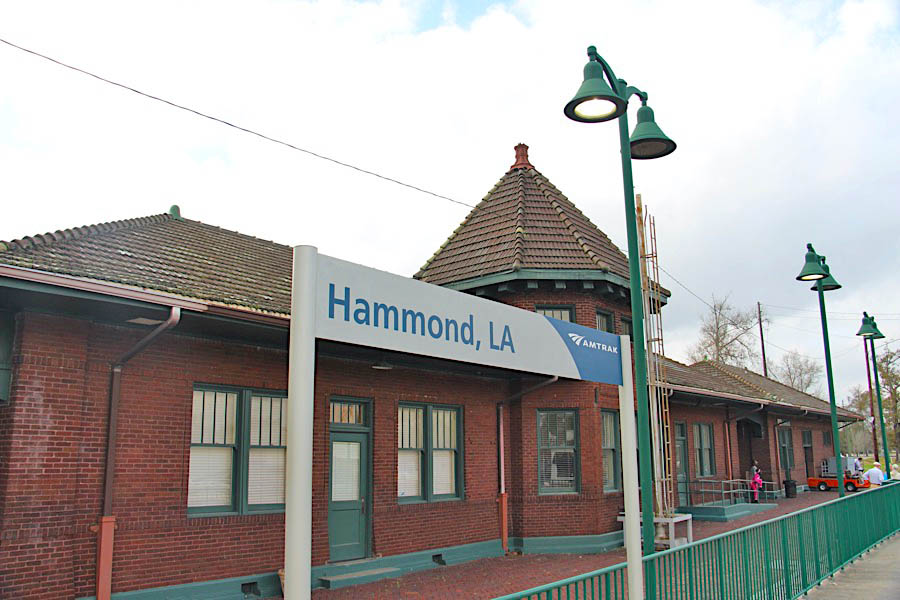
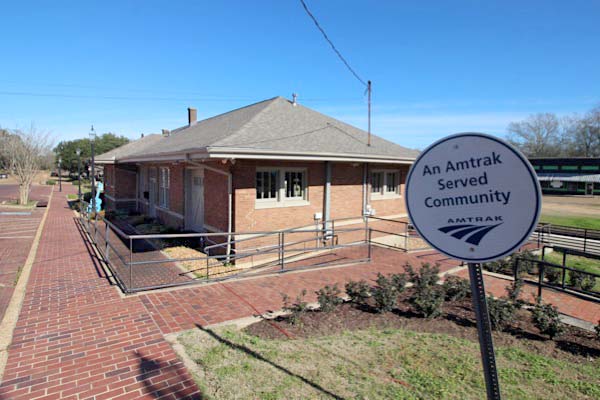
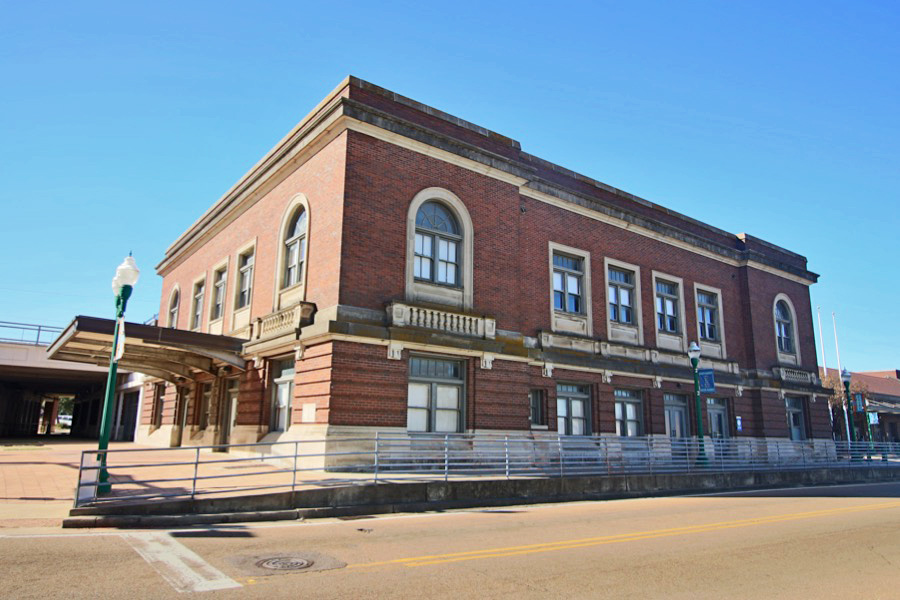
RWH
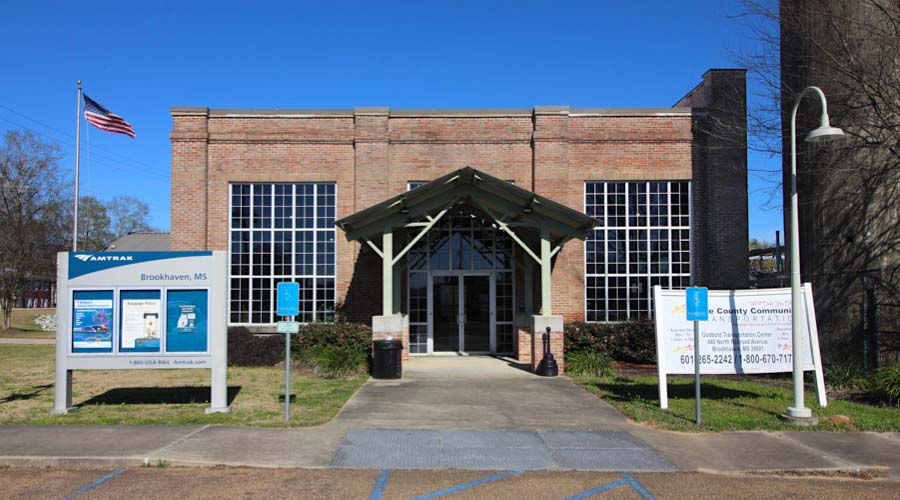
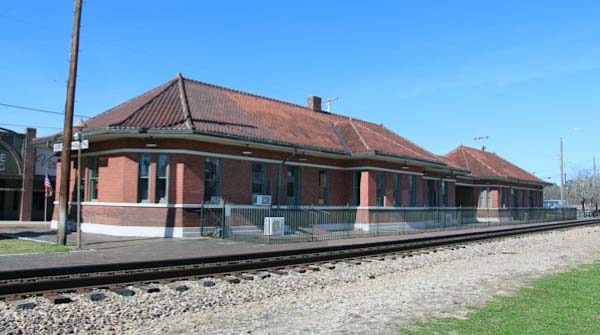
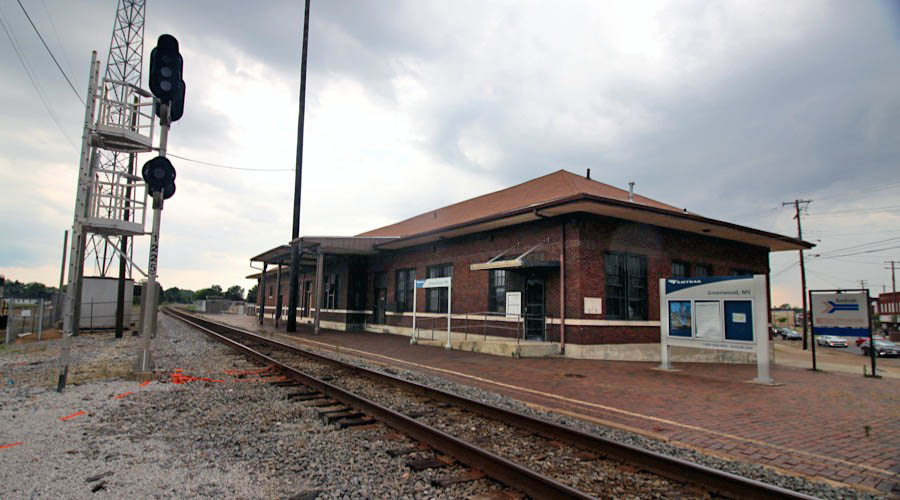
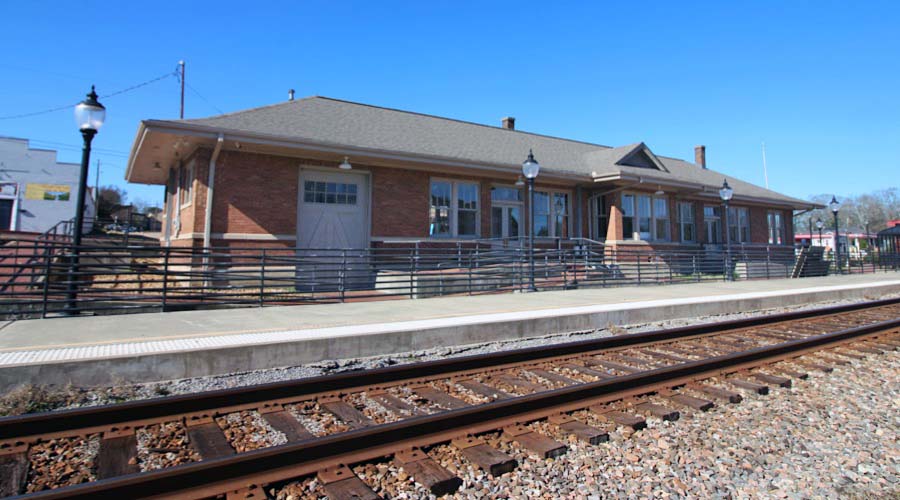
RWH

Our City of New Orleans route scrapbook runs northbound
starting at New Orleans and ending at Chicago
Louisiana
 0 New Orleans, La

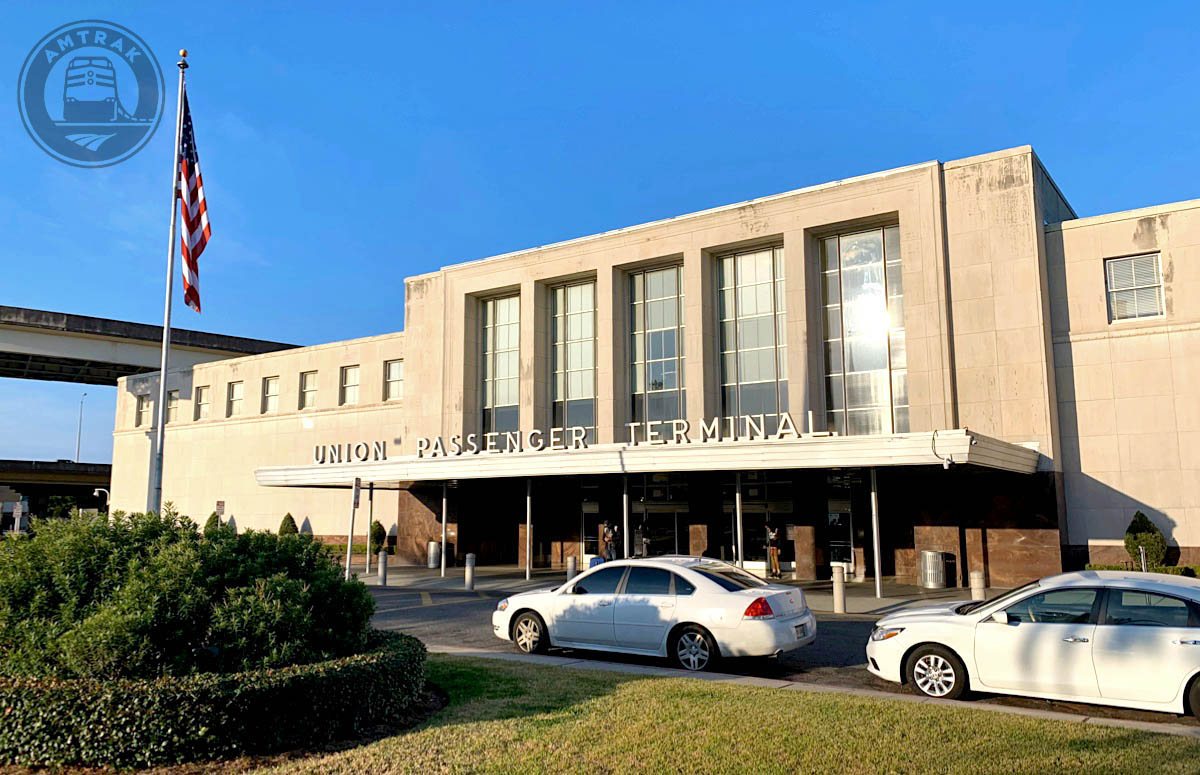
New Orleans, La / Nov 2019 / RWH
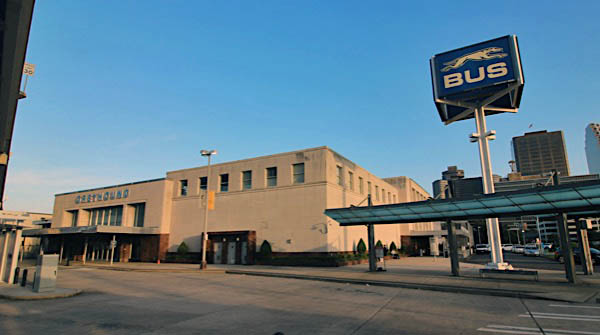
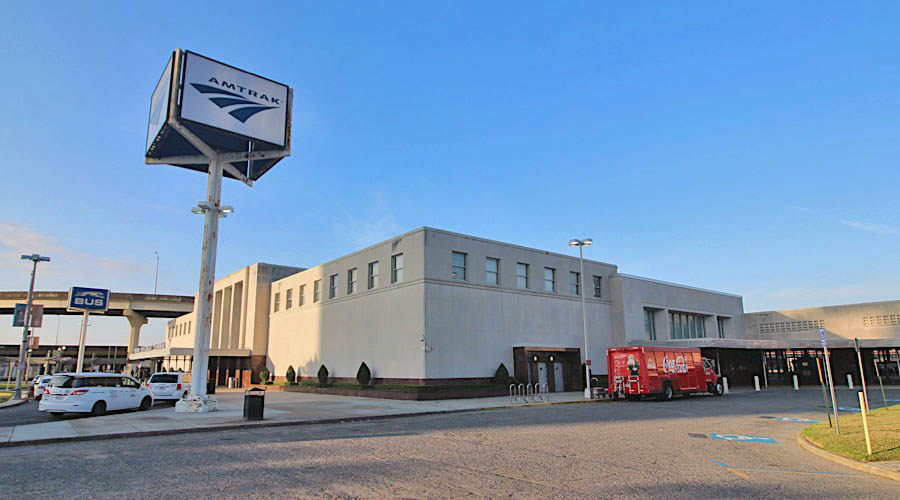
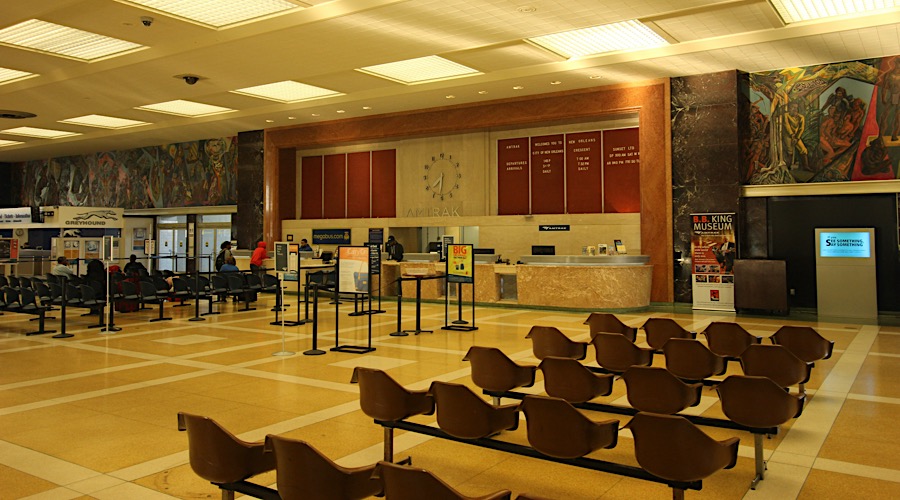
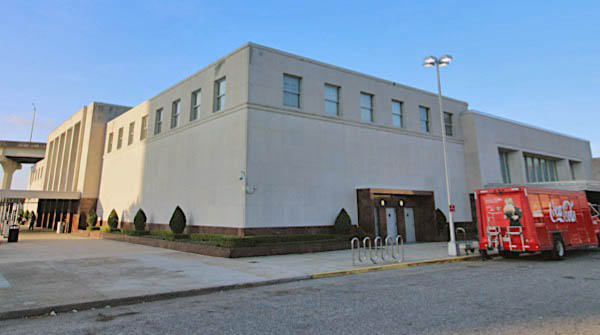
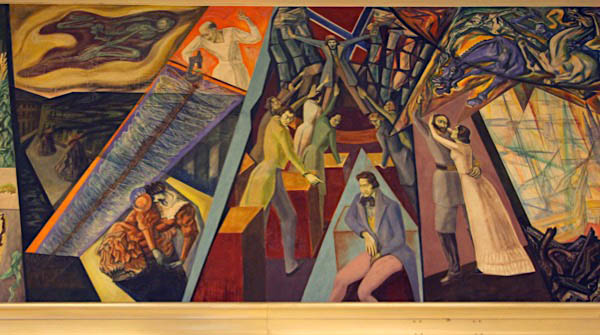
RWH
See also our complete New Orleans Union Passenger Terminal scrapbook in Amtrak Great Stations
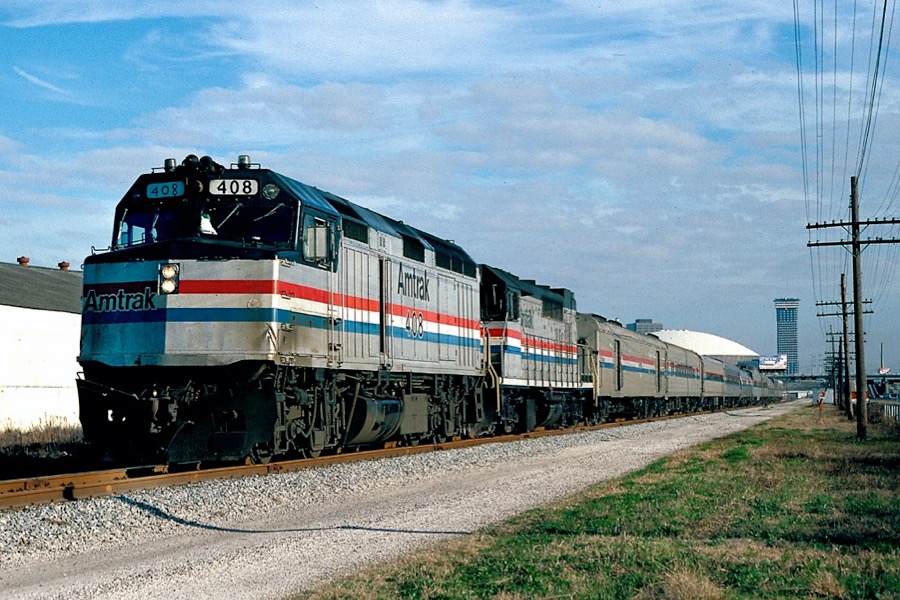
New Orleans, La / Sep 1991 / Christopher Palmieri 
 Jefferson, La
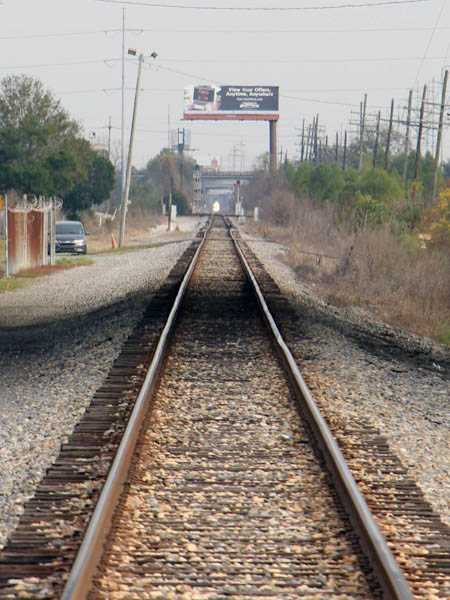
Dec 2016 / RWH
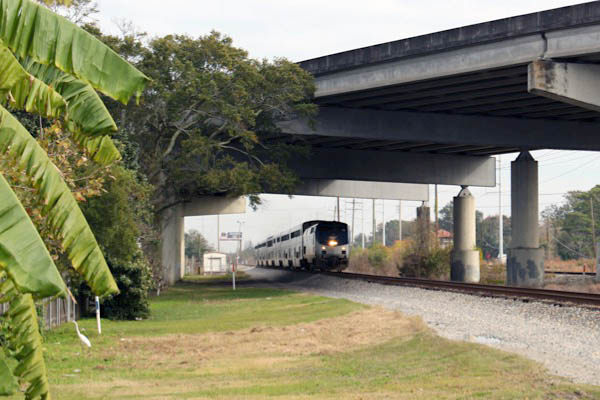
Jefferson, La / Dec 2016 / RWH
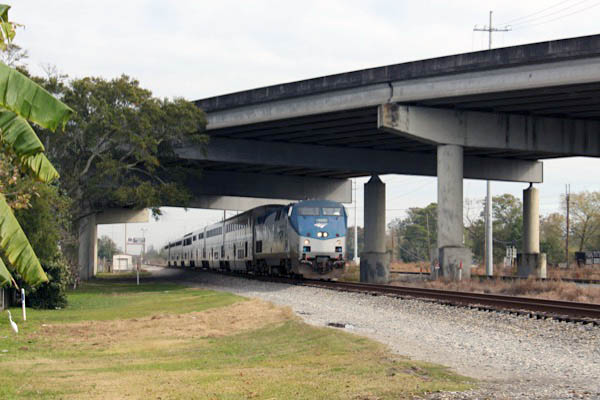
Jefferson, La / Dec 2016 / RWH
Amtrak's
City of New Orleans
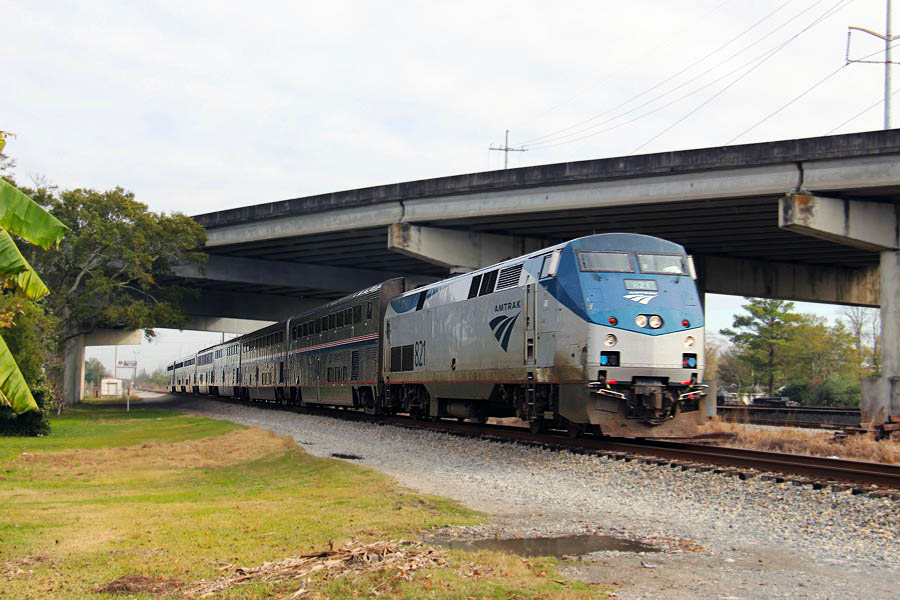
Jefferson, La / Dec 2016 / RWH
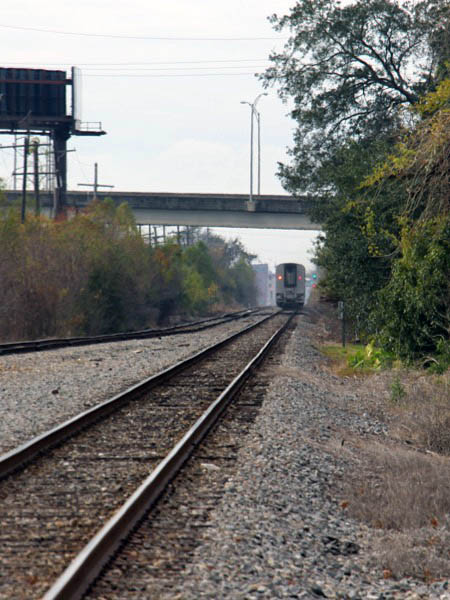
Dec 2016 / RWH

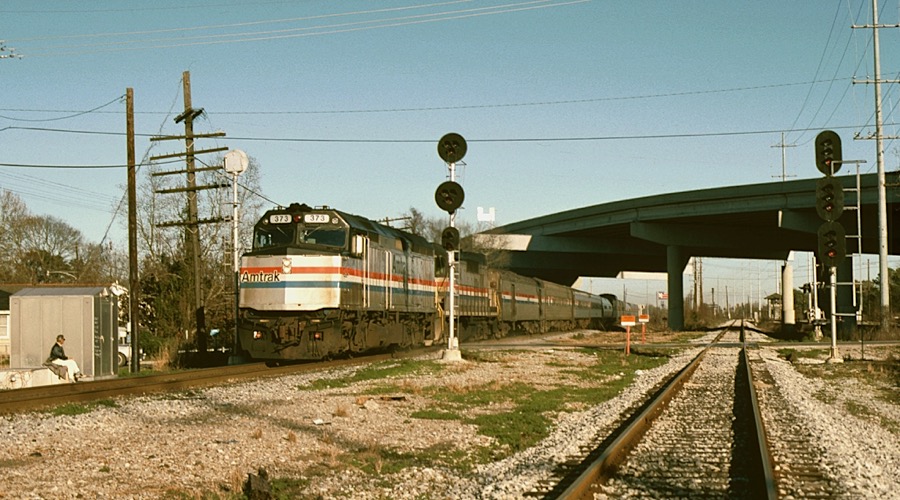
Jefferson, La / Feb 1990 / Michael Palmieri 
Frenier, La
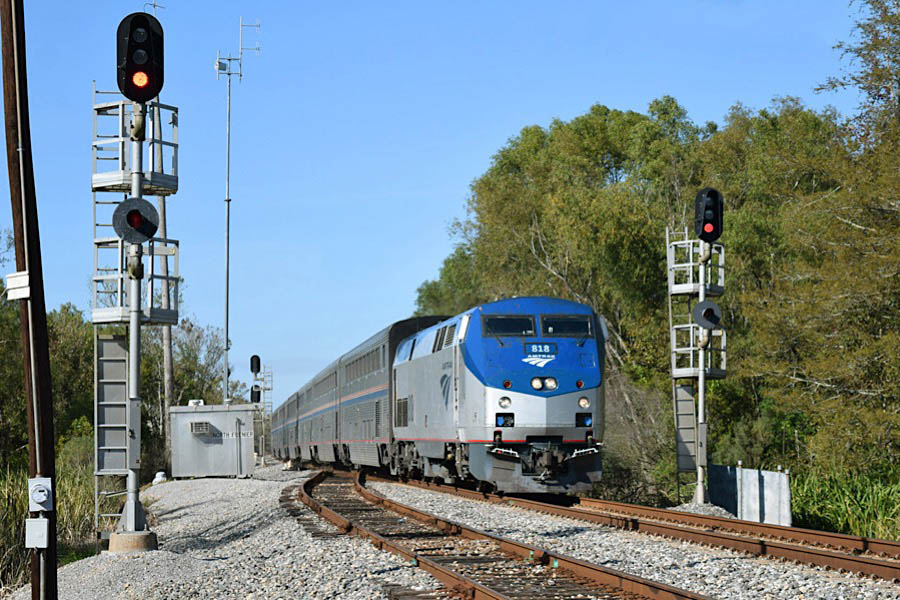
Frenier, La / Nov 2019 / Michael Palmieri
Pass Manchac, La
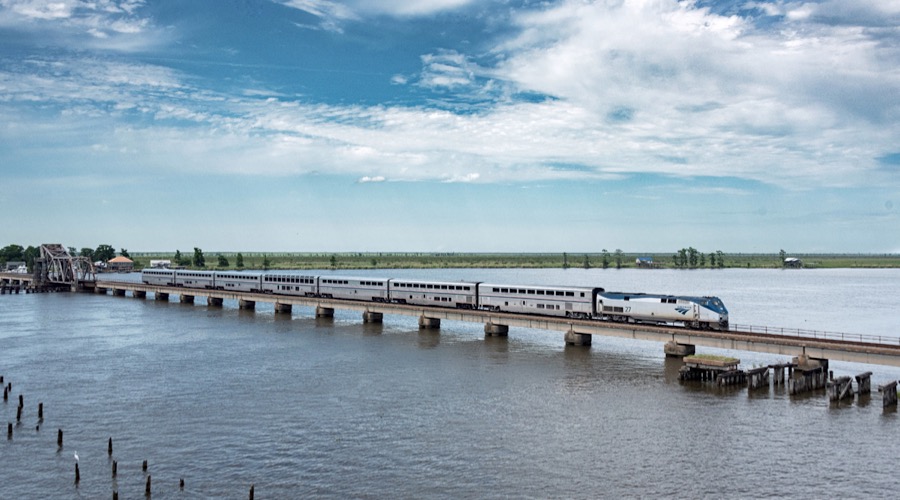
Pass Manchac, La / May 2020 / Anthony DAmato
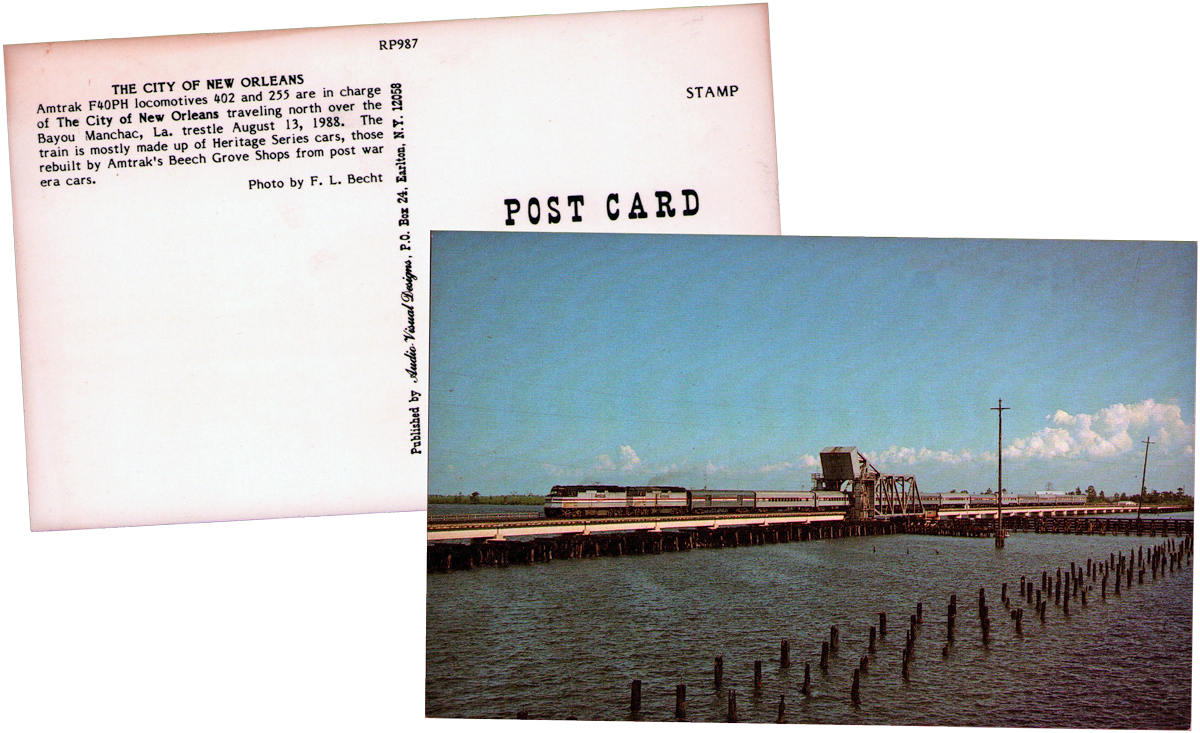
postcard / collection
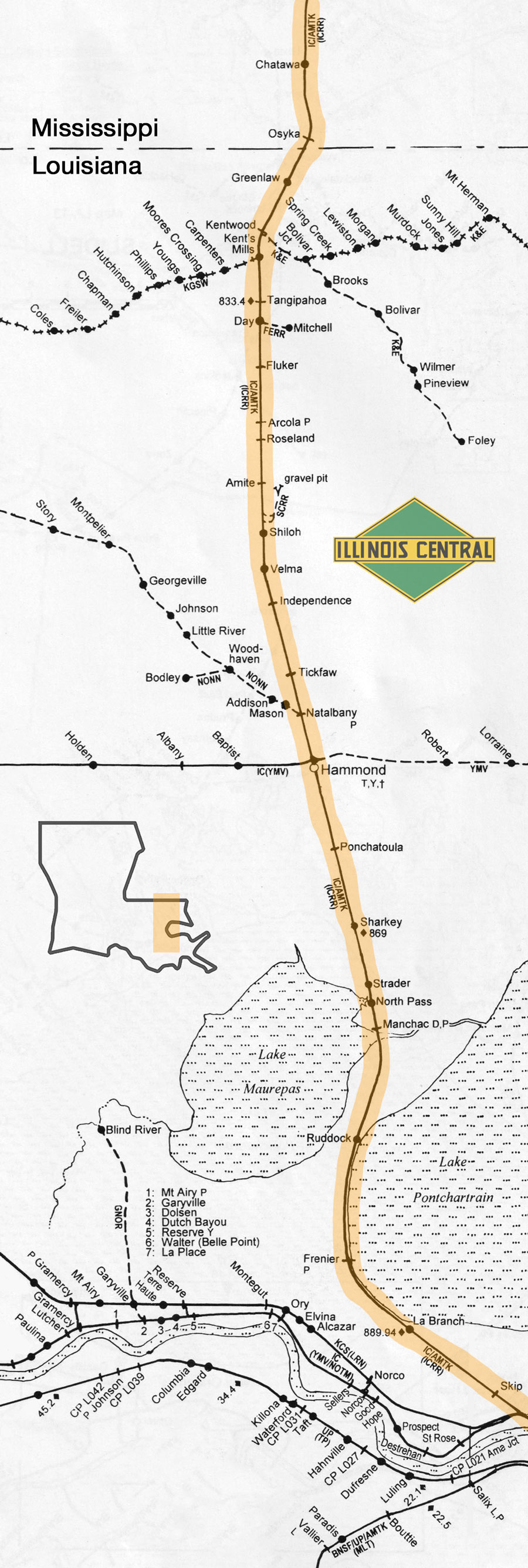
regional map / adapted RWH
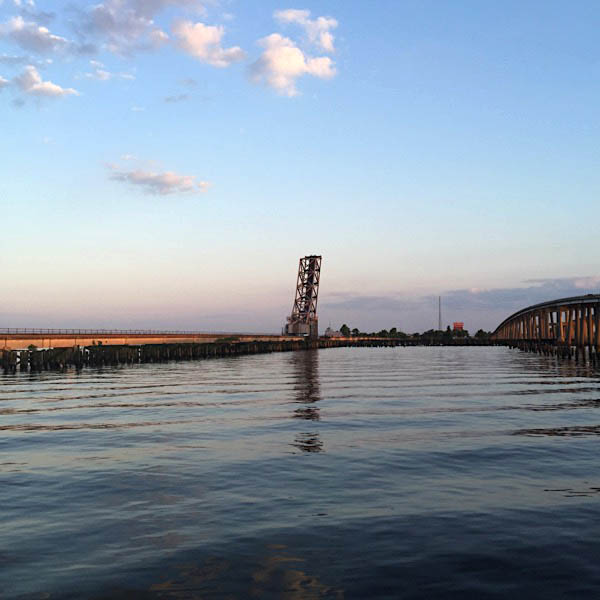
Pass Manchac, La / May 2015 / RWH
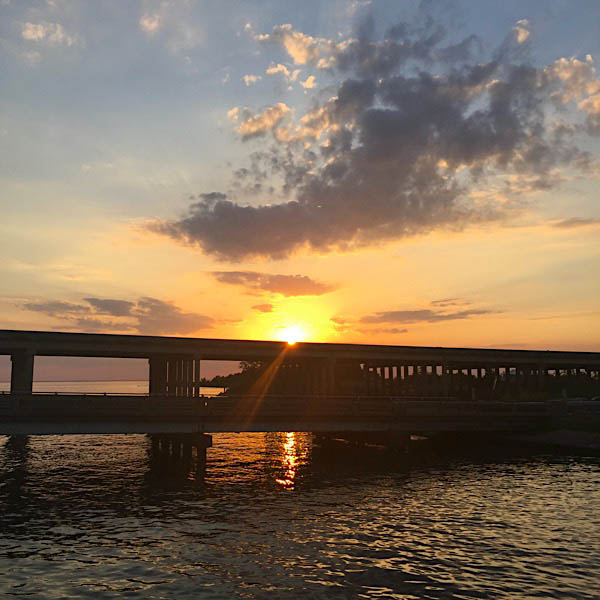
Pass Manchac, La / May 2015 / RWH
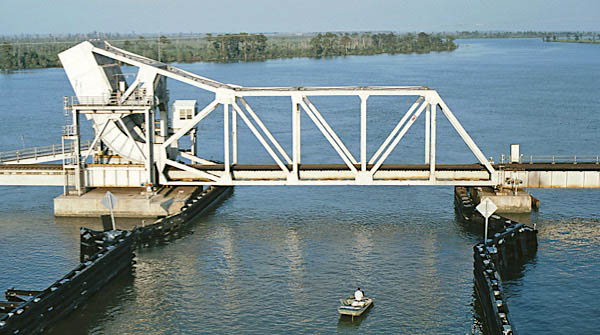
Pass Manchac, La / Sep 1979 / Michael Palmieri
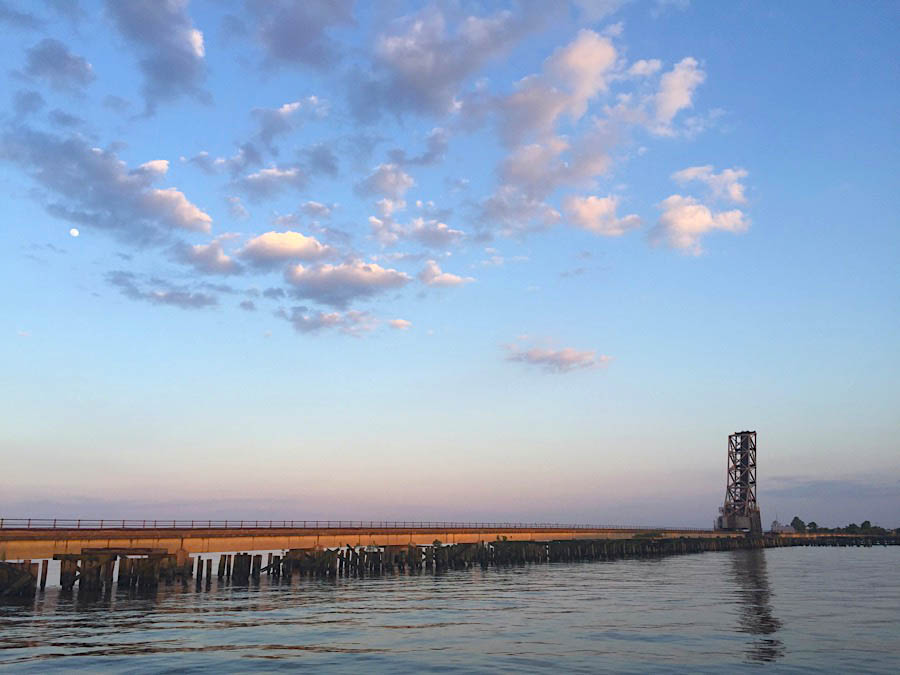
Pass Manchac, La / May 2015 / RWH


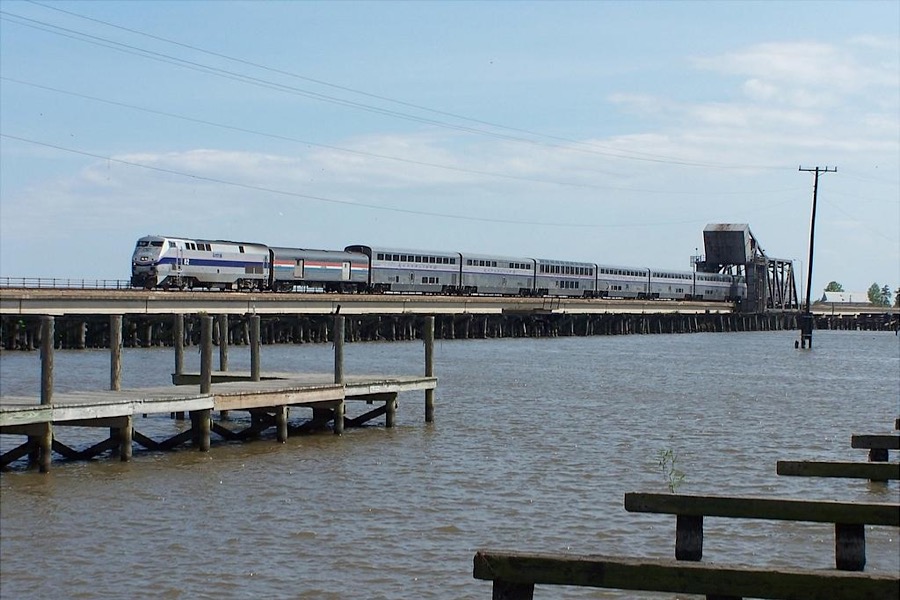
Pass Manchac, La / Apr 2004 / Brian LaFleur
See also our complete Illinois Central in Louisiana scrapbook in Mainlines
Ponchatoula, La
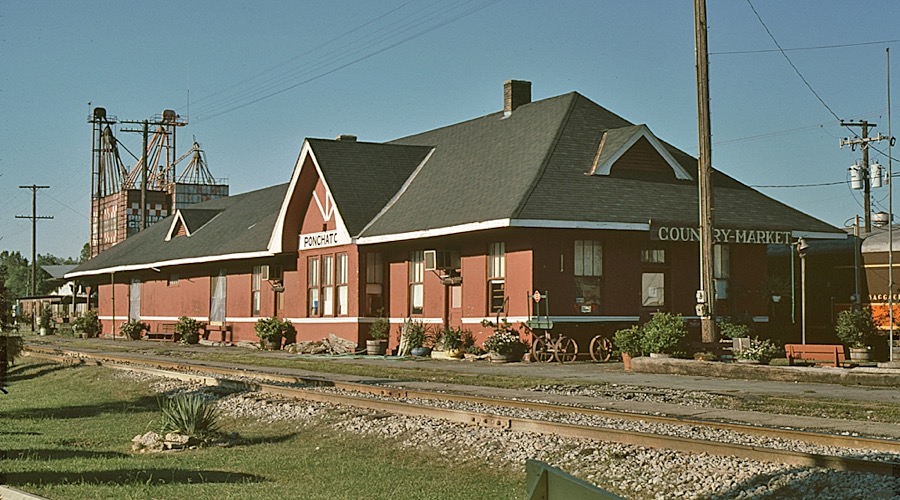
Ponchatoula, La / Sep 1979 / Michael Palmieri
Click to see the former Illinois Central depot plotted on a Google Maps page
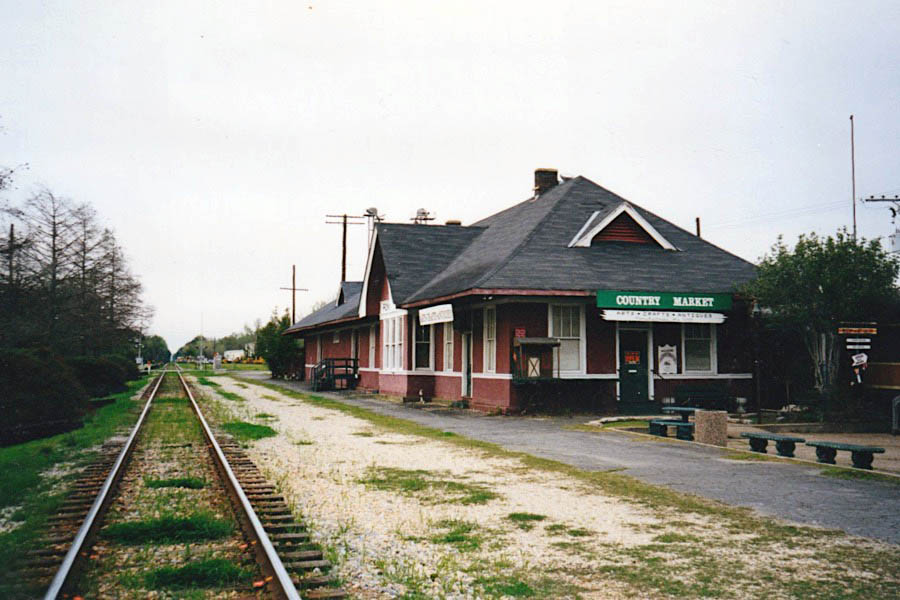
Ponchatoula, La / Mar 2001 / JCH
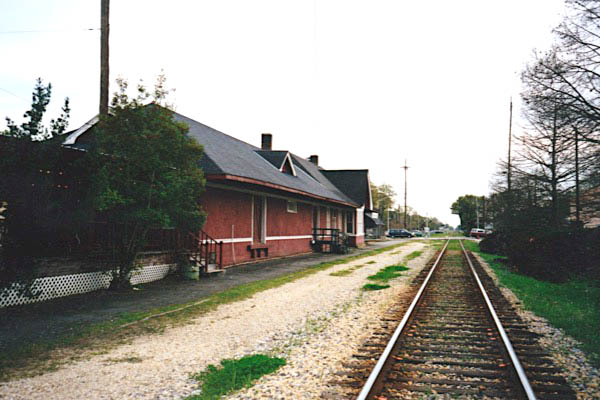
Ponchatoula, La / Mar 2001 / JCH

Ponchatoula, Louisiana, looms large in my Hawkins family. Many of my father's people lived there for generations, including an uncle of his who was the drawbridge tender for Illinois Central at Pass Manchac (above). Dad remembered from his childhood many Sunday afternoon trips from IC's suburban Carrollton Station in New Orleans over to Ponchatoula on one of the IC's locals to visit family members, returning to the city on an evening inbound. I myself remember many visits to the town to visit great Uncle Snooty and Aunt Alberta, and such visits usually included dad and I checking out the Illinois Central Gulf main in town. Snooty had a book on the history of train wrecks that always fascinated me as a kid. Amtrak did not include Ponchatoula in its stations for its City of New Orleans, given its close proximity to Hammond (below) to the north. So the IC depot has instead for many years played home to a country craft market and gallery.
See also our complete Louisiana Cypress Lumber Company featured scrapbook in Industrials
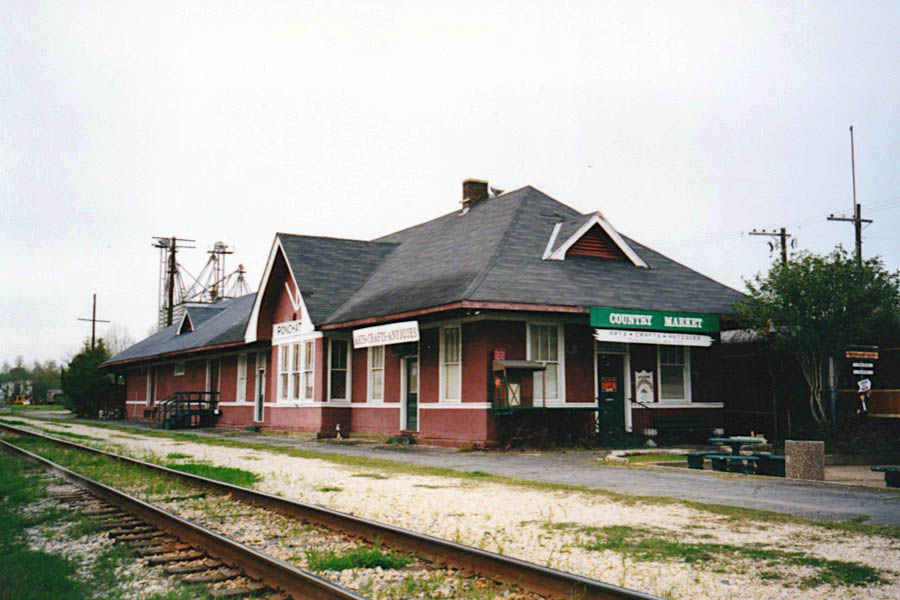
Ponchatoula, La / Mar 2001 / JCH
53 Hammond, La
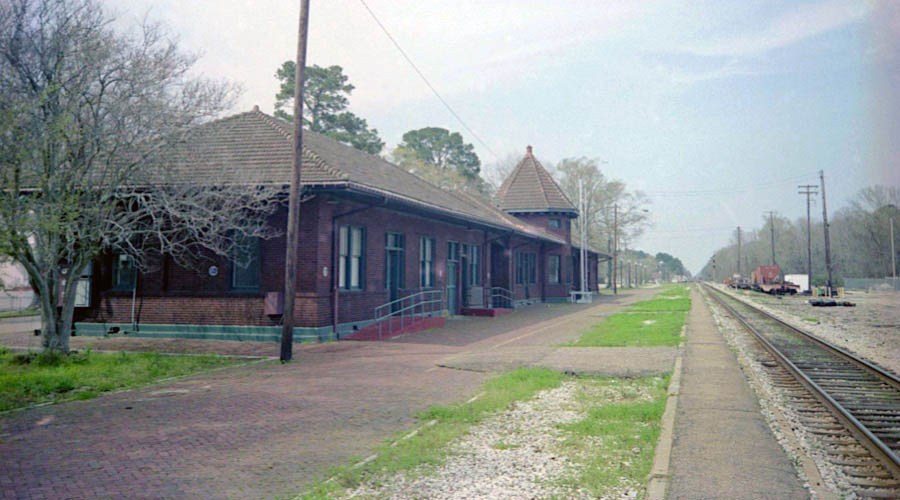
Hammond, La / Mar 2003 / JCH

- location:Hammond LA
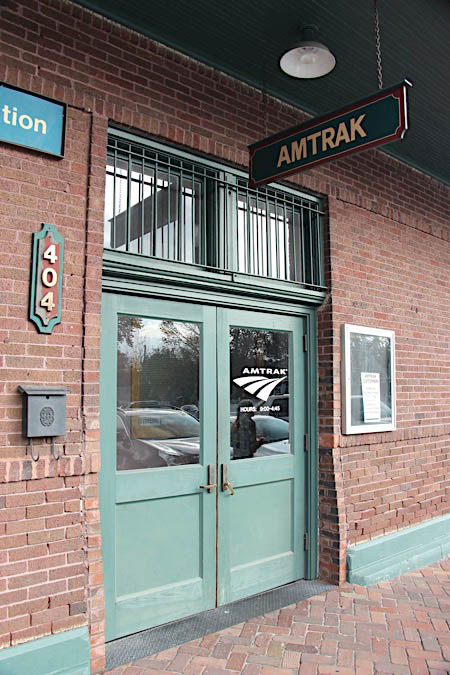
- address:404 NW Railroad Ave
- type:town depot, 1 platform
- owner:Chamber of Commerce
- opened:1912
- builder:Illinois Central
- style:Queen Anne revival
- renovated:2008
- services:tickets, baggage
- links: Amtrak | Great Stations
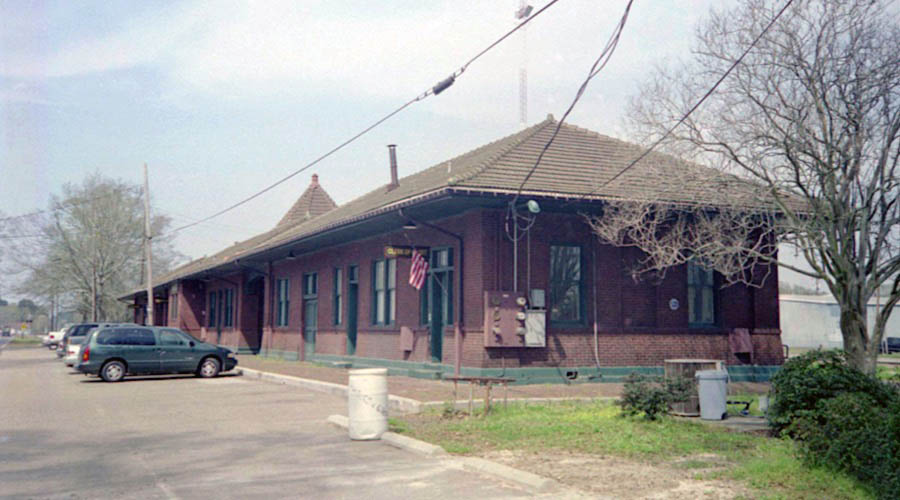
Hammond, La / Mar 2003 / JCH
Click to see the Hammond station plotted on a Google Maps page
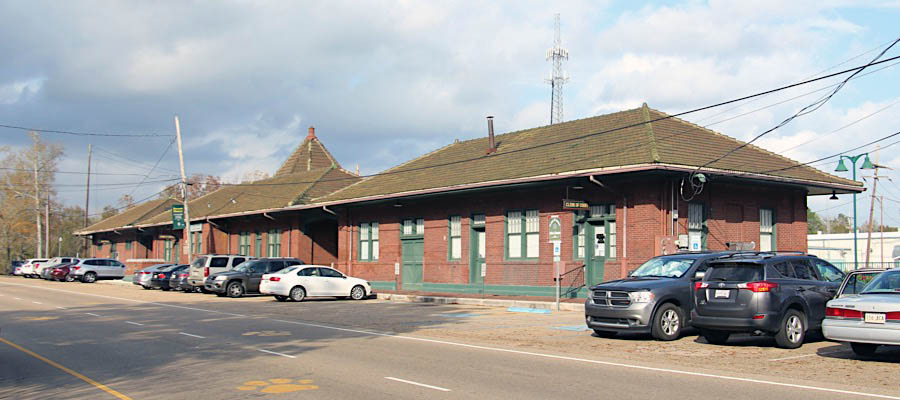
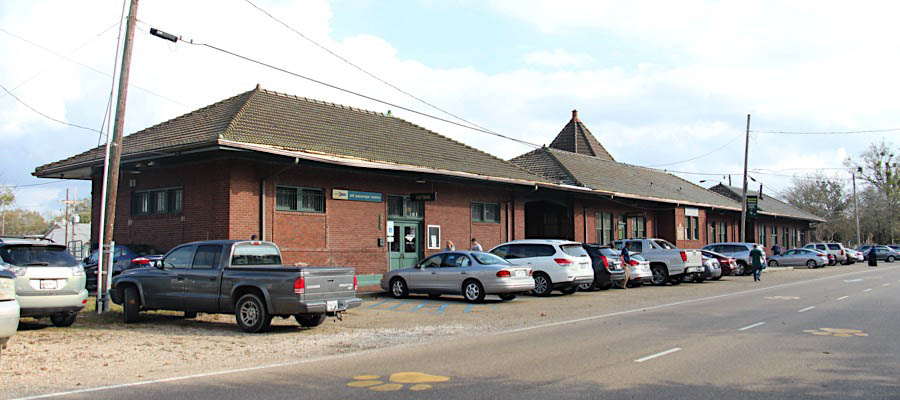
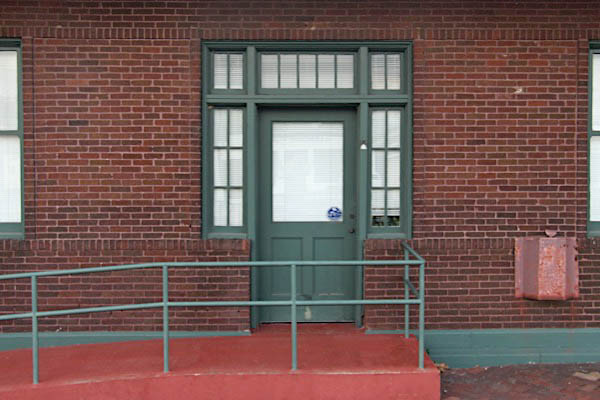
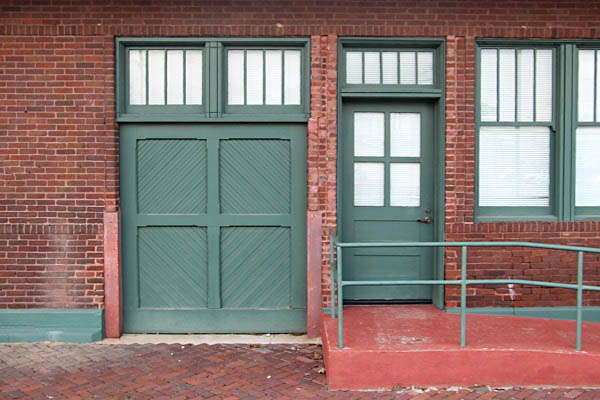
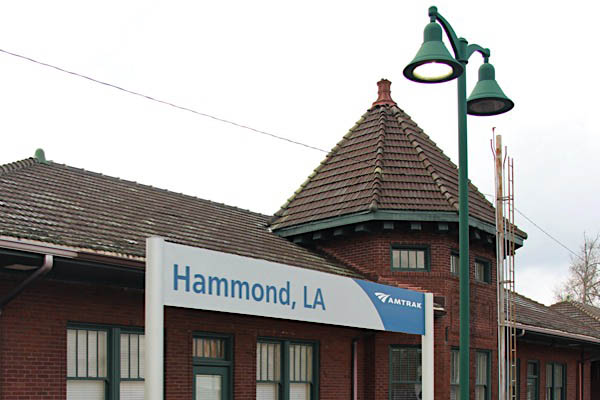
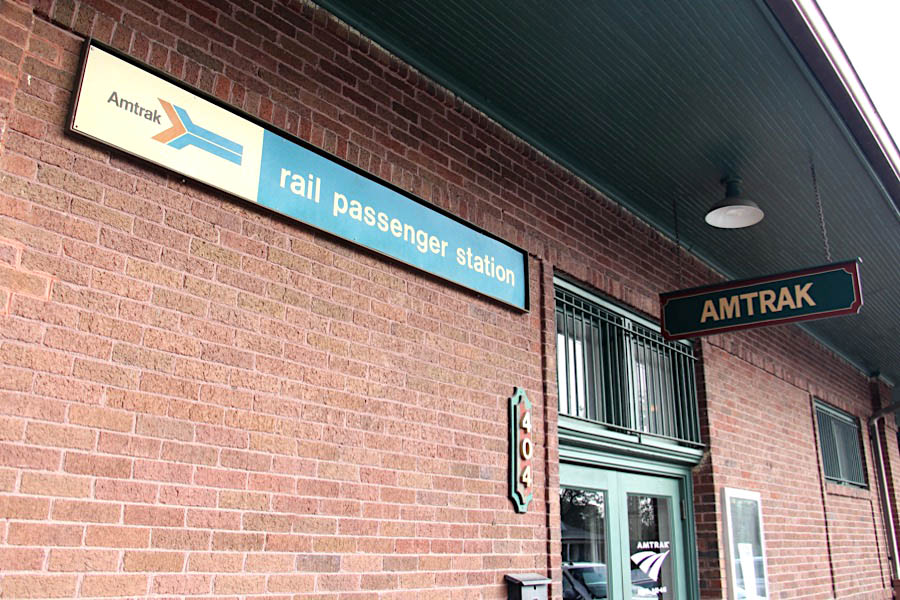
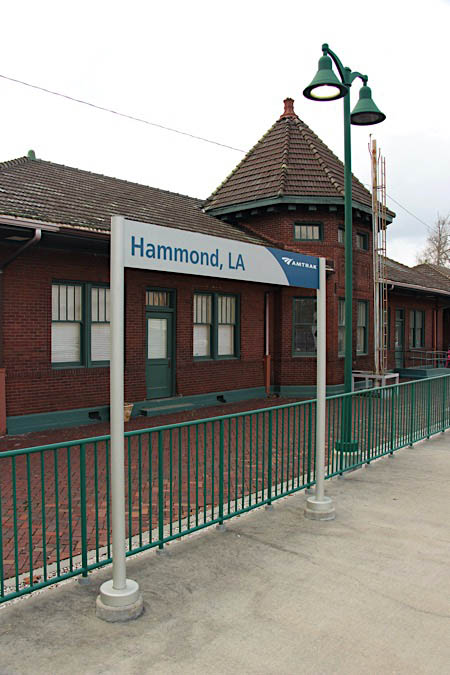
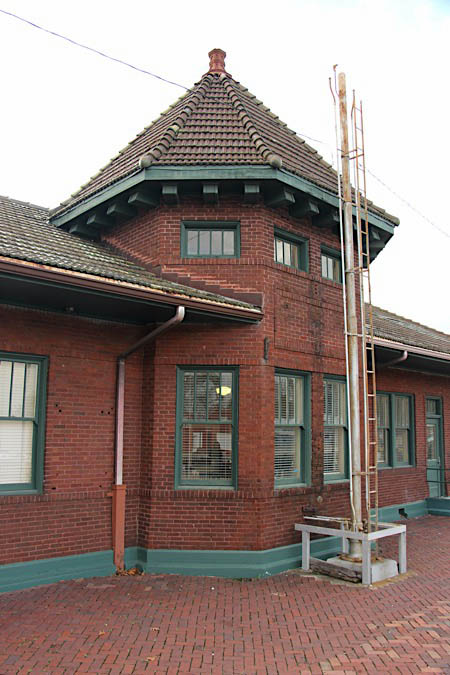
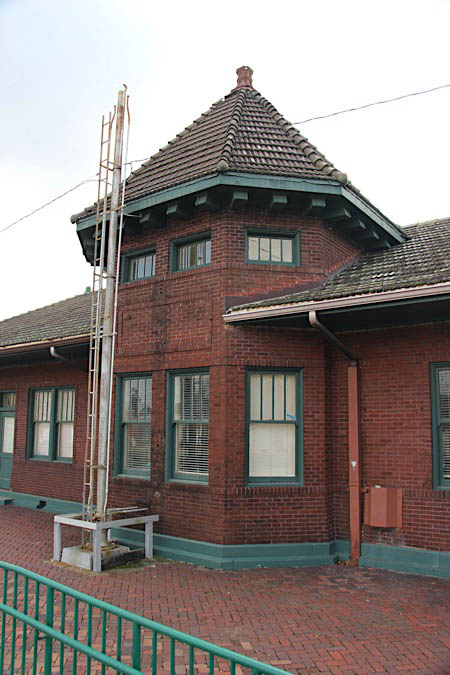
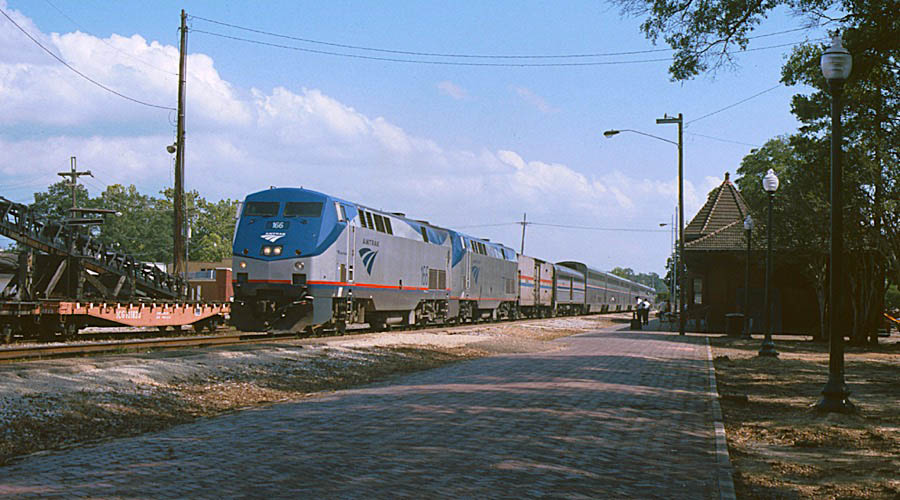
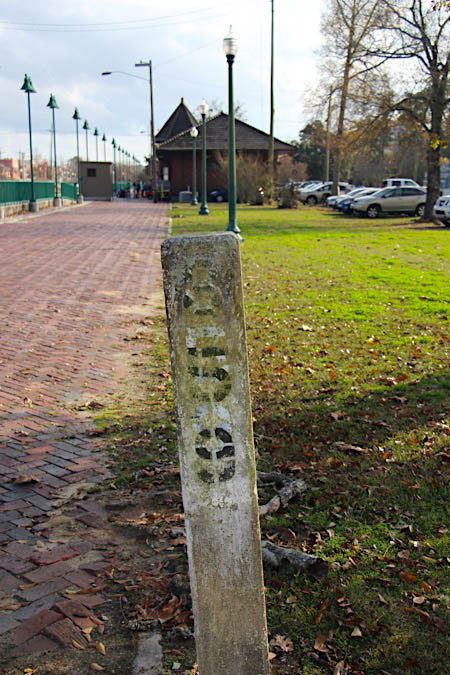
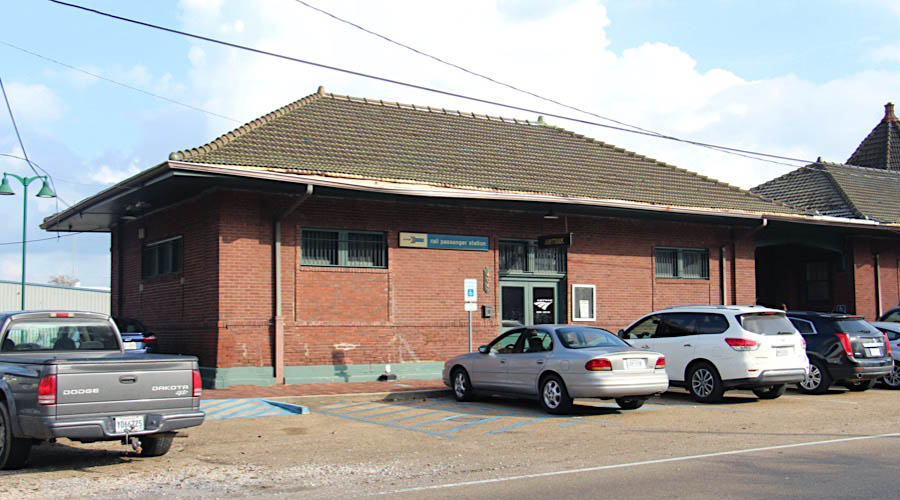
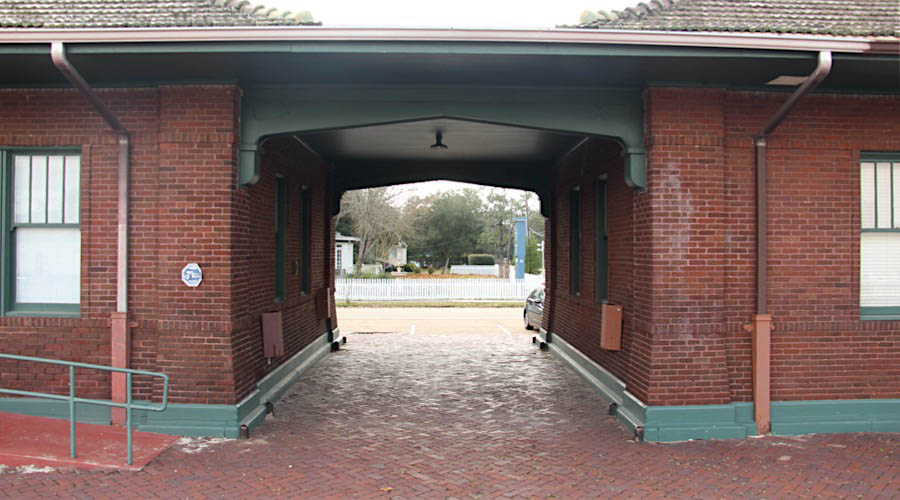
 The current Amtrak station in Hammond was built by the Illinois Central Railroad in 1912 and designed by the railroad’s in-house architects. The depot is listed on the National Register of Historic Places as a component of the Hammond Historic district. Built of deep brown-red brick, the station is in the Queen Anne revival style, with a dominant octagonal tower and elaborate molding and archways and boasts the original cove molded ceiling.
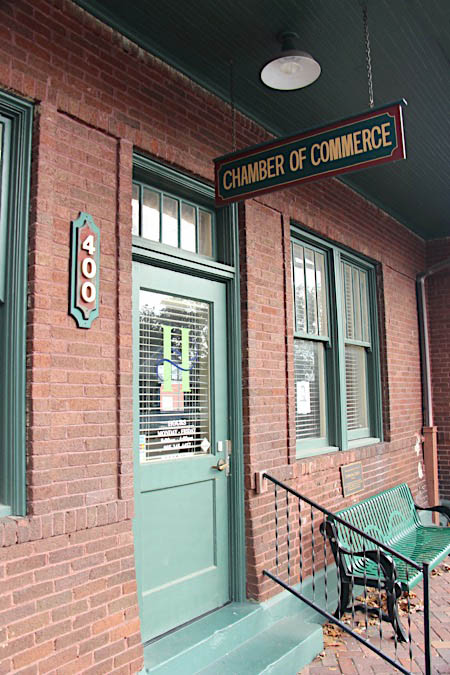
The station complex is currently owned by the Hammond Chamber of Commerce. It was renovated for the Chamber’s use by Holly & Smith Architects in 2008. The main station building houses the chamber, the former restaurant houses a Court Clerk, and the former freight house, extensively remodeled, houses the current Amtrak waiting room and ticketing facilities.
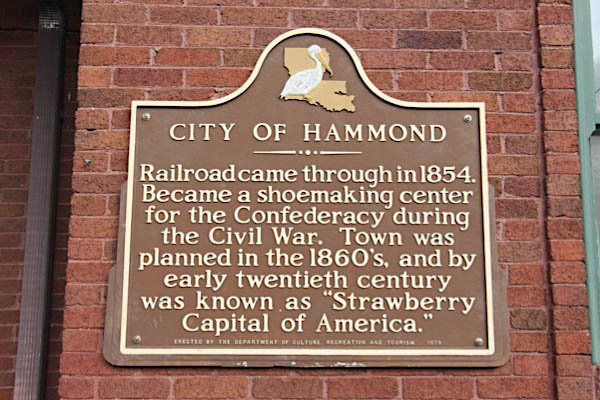
Hammond is the largest city in Tangipahoa Parish. The city derives its name from its first inhabitant, Peter Hammond, a Swedish immigrant. He purchased the land 55 miles outside of New Orleans intending to produce masts and pine-resin products for the blossoming New Orleans maritime industry.
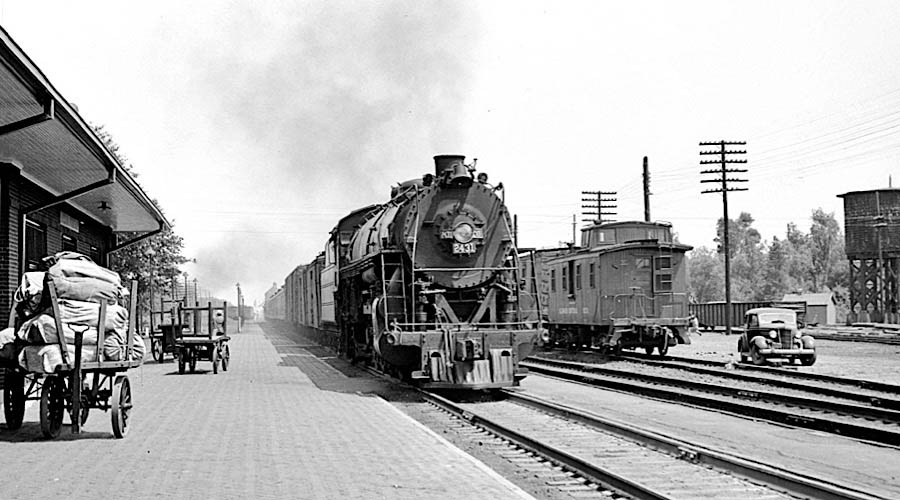 In 1854 the New Orleans, Jackson & Great Northern Railroad reached Hammond, establishing “Hammond Crossing”, a flag stop a block away from the current depot. The railroad immediately began to bring economic benefits to Hammond, prompting Peter Hammond to sign a contract with the railroad requiring that all trains passing through Hammond call on the station.
The railroad brought to Hammond the economic success he was hoping for. In 1859, Charles Emery Cates moved to Hammond and established a shoe factory. The factory was destroyed during the Civil War after producing 45,000 shoes for the soldiers of the Confederate Army.
Hammond, once an agricultural center, soon grew to a center of manufacturing, thanks to the presence of the railroad (then Illinois Central, now CN) and its location between Baton Rouge and New Orleans. This location has led to its continued growth as a joint suburb to both cities. Hammond is home to Southeastern Louisiana University as well as the Tangipahoa African American Heritage Museum and Black Veteran Archives.
Hammond, La / Dec 2016 / RWH
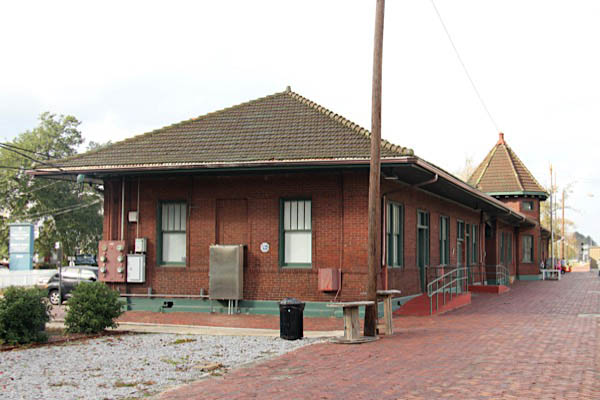
Hammond, La / Dec 2016 / RWH
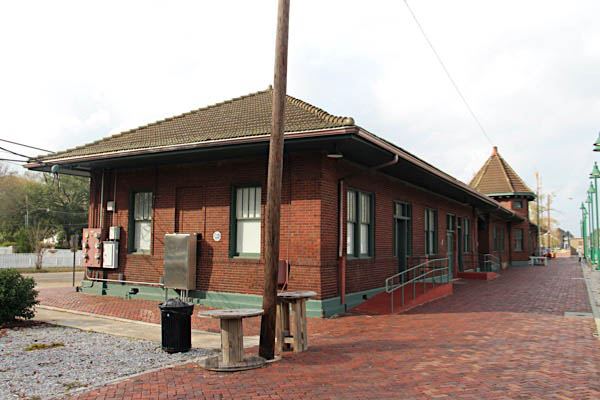
Hammond, La / Dec 2016 / RWH

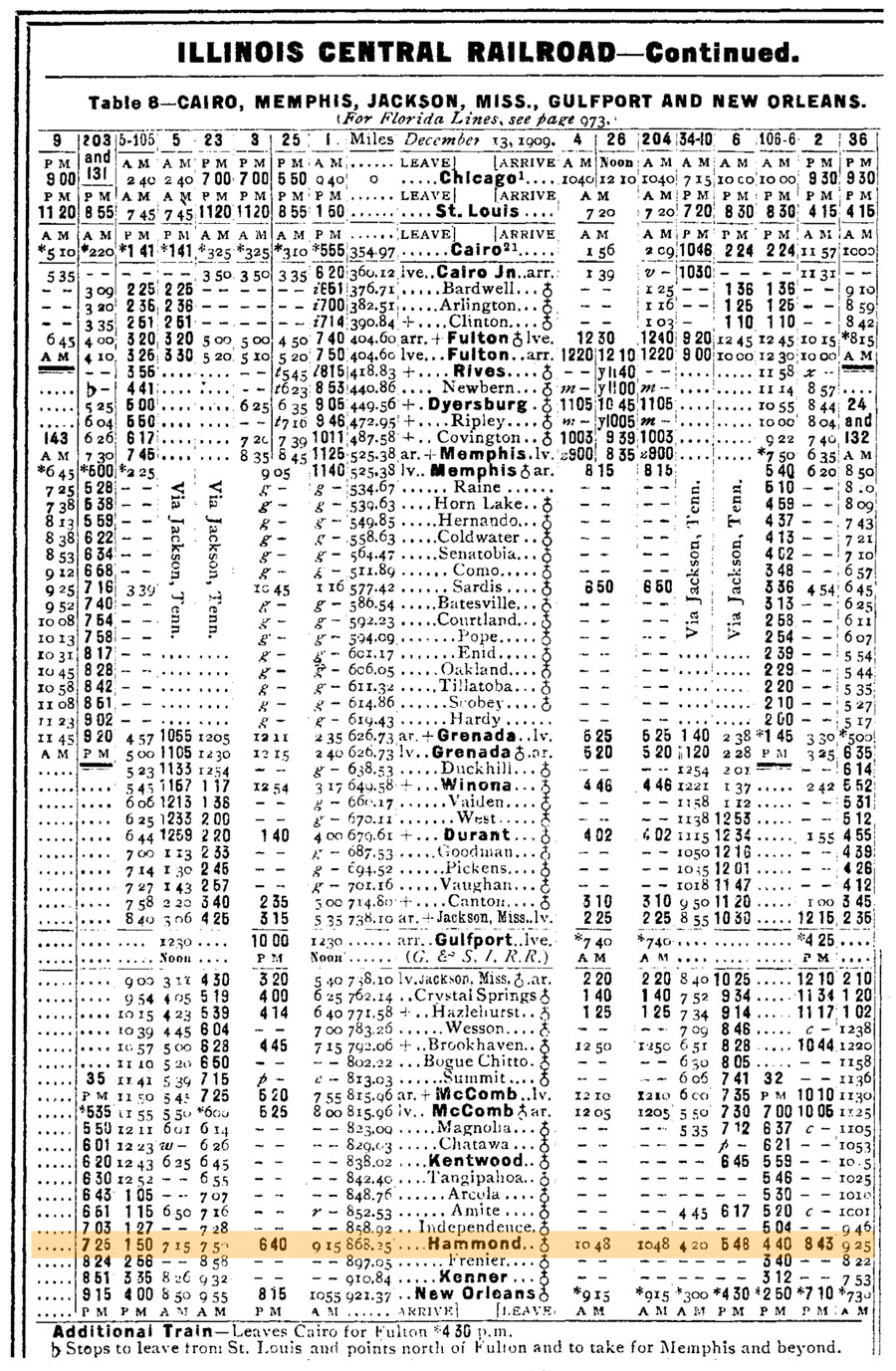
1910 Official Guide timetable / collection
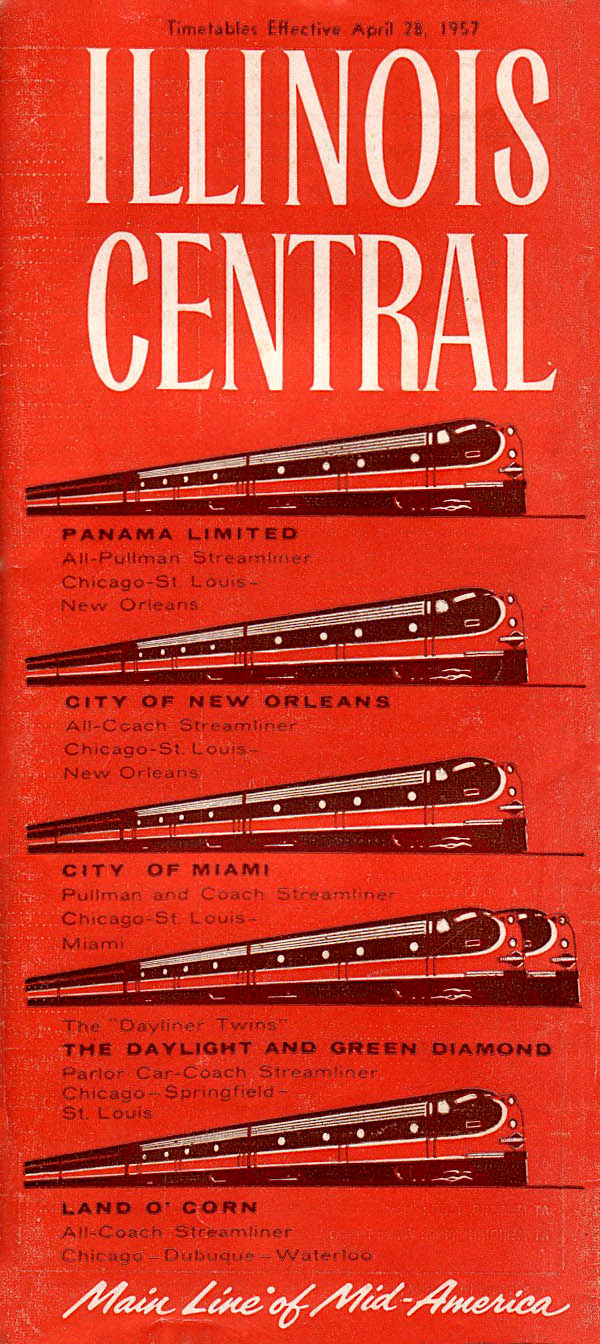
collection
collection
Hammond, La / Dec 2016 / RWH
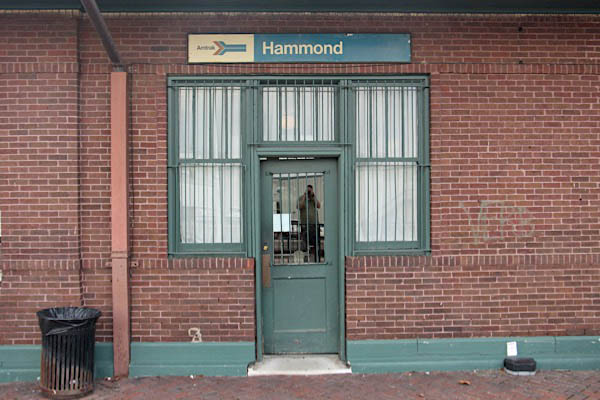
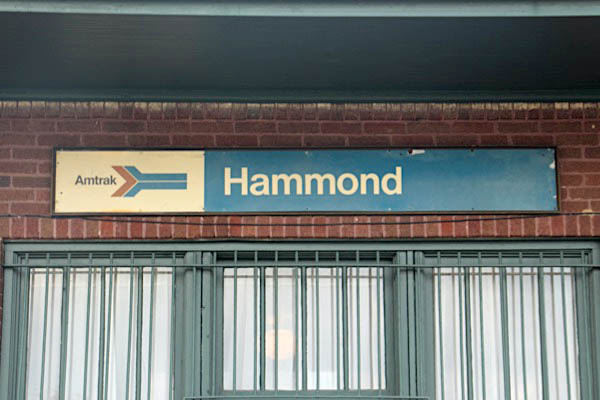
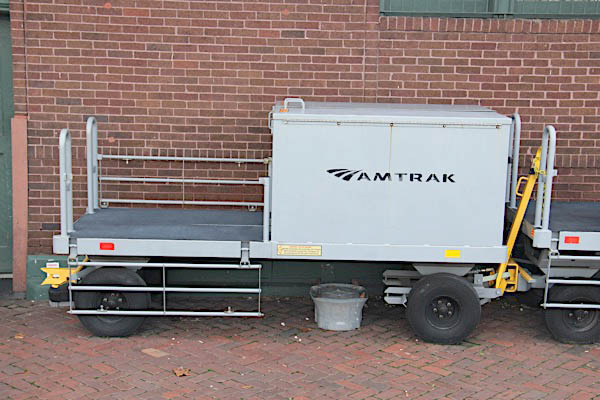
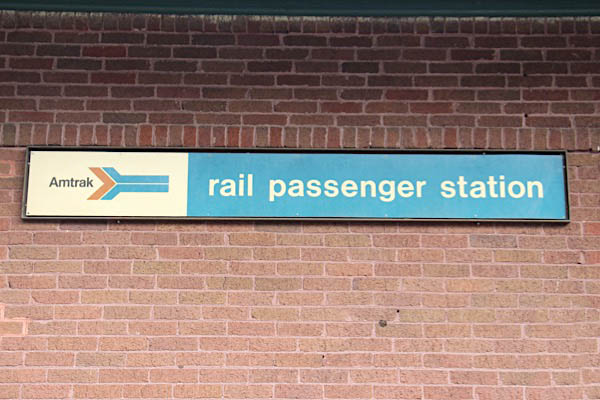
Dec 2016 / RWH
collection
Dec 2016 / RWH
 Today, Hammond is the largest city in Tangipahoa Parish. Hammond began as a settlement of Swedish immigrant Peter Hammond. However, the coming of the New Orleans, Jackson, and Great Northern Railroad ensured its existence in the coming years. The train's arrival in 1854 prompted land speculation and brought many new people to the area.
Our city grew up around the junction of Thomas Street and the railroad tracks, and the downtown became a shipping center for the prosperous timber industry. In the 1890s, a hardy variety of strawberries was developed, and local farmers were able to ship their strawberry crops to points all over the nation from Downtown Hammond. As the farmers and merchants began to prosper, they began to replace their downtown wooden structures with proud brick buildings. These buildings have remained in Downtown Hammond through the years, giving the city the unique flavor it has today.
Panama Limited
Hammond, La / Sep 1975 / Michael Palmieri
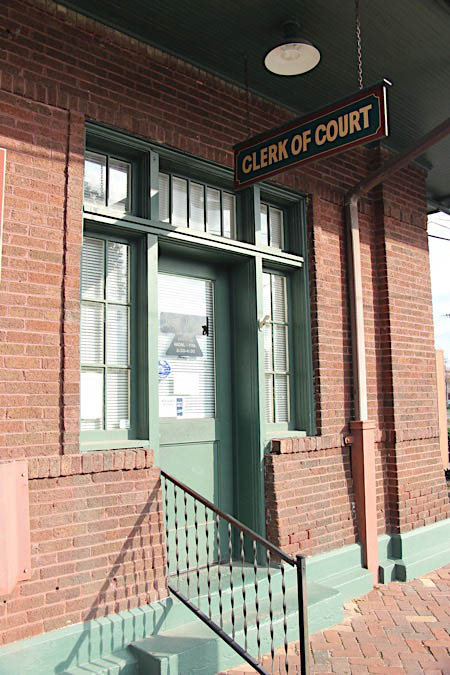
Dec 2016 / RWH
 Hammond, LA
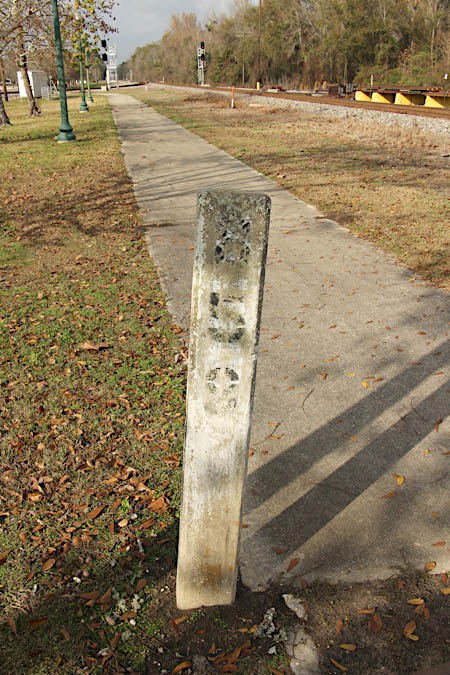
Dec 2016 / RWH

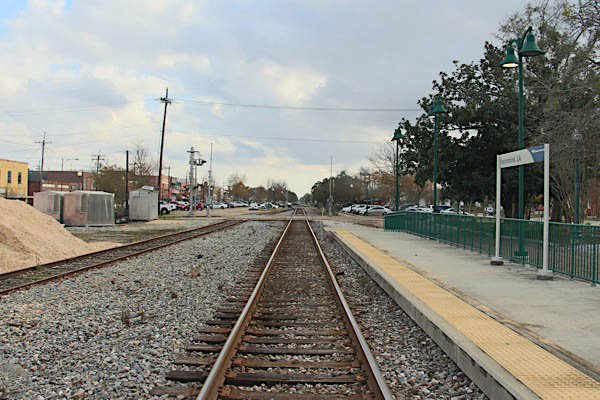
Hammond, La / Dec 2016 / RWH
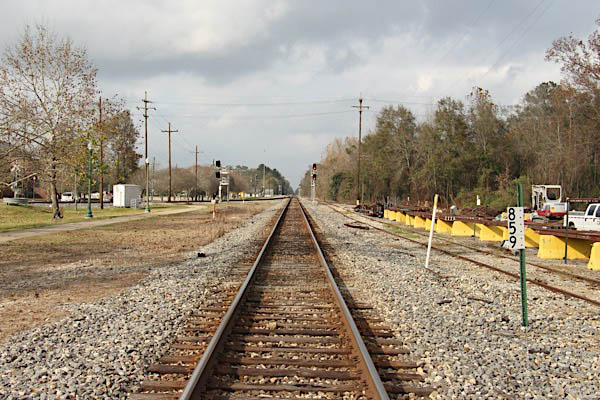
Hammond, La / Dec 2016 / RWH
City of New Orleans
Hammond, La / Apr 2002 / Michael Palmieri
Hammond, La / Dec 2016 / RWH
Hammond, La / Dec 2016 / RWH
Hammond, La / Dec 2016 / RWH
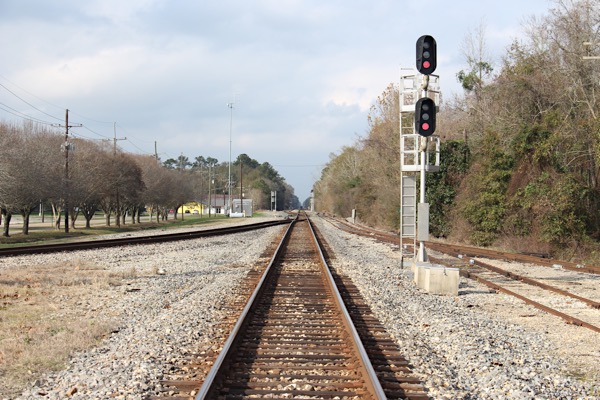
Hammond, La / Dec 2016 / RWH
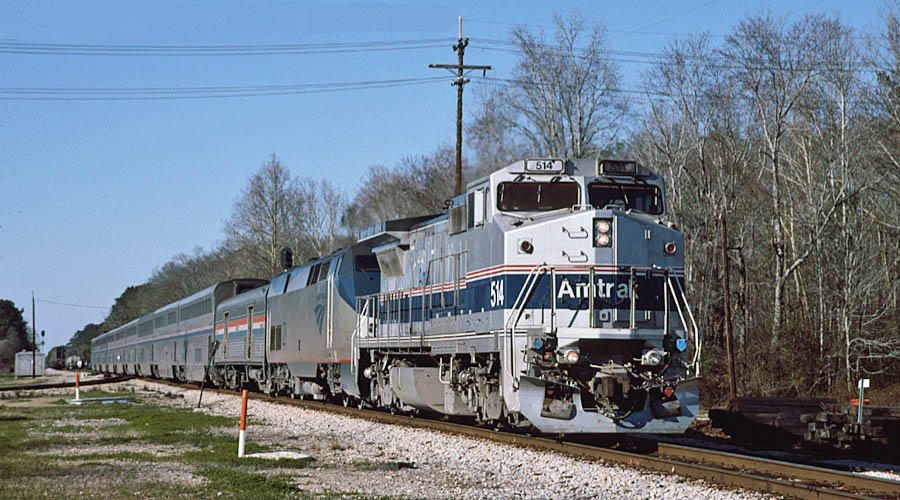
Hammond, La / Feb 2004 / Tom Blackwell 
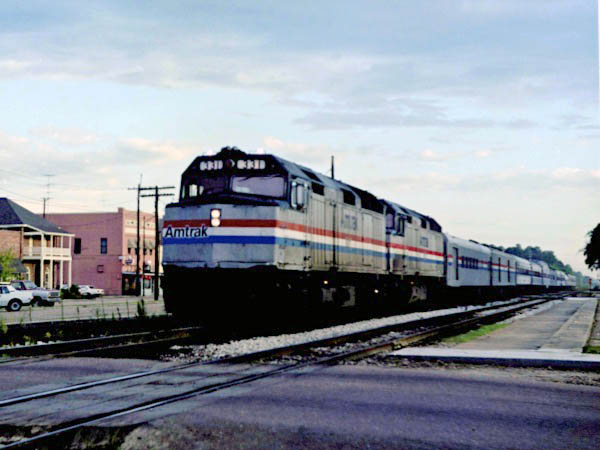
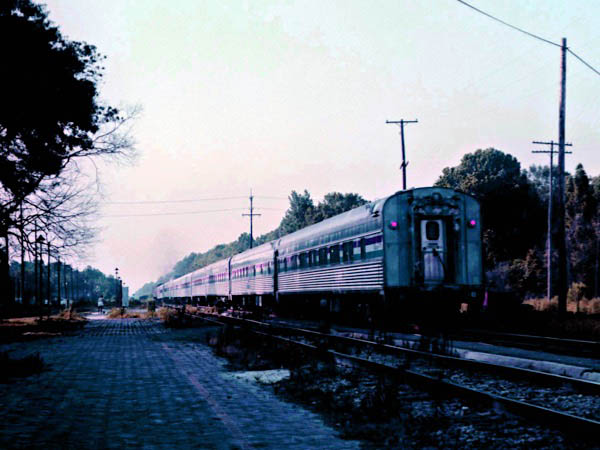
Hammond, La / Oct 1986 / JCH
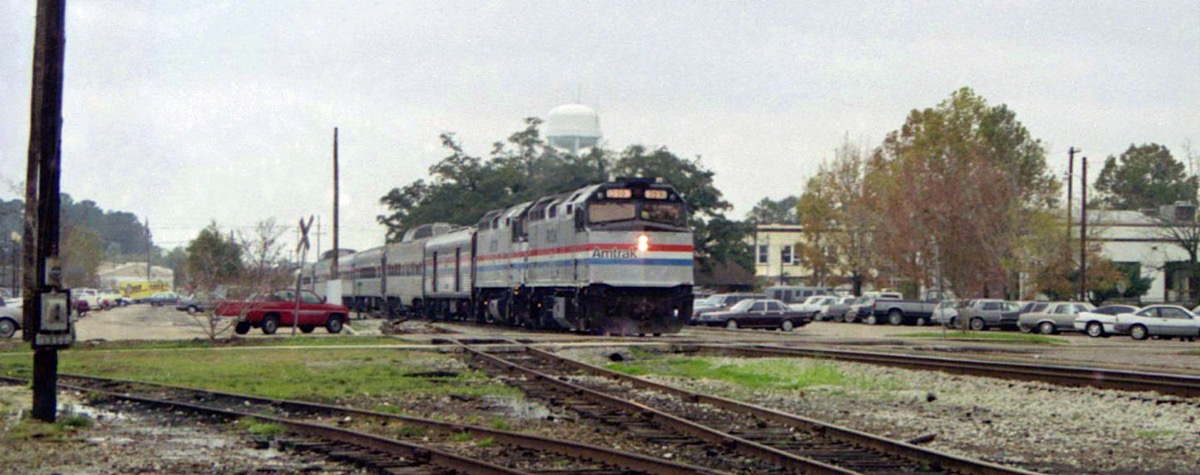
Hammond, La / Oct 1990 / RWH
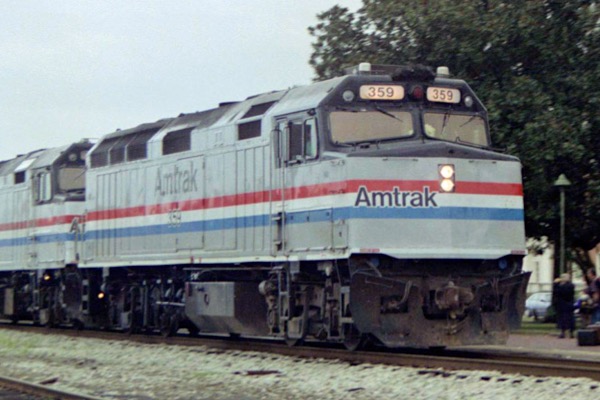
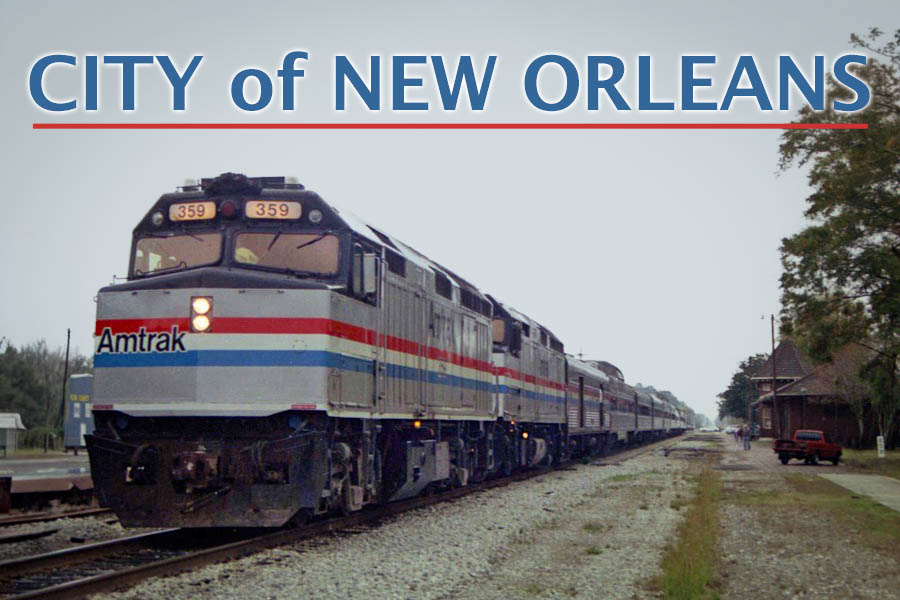
Amtrak #359
EMD F40PH (1980)
Hammond, La / Oct 1990 / RWH
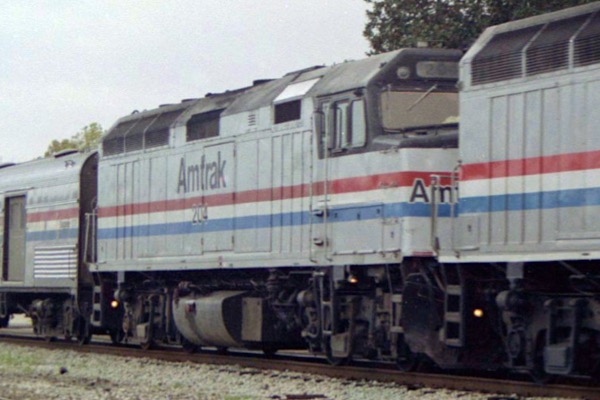
Amtrak #204
EMD F40PH (1976)
Hammond, La / Oct 1990 / RWH
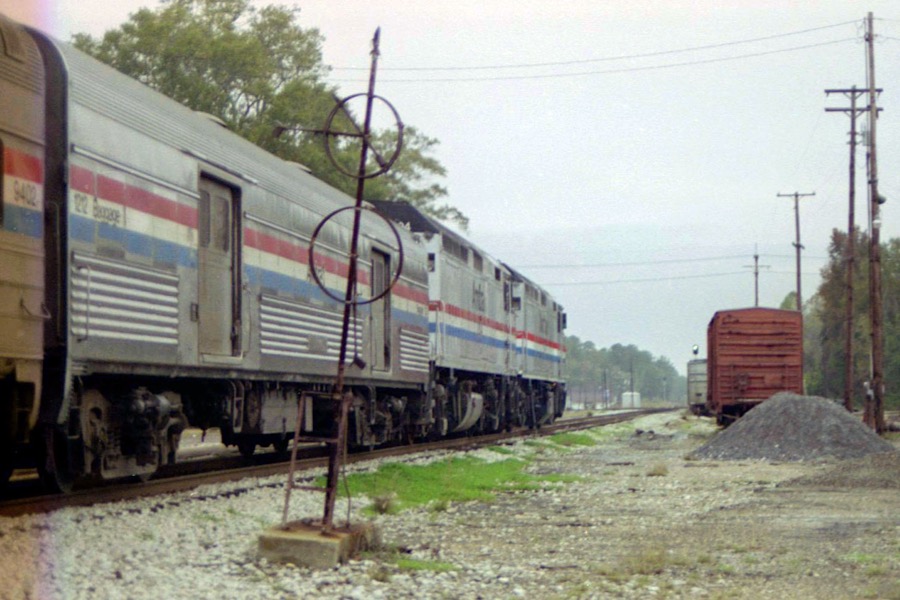
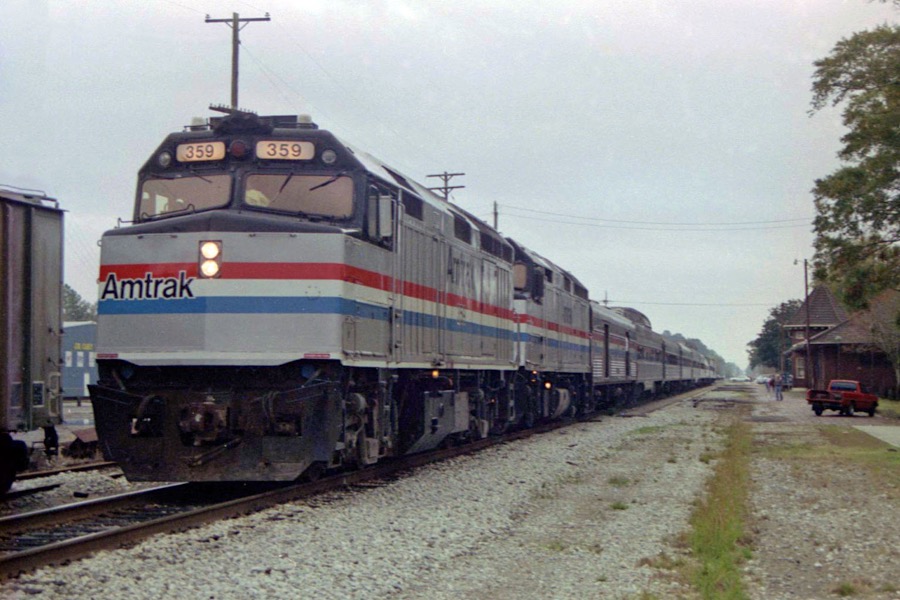
Hammond, La / Oct 1990 / RWH
 Hammond, LA
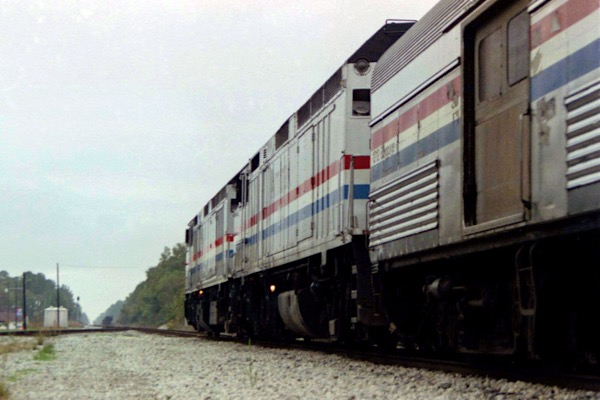
Hammond, La / Oct 1990 / RWH
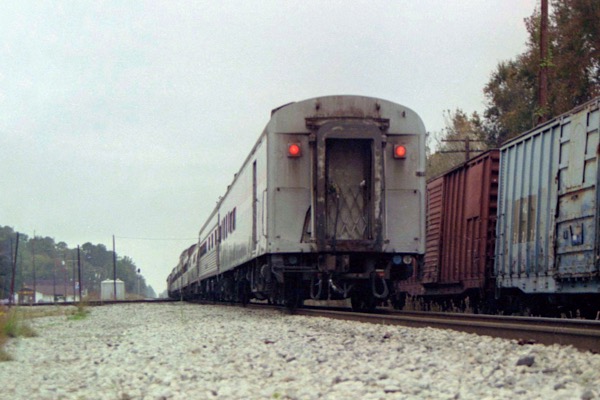
Hammond, La / Oct 1990 / RWH
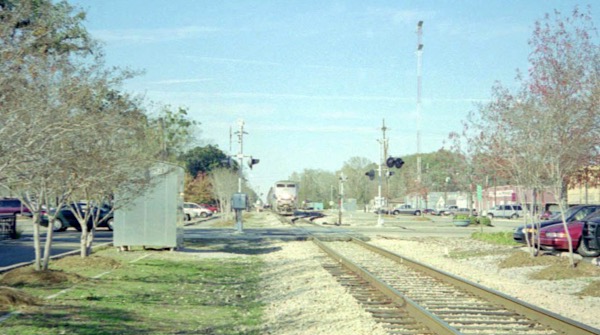
Hammond, La / Dec 1999 / JCH
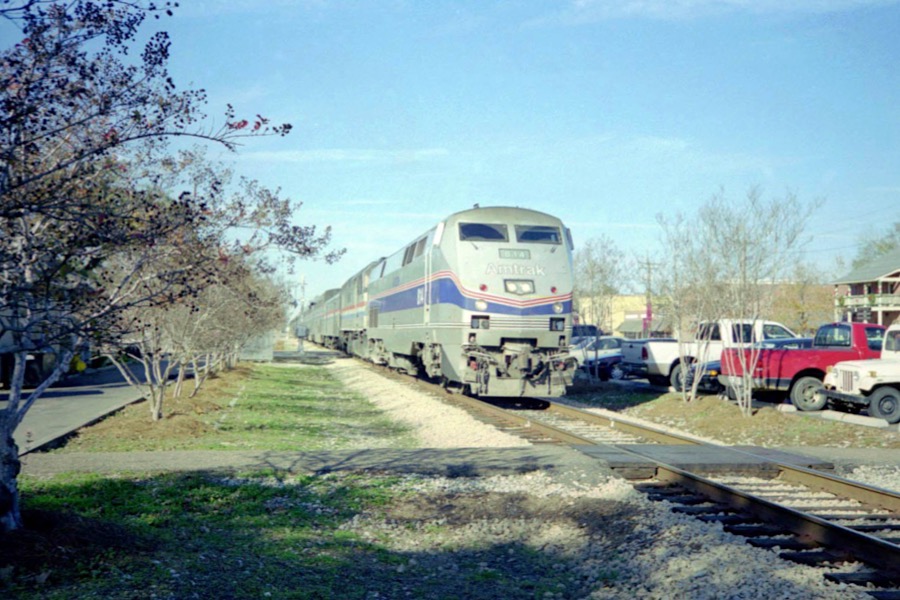
Hammond, La / Dec 1999 / JCH
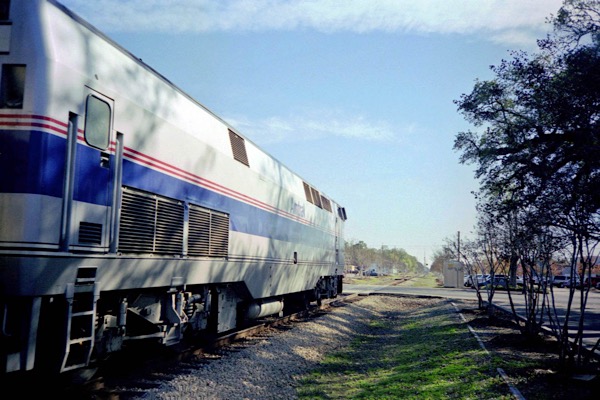
Hammond, La / Dec 1999 / JCH
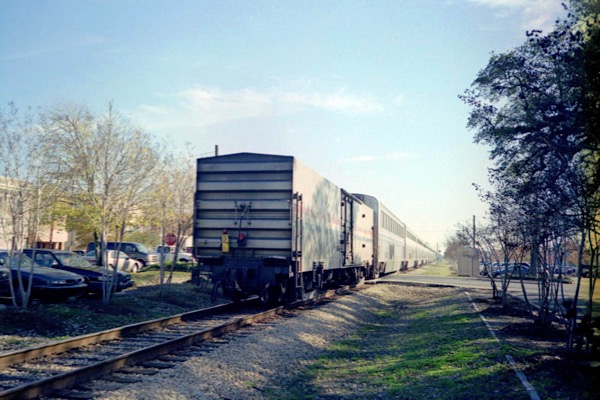
Hammond, La / Dec 1999 / JCH
northbound #58
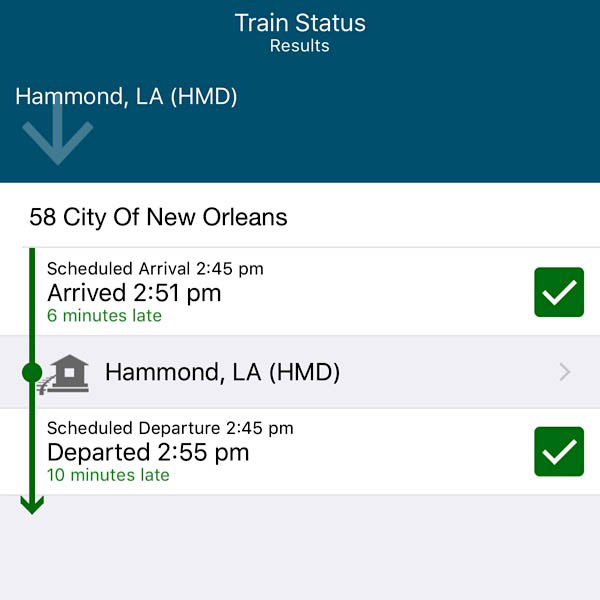
Hammond, LA - December 28, 2016 — Ella and I in Hammond in time to meet northbound #58. 6 minutes off schedule out of New Orleans. AMTK P42DC (1997) power with 7 Superliners (6 photographed). Locomotive would be wrecked 2 years later.
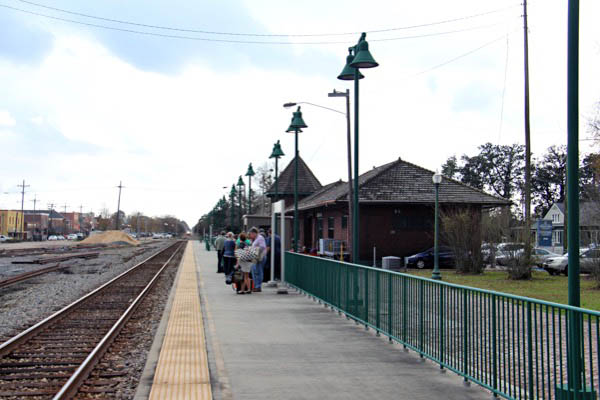
Hammond, La / Dec 2016 / RWH
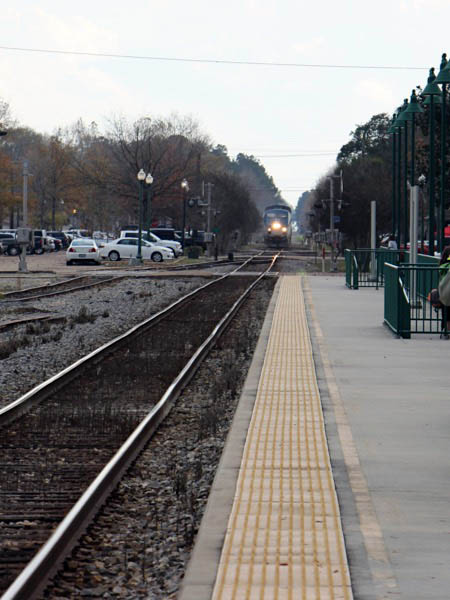
Dec 2016 / RWH
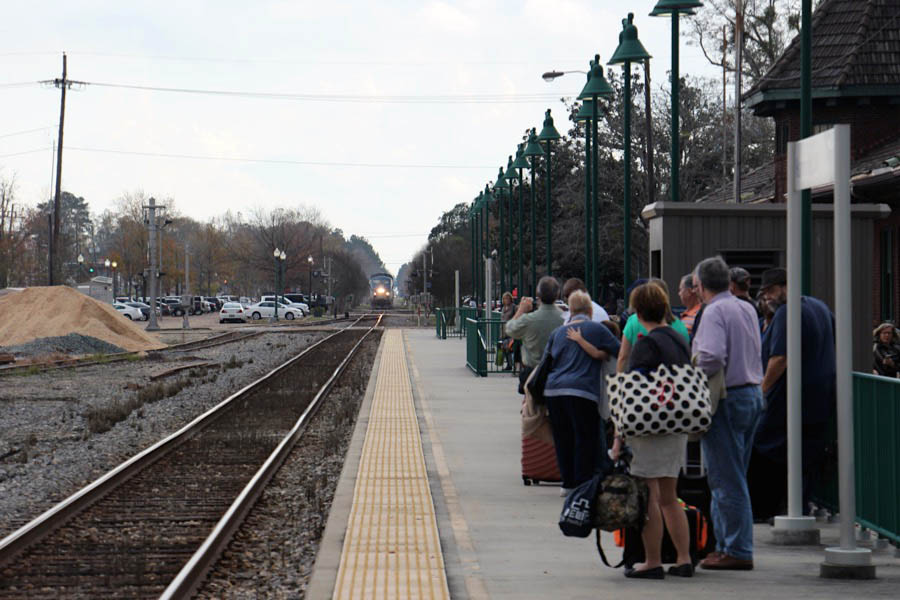
Hammond, La / Dec 2016 / RWH
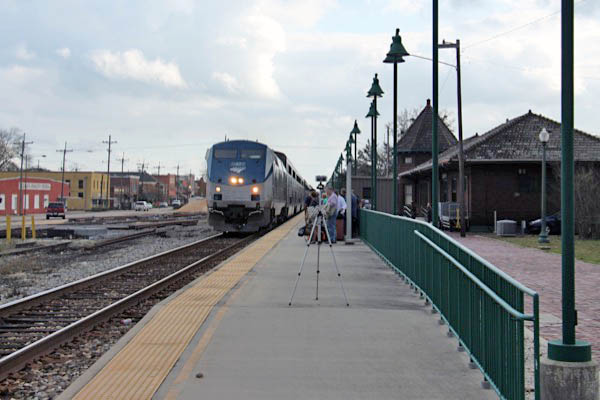
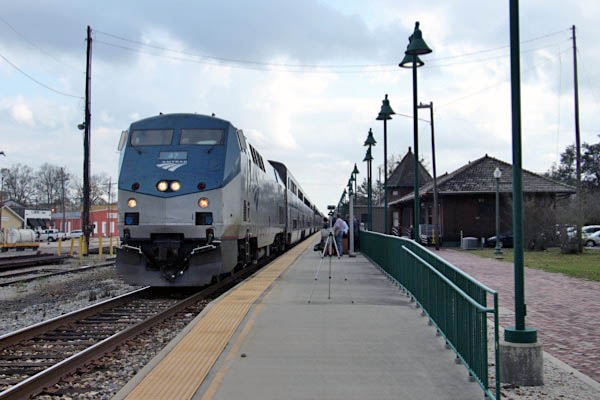
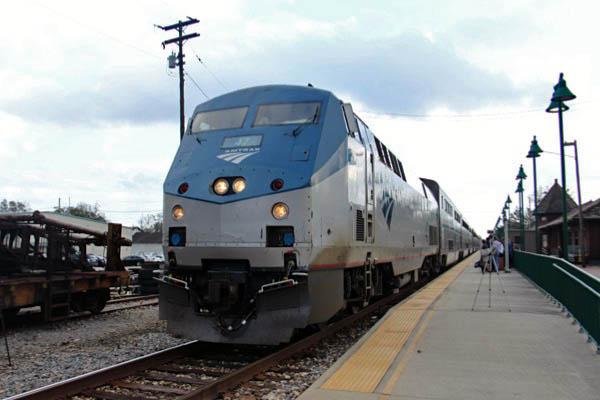
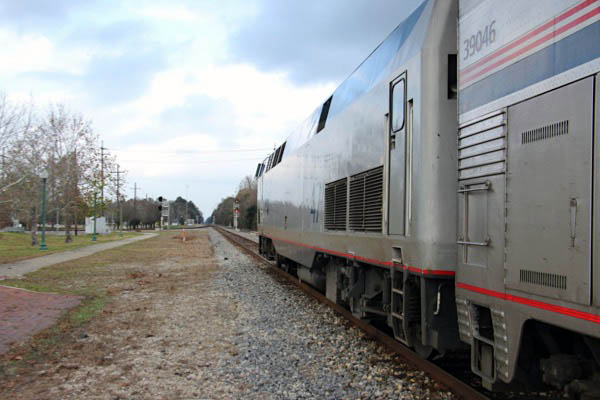
Hammond, La / Dec 2016 / RWH
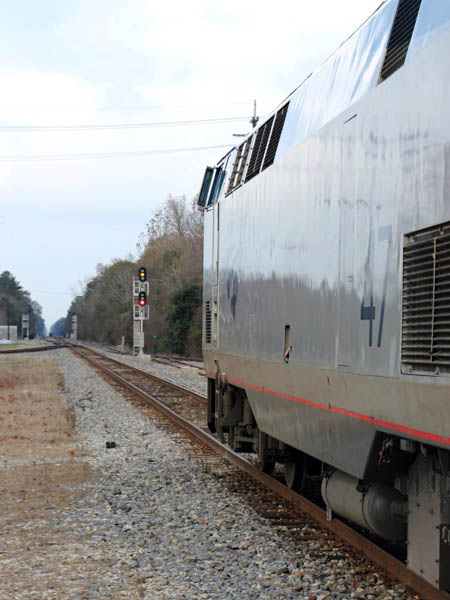
Dec 2016 / RWH
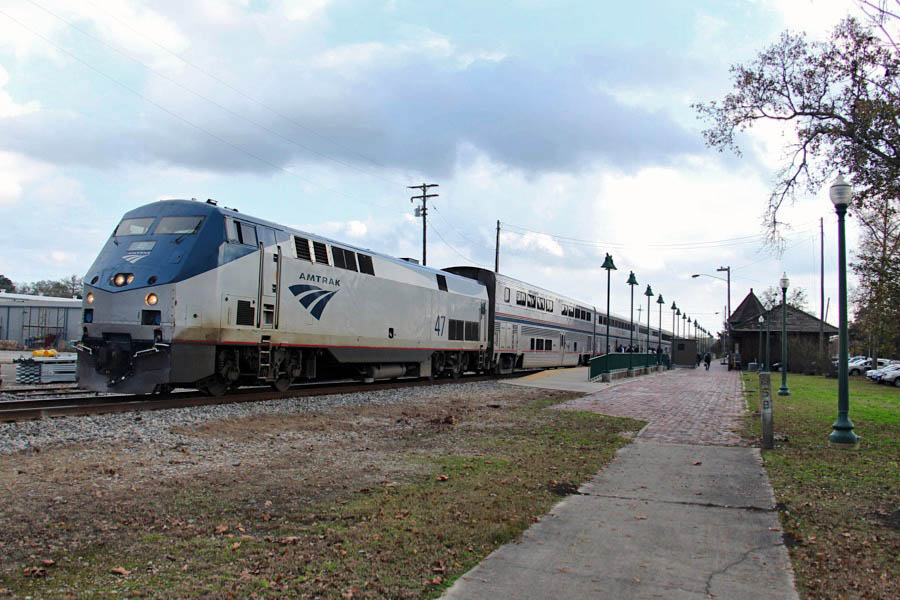
Hammond, La / Dec 2016 / RWH
Amtrak #47
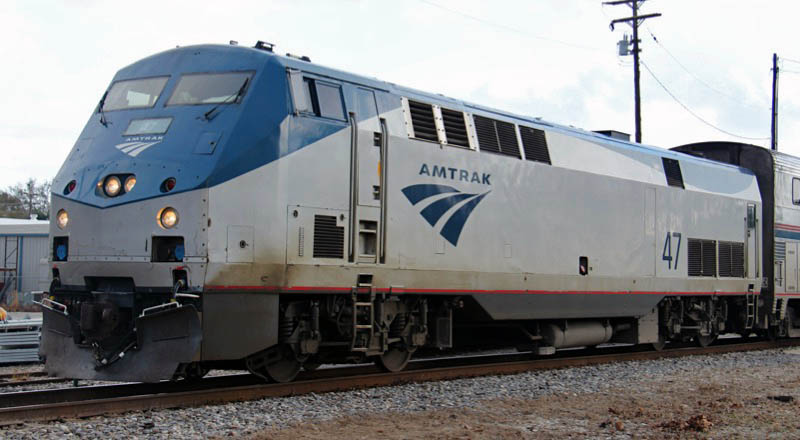
Amtrak #47
Hammond, La / Oct 1990 / RWH

Amtrak #47
wrecked 2018, scrapped


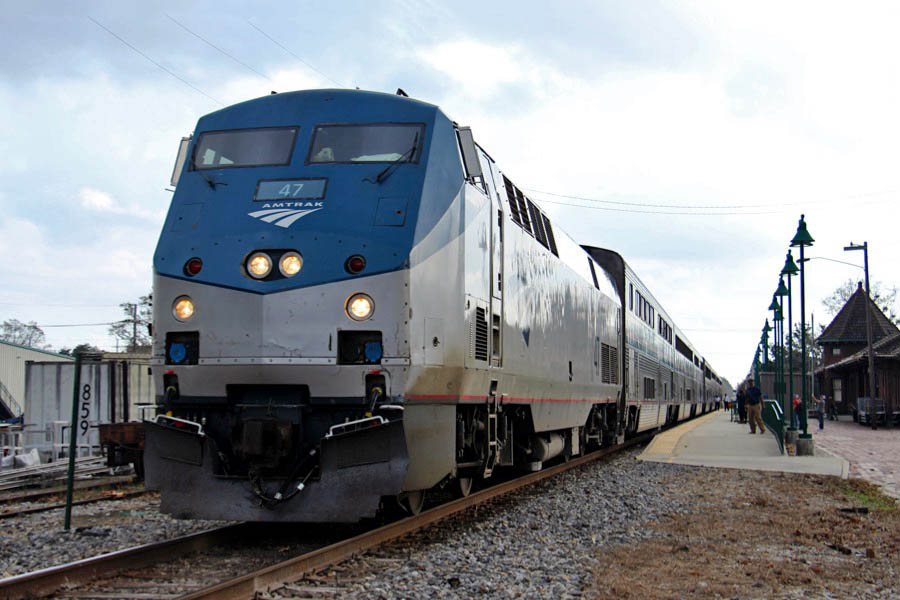
Hammond, La / Oct 1990 / RWH
 Amtrak #58 consist - December 28, 2016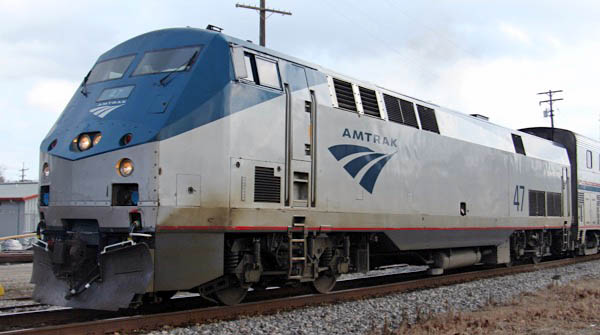
Amtrak #47
GE Genesis motive power
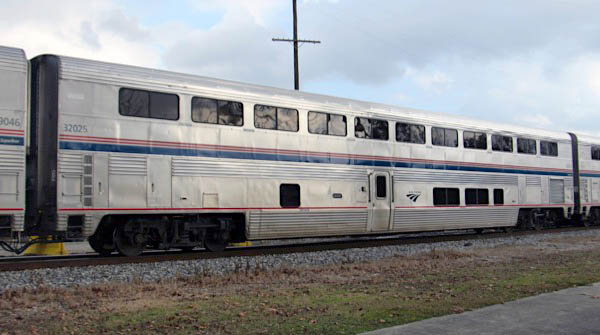
Amtrak #32025
Superliner I sleeper
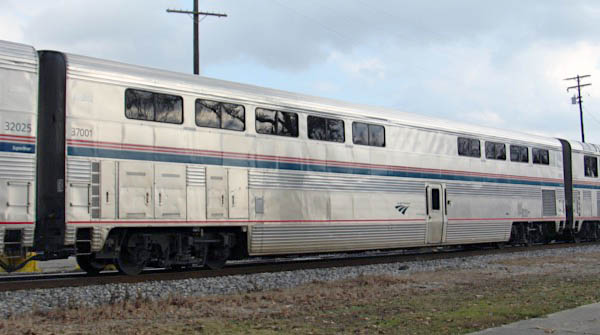
Amtrak #37001
Superliner I DinerLounge
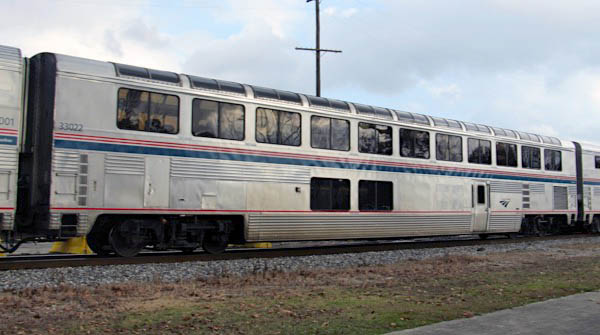
Amtrak #33022
Superliner I lounge
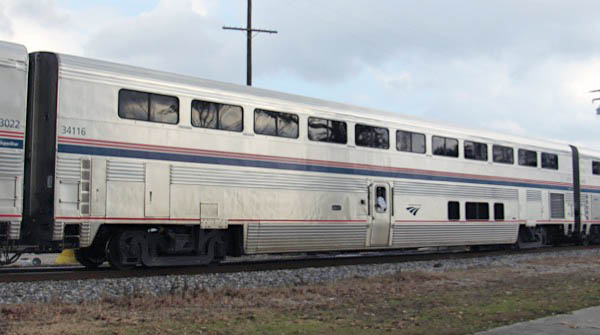
Amtrak #34116
Superliner II coach
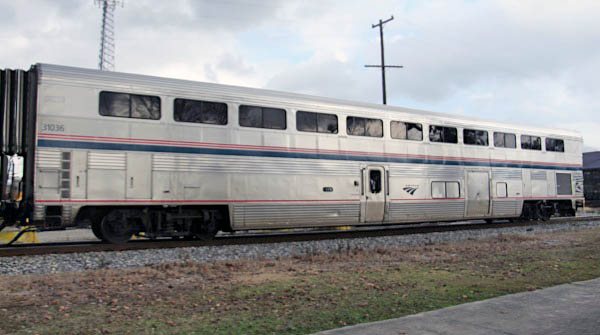
Amtrak #31036
Superliner I coach/baggage
all photos above: Hammond, La / Dec 2016 / RWH
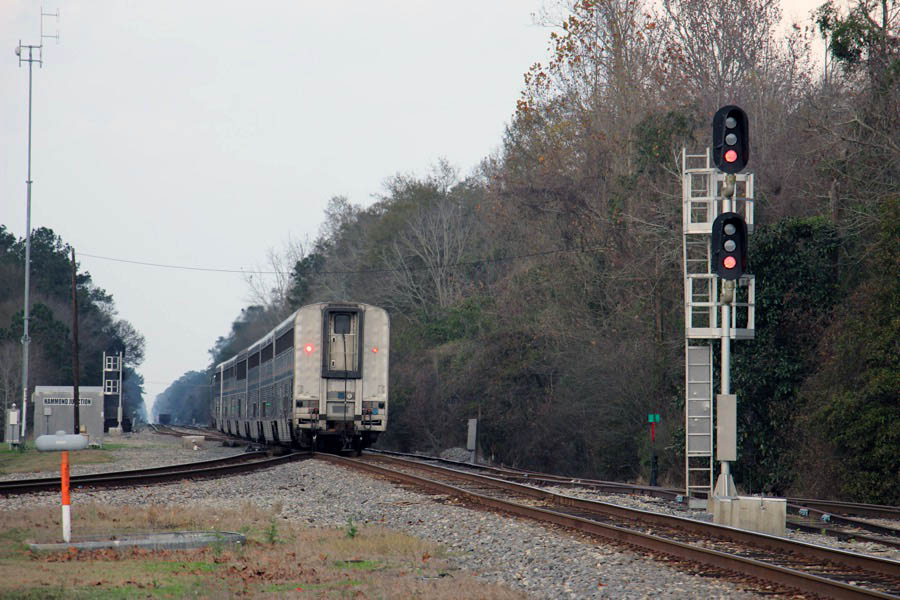
Hammond, La / Oct 1990 / RWH
Mississippi
106 McComb, Ms
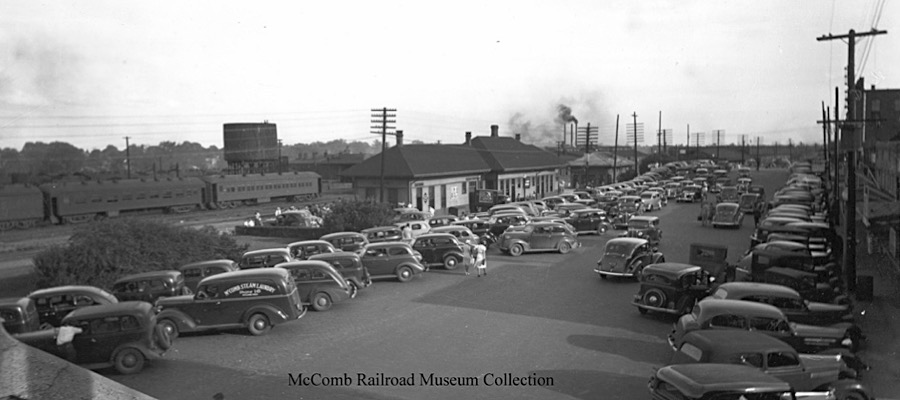
Mississippi Rails collection
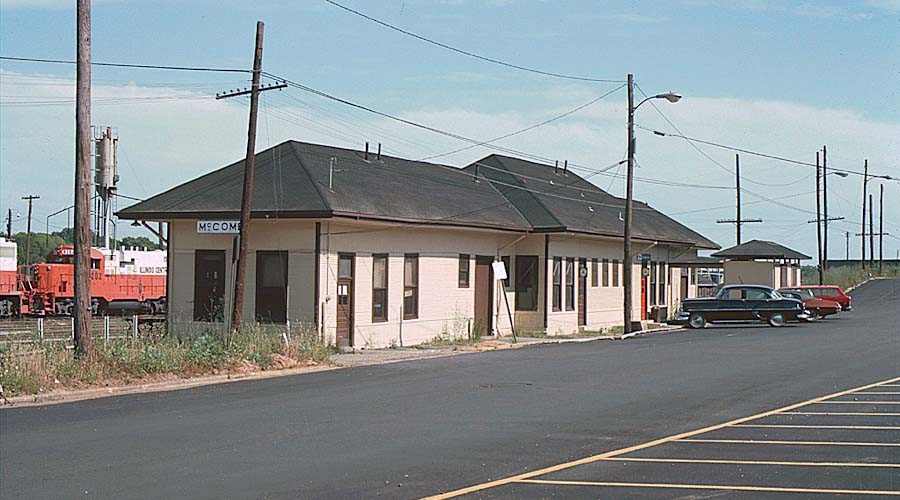
McComb, Ms / Apr 1976 / Michael Palmieri
Click to see McComb depot area plotted on a Google Maps page
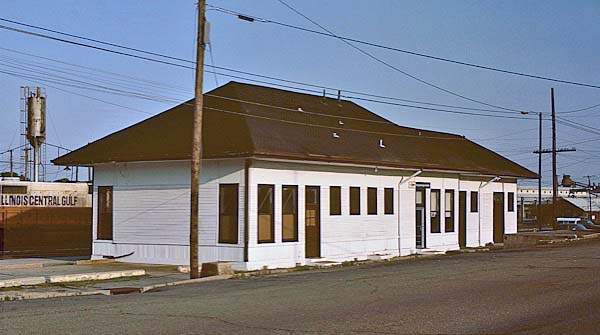
McComb, Ms / Apr 1983 / Michael Palmieri
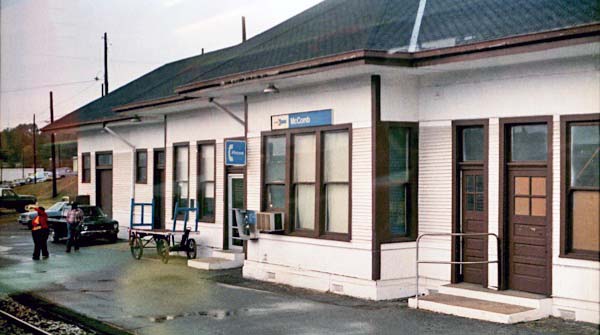
McComb, Ms / Oct 1984 / S. L. Dixon
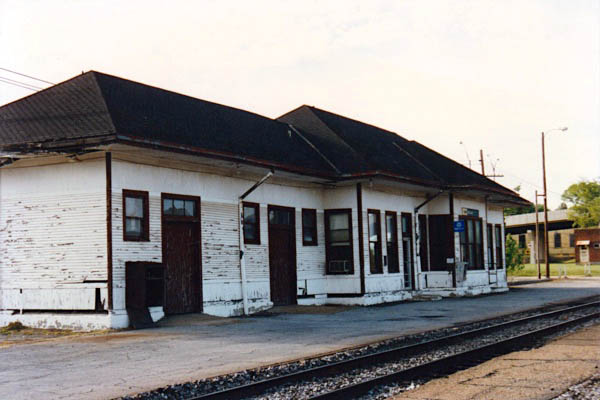
McComb, Ms / Milton Winter
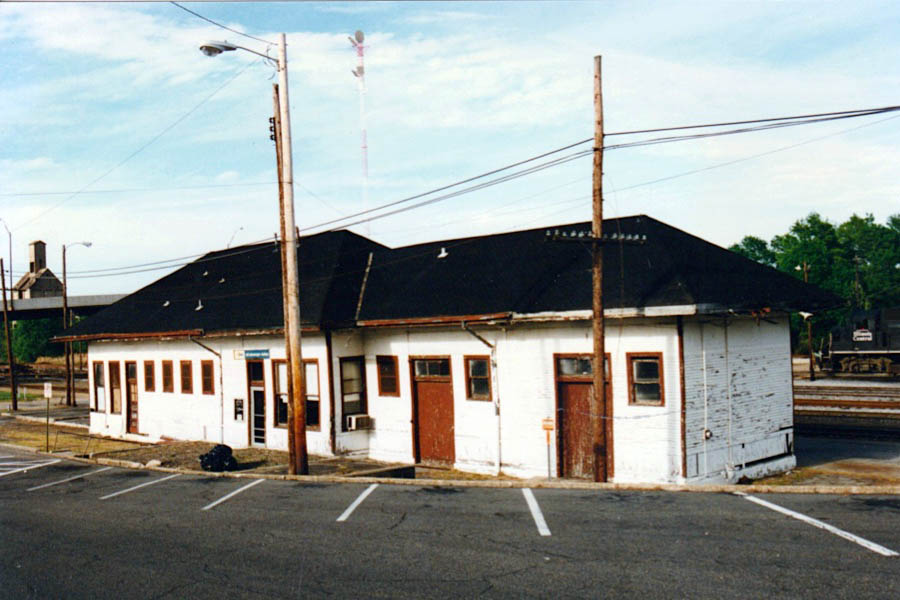
McComb, Ms / Milton Winter
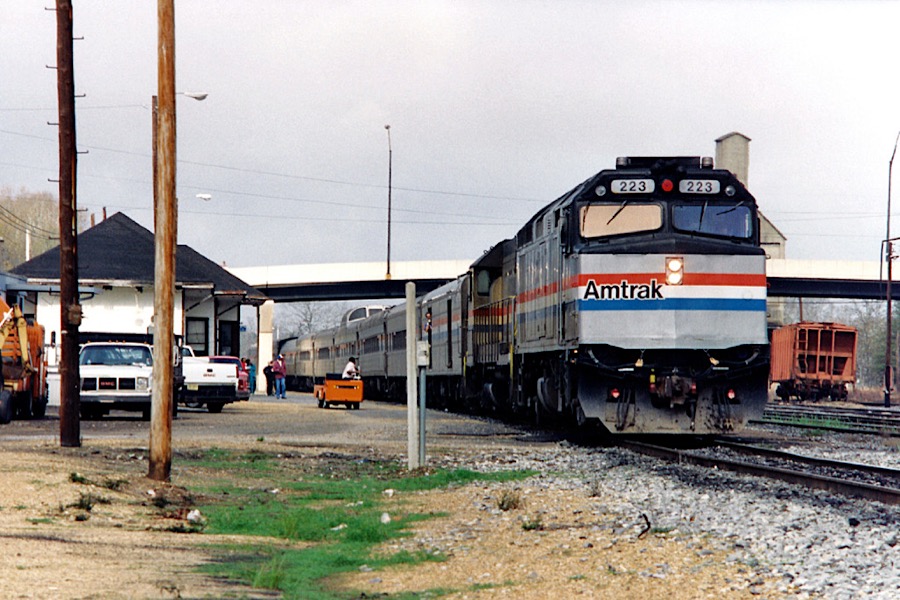
McComb, Ms / Dec 1991 / Christopher Palmieri
 Article
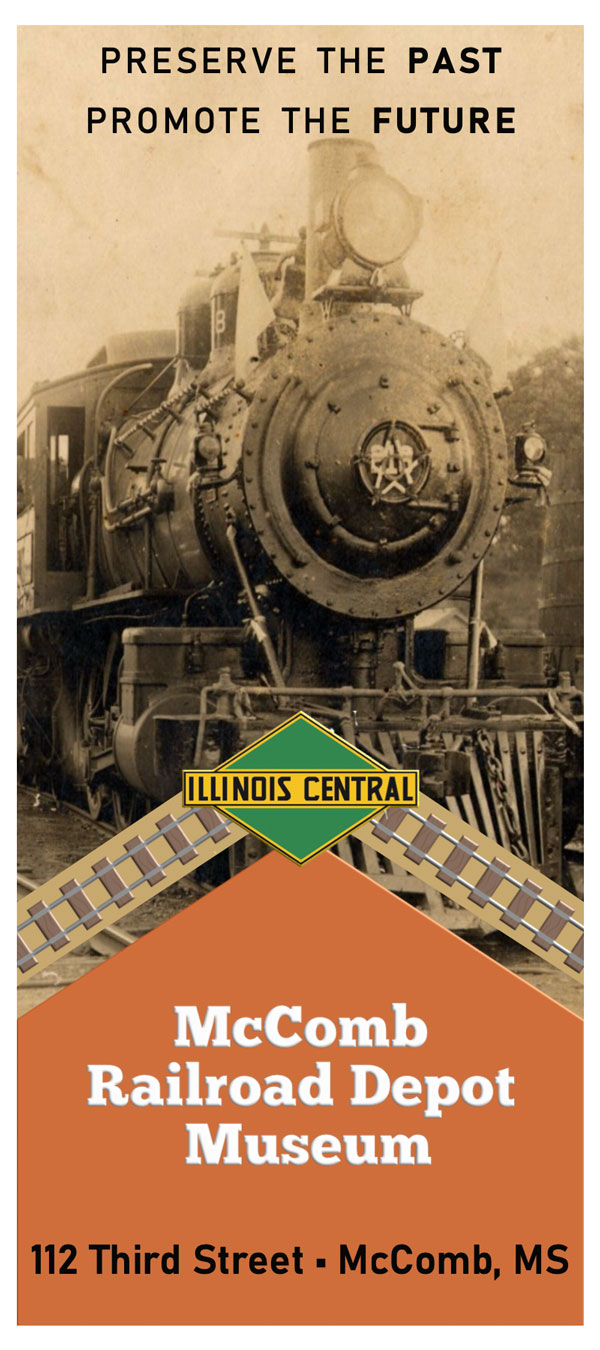
Fire Ravages Landmark Train Depot and Museum in McComb
May 31, 2021
A fire ravaged a prominent landmark in the city of McComb midday Sunday, destroying irreplaceable artifacts that date back to the city’s founding and railroad roots in the 1800s.
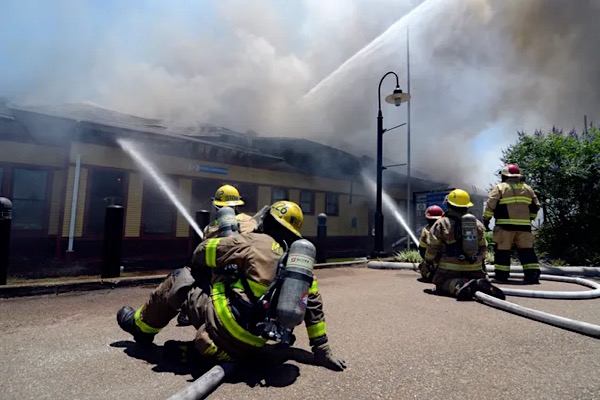 The blaze demolished the historic McComb train depot and museum in the city's downtown area that stored a collection of more than 1,500 artifacts, according to its museum website.
The Enterprise-Journal reported the fire started on the north end of the building where officials said archives and photographs, along with elaborate train sets, were stored.
It spread farther south, destroying the Amtrak waiting room and delaying the commute of holiday travelers.
"It will take some time to process a loss of this magnitude and to assess the considerable damage," said Ralph Price, the executive director of the railroad depot museum. "While we do, we respectfully ask that you keep a safe distance from what remains of the depot building. Recovery efforts of items that are salvageable will continue, and we pledge to save everything that we possibly can."
Mayor Quordiniah Lockely said on his Facebook page that a majority of the artifacts, stored in the south end of the building, were saved by firefighters. Fire Chief Gary McKenzie told the Enterprise-Journal that about 90% of the artifacts were recovered.
Among the salvaged artifacts were brass bells, photographs and replica train engines, the news outlet reported.
No one was injured in the blaze and a cause has yet to be determined. Lockely said the fire is being investigated by the State Fire Marshal's Office and an insurance investigator.
Much of the museum collection had been accumulated and preserved by a collection of railroad retirees over the years, as well as with help from the city of McComb and volunteers.
Among the artifacts was an oral history of the railroad from railroaders and photographs from famous railroad photographer C.W. Witbeck.
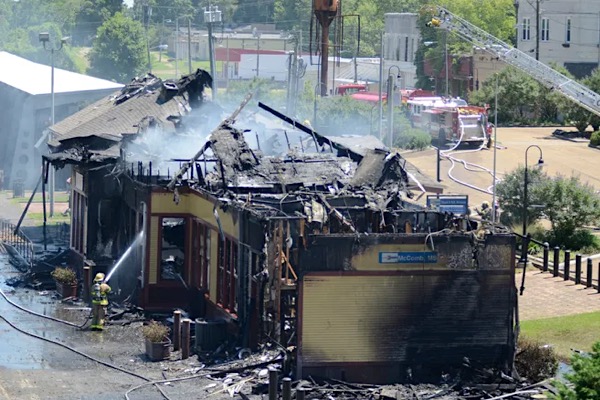 The exhibit area of the museum included several model trains that recaptured the prominence of the railroad industry to the town, along with mannequins dressed in period railroad attire.
The museum — billed as one of the South's best preserved collections of railroad history — also illustrated President Teddy Roosevelt’s trip to McComb in 1911, where he spoke to hundreds of local citizens and railroaders, according to the museum website.
"My hometown of McComb is rightly weeping over the loss to fire of its splendid railroad museum that spelled out the town’s very beginnings," said retired reporter and McComb native Mac Gordon in a guest column.
"This tragedy won’t separate McComb from its historic launch – on April 5, 1872 – as 'a railroad town,' but certainly hundreds of irreplaceable displays telling how it all began were destroyed in the heartrending event," he said.
Justin Vicory / Mississippi Clarion Ledger
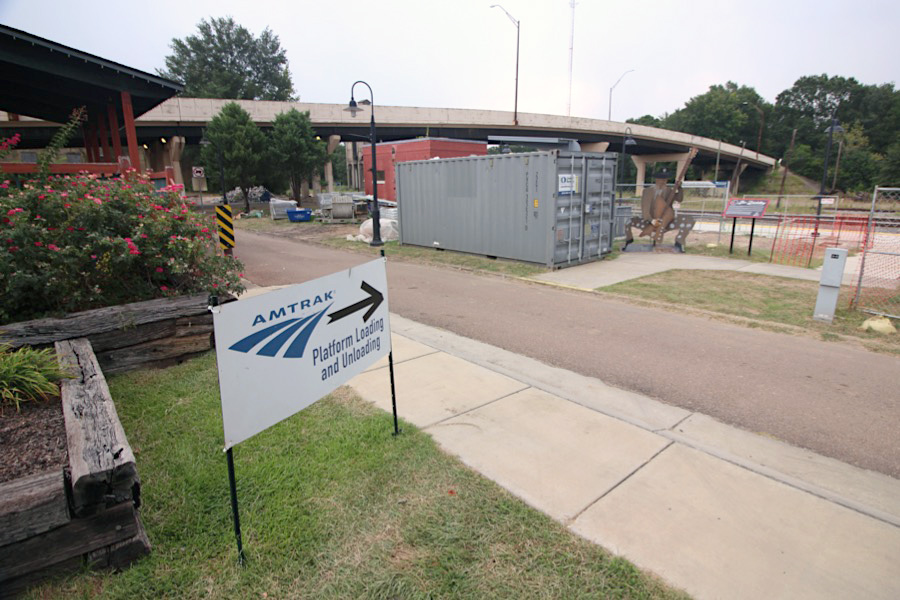
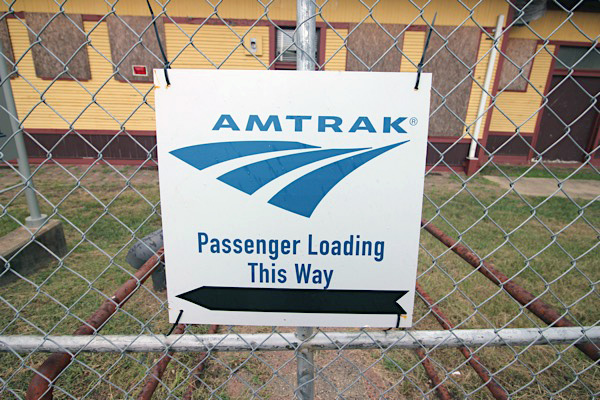
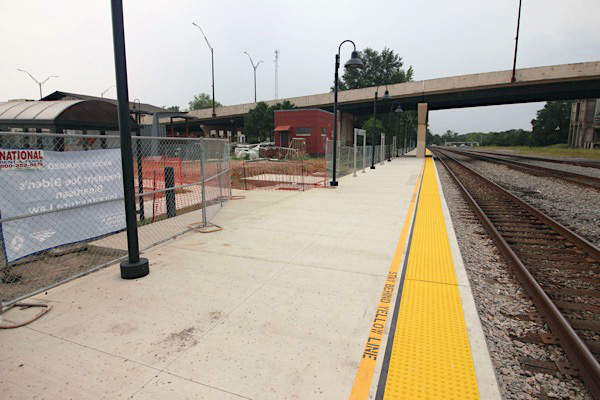
Rebuilding
Aug 2024 / RWH
Aug 2024 / RWH
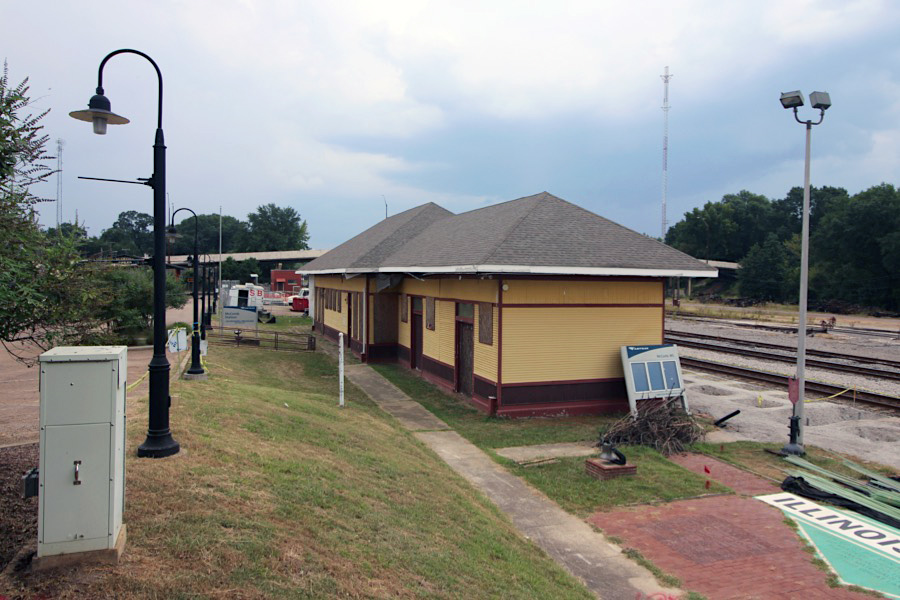
McComb, Ms / Aug 2024 / RWH
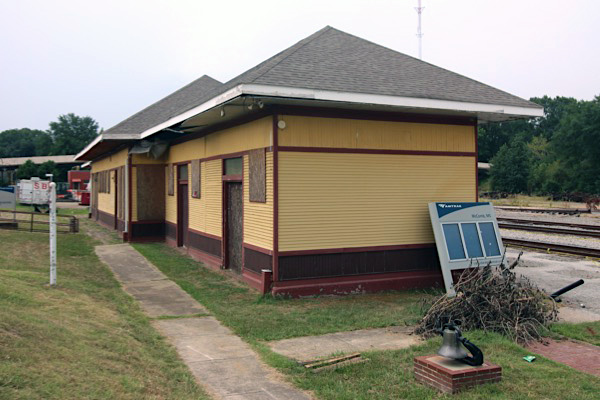
McComb, Ms / Aug 2024 / RWH
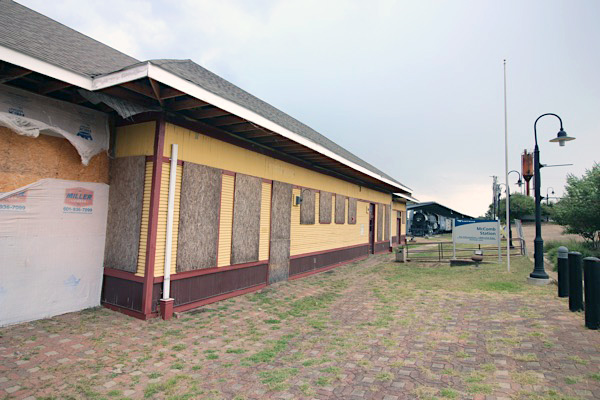
McComb, Ms / Aug 2024 / RWH
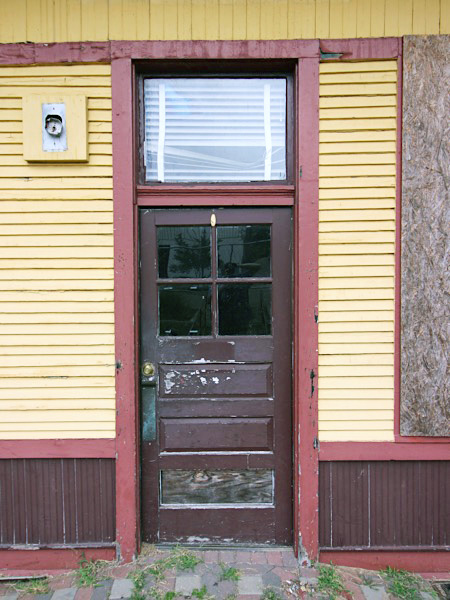
Aug 2024 / RWH
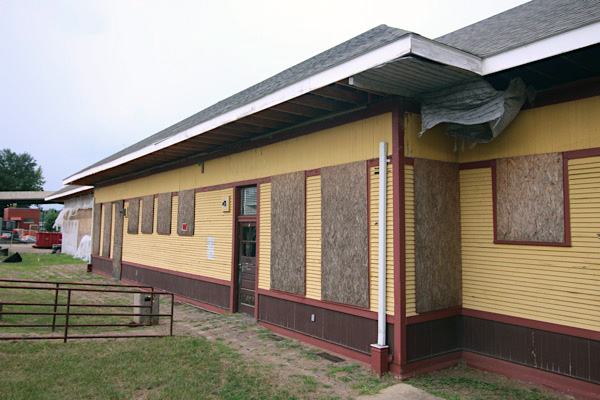
McComb, Ms / Aug 2024 / RWH
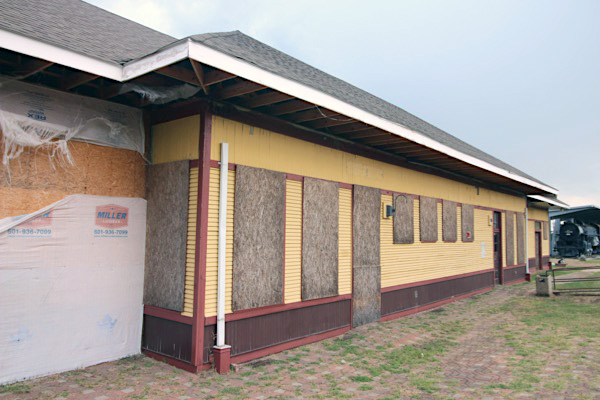
McComb, Ms / Aug 2024 / RWH
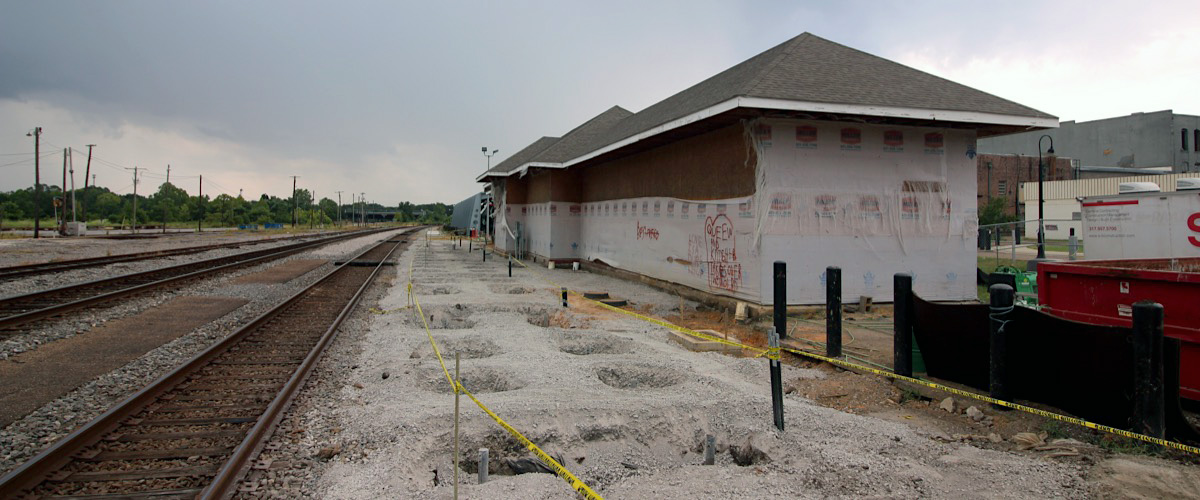
McComb, Ms / Aug 2024 / RWH
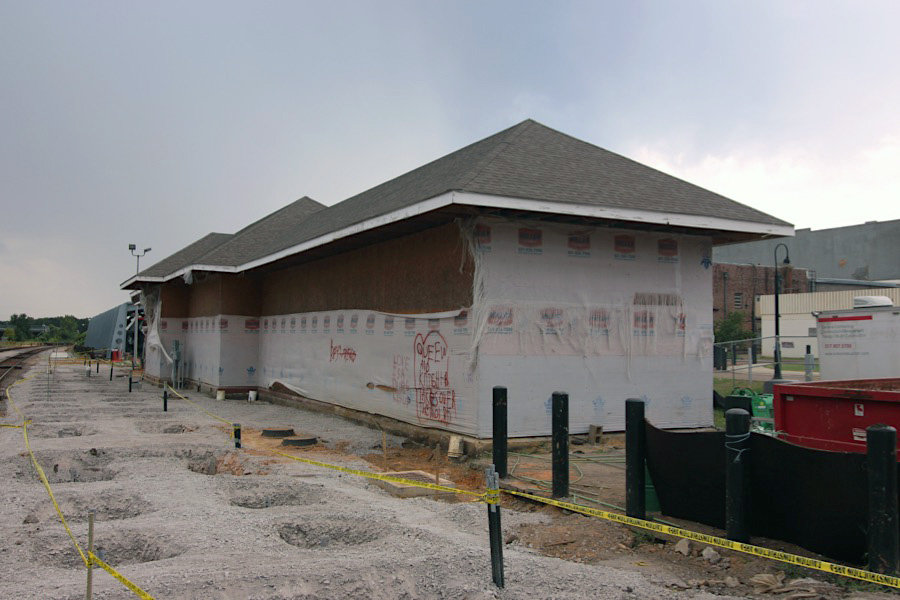
McComb, Ms / Aug 2024 / RWH
collection
McComb, Ms / Aug 2024 / RWH
Aug 2024 / RWH
McComb, Ms / Aug 2024 / RWH
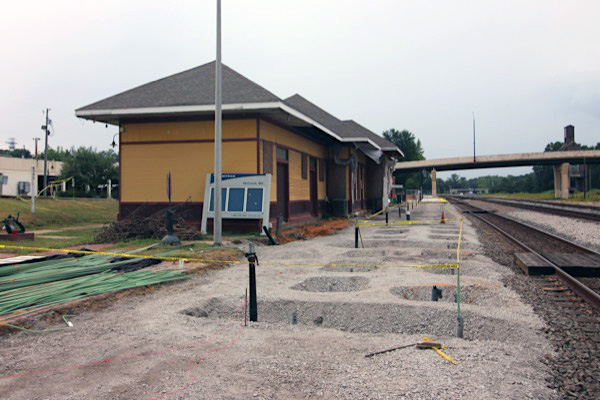
McComb, Ms / Aug 2024 / RWH
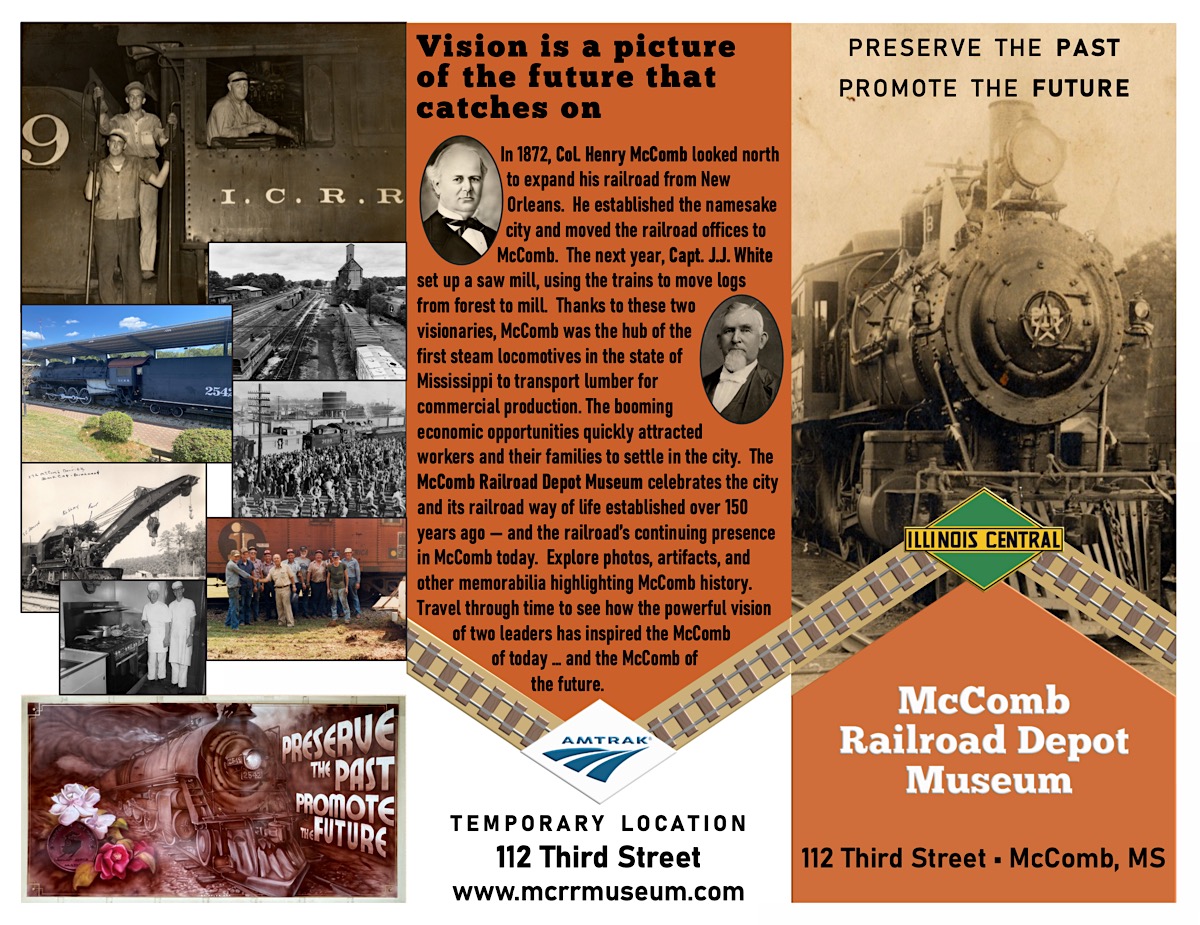
collection
See also our complete McComb City Railroad Depot Museum scrapbook in Preservation
Summers on the City
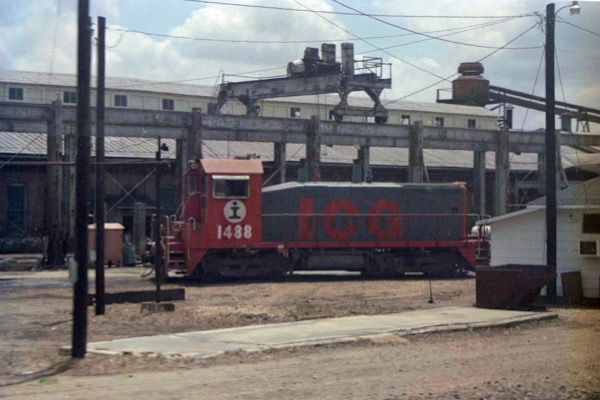
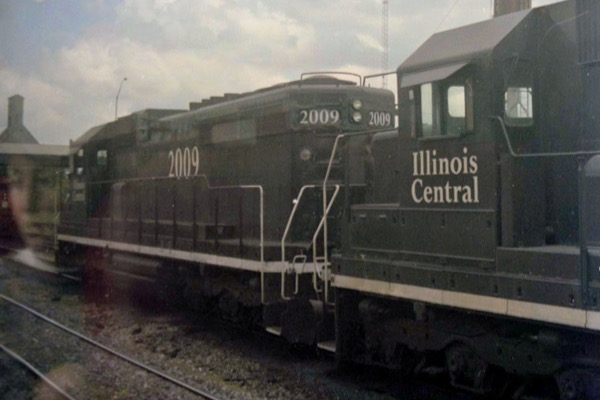
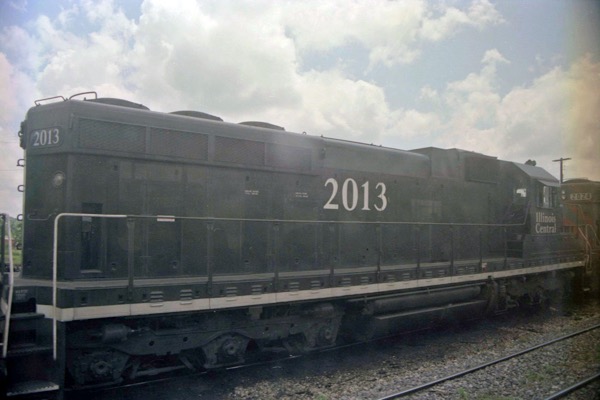
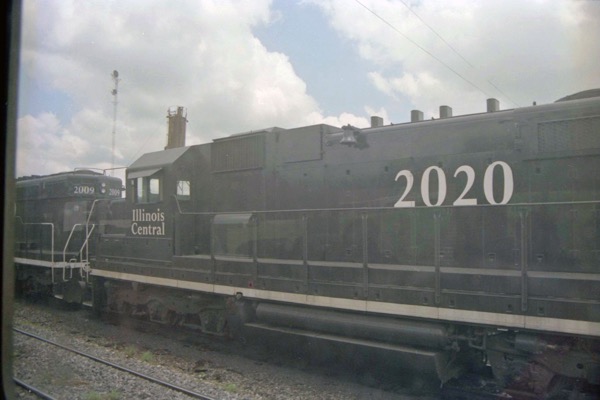
For many years in the summer my mother would drive me to Hammond, Louisiana, to put me on Amtrak's number 58, the northbound City of New Orleans. This was still the time of walking up the inside window and purchasing a paper ticket from the station Amtrak agent on the spot. While mom was buying said ticket, I was securing from the racks that year's annual Amtrak timetable — a quarter-inch thick summary of all the national routes. Dad usually also equipped me with a Mississippi state transportation map, the folded kind, showing all the railroads in the Magnolia State and therefore allowing me to chart our course northward to Jackson, Mississippi. In Jackson, some combination of my grandmother Pauline and my Aunt Mary would be waiting to retrieve me for another summertime visit. But before that reunion in the capital, I sat glued to the double-pained glass of some old Heritage coach as we trundled up the Illinois Central Gulf main. Tickfaw, Independence, Arcola, and Kentwood. Across the state line. Osyka, Magnolia. Fernwood. Thanks to my trusty map, I could almost always decipher the trackside community whose gates were down as we rambled on through. Then McComb, the first stop after Hammond. What's a boy to do at McComb? Station on the left; locomotive shops on the right. So many things to see in such a short window of time. Through-the-window snapshots (below) on the 110 instamatic camera I convinced my mom to let me borrow show a line of Paducah SD24s parked outside on the engine area ready track. By June of 1988, the Death Star "new" IC black was being poured on everything, but #2024 was still a hold out in the last ICG orange and gray scheme. The pictures are lousy, but the memories are great. Summers on the City, riding 130 mainline miles all on my own. And I still have the timetables.
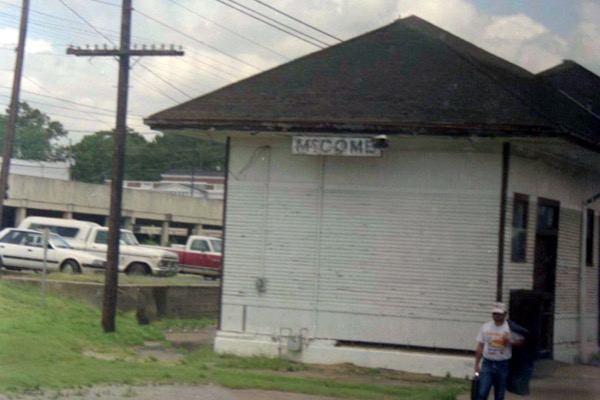
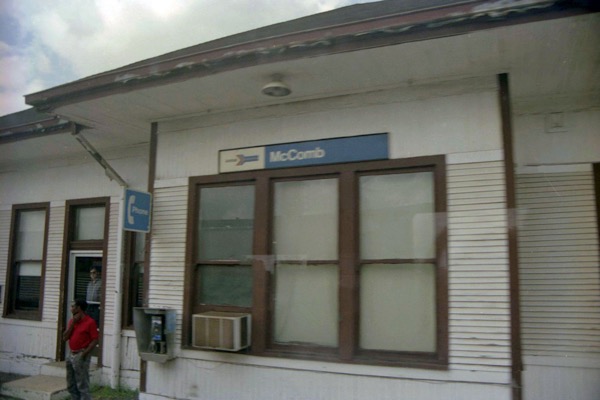
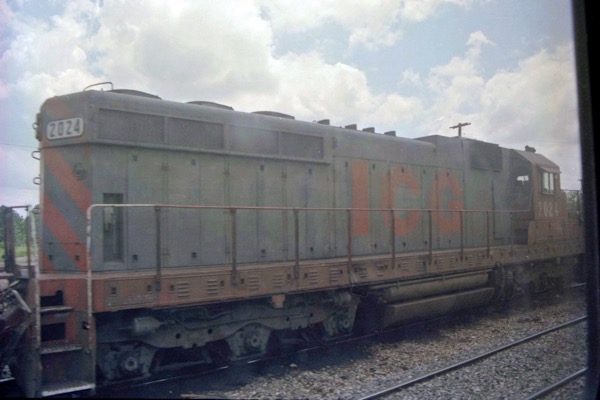
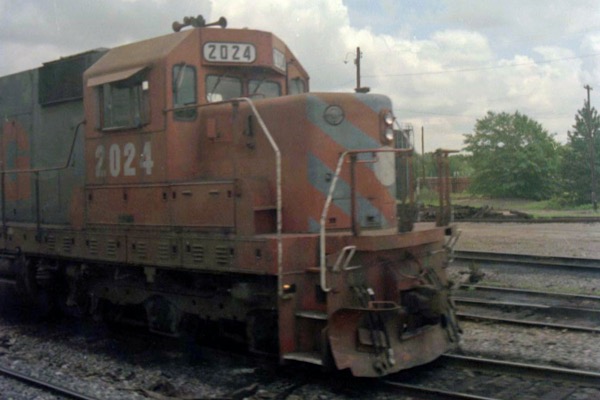
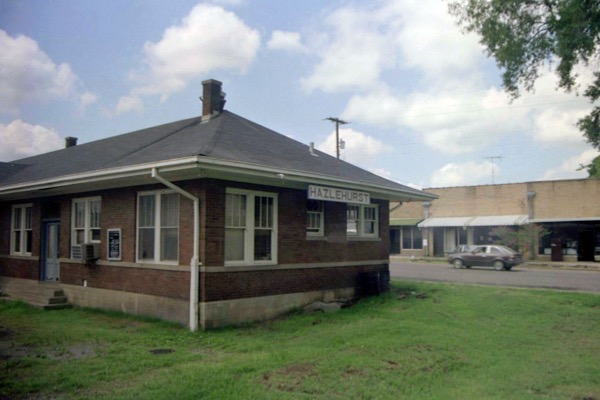
Jun 1988 / RWH
129 Brookhaven, Ms
Brookhaven, Ms / Jan 2026 / RWH
- location:Godbold Center
- address:440 N Railroad Ave
- type:town depot, 1 platform
- owner:City of Brookhaven
- opened:Aug 2011
- builder:City of Brookhaven
- style:urban renewal
- services:none, waiting room
- links: Amtrak | Great Stations
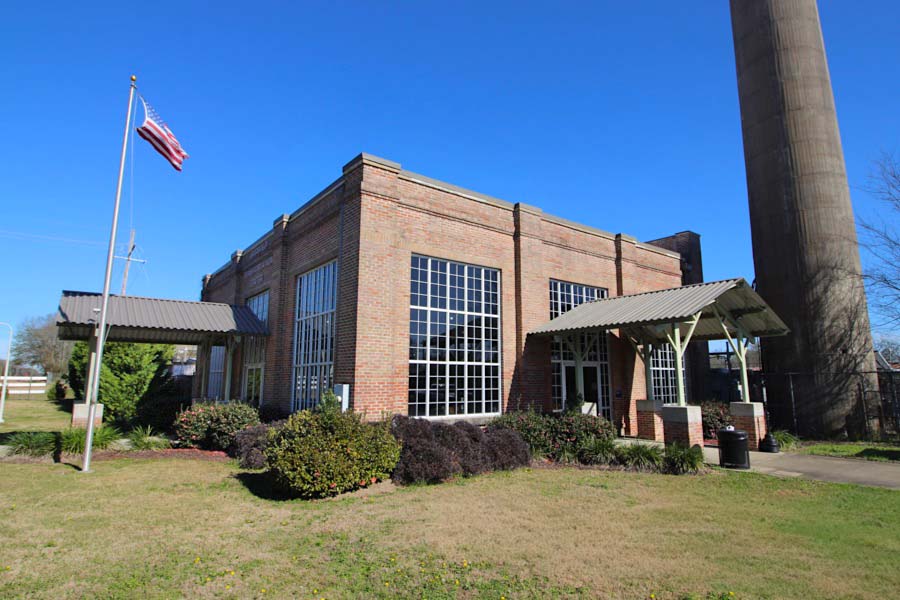
Brookhaven, Ms / Jan 2026 / RWH
Click to see the Brookhaven Amtrak station plotted on a Google Maps page
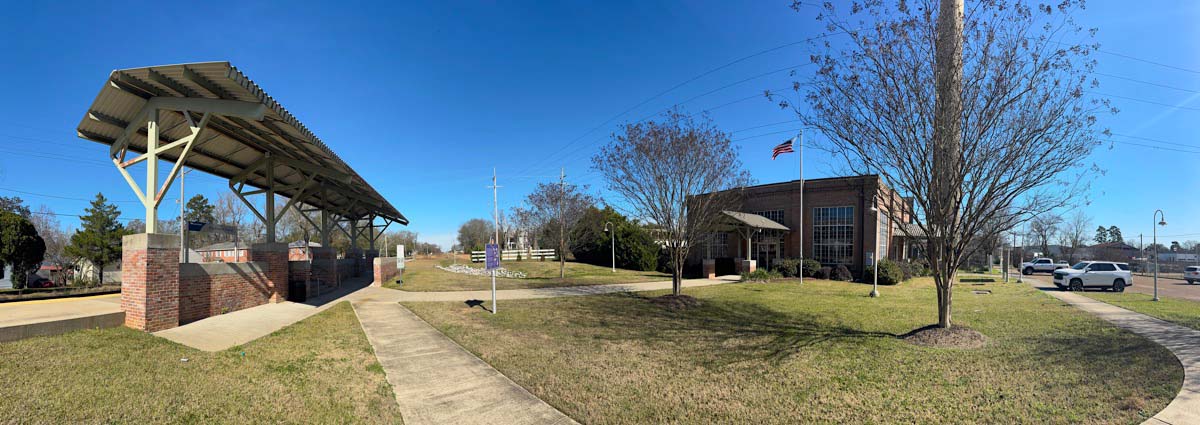
Brookhaven, Ms / Jan 2026 / RWH
Jan 2026 / RWH
Brookhaven, Ms / Jan 2026 / RWH
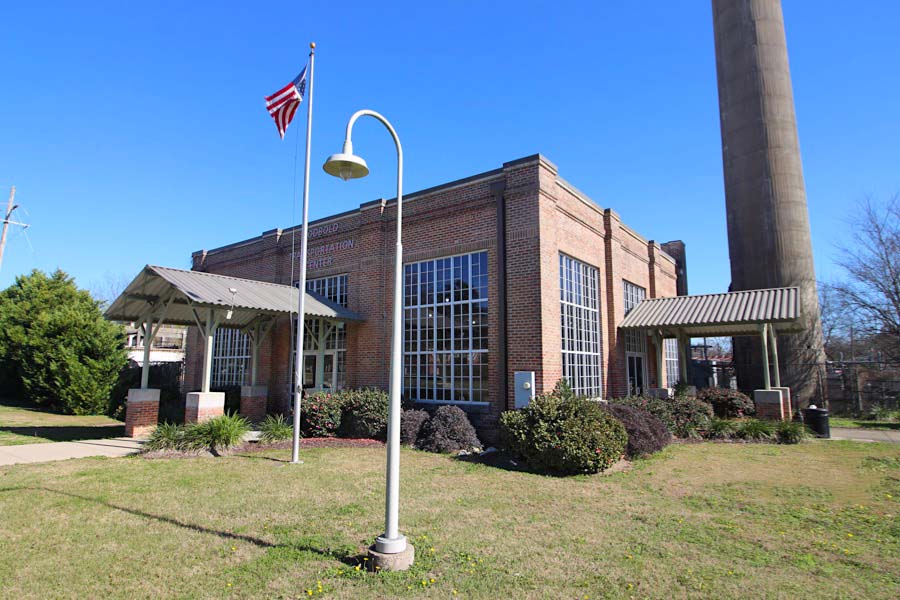
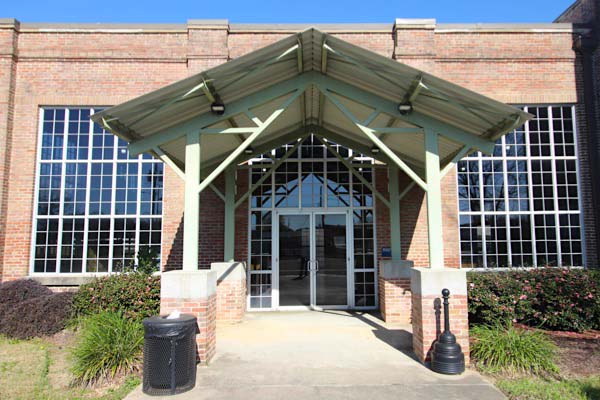
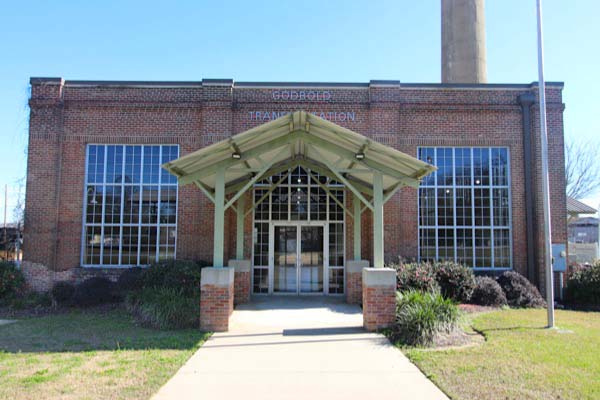
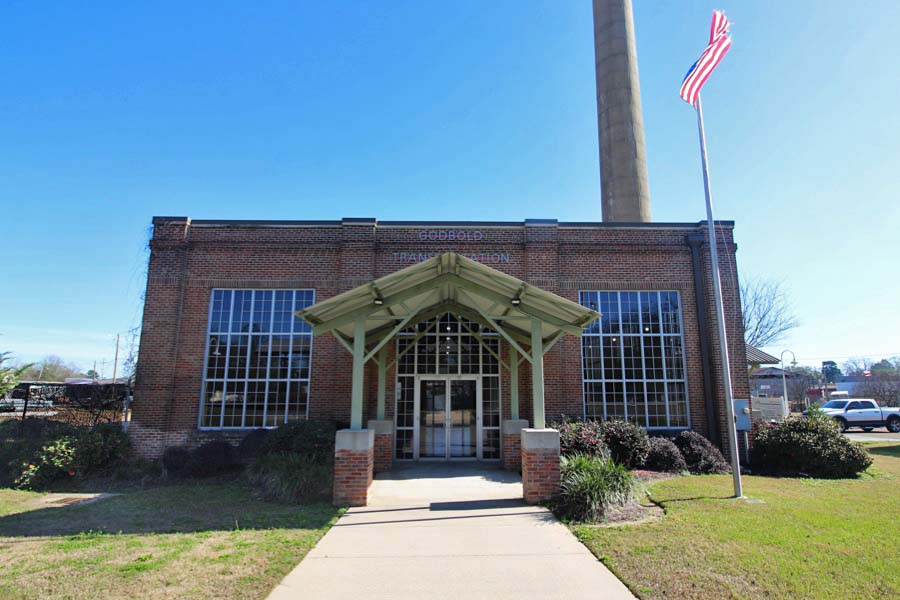
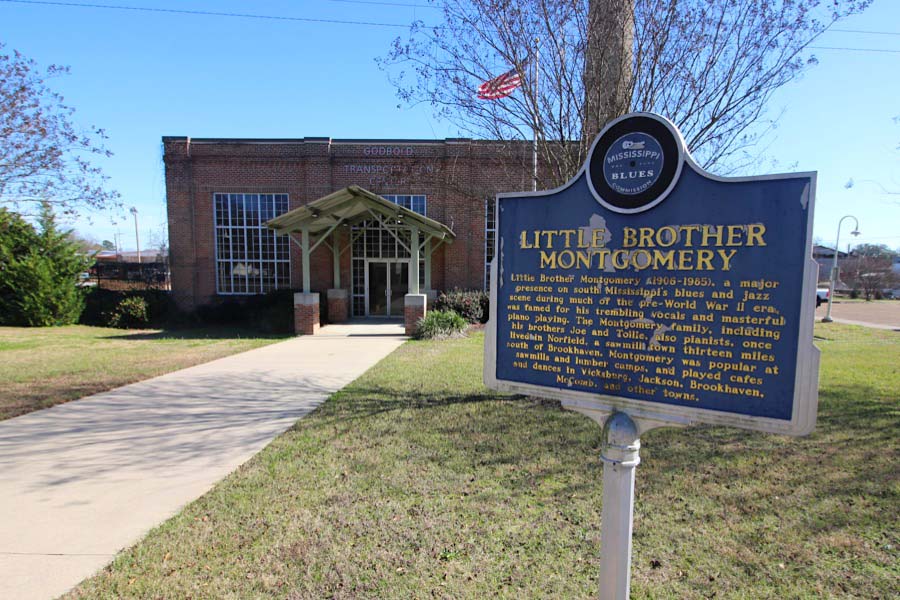
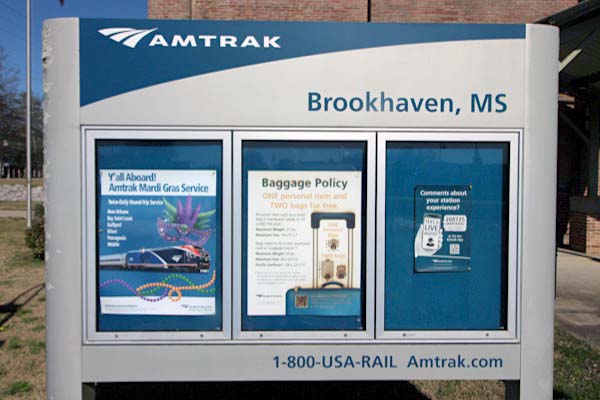
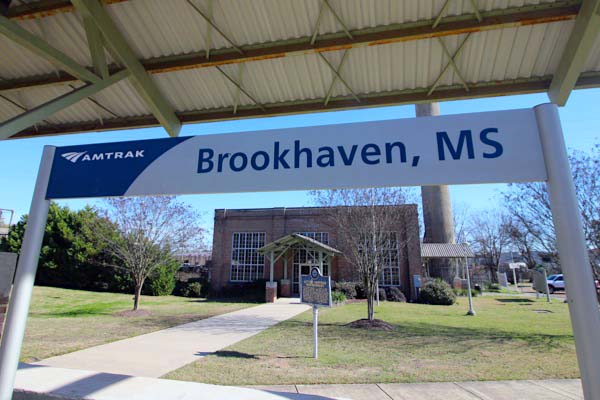
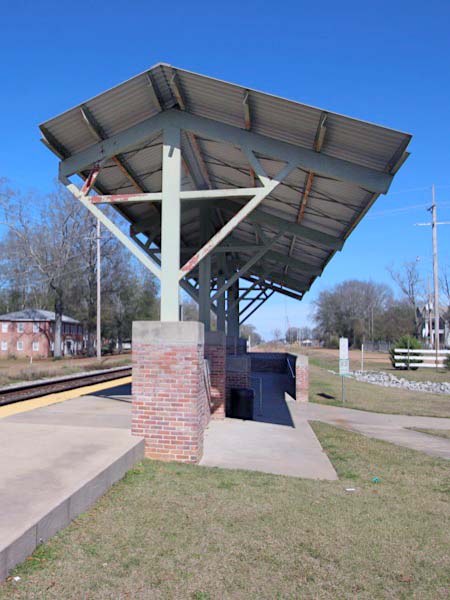
 Located a few blocks north of the historic downtown, the Godbold Transportation Center — a project more than a decade in the making — opened to the public in August 2011. Prior to moving to the new facility, Amtrak passengers used a small shelter adjacent to the former Illinois Central Railroad (ICRR) depot a few blocks to the south.
The completion of a new multimodal center in Meridian, Miss., in 1997 inspired Brookhaven Mayor Bill Godbold to push for the construction of a similar facility that would provide intercity passenger rail and bus riders with a welcoming, climate-controlled waiting area and other amenities. Rather than construct a new building, the aldermen voted to rehabilitate the former municipal power plant, which was abandoned but structurally sound and located close to the tracks. The cost of transforming the industrial building into a transportation hub was estimated at $1.27 million, and it was hoped that it would spur private development on nearby parcels. Due to the site’s former industrial uses, minor environmental remediation work was required to remove soil contaminated by oil.
Jackson-based architect Michael Barranco drew up plans for the transportation center. Known for his interest in New Urbanism — a planning movement that emphasizes the creation of walkable, mixed-use communities rooted in traditional design principles — Barranco was also instrumental in the creation of the Mississippi Renewal Forum. Established in the wake of Hurricane Katrina, it brought together community and design professionals to discuss and plan for the revival of the Mississippi coast.
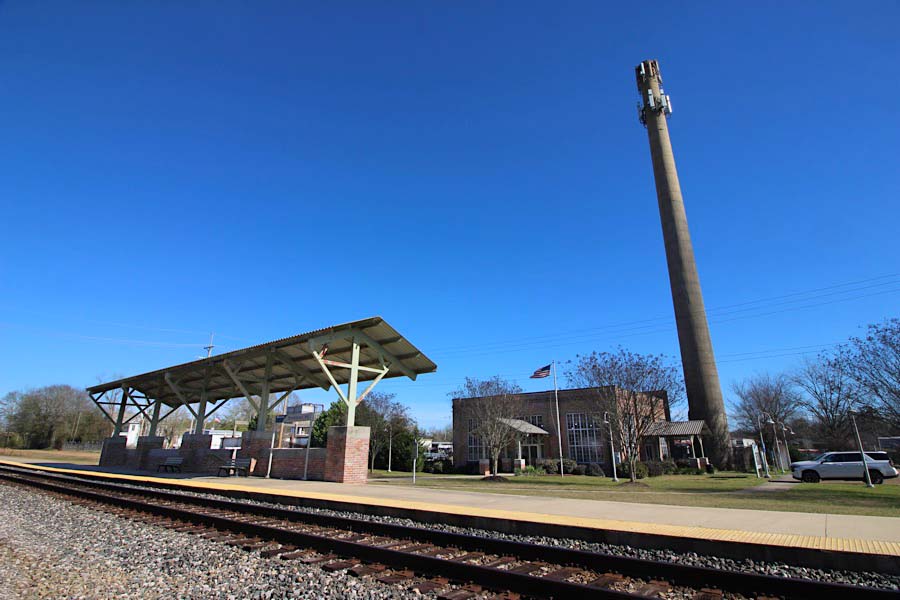 The resulting design called for partial demolition of the red brick power plant, which dates to 1890. The remaining portion features handsome original brickwork—including stylized architectural elements such as a water table, cornice, and pilasters—that elevated the building above its utilitarian function as a power plant. The soaring smokestack remains standing and acts as a visual reference point that also reminds visitors of the building’s industrial heritage. During the rehabilitation work, crews discovered two plaques containing information about the construction of the power plant; that at some point in the past had been covered up by a brick wall. They were removed and will be reinstalled along with a new plaque commemorating the opening of the transportation center.
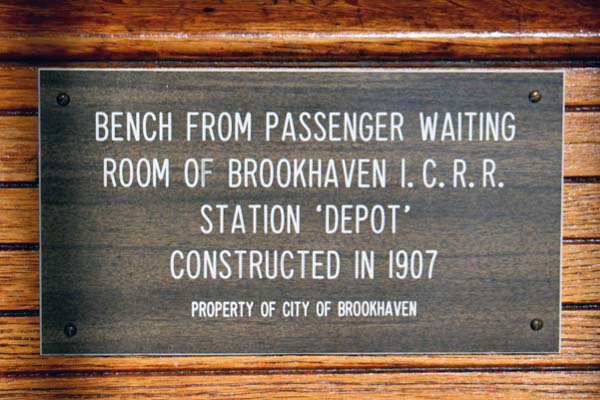
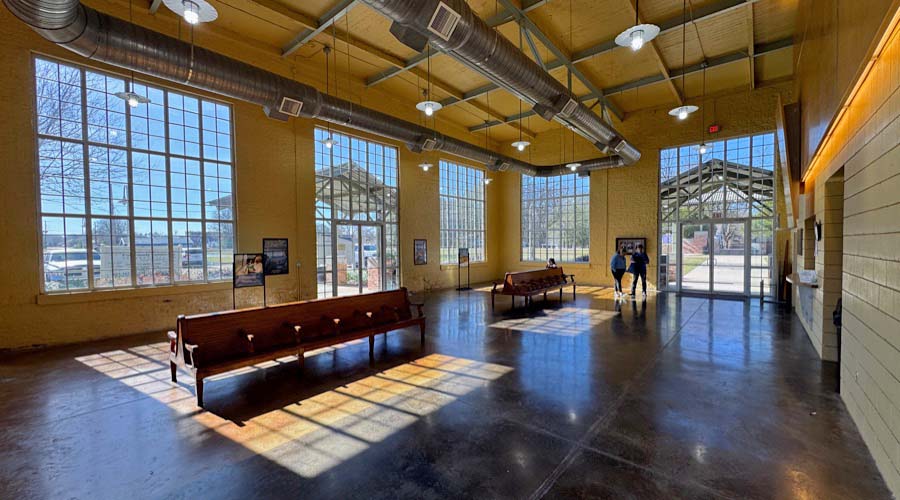
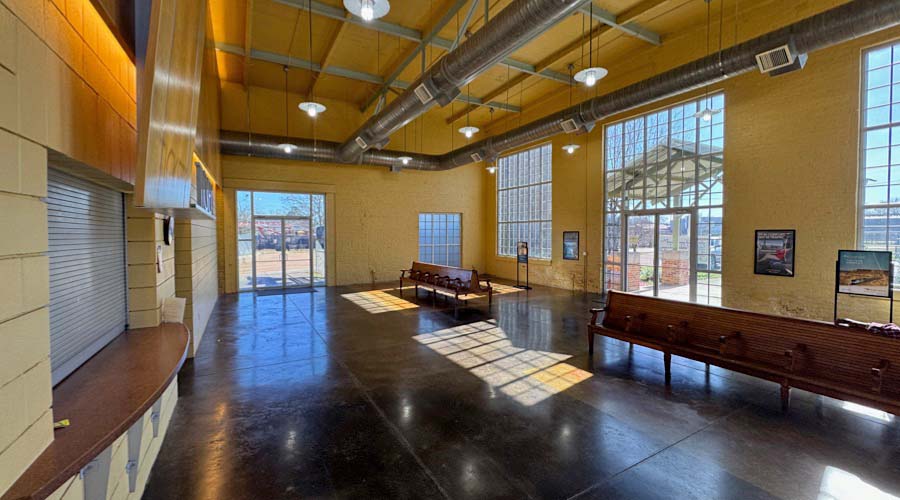
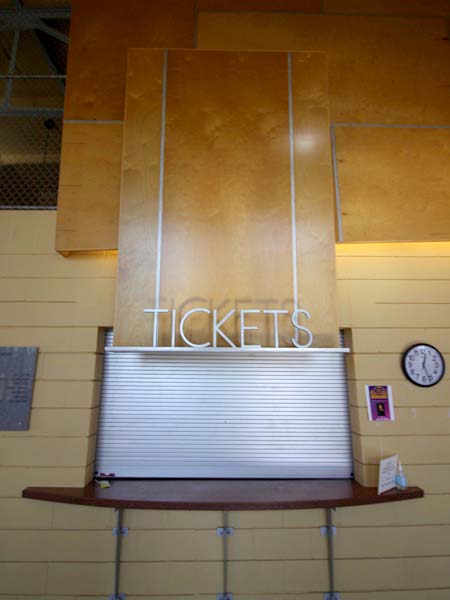
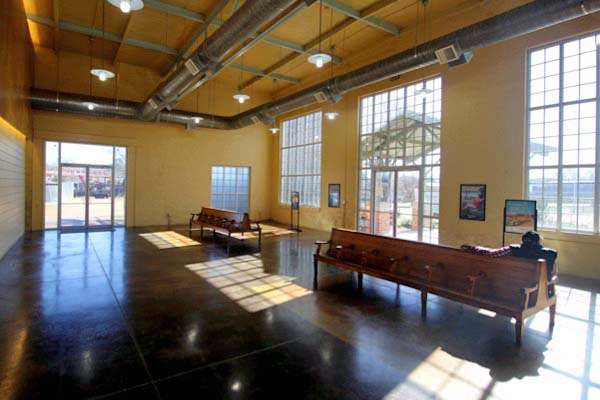
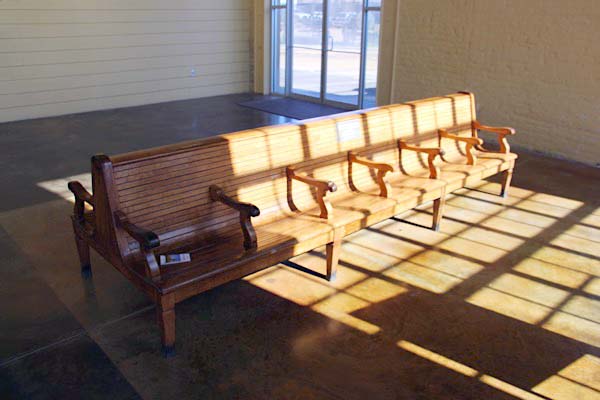 Large expanses of glass on the principal elevations allow natural light to flood the waiting room, whose bright and airy atmosphere is further enhanced by high ceilings, a coat of warm yellow paint on the brick and cinderblock walls, and delicate birch veneer wood paneling installed on the wall above the ticket window. Wooden benches are a tangible link to Brookhaven’s rich railroad heritage — they were once installed in the city’s historic ICRR depot. Around the base of the building, the town’s Community Appearance Committee installed shrubs and flowers.
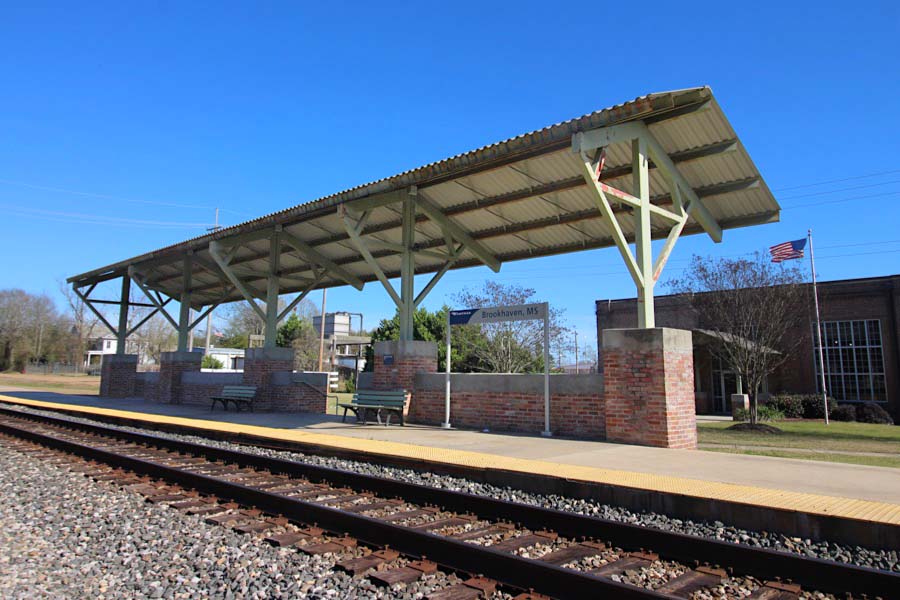
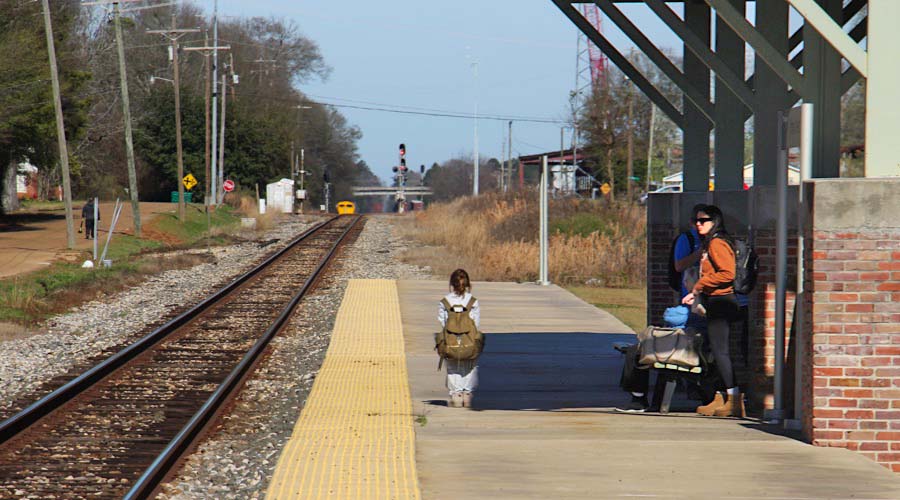
Trackside, construction crews built a 400’ concrete platform with tactile edging. A gabled canopy rising from brick piers protects passengers from inclement weather while they wait outside for the arrival of the train. Canopies were also installed over the station’s western and southern entrances that lead to the platform and parking lot, respectively. The design and installation of the platform was delayed for a number of years until the Federal Railroad Administration and the Canadian National Railway (which purchased the ICRR in 1998) could agree on its height.
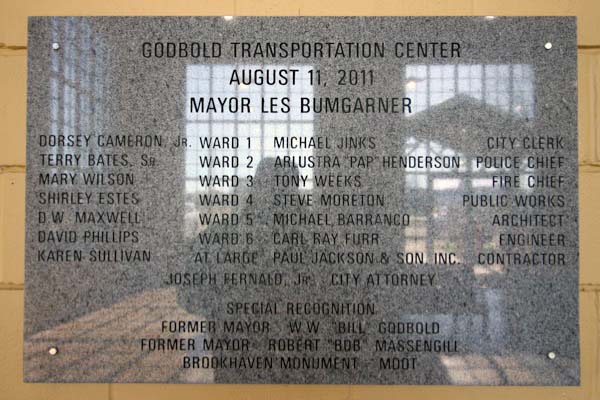
 The people of Brookhaven celebrated the opening of the train station during a ribbon-cutting ceremony on August 17, 2011. The process, which took 12 years and was shepherded by three mayors, is a testament to the persistence and patience of city leaders. The facility was named the Godbold Transportation Center in honor of former Mayor Bill Godbold, who died in 2010 before its completion. A photo of Godbold and his parents—both of whom also served as city mayor—hangs in the building. The arrival of the southbound City of New Orleans, making its first stop at the new transportation center, closed the ceremony on a high point.
Jan 2026 / RWH
Jan 2026 / RWH
Jan 2026 / RWH
Brookhaven, Ms / Jan 2026 / RWH
Jan 2026 / RWH
Jan 2026 / RWH

Jan 2026 / RWH
Jan 2026 / RWH
Jan 2026 / RWH
Brookhaven, MS
Brookhaven, Ms / Jan 2026 / RWH
Jan 2026 / RWH
Jan 2026 / RWH
Brookhaven, Ms / Jan 2026 / RWH
Brookhaven, Ms / Jan 2026 / RWH
Brookhaven, Ms / Jan 2026 / RWH
Jan 2026 / RWH
Union Station
Brookhaven, Ms / Jan 2026 / RWH
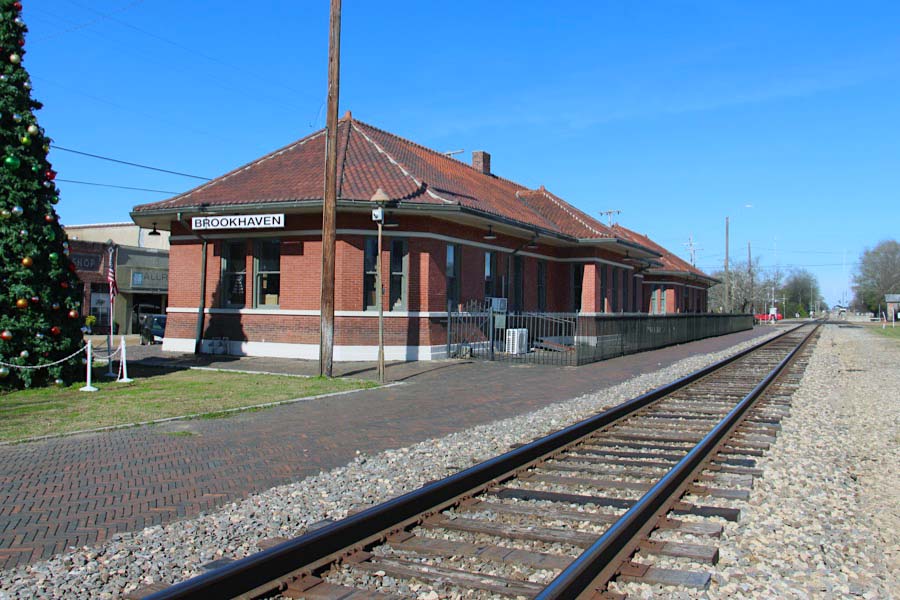
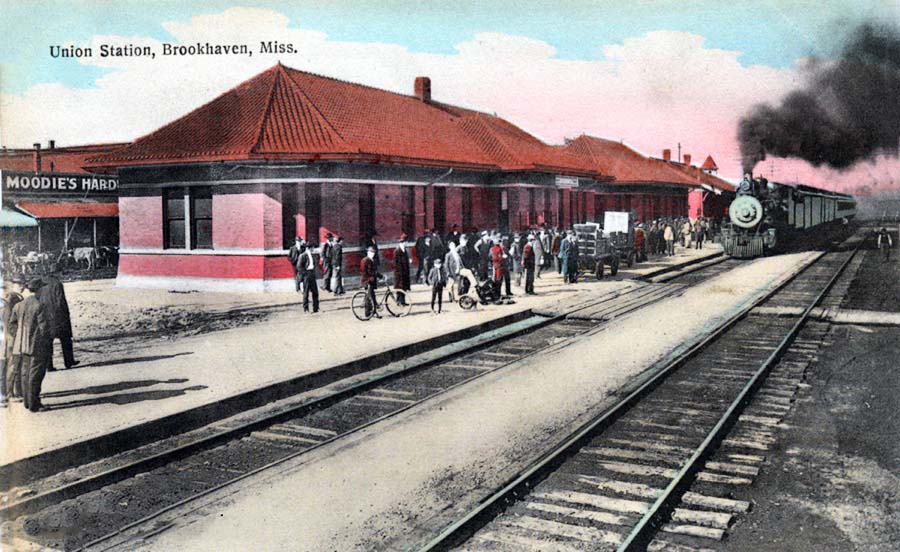
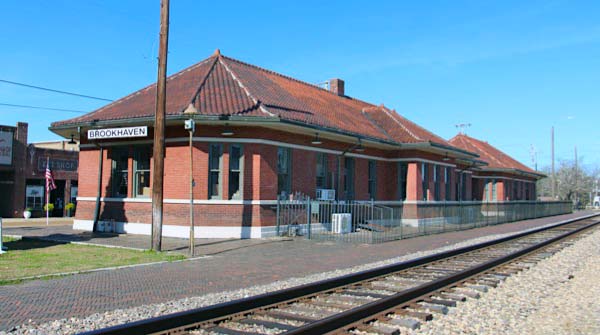
 Brookhaven also became a hub between the Illinois Central mainline (formerly the New Orleans, Jackson, and Great Northern), the Brookhaven and Pearl River Railroad, the Mississippi Central, and the Meridian, Brookhaven, and Natchez Railroad. In 1907, the ICRR constructed a depot and freight house in downtown Brookhaven. Designed by F. D. Chase, the brick buildings exhibit Tudor-revival influences. In 1980, the station was placed on the National Register of Historic Places due to the significant role that the railroad has played in the history of Brookhaven.
postcard / collection
Brookhaven, Ms / Jan 2026 / RWH
Brookhaven, Ms / Jan 2026 / RWH
Click to see the Brookhaven Union Station plotted on a Google Maps page
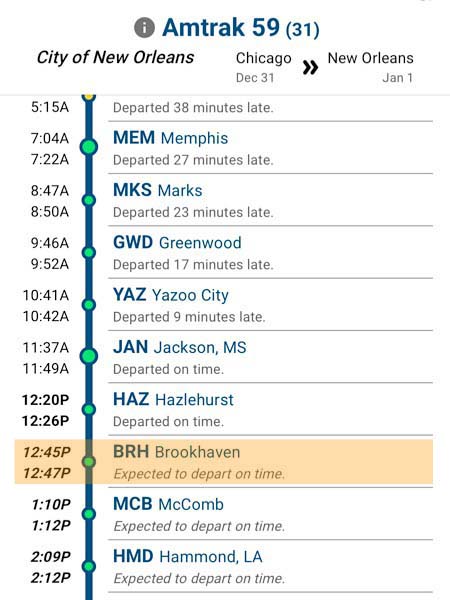
southbound #59
Brookhaven, Ms / Jan 2026 / RWH
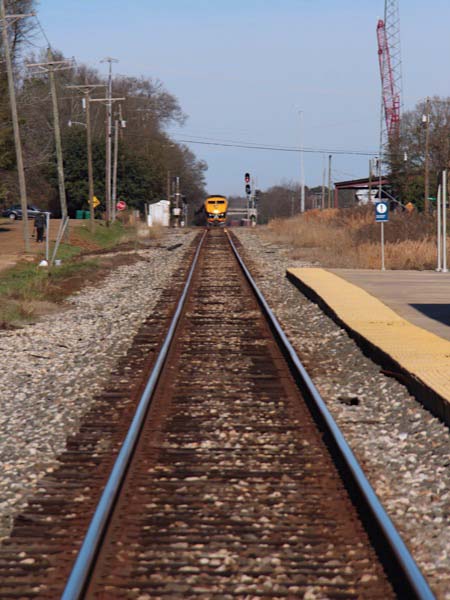
Jan 2026 / RWH
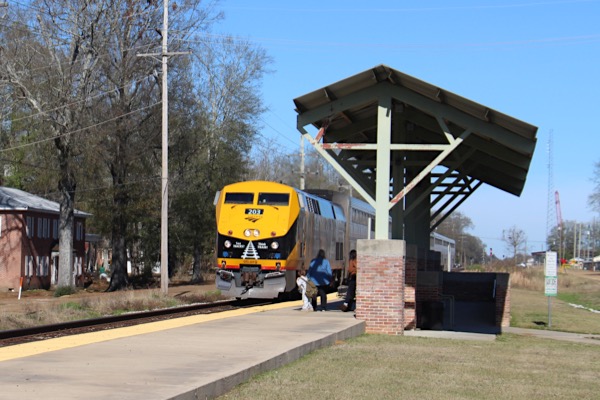
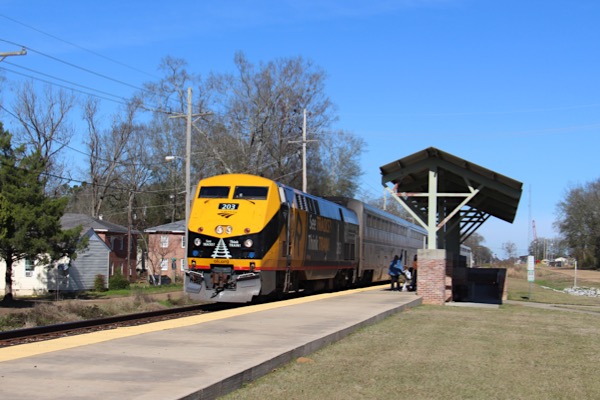
Jan 2026 / RWH
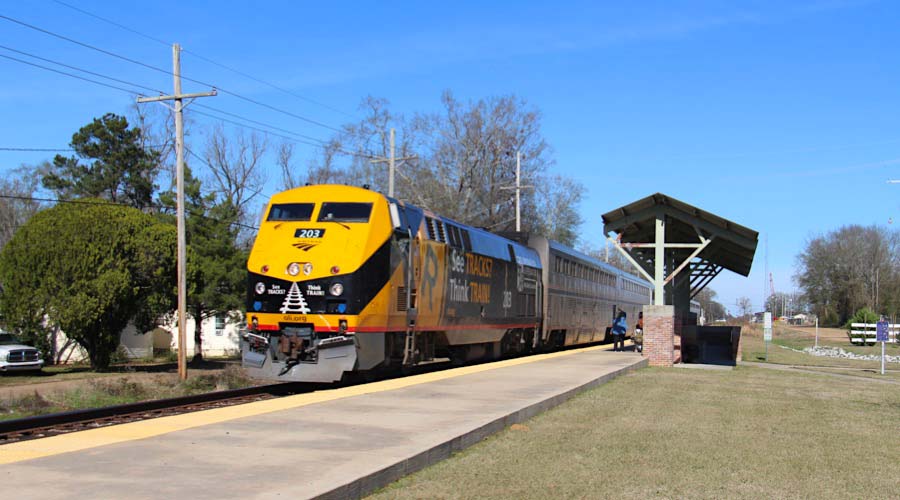
Brookhaven, Ms / Jan 2026 / RWH
Amtrak #203
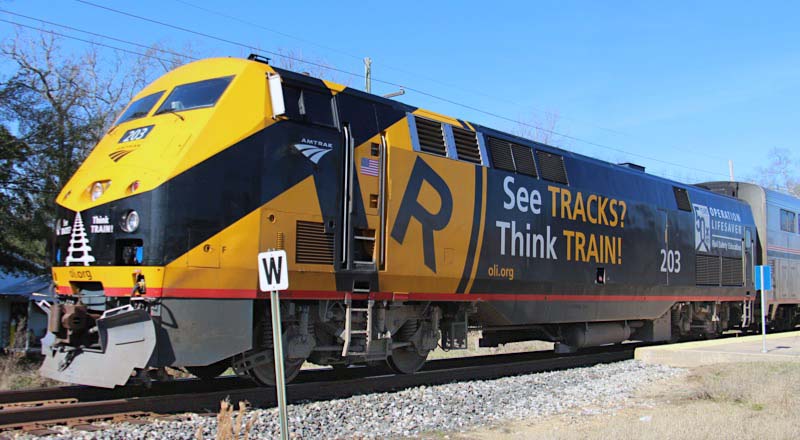
Amtrak #203
Brookhaven, Ms / Jan 2026 / RWH
Amtrak #203
wears Operation Lifesaver paint scheme
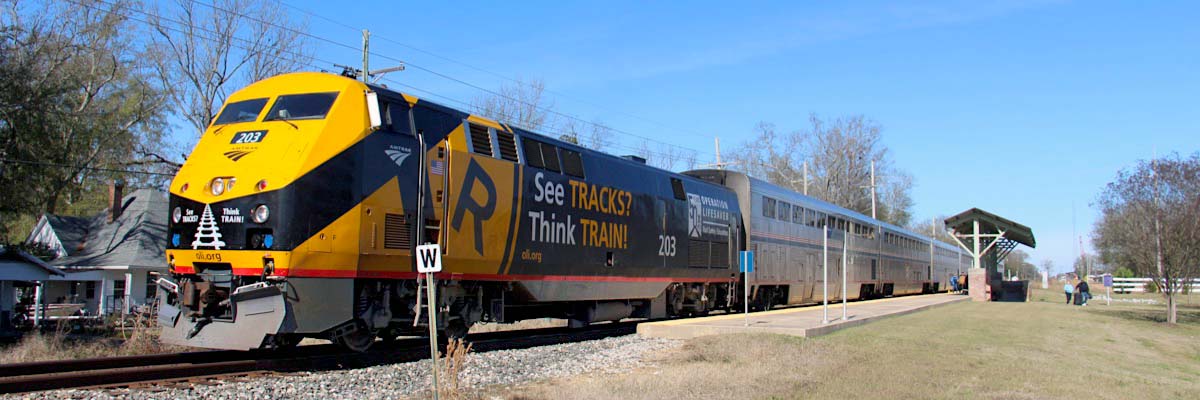
Brookhaven, Ms / Jan 2026 / RWH
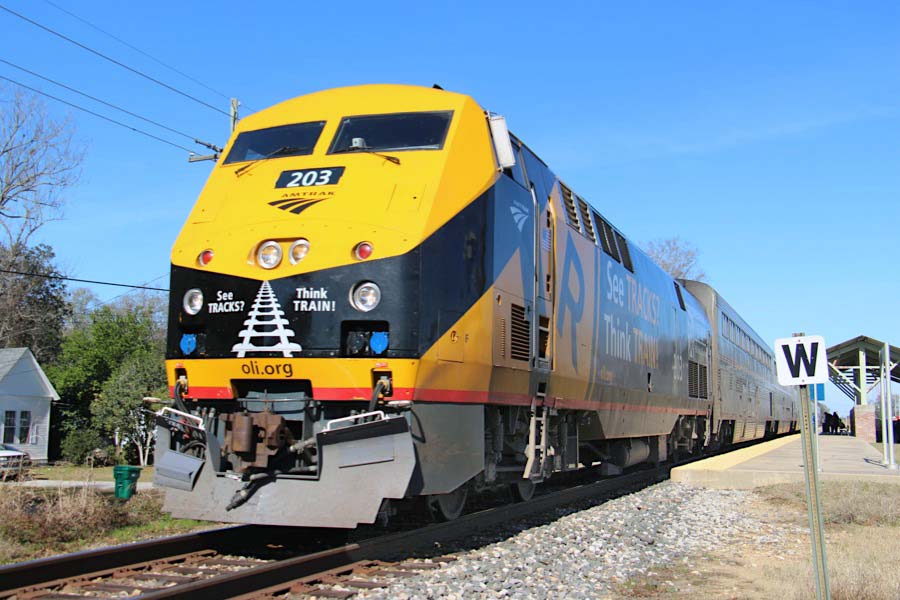
Brookhaven, Ms / Jan 2026 / RWH

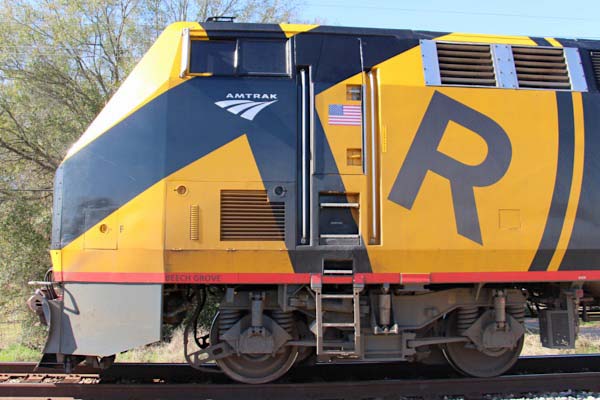
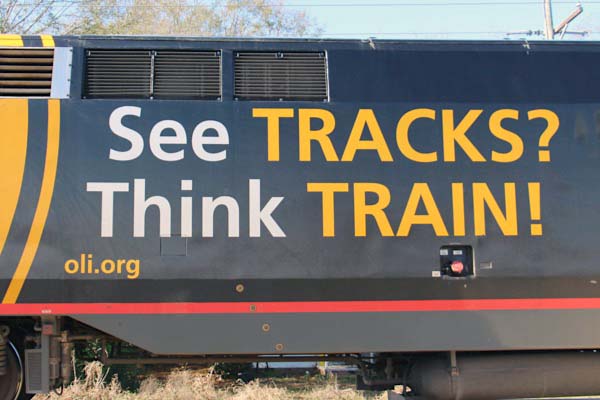
Jan 2026 / RWH
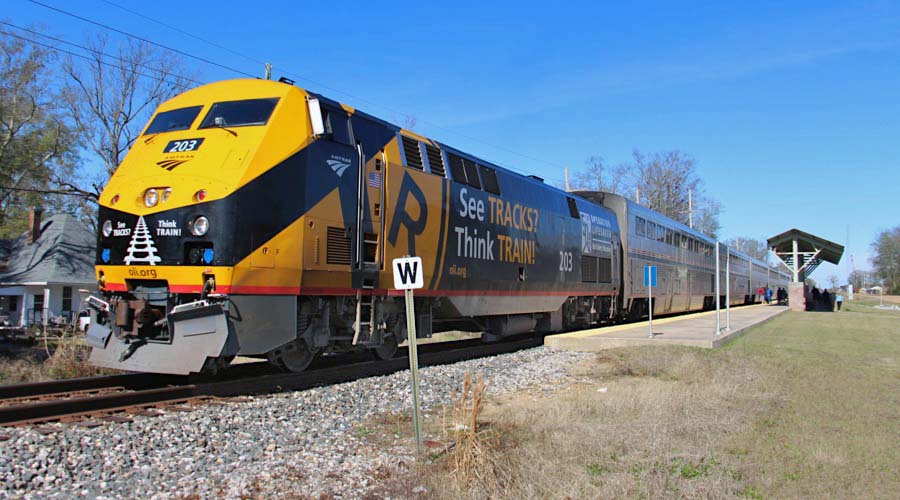
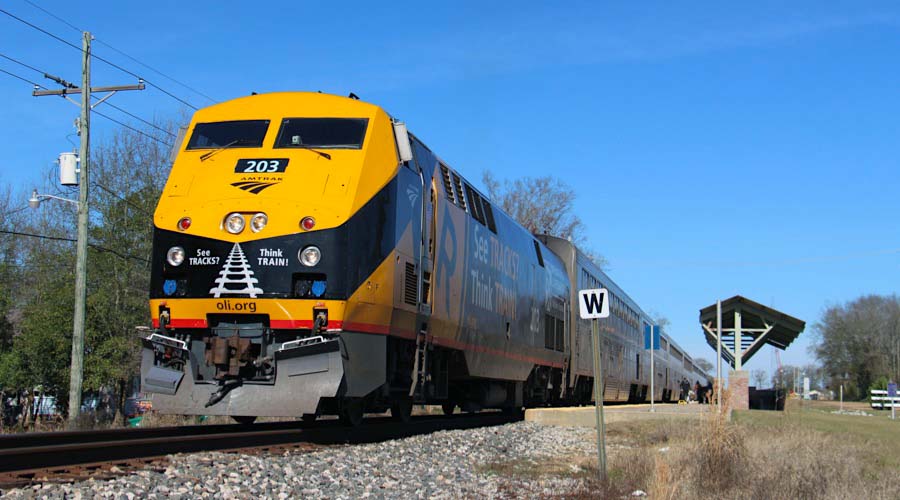
Brookhaven, Ms / Jan 2026 / RWH
Amtrak #59 consist - January 1, 2026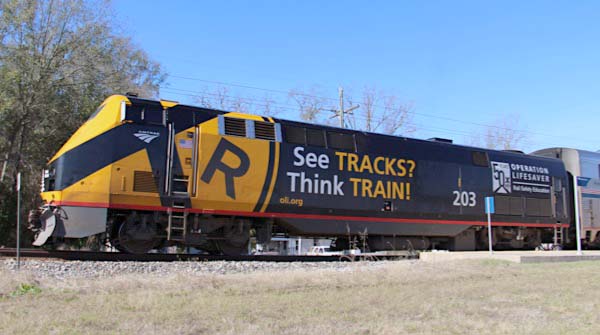
Amtrak #203
GE Genesis motive power
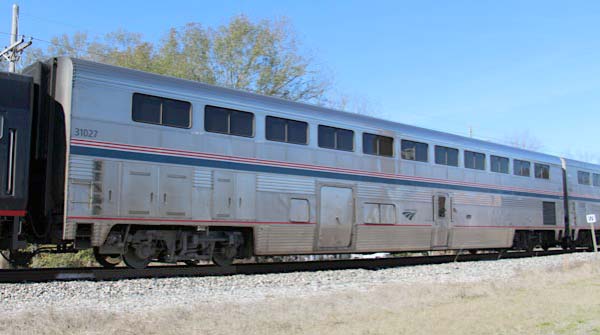
Amtrak #31027
Superliner I coach/baggage
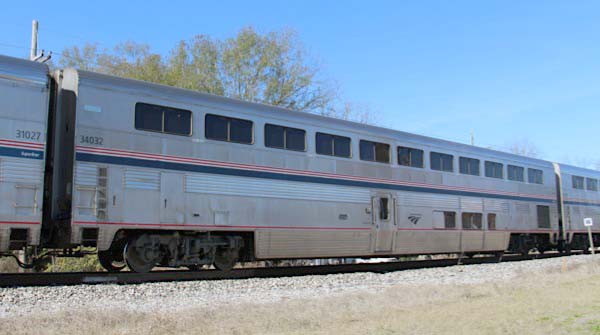
Amtrak #34032
Superliner I coach
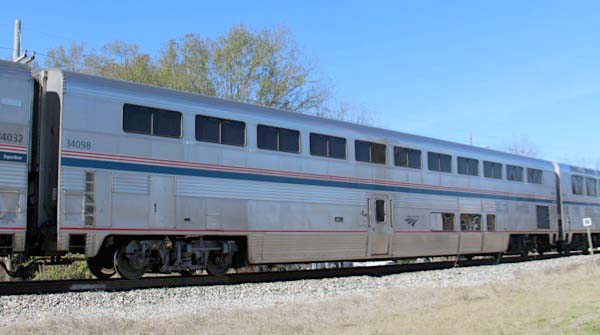
Amtrak #34098
Superliner I coach
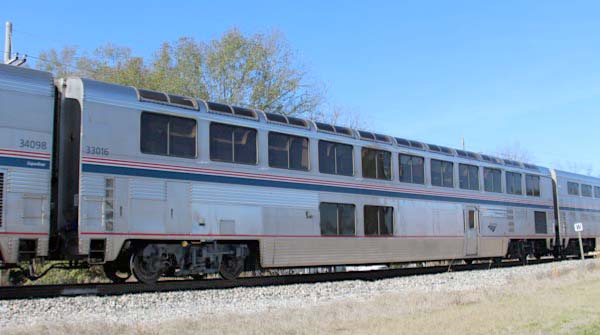
Amtrak #33016
Superliner I lounge
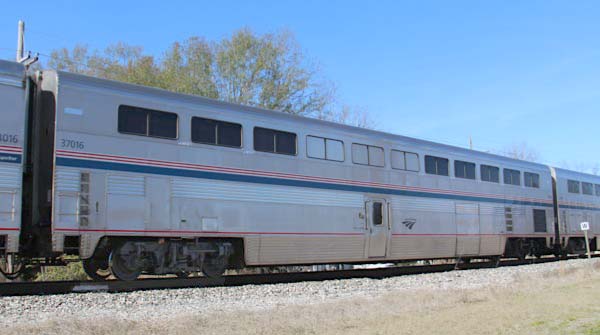
Amtrak #371016
Superliner I DinerLounge
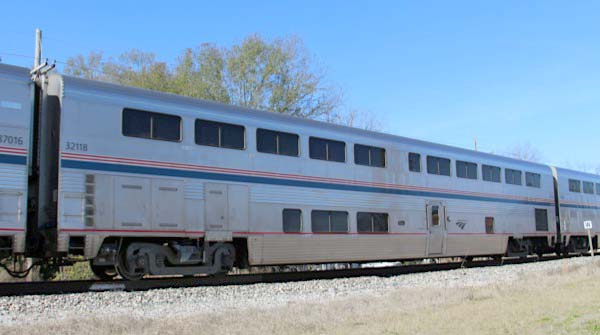
Amtrak #32118
Superliner II sleeper
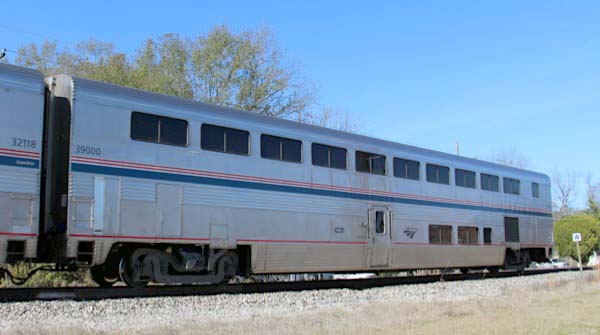
Amtrak #39000
Superliner II transition dorm/sleeper
all photos above: Brookhaven, Ms / Jan 2026 / RWH
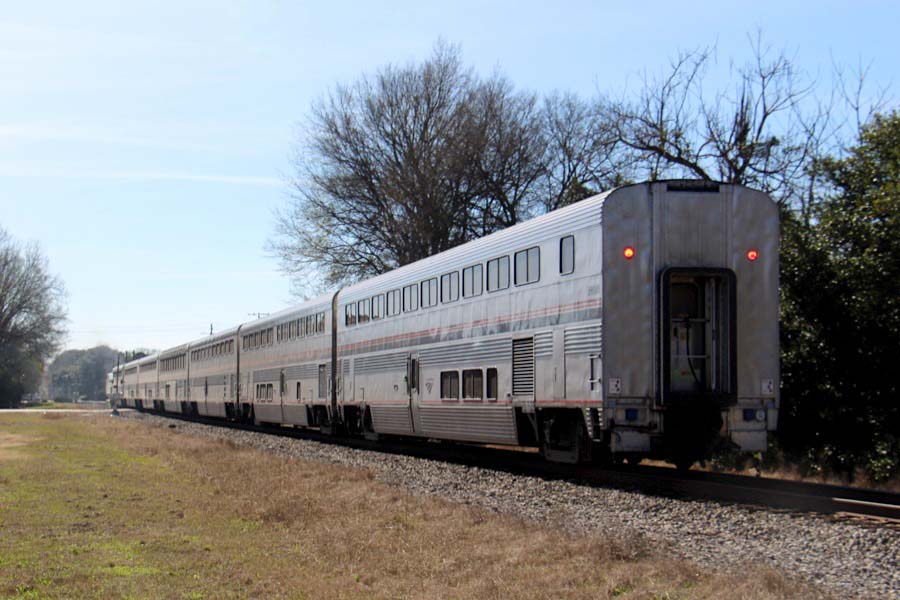
Brookhaven, Ms / Jan 2026 / RWH
150 Hazlehurst, Ms

Hazlehurst, Ms / Oct 1990 / JCH
- location:Hazlehurst MS
- address:North Ragsdale Ave
- type:town depot, 1 platform
- owner:Amtrak
- opened:1925
- builder:Illinois Central
- style:depot brick
- services:none, shelter
- links: Amtrak | Great Stations

Hazlehurst, Ms / Oct 1990 / JCH
Click to see the Hazlehurst depot area plotted on a Google Maps page

Oct 1990 / JCH

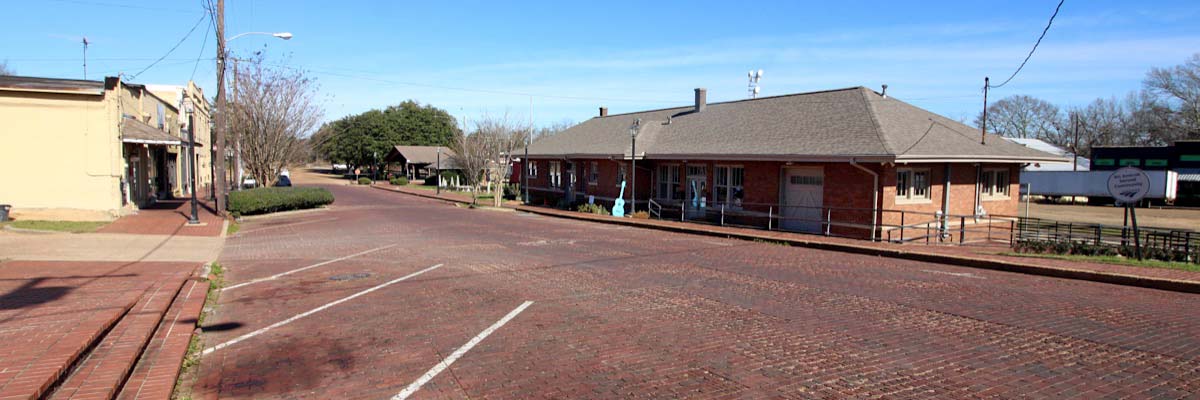
Hazlehurst, Ms / Oct 1990 / JCH

Hazlehurst, Ms / Oct 1990 / JCH
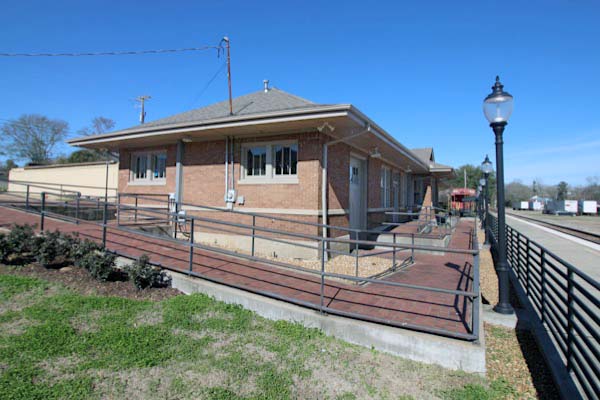
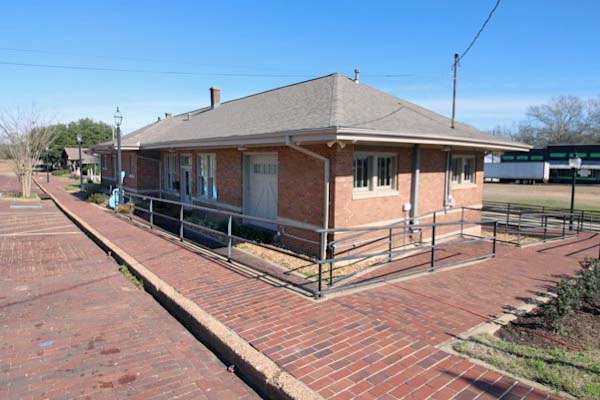
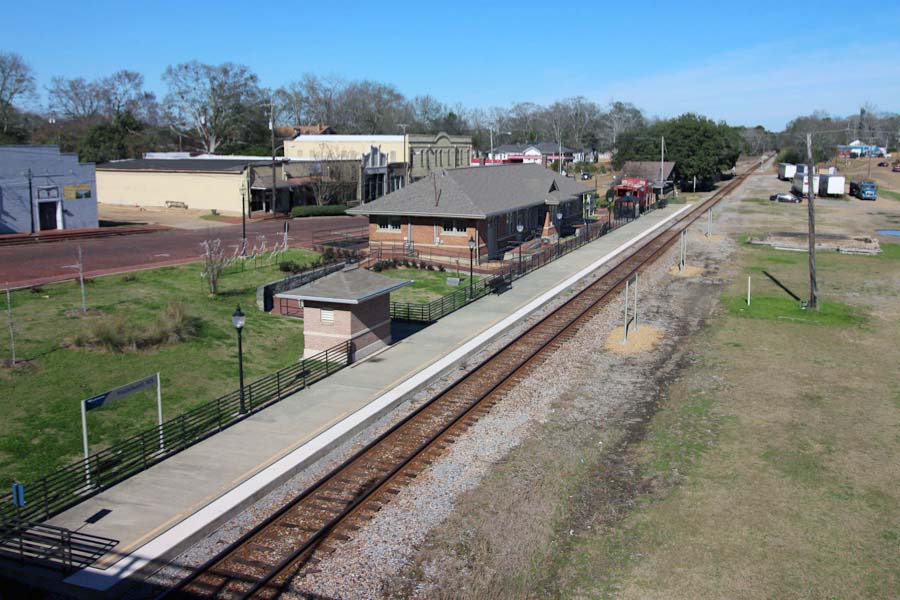
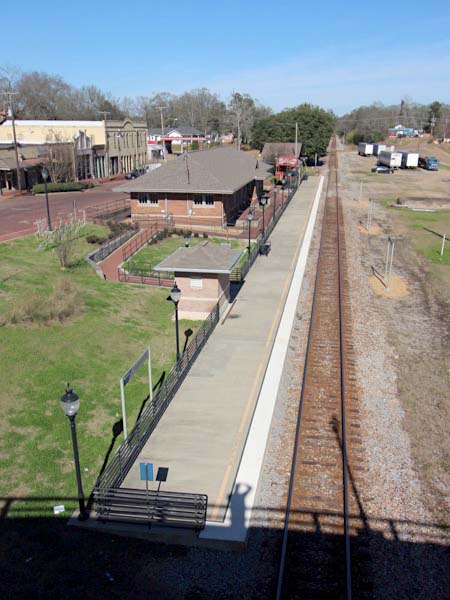
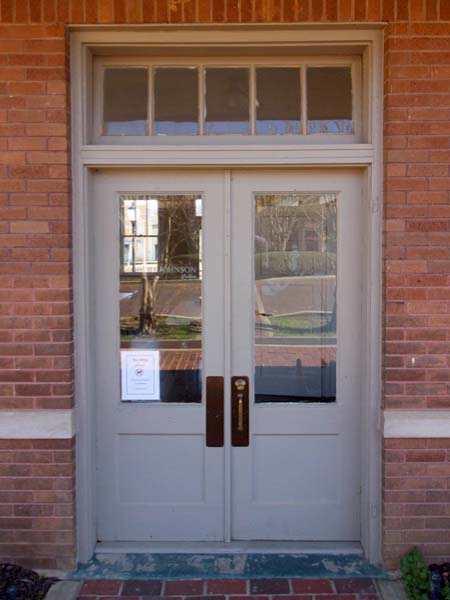
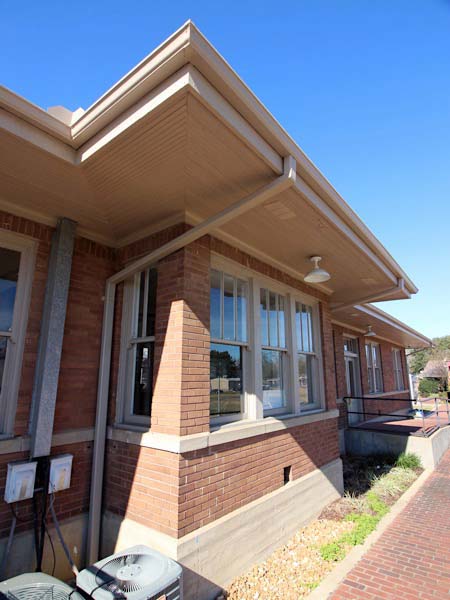
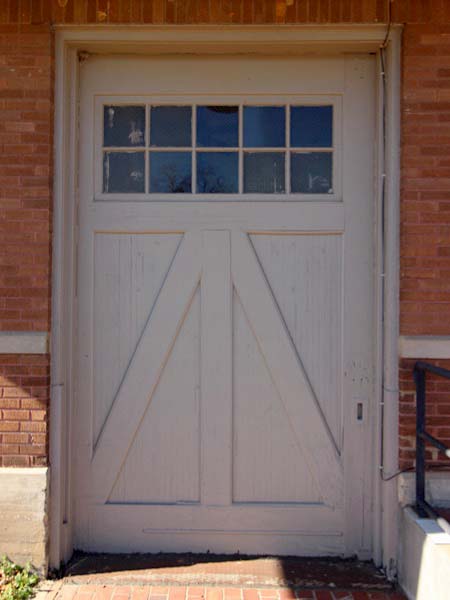
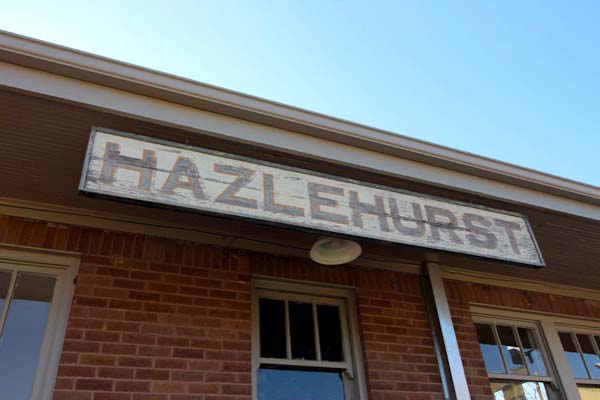
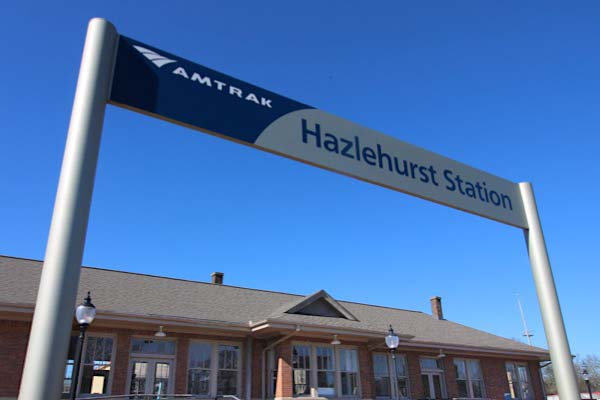
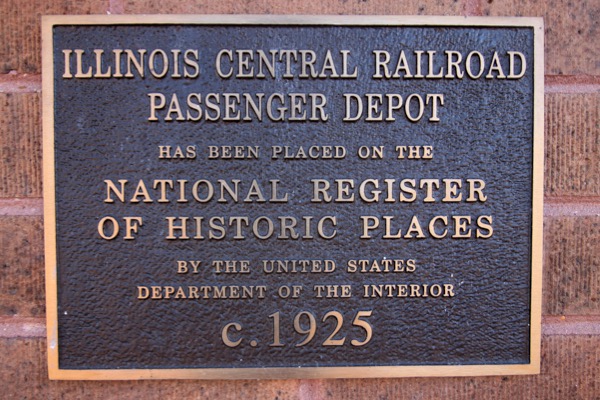
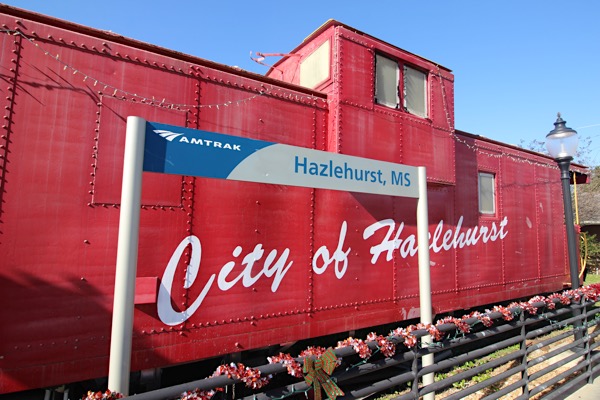
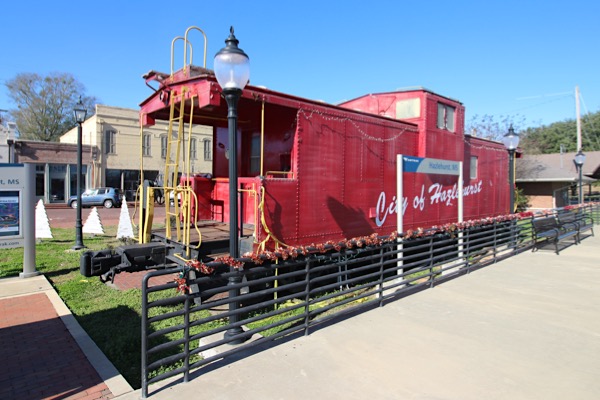
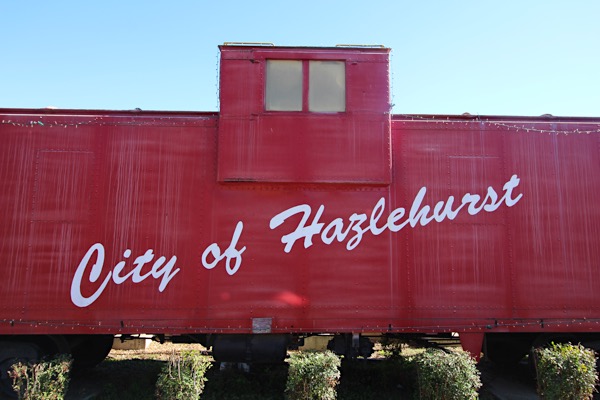
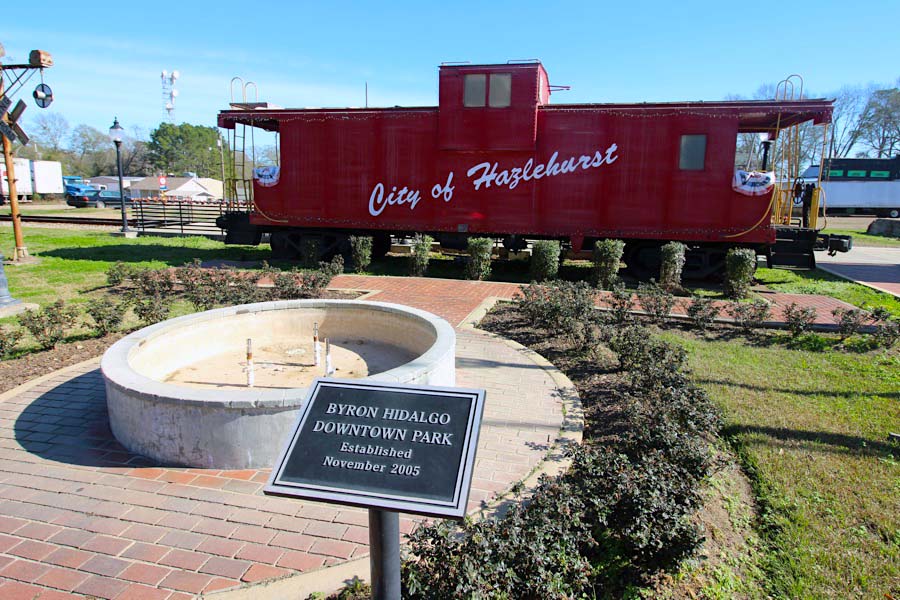
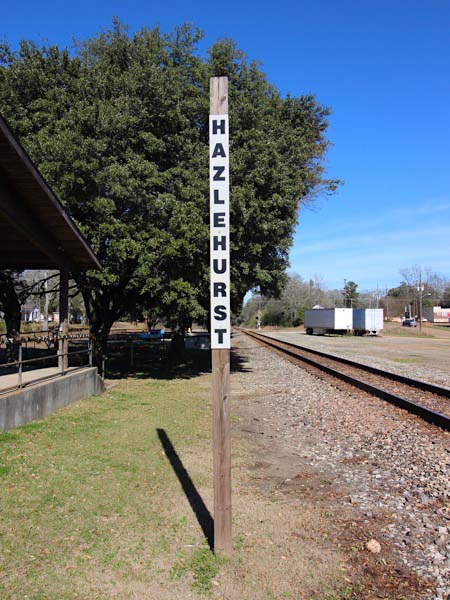
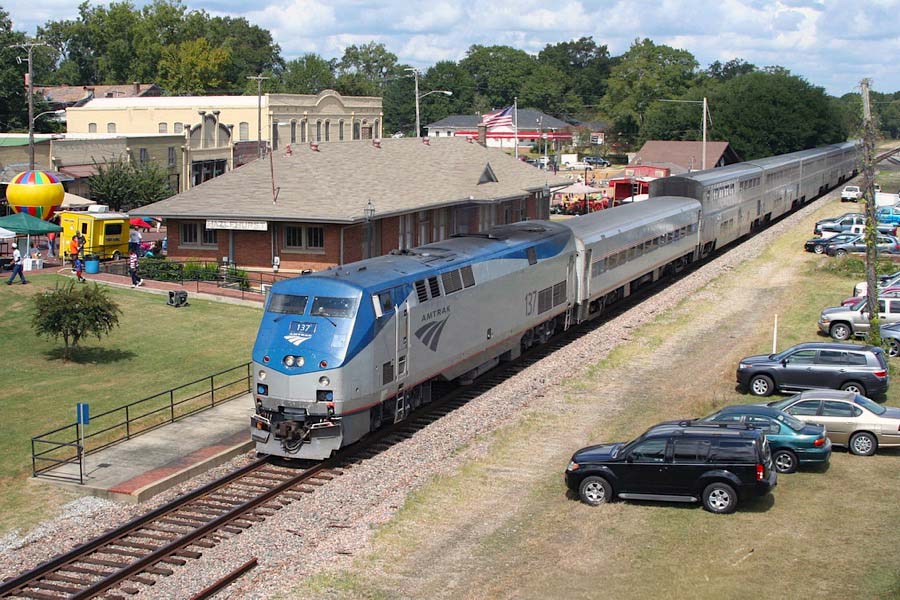
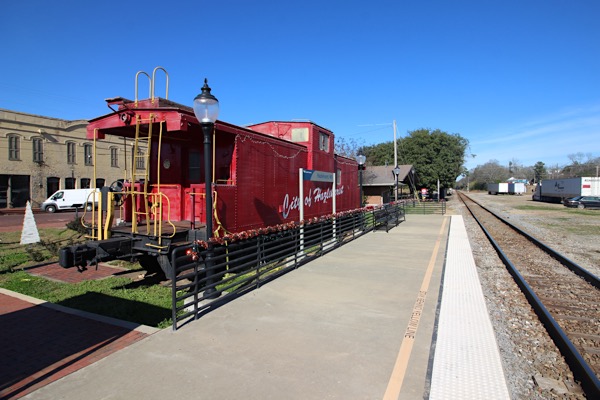
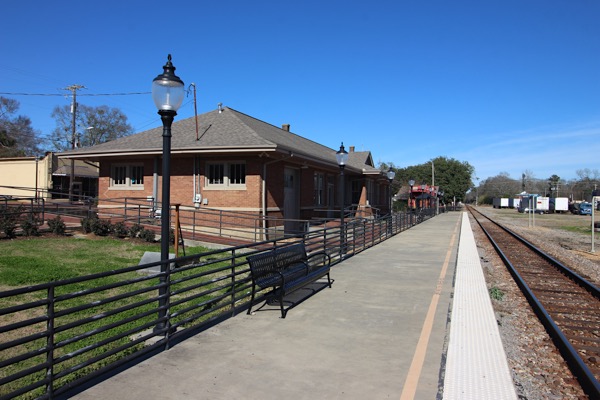
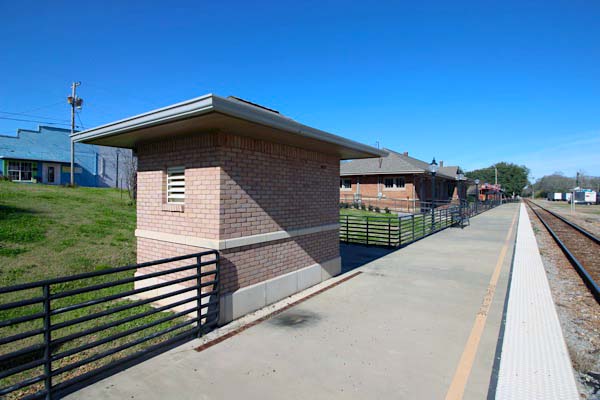
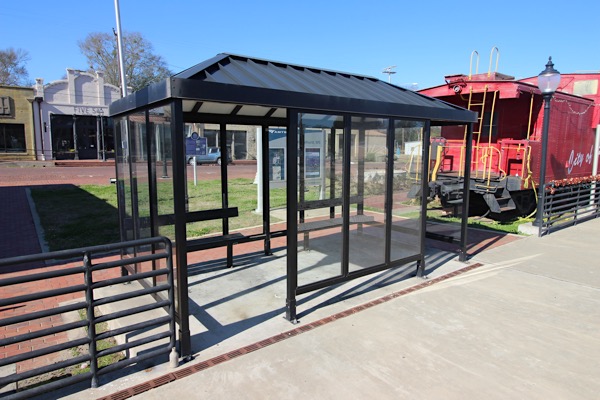
 The Hazlehurst stop consists of a shelter on the platform adjacent to the historic 1925 depot, which was built by the Illinois Central Railroad to replace an earlier wooden structure. The depot currently houses the Hazlehurst Depot Museum and the Hazlehurst Chamber of Commerce. An Illinois Central caboose built in 1966 stands nearby.
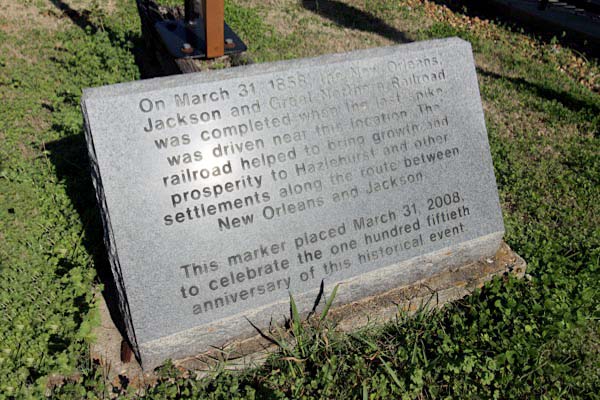
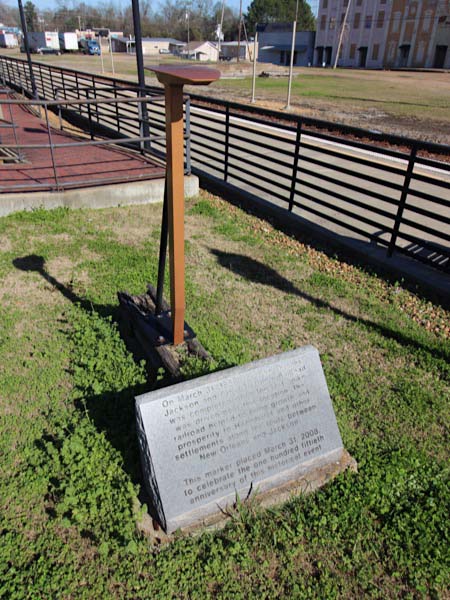
On March 31, 1858, the final spike of the New Orleans, Jackson, and Great Northern railroad was driven. The railroad (later known as the Illinois Central) was built under the supervision of General Superintendent and Chief Engineer George H. Hazlehurst. The line cut through Copiah County, the “Tomato Capital of the World,” which was ceded to the United States by the Choctaw tribe in the Doak’s Stand Treaty of 1820. George Hazlehurst surveyed and laid out the streets of Hazlehurst, requesting that the town bear his name and making it one of the oldest cities in Mississippi.
The Hazlehurst stop consists of a shelter on the platform adjacent to the historic 1925 depot, which was built by the Illinois Central Railroad to replace an earlier wooden structure. The depot currently houses the Hazlehurst Depot Museum and the Hazlehurst Chamber of Commerce. An Illinois Central caboose built in 1966 stands nearby.
On March 31, 1858, the final spike of the New Orleans, Jackson, and Great Northern railroad was driven. The railroad (later known as the Illinois Central) was built under the supervision of General Superintendent and Chief Engineer George H. Hazlehurst. The line cut through Copiah County, the “Tomato Capital of the World,” which was ceded to the United States by the Choctaw tribe in the Doak’s Stand Treaty of 1820. George Hazlehurst surveyed and laid out the streets of Hazlehurst, requesting that the town bear his name and making it one of the oldest cities in Mississippi.
Hazlehurst, Ms / Jan 2026 / RWH
Hazlehurst, Ms / Jan 2026 / RWH
Hazlehurst, Ms / Jan 2026 / RWH
Hazlehurst, Ms / Jan 2026 / RWH
Hazlehurst, Ms / Jan 2026 / RWH
Jan 2026 / RWH
Jan 2026 / RWH
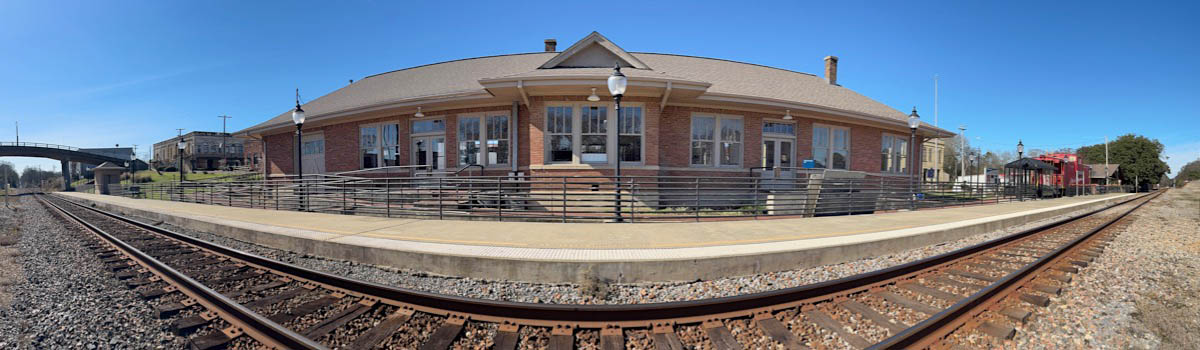
Hazlehurst, Ms / Jan 2026 / RWH
Hazlehurst, Ms / Jan 2026 / RWH
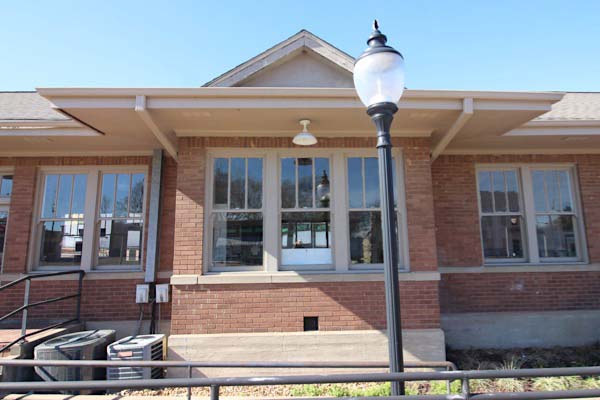
Hazlehurst, Ms / Jan 2026 / RWH
Jan 2026 / RWH
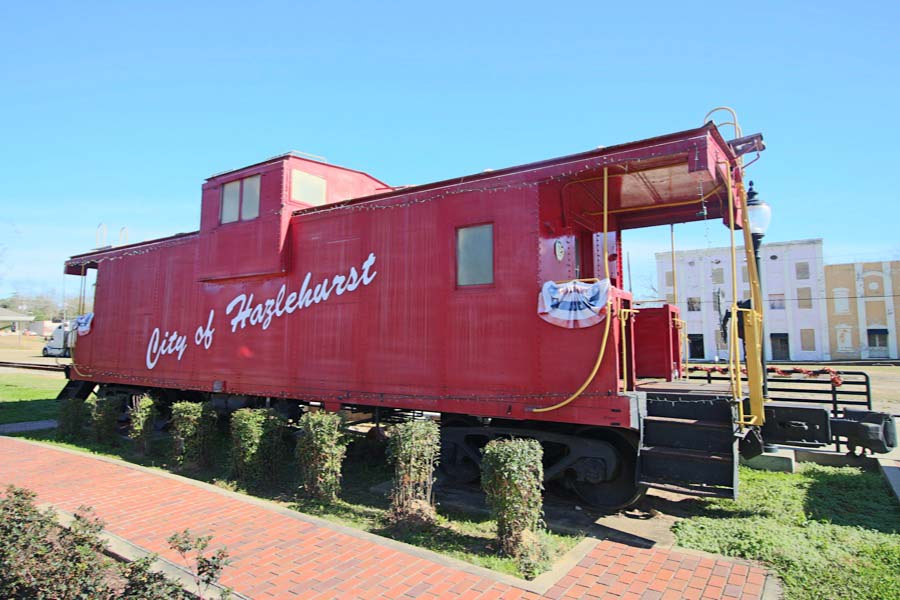
Illinois Central Gulf #199572
Hazlehurst, Ms / Jan 2026 / RWH
Jan 2026 / RWH
Hazlehurst, Ms / Jan 2026 / RWH
Jan 2026 / RWH
Hazlehurst, MS
Hazlehurst, Ms / Sep 2014 / G. Gerard
Hazlehurst, Ms / Jan 2026 / RWH
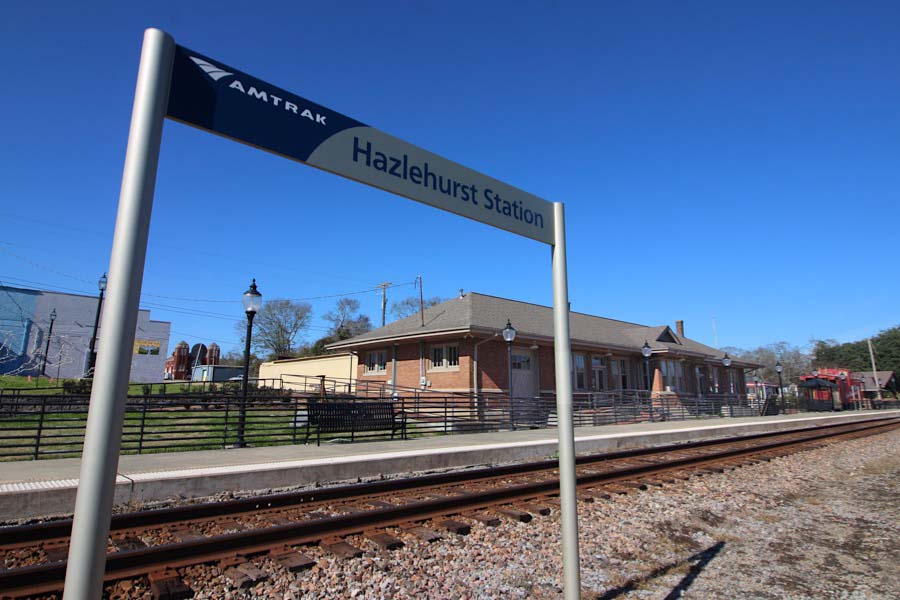
Hazlehurst, Ms / Jan 2026 / RWH
postcard / collection
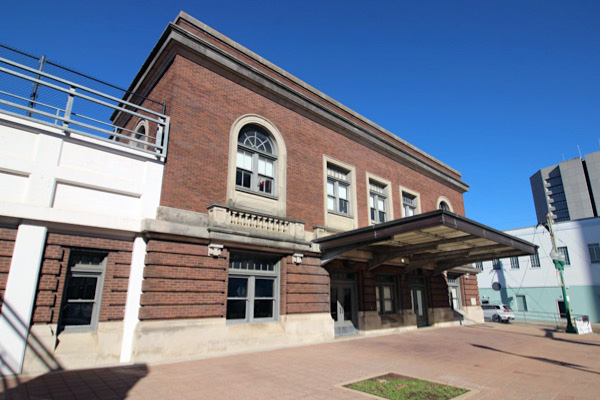
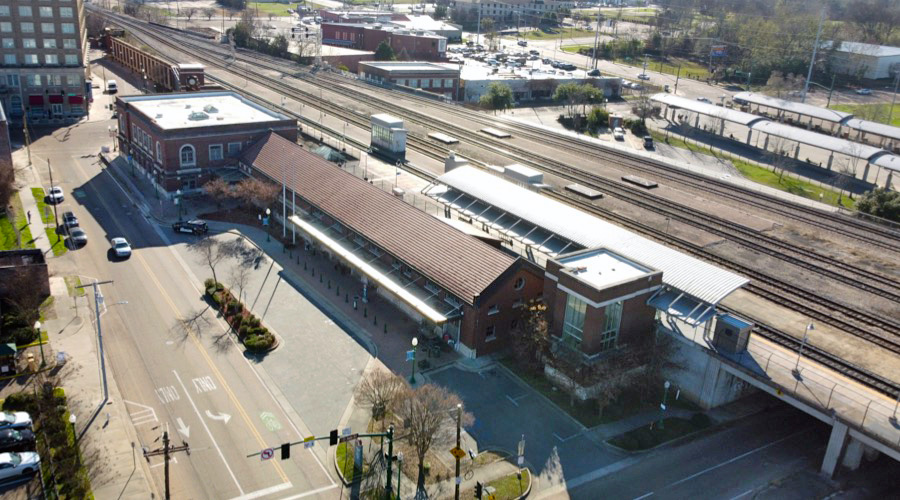
183 Jackson, Ms
Jackson, Ms / Dec 2025 / RWH
- name:Jackson Union Station
- address:300 West Capital St
- type:city station, 3 platforms
- owner:City of Jackson
- opened:1927
- builder:Illinois Central
- style:Georgian Revival
- renovated:1976, 2003
- services:tickets, baggage
- links: Amtrak | Great Stations
Jackson, Ms / Dec 2025 / RWH
Click to see Jackson's Union Station area plotted on a Google Maps page
Dec 2025 / RWH
Dec 2025 / RWH
Dec 2025 / RWH
postcard / collection
Jackson, Ms / Dec 2025 / RWH
Dec 2025 / RWH
Dec 2025 / RWH
Dec 2025 / RWH
Jackson, Ms / 1937 / David Price collection
JCH scrapbook
Jackson, Ms / Dec 2025 / RWH
Jackson, Ms / Dec 2025 / RWH
Jackson, Ms / Dec 2025 / RWH
Jackson, Ms / Dec 2025 / RWH
postcard / collection
Jackson, MS
Jackson, Ms / Apr 1976 / Michael Palmieri
Apr 1976 / Michael Palmieri
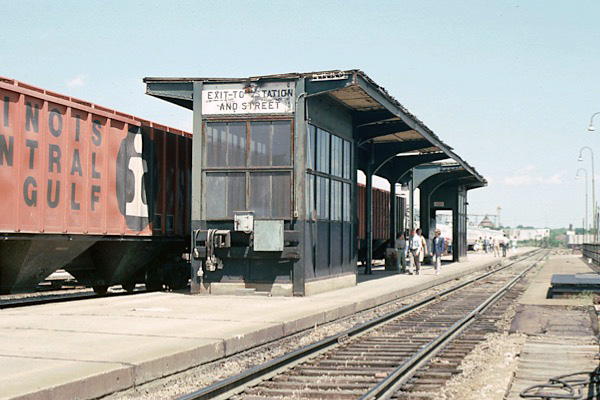
Apr 1976 / Michael Palmieri
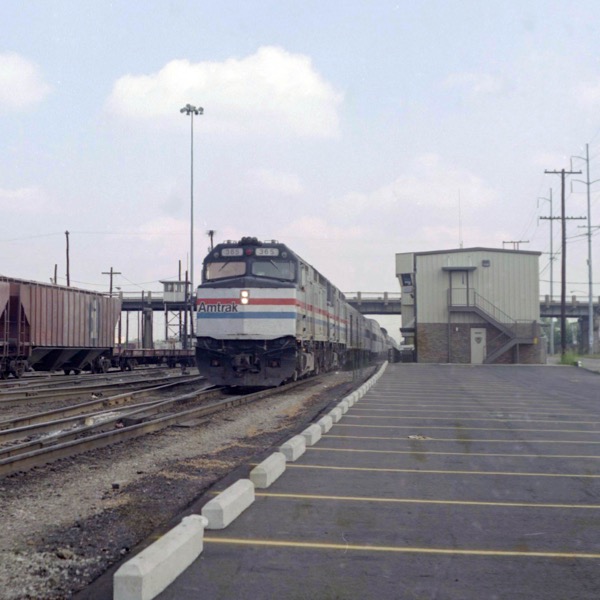
Jackson, Ms / Apr 1987 / JCH
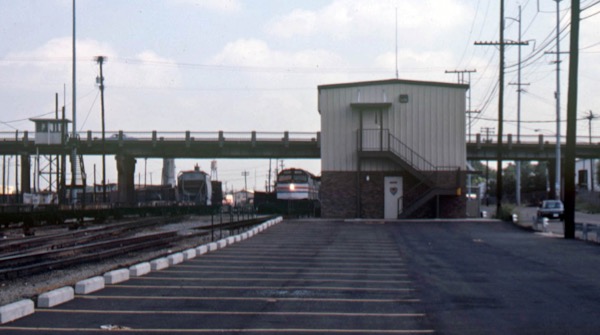
Jackson, Ms / Apr 1987 / RWH
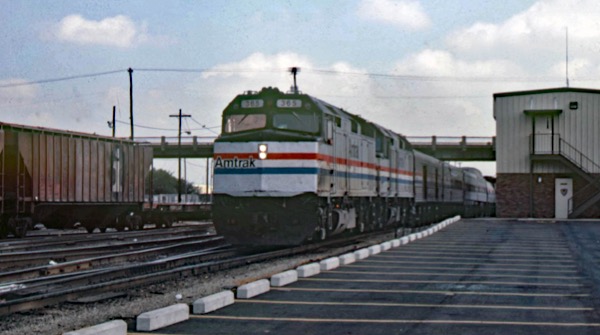
Jackson, Ms / Apr 1987 / RWH
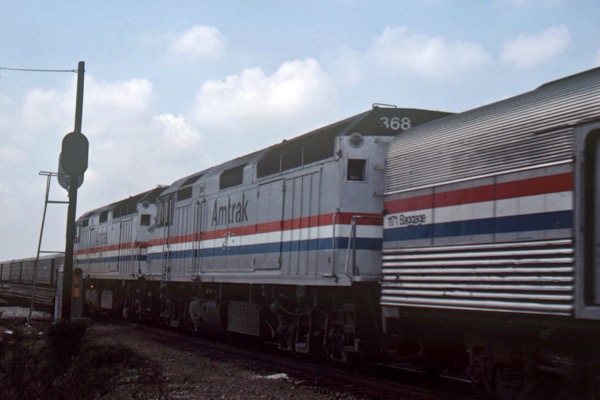
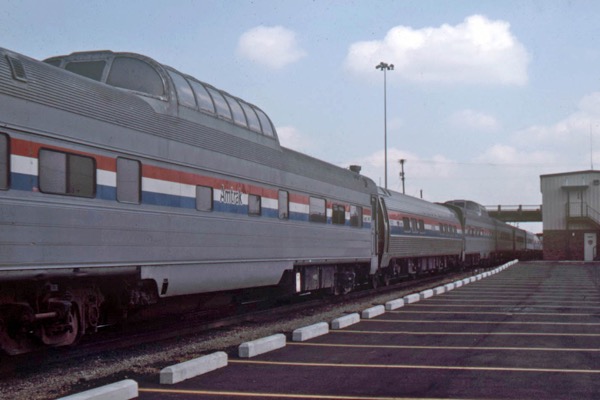
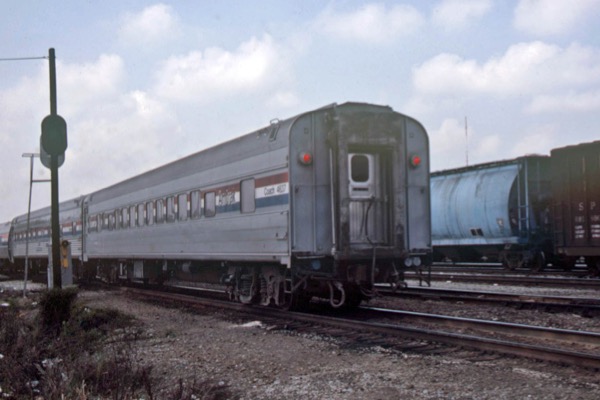
Apr 1987 / RWH
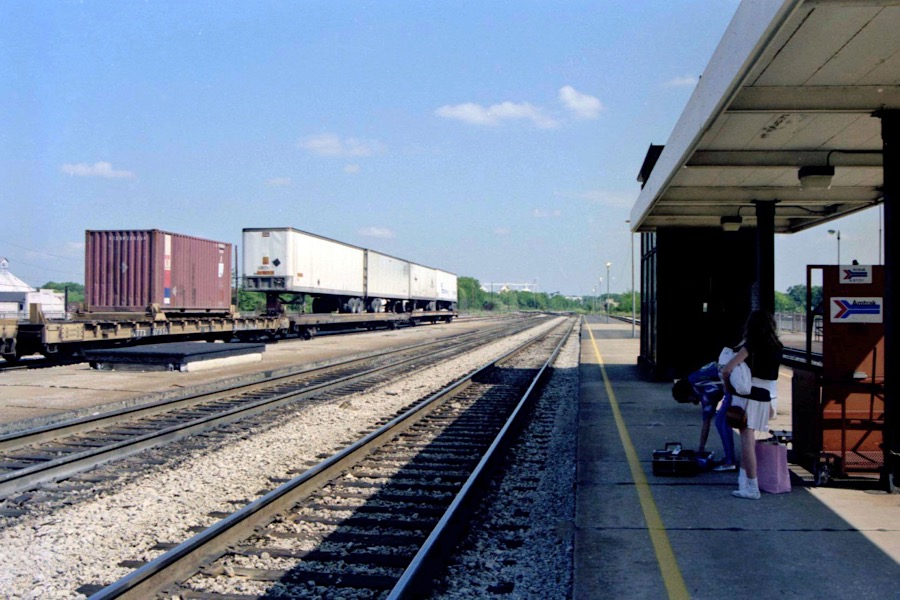
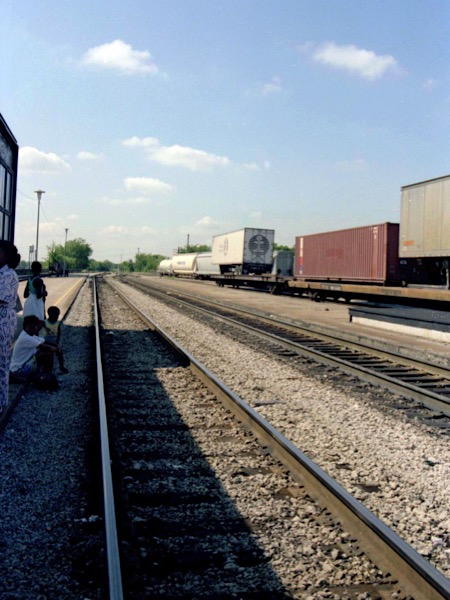
Jackson, Ms / Jun 1988 / RWH
Jun 1988 / RWH
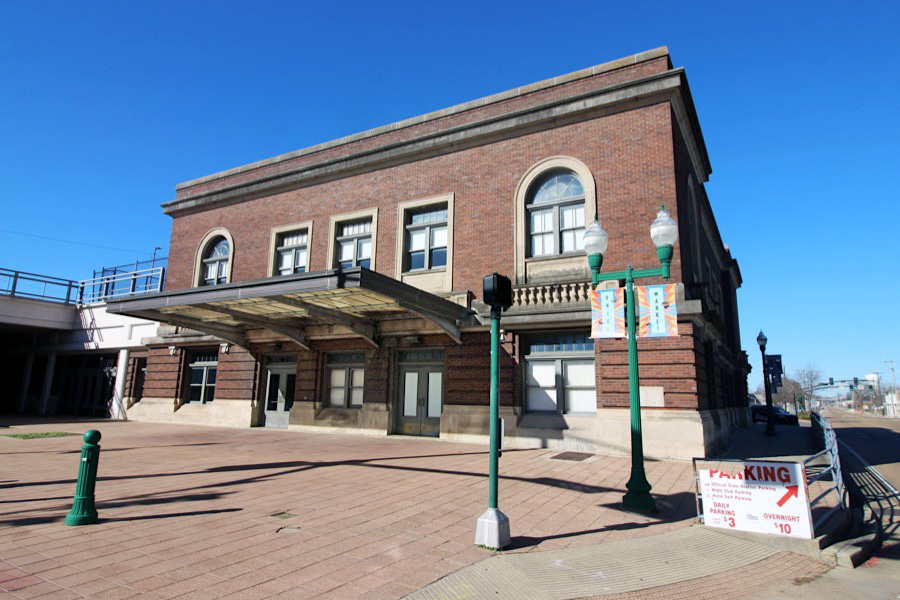
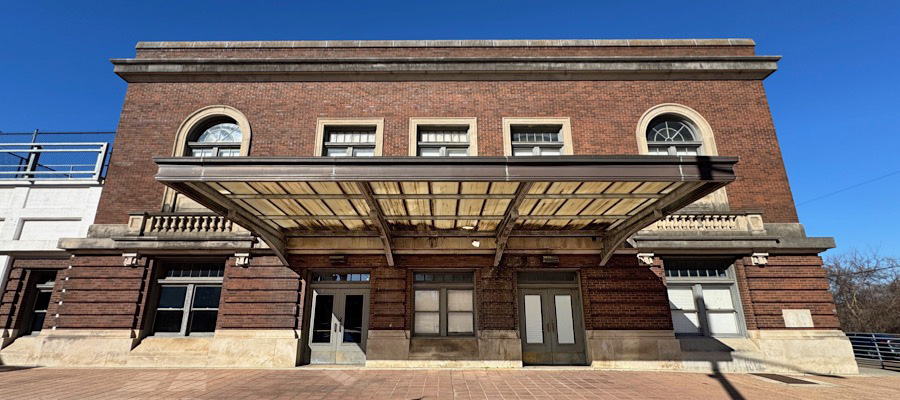
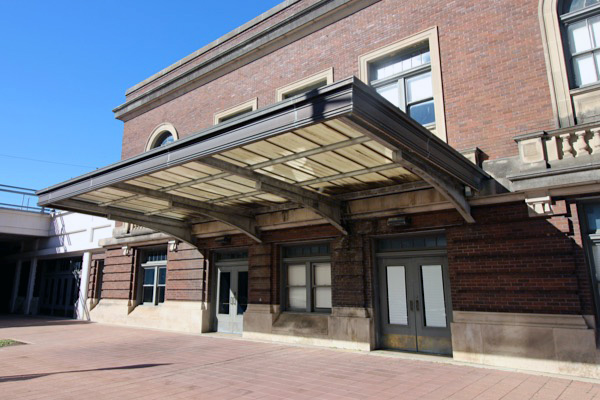
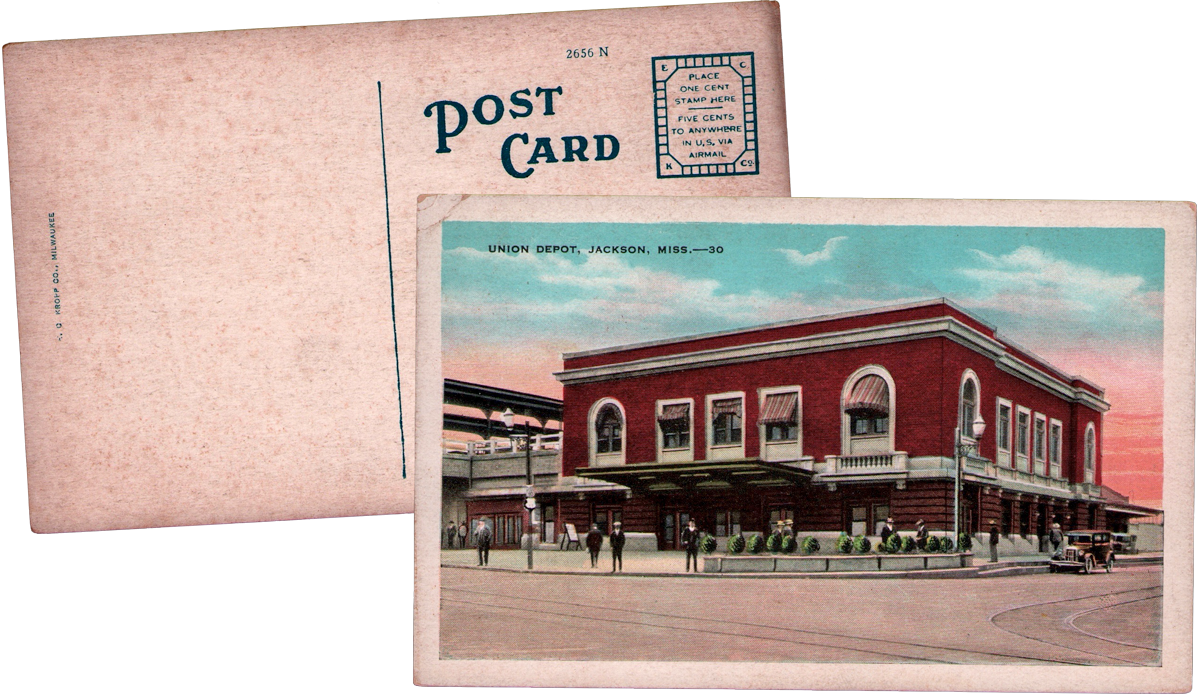
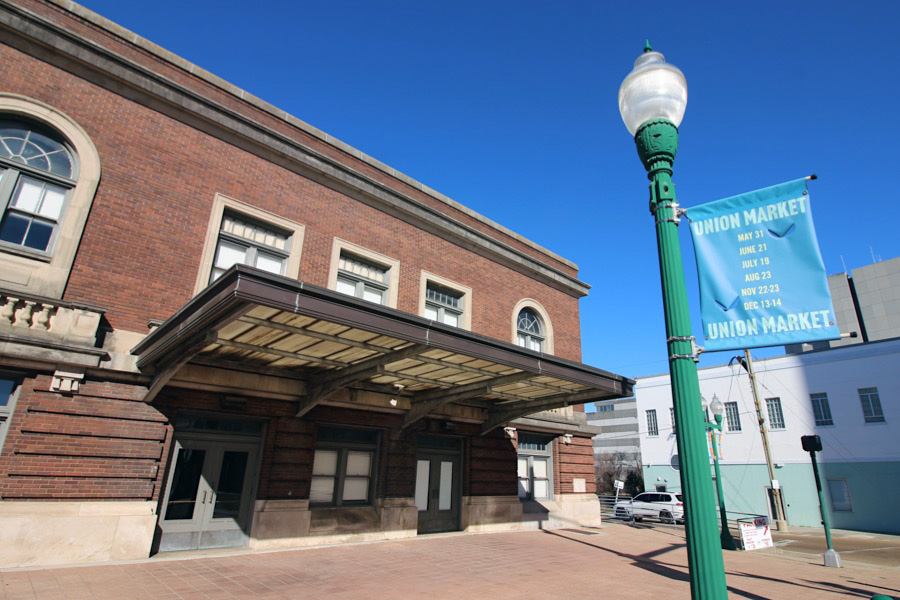
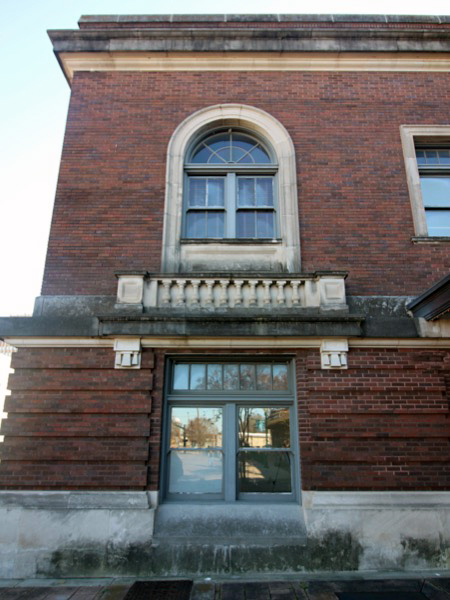
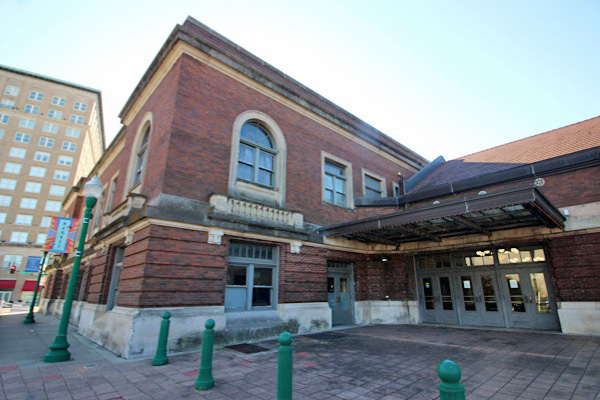
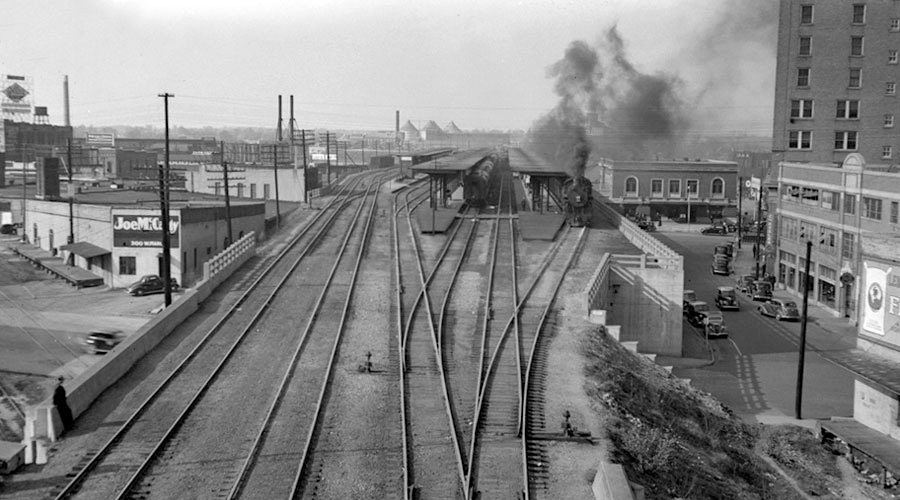
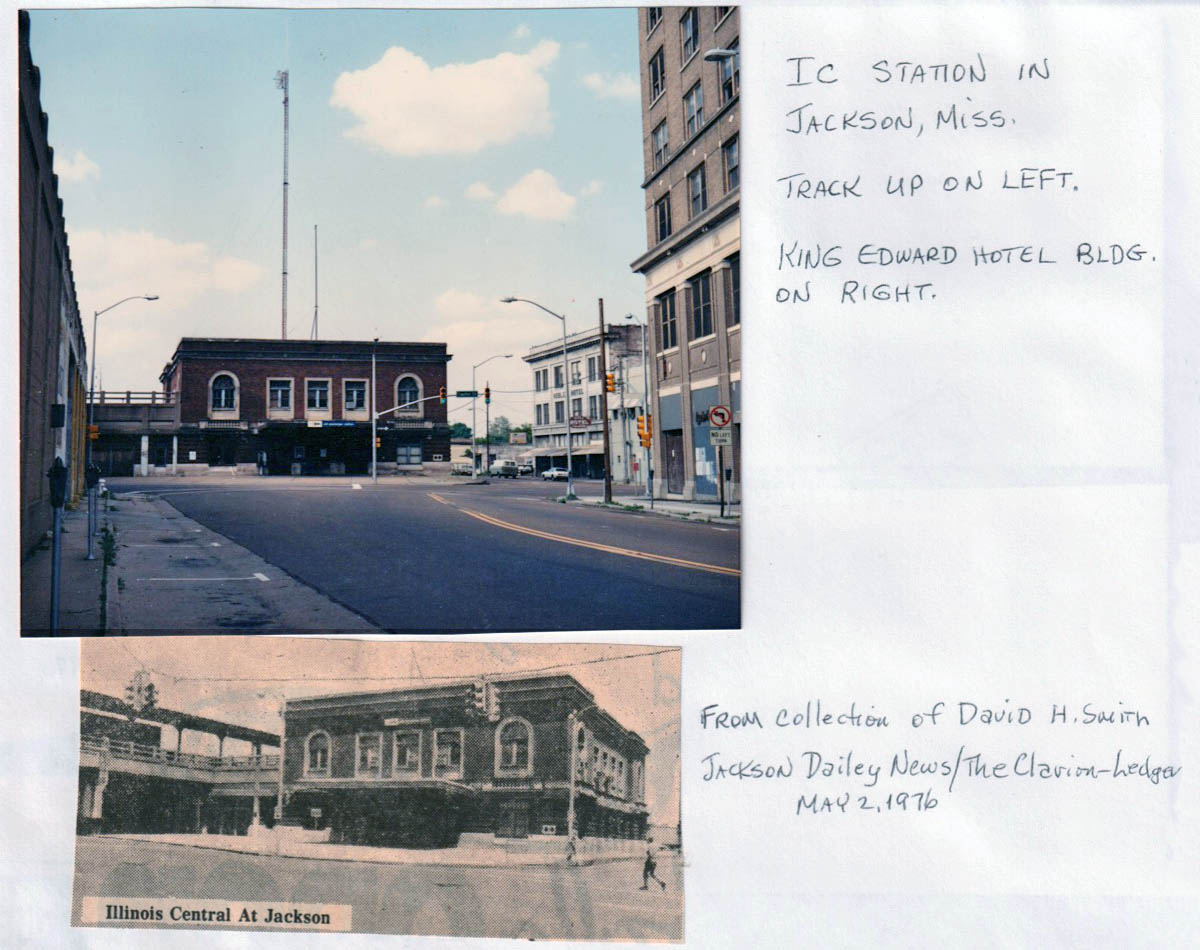
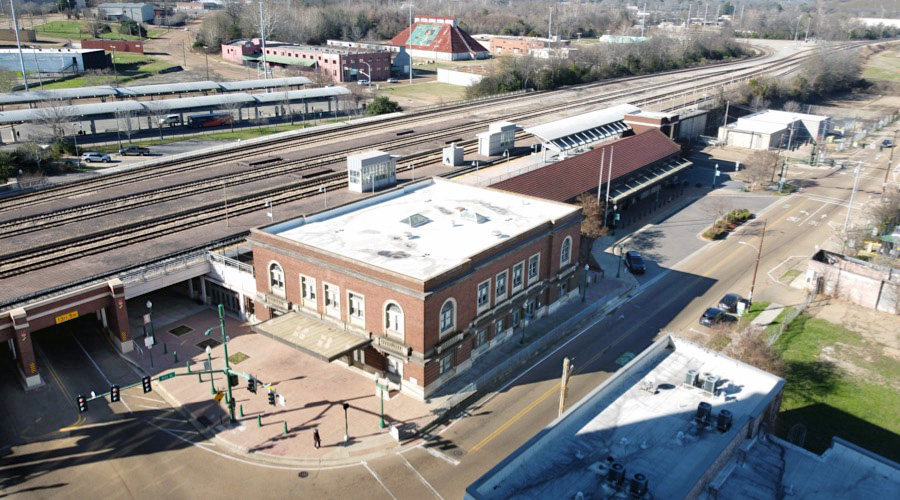
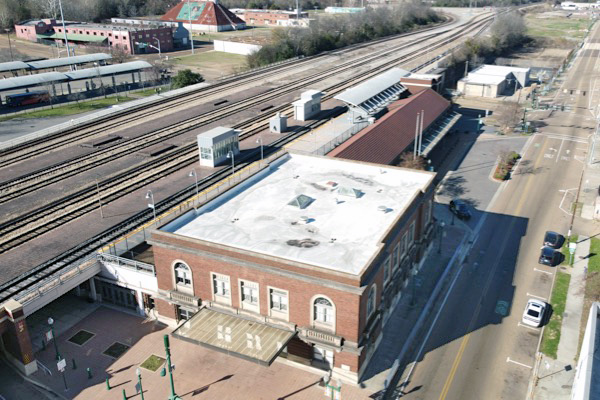
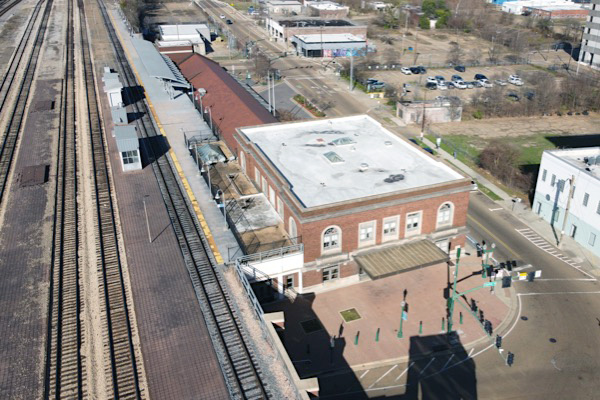
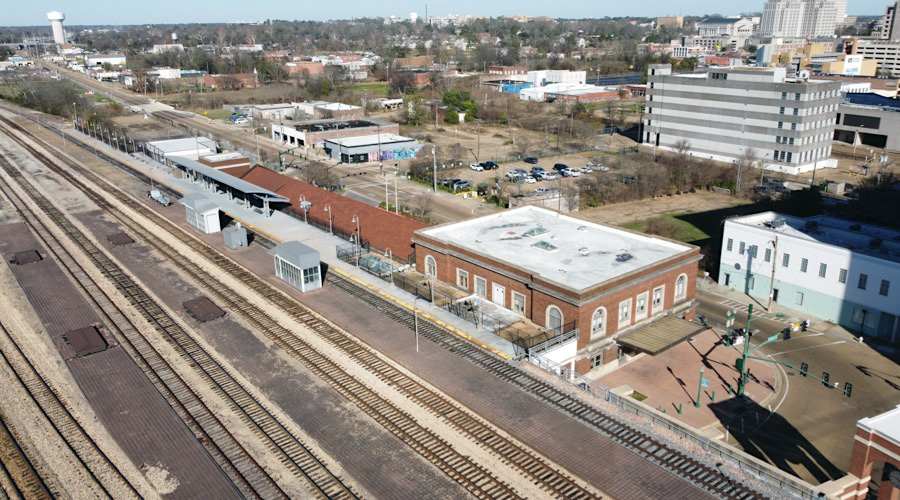
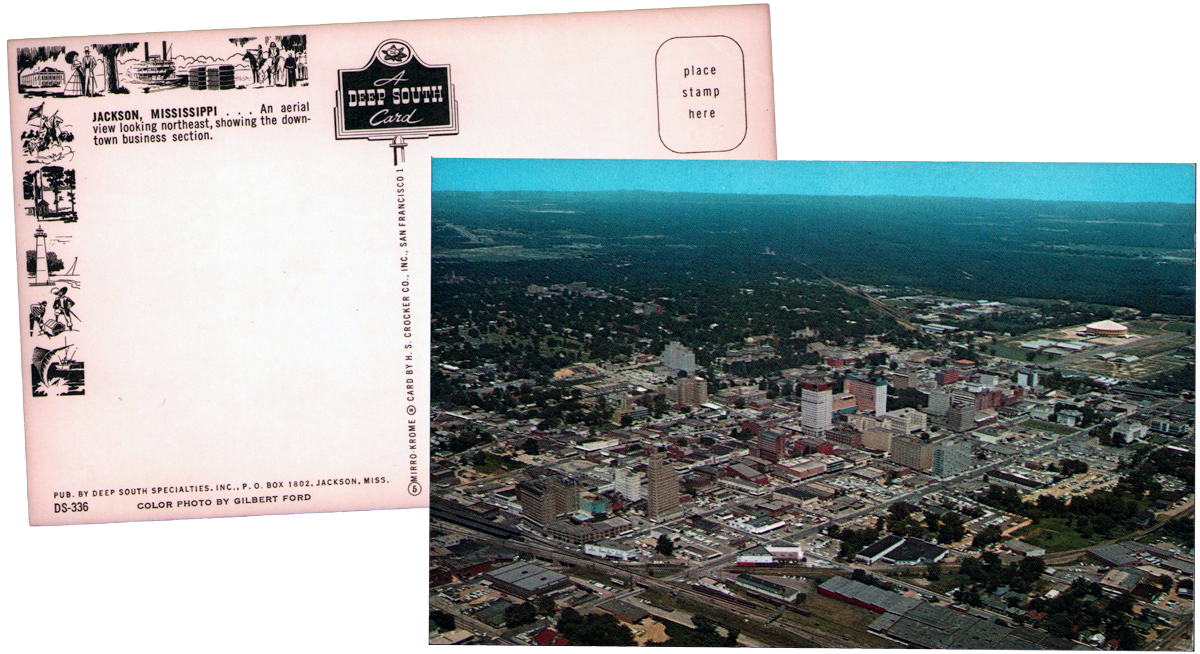
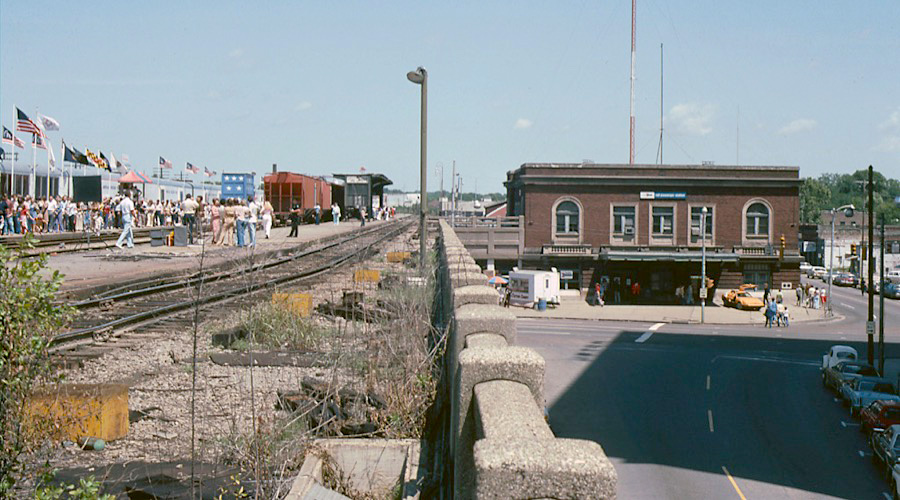
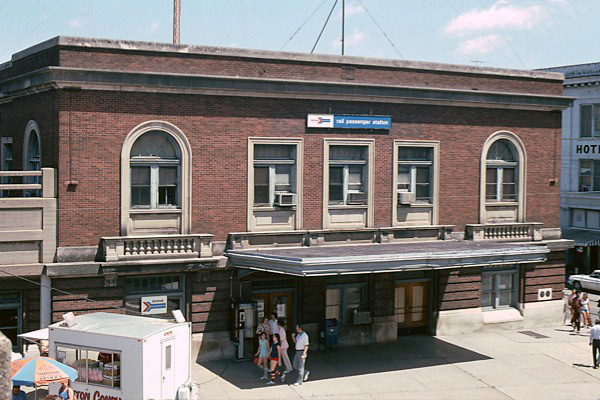
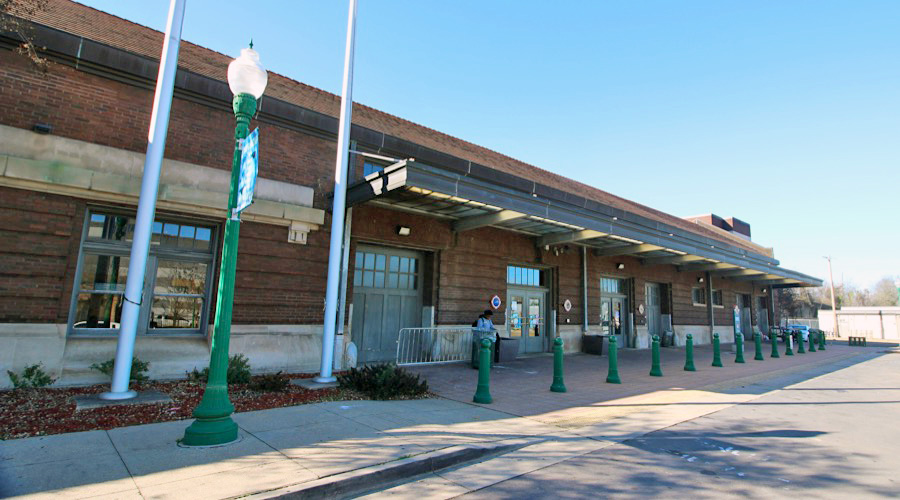
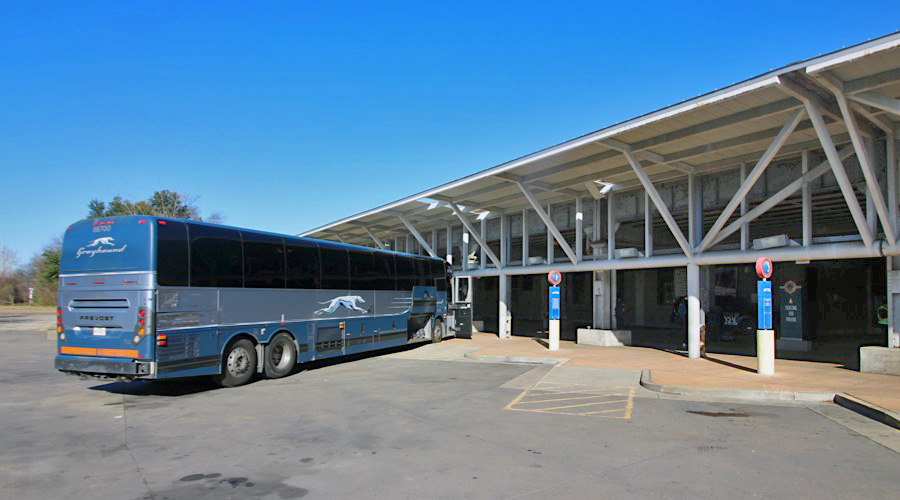
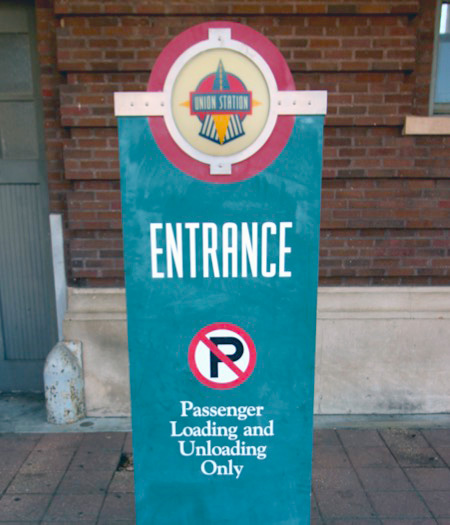
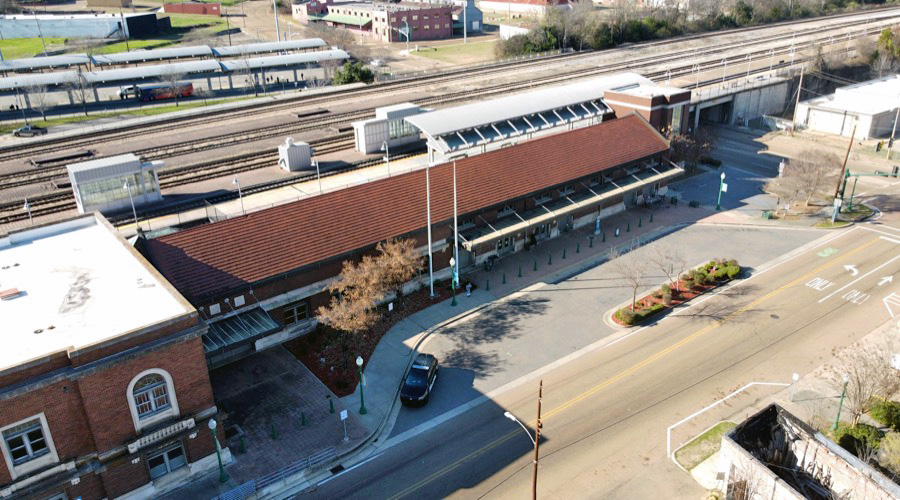
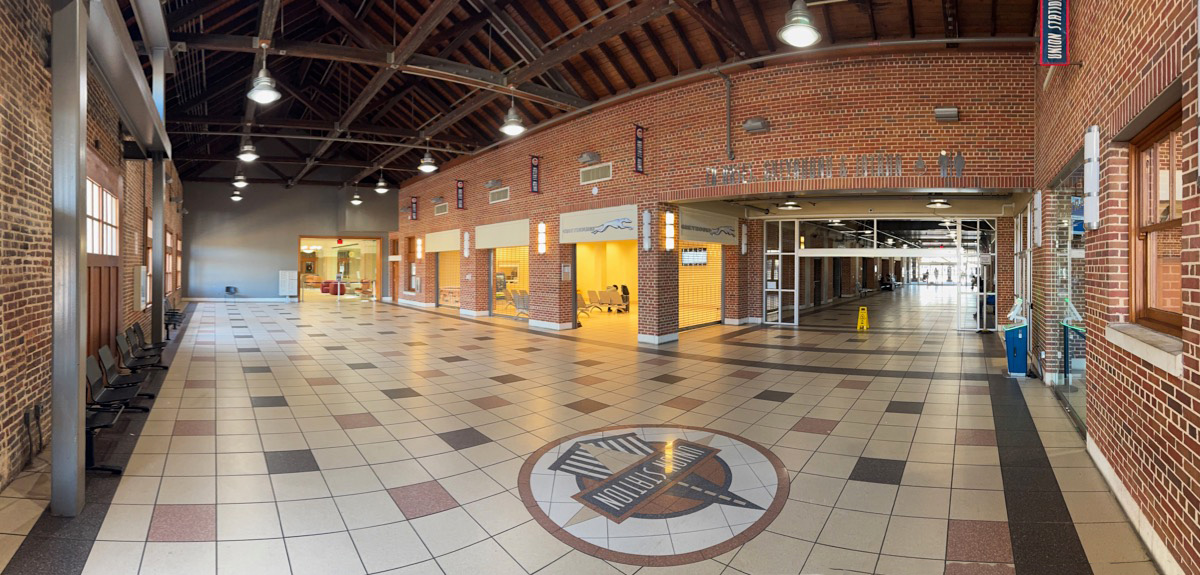
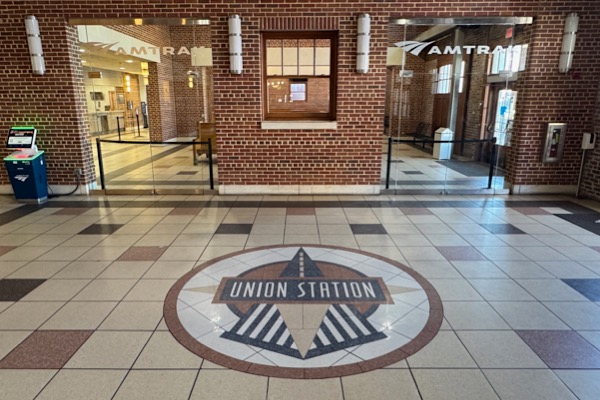
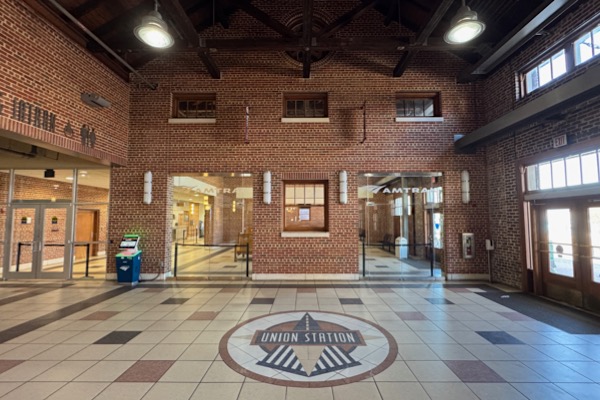
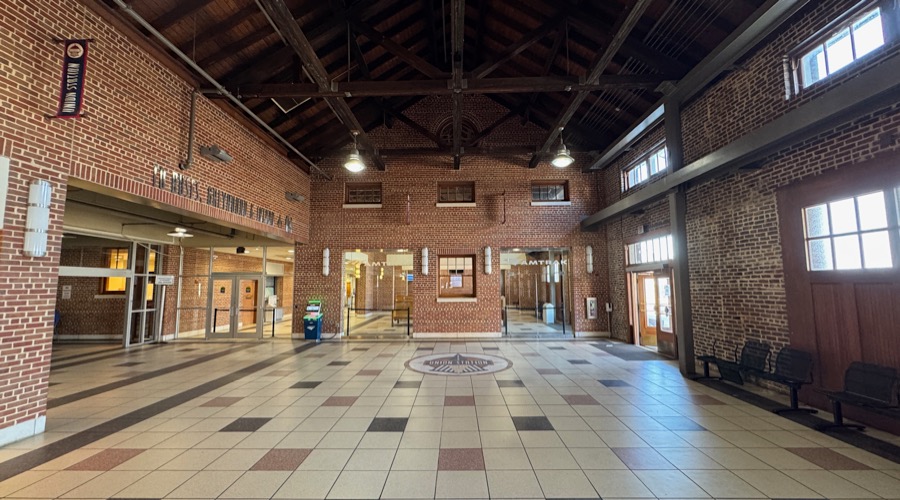
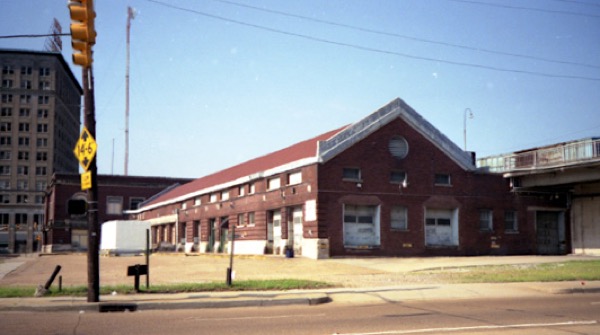 The Jackson station and connecting freight house were built by the Illinois Central Railroad in 1927 after the railroad was elevated through downtown. In 1976, the station waiting room was renovated in conjunction with the nation’s bicentennial for the American Freedom Train tour. In 2003 the city of Jackson acquired the building from Canadian National (the successor to Illinois Central) and began a $20 million renovation of the 60,000-square foot multi-floor brick building, reopening it as the Union Station Multimodal Transportation Facility.
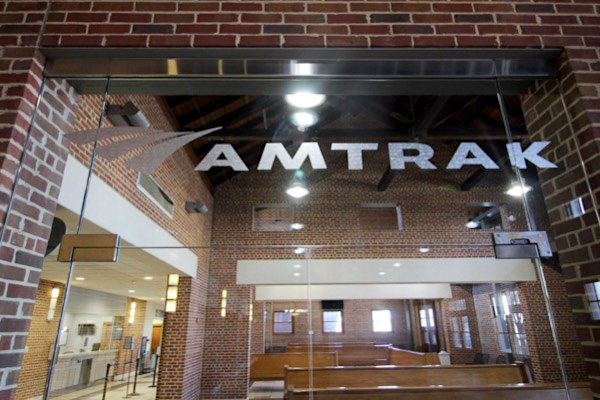
Amtrak was relocated to the former freight house section of the building, joining Greyhound and Jatran, the city’s bus network. The former passenger waiting room, ticket counter and other areas were converted into commercial office and event rental spaces. The project’s architects, Dale and Associates, received a 2005 Mississippi AIA Merit Award for the completed station. The renovation of the Georgian Revival structure included masonry repointing, wooden window repair, replacing the tile roof, and upgrades to the interior. An Intermodal Surface Transportation Efficiency Act (ISTEA) grant and Jackson Redevelopment Authority funds financed the project. The station project was one of the first renewal efforts in downtown; dozens of buildings have since been rehabilitated, including the historic Hotel King Edward, which had closed in 1966.
Jackson, Ms / Dec 2025 / RWH
Dec 2025 / RWH

Jackson, Ms / Dec 2025 / RWH
Jackson, MS
Dec 2025 / RWH
Dec 2025 / RWH
Dec 2025 / RWH
Dec 2025 / RWH
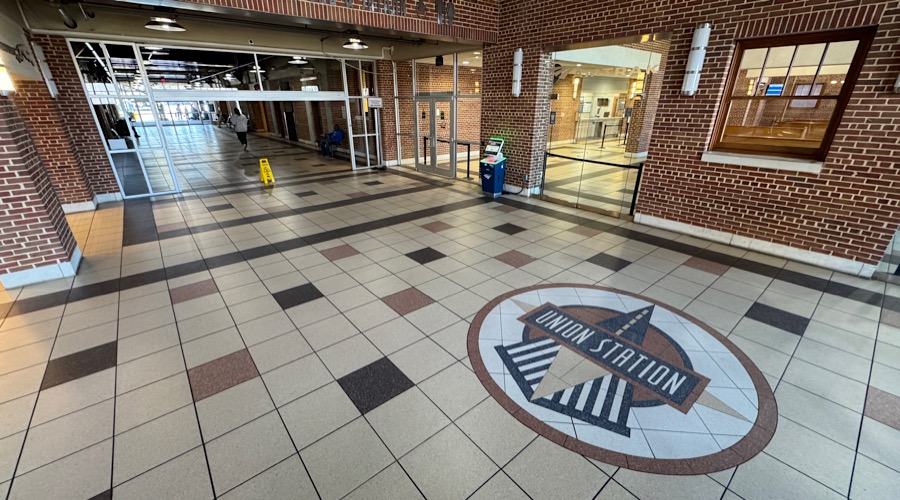
Dec 2025 / RWH
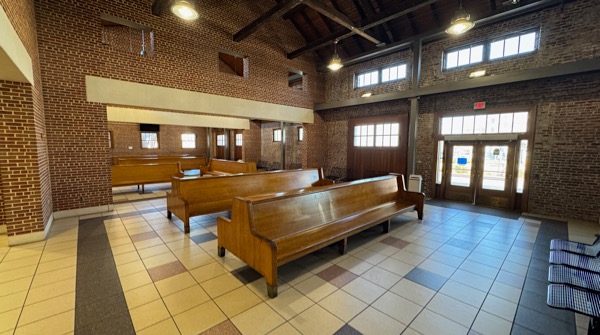
Dec 2025 / RWH
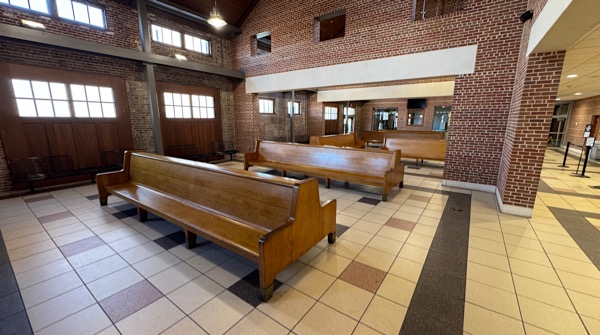
Dec 2025 / RWH
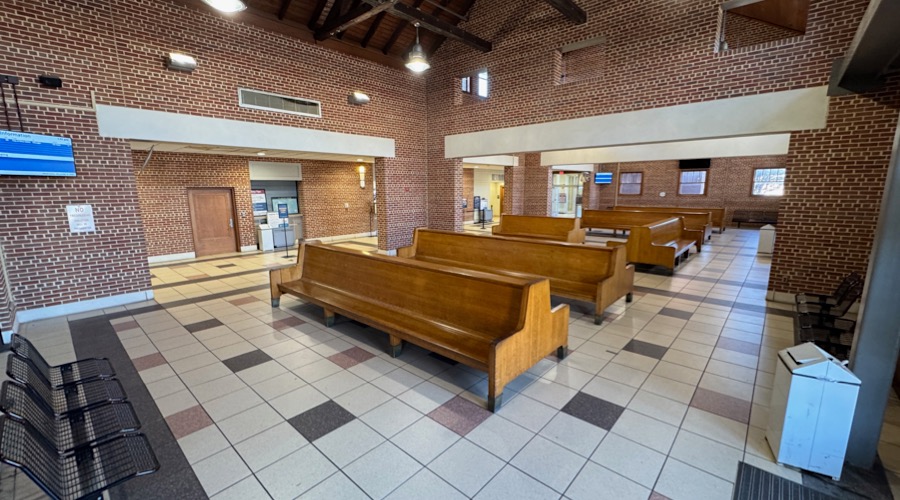
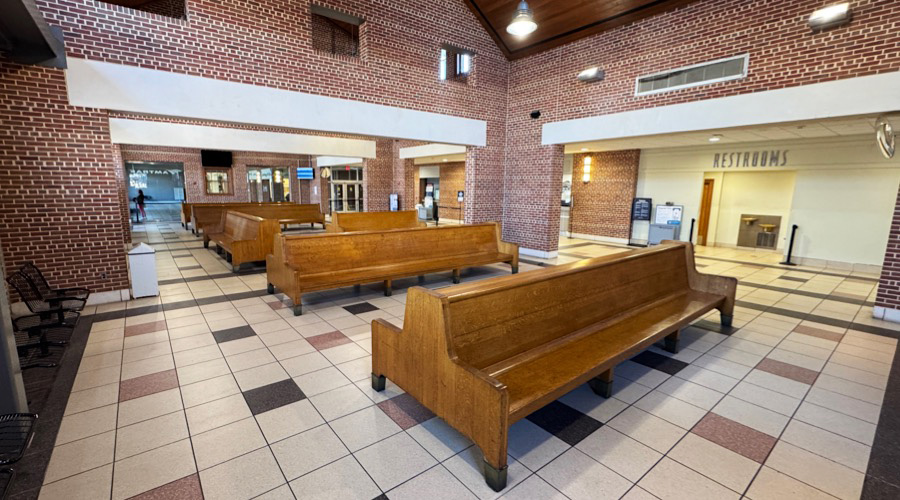
Dec 2025 / RWH
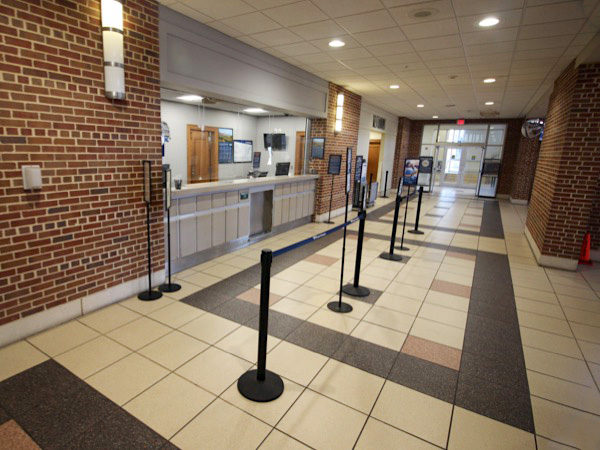
Dec 2025 / RWH
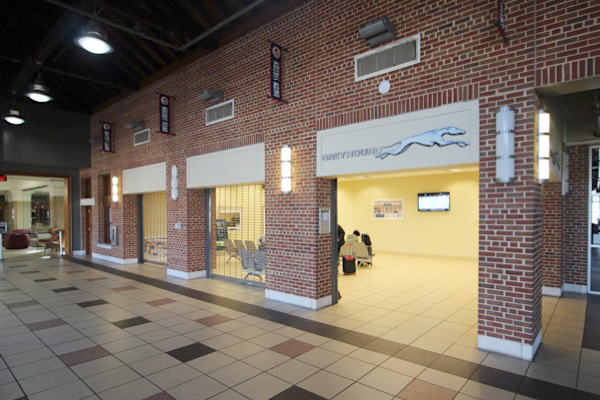
Dec 2025 / RWH
228 Yazoo City, Ms
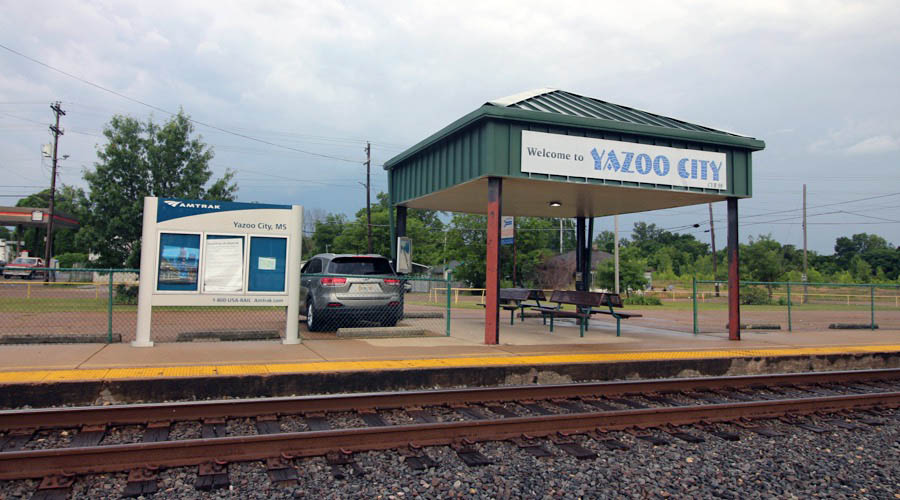
Yazoo City, Ms / Jun 2020 / RWH
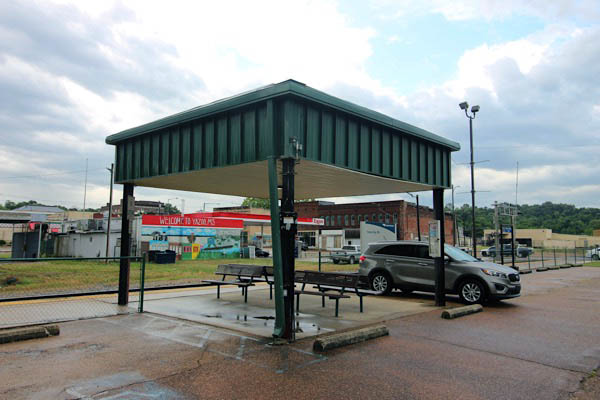
Yazoo City, Ms / Jun 2020 / RWH
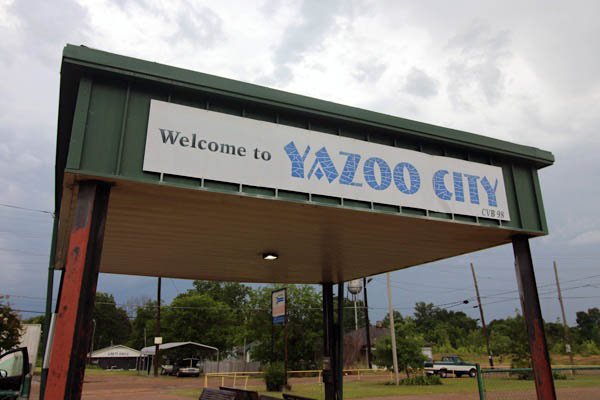
Yazoo City, Ms / Jun 2020 / RWH
Click to see the Yazoo City Amtrak platform plotted on a Google Maps page
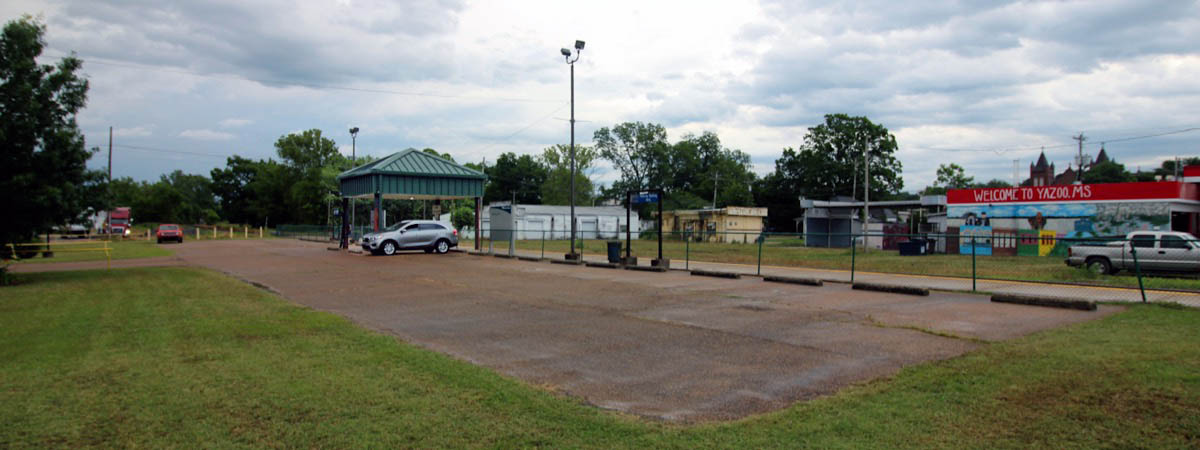
Yazoo City, Ms / Jun 2020 / RWH
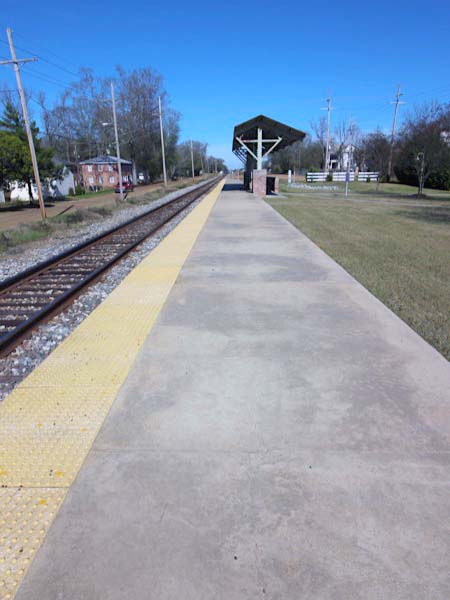
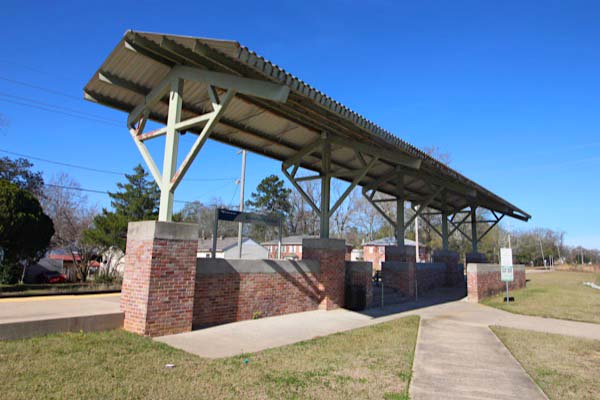
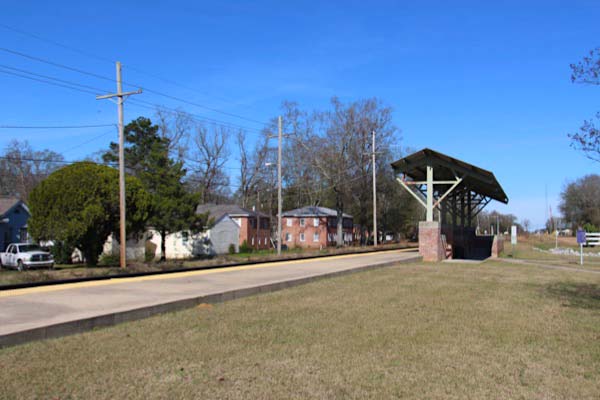
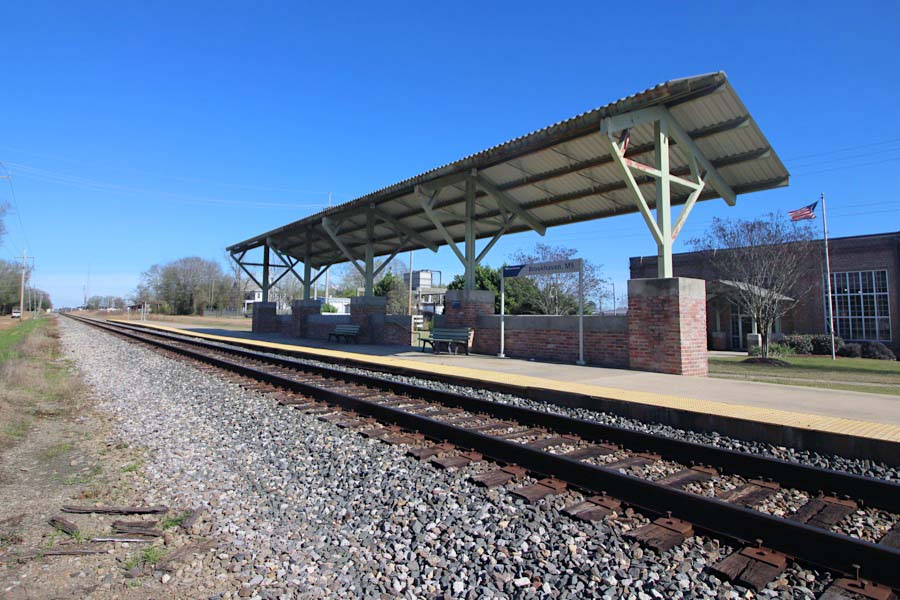
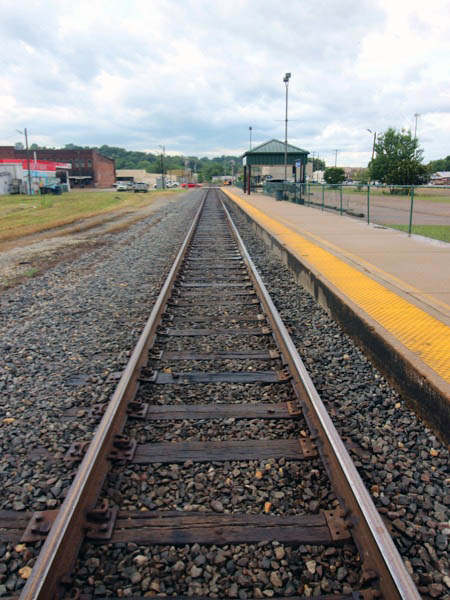
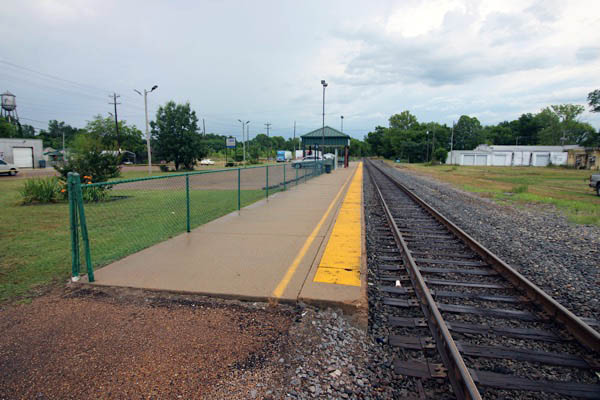
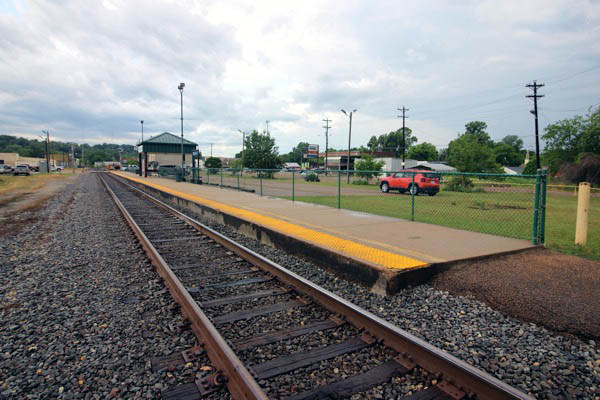
 Passengers at Yazoo City use a shelter on the platform. Amtrak began serving Yazoo City and Greenwood in 1995, when the City of New Orleans was rerouted westward between Jackson and Memphis. In fall 2023, Amtrak completed a $3.4 million accessibility enhancement project at the Yazoo City station. Amtrak, working with the city, made improvements that included the construction of a new 300-foot-long concrete platform meeting the specifications of the Americans with Disabilities Act. Other upgrades included the installation of a new passenger shelter, new lighting, railings and upgrades to the parking lot.
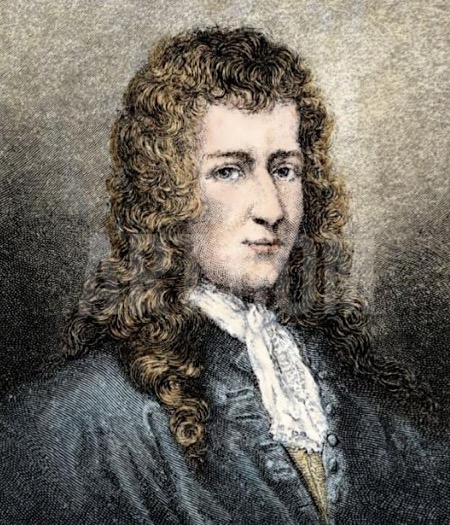
The community was named by the French explorer Robert La Salle. “Yazoo” is said to be a Native American word meaning “River of Death.” In Yazoo City, rolling hills meet fertile delta flatlands. The city was founded in 1824 and was originally named Hannan’s Bluff. It was later renamed Manchester, then Yazoo City in 1839. In 1849, it became the Yazoo County seat.
Jun 2020 / RWH
Yazoo City, Ms / Jun 2020 / RWH
Yazoo City, Ms / Jun 2020 / RWH
Yazoo City, MS
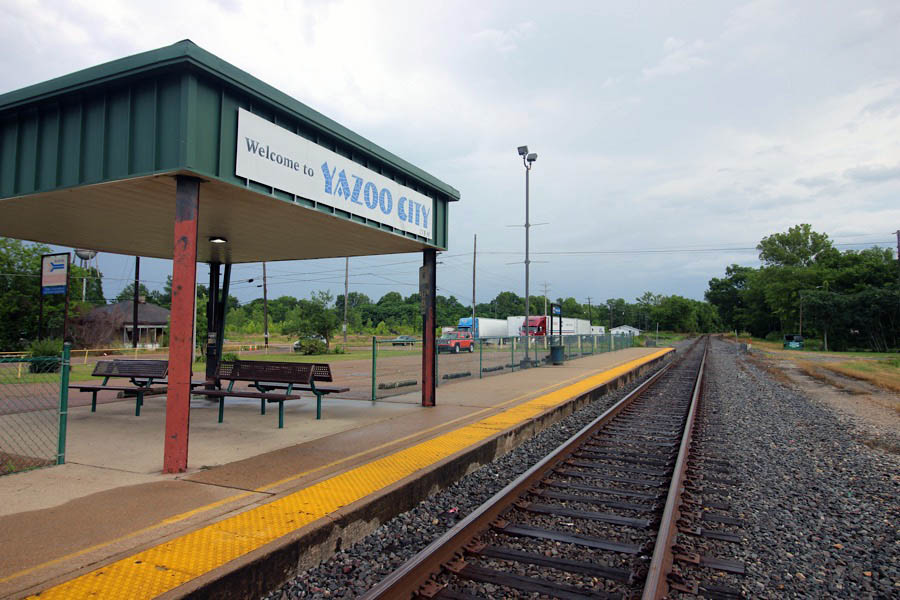
Yazoo City, Ms / Jun 2020 / RWH
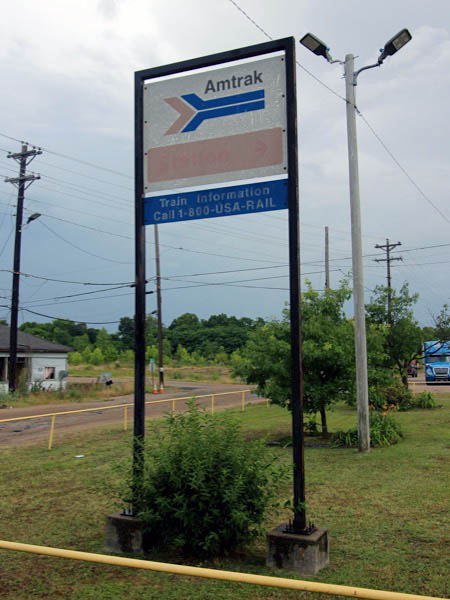
Jun 2020 / RWH
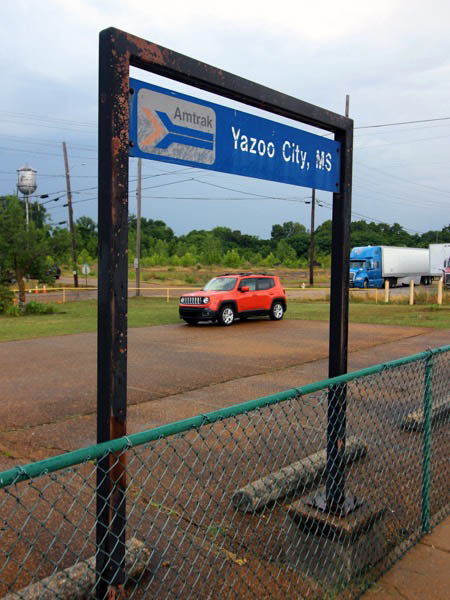
Jun 2020 / RWH
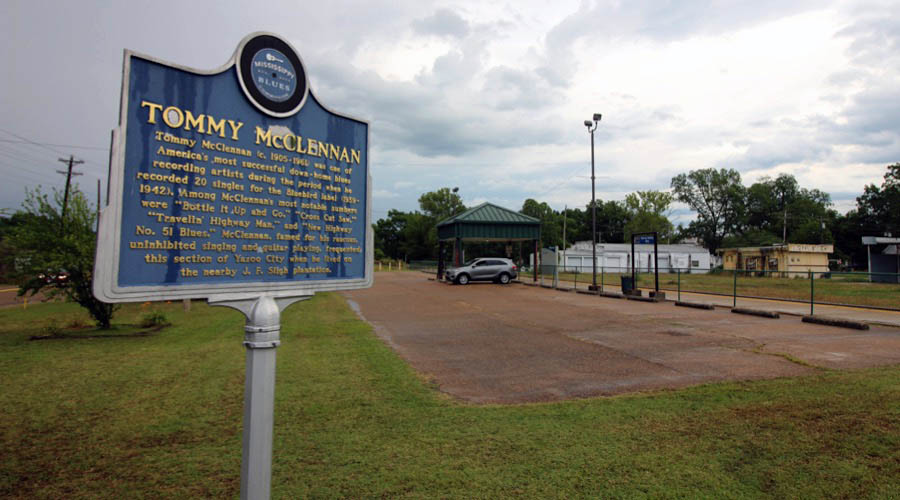
Yazoo City, Ms / Jun 2020 / RWH
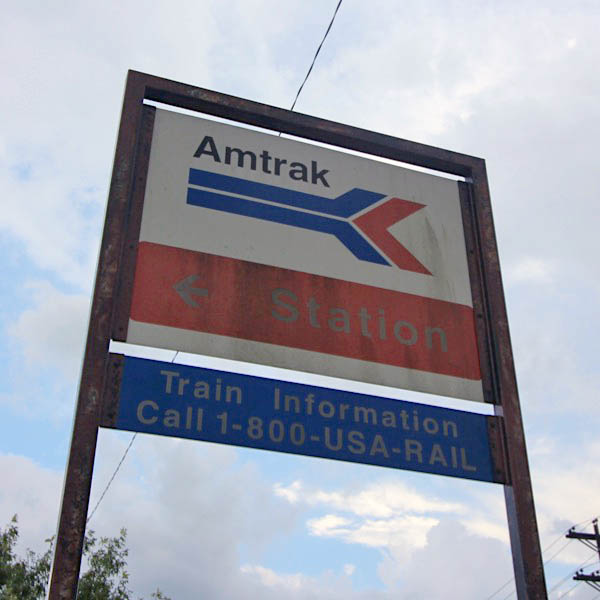
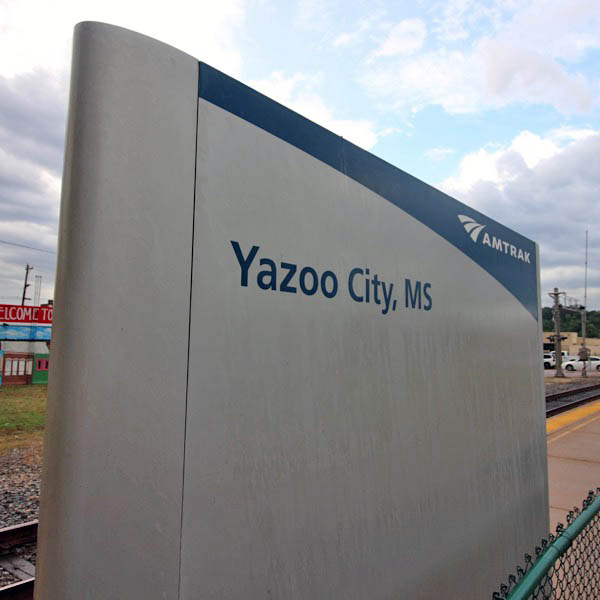
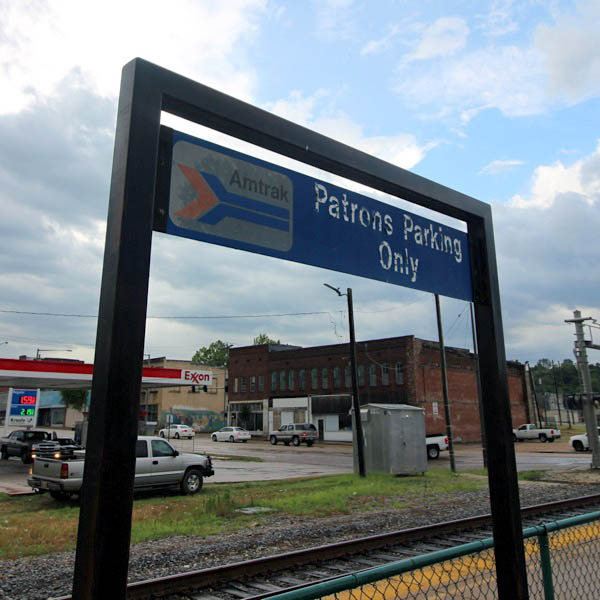
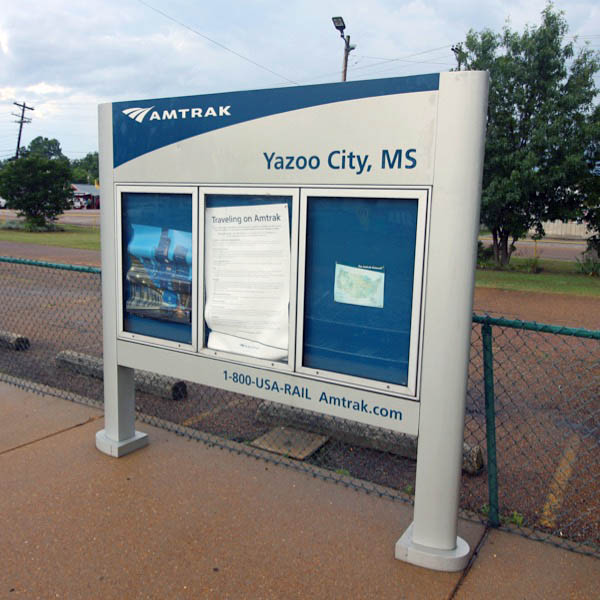
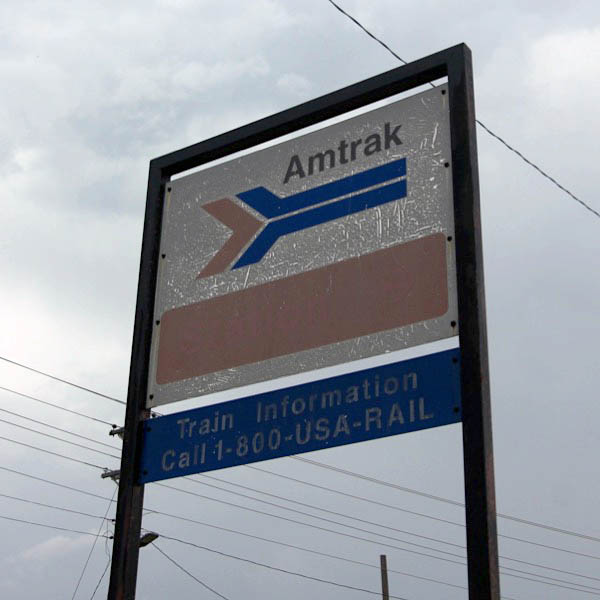
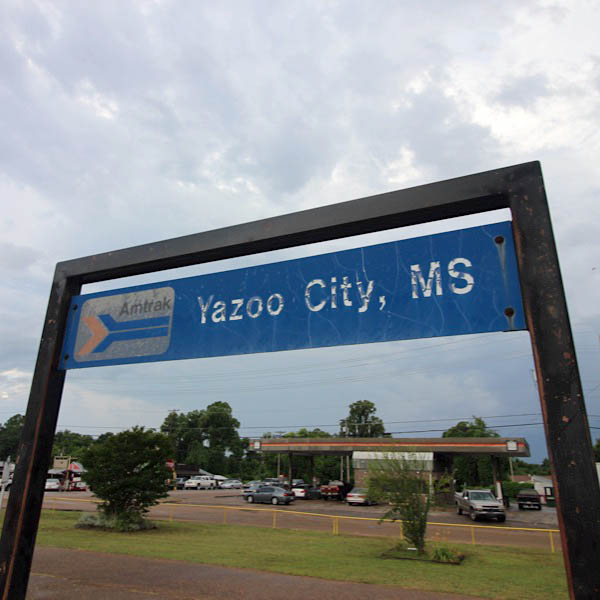
Jun 2020 / RWH
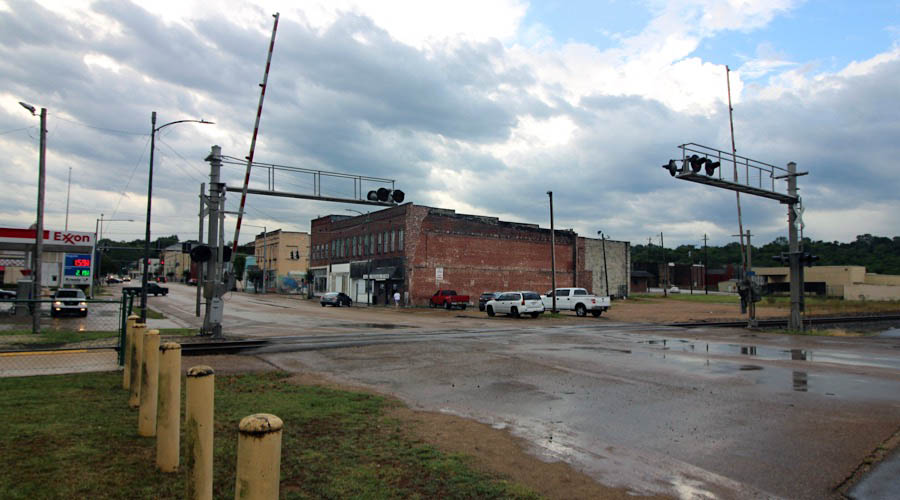
Yazoo City, Ms / Jun 2020 / RWH
Jun 2020 / RWH
Jun 2020 / RWH
Jun 2020 / RWH

Yazoo City, Ms / Jun 2020 / RWH
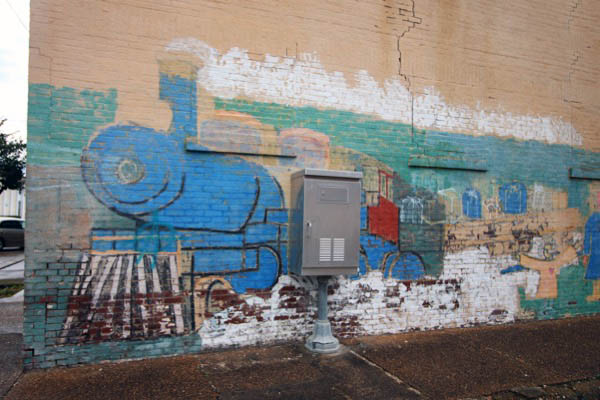
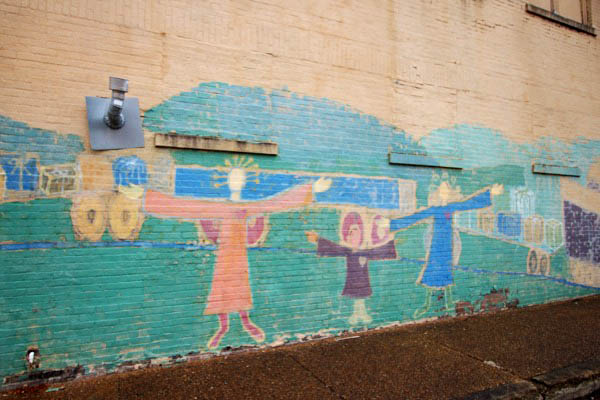
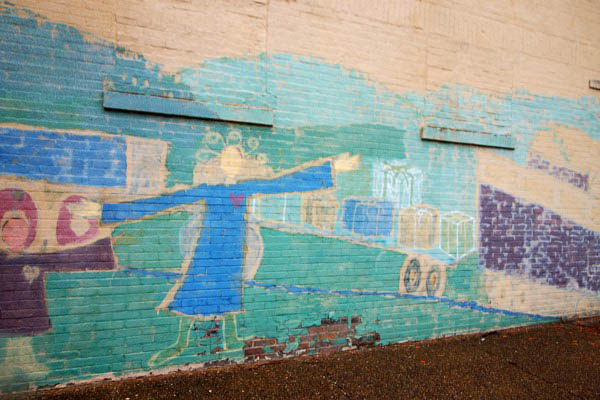
Jun 2020 / RWH
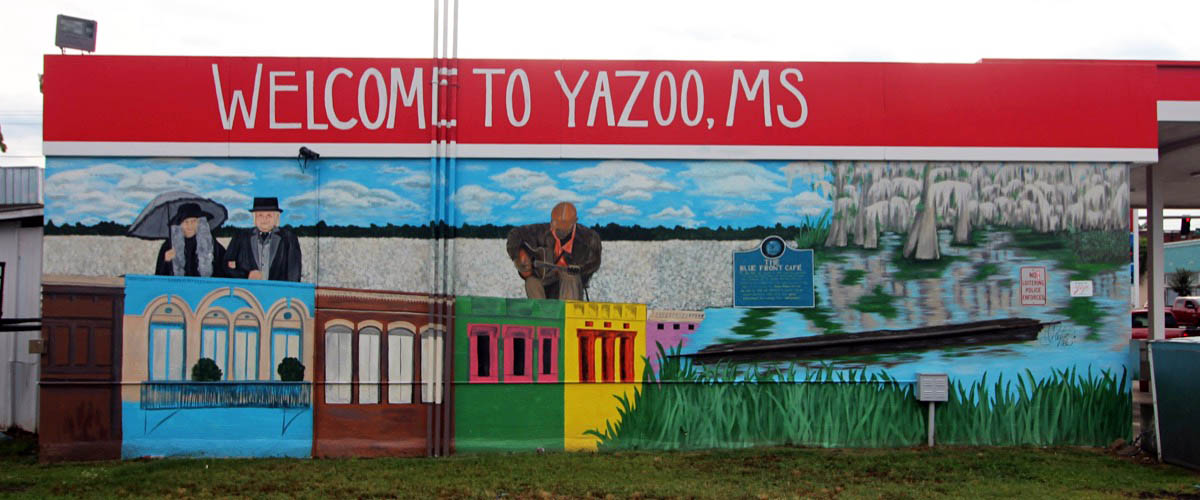
Jun 2020 / RWH
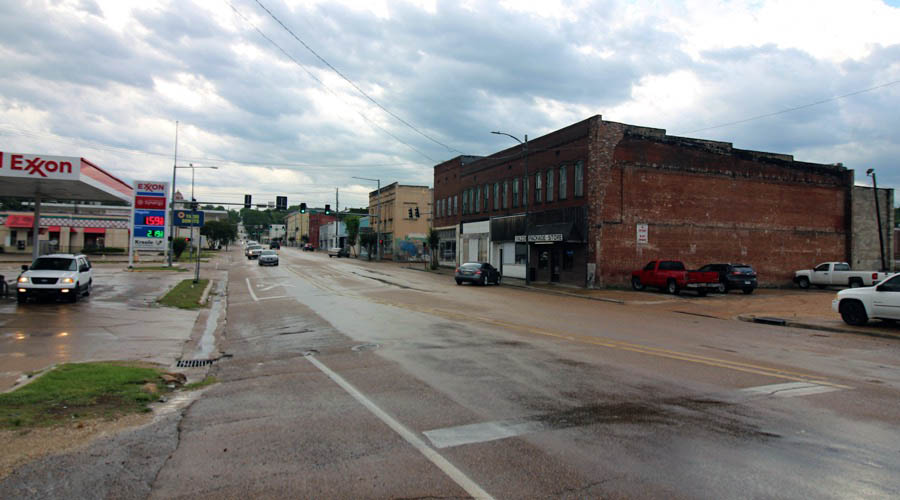
Yazoo City, Ms / Jun 2020 / RWH
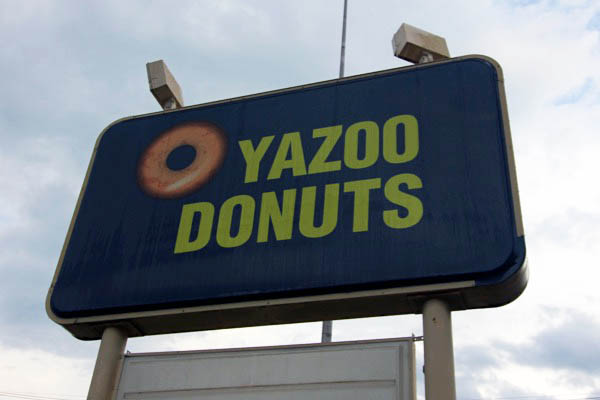
Jun 2020 / RWH
northbound #58
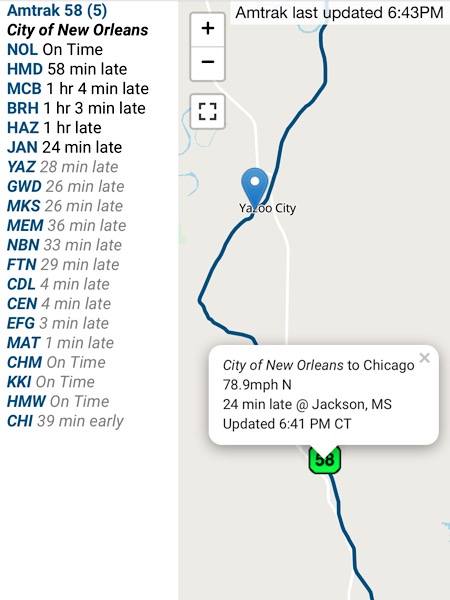
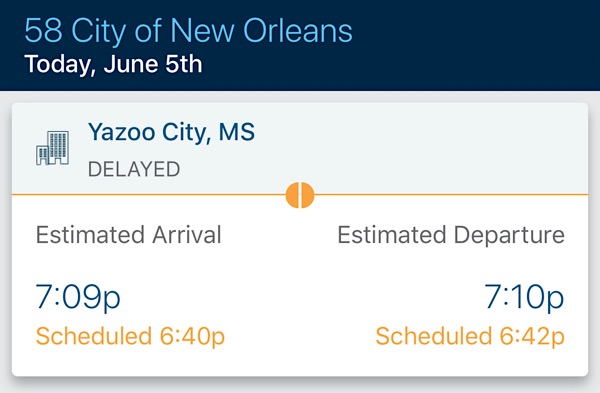
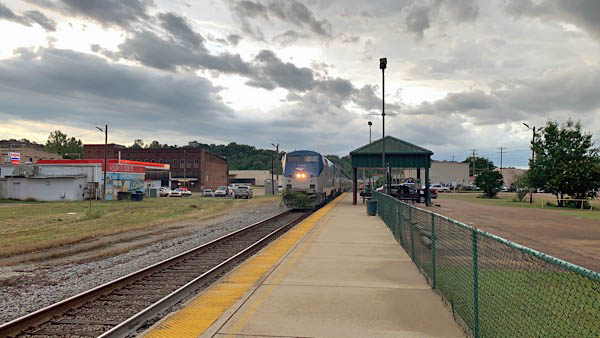
Yazoo City, Ms / Jun 2020 / RWH
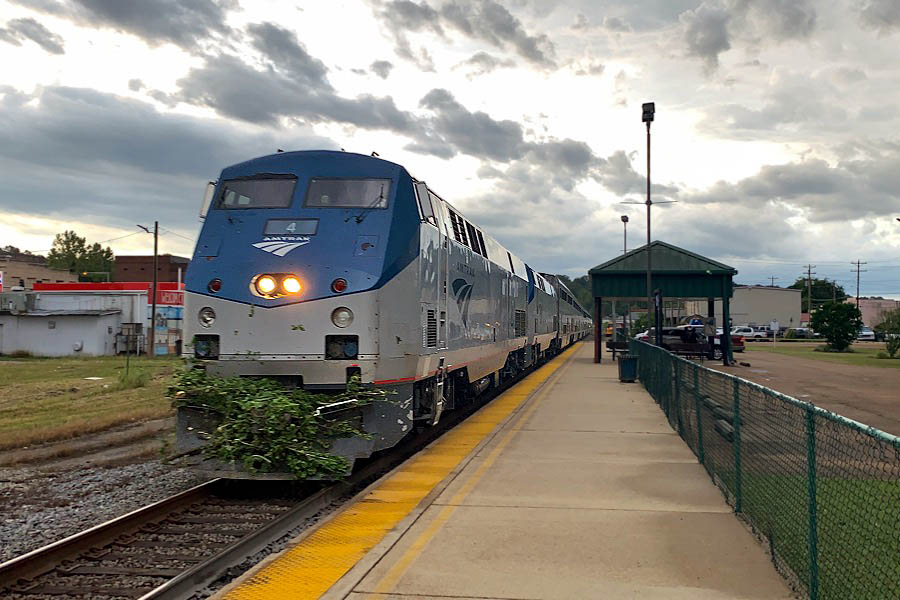
Yazoo City, Ms / Jun 2020 / RWH
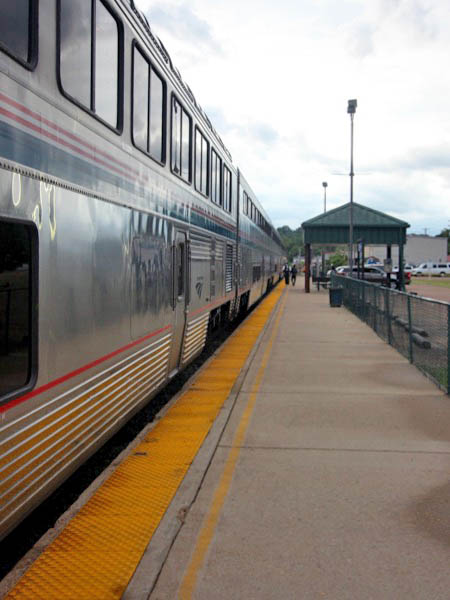
Jun 2020 / RWH
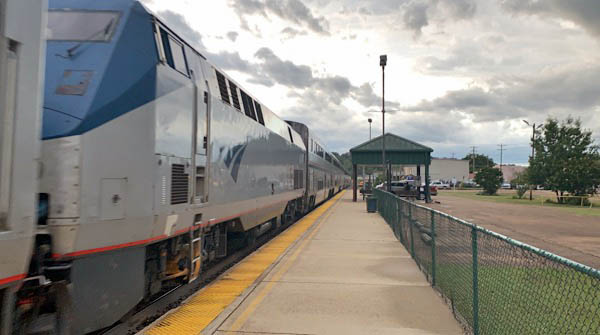
Yazoo City, Ms / Jun 2020 / RWH
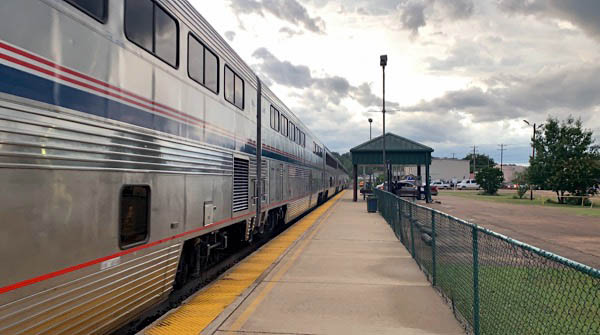
Yazoo City, Ms / Jun 2020 / RWH
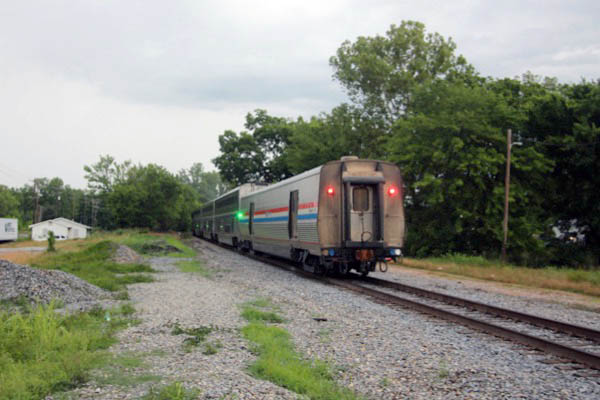
Yazoo City, Ms / Jun 2020 / RWH
280 Greenwood, Ms
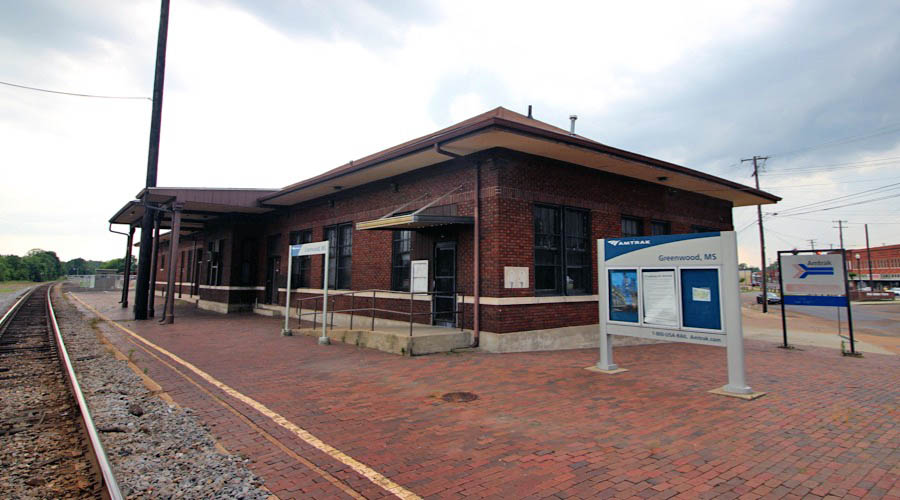
Greenwood, Ms / Jun 2020 / RWH
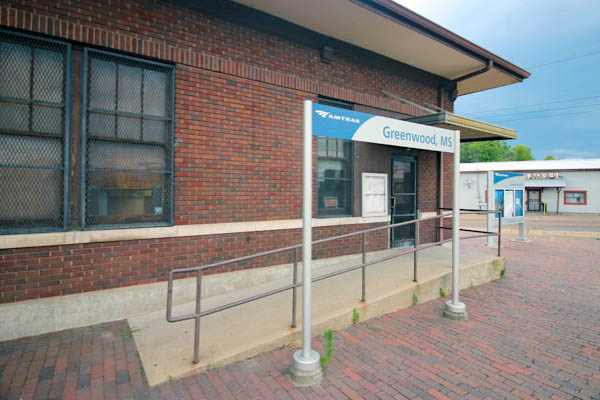
- location:Greenwood MS
- address:East Gibson Street
- type:town depot, 1 platform
- owner:Canadian National Rwy
- opened:1917, replacement
- builder:Yazoo & Miss Valley
- style:gabled brick depot
- renovated:2022
- services:none, waiting room
- links: Amtrak | Great Stations
Greenwood, Ms / Jun 2020 / RWH
Click to see the Greenwood station area plotted on a Google Maps page
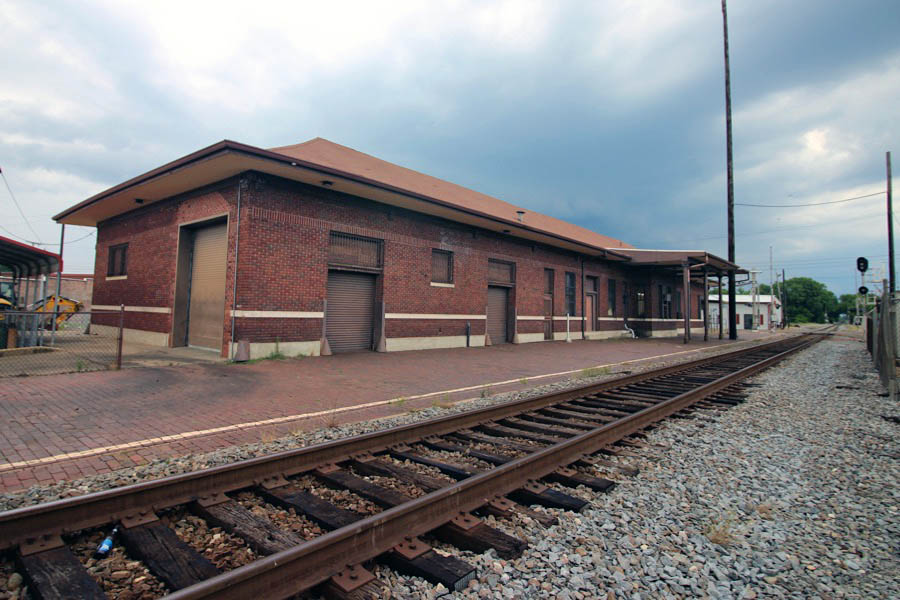
Greenwood, Ms / Jun 2020 / RWH

Greenwood, Ms / Jun 2020 / RWH
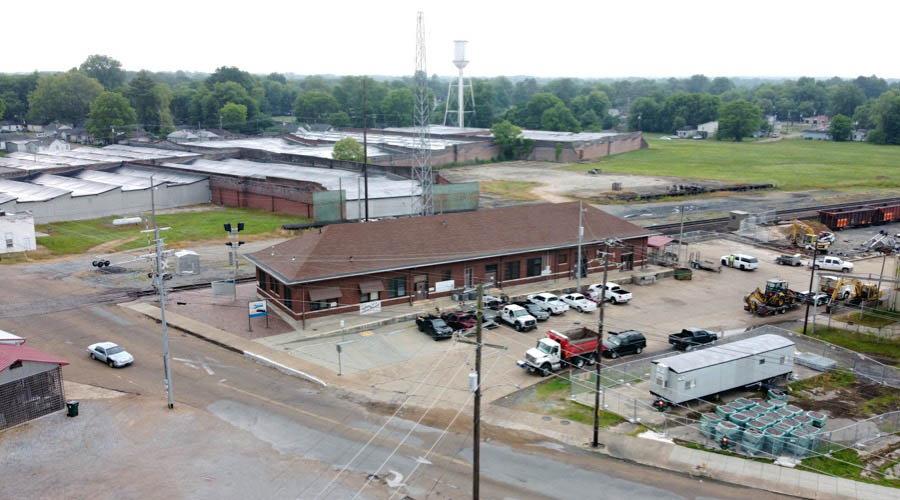
Greenwood, Ms / Jun 2020 / RWH
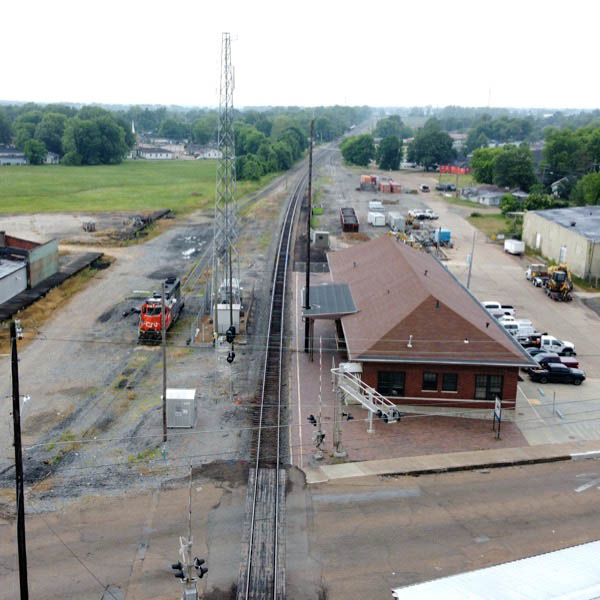
Greenwood, Ms / Jun 2020 / RWH
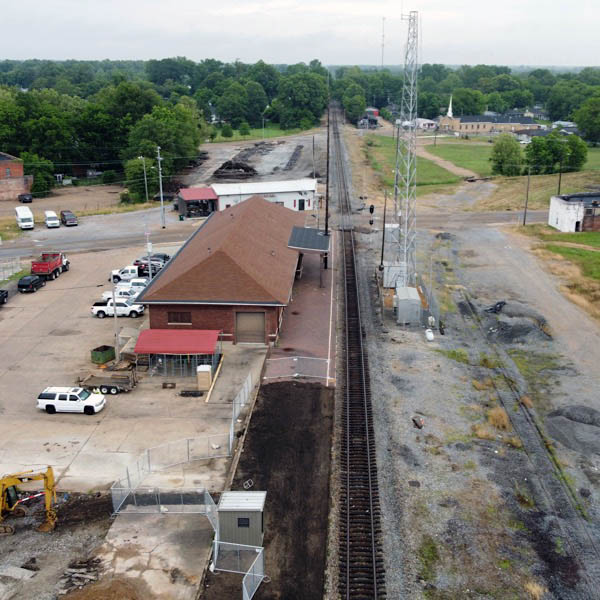
Greenwood, Ms / Jun 2020 / RWH
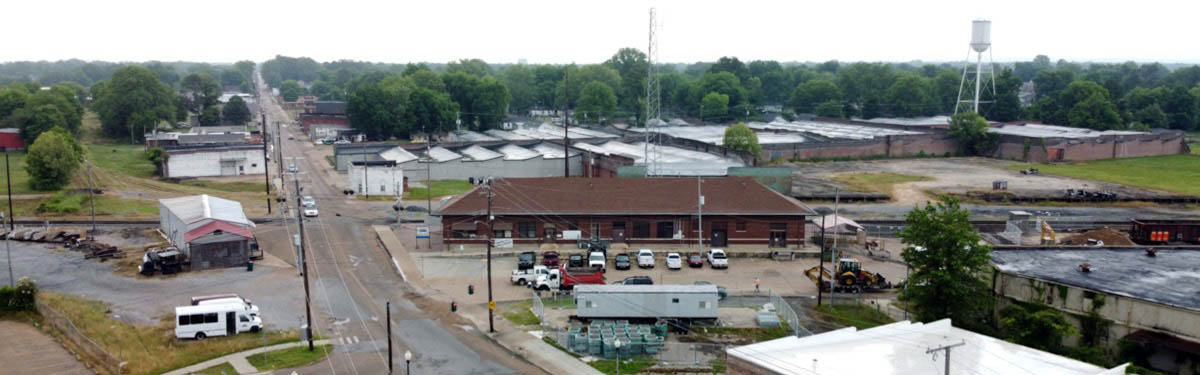
Greenwood, Ms / Jun 2020 / RWH
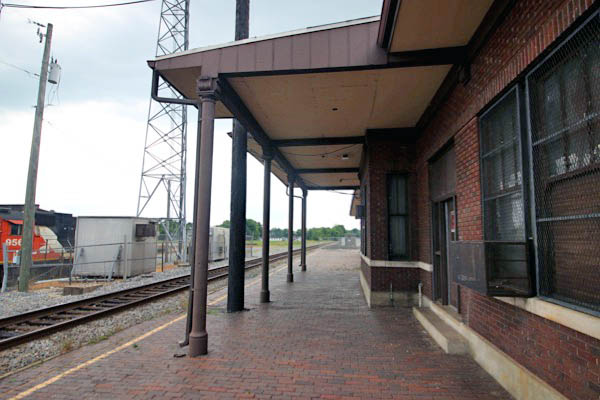
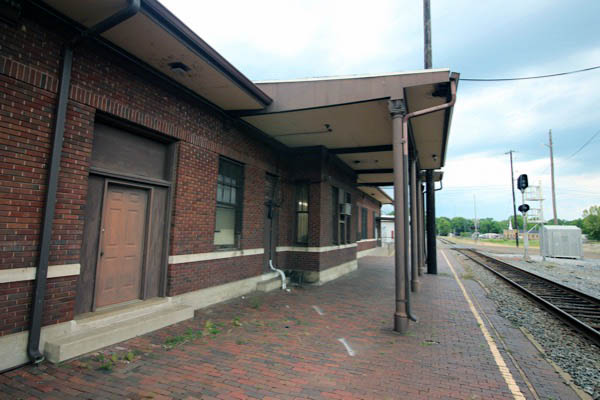
Jun 2020 / RWH
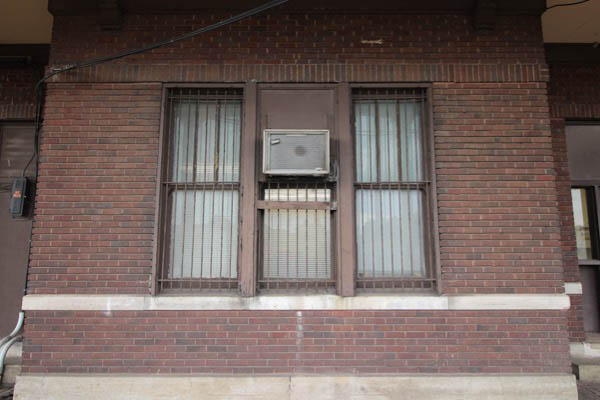
Jun 2020 / RWH
Jun 2020 / RWH
Greenwood, Ms / Jun 2020 / RWH
Jun 2020 / RWH
Jun 2020 / RWH
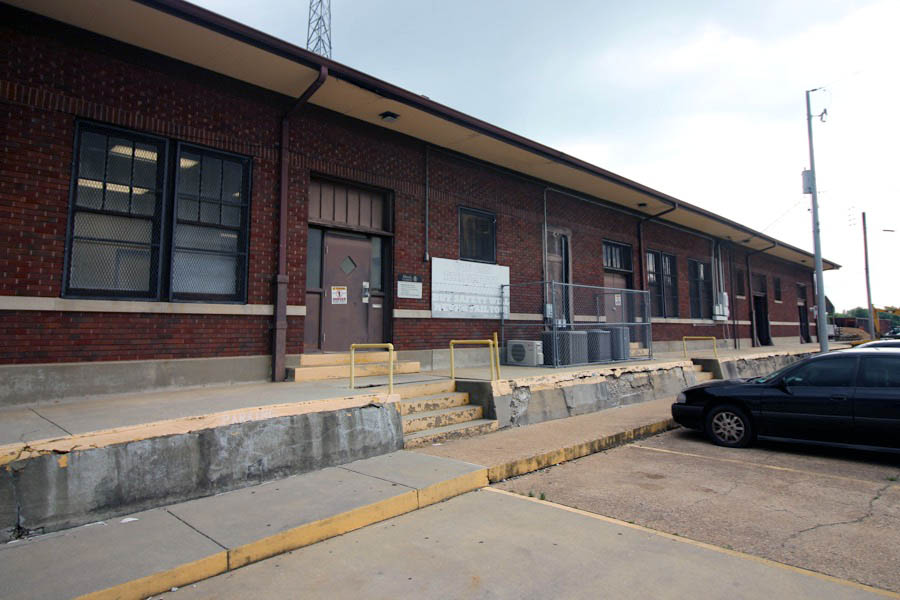
Jun 2020 / RWH
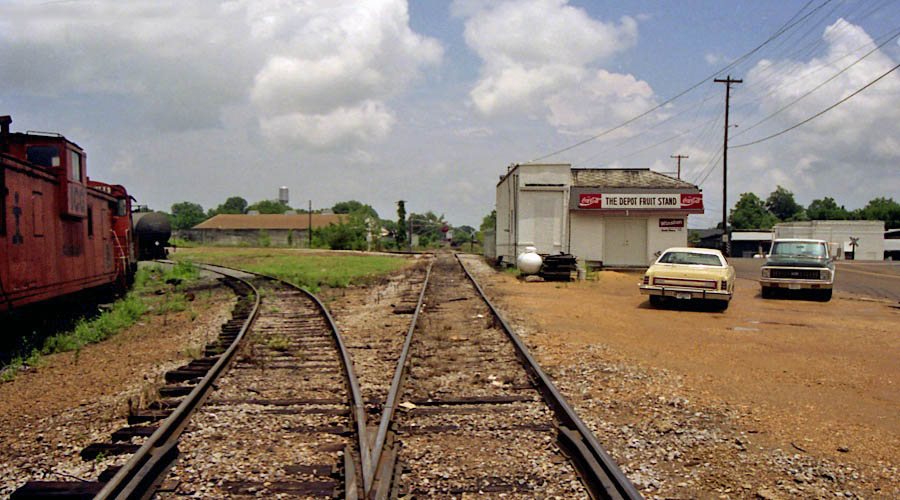
 Then and Now
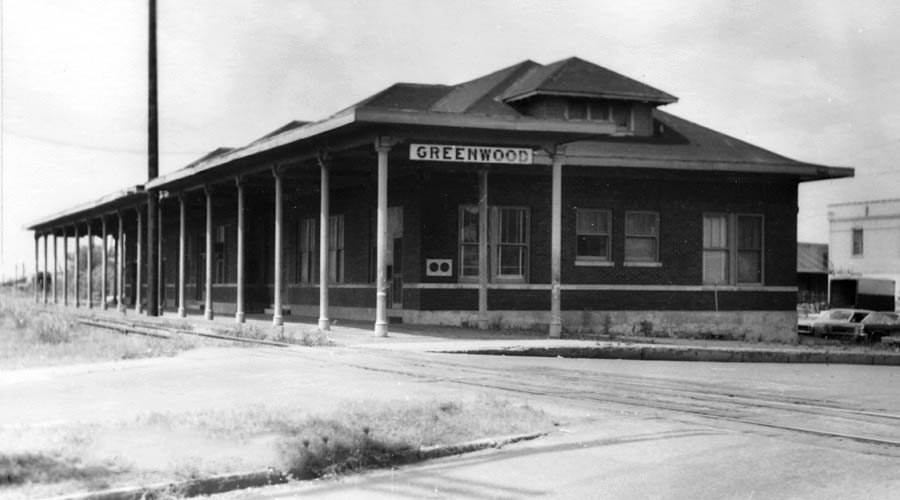
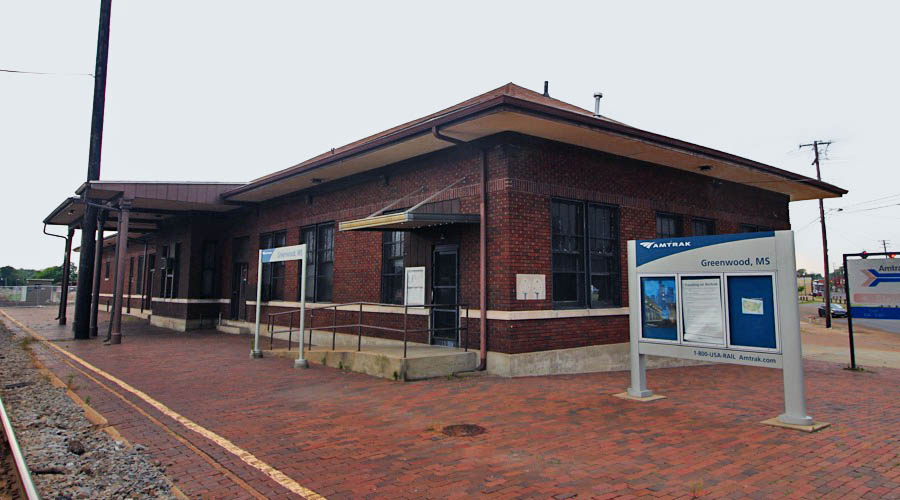
Greenwood, Ms / MississippiRails.com
Greenwood, Ms / Jun 2020 / RWH
See also these related scrapbooks:
- Columbus & Greenville Railway Greenwood scrapbook
- Greenwood's Rail Spike Park scrapbook
- Illinois Central fallen flag Mississippi locations
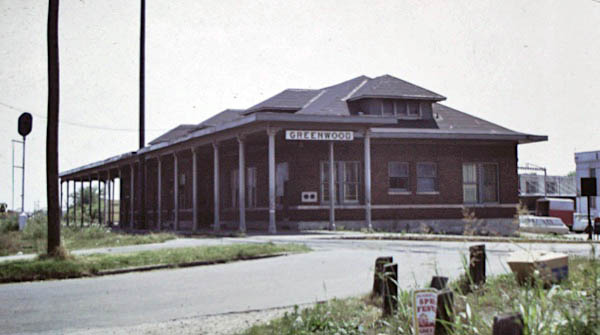
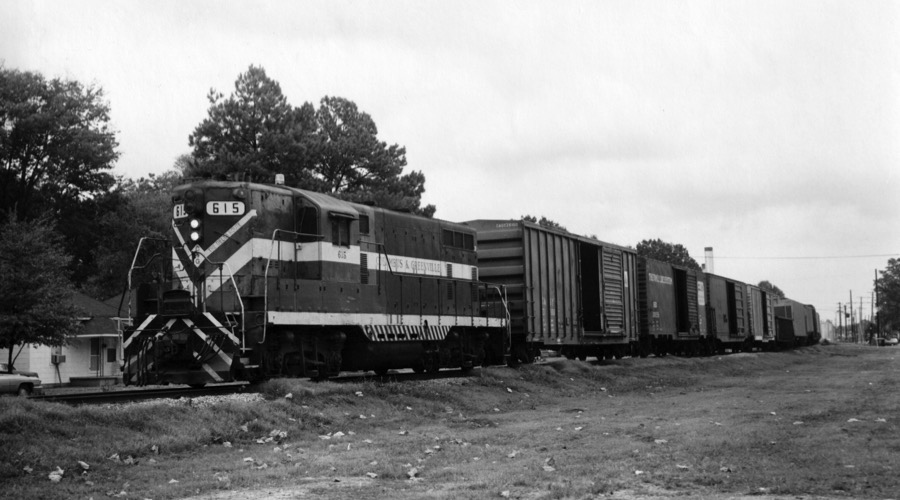
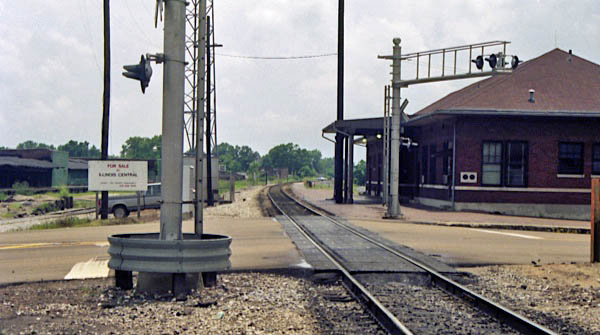
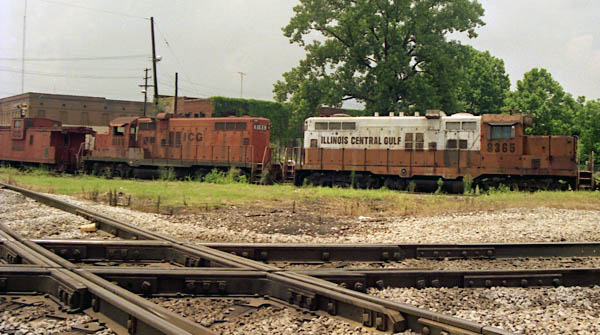
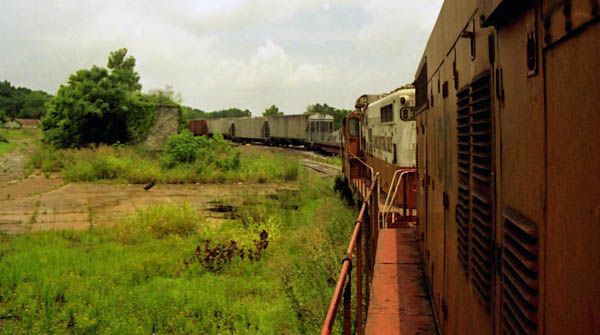
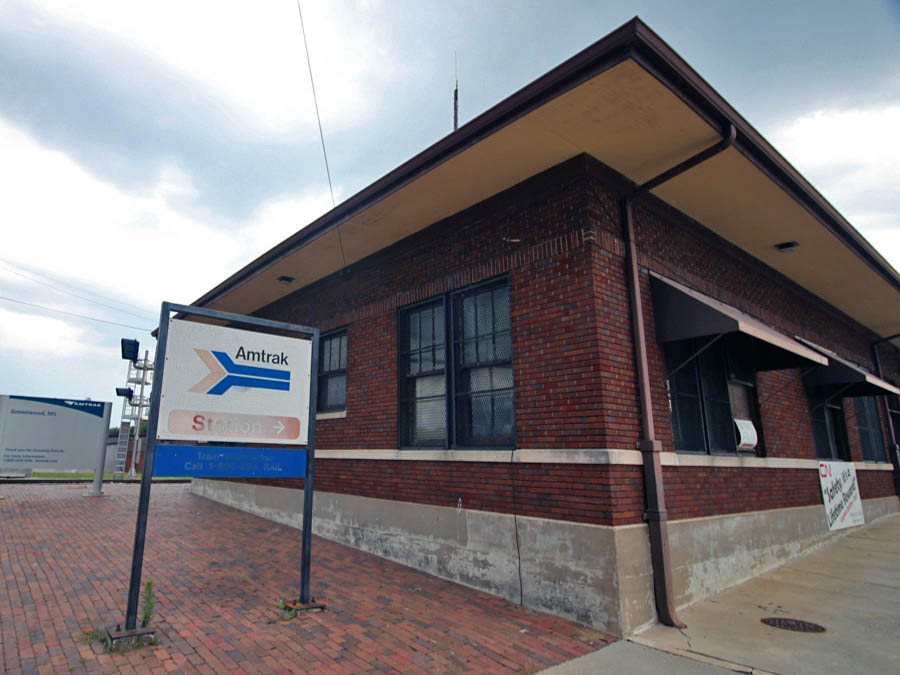
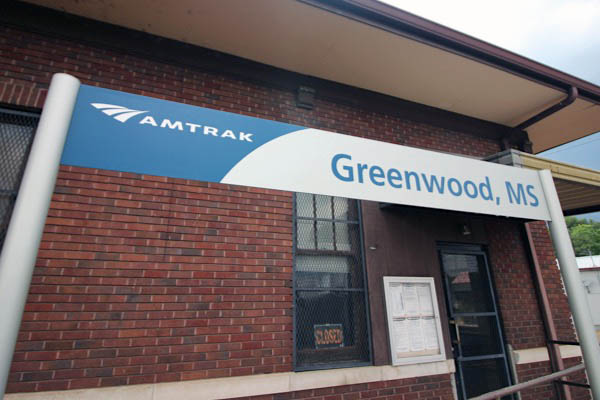
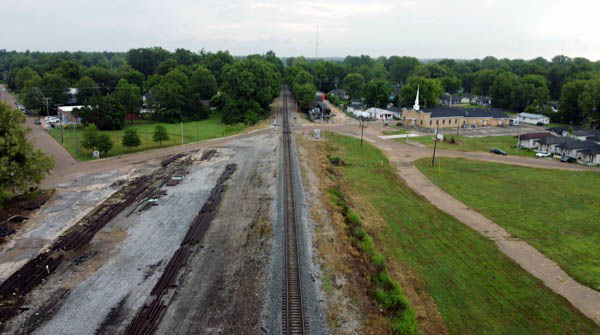
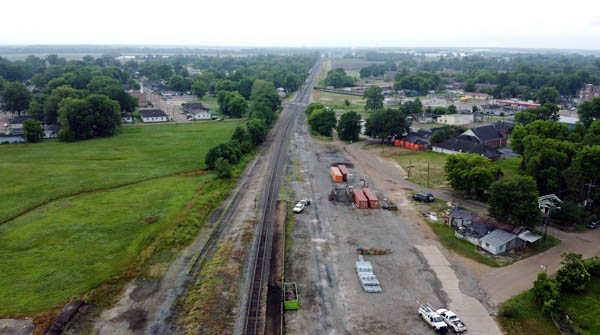
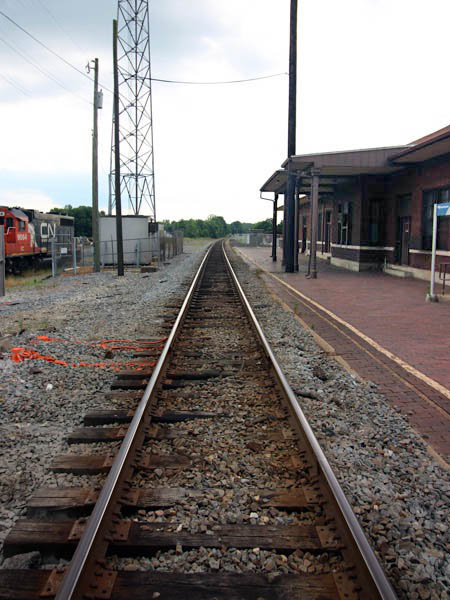
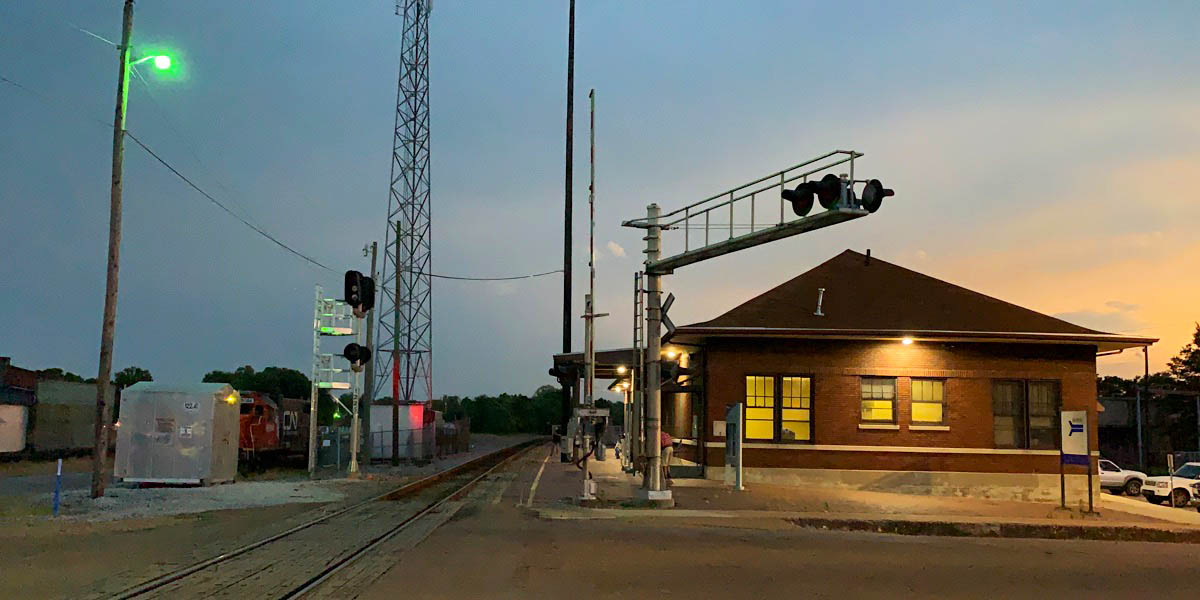
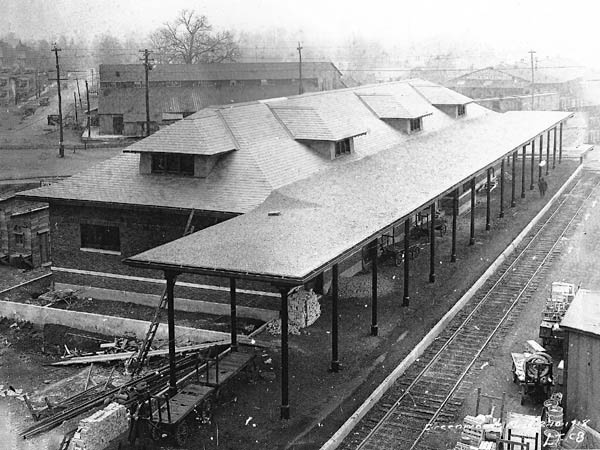 The Greenwood depot was built in 1917-18 by the Yazoo & Mississippi Valley Railroad, an Illinois Central Railroad subsidiary. On August 10, 1917, the Greenwood Enterprise reported, “The new station will be one of the handsomest on the lines of the Illinois Central Railroad in a town the size of Greenwood, and will far surpass any station on the Yazoo & Mississippi Valley or Illinois Central lines between Memphis and New Orleans.”
Composed of dark red brick with a hipped roof, the one-story depot cost an estimated $60,000. Situated just southeast of downtown, it replaced a late-19th century gabled wooden depot that had vertical board and batten walls. This earlier structure was moved to make way for the new station building and was repurposed for freight handling.
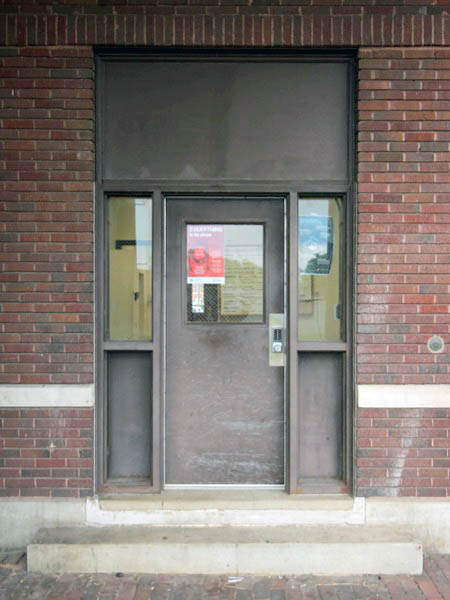
The depot stretches out along the tracks, its horizontal massing emphasized by a belt course that wraps around the building at the level of the window sills, while a decorative course of soldier bricks (with the long, narrow sides exposed) runs above the windows and entryways. Trackside, a projecting bay with windows on three sides enabled the station master to monitor activity up and down the rail line.
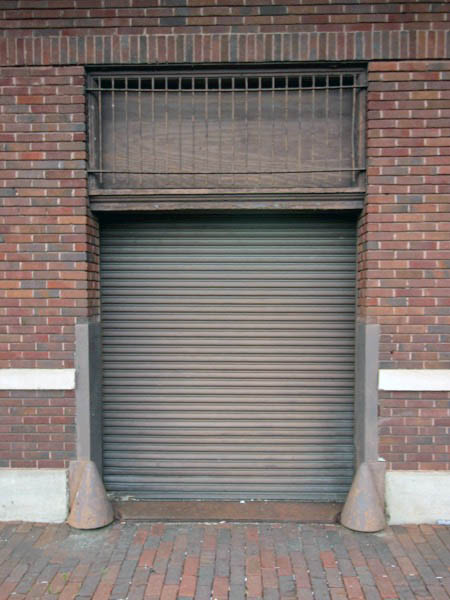
Passenger functions were located on the north end, where large windows allowed natural light to brighten the waiting room. To the south, spaces were used for baggage, parcel and freight services, as indicated by the small windows, placed high on the wall for security, and the wide doors on both the street and track sides of the building that let carts be easily moved between the depot and train.
Studying historic images, dormer windows once punctuated the roof, and an integrated canopy supported by slender columns covered much of the platform, protecting passengers and parcels from inclement weather and the strong summer sun. These elements were later removed.
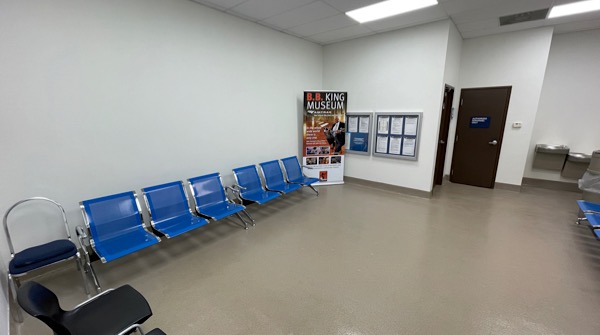
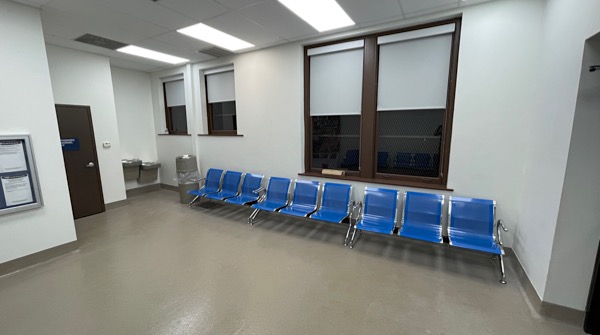
In April 2022, Amtrak and the community celebrated completion of a $5.4 million project to improve accessibility and the customer experience at the Greenwood station. Work included construction of a new concrete platform that correctly matches the train height and a renovated waiting room with restroom, drinking fountains and new bench seating.
Today, the depot falls within the boundaries of Greenwood’s Railroad Historic District, which was added to the National Register of Historic Places in 1985. Amtrak began serving Greenwood and Yazoo City in 1995, when the City of New Orleans was rerouted westward between Jackson, Mississippi, and Memphis.
Jun 2020 / RWH
Jun 2020 / RWH
Jun 2020 / RWH
Greenwood, MS
Oct 2022 / RWH
Greenwood, Ms / Jun 2020 / RWH
northbound #58
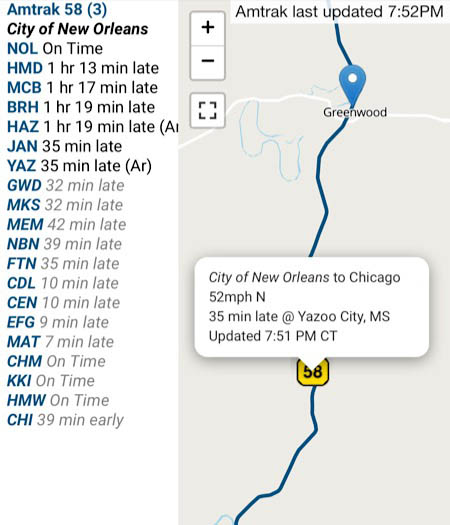
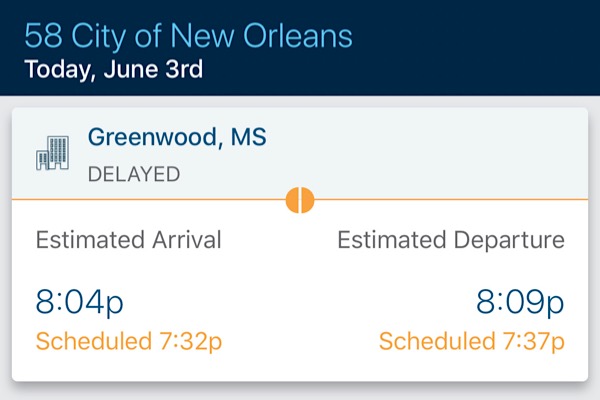
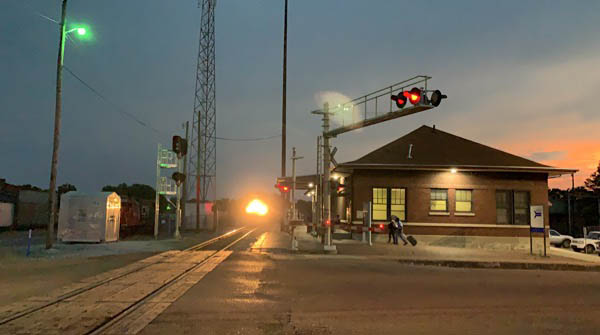
Greenwood, Ms / Jun 2020 / RWH
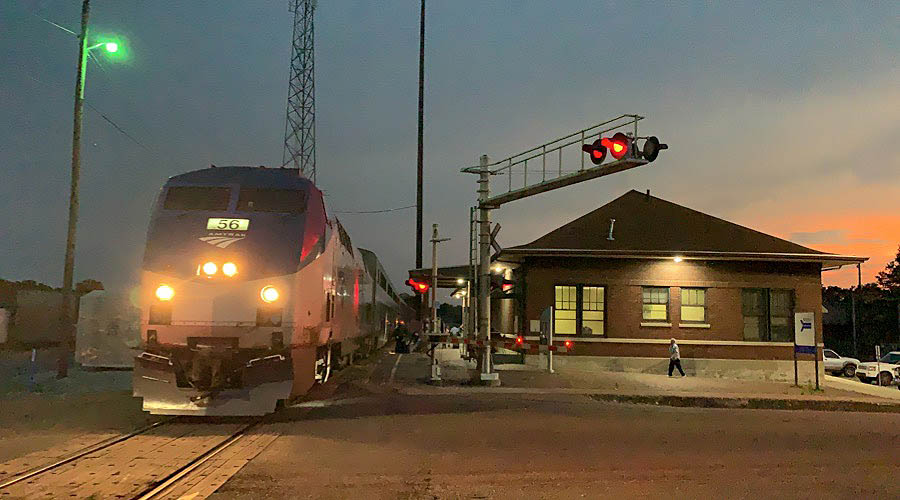
Greenwood, Ms / Jun 2020 / RWH
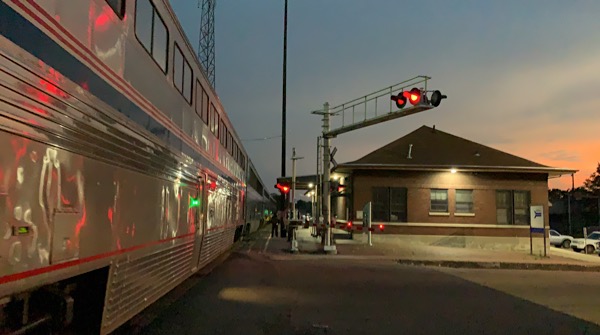
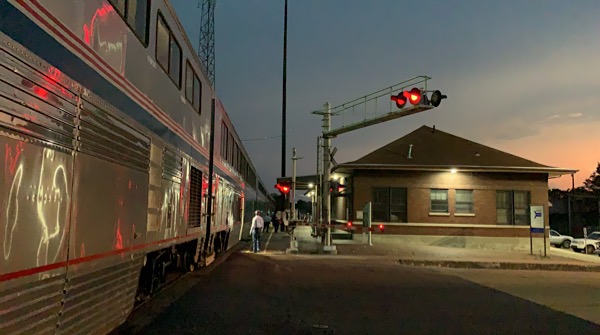
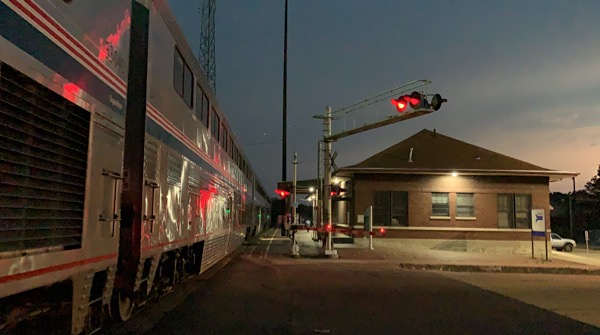
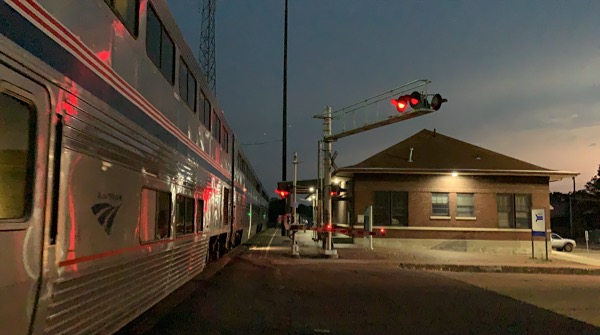
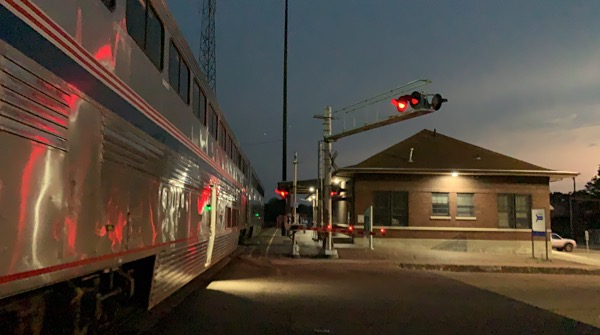
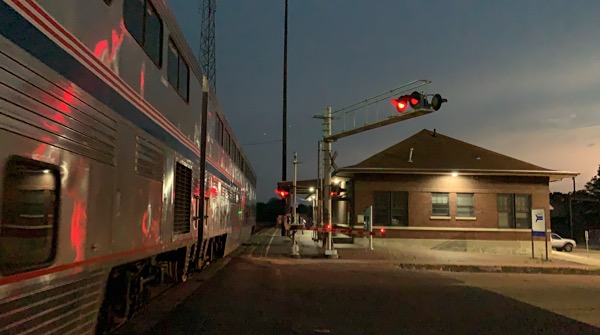
Greenwood, Ms / Jun 2020 / RWH
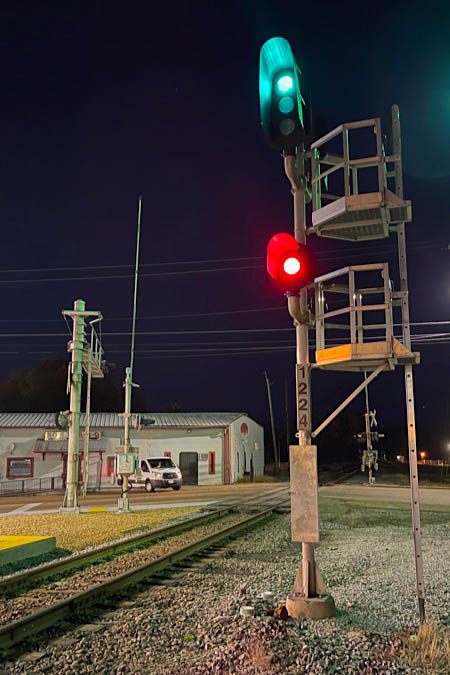
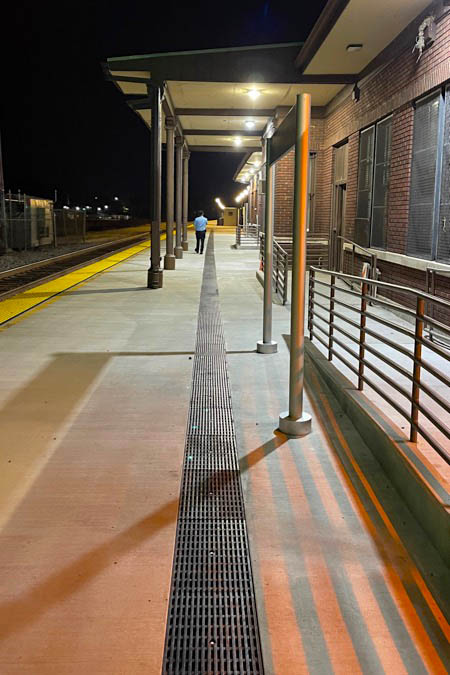
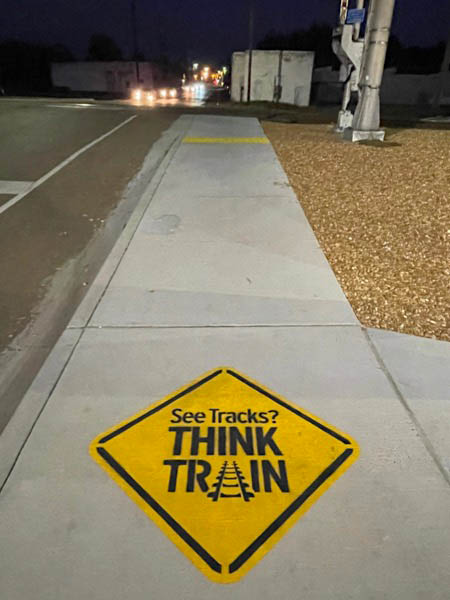
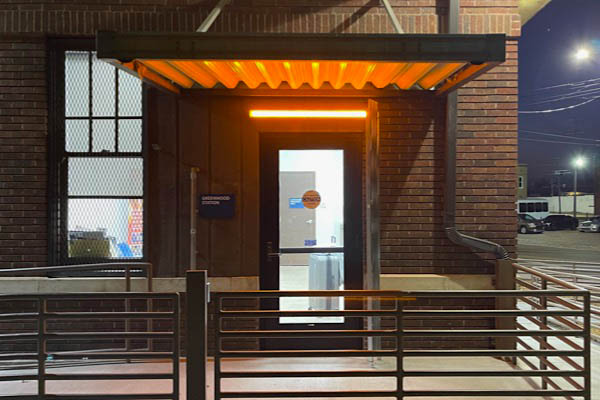
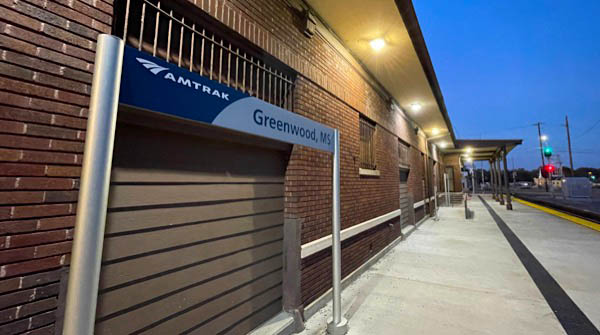
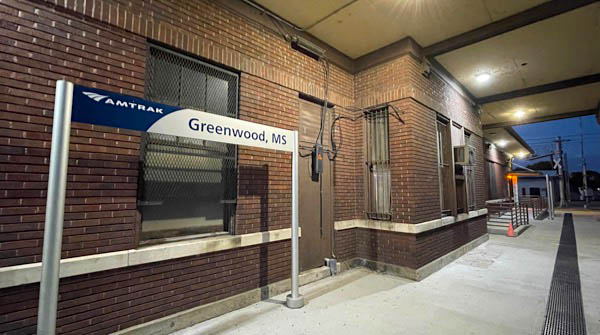
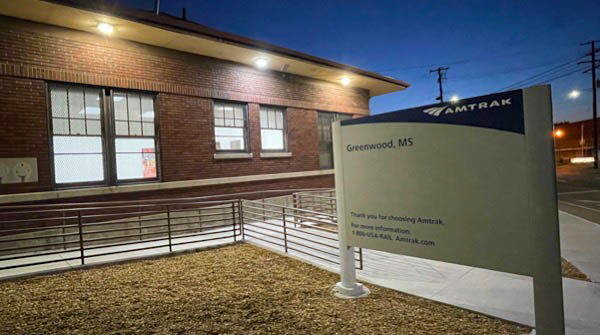
Greenwood @ Night
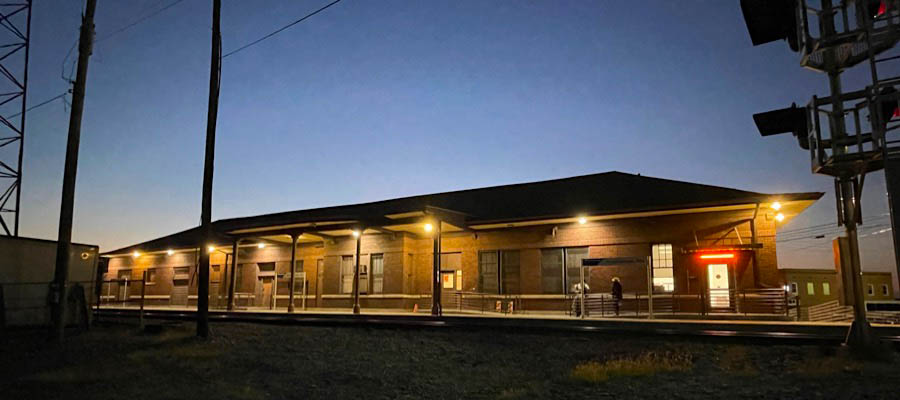
Greenwood, Ms / Oct 2022 / RWH
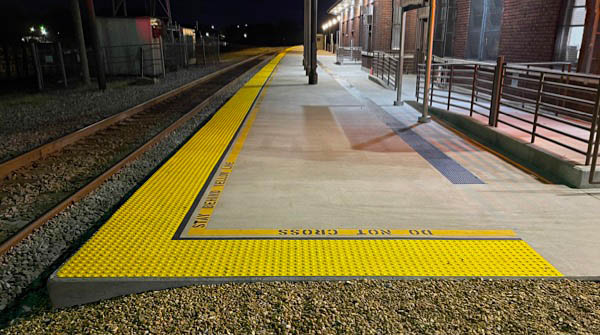
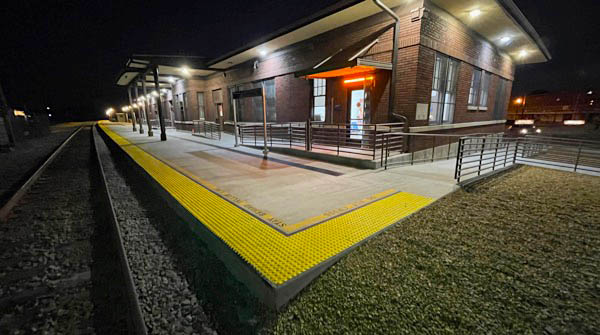
Oct 2022 / RWH
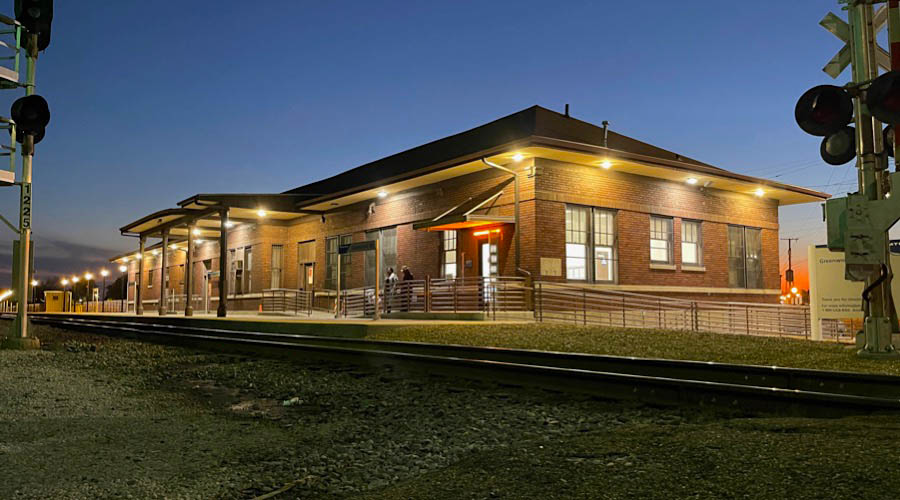
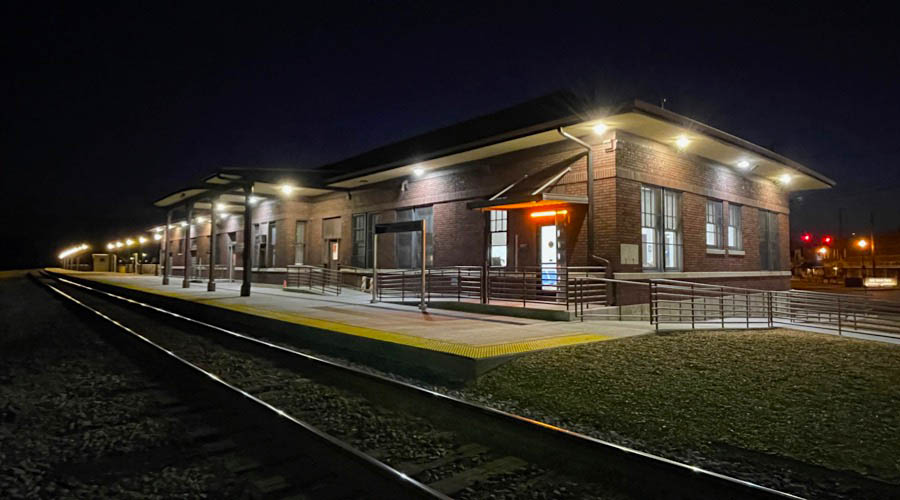
Greenwood, Ms / Oct 2022 / RWH
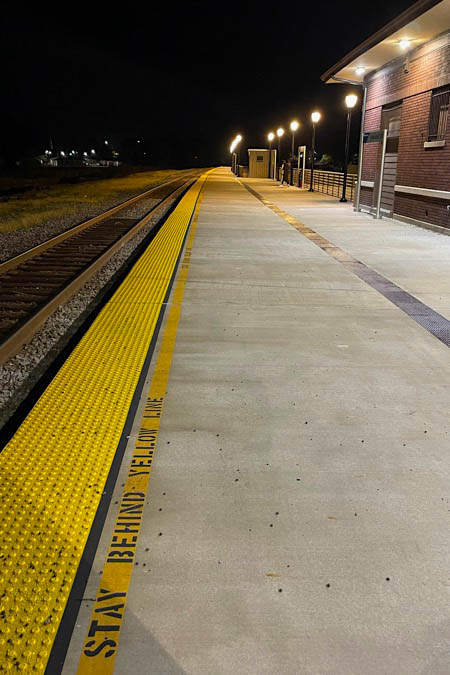
Oct 2022 / RWH

Oct 2022 / RWH
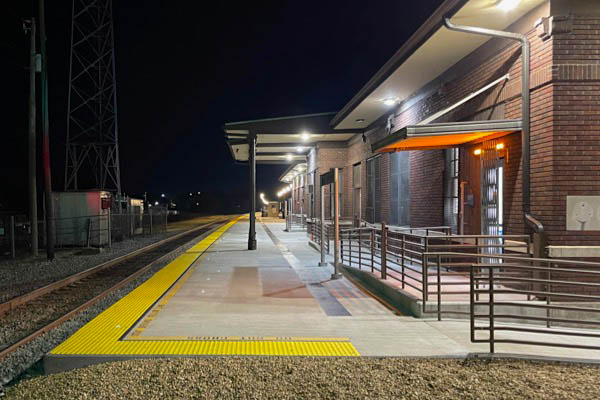
Oct 2022 / RWH
Oct 2022 / RWH
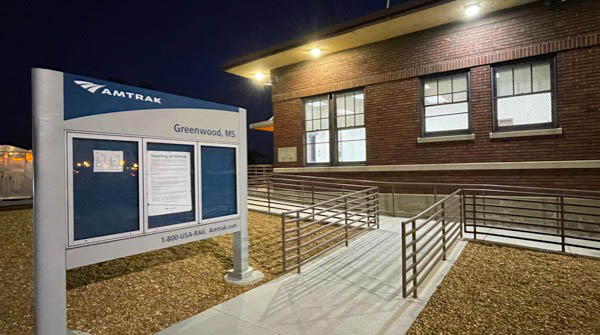
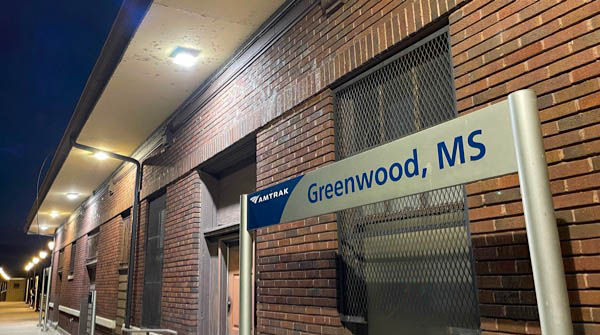
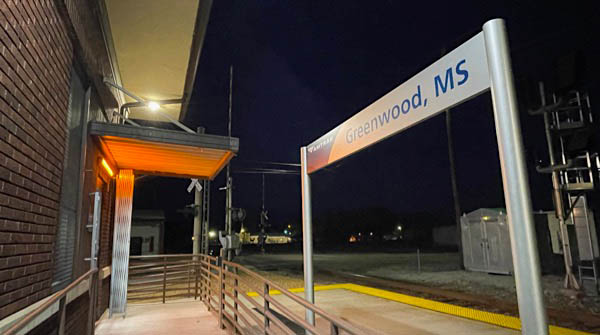
Oct 2022 / RWH
northbound #58
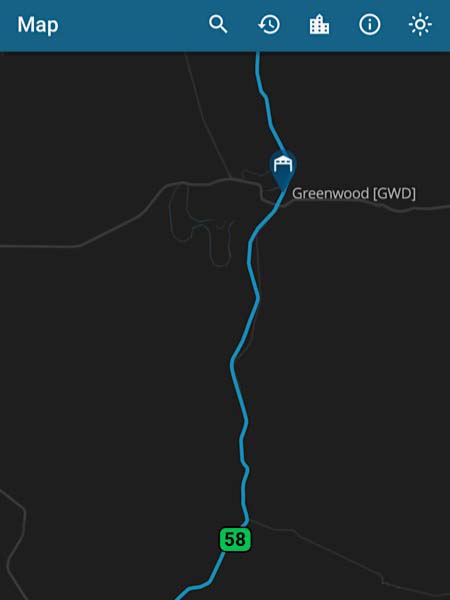
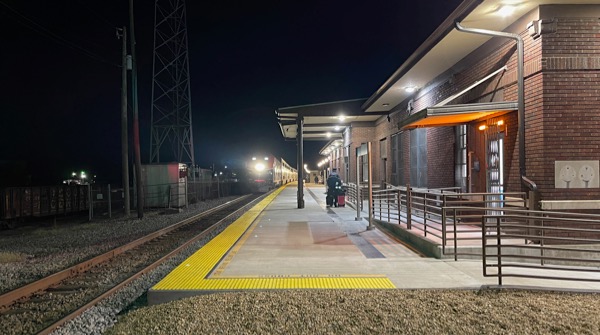
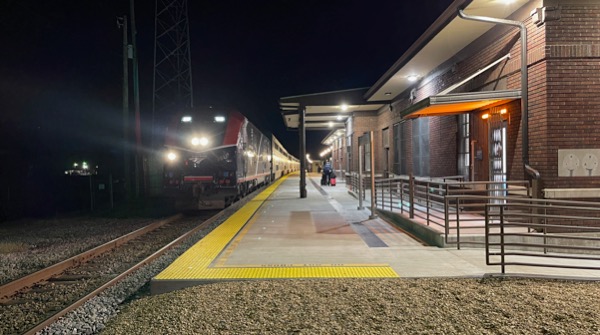
Greenwood, Ms / Oct 2022 / RWH
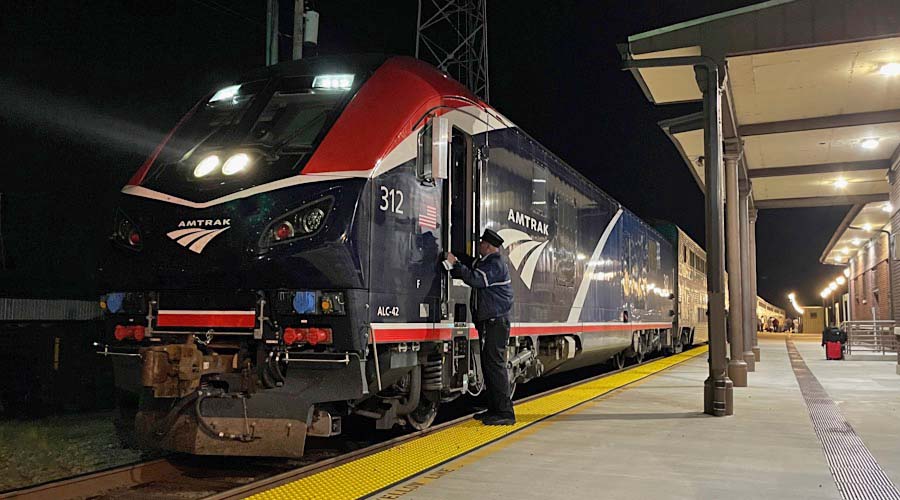
Greenwood, Ms / Oct 2022 / RWH
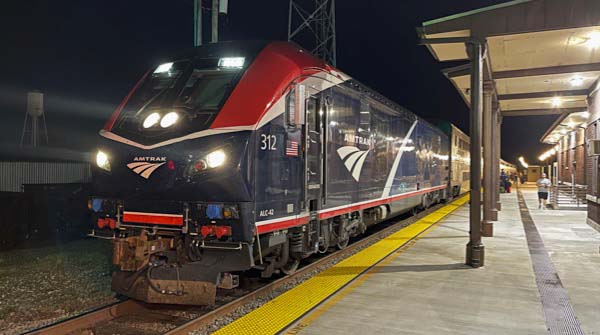
Greenwood, Ms / Oct 2022 / RWH
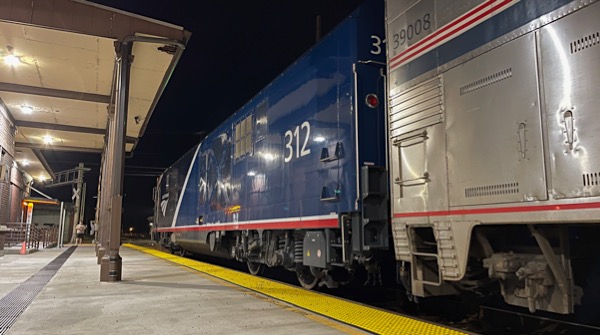
Greenwood, Ms / Oct 2022 / RWH
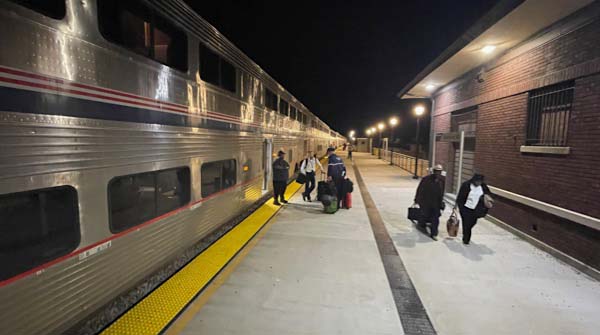
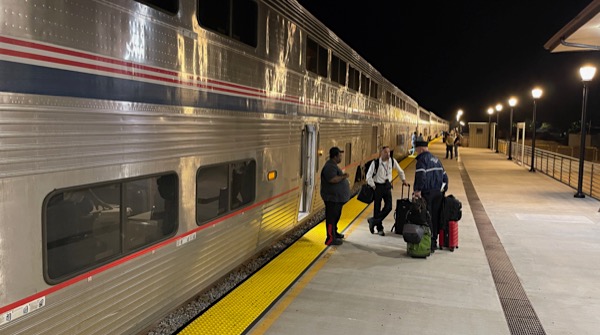
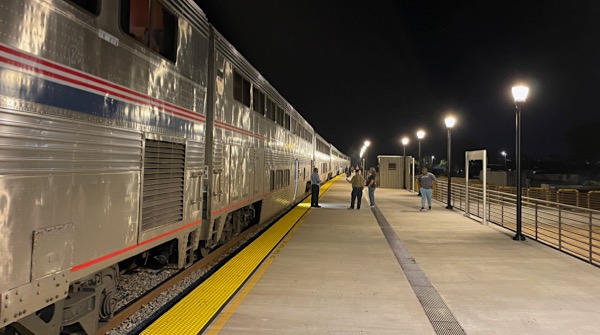
Oct 2022 / RWH
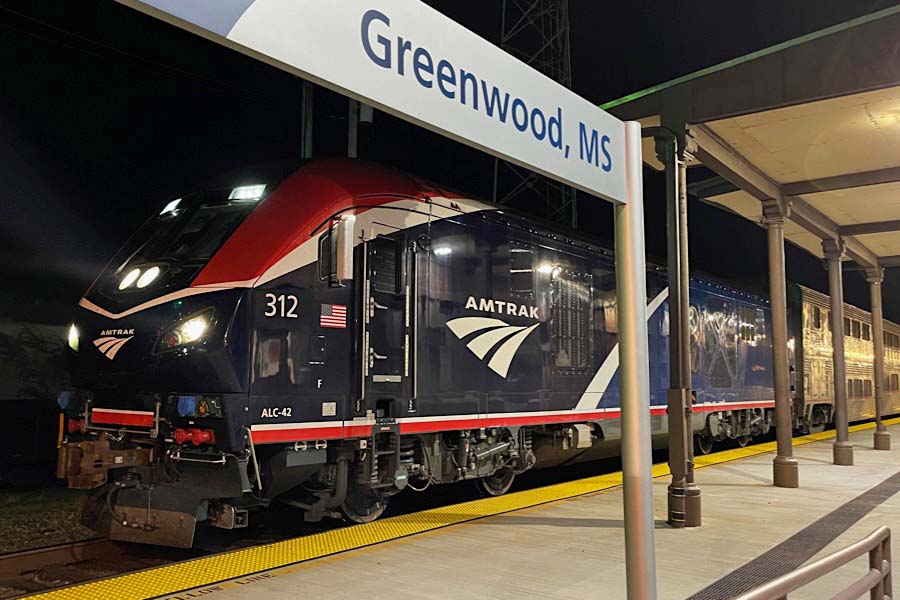
Oct 2022 / RWH
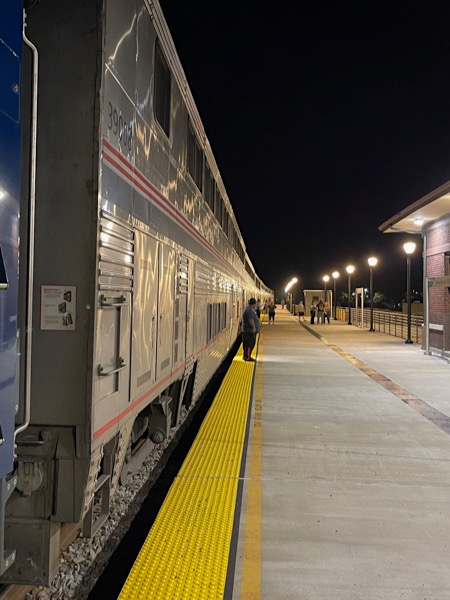
Oct 2022 / RWH
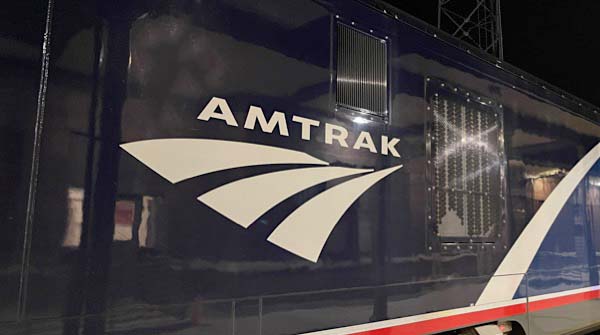
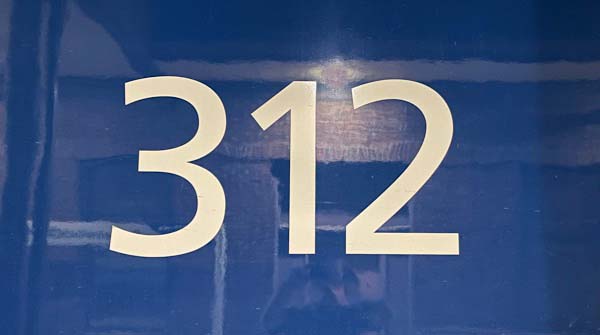
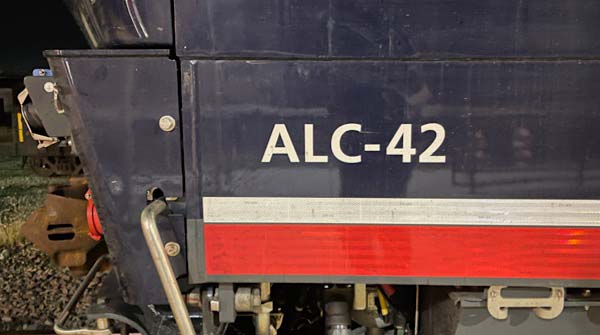
Amtrak #312
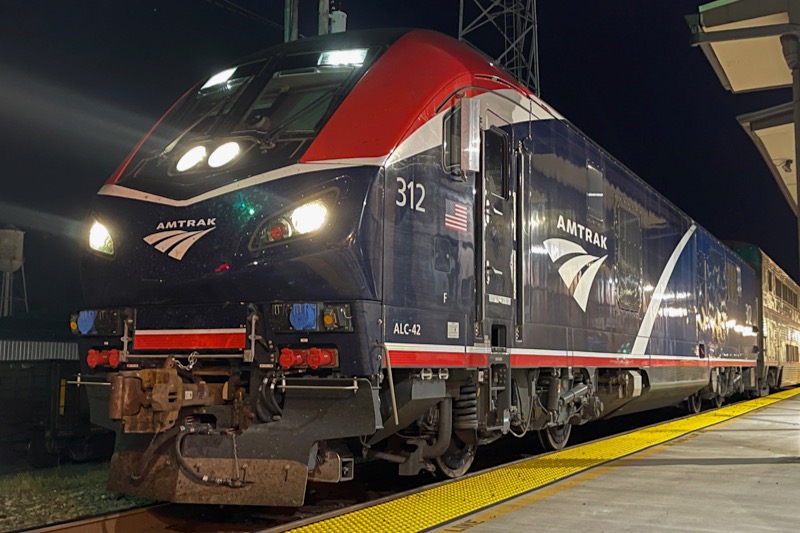
Amtrak #312
Greenwood, Ms / Oct 2022 / RWH
Amtrak #312
wears Amtrak Phase VII paint scheme
wrecked in Alabama Apr 2023

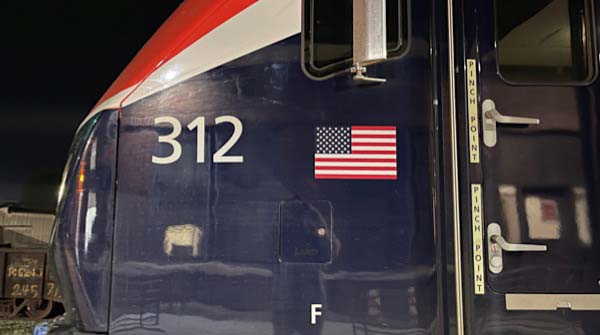
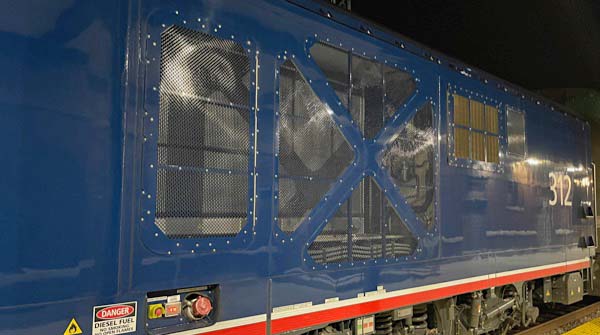
Oct 2022 / RWH
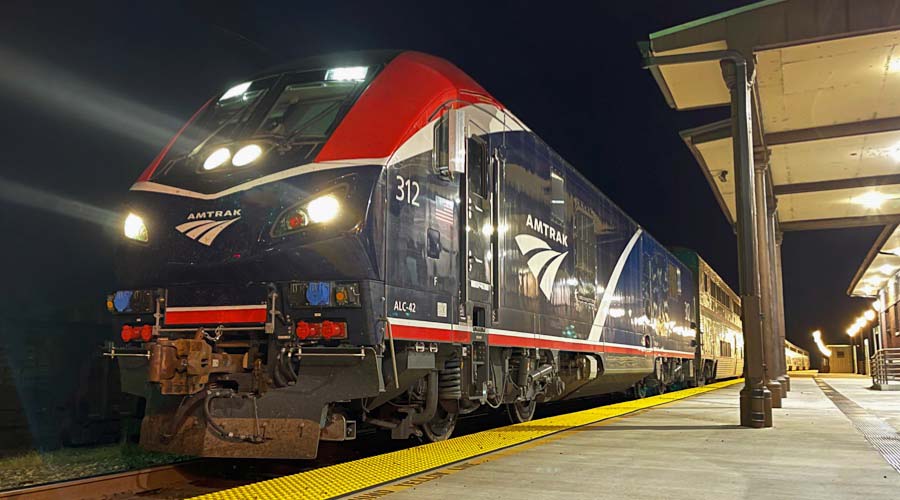
Greenwood, Ms / Oct 2022 / RWH
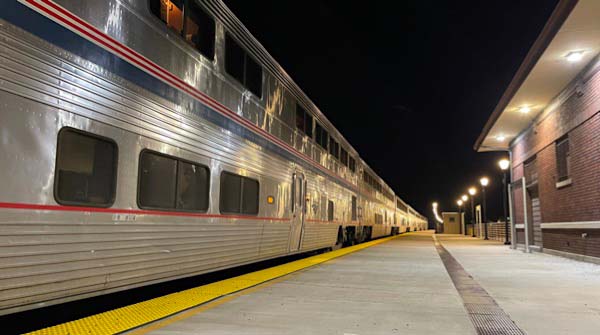
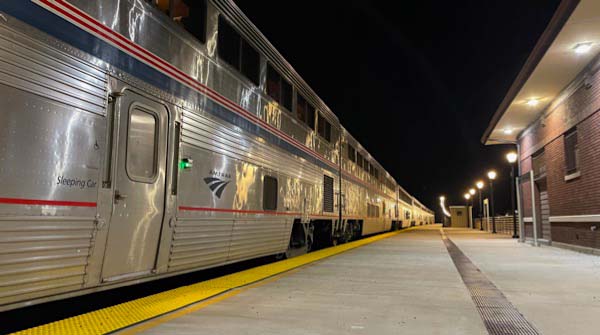
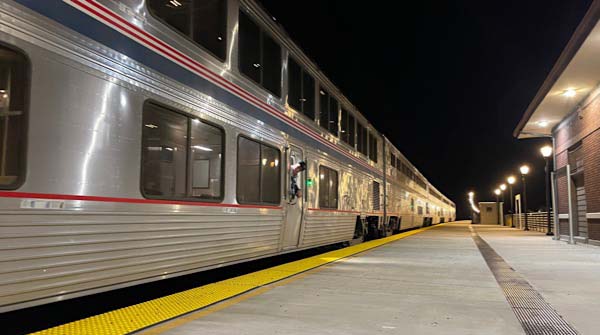
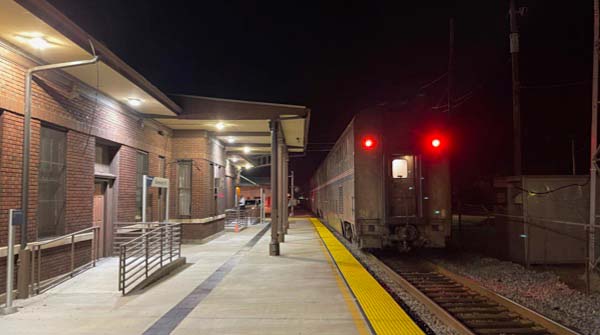
Oct 2022 / RWH
Tennessee
406 Memphis, Tn
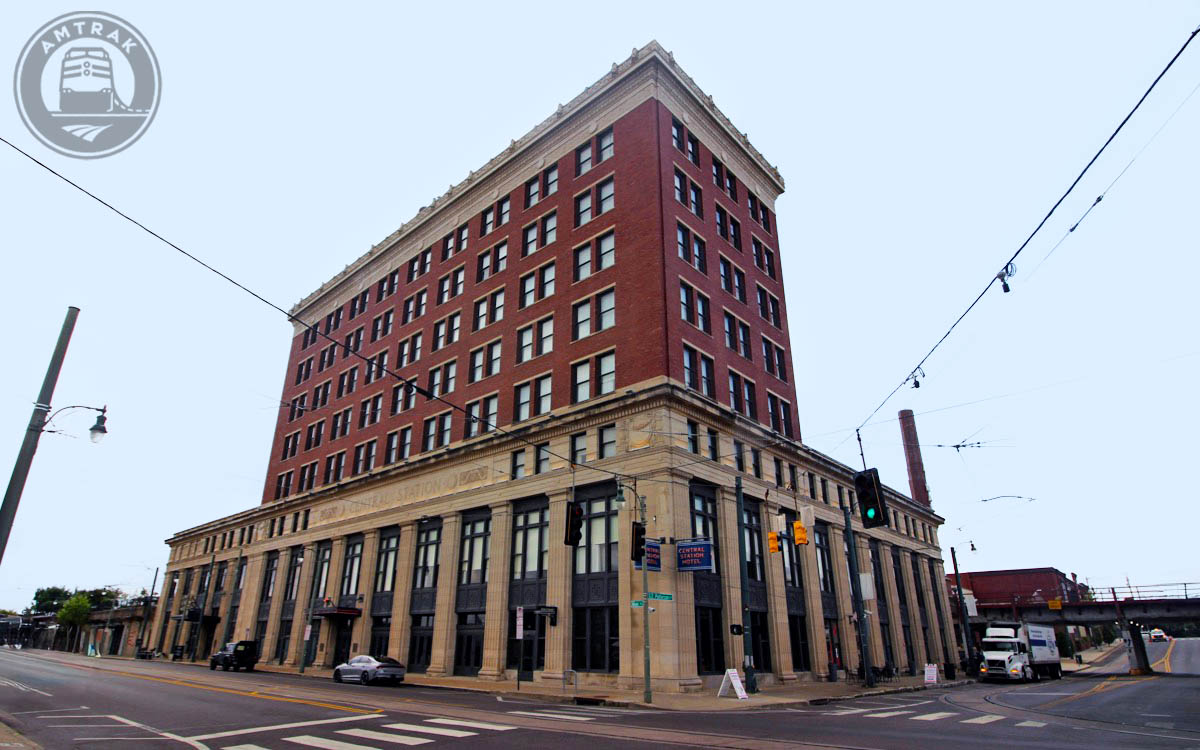
Memphis Central Station
Memphis, Tn / Aug 2025 / RWH
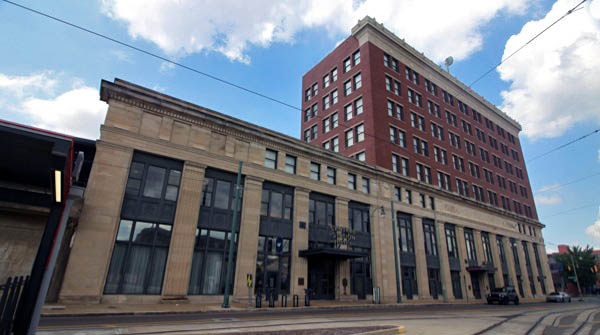
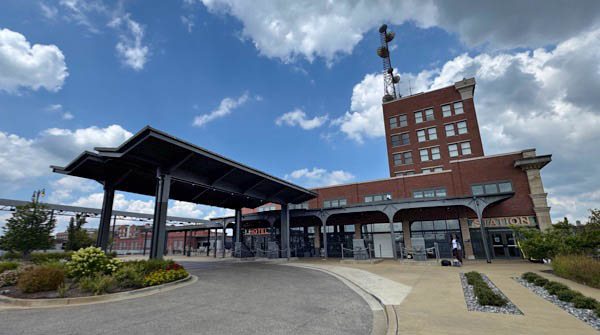
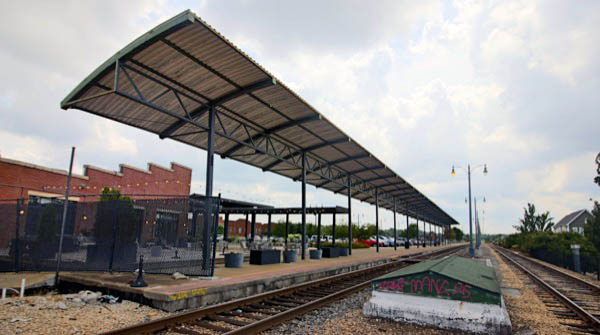
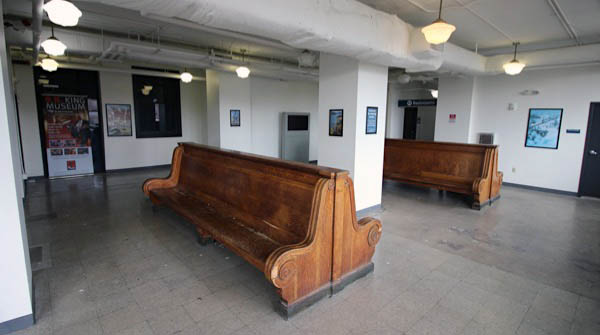
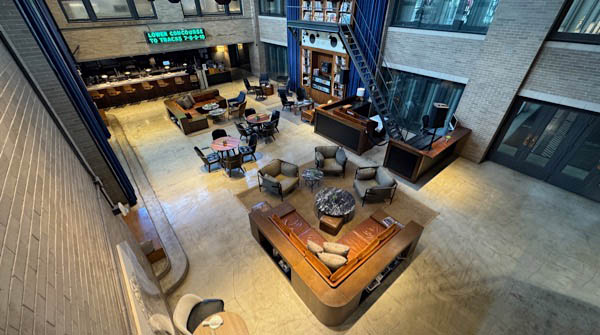
See our complete Memphis Central Station scrapbook in Amtrak Great Stations
934 Chicago, Il
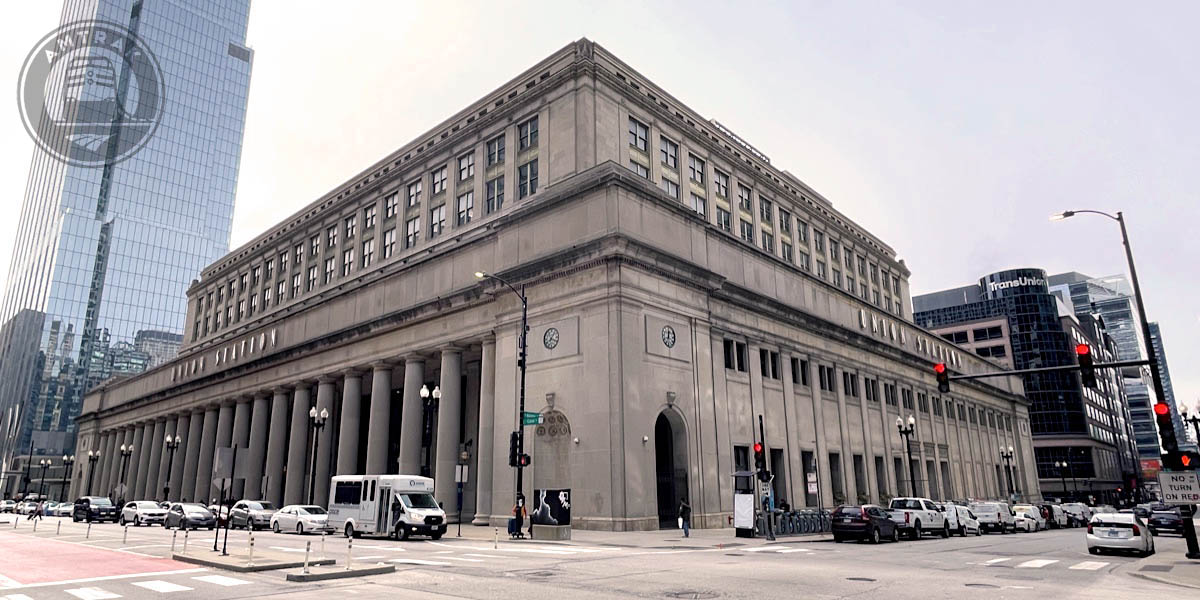
Chicago Union Station
Chicago, Il / Mar 2023 / RWH
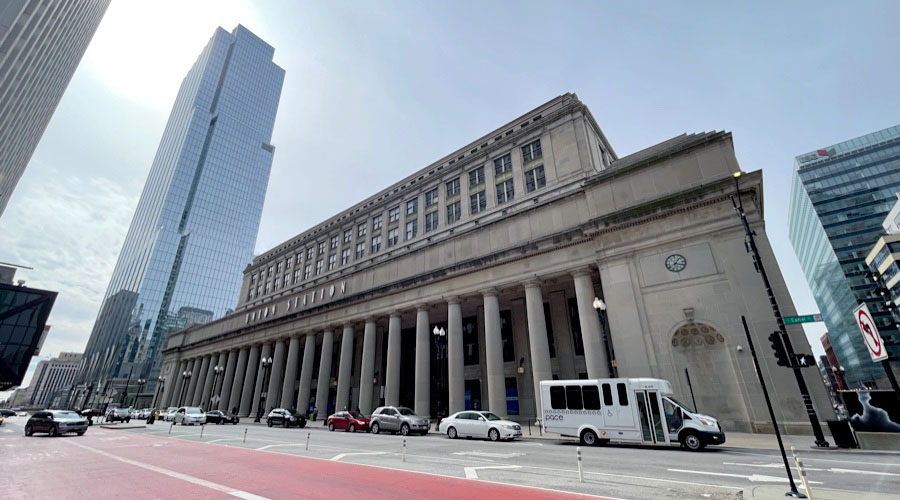
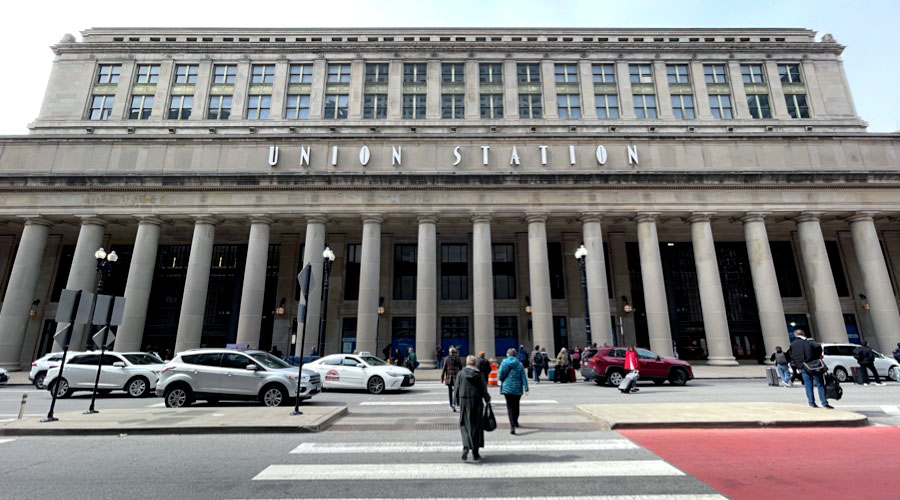
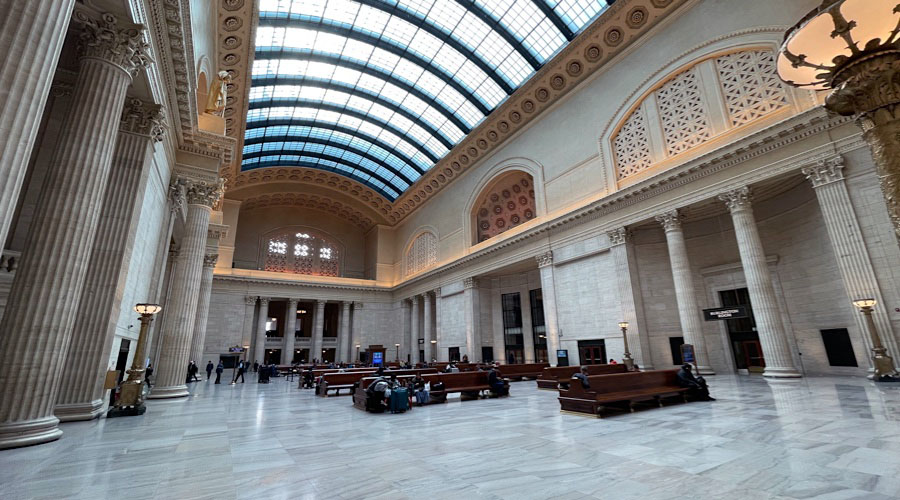
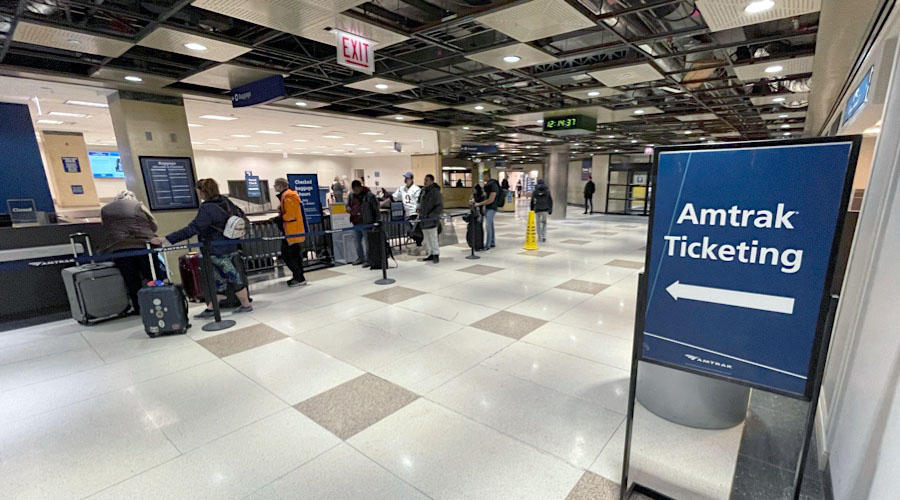
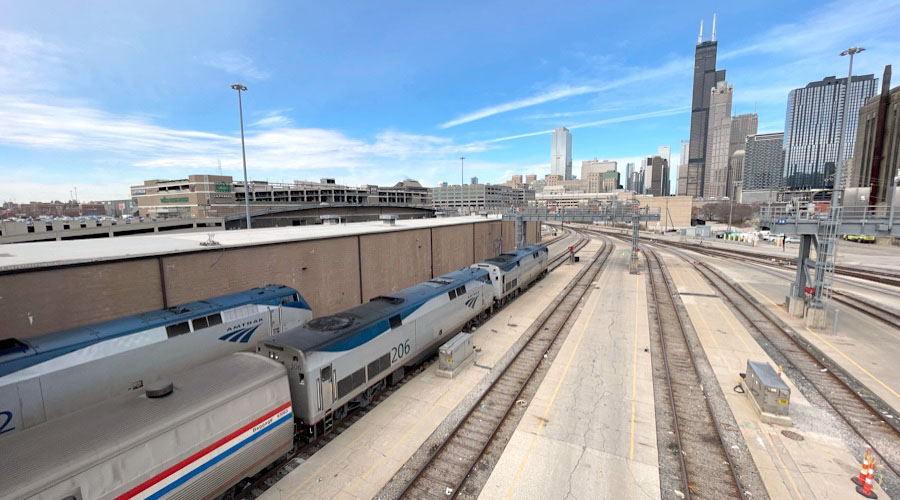
See our complete Chicago Union Station scrapbook in Amtrak Great Stations
The Song
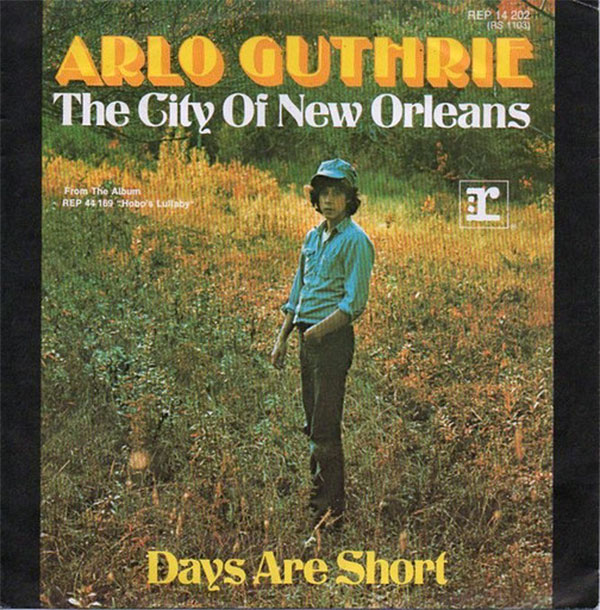 "City of New Orleans" is a country folk song written by Steve Goodman (and first recorded for Goodman's self-titled 1971 album), describing a train ride from Chicago to New Orleans on the Illinois Central Railroad's City of New Orleans in bittersweet and nostalgic terms.
Goodman got the idea while traveling on the Illinois Central line for a visit to his wife's family. The song has been recorded by numerous artists both in the US and Europe, including two major hit versions: first by Arlo Guthrie in 1972, and later by Willie Nelson in 1984.
"City of New Orleans" is a country folk song written by Steve Goodman (and first recorded for Goodman's self-titled 1971 album), describing a train ride from Chicago to New Orleans on the Illinois Central Railroad's City of New Orleans in bittersweet and nostalgic terms.
Goodman got the idea while traveling on the Illinois Central line for a visit to his wife's family. The song has been recorded by numerous artists both in the US and Europe, including two major hit versions: first by Arlo Guthrie in 1972, and later by Willie Nelson in 1984.
While at the Quiet Knight bar in Chicago, Goodman saw Arlo Guthrie, and asked to be allowed to play a song for him. Guthrie grudgingly agreed, on the condition that if Goodman bought him a beer, Guthrie would listen to him play for as long as it took to drink the beer. Goodman played "City of New Orleans", which Guthrie liked enough that he asked to record it. The song was a hit for Guthrie on his 1972 album "Hobo's Lullaby," reaching #4 on the Billboard Easy Listening chart and #18 on the Hot 100 chart; it would prove to be Guthrie's only top-40 hit and one of only two he would have on the Hot 100. In New Zealand, "City of New Orleans" spent two weeks at number one, charting throughout the winter of 1973.
 Riding on the City of New Orleans
Illinois Central Monday morning rail
Fifteen cars and fifteen restless riders
Three conductors
and twenty-five sacks of mail
All along the southbound odyssey
The train pulls out at Kankakee
Rolls along past houses, farms and fields
Passin' towns that have no names
Freight yards full of old black men
And the graveyards of the rusted automobiles
Chorus
Good morning, America, how are you
Don't you know me, I'm your native son
I'm the train they call The City of New Orleans
I'll be gone five hundred miles
when the day is done
Dealin' cards with the old men in the club car
Penny a point, ain't no one keepin' score
Won't you pass the paper bag that holds the bottle
Feel the wheels rumblin' 'neath the floor
And the sons of pullman porters
And the sons of engineers
Ride their father's magic carpet made of steam
Mothers with their babes asleep
Are rockin' to the gentle beat
And the rhythm of the rails is all they dream
Chorus
Night time on The City of New Orleans
Changing cars in Memphis, Tennessee
Half way home, and we'll be there by morning
Through the Mississippi darkness
Rolling down to the sea
And all the towns and people seem
To fade into a bad dream
And the steel rails still ain't heard the news
The conductor sings his song again
The passengers will please refrain
This train's got the disappearing railroad blues
Final Chorus
Good night, America, how are you
Don't you know me, I'm your native son
I'm the train they call The City of New Orleans
I'll be gone five hundred miles
when the day is done
Repeat First Chorus
Good morning, America, how are you
Don't you know me, I'm your native son
I'm the train they call The City of New Orleans
I'll be gone five hundred miles
when the day is done
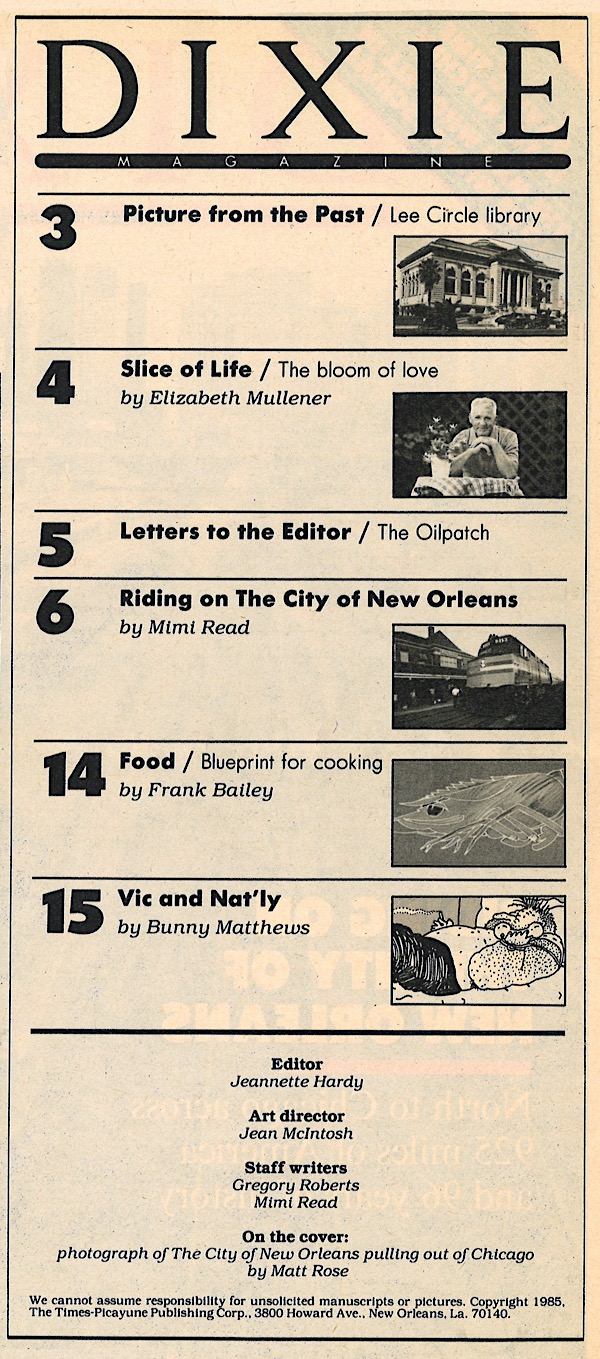
 Clippings
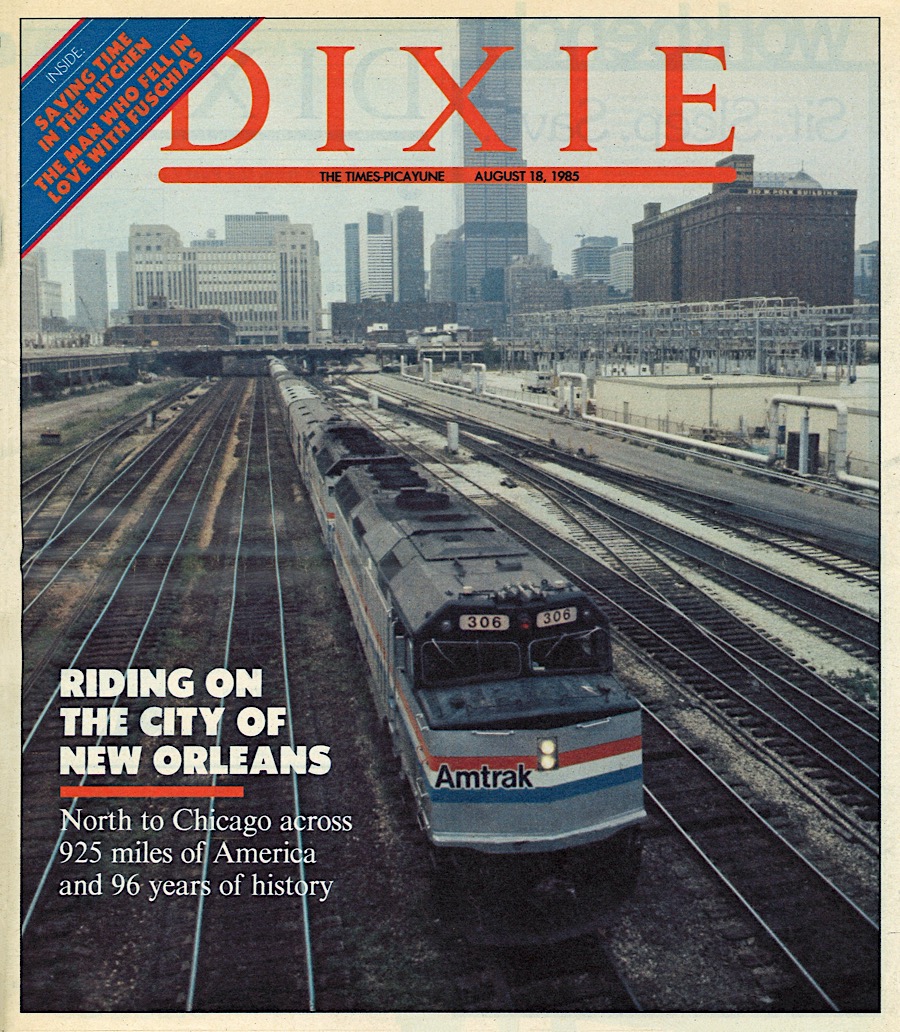
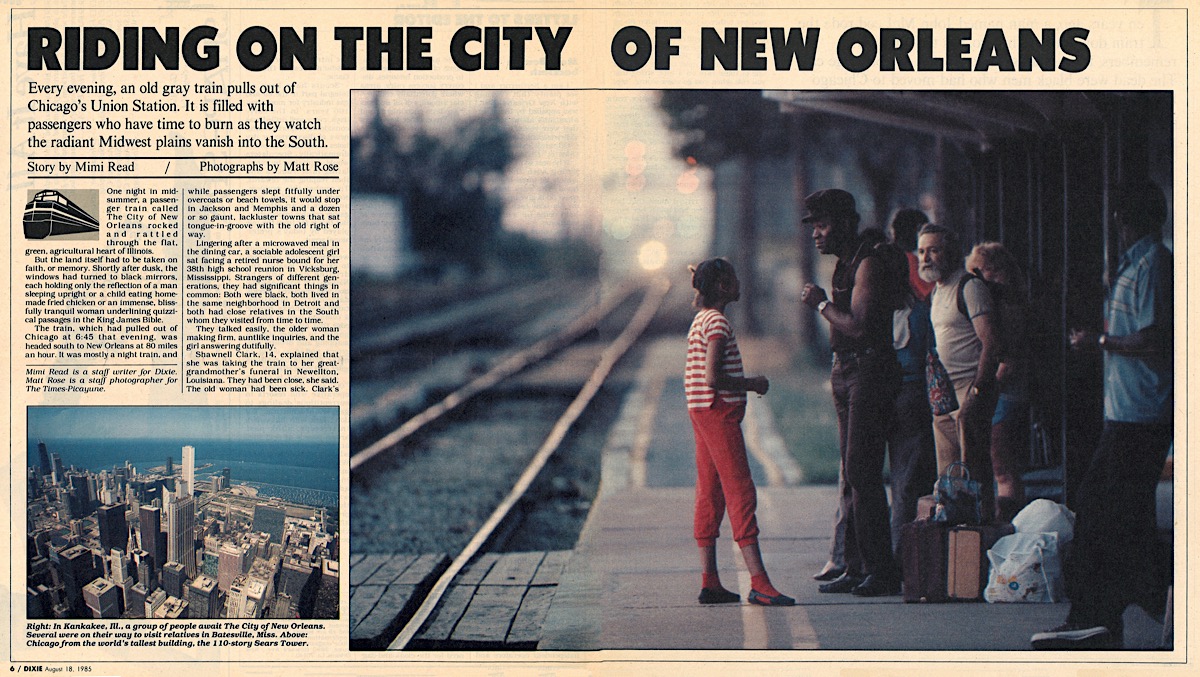
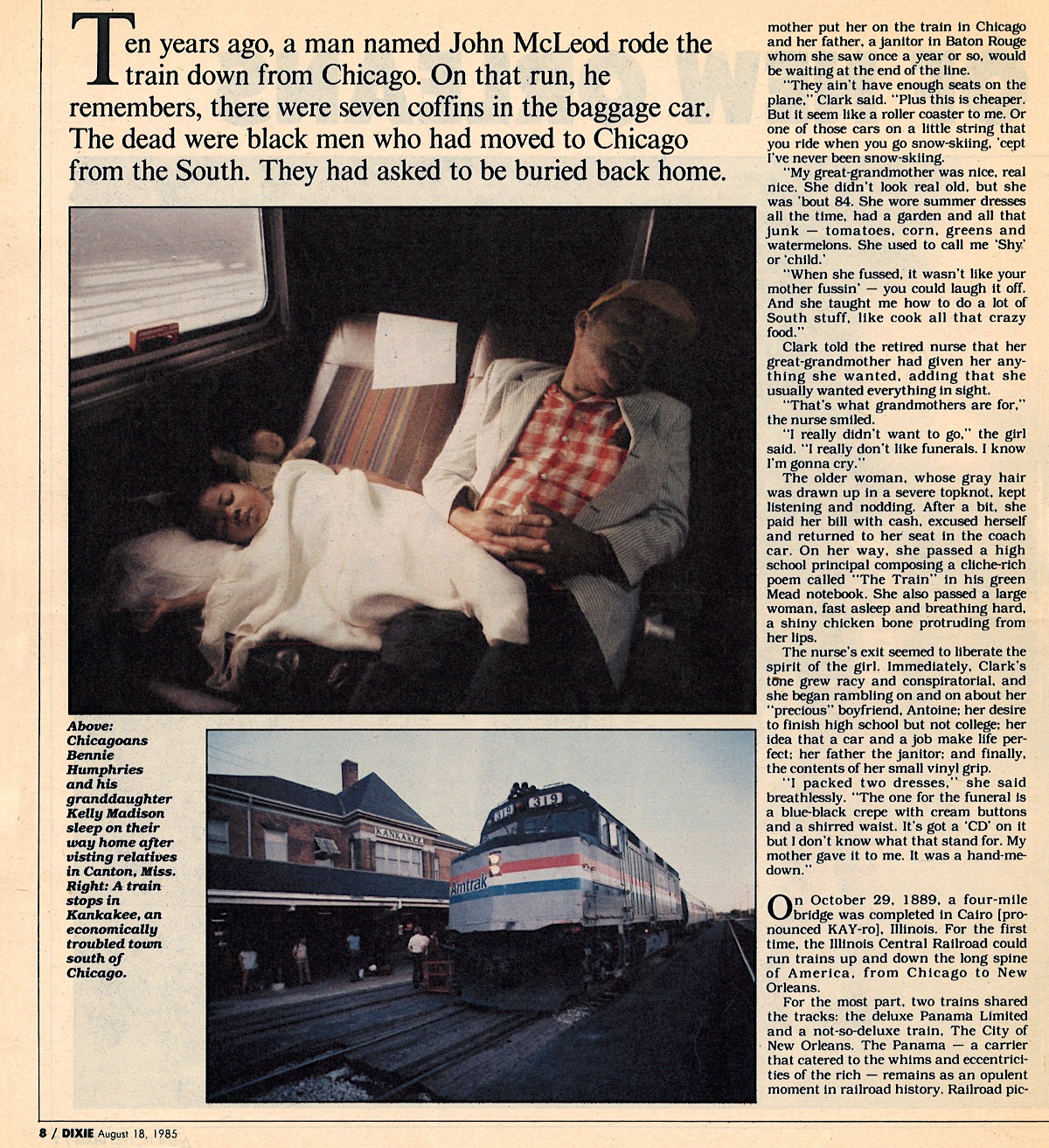
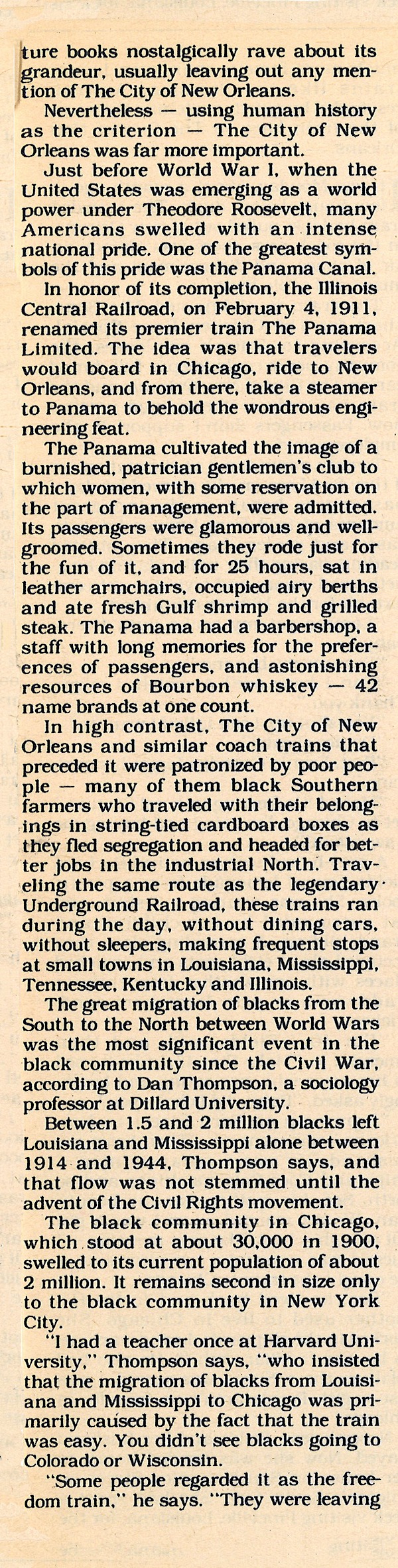
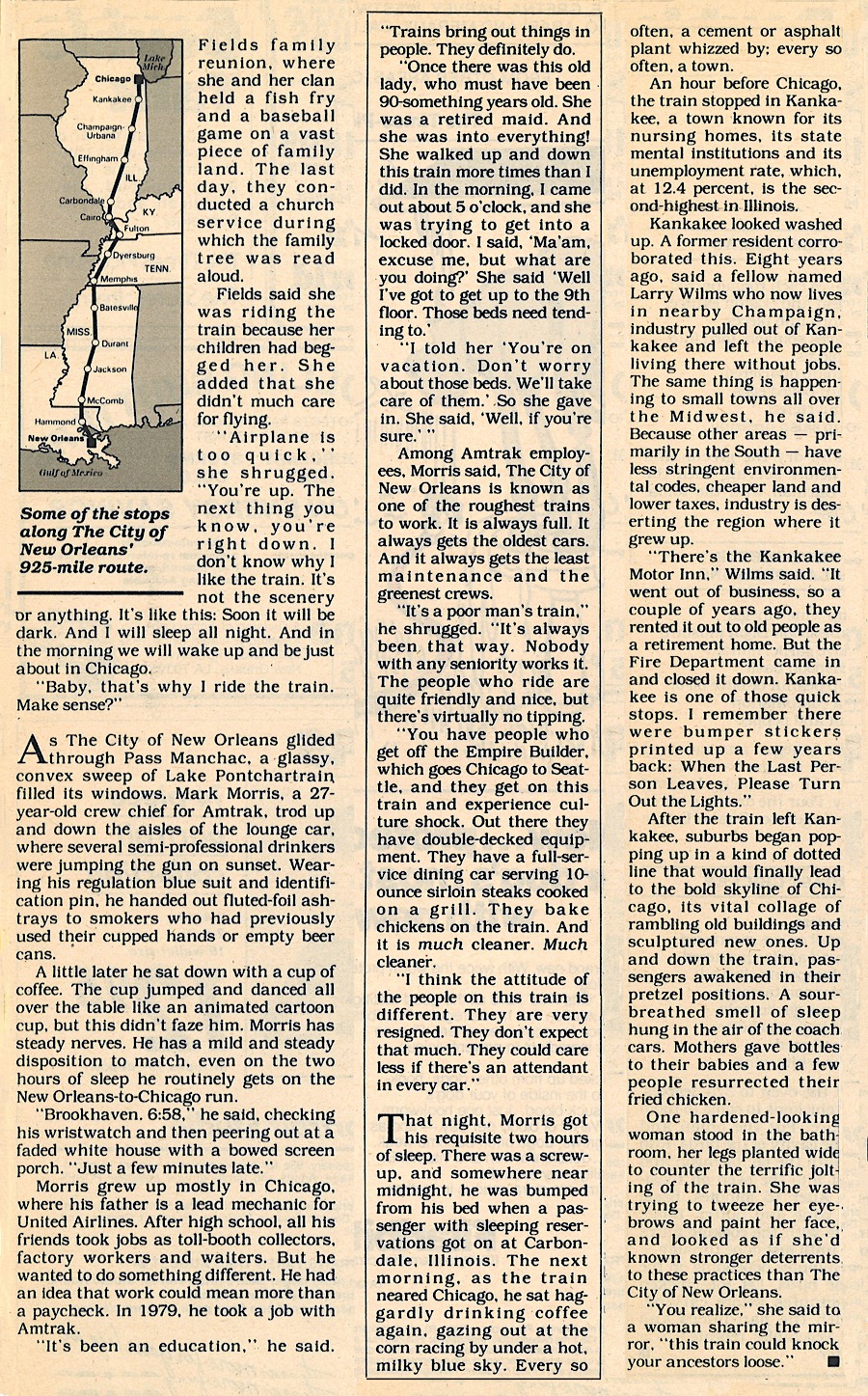
from Times-Picayune Dixie magazine [Aug 1985] / collection

Lagniappe
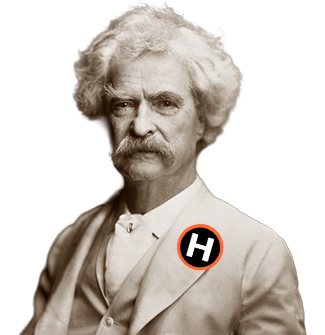


Magic Carpet Made of Steel
Hammond, La / Oct 1990 / image and artwork RWH
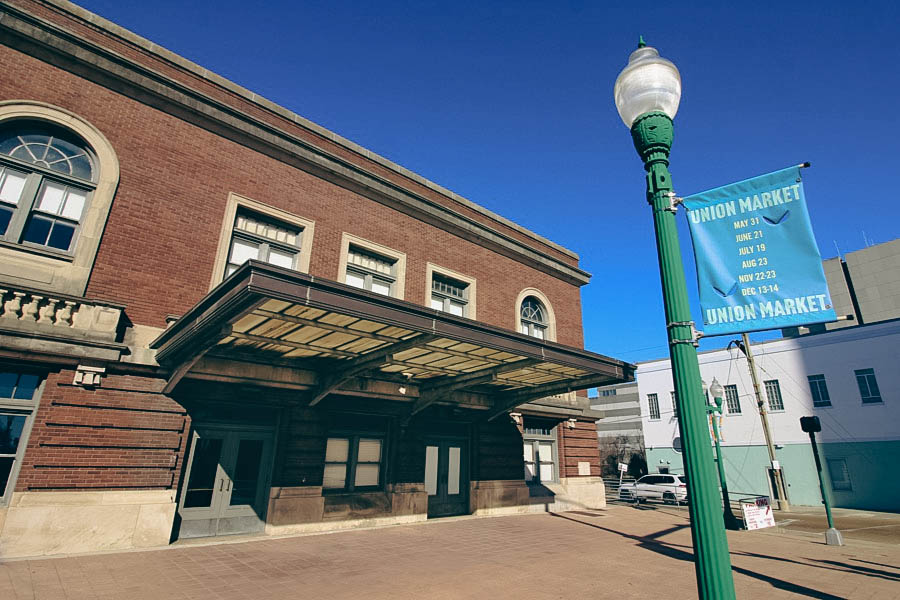
Jackson United
Jackson, Ms / Dec 2025 / RWH
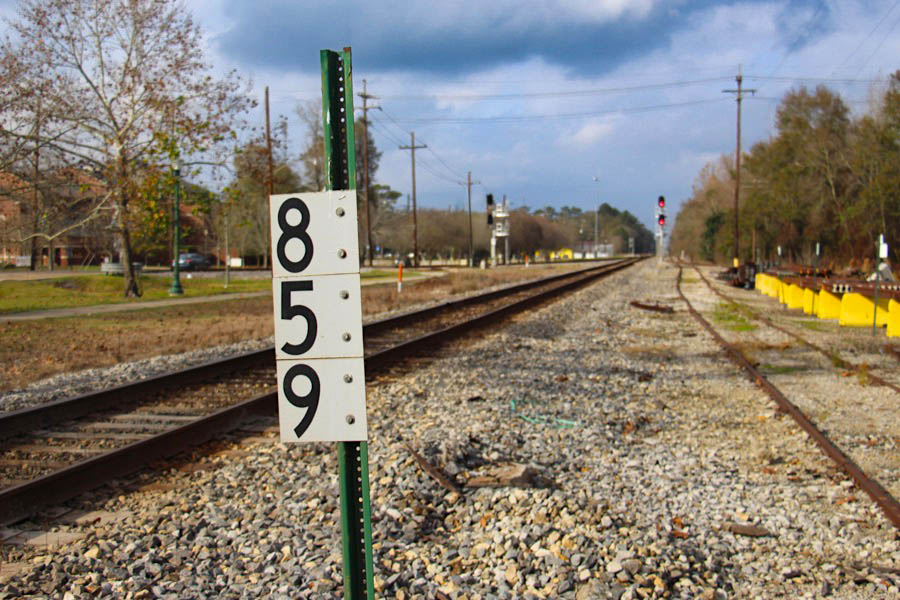
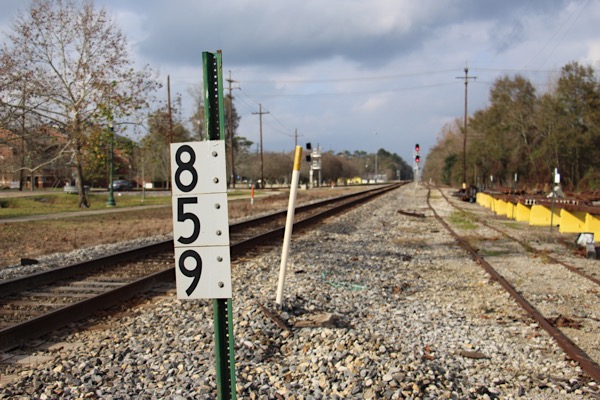
Eight Fifty Nine to Headquarters
Hammond, La / Dec 2016 / RWH
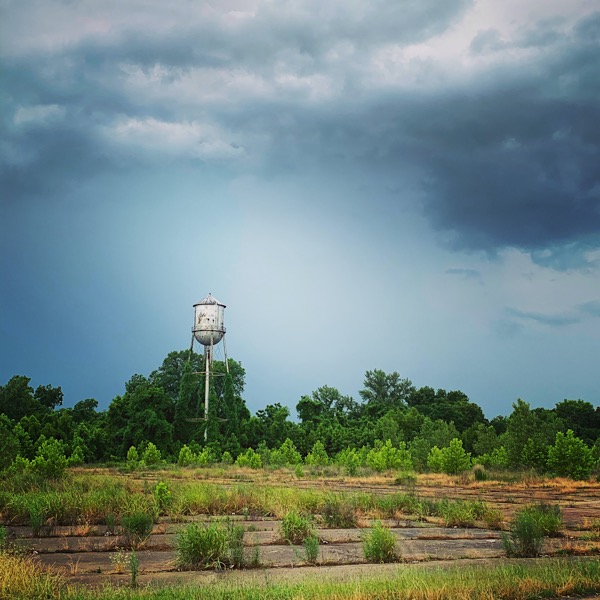
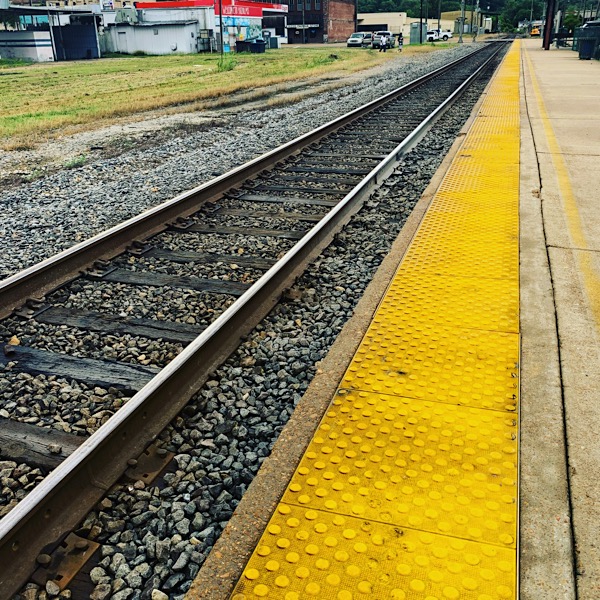
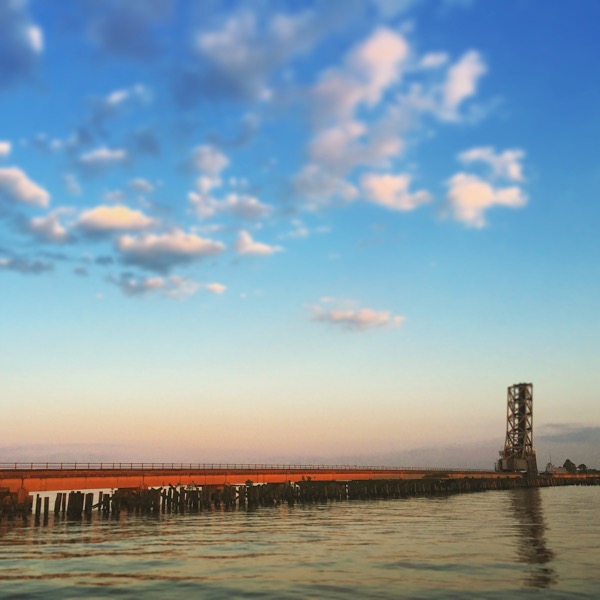
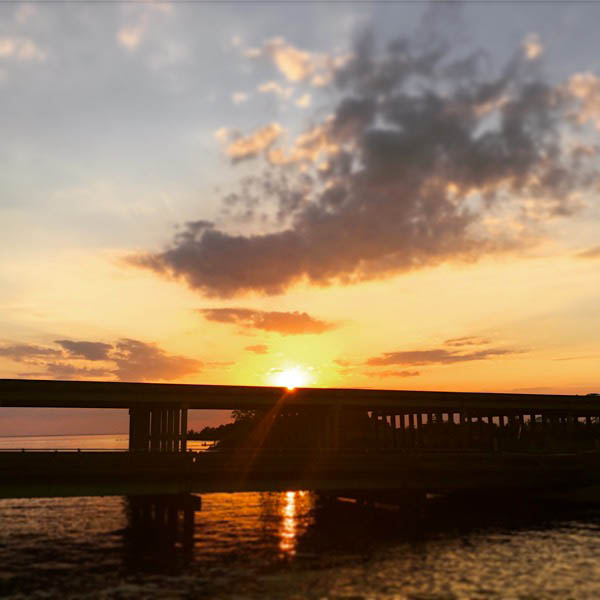
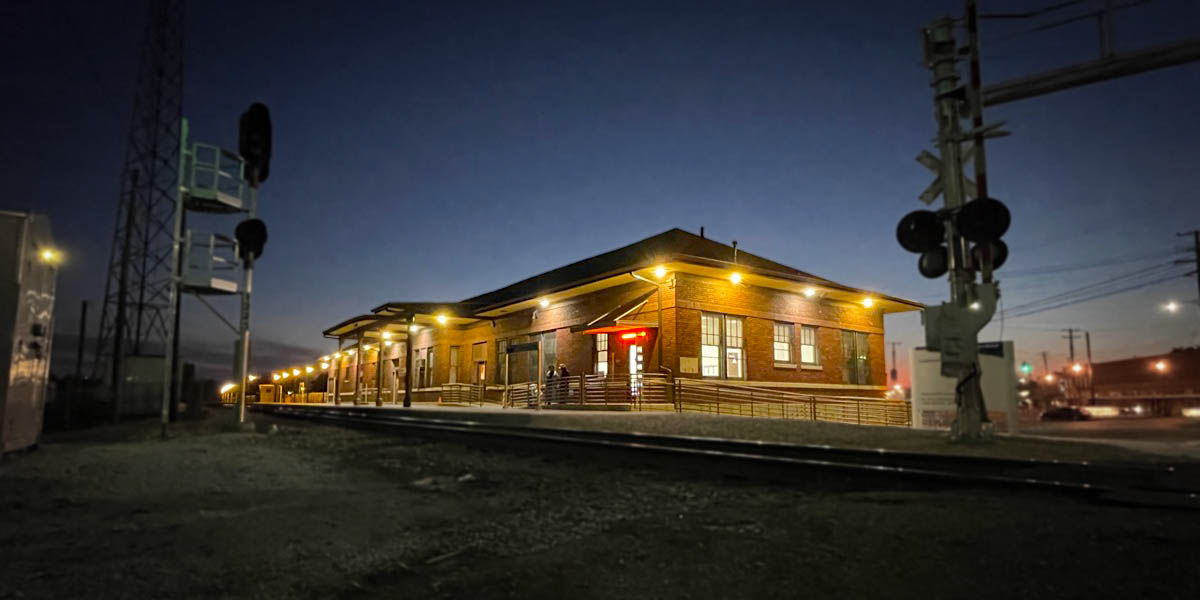
Some City Scenes
Jun 2020 / RWH
A Lady in Waiting
Greenwood, Ms / Jun 2020 / RWH
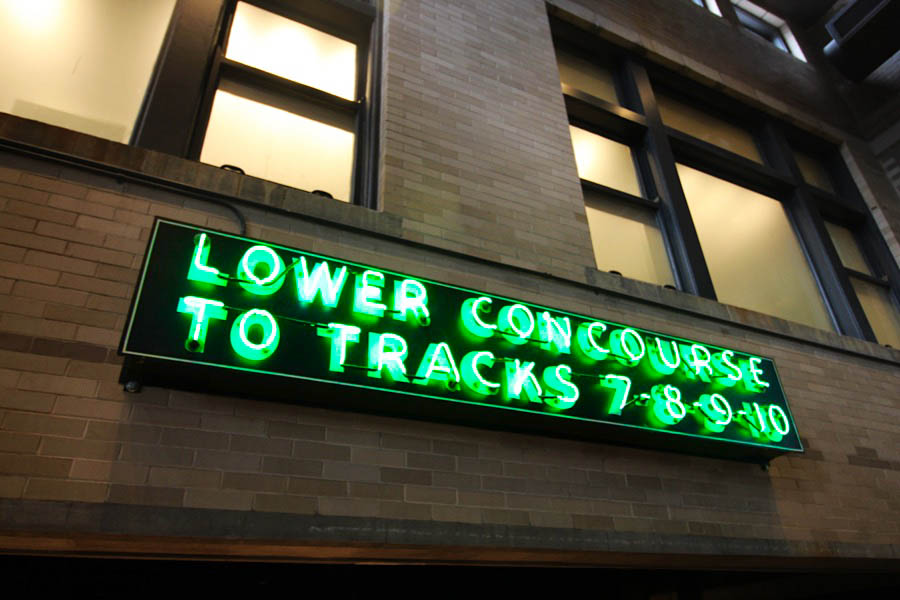
How Low Can You Go?
Memphis, Tn / Oct 2022 / RWH
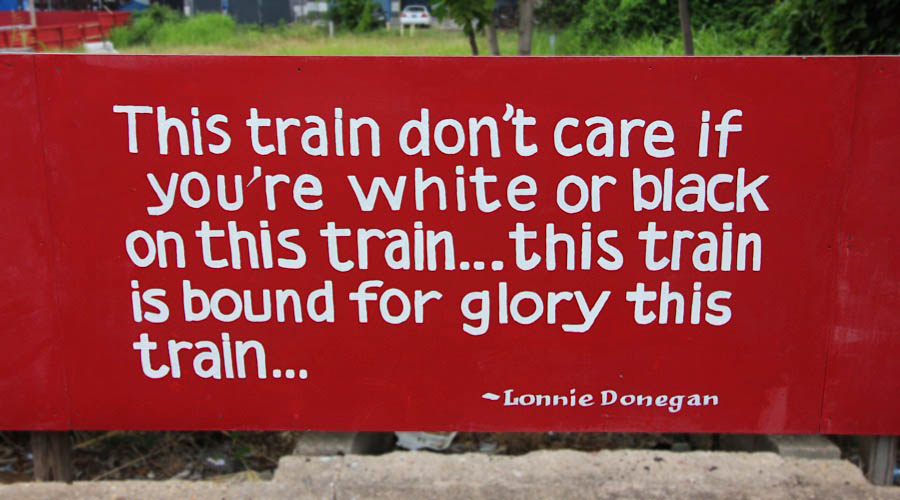
Glory Bound
Memphis, Tn / Aug 2025 / RWH
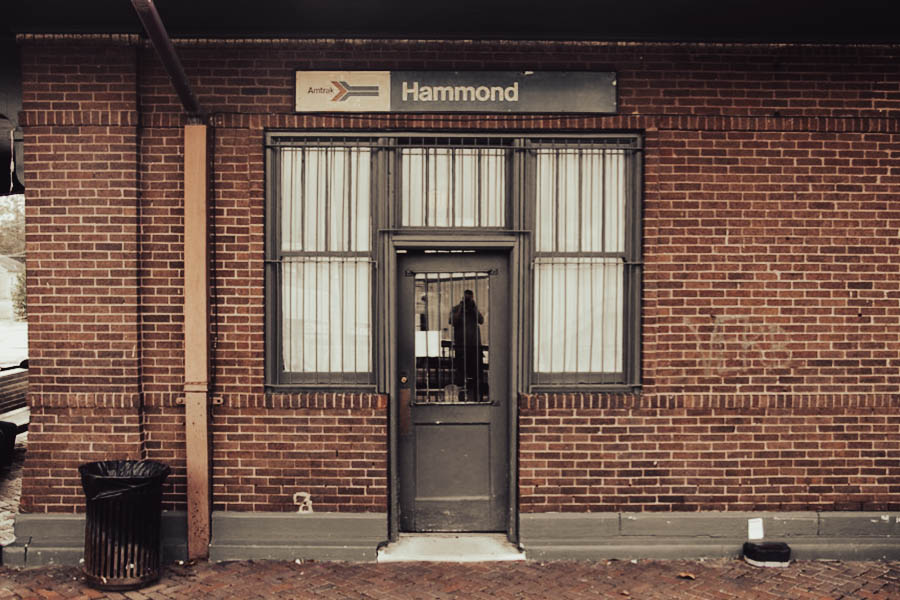
Nostalgic Hammond
Hammond, La / Dec 2016 / RWH
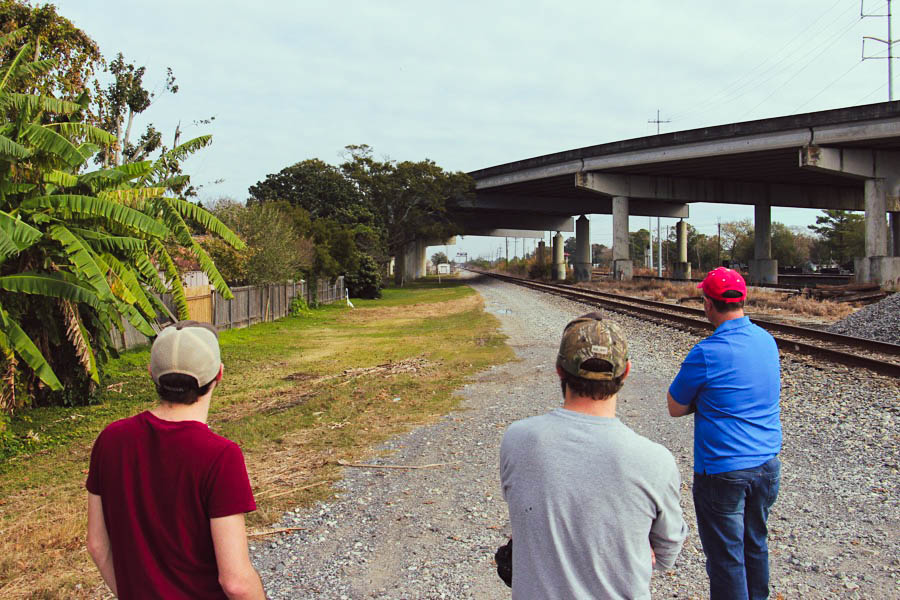
City Slickers
Kenner, La / Dec 2016 / RWH
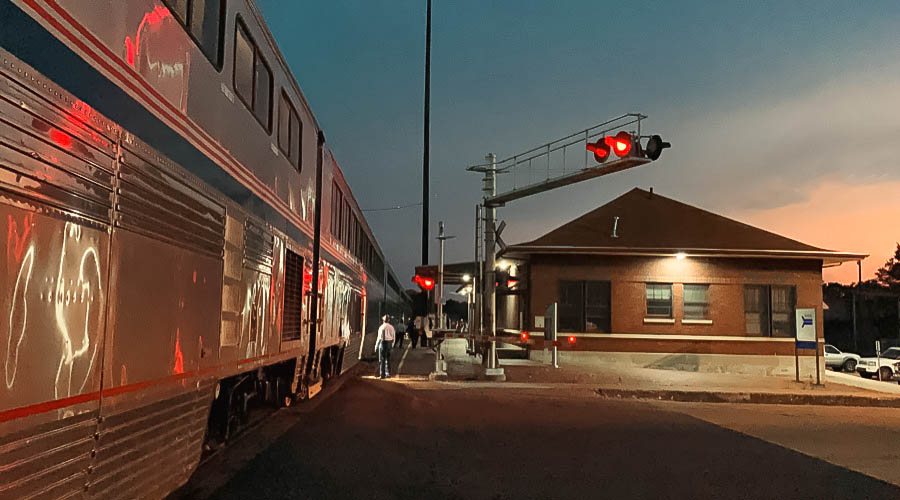
Sunset Station Work
Greenwood, Ms / Jun 2020 / RWH
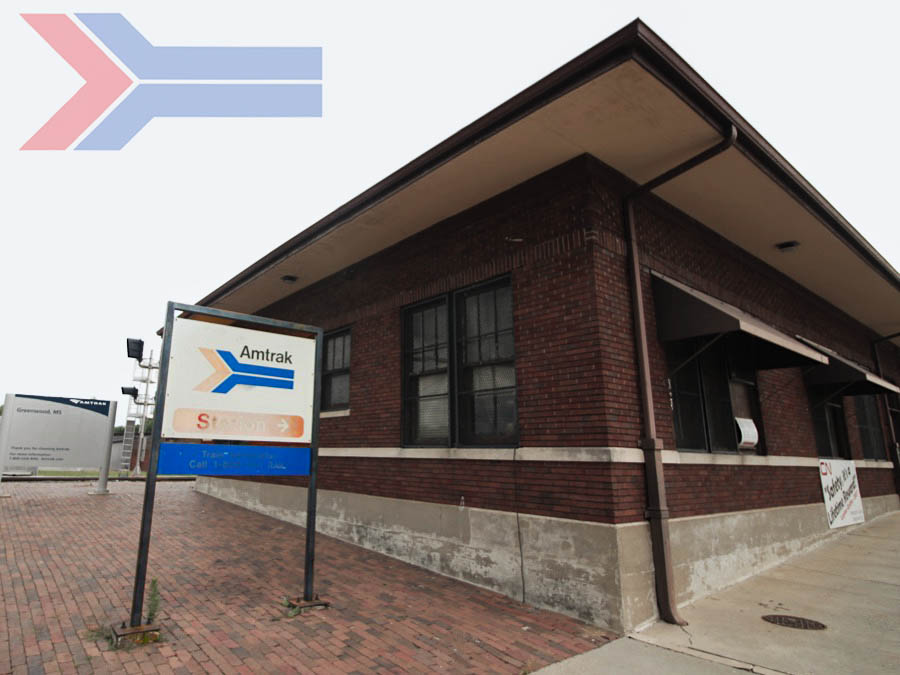
Kickin' It Old School
Greenwood, Ms / Jun 2020 / RWH
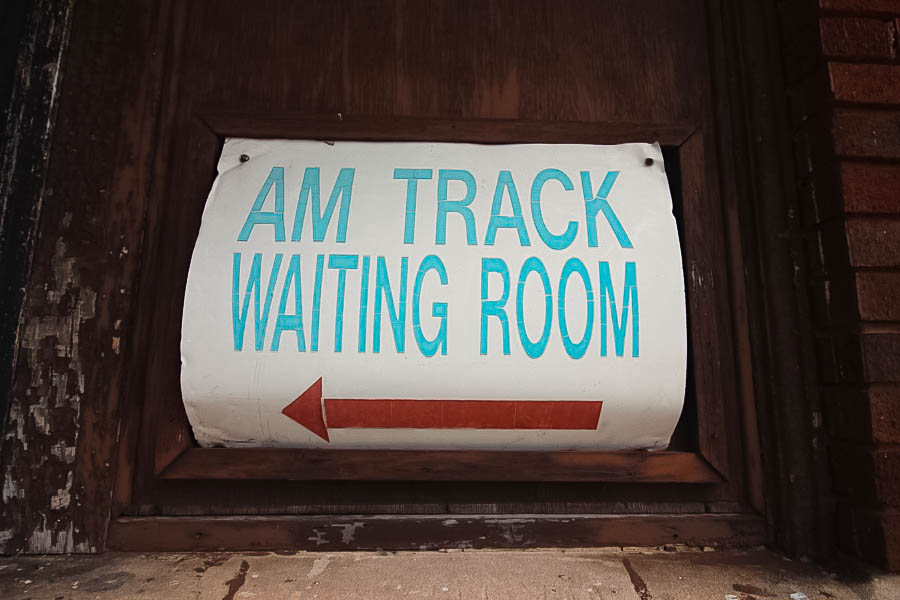
It's the Thought That Counts
Greenwood, Ms / Jun 2020 / RWH
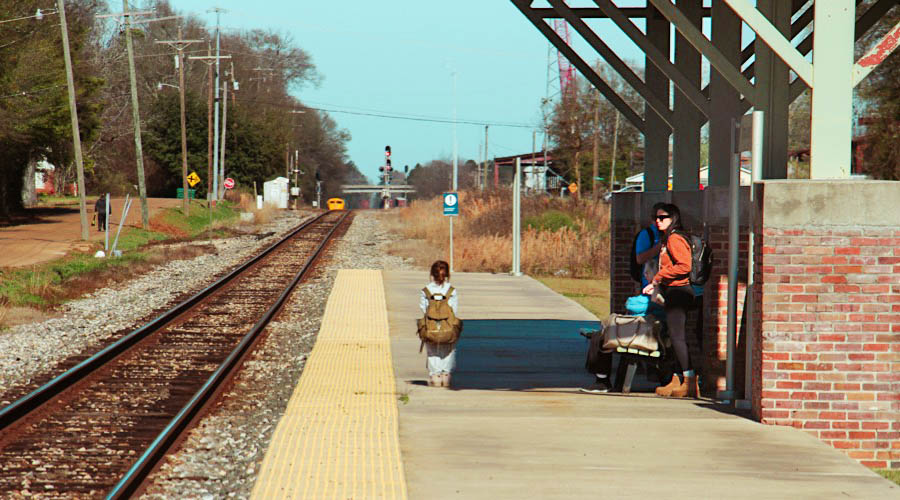
She'll Be Comin' Round the Mountain
Brookhaven, Ms / Jan 2026 / RWH
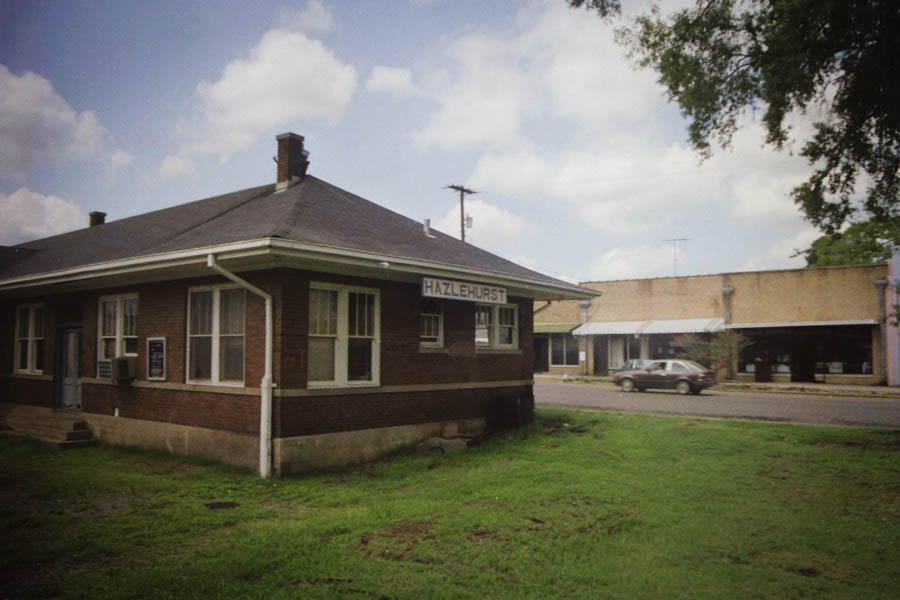
Summer on the City
Hazlehurst, Ms / Jun 1988 / RWH
 Snapshots
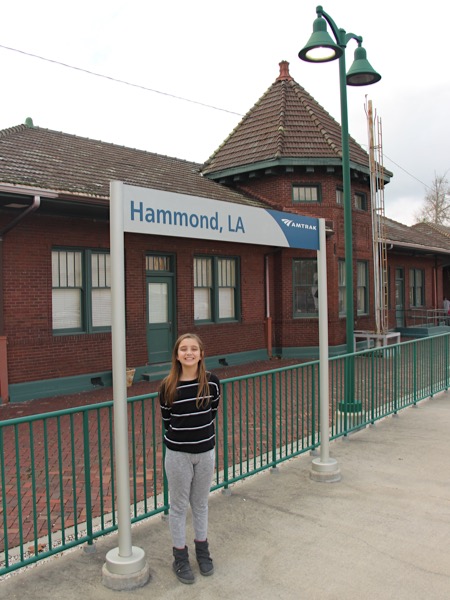
Hammond, La / Dec 2016 / RWH
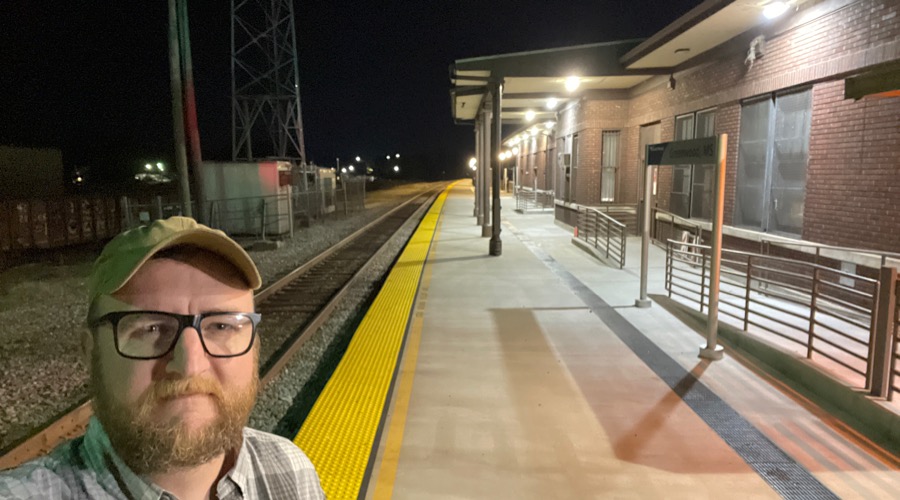
Greenwood, Ms / Oct 2022 / RWH
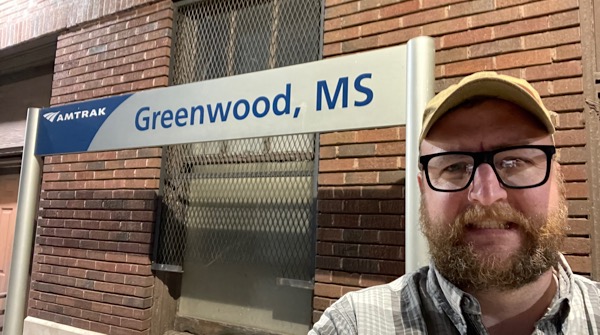
Greenwood, Ms / Oct 2022 / RWH
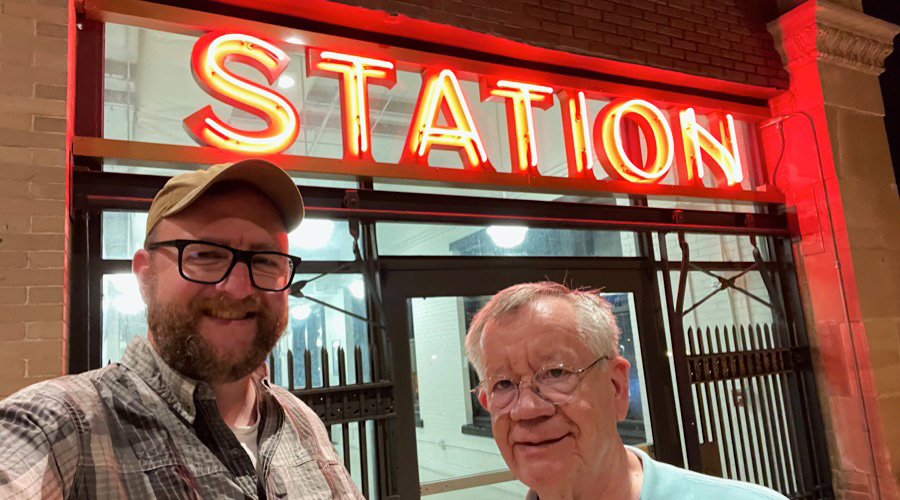
Memphis, Tn / Oct 2022 / RWH
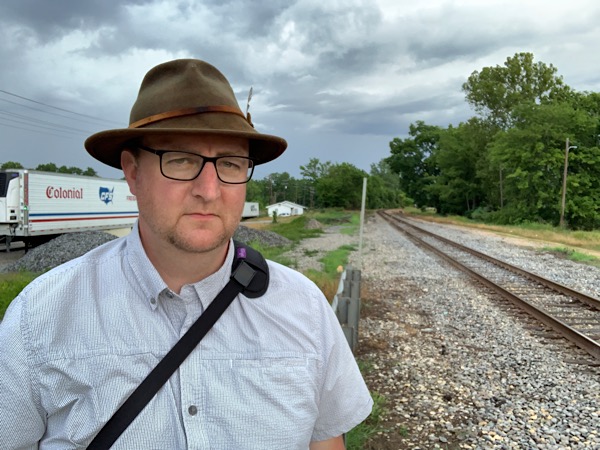
Yazoo City, Ms / Jun 2020 / RWH
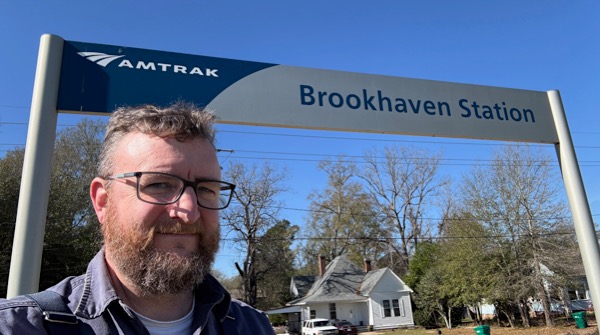
Brookhaven, Ms / Jan 2026 / RWH