 |
Amtrak Motive Power EMD FP Forties |
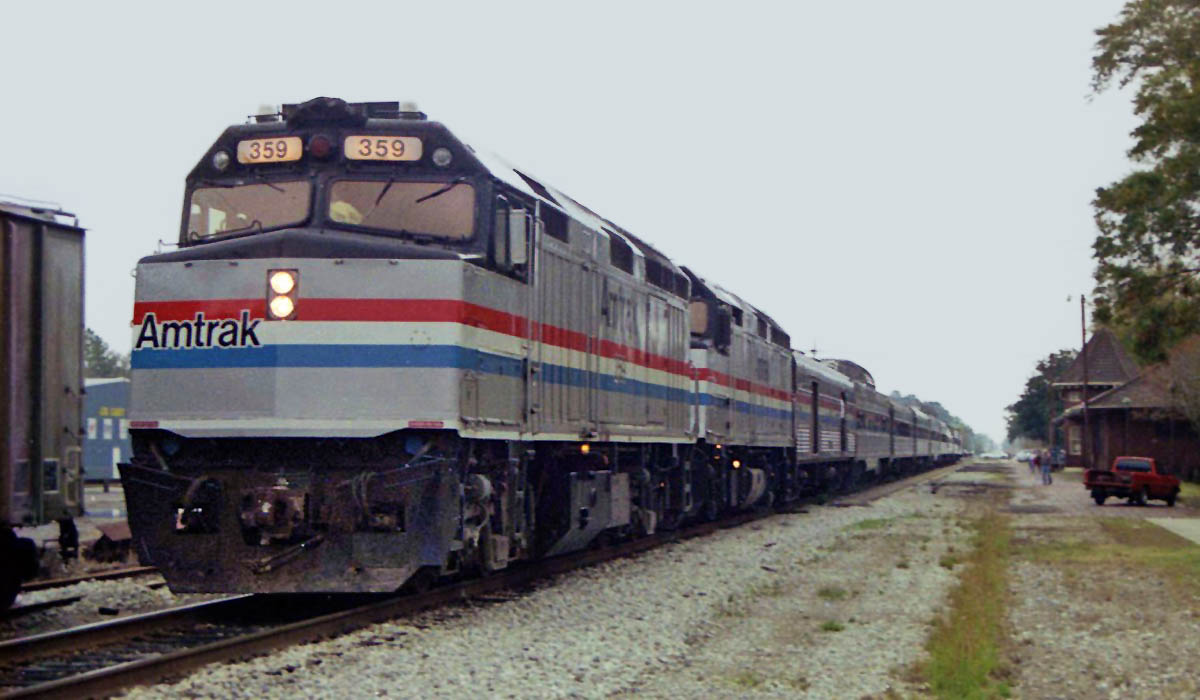
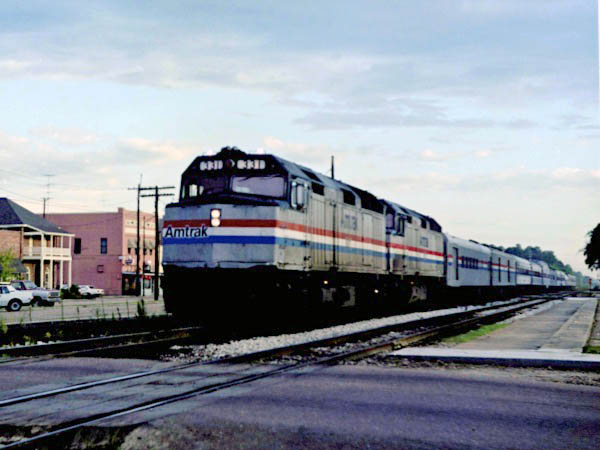
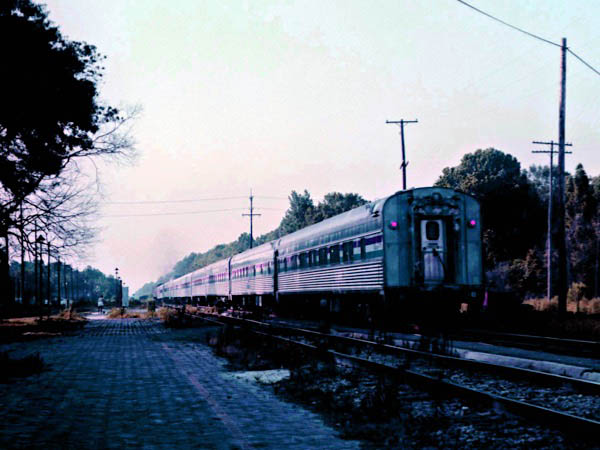
Hammond, La / Aug 1990 / RWH

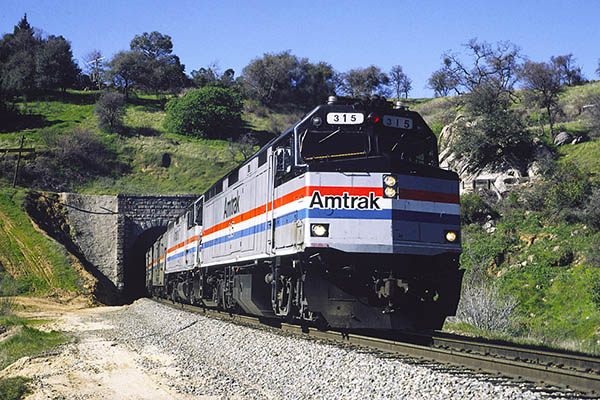 The EMD F40PH is a four-axle 3,000–3,200 hp (2.2–2.4 MW) B-B diesel-electric locomotive built by General Motors Electro-Motive Division in several variants from 1975 to 1992. Intended for use on Amtrak's short-haul passenger routes, it became the backbone of Amtrak's diesel fleet after the failure of the EMD SDP40F. The F40PH also found widespread use on commuter railroads in the United States and with VIA Rail in Canada. Additional F40PH variants were manufactured by Morrison-Knudsen and MotivePower between 1988 and 2007, mostly rebuilt from older locomotives.
Amtrak ordered its first 30 EMD F40PHs on May 8, 1975. The first of the new locomotives entered service on April 9, 1976. Amtrak intended the locomotives for short routes such as the San Diegan in California and Northeast Corridor services in the then non-electrified route portion between New Haven, Connecticut, and Boston, Massachusetts.
The long-distance routes were served by the then-new EMD SDP40F, described by J. David Ingles in late 1975 as the "stars of Amtrak's long-distance trains". However, two events led to a major change in thinking within Amtrak regarding the SDP40F. The first event was a sharp decline in the mechanical reliability of the SDP40F, including several derailments. The second event was the unusually harsh winter of 1976–1977, which sidelined many of Amtrak's aging steam-heated coaches. Amtrak suspended numerous routes and pressed the new HEP-equipped Amfleet I coaches, designed for short runs, into service. The F40PH, with its built-in HEP generator, was the natural choice to haul these coaches. As problems with the EMD SDP40F mounted, Amtrak adopted the F40PH as its long-term solution nationwide for diesel engine service.
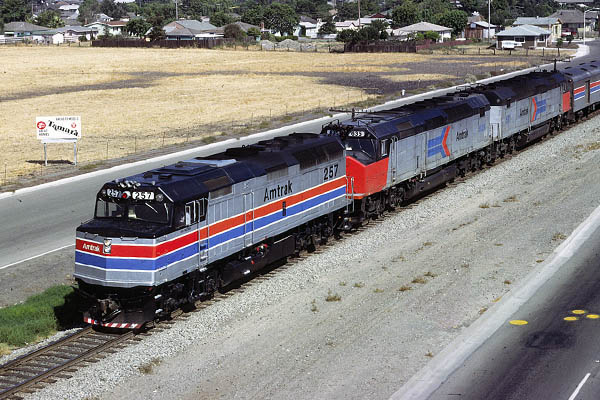 In the spring of 1977 Amtrak traded 40 EMD SDP40Fs back to EMD. Components including the prime mover were installed into an EMD F40PH frame. The 40 rebuilt locomotives, designated F40PHR, were identical to new-build EMD F40PHs, incorporating the larger fuel tank and more powerful HEP generator which had become standard.
Amtrak ultimately acquired 132 F40PHRs in this manner — which combined with new orders between 1975 and 1988 and with the purchase of six GMD F40PHs from GO Transit in 1990 — led to a fleet of 216 locomotives, the country's largest fleet.
In the spring of 1977 Amtrak traded 40 EMD SDP40Fs back to EMD. Components including the prime mover were installed into an EMD F40PH frame. The 40 rebuilt locomotives, designated F40PHR, were identical to new-build EMD F40PHs, incorporating the larger fuel tank and more powerful HEP generator which had become standard.
Amtrak ultimately acquired 132 F40PHRs in this manner — which combined with new orders between 1975 and 1988 and with the purchase of six GMD F40PHs from GO Transit in 1990 — led to a fleet of 216 locomotives, the country's largest fleet.
The F40PH performed well for Amtrak: at the start of the 1990s only four had been retired due to wrecks. The locomotive was at the center of Amtrak's advertising. Trains magazine estimated that on average, each F40PH traveled as many as 175,000 miles a year.
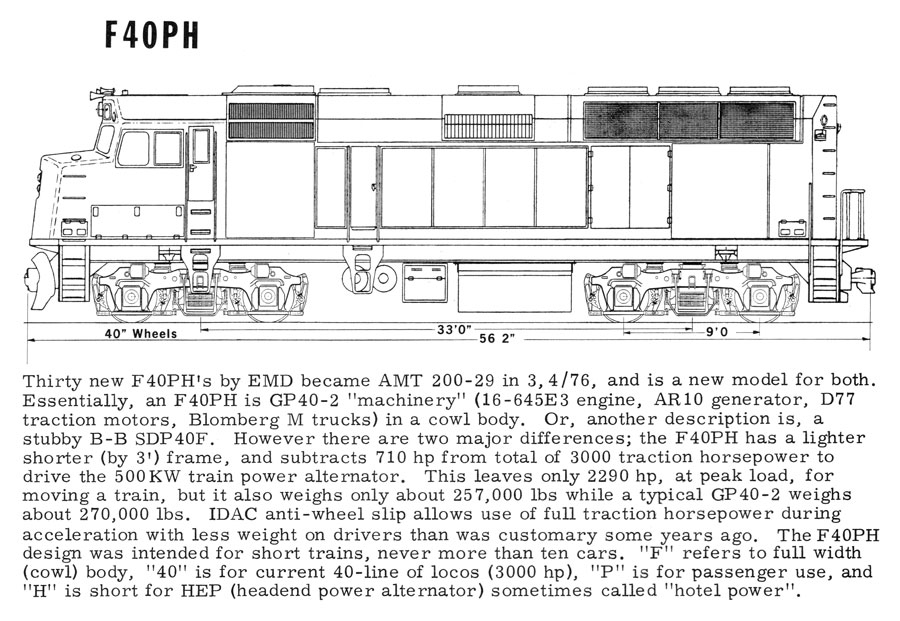
from Extra 2200 South magazine #54 [Oct 1975] / collection


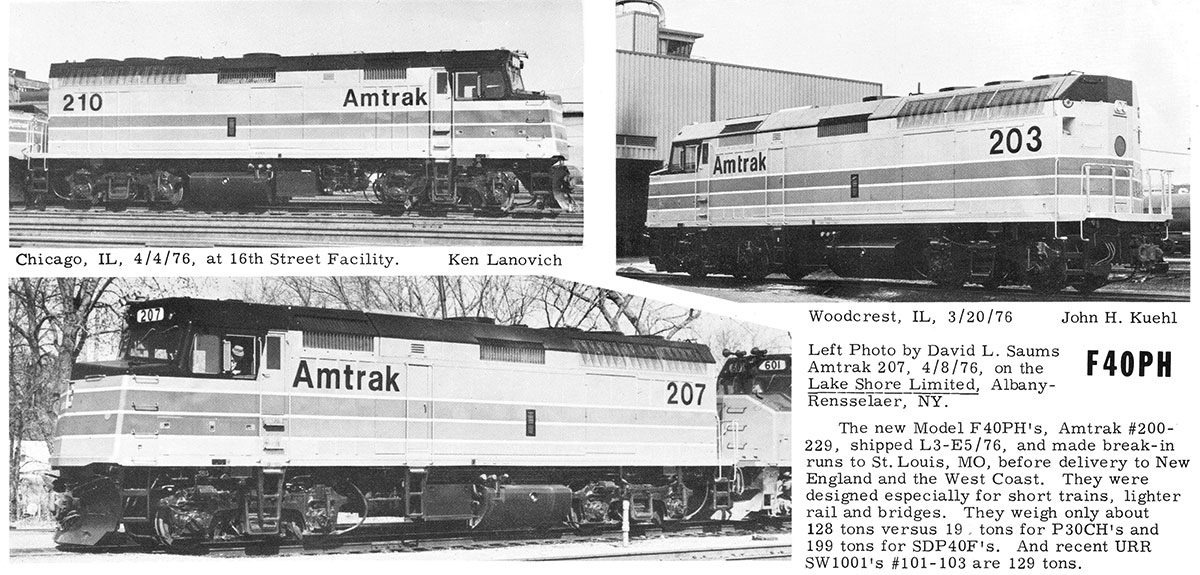
from Extra 2200 South magazine #55 [Jan 1976] / collection
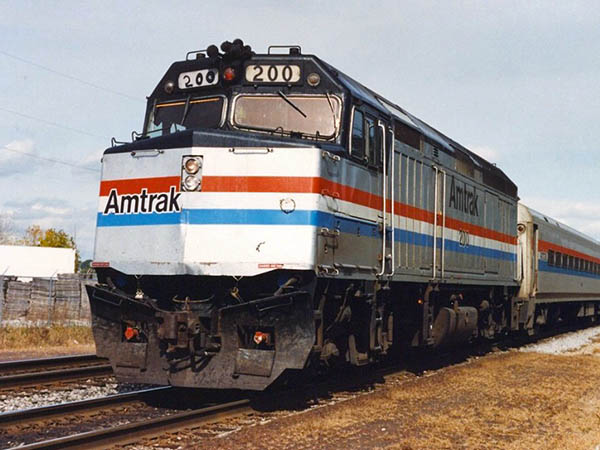
collection
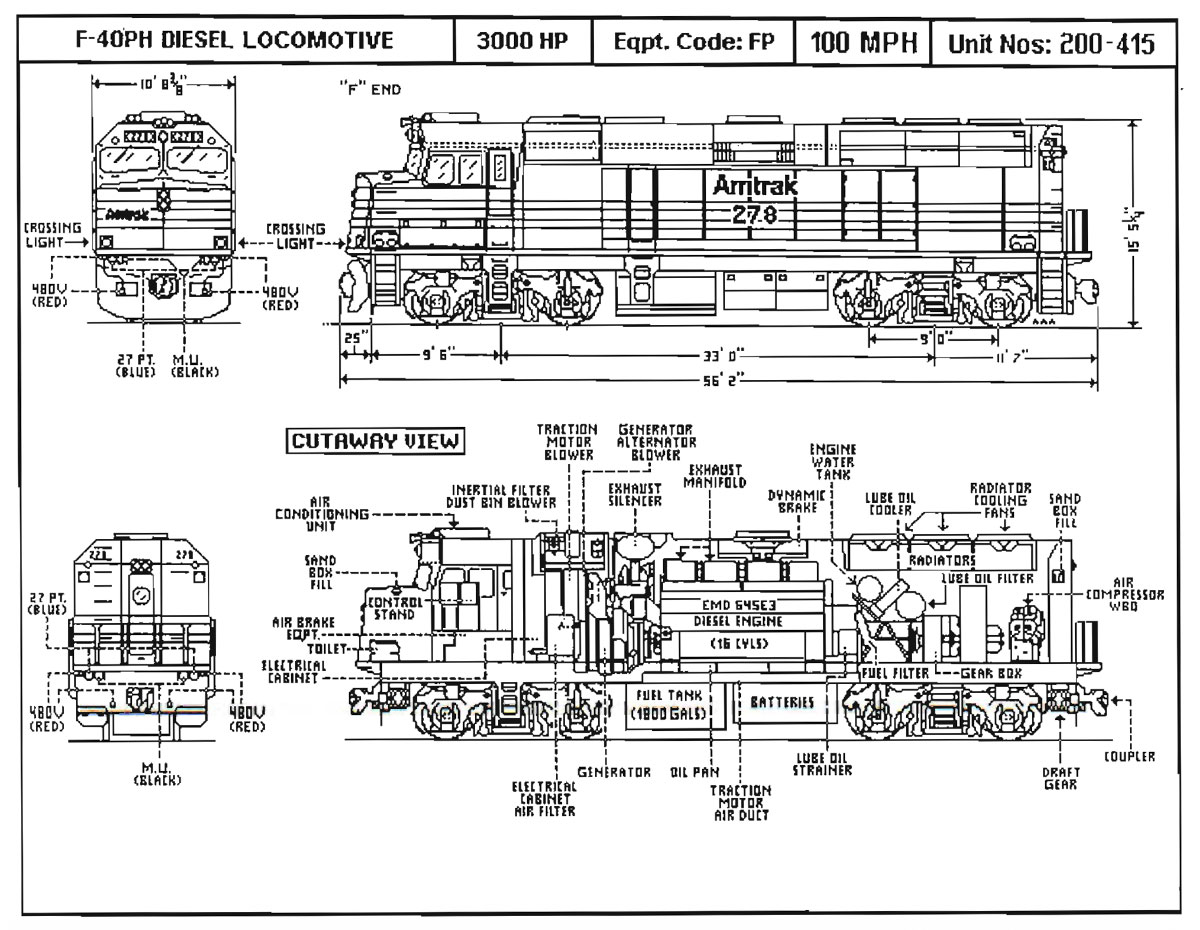
from Amtrak Equipment Guide [1998] / collection
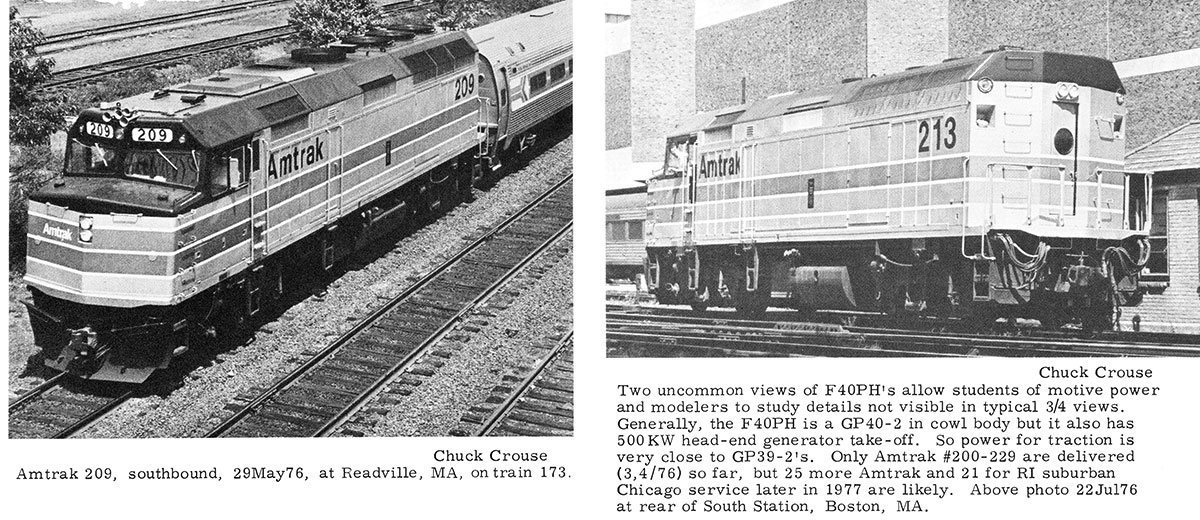
from Extra 2200 South magazine #59 [Jan 1977] / collection
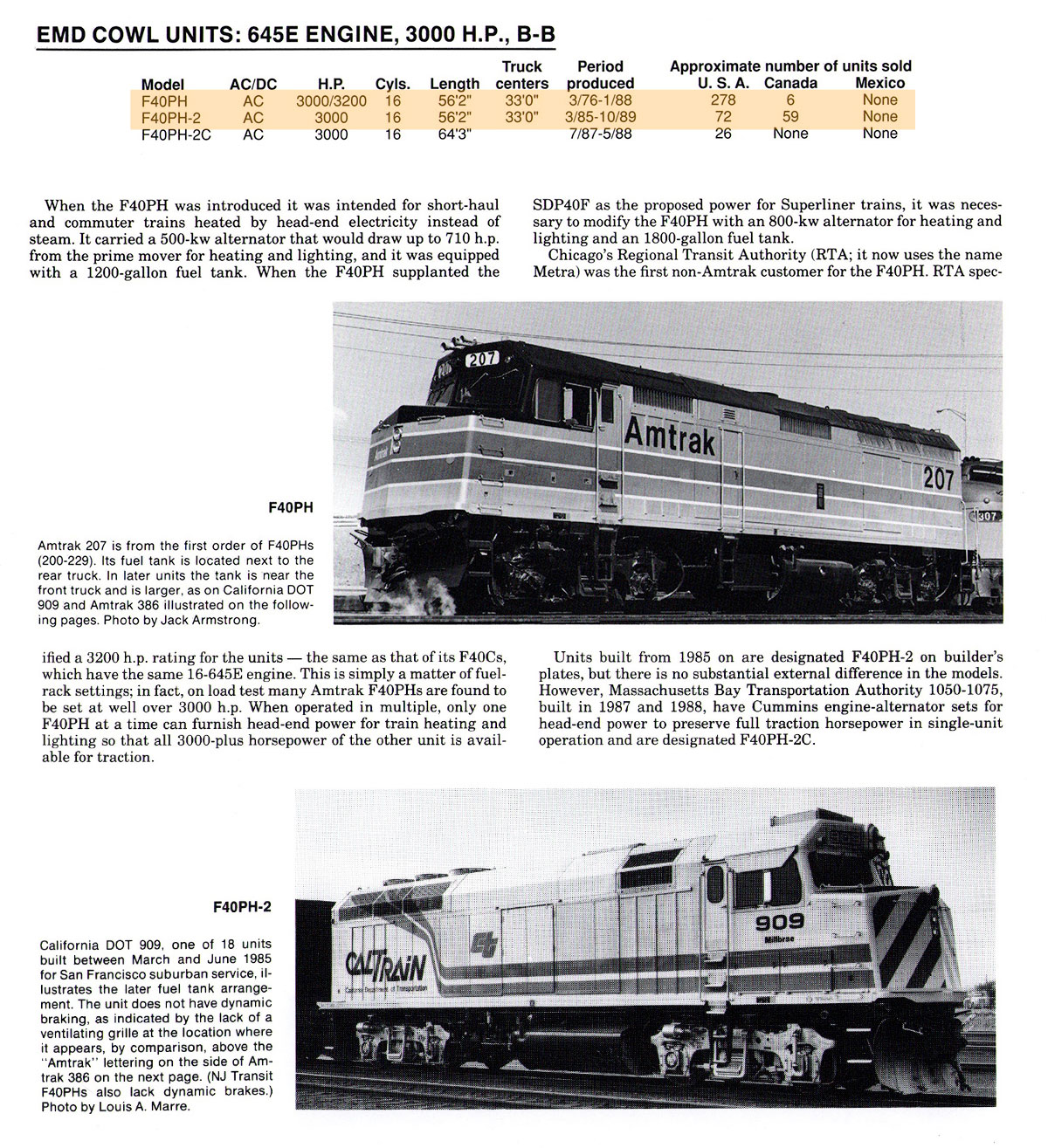
from The Contemporary Diesel Spotter's Guide by Louise Marre [1995] / collection

The F40PH and I basically grew up together. I left the hospital in Huntsville, Alabama, in the summer of 1974. The F40 was conceived less than a year later, and the first one rolled out of the delivery room at LaGrange in early 1976. Later, as I began joining my dad trackside for photos, the Forties were already in their ascendancy on the Amtrak roster. It is now universally acknowledged that they were the face of the Railroad in the 1980s, and that was true for me, too. As far as I knew, Amtrak simply equalled the F40PH, especially in the second scheme with the wide white stripe down the middle. We'd see them in New Orleans at Union Passenger Terminal, both on the platform with trains and at the engine terminal awaiting turnaround. We'd catch them in Hammond on the City and in Slidell on the Crescent. Once we even chased one, below Meridian; chased it southbound in the rain until finally #20 reached track speed and the Old Man's Chrysler could no longer keep pace without breaking Mississippi law. And of course the Forties granted me portage from Hammond to Jackson and return, handling many trips I made solo as a young teen going to spend weeks with my grandmother.
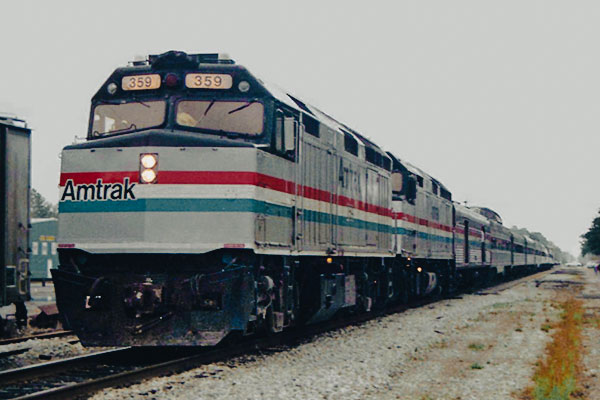 As angular and utilitarian as many a locomotive, a long way from the curves of the Fs and Es their owner inherited from the railroads, I'm not sure why the Forties held such sway over all of us in those Reagan years. (He was no help, of course). But they did. Boxy, yes. But they looked like what they were built to do. All business in aluminum gray, with that belt of American color tied around their waists. The bright white strobes: I had never seen anything like that. The forward-facing five-chime horns, they made an impact. The trapezoidal windows, almost futuristic. And the way they rolled up on a platform, like at Slidell, fast and certain; only to depart without any hesitation when the call came to go. The answer to Amtrak's endless motive power problems, the Forties seemed to say at each stop: We've got this.
I still remember the first time I noticed how, while stopped, the second unit in the lashup stayed noticeably wound up and working hard. That didn't seem right to me. I asked Dad about it. He didn't know. Later I think an ICG engineer we knew explained to me that one prime mover in the series always stayed revved up so as to make hotel power for the train. I thought that was cool. The Forties seemed like preppy athletes brought in to fix a losing season; cool kids in new uniforms, hauling around tired old heritage cars with a dozen different aluminum sidings and worn out vinyl seats. I loved them. And still do. I like finding one here and there at museums or on tourist haulers. Not a bad retirement gig for motors made to top out beyond 100 mph. Yet I wince when I find one whose front end has been chopped down to add that required platform for freight service. Such a bad nose job on an otherwise handsome face. I guess it beats the scrapper's torch.
Looking over the F40PH specs again, it occurred to me that General Motors' 3000 horsepower 645 prime mover basically carried American railroading through the first 20 years of my life. The quick GP40s got all the hotshot piggybacks and early intermodals moving down the line with a clip. (A shortline man who has some today quietly admitted to me that they were born to run, not to switch.) And what would railroads needing down-and-dirty dragging have done without the SD40 series? It seemed to me in my adolescence that a trio of SD40-2s could move the world, if only the couplers would hold. Put those three in Southern's high hood tuxedo scheme? Marvelous. Which brings us back to Amtrak's remarkably successful F40PH — basically another turbo 645, but wrapped in a cowl. They sketched it up to move commuters and short-hauls, but soon the locomotive saved American passenger railroading. They could move anything, anywhere. And they even looked better together, especially in what my father always called "elephant style." I would have liked to have seen a trio of them blasting out of Moffat Tunnel with the eastbound CZ.
It is an open secret in this hobby that the equipment we most love tends to be the equipment we met in our childhoods. This is why my Old Man was always in search of steam. I get it. But if I close my eyes, I'm trackside at the old Illinois Central station in Hammond, waiting on Number 58 to take me northbound. Soon I hear the horn; see the strobes; feel the rumble as the power rolls by me to a quick stop. Of course I want to run forward and see the locomotives, maybe wave to the engineer; but the City is in front of me and I am supposed to get on and go see Grandma. Two blasts, and we were off. Louisiana rolled by, then Mississippi. So it is: 645 will always be the magic number.
Hammond, La / Oct 1986 / JCH
HawkinsRails thanks our good friend Michael Palmieri for use of his Amtrak FP40 photography

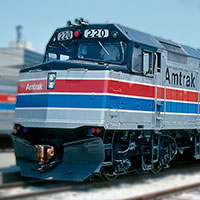
Amtrak #220
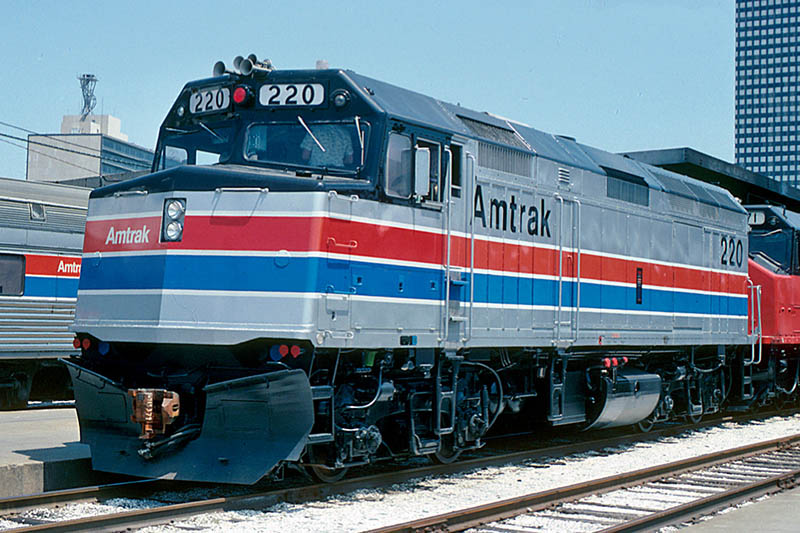
Amtrak #220
New Orleans, La / Apr 1976 / Michael Palmieri 


Amtrak #200–229; 270–279; 300–309; 332–359
all equipped with Head End Power

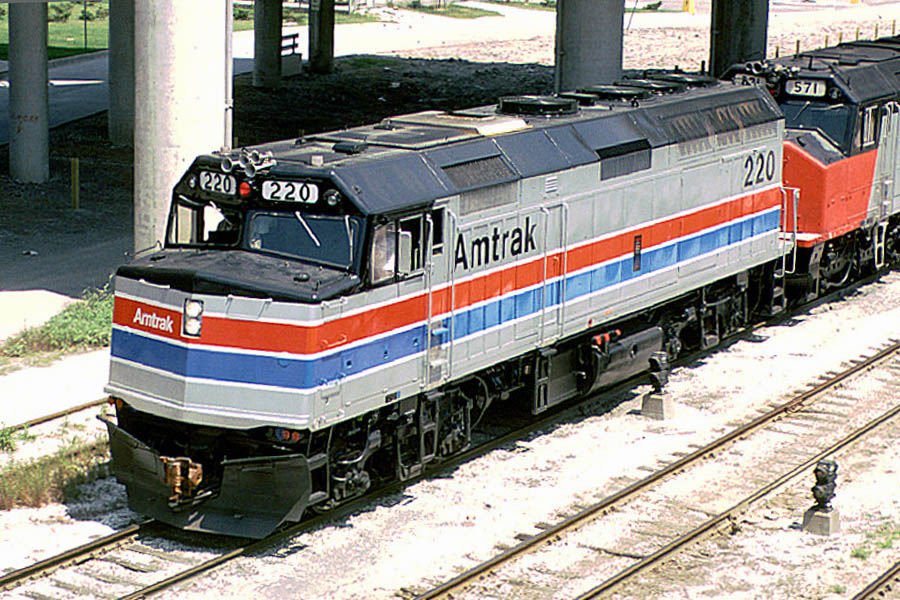
New Orleans, La / Apr 1976 / Michael Palmieri

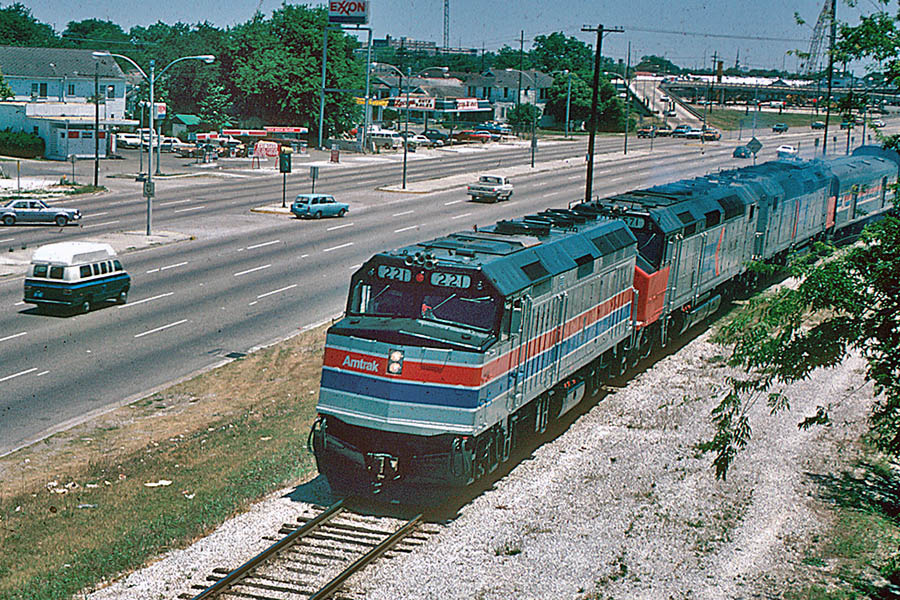
Amtrak #221
New Orleans, La / May 1976 / Michael Palmieri
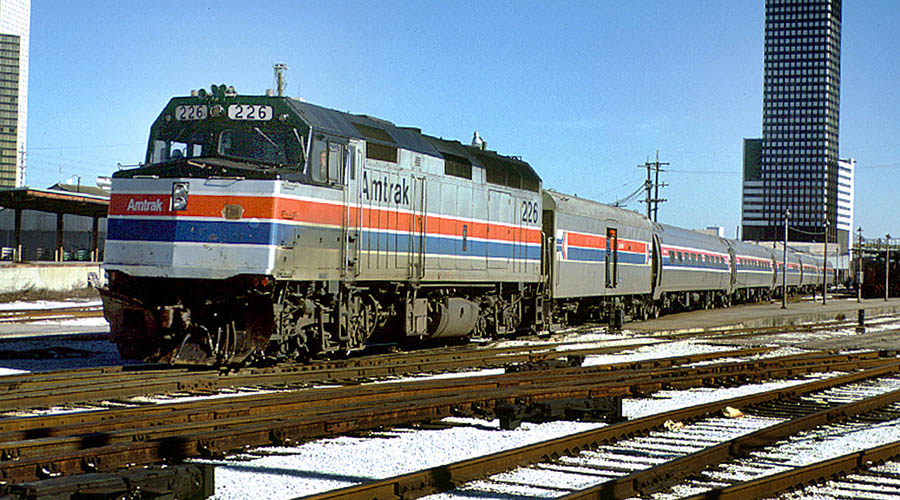
Amtrak #226
New Orleans, La / Jan 1977 / Michael Palmieri
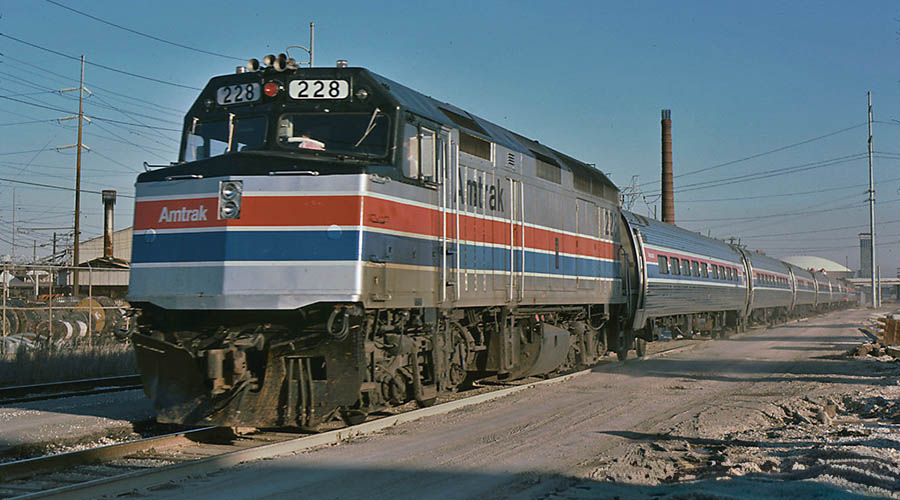
Amtrak #228
New Orleans, La / Feb 1977 / Michael Palmieri collection
Amtrak #231
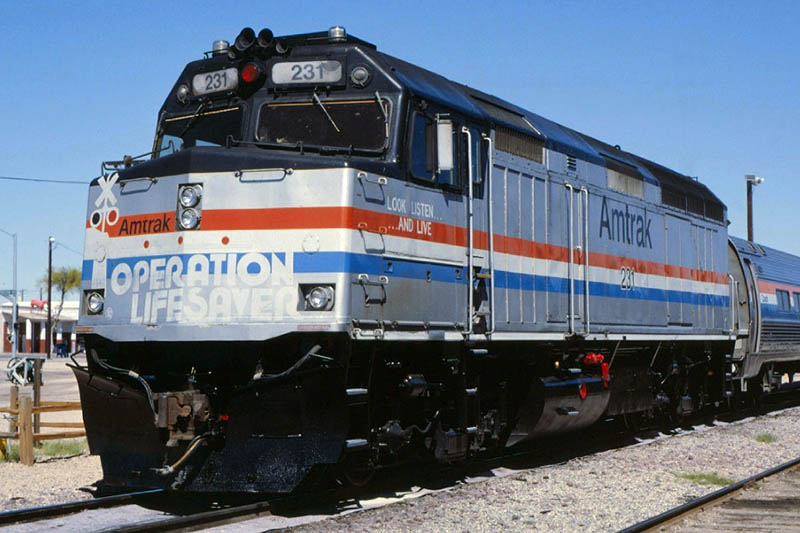
Amtrak #231
Parker, Az / Apr 1998 / Jack Kuiphoff 
Amtrak #230–269; 280–299; 310–331; 360–400; 401–409
all equipped with Head End Power
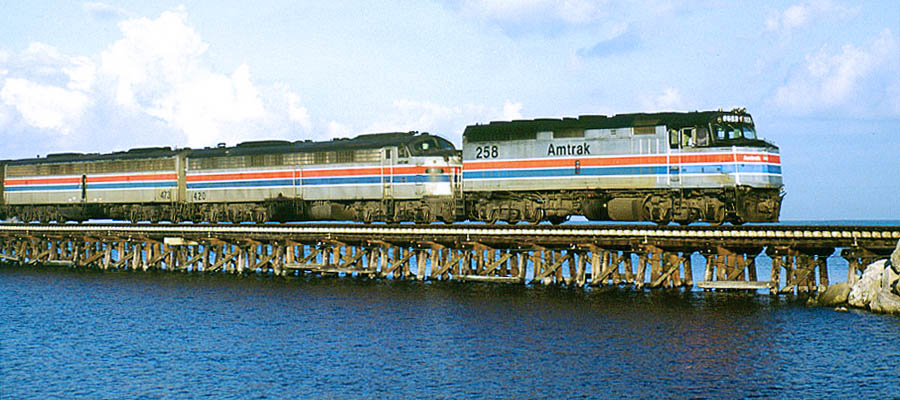
Amtrak #258
North Shore, La / Aug 1979 / Michael Palmieri
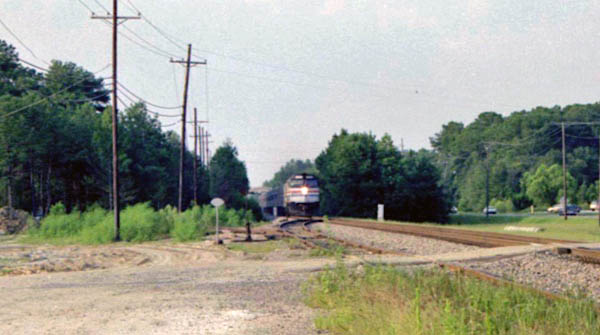
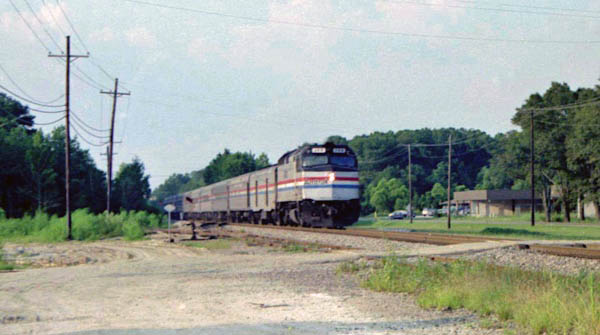
Slidell, La / Sep 1988 / RWH
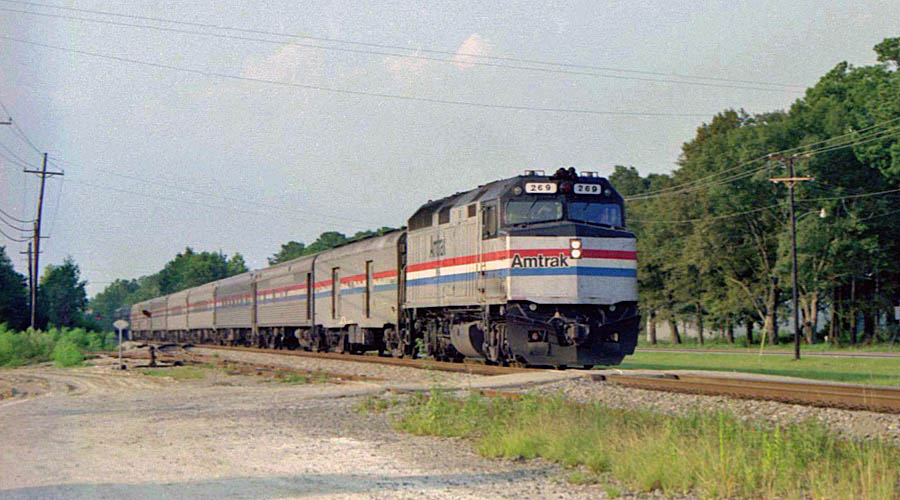
Slidell, La / Sep 1988 / RWH
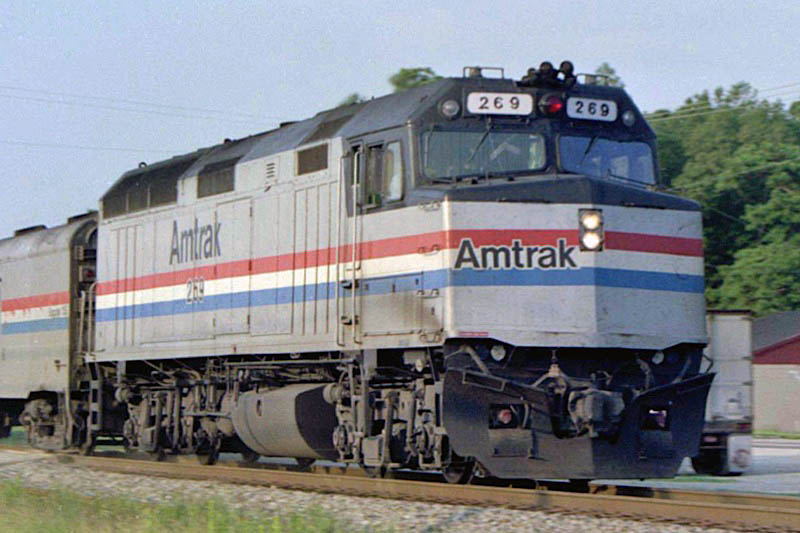
Amtrak #269
Slidell, La / Sep 1988 / RWH
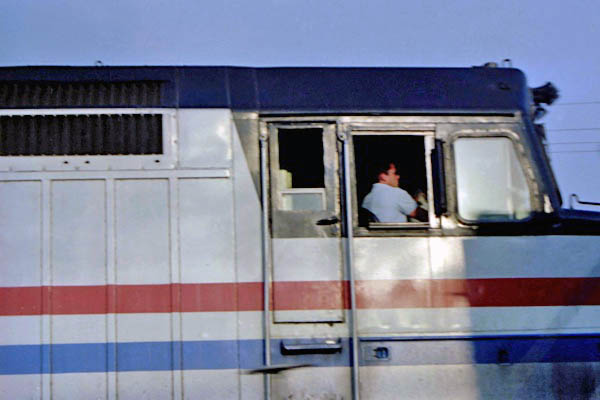
Sep 1988 / RWH
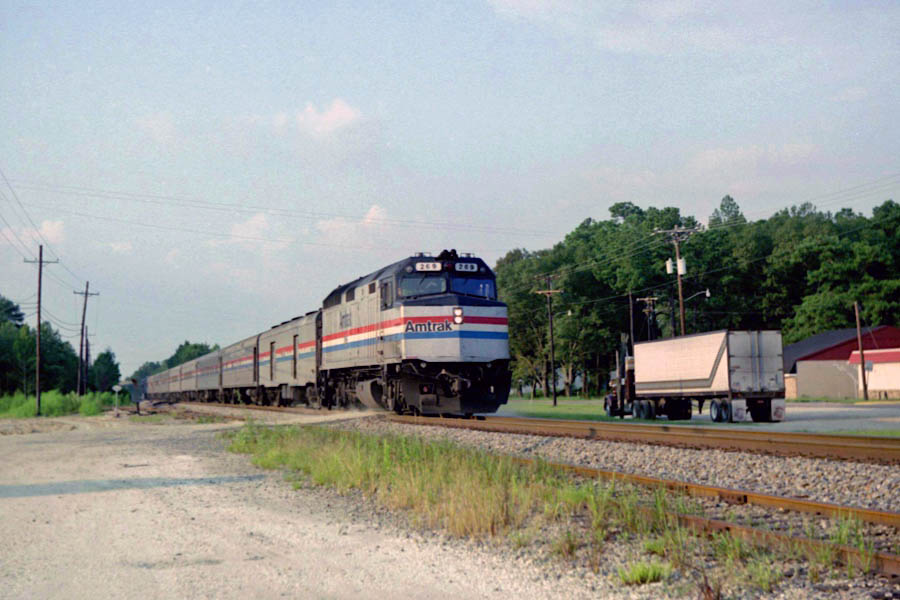
Slidell, La / Sep 1988 / RWH
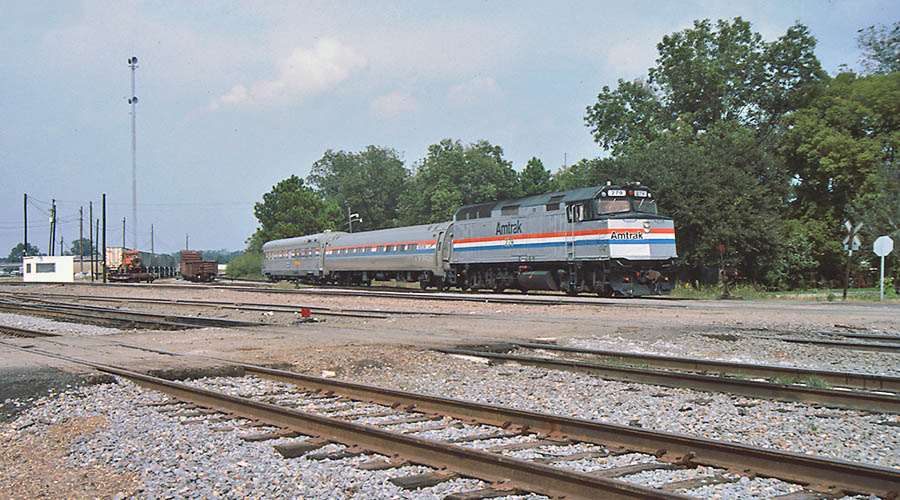
Amtrak #279
Addis, La / Oct 1984 / Michael Palmieri collection
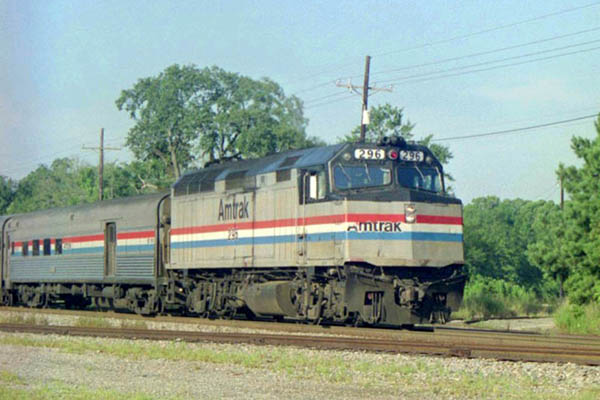
Amtrak #296
Slidell, La / Aug 1989 / RWH
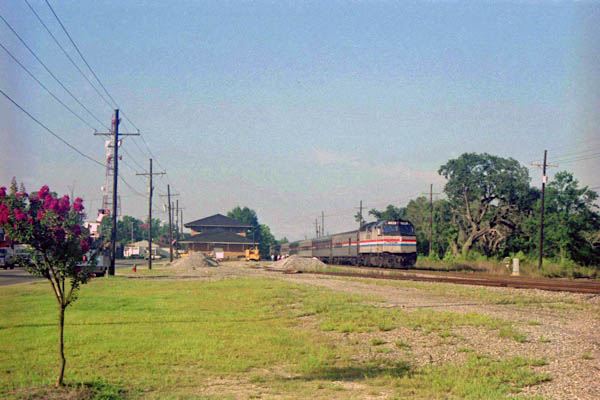
Slidell, La / Aug 1989 / RWH
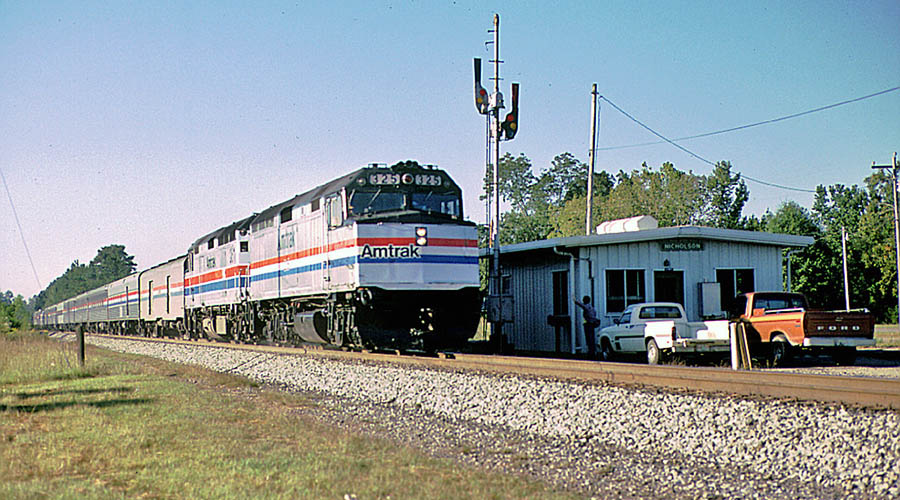
Amtrak #325
Nicholson, Ms / Oct 1980 / Michael Palmieri
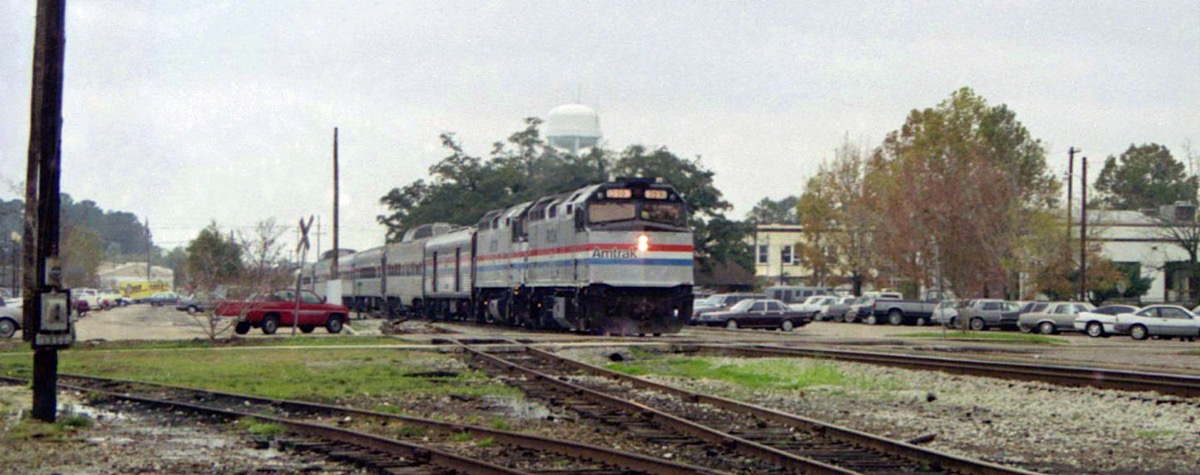
Hammond, La / Oct 1990 / RWH
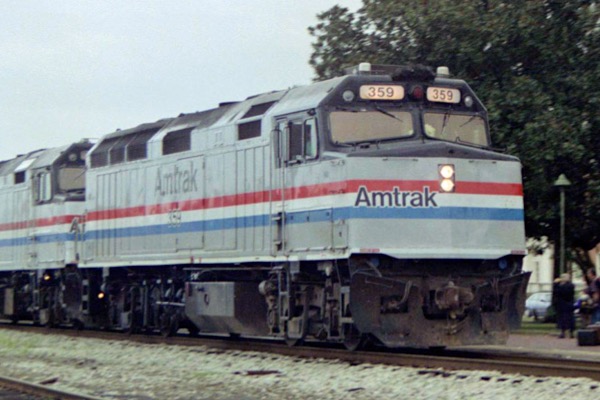
Amtrak #359
Hammond, La / Oct 1990 / RWH
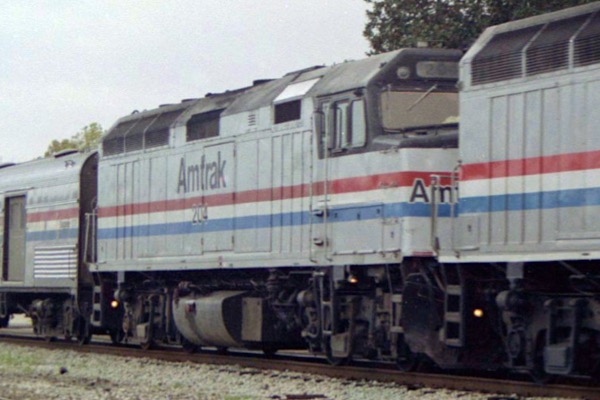
Amtrak #204
Hammond, La / Oct 1990 / RWH
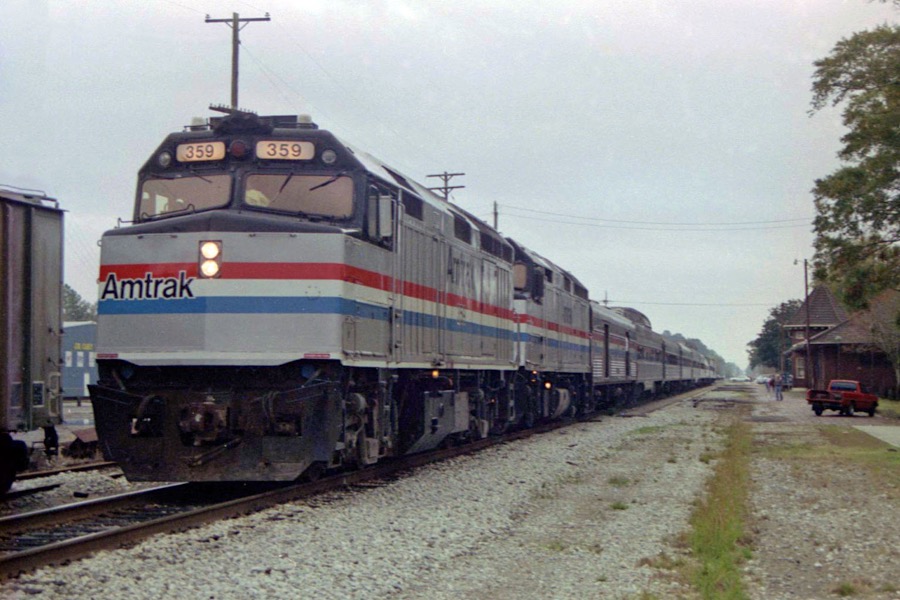
Hammond, La / Oct 1990 / RWH
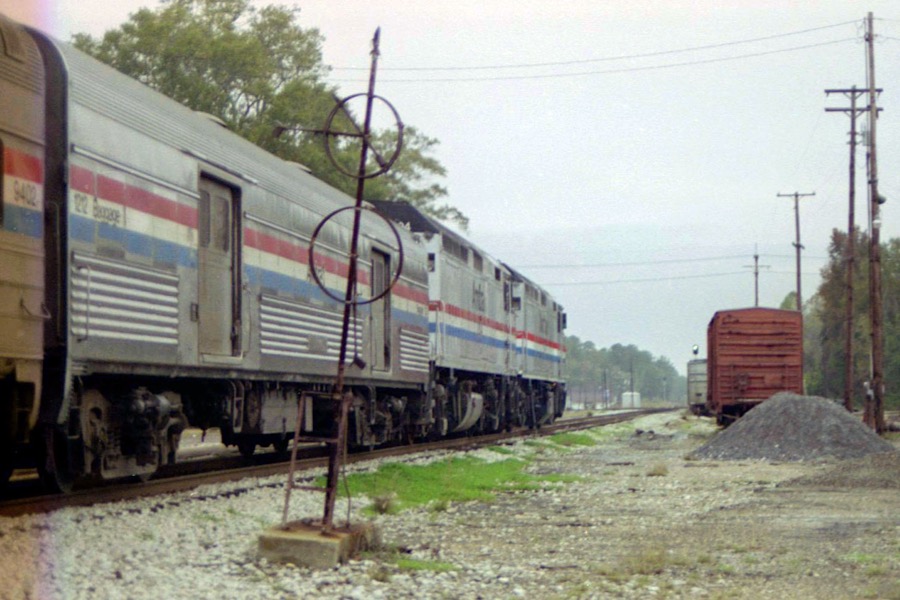
Hammond, La / Oct 1990 / RWH
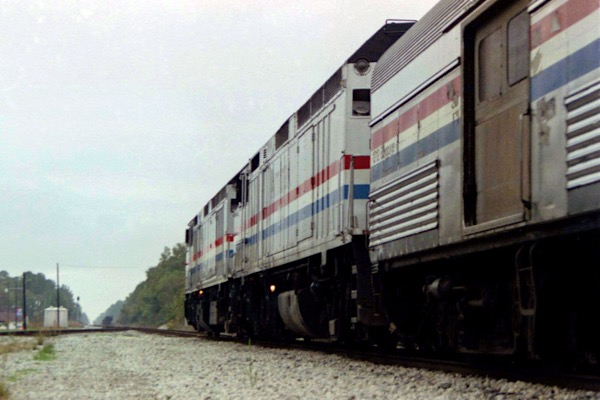
Hammond, La / Oct 1990 / RWH
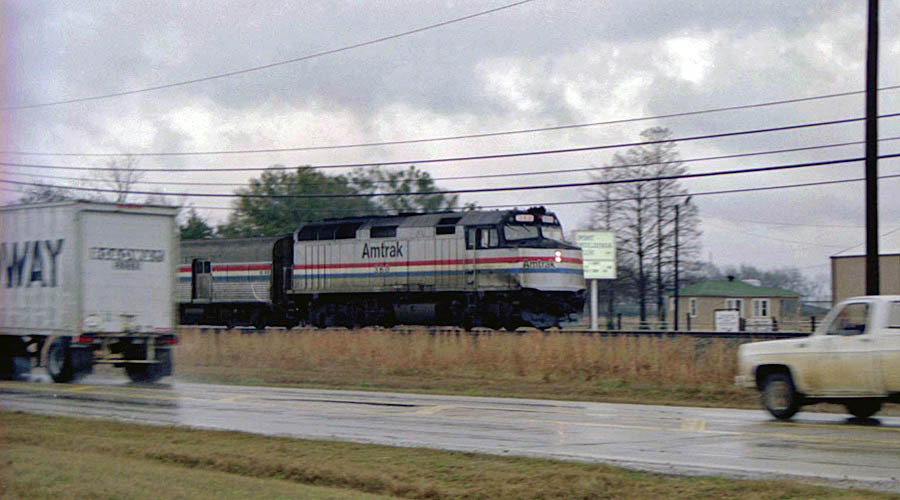
Amtrak #360
Arunde, Ms / Jan 1989 / RWH
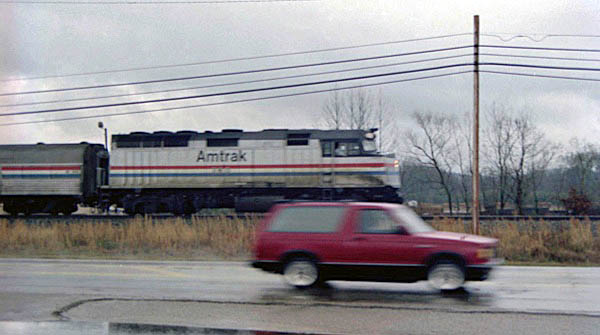
Arunde, Ms / Jan 1989 / RWH
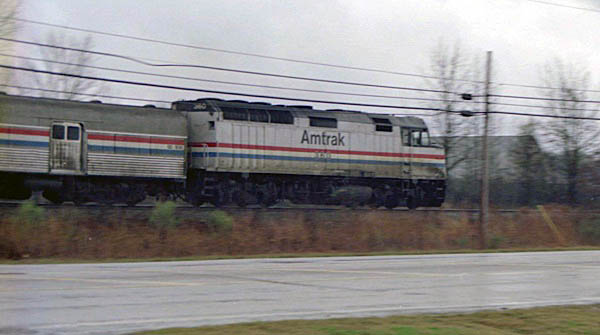
Arunde, Ms / Jan 1989 / RWH
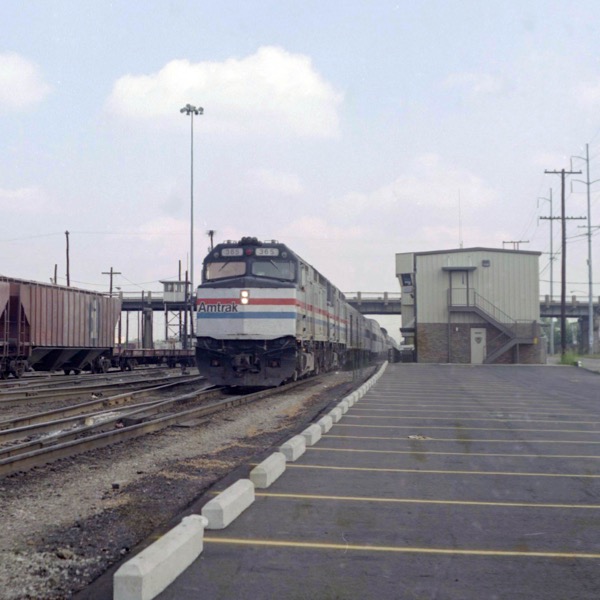
Amtrak #365
Jackson, Ms / Apr 1987 / JCH
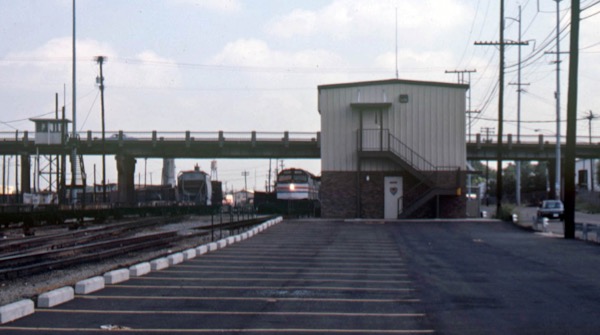
Jackson, Ms / Apr 1987 / RWH
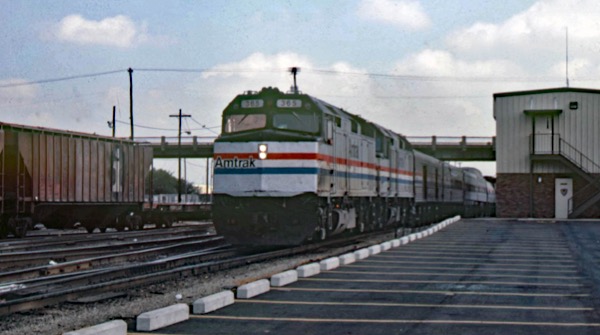
Jackson, Ms / Apr 1987 / RWH
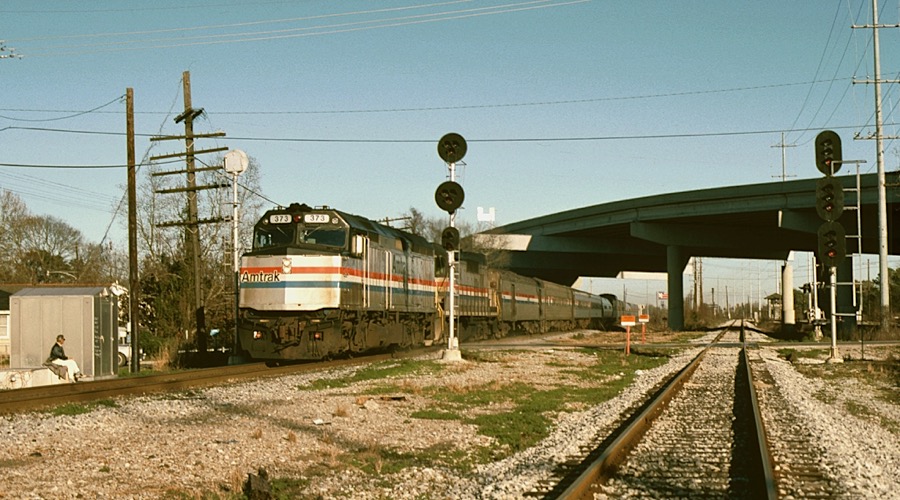
Amtrak #373
Jefferson, La / Feb 1990 / Michael Palmieri
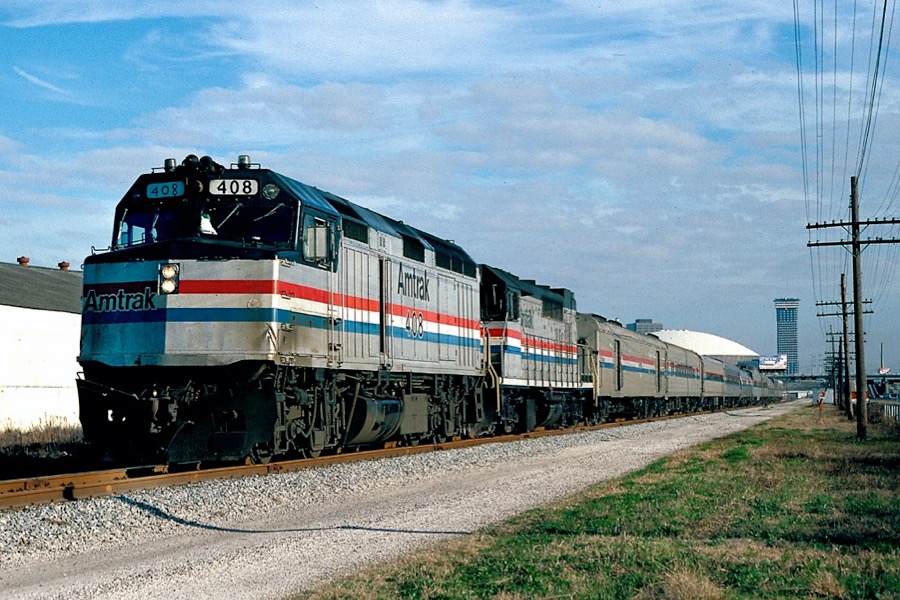
Amtrak #408
New Orleans, La / Sep 1991 / Christopher Palmieri
 Article
Amtrak F40PH Locomotives
February 1, 2023
These well-traveled workhorses came to embody U.S. passenger train power for two decades
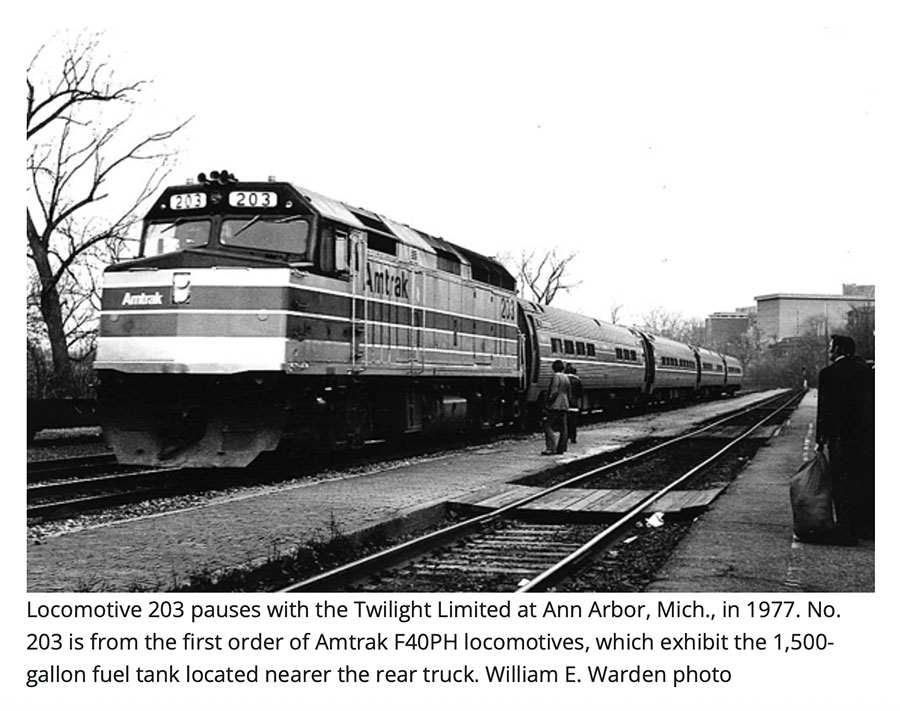 Amtrak F40PH locomotives are considered the standard passenger motive power for
the 1980s and early 1990s. The four-axle, 3,000-hp units are mechanically identical
to the much more common GP40-2 freight locomotive, which also use the 16-645E
prime mover. In fact, the F40PH was EMD’s first production passenger locomotive to
use this prime mover. (Other F40PH purchasers included GO Transit, Massachusetts
Bay Transportation Authority, and Metra bringing the model’s total to 325 units.)
Amtrak F40PH locomotives are considered the standard passenger motive power for
the 1980s and early 1990s. The four-axle, 3,000-hp units are mechanically identical
to the much more common GP40-2 freight locomotive, which also use the 16-645E
prime mover. In fact, the F40PH was EMD’s first production passenger locomotive to
use this prime mover. (Other F40PH purchasers included GO Transit, Massachusetts
Bay Transportation Authority, and Metra bringing the model’s total to 325 units.)
Amtrak had 216 such locomotives on its roster, the first being delivered in March 1976 and the last in January 1988. They carried Nos. 200-409. Subsequently, there were six more Amtrak F40PH locomotives acquired secondhand from Canada’s GO Transit in April 1990, Nos. 410-415. These were built without dynamic brakes but were retrofitted by Amtrak.
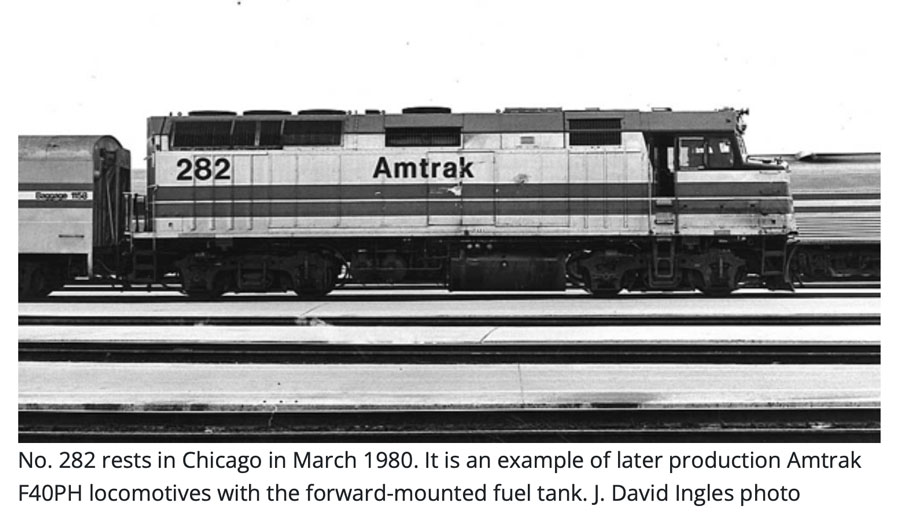
The first 30 Amtrak F40PH locomotives were equipped with 1,500-gallon fuel tanks located further back while later units shifted them forward between the trucks and increased capacity to 1,800 gallons. Of the 210 units acquired new by Amtrak, 132 are designated as F40PHR to indicate they include components originally installed on Amtrak’s six-axle SDP40F units, but they are externally identical in appearance.
 One distinct difference from their predecessors was the use of head-end power, or
HEP, generated by the locomotives’ prime movers instead of the steam boilers
employed on the SDP40Fs. This gave the new locomotives a distinctive sound at
station stops as the prime mover was still needed to generate power for the train —
even when it was standing still. Other passenger locomotives would employ an
auxiliary power unit to generate HEP, enabling the prime move to idle when not in
motion. However, when operated in multiple, only one F40PH will supply HEP,
freeing the other unit(s) to deliver their full 3,000 hp for conveyance. As they were
intended for short-distance trains, the first 30 Amtrak F40PH locomotives were
equipped with 500 kW capacity alternators while subsequent units were built with
800 kW alternators to supply the larger power needs of long-distance trains.
One distinct difference from their predecessors was the use of head-end power, or
HEP, generated by the locomotives’ prime movers instead of the steam boilers
employed on the SDP40Fs. This gave the new locomotives a distinctive sound at
station stops as the prime mover was still needed to generate power for the train —
even when it was standing still. Other passenger locomotives would employ an
auxiliary power unit to generate HEP, enabling the prime move to idle when not in
motion. However, when operated in multiple, only one F40PH will supply HEP,
freeing the other unit(s) to deliver their full 3,000 hp for conveyance. As they were
intended for short-distance trains, the first 30 Amtrak F40PH locomotives were
equipped with 500 kW capacity alternators while subsequent units were built with
800 kW alternators to supply the larger power needs of long-distance trains.
Amtrak chose to replace its F40PH locomotives with the General Electric P40DC “Genesis” and P42DC locomotives in the 1990s. Thus, the the F40s ran their last revenue miles in the early 2000s. During the transition period, Amtrak leased some F40PHs to the freight carriers as supplemental power.
Amtrak F40PH locomotives live on, in a way, as 22 were converted to Non-Powered Control Units, in the late 1990s. These units had their prime movers removed and the space converted for baggage storage. The control cabs were retained for use in short-distance trains operating with push-pull consists.
Brian Schmidt / Classic Trains editor
Links / Sources
- Railroad Picture Archives F40PH and F40PHR rosters
- Wikipedia article for EMD F40PH model
- Louis Marre and Jerry Pinkepank, The Contemporary Diesel Spotter's Guide (Kalmbach, 1989) 90-97
- Frank Wilner, The Amtrak Story (Simmons-Boadman Books, 1994) 72
- Brian Soloman, Amtrak's History Through Its Equipment (Firecrown, 2025) 94-99